Paris to Nice by Train: Times, Fares and Which Seat to Book
Four fast hours, two slow ones, and the Mediterranean on the right-hand side.
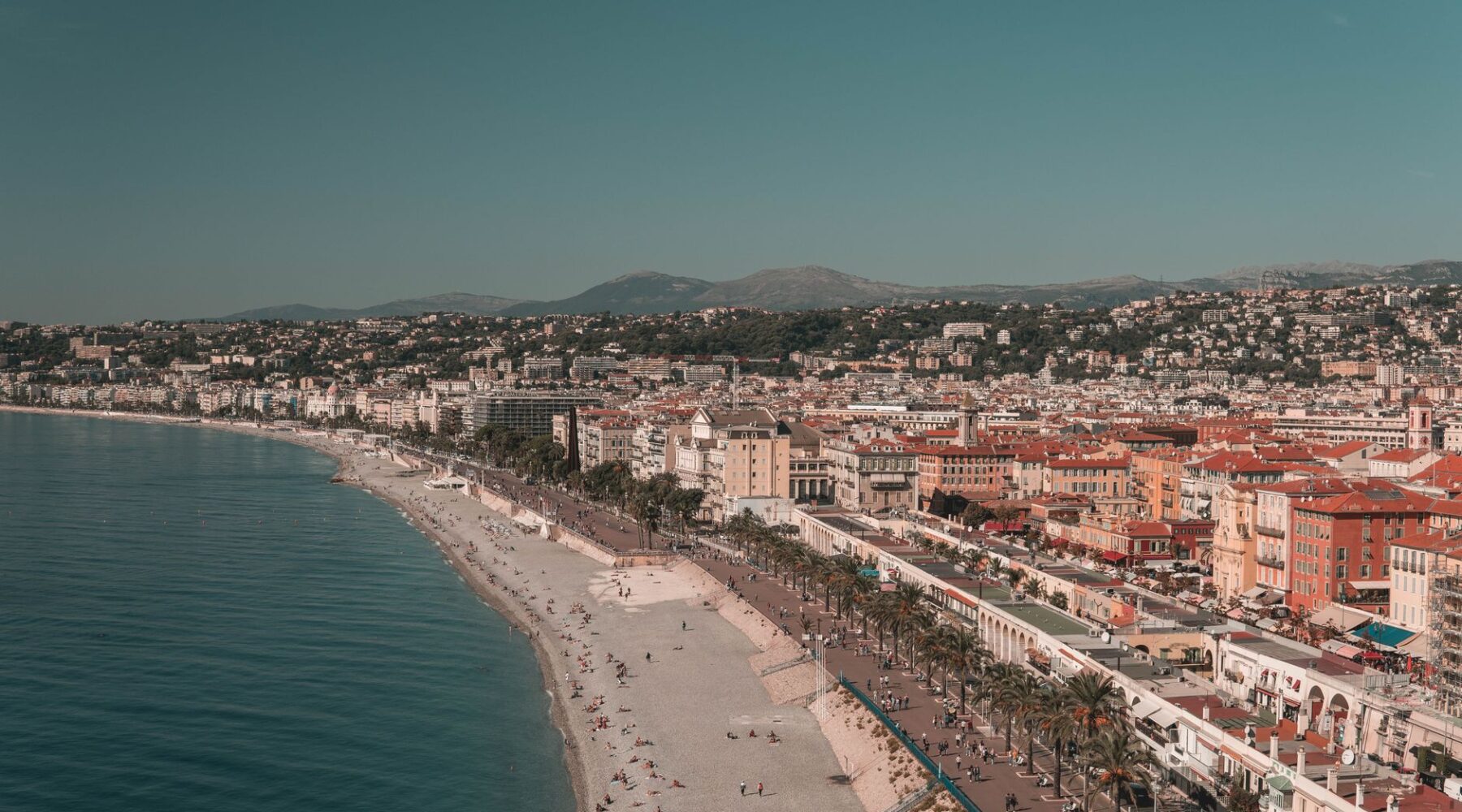
For the first four hours of the journey south, the TGV from Gare de Lyon is simply a very fast train: Burgundy’s hills, the Rhône, a blur of Provençal vineyards. Then the high-speed line runs out, the train slows, and the last stretch turns into something else entirely. Past Saint-Raphaël the track squeezes between the red cliffs of the Estérel and the sea, and for most of the way to Nice there’s nothing between you and the Mediterranean but a strip of rocks and umbrella pines. Taking the paris to nice train isn’t the quickest way to reach the Riviera, but it’s comfortable, city centre to city centre, and one of the most scenic main-line journeys in France. This guide covers the three ways to do it (TGV INOUI, OUIGO and the night train), what they cost, which seats to book, and whether you’d be better off flying.
Times, fares and night-train details were checked in September 2026. French rail fares change with demand, and engineering works on the coast line regularly alter the timetable, so treat prices as the right order of magnitude and check your specific train before you travel.
Paris to Nice by train at a glance
| TGV INOUI | OUIGO | Night train (Intercités de Nuit) | |
|---|---|---|---|
| Paris station | Gare de Lyon | Gare de Lyon | Gare d’Austerlitz |
| Arrives | Nice-Ville | Nice-Ville | Nice-Ville |
| Journey time | About 5h40–6h | About 5h40–6h | About 12 hours overnight |
| Typical fares | Cheap if booked early; can pass €100 late, and about €170 for flexible first class | From about €25 booked early, plus luggage extras | Seat from €19; couchette from €29 (6-berth) or €39 (4-berth) |
| Best for | Comfort, luggage, flexibility | Light travellers booking ahead | Saving a hotel night and a daytime journey |
| Frequency | About seven direct TGV INOUI and OUIGO trains a day on weekdays | Varies with engineering works; check dates | |
Prices checked September 2026; they are starting fares and indicative ranges, not guarantees.
Why the train takes six hours
Nice is more than 900 kilometres from Paris by rail, and on a map the six-hour journey looks slow compared with the two hours to Lyon or the three and a quarter to Marseille. The reason is the track. From Paris to the outskirts of Marseille, trains run on high-speed lines at up to 300 km/h. From there to Nice, they switch to the classic line along the coast, which twists around bays and headlands, shares its tracks with regional trains, and stops at the Riviera’s towns. The last 200 kilometres or so take nearly as long as the first 700.
There’s a long-term project to build a new line between Marseille and Nice, but it’s many years from completion. Until then, six hours is the price, and the scenery on that last stretch is the compensation.
Option 1: TGV INOUI
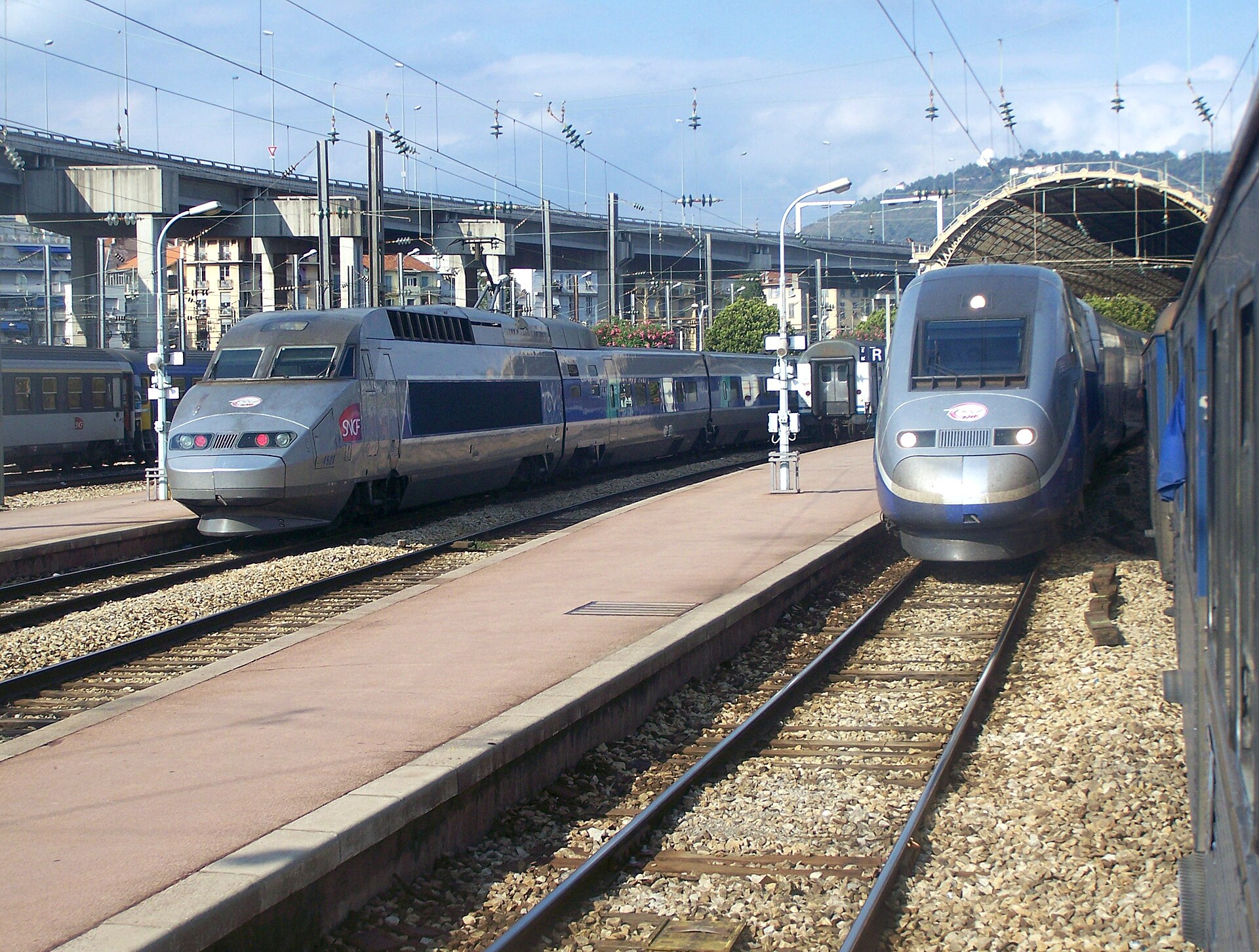
TGV INOUI is SNCF’s standard high-speed service and the most comfortable way to make the journey by day. Trains leave from Gare de Lyon, usually in the morning, around midday and in the afternoon, and arrive at Nice-Ville, the city’s main station. Most call at a handful of stations along the coast, typically including places like Toulon, Les Arcs–Draguignan, Saint-Raphaël, Cannes and Antibes, which makes the TGV a convenient way to reach several Riviera towns directly.
What you get
- Double-decker trains with first and second class.
- A bar-buffet car selling sandwiches, hot dishes, snacks and drinks.
- Power sockets and, on most trains, Wi-Fi.
- Generous luggage allowance: no strict limit, but you must be able to carry your bags, and they must be labelled.
- Exchangeable and refundable fares, with conditions depending on the fare type.
What it costs
TGV INOUI fares are dynamic. Booked weeks or months in advance, second-class fares can be very reasonable. Booked in the last few days on a Friday in July, the same seat can cost well over €100, and a flexible first-class ticket close to departure around €170. If you’re travelling in France more than once, the SNCF Carte Avantage (€49 a year) cuts fares by 30% and caps second-class TGV INOUI fares at €89 for journeys over three hours, so a last-minute Paris–Nice ticket can pay for the card on its own. See our guide to trains from Paris for how the card works.
Option 2: OUIGO
OUIGO is SNCF’s low-cost high-speed brand. On the Nice route its trains leave from Gare de Lyon, take the same time as TGV INOUI, and use the same double-decker trains painted blue and pink. Advance fares start from around €25. The catch is the extras:
- Luggage is limited to one cabin-sized bag and one small bag. Big suitcases, extra bags and pushchairs cost extra, and it’s much cheaper to add them when you book than at the station.
- There’s no bar car, so bring food and water for six hours.
- Boarding closes early, around 30 minutes before departure. If you’re late, you won’t be let on.
- There’s no first class, though you can pay to choose a seat.
Our verdict: for a couple travelling light who book early, OUIGO can halve the cost of the trip. For a family with suitcases, compare the total including luggage with a TGV INOUI fare; the gap often narrows a lot.
Option 3: the night train
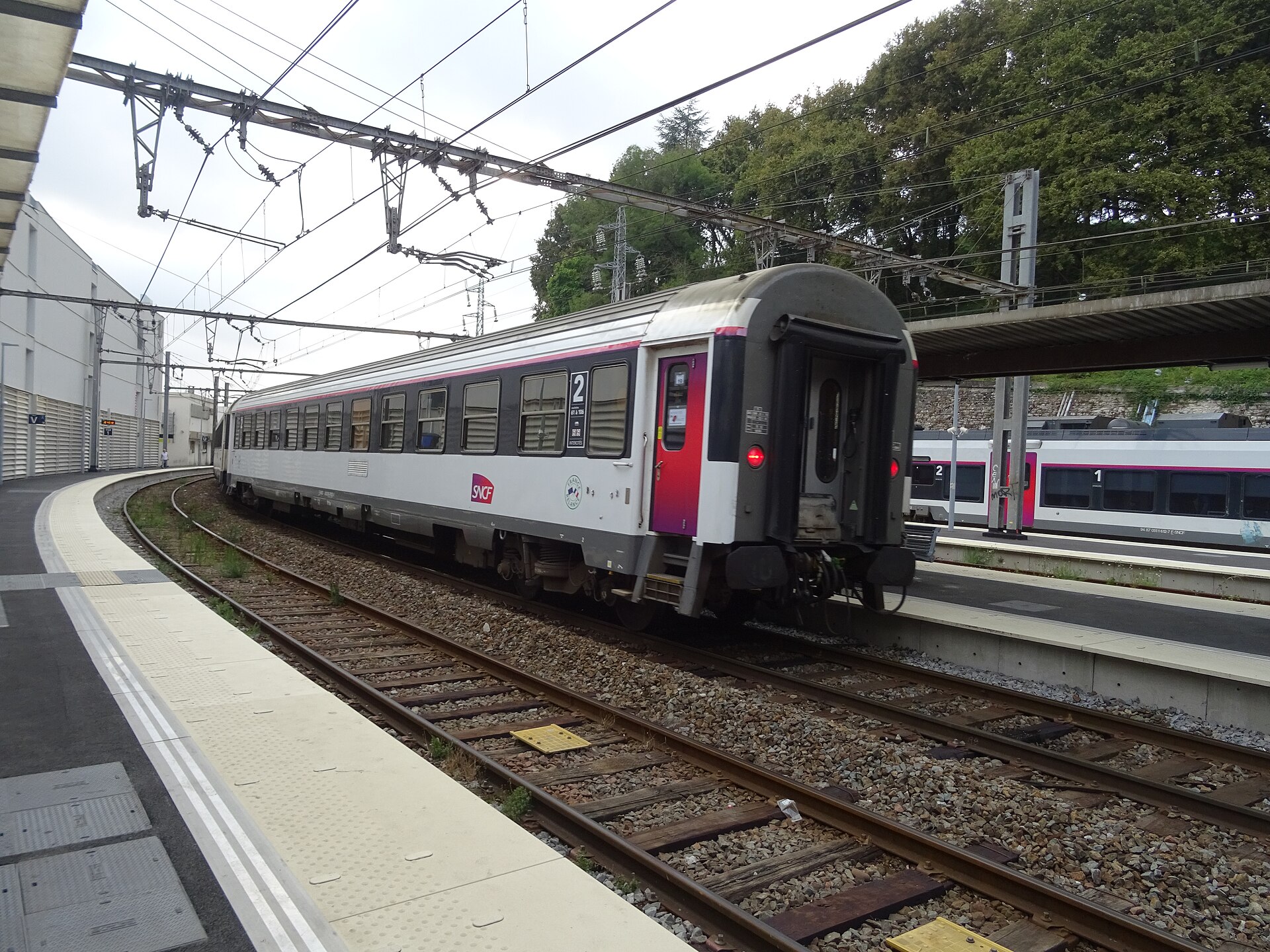
The Intercités de Nuit sleeper leaves from Gare d’Austerlitz in the evening and arrives in Nice the next morning, calling at Marseille-Blancarde, Toulon, Les Arcs–Draguignan, Saint-Raphaël-Valescure, Cannes and Antibes on the way.
| Direction | Departs | Arrives |
|---|---|---|
| Paris → Nice | Paris-Austerlitz, about 21:25 | Nice-Ville, about 09:09 |
| Nice → Paris | Nice-Ville, about 19:00 | Paris-Austerlitz, about 06:56 |
Accommodation and prices
| Option | From | What you get |
|---|---|---|
| Reclining seat | €19 | A seat in an open carriage; cheapest, least restful |
| 2nd-class couchette | €29 | A bunk in a six-berth compartment |
| 1st-class couchette | €39 | A bunk in a four-berth compartment |
| Private compartment | €150 (2nd class) / €180 (1st class) | The whole compartment, price for all travellers |
Couchette passengers get a small night kit with water, earplugs and wipes. Toilets and washbasins are at the ends of the carriages; there are no showers. There’s no restaurant car, but staff sell snacks and breakfast on board. Children under 4 travel free, and children aged 4 to 11 pay half price. Book when sales open, typically around four months ahead, for the lowest fares.
The timetable caveat
The night train is nominally a daily service, but in practice it’s frequently cut back because of overnight engineering works on the network. In summer 2026, for example, it ran Monday to Friday from 6 July to 28 August. Always check the specific dates on SNCF Connect before planning your trip around it.
Is the night train worth it?
It depends on how you sleep. The honest case for: you save a night’s hotel bill, you don’t lose a day to travel, and waking up to the sea at Cannes is magical. The honest case against: couchettes are shared with strangers unless you pay for the whole compartment, the berths are narrow, the train stops and jolts through the night, and twelve hours is a long time. If you sleep well anywhere, it’s a bargain and an adventure. If you don’t, take a morning TGV and arrive fresh.
Which seat to book
This is where a little planning pays off on a six-hour trip.
Sit on the right-hand side
Heading south and then east along the coast from Toulon to Nice, the sea is on the right-hand side of the train. The views are best between Saint-Raphaël and Cannes, where the line runs along the foot of the red Estérel massif, and around Antibes. Coming back to Paris, sit on the left.
Choose the upper deck
On double-decker TGVs, the upper deck has better views, is quieter, and is away from the doors, luggage racks and people walking to the bar car. When booking a TGV INOUI or paying for seat selection on OUIGO, choose the top level (étage haut) if you can.
First or second class?
Second class on a TGV is comfortable for six hours. First class has wider seats in a two-plus-one layout, more legroom and a calmer atmosphere, and in first class you can often choose a single seat by the window, which is ideal for solo travellers. On a journey this long, if the difference is €15–20, it’s worth it. Book early and it sometimes costs almost nothing extra.
Seats facing forwards and tables
TGV seats are fixed, so half face backwards. If that bothers you, select a seat facing the direction of travel when booking. For families or groups, a set of four seats around a table (carré) makes the journey much easier.
The journey, stage by stage
Knowing what’s outside the window makes six hours pass a lot faster. Here’s roughly how the day unfolds on a morning TGV.
Paris to the Rhône Valley (first two hours)
The train slips out of Gare de Lyon through the south-eastern suburbs and onto the high-speed line, and within half an hour you’re crossing the open farmland of the Brie and the gentle hills of Burgundy. It’s pleasant rather than dramatic, and it’s the moment to settle in, get a coffee from the bar car and start the book. Around the two-hour mark the line skirts Lyon to the east without stopping on many Nice trains.
Down the Rhône to Provence (hours two to four)
South of Lyon the landscape warms up. The line follows the Rhône valley, with vineyards on the slopes, the nuclear cooling towers of the valley’s power stations, and increasingly the cypresses and red-tiled farmhouses of Provence. On a clear day, look east for the long white ridge of Mont Ventoux. The train passes close to Avignon and Aix-en-Provence, and the light changes: this is where most people start to feel they’ve arrived in the south.
The coast (the last two hours)
After the high-speed section ends, the train drops towards the Mediterranean and slows. From Toulon it heads inland through wooded hills and vineyards around Les Arcs, then rejoins the coast at Saint-Raphaël. The next half-hour is the highlight of the trip: the line hugs the foot of the Estérel, a range of jagged volcanic rock the colour of rust, with tiny coves and deep blue water directly below the window. Then come the villas and palm trees of Cannes, the bay and old ramparts of Antibes, and finally the long curve of the Baie des Anges as the train rolls into Nice.
If you’re on the left-hand side of the train when the sea appears, it’s worth standing in the vestibule for a while. Nobody will mind.
Travelling with children or lots of luggage
Six hours on a train is far easier with children than six hours in a car, and much easier than the airport routine, but a little preparation helps. Book a set of four seats around a table on TGV INOUI, bring snacks and downloaded films, and plan a walk down to the bar car as an event in itself around the halfway point. On OUIGO, add pushchairs and suitcases when you book, because paying at the station costs more, and remember there’s nothing to buy on board. Our guide to Paris with kids has more on travelling as a family.
With big suitcases, TGV INOUI is the easier choice. Luggage racks at the ends of each carriage fill up quickly at busy times, so board as soon as the platform opens, and put smaller bags in the overhead racks to leave room for cases. Keep valuables with you rather than in the racks near the doors, particularly when the train stops at the busy coastal stations.
Train or plane?
Paris to Nice is one of the busiest domestic air routes in France, and the flight takes about 1h25. On paper, flying wins easily. In practice it’s closer.
| Train | Plane | |
|---|---|---|
| Journey time | About 5h40–6h | About 1h25 in the air |
| Getting to the departure point | Gare de Lyon is central; arrive 20–30 minutes before | Orly or CDG are 30–60 minutes away; arrive 1.5–2 hours before |
| Arrival | Nice-Ville, in the city centre | Nice Côte d’Azur Airport, a tram ride from the centre |
| Door to door | About 6.5–7 hours | About 4–5 hours |
| Luggage | Generous (except OUIGO) | Often paid on low-cost airlines |
| Carbon footprint | A small fraction of a flight’s | Much higher |
| Productive time | Six hours with a table, sockets and a view | Fragmented by security, boarding and transfers |
Our verdict: if you’re short of time, or you find a cheap flight from an airport near where you’re staying, fly. If you have the day to spare, value comfort, have luggage, or want to see the south of France unfold from a window, take the train. It’s also the easy choice if you’re stopping at Cannes, Antibes or Saint-Raphaël, all of which are on the TGV route but a detour from Nice airport. Our guides to cheap flights from Paris and getting to the Paris airports cover the flying option.
At Gare de Lyon
Trains to Nice leave from Gare de Lyon’s Hall 1 or Hall 2, which are a few minutes’ walk apart; your ticket and the departure boards will tell you which. The platform is only displayed about 20 minutes before departure. Arrive at least 30 minutes before a OUIGO and 20–30 minutes before a TGV INOUI.
- Getting there: Metro Lines 1 and 14, RER A and D.
- Food for the journey: the station has bakeries and supermarkets, which are cheaper than the bar car and essential on OUIGO.
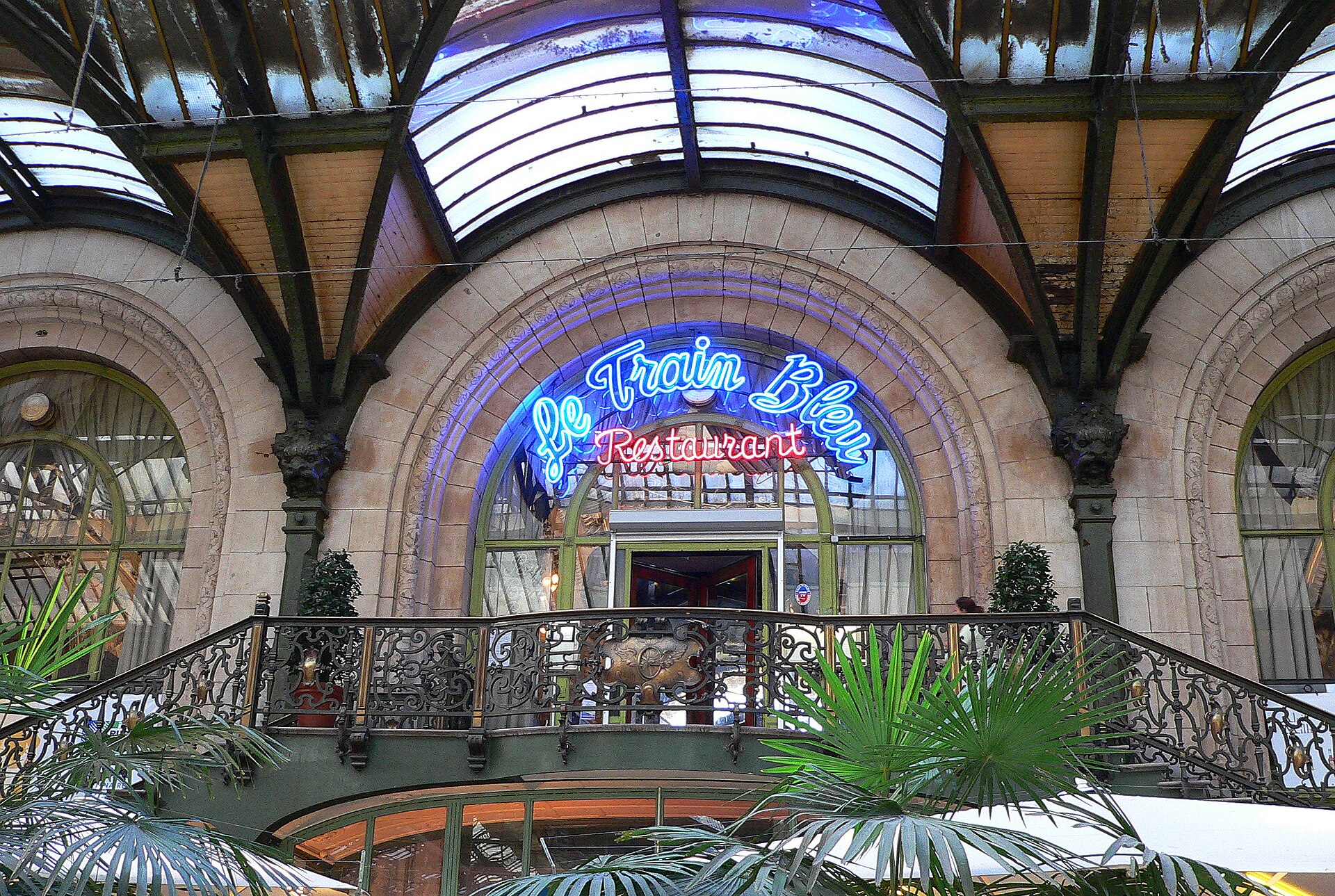
- Treat yourself: a coffee at Le Train Bleu, the Belle Époque restaurant above Hall 1, named after the famous luxury train that once ran from Paris to the Riviera.
- Bags: if you’ve checked out of your hotel early, see our guide to luggage storage in Paris.
Our guide to the Paris train stations explains Gare de Lyon’s layout, and Austerlitz for the night train, in detail.
Arriving in Nice
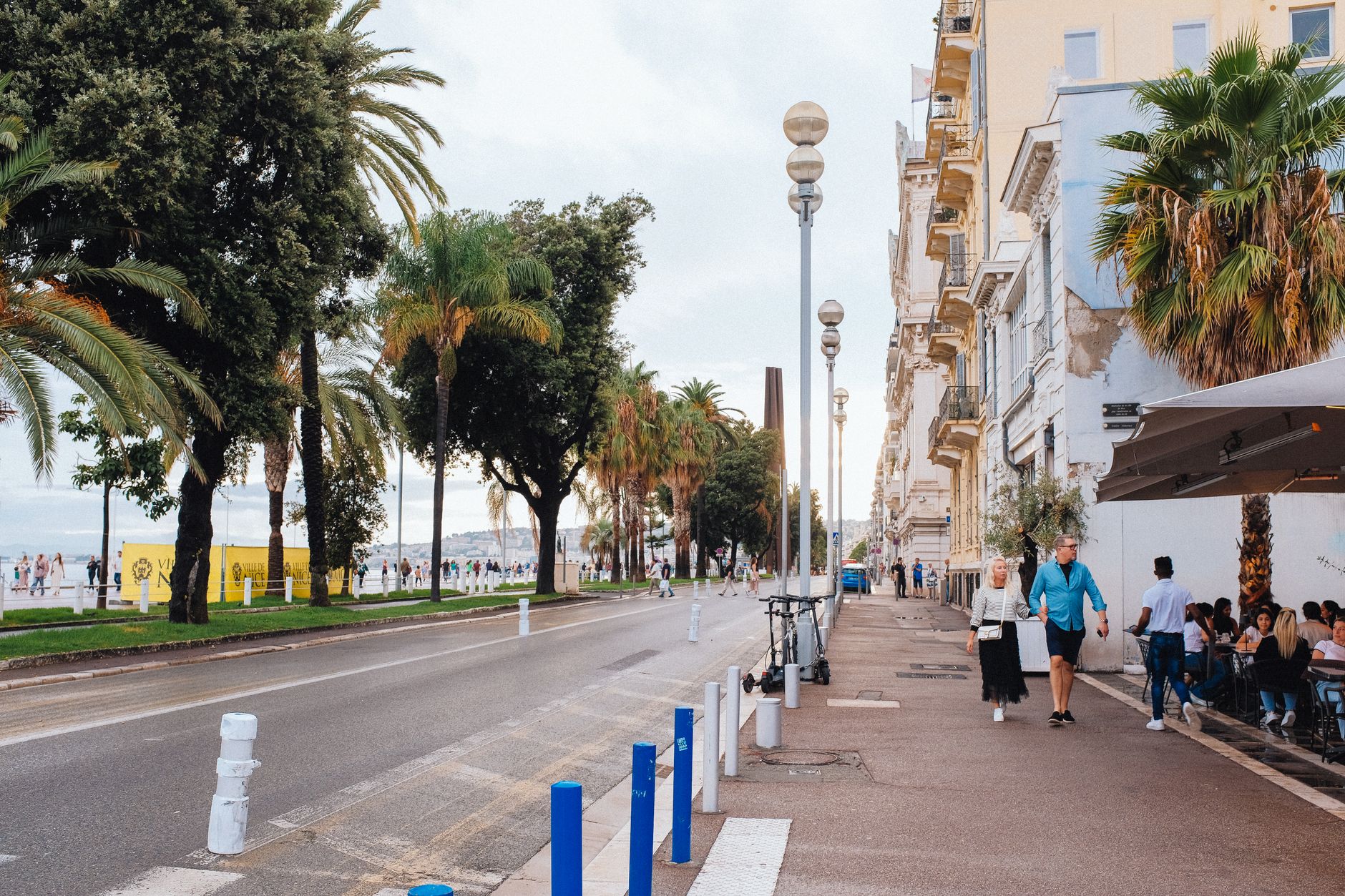
Nice-Ville station is on the Avenue Thiers, just north of the city centre. From there:
- On foot: the Promenade des Anglais and the beach are about 15–20 minutes’ walk south; the old town is about 20–25 minutes.
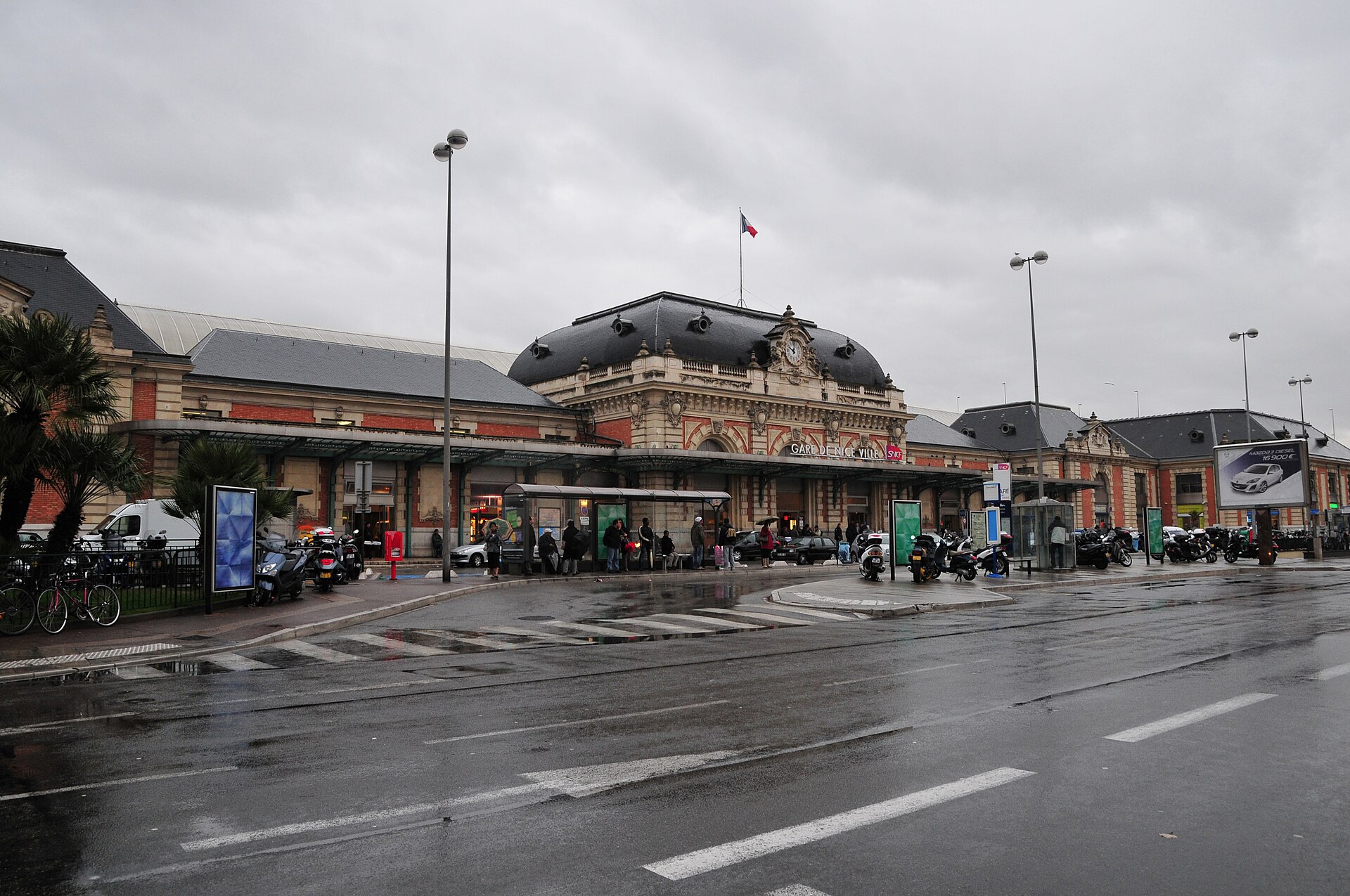
- By tram: Tram Line 1 stops close to the station (Gare Thiers) and runs through the centre past Place Masséna, for the old town.
- By taxi: there’s a rank outside the station.
Going further along the coast
Nice is a great base for exploring the Riviera by train. The regional Zou! trains run frequently along the coast in both directions, and the journeys are short, cheap and beautiful:
| Destination | Direction | Approximate journey |
|---|---|---|
| Villefranche-sur-Mer | East | About 10 minutes |
| Monaco | East | About 20–25 minutes |
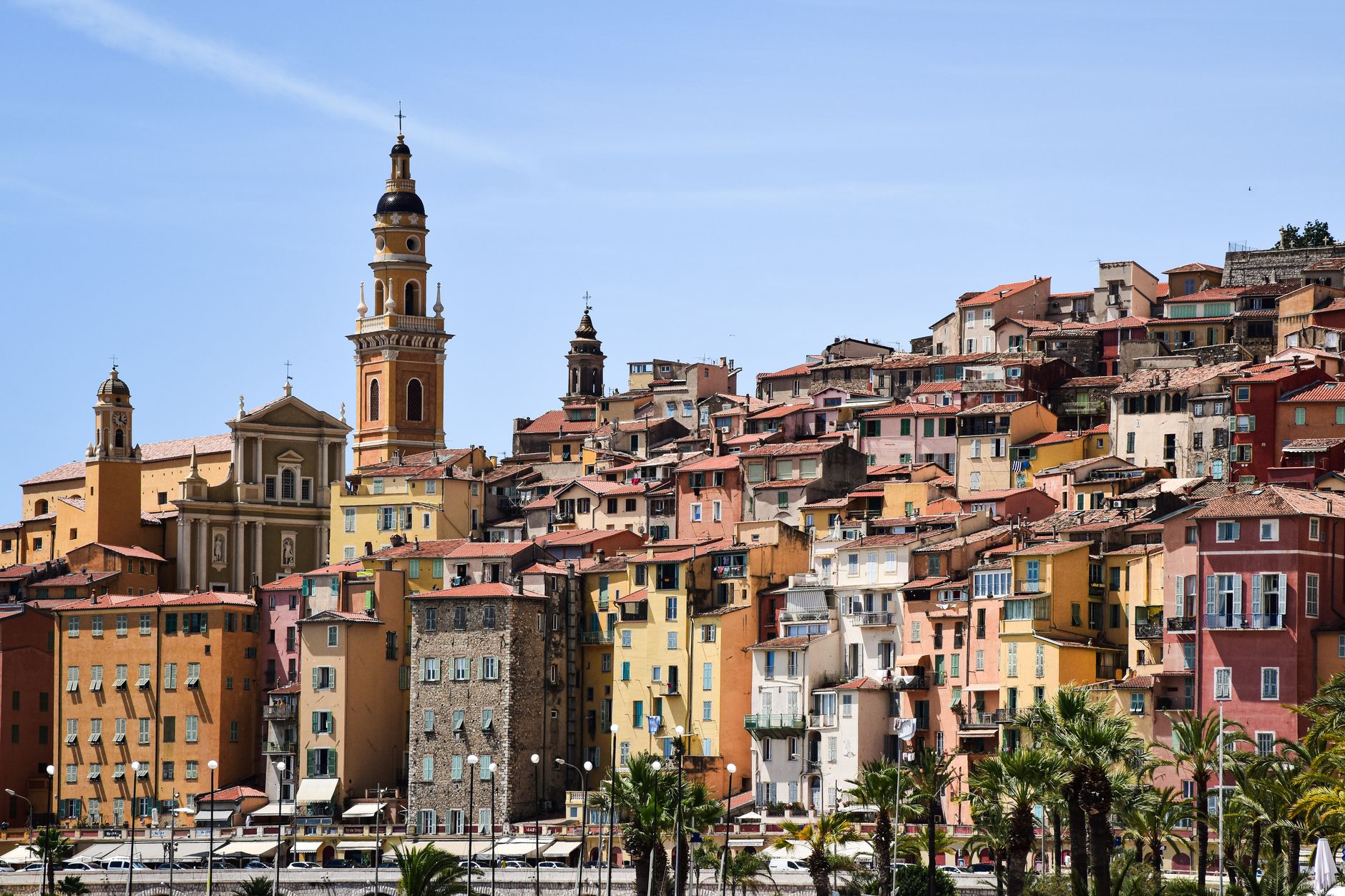
| Menton | East | About 35–40 minutes |
| Antibes | West | About 20–25 minutes |
| Cannes | West | About 30–40 minutes |
Regional trains don’t need to be booked in advance. Buy a ticket at the station machine or on the SNCF Connect app. In summer, the trains get very crowded, especially towards Monaco on sunny weekends.
Breaking the journey
With six hours on board, many travellers split the trip with a night or two on the way. The best stopovers on or near the route:
- Lyon (about 2 hours from Paris): France’s food capital, with a UNESCO-listed old town.
- Avignon (about 2h40): the Palais des Papes, the famous bridge and a base for exploring Provence.
- Aix-en-Provence: elegant, with markets and Cézanne connections; its TGV station is outside town.
- Marseille (about 3h15): the Vieux-Port, the Calanques and bouillabaisse.
- Cannes or Antibes: glamorous beaches and old towns, one short hop before Nice.
Check that your stopover station is on the route you want. Not every TGV from Paris to Nice stops at Marseille Saint-Charles, and Avignon and Aix have separate TGV stations outside their town centres.
Practical tips
- Book early. Sales typically open around four months ahead. The cheapest seats go first, and summer weekends sell out.
- Watch for big events. The Cannes Film Festival in May and the Monaco Grand Prix bring huge demand, as do French school holidays.
- Check for strikes and works. Look at the SNCF Connect app in the days before you travel. Our guide to the best Paris travel apps covers it.
- Bring food and water, especially on OUIGO.
- Charge your devices and download entertainment; the Wi-Fi can be patchy on the coastal stretch and in tunnels. Our guide to staying connected helps with mobile data.
- Label your luggage. It’s required on SNCF trains.
- Keep your valuables close, particularly when the train stops at busy stations along the coast.
Frequently asked questions
How long is the train from Paris to Nice?
About 5 hours 40 minutes to 6 hours on the fastest direct TGV INOUI and OUIGO trains from Gare de Lyon. The night train from Gare d’Austerlitz takes about 12 hours.
How much is the train from Paris to Nice?
Advance OUIGO fares start from around €25, and TGV INOUI fares are cheapest when booked early. Last-minute fares can exceed €100 in second class, and a flexible first-class ticket can cost around €170. Night train seats start at €19 and couchettes at €29. Prices checked September 2026.
Which Paris station does the train to Nice leave from?
Daytime TGV INOUI and OUIGO trains leave from Gare de Lyon. The night train leaves from Gare d’Austerlitz.
Is there a direct train from Paris to Nice?
Yes. There are several direct TGV INOUI and OUIGO trains a day, around seven on weekdays, plus the Intercités de Nuit sleeper on dates when it runs.
Which side of the train has the sea view to Nice?
The right-hand side when travelling from Paris to Nice. The best views are between Saint-Raphaël and Nice. Returning to Paris, sit on the left.
Is it better to fly or take the train from Paris to Nice?
Flying is faster, about 4–5 hours door to door compared with 6.5–7 by train. The train is more comfortable, city centre to city centre, has more generous luggage, is far lower in carbon and stops at Cannes and Antibes on the way.
Does the Paris to Nice night train run every day?
It’s scheduled as a daily service but is often reduced because of engineering works. In summer 2026 it ran Monday to Friday between 6 July and 28 August. Check SNCF Connect for your dates.
Can I use the Carte Avantage on the Paris to Nice train?
Yes, on TGV INOUI and Intercités, including the night train. It gives 30% off and caps second-class TGV INOUI fares at €89 on journeys over three hours. It doesn’t apply to OUIGO.
If six hours in one go feels like too much, Lyon makes the natural halfway stop. It’s two hours from Paris, TGVs from Part-Dieu carry on towards Marseille and the coast, and a night there buys you dinner in a bouchon. Our Paris to Lyon train guide explains the operators, the three Lyon stations and how to fit a day in the city around the journey.
Related Paris Guides
- Trains From Paris: The Complete Guide
- Paris Train Stations Explained
- Luggage Storage in Paris
- How to Find Cheap Flights to Paris
- Paris Airport Transfers
- The Best Paris Travel Apps
- The Best Day Trips From Paris
- What to Pack for Paris
Photo Credits
TGVs at Nice-Ville: Deux TGV à quai en gare de Nice-Ville (août 2006) by Florian Pépellin, CC BY-SA 4.0, via Wikimedia Commons.
Nice-Ville station: Gare SNCF de Nice-Ville by m-louis, CC BY-SA 2.0, via Wikimedia Commons.
An Intercités de Nuit carriage: Depart-intercites-de-nuit-hendaye-paris-austerlitz-gare-bayonne1 by Remontees, CC BY-SA 4.0, via Wikimedia Commons.
Le Train Bleu: Le Train Bleu, Gare de Lyon, 2007 – panoramio by simon tunstall, CC BY 3.0, via Wikimedia Commons.