Luggage Storage in Paris: Every Option, Priced and Compared
Checkout at eleven, train at seven. Here is where the suitcase goes in between.
Checkout is at eleven, the train leaves at seven, and in between lies a whole Paris afternoon you would rather not spend dragging a 23-kilo suitcase over cobbles. Nearly every visitor hits this gap at some point, and the city’s answer has changed a lot. The old-style station lockers still exist, but they now compete with hundreds of cafés, hotels and corner shops that take bags for a few euros through an app. This guide to luggage storage paris lines up every realistic option, what each one really costs, and which to choose for the day you actually have.
We cover the station lockers, the app-based networks (Bounce, Nannybag, LuggageHero and the rest), your hotel’s own storage room, the airports, and the museum cloakrooms that people assume will help and mostly won’t. Prices were checked in September 2026. They move often and differ from shop to shop, so treat them as the right order of magnitude rather than a quote.
Paris luggage storage at a glance
| Option | Typical price | Best for | Watch out for |
|---|---|---|---|
| Your hotel | Free | Anyone staying in a hotel, before check-in or after checkout | Open storage rooms; not ideal for valuables |
| App networks (Bounce, Nannybag, LuggageHero) | Advertised from about €2.25–2.50 a day; €5–7.50 per bag per day is more usual | Storing near a sight, a neighbourhood or your next station | Shop opening hours: collect before the host closes |
| SNCF station lockers | Roughly €5.50–9.50 per 24 hours, by locker size | Travellers catching a train from the same station | Security-scanner queue; limited locker count at peak times |
| Airport left-luggage | Varies; check current rates | Long layovers where you leave the airport | Priced higher than in town, and a long way from the city |
| Museum cloakrooms | Free | Small backpacks and coats only | Suitcases are refused almost everywhere |
| Airbnb or apartment host | Free if offered | Late departures from rented flats | Entirely at the host’s discretion; ask before you book |
If you are short on time, the rule of thumb is simple. Store at the hotel if you can, at the station if your train leaves from there, and through an app everywhere else.
Option 1: ask your hotel first
It sounds too obvious to mention, but plenty of people pay for storage they didn’t need. Virtually every hotel in Paris, from a two-star in the 11th to a palace on the Rue de Rivoli, will hold bags for guests before check-in and after checkout, usually free and usually for the whole day. A hotel you are not staying in will almost never do it, so this only works for the hotel you are leaving or the one you are heading to.
How it works in practice varies. Larger hotels give you a numbered tag and put the bags in a locked room behind reception. Small family hotels, especially the older ones in the Latin Quarter and around Montmartre, may just line cases up in a corner of the lobby or a cupboard under the stairs. That is fine for clothes and toiletries. It is not where your laptop, passport or camera should spend six hours.
Getting the most out of hotel storage
- Ask at booking, not at checkout. A quick line in the booking message (“We’ll need to leave bags until 6pm on the last day”) avoids surprises in hotels that have no storage room at all.
- Take the valuables out. Keep documents, electronics, medication and anything you can’t replace in the bag you carry.
- Tip if it was a favour. A couple of euros to the porter is appreciated but not expected; see our guide to tipping in Paris for where the line sits.
- Check the closing time on a late pick-up. Most hotels have a 24-hour front desk, but some small guesthouses lock the door at 10 or 11pm.
If you are staying in a rented apartment rather than a hotel, the picture is less generous. Some hosts will let you stay until evening or leave bags in the flat; many have a cleaner arriving at noon and can’t. It is one of the underrated trade-offs in our apartment versus hotel comparison, and it is worth asking the question before you book, not the night before you leave.
Option 2: the app networks
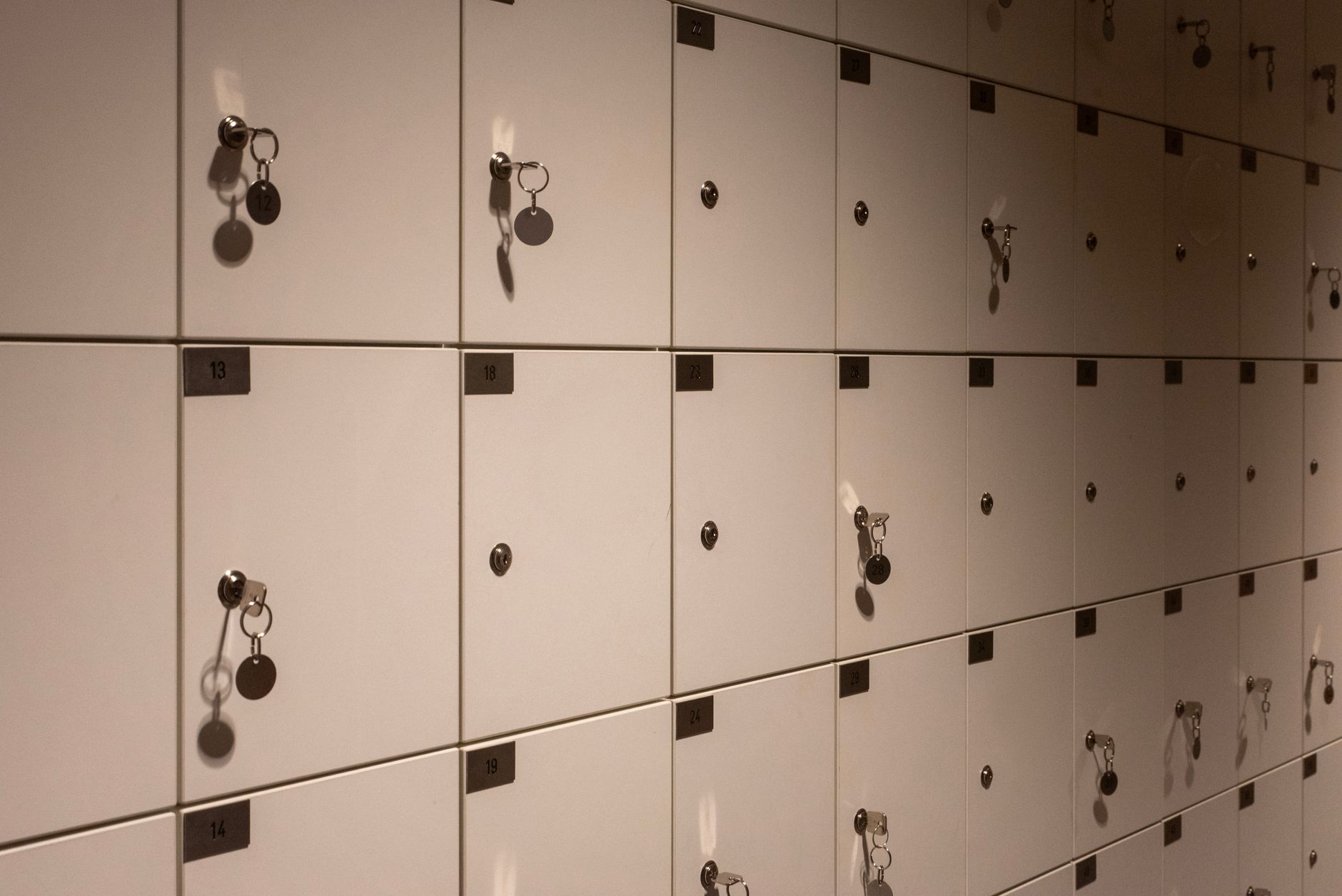
This is where most of the change has happened. A handful of companies have signed up hundreds of Paris businesses — convenience stores, hotels, cafés, souvenir shops, phone-repair counters — to take in bags for travellers. You book on an app or website, turn up with a booking code, the staff tag your bag and put it in a back room, and you collect it later with the same code. Payment goes through the app, and the booking usually includes some insurance.
The main operators
| Operator | Advertised price | Paris network | Notes |
|---|---|---|---|
| Bounce | From about €2.25 a day | 540+ locations | The largest network; strong coverage around the big stations and tourist sights |
| Nannybag | From €2.50 small, €7.50 medium, €9.50 large per 24h | Around 400 locations | French company; pricing by bag size makes the real cost easy to see |
| LuggageHero | From about €1.29 an hour | Widespread | Hourly pricing with a daily cap; cheapest for short stops |
| Stasher, Radical Storage, Eelway and others | Similar ranges | Smaller | Worth checking if the big three have nothing near you |
A word on those headline prices. The “from €2.25” figure is real but it is the floor, not the typical bill. Once you choose a normal cabin case or a full-size suitcase, add a service fee and pick a busy location, most travellers pay somewhere between €5 and €7.50 per bag for the day. Two people with two big suitcases should budget around €15. That is still very good value for a free afternoon, but it’s worth knowing before you compare it with a station locker, which charges per locker rather than per bag.
What the apps do well
- Location. You can store a bag a two-minute walk from wherever you want to spend the day, whether that’s the Louvre, the Marais or the foot of Montmartre. No other option comes close for flexibility.
- No size limit worth mentioning. Hosts take full-size suitcases, backpacking packs, pushchairs, even bike boxes and skis at some locations. Lockers don’t.
- No security queue. You hand over the bag and walk off.
- Book ahead or on the spot. Most locations take same-day bookings, and cancellation is usually free until the drop-off time.
Where they catch people out
The weak point is always the host’s opening hours. The shop in the app might close at 8pm; your night train might leave at 10. Collection happens only while the business is open, and a padlocked tabac with your suitcase behind the shutter is a genuinely awful way to end a holiday. Before booking, check three things:
- The closing time on the day of collection, not the general hours. Sunday hours are often shorter, and some hosts close entirely on Sundays or in August.
- The reviews from the last few months. A location with recent complaints about “closed when we arrived” should be skipped, however close it is.
- The insurance limit. Each company offers a per-bag guarantee, but the amount and the exclusions differ. It is designed for a lost suitcase of clothes, not for a camera bag. Keep valuables with you.
A good habit: screenshot the booking confirmation, the address and the host’s photo of the shopfront. Mobile data is patchy in a few Metro stations, and you don’t want to be hunting for a code in a doorway. Our guide to staying connected in Paris covers the phone side of that.
Is the bag actually safe in a corner shop?
In our experience, yes, far more often than people fear. Hosts are vetted, bags are tagged and sealed in some networks, and the business has every incentive not to lose its listing. The realistic risks are the dull ones: the host closing early, a bag handed back slightly scuffed, or a long wait at a busy location on a Friday afternoon. Theft of a stored suitcase is rare. Theft from an unattended suitcase on a café terrace, on the other hand, is not — and that’s the scenario storage exists to prevent. More on that in our guide to where pickpockets work in Paris.
Option 3: left-luggage lockers at the Paris train stations
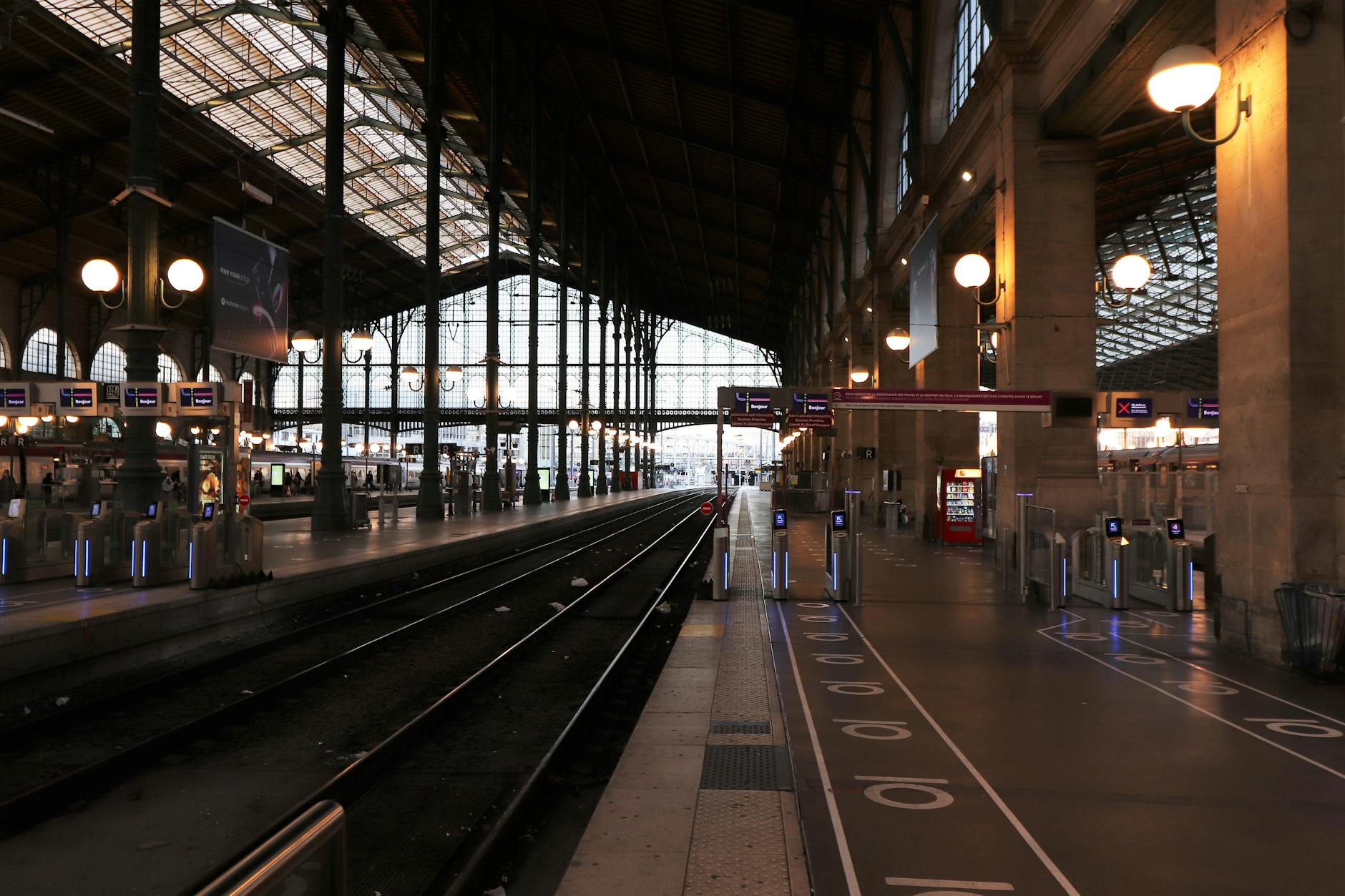
The SNCF runs automatic luggage lockers (consignes automatiques) in the big mainline stations. If you are catching a train from Gare du Nord, Gare de Lyon or Montparnasse later the same day, storing your bags right there is hard to beat. You walk from the locker to the platform with no Metro ride in between.
How the station lockers work
- Find the sign. Follow the pictograms for Consigne or Bagages. Lockers are usually on a lower level or in a quieter corner of the concourse, not next to the platforms, so allow ten minutes to find them in a station you don’t know.
- Clear security. Bags go through an X-ray scanner at the entrance to the locker area, airport-style. Allow for a queue on summer afternoons and Friday evenings.
- Choose a size and pay by card. Prices run roughly €5.50 to €9.50 for 24 hours depending on the locker size. The largest will take a big suitcase plus a cabin bag.
- Keep the code or ticket. Lose it and retrieving your bag means finding staff and proving it is yours, which is slow.
The lockers keep station hours rather than running round the clock, and they close overnight. Check the hours posted at the entrance, especially if you are collecting for a late departure. Locker availability is also the lockers’ weak spot. On busy summer days the large ones can all be taken by early afternoon, and there is no reservation system to fall back on.
Which stations are worth it
Paris has six main termini, each serving different parts of France and Europe, and storage makes most sense at the one your onward train leaves from. If you aren’t sure which that is, check your ticket carefully: people regularly arrive at Gare de Lyon for a train that leaves from Bercy, or at Montparnasse for one leaving from Austerlitz. Our guide to getting around Paris has the basics of how the stations connect by Metro and RER.
For the Eurostar specifically, remember that check-in closes well before departure and there is no storage beyond the border controls. Drop the bags, see the city, and build in time to collect them and still reach the Eurostar terminal on the upper level. Our Paris to London Eurostar guide covers the check-in timings.
Station lockers or an app nearby?
Here is the honest comparison. If the lockers have space and you are travelling as a family or a group, a single large locker is often cheaper than paying per bag through an app. If you are a solo traveller with one case, an app host a few streets from the station usually costs about the same, avoids the scanner queue, and doesn’t close in your face when the lockers are full. Many of the app networks have dozens of hosts within a few minutes’ walk of Gare du Nord and Gare de Lyon. Book one as a backup if you are arriving at a peak time.
Option 4: storing bags at the airports
Charles de Gaulle has a staffed left-luggage service, and Orly has had one too. They exist mainly for two groups: people with long layovers who want to go into Paris without their cases, and people flying out late who want to spend their last day unburdened but still pick up bags on the way to the gate.
We have not been able to confirm the current prices and opening hours of the airport services for this edition, so check the airport’s own website before relying on them. The general pattern is consistent though: airport storage costs more than storage in town, and CDG is 45–60 minutes from central Paris by RER B. For most people it only makes sense if you’re passing back through the airport anyway.
For a last day in Paris before an evening flight, it usually works better to store bags near your hotel or near Gare du Nord, where the RER B to CDG leaves from, then collect them on the way. The airport journey costs a flat €14 on public transport, or €56–65 by licensed taxi depending on which bank of the Seine you’re on. Our airport transfer guide compares all the routes.
Museums, monuments and the bag rules that catch visitors out
A common plan is to check out, head to the Louvre with the suitcase and leave it in the cloakroom. It doesn’t work. Paris’s major sights have tightened their bag rules considerably, and a big case will get you turned away at security.
| Sight | Suitcases allowed? | Cloakroom |
|---|---|---|
| Louvre | No. Bags must be no larger than 55 × 35 × 20 cm | Free, for bags within that size only; collect the same day |
| Eiffel Tower | No. Suitcases and bulky bags are refused at security | None |
| Versailles | No large luggage | For small bags and coats; plan to store cases in Paris |
| Other major museums (Orsay, Orangerie, Rodin) | Generally no; check before you go | Small bags and coats |
The Louvre’s rule is the one that trips most people up because the museum is so close to so many hotels. Its free cloakroom takes a small backpack or a coat, not a wheeled suitcase, and there is no paid storage on site. Several app hosts operate within five minutes’ walk in the 1st arrondissement. Our full Louvre guide covers entrances and timing; the Eiffel Tower guide covers the tower’s security process.

If you are heading to Versailles on your last day, store bags in Paris rather than taking them out to the château. The RER C and the trains from Montparnasse and Saint-Lazare are busy, and there is nothing convenient at the other end. Our guide to getting from Paris to Versailles has the routes.
Which option for which situation
Most luggage problems in Paris fall into one of a few familiar patterns. Here’s what we’d do in each.
Morning arrival, afternoon check-in
Go straight to the hotel and leave the bags. Even if the room isn’t ready, reception will take them, and many will let you use a bathroom to change. There’s no reason to pay for this.
Morning checkout, evening train
Leave the bags at the hotel if your train station is on the way back, or it is easy to get back to the hotel. If the hotel is far from the station — say you’re in Montmartre and leaving from Montparnasse — store near the departure station instead, so the final leg is a short walk rather than a cross-city Metro ride with cases at rush hour.
Arriving by Eurostar, leaving the same evening for somewhere else
Use an app host near Gare du Nord or the station lockers. Then remember the next train may leave from a different station: Gare du Nord to Gare de Lyon is a short RER hop, but it’s still a transfer to allow for.
A long layover at CDG
If you have six hours or more between flights and no checked-through bags to worry about, leaving the airport can be worth it. Store carry-ons at the airport only if you’re sure you’ll come back through the same terminal, otherwise travel light and bring them. Time the return generously; the RER B has its bad days.
A day trip between two hotels
Changing hotels mid-trip, or moving on after a night somewhere else? Drop the bags at the new hotel first, even if it’s early. If the day trip starts from a station, a locker there is a reasonable fallback. Our day trips guide lists which stations serve which destinations.
A family with four bags and a pushchair
Look at a large station locker first. If none is free, choose an app location with a big storage room and good reviews, and book it ahead. Per-bag pricing adds up quickly with children. For more on moving around with them, see our guide to a stroller-friendly Paris.
What not to do
A few approaches look sensible and aren’t.
- Don’t drag cases around sights all day. The Metro has a lot of stairs, few stations have lifts, and turnstiles are narrow. A suitcase that rolls nicely at home becomes miserable on the Line 4 steps at Saint-Michel. Our Metro guide explains the accessibility limits.
- Don’t leave bags “just for a minute” with a stranger or unattended. Unattended luggage in a station triggers a security alert, and the bag may be destroyed. On a café terrace it’s simply a gift to thieves.
- Don’t rely on a café owner being nice. Some will keep a bag behind the counter for a customer, but it’s a favour with no guarantee, no insurance and no recourse.
- Don’t forget the host’s closing time. This is the single most common storage disaster, and it’s entirely avoidable.
- Don’t store passports, medication or electronics. Carry them. No insurance policy makes a lost passport the day before a flight any less painful.
A few tips for travelling lighter
The cheapest luggage storage is the one you never need. A few habits keep the problem small in the first place.
- Pack for the Metro, not the car park. A cabin-size case and a daypack are far easier to manage than one huge suitcase. Our Paris packing list is built around that.
- Use laundry, not extra outfits. Self-service laundrettes (laveries) are everywhere in Paris and a wash-and-dry costs less than a day of bag storage.
- Post things home. If shopping has doubled your luggage, a parcel from La Poste can be cheaper than an airline’s excess-baggage fee.
- Take a taxi on the heavy days. A licensed taxi from your hotel to the station is door-to-door and ends the stairs question. See our taxi and Uber guide for the fares.
Frequently asked questions
How much does luggage storage cost in Paris?
Expect roughly €5–7.50 per bag per day through the app networks once you’ve picked a normal-sized case, although advertised prices start around €2.25–2.50. SNCF station lockers cost about €5.50–9.50 for 24 hours depending on locker size, charged per locker rather than per bag. Hotels store bags for their guests for free. Prices checked September 2026.
Can I store luggage at Gare du Nord?
Yes. Gare du Nord has SNCF left-luggage lockers behind a security scanner, and dozens of app-based hosts within a few minutes’ walk. On summer afternoons the lockers can fill up, so booking an app location as a backup is a sensible move.
Can I bring a suitcase into the Louvre?
No. The Louvre only accepts bags up to 55 × 35 × 20 cm, and its free cloakroom only takes bags within that limit. Store the suitcase at your hotel or with a nearby storage host before you go.
Is there luggage storage at the Eiffel Tower?
No. The tower has no left-luggage facility and refuses suitcases and bulky bags at security. Several storage hosts operate in the surrounding streets of the 7th and 15th arrondissements.
Will my hotel keep my bags after checkout?
Almost certainly, and for free. Nearly every Paris hotel holds guests’ bags on the day of arrival and departure. It’s worth confirming in advance at very small hotels, which may lack a proper storage room or lock up at night.
Is Bounce or Nannybag safe to use in Paris?
Generally yes. Hosts are vetted businesses, bookings include a per-bag guarantee, and problems are rare. The practical risks are early closing and queues rather than theft. Check recent reviews and the host’s hours on your collection day, and keep valuables with you.
Are the station lockers open 24 hours?
No. SNCF lockers follow station hours and close overnight. Check the times posted at the locker entrance before you leave your bags if you plan a late or early collection.
Can I store luggage at Charles de Gaulle Airport?
CDG has a staffed left-luggage service, but it is priced above storage in the city and is only practical if you’re passing back through the airport. Check current rates and hours on the airport’s website before relying on it.
If your onward train leaves from a station you don’t know, it helps to know its layout before you arrive with bags. Our guide to the Paris train stations explains where each station’s platforms, halls and lockers are, and which ones have long walks from the Metro.