Getting Around Paris: The Complete Transportation Guide
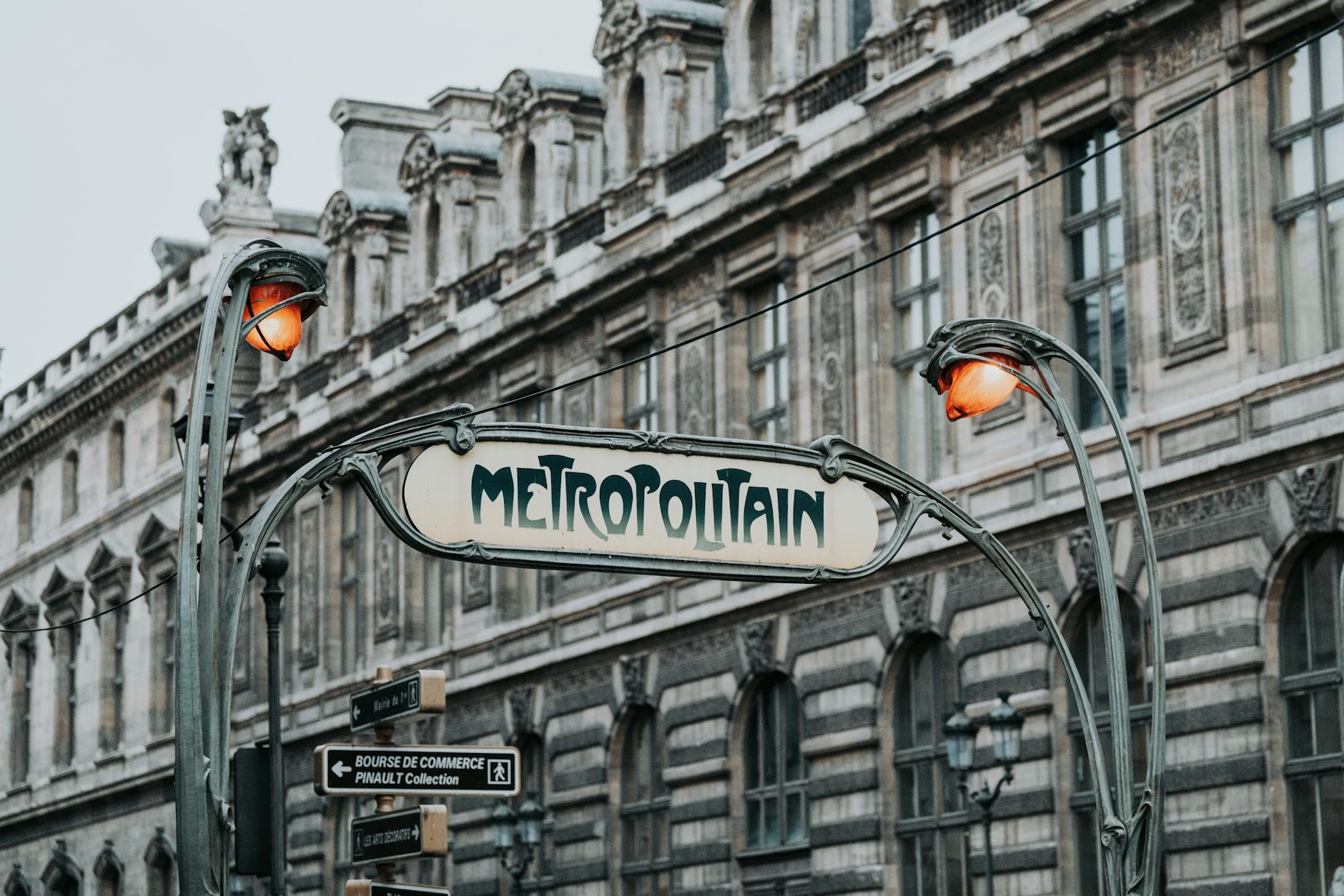
Here is the thing nobody tells you before a first trip: the Paris transit system looks intimidating on the map and turns out to be one of the easiest in the world to use. Sixteen Metro lines, five RER lines, a wall of buses and trams, and you’ll have the hang of it before lunch on day one. Getting around Paris rewards about twenty minutes of upfront reading, and this guide is that reading.
You might need to get from Charles de Gaulle to your hotel without crying, hop from the Eiffel Tower up to Montmartre, or make it out to Versailles for the day. This complete guide to getting around Paris covers every one of those options as they stand in 2026. We lay out the tickets and passes with current prices, walk through each mode in detail, and pass along the practical stuff that turns a baffling first journey into second-nature daily navigation.
Two operators run most of it: RATP (Régie Autonome des Transports Parisiens) and SNCF, France’s national rail company. Between them they handle the Métro, the RER commuter trains, the buses, the trams, and the Transilien suburban network. The system keeps modernizing, too, with contactless payment spreading, new Line 14 extensions, and the early stages of the Grand Paris Express, a huge automated network that will eventually graft 200 kilometers of new line and 68 stations onto the Île-de-France region.
The Paris Métro: Your Primary Way of Getting Around Paris
For the great majority of trips inside the city, the Métro is the fastest and most practical way of getting around Paris. With 16 lines, more than 300 stations, and trains every 2 to 5 minutes at peak, you’re rarely more than a few hundred meters from an entrance anywhere in the center. Service runs from roughly 5:30 AM to 1:00 AM Sunday through Thursday, and stretches to about 2:15 AM on Friday and Saturday nights.
How the Metro Works
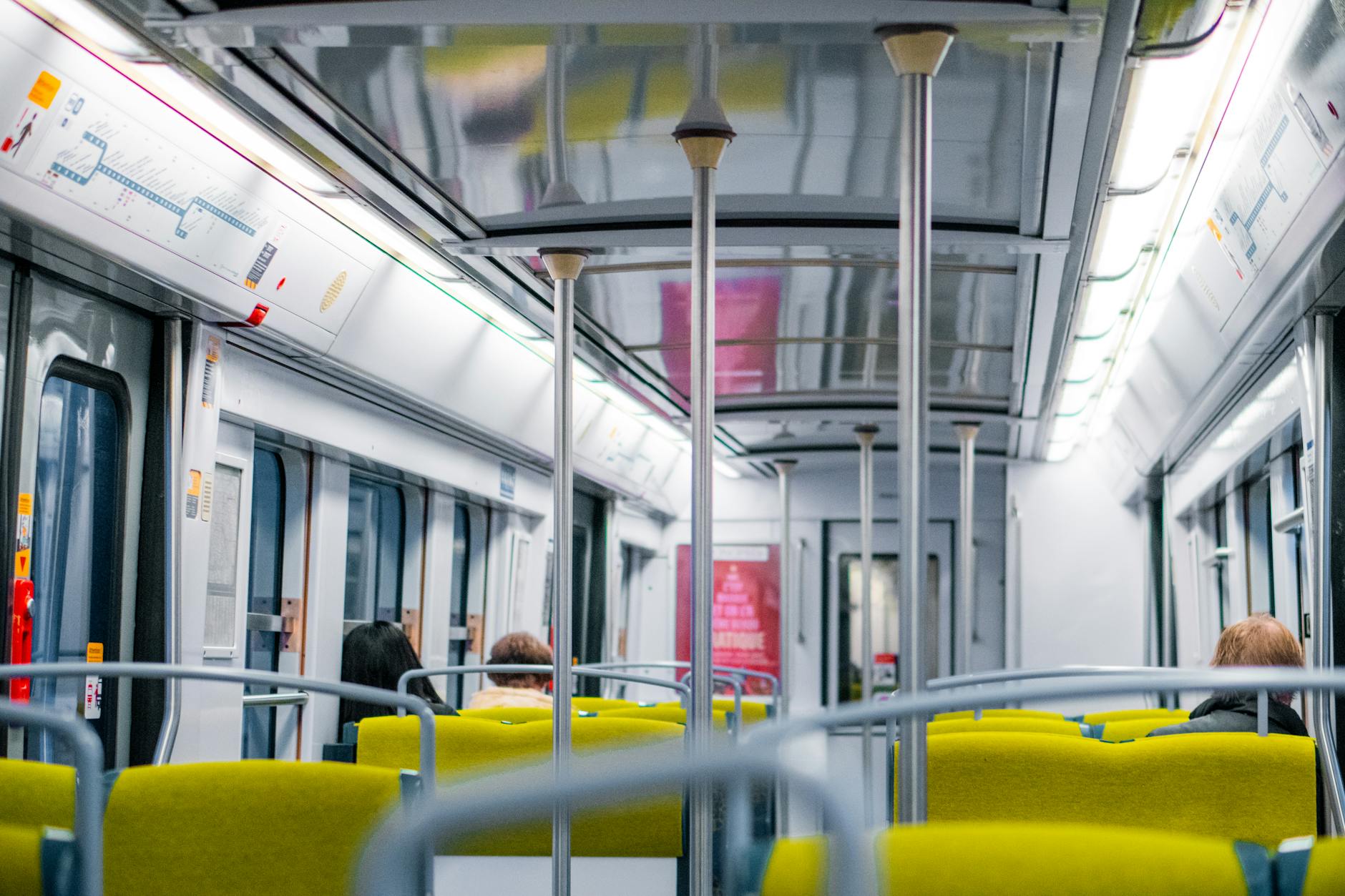
Every line has a number (1 through 14, plus the oddballs 3bis and 7bis) and a color. Trains run in two directions, each one labeled by the terminal station at that end of the line. So to find your way, you only need three facts: your destination station, the line that serves it, and which terminal name points your way. Transfers between lines are called correspondances and they’re well signposted, though a couple of interchanges, Châtelet–Les Halles and Montparnasse–Bienvenüe chief among them, bury you in long underground corridors.
Trains come thick and fast in daytime, every 2 to 3 minutes on the busy lines like 1 and 14 (both fully automated), and every 4 to 7 minutes on the quieter ones. Late at night that stretches to every 8 to 10 minutes. Countdown screens on every platform tell you the wait for the next two trains, so you’re never guessing.
Key Metro Lines for Tourists
Line 1 (La Défense – Château de Vincennes): fully automated, comes constantly. It strings together the Champs-Élysées, the Louvre, Hôtel de Ville, and Bastille. If you only memorize one line, make it this one.
Line 4 (Porte de Clignancourt – Mairie de Montrouge): a straight north–south shot through the middle of Paris, linking Montmartre (change to Line 12 at Pigalle), Gare du Nord, Châtelet, Saint-Germain, and Montparnasse.
Line 6 (Charles de Gaulle–Étoile – Nation): worth riding for the elevated stretches alone, which open up across the Seine, the Eiffel Tower, and the rooftops. It serves Trocadéro, where everyone goes for the Eiffel Tower photo, and Montparnasse.
Line 12 (Front Populaire – Mairie d’Issy): your route to Sacré-Coeur, also linking Montmartre, Madeleine, Concorde, and the Musée d’Orsay area.
Line 14 (Saint-Denis Pleyel – Orly Airport): the newest and slickest line, fully automated with platform screen doors. Its recent extensions south to Orly Airport and north to Saint-Denis make it a genuine game-changer for airport runs and for reaching the Stade de France.
Metro Safety and Etiquette
The Metro is safe on the whole, but pickpocketing is a real problem on the busy lines (especially 1 and 4, and at stations like Châtelet, Gare du Nord, and Opéra). Keep your bag zipped and in front of you, treat any sudden crowding near the doors as a warning sign, and stash your phone in an inside pocket. Let people off before you get on. Stand to the right on escalators so others can climb past on the left. And keep it down: Parisians ride in something close to silence. During rush hour, leave the fold-down seats (strapontins) folded up.
Some of the stations are worth slowing down for. Arts et Métiers (Line 11) is clad floor to ceiling in copper and looks like the inside of a Jules Verne submarine. Louvre–Rivoli (Line 1) lines the platform with reproductions from the museum overhead. Cluny–La Sorbonne (Line 10) has a mosaic ceiling tracing the signatures of famous Latin Quarter intellectuals. And the Art Nouveau entrances Hector Guimard designed for stations like Abbesses and Arts-et-Métiers are landmarks in their own right, surviving from the network’s debut in 1900.
The RER: Suburban Express Trains
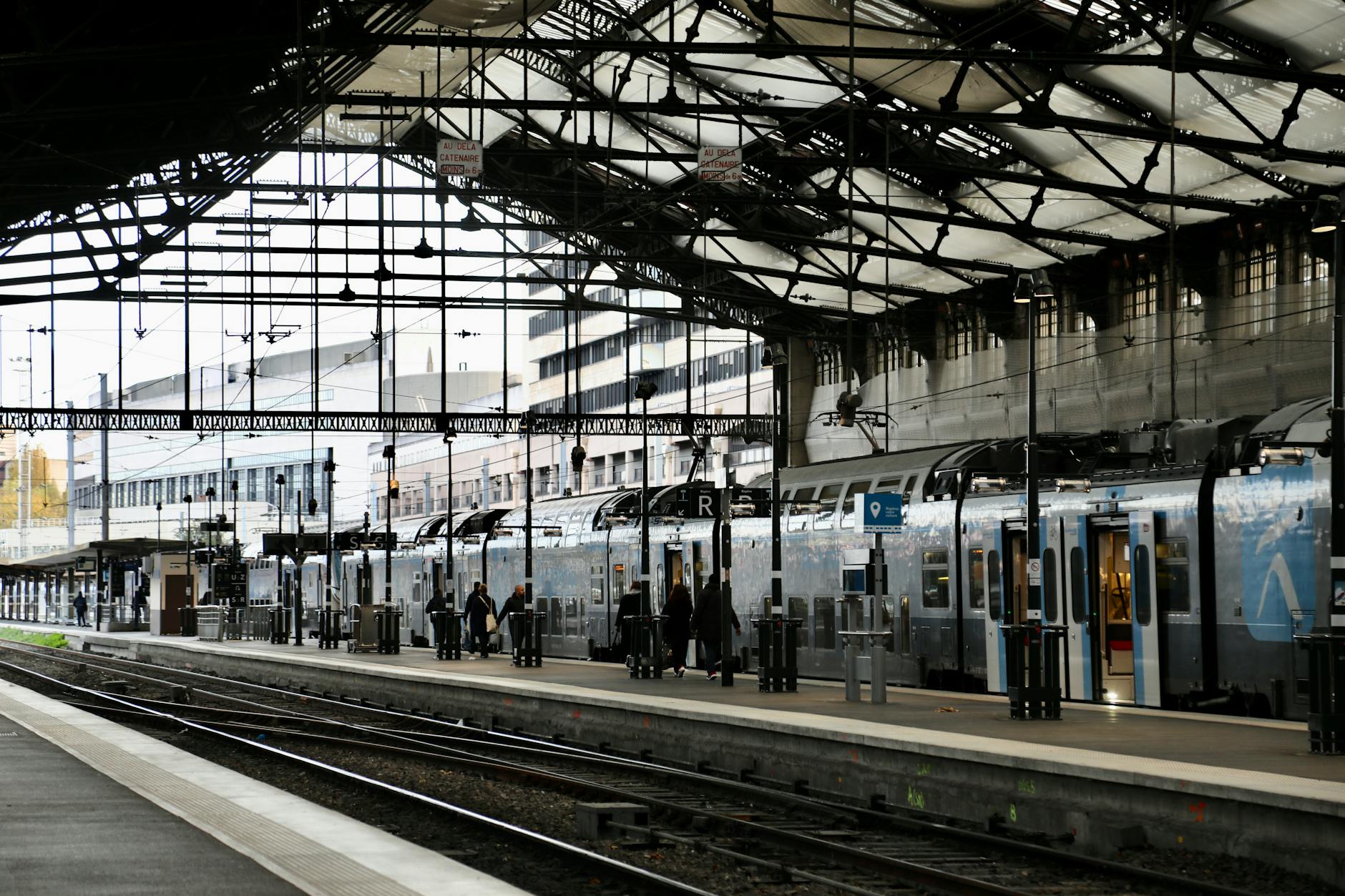
The RER (Réseau Express Régional) is five lines, A through E, that work like an express metro, covering longer distances faster and with fewer stops. Inside central Paris the RER stations sit right on top of Metro stations, and the two share tickets. Where the RER earns its keep is everything beyond the center: both airports, Versailles, Disneyland Paris.
Key RER Lines for Travelers
RER A (Red): the busiest line in Europe, running from La Défense in the west out to Disneyland Paris (Marne-la-Vallée) in the east, by way of Châtelet–Les Halles and Gare de Lyon. This is your Disneyland line.
RER B (Blue): the airport line. It runs from Charles de Gaulle in the north down through Gare du Nord, Châtelet–Les Halles, and the Latin Quarter, then continues south toward Orly (where you switch to Line 14 or OrlyVal). CDG to central Paris takes roughly 25 to 35 minutes.
RER C (Yellow): the Versailles line. It traces the Left Bank of the Seine, serving the Eiffel Tower area (Champ de Mars–Tour Eiffel station) and the Musée d’Orsay, then carries on to Versailles–Château Rive Gauche. It’s handy for the Château de Fontainebleau area as well. Central Paris to Versailles runs about 30 to 40 minutes.
Important RER Tips
Here’s where people come unstuck. RER lines branch heavily once they hit the suburbs, so a single line can have several terminal stations, and not every train stops everywhere. Always check the electronic board for the train’s final destination and its list of stops before you board. Your ticket has to cover the whole trip, too: a single Metro ticket covers every zone inside Paris, but RER journeys to the suburbs and airports need a zone-appropriate fare. And hang onto your ticket after you enter, because you’ll need it again to get through the turnstiles when you arrive.
Paris Transport Tickets and Passes: 2026 Prices
The way you pay for getting around Paris got a big overhaul recently. Paper tickets disappeared entirely as of late 2025. Everything now loads onto a reusable Navigo card or comes through a smartphone app. Here’s the full menu of options for 2026.
Navigo Easy Card
For most short-stay visitors, the Navigo Easy is the one to get. The reusable plastic card is a one-time €2, and you load it with single tickets (Ticket t+) at €2.55 apiece. Each Ticket t+ buys one journey on the Metro, the RER within central Paris, the bus, or the tram, with unlimited transfers inside the same mode for up to 2 hours (90 minutes for bus and tram). You can stack up to 30 tickets on one card. Buy the card and top it up at any station machine; they take credit cards and switch to English.
Navigo Jour (Day Pass)
The Navigo Jour runs €12.30 (the 2026 all-zone rate) and gives you unlimited travel for one calendar day across all Metro, RER, bus, and tram lines in every zone, airport transfers included. It pays off the moment you expect five or more journeys in a day, or when you’d simply rather stop thinking about individual tickets.
Navigo Semaine (Weekly Pass)
The Navigo Semaine is €32.40 for all zones and covers unlimited travel from Monday to Sunday. One catch worth burning into memory: the pass always runs Monday to Sunday no matter when you buy it, so it’s only a bargain if you buy it on a Monday. Arrive on a Wednesday and you’ve paid for seven days but get five. It needs a Navigo Découverte card (€5 plus a passport photo) and covers all zones including CDG and Orly, which makes it superb value for anyone flying in who plans to ride a lot.
Navigo Mois (Monthly Pass)
At €90.80 a month for all zones, the Navigo Mois only adds up for stays of three weeks or more. Like the weekly, it runs by calendar month.
Smartphone Tickets
The Île-de-France Mobilités app and the Bonjour RATP app both let you buy tickets straight on your phone over NFC. Your phone becomes the pass: tap it on the reader at the turnstile exactly as you would a plastic card. If your phone supports NFC and you’ve got mobile data, this is the most convenient route of all. Both apps are free, available in English, and take international credit cards.
Paris Buses: A Scenic Alternative
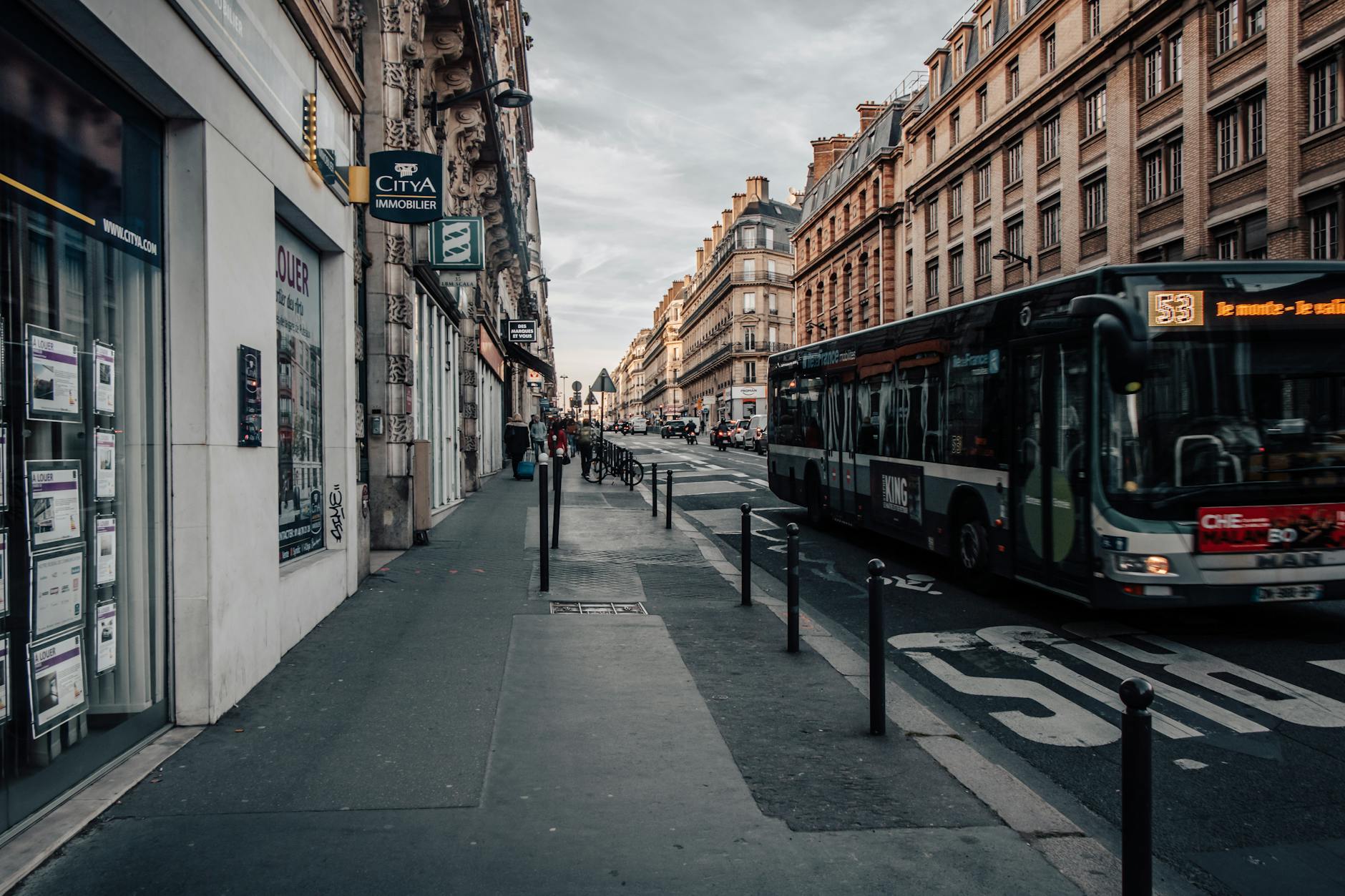
The Metro is faster, but it can’t give you a window. The bus network reaches every corner of the city across more than 60 lines, running roughly 6:30 AM to 8:30 PM (with some Noctilien night buses carrying on overnight). Buses use the same tickets as the Metro, so one Ticket t+ or one tap of your Navigo covers a journey with unlimited bus-to-bus or bus-to-tram transfers for 90 minutes.
A few routes double as sightseeing for the price of a fare. Bus 69 crosses the city east to west past the Eiffel Tower, Invalides, the Musée d’Orsay, the Louvre, and Bastille, essentially a self-guided tour on a transit ticket. Bus 87 links the Eiffel Tower area to the Marais by way of Saint-Germain. Bus 63 hugs the Left Bank from Gare de Lyon past Notre-Dame and through Saint-Germain to Trocadéro.
This year Paris is rolling out contactless bank-card payment on buses, so you can tap your Visa or Mastercard on the reader as you board and the right fare comes off automatically. It isn’t on the Metro yet, but it makes the bus an unusually easy option for anyone who hasn’t bought a Navigo card.
Walking in Paris: The Best Way to Discover the City

Few big cities are as walkable as Paris. The center is genuinely small: the Arc de Triomphe to Notre-Dame is about 45 minutes on foot, Montmartre to the Latin Quarter roughly an hour. And walking isn’t only how you get from A to B; it’s how the city shows you who it is. The tucked-away courtyards, the views you didn’t see coming, the silent little squares, the street art: none of it appears through a Metro window.
The city has poured money into walking. The Paris Respire (“Paris Breathes”) program shuts major streets to cars on Sundays and public holidays, including stretches along the Seine and in the Marais, Montmartre, and around the Canal Saint-Martin. The Right Bank expressway along the river has been turned over to pedestrians for good. Crossing the big boulevards at marked crossings is safe enough, but a word of warning: Parisian drivers yield to pedestrians less readily than their counterparts in many European cities, so catch a driver’s eye before you step off the curb.
If you want a walk with a spine to it, the banks of the Seine (a UNESCO World Heritage site) give you an unbroken path from the Eiffel Tower past the Grand Palais, through the Louvre garden, past Notre-Dame, and on to the Bastille. For something quieter, the Coulée Verte René-Dumont, an elevated park laid over an old railway line in the 12th, actually predates New York’s High Line and floats you above the traffic with no cars in sight.
Cycling and Vélib’: Paris on Two Wheels
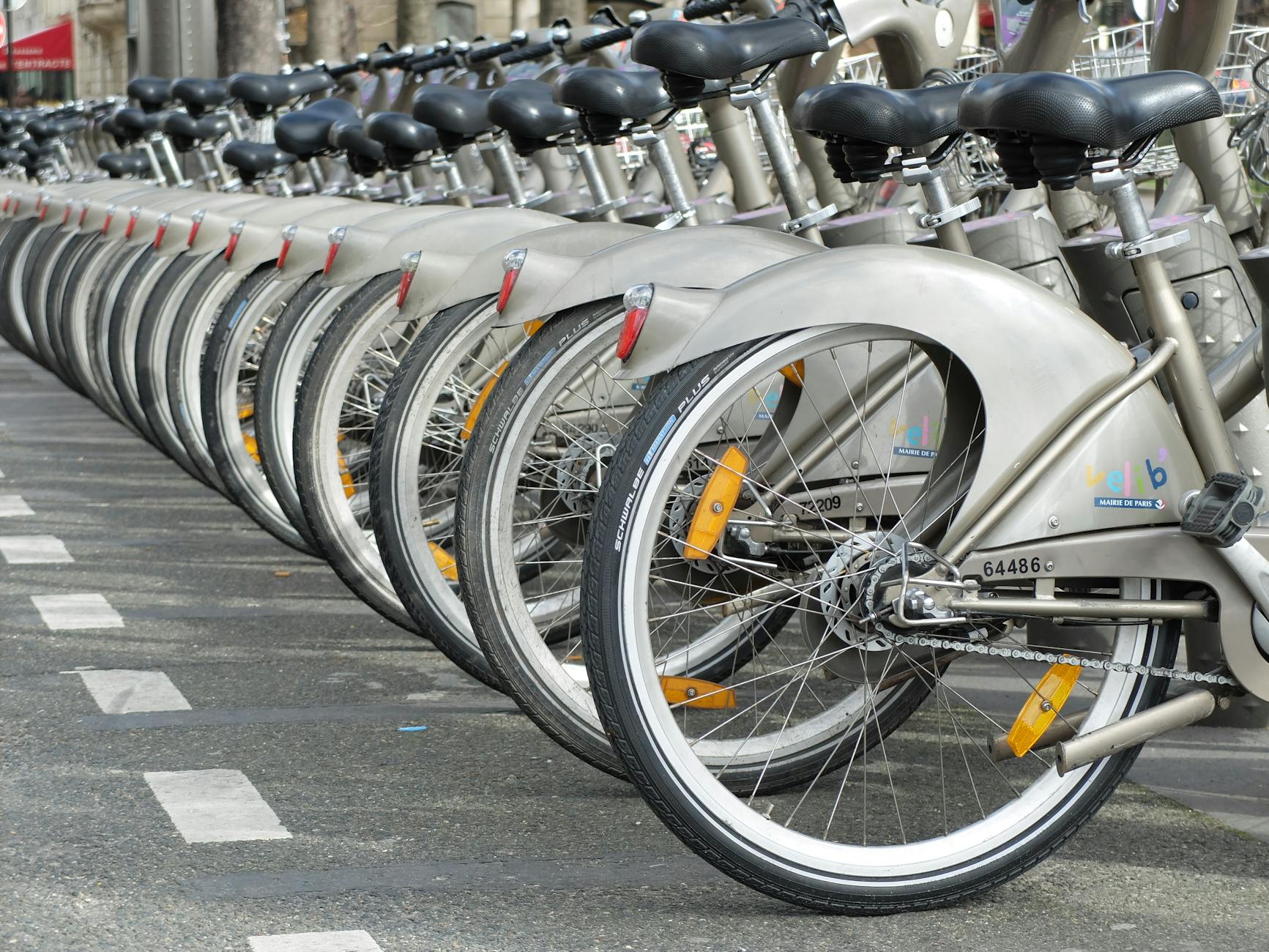
Paris has reinvented itself for the bicycle. The city’s Plan Vélo 2021–2026 put €250 million into cycling, pushing the network past 1,000 kilometers of bike lanes, up from a mere 200 km back in 2001. Protected lanes now run along the major arteries, Rue de Rivoli, Boulevard de Sébastopol, both banks of the Seine, which makes cycling a real and pleasant way of getting around Paris rather than an act of faith.
Vélib’ Métropole Bike Sharing
Vélib’ is the city’s public bike-share, with around 19,000 bikes (roughly 40% of them electric-assist) docked at 1,464 stations across Paris and the inner suburbs. Green bikes are mechanical, blue bikes are electric, and the whole thing runs 24/7.
For a visitor, the simplest move is a Day Pass or 3-Day Pass through the Vélib’ app or at a station terminal. Pricing is a base subscription plus time used: the first 30 minutes on a mechanical bike are free with each trip, and the first 30 on an electric bike carry a small extra fee. For the way most tourists ride, pedal to a landmark, dock, grab a fresh bike later, the cost barely registers. Just dock inside 30 minutes every time, or the time charges start climbing fast.
Cycling Tips and Safety
Cycling here has its own quirks. At certain intersections you’re allowed to ride through a red light where a small triangular yield sign is posted. Plenty of one-way streets let bikes go both directions (contresens cyclable). The protected lanes are generally safe and in good shape. That said, watch for pedestrians wandering into the bike lane without a glance, and treat the big roundabouts with respect, because Place de la Concorde and Place de la Bastille both demand a confident rider. Helmets aren’t legally required for adults, but wear one anyway.
A note on electric scooters: after a public referendum in 2023, Paris kicked the commercial rental e-scooter companies (Lime, Dott, Tier) out of the city. You won’t find rental scooters on the streets anymore. Privately owned ones are still legal, subject to speed limits.
Taxis and Ride-Hailing Apps in Paris
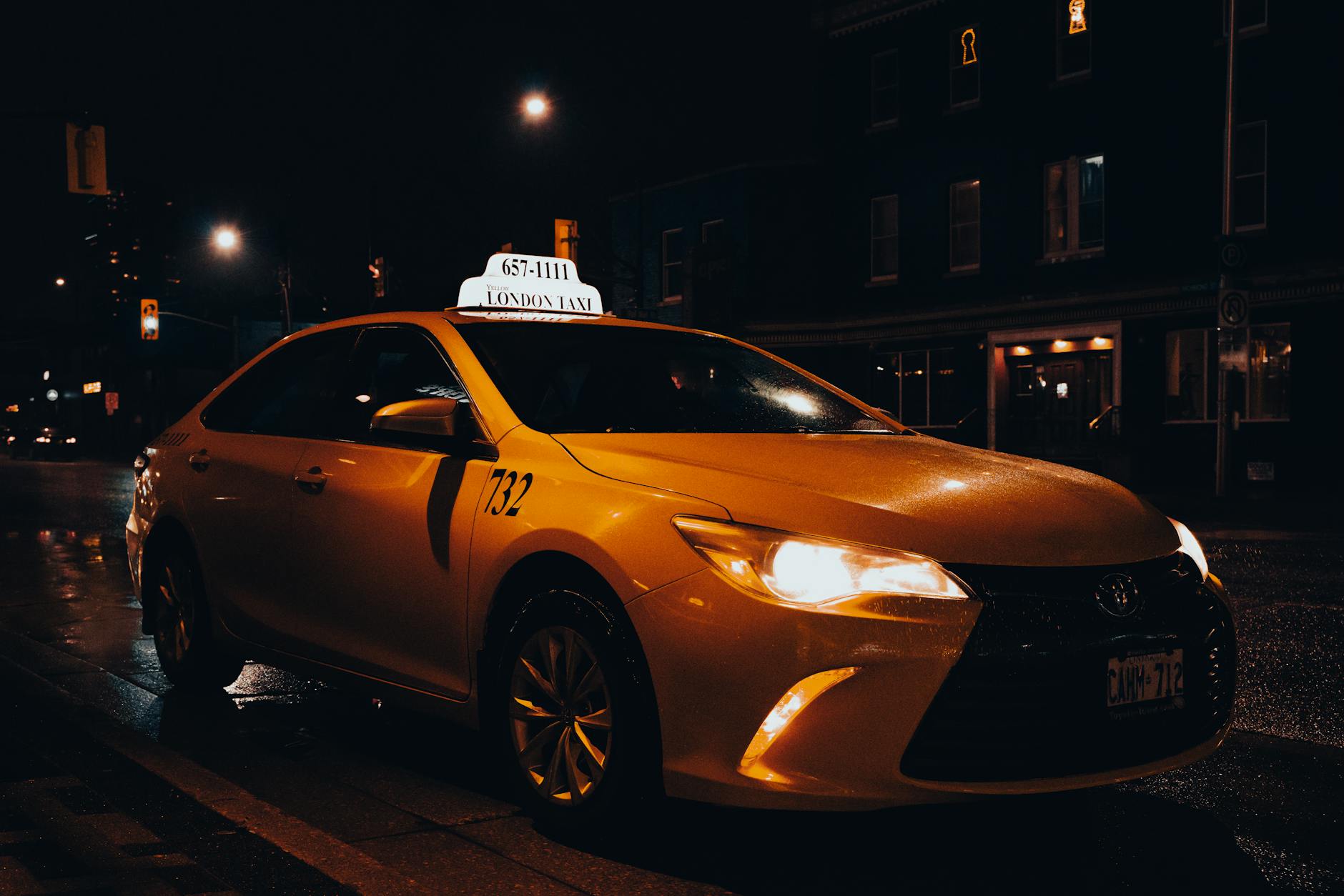
Taxis and ride-hailing apps cover the gaps transit leaves: the late-night trip home, the day you’re hauling heavy bags, the moment you just want a door-to-door ride and no stairs. Paris has a tightly regulated taxi system running alongside several ride-hailing apps.
Official Paris Taxis
You can spot an official Paris taxi by the lit “TAXI” sign on the roof, green when it’s free, red or dark when it’s taken. Every legitimate one runs a meter. The minimum fare is €7.30, and a typical cross-town trip lands at €10 to €25. The key fact: taxi fares to and from the airports are fixed by law, €56 to the Right Bank and €65 to the Left Bank from CDG, €32 to the Right Bank and €37 to the Left Bank from Orly. Those flat rates take the “scenic route” scam off the table entirely.
Flag a taxi on the street by the green roof light, or find one at a designated rank (station de taxi) near the major sights, train stations, and hotels. The G7 app is the most established taxi-booking app in town and will order you an official cab with an estimated fare upfront.
Uber, Bolt, and Other Apps
Uber and Bolt both run in Paris and feel familiar to anyone who’s used them elsewhere. Fares usually match or slightly undercut taxis on standard trips, though surge pricing in a rainstorm, after an event, or late at night can shove them well past taxi rates. Both show the estimated fare before you commit, take credit cards, and track the ride by GPS, all small advantages over a traditional taxi where you might hit a language barrier.
A few more apps worth keeping on your phone: FREE NOW (which pools taxis and private drivers), Heetch (a late-night favorite), and Marcel (an electric fleet). The thrifty move is to check two or three apps before you confirm. Tips aren’t expected, but rounding up or adding 5 to 10% is a nice touch.
Avoiding Taxi Scams
Official Paris taxis are regulated and mostly honest, but scams happen, and they target tourists at airports and train stations above all. Never take a ride from anyone who walks up to you inside a terminal or station; those are illegal, unlicensed drivers, full stop. Use the official rank or book through an app. At Gare du Nord the official rank is outside the main exit, so wave off anyone offering a lift inside. Check that the meter is running as you set off, and know the fixed airport fares cold so you can tell at a glance whether the charge is right.
Airport Transfers: CDG and Orly to Central Paris
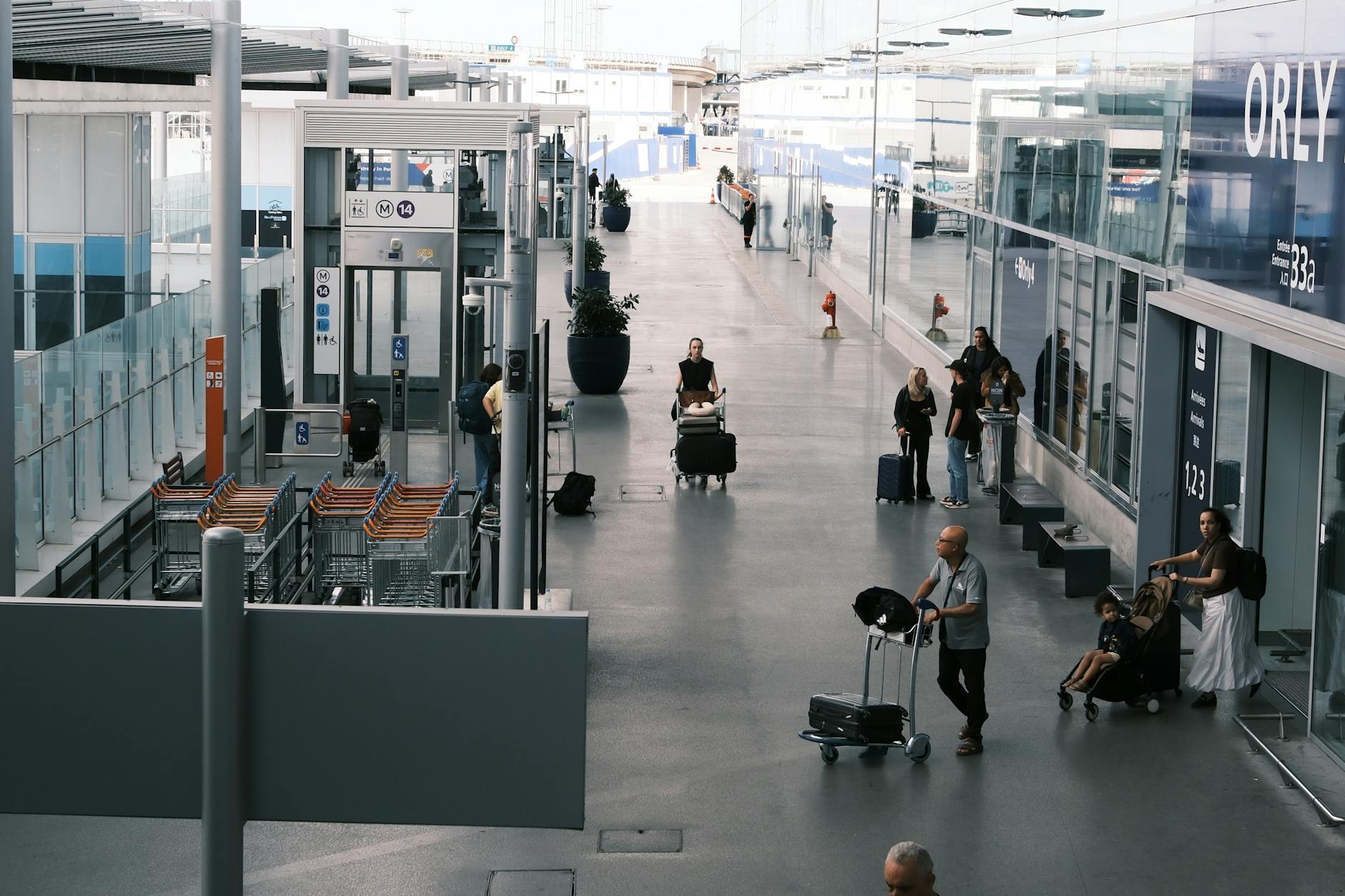
The trip from the airport to your hotel is, for a lot of first-timers, the most stressful stretch of getting around Paris, made worse by jet lag and unfamiliar signs. So here’s every option for both major airports, with current 2026 prices and a clear recommendation for each.
From Charles de Gaulle (CDG) Airport
RER B Train (Recommended): the most efficient choice for most people. Trains leave the CDG terminals every 10 to 15 minutes for central stations including Gare du Nord (25 min), Châtelet–Les Halles (28 min), and Saint-Michel (32 min). The fare is €14 for the Paris Region to Airports ticket. Follow the “RER B / Trains to Paris” signs from your terminal. One 2026 update to flag: the RoissyBus was permanently discontinued in March 2026, so the RER B is now the primary public-transport option out of CDG.
Taxi (Fixed Fare): €56 to Right Bank addresses, €65 to the Left Bank. Reckon on 45 to 75 minutes depending on traffic. Follow the “Taxis” signs to the official rank outside your terminal. Those fixed fares only apply to official taxis, so check the roof sign and the meter.
Private Transfer/Shuttle: a pre-booked car generally runs €60 to €90 for a sedan, with a driver meeting you at arrivals and taking you straight to the door. It earns its premium for a group of three or four splitting the cost, or for a late arrival when you want your ride locked in.
From Orly Airport
Metro Line 14 (Recommended): running automated Line 14 right into Orly has transformed this transfer. Fast, dependable trains link Orly to Châtelet–Les Halles in about 25 minutes, and they come often. For most visitors this is now the easiest option going.
OrlyVal + RER B: the OrlyVal shuttle runs from the Orly terminals to Antony station on the RER B, where you pick up the line into central Paris. Total time is roughly 35 minutes to Châtelet, combined cost around €14.
Taxi (Fixed Fare): €32 to Right Bank addresses, €37 to the Left Bank. Figure 30 to 50 minutes depending on traffic.
Seine River Boats and Batobus
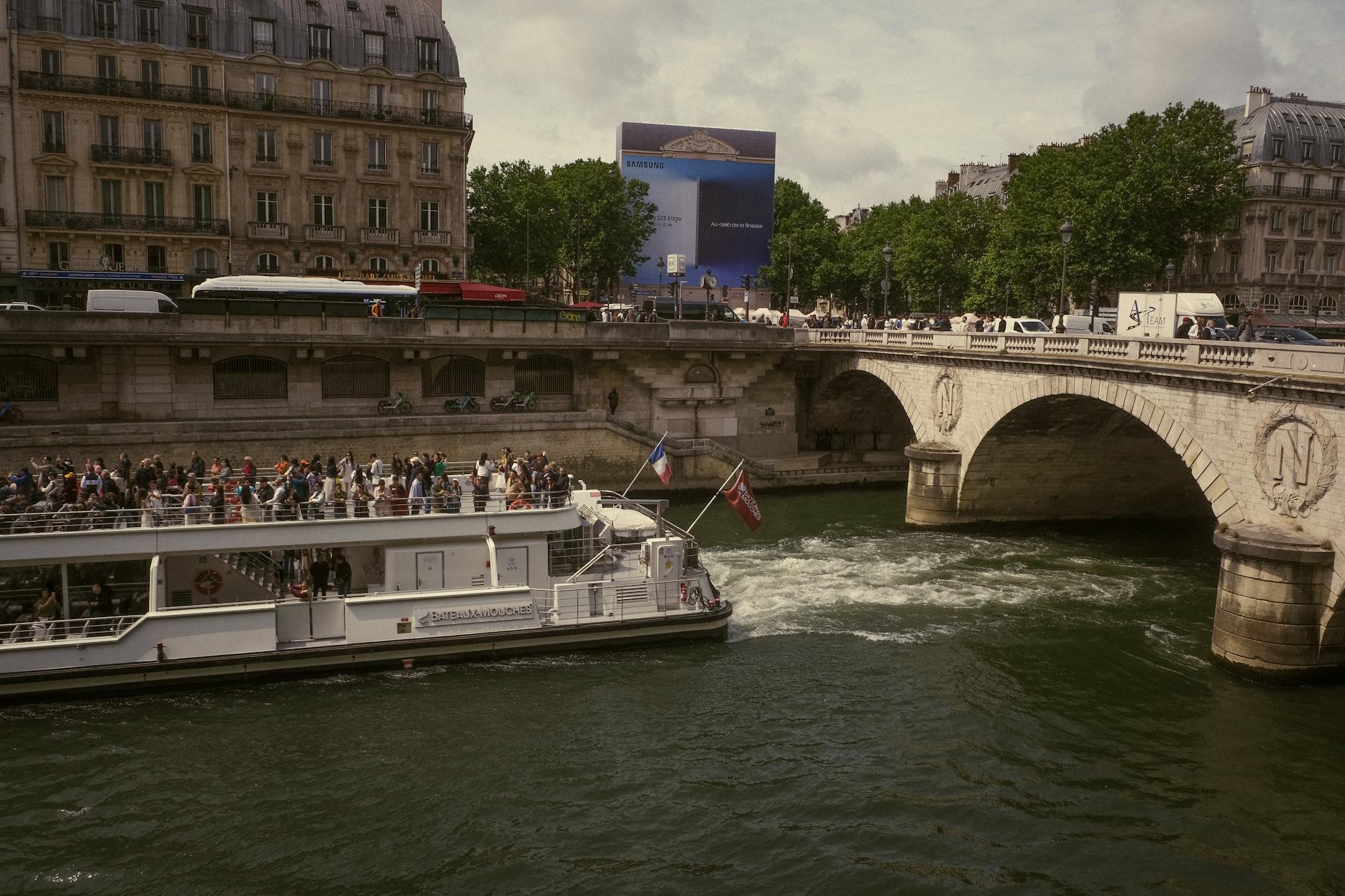
The Batobus runs a river shuttle up and down the Seine with nine stops beside the big landmarks: Eiffel Tower, Musée d’Orsay, Saint-Germain-des-Prés, Notre-Dame, Jardin des Plantes, Hôtel de Ville, Louvre, Champs-Élysées, and Beaugrenelle. It’s a practical way to get around and a scenic one at the same time. Day passes are about €19 and two-day passes around €21, which isn’t cheap measured purely as transport, but looks like a steal once you remember you’re folding a Seine cruise into the deal. It runs roughly 10:00 AM to 7:00 PM (later in summer), with boats every 20 to 25 minutes.
Train Stations and Connections Beyond Paris
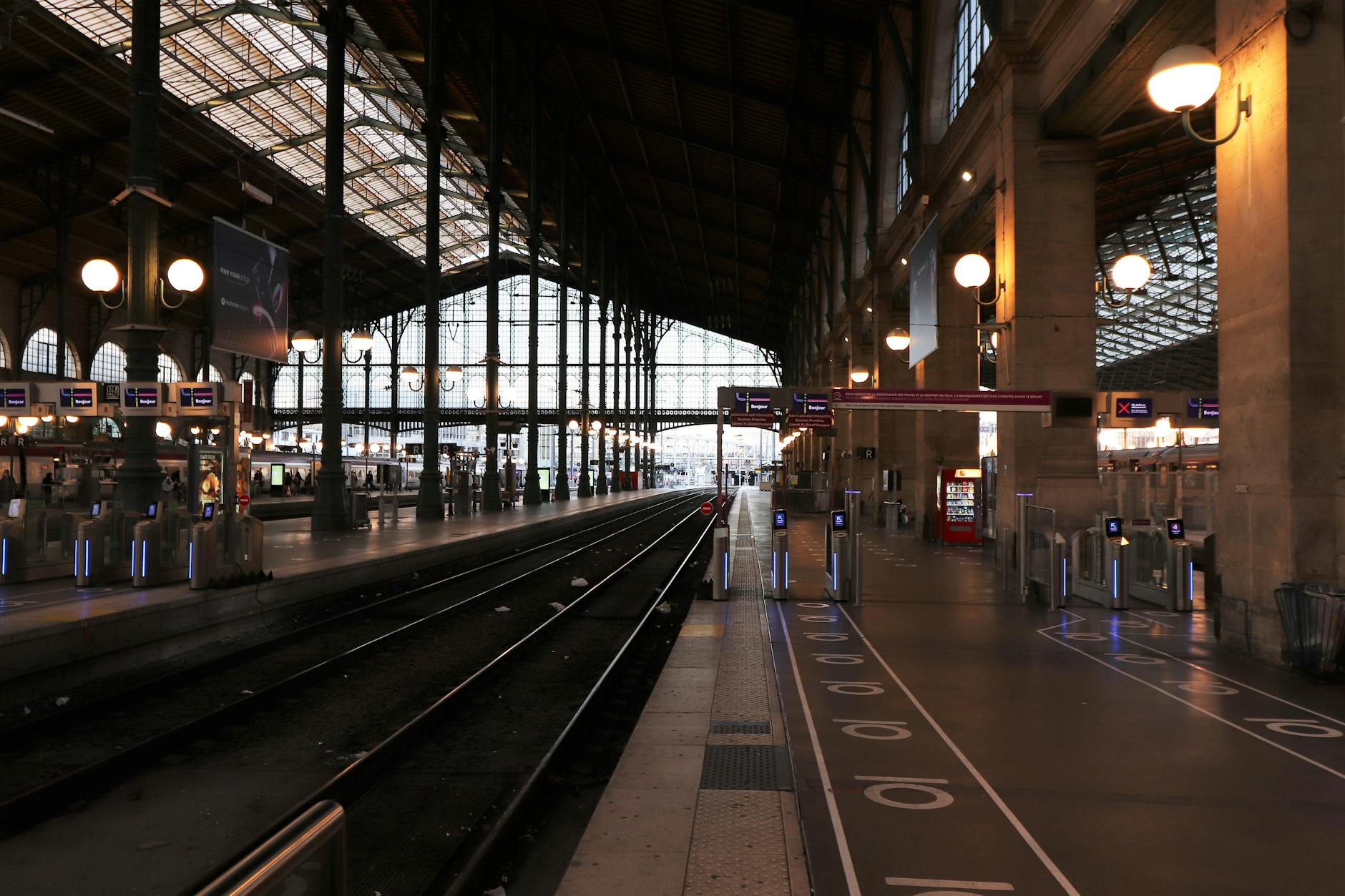
Paris has seven major train stations, each pointed at a different part of the map. Knowing which one you need is half the battle for day trips from Paris and onward travel.
Gare du Nord: Eurostar to London (2h15), trains to Brussels (1h22), Amsterdam (3h20), and Cologne, plus northern France. The busiest station in Europe.
Gare de Lyon: TGV to Lyon (2h), Marseille (3h15), Nice (5h30), and the rest of the Riviera. Also the Alps for ski season, and Italy.
Gare Montparnasse: trains to Brittany (Rennes, Saint-Malo), the Loire Valley (Tours, Amboise), Bordeaux, and the southwest. It’s also where you catch a Chartres day trip.
Gare de l’Est: trains to Strasbourg, Reims (for the Champagne day trips), Luxembourg, and points east.
Gare Saint-Lazare: trains to Normandy, Rouen, Giverny (Monet’s garden), and the D-Day beaches by way of Caen.
For international high-speed rail, the Eurostar out of Gare du Nord reaches London St Pancras in about 2 hours 15 minutes. Book well ahead for the cheap fares (from around €39 one-way), and arrive at least 30 minutes early for security and passport control, since the gates shut 30 minutes before departure.
Paris Trams: Connecting the Periphery
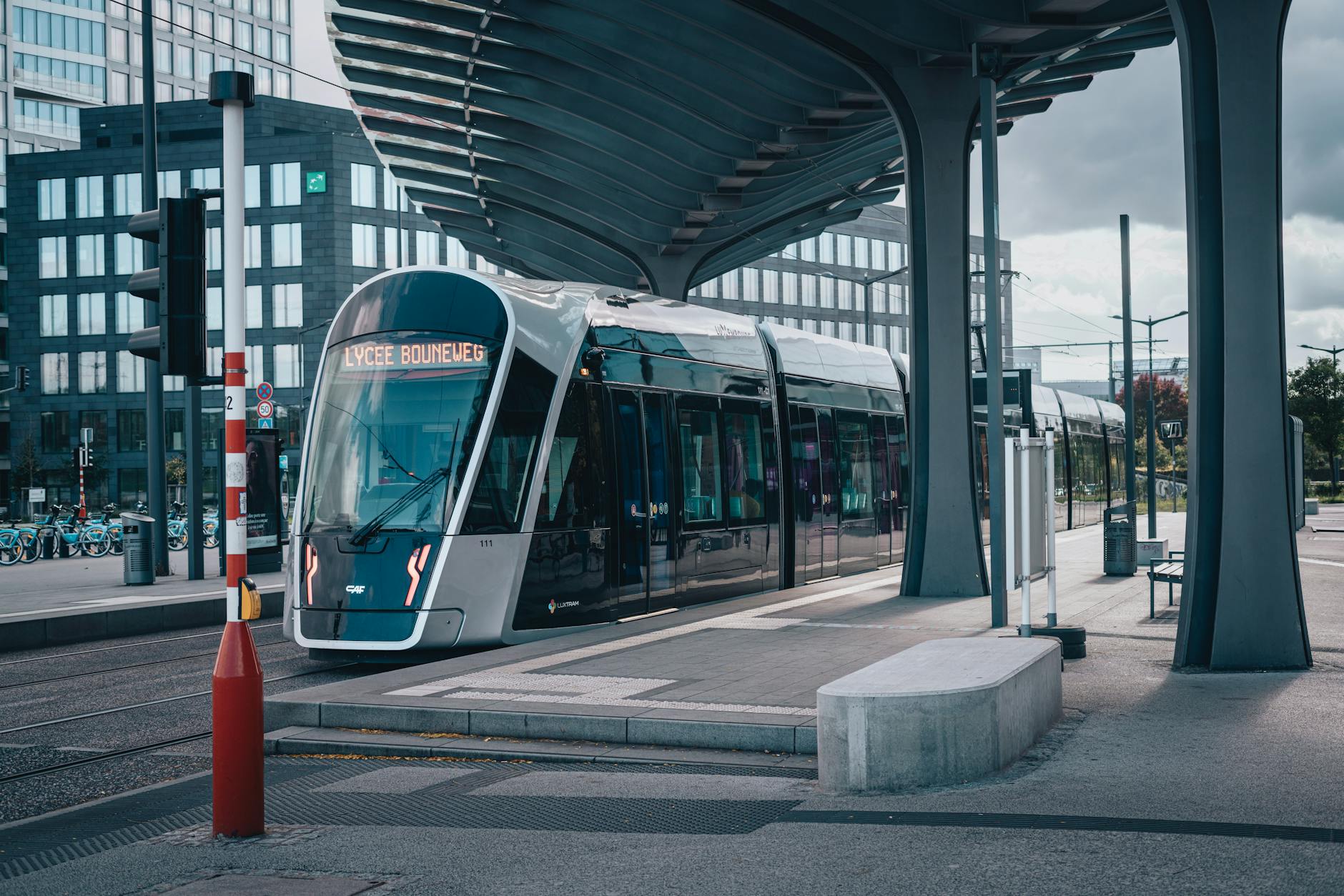
Paris has a growing tram network, 10 lines that mostly trace the city’s outer ring and push into the suburbs. Trams won’t do much for central sightseeing, but they’re useful for specific errands. T3a and T3b circle most of Paris along the Boulevards des Maréchaux, the ring of boulevards marking the old city boundary, running from Pont du Garigliano to Porte d’Asnières. They take the same tickets as buses: a Ticket t+ at €2.05 or your Navigo pass.
Practical Tips for Getting Around Paris
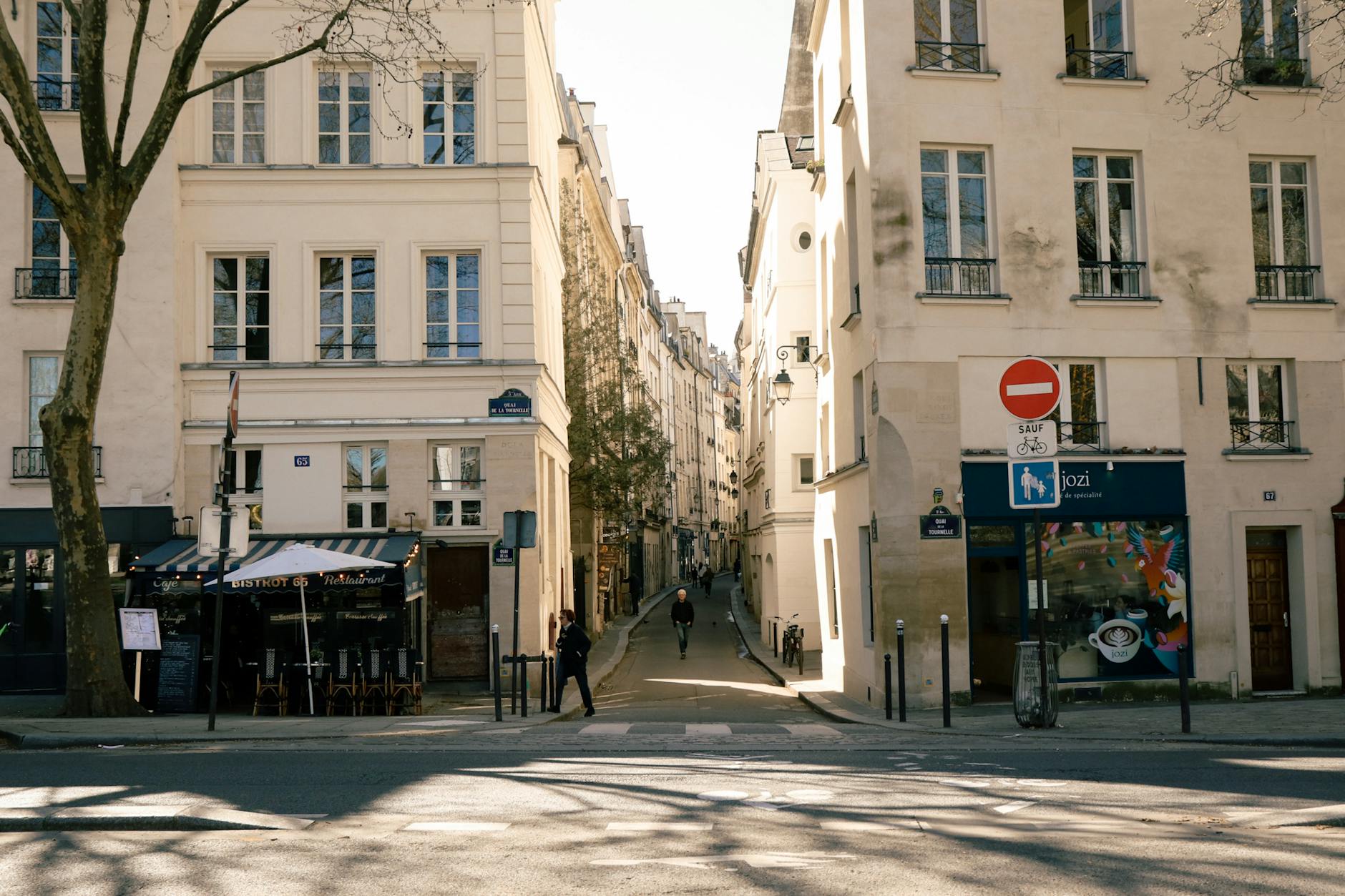
A handful of tested habits will have you navigating the system with confidence from day one.
Download the apps before you land. Île-de-France Mobilités gives you real-time Metro, bus, and RER info and an excellent journey planner. Citymapper is unbeatable for multimodal routing, weighing Metro, bus, walking, cycling, and ride-hailing against each other for any trip. Google Maps handles transit directions and walking routes reliably. And Bonjour RATP carries official RATP info plus mobile ticketing.
Dodge the rush if you can. The Metro is at its worst from 8:00 to 9:30 AM and 5:30 to 7:30 PM on weekdays, and Lines 1, 4, and 13 take the brunt of it. Shift your travel to off-peak and the whole thing gets dramatically more pleasant. Weekends and the middle of the day are easy.
Keep your ticket until you’re out. On the RER you have to feed your ticket into the exit turnstile, and without it you’re stuck or staring down a fine. Even on the Metro, where the exit gates don’t always ask for one, inspectors run random checks and the penalty for riding without a valid ticket starts at €50.
Accessibility. The Paris Metro is one of the oldest in the world, and most stations have no elevator. Lines 14 and 1 are fully accessible, as are all the buses and trams. For wheelchair users or anyone with heavy luggage, the bus is often the smart call. RER stations usually have elevators, though don’t count on every one of them working.
Mind the pickpockets. Stay sharp at the busy stations (Châtelet, Gare du Nord, Opéra, Trocadéro) and on Line 1. The usual tricks are crowding at the doors, fake petitions, and staged distractions. Keep valuables in a front pocket or a cross-body bag, and be doubly watchful when a train packs out.
After hours. Once the Metro shuts (around 1:00 AM on weeknights), the Noctilien night bus network takes over: 47 lines running roughly 12:30 AM to 5:30 AM, hubbed at Châtelet and the main train stations. Standard Metro and bus tickets work on Noctilien. Failing that, Uber and Bolt are both easy to find for a late ride.
Getting Around Paris with Luggage
Moving through Paris with suitcases calls for a bit of strategy, because the city’s historic bones were never laid out with wheeled luggage in mind. Metro stations tend to throw flights of stairs at you with no escalator or elevator in sight, and wrestling a heavy bag up a narrow Metro stairwell ranks among the least fun things you’ll do in Paris. On arrival and departure days, weigh the alternatives.
For the leg between CDG or Orly and your hotel, a taxi or private transfer often earns its extra cost over the RER when you’re loaded down. If you do take the RER B from CDG, the cars have luggage racks, but the transfer at Gare du Nord onto the Metro means a serious climb. Line 14 is the exception: fully accessible, with roomy trains built for bags. If your hotel sits near any Line 14 station, route your airport transfer to use it.
For mid-trip storage, when you’ve checked out of one hotel and into another with dead hours to kill in between, several luggage services operate around the city. Nannybag and LuggageHero team up with shops, cafés, and hotels near the major stations and tourist zones, charging €6 to €10 per bag per day. Left-luggage lockers (consignes) exist at the major train stations too, though they don’t come cheap (€5.50 to €15 per item).
When you’re booking a room, factor in how close it sits to a Metro station with elevator access or a direct airport link. Anywhere near Gare du Nord, Gare de Lyon, or a Line 14 station makes for the smoothest arrivals and departures. And if your hotel is down a narrow side street, check whether a taxi can actually reach it, because some Paris streets are too tight for a car, which means hauling your bags the last few blocks on foot.
Transport Options for Day Trips from Paris
Getting around Paris doesn’t stop at the city limits, and the region’s first-rate rail network makes a long list of day trips easy. Most destinations are within 30 to 90 minutes by train.
Versailles: take RER C from central Paris to Versailles–Château Rive Gauche (30 to 40 minutes, about €4 one-way), then walk 10 minutes to the Palace gate. Trains leave often from stations including Champ de Mars–Tour Eiffel, Musée d’Orsay, and Saint-Michel. Got a Navigo weekly or monthly pass? The ride is already covered.
Disneyland Paris: RER A from central Paris to Marne-la-Vallée–Chessy (35 to 45 minutes, about €8 one-way). The station empties out right at the park gate. Trains come every 10 to 15 minutes.
Giverny (Monet’s Garden): train from Gare Saint-Lazare to Vernon–Giverny (about 45 minutes, €15 to €25 one-way), then a shuttle bus or a 5 km bike ride on to Giverny. Trains run roughly hourly.
Champagne Region (Reims/Épernay): TGV from Gare de l’Est to Reims (45 minutes, from €15 if you book ahead). Épernay is a 25-minute regional train on from Reims. Lock in TGV tickets early on SNCF Connect for the best fares.
Mont-Saint-Michel: TGV from Gare Montparnasse to Rennes or Dol-de-Bretagne (1h30 to 2h30), then a regional bus the rest of the way. Treat this as a full-day outing. An organized tour from Paris is simpler, if less flexible.
Frequently Asked Questions About Getting Around Paris
What is the best way to get around Paris?
The Metro is fastest and most practical for the majority of trips. For short hops (under 1 km), walking is often quicker once you count the time it takes to get down to a platform. Buses give you the same trip with a view, and Vélib’ bikes shine over the 2 to 4 km stretches between neighborhoods. The best approach mixes all four, picking by distance, time of day, and weather.
How much does the Paris Metro cost in 2026?
A single Ticket t+ is €2.55 for one journey on the Metro, RER (within central Paris), bus, or tram. The Navigo Easy card you load them onto is a one-time €2. Day passes run €12.30, and weekly passes (Monday to Sunday) cost €32.40 for unlimited all-zone travel. For a 1-to-3-day stay with moderate riding, the Navigo Easy loaded with t+ tickets is your best bet.
Can I use a credit card to ride the Paris Metro?
Not straight at the Metro turnstile in 2026; for that you need a Navigo card or a smartphone ticket. Contactless bank-card payment is rolling out on the buses, though, where you can tap a Visa or Mastercard right on the reader. You can also buy tickets through the Bonjour RATP and Île-de-France Mobilités apps with an international credit card.
How do I get from CDG Airport to central Paris?
The RER B is the one to take: €14, roughly 25 to 35 minutes to Gare du Nord or Châtelet–Les Halles, with trains every 10 to 15 minutes. Taxis run a fixed €56 (Right Bank) or €65 (Left Bank). The RoissyBus was discontinued in March 2026. From Orly, Metro Line 14 is the best option.
Is the Paris Metro safe at night?
It’s generally safe right up to closing (1:00 to 2:15 AM). Stations are well lit and covered by cameras. Skip empty carriages late at night and stay near other riders. Once it closes, Noctilien night buses or a ride-hailing app (Uber, Bolt) are your best alternatives.
Should I buy a Navigo weekly pass?
If you land on a Monday and plan to ride a lot (four-plus trips a day), the Navigo Semaine at €32.40 is excellent value and covers all zones, airports included. If you arrive mid-week, single tickets on a Navigo Easy card or day passes (€12.30) usually work out cheaper.
Can I walk between major Paris attractions?
Easily. Paris is compact. The Eiffel Tower to the Louvre is about 30 minutes on foot. The Louvre to Notre-Dame is 15. Montmartre (Sacré-Coeur) to the Marais is roughly 40. Walking between sights is one of the real pleasures of the city, and you’ll see far more of it than you ever would from underground.
The Grand Paris Express: Paris is in the thick of the biggest transport project in Europe. The Grand Paris Express will add four new automated metro lines (15, 16, 17, and 18), 200 kilometers and 68 new stations in all by the time it’s finished. Line 15 South, linking Pont de Sèvres to Noisy–Champs, is set to open in stages from 2026, sharply improving transit across the southern and eastern suburbs. Line 16 will serve the northeast and tie into CDG Airport. Once it’s done, this will be the largest automated metro network on the planet, cutting car dependence across the whole Île-de-France and reshaping how millions of residents and visitors move.
Navigate Paris with Confidence
Whatever you lean on, the Metro’s speed, the view from a bus seat, the freedom of a Vélib’, or just your own two feet on the prettiest pavement in the world, Paris has a way to move you for every part of the trip. The system clicks the moment you take the first ride, and that first ride is easier than it looks from the map.
One last piece of advice: buy your transit pass at the airport machine the minute you land, before you’ve even left the building, and the rest of the city opens right up. Keep planning with our other guides: plan your perfect Paris itinerary, find where to stay in Paris, run through 101 things to do in Paris, explore every must-see attraction, and eat your way across town with our Paris food guide. Bon voyage.
Explore every transport guide
The in-depth guides in this section:
- Paris Metro Guide for Tourists
- Paris Airport Transfers
- which transport ticket to buy
- getting to Versailles
- the best pedestrian routes
- cycling and Velib
- when to take a taxi over Uber
- the Eurostar to London
Paris is also the easiest base in Europe for going further. Six mainline stations send high-speed trains to Lyon in two hours, Bordeaux in just over two, Brussels in under an hour and a half and London in about two and a quarter, and the right station depends entirely on where you’re heading. If you’re taking the train beyond Paris, our complete guide explains which gare you need, TGV INOUI versus OUIGO, and how to keep fares down.
Your first journey in Paris is usually the one from the airport, and which airport you land at decides how long it takes. Our guide to the Paris airports compares Charles de Gaulle, Orly and Beauvais, from the RER B and Metro 14 to the flat taxi fares, so you can choose the right one before you book.