The Ultimate Guide to Planning Your Trip to Paris (2026)

More than 50 million people plan a trip to Paris every year, and a good share of them arrive frazzled, overpaying, and waiting in lines they could have skipped. That gap, between the trip people imagine and the one they actually get, almost always comes down to a few decisions made months earlier: when to go, how long to stay, which neighborhood to sleep in, and how to move around once you land. Get those right and the rest of the city opens up. This guide walks through each of them, with the prices, dates, and 2026 changes you’ll actually need.
Paris is older than almost anything you’ve seen and smaller than you expect. You can cross the center on foot in an afternoon, which means the famous stuff sits closer together than the map suggests, and a thoughtful plan buys you the one thing most visitors run short on: unhurried time. Everything below is built around that idea, from budgeting and flights to the Metro and the dining habits that separate a great meal from a tourist trap.
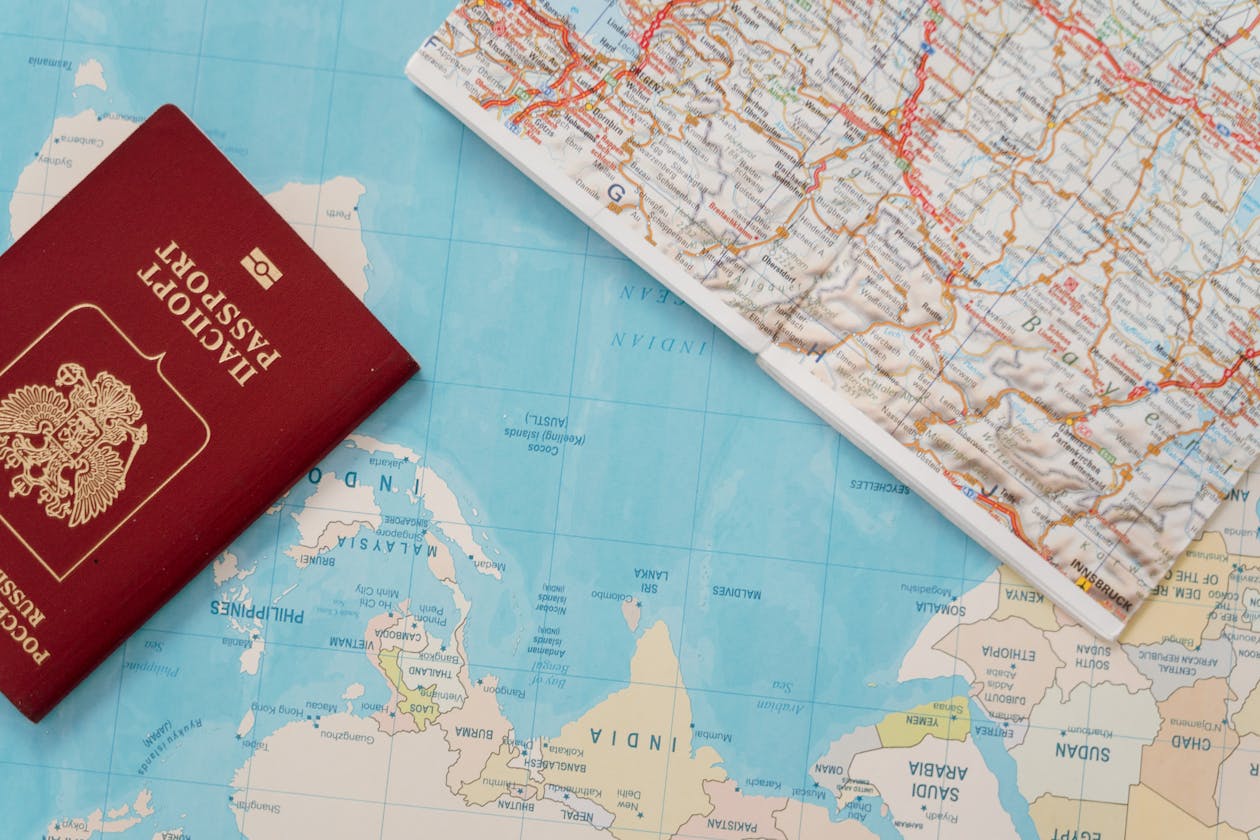
Why Visit Paris? What Makes the City of Light Special
Two thousand years of art, architecture, and cooking are packed into a city you can walk across in a couple of hours, and that density is the whole appeal. The Louvre and the Musee d’Orsay hold some of the greatest art ever made. The Eiffel Tower’s iron lattice and the Gothic cathedrals sit a short ride from each other. French cooking, the tradition that rewrote how the rest of the world eats, started here and is still being argued over in kitchens across the city.
What you don’t read on the tickets is that Paris pays out best to people who slow down. The reward is in the golden light hitting the Haussmann facades around sunset, the accordion you didn’t expect on a Montmartre corner, the espresso pulled properly and drunk standing at a zinc bar. None of that happens when you’re sprinting between landmarks with a stopwatch. Planning well isn’t about cramming more in; it’s about building enough slack to actually be there.
Best Time to Visit Paris: Season-by-Season Breakdown
When you go shapes the trip more than almost anything else you decide. Each season is a genuinely different city, and the right one depends on what you’re optimizing for: weather, smaller crowds, lower prices, or a specific festival you want to be standing in the middle of.
Spring (April to June) — The Best Overall Time to Visit
If you can only go once and want the safest bet, go in spring. Temperatures sit in a comfortable 10°C to 20°C (50°F to 68°F) range, the gardens fill with cherry blossom and tulips, and by June the sun doesn’t set until well after 9 PM, which stretches your sightseeing day for free. The Luxembourg Gardens and the Tuileries peak now, and the cafe terraces are full again. The catch: everyone else has figured this out too, so lock in your hotel and your big-ticket attraction tickets six to eight weeks ahead.
Summer (July to August) — Lively but Crowded
Summer hands you the longest days and the warmest weather (20°C to 30°C / 68°F to 86°F), along with the thickest crowds and the steepest prices. Heat waves are showing up more often, occasionally pushing past 35°C (95°F). It earns its keep with events you can’t get any other month: Paris Plages turns stretches of the Seine’s banks into city beaches, the Fete de la Musique floods every corner with live music on June 21st, and Bastille Day on July 14th sets off fireworks over the Eiffel Tower. Plenty of Parisians clear out in August, which leaves some neighborhoods quieter and more local-feeling, though a fair number of smaller restaurants and shops close for their own holidays.
Autumn (September to November) — A Local Favorite
Ask Parisians their favorite season and a lot of them say autumn. September keeps summer’s warmth without summer’s lines, October turns the parks and the long boulevards gold, and November brings the first Christmas markets and strings of festive lights. Temperatures drift down from 20°C to 8°C (68°F to 46°F). The cultural calendar wakes up too, with Paris Fashion Week, the all-night Nuit Blanche art festival, and the Montmartre Wine Harvest Festival. Hotel rates fall off sharply after mid-September, which makes this the value sweet spot for anyone watching their budget.
Winter (December to March) — Festive and Affordable
Most people skip winter, which is exactly why it’s worth considering. December lights up the Champs-Elysees, fills the Tuileries and the Hotel de Ville with Christmas markets, and makes even a gray afternoon feel cinematic. From January through March you’ll find the cheapest flights and hotels of the year, often 25 to 40 percent below peak, and the big museums empty out. You can frequently walk straight into the Louvre or the Musee d’Orsay without the usual queue. Temperatures run 2°C to 8°C (36°F to 46°F), so pack real layers, but actual snow is rare.
How Many Days Do You Need in Paris?
How long to stay comes down to one question: highlights, or actually living in the city for a bit? Here’s what each length realistically buys you.
3 Days: Enough for the essentials, meaning the Eiffel Tower, the Louvre, Notre-Dame, Montmartre, and a Seine cruise. You’ll be moving fast, with tickets pre-booked and an itinerary that doesn’t leave much to chance, but first-timers who just want a taste can absolutely pull it off. Budget for 15,000 to 20,000 steps a day.
5 Days: The sweet spot for most first visits. Five days covers the major sights at a human pace and still leaves room to wander a neighborhood, do a food tour, and maybe slip out to Versailles for half a day. There’s space for the unplanned part, the bookshop you duck into, the lunch that runs long, the afternoon you lose to people-watching in the Marais.
7 Days: A full week is enough to live here like a temporary local. Past the big sights, you can give whole days to single neighborhoods, take a full-day trip to Versailles or Giverny, dig properly into the food scene, and settle into the city’s slower rhythms, with morning markets, afternoon museums, and aperitifs by the Seine.
10+ Days: This is for going deep. Pair a thorough run at Paris with day trips to the Champagne region, the Loire Valley castles, or Mont Saint-Michel, or hop the Eurostar to London or Brussels for a day.
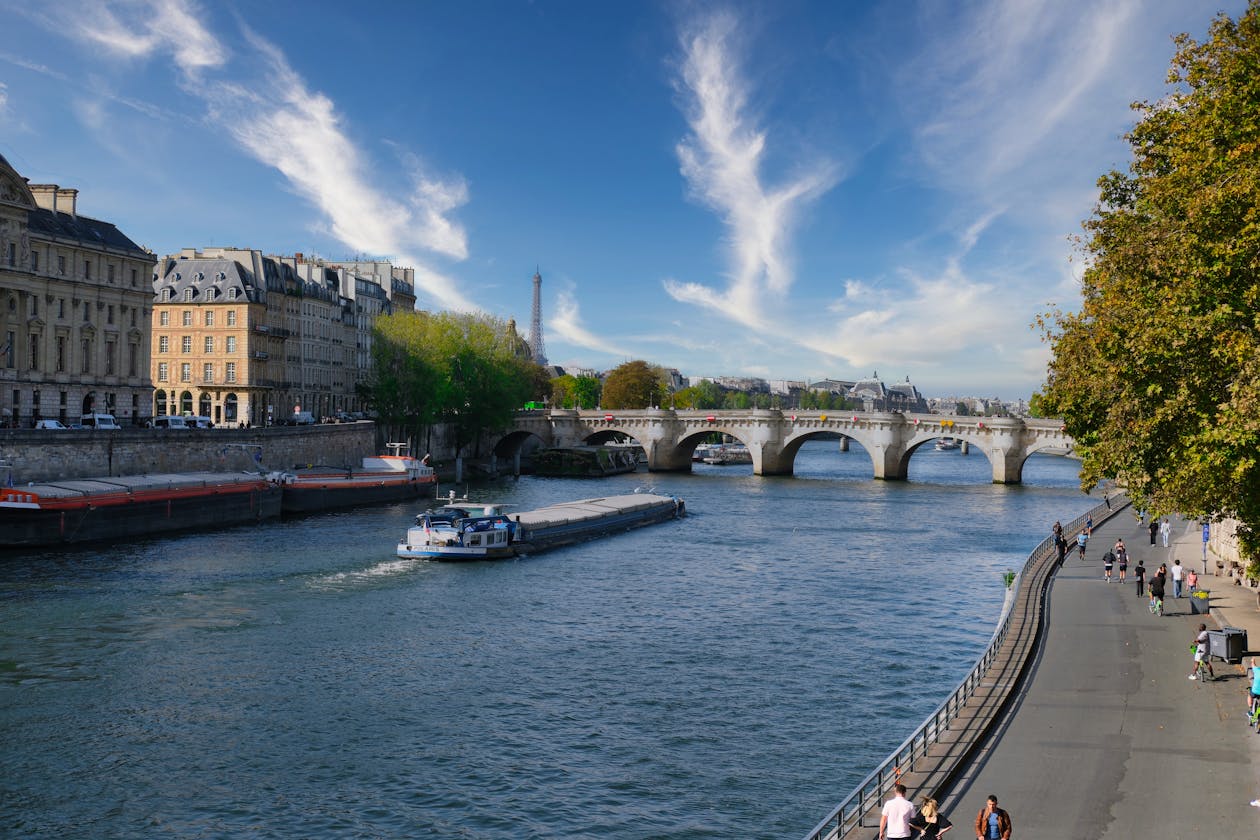
How Much Does a Trip to Paris Cost? Complete Budget Breakdown
Paris has a reputation for being expensive. It can be, but the spread between a careful trip and a careless one is enormous, and a little planning closes most of it. Here’s a realistic per-person, per-day picture for 2026.
Budget Traveler (€100-130 per day)
This tier works if you sleep in hostels (€35-50 a night for a dorm bed) or budget hotels in the 9th through 12th arrondissements, take lunch from bakeries and street stalls (€5-10), shop the supermarkets for some meals, and lean on free sights. And Paris is generous with free: whole neighborhoods to wander, churches to step into (Sacre-Coeur included, plus the exterior of Notre-Dame), parks to sit in, and free museum days on the first Sunday of the month at many national museums. A Navigo Weekly Pass, roughly €32, covers unlimited Metro, RER, and bus for the week.
Mid-Range Traveler (€200-350 per day)
This is where most visitors land. A comfortable hotel in Le Marais, the Latin Quarter, or Saint-Germain runs €140-230 a night. Lunch sits at €15-25, dinner at €30-60. Set aside €15-20 a day for admissions, or buy the Paris Museum Pass (€70 for 2 days, €90 for 4 days, €110 for 6 days) and stop counting. Transport runs €15-20 a day on individual tickets, and a good deal less with a Navigo pass.
Luxury Traveler (€500+ per day)
Luxury is one thing Paris does without breaking a sweat. Five-star hotels in the 1st, 7th, and 8th arrondissements open around €400-800 a night. Michelin dining ranges from €80 for a one-star lunch menu to €300 and up for a tasting menu at a three-star. Private guides, chauffeurs, and VIP access stack up fast, but they buy you the experiences people remember for years.
Sample 7-Day Budget (Mid-Range, Per Person)
Numbers make this concrete. Flights from North America come in at €400-800 round trip. Seven nights at €180 is €1,260 for the room, or €630 a head if you’re splitting it with a partner. Food at €70 a day is €490. Attractions and tours run €200-300, transport including the airport transfer €80-100, shopping and souvenirs €100-200, with another €100 set aside for the unexpected. That lands at roughly €2,000-2,600 per person, flights excluded, assuming you’re sharing the room.
Booking Flights to Paris: How to Find the Best Deals
Two airports handle most arrivals. Charles de Gaulle (CDG) takes the long-haul international traffic and sits 25 km northeast of the center. Orly (ORY) leans toward European and domestic routes, 13 km south of the middle of town. There’s a third, Beauvais-Tille (BVA), used by some budget carriers, but it’s 85 km out, and once you tally the transfer time and cost, the cheap fare usually isn’t cheap anymore.
For the lowest fares, book two to three months out for peak season (April through October) and six to eight weeks ahead for the off-season. January, February, and November are typically the cheapest months to fly in. Run your dates through Google Flights, Skyscanner, or Kayak and set price alerts so the deal comes to you. Flexibility pays: a Tuesday or Wednesday departure often beats a weekend one by 15 to 25 percent. And don’t ignore the connections, since routing through a European hub like Dublin, Reykjavik, or Lisbon sometimes turns up a fare that makes no sense in the best way.
Where to Stay in Paris: Neighborhoods at a Glance
Picking the neighborhood matters as much as picking the hotel, sometimes more. Paris is carved into 20 arrondissements that spiral out from the center like a snail shell, each with its own temperament. Where you sleep quietly decides what your trip feels like.
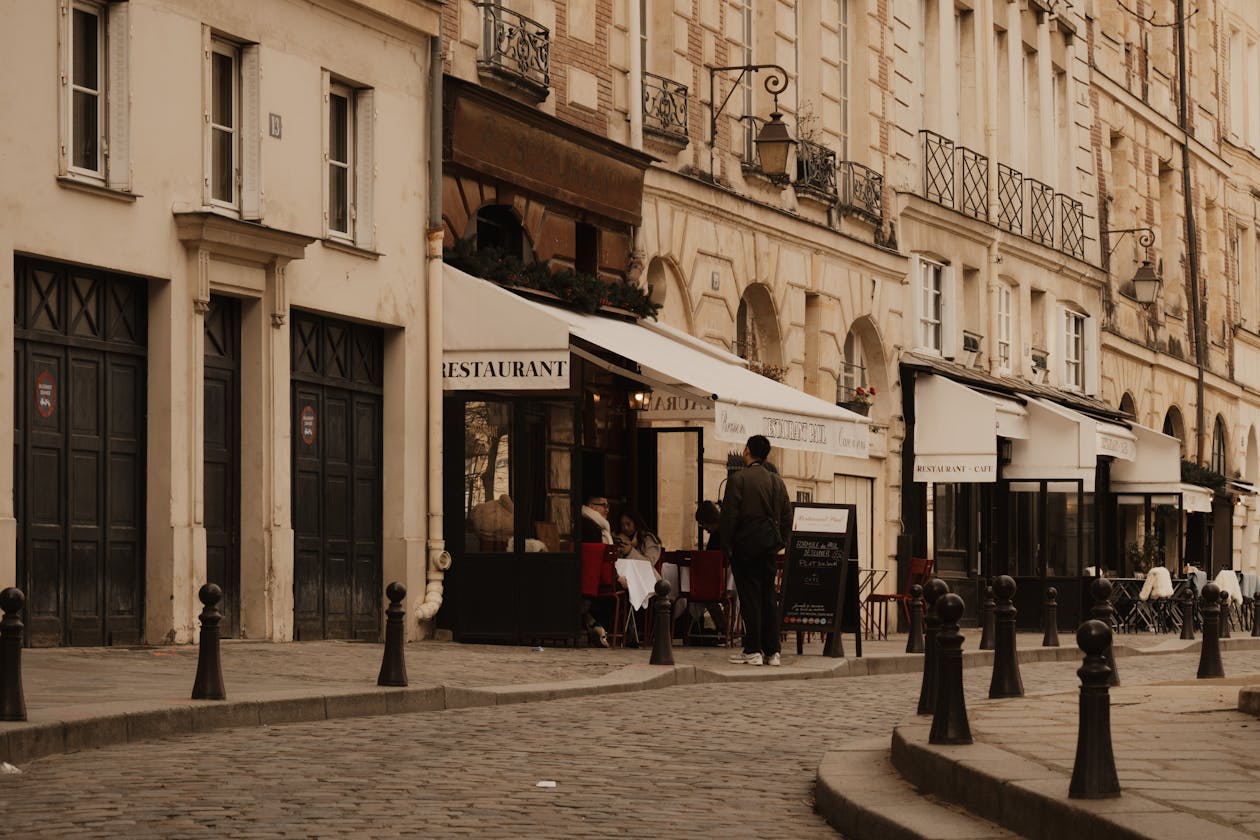
Le Marais (3rd & 4th Arrondissements) — Best for First-Time Visitors
For a first visit, Le Marais is the easy pick, and the reasons stack up. The district held onto its pre-Haussmann medieval bones while turning into one of the liveliest corners of the city, so you get trendy boutiques, strong galleries, and arguably the best falafel in Paris next to mansions that are centuries old. It’s central, walkable to Notre-Dame and the Louvre, and stitched into the Metro from every direction. It’s also one of the most LGBTQ+-friendly neighborhoods in the city, with bars and restaurants that keep going well into the night.
Saint-Germain-des-Pres (6th Arrondissement) — Best for Culture and Elegance
You want the Paris from the films, the cobblestones, the literary cafes, the galleries, the studied nonchalance. Saint-Germain is it. This Left Bank classic still runs Cafe de Flore and Les Deux Magots, the tables where Hemingway, Sartre, and Simone de Beauvoir once argued the afternoon away. The Luxembourg Gardens, the Musee d’Orsay, and the Latin Quarter are all walkable. Rooms skew pricey here, but the address and the atmosphere are tough to argue with.
Montmartre (18th Arrondissement) — Best for Romance and Art
Up on its hill, Montmartre still carries the bohemian streak that pulled in Picasso, Toulouse-Lautrec, and Renoir. Cobbled lanes climb past ivy-covered houses, working studios, and tiny wine bars, with the white dome of Sacre-Coeur over the top of it all. Rooms tend to cost less than in the central arrondissements, though the slopes are no joke if stairs are a problem. One honest warning: the blocks right around Sacre-Coeur and Place du Tertre are wall-to-wall tourists, but walk a few minutes off that and you land in a real residential neighborhood that earns the postcards.
Other Top Neighborhoods
The Latin Quarter (5th) suits younger travelers and tighter budgets, with cheap eats and a nightlife scene that orbits the Sorbonne. The 7th Arrondissement puts the Eiffel Tower, the Musee d’Orsay, and the Rodin Museum on your doorstep in a quiet, elegant residential setting. The 1st Arrondissement drops you at the dead center, by the Louvre and the Tuileries, though it’s also the most tourist-packed and the priciest. And the 9th Arrondissement around Opera is a smart budget play, well connected and home to the legendary Galeries Lafayette.
Getting Around Paris: Transportation Essentials
Paris runs one of the best public transport systems anywhere, and learning it is the difference between an efficient trip and an expensive, frustrating one. Here’s what you need to know.

The Metro
The Metro is your main tool. With 16 lines and more than 300 stations, you’re rarely more than a five-minute walk from a stop. Trains run from roughly 5:30 AM to 1:00 AM, stretching to 1:15 AM on Friday and Saturday nights. A single ticket is €2.50 (digital). One 2026 change to flag: the old paper magnetic tickets are being retired for good, and by June 2026 they’ll stop working across the whole network. Pick up the rechargeable Navigo Easy card at a station kiosk instead, or use the Bonjour RATP app to tap and ride straight from your phone.
Ticket Options and Passes
Staying five days or more? The Navigo Weekly Pass (about €32) gets you unlimited Metro, RER, bus, and tram across central Paris (zones 1-5, airport transfers included). It runs Monday to Sunday, so arriving early in the week squeezes the most out of it. For shorter trips, load a carnet of 10 T+ tickets onto a Navigo Easy card for a cheaper per-ride rate. The Paris Visite Pass (1-5 days) is pitched at tourists and throws in a few attraction discounts, but the Navigo Weekly almost always wins on value. Kids under 4 ride free on everything.
Airport Transfers
From Charles de Gaulle (CDG), the RER B reaches central stations like Gare du Nord, Chatelet-Les Halles, and Saint-Michel in about 35 to 50 minutes for €11.80 (free with the Navigo Weekly Pass). Note that the direct RoissyBus was discontinued for good in March 2026, so the RER B or a taxi are your real options now. Taxis from CDG run a fixed €56 to Right Bank addresses and €65 to the Left Bank. From Orly (ORY), the newly extended Metro Line 14 is now the quickest way in, about 25 minutes; the OrlyBus is the alternative, connecting to Denfert-Rochereau. Orly taxis are a fixed €36 (Right Bank) or €44 (Left Bank).
Walking and Cycling
Honestly, some of the best hours in Paris come from walking with no destination at all. Most major sights on a given bank of the Seine are 30 to 45 minutes apart on foot. For anything longer, the Velib’ bike-sharing system has electric and mechanical bikes at stations all over town; a day pass is €5, with the first 30 minutes of each mechanical ride free. The city has poured money into protected bike lanes lately, and it shows, so cycling here is safer and more pleasant than it used to be.
Must-See Paris Attractions: The Essential List
The city has more world-class sights than any one trip can hold, and trying to catch them all is how people end up exhausted and resentful by day three. These are the ones that genuinely belong on a first-timer’s list, each with the booking advice that saves you time on the ground.
The Eiffel Tower
You’re not leaving Paris without doing the Iron Lady, so do it right. The 330-meter tower has three viewing levels, and on a clear day the summit reads the whole Paris basin like a map. Book online one to two months ahead, because slots vanish. Prices: €36.10 for adults to the summit by elevator, €18.10 for ages 12-24, €9.10 for kids 4-11, free under 4. Go at sunset for the best of it, then stay for the sparkling light show that fires off at the top of every hour after dark. Lines are thinnest on weekday mornings before 10 AM, or late in the evening.
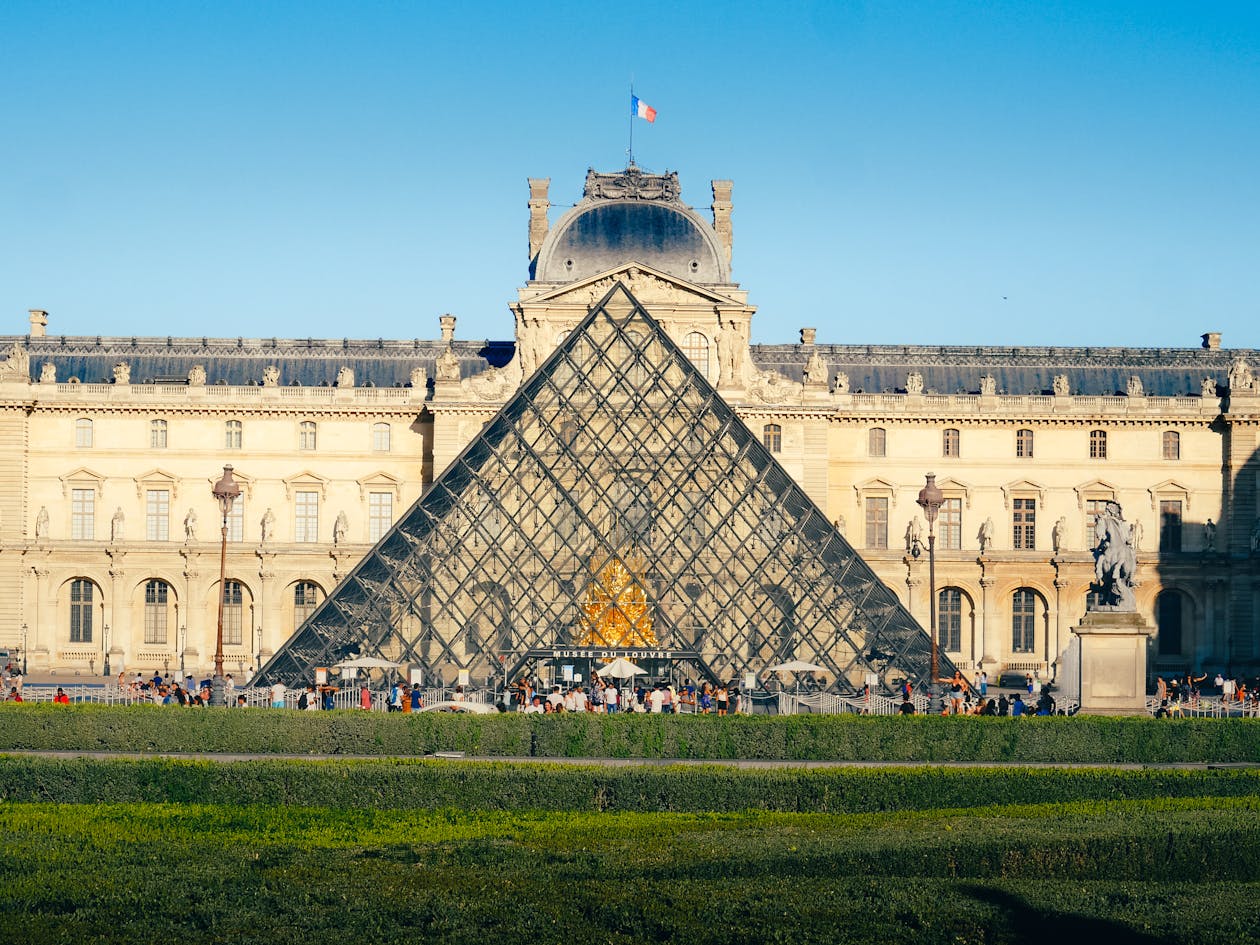
The Louvre Museum
The largest art museum in the world holds more than 35,000 works across thousands of years, the Mona Lisa, the Venus de Milo, and the Winged Victory of Samothrace among them. One visit barely dents it, so pick your highlights or commit to a single wing and let the rest go. Book timed-entry tickets online one to two weeks out (€22 for adults; free for under 18 and EU residents under 26). It’s closed Tuesdays. Give it three to four hours for the greatest hits, or a full day if you want to wander. The thinnest crowds are Wednesday and Friday evenings, when the doors stay open until 9:45 PM.
Notre-Dame Cathedral

After the 2019 fire and years of meticulous repair, Notre-Dame reopened and has already drawn more than 11 million visitors since December 2024, making it the single most visited site in Paris. The cathedral itself is free to enter; the Treasury costs €10. The interior is something to see, the stone scrubbed clean, the vaulting rebuilt, the whole space lighter than many people remember it. Come early or late to dodge the worst of the queue. Sitting on Ile de la Cite, it makes a natural bookend for a walk through the Latin Quarter and Le Marais.
Sacre-Coeur and Montmartre

The white Sacre-Coeur Basilica crowns the highest point in Paris and pulls in more than 11 million visitors a year. Entry is free, and the panorama from the front steps is worth the climb, though you can take the funicular if you’d rather. Give Montmartre a half day around it. Walk through Place du Tertre, where artists still set up and sell, find the vineyard, and let yourself get a little lost in the backstreets. Come early in the morning, before the crowds, and you’ll catch the quiet, local version of the neighborhood.
Other Essential Attractions
The Musee d’Orsay holds the world’s finest Impressionist collection inside a converted train station that’s a work of art in itself (€16 for adults; closed Mondays). The Palace of Versailles earns its day-trip status, with the Hall of Mirrors and 2,000 acres of gardens (€21 for the palace; book weeks ahead). The Arc de Triomphe rooftop gives you one of the great Paris views, straight down the Champs-Elysees (€16 for adults). And the Paris Catacombs, an underground ossuary holding the remains of more than six million people, is genuinely unlike anything else you’ll do here, so book well ahead, since the time slots sell out fast (€29 for adults).
Eating in Paris: A Crash Course in French Dining
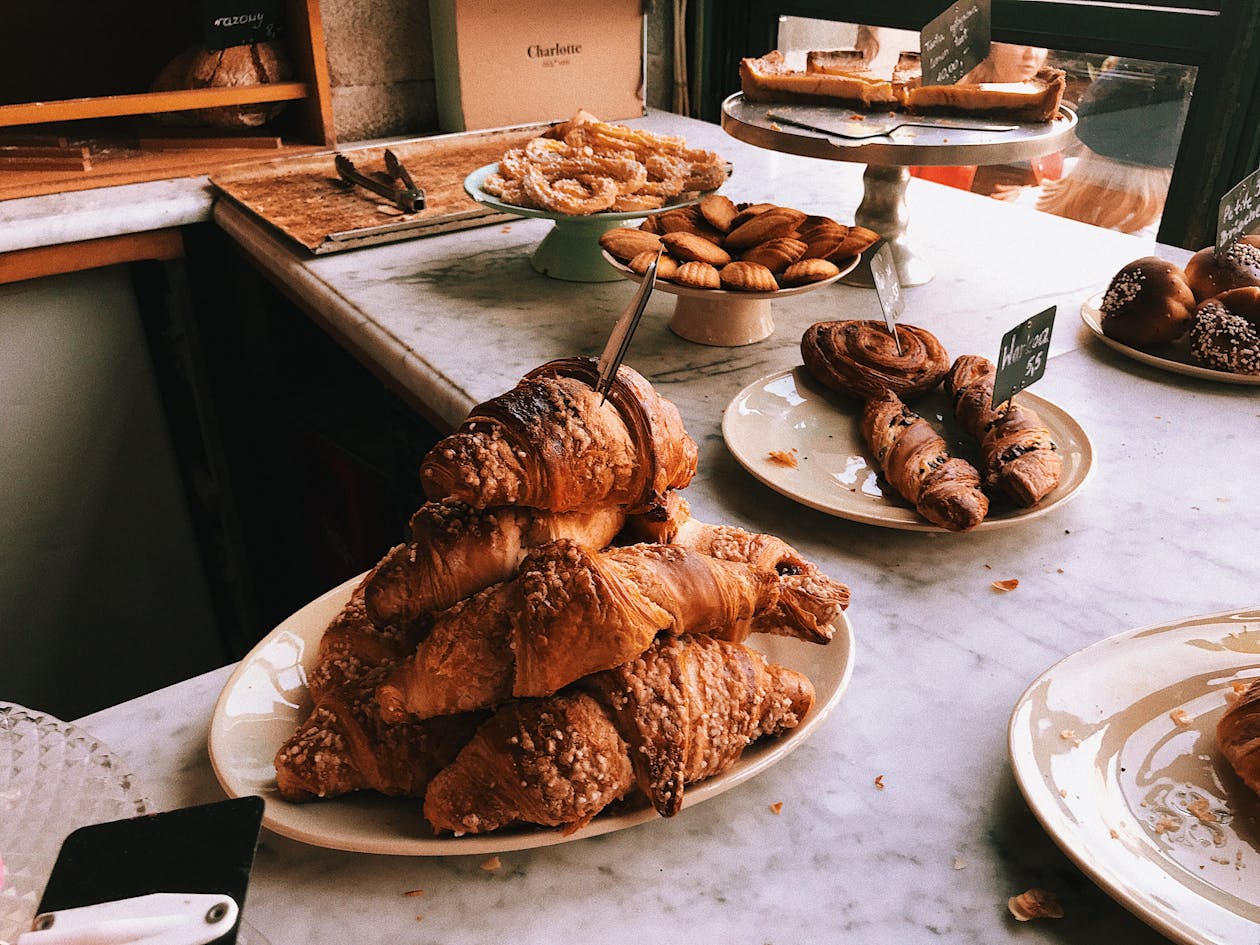
In Paris, eating is woven straight into the rhythm of the day, and a little fluency in how it works will both improve your meals and steer you clear of the tourist traps that prey on people who don’t know the difference.
Types of Dining Establishments
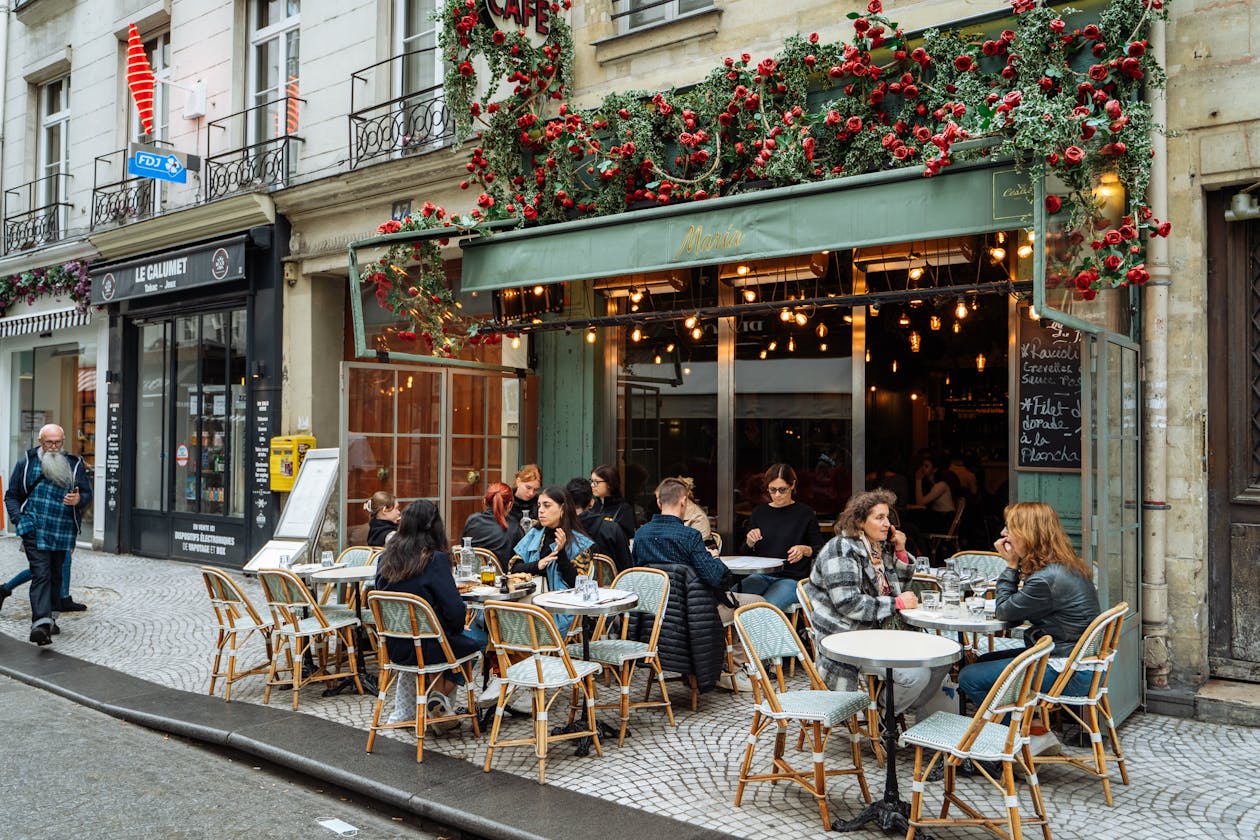
A brasserie is large and busy, serving all day, with the classic French repertoire: steak-frites, croque-monsieur, onion soup. A bistro is smaller and more personal, often family-run, working from a shorter seasonal menu. A cafe is mostly about drinks and lighter plates, coffee, pastries, simple sandwiches, the inevitable Croque Monsieur. The boulangerie (bakery) and patisserie (pastry shop) are where the bread, croissants, pain au chocolat, and the elaborate pastries live. Plenty of Parisians take their morning croissant and espresso standing at the bar, which in many cafes costs less than sitting at a table, a small piece of insider math worth knowing.
Essential French Dishes to Try
A short hit list for the trip: a proper buttery croissant from a real boulangerie, not a chain; steak-frites at a classic bistro; French onion soup (soupe à l’oignon), rich, cheesy, and exactly as comforting as it sounds; duck confit (confit de canard), crisp-skinned and falling apart; escargots (snails) in garlic butter if you’re game; a crêpe from a street vendor, sweet and savory galettes both; and macarons from a serious house like Ladurée or Pierre Hermé. For the real local version, hit a marche (food market) such as the Marche des Enfants Rouges in Le Marais, the oldest covered market in the city, dating to 1628.
Dining Tips and Etiquette
Lead with “Bonjour” every time you walk in; that one courtesy carries real weight in France. Lunch service usually runs 12:00 to 2:00 PM and dinner 7:30 to 10:00 PM, and showing up outside those windows narrows your choices fast. The best value on the menu is often the “formule” or “menu du jour,” a set lunch that might be two courses for €15-20 when the same food would cost double à la carte at dinner. Service is already in the bill (service compris), so tipping isn’t expected, though rounding up a euro or two for good service is a nice gesture. Ask for a “carafe d’eau” and you’ll get free tap water, perfectly safe and a few euros cheaper than the bottled stuff every meal.
Safety Tips and Common Scams to Avoid
Paris is a safe city for visitors on the whole, and violent crime in the tourist areas is genuinely rare. The real concern is petty crime, pickpocketing above all, and it concentrates in crowded sights and on public transport. Knowing the playbook and taking a few basic precautions keeps it from touching your trip.
Pickpocket Hotspots
The riskiest spots cluster around the Eiffel Tower, the Champs-Elysees, Sacre-Coeur and Montmartre, the major train stations (Gare du Nord and Chatelet-Les Halles especially), and Metro lines 1 and 4. None of this means avoid them; it means keep your valuables locked down. Carry a cross-body bag with zip closures, keep your phone in a front pocket or a zipped compartment, and swing your backpack around to your front in a crush.
Common Scams
A few schemes come up again and again. The ring scam, where someone “finds” a gold ring near you and tries to sell it while a partner works your pockets. The petition signers near the sights who get you scribbling while someone else lifts your things. The fake police officers who ask to “check your wallet,” which real French police never do. And the friendship bracelet scam by Sacre-Coeur, where someone knots a bracelet onto your wrist and then demands payment, loudly. The fix for all of it is the same: a firm “Non, merci,” and keep moving.
Areas to Exercise Caution
Most of Paris is fine by day, but a few areas call for more care after dark: Gare du Nord and the streets around it, Chatelet-Les Halles at night, the northern stretches of the 18th and 19th arrondissements, and the Bois de Boulogne (lovely in daylight, best avoided once it’s dark). Stick to well-lit, busy streets when you’re walking late, and take a taxi or rideshare for night trips to anywhere you don’t already know.
Practical Essentials: Documents, Money, Phones & More
Travel Documents and Visas
Citizens of the US, Canada, the UK, Australia, and many other countries can enter France visa-free for up to 90 days in any 180-day window for tourism. Your passport has to be valid for at least three months past your planned departure from the Schengen area. Two 2026 changes to watch: the EU’s new Entry/Exit System (EES) is expected to launch around October 2026, which will require non-EU travelers to give biometric data, fingerprints and a facial scan, on first entry. The ETIAS (European Travel Information and Authorization System) is also rolling in, requiring visa-exempt travelers to get pre-travel authorization online (€7, valid three years). Check the current requirements close to your trip, since these dates have a habit of moving.
Money and Currency
France runs on the Euro (€). Cards are accepted nearly everywhere, with Visa and Mastercard working virtually everywhere and American Express taken at many but not all places. Still, carry €50-100 in cash for small buys, market stalls, and the spots with card minimums. ATMs (the “distributeurs”) are everywhere; stick to bank-affiliated machines over the standalone ones to dodge inflated fees. Tell your bank your travel dates before you go so your card doesn’t get frozen mid-trip, and if you’ve got a card with no foreign transaction fees, this is the trip to use it.
Phone and Connectivity
You’ll lean on your phone constantly here, for maps, restaurant lookups, and staying in touch, so sort connectivity before you fly. For most travelers in 2026 the simplest answer is an eSIM: buy one before you leave from a provider like Holafly (unlimited data plans from around €3.90/day), Saily, or Airalo, scan a QR code to install it, and it goes live the moment you land. If your phone won’t take an eSIM, Orange’s Holiday SIM prepaid card gives you 12 GB over 14 days for €19.99 with unlimited calls. Free Wi-Fi is easy to find anyway, at cafes, hotels, and even plenty of Metro stations and public parks.
Electrical Adapters
France uses Type C and Type E plugs on 220V. Coming from North America, the UK, or Australia, you’ll need a plug adapter. Most modern chargers, phone, laptop, camera, handle dual voltage on their own, but glance at the label before you plug anything in. North American hair dryers and straighteners generally do NOT survive 220V without a voltage converter, so the easier move is to leave them home and borrow from the hotel.
Language Basics
Plenty of Parisians speak some English, especially in tourist areas and among younger people, but making an effort in French is noticed and rewarded. Get a handful of phrases down: “Bonjour” (hello, and always your opener in a shop or anywhere else), “Merci” (thank you), “S’il vous plait” (please), “Parlez-vous anglais?” (Do you speak English?), “L’addition, s’il vous plait” (the check, please), and “Excusez-moi” (excuse me). Of all of them, opening with “Bonjour” matters most; launching into a request without a greeting first reads as flatly rude here.
Travel Insurance
Get travel insurance for any international trip; it’s not the place to economize. A solid policy covers medical emergencies (French healthcare is excellent, but it can run expensive for uninsured non-EU visitors), trip cancellation or interruption, lost or stolen bags, and flight delays. Policies usually cost 4 to 8 percent of your total trip price. World Nomads, Allianz, and SafetyWing are common picks. If you carry a premium credit card, check whether travel insurance is already baked in, since many include it, though the coverage limits vary a lot.
What to Pack for Paris: Season-by-Season Guide
Packing for Paris is a balance of comfort and presentation. Parisians dress well, and while no one expects tourists to follow a code, you’ll blend in better leaning smart-casual than turning up in full athletic or beach gear.
Year-Round Essentials: Comfortable walking shoes with real support (you’ll log 15,000 to 25,000 steps a day), a versatile crossbody bag that actually closes, a compact umbrella or rain jacket (Paris can turn showery in any month), a portable charger, a Type C/E adapter, and layers you can dress up or down.
Spring/Fall: Light to medium layers, a waterproof jacket, a scarf (warmth and style in one), comfortable walking boots or shoes, and a mix of short and long sleeves. The temperature swings a fair bit, so layers you can shed or add are the whole game.
Summer: Light, breathable fabrics, sunscreen and sunglasses, a refillable water bottle (Paris has more than 1,200 free drinking fountains), and a light cardigan for over-air-conditioned museums and cooler nights.
Winter: A warm coat, thermal base layers, a hat and gloves, waterproof boots with decent grip, and warm scarves. Paris winters are damp more than they’re brutally cold, so waterproofing beats sheer insulation.
Essential Paris Travel Apps to Download
The right apps make the whole city easier to read. Download these before you leave:
Bonjour RATP is the official transit app for buying tickets, planning routes, and checking live Metro times, and it’s close to essential. Citymapper is a sharp third-party transit app that blends Metro, bus, walking, and cycling directions with real-time updates. Google Maps, with the offline Paris map saved in advance, keeps you navigating even with no data. Google Translate with the French pack downloaded handles offline translation, including the camera trick that reads signs and menus on the fly. TheFork (LaFourchette) is the city’s go-to restaurant booking app, regularly running 20 to 50 percent off at genuinely good places. And Tiqets or GetYourGuide cover attraction tickets, tours, and experiences, often with skip-the-line access.
Your Step-by-Step Paris Trip Planning Timeline
Here’s the planning laid out on a timeline, start to finish.
4-6 Months Before Departure
Lock your dates using the seasonal notes above. Set a rough budget. Book flights, since prices only climb as you get closer. Renew or apply for your passport if you need to (allow six to eight weeks at least). Start digging into neighborhoods and accommodation. Sort out travel insurance.
2-3 Months Before Departure
Book your accommodation, because the best-value rooms go early, especially in spring and summer. Grab Eiffel Tower tickets the moment they open, usually 60 days out. Reserve any special-occasion restaurants. Begin sketching a day-by-day itinerary.
2-4 Weeks Before Departure
Book timed-entry tickets for the Louvre, the Musee d’Orsay, Sainte-Chapelle, and any other museums. Reserve tours, cooking classes, or special experiences. Tell your bank and card companies your dates. Buy an eSIM or set up an international plan. Download the apps. Start packing.
1 Week Before Departure
Confirm everything, hotel, restaurants, tours. Save offline maps. Print or store digital copies of every ticket and confirmation. Check the forecast and tweak your packing. Pull some Euros from your bank. Make copies of your passport and keep them separate from the original.
Day of Departure
Check in online. Keep the essentials, passport, phone, charger, medication, one change of clothes, in your carry-on in case the checked bag goes missing. Activate your eSIM. Then take a breath, because the hard part is done.
Frequently Asked Questions About Planning a Trip to Paris
Is Paris safe for solo female travelers?
Yes, Paris is generally safe for solo female travelers. Use the same common sense you’d bring to any big city: stay in well-lit areas after dark, keep your phone charged, leave your itinerary with someone back home, and take licensed taxis or rideshare apps for late-night trips. The central arrondissements (1st through 7th) are especially safe and well-patrolled.
Do I need to speak French to visit Paris?
No. You can get around Paris comfortably in English, especially in tourist areas, hotels, and the bigger restaurants. That said, a few phrases like “Bonjour,” “Merci,” and “Parlez-vous anglais?” go a long way and read as polite. Many Parisians, younger ones in particular, speak conversational English.
What’s the best way to avoid long lines at attractions?
Book timed-entry tickets online ahead of time for every major sight. Hit the popular ones early (before 10 AM) or in the late afternoon. Look at the Paris Museum Pass for skip-the-line access at many museums. And avoid the biggest attractions on weekends or during school holidays.
Is the Paris Museum Pass worth it?
The Paris Museum Pass (€70 for 2 days, €90 for 4 days, €110 for 6 days) gets you free entry to around 60 museums and monuments. It pays off if you’ll visit three or more paid museums inside the pass window. Beyond the cost, it often lets you skip ticket lines, which is the bigger time saver. It covers the Louvre, the Musee d’Orsay, Versailles, Sainte-Chapelle, the Arc de Triomphe rooftop, and plenty more.
Can I drink the tap water in Paris?
Yes, without hesitation. Paris tap water is safe, clean, and tested constantly. At restaurants, ask for “une carafe d’eau” and you’ll get free tap water. The city also keeps more than 1,200 public drinking fountains going (some dispensing sparkling water at select spots), tucked into parks, squares, and sidewalks, so refilling a reusable bottle all day is easy.
What should I absolutely NOT do in Paris?
Don’t skip “Bonjour,” the single most important word in French social life. Don’t eat at the restaurants planted directly across from the big monuments, which are almost always overpriced and mediocre. Don’t ride the Metro without validating your ticket. Don’t keep valuables in a back pocket or an open bag. Don’t try to see it all in one trip, since Paris rewards a slower pace. And don’t forget to look up; some of the best details in the city live on the upper floors of the Haussmann buildings.
Start Planning Your Dream Paris Trip Today
Planning a trip to Paris can feel like a lot up front, but cut it into the steps above and it goes from daunting to genuinely fun. The throughline is simple: start early. Book flights and accommodation months out for the best prices and pick, secure timed tickets for the major sights two to four weeks before you arrive, and leave honest gaps in the itinerary for the discoveries you can’t schedule.
One last thing worth holding onto: the moments people remember most rarely happen inside a museum or on top of a landmark. They happen in the courtyard you wander into by mistake, the conversation with the cafe owner who decides he likes you, the light going gold and rose over the Seine from a bridge with no one else on it. Plan hard, then hold the plan loosely. The city tends to fill the gaps better than you would have.
Want to go deeper before you book? Read our guide to the tips every first-time visitor should know, our full breakdown of what a Paris trip actually costs, and our month-by-month take on the best time to visit Paris. From here, it’s just the booking.
Explore every trip-planning guide
The in-depth guides in this section:
- First Time in Paris
- How to Plan a Trip to Paris Step by Step
- Paris Visa Requirements and Travel Documents
- Best Time to Visit Paris Month by Month
- How Many Days in Paris? The Perfect Trip Length for Every Traveler
- what to pack
- travel insurance for Paris
- 15 Essential Paris Travel Apps You Need to Download Before Your Trip
- How Much Does a Trip to Paris Cost? Complete 2026 Budget Breakdown
Once the flights and the hotel are settled, the next question is what the days actually look like. We have written a day-by-day Paris itinerary covering every trip length from one day to ten, grouped by geography rather than by fame, with the museum closure days and booking windows built in.
Once the shape of the trip is settled, the next job is the unglamorous one: fares, opening days, card fees, tipping, what time restaurants actually serve. That is where most Paris trips lose an afternoon — usually to a museum that closes on the day you turned up. Our reference guide to things to know before you go collects forty of them in one place, all checked and dated.