101 Things to Do in Paris: The Complete Activity Guide
The hard part of a Paris trip isn’t finding something to do. It’s choosing. Between the landmarks, the 130-odd museums, the food, and the quarters that reward an afternoon of aimless walking, the list of things to do in Paris outruns any reasonable holiday. If you’re still mapping out the logistics, start with our complete Paris trip planning guide. Then come back here. First visit or tenth, the city keeps handing you something you missed last time.
What follows is 101 of the best things to do in Paris, the headline sights and the local secrets, the meals worth planning a day around, the parks, the river, the after-dark stuff, and the festivals worth timing a trip for. It’s sorted by category so you can skip straight to what suits you, your budget, and your patience for crowds. Treat it as a Paris checklist for 2026 and well beyond.
Iconic Landmarks and Monuments
Start with the landmarks, because there’s a reason they’re famous. These are the monuments that fix the Paris skyline in your memory, and several of them hold up in person far better than the postcards suggest. Here are the headline things to do in Paris that earn their reputation.
1. Climb the Eiffel Tower
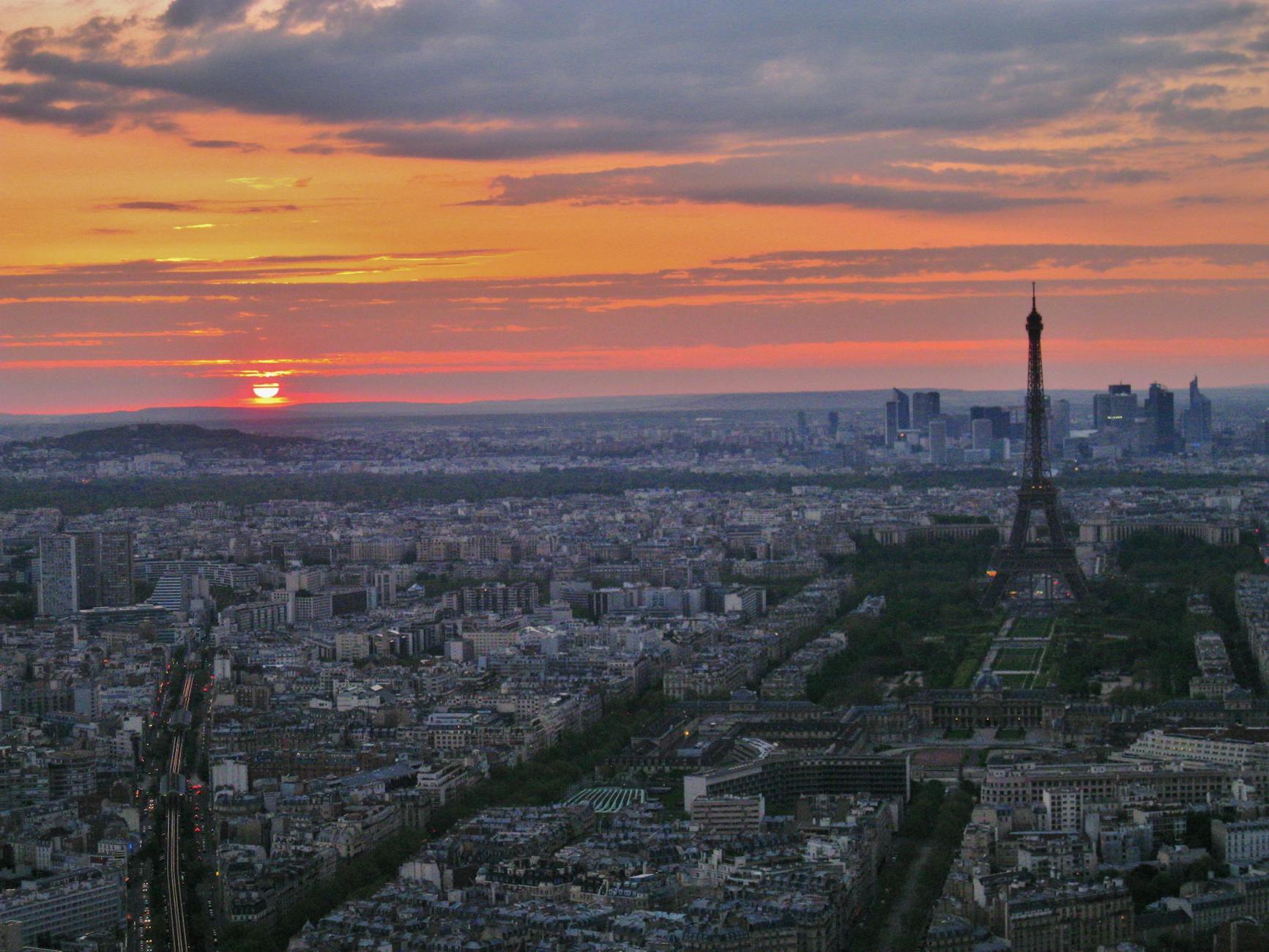
Gustave Eiffel’s iron tower, thrown up for the 1889 World Exhibition, is still the most visited paid monument on earth. You can take the stairs to the second floor (674 of them) or ride the elevator, then carry on to the summit at 276 meters for the full 360-degree spread of the city. After dark it sparkles with 20,000 bulbs for five minutes on the hour, best caught from the Trocadéro esplanade across the river. Book timed-entry tickets online at least two months out; the slots vanish fast. Come at sunset if you’d rather not share it with the whole world, when the low light turns the city gold.
2. Walk Beneath the Arc de Triomphe
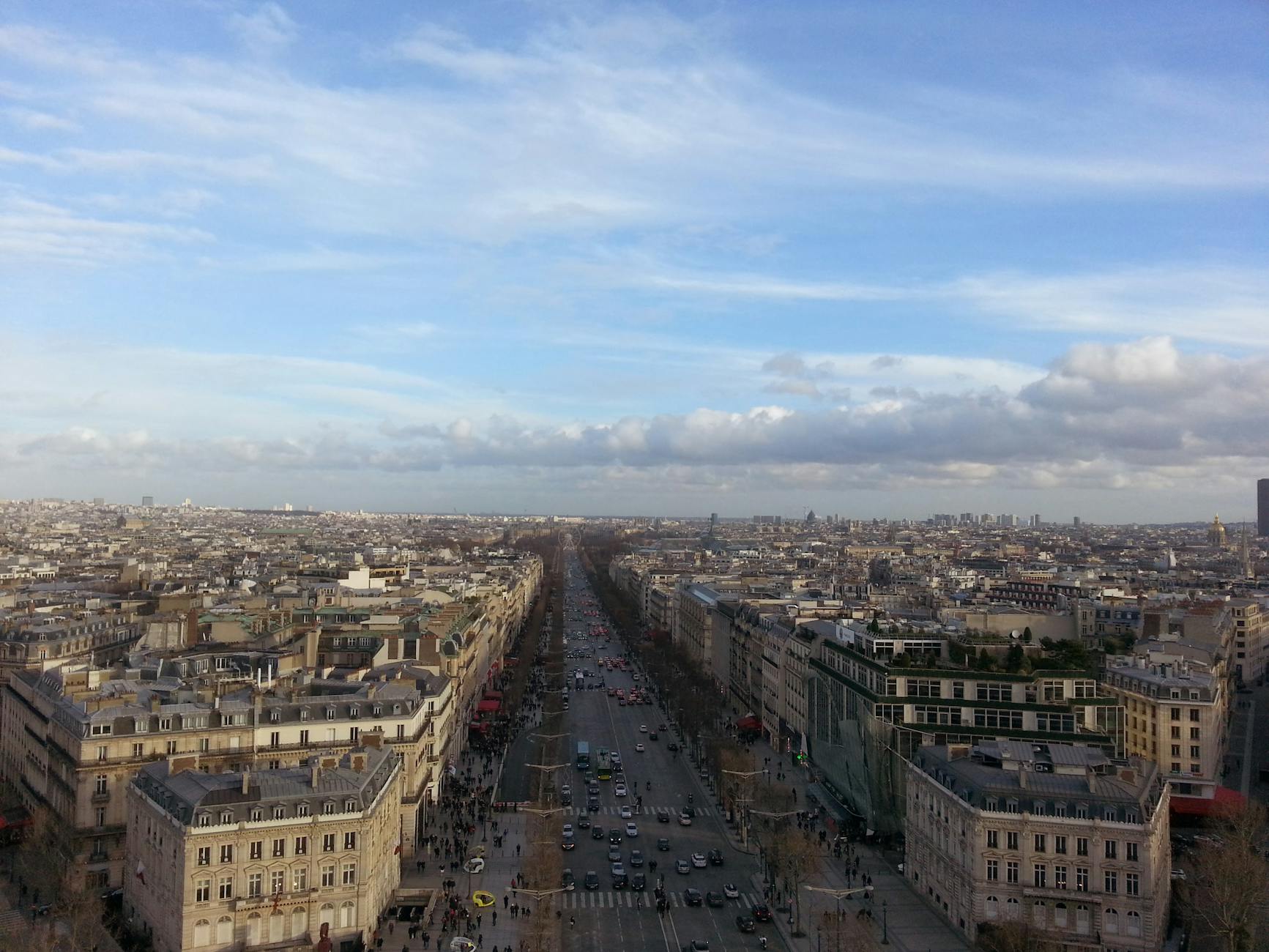
At the western end of the Champs-Élysées, the Arc de Triomphe honors the French who fought in the Napoleonic Wars. Climb the 284 steps to the rooftop terrace for one of the city’s best panoramas, with all twelve avenues fanning out below in a perfect star. The Tomb of the Unknown Soldier sits beneath the arch, where an eternal flame has burned since 1923. Time the rooftop for dusk, when the streetlights come up and the Eiffel Tower starts to flicker.
3. Visit Notre-Dame Cathedral
Five years of painstaking work after the 2019 fire, and Notre-Dame de Paris is open again, arguably looking better than it has in living memory. The restoration brought new stained glass, a rebuilt oak spire, and cleaned limestone that finally shows the cathedral’s original golden tone. It sits on the Île de la Cité, dead center, and remains one of the finest examples of French Gothic anywhere. Entry is free, though a timed reservation will save you a long wait.
4. Admire the Sacré-Cœur Basilica
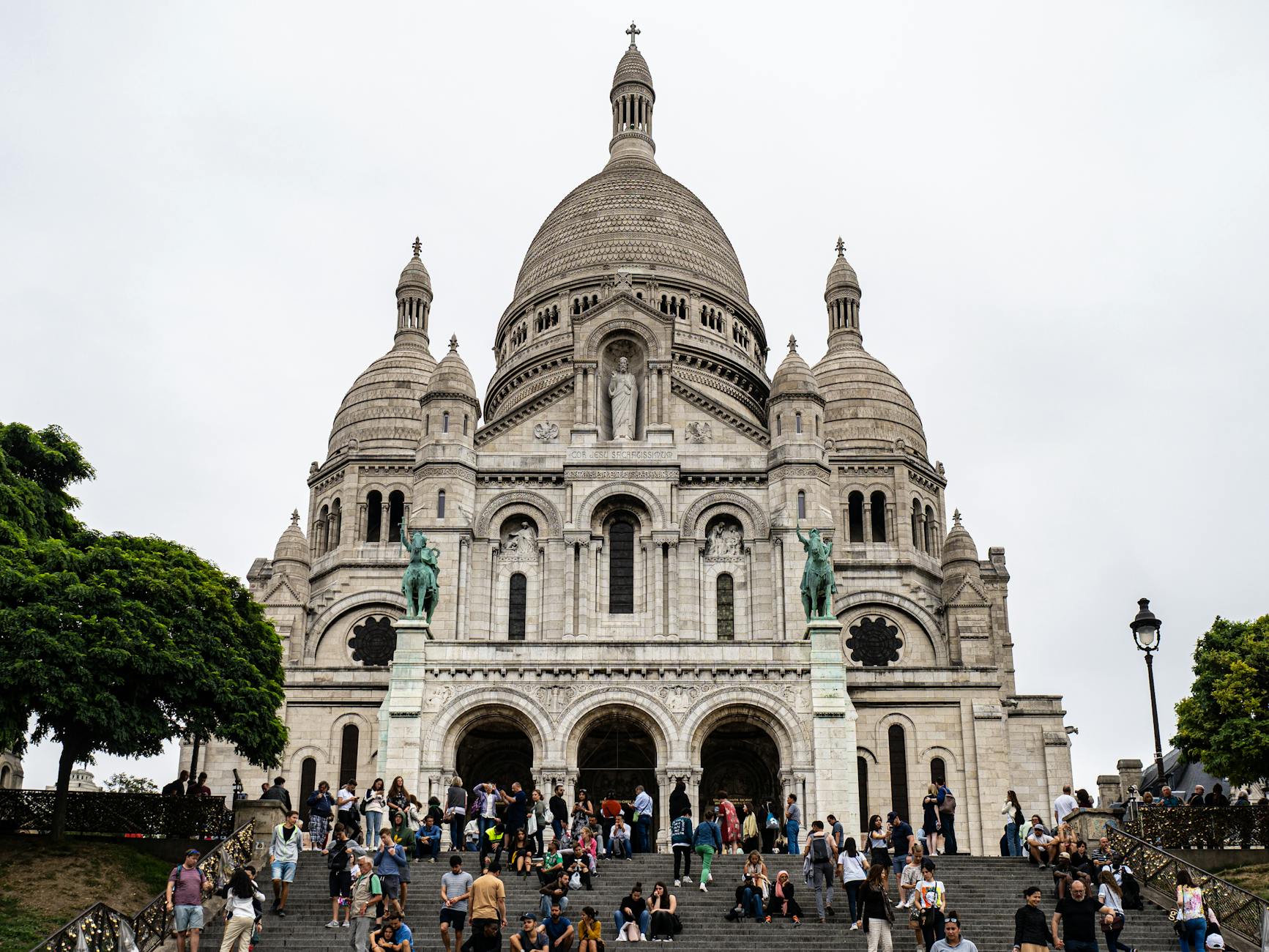
At 130 meters, Montmartre’s hilltop is the highest point in Paris, and the white domes of Sacré-Cœur sit right on top of it. The Romano-Byzantine basilica, finished in 1914, is built from Château-Landon travertine that releases calcite when it rains, which is why the stone never seems to gray. Entry is free, but the real reward is the view from the dome: climb 300 steps for a sightline that reaches 40 kilometers on a clear day. The steps out front fill up with locals and travelers most evenings, especially at sunset.
5. Explore the Panthéon
Built as a church for Saint Geneviève, the Panthéon became a secular mausoleum for France’s great and good during the Revolution. Voltaire, Rousseau, Victor Hugo, Marie Curie, and Alexandre Dumas all lie in the crypt below. The neoclassical dome is an engineering feat in its own right, and a replica of Foucault’s Pendulum still swings from the ceiling, tracing the Earth’s rotation exactly as the original did in 1851.
6. Stand Atop the Tour Montparnasse
Plenty of visitors skip the Tour Montparnasse, which is their loss. The observation deck at 210 meters gives you what many locals call the best view in the city, for one cheeky reason: it’s the only high vantage point from which you can see every other landmark, the Eiffel Tower included, without the Montparnasse tower itself getting in the shot. The open-air terrace on the 59th floor delivers an unbroken 360-degree panorama, and the renovated interior runs an immersive multimedia walk through the city’s history.
7. Cross the Pont Alexandre III
The Pont Alexandre III is the most ornate bridge in Paris, no real contest. It spans the Seine between the Champs-Élysées quarter and the Invalides, and its Art Nouveau lamp posts, gilded bronze figures, and low single arch make it a photographer’s dream and one of the more romantic spots in the city. Walk it at twilight, when the gas lamps throw a warm glow across the water.
World-Class Museums and Galleries
Paris holds more than 130 museums, more than any other city in Europe, and they run the full span from Renaissance altarpieces to contemporary work that opened last month. These are the ones worth carving out time for on your things to do in Paris list.
8. Spend a Day at the Louvre
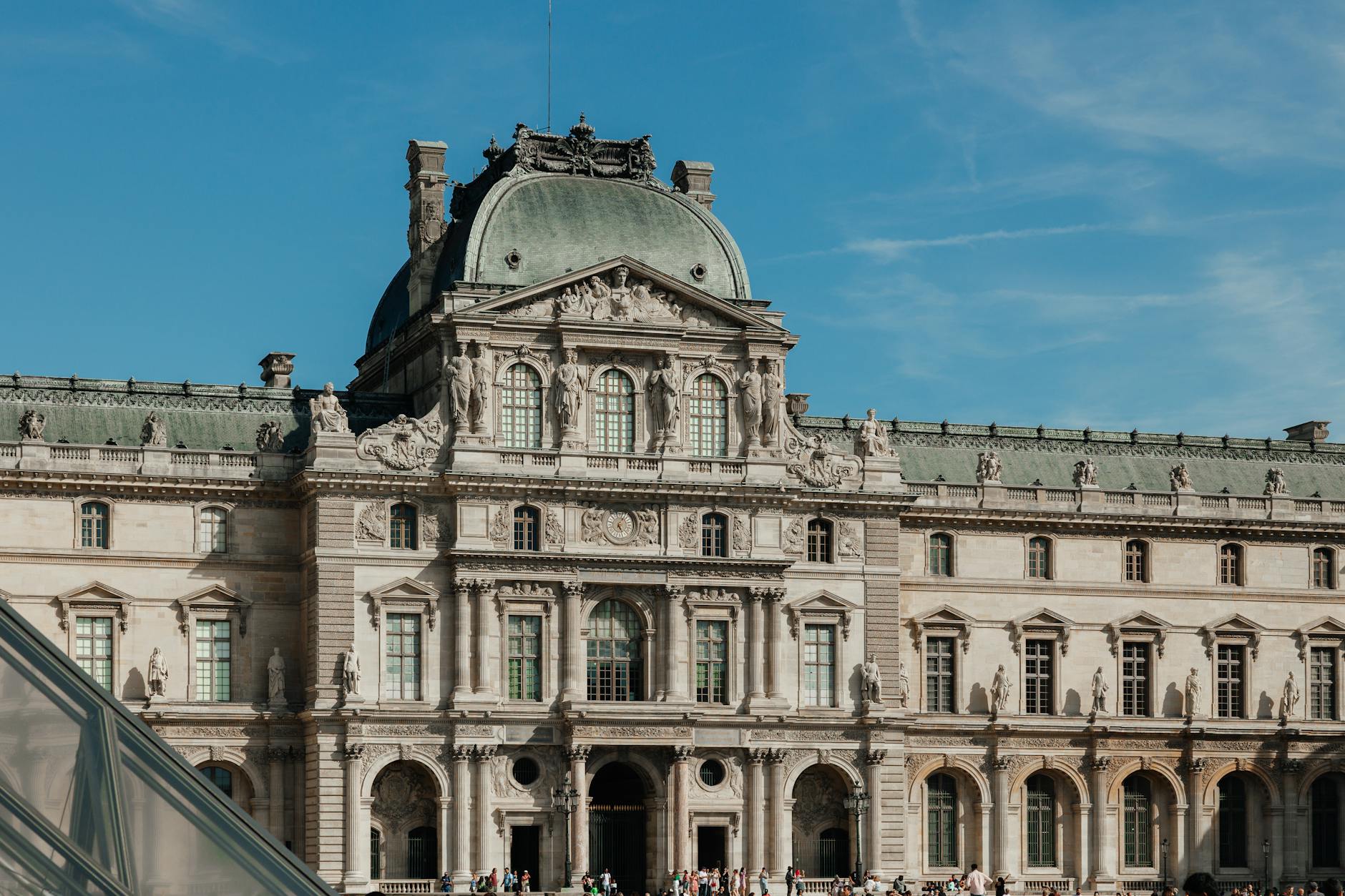
The largest and most visited art museum in the world holds over 35,000 works across 9,000 years of history. Past the Mona Lisa and the Venus de Milo, there are whole departments for Egyptian antiquities, Near Eastern art, and the French Crown Jewels. A piece of advice: give it three to four hours, pick two or three departments and ignore the rest, and go either first thing in the morning or on a Wednesday or Friday evening, when it stays open until 9 PM and the crowds thin right out. I.M. Pei’s glass pyramid at the entrance is an icon in its own right.
9. Marvel at the Musée d’Orsay
Set inside a Beaux-Arts railway station built for the 1900 World Exhibition, the Musée d’Orsay holds the world’s finest collection of Impressionist and Post-Impressionist painting. Monet’s water lilies, Renoir’s dancers, Degas’s ballerinas, Van Gogh’s bedroom at Arles, Cézanne’s card players: all here, under one roof. The building itself is half the draw. Don’t leave without the view through the giant clock face on the fifth floor, looking out over the Seine toward Montmartre.
10. Discover the Centre Pompidou
The Centre Pompidou turned the building inside out, color-coded pipes and exterior escalators and all, which scandalized people when it opened in 1977 and now reads as pure Paris. Inside, the Musée National d’Art Moderne holds Europe’s biggest collection of modern and contemporary art, with Picasso, Kandinsky, Duchamp, Frida Kahlo, and Andy Warhol on the walls. The rooftop terrace looks out over the city’s zinc rooftops. One thing to know: the Pompidou is mid-way through a major renovation and will reopen with expanded galleries, so check the website for the latest reopening date before you go.
11. Wander Through Musée de l’Orangerie
In the southwest corner of the Tuileries, the Orangerie holds Monet’s monumental Water Lilies murals, eight enormous curved panels set in two purpose-built oval rooms exactly as the artist wanted them. Standing inside those rooms, wrapped in the canvases, is genuinely meditative. Downstairs, the Jean Walter and Paul Guillaume collection rounds it out with Renoir, Cézanne, Matisse, Picasso, and Modigliani.
12. Explore the Musée Rodin
The Musée Rodin occupies the elegant 18th-century Hôtel Biron and its gardens in the 7th, and it’s one of the most atmospheric museum visits in the city. The Thinker, The Kiss, and The Gates of Hell are spread both through the mansion and across the rose gardens outside. Go on a sunny afternoon, when you can take the sculptures in against the clipped hedges and the gilded dome of Les Invalides in the distance.
13. Visit the Musée de Cluny (National Museum of the Middle Ages)
Recently renovated, the Musée de Cluny sits in a 15th-century Gothic mansion built over Gallo-Roman baths in the Latin Quarter. The headline draw is the Lady and the Unicorn tapestries, six medieval masterpieces depicting the five senses plus a sixth, mysterious panel nobody has fully cracked. The Roman baths underneath, dating to around 200 AD, are among the best-preserved ancient ruins in Paris.
14–17. More Must-Visit Museums
- Musée de l’Armée at Les Invalides — One of the world’s great military history museums, in a complex that also holds Napoleon’s ornate tomb beneath the golden dome
- Palais de Tokyo — Paris’s leading contemporary art space, all ever-changing experimental installations, and open until midnight most evenings
- Musée Carnavalet — The free museum of the city’s own history, set in two Renaissance mansions in Le Marais, running from prehistory to the present day
- Musée Jacquemart-André — A lavish 19th-century mansion of Italian Renaissance masterpieces, with a tea room under a Tiepolo ceiling that’s worth the visit on its own
Neighborhoods to Explore on Foot
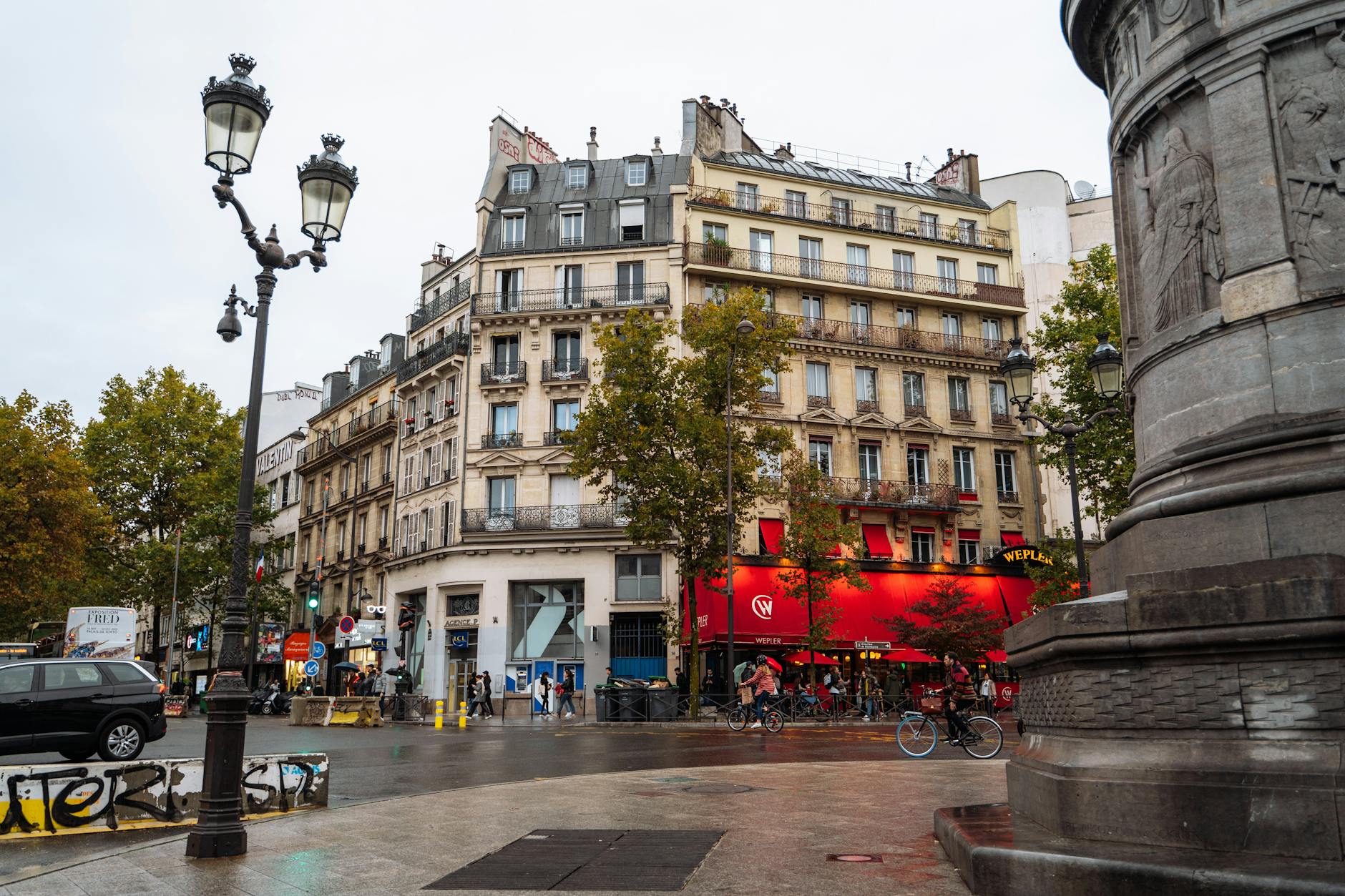
One of the best things to do in Paris costs nothing: just walk. Every arrondissement has its own character, architecture, and pace, and the city was built to be crossed on foot. For the full rundown of who lives where, see our guide to where to stay in Paris. Otherwise, comfortable shoes and a free afternoon are the only kit you need.
18. Get Lost in Le Marais (3rd & 4th Arrondissements)
Le Marais is one of the oldest and most atmospheric quarters in Paris: narrow medieval streets, grand 17th-century mansions (hôtels particuliers), independent boutiques, art galleries, and some of the best falafel in the city on Rue des Rosiers. It holds the Place des Vosges, the oldest planned square in Paris (built in 1612), along with the Jewish quarter, the heart of LGBTQ+ Paris, and a café culture that spills across every sidewalk. It’s also one of the few neighborhoods where the shops actually open on Sundays.
19. Wander Montmartre (18th Arrondissement)
Toulouse-Lautrec, Picasso, and Van Gogh all worked here, and Montmartre has held onto its bohemian village feel despite being one of the most popular spots in Paris. Beyond Sacré-Cœur, there’s the Clos Montmartre vineyard (the last one left in the city, with roots going back to Roman times), the portrait artists at Place du Tertre, the quirky Dalí exhibition, and quiet cobbled streets that feel a world away from the city below. Head down the northern slope toward the genuine bistros of Rue Lepic and you leave the tourist crush around the basilica behind.
20. Discover Saint-Germain-des-Prés (6th Arrondissement)
Saint-Germain-des-Prés was the intellectual home of Jean-Paul Sartre, Simone de Beauvoir, and the existentialists. These days it runs on prestigious galleries, the antique dealers along Rue de Seine, upscale boutiques, and those legendary literary cafés, Les Deux Magots and Café de Flore, which still pull in writers and thinkers (and plenty of people who’d like to be mistaken for them). Browse Shakespeare and Company nearby, just over the river in the 5th, then thread the narrow streets between Boulevard Saint-Germain and the Seine.
21. Explore the Latin Quarter (5th Arrondissement)
The Latin Quarter takes its name from the medieval scholars who spoke Latin at the Sorbonne, founded here in 1257. It still runs on student energy: independent bookshops, jazz clubs, and affordable bistros. Wander the winding Rue Mouffetard, one of the oldest market streets in Paris, then hunt down the Arènes de Lutèce, a remarkably intact 1st-century Roman amphitheater tucked behind apartment blocks. The streets around Place de la Contrescarpe are made for an early-evening aperitif.
22–25. More Neighborhoods Worth Exploring
- Canal Saint-Martin (10th) — Iron footbridges, tree-lined quays, independent coffee roasters, and vintage shops along a photogenic waterway. Sunday mornings, when the road shuts to cars, are the time to go
- Belleville (20th) — The most multicultural quarter in Paris, mixing Chinese, North African, and hipster threads with serious street art, rooftop views from Parc de Belleville, and some of the best couscous in the city
- Batignolles (17th) — A village inside the city, with an organic market, the leafy Martin Luther King park, independent bookshops, and craft beer bars, and not a tour group in sight
- Île Saint-Louis (4th) — The smaller of the two river islands feels stuck pleasantly in the 17th century, with aristocratic townhouses, Berthillon’s legendary ice cream, and calm Seine views from every bridge
Food and Drink Experiences
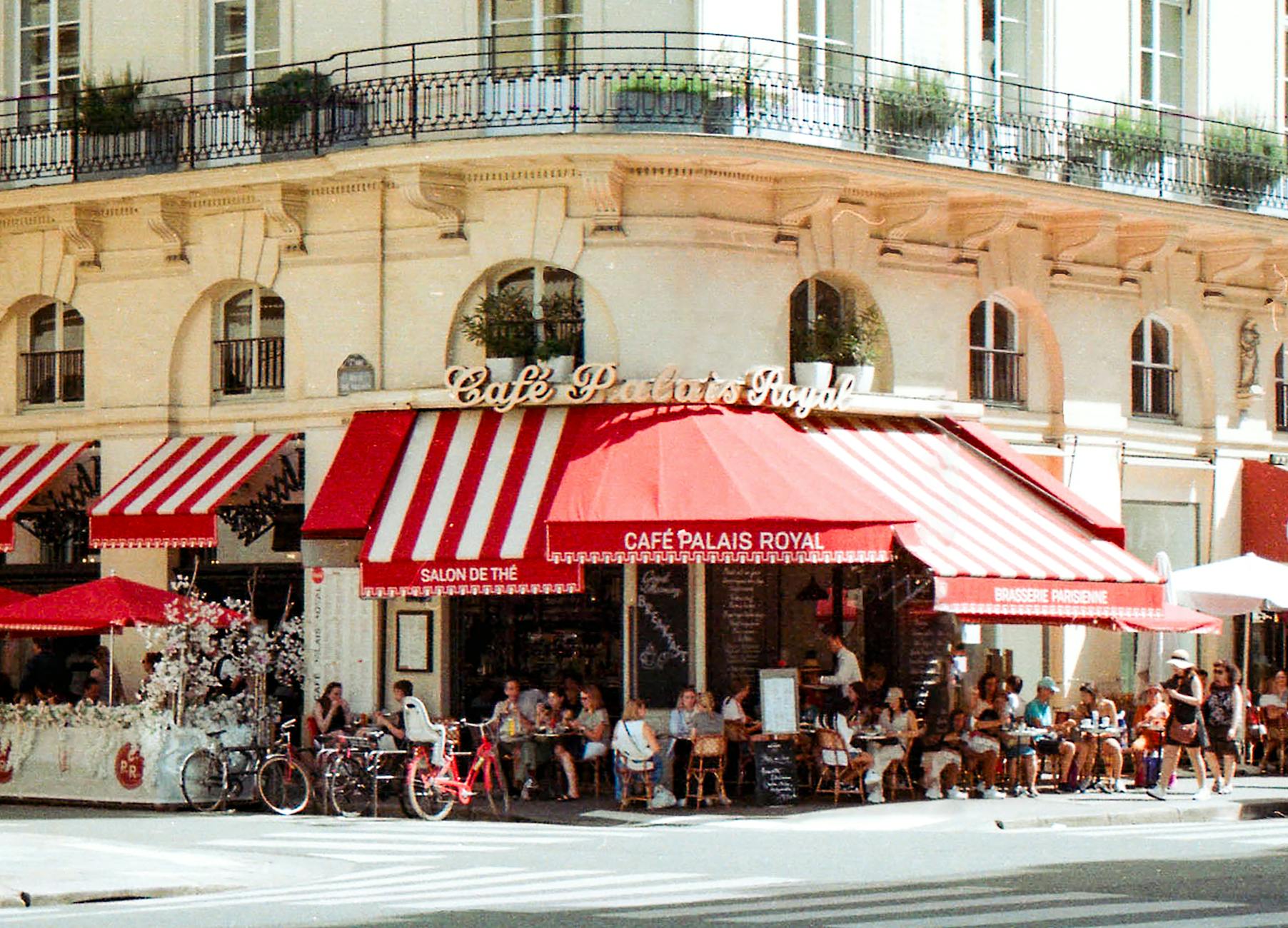
Few cities take food as seriously as Paris, and eating your way through it is among the most rewarding things to do in Paris. From three-star tables to the corner bakery that’s been getting the croissant right for three generations, almost any meal here can turn into the highlight of the day.
26. Take a Guided Food Tour
On a first visit especially, a food tour is one of the smartest ways into the city’s eating culture. A local guide walks you through a quarter like Le Marais, Montmartre, or Saint-Germain, stopping at artisan fromageries, family charcuteries, traditional boulangeries, and wine bars you’d never find alone. You’ll learn the difference between a pain au chocolat and a chocolatine, how a French cheese plate actually works, and which neighborhood spots are worth your money. Most tours run three to four hours with generous tastings across six to eight stops.
27. Master the Art of the Parisian Bakery
Every quarter in Paris has bakeries scrapping for the title of best baguette and best croissant. The annual Grand Prix de la Baguette hands the winner the right to supply the Élysée Palace for a year, so look for bakeries flying that prize, but also just follow your nose; the best croissant is often the one baked nearest to you. You want a deeply golden, shattering crust with visible layers of buttery dough. A great Parisian croissant is close to a religious experience. Start with Maison Landemaine, Du Pain et des Idées (their pain des amis is the one to get), and Poilâne, whose sourdough loaves have a cult following.
28. Browse an Open-Air Food Market
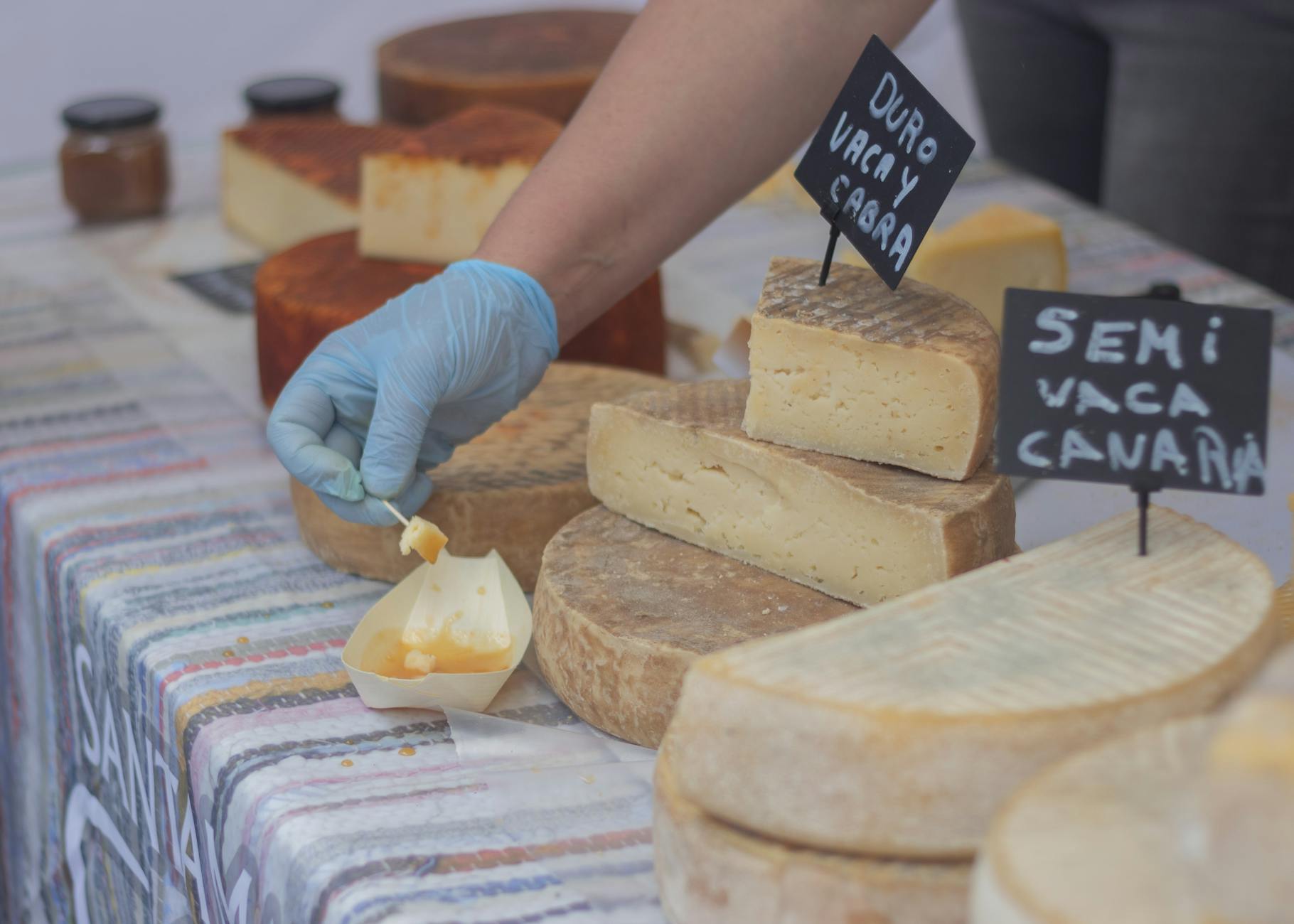
Paris runs more than 80 open-air markets on rotating days across the week. These aren’t put on for visitors; they’re where Parisians actually buy their seasonal produce, aged cheese, cured meat, fish, and flowers. Marché d’Aligre (12th) is one of the most authentic, with covered and open-air sections and prices that match a real neighborhood. Marché Bastille (11th) is huge, running along Boulevard Richard-Lenoir every Thursday and Sunday. Marché Saxe-Breteuil (7th) is smaller, but you get the Eiffel Tower framed between the stalls.
29. Dine at a Classic Parisian Bistro
The bistro is a Paris institution: small, unfussy, serving hearty French food at fair prices. Think steak-frites with béarnaise, duck confit with potatoes sarladaises, coq au vin, and crème brûlée or tarte Tatin to finish. Look for the places where the menu is chalked on a board, the wine list leans toward natural producers, and the patron greets the regulars by name. The 11th and 5th are thick with bistros that haven’t changed their formula in decades, which is exactly the point.
30. Take a French Cooking Class
Learning to cook a classic French dish from a Parisian chef is the rare souvenir you can take home and use. Schools like Le Cordon Bleu, La Cuisine Paris, and Cook’n With Class run everything from two-hour macaron workshops to full-day market-to-table sessions, where you shop the ingredients at a local market, then cook and sit down to a multi-course French meal. Most accommodate a range of dietary needs and skill levels.
31–35. More Culinary Experiences
- Wine tasting in a cave à vin — Pull up at a natural wine bar like Le Verre Volé or Septime La Cave for well-chosen glasses of small-producer French wine and staff who genuinely want to talk you through it
- Chocolate and pastry tour — Paris has more chocolatiers per square kilometer than anywhere on earth. Hit the masters: Patrick Roger, Jacques Genin, and Pierre Hermé, whose ispahan macaron (rose, lychee, raspberry) is the stuff of legend
- Picnic along the Seine — Grab a fresh baguette, aged Comté, saucisson sec, and a bottle of Côtes du Rhône, then lay out a blanket on the Quai de la Tournelle with Notre-Dame for a backdrop
- Experience a Michelin-starred meal — Paris has more Michelin stars than any other city. The three-star rooms demand deep pockets and reservations months ahead, but plenty of one-stars do lunch menus at surprisingly fair prices (€40–70 for several courses)
- Try a galette and crêpe in Montparnasse — The area around Rue du Montparnasse is Little Brittany, where crêperies turn out proper buckwheat galettes with ham, egg, and Gruyère, washed down with cold Breton cider
Seine River Activities
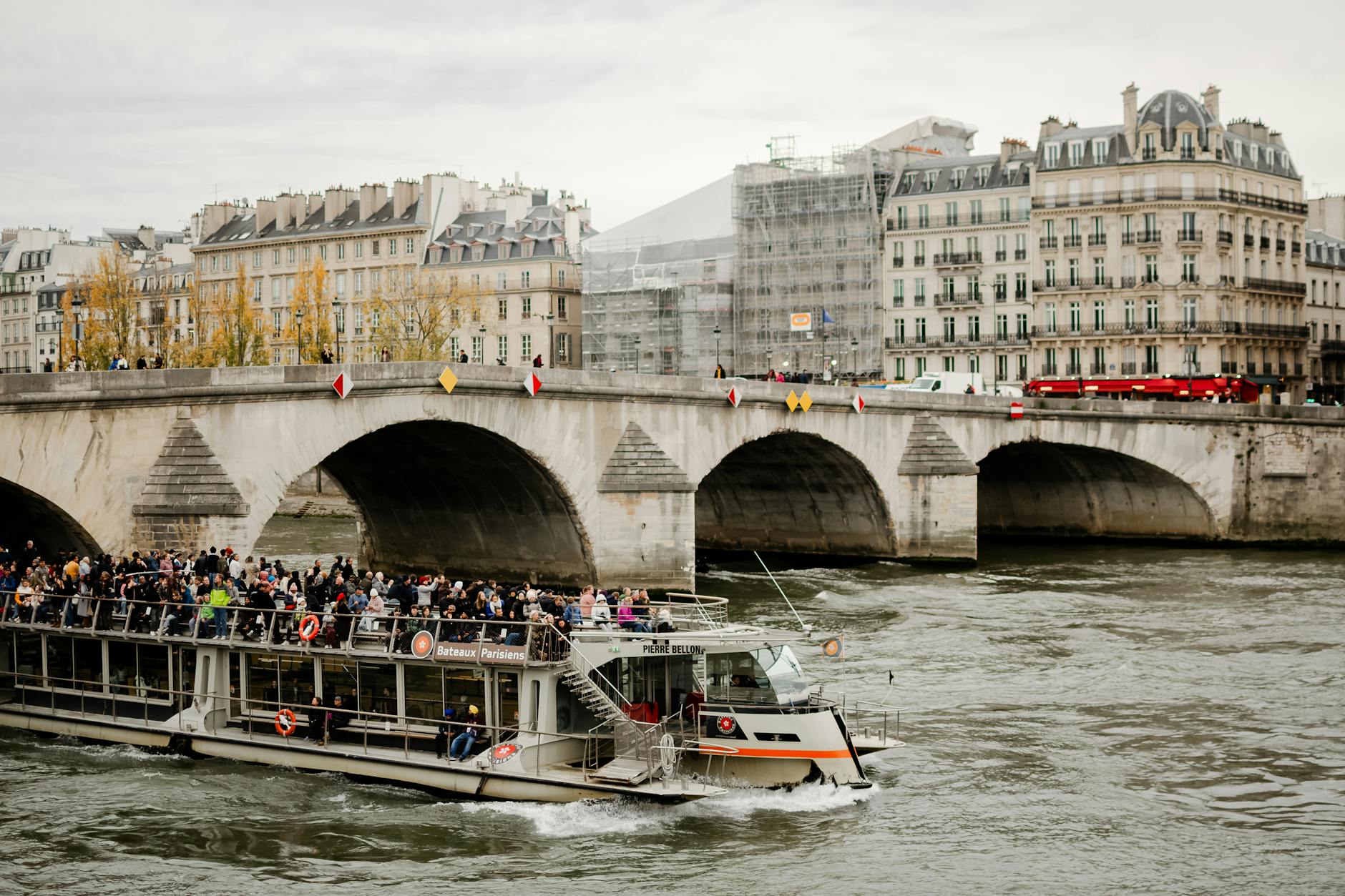
The Seine is the living spine of Paris, and some of the best things to do in Paris happen on it or beside it. The river runs through the middle of the city for 13 kilometers, under 37 bridges and past most of its greatest sights.
36. Take a Seine River Cruise
A river cruise is the most relaxing way to tick off the major landmarks in one hour. You glide past Notre-Dame, the Louvre, the Musée d’Orsay, the Eiffel Tower, and the gilded Pont Alexandre III while an audio guide fills in the history. The main operators are Bateaux Mouches (the classic, going since 1949), Bateaux Parisiens (departing from the Eiffel Tower), and Vedettes du Pont Neuf (smaller, more intimate boats). For a splurge, book a dinner cruise and work through a multi-course French meal while the city lights ripple across the water.
37. Walk Along the Berges de Seine
Pedestrianizing the riverbanks transformed the Paris waterfront. The Left Bank Berges run from the Musée d’Orsay to the Pont de l’Alma, with floating gardens, outdoor gym equipment, and rotating art installations. On warm evenings, thousands of Parisians settle along the banks with wine, cheese, and friends, which is daily Paris life at its best. Come summer, the Paris Plages program turns stretches of the bank into temporary beaches, sand, palm trees, deck chairs, free swimming and all.
38–40. More River Experiences
- Kayak or paddleboard on the Canal Saint-Martin — A handful of outfitters run guided paddling tours through the canal’s locks and under its iron footbridges, a genuinely local angle on the city
- Browse the bouquinistes — The green riverside bookstalls along the Left Bank are a UNESCO-recognized tradition going back to the 16th century, selling vintage books, antique prints, and postcards
- Swim in the Seine — After the 2024 Olympic water-quality push, designated swimming zones along the Seine now open to swimmers in summer, something that hadn’t been possible for more than a century
Parks, Gardens, and Green Spaces
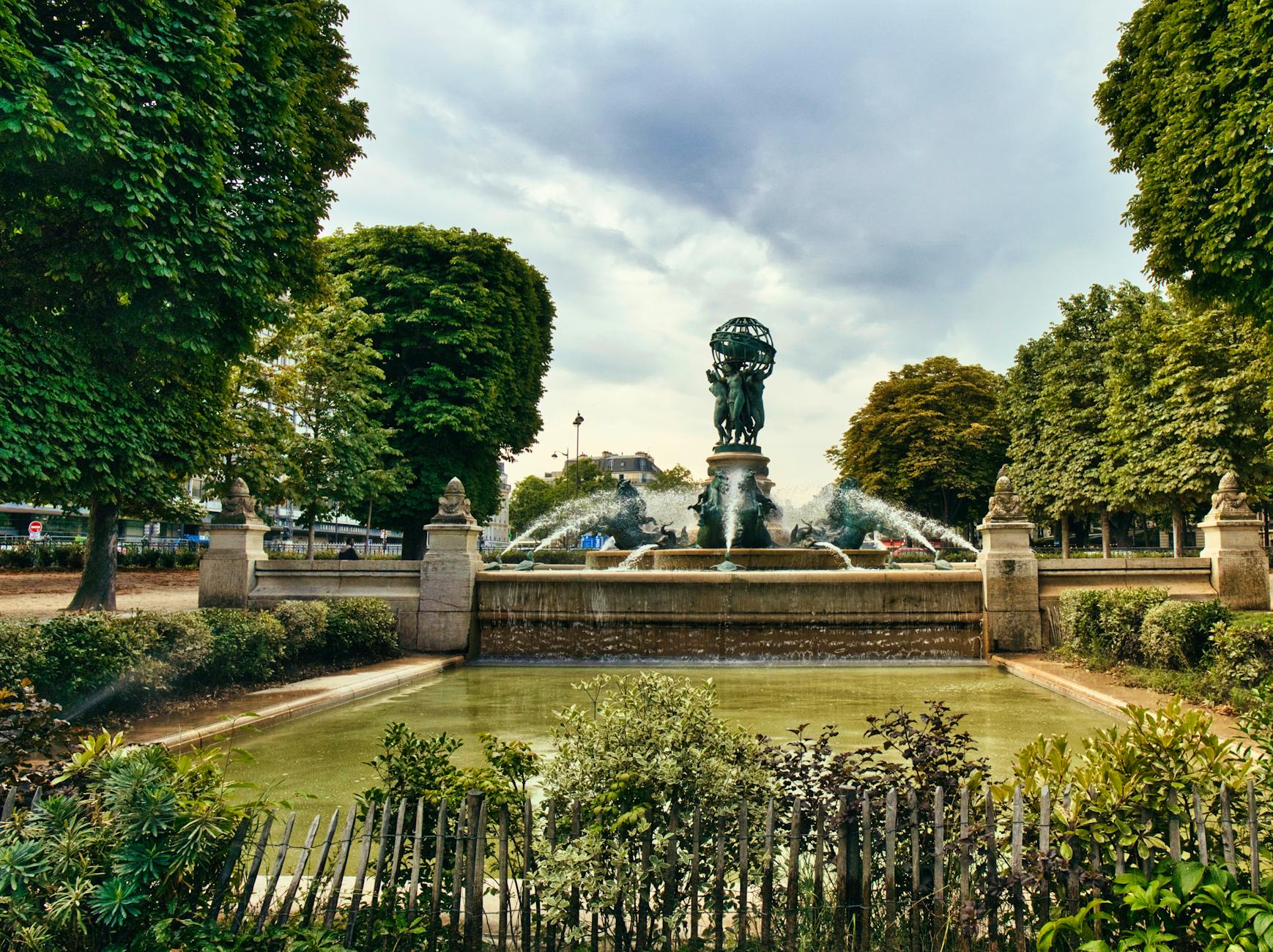
The 400-plus parks and gardens of Paris are woven into daily life here. From geometric French formal gardens to wilder English-style landscapes, they’re some of the most worthwhile things to do in Paris, particularly the moment the sun comes out.
41. Relax in the Luxembourg Gardens
Laid out in 1612 for Marie de’ Medici, the Luxembourg Gardens are still the most loved park in Paris. Locals read on the famous green metal chairs, jog the gravel paths, play chess under the chestnuts, and sail toy boats on the octagonal Grand Basin. You’ll find over 100 statues, a Medici Fountain from 1630, flower beds that change with the seasons, a puppet theater, pony rides, and free tennis courts. Grab a crêpe from a nearby vendor, claim a patch of sun-dappled lawn, and you’ve found Parisian leisure in its purest form.
42. Stroll Through the Tuileries Garden
Running from the Louvre to the Place de la Concorde, the Tuileries is the oldest public garden in Paris, designed by André Le Nôtre in 1664 in the formal French style. Long tree-lined allées, fountain pools, and sculptures by Rodin and Maillol make for an elegant promenade. In summer a temporary funfair sets up near Place de la Concorde, its Ferris wheel handing out Eiffel Tower views. The garden also holds the Musée de l’Orangerie at its western end and the Jeu de Paume photography gallery.
43. Discover Parc des Buttes-Chaumont
The most dramatically landscaped park in Paris was built in 1867 on the site of an old gypsum quarry. Artificial cliffs, waterfalls, a suspended bridge, and a Roman temple perched on a 30-meter rocky island in the middle of a man-made lake add up to a landscape you won’t find anywhere else in the city. Local families love it; tour groups never seem to find it. Bring a blanket for the sweeping lawns, or hike up to the temple for views running from Montmartre to the towers of La Défense.
44–48. More Green Spaces
- Jardin des Plantes — The city’s botanical garden since 1635, with a natural history museum, tropical greenhouses, an Alpine garden of 2,000 mountain plants, and a small zoo (the Ménagerie, one of the oldest in the world)
- Bois de Boulogne — At 845 hectares, nearly 2.5 times the size of Central Park. Row a boat on the lake, visit Frank Gehry’s spectacular Fondation Louis Vuitton, or take the kids to the Jardin d’Acclimatation amusement park
- Bois de Vincennes — The eastern answer to the Bois de Boulogne, with a medieval château, a Buddhist temple, the Paris Zoo, and the Parc Floral, which puts on free jazz concerts in summer
- Promenade Plantée (Coulée Verte) — The original elevated park on a disused railway viaduct, a decade ahead of New York’s High Line. Walk among roses and lavender 10 meters above the street in the 12th
- Parc Monceau (8th) — An elegant garden dotted with follies: a colonnade ruin, a pyramid, a Dutch windmill, an ornate Renaissance gate. Marcel Proust played here as a child, and it’s still a favorite of Parisian nannies and their charges
Shopping and Markets
From haute couture flagships to bric-a-brac flea markets, shopping is one of the more enjoyable things to do in Paris. This is the city that invented the modern department store, and it’s still the world capital of fashion and luxury.
49. Browse the Galeries Lafayette & Printemps
Galeries Lafayette Haussmann is more monument than department store. The 43-meter stained-glass dome over the main hall is one of the most photographed interiors in Paris, and you don’t need to buy a thing to enjoy the free rooftop terrace, with its sweeping view of the Opéra Garnier and the skyline. Next door, Printemps Haussmann has been its elegant rival since 1865, leaning toward contemporary fashion, with a rooftop restaurant that throws in Eiffel Tower views.
50. Hunt for Treasures at the Marché aux Puces
The Marché aux Puces de Saint-Ouen, better known as the Clignancourt flea market, is the largest antique and secondhand market on earth: 14 specialized sub-markets, 2,500 stalls. You’ll turn up everything from 18th-century furniture and vintage Hermès scarves to Art Deco light fittings and rare vinyl. Serious bargain hunters get there early on Saturday morning. The smaller Marché aux Puces de Vanves on the city’s southern edge is less overwhelming and a favorite of Parisian antiquers for its fair prices and friendlier vendors.
51–55. More Shopping Experiences
- Le Bon Marché & La Grande Épicerie — The oldest department store in Paris (opened 1852) deals in avant-garde fashion, while its food hall next door, La Grande Épicerie, is a temple of gastronomy with over 30,000 products from around the world
- Rue du Faubourg Saint-Honoré — The most prestigious luxury shopping street in the city, home to Hermès, Chanel, Dior, Givenchy, and the Élysée Palace itself
- Concept stores in the Haut Marais — Merci (which gives its profits to charity), The Broken Arm, and Centre Commercial curate fashion, design, and lifestyle pieces in beautifully designed spaces
- Rue de Rivoli souvenir shopping — For the classic Eiffel Tower keychains, postcards, and berets, the stalls and shops along Rue de Rivoli near the Louvre run competitive prices, and you can haggle at the street stalls
- Marché aux Fleurs et Oiseaux — The flower and bird market on the Île de la Cité has run since 1808, its stalls heaped with orchids, seasonal flowers, and garden plants, plus singing birds in ornate cages on Sundays
Nightlife and Entertainment
Once the sun drops, Paris turns into one of the great nightlife cities. Sophisticated cocktail bar, legendary cabaret, basement jazz club, sweaty dance floor: it’s all here, and the lit-up city earns its nickname after dark.
56. See a Show at the Moulin Rouge
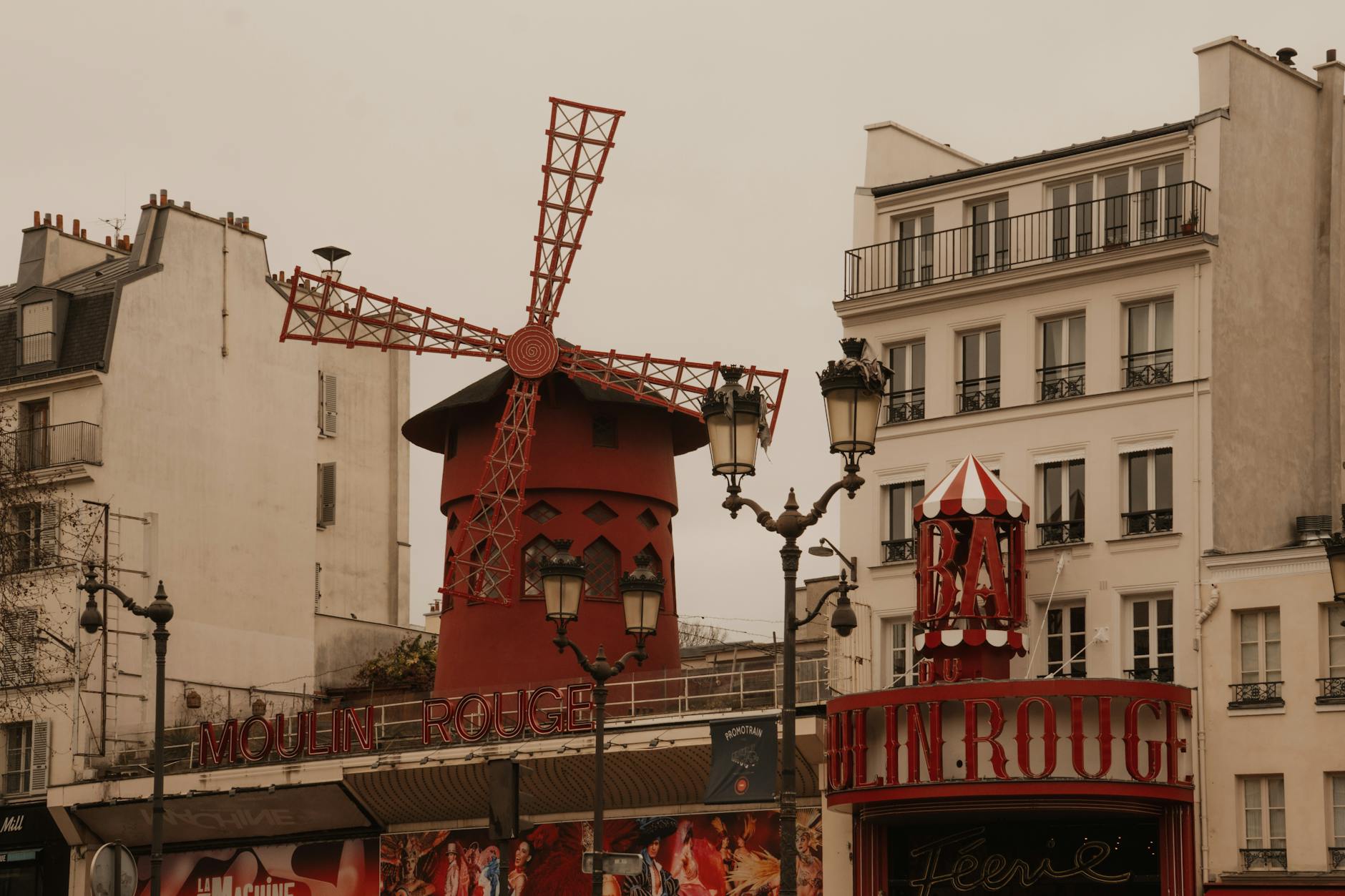
The Moulin Rouge has been packing audiences in with its cabaret revues since 1889. The current show, Féerie, fields 60 Doriss Girls through elaborately choreographed numbers, dazzling costumes, dramatic sets, and the famous can-can. Touristy? Completely. But the production values are the real thing, and it’s a quintessentially Parisian night out. Book well ahead, and decide between the dinner-and-show package for the full experience or the late-night show-only ticket for a cheaper evening.
57. Discover Paris’s Jazz Scene
Paris has been a world jazz capital since the 1920s, when African-American musicians like Sidney Bechet and Josephine Baker found a warmer welcome in France than back home. The tradition runs on in intimate clubs across the city. Le Caveau de la Huchette in the Latin Quarter has hosted nightly jazz and swing dancing in a 16th-century cellar since 1946. New Morning in the 10th pulls in international headliners. Sunset/Sunside in the 1st runs two rooms, Sunset for electric and fusion, Sunside for acoustic.
58. Enjoy Drinks with a View
Paris finally caught the rooftop-bar bug, and it’s caught it hard. Le Perchoir (several locations) kicked off the urban rooftop trend with views over the eastern skyline. Bar Panoramique atop the Concorde Lafayette hotel turns slowly through a full 360 degrees. For something smaller, the tiny rooftop terrace at Hôtel Grands Boulevards looks straight at Sacré-Cœur. In summer, museum and department-store roofs open pop-up bars too; the Galeries Lafayette rooftop serves cocktails with the Eiffel Tower behind them.
59–63. More After-Dark Experiences
- Attend a performance at the Opéra Garnier — Even if ballet and opera aren’t your thing, the gold-leaf interiors, the Marc Chagall ceiling, and the grand staircase make for an unforgettable evening. Standing-room tickets start around €10
- Catch a film at a historic cinema — Le Louxor, a 1920s Egyptian-themed movie palace in Barbès, and Le Grand Rex, with its Art Deco auditorium seating 2,700, offer cinema experiences you can’t get anywhere else
- Dance until dawn in Oberkampf — Rue Oberkampf and Rue Jean-Pierre Timbaud in the 11th are the beating heart of Paris nightlife, packed with cocktail bars, dive bars, and clubs for every taste
- Experience the Lido de Paris or Crazy Horse — The Lido on the Champs-Élysées and the Crazy Horse near the Alma bridge each put on their own brand of cabaret, with distinct styles and spectacle
- Night photography walk — The nickname earns itself after dark. A self-guided evening stroll from the Eiffel Tower along the Seine to Notre-Dame, past illuminated bridges and golden streetlamps reflecting off the water, is hard to beat with a camera in hand
Unforgettable Day Trips from Paris
You could spend months in Paris alone, but a handful of extraordinary places sit within one to two hours of the city. These day trips rank among the most memorable things to do in Paris, and they’re a fine counterweight to all that urban density.
64. Tour the Palace of Versailles
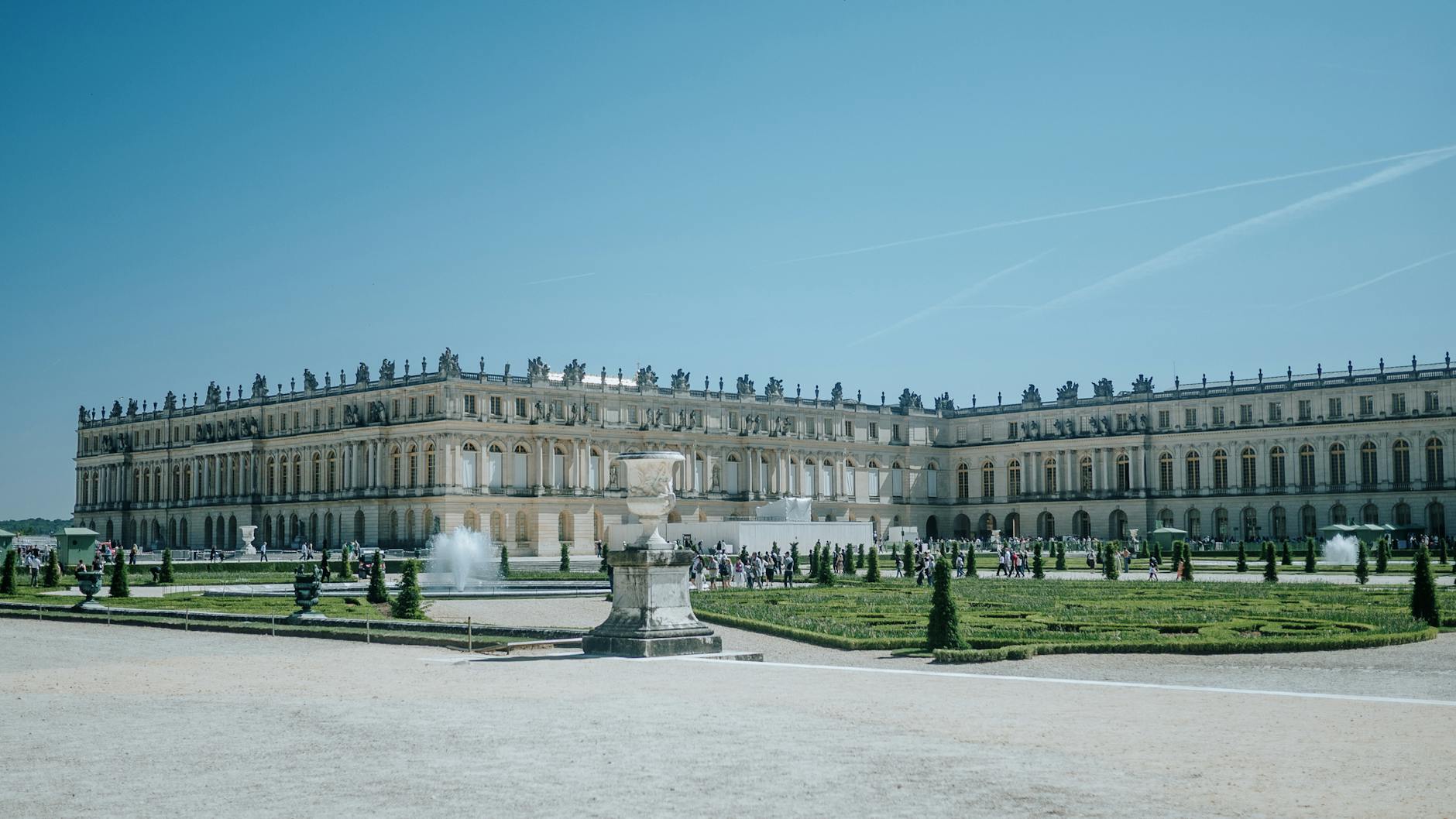
The grandest palace in Europe, Versailles was the seat of French royal power from 1682 until the Revolution in 1789. The Hall of Mirrors alone, 357 gilded mirrors throwing back the light from 357 windows over the formal gardens, justifies the trip. But the estate runs far past the main palace: the Grand and Petit Trianon, Marie Antoinette’s mock village (the Hameau), and 800 hectares of gardens with 1,400 fountains can swallow an entire day. Take the RER C from Paris (40 minutes) and be there when the gates open to stay ahead of the crowds. On summer weekends the Grandes Eaux Musicales sets the fountains to baroque music.
65. Visit Monet’s Garden at Giverny
Claude Monet lived and painted in Giverny from 1883 until his death in 1926, and his gardens are the living source of some of the most beloved paintings in the world. The water garden, with its Japanese bridge and water lilies, is instantly familiar, while the Clos Normand flower garden runs riot with color from April through October. Go in late May or June, when the water lilies bloom and the wisteria drapes the bridge in purple. The house, kept with Monet’s own furnishings and his collection of Japanese woodblock prints, is just as good. Trains from Paris Saint-Lazare to Vernon take about 45 minutes, then a shuttle bus finishes the job.
66. Explore the Champagne Region
Champagne is just 90 minutes from Paris by train, and a couple of its towns make excellent day trips. Reims runs tours of legendary houses like Veuve Clicquot and Taittinger (whose cellars sit in 4th-century Gallo-Roman chalk mines), plus the magnificent Gothic cathedral where French kings were crowned for 800 years. Épernay’s Avenue de Champagne is lined with grand houses; Moët & Chandon alone has 28 kilometers of cellars underneath. Most houses do tastings and tours, and the smaller grower-producers in the surrounding villages give you something more intimate.
67–70. More Day Trip Destinations
- Château de Fontainebleau — Less crowded than Versailles, every bit as magnificent. This UNESCO-listed palace housed French sovereigns from Louis VII to Napoleon III, and the forest around it is a favorite rock-climbing spot for Parisians
- Mont Saint-Michel — A long day (3.5 hours by TGV to Rennes, then a shuttle), but this tidal island crowned by a medieval abbey is one of France’s most extraordinary sights. Guided day tours from Paris handle the logistics for you
- Chartres Cathedral — An hour by train, this UNESCO World Heritage Gothic cathedral holds the largest surviving collection of medieval stained glass, and the labyrinth set into the nave floor dates from 1205
- Disneyland Paris — Just 35 minutes from the center on the RER A, it pulls in families and theme-park diehards year-round, with two parks, the Disney Village entertainment strip, and themed hotels
Hidden Gems and Off-the-Beaten-Path Experiences
Past the famous landmarks, some of the best things to do in Paris are the ones most visitors never stumble on. These reward the curious traveler willing to step off the guidebook trail for an afternoon.
71. Descend into the Paris Catacombs
One of the strangest, eeriest sights in the world runs directly beneath the streets. In the late 18th century, the remains of six million Parisians were moved from overcrowded cemeteries into abandoned limestone quarries. Today you can walk 1.5 kilometers of tunnels lined with carefully stacked skulls and femurs, in an atmosphere that’s solemn and gripping at once. Buy tickets online; the daily visitor cap means brutal queues for walk-ins. The entrance is in the 14th near Denfert-Rochereau.
72. Find the Sainte-Chapelle
Hidden inside the Palais de Justice on the Île de la Cité, Sainte-Chapelle is one of the most breathtaking interiors anywhere. Built in just seven years (1241–1248) by King Louis IX to house the Crown of Thorns, the upper chapel runs 15 soaring stained-glass windows depicting over 1,100 biblical scenes, drenching the room in kaleidoscopic light. It sits steps from Notre-Dame and gets a fraction of the visitors. Come on a sunny morning, when the light through the 13th-century glass is at its most luminous.
73. Explore the Covered Passages
The city’s hidden arcades, the passages couverts, are leftovers from early 19th-century shopping culture, the ancestors of the modern mall. About 20 of the original 150 survive, and walking through one feels like stepping into a time capsule. Galerie Vivienne (2nd) is the most ornate, with mosaic floors and neoclassical columns. Passage des Panoramas is the oldest, from 1800, and now packed with excellent little restaurants. Passage Jouffroy links to Passage Verdeau across the boulevard, making a chain of covered walkways tailor-made for a rainy afternoon.
74. Visit Père-Lachaise Cemetery
The most visited cemetery in the world is a 44-hectare open-air museum of funerary art, set among old trees and cobbled lanes. Its 70,000-plus plots include the graves of Jim Morrison, Oscar Wilde, Édith Piaf, Frédéric Chopin, Marcel Proust, and Molière. Beyond the famous names, Père-Lachaise is a hauntingly lovely green space where Parisians come to jog, walk the dog, and find some quiet. Free maps at the entrance mark the famous graves, or join a guided tour for the stories behind the stones.
75–80. More Hidden Discoveries
- Rue Crémieux (12th) — Often called the most colorful street in Paris, a pedestrian lane of pastel houses with flower-filled window boxes, an almost Mediterranean scene steps from Gare de Lyon
- Musée de la Chasse et de la Nature (3rd) — A quirky, thought-provoking museum in a Marais mansion that reframes how humans and animals relate, mixing contemporary art with historical hunting artifacts
- La Petite Ceinture — Sections of this abandoned 19th-century railway ringing Paris have become wild urban nature trails, with access points in the 15th and 16th among others
- Shakespeare and Company’s second floor — The ground-floor bookshop gets all the fame, but the upstairs reading room, with its antique typewriters, handwritten notes from visiting authors, and beds for the writer-in-residence program, is its secret soul
- The Arènes de Lutèce (5th) — A remarkably well-preserved 1st-century Roman amphitheater that once seated 15,000, hidden behind apartment blocks in the Latin Quarter. Today locals play pétanque on the old arena floor
- Parc de la Butte-du-Chapeau-Rouge (19th) — One of the least-known parks in Paris, with sweeping views over the northeast of the city, mature trees, and no tourists at all
Free Things to Do in Paris
Paris has a reputation for emptying wallets, but plenty of the best things to do in Paris cost nothing at all. From world-class museums to the architecture itself, the city treats budget travelers surprisingly well.
81. Free Museum Days and Free Museums
Several big museums go free on the first Sunday of each month, the Louvre, Musée d’Orsay, and Centre Pompidou among them. Year-round free options include the superb Musée Carnavalet (Paris history), the Musée d’Art Moderne de la Ville de Paris (contemporary art in a stunning Art Deco building), the Petit Palais (fine arts in a Beaux-Arts masterpiece), and the Mémorial de la Shoah (Holocaust memorial and museum). EU citizens under 26 get into all national museums free every day, so bring your passport.
82–88. More Free Experiences
- Watch the Eiffel Tower sparkle — Every evening on the hour, from nightfall until 1 AM, 20,000 lights shimmer across the tower for five minutes. The best free spots are the Trocadéro esplanade, the Champ de Mars lawn, and the Pont d’Iéna
- Explore Paris’s street art — The 13th has one of Europe’s largest open-air street art galleries, with towering murals covering whole building facades. Belleville and Canal Saint-Martin deliver exceptional work too
- Attend a free concert — Churches across Paris host free organ recitals and choral performances. Saint-Eustache near Les Halles has one of the largest pipe organs in France, and its Sunday afternoon concerts are a cherished tradition
- Walk the Coulée Verte (Promenade Plantée) — This elevated park on a former railway viaduct in the 12th is free to walk and hands you a unique angle on eastern Paris
- Browse the bouquinistes — The 900-plus green riverside bookstalls along the Seine are a UNESCO-listed tradition going back to the 16th century. Flipping through vintage books, antique maps, and old postcards costs nothing
- People-watch at a Parisian square — Bring a book and settle into Place des Vosges, Place Dauphine, or the Luxembourg Gardens for an afternoon of pure Parisian leisure
- Join the Fête de la Musique (June 21) — Every summer solstice, the whole city becomes a stage as amateur and professional musicians play free concerts on street corners, in courtyards, parks, and cafés across Paris
Seasonal Events and Festivals
Paris shifts with the seasons, and lining your trip up with a major event can turn a great visit into a memorable one. Here are some of the seasonal things to do in Paris worth planning around.
89. Bastille Day (July 14)
France’s national day kicks off with a spectacular military parade down the Champs-Élysées (the oldest and largest regular military parade in Europe), then rolls into concerts, street parties, and a fireworks display over the Eiffel Tower. The Bals des Pompiers, open-air parties thrown at fire stations across the city, are a beloved tradition where locals and visitors dance together until dawn.
90. Paris Fashion Weeks
Paris hosts four major fashion weeks a year (January, March, June, and September), and even without a front-row seat the energy seeps into the whole city. Spot celebrities outside the Grand Palais, browse the pop-up showrooms open to the public, and take in the elevated window displays at every department store and luxury boutique.
91–95. More Seasonal Highlights
- Christmas Markets (November–December) — Markets light up across the city, the Tuileries Garden one the largest. Sip vin chaud (mulled wine), browse artisan crafts, and skate at the Hôtel de Ville rink
- Nuit Blanche (October) — The city’s annual all-night contemporary art festival turns public spaces, museums, churches, and even swimming pools into free art installations from sunset to sunrise
- Paris Plages (July–August) — Temporary beaches along the Seine and the Bassin de la Villette, with sand, palm trees, deck chairs, outdoor fitness, and free swimming areas
- Fête des Vendanges de Montmartre (October) — Montmartre’s annual grape harvest festival celebrates the neighborhood’s last vineyard with five days of parades, tastings, concerts, and fireworks
- Tour de France Finale (July) — The world’s most famous bike race ends in a dramatic sprint finish on the Champs-Élysées, free to watch from the roadside. Stake out a spot hours ahead for the best view
Unique Experiences and Practical Activities
96. Take a Bike Tour
Paris has poured money into cycling infrastructure, and a guided bike tour is one of the most efficient (and most fun) ways to cover ground. Operators like Fat Tire Bike Tours and Paris à Vélo run day and night tours taking in the major landmarks and the quieter neighborhoods. Or go it alone: the Vélib’ bike-sharing system has stations every 300 meters, so grab a bike and follow the Seine cycle path or trace the Canal Saint-Martin at your own pace.
97. Catch a Performance at the Philharmonie de Paris
Jean Nouvel designed the Philharmonie de Paris in the Parc de la Villette, and since it opened in 2015 its acoustics have ranked among the finest concert halls in the world. The programming spans classical orchestras, world music, jazz, and contemporary work. Even without a ticket, the exterior, clad in 340,000 aluminum birds, and the rooftop terrace with its panoramic views make the trip out to the 19th worthwhile.
98. Explore the Palais Royal Gardens
This elegant enclosure of gardens, galleries, and arcades next to the Louvre is one of the city’s most serene surprises. Daniel Buren’s 260 striped columns in the inner courtyard have become one of the most-photographed spots in Paris, while the surrounding covered arcades hide rare bookshops, vintage jewelers, and one of the oldest restaurants in the city. The garden itself, with its dead-straight rows of linden trees and central fountain, feels like a private courtyard lifted clean out of the city’s noise.
99. Visit the Paris Sewers Museum
For something genuinely offbeat, drop down into the Musée des Égouts de Paris beneath the Quai d’Orsay. The tour follows a stretch of the city’s 2,600-kilometer sewer network, an engineering marvel designed by Haussmann’s engineer Eugène Belgrand in the 1850s. It’s cleaner and less gruesome than you’d brace for, and the exhibits on how Paris manages its water are genuinely fascinating.
100. Take a Sunrise Walk
Set the alarm early and you get Paris at its best: dawn, when the streets are empty, the light is gold, and the city is briefly yours. Start at the Trocadéro for the tower at first light, cross the river through a quiet Champ de Mars, then follow the Seine east past the Musée d’Orsay and the Louvre, reaching Notre-Dame as the bells ring for morning mass. Stop at an early-opening bakery for a warm croissant and a café crème. You’ll have covered most of the city’s greatest landmarks in two hours, barely another tourist in sight.
101. Simply Sit at a Café and Watch the World Go By
The most essentially Parisian activity of all asks for nothing but a table, a café crème, and the willingness to slow down. Pick a terrace with a good sightline, the corner of any busy boulevard does the job, and give it an hour. The clothes, the gestures, the arguments, the lovers, the dogs, the delivery cyclists, the light sliding across stone facades. This is what Parisians mean by flânerie, and it costs the price of a coffee and nothing more. In a city built on grand experiences, the simplest one often lingers the longest.
Frequently Asked Questions About Things to Do in Paris
How many days do you need to see Paris?
For a first visit, plan on at least four to five full days to take in the major highlights without sprinting. That gives you time for the big museums (Louvre, Musée d’Orsay), the landmark monuments (Eiffel Tower, Notre-Dame, Sacré-Cœur), a day of neighborhood walking, a Seine cruise, and proper time set aside for food. Adding a day trip to Versailles or beyond means adding a day for each. Return visitors digging into specific quarters, museums, or restaurants could fill two weeks and never repeat themselves.
What is the best time of year to visit Paris?
Each season makes its case. Spring (April–June) brings mild weather, blooming gardens, and manageable crowds; plenty of seasoned travelers swear by May and early June. Summer (July–August) is warm and event-packed, with Paris Plages and Bastille Day, but you pay for it in crowds and prices. Autumn (September–October) delivers pleasant temperatures, golden light, harvest festivals, and Nuit Blanche. Winter (November–February) is the quietest stretch, with Christmas markets, cozy bistros, and queue-free museums, though the thermometer drops to 2–7°C.
Is Paris safe for tourists?
Paris is generally very safe for visitors, on a par with other major European capitals. The usual city sense applies: watch for pickpockets in crowded tourist spots (the Metro, the Eiffel Tower area, and the Sacré-Cœur steps especially), keep valuables in a zippered bag against your body, and stay wary of the standard scams, the friendship-bracelet trick or the petition signers near big landmarks. The quarters tourists tend to visit, Le Marais, Saint-Germain, Montmartre, the Champs-Élysées, are well-patrolled and safe at any hour. The Metro is fine at night, though, as with any transit system, it pays to stay alert.
How much money do you need per day in Paris?
Budget travelers sleeping in hostels, eating from bakeries and street stands, and timing free museum days can get by on €70–100 a day. Mid-range travelers mixing sit-down restaurants, paid museum entries, and comfortable hotels should plan for €200–350 a day. At the luxury end, with Michelin meals, premium rooms, and private tours, budget €500 or more. Whatever your level, a Paris Museum Pass (2, 4, or 6 days) is excellent value; the 4-day pass at €62 covers over 60 museums and landmarks and pays for itself in two visits.
What are the best free things to do in Paris?
Paris is generous with free experiences: walking the neighborhoods (Le Marais, Montmartre, Saint-Germain), watching the Eiffel Tower sparkle at night, visiting the year-round free museums (Musée Carnavalet, Petit Palais, Musée d’Art Moderne), browsing the Seine’s bouquinistes, picnicking in the Luxembourg Gardens or along the riverbanks, catching a free church concert, walking the Promenade Plantée, and people-watching from any park bench. On the first Sunday of each month, the major museums, Louvre and Musée d’Orsay included, throw open their doors for free.
Do I need to speak French in Paris?
English is widely spoken in tourist areas, hotels, and restaurants, but a little French goes a long way. Open every interaction with a polite Bonjour (or Bonsoir after 6 PM), and have the essentials ready: s’il vous plaît (please), merci (thank you), and l’addition, s’il vous plaît (the check, please). Parisians genuinely appreciate the effort, even when they switch straight to English. Most museum signage and audio guides come in English, the Metro is easy to navigate without French, and a translation app on your phone handles any tricky menu.
What should I pack for Paris?
Comfortable walking shoes, above everything else; you’ll average 15,000 to 20,000 steps a day. Parisians dress stylishly but practically, favoring neutral colors, well-fitted clothes, and layers. A light waterproof jacket is essential any time of year, since the weather here turns on a dime. For spring and autumn, pack layers for temperatures between 10°C and 22°C. Summer calls for sunscreen and light clothes, plus a cardigan for over-air-conditioned museums. Winter needs a warm coat, a scarf, and waterproof boots. A crossbody bag with zippers keeps your essentials handy and pickpockets out.
Explore every things-to-do guide
The in-depth guides in this section:
- 50 Best Free Things to Do in Paris That Are Actually Amazing
- 25 Unique Things to Do in Paris Most Tourists Miss
- Best Things to Do in Paris at Night
- What to Do in Paris When It Rains
- Best Self-Guided Walking Tours in Paris
- Seine River Cruises in Paris
- Best Paris Tours and Experiences Worth Booking in 2026
- Most Instagrammable Places in Paris
- Things to Do in Paris in Winter
- Things to Do in Paris in Summer
Leave room in the plan for doing nothing in particular. Some of the best hours of a Paris trip are spent on a green metal chair by the Grand Bassin in the Luxembourg, or on the steep lawns of the Buttes-Chaumont as the evening crowd arrives with bread and wine. Almost all of it is free. Our guide to the parks and gardens of Paris covers which ones are worth a detour, the lawn rules and when each is at its best.