Paris Attractions: The Complete Guide to Every Must-See Landmark
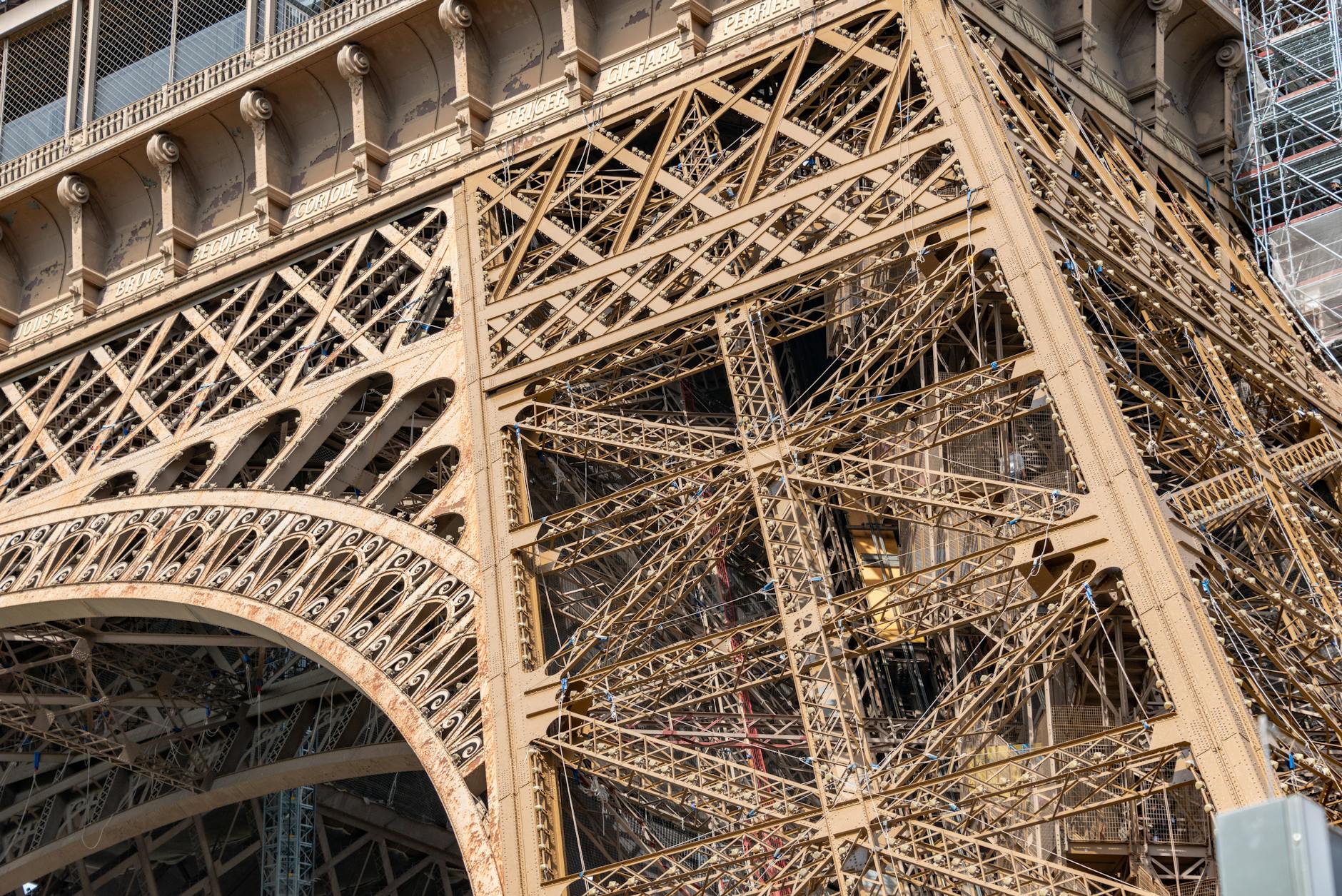
The iron lattice of the Eiffel Tower, the Gothic spires of Notre-Dame, the glass pyramid in the Louvre’s courtyard: a handful of Paris attractions rank among the most photographed and most visited places on the planet. This is the city that invented the modern museum, cut the grand boulevard, and put up monuments to everything from military victory to pure artistic ego. For a sightseer, it’s almost too much.
This guide runs through the Paris attractions worth your time: the headline landmarks, the great museums, the architectural set pieces, and a few underground oddities most visitors stride straight past. For each one you get the practical stuff, tickets, timing, how to dodge the crowds, plus an honest read on whether it actually earns the queue. Two days or two weeks, the aim is the same: spend your hours on the Paris attractions that suit you and skip the ones that don’t.
Iconic Landmarks and Monuments
These are the Paris attractions that fix the skyline in your head and pull in millions every year. They’re famous for good reasons, and you can’t really do Paris without ticking off at least a few. To slot them into a workable schedule, see our complete Paris trip planning guide.
The Eiffel Tower
Gustave Eiffel’s 330-meter iron tower went up as a temporary piece for the 1889 World Exhibition, due to come down after 20 years. It never did. Instead it became the most visited paid monument in the world, pulling in roughly seven million people a year. Three levels are open to visitors: the first floor (57 meters) with its glass floor and exhibits on the tower’s history; the second floor (115 meters), the best mix of height and detail for photos; and the summit (276 meters), where the view runs as far as 65 kilometers on a clear day.
Visitor tips: Book timed-entry tickets online through the official website at least two months ahead; the slots go fast, the summit fastest. A summit ticket by elevator runs €29.40 for adults, or you can climb the stairs to the second floor for €11.30 (674 steps). The stairs rarely sell out and feel more personal. For the best light and the smallest crowds, grab a sunset slot. The tower sparkles for five minutes on the hour every evening, from nightfall until 1 AM, best caught from the Trocadéro esplanade or the Champ de Mars.
Notre-Dame Cathedral
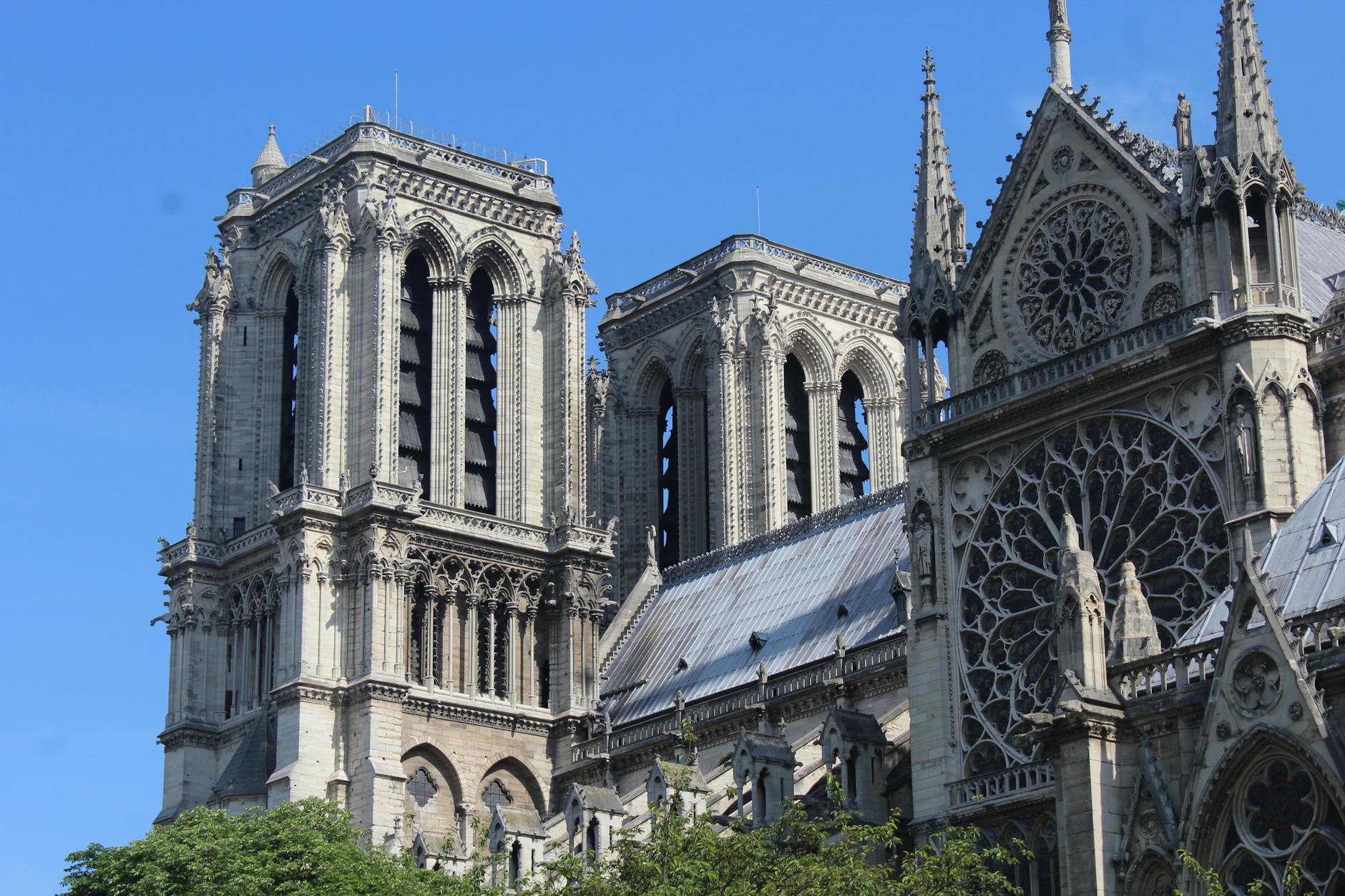
Five years of extraordinary restoration after the April 2019 fire, and Notre-Dame de Paris reopened on December 8, 2024, brighter than it has looked in generations. The 12th-century Gothic landmark now has a restored oak-and-lead spire, cleaned limestone showing its original golden tone, new liturgical furniture, and an interior redesigned to let the light pour in. The flying buttresses, the rose windows, the gargoyles that have looked out over Paris for 860 years: it remains one of the finest examples of French Gothic anywhere.
Visitor tips: Entry to the cathedral is free, but reserve a slot through the official website unless you fancy a two-to-three-hour queue at peak times. Capacity is capped at 2,500 people at once. The towers have reopened, giving you those vertiginous views from the gallery where the famous chimeras sit (often miscalled gargoyles); tickets run €16 and sell out fast. Weekday mornings are quietest. The Tuesday evening sacred music concerts at 8:30 PM are a magnificent way to hear the restored acoustics.
Arc de Triomphe
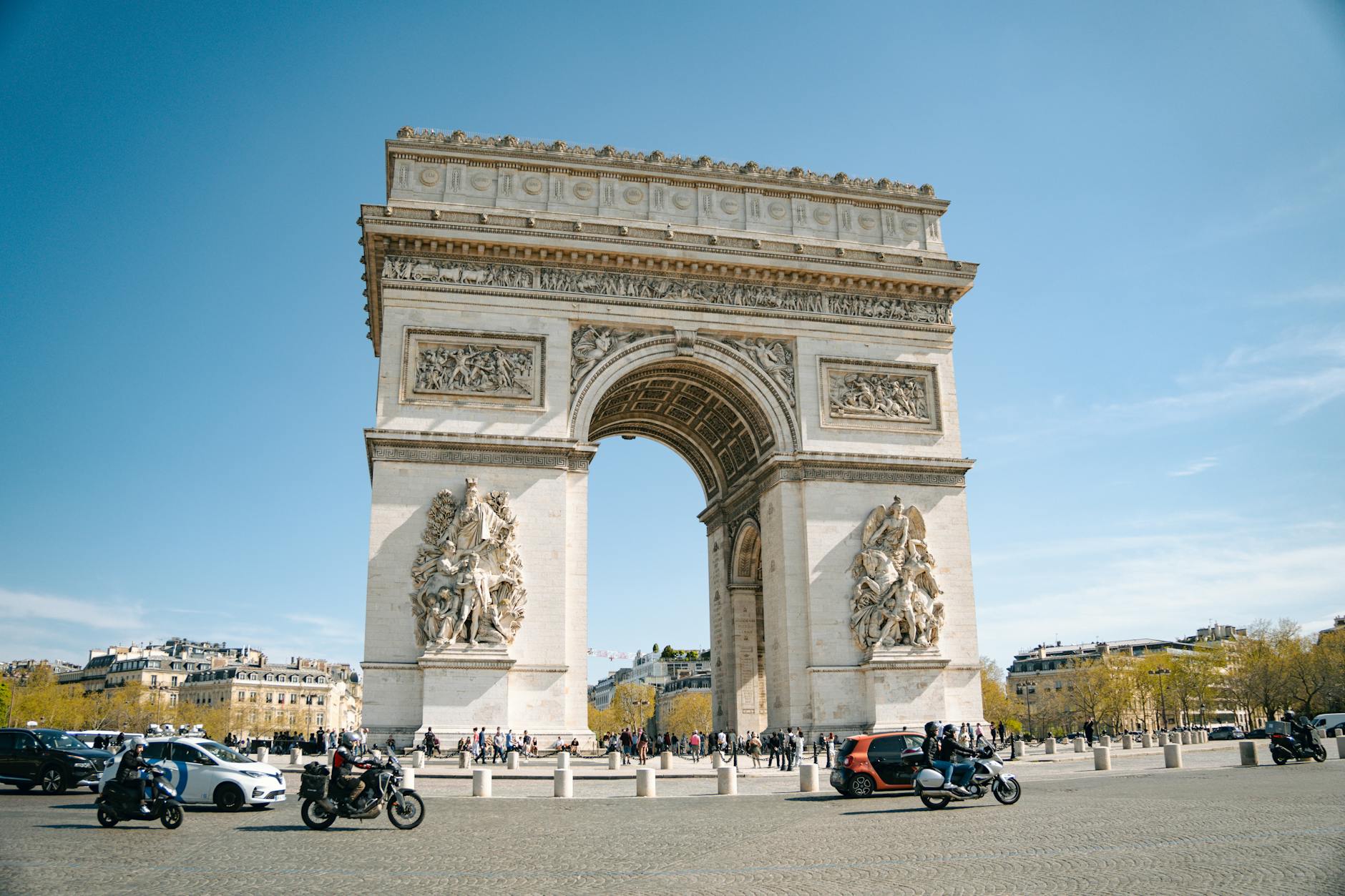
Napoleon commissioned the Arc de Triomphe in 1806 to honor his Grande Armée’s victories. The 50-meter arch stands at the center of Place Charles de Gaulle, where twelve grand avenues fan out in a perfect star, which is why the square also goes by Place de l’Étoile. Beneath the arch lies the Tomb of the Unknown Soldier, with an eternal flame rekindled every evening since 1923 in memory of France’s unidentified WWI dead. The relief sculptures depict battles and allegorical figures, the most famous being François Rude’s dramatic La Marseillaise on the right pillar facing the Champs-Élysées.
Visitor tips: Climb the 284 steps to the rooftop terrace for one of the city’s finest panoramas: straight down the Champs-Élysées to the Louvre one way, out to La Défense the other, with the Eiffel Tower front and center. Tickets are €16 for adults, on site or online. Reach the arch through the underground pedestrian tunnel on the north side of the Champs-Élysées, and whatever you do, don’t try to cross that roundabout on foot. Come at dusk to watch the city lights catch as the Eiffel Tower starts to sparkle. The rooftop is covered by the Paris Museum Pass.
Sacré-Cœur Basilica
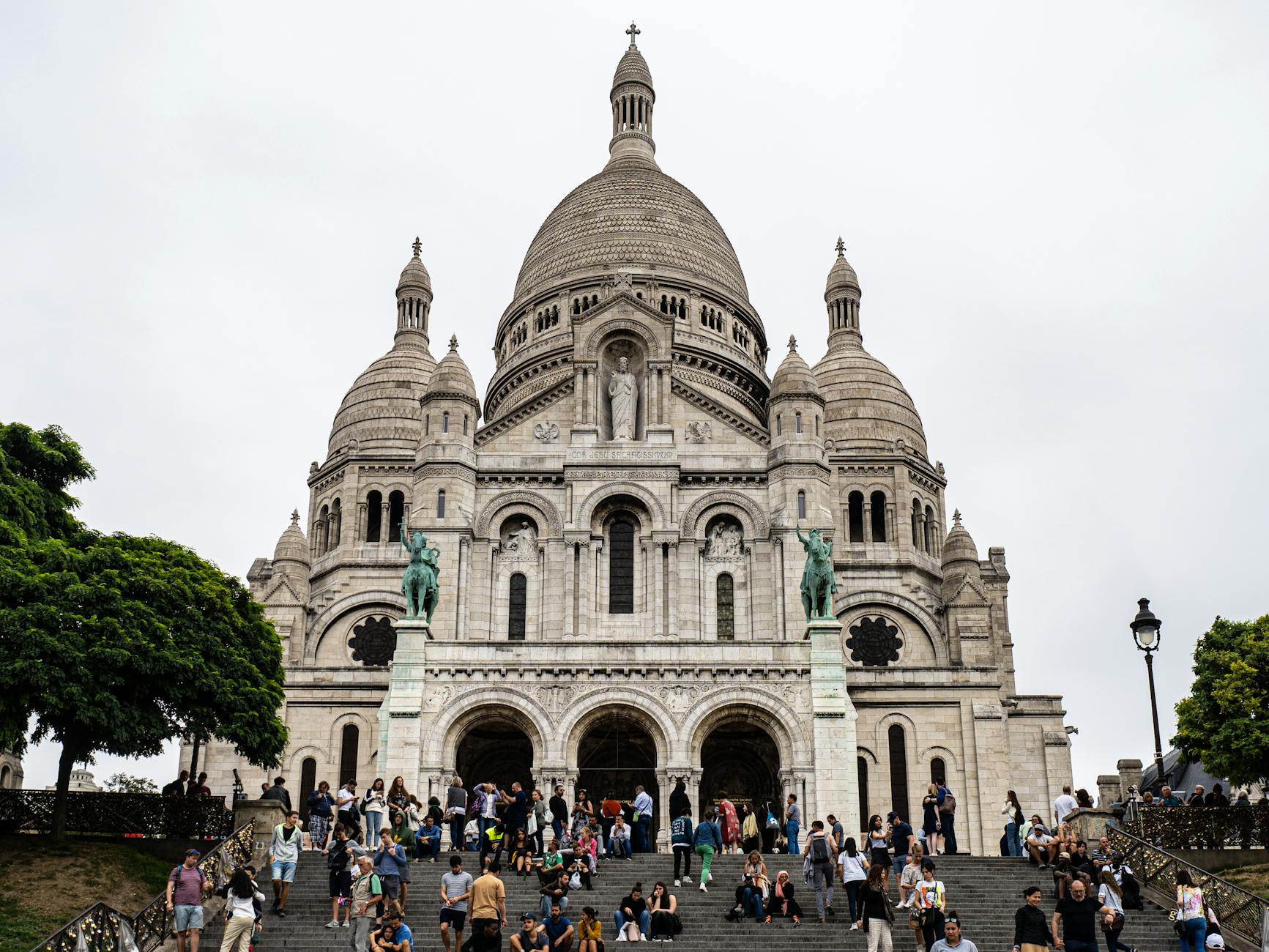
Set atop the Butte Montmartre at 130 meters, the highest natural point in the city, Sacré-Cœur has been one of the most recognizable shapes on the Paris skyline since it was finished in 1914. The Romano-Byzantine basilica is built from Château-Landon travertine, a self-cleaning stone that releases calcite when it rains and keeps the exterior white no matter what the city’s air throws at it. Inside hangs one of the largest mosaics in the world: the Christ in Majesty, 475 square meters of glittering gold tesserae across the apse ceiling. The basilica’s 19-ton Savoyarde bell is one of the heaviest in France.
Visitor tips: Entry to the basilica is free. The dome climb (300 narrow spiral steps, €7) hands you a 360-degree panorama reaching 40 kilometers, and a strong case for the best view in Paris, since you can pick out every major landmark, Eiffel Tower included. Skip the steep front-steps slog and take the funicular from Place Suzanne (one Métro ticket). The steps out front are a beloved sunset gathering spot. Give the surrounding Montmartre at least two hours, and head north of the basilica toward Rue Lepic for genuine bistros well clear of the tourist traps around Place du Tertre.
World-Class Museums
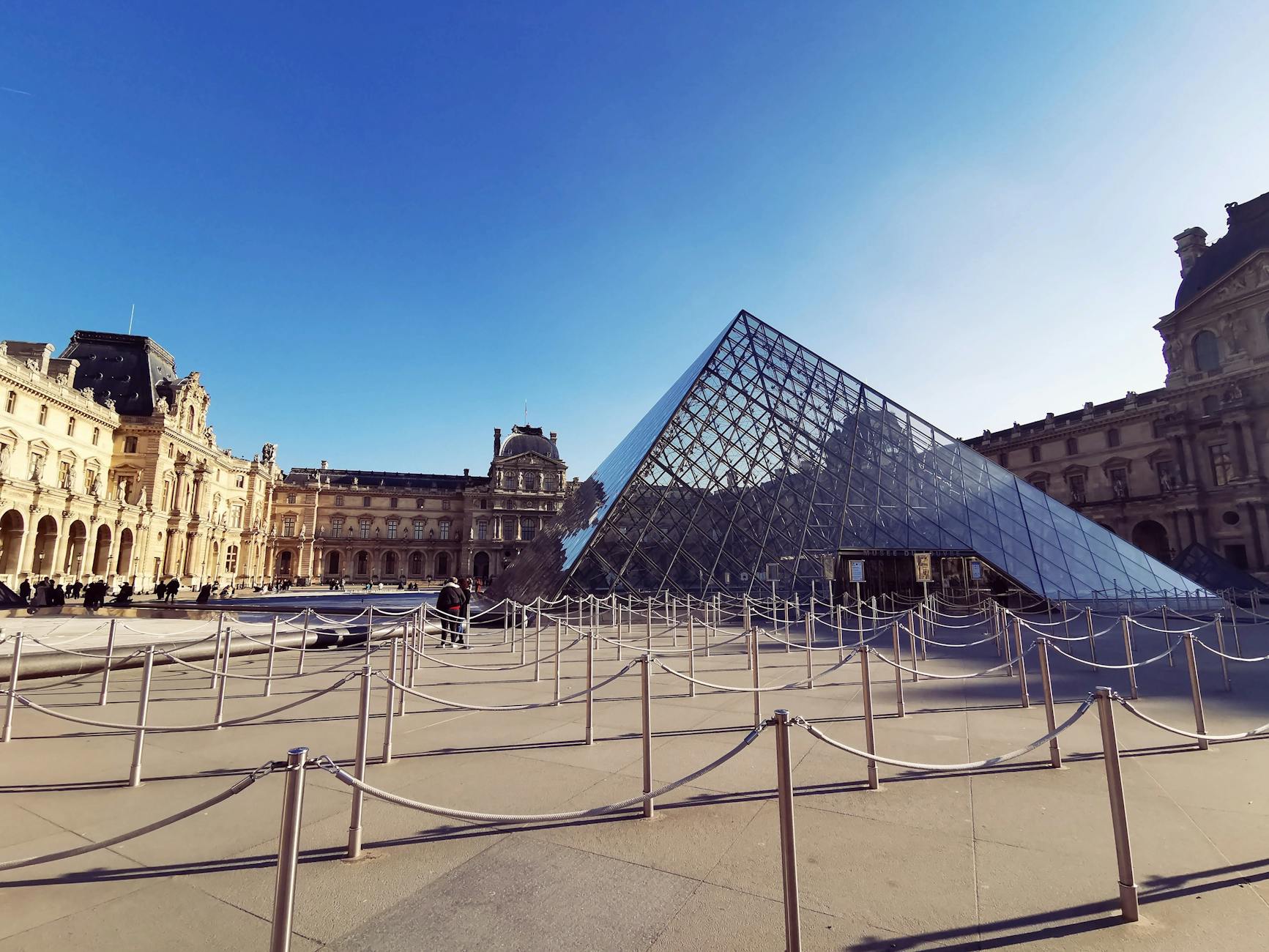
No city does museums like Paris, more than 130 of them, running from vast encyclopedic collections to intimate artist studios. These Paris attractions hold some of the greatest art and culture humanity has produced.
The Louvre
The largest art museum in the world is a historic monument in its own right, set in a former royal palace with 72,735 square meters of exhibition space. Its collection of more than 380,000 objects (35,000 on display) runs from ancient Mesopotamia to 19th-century Europe. Past the Mona Lisa and the Venus de Milo, the highlights keep coming: the Winged Victory of Samothrace, Delacroix’s Liberty Leading the People, the Crown Jewels of France, and entire wings given over to Egyptian, Greek, and Roman antiquities.
Visitor tips: Set aside three to four hours and pick two or three departments; trying to see it all is physically impossible and mentally crushing. Tickets are €22 and must be booked as timed-entry slots online, since walk-up tickets are gone. Wednesday and Friday evenings (until 9 PM) are far quieter. Use the less-crowded Passage Richelieu entrance rather than the pyramid. The Paris Museum Pass gets you straight in. Admission is free on the first Sunday of each month from October through March.
Musée d’Orsay
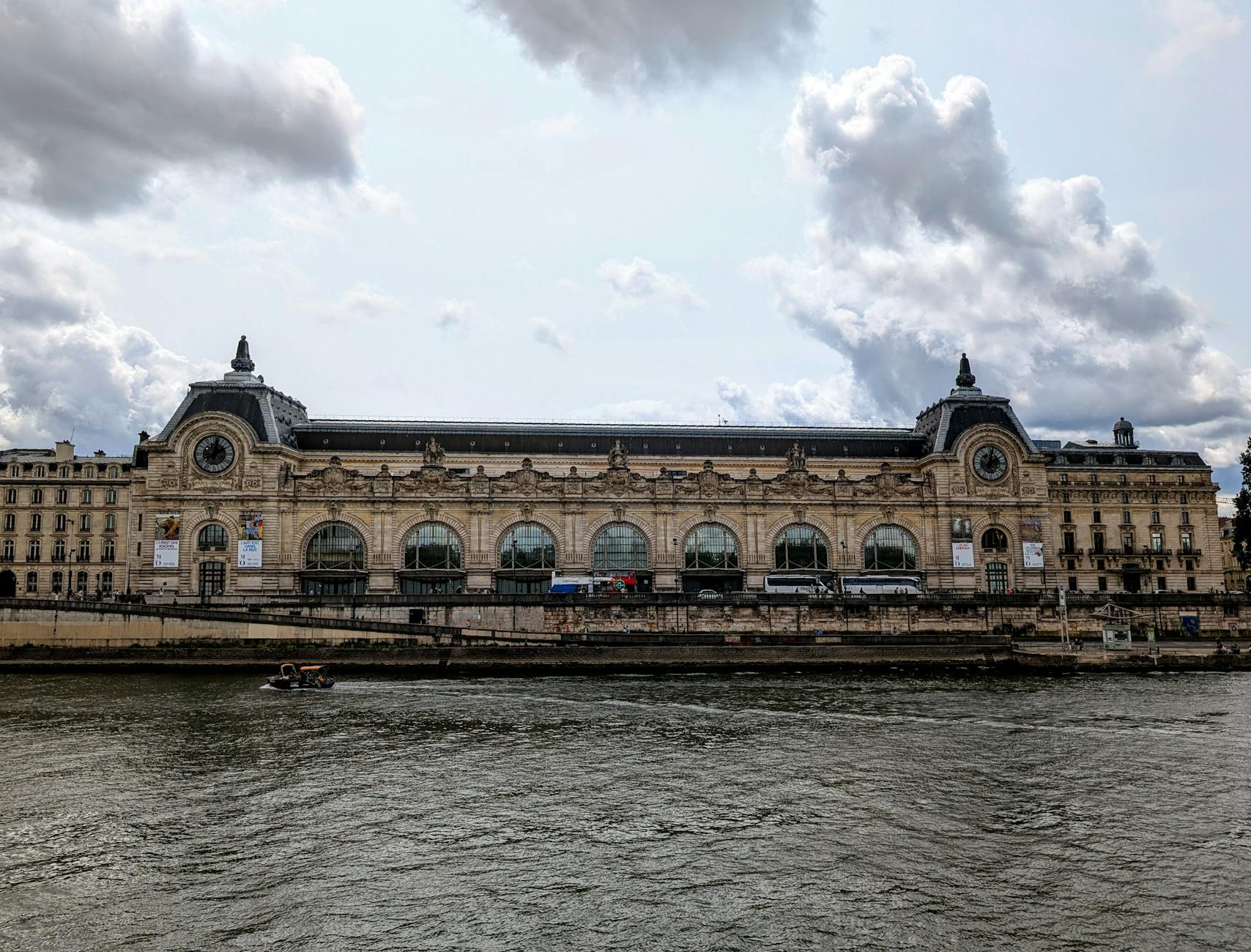
Set in a magnificent Beaux-Arts railway station built for the 1900 World Exhibition, the Musée d’Orsay holds the most comprehensive collection of Impressionist and Post-Impressionist art on earth. It bridges the gap between the Louvre’s older holdings and the Pompidou’s modern work, covering 1848 to 1914. Monet’s cathedral series, Renoir’s radiant dancers, Degas’s ballerinas, Van Gogh’s self-portraits and Starry Night Over the Rhône, Cézanne’s bathers, Toulouse-Lautrec’s Moulin Rouge posters: all here, alongside superb collections of Art Nouveau decorative arts and early photography.
Visitor tips: Tickets are €16 (free for under-26 EU residents). The fifth-floor Impressionist galleries are the museum’s jewel, so go straight there before the tour groups land. Don’t miss the giant clock face on the fifth floor, which frames Montmartre through the glass. Thursday evenings (open until 9:45 PM) are markedly quieter. The museum restaurant behind the ornate clock is an attraction in itself. Covered by the Paris Museum Pass.
Centre Pompidou
The Pompidou’s inside-out architecture, all rainbow-colored pipes, escalators, and structural guts hung on the outside, was revolutionary when it opened in 1977 and is still one of the most distinctive buildings in Paris. Inside, the Musée National d’Art Moderne holds Europe’s largest collection of modern and contemporary art, with major works by Picasso, Kandinsky, Duchamp, Dalí, Frida Kahlo, and Andy Warhol. Important note for 2026: the Centre Pompidou has closed for a major multi-year renovation. Check the official website for the latest reopening timeline before you plan a visit. For now, some of the collection is on show at temporary venues around the city.
Musée de l’Orangerie
In the southwest corner of the Tuileries, the Orangerie holds Claude Monet’s monumental Water Lilies, eight enormous curved panels in two purpose-built oval rooms, hung exactly as the artist wanted. Being wrapped on all sides by those landscapes is meditative and genuinely moving, arguably the single most powerful encounter with a work of art anywhere in Paris. Downstairs, the excellent Jean Walter and Paul Guillaume collection adds Renoir, Cézanne, Matisse, Picasso, and Modigliani. Tickets are €12.50, and the place rarely feels packed. Covered by the Paris Museum Pass.
Musée Rodin
Set in the elegant 18th-century Hôtel Biron and its three hectares of sculpted gardens in the 7th, the Musée Rodin shows Auguste Rodin’s best-known work in one of the most atmospheric settings in the city. The Thinker, The Kiss, The Gates of Hell, and Balzac stand both inside the mansion and out among the rose gardens, with the gilded dome of Les Invalides for a backdrop. The garden-only ticket (€6) is one of the best-value things you can do in Paris on a sunny afternoon. Full entry is €14.
More Essential Museums
- Musée de Cluny (National Museum of the Middle Ages) — In a 15th-century mansion built over 2nd-century Roman baths. The Lady and the Unicorn tapestries are unmissable. €12 entry
- Musée de l’Armée at Les Invalides — One of the world’s great military museums, plus Napoleon’s ornate tomb under the golden dome. €15 entry, covered by the Museum Pass
- Musée Jacquemart-André — A lavish 19th-century mansion of Italian Renaissance masterpieces, with a tea room under a Tiepolo ceiling. €17 entry
- Musée Carnavalet — The free museum of Paris history, in two Renaissance mansions in Le Marais, running from prehistory to the present
- Palais de Tokyo — The city’s leading contemporary art space, experimental installations and open until midnight. €14 entry
Historic Monuments and Architectural Masterpieces
Past the headline landmarks, Paris is thick with monuments and architectural marvels that carry 2,000 years of continuous history. These Paris attractions repay anyone willing to look beyond the obvious.
Sainte-Chapelle
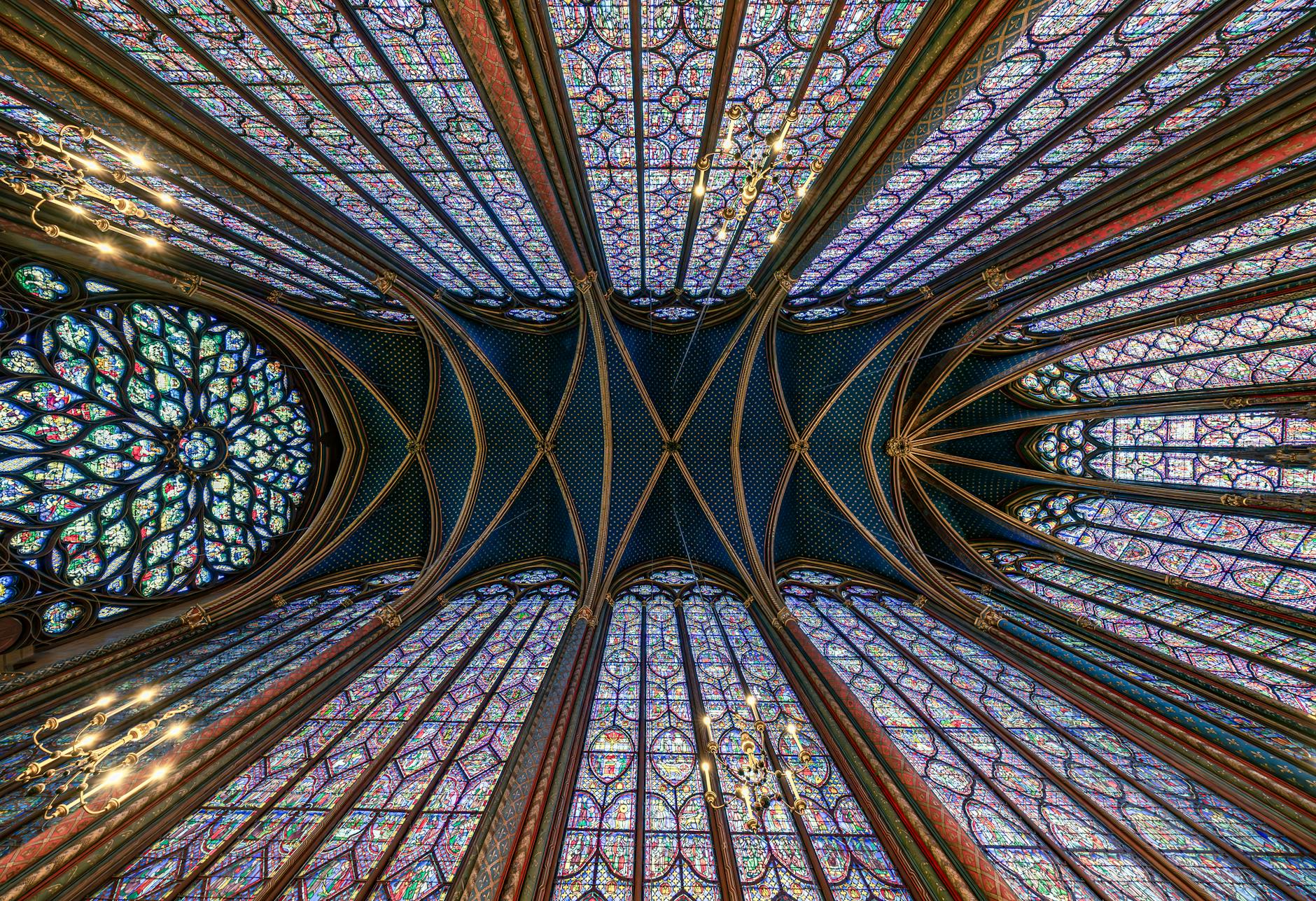
Built in just seven years (1241–1248) by King Louis IX to house the Crown of Thorns and other Passion relics, Sainte-Chapelle is widely held to be the high point of Rayonnant Gothic. The upper chapel is essentially a cage of light: 15 soaring stained-glass windows, each 15 meters tall, carry 1,113 biblical scenes across 600 square meters of original 13th-century glass. On a clear morning, with the sun streaming through, the effect is genuinely transcendent; people walk in and gasp. And despite sitting steps from Notre-Dame on the Île de la Cité, it draws a fraction of the crowds.
Visitor tips: Tickets are €11.50 (or €18.50 combined with the neighboring Conciergerie). Go on a sunny morning for the full light show. The queue can drag thanks to security screening, so arrive by 9 AM or come at lunchtime. The Paris Museum Pass covers it and lets you skip the ticket line. The lower chapel is less dramatic, but its painted ceilings are worth a pause.
The Panthéon
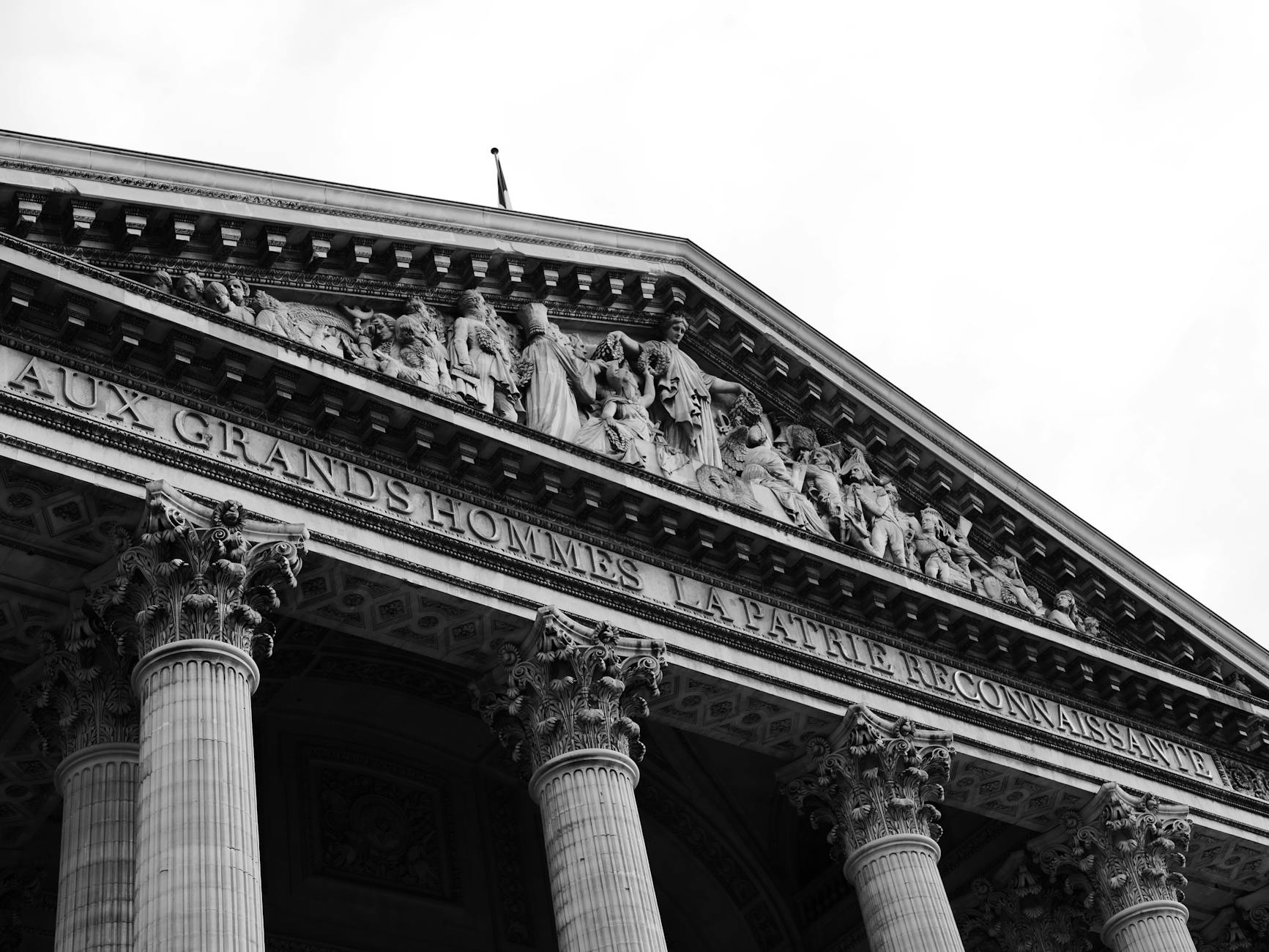
Built as a church for Saint Geneviève, the Panthéon was repurposed during the Revolution as a secular mausoleum for France’s most distinguished citizens. Voltaire, Rousseau, Victor Hugo, Émile Zola, Alexandre Dumas, Marie Curie (the first woman honored on her own merits), and most recently Josephine Baker all lie in the atmospheric crypt. The building itself is a neoclassical masterpiece modeled on Rome’s Pantheon, its dome visible across the Left Bank skyline. A replica of Foucault’s Pendulum swings from the ceiling, tracing the Earth’s rotation exactly as the original did in its famous 1851 experiment.
Visitor tips: Tickets are €11.50. The colonnade walkway around the dome (open April through October) gives you exceptional views over the Latin Quarter, the Luxembourg Gardens, and across to Montmartre. The crypt is atmospheric but cool, so bring a light layer. It sits in the heart of the 5th, so pair it with the Luxembourg Gardens and the medieval Rue Mouffetard market street nearby. Covered by the Paris Museum Pass.
Les Invalides and Napoleon’s Tomb
Louis XIV commissioned the Hôtel des Invalides in 1670 as a hospital and retirement home for wounded soldiers, a role it still partly plays today. The vast courtyard, the elegant classical façade, and the golden dome of the Église du Dôme make for one of the most impressive architectural ensembles in Paris. Under the dome lies Napoleon Bonaparte’s tomb, an elaborate sarcophagus of red Finnish quartzite, set in an open circular crypt so that visitors look down on the emperor exactly as he asked: surrounded by his victories. The complex also holds the Musée de l’Armée, one of the most comprehensive military history museums in the world.
Visitor tips: Entry to the Musée de l’Armée, Napoleon’s Tomb, and the Église du Dôme is €15. Give the military museum at least two hours; the World War I and II galleries are exceptional. The grand courtyard is free to enter and impressive on its own. The esplanade out front opens up a sweeping line toward the Pont Alexandre III and the Grand Palais. Covered by the Paris Museum Pass.
Palais Garnier (Opéra Garnier)
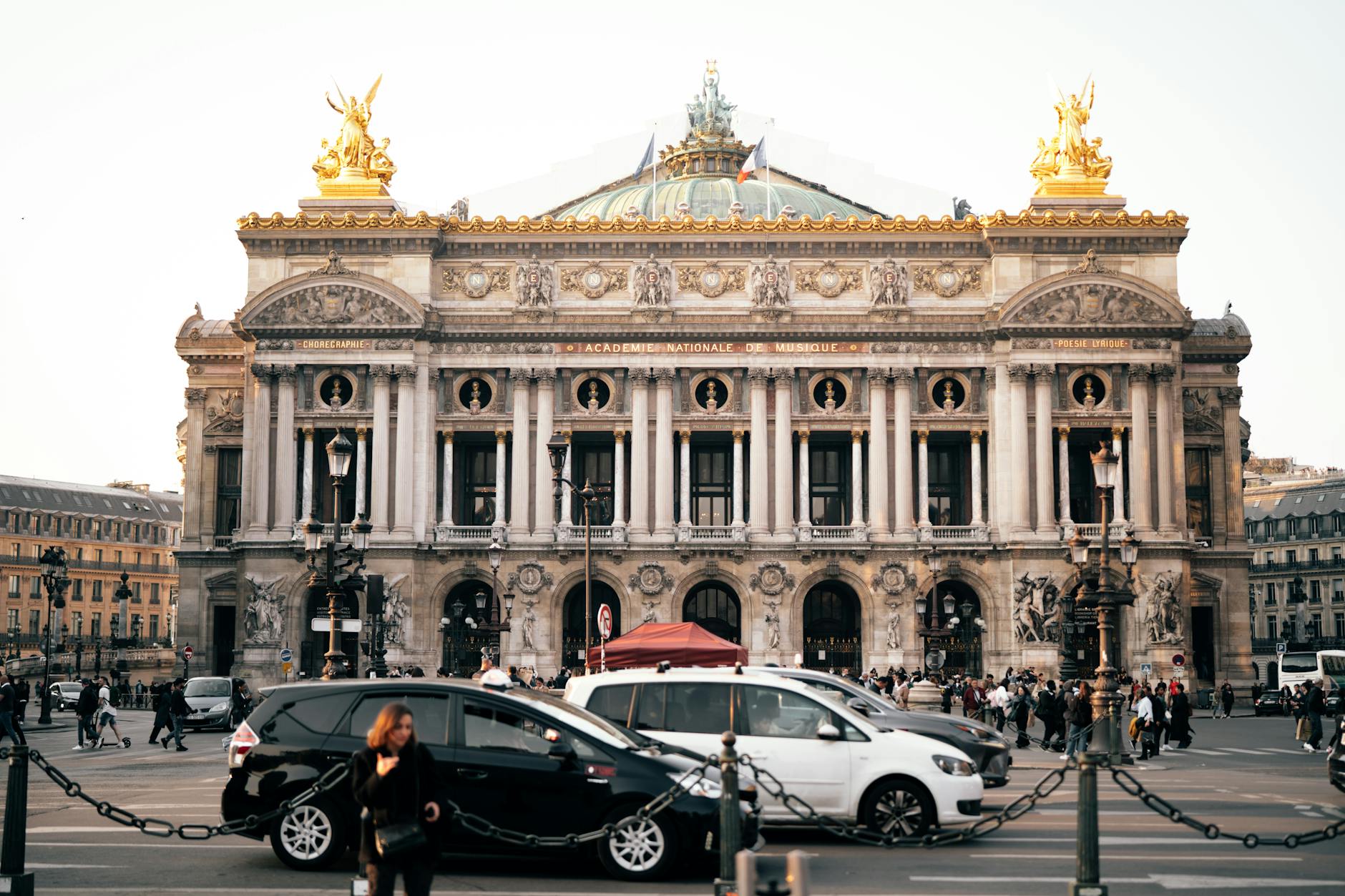
Charles Garnier’s opera house, inaugurated in 1875, is Second Empire excess in its purest form and one of the most lavishly decorated buildings on earth. The Grand Staircase in white Carrara marble, the Grand Foyer modeled on Versailles’ Hall of Mirrors, and the auditorium under its 1964 Marc Chagall ceiling are all jaw-droppingly ornate. The building also inspired Gaston Leroux’s The Phantom of the Opera, and the underground lake beneath it is real, built to stabilize the foundations; you can see the sealed entrance on the self-guided tour.
Visitor tips: Self-guided tours are €15 and cover the main areas, the library-museum, and temporary exhibitions. Performance tickets start around €10 for restricted-view seats, and seeing a ballet or opera here is unforgettable whatever’s on the bill. The building photographs best from the steps of the main façade on Place de l’Opéra. Pair it with the nearby Galeries Lafayette rooftop (free) for an aerial look at the opera house’s verdigris dome.
The Conciergerie
The oldest surviving part of the original royal Palais de la Cité, the Conciergerie became a prison during the Revolution. Its most famous inmate was Marie Antoinette, who spent her last 76 days in a cell here before her execution in 1793. The medieval Hall of the Men-at-Arms, with its Gothic vaulted ceiling spanning 1,800 square meters, is one of the finest surviving medieval secular interiors in Europe. An immersive multimedia experience recreates the atmosphere of the Revolutionary Tribunal, and Marie Antoinette’s reconstructed cell is a sobering highlight.
Visitor tips: Tickets are €11.50 (or €18.50 combined with Sainte-Chapelle, and the combo is worth it given they’re next door). The HistoPad tablet that comes with entry lays augmented-reality overlays onto many rooms, bringing the medieval and Revolutionary periods vividly to life. Allow an hour to ninety minutes. Covered by the Paris Museum Pass.
Bridges, Squares, and Architectural Landmarks
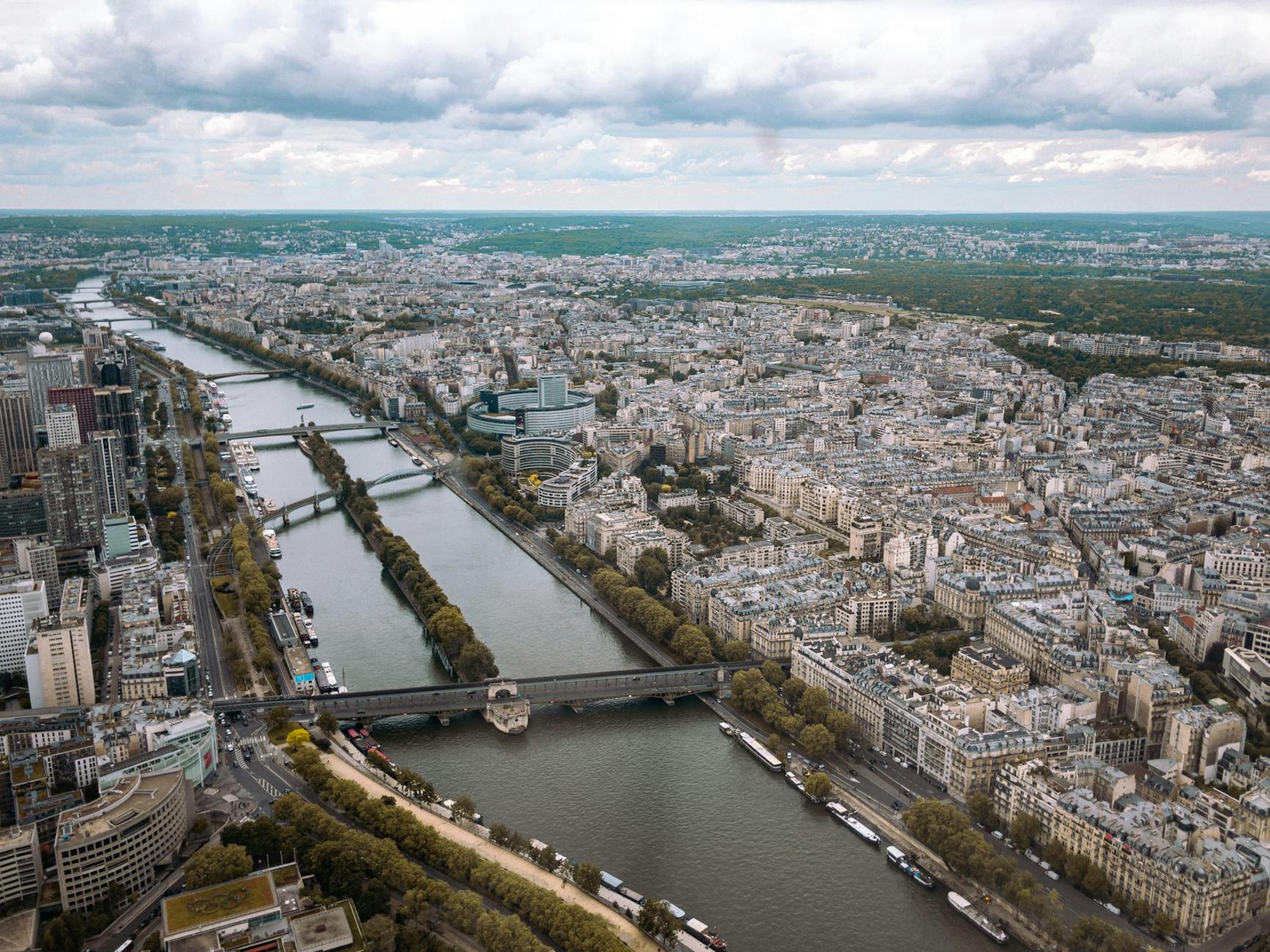
A lot of the beauty of Paris is in the fabric itself, the bridges, squares, boulevards, and architectural set pieces that turn a simple walk into a string of small discoveries. These Paris attractions are free, and routinely missed by visitors hurrying between ticketed sites.
Pont Alexandre III
The most beautiful bridge in Paris, by general agreement, the Pont Alexandre III links the Champs-Élysées quarter to Les Invalides in a single 109-meter steel arch decorated almost to the point of absurdity. Art Nouveau lamp posts, gilded bronze Fames and Pegasus figures, lions, cherubs, candelabras: it’s a theatrical crossing that has backed countless films and fashion shoots. Built for the 1900 World Exhibition, it was named for Tsar Alexander III to mark the Franco-Russian alliance. Cross at twilight, when the ornamental gas lamps throw gold across the Seine.
Place des Vosges
The oldest planned square in Paris, built between 1605 and 1612 under Henri IV, is still one of its loveliest. Thirty-six red-brick-and-stone pavilions with steep slate roofs ring a central garden of fountains, clipped lawns, and chestnut trees. The ground-floor arcades hold art galleries, antique shops, and cafés, and Victor Hugo’s apartment at number 6 is now a free museum. Set in the heart of Le Marais, it’s the ideal launch point for the neighborhood’s medieval streets, boutiques, and the falafel joints on Rue des Rosiers.
Grand Palais and Petit Palais
Built for the 1900 Universal Exhibition, these facing palaces on either side of Avenue Winston Churchill are Beaux-Arts architecture at its peak. The Grand Palais’s enormous glass-and-steel nave, the largest in Europe at 13,500 square meters, hosts major temporary exhibitions and events. The Petit Palais across the avenue holds the city’s fine arts collection, from antiquity to 1900, and is completely free. Its inner courtyard garden, with a semicircular colonnade and a café, is one of the most elegant hidden spaces in Paris.
More Architectural Highlights
- Pont Neuf — Despite the name (‘New Bridge’), this is the oldest surviving bridge in Paris, completed in 1607. Its unusual design carries semicircular stone balconies and 381 carved mascarons (grotesque faces) along the cornices
- Place de la Concorde — The largest square in Paris, anchored by a 3,300-year-old Egyptian obelisk from Luxor, with sweeping views toward the Champs-Élysées, the Tuileries, the Madeleine, and the National Assembly
- Haussmann Boulevards — Baron Haussmann’s urban overhaul of the 1850s to 70s created the Paris we know: wide tree-lined boulevards, uniform cream-stone buildings with wrought-iron balconies, zinc mansard roofs. Boulevard Saint-Germain, Avenue de l’Opéra, and Rue de Rivoli are prime examples
- La Défense and the Grande Arche — The modern business district, anchored by the hollow cube of the Grande Arche (big enough to swallow Notre-Dame), sets a sharp contrast against the historic western axis running from the Louvre through the Tuileries and the Champs-Élysées
Underground and Unusual Attractions
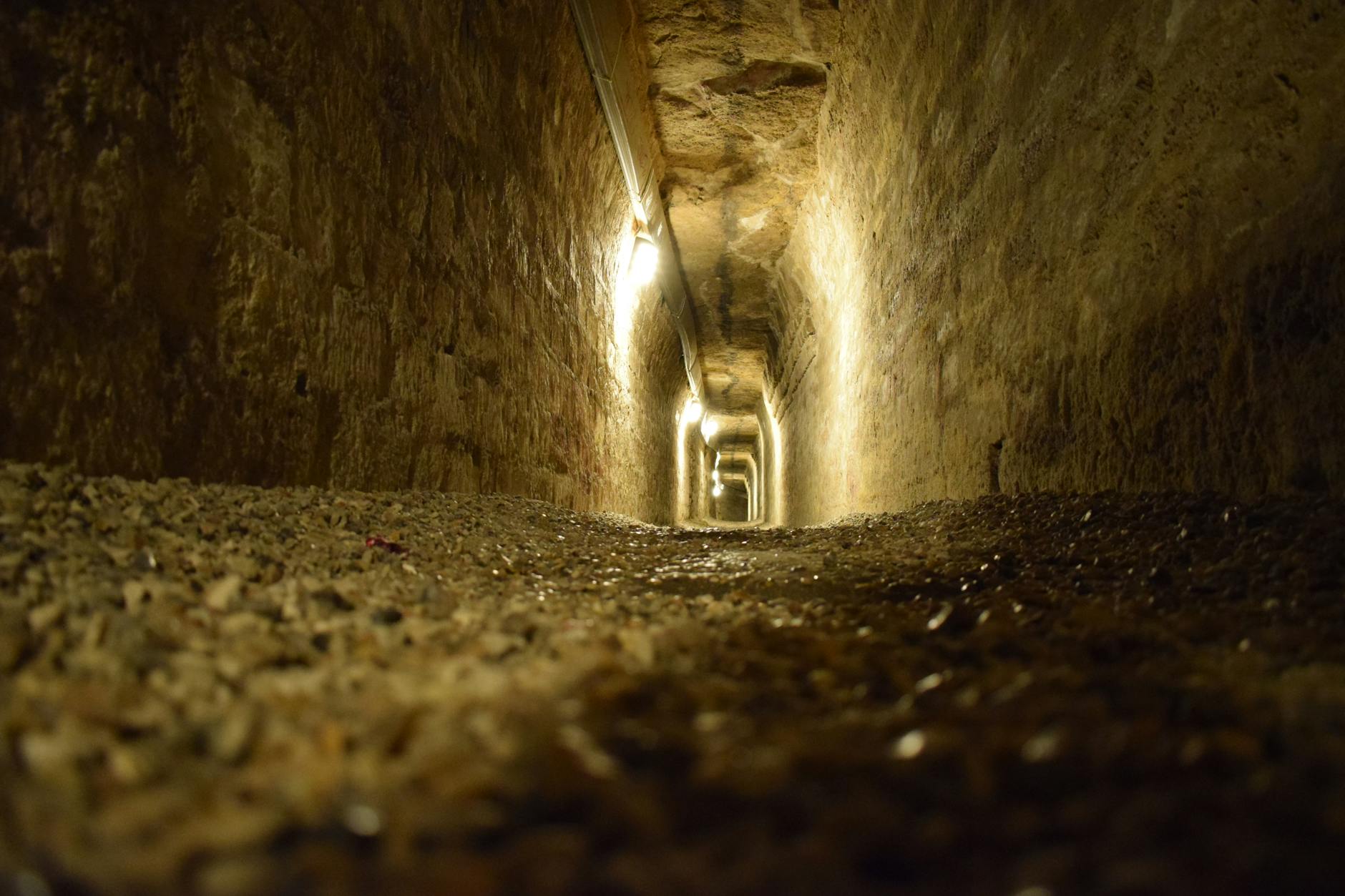
Under the elegant streets of Paris sits another city entirely: a network of quarries, catacombs, and buried history running for hundreds of kilometers. These subterranean Paris attractions give you a wholly different read on the place.
The Paris Catacombs
By the late 18th century, Paris had a public health crisis on its hands from overflowing cemeteries. The fix was to move the remains of roughly six million Parisians into the abandoned limestone quarries beneath the Left Bank. Today you descend 131 steps (about 20 meters down) and walk 1.5 kilometers of tunnels lined with carefully arranged skulls, femurs, and tibias, some stacked in patterns, others built into walls that vanish into the dark. The ossuary manages to be sobering, fascinating, and eerily beautiful all at once.
Visitor tips: The Catacombs are among the hardest attractions in Paris to get into, thanks to a strict cap of 200 people at a time. Online tickets (€29) routinely sell out weeks ahead, so book as early as you can. The underground portion takes about 45 minutes. It holds a constant 14°C year-round, so bring a jacket even in August. The exit is about 1.5 kilometers from the entrance, near Rue Rémy Dumoncel in the 14th. Not for anyone with claustrophobia or mobility issues, with no elevator and 131 steps down and 112 back up. Not covered by the Museum Pass.
The Paris Sewers Museum (Musée des Égouts)
For something genuinely offbeat, drop beneath the Quai d’Orsay into a stretch of the city’s remarkable 2,600-kilometer sewer network. Designed by Eugène Belgrand under Baron Haussmann in the 1850s, the system was a revolutionary feat of engineering that helped turn cholera-ridden medieval Paris into the clean, modern capital it became. The tour runs through actual working tunnels (far cleaner and less dramatic than fiction would have you believe), with exhibits on water management, urban infrastructure, and the system’s cameo in Les Misérables. Entry is €10.
The Archaeological Crypt of the Île de la Cité
Directly under the square in front of Notre-Dame, an underground museum lays out the archaeological remains of 2,000 years of Paris. Gallo-Roman quays, a 4th-century rampart, medieval houses, and 19th-century foundations are all visible at their original depth. Scale models and digital displays help you picture how the island grew from a Celtic settlement into the heart of modern Paris. Entry is €9, and it pairs perfectly with a visit to Notre-Dame above.
Major Day Trip Attractions
Some of the greatest Paris attractions sit just past the city limits, and all are easy to reach by public transport. For the wider list of what’s out there, see our 101 things to do in Paris guide; the ones below make for unforgettable day excursions.
Palace of Versailles
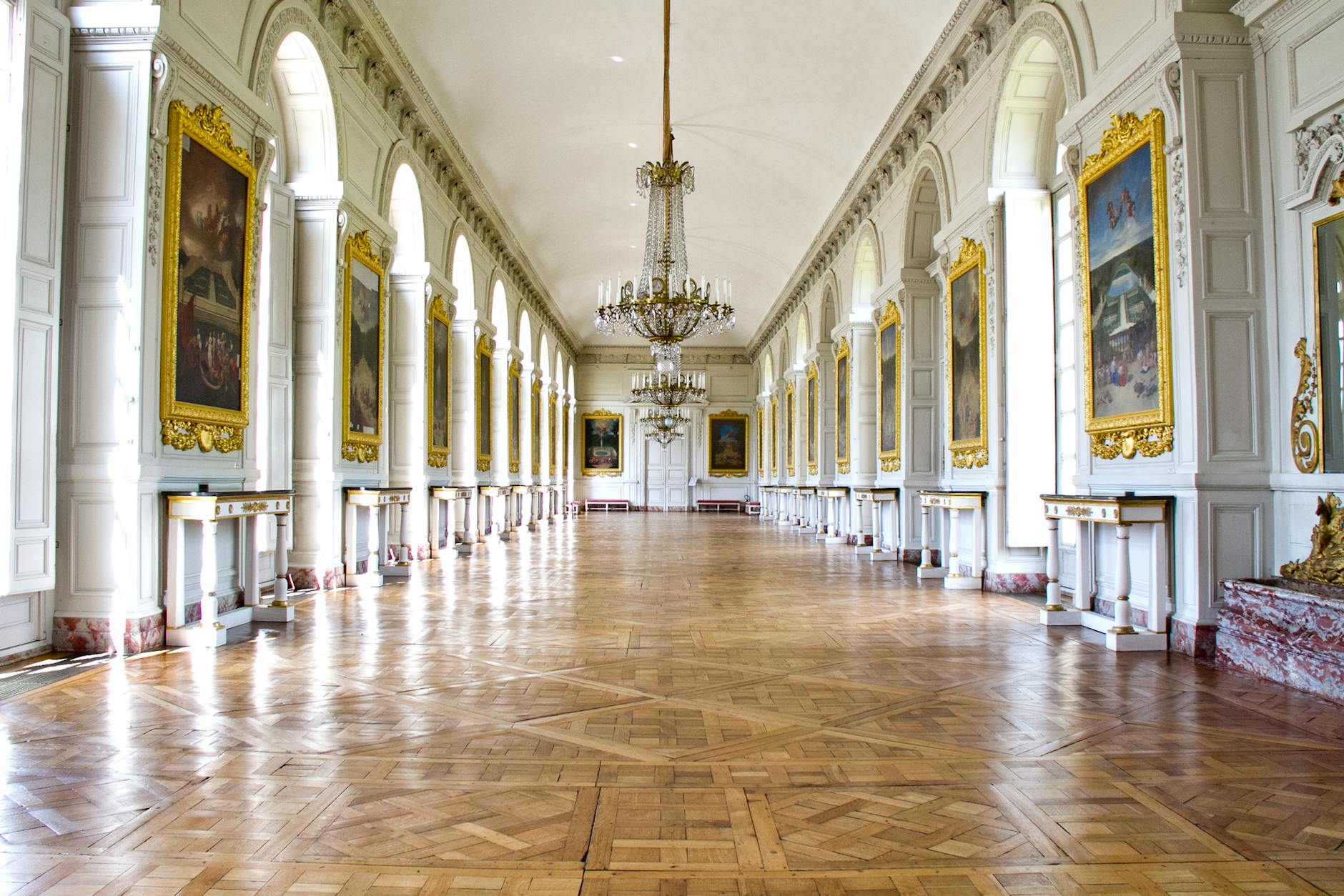
The largest and most opulent royal palace in Europe, Versailles was the seat of French royal power from 1682 until the Revolution in 1789. Louis XIV turned a modest hunting lodge into a monument to absolute monarchy that took 36,000 workers more than 50 years to finish. The Hall of Mirrors, 357 gilded mirrors throwing back the light from 357 windows over the formal gardens, is the breathtaking centerpiece, but the King’s and Queen’s State Apartments, the Royal Chapel, and the vast collections of historical paintings hold their own.
The estate runs far past the palace: the Grand Trianon (a pink marble retreat), the Petit Trianon (Marie Antoinette’s private domain), the Queen’s Hamlet (a charming mock village), and 800 hectares of meticulously landscaped gardens with 1,400 fountains can fill a whole day on their own. On summer weekends, the Grandes Eaux Musicales choreographs the fountains to baroque music, a spectacle that hasn’t changed much since Louis XIV’s court.
Visitor tips: Take the RER C from central Paris to Versailles-Château Rive Gauche (40 minutes, around €4 each way). Palace tickets are €21; the estate-wide Passport including the Trianon palaces is €27 and better value. Arrive at the 9 AM opening to see the Hall of Mirrors before it clogs up. Afternoon visitors (after 2:30 PM) find the tour-group crush has eased. Bring a picnic for the gardens, since the on-site restaurants are expensive and mediocre. Covered by the Paris Museum Pass (palace only, not the Musical Fountain shows).
Disneyland Paris
Out in Marne-la-Vallée, just 35 minutes from central Paris on the RER A, Disneyland Paris pulls in around 15 million visitors a year across its two parks. Disneyland Park runs the classic Disney attractions around Sleeping Beauty Castle, while Walt Disney Studios Park leans into cinema-themed rides and shows. Recent additions include Avengers Campus, which drops Marvel heroes into the park with cutting-edge attractions.
Visitor tips: Single-day tickets start around €56 for adults if you book online ahead (prices shift by date). Two-park tickets are far better value if you want both. The Premier Access system (the replacement for the old FastPass) lets you skip queues for €8–15 per ride. Weekdays outside French school holidays are dramatically quieter. The direct RER A makes this an easy day trip, or stay at a Disney hotel for Early Magic Extra Time access.
More Day Trip Attractions
- Château de Fontainebleau — Less crowded than Versailles, every bit as magnificent. This UNESCO World Heritage palace served French monarchs from Louis VII to Napoleon III, and the surrounding 25,000-hectare forest is a weekend playground for Parisian hikers and climbers. Entry €14, 40 minutes by train from Gare de Lyon
- Giverny (Monet’s Garden) — Claude Monet’s home and the gardens behind his Water Lilies series. The Japanese bridge and water garden are instantly familiar. Open April through October. Entry €11, 75 minutes by train from Paris Saint-Lazare plus a shuttle
- Provins (Medieval City) — A remarkably preserved UNESCO medieval town with 12th-century ramparts, underground tunnels, and seasonal medieval festivals complete with jousting and falconry. Two hours by train from Gare de l’Est
- Chantilly (Château and Horse Museum) — An exquisite Renaissance château holding the second-largest collection of old master paintings in France (after the Louvre), set in 115 hectares of gardens. The horse museum and live equestrian shows are world-famous. 25 minutes by TER train from Gare du Nord
Practical Tips for Visiting Paris Attractions
The Paris Museum Pass: Is It Worth It?
The Paris Museum Pass gets you free entry, and often skip-the-line access, to more than 60 museums and monuments, the Louvre, Musée d’Orsay, Versailles, Sainte-Chapelle, the Panthéon, and Les Invalides among them. It comes in 2-day (€55), 4-day (€70), and 6-day (€85) versions. It pays for itself easily at two to three major attractions a day; the Louvre (€22) plus the Musée d’Orsay (€16) in one day already beats the 2-day price. Just as valuable, it lets you skip the ticket queues at most venues, which saves real time in high season. Buy it online at parismuseumpass.com, or at participating museums and tourist offices. Worth knowing: the Eiffel Tower, the Catacombs, and the Centre Pompidou are not covered.
Beat the Crowds: Timing Your Visits
- Early morning (9–10 AM) is the sweet spot for the Louvre, Versailles, and the Catacombs; queues balloon after 10:30 AM
- Late afternoon (after 3 PM) works well for the Eiffel Tower, Musée d’Orsay, and Sacré-Cœur, as the day-trippers head back to their hotels
- Evening openings — The Louvre (Wednesday and Friday until 9 PM), the Musée d’Orsay (Thursday until 9:45 PM), and certain temporary exhibitions are dramatically quieter
- Seasonally, November through March sees far fewer visitors everywhere. April, May, and June give you the best weather-to-crowd ratio
- First Sunday of the month — Free admission at the major museums means big savings but also big queues. Arrive before opening for the best of it
Getting Between Attractions
The Paris Métro links all the major Paris attractions efficiently, with most landmarks within a five-minute walk of a station. A single ticket is €2.15, but the Navigo Easy card or a 10-ticket carnet works out cheaper. For the attractions that cluster together, the Louvre, Tuileries, and Musée d’Orsay; Notre-Dame, Sainte-Chapelle, and the Conciergerie; the Eiffel Tower, Les Invalides, and Musée Rodin, walking is usually faster and far more scenic than the Métro. The RATP website has excellent route planning.
Accessibility Information
Accessibility at Paris attractions has improved a lot in recent years, though the city’s historic buildings still throw up obstacles. The Louvre, the Musée d’Orsay, and most major museums offer wheelchair access and adapted facilities. The Eiffel Tower provides wheelchair access to the first and second floors by elevator. But the monuments that involve a climb, the Arc de Triomphe, the Sacré-Cœur dome, the Notre-Dame towers, the Catacombs, are not wheelchair accessible. Check the individual attraction websites for detailed accessibility information before you go.
Frequently Asked Questions About Paris Attractions
What are the top 5 must-see Paris attractions?
For a first visit on limited time, the five essentials are the Eiffel Tower (for the iconic experience and the panorama), the Louvre (for the unmatched art collection), Notre-Dame Cathedral (newly restored and free to enter), the Musée d’Orsay (for the Impressionists in a stunning setting), and the Arc de Triomphe (for the rooftop view down the Champs-Élysées). Between them, these five capture the essence of Paris across architecture, art, history, and sheer urban good looks.
How many days do you need to see the main Paris attractions?
Four to five full days let you take in the major attractions without sprinting. One workable rhythm: Day 1 for the Eiffel Tower area (Eiffel Tower, Trocadéro, Musée Rodin, Les Invalides); Day 2 for the Louvre and Right Bank (Louvre, Tuileries, Palais Royal, Galeries Lafayette); Day 3 for the islands and Left Bank (Notre-Dame, Sainte-Chapelle, Latin Quarter, Musée d’Orsay); Day 4 for Montmartre and the north (Sacré-Cœur, Montmartre village, the Moulin Rouge area); and Day 5 for a day trip to Versailles. Two weeks would open up the secondary museums, the neighborhoods, and the day trips properly.
Which Paris attractions are free?
Plenty of excellent Paris attractions cost nothing all year: the interior of Notre-Dame Cathedral, the interior of Sacré-Cœur, the Musée Carnavalet (Paris history), the Petit Palais (fine arts), the Musée d’Art Moderne de la Ville de Paris, the Mémorial de la Shoah, every public park and garden (Luxembourg, Tuileries, Buttes-Chaumont), every church (Saint-Eustache and Saint-Sulpice included), Père-Lachaise Cemetery, and the exteriors of most monuments. On top of that, the Louvre, the Musée d’Orsay, and most national museums go free on the first Sunday of each month (October to March for the Louvre). EU residents under 26 get free entry to all national museums year-round.
Is the Paris Museum Pass worth buying?
The Paris Museum Pass (from €55 for 2 days) pays for itself quickly if you plan on at least two major attractions a day. The Louvre (€22) plus the Musée d’Orsay (€16) in one day already justifies the 2-day price. Beyond the money, its biggest perk is skip-the-line access at most covered attractions, which saves 30 to 90 minutes of waiting at busy venues. The 4-day pass (€70) is the sweet spot for most visitors. It’s not worth it if you’ll do only one museum a day or prefer long, leisurely visits to a single institution.
Are Paris attractions safe for solo travelers?
Paris attractions are very safe for solo travelers, women traveling alone included. The major landmarks and museums are well-patrolled and well-lit. The real concern at tourist sites is pickpocketing: keep valuables in zippered bags against your body, stay wary of the distraction scams (petition signers, friendship-bracelet sellers, shell-game operators), and keep your wits about you in crowded Metro stations near the hotspots, Châtelet, Trocadéro, and Anvers especially. Don’t buy tickets from unofficial sellers outside attractions. Most solo travelers find that the café culture, the museum benches, and the park seating make Paris an exceptionally comfortable city to explore alone.
What is the best order to visit Paris attractions?
Cluster your visits geographically to cut down on transit. The main groupings are: Île de la Cité (Notre-Dame, Sainte-Chapelle, Conciergerie); Left Bank museums (Musée d’Orsay, Orangerie, Musée Rodin, all walkable); Louvre area (Louvre, Tuileries, Palais Royal, the covered passages); Eiffel Tower area (Eiffel Tower, Trocadéro, Les Invalides, Pont Alexandre III); and Montmartre (Sacré-Cœur, Place du Tertre, the vineyards). Schedule your top-priority attraction for early morning, when your energy and patience are highest, and save the parks, neighborhoods, and bridges for an afternoon wander.
When is the cheapest time to visit Paris attractions?
November through February is the most affordable stretch, not because admission prices change (they don’t), but because hotel rates fall 30-50%, flights get cheaper, and the queues shrink dramatically. That last part matters: shorter lines mean you fit in more attractions per day, which quietly raises the value of a Museum Pass. The trade-offs are shorter days (sunset around 5 PM in December) and the cold (averaging 3-7°C). For the best blend of value, weather, and manageable crowds, aim for early March, late September, or October.
Explore every attractions guide
The in-depth guides in this section:
- Eiffel Tower Complete Guide
- Louvre Museum Guide
- Notre-Dame Cathedral Paris
- Sacre-Coeur & Montmartre
- the rooftop terrace above the Etoile
- Palace of Versailles Guide
- Sainte-Chapelle & Conciergerie
- Paris Catacombs
- Disneyland Paris Complete Guide
- The Pantheon Paris
Knowing which attractions matter is only half of it. The day-by-day Paris itineraries show how they fit together over one to ten days, and which combinations make for a good day rather than a forced march.
Short on time? One day in Paris works through which of these attractions actually fit into 24 hours, and which ones are better saved for a longer trip.
Not every attraction needs a ticket. Between Saint-Germain and the Panthéon, the Luxembourg Gardens are free, open from early morning, and as much a part of Paris as any monument: toy sailboats on the Grand Bassin, the shaded Medici Fountain, a hidden orchard of old pear varieties and hundreds of green chairs you can carry wherever the sun is.