Bruges Day Trip from Paris: A Chocolate-Lover’s Escape
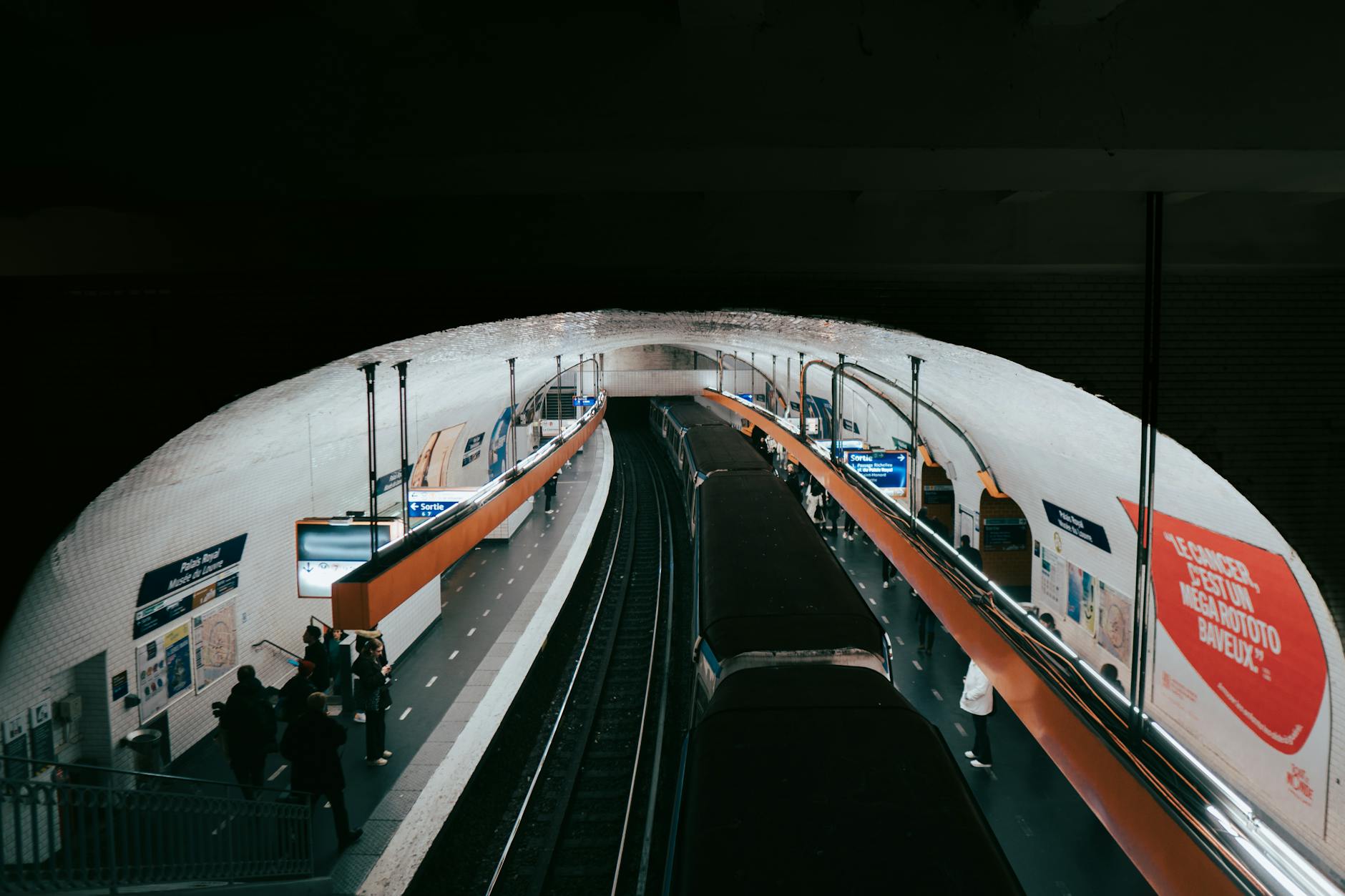
Here is the thing nobody tells you: you can eat breakfast in Paris and be standing in a perfectly preserved 15th-century Belgian square before lunch. A bruges day trip from paris crosses a border and a language line, 320km north, and it still works, because high-speed Eurostar and Thalys trains via Brussels put Gare du Nord within 2h45m to 3h15m of the medieval center. What waits at the other end is a UNESCO World Heritage city whose cobblestone core has barely changed since 1500, a ring of canals that earned the “Venice of the North” label, three chocolatiers worth the trip on their own (Dumon, The Chocolate Line, Sukerbuyc), and some of the best beer brewed anywhere. The catch: as a day trip it is tight, and an overnight is far better. What follows is the honest version — how to get there, the Markt and the 366-step Belfort, the canal cruise, the chocolatiers and beer bars worth your time, and a straight answer on whether to bother with the day trip at all.
Bruges at a Glance
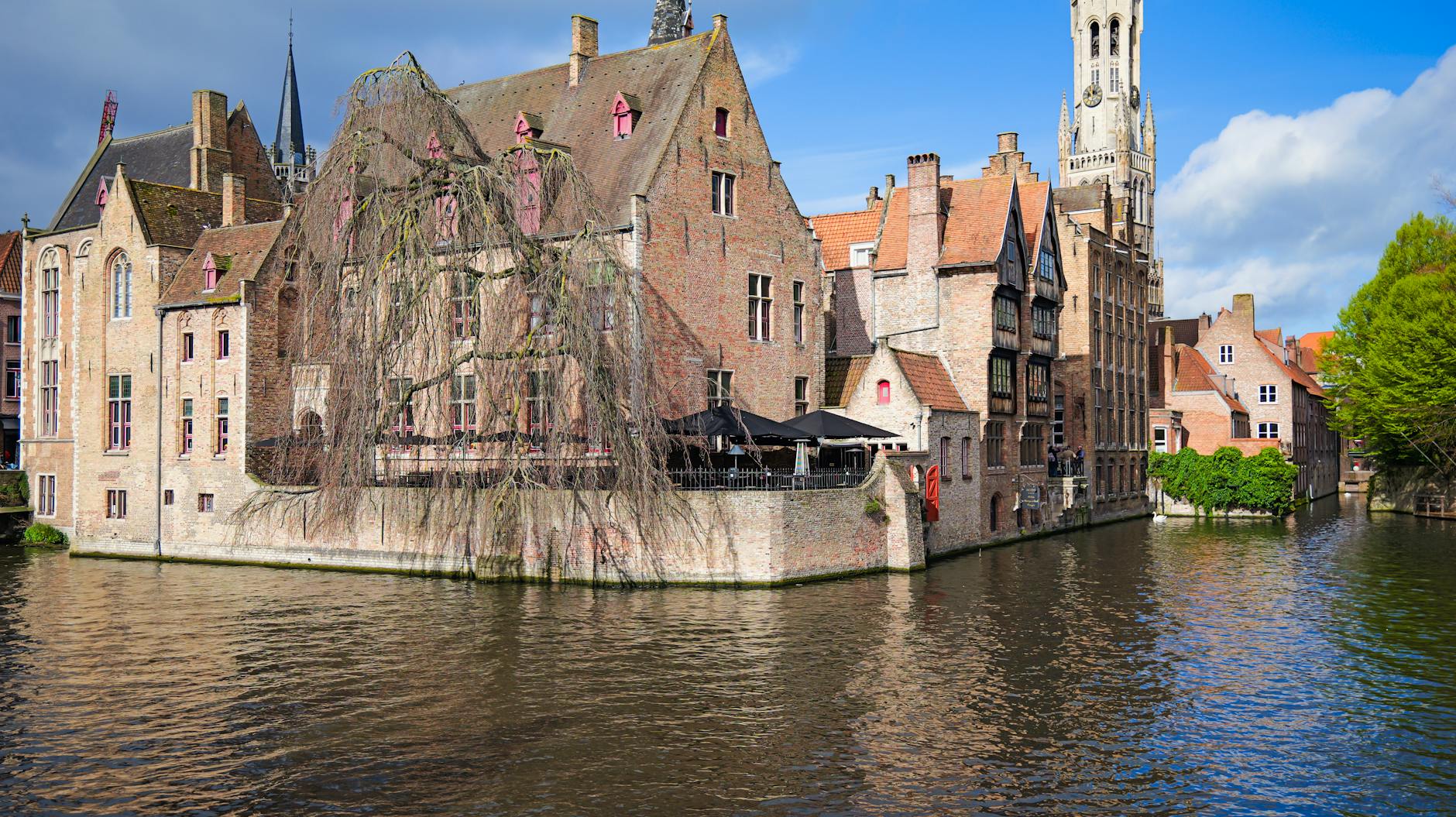
Bruges (Brugge in Dutch) is the capital of West Flanders, in the northwest corner of Belgium, 320km north of Paris and about 90km west of Brussels. The medieval center is small — roughly 430 hectares inside an oval ring of canal — and that compactness is exactly why UNESCO listed it in 2000. Most of what stands inside the ring was already standing in the 15th century. Around 120,000 people live here. Roughly 8 million tourists pass through every year, nearly all of them on day trips, which tells you something about both the appeal and the crowds.
| Detail | Information |
|---|---|
| Country | Belgium (West Flanders) |
| Distance from Paris | 320 km north |
| Total train time from Paris | 2h45m – 3h15m via Brussels |
| Eurostar Paris – Brussels | 1h22m |
| Train Brussels – Bruges | approx. 1 hour |
| Each-way fare (round-trip) | €60 – €200 depending on booking |
| UNESCO listing | 2000 |
| Population | approx. 120,000 |
| Annual visitors | approx. 8 million |
| Currency | Euro (same as France) |
| Language | Dutch (Flemish); English widely spoken |
Honest Day Trip vs Overnight
Be honest with yourself before you book, because these are two genuinely different trips. The day trip is six hours of trains bracketing a fast, slightly breathless dash through a small, dense city. The overnight is one of the most rewarding short escapes you can make from Paris. Same destination, very different memory.
Day trip: the pros
It works. Catch the 7:00am Eurostar from Gare du Nord, change at Brussels-Midi, and you are walking into the Markt before 11am. Everything UNESCO-listed — Markt, Belfort, Burg Square, Basilica of the Holy Blood, Beguinage, Minnewater — sits within a 15-minute walk inside that compact oval. In a single afternoon you can climb the Belfort, take a 30-minute boat cruise, eat a bowl of moules-frites, hit two chocolatiers, and still make a 6pm train home. If your Paris stay is short, this is the only version of Bruges available to you, and it beats not going.
Day trip: the cons
You trade six hours on trains for about seven on the ground. You land in late morning, which is precisely when the tour buses are at peak, and you leave before the evening light arrives, which is precisely when Bruges turns beautiful. You will be tired. And the whole plan is fragile: a 20-minute Eurostar delay shrinks your window from seven hours to five. Worst of all is rain. Bruges is an outdoor city, and the indoor sights, good as they are, cannot fill a wet day. A drizzly day trip is the one scenario where you might regret the train fare.
Overnight: the pros
Staying the night changes everything. Once the last tour buses pull out around 5pm, the canals empty and the lanes go quiet, lit at dusk by warm sodium lamps, and the whole place becomes about as photogenic as anywhere in northern Europe gets. Dinner in a hidden courtyard, then a beer flight at ’t Brugs Beertje, makes for a close-to-perfect Belgian evening. Then there is sunrise at the Markt the next morning, before the buses return and the square fills — the shot every photographer comes for and most day-trippers never get.
Honest recommendation
Stay over. Rooms in the medieval center start around €120 a night; find the cheapest atmospheric place you can and treat that second night as the price of actually experiencing the city rather than glimpsing it. The day trip is the “at least I saw it” option, and it has its place for visitors locked into a tight Paris itinerary. But if the choice is genuinely yours, the overnight wins every time.
How to Get to Bruges from Paris
You have three real choices: the high-speed train via Brussels, driving, or an organized day tour. For almost everyone, the train is the obvious answer, and driving rarely earns its keep.
Eurostar to Brussels-Midi (the first leg)
Paris Gare du Nord to Brussels-Midi runs 1h22m on the Eurostar high-speed network, with departures roughly hourly from 6am. Fares swing wildly: as little as €39 booked well ahead, €150 or more on the day. Book three to four weeks out and you land in the sweet spot, around €60-80 each way. The trains are comfortable, with power outlets and wifi. No passport stamp, but there are ID checks at the gate, so carry your passport even though Belgium sits inside the Schengen Area. If you want the full picture of how this network runs, our Paris-London Eurostar guide covers it.
Train Brussels-Midi to Brugge (the second leg)
From Brussels-Midi you switch to a Belgian domestic IC train (SNCB / NMBS) bound for Brugge. The ride is about 1 hour, with departures every 30 minutes, and the standard fare runs around €15 each way. No need to book this one ahead — turn up, buy from the machine, board the next train. Brugge station sits 1.5km south of the medieval center, so it is a 20-minute walk or a 5-minute bus ride to the Markt.
Total Paris to Bruges: time and cost
Door to door, budget 2h45m to 3h15m depending on how the Brussels-Midi connection lines up. The round-trip cost spreads from about €120 (both legs booked far ahead in low season) to €400 and up (last-minute, high season). Booked three to four weeks out, most people pay €180-220 round-trip per person. That gap is almost entirely down to how early you book the Eurostar leg.
Driving from Paris (rarely worth it)
Driving takes about 3h30m up the A1 toward Lille and across the border on the E19. Reckon on roughly €30 in tolls each way and another €60-80 in fuel round-trip. Then you hit the real problem: the medieval center bans most vehicles, so you park at a peripheral lot and walk in anyway. The only time driving makes sense is if you are stringing Bruges together with Ghent, Antwerp, or the coast.
Organized day tour from Paris
A handful of operators run full-day tours from Paris, pairing the high-speed train with a guided walk and some free time. Expect €200 to €280 per person, covering transport, the guide, and skip-the-line entries where they apply. What you buy is zero planning and a guaranteed seat home; what you pay is a clear premium over arranging it yourself. If that trade appeals, compare the contenders in our roundup of the best Paris tours.

The Markt and the Belfort Climb
Start at the Markt. Everyone does, and for once the crowd is right. It is a 1-hectare cobblestone rectangle, hemmed in by stepped-gable guild halls, the neo-Gothic Provincial Government Building (1887-1921), and the looming Belfort, and it has been the commercial heart of the city since the 1200s. The 15th-century guild halls along the north side are the postcard: cream and ochre façades, crow-stepped gables, the whole Flemish fantasy. Stand in the middle and turn a slow circle before you do anything else.
The Belfort (Bell Tower)
The Belfort lords over the south side of the square: an 83-metre medieval bell tower raised between 1240 and 1486, the most photographed building in town and a UNESCO World Heritage Site in its own right. A tight stone staircase of 366 steps corkscrews up to a viewing platform with a 360-degree sweep over the medieval center and out across the flat polders beyond. Adult entry is €14, and the climb takes 15 to 25 minutes one way, depending on how often you stop to let your legs recover. At the top sits a 47-bell carillon, one of the largest in Europe.
When to climb
Go up in the morning, full stop. The light rakes across the Markt at a low angle, the stairs are quieter (by midday the queue can stretch to 45 minutes), and in summer you dodge the hottest part of a climb that gets warm fast inside that stone shaft. Day-trippers, in particular, should make the Belfort their first move on arrival: queue, climb, then eat lunch before the canal cruise.
The Canal Cruise
Yes, the 30-minute open-boat canal cruise is the most popular thing tourists do in Bruges. Yes, it looks like a cliché. Do it anyway — it earns its reputation. Boats run from roughly April through October, with limited service or none at all in winter. Adult fare is €14, children €7, and the commentary comes in three or four languages.
Where to board
Five boarding points sit along the canal ring, all part of the same operator association, all charging the same fare. So if one has a long queue, just walk to the next. They run essentially the same loop, which means it genuinely does not matter which you pick — the boat hits the famous corners either way.
When to go
If you can choose your hour, choose the 60 minutes before sunset. Golden light catches the brick façades, the reflections double the architecture, and the photographs come back noticeably better than the midday versions. Day-trippers will be stuck with an early-afternoon cruise, and that is fine; the views still hold up. Evening just gilds them.
Top 10 Sights
Here are the sights that matter, ranked loosely by priority. A day trip realistically gets you about six of them. An overnight gets you all ten with time to spare.
1. The Markt
The central square, free and always open, and the point everything else orients around. Plant yourself in the middle and do a slow 360 before you move.
2. The Belfort
The 83-metre belfry. €14, 366 stairs, a 360-degree view as the payoff. Climb early before the queue builds.
3. Burg Square and City Hall
A smaller historic square one block east of the Markt, anchored by the 14th-century Gothic City Hall, among the oldest in the Low Countries. Walking through is free; the interior, with its painted ceiling, runs €6 and is worth the few minutes.
4. Basilica of the Holy Blood
A small but striking double-chapel on Burg Square: a plain Romanesque lower chapel and a flamboyant Gothic upper one. It guards a relic said to be a phial of Christ’s blood. Free, though donations are welcome.
5. Beguinage (Begijnhof)
A 13th-century walled community first home to Beguines, lay religious women who lived together without taking full monastic vows. Whitewashed houses ring a grass quadrangle planted with daffodils. UNESCO World Heritage, and free to enter.
6. Minnewater (Lake of Love)
A duck-and-swan pond at the southern edge of the medieval center, with a small medieval gate and a stone bridge. The calmest corner of town, and just right for a 15-minute breather.
7. Groeningemuseum
The municipal fine-art museum, holding one of the world’s great collections of early Netherlandish painting: Jan van Eyck, Memling, Bosch, Gerard David. €14, and worth 90 minutes of your time.
8. Hospital of Saint John (Sint-Janshospitaal)
A medieval hospital founded in the 12th century, now a museum, with six Memling paintings on the walls including the Shrine of Saint Ursula. €14.
9. Lace Centre (Kantcentrum)
A working lace school and small museum on Balstraat, keeping the city’s bobbin-lace tradition alive. There are live demonstrations most weekday afternoons. €7.
10. Choco-Story Chocolate Museum
A dedicated chocolate museum on Wijnzakstraat covering the history, production, and culture of the stuff, plus hands-on workshops where you make and decorate your own pralines. €12, with workshops €25 on top. A genuinely good call with kids.

Best Chocolatiers in Bruges
There are more than 50 chocolate shops in the medieval center alone, and most of them are forgettable. The five below are the ones chocolate travelers actually go out of their way to find.
The Chocolate Line (Simon Stevinplein)
Dominique Persoone’s flagship on Simon Stevinplein is the most ambitious chocolatier in Bruges, and arguably in Belgium. Persoone made his name on flavors that should not work and somehow do: salted caramel and wasabi, chili, fried onion, bacon, even tobacco, sitting right alongside flawless classic pralines. The shop plays it up too — an open workshop, copper kettles to the ceiling, and a queue out the door on weekends. Come for the spectacle, leave with the praline.
Dumon (Eiermarkt, Walstraat, Simon Stevinplein)
Dumon is third-generation family chocolate, with three small shops scattered through the historic center. The pralines are made fresh each day in small batches in the back, and the recipes have not chased fashion: deep dark chocolate, classic fillings, no gimmicks anywhere. When you want traditional Belgian chocolate done exactly right, this is the shop.
Choco-Story (Wijnzakstraat)
Better known as a museum, Choco-Story also runs hands-on workshops where you make and decorate your own pralines with a chocolatier guiding you through it. Sessions last 45 to 60 minutes and send you home with a box of around 12. A solid choice for families, and for anyone who would rather do something than just buy something.
Spegelaere (Eiermarkt)
A small family shop on Eiermarkt trading in old-school Belgian sweets: nougat, marzipan, traditional pralines, and the local “Brugse Swaentjes,” almond-paste swans you will not find at home. It has little international fame, which is rather the point — this is where locals pick up the everyday box.
Sukerbuyc (Katelijnestraat)
A small artisan shop on Katelijnestraat specializing in handmade caramels and fudges, with a short range of pralines alongside. The salted caramels are the standout; buy more than you think you need. And because Katelijnestraat is quieter, it is a calm escape from the crush around the Markt.
Best Beer Bars in Bruges
No country takes beer more seriously than Belgium, and Bruges has a half-dozen bars that honor the obsession. These four are where to spend your drinking hours.
De Garre (hidden alley off Breidelstraat)
The most famous beer bar in Bruges, and it deserves the fame. De Garre hides down a narrow alley off Breidelstraat so slim you can walk past it three times before you spot the door. Inside, an atmospheric two-floor pub pours around 100 Belgian beers, the headliner being the house Tripel van de Garre, an 11% blonde served only here, in its own glass, with a small bowl of cheese cubes. House rule caps you at three, for reasons that become obvious by the second. Arrive early; the place fills fast and stays full.
’t Brugs Beertje (Kemelstraat)
Roughly 300 Belgian beers, a strict no-music policy, and a cozy warren of rooms that feels like the platonic ideal of a Belgian pub. The owners know their stock cold and will happily steer you toward whatever obscure Trappist or sour suits your mood. Closed Wednesdays, so plan around it.
Cambrinus (Philipstockstraat)
A larger pub with around 400 beers and a full Belgian food menu, which makes it a beer destination and a meal in one. The frites are good and arrive with the usual lineup of sauces; the carbonnade flamande is the order when the weather turns cold.
De Halve Maan Brewery
The last working brewery still inside the medieval ring, brewing Brugse Zot and Straffe Hendrik since 1856. The 45-minute tour (€18, one beer included) runs you through the medieval cellars, across the brewing floor, and up onto the rooftop for a Markt-and-Belfort panorama. The quirk worth knowing: in 2016 the brewery laid a 3.2km beer pipeline under the city, pumping wort to a modern bottling plant outside the walls. You can hear it hum during the tour, which is the kind of engineering detail you do not forget.
Where to Eat Lunch in Bruges
Lunch is one of the few stretches of a day trip where you actually have to stop and commit time. Here are the standouts, running from a Michelin star down to a paper cone of frites.
Le Mystique
The city’s Michelin one-star, tucked inside Hotel Heritage. Refined modern Belgian-French cooking, with a five-course lunch tasting around €95. Reservation essential. Save it for an overnight; it is not a day-trip lunch.
Bistro Den Amand
A small, much-loved bistro just off the Markt, run by one family. Classic Belgian plates — carbonnade flamande, waterzooi, moules-frites — cooked with obvious care. The two-course lunch lands around €28. There are twelve tables, so reserve.
Sint-Joris brasserie
A reliable brasserie right on the Markt, with a sidewalk terrace looking straight at the Belfort. You pay a premium for that address, but on a slow lunch the view earns it. Mussels, frites, a beer, and a tarte to finish is the order to make.
Cambrinus
The beer bar above doubles as a kitchen. Frites, a Belgian beer, and a steaming bowl of carbonnade make for a fast, atmospheric lunch when you are short on time but not on appetite.
Brugse Schat
A mussels-and-frites specialist on Hallestraat, steps off the Markt. Order the moules-frites “mariniere” at around €26 and you get a kilo of mussels, a bowl of double-fried frites, and a Hoegaarden to wash it down. Nothing to overthink.
Quick lunch: frites stand + a chocolate
If you are a day-tripper racing the clock, the smartest lunch is also the cheapest: a paper cone of double-fried frites from a stand on the Markt (about €5 with sauce), chased by a single great praline from Dumon or The Chocolate Line. Eight euros, fifteen minutes, and the two things Bruges makes better than anywhere.
The Beguinage and Minnewater
Walk to the southern end of the medieval center and the city exhales. The Beguinage and Minnewater are the quiet counterweight to the busy core — the part day-trippers most often skip, and the part overnight visitors most often name as their favorite hour. There is a lesson in that.
Beguinage (Begijnhof)
Founded in 1245 and lived in continuously by Beguines until the last one died in 1928, the Beguinage is now home to Benedictine nuns. The walled compound is about 30 whitewashed brick houses ringing a grassy quadrangle planted with daffodils that bloom across March and April. Step through the gate, loop the quadrangle slowly, and duck into the tiny period house kept as a museum (€2). Give it 20 to 30 minutes. The courtyard itself is free.
Minnewater (Lake of Love)
Just south of the Beguinage, the Minnewater is a duck-and-swan pond where the canal widens out at the southern medieval gate. A stone bridge crosses the lake, and the medieval Sashuis tower marks the old edge of the city. The story behind the swans is the good part: legend says they descend from swans the city was ordered to keep forever as penance after executing a court counsellor, Pieter Lanchals, in 1488 — lanchals means “long neck” in old Flemish. Whether or not you believe it, you will look at the swans differently afterward.
Best Photo Spots
Point your camera almost anywhere in Bruges and you will get something. But six spots reliably deliver the keeper shot.
- Rozenhoedkaai — the most-photographed corner in Belgium, where the Dijver canal meets the Groenerei. The Belfort framed by leaning brick façades is the one image every visitor takes home. Best at golden hour.
- Markt at sunrise — the square is busy from 9am on, but at 6am or 7am you can stand in the center with nobody else in the frame. The east-facing Belfort catches dawn light from June through September.
- Belfort from the Provincial Government building — the upward angle from the Markt, with the neo-Gothic Provincial building on the right, is the alternative postcard, and it works best at midday.
- Begijnhof courtyard — the whitewashed houses around the daffodil quadrangle, at their best in late March or early April when the flowers are out.
- Bonifaciusbrug — a small footbridge near the Groeningemuseum, looking back along the canal to a cluster of brick gables. Quieter than Rozenhoedkaai and, to my eye, more intimate.
- Minnewater swans — the swans on the Lake of Love against the medieval gate and the Sashuis tower. A 70-200mm telephoto compresses the birds against the architecture beautifully.

Best Time to Visit
Bruges works in any month, but the experience shifts hard with the seasons. Pick your window deliberately.
May through September are prime. Temperatures hold at 15-23°C, the canal cruises run their full schedule, daylight stretches to 9pm, and the cafe terraces are in full swing. Late May, early June, and early September are the sweet spots, with the weather without the worst of the crowds.
Avoid August weekends. European school holidays, peak Brussels tour-bus traffic, and cruise-ship excursions out of Zeebrugge all land at once, and the Markt turns uncomfortably packed. If August is genuinely your only option, aim for a Tuesday or Wednesday and you will buy yourself some breathing room.
November and December are a different pleasure entirely, thanks to the Christmas market on the Markt and Simon Stevinplein, which runs from late November through early January. Mulled wine, an ice rink, and medieval façades strung with fairy lights add up to one of the better winter evenings in Europe.
A Day Itinerary
This is the practical day-trip schedule, built around the first comfortable Eurostar out and the last comfortable one back.
| Time | Activity |
|---|---|
| 7:00am | Eurostar departs Paris Gare du Nord toward Brussels-Midi |
| 8:22am | Arrive Brussels-Midi; cross to the IC platforms |
| 9:30am | Board the IC train Brussels – Bruges |
| 10:45am | Arrive Brugge station; bus or walk to the Markt |
| 11:15am | Markt orientation; queue for the Belfort |
| 11:30am | Climb the Belfort (366 stairs) for the panorama |
| 12:30pm | Walk to Bistro Den Amand or Cambrinus for lunch |
| 1:30pm | Canal cruise (30 minutes) |
| 2:30pm | Walking tour: Burg Square, Holy Blood, Rozenhoedkaai |
| 4:00pm | Chocolate shops: The Chocolate Line, then Dumon |
| 5:00pm | Beer at De Garre or ’t Brugs Beertje |
| 6:00pm | Walk back to Brugge station; train to Brussels-Midi |
| 7:30pm | Connect to Eurostar at Brussels-Midi |
| 9:30pm | Arrive back at Paris Gare du Nord |
What to Bring
- Passport or national ID card — Belgium is in the Schengen Area, but Eurostar gate checks demand valid ID. Carry your passport even if you never expect to be asked.
- Comfortable walking shoes — the streets are cobblestone and the Belfort is 366 stairs. Trainers or light hiking shoes; leave the heels at the hotel.
- A light rain jacket or compact umbrella — Bruges weather flips by the hour, summer included.
- Cash in euros — some of the smaller chocolatiers, frites stands, and old-school bars are cash-only or set a card minimum.
- Pre-booked Eurostar tickets — book three to four weeks ahead for the best fare; the Brussels-Bruges leg you can grab on the day.
- A water bottle — tap water is safe and the medieval center has public fountains, including one on the Markt.
- Camera or smartphone — Rozenhoedkaai, the Markt at sunrise, and the Begijnhof reward a real camera, but a modern phone does the job fine.
- A small daypack — for the rain jacket, water, chocolate haul, and the Belfort climb.
Frequently Asked Questions
Is a Bruges day trip from Paris really doable?
Yes, though it runs tight. Round-trip transit is about six hours: the Eurostar to Brussels-Midi (1h22m), the IC train on to Brugge (1 hour), plus a 20-30 minute connection. Leave Paris at 7am and you reach Bruges around 10:45am with until roughly 6pm before the return, so about seven hours on the ground. That is enough to climb the Belfort, take a canal cruise, eat lunch, and visit two chocolatiers. Still, an overnight is the better trip by a wide margin.
Do I need a passport for Bruges from Paris?
You need a valid passport or national ID card. Belgium is in the Schengen Area, so there are no border stamps, but Eurostar runs ID checks at the gate before boarding in Paris. EU citizens can travel on a national ID card; non-EU citizens need a passport.
How much does the round-trip train cost?
Per person, the round trip usually runs from €120 (booked far ahead, low season) to €400 (last-minute, peak season). Booked three to four weeks out, most people pay €180-220 round-trip. Booking the Eurostar leg early is the single biggest lever on the price.
What is Bruges most famous for?
For its perfectly preserved medieval cobblestone center (UNESCO World Heritage, mostly unchanged since 1500); for the canal network that earned it the “Venice of the North” nickname; and for its chocolate and beer, both genuinely world-class. The 83-metre Belfort on the Markt is the iconic building. Rozenhoedkaai is the iconic photograph.
Is Bruges or Ghent a better day trip from Paris?
Bruges is more famous, more compact, and more tourist-ready, which makes it the easy pick for a first visit. Ghent is bigger, rougher around the edges, and less polished, which is exactly why repeat visitors gravitate to it. First trip to the region? Choose Bruges.
How many chocolate shops are in Bruges?
Around 50 in the medieval center alone, which is an absurd density. The serious ones to seek out are The Chocolate Line (experimental), Dumon (traditional), and Sukerbuyc (artisan caramels). Skip the generic shops lining the busiest tourist axes; the back-street independents are better, more or less without exception.
What language is spoken in Bruges?
The official language is Dutch, specifically the Flemish variant. English is spoken everywhere tourists go. A couple of Dutch phrases — dank u (thank you), alstublieft (please) — go down well, but nobody expects them.
Can I combine Bruges with other Belgian cities in one day?
Honestly, no. Adding Ghent squeezes both cities into impossibly rushed visits, and adding Brussels means doing little beyond switching trains. To do multiple Belgian cities justice, give yourself at least two full days. For more ideas closer to home, see our day trips from Paris guide.
You will remember this trip less for the trains than for one specific moment: stepping out of the station, walking north into the medieval center, and watching the first canal corner reveal itself — brick gables, leaning façades, a swan on the water, the Belfort rising behind it all. Six hours or twenty-four, that moment is the whole reason you came. So book the Eurostar four weeks out, settle the day-trip-or-overnight question (stay over if you can swing it at all), and give Bruges the hours it actually deserves.
Round out your trip
Use these to round out your trip:
- day trips beyond the city
- Auvers-sur-Oise Day Trip
- Provins
- Day Trip to Giverny from Paris
- Cycling in Paris
- Seine River Cruises in Paris
Bruges also slots neatly into a longer rail loop. Take the Eurostar from Paris to Brussels, spend a day or two in Bruges, then carry on north to Amsterdam, which is about two more hours by train, before heading back to Paris direct. Our Paris to Amsterdam train guide has the timings and fares for that last leg.