Paris to London by Eurostar: Complete Booking & Travel Guide
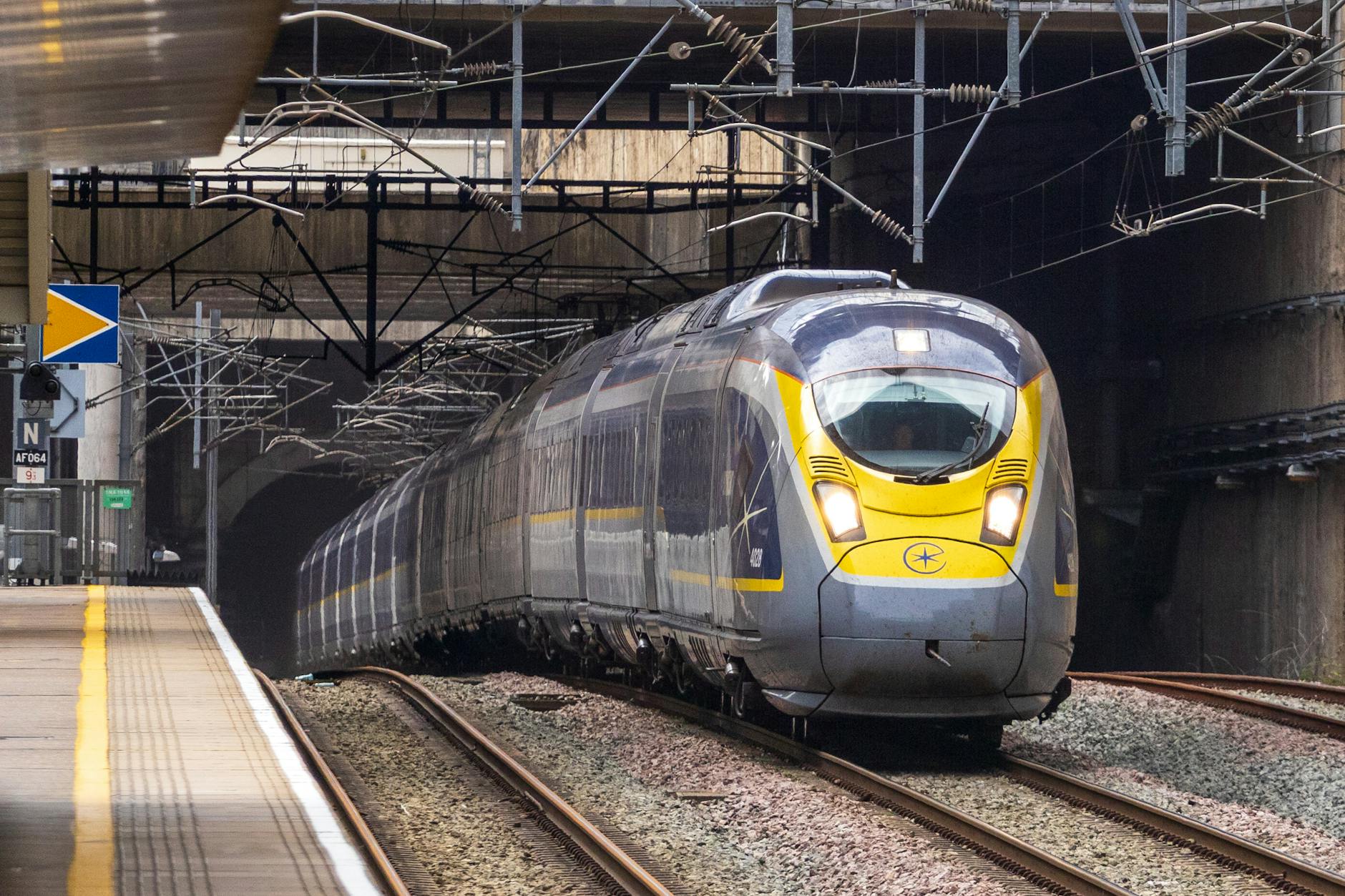
Board the Eurostar at Paris Gare du Nord, settle in, and 2h16m later you step off at London St Pancras, having crossed the 50km Channel Tunnel at 320 km/h and skipped the airport entirely. That’s the pitch, and it holds up: no terminal, no transfers, just one city center to another. The paris to london eurostar service runs 30-plus trains a day, with pre-booked fares from €39 each way and first-class climbing past €320. This guide covers how to book it cheaply, what to expect at each station, the differences between the three classes, the 2025 lounge changes, the Premier and Plus perks, customs and passport control, what to pack, traveling with kids, and how to build a Paris-and-London trip around it.
Eurostar Facts: Speed, Distance, and the Channel Tunnel
The Eurostar is run today by Eurostar International, the merged company that folded the original Eurostar service together with Thalys, the high-speed network that used to link Paris to Brussels and Amsterdam. The trains are e320 sets: sixteen-coach articulated TGVs built by Siemens, capable of 320 km/h on the dedicated high-speed lines between Paris and the French mouth of the Channel Tunnel, and again on the British high-speed line known as HS1, which carries them from the Kent coast into St Pancras. The full Paris-to-London run covers roughly 495 kilometres of track, 50 of them inside the Channel Tunnel.
The Channel Tunnel, the “Chunnel” on both sides, opened in 1994 after seven years of digging and more than a century of failed proposals going back to Napoleon. It remains the longest undersea tunnel in the world by a comfortable margin: three parallel bores, each about 50km, reaching a maximum of around 75 metres below the seabed. The crossing itself takes about 20 minutes, and here’s the strange part. From inside the train you cannot tell whether you’re under the Channel or in any ordinary tunnel. No dramatic announcement, no pressure change, nothing. You go in, twenty minutes pass, you come out, and you’re in another country.

Booking Strategy: When and How to Book Cheap Eurostar Tickets
Eurostar fares are dynamic, which is a polite way of saying the price is whatever the algorithm reckons you’ll pay. Cheap inventory opens about eleven months out and sells from the lowest fare bucket upward. Three to six months ahead is the practical sweet spot for most travelers: close enough that you know your dates, early enough to catch Standard fares from €39 one-way in the off-peak windows. Book only on the official site, eurostar.com, or through the Eurostar app. That keeps you clear of third-party booking fees and makes sure you can amend or cancel within the rules of your fare class.
Walk-up fares are brutal. The same Standard seat that went for €39 four months out routinely sells for €180 to €250 in the final week, then climbs again on the day itself. Plus and Premier tickets follow the same curve from higher starting points. If your trip is locked in, book early. If it might move, look at the “Plus” tier, which permits date changes for a fee. The single biggest mistake people make is waiting for the price to drop. On Eurostar inventory it almost never does. The cheap buckets sell out, and the next one up simply becomes the price for everyone after that.
The day of the week matters more than most people realize. Tuesday and Wednesday departures in either direction are consistently the cheapest, often by 30 to 50 percent against the peak slots. The priciest trains in the schedule are the weekday business departures in the 7-9am window from either city, plus Friday evening eastbound (London-to-Paris weekend traffic) and Sunday evening westbound (Paris-to-London return traffic). If your itinerary has any give in it, shifting your travel by a single day often saves you more than trading down to a cheaper hotel for a week.
Classes of Service: Standard, Plus, and Premier
Every Paris-London train runs three classes. Standard is the workhorse: comfortable 2+2 seating, a single power socket per pair, a small folding tray, and the run of the cafe-bar coach if you want to buy food. Fares range from €39 at the cheapest off-peak booking to about €150 last-minute, and Standard is what the great majority of leisure travelers book. The seats run noticeably more generous than short-haul economy, the windows are huge, and you can get up and stretch your legs whenever you like.
Plus (formerly “Standard Premier”) is the middle tier, and it’s the one that changed most in the 2025 refresh. Plus buys you a 2+1 seat layout with extra legroom, the chance to choose your specific seat at booking, access to the Eurostar lounges in Paris and London, and a light snack served at your seat on board. Fares run roughly €75 to €220 depending on demand. If skipping the crowded boarding area at Gare du Nord and a quieter pre-trip half hour appeal to you, Plus delivers that for the smallest extra outlay of the three.
Premier (formerly “Business Premier”) is the top tier, priced in the same band as a discounted business-class flight. Fares run from about €160 in the cheapest off-peak window up to €320 or more at peak. Premier brings lounge access, a hot meal served at your seat with a drinks service (Champagne is on the menu both ways), priority boarding through a dedicated lane, and the feature that wins over business and flexible travelers: fully flexible booking. You can move to any train on the day at no charge, and you’re fully refundable up to ten minutes before departure.
Paris Gare du Nord: The Station Experience
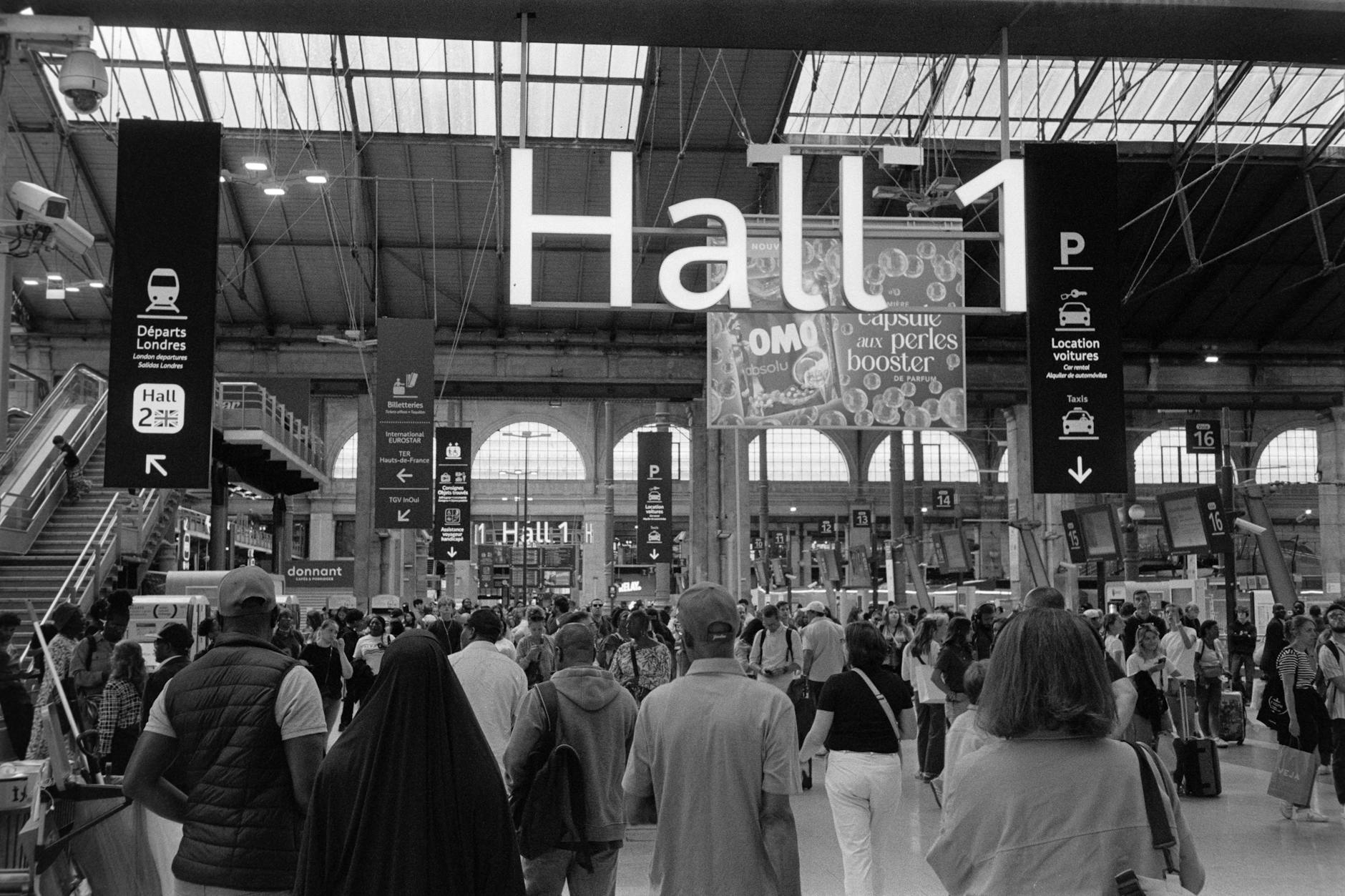
The Eurostar runs from a dedicated terminal inside Paris Gare du Nord, on the upper level with its own entrance off Boulevard de Strasbourg. Arrive at the main Gare du Nord entrance with your suitcase and you just follow the blue and yellow Eurostar signs, which are impossible to miss, up a short flight of stairs or an escalator to the terminal. Plan to arrive 30 to 45 minutes before departure in Standard, or 20 minutes ahead with Plus or Premier and the fast-track lane. Boarding closes 10 minutes before departure, and it’s a hard stop. The gate shuts, and no story, however good, is getting you on that train.
Inside the terminal you clear a three-stage check. First comes security, lighter than the airport version: bags through the X-ray, you through a metal detector, no shoes off, no laptop out, no 100ml liquid rule. Five to ten minutes, usually. Second is French exit passport control, where a Police aux Frontières officer stamps you out of the Schengen Area. Third is UK entry passport control, also handled in person at Gare du Nord under a bilateral arrangement. This is the clever bit, called “juxtaposed controls”: you’ve effectively cleared the UK border before you board, so at St Pancras you simply walk off the train and out of the station.
St Pancras London: The Arrival Experience
St Pancras International is one of the great station arrivals anywhere in the world. You step off the Eurostar into a long, glass-roofed Victorian train shed restored to a gleam, walk past one of the largest Champagne bars in Europe (that’s its actual claim), and spill out into a concourse that’s part shopping arcade, part transport hub, part architectural landmark. Since you cleared UK border control back in Paris, there’s no queue on the London side. You just walk off the train and into the city.
From St Pancras you’re plugged straight into the London transport network. The “King’s Cross St Pancras” Underground stations are built into the rail station and serve six tube lines: the Victoria, Piccadilly, Northern, Circle, Metropolitan, and Hammersmith & City. From there, almost anywhere in central London is inside thirty minutes. National Rail departures from the neighboring King’s Cross and Euston stations cover the rest of England: Edinburgh, Manchester, York, Birmingham, the whole north of the country.

What to Bring + Customs and Passport Control
Travel documents are the one thing you cannot improvise. Every Eurostar passenger needs a passport valid for the full length of their stay (the old EU-shared “six months’ validity” rule no longer applies for non-EU travelers entering the UK, but check the rules for your specific nationality ahead of time). National identity cards are no longer accepted for entry into the UK from most countries since the post-Brexit changes: passports only. The UK launched a biometric Electronic Travel Authorisation (ETA) in 2025 for travelers from visa-exempt countries, which the Brexit section below covers in detail. Get it approved before you board.
On customs, the UK and EU have treated each other as third countries since 2021, so duty-free limits apply in both directions. Travelers carrying alcohol, tobacco, and gifts within sensible personal-use thresholds don’t get stopped; the published allowances are generous (litres of wine, hundreds of cigarettes) and aimed at commercial smuggling, not at hassling tourists. Cash declarations are required for amounts over €10,000 (or £10,000) either way. Most travelers carry nowhere near that and can forget about it.
The luggage allowance puts every airline to shame: two large bags plus one piece of hand luggage per passenger in Standard, with no weight limit per bag (though you do have to carry them yourself). Plus and Premier raise that further. No liquid restrictions, no laptop-out rules, no taking off shoes or belts. The contrast with a budget flight could hardly be sharper, and it’s one of the quietly decisive reasons the Eurostar is worth the fare over Ryanair or easyJet for a lot of people.
Premier and Plus Experiences Compared
The on-board experience varies meaningfully across the three classes. In Premier, a member of the catering team reaches your seat within fifteen minutes of departure, offers an aperitif (Champagne, white or red wine, beer, or a soft drink), and serves a three-course meal on linen with proper crockery. The menus rotate with the seasons and are designed by named chefs in both directions. Paris-bound, you might get a Lyonnaise saucisson, a roast cod, and a chocolate pâtisserie; eastbound, a more London-leaning spread. Coffee, tea, and digestifs follow. The whole affair runs about an hour, and you arrive well-fed and a notch happier than when you left.
Eurostar Plus vs Standard: Is the Upgrade Worth It?
For most travelers, the jump from Standard to Plus costs an extra €30 to €70 each way, so the question is what that money actually buys. The headline is lounge access. Instead of waiting in the crowded main concourse at Gare du Nord, you sit in a quiet lounge with complimentary coffee, soft drinks, snacks, and, in the renovated 2025 lounges, some wine and beer. For an early-morning departure when the station is already a scrum, that lounge earns its keep.
Seat selection is the second real Plus benefit. In Standard you’re assigned a seat at booking and can’t change it without paying; in Plus you pick from the seat map when you book. That matters most for groups of two or three who want to sit together, for anyone with a firm window or aisle preference, and for travelers who care about facing forward rather than backward (some Eurostar coaches face one way, some the other, and the seat map shows which is which).
Here’s my honest read: Plus is worth it for groups, for business travelers, for anyone with an early-morning departure, and for anyone who’d otherwise drop €30 on station coffee and snacks anyway. Skip it if you’re traveling solo, packing light, fine in a crowded concourse, or laser-focused on the lowest possible fare. Premier is a different conversation. At roughly twice the price of Plus, it only pays off if you genuinely need the flexibility (date changes, full refundability, priority boarding) or you actively want the meal experience.

Best Times of Year and Day to Travel
Eurostar tracks the broader European travel calendar. November through March is the cheapest stretch of the year, with the predictable exceptions of Christmas and New Year (the last week of December and first week of January run peak) and the February half-term breaks. Standard fares in mid-November or early February routinely show €39 to €49 on Tuesday and Wednesday departures, about as cheap as the service ever gets. The catch is the weather; northern France and southern England in winter are grey and damp, though Paris and London are both genuinely lovely in December if you make your peace with that.
Peak season runs from late spring through summer, plus the Christmas-markets window in late November and December. Capacity is essentially full on those dates, and Standard fares can comfortably hit €180-220. May and June get especially busy because both cities are at their seasonal best and everyone knows it. If you have to travel in peak season, book early, four to six months out, and accept that a bargain isn’t coming.
Combining Paris and London in One Trip
The Eurostar exists for the trip where you want both cities. The classic European itinerary, and the one I’d hand a first-timer with ten days to spend, is four to seven days in Paris followed by three to five in London, or the reverse. The transfer in the middle is so painless it stops feeling like a travel day. You check out of your Paris hotel after breakfast, take a Metro or taxi to Gare du Nord, board by mid-morning, and check into your London hotel before mid-afternoon with the rest of the day still in front of you. Read this alongside our plan a trip to Paris guide and our Paris airport transfer guide for the rest of the pre-trip checklist.
The direction question matters more than people expect. Plenty of transatlantic travelers fly into one city and out of the other, which trims the cost (no return fare) and avoids doubling back. Whether you start in Paris or London comes down to your priorities. Start in Paris and you get the slower, more atmospheric city first while your energy is high, then finish in London’s familiar English-language comfort when you’re tired. Start in London and you ease in with the language, saving Paris as the reward at the end. Both work. I lean slightly toward Paris first, because the language transition feels more natural at the start of a trip than at the tail end of it.
Eurostar with Kids and Families
For family travel, the Eurostar is a quiet triumph, and dramatically less stressful than flying with kids. Children aged 4 to 11 get child fares, usually set at a fixed lower amount regardless of the dynamic adult fare on that train, which means the kid’s ticket can actually work out as a bigger discount on a peak-priced service. Children under 4 travel free on a parent’s lap; want them in their own seat and you pay the child fare. Every child still needs their own passport and, where it applies, their own UK ETA.

Bicycles, Pets, and Mobility Access
Bicycles travel on the Eurostar through the Eurostar Registered Luggage service, the dedicated baggage-handling system rather than the main passenger flow. You book the bike separately when you buy your ticket (or up to 24 hours before departure), drop it at the designated baggage office at Gare du Nord (or St Pancras), and collect it at the matching office in the destination city. The fee is modest and the service is reliable. Folding bikes within certain size limits ride as ordinary hand luggage at no extra charge, which is the easier route if you happen to own one.
Brexit and the Post-2020 Travel Changes
The UK formally left the European Union in 2020, and a handful of practical travel rules changed with it. The most important for Eurostar passengers is the document requirement: UK border officers no longer accept EU identity cards for entry from most countries, so every non-UK and non-Irish passenger needs a full passport. EU residents retain the right to enter the UK as visitors on a passport, but no longer have an automatic right to live and work there. UK citizens, likewise, now need passports rather than ID to enter France, and are capped at 90 days in any 180-day period in the Schengen Area without a visa.
In 2025 the UK rolled out the Electronic Travel Authorisation (ETA) for travelers from visa-exempt countries (the US, Canada, Australia, EU member states, and many others). The ETA is an online pre-clearance, costs roughly £10, runs for two years (or until your passport expires, whichever comes first), and is granted within a few days. Apply through the official UK Home Office website or app, never through a third-party reseller, which charges extra and adds nothing. Applying at least a week ahead is sensible; same-day approvals are common but not guaranteed.
On the EU side, the bloc’s equivalent system (ETIAS) is expected to start during 2026 and will apply to non-EU travelers entering the Schengen Area (France included) from visa-exempt countries. As of mid-2026, check the current status before you book; the launch date has slipped repeatedly. The fee is modest (around €7) and the process mirrors the UK ETA. Eurostar passengers heading London-to-Paris will need whichever system is live on their travel date. The train operator only checks the document at boarding; it doesn’t handle the application.
Cancellation, Refunds, and Rebooking
Eurostar’s refund and rebooking rules hang on the fare class. Standard tickets in the cheapest buckets are non-refundable and non-changeable; if you can’t travel, the ticket is gone. Standard tickets a notch up allow date changes for a fee plus any fare difference, but still no refund for cancellation. Always read the specific rules on the checkout screen before you book; the fare class is spelled out there in plain language.
Plus tickets are refundable with a fee (typically around €30) and changeable up to 24 hours before departure for any fare difference. Premier tickets are fully flexible: moveable to any train on the day at no fee, and fully refundable up to ten minutes before your originally booked departure. That flexibility is the single biggest reason business travelers swallow the Premier premium, and on a trip where your schedule might shift, the upgrade can pay for itself the first time a meeting moves.
Brussels and Amsterdam Connections
The same trains and the same booking system run the wider Eurostar network into Belgium and the Netherlands. Brussels-Midi (Bruxelles-Midi / Brussel-Zuid) is 1h20m from Paris Gare du Nord, with hourly or better departures through the day; this is the corridor formerly branded Thalys, folded into the merged Eurostar in 2024. Amsterdam Centraal sits roughly 3h20m from Paris on direct services that have run since 2018, with several trains each way per day.
That opens up multi-city trips that are surprisingly easy to pull off. A two-week European loop (Paris, Brussels, Amsterdam, London, back to Paris) can be done entirely by Eurostar, sleeping in four cities and never setting foot in an airport. Each leg is short enough to be a morning or afternoon transfer rather than a whole travel day, and the city-center pattern means you land in each place already in the thick of it.

Eurostar Frequently Asked Questions
How long does the Eurostar take from Paris to London?
The scheduled journey is 2h16m from Paris Gare du Nord to London St Pancras International, of which roughly 20 minutes are inside the Channel Tunnel. The trains run at up to 320 km/h on the high-speed sections in both France and the UK. Add 30-45 minutes for boarding and security at Gare du Nord and you’re looking at about three hours door-to-door, still dramatically faster than any flight once you factor in the airport transfers at both ends.
What is the cheapest way to get from Paris to London?
For most travelers, the cheapest option is a Standard Eurostar fare booked three to six months ahead on a Tuesday or Wednesday in the November-March window, which regularly lands at €39 each way. Budget flights to London airports outside the centre can look cheaper on paper, but the gap closes once you add airport transfers and the time cost. For the lowest absolute fare, set a Eurostar price alert the moment you know your dates and book the first time you see Standard inventory at €39 or €49; those slots go quickly.
Do I need a passport for the Eurostar?
Yes. Every Eurostar passenger, children included, needs a valid passport for the journey in either direction. UK border officers no longer accept national ID cards since the post-Brexit changes. Make sure your passport is valid for the length of your stay, and check whether your nationality needs a UK ETA (Electronic Travel Authorisation) before traveling; most visa-exempt nationalities now do, including US, Canadian, Australian, and EU citizens.
Is there food on the Eurostar?
Yes. Every train carries a cafe-bar coach with hot and cold drinks, sandwiches, snacks, beer, and wine at standard catering prices. Plus and Premier passengers also get complimentary food at their seat: a snack box in Plus, a full hot meal with drinks service in Premier. Plenty of Standard travelers bring their own food from outside the station, which is both cheaper and, frankly, better than the on-board catering.
Can I bring luggage on the Eurostar?
Yes, and the allowance is generous: two large bags plus one piece of hand luggage per passenger in Standard, with no weight limit per bag (you just need to lift them yourself onto the overhead rack or into the luggage area at the end of each coach). Plus and Premier allowances are higher still. There are no airline-style liquid restrictions and no need to pull out laptops or take off shoes at security.
How early should I arrive at Gare du Nord for the Eurostar?
For Standard tickets, arrive 30 to 45 minutes before departure to clear security and the two passport controls comfortably. For Plus and Premier passengers on the fast-track lane, 20 minutes before departure is enough most days. Boarding gates close 10 minutes before departure with no exceptions; arrive after the gate closes and you’ve missed the train and will need to rebook on the next available service.
Is the Eurostar better than flying Paris to London?
For almost all leisure travelers, yes. The Eurostar runs city-center to city-center in 2h16m, with no airport transfers, no liquid restrictions, no checked-bag fees, and a far more comfortable seat than any short-haul economy cabin. The total door-to-door time beats flying once you account for getting to and from the airports. Flying only wins if you’re traveling at very short notice when last-minute Eurostar fares spike, or you specifically need one of the outer London airports rather than central London.
Does the Eurostar go through the Channel Tunnel?
Yes. The Eurostar uses the Channel Tunnel (the “Chunnel”), a 50km undersea rail tunnel completed in 1994 that links Coquelles near Calais on the French side to Folkestone on the English side. The tunnel portion takes about 20 minutes. From inside the train it feels like any other railway tunnel: no announcements, no pressure change, no view of the sea. You enter, you spend 20 minutes underground, and you exit in a different country.

Here’s the bottom line: the Eurostar has quietly become one of the great travel experiences in Europe. It’s fast where you want speed, comfortable in every class, and civilized in a way flying stopped being years ago, and it sets you down in the middle of two of the most exciting cities in the world with never a transfer to an airport. Book three to six months out for the cheapest Standard fares, weigh up Plus if you value lounge access or you’re traveling as a family, and pair this with our getting around Paris guide, our Paris Metro guide, and our day trips from Paris guide to round out how you’ll move around the city before and after your London leg.
Keep reading
Use these to round out your trip:
- how to navigate Paris
- Paris Metro Guide for Tourists
- Paris Airport Transfers
- sorting your travel card
- apps to load before you fly
- UNESCO-listed Provins
Plenty of people take the Eurostar over and back in a single day, which is entirely doable if you have a plan before you board. Our 24-hour Paris itinerary is built for exactly that, with everything on it within walking distance of Gare du Nord’s Metro connections.
The Friday-evening Eurostar and the Sunday-afternoon return is the classic Paris weekend, and it rewards a bit of planning at both ends. Our weekend in Paris itinerary is built around exactly those arrival and departure times.
Arriving on a morning Eurostar with a free day before your hotel check-in or an onward train? Gare du Nord has SNCF left-luggage lockers behind a security scanner, and dozens of app-based storage hosts within a few minutes’ walk, which are useful when the large lockers fill up on summer afternoons. Our guide to luggage storage in Paris compares them.
The London Eurostar is only one of the other trains out of Paris worth knowing about. From Gare du Nord the same operator runs to Brussels in about 1h22 and Amsterdam in about 3h20 with no passport checks, while Gare de Lyon and Gare de l’Est serve Switzerland, Italy and Germany. Our complete guide to trains from Paris covers the routes, fares and the services that changed in 2026.
If you’re continuing beyond Paris, the next train almost certainly leaves from a different station, and the transfer needs more time than the map suggests. Gare de l’Est is a ten-minute walk, but Gare de Lyon is two stops on the RER D plus the walk to the right hall, and Montparnasse is a long ride on Line 4. Our Paris train stations guide has the routes and how long to allow for each.
One thing that confuses people now that Thalys is part of Eurostar: trains to Brussels and Amsterdam don’t leave from the London terminal upstairs at Gare du Nord, and they have no check-in at all. If the Netherlands is next on your list, our guide to the Paris to Amsterdam train covers the platforms, fares and luggage rules.