Fontainebleau Day Trip from Paris: Palace, Forest & Village
Most people who take a fontainebleau day trip from paris come back faintly annoyed that nobody sent them sooner. Here is the case for it. Sixty-five kilometres south of central Paris, the Château de Fontainebleau housed eight unbroken centuries of French monarchs, from Francois I in the 1500s to Napoleon III in the 1860s, and it has carried a UNESCO World Heritage listing since 1981. The palace runs to 1,500 rooms, which by several measures makes it larger than Versailles. It draws a fraction of the crowds. And it sits inside the 25,000-hectare Forest of Fontainebleau, one of the great bouldering grounds on earth and a vast, freely walkable landscape on its own. The train from Gare de Lyon takes 35 to 40 minutes, palace entry is €14, and you get Versailles-grade history without the Versailles scrum. If you want depth over spectacle, a real forest walk after your palace tour, and a sense of how French royalty actually lived across the centuries, this is the trip.
Think of this as the guide for travelers who have already done the obvious day trips and want something better. Fontainebleau hands you a full royal palace, a UNESCO listing, a forest the size of a small national park, a proper market town, and Barbizon just next door, all on a low-stress train that gets you home for dinner. What follows: how to get there, what to see inside, the top 10 highlights, the forest, where to eat, when to go, an hour-by-hour itinerary, and an FAQ.
Fontainebleau at a Glance
The quick orientation. Fontainebleau lies 65km south of Paris in Seine-et-Marne. The Transilien R runs from Gare de Lyon to Fontainebleau-Avon in 35 to 40 minutes, every 30 minutes. A short shuttle bus links the station to the palace in another 15, so door to door you are looking at about an hour. Adult palace entry is €14 (2026). UNESCO inscribed the château in 1981 on the strength of eight centuries of uninterrupted royal occupation.
| Detail | Information |
|---|---|
| Distance from Paris | 65 km south |
| Train time from Gare de Lyon | 35-40 minutes |
| Train cost (Transilien R) | €9.85 each way (Zone 5, 2026) |
| Palace adult entry | €14 |
| UNESCO listing | 1981 |
| Closed | Tuesdays + 1 Jan / 1 May / 25 Dec |
| Forest size | 25,000 hectares |
| Annual palace visitors | approx. 700,000 |
| Best time to visit | May-June, Sep-Oct |
The train and shuttle cost so little that most travelers skip driving entirely. The only real decision left is how to carve up your hours between palace, forest, and village.
Why Fontainebleau Beats Versailles for Some Visitors
Versailles is the heavyweight of French royal sites, and it earns the title. But for returning visitors, history buffs, families with restless kids, photographers, and anyone who finds crowds exhausting, Fontainebleau is the smarter pick. Here is why.
Less crowded by an order of magnitude
Versailles pulls 8 million visitors a year. Fontainebleau hosts about 700,000. You feel that tenfold gap everywhere: at the ticket window, in the state rooms, on the train home. At Fontainebleau you will often have a room to yourself for minutes at a stretch, especially mid-week.
More personal scale; less ceremonial
Versailles was built to overawe ambassadors. Fontainebleau is where French royalty actually lived, hunted, and raised their children. The rooms feel inhabited, sized for people rather than diplomatic theatre. If Versailles is the official portrait, Fontainebleau is the family album.
Surrounded by a vast public forest
Versailles is ringed by formal gardens. Fontainebleau sits inside a 25,000-hectare public forest with hundreds of kilometres of trails, sandstone boulders, and groves of beech and oak. Fifteen minutes after you leave the palace you can be standing in genuine hardwood forest. There is nothing like it at Versailles.
Eight centuries vs one architectural period
Versailles is largely frozen around Louis XIV. Fontainebleau is a palimpsest: medieval fortifications, Renaissance frescoes, 17th-century enlargements, Neoclassical updates, Napoleonic reinvention. Walk from one wing to the next and you read French art history in an afternoon.
Tuesday closed (same as Versailles)
One practical thing to lock in: Fontainebleau closes Tuesdays, like Versailles and most French national museums. If your Paris stay is short, plan around it. Wednesday and Thursday are the quietest open days; weekends pick up but still feel calm next to Versailles. For the head-to-head with the alternative, see our complete Versailles guide, and for the full spread of options, our pillar on day trips from Paris.
How to Get to Fontainebleau from Paris
Four options cover nearly everyone. The default for independent visitors is the train, but each has its moment.
Transilien R train from Gare de Lyon to Fontainebleau-Avon
This is how most independent visitors arrive. The Transilien R runs direct from Gare de Lyon to Fontainebleau-Avon, a small commuter station on the edge of Avon. The ride is 35 to 40 minutes, with departures every 30 minutes from 5:30am to 11:30pm. The 2026 fare is €9.85 each way (Zone 5 of the Île-de-France system); buy it at any machine or through the SNCF Connect app. The trains are comfortable double-deckers, and weekday morning departures are rarely full.
Shuttle bus 1 from Avon station to the château
Fontainebleau-Avon is not the palace. From the station, the dedicated Line 1 city shuttle covers the 3km to the Château de Fontainebleau in roughly 15 minutes. It is synced to train arrivals: walk off the platform, follow the signs to the stop right in front of the station, and the next departure is usually within 10 minutes. A single ride is €3 each way, or buy a day pass. The shuttle drops you at the palace gates, so there is no chance of missing it.
Driving from Paris via the A6
If you drive, take the A6 south out of Paris, exit at Fontainebleau, and follow local signs to the château. Off-peak the drive runs around 65 minutes; at rush hour it can stretch well past 90. On-site parking is €5 for the full day in the visitor lot beside the palace. Driving really pays off only if you also want to roam the wider forest or tack on Barbizon, where public transport thins out fast.
Organized day tour from Paris
Short on time, jet-lagged, or just happier with a guide? Organized day tours leave Paris each morning with skip-the-line palace entry and a knowledgeable guide for the State Apartments. Reckon on €90 to €180 depending on group size and whether lunch is thrown in. Most run 8 to 10 hours door to door from a central meeting point. Compare them on our roundup of the best Paris tours.
Château de Fontainebleau Tour: What to Expect Inside
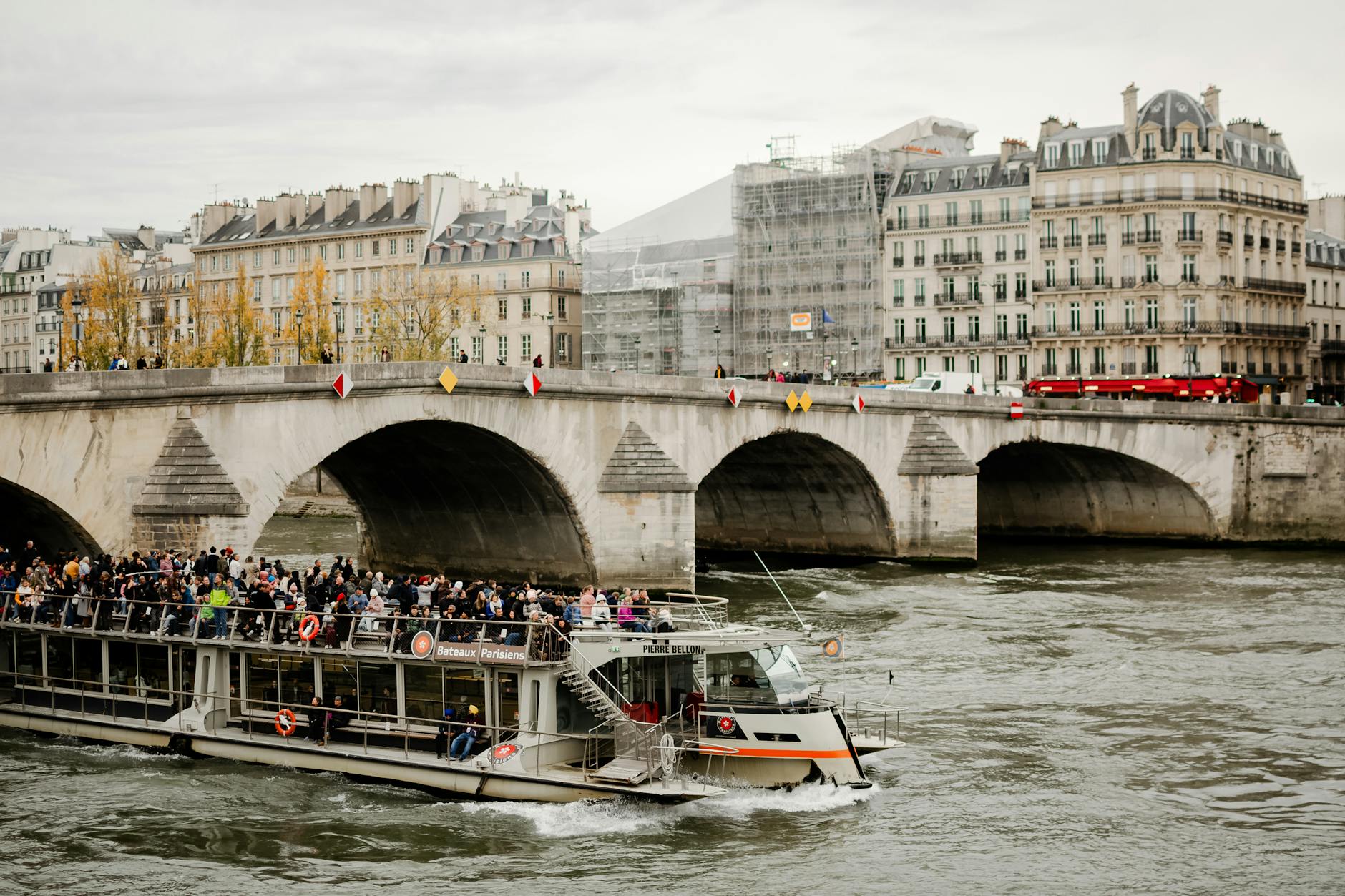
The château holds 1,500 rooms across 12 centuries of building, from a medieval hunting lodge in the 1100s to Napoleonic and Second Empire work in the 1800s. You will not see all 1,500. Nobody does. But the standard ticket covers the Grands Appartements plus themed circuits including the Pope’s Apartment, Napoleon’s Apartment, and the Trinity Chapel. Budget two hours inside at a steady pace.
The audio guides come included and are genuinely good. Flash-free photography is allowed throughout. Wear comfortable shoes; the circuit covers about 1.5km of parquet, marble, and stone, with multiple staircases.
This is the only French royal residence lived in by sovereigns for eight straight centuries, from the Capetians through the Valois, the Bourbons, both Napoleonic empires, and the Orleans line. Every monarch left a mark, and you can see the layers.
The Top 10 Things to See Inside the Château
These are the rooms and features not to miss, roughly in the order you will meet them. Pace yourself: trying to take in all 10 at full intensity will flatten you. Pick three or four for close looking and let the rest wash past.
1. Galerie de Francois I
The most important room in the château, and arguably the most important Renaissance interior in France. Francois I commissioned it in the 1530s, Rosso Fiorentino and Primaticcio executed it, and together they brought Italian Mannerism to France. The frescoes, stuccoes, and walnut paneling have survived nearly 500 years.
2. Ballroom (Salle de Bal) of Henri II
A 30-metre ceremonial hall with a coffered ceiling and a monumental fireplace, decorated in the 1550s under Henri II. The hexagonal floor tiles, the mythological frescoes by Primaticcio and Niccolò dell’Abbate, and the carved oak ceiling pull together into one of the most coherent High Renaissance interiors north of the Alps.
3. Grand Staircase (Escalier du Fer-à-Cheval)
The horseshoe-shaped exterior staircase facing the courtyard is one of the most recognizable architectural images in France. Jean Androuet du Cerceau built it in the 1630s, and this is where Napoleon gave his famous farewell to the Old Guard on 20 April 1814 before leaving for exile on Elba. Just about every visitor photographs it.
4. Napoleon’s Throne Room
Once the royal bedchamber from Louis XIII through Louis XVI, this room became Napoleon’s throne room in 1808. It is the only surviving Napoleonic throne room in France, with its original throne, gilded boiseries, and imperial bee motif all intact. The room spells out, almost literally, the visual language Napoleon used to legitimize his rule.
5. Napoleon’s Apartment
A suite of intimate private rooms: the emperor’s bedroom, his small library, his bathroom, an antechamber. The mahogany furniture, the campaign-style fittings, and the surviving personal objects bring you closer to Napoleon the man than almost anywhere else in France, Les Invalides included.
6. Musée Napoléon
A dedicated museum inside the château, showing portraits, uniforms, weapons, and personal memorabilia of Napoleon I and his family. The collection takes in items from his coronation, his Egyptian campaign, and his second wife Marie-Louise’s belongings. Give it 30 to 45 minutes.
7. Pope’s Apartment
The suite where Pope Pius VII lived as Napoleon’s effective prisoner from 1812 to 1814. It is decorated in late Empire style and survives exactly as it was during his confinement, which makes it one of the most historically charged spaces in the whole building.
8. Diane Gallery (the Library)
A long, light-filled gallery lined with shelves holding roughly 16,000 volumes from the royal and imperial collections. The decoration is 19th-century, but the bones are Renaissance. It is one of the most photogenic library interiors in Europe, and you will want a few minutes just to stand in it.
9. Throne Room of Louis XIII / Louis XIV circuit
A second ceremonial chamber used for court receptions through the Bourbon centuries. The decoration is a layered overlay of 17th- and 18th-century work, including ceiling paintings by Charles Errard. Look up: across the State Apartments, the ceilings are nearly as important as the walls.
10. Trinity Chapel
The royal chapel where Louis XV married Marie Leszczynska in 1725 and Napoleon III was christened in 1810. The barrel-vaulted ceiling carries scenes from the Old and New Testaments by Martin Freminet. A small tip: stand in the centre and clap once. The reverb tells you exactly why this space was used for royal music.
The Gardens and Park
Fontainebleau’s grounds run across more than 130 hectares and bring together four distinct garden styles, which is rare in a single estate. The gardens are free to enter even without a palace ticket, which is why locals turn out to picnic here at weekends. Give yourself at least an hour to walk the main features without rushing.
The Grand Parterre, laid out by André Le Nôtre (the man behind the Versailles gardens) in the 1660s, is the largest formal parterre in Europe at 14 hectares. The geometry reads best from the palace’s first-floor windows, but walking it at ground level pays off too, especially in late spring when the box hedging is freshly cut and the flower beds are at their fullest.
The English Garden, west of the Grand Parterre, dates to the early 19th century and the Romantic landscape style: winding paths, a serpentine stream, informal plantings made to mimic wild nature. It is the quietest corner of the grounds and a fine spot to spread out a picnic.
The Étang aux Carpes (Carp Pond) is a large rectangular ornamental pond stocked with the descendants of carp first put there under Henri IV. A small island in the middle carries an octagonal pavilion. You can rent a rowing boat from a kiosk on the eastern shore for around €10 for 30 minutes, which is a small delight if you are traveling with kids or a partner.
Diana’s Garden, on the north side of the palace, is the smallest of the four and the most intimate. Originally laid out under Henri IV and reworked in the 19th century, it centres on the famous bronze Fountain of Diana the Huntress from 1603.
The Forest of Fontainebleau
For a lot of returning visitors, the forest is the whole reason to come. The Forêt de Fontainebleau covers 25,000 hectares of oak, beech, and pine, broken up by sandstone outcrops and heathland. It is publicly owned, managed by the Office National des Forêts, and free to enter.
Twelve major trail networks crisscross it, marked with the standard French color-coded blazes. The difficulty runs from half-hour strolls to full-day scrambles across the sandstone bluffs. Mountain biking is allowed on most trails, horseback riding is common, and trail-running clubs hold weekend events.
The wildlife is part of the draw: roe deer at dawn and dusk, wild boar, more than 6,600 insect species, and a remarkable range of fungi. In autumn it turns into a prime mushroom-hunting ground, though you need a permit to forage legally, so don’t fill your basket without one.
Bouldering at Fontainebleau
Climbers just call it “Font.” The sandstone boulders here, rounded, friction-rich, scattered across hundreds of sectors, have been the spiritual home of bouldering since the 1860s, when Parisian climbers used them to train for the Alps. The local Font grading scale is now used worldwide. Even if you have never climbed, it is worth walking among the boulders. Here are the four essentials.
Bas Cuvier — the beginner sector
Bas Cuvier is the historic heart of Fontainebleau climbing and the friendliest place to start. Many problems sit in the 3 to 5 grade range (the easy end of the scale), the landings are mostly flat and sandy, and the sector is a 20-minute walk from a free parking area off the D607. Most first-timers come straight here.
Cuvier Rempart — the intermediate sector
A step up from Bas Cuvier, Cuvier Rempart serves classic intermediate problems in the 5 to 7 range, including several historic test pieces. The rock is iconic, the views are excellent, and it rarely gets crowded outside peak summer weekends.
Le Cul de Chien — the iconic landscape
Le Cul de Chien is famous as much for its scenery as its climbing: an open sandy clearing ringed by mature pines, with isolated boulders rising out of the sand like sculptures. The boulder known as La Méduse and the route La Marie are world-famous photographic subjects. Go for the landscape alone if you never touch the rock.
Renting crash pads
You don’t need to lug a crash pad from Paris. Bleau et Roc, a long-running climbing shop in Fontainebleau village, rents pads, shoes, and chalk by the day at fair rates. They also sell topo guidebooks and will tell you which sector suits your level on a given day. Reserve ahead on summer weekends.
Fontainebleau Village
The town wraps around the palace on three sides: a prosperous market town of about 15,000, with 18th- and 19th-century architecture and a compact centre you can walk in an hour. Leave time here for lunch.
Place Napoléon-Bonaparte, right in front of the palace gates, is lined with cafes and brasseries. Rue Grande, two blocks east, is the main shopping street, with independent boutiques, two long-established patisseries, and antique shops. The Sunday market in Place du Marché is one of the best in the region and ideal for putting together a forest picnic.
For a bed, the historic Hôtel L’Aigle Noir across from the palace is still the most atmospheric address, while the smaller B&Bs on the side streets offer better value.
Best Restaurants in Fontainebleau
Lunch is one of the real pleasures of the day. Skip the snack bars by the palace gates and walk three minutes into the village proper, where the food is much better and the prices are fair. Here are the standouts.
- Le Caveau des Ducs — the most reliable mid-range bistro in town, set in an atmospheric vaulted cellar a short walk from the palace. Classic French plates (duck confit, steak frites, fish of the day), a strong local wine list, and a €28 lunch menu that is honestly good value.
- Frédéric Cassel patisserie — the flagship of world-renowned pastry chef Frédéric Cassel, on Rue Grande. His millefeuille is widely rated one of the best in France. Buy a single pastry, or a box to carry back to Paris.
- Au Bureau brasserie — a reliable French-style brasserie chain on Place Napoléon-Bonaparte, with a long all-day menu, a sidewalk terrace, and a decent beer list. Handy as a fallback when the others are full.
- L’Axel — the local fine-dining option, with a Michelin star for refined modern French cooking. Reserve well ahead and save it for a special day.
- Cafes around Place Napoléon — several smaller cafes line the square, all with terraces. Largely interchangeable, but pleasant for a coffee or a salad.
- Market picnic — on a Sunday, the Place du Marché market lets you build a perfect forest picnic from local cheese, baguette, ham, fruit, and a half bottle of Burgundy.
Combining Fontainebleau with Barbizon Village
Five kilometres west sits Barbizon. From the 1830s to the 1880s it was the centre of the Barbizon School, the home base of Millet, Rousseau, Daubigny, and Corot, who came to paint en plein air and, in doing so, set the stage for Impressionism. The village survives almost exactly as they knew it: stone cottages, artists’ studios, and small galleries.
The Musée des Peintres de Barbizon, set in the former Auberge Ganne (the inn where many of the painters lodged), tells the story through paintings, sketches, and reconstructions of the painters’ rooms. Entry is €6 and a visit runs about 45 minutes. Millet’s house and studio are also open, with personal effects and minor works on show.
Barbizon is easiest by car (10 minutes) or taxi (around €20 each way). You can add it to a Fontainebleau day if you start early, but it sits more comfortably as a second-day excursion. For art-history travelers, it is genuinely special.
Best Time of Year to Visit
Fontainebleau is open year-round (Tuesdays and a few holidays aside), but the season changes the experience.
May-June are the prime months. Temperatures sit at 15-22°C, wildflowers fill the meadows, the gardens hit peak bloom, and the days run long enough for palace, village, and a serious forest walk. Crowds stay manageable. Aim for late May or early June.
September and October come close, with the bonus of autumn foliage. The beech and oak turn copper, gold, and russet through October, and the forest is one of the best fall landscapes within reach of Paris. Mushroom hunters turn out in force. Cool, often misty mornings give way to clear afternoons. For more autumn ideas, see our guide to Paris summer activities, which also covers the shoulder months.
April is the quieter alternative if you want spring wildflowers without the May crowds. The weather is more changeable, so pack layers and a rain jacket, but the forest in early spring, before the leaves fully come in, has a stark beauty the high-season visitors never see.
Avoid: peak August (the palace has no air-conditioning and the gardens offer little shade) and deep winter (December to February brings a muddy forest, short daylight, and a quieter village). If winter is your only window, pair it with our Paris winter activities guide.
A Suggested Day Itinerary
Here is the itinerary I would run on a first visit, built for travelers based in central Paris who want the palace, the village, and a real slice of forest. Shift it 30 minutes either way to match your pace.
| Time | Activity |
|---|---|
| 7:45am | Leave central Paris hotel for Gare de Lyon by Metro line 1 or 14 |
| 8:30am | Board the Transilien R train to Fontainebleau-Avon |
| 9:10am | Arrive Avon; board shuttle bus 1 toward the palace |
| 9:30am | Palace opens; enter the State Apartments first |
| 11:30am | Finish core palace circuit; visit Trinity Chapel and Napoleon’s Apartment |
| 12:15pm | Walk into Fontainebleau village (5 minutes) |
| 12:30pm | Lunch at Le Caveau des Ducs or a Place Napoléon cafe |
| 1:45pm | Coffee and a pastry at Frédéric Cassel |
| 2:15pm | Walk to forest trailhead or take bus to Bas Cuvier |
| 2:30pm | Forest walk or bouldering session (90 minutes) |
| 4:00pm | Return through the gardens; visit Carp Pond and Grand Parterre |
| 4:45pm | Shuttle bus back to Avon station |
| 5:15pm | Board return train to Paris Gare de Lyon |
| 6:00pm | Arrive back in Paris in time for dinner |
The schedule builds in slack, so you should not feel rushed, and it lets you cover all three core elements (palace, village, forest) in a day. If the forest matters more to you than the palace, just flip the morning and afternoon: walk first, lunch in the village, palace in the early afternoon.
What to Bring
A little preparation goes a long way here. The list below covers most situations.
- Comfortable walking shoes — you will cover several kilometres on hard floors and forest paths. Trainers or light hiking shoes work well; skip the heels.
- A light layer — the palace interior stays cool even on warm days, and the forest can run 3-5°C colder than central Paris.
- A rain jacket or compact umbrella — Île-de-France weather turns fast. A small packable shell saves the day.
- A refillable water bottle — there is no cafe inside the State Apartments, but there are taps in the gardens.
- A pre-booked palace ticket — reserve online through the official château website to skip the on-site queue, especially on weekends or in summer.
- A camera or phone — flash-free photography is allowed throughout, and the Grand Staircase is one of the most photographed exteriors in France.
- Picnic supplies (optional) — if you are skipping the village restaurants, the Sunday market is perfect for a forest lunch.
- Cash for the shuttle bus — the €3 fare usually takes card, but cash is a useful backup.
- Audio-guide-compatible headphones (optional) — the palace provides headphones, but your own, with the right jack, are more comfortable and more hygienic.
Frequently Asked Questions
How long does the train from Paris to Fontainebleau take?
The direct Transilien R from Paris Gare de Lyon to Fontainebleau-Avon takes 35 to 40 minutes, depending on the service. Trains run every 30 minutes all day, and the 2026 fare is €9.85 each way. Add about 15 minutes for the shuttle from Avon station to the palace, which brings total door-to-door transit to roughly an hour.
Is Fontainebleau worth visiting if I have already been to Versailles?
Yes, arguably even more so. It is a completely different experience: a working royal residence lived in for eight centuries rather than a single-period showpiece, ringed by forest instead of formal gardens, and drawing a fraction of the visitors. Plenty of returning travelers prefer it to Versailles precisely because it is calmer, more layered historically, and ends with a real forest walk. See our full Versailles guide for the head-to-head.
Do I need to book Fontainebleau tickets in advance?
Pre-booking is smart on weekends and in peak season (June through August), but rarely strictly necessary mid-week in the shoulder months. Buying online saves you 10 to 20 minutes at the counter and locks in your entry time. Standard adult entry is €14; reduced fares apply for EU residents aged 18 to 25, and entry is free for under-18s and on the first Sunday of each month from October through March.
Can I visit the forest without paying anything?
Yes. The Forest of Fontainebleau is a public, freely accessible forest run by the Office National des Forêts. No entrance fees, no gates, no opening hours. You can enter at hundreds of marked trailheads around the perimeter, and the château gardens are free to walk too, even without a palace ticket. The only thing you pay for is the palace interior.
Is Fontainebleau suitable for kids?
Very much so. The palace is more manageable than Versailles, the gardens are made for running around, you can rent rowing boats on the Carp Pond, and the forest mixes easy walks with climbable sandstone boulders. Most kids find Napoleon’s bedroom and the Trinity Chapel the most memorable parts.
What should I do if it rains?
Spend longer in the palace. The optional circuits, the Musée Napoléon, and the Diane Gallery add up to four or five hours of indoor content. Stretch it out with a long lunch and a coffee at Frédéric Cassel for a full rainy-day plan.
Can I combine Fontainebleau with another day trip?
Pairing it with nearby Barbizon (5km away) makes sense for a longer day if you have a car. Pairing it with Vaux-le-Vicomte, the great 17th-century château that inspired Versailles, is possible but tight; Vaux deserves a half-day of its own at minimum. Most visitors stick to one major site per day. For the full list of options, see our pillar guide on day trips from Paris.
Is Fontainebleau accessible for visitors with limited mobility?
Mostly, yes. The State Apartments route is largely accessible, with lifts and ramps, and wheelchair loan is free at the ticket desk. The gardens are flat and gravel-surfaced. Forest trails vary: the lower-forest paths are easy, while the deeper trails cross uneven sandstone. The official château website keeps an accessibility map.
A day at Fontainebleau tends to leave first-timers a little indignant that nobody told them sooner. You spend the morning walking through 800 years of French history in rooms where every Bourbon king, both Napoleons, and a captive pope actually slept; you eat lunch in a market town; and you close out the afternoon in a forest the size of a small national park, scrambling over sandstone boulders polished smooth by 150 years of climbers’ chalk. Pre-book the €14 ticket, catch the 8:30am train from Gare de Lyon, and hand the whole day over to it.
Related reading
Use these to round out your trip: