Day Trip to Giverny from Paris: Visiting Monet’s Garden
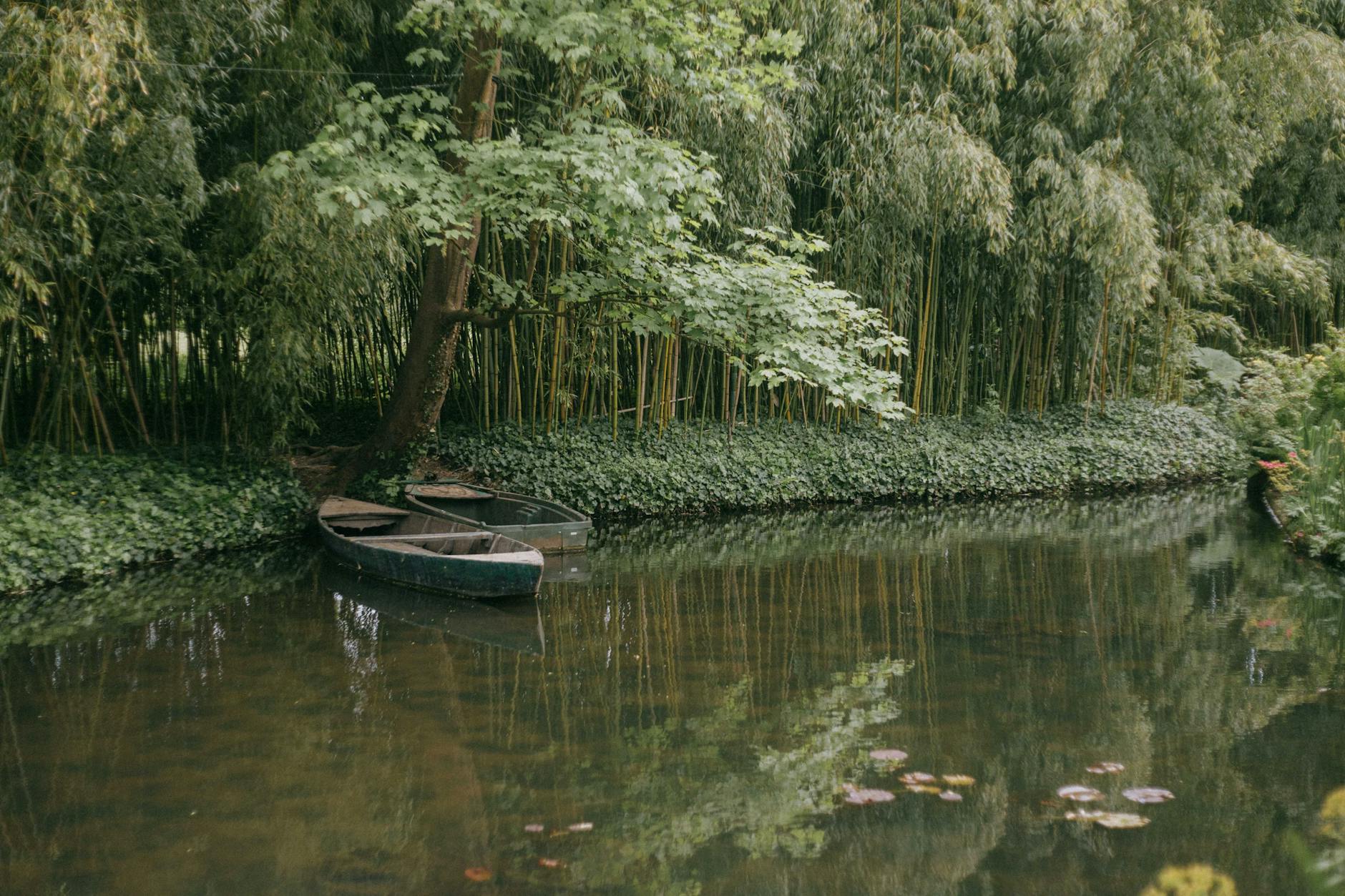
The pond you walk around at Giverny is the one Monet painted some 250 times. Stand on the green Japanese bridge in July, with the wisteria overhead and the lily pads spreading downstream, and you’re looking at the source material for canvases now hanging in the Orangerie, the Marmottan, the Met, and MoMA. That’s the pull of the giverny day trip from paris, and it’s why art lovers make it the day trip they don’t skip. Claude Monet lived in this Norman village from 1883 to 1926 and built the gardens as a living version of the work. The water-lily pond, the bridge, the pink-and-green farmhouse, the canary-yellow dining room and the blue-tiled kitchen are all preserved and open April through October. It’s 50 minutes by SNCF train from Gare Saint-Lazare to Vernon, then a short shuttle to the village. Give it a full day, eat in Vernon or at Monet’s house café, and read on for transit, tickets, peak-bloom timing, the museum next door, and how to fold in the Musée d’Orsay or the Orangerie for the complete Monet circuit.
Giverny at a Glance
Giverny sits 75 kilometres northwest of Paris in the Eure department, on the right bank of the Seine across from the larger town of Vernon. It’s tiny — maybe 500 permanent residents — and the whole village now revolves around the Fondation Claude Monet, the painter’s former home and the gardens he designed, planted, and repainted obsessively over the last forty-three years of his life. From central Paris the trip is genuinely easy: the SNCF train from Gare Saint-Lazare to Vernon runs about 50 minutes and costs €15 to €20 each way, and a shuttle bus syncs to the arriving trains to cover the final 7 kilometres up to Giverny in another 15. The site opens daily from April 1 to November 1 and shuts completely from November to March. Admission to Monet’s house and gardens is €13 for adults, and a combined ticket with the neighbouring Musée des Impressionnismes Giverny runs €19. Block out a full day for the round trip. Rushing Giverny is the one mistake to avoid.
Here’s what greets you on arrival: the rectangular flower garden in front of the house (the Clos Normand), the pink-stucco farmhouse with its green shutters, and, reached through a tunnel under the road, the water garden with its lily pond, weeping willows, wisteria-draped Japanese bridge, and bamboo grove. The interior is staged exactly as Monet left it. The Musée des Impressionnismes, 100 metres up the road, runs rotating Impressionist exhibitions.
Best Time to Visit Giverny
The Fondation closes from November 1 through March 31, so every visit falls inside a seven-month window, and the planting shifts dramatically week to week within it. Monet built continuous succession into the beds, but some months suit some visitors better than others, depending on what you most want to see.
The Giverny Bloom Calendar
- Late April — tulips and early roses run the Clos Normand; the water garden is still waking up.
- May-June — peak roses and wisteria; the wisteria over the Japanese bridge usually flowers in the first two weeks of May; lilies start opening in the pond.
- July — full water-lily display in the pond, summer borders at their densest. This is the month most people picture when they imagine Giverny.
- August — heavy crowds thanks to French school holidays, but the water lilies hold up and the late-summer perennials carry the Clos Normand.
- September-October — dahlias, asters, autumn colour, fewer visitors, softer light, and the last roses; arguably the most photogenic stretch if you can do without the lilies.
- November 1 – March 31 — closed to the public for replanting and pruning.
The day of the week counts for more than you’d think. Tuesday, Wednesday, and Thursday are the calmest; Saturdays during the May-June peak bring queues at the gate before opening and a slow shuffle through the house. If you possibly can, aim for a midweek morning, take the 8:30 train from Saint-Lazare, and be at the gate when it opens at 9:30.
How to Get to Giverny from Paris
There’s no direct public transport from Paris to Giverny; every route runs through Vernon or relies on a private or coach transfer. The good news is the rail-plus-shuttle combination is fast, cheap, and synced tightly enough that thousands of people pull it off every spring weekend without a hitch. Five realistic options, cheapest to most flexible.
SNCF Train Plus Shuttle Bus
Take an SNCF Normandie line train from Paris Gare Saint-Lazare to Vernon-Giverny. The ride runs 45 to 55 minutes and tickets cost €15.40 at standard fare, occasionally less with advance Prém’s pricing. Trains leave roughly hourly; the handiest morning departures are 8:20, 9:20, and 10:20. Outside Vernon station a dedicated Giverny shuttle waits, timed to the arriving Paris trains. It takes 15 minutes, costs €10 round-trip, runs April through October, and takes cash or card.
Walk or Bike from Vernon
The 7 kilometres between Vernon station and Giverny follow the Coulée Verte, a flat paved former railway line through farmland and along the Seine. Walking it takes 90 minutes one way — doable, but it eats into garden time. Cycling is the smarter move: bike rentals operate opposite Vernon station for around €15 a day, and the ride is 25 to 30 minutes. On a warm May morning you roll in ahead of the shuttle-bus crowds.
Organized Day Tour with Coach from Paris
Coach day tours from a Paris operator run €75 to €130 per person and bundle the round-trip coach, a guided introduction to the gardens, and skip-the-line entry — worth the upcharge on a peak Saturday. Most coaches pull out of central Paris around 8:00, reach Giverny by 9:30, give you three hours on site, and have you back in Paris by mid-afternoon. Some itineraries pair Giverny with Versailles or Auvers-sur-Oise.
Private Car Transfer
Private transfers run €200 to €350 round-trip for up to four passengers, and they’re the right call if you have mobility needs, a tight schedule, or simply want door-to-door service. The driver waits at Giverny while you visit and runs you back to your Paris hotel, and many will detour to Vernon for lunch or to Les Andelys for the castle ruins on the way back at no extra fare.
Driving Yourself
By car, Giverny is 75 minutes from central Paris via either the A14 (pricier tolls) or the A13 (cheaper, slightly longer). Paid lots line the village approach roads — budget €6 to €8 for the day — and they fill by 10:30 on peak Saturdays. Driving yourself makes the most sense if you plan to tack on Les Andelys, Rouen, or an overnight in Normandy.
Tickets and Reservations
Admission to the Fondation Claude Monet is €13 for adults, free for children under 8, and free for EU residents under 18 with proof of age. The combined ticket pairing Monet’s house and gardens with the Musée des Impressionnismes Giverny is €19, a real saving if you mean to do both. Tickets go on sale at the official site, fondation-monet.com (also reachable via the shorthand giverny.org), usually in early February for the coming season.
From May through August, pre-booking a skip-the-line slot is non-negotiable. Walk-up queues at the ticket window run 30 to 60 minutes on peak Saturdays, and the village offers nowhere comfortable to wait out the rain. A timed-entry ticket online costs the same as walk-up and sends you straight to the secondary entry lane. Grab the earliest slot going — 9:30 or 10:00 — and see the gardens before the coaches roll in at 11.
Monet’s House Tour
The interior is small — you move through it in 20 to 30 minutes on a one-way circuit — but every room is staged with the wallpaper, furniture, and prints Monet chose for it. Photography is fine without flash. The signature stops, in the order you hit them:
The Pink-and-Green Facade
Monet had the original grey stucco repainted in a soft Norman pink with green shutters, and the scheme has been kept exactly. The front path through the Clos Normand frames the facade almost theatrically, and this is the single most photographed exterior view at Giverny. Most visitors get the shot within ten minutes of arriving, before the crowd thickens around the entrance.
The Yellow Dining Room
The most-photographed interior is the dining room, painted floor to ceiling in two shades of canary and lemon yellow. Monet picked the colour himself in 1899, and the table is laid with the family’s yellow-and-blue Creil Limoges china. The walls carry his Japanese woodblock prints — Hokusai, Hiroshige, Utamaro — pieces he’d been collecting since the 1870s.
The Blue Kitchen
Across the corridor, the kitchen is tiled in Rouen blue-and-white faience, with a wall-mounted copper batterie de cuisine gleaming under the skylight. Monet designed it himself, and it was considered avant-garde in 1900: running water, a gas range, and a dedicated room for pastry.
The Sitting Room and Print Collection
The sitting-room walls are papered in the Japanese woodblock prints that shaped Monet’s sense of composition for half a century. He owned more than 250 by the time he died, and the ground-floor rooms display roughly 80 in the arrangement he chose.
Bedroom and Studio
Monet’s first-floor bedroom looks over the Clos Normand and holds personal objects plus reproductions of his favourite Cézannes, Renoirs, and Pissarros. The exit route passes through his first studio, now the gift shop. The larger Atelier des Nymphéas, where the Orangerie panels were painted, stands across the courtyard.
The Gardens Tour
Monet’s gardens split into two distinct compositions, linked by an underpass beneath the rue Claude Monet, the small road that cuts through the property. They look nothing alike, and he meant them to be experienced in sequence: the structured colour grid of the Clos Normand first, then the misty Asian-inspired water garden.
The Clos Normand — Front Garden
Two and a half acres of formal flower beds, laid out in a strict rectangular grid running from the road to the house. Monet planted in long parallel rows so each bed reads as a single colour from a distance and dissolves into individual blooms up close — the same optical trick he chased on canvas. The central path, the Grande Allée, is the iconic perspective shot: a tunnel of nasturtiums in late summer, climbing roses in early summer, tulips in spring, with the pink facade framed at the far end.
The Water Garden — Japanese-Inspired Pond
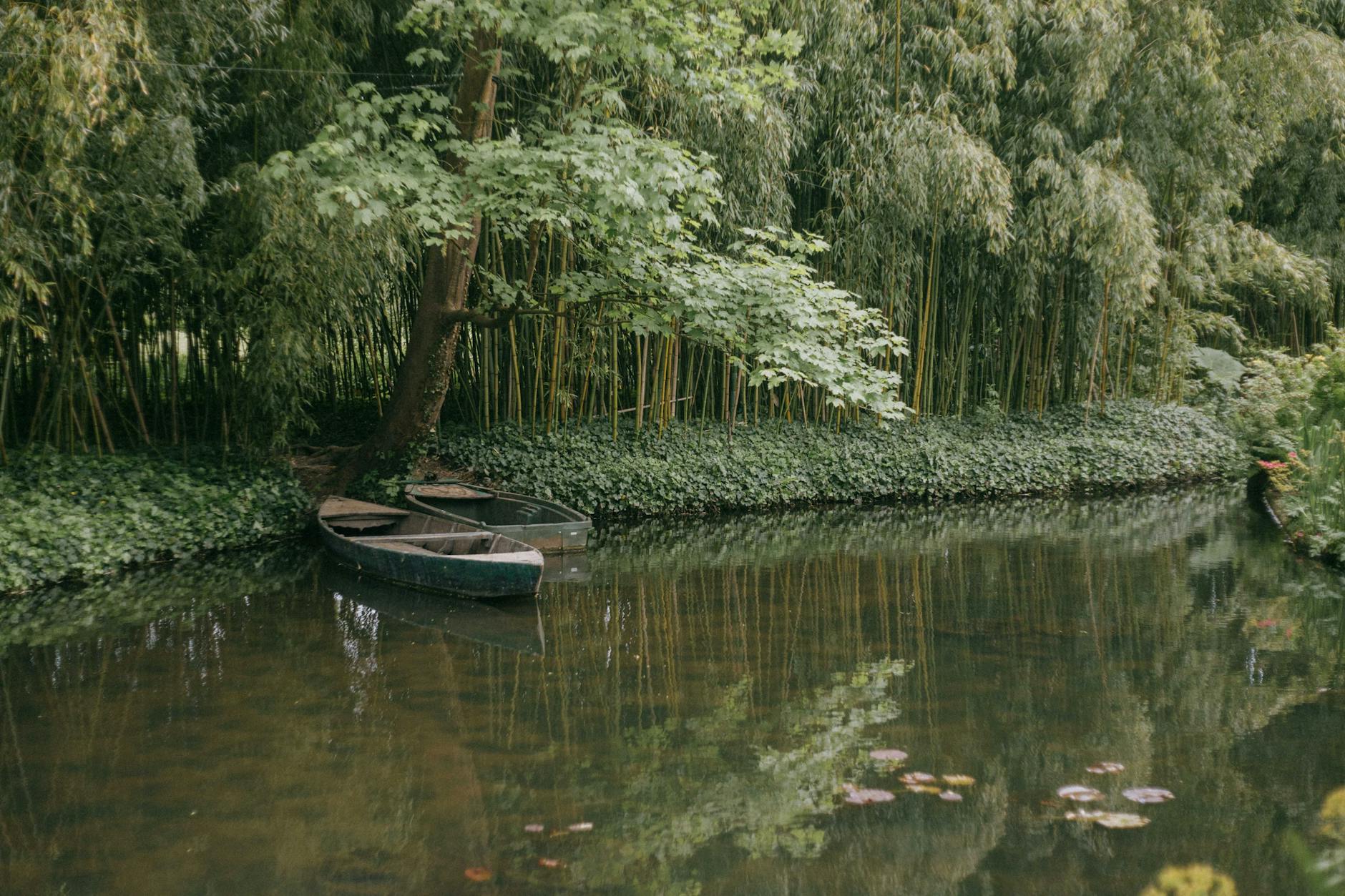
Through the pedestrian tunnel under the road, the water garden is the Monet most people come for: a curved pond planted with water lilies, fringed by weeping willows, irises, bamboo, and azaleas, and crossed by the arched green Japanese bridge under its wisteria. Think of it as an enormous three-dimensional painting he kept editing for thirty-six years. He diverted a tributary of the river Epte to feed the pond in 1893, widened it twice, and added the bridge in 1895. The 250 Water Lilies paintings — in the Orangerie, the Musée d’Orsay, the Marmottan, the Met, MoMA, and a dozen other collections — all came out of this single pond.
The Smaller Bridges
Past the famous green bridge, a cluster of smaller wooden footbridges crosses the inflow stream at the far end of the pond. They’re quieter than the main bridge and give a different angle on the lily clusters, closer to several of Monet’s late canvases. Ten minutes on the far loop and the water garden is nearly yours alone.
Musée des Impressionnismes Giverny
A hundred metres up the rue Claude Monet from the Fondation, the Musée des Impressionnismes Giverny is a low modern building set into the hillside above the village. It opened in 1992 as the Musée d’Art Américain — founded by the collectors Daniel and Judith Terra to honour the American Impressionists who followed Monet to Giverny in the 1880s and 1890s — and rebranded in 2009 with a wider remit covering French and international Impressionism and Post-Impressionism alike.
The programme is built around two or three temporary shows a season; recent ones have covered Berthe Morisot, Henri-Edmond Cross, the Pointillists, and the American Givernois colony. There’s no permanent Monet collection here — the famous paintings live in Paris — but the wildflower-meadow roof and the café terrace earn the visit on their own. Admission is €7 alone or included in the €19 combined ticket; allow 60 to 90 minutes.
Where to Eat in Giverny
Giverny has about half a dozen restaurants and cafés along its one main street, with a few more in nearby Vernon. The village places are pleasant but inflate in high season, and serious eaters sometimes head back to Vernon for better value at the cost of a 15-minute detour.
Restaurant Baudy
At 81 rue Claude Monet, Restaurant Baudy occupies the former Hotel Baudy, the 1880s pension where the American Givernois colony — Theodore Robinson, Lila Cabot Perry, Frederick Frieseke and others — lived and painted alongside Monet. The dining rooms keep their original woodwork, and the atelier out back survives as a small free museum. Lunch runs €28 to €45; book ahead on weekends in May and June.
Le Bon Mainténon
Closer to the Fondation entrance, Le Bon Mainténon is the village’s dependable bistro, with a terraced garden under wisteria and grapevine. The menu runs seasonal — spring asparagus, summer tomato salads, autumn duck — and the €26 lunch formula is among the best-value sit-down meals in the village. Reserve on weekends, especially for a terrace table.
The Fondation’s Cafe
Inside the Monet site itself, a small café in the former stable serves coffee, tartes, quiches, and ice cream. It’s handy if you want to stretch the visit through lunch without leaving the gardens, but the queue runs long from noon to 2 pm and seating is tight. Grab a takeaway crepe and sit on the wall by the entrance rather than wait for a table.
Picnic in the Village
A picnic is the budget play and, on a sunny day, arguably the nicest. Buy a baguette, cheese, and fruit in Vernon (the rue Carnot fromagerie is excellent, and a Saturday market runs in place de Gaulle) and eat in the village square near Sainte-Radegonde, or on the benches in the Musée des Impressionnismes’ wildflower-meadow garden, which is free to enter and rarely busy.
Combining with Musée d’Orsay and the Orangerie
The complete Monet experience isn’t Giverny on its own. It’s Giverny plus the two Paris museums holding the canvases he made there. The pond and the paintings of it belong together, and seeing them in conversation is one of the most rewarding sequences in European art tourism.
The compressed version: spend the morning at Giverny, train back to Saint-Lazare by 3 pm, and walk twenty minutes south through the Tuileries to the Musée de l’Orangerie. The two oval rooms there hold Monet’s eight late Water Lilies panels, donated in 1922 and installed exactly as he specified. The contrast with the pond you stood beside four hours earlier genuinely lands. Our Musée de l’Orangerie guide has the ticketing.
The unrushed version splits it over two days. Day 1: Giverny. Day 2 in Paris: a morning at the Musée d’Orsay for the broader Impressionist collection (Monet’s Cathedrals series, Manet, Degas, Renoir, Pissarro), lunch, then an afternoon at the Orangerie. This is the canonical sequence, and it sets the Water Lilies in their full context.
A Brief History of Monet at Giverny
Monet was 43 when he first rented the Giverny house in April 1883. He’d been living in poverty at Vetheuil after the death of his first wife, Camille, in 1879, and the move was financed partly by his dealer Paul Durand-Ruel and partly by Alice Hoschede, who became his second wife in 1892. The household was eccentric by Victorian standards: Monet, Alice, her six children, and his two.
He bought the house in November 1890 with proceeds from his Wheatstack series. He enlarged the Clos Normand straight away, and in 1893 bought the marshland across the road to dig the lily pond. The Japanese bridge went up in 1895, the wisteria followed, and the bamboo grove arrived in 1898. The Water Lilies series began in 1899 and ran on, growing more abstract as his cataracts worsened, until his death on December 5, 1926. He’s buried in the churchyard of Sainte-Radegonde, a 10-minute walk from the gardens.
The house and gardens passed to Monet’s son Michel, who in 1966 willed them to the Académie des Beaux-Arts. After ten years of decay and a restoration funded largely by American donors — chiefly Lila Acheson Wallace of Reader’s Digest in 1977 — the Fondation Claude Monet opened to the public in 1980.
What to Bring on Your Giverny Day Trip
- Comfortable walking shoes — you’ll cover 3 to 4 kilometres on gravel paths and station-to-bus walks; sandals are fine in summer, leather-soled dress shoes are not.
- Sun hat and sunscreen — the Clos Normand is fully exposed and the pond throws sun back off the water; even a May day can burn the unprepared.
- Refillable water bottle — there’s a drinking fountain near the entrance but no bottled water sold inside the gardens; carry a litre.
- A light layer — Norman weather turns hourly and the water garden runs noticeably cooler than the front; a packable shell handles spring and autumn showers.
- Camera with a macro or short telephoto lens — the flower close-ups are the photographic prize here; a 50mm to 100mm with macro capability earns its spot in the bag.
- Your pre-booked timed-entry ticket — on your phone or printed; check the QR code is legible before you leave the hotel.
- Passport or national ID — needed for the EU under-26 youth discount on the train and the under-18 free entry to the Fondation.
The Crowds Reality
Giverny is a small village absorbing roughly 600,000 visitors a year, nearly all of them squeezed into seven months and tilted heavily toward May, June, and the first half of July. On a peak Saturday afternoon in late May the Grande Allée turns into a slow-moving river of selfies and the Japanese bridge carries a 20-minute line for a clean photo. You can’t make that vanish, but you can route around it:
- Pre-book the earliest slot going — usually 9:30 — on a Tuesday, Wednesday, or Thursday.
- Take the 8:20 train from Saint-Lazare so you reach the gate before opening and walk in with the first group.
- Do the water garden first, then the house, then the Clos Normand. Reversing the usual flow leaves you the bridge nearly alone for the first thirty minutes.
- Plan to leave by 12:30, when the coach crowds peak and you’ve already photographed everything in better light.
- Spend the early afternoon on lunch in Vernon or the Musée des Impressionnismes; if your ticket allows re-entry (some seasonal ones do), consider a 4 pm return once the day-trippers have cleared out.
Photo Spots at Giverny
Giverny is one of the most photographed gardens in the world, and you can either take the same five frames as everyone else or hunt the less obvious ones. The classics first, then the alternates.
The Japanese Bridge over the Lily Pond
The unavoidable shot: arched green bridge, hanging wisteria, lily pads spreading downstream. For composition, stand on the small inflow bridge to the left and shoot back along the pond’s curve; it’s far less crowded and gives a stronger lead-in line. Mid-May for wisteria, mid-July for lilies, late September for autumn reflections.
Monet’s House Facade
From the bottom of the Grande Allée looking back, the pink-and-green facade sits centred behind the path tunnel. Shoot it in the first hour after opening; by 11 am the path is full of people and the symmetry breaks. A 35mm or 50mm prime keeps the geometry clean without the distortion a wide-angle introduces.
The Yellow Dining Room
Interior photography is allowed without flash. Push the ISO up (1600 or 3200), brace against the door frame for stability, and shoot the diagonal corner with the table runner leading into frame — the canonical interior view. The room clears for a beat every few minutes; wait for the gap.
The Lily Pond from the Wisteria Path
The narrow path around the pond’s far side, under a long wisteria pergola, gives over-the-shoulder views back across the water to the willows on the opposite bank. Stop where the path bends — this is the angle Monet himself chose for several of the canvases now hanging in the Marmottan.
The Clos Normand at Golden Hour
If you can stay until late afternoon (the gates close at 6 pm in summer), the last hour of light on the western beds of the Clos Normand is the strongest of the day: warm, low, and saturated, with hardly anyone left. This is the frame that wins photo competitions. For the city alternatives, compare our broader Paris photo spots guide.
Other Norman Villages Worth Combining
Giverny works as a half-day, which leaves plenty of afternoon for an extension elsewhere in Normandy. The most logical combinations, ranked by added travel time:
Vernon is the easiest add-on, since you change trains there anyway. It has a Gothic collegiate church (Notre-Dame de Vernon), the small Musée A. G. Poulain with two Monet paintings of the town, and a half-timbered old quarter good for a 90-minute walk and lunch.
Les Andelys sits 20 kilometres downstream on the Seine, dominated by Château Gaillard, the cliff-top fortress Richard the Lionheart built in 1196-1198. The ruined keep is free, and the view over the Seine’s horseshoe bend matches anything in the Loire. Reach it by car (25 minutes from Giverny) or bus 200 from Vernon; it’s not feasible by train alone.
Rouen, 65 kilometres further west, is the Norman capital and the place Monet painted his Cathedrals series in 1892-1894. The cathedral facade still stands, and the Musée des Beaux-Arts holds one of the canvases. Rouen is too much for a same-day Giverny add-on but makes a fine overnight.
For tour-package options to several of these villages, see our best Paris tours guide, and for the wider day-trip menu, the day trips from Paris pillar covers everything from Versailles to the Loire.
Frequently Asked Questions
How long does the Giverny day trip from Paris take?
Plan on 9 to 10 hours door to door. The train leg is 50 minutes each way, the shuttle adds 15 each way, and the visit itself needs 3 hours minimum (house, both gardens, café stop). Add lunch in Vernon and you land at a comfortable 10-hour day.
Is Giverny worth visiting outside the peak May-July window?
Yes, though the experience shifts. April brings tulips and quiet paths; September delivers dahlias and the best autumn light of the year; October catches the last roses and the maple-and-vine colour around the pond. Skip August Saturdays whatever the season, and skip November through March entirely, because the site is closed.
Do I need to book tickets in advance?
From May through August, yes, without exception. In April and September-October, walk-up is generally fine on weekdays but worth booking on weekends. Pre-booking costs the same as walk-up (€13) and saves you 30 to 60 minutes in line at peak.
Can I combine Giverny with Versailles in one day?
Technically yes, in practice no. Both demand a full day, and the geography (Giverny northwest, Versailles southwest) means crisscrossing Paris in the middle. A handful of coach tours bundle them, but each gets short-changed. Split them across two days.
Is Giverny accessible for visitors with limited mobility?
Partly. The gardens are flat gravel paths, and the underpass to the water garden has been re-graded for wheelchairs, but the house interior involves a narrow staircase to the bedroom level. Ground-floor visitors still see the kitchen, dining room, sitting room, and first studio. Wheelchair loans are available at the entry kiosk, subject to availability.
Are there guided tours of the gardens?
Yes — the Fondation runs themed garden tours in French and English most weekends from May through September, usually €8 on top of the entry ticket. Private guides are also bookable through Paris tour operators if you want depth on the planting or Monet’s working methods.
Can children enjoy Giverny?
Under-eights get in free, and most kids love the pond and the bridge for a good 30 minutes; holding their interest past that depends on the child. Bring something to feed the koi (small fish food is sold at the gate) and let them lead the way around the lily pond — it beats a forced art-history lesson every time. The Musée des Impressionnismes runs occasional family workshops in summer.
What is the best season for photography at Giverny?
Mid-May for the wisteria over the Japanese bridge; mid-July for full lily bloom; late September for autumn colour and uncrowded paths. For weather alone, June is the most stable. Pair the photo trip with our Paris summer activities roundup if you go between June and August, and budget travellers should check our Paris on a budget guide for ways to keep the wider trip affordable.
Giverny is a small place, a famous place, and an unfailingly beautiful one. Even in the thick of the May crowds, it looks exactly like its paintings. Go on a Tuesday in late May with the 8:20 train, the first time slot of the day, and a macro lens in the bag. And don’t skip the Orangerie on the way home.
Giverny is the natural second day trip on a longer stay, and it slots into day six of our one week in Paris itinerary — paired with the Orsay and the Orangerie earlier in the week, so you see the paintings before you see the pond.
Related Paris guides
Use these to round out your trip: