Paris Flea Markets: Complete Guide to Marche aux Puces & More
The Paris flea markets — les marchés aux puces — are the oldest continuous secondhand-trade ecosystem in Europe, with the largest of them, Saint-Ouen / Clignancourt, covering seven hectares and...
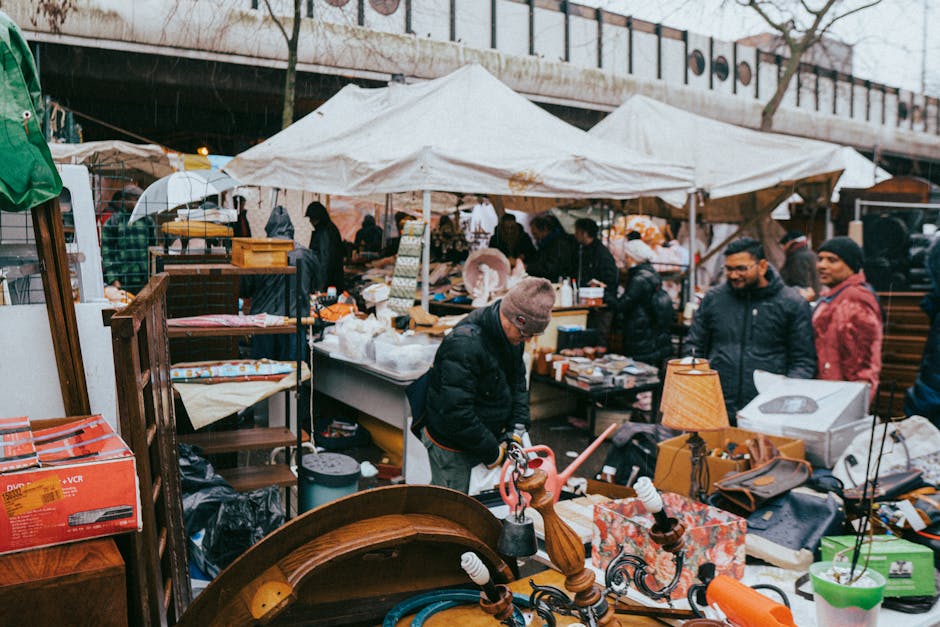
Europe’s oldest continuous secondhand trade still runs every weekend on the edge of Paris. The biggest of the markets, Saint-Ouen / Clignancourt, covers seven hectares and packs in more than two thousand dealers across fourteen named sub-markets. This paris flea markets guide tips piece breaks down all four major markets, Saint-Ouen / Clignancourt, Vanves, Montreuil, and the rotating Sunday brocantes, with exact addresses, métro stops, days and hours, what each sub-market actually sells, price tiers, how to bargain in French, how payment works, how to ship and clear customs, how to spot a fake, and which named dealers are worth hunting down. The aim is something tight enough to act on at six in the morning when the first vans start unloading on a Saturday in Clignancourt.
Read it alongside our best shopping streets in Paris, the Paris souvenirs guide, our vintage shopping in Paris guide, the Marais neighbourhood guide, and our Paris day trips piece to thread the markets into a wider shopping plan. Most people who bother with a flea market also want the curated antique shops of the Marais and the Left Bank brocantes that pair well with them.
Marché aux Puces de Saint-Ouen / Clignancourt
The Marché aux Puces de Saint-Ouen, which every Parisian calls the “Puces de Clignancourt” after the métro stop, is the largest antiques market in the world. It sits just north of the boulevard périphérique in Saint-Ouen-sur-Seine, sprawling across seven hectares (about seventeen acres) along Rue des Rosiers and the surrounding streets. More than two thousand dealers work it, spread across roughly fourteen distinct sub-markets, each with its own gates, alleys, and specialism. It started informally in the 1880s, when rag-pickers (chiffonniers) were pushed outside the Thiers wall, and it has been a Sunday institution ever since. After the Champs-Élysées itself, it remains the most-visited shopping destination in greater Paris.
Practical basics
Address: Rue des Rosiers and the streets around it, 93400 Saint-Ouen-sur-Seine. Métro: Line 4 to Porte de Clignancourt, the last stop northbound. From the exit, walk straight north under the périphérique and along the avenue de la Porte de Clignancourt for about three hundred metres. The first stalls appear right away, but the official market gates begin past the rail crossing on Rue des Rosiers. Days: Saturday, Sunday, and Monday only, with most of the trade on the weekend and Monday left to the serious antique buyers. Hours: officially ten to six, though many dealers in the formal sub-markets open closer to eleven and start packing up around five. Entry is free, with no ticket or reservation.
The fourteen sub-markets — a working breakdown
Here’s the thing that throws everyone: Clignancourt isn’t one market, it’s fourteen, each with its own gates, character, dealer mix, and price tier. Map them before you go and treat the day as a walking circuit, not a wander. Six of them carry most of the weight.
Marché Vernaison — the oldest (1885)
Marché Vernaison at 99 Rue des Rosiers is the original puces market, set up by Romain Vernaison in 1885 when he organised the chiffonniers into rented stalls. Three hundred small dealers now fill a maze of narrow, glass-roofed alleys. Vernaison’s thing is small objects: porcelain, silverware, postcards, vintage jewellery, glassware, lace, costumes, military memorabilia, old toys, and the eccentric collectibles the French file under “curiosités.” Prices sit at the lower-middle of the Clignancourt range, a small silver spoon at five euros, a 1920s glass perfume bottle at thirty, a complete vintage porcelain coffee service at a hundred and fifty to four hundred. Bargaining is expected and welcomed, and the covered alleys make Vernaison the best place to be when it rains.
Marché Biron — formal antiques
Marché Biron at 85 Rue des Rosiers holds around two hundred dealers in formal antiques: signed eighteenth-century French furniture, gilt-framed paintings, period chandeliers, marble busts, Sèvres porcelain, silver service for twelve. This is where international interior designers and museum buyers turn up. Expect printed price tags in the four to six figures and dealers who have worked the same stall for three generations. Browsing is welcome and English is spoken, but the bargaining margin is thinner, ten to fifteen percent rather than the thirty you’ll get at the looser markets. Biron is the one Clignancourt sub-market where you should show up in tidy clothes; the staff size you up before they quote.
Marché Dauphine — vintage, books, art
Marché Dauphine at 140 Rue des Rosiers fills a soaring two-storey glass-and-steel hall built in 1991 to consolidate dealers pushed out of older sites. Its hundred and fifty dealers cover an unusually wide range: mid-century vintage fashion (Dior, Chanel, Hermès from the 1950s through the 1980s), antiquarian books, prints and posters, photography, vinyl, and twentieth-century design objects. The Dauphine balcony has the best café in the market, La Buvette des Tartes, which makes a handy lunch anchor. Prices land above Vernaison and below Biron, a 1970s Hermès silk scarf around two hundred euros, a signed Cocteau lithograph from three hundred to nine hundred.
Marché Paul Bert Serpette — designer mid-century
Marché Paul Bert Serpette at 110 Rue des Rosiers is the most internationally celebrated sub-market at Clignancourt, the one the global design press writes about. Around four hundred dealers occupy two adjacent markets (Paul Bert open-air, Serpette covered) that merged commercially in 2014 under shared management. The focus is twentieth-century design: signed Jean Prouvé chairs, Charlotte Perriand cabinets, Pierre Jeanneret Chandigarh seating, Mathieu Matégot lighting, Serge Mouille lamps, Pierre Paulin pieces. Pricing runs at auction-room levels, a Prouvé Standard chair at eight to fifteen thousand euros, a Perriand bibliothèque clearing fifty. Karl Lagerfeld bought here, Marc Jacobs still browses, and the interior teams from Hermès, Christian Liaigre, and Le Bon Marché keep accounts. Bargaining is muted at this tier, so expect five to ten percent on most pieces.
Marché Malik — fashion vintage
Marché Malik on Rue Jules Vallès is the youngest in spirit: vintage clothing, denim, sneakers, leather jackets, band T-shirts, sunglasses, and accessories. Buyers from Tokyo and Seoul fill entire shipping containers here. Prices undercut the better-known vintage boutiques in the Marais, a 1970s Levi’s 501 at sixty to a hundred and twenty euros, a Schott Perfecto leather jacket at a hundred and eighty to three hundred. Cash and card both work. Malik is your circuit if you want wearable vintage rather than collector pieces, and it’s the one sub-market where you can comfortably bargain in broken French, since the dealers expect tourists and set their opening prices accordingly.
Marché Jules Vallès — budget bric-a-brac
Marché Jules Vallès at 7-9 Rue Jules Vallès is the cheapest of the organised sub-markets, with small antiques, kitchenware, vintage linens, lamps, mirrors, frames, and oddments at twenty to two hundred euros a piece across roughly a hundred and twenty stalls. The feel is closest to a North American estate sale, with plenty priced for clearance rather than collection. Bargaining is enthusiastic, and a friendly second pass will usually land you thirty to forty percent below the ticket.
The other sub-markets in brief
The rest fill out the seven hectares: Marché L’Usine for industrial vintage, Marché Le Passage for mid-range antiques, Marché Lécuyer and Marché Lécuyer-Vallès for African and Asian art, Marché Antica and Marché Cambo for classical antiquities, and Marché des Rosiers for twentieth-century decorative arts. Most visitors cover Vernaison, Dauphine, Paul Bert Serpette, and Biron in one morning and come back another day for the rest.
Star dealers worth seeking out
- Galerie Salon (Paul Bert) — twentieth-century Italian and French design, the place to handle a Gio Ponti or a Joe Colombo before you bid at Sotheby’s.
- Anouk Beauvois (Serpette) — signed Pierre Jeanneret Chandigarh chairs with documented provenance.
- L’Atelier 154 (Paul Bert) — restored Charlotte Perriand and Jean Royère pieces, by appointment for serious buyers.
- Galerie XXO (Serpette) — the de facto reference for 1970s and 1980s French design.
- Bachelier Antiquités (Vernaison, stall 18) — the cult kitchenalia stall, copper pots, mortars, and bistro tableware that Vogue has photographed.
- L’Object qui Parle (Vernaison) — an eccentric cabinet of curiosities sourced from Provence estates.
- Tombées du Camion (Vernaison) — vintage industrial and pharmacy stock, an Instagram favourite.
Marché aux Puces de Vanves: the locals’ market
Vanves is the smallest of the three permanent fleas and the one Parisians who actually furnish apartments love most. It lines Avenue Marc Sangnier and Avenue Georges Lafenestre in the 14th, about three hundred dealers, every Saturday and Sunday from seven in the morning until early afternoon. Take Métro 13 to Porte de Vanves. This is where the smaller things turn up, jewellery, silver, glassware, small framed paintings, vintage clothing, at prices roughly twenty to thirty percent under the equivalent stalls at Clignancourt.
Vanves peaks between eight and ten on Saturday morning. By noon dealers start packing, and many are fully gone by two. Bring small bills, since few stalls take cards. Bargaining is expected and friendly; ask quel est votre meilleur prix? (what’s your best price?) rather than throwing out a counteroffer first.
Marché aux Puces de Montreuil: the working market
Montreuil at Porte de Montreuil (Métro 9) runs Saturday, Sunday, and Monday from around seven to seven-thirty in the morning until early afternoon. It’s the most working-class of the four and the cheapest by a wide margin, the place for vintage Levi’s, old leather jackets, used kitchen kit, North African ceramics, secondhand books, and bric-a-brac. Montreuil isn’t a curated experience; it’s a working market where Parisian families come to genuinely hunt for bargains. Bring cash, mind your bag, and don’t count on English.
Rotating Sunday brocantes around Paris
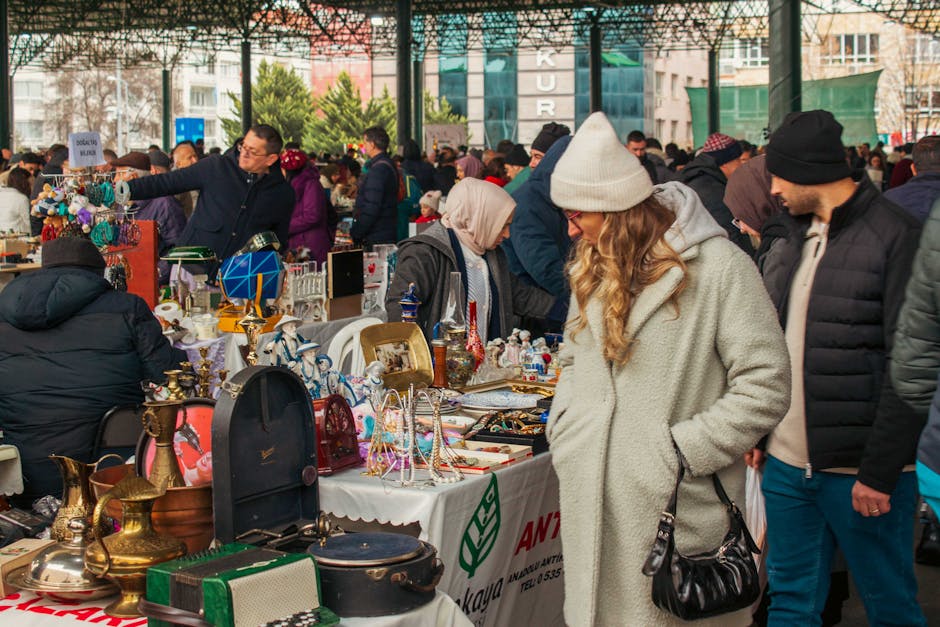
Beyond the permanent fleas, Paris runs a rolling calendar of Sunday brocantes that surface in a different arrondissement each weekend. The two main organisers are Vide Greniers Online (videgreniers.org) and Brocabrac (brocabrac.fr), and each lists the weekend’s brocantes by arrondissement with start times and addresses. The big seasonal events include the spring and autumn brocantes on Boulevard Richard Lenoir (11th), the twice-yearly Foire de Chatou (the largest antiques fair in France), and the Brocante de Bastille each spring. These rotating markets reward a patient browser and tend to produce the best stories, a 1960s Cassina chair pulled from an estate for sixty euros, an Hermès silk scarf for fifteen.
Bargaining etiquette in French (and what works)
Bargaining at the Paris fleas follows its own rules. Open by greeting the dealer with bonjour, then pick up or point to the object before you ask combien? (how much?). Take the answer, then ask vous pouvez faire un effort? (can you do a little better?) or quel est votre meilleur prix? Dealers will usually come down ten to fifteen percent on a single object, twenty to twenty-five percent for two or three pieces from the same stall, and as much as thirty to forty percent late on Sunday afternoon, when the alternative is boxing the inventory back up. Lowballing with half the ticket price reads as rude and gets you waved off the stall.
Pay cash whenever you can. Most stalls take cards now, but plenty add three percent or refuse them on purchases under fifty euros. Bring twenties and fifties. The ATM at the Clignancourt entrance is reliably empty by ten on Saturday morning, so arrive with cash already in your wallet.
Fakes, reproductions, and how to spot them
The Paris fleas have always sold real antiques alongside convincing reproductions, and at Saint-Ouen the proportion of outright fakes is not trivial, especially on Hermès scarves, Louis Vuitton trunks, midcentury design (Eames chairs, Knoll tables), and signed studio pottery. Three rules. First, ask plainly c’est authentique? and watch how the dealer answers. Second, ask for a facture (sales receipt) that names the maker, period, and provenance; a dealer confident in a piece will write one, a hesitant one won’t. Third, for design pieces above a thousand euros, ask whether it’s been authenticated by the relevant body (Cassina archives, Vitra Design Museum, Knoll archives).
For mid-century French design (Perriand, Prouvé, Jeanneret), the Galerie Patrick Seguin and Galerie Downtown Paris reference catalogues are the standard. Pieces with stamped Cassina or Vitra inventory numbers, factory labels, and paperwork are real; pieces sold without documentation at a fifth of the gallery price almost certainly aren’t.
Shipping large purchases home
Most serious flea dealers ship internationally and keep crating companies on speed dial. Standard rates from Paris to the United States run roughly three hundred to five hundred euros for a medium chair (crated air freight, three to five business days) and eight hundred to fifteen hundred euros for a sofa or large case good (crated sea freight, six to ten weeks). The dealer arranges the crating; you pay a deposit and settle the balance on delivery. Two firms come up again and again from Saint-Ouen dealers: Hedley’s (hedleysfineart.com) for fine art and antiques, and Crown Worldwide for general furniture. Both do door-to-door, customs clearance included.
For US buyers, antiques over a hundred years old enter the United States duty-free under HTS code 9706.00.0000, but the dealer has to supply a written statement of age. Anything under a hundred years old carries a small duty, typically three to six percent. EU residents heading home by car or train pay no duty on items already inside the EU. UK residents, post-Brexit, pay UK customs duty plus VAT on items over a hundred and thirty-five pounds, calculated by HMRC at import.
Practicalities: when to go, what to wear, where to eat
- Best time to arrive — Saturday between seven-thirty and nine at Clignancourt for first pick; Sunday afternoon for end-of-day discounts.
- What to wear — comfortable closed shoes (cobbles), layers (the sub-markets are unheated), a crossbody bag, and gloves in winter.
- Cash — at least three hundred euros in mixed notes for a casual buying day, more if you mean business.
- Lunch at Clignancourt — La Chope des Puces (122 rue des Rosiers) for steak frites and live gypsy jazz, Le Voltaire for a traditional bistro, Ma Cocotte (designed by Philippe Starck) for something upscale.
- Avoid — the rue Jean-Henri Fabre approach, lined with counterfeit-handbag sellers; come in through the main rue des Rosiers entrance instead.
- Safety — the Porte de Clignancourt area has a pickpocket reputation; the markets themselves are safe, but stay alert on the métro.
Sub-market cheat sheet for Saint-Ouen / Clignancourt
- Vernaison — bric-a-brac, kitchenalia, smalls, the cheapest stalls.
- Paul Bert Serpette — museum-grade 20th-century design and decorative arts, the most prestigious sub-market.
- Biron — period furniture, silver, gilded mirrors, formal antiques.
- Dauphine — books, prints, posters, Art Deco furniture.
- Malassis — rotating dealers, lower price points, end-of-week clearance.
- Marché Antica — classical antiquities, archaeological pieces.
- Marché Lécuyer — African and Asian decorative arts.
- Marché Le Passage — mid-range antiques and decorative arts.
- Marché des Rosiers — 20th-century decorative arts.
- L’Usine — industrial vintage, factory furniture.
Related Paris shopping guides
Pair this with our best shopping streets in Paris piece for neighbourhood context, our vintage and thrift shopping guide for in-town secondhand boutiques, our department-store guide for the grand-magasin route, and our VAT refund guide if your purchases top a hundred euros and you live outside the EU.
Paris flea markets: frequently asked questions
Which Paris flea market is best for first-timers?
Saint-Ouen / Clignancourt on a Saturday morning. It’s the largest, the easiest to navigate for non-French speakers, and the widest in price range. Start at the Paul Bert Serpette entrance on rue des Rosiers and walk south through Vernaison.
Do dealers speak English?
At Saint-Ouen, yes, almost all of them speak conversational English. At Vanves and Montreuil, less so; bring a translation app and a polite bonjour.
Can I pay by card?
Larger stalls take cards (Visa and Mastercard, rarely American Express), but cash is preferred and often unlocks a five to ten percent discount. ATMs near the markets are limited, so withdraw before you arrive.
How much should I budget?
A casual browsing day with two or three small souvenirs (vintage glassware, a framed poster, a bit of costume jewellery) lands around a hundred and fifty to three hundred euros. A serious furniture trip with crating and shipping starts at two thousand euros for a single mid-century chair and runs to twelve thousand and up for a Charlotte Perriand piece with provenance.
Are the flea markets open in the rain?
Yes. The Saint-Ouen sub-markets are mostly covered. Vanves has partial canvas overhead but plenty of stalls close in heavy rain. Montreuil is open-air and largely shuts when the weather turns. Check the forecast before you commit the morning.
Is the Saint-Ouen area safe?
The markets themselves are safe and well-policed during opening hours. The approach to them (Porte de Clignancourt) has pickpocket activity, so keep your phone in a zipped pocket and your bag in front of you on the métro.
Final word
The fleas reward the patient and the prepared. Pick one market, arrive early, carry cash, learn ten French phrases of politeness and bargaining, and accept that the magical find is the exception, not the rule. The dealers are the keepers of the city’s domestic history, and the stalls are where French style gets built from the ground up. A Saturday morning walking the rue des Rosiers is, after a great meal and an afternoon in a museum, the third pillar of an unhurried Paris trip.
Keep reading
Use these to round out your trip:
- where to shop in Paris
- Galeries Lafayette & Printemps
- Paris Souvenir Guide
- Tax-Free Shopping in Paris
- Montmartre
- Best Bakeries and Patisseries in Paris
One piece of routing advice that saves a lot of bother at Saint-Ouen: coming out at Porte de Clignancourt on a weekend puts you through several hundred metres of counterfeit stalls and rigged street games before you reach the market proper. Get off at Garibaldi or Porte de Saint-Ouen instead and approach from the other side. We cover that and the other spots worth planning around in our guide to areas to avoid in Paris.