Le Marais Paris: The Complete Neighborhood Guide
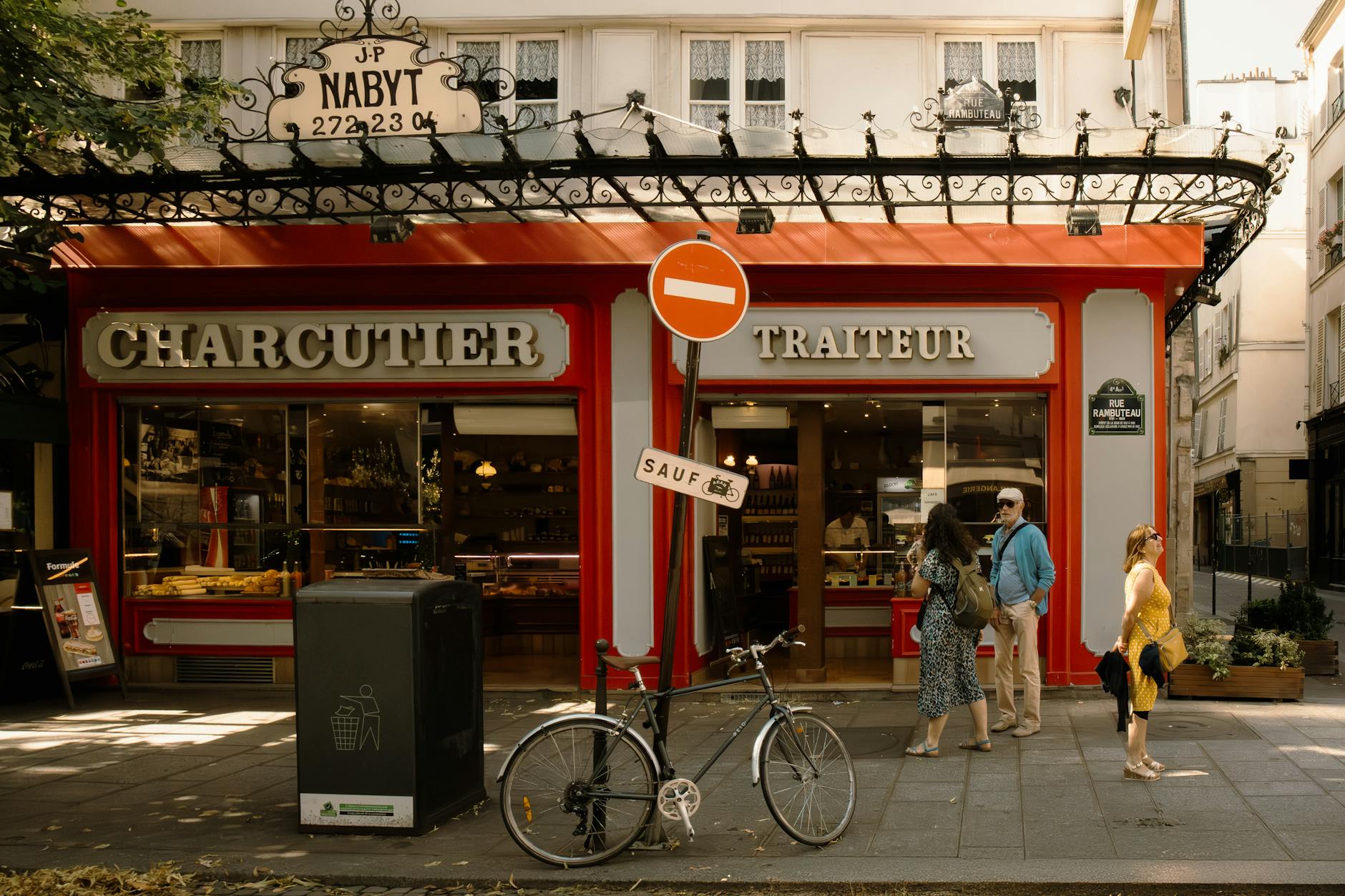
The name means “the marsh,” which is a deeply unglamorous origin for what is now the most-visited neighborhood in central Paris by a wide margin. Le Marais paris packs an astonishing amount into a small grid: 17th-century hôtels particuliers, Renaissance squares (Place des Vosges, the oldest planned square in Paris, dating to 1612), the medieval Jewish quarter (the Pletzl, along Rue des Rosiers), the gay quarter, dozens of independent designer boutiques, the city’s oldest covered market (Marché des Enfants Rouges, 1615), and a cluster of museums denser than anywhere else in town. It’s also where most first-timers choose to stay; our Paris lodging guide ranks it the number-one first-timer pick year after year. Below, the Marais essentials: what to see, where to eat, the truth about the cobblestones, the LGBTQ history, the Jewish heritage, and the gentrification that has reshaped the southern Marais since 2018. For the bigger map, see our Paris arrondissements guide.
Where is Le Marais?
Le Marais straddles two arrondissements, the 3rd and the 4th, on the Right Bank between the river and the grand boulevards. Its rough edges are Rue de Bretagne to the north, the Seine to the south, Boulevard Beaumarchais to the east, and Rue du Renard to the west. Corner to corner it runs about 1.5 kilometres north to south and a kilometre east to west: small enough to cross on foot in twenty minutes, dense enough that you could spend three full days inside it and still leave things unseen.
Getting in and out is easy. The Hôtel de Ville sits at the southwestern corner (Metro lines 1, 11), a direct walk to Notre-Dame across the Pont d’Arcole; Bastille anchors the southeast (lines 1, 5, 8); République the north (lines 3, 5, 8, 9, 11); and the Centre Pompidou, currently shut for renovation until 2030 (more on that below), sits on the western edge. Inside the Marais, the stations you’ll actually use are Saint-Paul (line 1) at the centre, Rambuteau (line 11) for the museum cluster, and Filles du Calvaire (line 8) for the northern end.
There’s a north-south split locals take seriously. The southern Marais (4th arrondissement, south of Rue des Francs-Bourgeois) is the older, more tourist-heavy half, home to Place des Vosges, the Pletzl, and most of the classic museums. The northern Marais, the Haut Marais in the 3rd, runs quieter, more concept-store and independent designer, and holds the Marché des Enfants Rouges. First-timers gravitate south; returners and the design-minded drift north.
Brief History of Le Marais
The name tells you what the area was for most of its history: low-lying floodplain along the Seine, drowned now and then and useless for crops. The Knights Templar drained big sections in the 12th century and built their fortified European headquarters in what is now the northern Marais. From the 14th through the 16th century it turned royal: Charles V built the Hôtel Saint-Pol nearby and the court followed, with the Hôtel des Tournelles, east of the modern Place des Vosges, serving as a royal palace until 1559, when Henri II was fatally wounded jousting there and a grieving Catherine de Medici had it pulled down.
The turning point came with Henri IV’s 1605 commission to build Place Royale on the cleared Tournelles site. Finished in 1612 (Henri IV had been assassinated two years before and never saw it complete), it was Europe’s first planned urban square: 36 identical brick-and-stone houses around a central garden, with continuous ground-floor arcades and slate-roofed pavilions at the cardinal points. Renamed Place des Vosges after the Revolution, it became the most fashionable address in Paris overnight, and the surrounding streets filled with the great hôtels particuliers whose facades you still walk past today.
The Revolution shattered that aristocratic pattern for good. Hôtels were seized, carved up, and repurposed, and across the 19th century the Marais slid down the social ladder into a dense working-class and immigrant district. Eastern European Jewish immigrants settled along Rue des Rosiers from the 1880s, building the Yiddish-speaking Pletzl. The 20th century brought catastrophe in the Holocaust deportations, then post-war North African Jewish immigration that revived the community, and then the founding act of the modern Marais: André Malraux’s 1962 Loi Malraux, which designated the Marais a protected sector and spared its hôtels from the wrecking ball. The gay community arrived in the 1980s, the museums opened one after another, and the boutique boom landed in the 2000s and never let up.
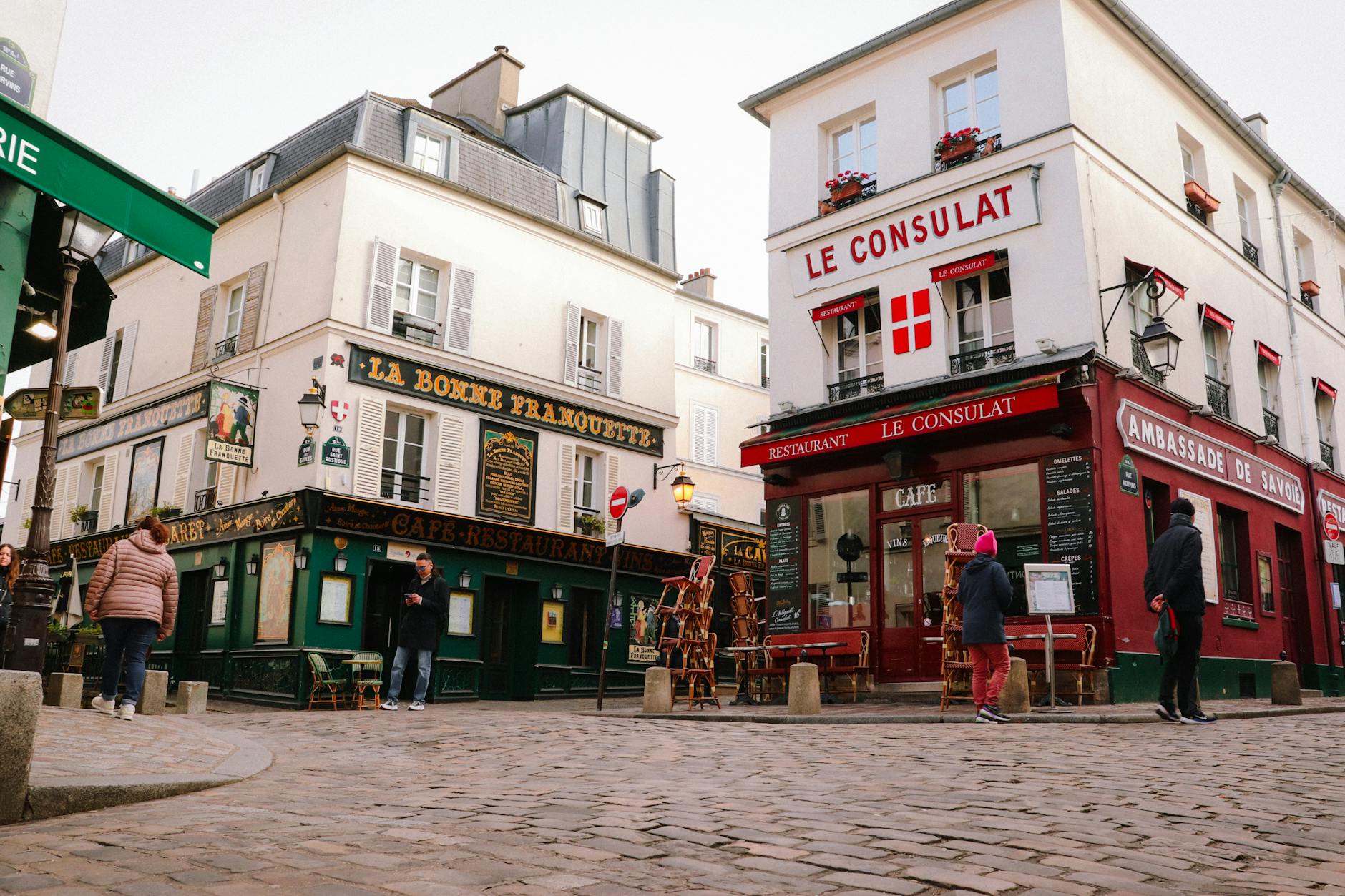
Le Marais’s Top 10 Must-See Sights
No neighborhood in Paris fits more must-see sights into a smaller footprint. The following run roughly south to north and west to east, which also makes a workable walking order if you want to knock them out in a single day. Most of the museums are run by the City of Paris and offer free permanent collections, which adds up to a real saving over a trip. For opening hours and the free-Sunday rules across the wider city, pair this with our Paris museums guide.
Place des Vosges
The oldest planned square in Paris (1612), and probably the single most-photographed spot in the Marais. Thirty-six brick-and-stone houses with continuous ground-floor arcades and steeply pitched slate roofs frame a quiet central garden. The garden and arcades are free. Come at golden hour, when the west-facing facades catch fire, or in the early morning when the dog-walking locals have the square to themselves.
Maison de Victor Hugo
Victor Hugo lived at 6 Place des Vosges from 1832 to 1848, the years he wrote most of Les Misérables, and his second-floor apartment is now a free museum run by the City of Paris. Six furnished rooms trace his life, with the writing desk, the chinoiserie salon he designed himself, and his own ink drawings on display. Twenty to thirty minutes does it.
Hôtel de Ville Facade
The Hôtel de Ville stands at the southwest corner of the Marais; the current Neo-Renaissance building was completed in 1882 after the original burned during the Paris Commune of 1871. You can’t usually get inside without an advance-booked tour, but the facade, with its 136 sculpted figures of famous Parisians, and the vast front plaza (ice rinks in winter, free events in summer) earn a five-minute pause.
Musée Picasso
Set in the magnificent Hôtel Salé at 5 Rue de Thorigny, a 1659 mansion built for a salt-tax collector (hence the name), the Musée Picasso holds over 5,000 works by Picasso plus his personal collection of pieces by Matisse, Cézanne, and others. Adult admission is €14, free on the first Sunday of each month. Allow 90 minutes to two hours.
Musée Cognacq-Jay
Tucked into the Hôtel Donon at 8 Rue Elzévir, this is one of the great quiet pleasures of the Marais: a jewel-box museum of 18th-century European decorative arts, with paintings by Fragonard, Boucher, Watteau, and Chardin in beautifully restored period rooms. The permanent collection is free. An hour is plenty.
Musée Carnavalet
The history of Paris itself, told across two adjoining hôtels at 16 Rue des Francs-Bourgeois. The collection runs from Gallo-Roman archaeology to the 20th century, strong on the Revolution, Haussmann, and the Belle Époque. The permanent collection is free, and a major 2021 renovation reopened the museum with a much-improved layout. Plan two hours, and don’t skip the recreated bedroom of Marcel Proust.
Marché des Enfants Rouges
At 39 Rue de Bretagne, the oldest covered market in Paris, opened in 1615 and named for the red-clothed orphans of a nearby orphanage. Around twenty stalls sell everything from organic produce and French cheese to Moroccan tagines, Lebanese mezze, Japanese bento, and Italian pasta. Come for lunch on a weekday (weekends are mobbed) and eat at the shared tables. Closed Mondays.
Rue des Rosiers and the Pletzl
The historic heart of Jewish Paris, and still the densest run of kosher bakeries, falafel shops, and heritage sites in the city. The street is short, maybe 300 metres, but every doorway carries a story: the L’As du Falafel queue snaking down the pavement, the Sacha Finkelsztajn bakery (open since 1946), the commemorative plaques marking where families were rounded up in 1942.
Centre Pompidou (Currently Closed)
A flat warning, because it catches out plenty of visitors in 2026: the Centre Pompidou closed in September 2025 for a major five-year renovation and won’t reopen until 2030. The building itself, all inside-out architecture and coloured external pipes, still stands on the Beaubourg plateau and is worth walking past for the exterior alone. But the museum is shut. The collection is currently being shown at other Paris venues and at touring exhibitions in Metz and elsewhere.
Hôtel de Sully
A 1625 hôtel particulier at 62 Rue Saint-Antoine, on the southern edge of the Marais. The courtyard is open to the public for free, and the building hides one of the area’s best-kept secrets: a back passage through the garden that emerges directly into the southwest corner of Place des Vosges, a private shortcut between two of the loveliest spots in the neighborhood.
Hôtel de Soubise and the National Archives
At 60 Rue des Francs-Bourgeois, a magnificent 1705 mansion with one of the great Rococo interiors in Paris: the first-floor apartments of the Princess and Prince of Soubise are an explosion of Boucher, Natoire, and gilded plasterwork. The Archives Nationales display rotating documents, including the original Edict of Nantes. Modest admission fee.
The Jewish Marais: History and Today
A Jewish presence in the Marais goes back to the 13th century, along what would become Rue des Rosiers. The modern Jewish quarter really starts in the 1880s, when Eastern European (Ashkenazi) Jews fleeing pogroms in the Russian Empire arrived in numbers and settled in the cheapest part of central Paris, building the tight web of synagogues, kosher butchers, Yiddish bookshops, and bakeries that gave the Pletzl (Yiddish for “little place”) its character.
The Holocaust devastated that community. The Vel d’Hiv roundup of July 1942 deported over 13,000 Parisian Jews to Auschwitz, thousands of them taken from the Marais. The small bronze plaques mounted throughout the neighborhood, outside school doors and apartment entrances, mark the homes from which Jewish families were seized. They’re easy to miss and unbearable once you start noticing them.
After the war, the community rebuilt largely through Sephardic Jews arriving from Tunisia, Morocco, and Algeria after decolonisation. The falafel-and-shawarma culture of today’s Rue des Rosiers is overwhelmingly Sephardic and dates from that wave. The active community now centres on Rue des Rosiers, Rue Pavée, and Rue des Écouffes, with working synagogues, kosher restaurants, and bakeries serving locals and visitors alike.
For falafel, the institutions are L’As du Falafel at 34 Rue des Rosiers (open since 1979, about €8.50 for a sandwich to take away), Mi-Va-Mi a few doors down (locals will argue all day over which is better), and Chez Marianne for a sit-down version. For bakeries, Sacha Finkelsztajn (yellow shopfront, since 1946) does Central European Jewish baking, while Murciano handles the Sephardic North African side. The Mémorial de la Shoah on Rue Geoffroy l’Asnier is free and essential: 90 minutes to two hours tracing antisemitism in France from medieval times to the present.
The Gay Marais: Centre of LGBTQ+ Paris Since the 1980s
The Marais became the centre of gay Paris in the 1980s and has held the title ever since. The gay nightlife and gay-coded businesses cluster around Rue des Archives, Rue Sainte-Croix-de-la-Bretonnerie, and the small streets between the Centre Pompidou and the Hôtel de Ville. Cheap late-1970s rents, a central location, and the area’s long history of immigrant and outsider communities bred a tolerance unusual elsewhere in the city, and by the mid-1980s the transformation was complete.
The bar scene today is mature and welcoming. Le Cox on Rue des Archives is the long-running cruise bar of central Paris; Open Café next door has the most-photographed gay terrace in the city; Raidd on Rue du Temple is famous for its shower-show performers; Freedj is the veteran disco-bar. The lesbian scene is smaller but real: the 3W Kafé on Rue des Écouffes has been a fixture for over two decades.
Paris Pride (Marche des Fiertés) marches through the Marais every late June, with the 2026 edition scheduled for Saturday, June 28. The route shifts year to year but always passes through or ends near the Marais. Outside Pride, the neighborhood is welcoming all year: same-sex couples hold hands openly without a second glance, and the bars happily serve mixed crowds.
Le Marais Shopping: Independent Boutiques and Concept Stores
The Marais is the densest concept-store and independent-boutique district in Paris: more interesting per square metre than the Champs-Élysées, and a good deal less corporate than Saint-Germain. The way to shop it is street by street. Pair this with our Paris shopping guide for sale-season timing and the tax-refund mechanics for non-EU visitors.
Rue des Francs-Bourgeois is the main spine, busiest on weekends, mixing mid-range French brands (Comptoir des Cotonniers, Maje, Sandro, the Kooples) with international fashion and higher-end boutiques. Crucially, it’s open Sundays. Rue Vieille du Temple, running north-south, is the slightly more designer-leaning parallel street. Rue Charlot in the Haut Marais is the densest concept-store strip, with shops like Officine Universelle Buly (a restored 1803-style botanical apothecary) and a rotating cast of small-batch fashion labels. Rue de Bretagne blends independent designers with food shops and ends at the Marché des Enfants Rouges.
Rue de Rivoli is the southern edge and the most commercial: this is where you’ll find BHV Marais, the enormous department store famous for its hardware basement and home-goods floors. Place du Marché Sainte-Catherine is a tiny hidden square with a handful of restaurants. Two more worth seeking out: Acne Studios on Rue Froissart, and Boucheries Nivernaises if you’re renting an apartment and want a serious butcher.
Eating in Le Marais: Restaurants and Cafes
The Marais eats far better than its size suggests. For the wider city picture, see our best restaurants in Paris guide.
Cheap Eats
The Marais cheap-eat trio is L’As du Falafel and Mi-Va-Mi on Rue des Rosiers (both around €8.50 for a take-away falafel pita) and Pho 79 at 3 Rue Volta in the northern Marais, an excellent, affordable Vietnamese pho specialist that has done one thing very well for decades.
Bouillon Republique
Bouillon République, just past the northern edge of the Marais, is the local outpost of the revived bouillon movement: workers’ canteens serving classic French dishes at startlingly low prices. A three-course meal runs €15-20. The food is honest rather than transcendent, the peak-hour queue is long, and the room is gorgeous Art Nouveau. No reservations.
Bistros
For traditional bistro cooking: Robert et Louise on Rue Vieille du Temple, with a wood-fired grill and entrecôtes that arrive caramelised; Le Petit Marché on Rue de Béarn, friendly and a touch more modern; and Le Hangar on the impasse Berthaud just west of the Pompidou, a long-standing favourite for foie gras and duck. Budget €40-60 a head with wine, and reserve several days out at all three.
Modern Restaurants
Breizh Café (Breton crepes with Norman cider on tap), Le Mary Celeste in the Haut Marais (oysters and natural wine), and Candelaria on Rue de Saintonge (a taqueria fronting a hidden speakeasy cocktail bar through a door at the back). All three take reservations, and all three are essential in their categories.
Cafes and Coffee
Café Charlot on Rue de Bretagne is the see-and-be-seen Haut Marais terrace. Café Hugo and Café Carette line Place des Vosges, ideal for a tourist-priced but spectacular coffee under the arcades. For specialty coffee, Loustic on Rue Chapon and Boot Café on Rue du Pont aux Choux set the local benchmark, and La Caféothèque has been pouring specialty coffee in Paris longer than almost anyone.
Patisseries
Jacques Genin on Rue de Turenne: book a table upstairs for the millefeuille made to order. Pain de Sucre on Rue Rambuteau turns out spectacular tarts. Yann Couvreur’s Marais branch is reliable for the signature millefeuille vanille. And Maison Aleph on Rue de la Verrerie does an extraordinary Levantine-French hybrid: flower-shaped pastries built around kataifi dough and assorted creams.
Cobblestone Reality and Walking
No gentle way to say this: the Marais is rough on feet. Nearly every street, square, and courtyard is cobblestoned, ranging from round-topped pavés that wobble underfoot to larger granite blocks that are a bit easier but still uneven. Suitcase wheels rattle and sometimes give out; cheap roller bags really suffer. Pushchairs and strollers are workable but tiring over a long day. Wheelchairs are genuinely hard going outside the main shopping spines, and even there the dropped kerbs come and go.
For your feet specifically: this is not the place to break in new shoes. Wear broken-in flats, broken-in trainers, or genuinely comfortable walking shoes you’ve already tested for at least a half-day at home. Save the new boots for the wider boulevards of the Right Bank. Visitors who underestimate this end up with blisters by lunchtime on day two and limp through the rest of the trip. Twenty euros on insoles before you fly is the smartest Paris prep there is.
Best Streets to Walk
With only an afternoon, prioritise these streets, listed in a rough walking order. Pair this with our Paris walking tours guide for longer set-piece routes.
Rue des Francs-Bourgeois is the main spine and the busiest street in the southern Marais, with the heaviest concentration of cafes, boutiques, and Sunday trading. Rue des Rosiers, a short walk north, is the Jewish quarter and the most concentrated heritage street in the whole neighborhood. Rue Vieille du Temple, running north-south between Rivoli and Rue de Bretagne, lands in a sweet spot of designer boutiques, bistros, and quieter stretches that feel local rather than touristic. Rue Charlot is the concept-store run in the Haut Marais and easily the most fashion-forward street in the district. The Place des Vosges arcades are an absolute must, ideally walked twice: once around the perimeter under the arcades, once cutting through the central garden. Rue de Sévigné, which crosses Musée Carnavalet at right angles, is one of the most photogenic streets here for its corner buildings and the arched window onto the museum gardens. End on Rue de Bretagne at the Marché des Enfants Rouges, timed for lunch.
Le Marais by Time of Day
The Marais shifts character noticeably as the day goes on. Early morning, especially 7-9am, is the magic window: cobblestones still wet from the night cleaning crews, low golden light raking the east-facing facades, only locals walking dogs and bakery staff lifting shutters. Place des Vosges at 8am with a coffee under the arcade is one of the great Paris experiences, full stop.
Mid-morning the shops open (Paris boutiques generally roll up at 10-11am, not 9). Lunch, 12:30-2pm, is the busiest restaurant slot. Afternoons from 2-6pm are the shopping peak, when Rue des Francs-Bourgeois goes shoulder-to-shoulder and the cobblestone reality starts to bite. Evening, 6-8pm, is the apero hour. From about 10pm the gay bars on Rue des Archives and the cocktail spots run until 2am, peaking around midnight on Fridays and Saturdays.
Best Marais Photo Spots
The Place des Vosges south arcade at golden hour is the classic shot. The corner of Rue de Sévigné and Rue du Parc Royal, looking back at Musée Carnavalet, frames layered storefronts and the museum’s arched window. Rue des Rosiers photographs well for the signage (Yiddish lettering, kosher butcher windows, the L’As du Falafel queue) rather than any single set piece. The Hôtel de Sully courtyard is one of the best private-feeling spaces in the city. And the entrance of the Marché des Enfants Rouges, with its painted sign and open metalwork doors, is the iconic Haut Marais shot.
Best Hotels in Le Marais
At the top of the market, Le Pavillon de la Reine is the legendary five-star set inside a 17th-century hôtel, tucked back from Place des Vosges behind a private courtyard, and arguably the most romantic hotel in Paris. Hôtel Cour des Vosges, just south of the square, is the newer five-star option.
In the four-star and boutique tier: Hôtel National Des Arts et Métiers in the northern Marais has a stylish rooftop bar, and Hôtel Jules & Jim is the long-running modern boutique on Rue des Gravilliers. At the budget end, the MIJE runs four hostels inside genuinely historic Marais mansions (Fourcy, Fauconnier, Maubuisson, and the newer Le Fauconnier annex), with dorm beds and private rooms at hostel prices in a neighborhood where almost everything else runs €200-plus.
Sunday in Le Marais (When Most of Paris is Closed)
The single most useful piece of practical Marais knowledge: the Marais is open on Sundays, and most of central Paris is not. The reason is historic. The Jewish neighborhood won an exemption from the Sunday-closing laws so it could trade after Shabbat ended on Saturday evening, and over time that exemption spread, in practice, to the surrounding streets. Today almost every shop on Rue des Francs-Bourgeois, Rue Vieille du Temple, Rue des Rosiers, and Rue Charlot opens on Sundays, generally noon to 7-8pm.
The upshot is that Sunday is by far the busiest day in the Marais, with the rest of Paris decamping here for any shopping that can’t wait until Monday. If you want to shop, come Sunday, but come early. If you want the neighborhood at its most atmospheric, come Sunday morning before noon, before the shops open, when locals still have the cobblestones to themselves. For wider context on Paris retail rhythms, see our Paris shopping guide.
Common Marais Mistakes
Staying too far north: République is interesting, but it isn’t really the Marais. It’s a 15-minute walk south to Place des Vosges, and that walk repeats more often than you’d expect. If the Marais is your main reason for picking a hotel, book inside the actual Marais boundaries.
Skipping the small museums: Carnavalet and Cognacq-Jay are both permanently free and among the most rewarding small-museum experiences in the city. Block out a Marais museum afternoon on purpose.
Walking only Rue des Francs-Bourgeois: it’s the main spine, but also the busiest and most touristed. The side streets (Rue Vieille du Temple, Rue Charlot, Rue des Tournelles, Rue de Sévigné, the pedestrian impasses) are where the Marais actually comes alive.
Le Marais Frequently Asked Questions
Is Le Marais safe at night?
Yes, one of the safer central neighborhoods in Paris at any hour. The streets stay busy until midnight most evenings and 2am on weekends. Standard urban awareness applies (watch for pickpockets on Rue des Rosiers at peak times), but the area doesn’t have the late-night issues that occasionally affect Les Halles or parts of the 10th and 18th.
Which arrondissement is Le Marais in?
Both the 3rd (the northern, quieter Haut Marais) and the 4th (the southern, historic half with Place des Vosges and the Pletzl). The dividing line falls roughly along Rue des Francs-Bourgeois. For a hotel, both are good; the 4th is a bit more touristed, the 3rd a bit more local.
How many days do you need in Le Marais?
A full day covers the highlights: Place des Vosges, Rue des Rosiers, the main shopping streets, and one museum. Two days let you fit in multiple museums, dinner, and time to wander the side streets. If you’re staying in the Marais and using it as a base, you’ll rack up cumulative time there morning and evening over a longer trip anyway.
Is Le Marais good for families?
Yes, with caveats. The cobblestones tire out very young children and pushchairs. But the museums (Carnavalet especially) are excellent for school-aged kids, Place des Vosges has a fenced garden with a small playground, and the falafel-shop lunch culture means hungry children get fed fast and cheap.
What is the Haut Marais?
The local nickname for the northern, 3rd-arrondissement portion of the neighborhood, broadly the area between Rue des Francs-Bourgeois and Rue de Bretagne. Quieter, more concept-store, less obviously touristy, more a working neighborhood than a destination district.
Is the Centre Pompidou really closed?
Yes, closed September 2025 for a five-year renovation, reopening 2030. The exterior is still there and worth a walk past for the architecture, but the museum, cinema, public library, and IRCAM are all shut. Parts of the collection are touring, with the Centre Pompidou-Metz carrying a major presence.
Can you walk from Le Marais to Notre-Dame?
Yes, easily. From the Hôtel de Ville at the southwest corner, cross the Pont d’Arcole onto the Île de la Cité and you’re at Notre-Dame in five minutes. From Place des Vosges it’s about 15 minutes via Rue Saint-Antoine and Pont Marie.
Are restaurants in Le Marais open on Sundays?
Most are, yes. The falafel shops on Rue des Rosiers close on Saturdays (Shabbat) but open Sundays; bistros and modern restaurants generally open for Sunday lunch and dinner, some shutting one weekday instead. Check Google Maps for the specific day.
If there’s one thing to take away, it’s this: the Marais rewards repeat visits more than any other central Paris neighborhood. The big sights fit into a day, but the texture of the place, the side streets, the small museums, the courtyards behind unmarked doorways, only surfaces over a longer stay. Base yourself inside the Marais for at least three nights if it’s your first time in Paris, wear genuinely comfortable shoes, get to Place des Vosges at 8am on a Sunday at least once, and pair this with our Paris accommodation guide and our Paris neighborhood guide for the wider picture. It’s small, dense, and somehow never runs out.
The Marais makes the best first evening in Paris, which is why it anchors the opening night of our two-day Paris itinerary — it is central, it is walkable, and unusually for the city a lot of it opens on Sundays and Mondays.
Related Paris guides
Use these to round out your trip: