Montmartre Paris Guide: Art, History & Hidden Corners
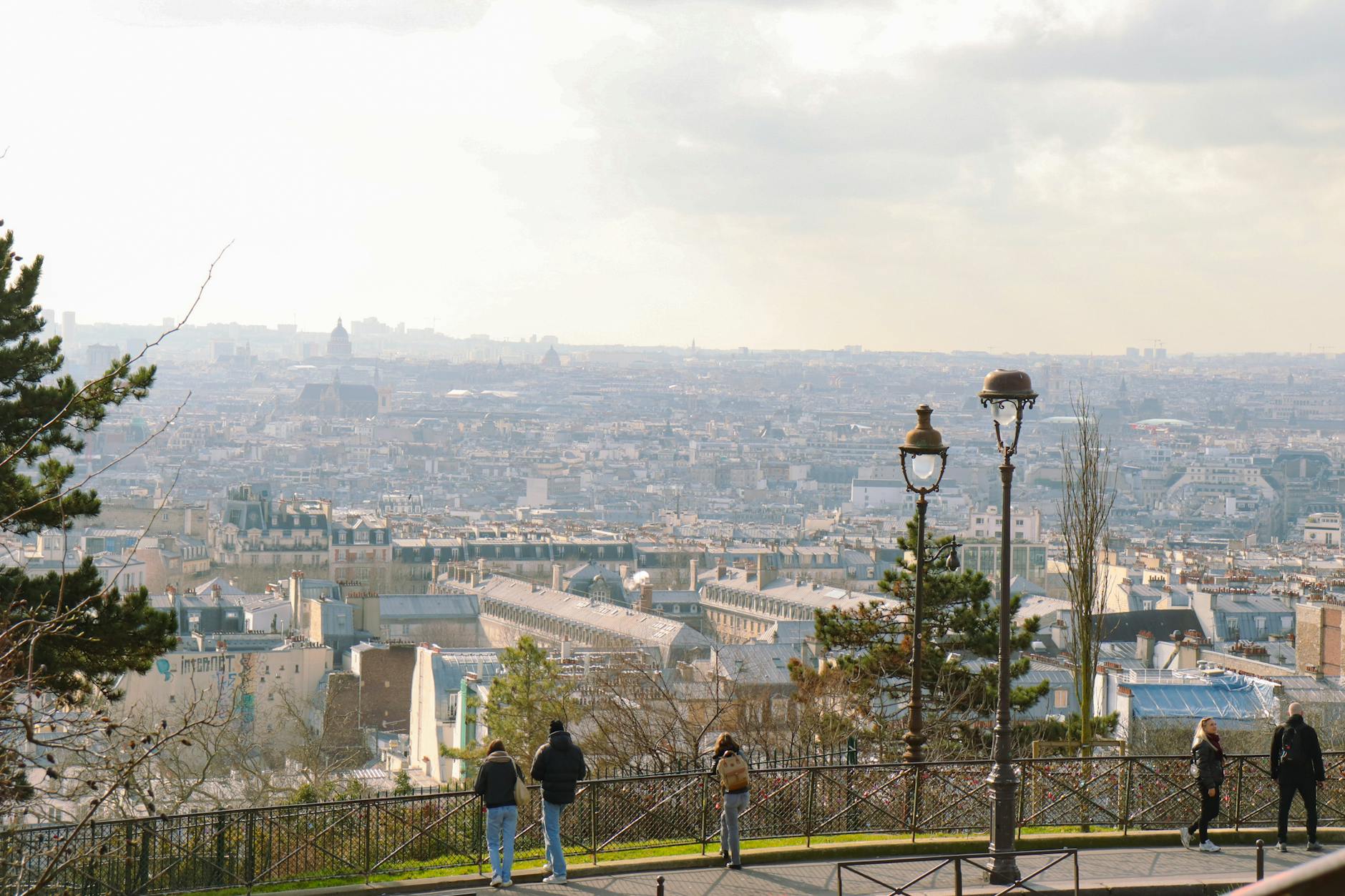
Most people see the wrong Montmartre. They run the same three-hour loop: subway to Anvers, up the staircases past the bracelet hustlers, a Sacre-Coeur selfie, an overpriced sketch in Place du Tertre, then back down. It is the most photographed neighborhood in Paris and one of the least understood. Show up at 7am or after 9pm, though, and you get the village that Picasso, Renoir, and Toulouse-Lautrec actually lived in: cobbled lanes that tilt every direction, surviving windmills, the last working vineyard inside the city limits (planted in 1933), and views nothing else in Paris can touch. This montmartre paris guide walks you up the right way, through Abbesses instead of the scam staircase, then covers the artist history, what is genuinely worth your time, the corners locals keep to themselves, which routes are safe after dark, and where to eat once you have escaped the tourist traps ringing Place du Tertre. For the bigger picture, start with our guide to Paris’s quarters.
Montmartre’s Geography
Montmartre fills the western half of the 18th arrondissement, sitting on a butte that rises 130 metres above the rest of the city. That makes it the highest natural point inside Paris. The neighborhood proper is about one square kilometre, hemmed in by Boulevard de Clichy to the south (the strip that runs past Pigalle and the Moulin Rouge), Boulevard Ornano to the east, Boulevard Marc Caillet to the north, and Avenue de Saint-Ouen to the west. Within those lines the streets tilt, twist, and climb in a way no other Paris quarter does. The reason is simple: the Haussmann grid stops dead at the foot of the hill. Above it, the medieval village layout survived because the slope was too steep for the Baron’s ruler-straight boulevards.
Four Métro stations serve the butte, and which one you pick is the single biggest decision a first-timer makes. Pigalle (lines 12 and 2) dumps you on the noisy southern boulevard by the Moulin Rouge. Abbesses (line 12) sits halfway up the western flank and is the right gateway for nearly everyone, for reasons I get into below. Anvers (line 2) is the southern entrance that funnels you straight into the scam staircase. Lamarck-Caulaincourt (line 12) is the northern stop, perfect if you are staying in upper Montmartre or want to slip into the village from its quiet side.
One thing to accept up front: there is no flat route through Montmartre. Every walk means a climb or a descent, usually on uneven cobbles. Wear real shoes, not the ones you brought to look good. The Funicular du Sacre-Coeur takes the steepest 36-metre stretch off your legs for the price of one Métro ticket (€2.15), and locals ride it without a second thought.
The Best Way to Enter Montmartre (AVOID Anvers)
Every guidebook tells you to ride line 2 to Anvers and climb the grand staircase up to Sacre-Coeur. Every guidebook is wrong. The Anvers approach drops you into the thickest concentration of street scammers in central Paris: bracelet operators, clipboard “petitioners,” pushy photographers, sketch artists. Dodge all of them and you still spend your first ten minutes elbowing through a crowd.
Here is the route that works. Take line 12 to Abbesses, one of the deepest stations in the system (use the lift unless you fancy 197 spiral steps). You come up in Place des Abbesses beneath one of only two surviving Hector Guimard Art Nouveau Métro entrances left in the city, next to the Mur des Je T’aime and a row of real neighborhood cafés. Walk a hundred metres north to Rue Tholozé, the street that rises toward the Moulin de la Galette, and follow it up to Place Émile Goudeau, where the Bateau-Lavoir stands and Picasso painted the Demoiselles d’Avignon. From Goudeau you thread east along Rue Ravignan and Rue des Saules and reach Sacre-Coeur from the side or the back, never the front steps, and you arrive without a single friendship bracelet in sight.
This way also packs the most real Montmartre history into the shortest walk: the windmill street, Picasso’s studio, the cobbled lanes Renoir painted, the side door of Sacre-Coeur where locals turn up for Mass. You meet the village before you meet the tourist machine. If safe-feeling routes matter to you generally, our guide to the safest areas of Paris is worth a look.
Montmartre’s Top 10 Must-See Sights
I’ve ranked these by how much they actually matter historically, not by how many selfies they generate. If you only have a half-day, do the first four. A full day gets you all ten.
Sacre-Coeur Basilica
The white-domed Romano-Byzantine basilica that sits on top of the butte. Walking into the nave costs nothing. The dome climb is €7 (270 steps, no lift) and pays you back with the best near-free view in Paris. Inside, perpetual Eucharistic adoration has run without a break since 1885, the longest such vigil anywhere in the world. We cover the practical details in our dedicated Sacre-Coeur guide.
Place du Tertre
The old artists’ square where Picasso and Utrillo set up their easels in the 1900s. Head for the corners, where a few licensed portraitists still take the work seriously. Skip the crush in the middle, and skip the restaurants around the edge entirely. Together they serve the worst-value meals in central Paris.
Le Mur des Je T’aime
A 40-square-metre wall of enamel tiles in Square Jehan-Rictus, right by Abbesses, spelling out “I love you” in 250 languages across 612 inscriptions. Frédéric Baron and Claire Kito made it in 2000. Free, photogenic, a five-minute stop and no longer.
Bateau-Lavoir
Thirteen Place Émile Goudeau. This is the wooden building (rebuilt after a 1970 fire) where Picasso painted Les Demoiselles d’Avignon in 1907 and set Cubism in motion. Modigliani, Juan Gris, and Apollinaire all worked here too. You can’t go inside, but the facade and the exhibition window cost nothing to see.
Musée de Montmartre + Renoir Garden
Twelve Rue Cortot, the oldest house on the butte (1680) and once Renoir’s studio. The museum tells the bohemian story the way it deserves: cabaret posters, the original Lapin Agile sign, Suzanne Valadon’s apartment kept exactly as it was. Entry is €13. Honestly, the terraced gardens looking out over the Clos Montmartre vineyard would justify the ticket on their own.
Espace Dalí
A permanent show of more than 300 Salvador Dalí sculptures and prints, two minutes west of Place du Tertre. Adults €18. The collection is uneven, no question, but the rooms are quiet and air-conditioned, and the surrealist sculptures pull their weight with older kids: the melting clocks, the lobster telephone, Alice in Wonderland.
Clos Montmartre vineyard
The last working vineyard inside the Paris city limits, replanted in 1933 to keep the slope out of the hands of property developers. Roughly 1,800 vines yield about 1,500 half-bottles a year of Clos Montmartre, auctioned off in mid-October during the Fête des Vendanges. The rest of the year the vineyard sits fenced and closed; you view it from Rue Saint-Vincent or from the Musée de Montmartre garden.
Cimetière de Montmartre
Twenty Avenue Rachel, reached by a footbridge off Rue Caulaincourt. Smaller and far quieter than Père Lachaise. Truffaut, Degas, Berlioz, Stendhal, Dalida, and Nijinsky are all buried here. Free, open daily.
Moulin de la Galette + La Maison Rose
Two windmills survive, on Rue Lepic and Rue Tholozé: Moulin Radet (now the front of a restaurant) and Moulin Blute-Fin (private). These are the windmills Renoir put in the Bal du Moulin de la Galette. Five minutes northeast, La Maison Rose on Rue de l’Abreuvoir holds down what may be the most Instagrammed corner in the whole city.
Cabaret du Lapin Agile
Twenty-two Rue des Saules. The nineteenth-century cabaret Picasso rescued from the wrecking ball in 1903. It still runs Wednesday through Sunday with 9pm shows, candlelit rooms, and old French chansonniers. €35 gets you in with one drink.
Sacre-Coeur Basilica Deep Dive
The Basilica went up after the 1870-71 Franco-Prussian War and the Paris Commune, meant to serve as both national penance and a pointed Third Republic jab at the Commune’s leftist memory. Construction started in 1875 under Paul Abadie, whose Romano-Byzantine design owes far more to Constantinople than to Gothic Paris. World War I held up the consecration until 1919, even though the building had been open since 1891.
The nave is free to enter. Perpetual Eucharistic adoration has gone on here day and night, without interruption, since 1 August 1885, the longest continuous prayer vigil in the world. Mass runs daily at 7am, 8am, 9am, 11am, 6pm, and 10pm. The 10pm vigil Mass is the one to catch, because the basilica clears of tourists after 9pm and you finally get it close to empty.
Two add-ons cost money. The dome climb (270 steps, €7) puts you on a panoramic gallery at 200 metres, the second-highest viewpoint in Paris. The crypt is the other. A combined dome-plus-crypt ticket is €11. The dome opens at 10:30am and shuts at 6:30pm in summer, 5pm in winter, and there is no lift. Our Sacre-Coeur Montmartre guide has the full logistics.
The Scam Zone (Anvers Staircase)
The stretch from Métro Anvers up Rue de Steinkerque, through the gardens of Square Louise-Michel, and up the grand staircase to the basilica is the most concentrated tourist-scam zone in Paris. The faces change. The scams don’t. Four to keep an eye out for:
- Friendship-bracelet scammers, usually working in pairs near the bottom of the staircase. One offers a free handshake or asks where you’re from; while you answer, the other loops a knotted string around your wrist and won’t take it off until you hand over €20.
- Petition scammers, typically young women with clipboards, asking you to sign for the deaf or for orphans. You sign; they push for a €10 donation; an accomplice works your pockets while you argue.
- Fake photographers, who offer to snap you in front of the basilica, pose you for two minutes, then want €10-20 for the “service.”
- Aggressive sketch artists, on Place du Tertre and on the staircase, who start drawing your face uninvited and then demand €50 once they have it down on paper.
The counter is simple: hands in pockets, walk like you have somewhere to be, no eye contact, no “just one moment” conversations. None of it is dangerous. None of these scammers will trail you out of the zone. But it sours the first half hour, which is the whole reason to come up via Abbesses and skip the problem entirely.
Montmartre Artist History
The bohemian Montmartre everyone pictures lasted about thirty-five years, from roughly 1880 to 1914. Before 1880 the butte was a working-class village (annexed to Paris in 1860) of vineyards, gypsum quarries, and windmills. After 1914 the artists drifted south to Montparnasse. The decades in between produced more of the canvases now hanging in the Musée d’Orsay than any other neighborhood on earth.
Run down the roster and notice how little ground it covers. Pierre-Auguste Renoir rented 12 Rue Cortot in 1875 (now the Musée de Montmartre) and painted the Bal du Moulin de la Galette and the Swing in its overgrown garden. Pablo Picasso lived and worked at the Bateau-Lavoir from 1904 to 1909, finishing Les Demoiselles d’Avignon in 1907. Henri de Toulouse-Lautrec, who chronicled the Moulin Rouge dancers, drank himself to an early grave in the cabarets at the foot of the hill. Vincent Van Gogh shared an apartment with his brother Theo at 54 Rue Lepic from 1886 to 1888 and painted the windmills and the view from the third-floor window. Modigliani, Maurice Utrillo, his mother Suzanne Valadon (the first woman elected to the Société Nationale des Beaux-Arts), Juan Gris, and Max Jacob all worked inside the same square kilometre.
The places that kept them going are still here. The Moulin Rouge opened in October 1889 and still puts on two shows a night. The Lapin Agile, saved from demolition in 1903 by one of Picasso’s canvases, still runs on Rue des Saules. The Bateau-Lavoir burned in 1970 and was rebuilt; the Musée de Montmartre opened in Renoir’s old house in 1960. You can walk the whole circuit in an afternoon.
Hidden Corners Most Tourists Miss
None of these turn up on an Anvers walking tour. Most are within three minutes of Place du Tertre and stand almost empty precisely because no tour bothers with them.
Place Dalida
A small triangular square where Rue de l’Abreuvoir meets Rue Girardon, with a bronze bust of the singer Dalida, who lived nearby until her death in 1987. The light here at sunset is about as good as it gets.
Rue de l’Abreuvoir + La Maison Rose
This narrow cobbled lane (the name means “the watering trough,” where horses once came down to drink) drops from Place Dalida toward the vineyard. The pink La Maison Rose has been shot by every Paris photographer since Utrillo painted it around 1905. Come in the morning, before the Instagram queue forms.
Rue Saint-Rustique
The oldest street in Montmartre (1185), a narrow, slightly crooked lane just north of Place du Tertre, with the medieval drainage channel still running down the centre of the cobbles. Thirty metres from the tourist square, and the contrast could not be sharper.
Square Jehan-Rictus and the Mur des Je T’aime
A small garden tucked beside Métro Abbesses, built around the 40-square-metre tile wall of love declarations (see Top 10). Benches, a play structure for small children, and one of the few flat, shaded spots to sit down anywhere in central Montmartre.
Villa Leandre
A tiny gated lane off 4-25 Avenue Junot, lined with 1920s English-cottage houses: brick, ivy, gardens, blue shutters, more Hampstead than Paris. It’s technically private, but walking through quietly and respectfully is tolerated.
Square Suzanne Buisson
A quiet sloped park north of Avenue Junot, named for a Resistance heroine and laid out around a statue of Saint Denis, the third-century bishop said to have been beheaded on Montmartre and to have walked off carrying his own head. Locals fill the benches; tourists almost never find it.
Cimetière Saint-Vincent
The smaller of Montmartre’s two cemeteries, at the foot of Rue Saint-Vincent next to the Lapin Agile. Maurice Utrillo and the film director Marcel Carné are buried here. People come in ones and twos; it is never busy.
Clos Montmartre vineyard
The vineyard stays fenced and closed except during the mid-October Fête des Vendanges weekend (more on that below). The rest of the year you take it in from Rue Saint-Vincent looking south, or from the Musée de Montmartre garden looking north. Time it for early October, when the vines turn red.
Café des Deux Moulins
Fifteen Rue Lepic. The café where Amélie Poulain works in the 2001 Jean-Pierre Jeunet film, and still a genuine café-tabac with the original tile floor and zinc bar. Espresso runs €3.
Best Restaurants in Montmartre
The short version: avoid the obvious, walk three streets, eat well. The long version is below. For picks across the whole city, see our best restaurants in Paris roundup.
AVOID Place du Tertre restaurants
Every restaurant ringing Place du Tertre, with no exception I’ve found, serves overpriced tourist food: €28 onion soups, €22 croque-monsieurs, wine marked up 400 percent. Walk past all of them. A captive square fills its tables on one-time visitors and never has to earn a second visit, which is exactly how the food ends up this bad.
Le Coq Rico
Ninety-eight Rue Lepic, near the top of the windmill street. Antoine Westermann’s temple to perfectly roasted French heritage chicken: Bresse, Challans, guinea-fowl, the whole flock, carved at your table. Mains run €28-42. If you want one clear demonstration of what real French rotisserie technique does to a bird, this is it.
Bouillon Pigalle
Twenty-two Boulevard de Clichy. Technically at the foot of Montmartre rather than on the butte, but a five-minute walk from Abbesses. It’s the modern revival of the nineteenth-century Parisian bouillon: huge, brasserie-style, no reservations, three courses for €15-20, eggs mayonnaise at €2.50, leeks vinaigrette at €4.50. The queue runs about twenty minutes and earns its keep.
Pink Mamma
Twenty Rue de Navarin, on the SoPi side. The Big Mamma Italian flagship: four storeys wrapped around a sunlit staircase, truffle pasta, pink dining nooks. Book ahead, because you will not get a table otherwise.
Le Refuge des Fondus
Seventeen Rue des Trois Frères. A Montmartre fixture since 1966, serving cheese and meat fondue at long communal tables. The house quirk: the wine arrives in baby bottles, a dodge around an old French tax that hit wine served in glasses but not in bottles. Yes, it’s tourist-heavy, and yes, it’s genuinely good fun. Reserve for one of the two seatings, 7pm or 9pm.
Le Relais Gascon
Six Rue des Abbesses. A plain neighborhood bistro built around giant Gascon salads. The house version stacks warm potatoes, garlic, lardons, and blue cheese for €14. Two-course lunch menus land around €17. Pound for pound, this is the most locals-per-square-metre dining room near Abbesses.
Hardware Society
Ten Rue Lamarck, just below the basilica on the eastern flank. Australian-style brunch: ricotta pancakes, smashed avocado with poached eggs, single-origin flat whites, all in a small white-tiled room. Brunches run €15-22. File it away for the morning of your dome climb.
La Boite aux Lettres
One hundred and eight Rue Lepic, near the top of the hill. A tiny, well-loved bistro with chalkboard menus and just twelve covers. The chef rewrites the menu daily; reckon on a three-course dinner around €38 and a wine list that’s curated rather than padded out. Reserve a week ahead.
Montmartre Photo Spots
Ninety percent of Montmartre photos come from the same three angles. Here are the eight spots professionals actually shoot from. For picks across the city, see our Paris photo spots guide.
Rue de l’Abreuvoir at La Maison Rose corner
The pink-walled restaurant on the cobbled descent. The postcard shot looks down from the top of the street, with the basilica out of frame and the pink wall set off by the lamppost. Best at 8am, before the Instagram queue arrives.
Sacre-Coeur steps from Square Louise-Michel
The classic frontal view of the basilica from the tiered gardens below. Sit on the third terrace up, basilica centred, gardens framing the bottom third. An hour before sunset is the window.
Sacre-Coeur from Rue du Chevalier de la Barre
The rear angle. Walk up Rue des Saules and loop around the back of the basilica via Rue du Chevalier de la Barre; the apse, dome, and bell tower stack up in a frame almost nobody else shoots. Usually empty.
Rue Saint-Rustique cobbled
Stand at the eastern end, looking west toward Place du Tertre, with the medieval drainage channel running straight down the middle of the frame. Slightly overcast light works better here than direct sun.
Le Mur des Je T’aime
The full wall is wider than it photographs in a single shot. Either get up close to one cluster of inscriptions or stand well back at the far gate. Skip midday, when the backlight kills it.
Square Louise-Michel at sunset
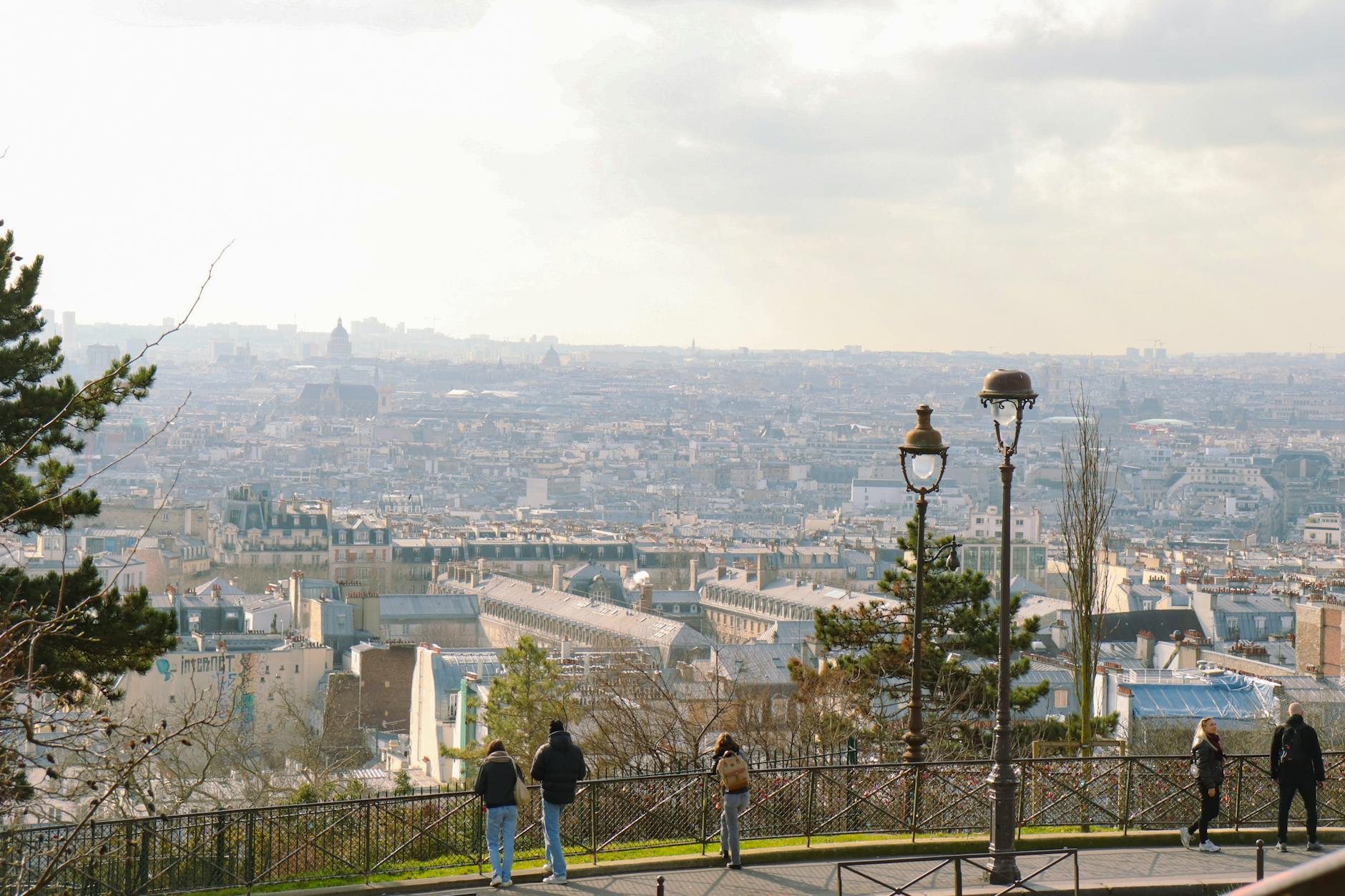
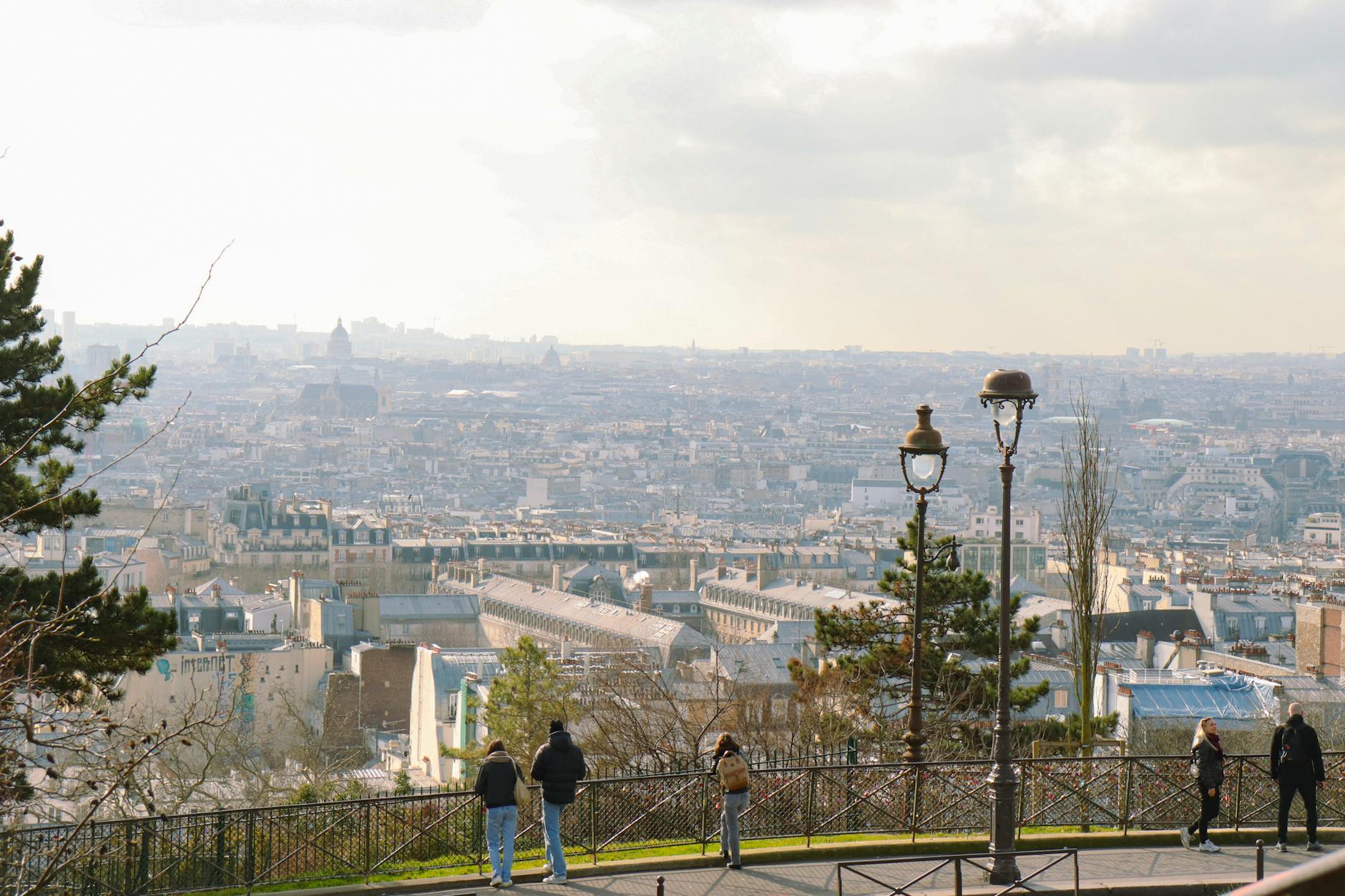
The panoramic view south over Paris from below the basilica. Ten minutes before sunset gives you warm light on the Eiffel Tower and the Tour Montparnasse. It’s crowded, but the angle from the second-tier balustrade still works.
Sacre-Coeur dome panoramic
From the dome gallery itself (€7). Two hundred metres up, a full 360 degrees, with the tipped roof tiles of the basilica in the foreground giving you a frame you cannot get anywhere else in Paris.
Place du Tertre corners (NOT centre)
The square only works in photographs from the four corners, never the middle. The northeast corner, near Rue Saint-Rustique, with a couple of the older portraitists in the foreground and the corner shop behind, gives you the cleanest composition.
Montmartre at Different Times of Day
No Paris neighborhood shifts character across the day as hard as Montmartre does. Here is roughly how it goes.
6:30am, sunrise. The basilica opens at 6:30am for early Mass. The staircases are empty. Golden light hits the white stone. This is the single best hour of the day, and almost no one drags themselves up for it. If you spend one early morning in Paris, spend it here.
9-11am. Artists set up their easels in Place du Tertre. Cafés open. The butte is awake but not yet crowded. This is the best window for the photo spots, and the best window for the dome climb if you want a clear viewing gallery.
11am-5pm. The mob arrives. Coach groups, scammers, photographers, a queue at every viewpoint. The staircases fill, Place du Tertre goes wall-to-wall, and the nave is loud despite the “silence” signs. If your visit has to fall in this window, stick to the back streets and steer clear of the central honeypots.
5-7pm. The light softens, the coach tours pull out, and the photographers reappear. Place du Tertre thins by half. The Renoir Garden at the Musée de Montmartre is at its best in this light.
7-9pm. The basilica is still lit and lovely from outside (it closes at 10:30pm). Restaurants fill up. The Mur des Je T’aime stands empty. As pleasant a two-hour stretch as you’ll find in central Paris.
After 9pm. The south side of the butte (Pigalle, Boulevard de Clichy, Anvers) turns noisier, drunker, and a touch sketchier. The north side (Lamarck-Caulaincourt, Rue Lepic above the windmill) stays quiet and residential. Plan your way down accordingly.
Montmartre with Kids
Montmartre is steeper than it looks, and the staircases will beat a stroller every time. But for kids walking on their own, roughly age five and up, it’s one of the more rewarding parts of Paris. What works with younger visitors:
- Windmill spotting on Rue Tholozé and Rue Lepic. The two surviving windmills are easy to find, and there’s a decent game in hunting down the remaining stones, blades, and bases (one of them is now a restaurant front).
- The carousel at Place Saint-Pierre, at the foot of the basilica gardens. A classic two-storey French carousel, €2 a ride.
- Funicular du Sacre-Coeur, a 36-metre cable-car ride to the top for one Métro ticket (€2.15). Free for kids under 4.
- Le Mur des Je T’aime, where hunting down your own language on the wall is a genuinely good ten-minute game.
- Espace Dalí, where the melting clocks and lobster telephone land instantly with children, and the interior is air-conditioned.
- The dome climb, 270 spiral steps. Doable from about age six, and the gallery at the top is a real payoff.
For more, see our family guide to Paris guide.
Where to Stay in Montmartre
Pick your side of the butte on purpose. North of Sacre-Coeur (Lamarck-Caulaincourt Métro) is residential, quiet, and safe round the clock. The south (Pigalle and Anvers) is louder and rowdier at 2am. First-timers almost always end up happier in the north.
Four hotels worth having on your radar:
- Le Relais Montmartre, 6 Rue Constance. A mid-range three-star on a quiet street near Abbesses. Doubles €180-260.
- Hôtel Particulier Montmartre, 23 Avenue Junot. A five-suite luxury mansion behind a private alley, the most hidden hotel in the 18th. Suites from €500.
- Hôtel des Arts Montmartre, 5 Rue Tholozé. A mid-range three-star on the windmill street, with a small lift and a decent breakfast. Doubles €160-220.
- Generator Paris / MIJE-style hostels nearby. The closest solid budget bet is the Generator on Place du Colonel Fabien, fifteen minutes away by Métro. Dorms €30-45, private rooms from €90.
Montmartre Safety After Dark
Northern Montmartre, the area above and around the basilica out to Lamarck-Caulaincourt, is fine at any sensible hour. The 18th up here is residential, full of families, and quiet by midnight. Walking from a north-side restaurant back to a north-side hotel at 11pm is a non-event.
The southern descent is a different story. Coming off the butte down the Anvers staircase, or walking Boulevard de Clichy after midnight, calls for a bit more care. Pigalle gets drunker after 1am, the Anvers area empties out, and the long grand staircase is deserted enough at 2am to feel exposed. Serious trouble is rare and pickpocketing is the real risk, but if your hotel is south of the boulevard, take the Funicular down (it runs until 12:45am) and grab a Métro from Pigalle, or just order an Uber or Bolt from your table. For the citywide picture, see our safest areas of Paris guide.
Fête des Vendanges (Annual Wine Harvest Festival)
For one weekend in mid-October, the dates moving each year to track the actual grape harvest and usually landing on the second weekend, Montmartre turns into a five-day festival of wine, food, and music. The Clos Montmartre vineyard, locked up the rest of the year, throws open its gates for guided visits. The harvest itself happens earlier in the month; the festival marks the bottling, with auctions of the 1,500 numbered half-bottles that go toward the 18th arrondissement’s social services.
Over the weekend you get a long parade through the cobbled streets (the traditional French wine brotherhoods turn out in full costume), concerts at Place du Tertre and Square Suzanne Buisson, pop-up tastings along Rue Saint-Vincent, and fireworks over Square Louise-Michel on the Saturday evening. It’s the local Paris festival most worth planning around. Public spaces are free; some tastings are ticketed at €8-15. Hotels in the 18th sell out, so book early.
Frequently Asked Questions
Is Montmartre worth visiting?
Yes, no caveats on that, but how you visit decides whether you walk away loving it or hating it. Climbed via Anvers at 1pm on a July Saturday, Montmartre is a tourist machine. Approached via Abbesses at 8am or 7pm, it’s one of the most rewarding neighborhoods in Europe. The whole difference comes down to timing and your route in.
How long should I spend in Montmartre?
A focused half-day (4-5 hours) covers Sacre-Coeur, Place du Tertre, the Mur des Je T’aime, and the hidden corners. A full day adds the Musée de Montmartre and the cemetery. Better still: two short visits, early morning and evening, which beat one midday slog.
Is Montmartre safe?
Yes, for visiting. Scam-prone, not violent. The Anvers staircase and the foot of the butte hold the worst of the scammers; northern Montmartre is one of the more residential, family-friendly corners of the city. Your biggest real risk is pickpocketing in the dense crowd zones, nothing more sinister than that.
Do I need to book Sacre-Coeur in advance?
Not for the basilica itself. Entry is free, no booking, and no security queue most days. The dome climb doesn’t pre-book either; you buy the €7 ticket at the dome entrance on the left of the basilica. Expect a 10-20 minute wait at peak times in summer. Full logistics are in our Sacre-Coeur guide.
What is the best time of year to visit Montmartre?
Late September to mid-October, no contest. Mild weather, far fewer tourists than summer, the vines on Clos Montmartre going red, and the Fête des Vendanges in the middle of October. April and May are a strong second. July and August are the busiest and least pleasant months on the butte.
Can I do Montmartre on a walking tour?
You can, and a good guided tour is one of the easier ways to dodge the scams while picking up the artist history. Skip the free walking tours that meet near Anvers, though; they follow the exact route this guide tells you to avoid. Paid small-group tours from independent operators are the better call. Our Paris walking tours roundup has vetted options.
How do I get from Montmartre to other Paris attractions?
Line 12 from Abbesses runs straight to the Louvre (Palais-Royal Musée du Louvre, 12 minutes), Concorde (15 minutes), and Saint-Germain-des-Prés on the Left Bank (20 minutes). Line 2 from Pigalle reaches the Arc de Triomphe (Charles de Gaulle Étoile, 10 minutes). For planning across the rest of the city, see our Paris landmarks guide.
Is the dome climb worth it?
For most people, yes. The 270 steps are manageable with normal fitness, €7 is one of the best-value paid views in Paris, the open-air gallery isn’t glassed in, and the view from 200 metres beats the forecourt by a wide margin. Skip it only if you have mobility limits or claustrophobia.
Keep reading
Use these to round out your trip:
- a tour of Paris’s quarters
- our Latin Quarter walkthrough
- our Saint-Germain guide
- the avenue beyond the shops
- Best Hotels in Paris Near the Eiffel Tower
- Best Bakeries and Patisseries in Paris
Montmartre is the reason three days in Paris beats two. It has a whole morning in our three-day itinerary, which is roughly the right amount of time to walk the hill properly rather than photograph it.