Areas to Avoid in Paris, and What the Reputation Actually Means
Risk in Paris is organised by street and by hour, not by arrondissement. Most published lists get that backwards.
Somewhere in almost every guidebook is a sentence advising you to stay out of the 19th arrondissement. The 19th contains the Parc des Buttes-Chaumont, which is the most beautiful park in Paris and full of families on any given Sunday; it contains the Philharmonie, the Cité des Sciences and a stretch of canal that Parisians pay a lot of money to live beside. That sentence is not describing a danger. It is describing a postcode, and a demographic, and it is exactly why most published lists of areas to avoid in Paris are close to useless.
This guide tries to do the honest version instead. Risk in Paris is not organised by arrondissement — it is organised by street, by hour and by circumstance, and a single district routinely contains both. Below: the specific places where care is genuinely warranted and what the actual problem is in each, the areas that get named constantly and should not be, the difference between somewhere you would not walk at two in the morning and somewhere you should not book a hotel, and what all of this means for a visitor with four days and a museum list. Prices and details were checked in September 2026.
The honest summary
| Place | What the actual issue is | When it matters | Verdict |
|---|---|---|---|
| Around Gare du Nord and Gare de l’Est | Concentrated street theft, touts, an unpleasant late-night atmosphere | After about 22:00 | Fine by day; do not book a hotel on the immediate side streets |
| Barbès–Rochechouart, Château Rouge, La Chapelle | Crowding, counterfeit sellers, pickpocketing; harassment reported by women | Market days and after dark | Visit deliberately if you want the market; do not wander through at night |
| Stalingrad, Jaurès, Porte de la Chapelle | An entrenched open drug scene along the northern edge | Any hour, worse at night | Genuinely worth routing around. Nothing there for a visitor |
| Châtelet–Les Halles, above and below ground | Europe’s busiest interchange; theft and late-night trouble | Late evening and closing time | Pass through by day without a second thought |
| Porte de Clignancourt approach to the flea market | A gauntlet of counterfeit stalls and street games between Metro and market | Saturday and Sunday mornings | Get off at Garibaldi or Porte de Saint-Ouen instead |
| The Champs-Élysées after midnight | Crowds, drink, occasional confrontation, heavy pickpocketing | 01:00 onwards, especially weekends | Leave before it turns |
| Bois de Boulogne and Bois de Vincennes | Isolated, unlit, and after dark used for street prostitution and kerb-crawling | After dusk | Excellent by day, no reason to be there at night |
Why the usual lists are wrong
Three things go wrong in almost every article on this subject, and it is worth naming them because once you see them you can read any other list critically.
They confuse an arrondissement with a street. The 18th contains Montmartre, one of the most visited places on earth, and it contains Château Rouge, and they are eleven minutes apart on foot. Telling someone to avoid the 18th is like telling someone to avoid north London. Our neighbourhood guide is organised the way the city actually is, which is street by street.
They confuse poverty with danger. A great deal of what is written about the north and east of Paris is not a report of anything that happens; it is a reaction to who lives there. Belleville, Ménilmontant and much of the 20th are working-class, immigrant, cheap and completely ordinary to walk around, and they contain some of the best food in the city. If a list names a whole district and cannot tell you what actually occurs there, it is telling you about the writer.
They ignore the hour, which is the only variable that really moves. Almost nowhere in central Paris is a problem at eleven in the morning. Several places are worth avoiding at one in the morning. The advice that matters is nearly always about time, not place.
For the positive version of all this — where to actually stay and why — see our guide to the safest areas of Paris, which goes neighbourhood by neighbourhood.
The places that genuinely warrant care
The northern stations: Gare du Nord and Gare de l’Est
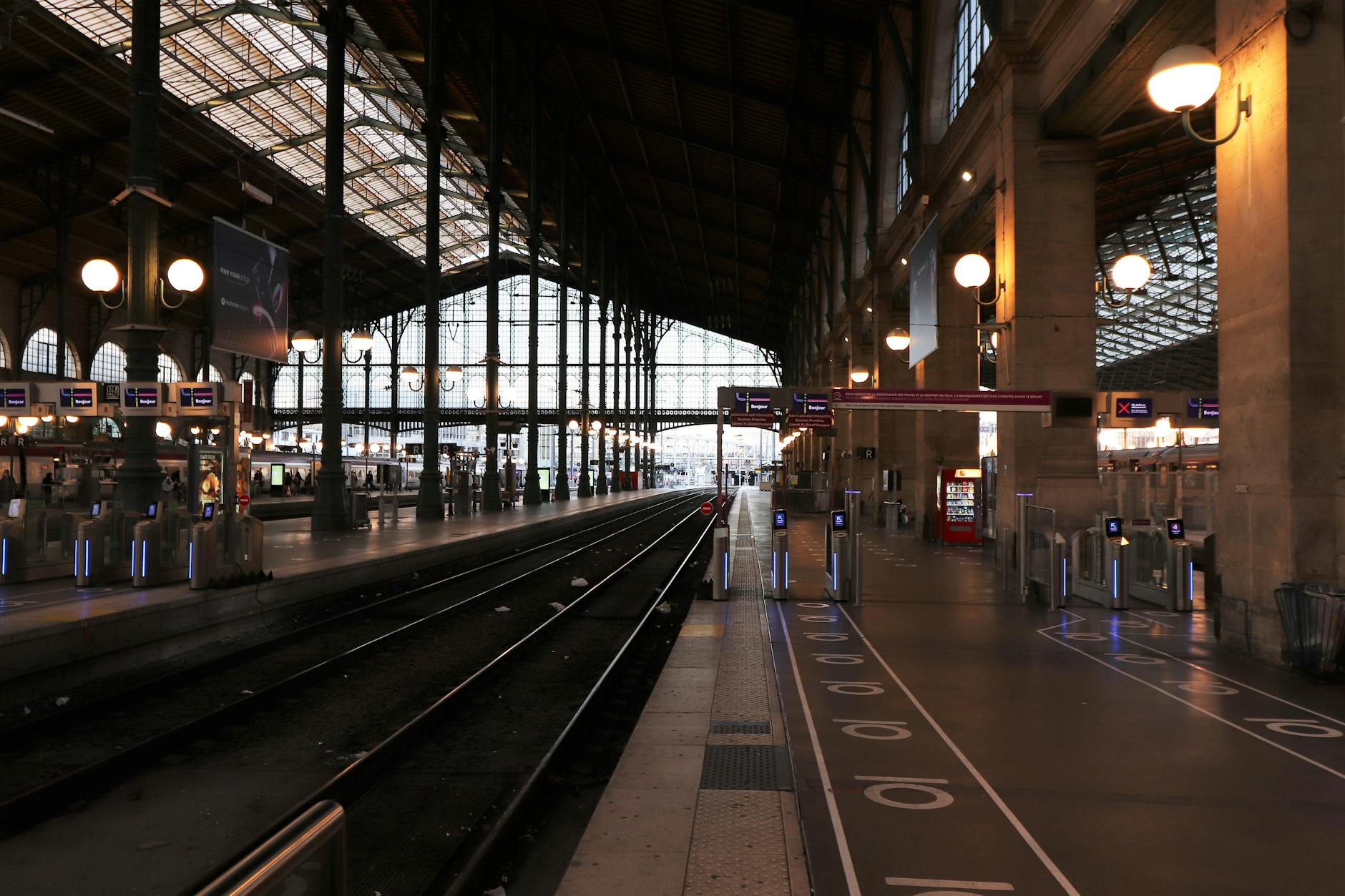
These two sit next to each other in the 10th and they are the most consistently unpleasant square kilometre in central Paris for a visitor. By day it is a busy transport district and entirely manageable. Late at night the concourses and the streets immediately around them attract touts, aggressive begging, drinking and a good deal of pickpocketing, and the specific streets to the east of Gare du Nord are the ones people mean when they say the area “feels rough”.
Practically: arriving here on the Eurostar or the RER B is completely fine at any hour, but walk out to a main road and take a taxi rather than wandering with a suitcase looking for your hotel. And think twice before booking accommodation on the side streets purely because it is cheap and central — you will use them at night, which is exactly when they are least pleasant.
Barbès–Rochechouart, Château Rouge and La Chapelle
The stretch under the elevated Metro at Barbès is one of the densest, most crowded and most heavily policed places in Paris, with a large street market, a permanent trade in counterfeit goods and loose cigarettes, and a well-earned reputation for pickpocketing. Château Rouge, just north, is the heart of the West African market district — genuinely interesting, packed on market days, and not somewhere to be carrying a visible camera.
The honest verdict: this is not a dangerous place in the sense of violence against visitors, and thousands of people shop there daily. It is crowded, occasionally chaotic, and a poor choice for a first evening in Paris or for a late walk home. A number of women report persistent street harassment here more than elsewhere in the city; our guide to solo female travel in Paris covers that in detail. Go in daylight if you go, and keep your bag zipped and in front — the methods are the same ones described in our guide to pickpockets in Paris.
The northern edge: Stalingrad, Jaurès, Porte de la Chapelle
This is the one place on the list where the caution is unqualified. The northern fringe of the 18th and 19th, around Porte de la Chapelle and along parts of the canal towards Stalingrad and Jaurès, has hosted an entrenched open crack-cocaine scene for years. It has been moved repeatedly by the authorities and has repeatedly re-formed nearby. It is a public health failure rather than a threat to tourists, and the people involved are overwhelmingly a danger to themselves — but it is distressing, unpredictable and no place to find yourself at night with a suitcase.
There is nothing here that a visitor needs. If your accommodation is out this way, or you are catching a coach from the Porte de la Chapelle area, use a taxi after dark rather than walking from the Metro.
Châtelet–Les Halles
By day, the largest underground station in Europe and an unavoidable interchange, and completely fine. Late at night, both the subterranean corridors and the gardens above them thin out and turn — this is where Parisians themselves are most likely to tell you they would not linger after the last train. The theft risk in the corridors is real at any hour and covered in our Metro guide.
The approach to the Saint-Ouen flea market
Worth knowing about because it catches out so many people. Come out of the Porte de Clignancourt Metro on a weekend and you walk several hundred metres through an unofficial market of counterfeit clothing, phone accessories and three-card-monte games before you reach the actual Marché aux Puces, which is a wonderful place. The gauntlet is not dangerous, but it is where visitors get relieved of wallets, and the shell games are rigged without exception.
Simple fix: use Garibaldi or Porte de Saint-Ouen and approach from the other side, or walk briskly and engage with nobody. Our flea markets guide has the layout and the hours of the market proper.
The Champs-Élysées very late
An odd entry, because it is the most famous street in France and by day it is simply a wide shopping avenue. But from around one in the morning, particularly at weekends and after football results, it becomes a crowded, drink-heavy strip with a heavy police presence and a great deal of opportunistic theft. Our Champs-Élysées guide is honest about the avenue’s daytime merits too, which are fewer than its reputation suggests.
The two woods, after dark
The Bois de Boulogne to the west and the Bois de Vincennes to the east are large, wooded and, by day, genuinely lovely — lakes, rowing boats, gardens, the Fondation Louis Vuitton. After dark both are unlit, empty of ordinary users, and long associated with street prostitution and the kerb-crawling that comes with it. There is no reason for a visitor to be in either at night and every reason to be in both at eleven in the morning.
Areas that get named unfairly
These appear on list after list and, on the evidence, should not.
- Belleville and Ménilmontant (19th and 20th). Hilly, multicultural, full of Chinese and North African restaurants, street art and one of the best views in Paris from the Parc de Belleville. Lively at night rather than threatening. See our Belleville and Oberkampf guide.
- The 20th generally, including Père Lachaise. Residential, ordinary, and home to the most extraordinary cemetery in Europe.
- The 19th, including Buttes-Chaumont and the Canal de l’Ourcq. As above — the park alone justifies the trip.
- The 13th and the Butte-aux-Cailles. Chinatown, murals, a village of low houses and cheap restaurants. Perfectly calm.
- Saint-Denis. Outside the city proper, with a genuinely mixed reputation, but the Basilica of Saint-Denis is the birthplace of Gothic architecture and holds the tombs of almost every French monarch. Go by day, go directly, and it is one of the great buildings of Europe.
- Canal Saint-Martin at night. Named surprisingly often. In practice it is where half of young Paris drinks on a summer evening.
- Pigalle. Sex shops and the Moulin Rouge on the boulevard, and one of the best small-bar districts in the city on the streets behind it. Seedy in a well-lit, heavily policed, thoroughly commercial way rather than a frightening one.
How to read the crime map, if you go looking for one
France publishes recorded-crime figures by commune and by arrondissement, and they circulate widely in a mangled form. Two things about them are worth understanding before you let them shape a trip.
First, they count where an offence was recorded, not where the victims live or stay. The 1st arrondissement has fewer than seventeen thousand residents and contains the Louvre, the Tuileries and Les Halles, which means several hundred thousand people pass through it daily. Its theft figures are consequently enormous and its per-resident rate is meaningless. The same distortion applies to the 8th, with the Champs-Élysées, and the 9th, with the department stores.
Second, the category that dominates in every visitor-facing district is theft without violence — pickpocketing and bag-snatching. That is a real problem and it is the one this site keeps returning to, but it is a fundamentally different thing from the violent-crime figures that people imagine they are reading. Assault rates in central Paris are unremarkable by the standards of large European cities, and the overwhelming majority of what does occur is between people who know each other, late at night, and has nothing to do with tourism.
The practical upshot: a district’s crime ranking tells you almost nothing useful about your own week. What it does tell you is where the crowds are, which is the same thing as where your bag needs attention.
Events and dates that change the picture
A handful of predictable occasions turn ordinarily calm parts of Paris briefly difficult, and they are worth knowing about because they are the one case where the advice really is “go somewhere else that evening”.
- New Year’s Eve on the Champs-Élysées. Enormous, crushed and heavily policed, with a reliable spike in theft. Our New Year’s Eve guide suggests better vantage points.
- Bastille Day, 14 July. The fireworks at the Champ de Mars draw a vast crowd into a fenced space with slow exits. Wonderful, but plan how you are getting out. See our Bastille Day guide.
- Major football results. Wins and losses both bring crowds onto the Champs-Élysées, and the atmosphere can turn quickly.
- Demonstrations. Paris protests frequently and usually on announced routes between Place de la République, Bastille and Nation, on Saturdays. They are almost always peaceful, they are always well signposted in advance, and the sensible move is simply to be somewhere else — check the news the morning of, and expect Metro stations along the route to close at short notice.
- The last weekend of a big sale season or a fashion week. Not dangerous, but the shopping districts become genuinely unpleasant crushes. Our fashion week guide covers the dates.
Not walking somewhere is different from not staying somewhere
These are two separate questions and conflating them causes most of the confusion.
Walking through. By day, you can walk essentially anywhere in the twenty arrondissements, and doing so is how you actually see Paris. The exceptions above are about specific hours, not specific streets.
Booking a bed. Here the calculation is different, because you will do the last two hundred metres at night, tired, possibly with luggage, several times. That is worth paying twenty euros a night to make pleasant. The areas where the price looks suspiciously good — the streets immediately around Gare du Nord, the far north of the 18th, the edges by the Périphérique — are cheap for reasons you will experience at eleven at night. Our guides to where to stay and choosing an arrondissement weigh this properly.
The banlieue question
Paris proper — the twenty arrondissements inside the Périphérique — holds around two million people. The metropolitan area holds ten times that, in suburbs that vary from some of the wealthiest communes in France to some of the poorest. When international news covers unrest in “Paris”, it is usually covering specific suburbs, and visitors then arrive expecting a city that does not exist.
For practical purposes: the suburbs a visitor has a reason to go to — Versailles, Saint-Germain-en-Laye, Sceaux, Vincennes, Saint-Denis for the Basilica, Saint-Ouen for the flea market, Boulogne for the Fondation Louis Vuitton — are all ordinary places to spend a day. The ones that make the news are not on any tourist route and you will not end up in them by accident. The one thing to watch is the RER late at night, where the outer sections of some lines are noticeably less comfortable than the Metro; if you are coming back from a suburb after about eleven, check the return times before you go out.
Rules that do more than a map
- Change the hour, not the itinerary. Nearly every place on this page is fine in daylight. Plan the northern and eastern districts for mornings and afternoons.
- Walk the lit commercial street. In a city this dense the busy street is almost always one block from the quiet one.
- Look like you know where you are going. Check the map before you come out of the station, not on the pavement outside it.
- Carry the day’s money and one card. The rest stays in the room. This is the single most effective habit in Paris.
- If somewhere feels wrong, leave. Walk into a shop or a café rather than speeding up. Your instinct about an atmosphere is usually correct and costs nothing to act on.
- Use a taxi for the last stretch after midnight. Ten euros is a small price for the walk you did not have to do. See our taxi and ride-hailing guide.
Frequently asked questions
Which arrondissement is the most dangerous in Paris?
The question does not really work, but if pushed: the 18th and 19th record the highest rates of the sort of street crime that visitors encounter, driven almost entirely by a few specific spots along their northern edges. Both also contain areas that are among the most pleasant in the city. Crime statistics recorded by district also flood towards places with the most footfall, which is why the 1st — the Louvre, Les Halles, the Tuileries — posts theft figures out of all proportion to its tiny resident population.
Is it safe to walk around Paris at night?
In the central arrondissements, yes, and the streets are busy far later than most visitors expect. Our guide to how safe Paris really is covers the crime types in detail. The short version is that theft is the realistic risk and violence against visitors is rare.
Should I avoid the Metro late at night?
No. It runs until roughly 01:15 on weeknights and later at weekends, and a late carriage is a poorer environment for a pickpocket than a packed one at rush hour. The part worth planning is the walk at the far end.
Is Montmartre safe?
Yes, and it is one of the most visited places in France. The specific issues are the friendship-bracelet sellers on the steps below Sacré-Cœur and the crowding around the funicular, both of which are theft-adjacent rather than dangerous. Our Montmartre guide has the back routes.
Is Saint-Denis worth visiting despite its reputation?
The Basilica is, unambiguously — it is where Gothic architecture was invented and where the kings and queens of France are buried, and it is twenty minutes on Metro line 13. Go in the morning, visit the basilica and the market, and do not go wandering after dark, which is advice that applies to plenty of places.
Are there no-go zones in Paris?
No, in the sense the phrase is usually meant. There is no district of Paris that police do not enter or that a visitor cannot walk through in daylight. There are a small number of places where the atmosphere at night is genuinely unpleasant, and those are listed above.
What about the area around the Eiffel Tower?
Safe, and heavily patrolled, but it is one of the busiest pickpocketing sites in the country — Trocadéro at sunset in particular. The problem there is your bag, not your safety.
Is it worth paying more to stay in a “better” area?
Usually yes, but for comfort rather than safety: a shorter, more pleasant walk home, better food nearby, and less time on the Metro. The 5th, 6th, 7th, 11th and the Marais are the reliable choices.
Related Paris Guides
- The Safest Areas of Paris to Stay In
- Is Paris Safe? An Honest Look at the Risks
- Pickpockets in Paris: Where They Work
- Paris Scams: The Cons That Target Visitors
- The Neighbourhoods of Paris, District by District
- Where to Stay in Paris
- Belleville and Oberkampf: A Neighbourhood Guide
- Solo Female Travel in Paris