Paris Opera & Ballet: How to See a Performance at Palais Garnier
You can watch one of the two or three best ballet companies on earth, inside a building that took fifteen years and the fall of an empire to finish, for ten euros. That is the single most useful fact in this paris opera ballet performances guide, and most visitors never hear it because they assume the Palais Garnier is out of reach. It isn’t. Below: how to pick between Garnier and the Opera Bastille, how to book at every price from the ten-euro standing slot to the parterre, what the auditorium is actually like once you’re in it, and how to fold a performance into the daytime tour so you see the whole place in a single day.
Pair this with our best time to visit Paris guide for the shape of the ballet season, our romantic Paris overview if you’re building a date night around it, and our Paris cocktail bars piece for somewhere to go before or after the curtain.
Palais Garnier vs Opera Bastille: which to book
Paris Opera runs two houses, and they could hardly be more different. The Palais Garnier (1875) is the Belle Epoque showpiece on Place de l’Opera in the 9th, all gilt and crystal, the room nearly everyone pictures when they think Paris Opera. The Opera Bastille (1989) is its modern sibling on Place de la Bastille in the 12th: 2,700 seats, built from scratch to be heard in, with cleaner sightlines and noticeably better acoustics. What it doesn’t have is drama in the architecture.
The repertoire splits cleanly between them. Garnier takes most of the Paris Opera Ballet’s classical and neoclassical work, the full-length story ballets like Swan Lake, Giselle, Don Quixote and La Bayadere, plus chamber operas and smaller productions. Bastille handles the big operas, Aida, La Traviata, Carmen, the Wagner cycle, along with the contemporary ballet.
- For ballet visitors: Garnier is home base. Book here whenever the Paris Opera Ballet is dancing the classical repertoire.
- For opera visitors: Bastille for the major operas, with Garnier the occasional choice for chamber pieces and historically-informed productions.
- For first-time visitors: book whatever’s on at Garnier and don’t overthink the programme. The room is the event as much as anything happening onstage.
- For repeat visitors: choose by repertoire. Wagner at Bastille; Romeo et Juliette at Garnier.
Inside the Palais Garnier
Napoleon III commissioned the building in 1860 as part of Haussmann’s rebuild, and the competition to design it went to Charles Garnier, who was 35 at the time. The fifteen years of construction (1860 to 1875) outlasted almost everything around them: the Second Empire collapsed, the Franco-Prussian War came and went, the Commune burned, and Napoleon III ended up in exile in England before the doors ever opened. The inauguration on 5 January 1875 ran four hours.
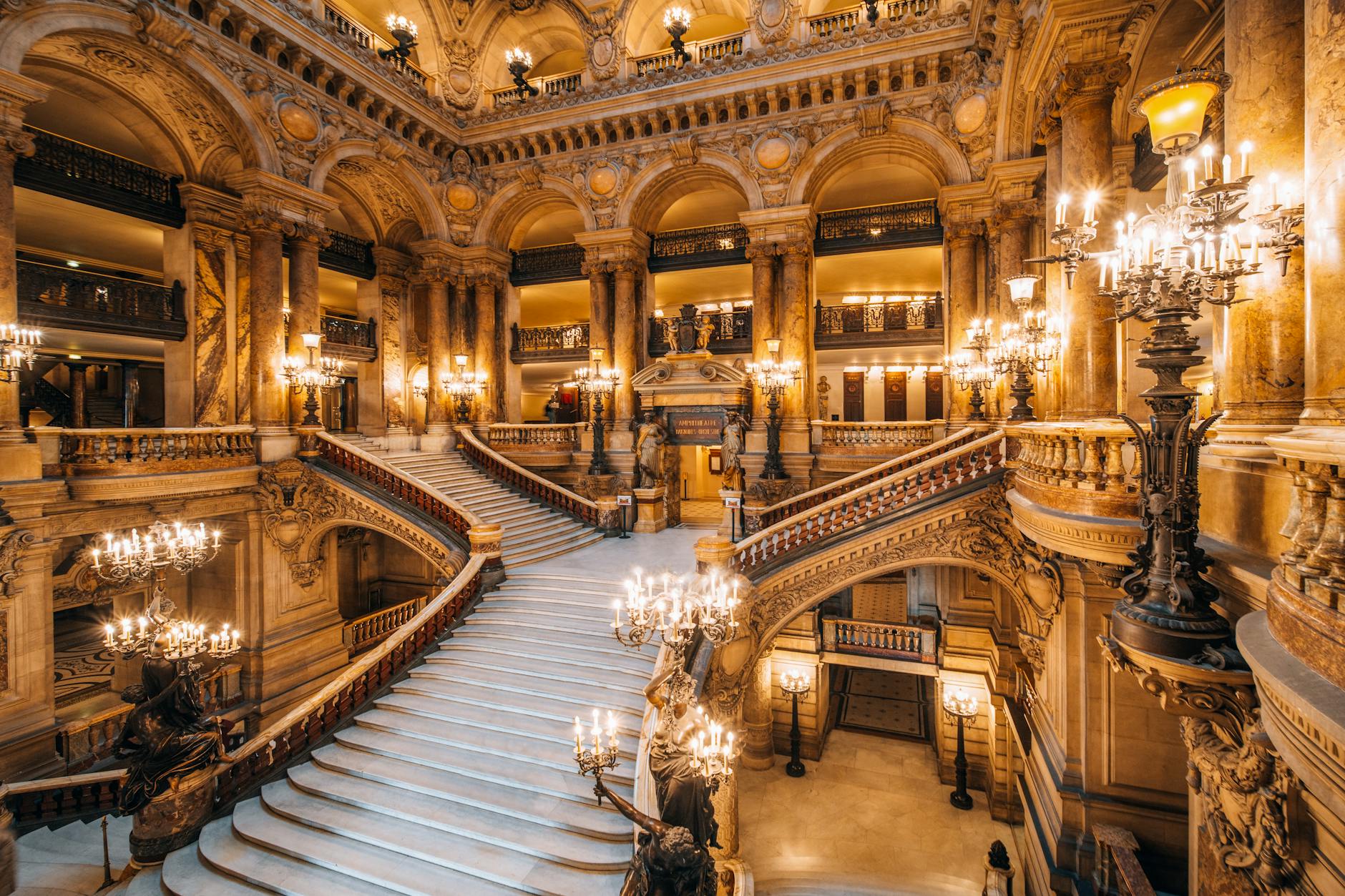
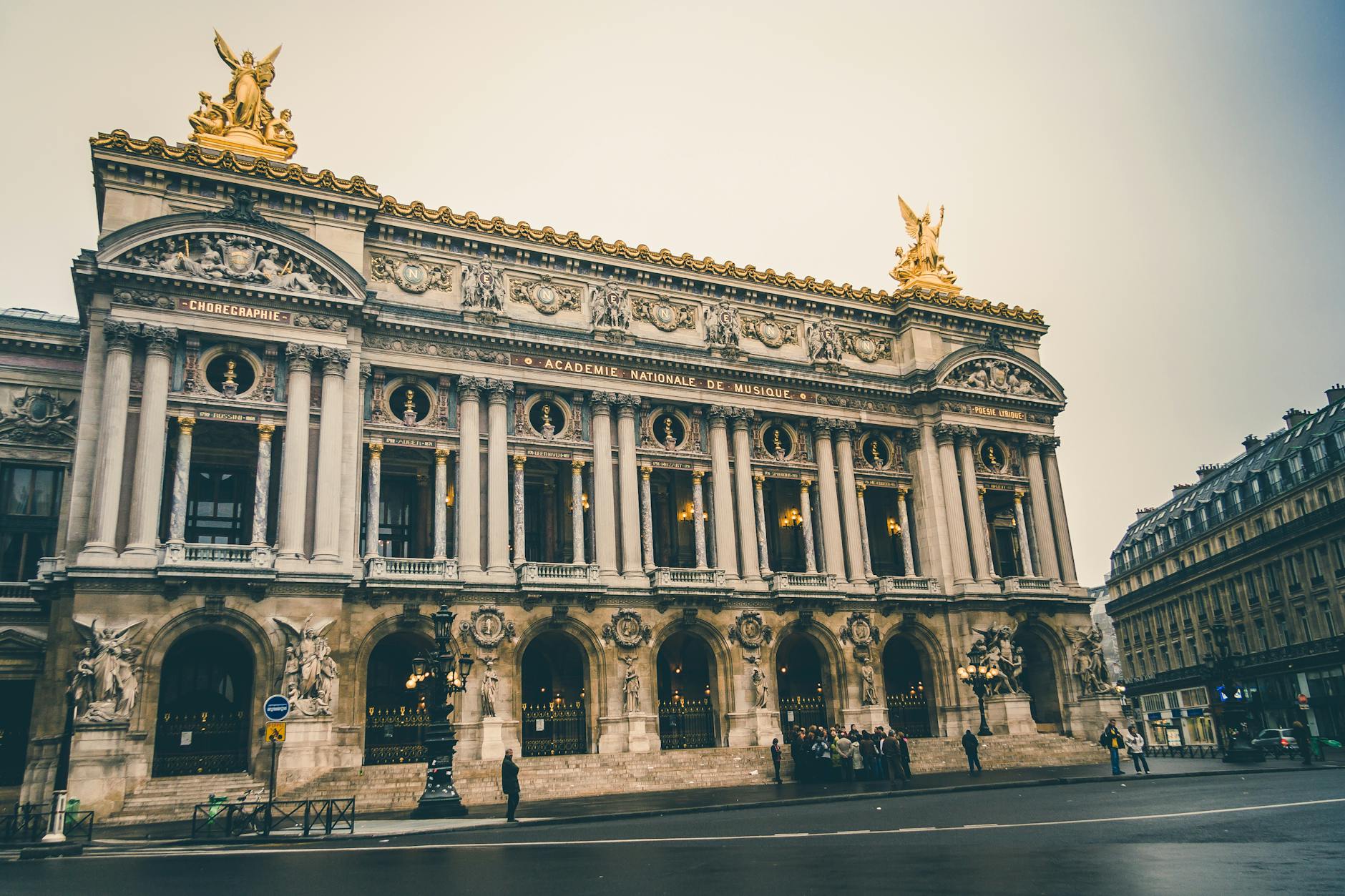
The facade is marble and bronze, with allegorical figures flanking the entrance for Music, Lyric Drama, Dance and Lyric Poetry. Inside, the Grand Staircase climbs thirty metres of white marble lit by bronze candelabra, and the Grand Foyer runs the length of the south face in mirrors and gilded plasterwork beneath a ceiling fresco by Paul Baudry. The auditorium seats 1,979 in a horseshoe of five tiers, red velvet and gold leaf the whole way up, under the Marc Chagall ceiling added in 1964, which paints fourteen operas and ballets overhead.
The stage behind it is among the largest in Europe at sixty metres deep. The grand chandelier weighs eight tonnes, and in 1896 part of its counterweight fell and killed a concierge, the accident that gave Gaston Leroux the seed for his 1910 novel The Phantom of the Opera, set entirely inside Garnier, underground lake and all. The lake is real, by the way: the basement sits on groundwater that has to be pumped continuously to keep it from flooding.
Performance tickets: the price ranges
Garnier sells its seats in six categories, Bastille in seven. What you pay shifts with the production, a major premiere costs more than a mid-run repertoire night, but the typical ranges look like this:
- Category 1 (Optima): 130-260 euros at Garnier; 150-290 euros at Bastille. Centre parterre and first-tier boxes. The full experience.
- Category 2: 90-180 euros. Side parterre, second-tier boxes. View and sound are both excellent.
- Category 3: 60-130 euros. Third-tier boxes and the mezzanine ends. Good view, with the odd partial sightline.
- Category 4: 35-80 euros. Fourth-tier boxes and the far ends of the mezzanine. Further from the stage but a full sightline.
- Category 5: 15-40 euros. The fifth and highest tier. Distance and sometimes a partial view, though the sound carries everywhere in this room.
- Category 6 (Visibility Reduced): 10-25 euros. Partial-sightline boxes where you’ll catch the singer maybe half the time. The price is honest about it.
Those 10-euro tickets are, to my mind, the best deal in Paris for classical music, full stop. Yes, the sightline is partial; you’ll see most of the stage but the upstage corner can vanish behind the box wall. You’re also standing inside this room, watching world-class ballet, for less than a cinema ticket. The trade is easy.
How to book tickets
Tickets come from operadeparis.fr (the official site) and from partner platforms like FNAC, Ticketmaster France and See Tickets. Use the official site. It’s the only place that carries the full inventory; the partners tend to list only the pricier seats and tack on service fees.
Sales open in three waves. Subscription packages go to existing subscribers first, in late February or early March, for the season ahead (September to July). The general public gets the full season in April or May. Then a third trickle arrives in the last two weeks before each performance, as subscribers release seats they can’t use.
If you’re visiting, here’s the play: check operadeparis.fr in April or May for your travel dates and book your category early. Sold out? Check back at the one-month mark, again at two weeks, and again on the day, because released subscriber seats reappear steadily. The Category 5 standing-room tickets, meanwhile, go on sale at the box office on the day itself, from 11 am for matinees and 1 pm for evening shows.
Standing-room and same-day tickets
Category 5 standing-room tickets (10-25 euros depending on the production) sell only at the box office, only on the day. On weekends and through peak season, get in line an hour before the box office opens, so 10 am for matinees, noon for evenings. Mid-week and off-season you can usually wander up thirty minutes before sale time and be fine.
You stand at the back of the fifth tier, with a bar to lean on. The view runs to about seventy-five percent of the stage, the sound is superb, and the price (10-15 euros for most nights, 20-25 for premieres) has no rival in the city.
There’s also an online lottery on operadeparis.fr that opens at 6 am on performance day for ten Category 5 tickets at 10 euros each, sold first come, first served. It clears in minutes. If you want a shot, set an alarm.
Daytime visitor tour: Palais Garnier without a performance
You don’t need a ticket to a show to get inside. Paris Opera opens Garnier to daytime visitors most days, 10 am to 5 pm (it closes during matinees, so check the calendar). Entry runs 15 euros general, 21 euros with the audio guide, and it’s free for under-twelves, EU residents under 26, and disabled visitors with a companion.
The self-guided route takes in the Grand Staircase, the Grand Foyer, the Library-Museum with its opera-history exhibits, and the Rotonde du Glacier, the round salon with the bee mosaics. The auditorium opens when there’s a window for it, roughly four hours a day; the schedule is posted at the entrance. Backstage is off-limits on this ticket.
Guided tours (90 minutes, French and English, 21 euros total) run at set times and get you into rooms the self-guided route skips, like the box-holders’ salon and, now and then, parts of backstage, with the history filled in as you go. Book those online at operadeparis.fr.
Time it for around 11 am to midday, once the early groups have thinned. Budget 90 minutes self-guided, two hours guided. And yes, you can do both in one day: tour in the morning, performance in the evening.
What to wear
The dress code is “smart casual,” which is to say there’s no hard rule, but the crowd dresses well and you’ll feel conspicuous in shorts, a t-shirt and trainers. For matinees, business casual does the job: a jacket without a tie for men, a dress or pantsuit for women. For evenings, push it a notch, jacket and tie or a dress if you’re in a box, a well-cut blazer with neat trousers and a button-down for the parterre.
Premieres, the opening night of a run, draw the dressiest audience of all: cocktail dresses, dark suits, the odd black tie for the gala-grade productions. Mid-run nights relax considerably, though “relaxed” here still means well turned out.
Coats go to the vestiaire (cloakroom) at the entrance for one euro each, and anything bigger than a handbag is checked with them. Suitcases and travel bags don’t come inside at all under the Vigipirate security plan, so don’t show up wheeling luggage.
Before and after the performance
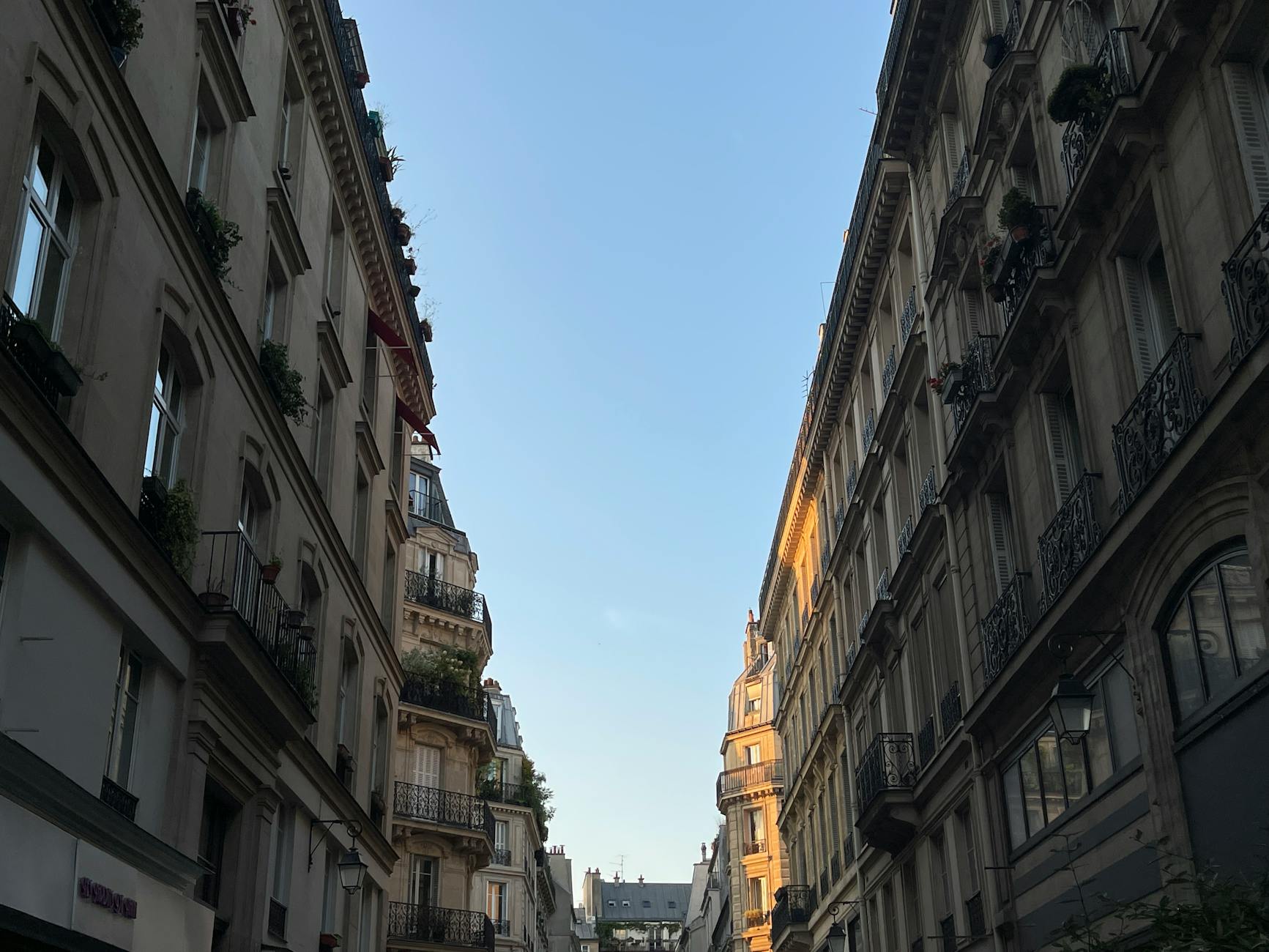
Curtain is usually 7:30 or 8 pm, matinees at 2:30. Aim to be in the building thirty minutes ahead, because security, the coat check and finding your seat all eat time, and the doors shut hard at curtain. Arrive late and you’ll wait in the lobby until the interval.
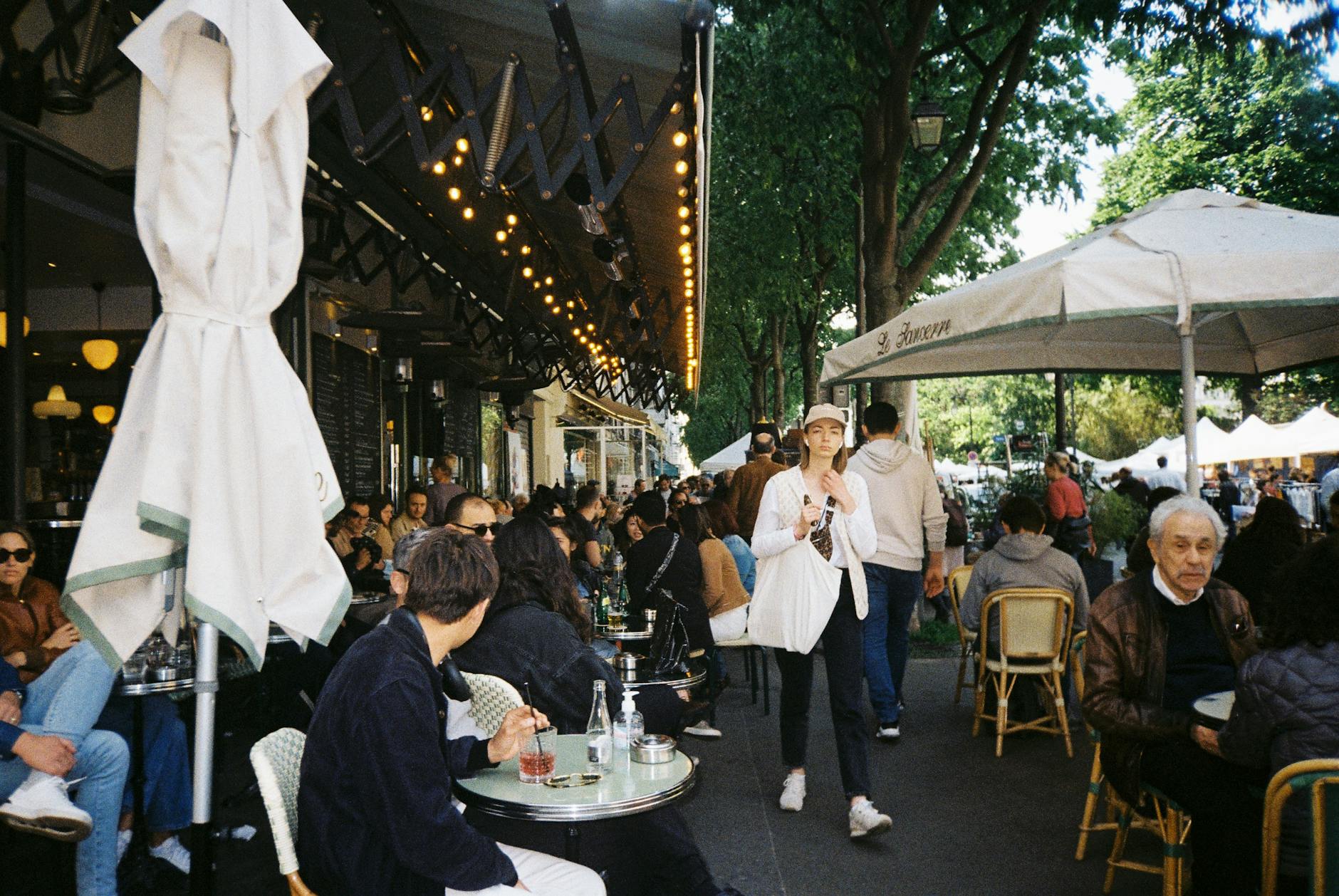
For dinner first, the streets around Place de l’Opera give you the lot: Cafe de la Paix, the grand brasserie inside the Hotel Intercontinental Le Grand; Bouillon Chartier Grands Boulevards for a three-course meal at 15-25 euros; and a thick scatter of bistros along rue Daunou and the boulevard des Italiens. Reserve for the Cafe de la Paix. The Bouillon takes no bookings, but the line moves fast.
At the interval, the bars in the Grand Foyer pour champagne (12-15 euros a glass), wine and soft drinks. Here’s the thing worth planning around: the Foyer itself opens to the audience during intermissions, and a glass of champagne under that gilded ceiling is the moment people remember from a night at the opera. Order at the bar, then carry your glass through into the room.
Afterward, the neighbourhood stays lively until midnight with theatre-goers heading to dinner or the Metro. Stretch it out at one of the brasseries (most serve until 1 am) or just drop down to the Metro, which runs straight under the building from Opera station.
Best productions to look for
The Paris Opera Ballet is at its best in the full-length story ballets: La Bayadere, Don Quixote, Swan Lake, Giselle, Romeo et Juliette, Le Lac des Cygnes, La Sylphide. They turn up at Garnier across the season, so scan the calendar early.
The contemporary work, from company-linked choreographers like Crystal Pite, William Forsythe and Anne Teresa De Keersmaeker, plays at both houses, and these are the nights serious ballet fans build whole trips around.
On the opera side, Bastille is where you’ll find the heavy hitters: the Wagner Ring cycle when it’s in residence (it rotates across several seasons), the great Italian repertoire (Verdi’s Don Carlos, Puccini’s Tosca, Bellini’s Norma), and the French tradition (Berlioz’s Les Troyens, Massenet’s Manon).
And the ballet gala in late June or early July closes the season, one night, several productions stitched together. Tickets vanish within hours of going on sale.
Free events and reduced-rate options
A few things cost nothing if you catch them. Paris Opera runs occasional free events: open dress rehearsals (limited, by website lottery), pre-performance talks (free with a ticket), and the annual Heritage Days (Journees du Patrimoine) each September, when entry to Garnier is free.
Under-28s and over-65s can get selected performances at 50% off, booked through operadeparis.fr with ID required at the door. The under-28 scheme is one of the city’s great cultural bargains: world-class ballet for 8-30 euros depending on category.
There’s a last-minute version too. Thirty minutes before curtain, unsold seats at both houses are sometimes released to under-28s and over-65s at 50% off, at the box office. Supply is unpredictable, so turn up 45 minutes early and join the queue if you want to chance it.
Practical details
Palais Garnier sits at Place de l’Opera, 75009, Metro Opera (lines 3, 7, 8). Opera Bastille is at Place de la Bastille, 75012, Metro Bastille (lines 1, 5, 8). Both are wheelchair accessible, with accessible seating booked through operadeparis.fr, and Garnier has lifts to every tier.
On running times: ballets generally go 2 to 2.5 hours with one or two intermissions, operas 2.5 to 4 hours, also with one or two. The Ring cycle operas run six hours including the break. The Paris Opera magazine on the official site gives exact durations for each production, worth a look if you’re planning the rest of your evening around it.
No photography during performances. You can shoot the Grand Foyer and Grand Staircase at the interval and on the daytime tour. Phones stay silenced, and staff will walk you out if you start using one mid-performance, so don’t.
Frequently asked questions
Are children welcome at Paris Opera performances?
Children five and over are welcome at most performances; younger ones only at family-programmed productions. The auditorium runs on silence, so a child who can’t sit still for two hours is better off at a matinee or a family programme than an evening show. The visitor tour suits children seven and up, and there are family-specific guided tours.
Do performances always sell out?
Premieres and Saturday nights of the big productions can go months ahead, but mid-week repertoire performances usually still have seats a few weeks out. And even for sold-out nights, standing-room and Category 5 tickets are generally there for the taking.
Can I attend a rehearsal?
Some dress rehearsals open to the public through an advance lottery on operadeparis.fr, free or low-cost but capped at a hundred seats. Watch the site at the start of each season for the announcements.
Is the Palais Garnier really haunted?
No phantom, sorry. The 1896 chandelier accident, the underground lake (really just a groundwater cistern), and that maze of a basement gave Leroux his story, but the building is well-lit, well-staffed and thoroughly un-haunted, unless you count the dancers and singers whose photographs line the corridors.
Should I take a guided tour or self-guided?
For most people the self-guided route with the audio-guide app is plenty, and it lets you set your own pace. The guided tour earns its small premium with deeper history and access to the closed-off rooms, the box-holders’ salon and occasional backstage areas. If it’s your first time inside a great opera house, take the guided one.
Final thoughts
So here’s the whole thing in one breath: book ahead on operadeparis.fr for an evening show, work the standing-room queue if your dates are sold out, dress like you mean it, get your glass of champagne in the Grand Foyer at the interval, and step out at curtain into the lamplight of Place de l’Opera. For ten euros you can do the cheap version and for 260 the lavish one, and honestly the cheap version is the one I’d push on a first-timer. Either way you walk out into the Paris that Garnier and the Empress Eugenie built, which has barely changed and is very much still standing.
Related reading
Use these to round out your trip: