Best Cafes in Paris: Where Locals Actually Go for Coffee
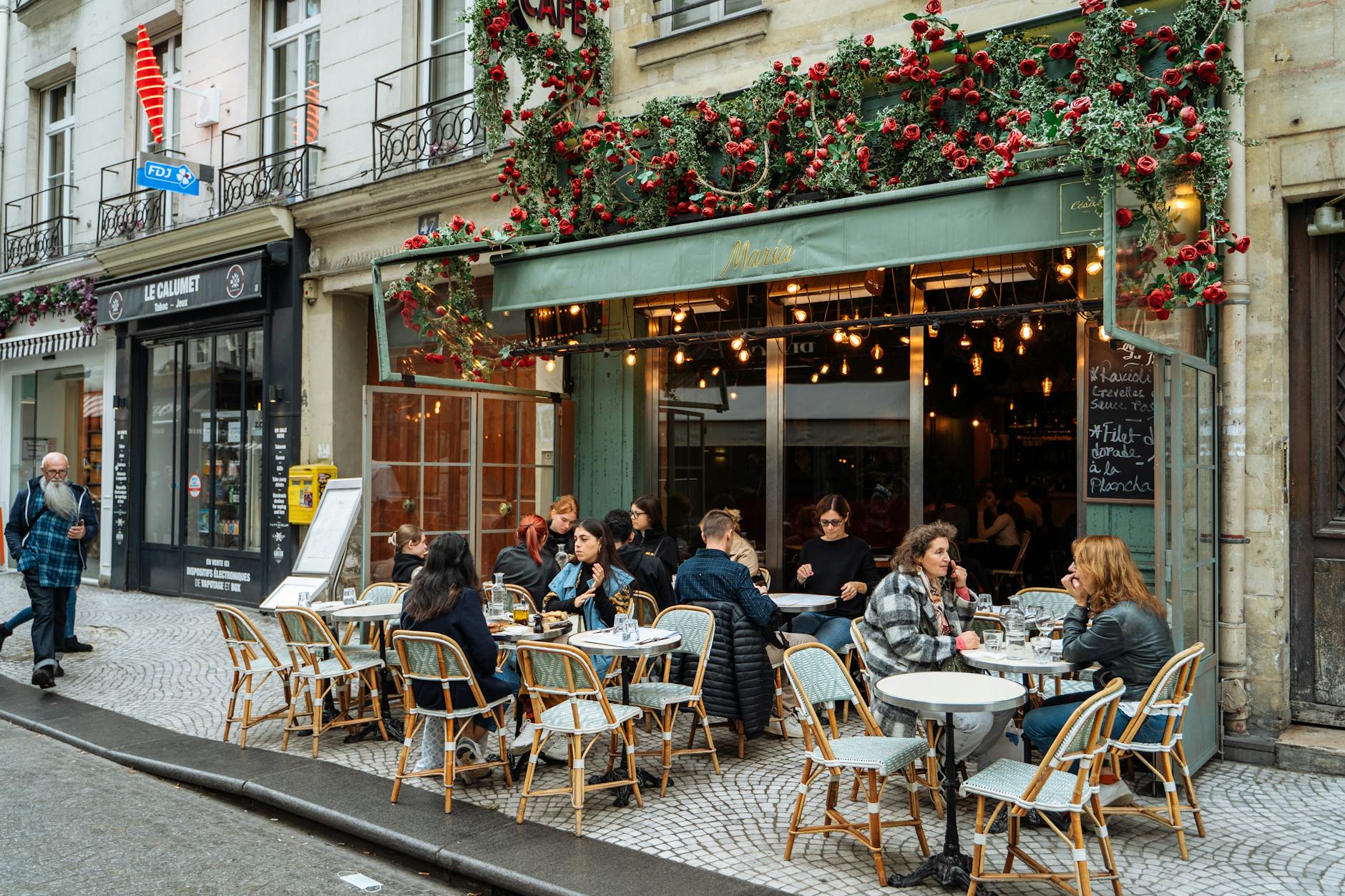
Paris has roughly 7,000 cafes, and the distance between the postcard “literary cafes” of the Left Bank and the places where Parisians actually drink their coffee is wider than most guides will tell you. The best cafes in paris live in two parallel worlds that barely speak to each other. One is the historic Belle Epoque temple, famous for the writers, philosophers, and revolutionaries who once filled its banquettes. The other is the serious third-wave specialty scene that has quietly rebuilt Paris coffee since about 2010. This guide covers both, because both earn their place. A Café de Flore terrace at 5pm is a ritual worth doing once. A Coutume flat white at 8am is what the new Parisians actually buy on the way to work. What follows is a working map of the city’s cafes by type, neighborhood, view, brunch, work-friendliness, and price, plus the vocabulary and etiquette you need at the counter.
For the wider picture of where cafes sit in the Paris eating day, start with the parent Paris food guide, and read this alongside our Paris neighborhoods guide so you can match cafes to the parts of the city you are actually walking.
Paris Coffee Culture: Two Worlds in One City
Paris coffee runs on a tension it never quite resolves. The traditional French cafe is a fixture of daily life: a zinc comptoir, a sidewalk terrace, a machine pulling dark, slightly bitter, robusta-leaning shots for one euro fifty at the bar and three to five if you sit. These places descend from the bistros that Auvergnat immigrants opened in the late nineteenth century, the Costes empire among them, after moving to Paris to sell wood, coal, and eventually wine and coffee. An estimated half of the city’s classic cafes are still owned or staffed by Auvergnat families. The coffee is not good by specialty standards. That was never the point. The point is the room.
The second world showed up around 2010, when Coutume Cafe opened on Rue de Babylone and started roasting single-origin beans for proper flat whites and pour-overs. A wave of Australian, New Zealander, American, and French baristas followed it, opening tiny rooms in the 11th, 10th, 3rd, and 18th. Paris now counts more than 100 specialty shops, most still independent, working an Antipodean-leaning menu: flat whites, long blacks, V60s, Aeropresses, single-origin espresso, oat milk if you ask. The two scenes hardly touch. The Saint-Germain cafes do not pull good shots; the third-wave bars do not have decades of regulars or terrace philosophy. The whole trick is knowing which one you want before you walk through the door.

The 7 Historic Cafes Every Tourist Should Visit Once
These are the cafes that turn up in films, novels, and guidebooks. The coffee is almost never the reason to go. The room, the terrace, the history, and the ritual are. Visit each one once, ideally on a slow weekday at an off-peak hour, and you will understand why the names have outlasted their owners.
Café de Flore
Address: 172 Boulevard Saint-Germain, 6th. Open since 1887, and for more than a century the unofficial headquarters of the Saint-Germain intellectual class. Sartre and de Beauvoir wrote here daily through the 1940s; Picasso, Apollinaire, and Boris Vian were regulars too. The red-leather banquettes and mahogany Art Deco trim survive intact. Coffee runs about seven euros on the terrace, five fifty inside. The signature order is the omelette aux truffes, with the chocolat chaud, served in its own pitcher, a close second on the most-photographed list. Open 7:30am to 1:30am daily. No wifi, and laptops are politely not welcome.
Les Deux Magots
Address: 6 Place Saint-Germain-des-Pres, 6th. The Flore’s direct rival, twenty meters away, open since 1885. Hemingway, Picasso, Camus, James Joyce, and Brecht all drank here. The Deux Magots literary prize, awarded every year since 1933, is still handed out at the cafe each January. Coffee around seven euros. The chocolat chaud is widely held to be the best in central Paris. The terrace looks straight at the church of Saint-Germain-des-Pres, the oldest in the city. Choose between Flore and Deux Magots by whichever terrace has the sun.
Le Procope
Address: 13 Rue de l’Ancienne Comedie, 6th. Open since 1686, and usually cited as the oldest cafe in continuous operation in Paris. Voltaire, Rousseau, Diderot, Robespierre, and Danton all met here; Benjamin Franklin held informal court during the Franco-American alliance talks; and Napoleon’s bicorne hat, left behind as collateral on an unpaid bill, still hangs on the second floor. It works as a full restaurant now rather than a true cafe, but it is worth a walk-through even if you do not stay to eat.
La Closerie des Lilas
Address: 171 Boulevard du Montparnasse, 14th. Founded in 1847 and the cafe Hemingway names more than any other in A Moveable Feast; he wrote much of The Sun Also Rises here. Brass plaques mark the spots where Hemingway, Picasso, Modigliani, Beckett, and Apollinaire sat. It is pricier, and the restaurant wants a reservation, but the bar and front terrace stay walk-in for a coffee or a glass of wine. The piano bar gives it a late-evening life the Saint-Germain cafes lack.
Café de la Paix
Address: 5 Place de l’Opera, 9th. Opened in 1862 inside the Grand Hotel, in a Belle Epoque salon whose gilded mosaic ceiling is protected under France’s monuments historiques. The terrace faces Garnier’s Opera house head-on. Coffee runs roughly seven to nine euros, and the value is the interior, which on a winter afternoon is one of the most beautiful rooms in central Paris. Time it with a visit to the Opera Garnier, before or after.
Café Marly
Address: 93 Rue de Rivoli, under the Richelieu wing arcade of the Louvre. Not historic, since the cafe only opened in 1994, but the terrace looks straight across the Cour Napoleon at I.M. Pei’s glass pyramid, which earns it a place here for an entirely different reason. Coffee runs seven to eight euros; the food is competent rather than memorable; the seat is the whole product. Come at dusk in winter, when the pyramid is lit and the Louvre courtyard has emptied out.
Brasserie Lipp
Address: 151 Boulevard Saint-Germain, 6th. A brasserie by name, but the front bar runs as a Saint-Germain institution where politicians and editors have settled scores over coffee since 1880. The Alsatian dining room is the formal half; the bar is walk-in, and while the espresso is unremarkable, the room is anything but. Worth a stop on a Saint-Germain crawl.
Saint-Germain Cafe Crawl
The Saint-Germain corner of the 6th packs Paris’s literary cafe history into five blocks. The route below runs about 90 minutes with a stop at each, longer if you settle in. It works best on a weekday morning or in the late afternoon between 4 and 6pm.
- Start at Place Saint-Germain-des-Pres, by the church. Stand on the square for a minute; the church is older than every cafe here combined.
- Café de Flore at 172 Boulevard Saint-Germain. Take a terrace table, or order an espresso (un café) at the bar if you only want to look in.
- Les Deux Magots at 6 Place Saint-Germain-des-Pres, twenty meters on. The two cafes have been rivals since 1885, and the only honest way to pick a winner is to do both.
- Brasserie Lipp at 151 Boulevard Saint-Germain, across the boulevard. Front bar only, one quick coffee.
- Walk west on Rue de Buci. Cafes line both sides; Bar du Marché on the corner is the one everyone photographs.
- Le Petit Saint-Benoît at 4 Rue Saint-Benoît. Open since 1901, a working-class lunch canteen with paper tablecloths and a fixed menu, where the coffee at the end is the whole idea.
- Continue south to Rue de l’Ancienne Comedie. Le Procope at number 13 closes the loop. If you only have an hour, skip straight here; if you have three, do the whole thing.
Total walking distance is under a kilometer. Stick to the bar rather than the terrace and the coffee spend lands around 25 to 35 euros a person; sit on a terrace at every stop and you can double that. Pair it with a Seine walk along the Left Bank quais or one of our Paris walking tours.
Specialty Coffee: The Best Third-Wave Cafes
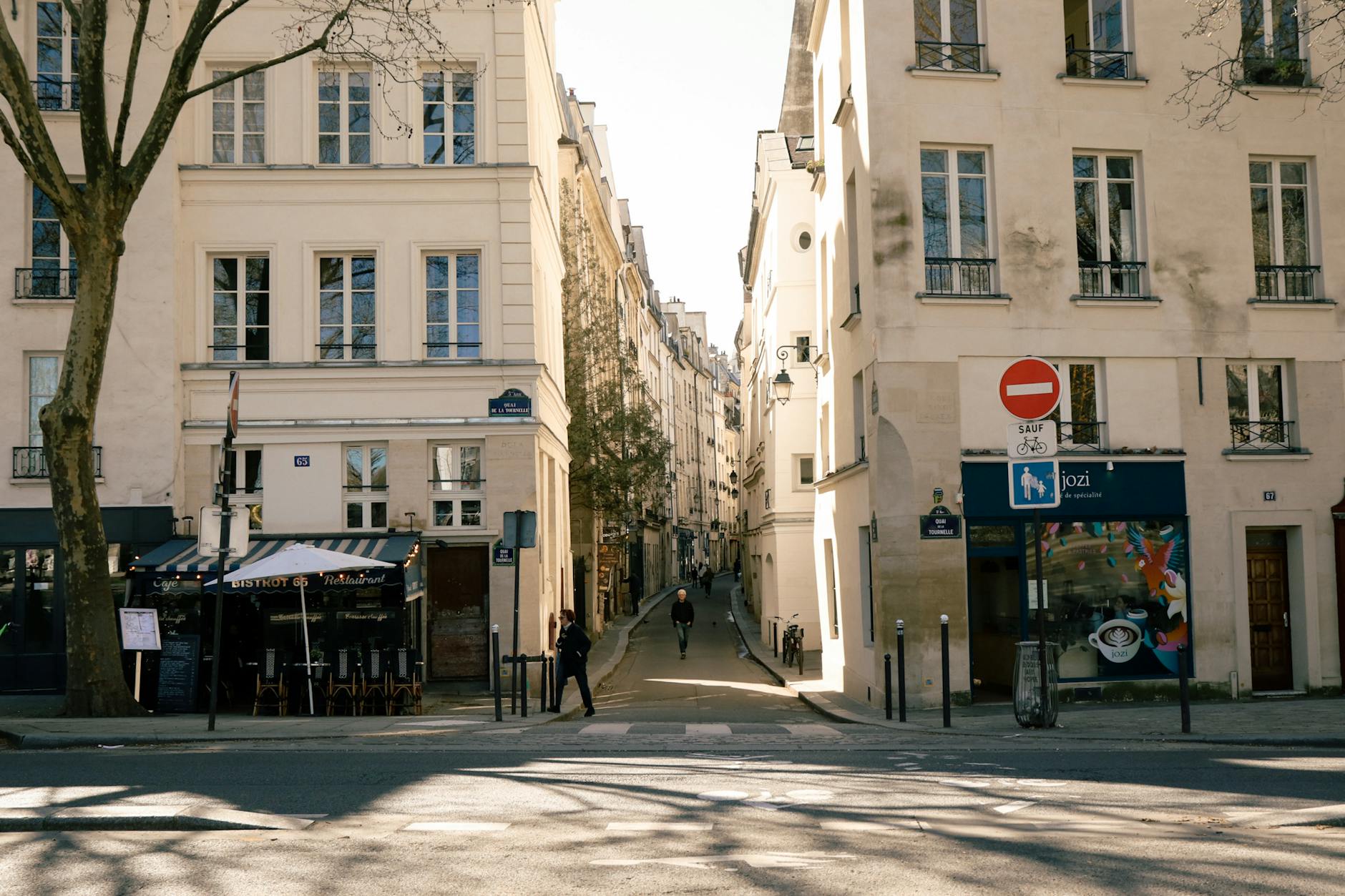
Now the parallel scene: tiny rooms, lighter roasts, single-origin beans, baristas who can name the farm and the altitude. Most cluster in the 3rd, 10th, 11th, and 18th, with outliers in the 7th and 1st. Coffee costs more than at a traditional bar, with a flat white at five to six euros, but the cup is in a different league.
Coutume Café
Address: 47 Rue de Babylone, 7th, plus several satellites. Opened in 2011 by Antoine Netien and Tom Clark, Coutume is the cafe that brought specialty coffee to Paris. The Babylone room has a small roastery you can see from your table, single-origin micro-lots rotate through, and the flat white (five to six euros) became the reference cup for a whole generation of Paris baristas, many of them trained here. Quiet enough to work in the morning, busy at lunch.
Café Pinson
Multiple locations in the Marais and the 10th. It pairs clean-eating brunch (gluten-free pastries, smoothie bowls, vegetable plates) with third-wave coffee from rotating roasters. Long communal tables, and a steady crowd of freelancers and digital nomads.
Telescope Café
Address: 5 Rue Villedo, 1st. Tiny, maybe fifteen seats, tucked into a quiet street behind the Palais Royal. Ask Paris baristas off the record and many will tell you Telescope pulls the most consistent espresso in the city. Beans rotate between European roasters, there is a single pastry from a nearby bakery, and it closes weekends. If every seat is full, stand at the bar.
Belleville Brûlerie
Address: 14ter Rue Pradier, 19th. Founded by David Flynn and partners, Belleville Brûlerie supplied a sizable share of the Paris specialty market through the 2010s. The roastery tasting bar opens select hours, and the public cuppings, when they run, are the closest thing Paris has to a coffee classroom. Their beans show up on menus all over the city.
La Caféothèque de Paris
Address: 52 Rue de l’Hotel-de-Ville, 4th. Around the corner from the Hotel de Ville and the Seine, La Caféothèque has run its own roastery on the premises since 2005 and is, in effect, Paris’s pour-over specialist. The room is large and a little bohemian, the menu leans hard on filter methods, and the staff will happily walk you through origins. Calm enough to work in; espresso and pour-overs land in the four-to-six-euro range.
Loustic
Address: 40 Rue Chapon, 3rd. A tight Marais room with maybe twelve seats and excellent espresso. Quiet on weekday mornings, with a queue at weekend brunch. Pastries come from Du Pain et des Idees and other neighborhood bakeries.
Boot Café
Address: 19 Rue du Pont-aux-Choux, 3rd. The single most photographed third-wave cafe in Paris, set in a former cobbler’s shop whose red shopfront has turned up on a million Instagram feeds. The coffee is genuinely good, but go in knowing you will likely meet a line and a room with six or seven seats. Best at opening, around 10am, or in the mid-afternoon lull.
Fragments
Address: 76 Rue des Tournelles, 3rd. A minimalist Marais room of white tile and a marble counter, with beans from rotating European roasters. Strong matcha, strong flat white. Opens early and tends to shut by mid-afternoon.
Hexagone Café
Multiple locations across the 9th, 11th, and 18th. A growing little chain of specialty shops, bright, sometimes with workspace seating, consistent espresso, and friendly to laptops. A safe default in a neighborhood where you do not already have a cafe.
Holybelly
Addresses: 5 and 19 Rue Lucien Sampaix, 10th. The Canal Saint-Martin breakfast institution, opened in 2013 by Nico Alary and Sarah Mouchot. It is famous for the pancake stack, thick buttermilk pancakes with bacon and a fried egg, and for serving genuinely good filter coffee next to it. Weekend queues run out the door; weekday late mornings are workable.
Best Cafes by Neighborhood
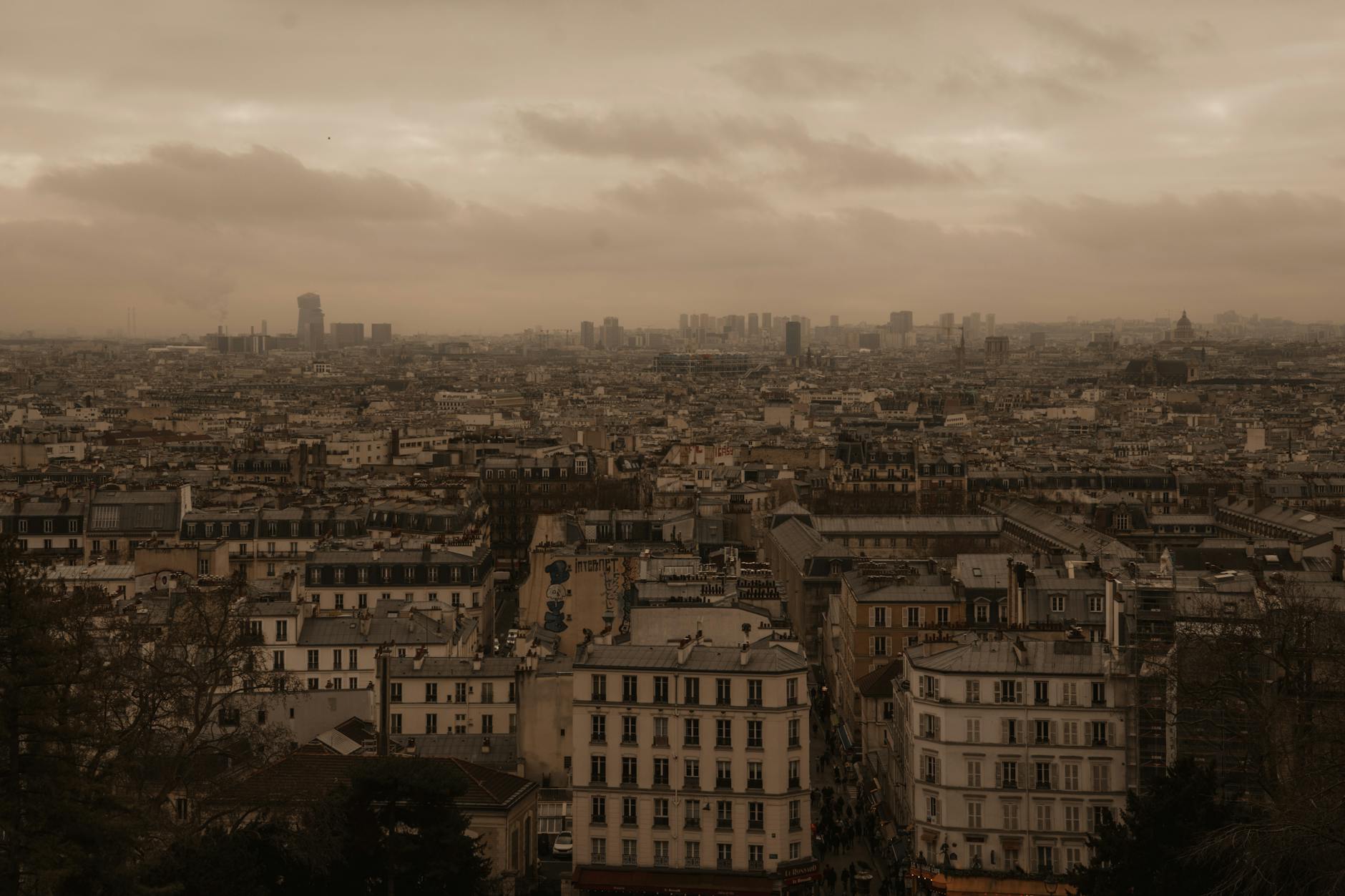
A working map of the city’s cafes by arrondissement, so you can match the cafe to where you already are rather than crossing town for a flat white.
1st and 2nd: Louvre, Palais Royal, Sentier
Telescope Café (5 Rue Villedo) for the best espresso in central Paris. Verlet (256 Rue Saint-Honoré), a coffee roaster since 1880, has a small wood-paneled tasting room that straddles the traditional and the specialty. Café Marly under the Louvre arcades for the pyramid view. Café Kitsuné in the Palais Royal gardens for a Japanese-style espresso bar set into one of the most photographed colonnades in the city.
3rd (Upper Marais)
Boot Café, Loustic, Fragments, and La Caféothèque (technically the 4th, but right next door). This is the densest third-wave neighborhood in Paris; you can walk between four serious cafes in fifteen minutes.
4th (Lower Marais, Ile Saint-Louis)
Café Carette on Place des Vosges for macarons and a square view. Café Hugo on the same square. Café Saint-Regis on the corner of Ile Saint-Louis, a classic neighborhood bar whose terrace catches the afternoon sun.
5th (Latin Quarter)
Café Delmas on Place de la Contrescarpe, a busy student terrace at the top of Rue Mouffetard. The cafes along Rue Mouffetard itself are tourist-heavy but pleasant on a sunny morning. La Mosquée de Paris salon de the for mint tea in a Moroccan courtyard (more on that in the Salon de The section below).
6th (Saint-Germain, Odeon)
The literary heartland: Café de Flore, Les Deux Magots, Le Procope, Brasserie Lipp, Le Petit Saint-Benoît. Treat this corner as a pilgrimage, not a daily routine.
7th (Eiffel, Invalides, Rue Cler)
Coutume Café on Rue de Babylone is the destination here; Le Petit Cler on Rue Cler and Café Constant on Rue Saint-Dominique give you classic neighborhood seating on one of the prettiest market streets in Paris.
8th (Champs-Elysees, Madeleine)
Café Pouchkine near Madeleine for a Russian-style tea salon. Ladéree Royale (16 Rue Royale) for the original Ladéree macaron salon, with tea and macarons in a Belle Epoque interior.
9th (Opera, South Pigalle)
Café de la Paix on Place de l’Opera for the Belle Epoque interior. The streets around Rue des Martyrs and SoPi (South Pigalle) have a growing specialty cluster, with a Hexagone Café among them.
10th (Canal Saint-Martin, Gare du Nord)
Holybelly 5 and 19 on Rue Lucien Sampaix. Du Pain et des Idees on Rue Yves Toudic (a bakery rather than a cafe, but its escargot pistache pastry earns the stop). Ten Belles on Rue de la Grange aux Belles is another reliable specialty room.
11th (Oberkampf, Bastille, Republique)
Café Pinson, Café Oberkampf, Fragments’ sister rooms, and a dozen more specialty spots packed around Rue Oberkampf and Rue Saint-Maur. This is the working coffee neighborhood for Paris freelancers.
14th (Montparnasse)
La Closerie des Lilas, Le Select (where Hemingway, Henry Miller, and Man Ray drank), and La Coupole (a 1927 Art Deco brasserie). These four, plus Le Dome, were the center of expatriate Paris in the 1920s.
16th (Passy, Trocadero)
Carette Trocadero on Place du Trocadero is the cafe with the Eiffel Tower view (see the Cafes with a View section).
18th (Montmartre)
Café des Deux Moulins on Rue Lepic, the cafe from Amelie, touristy but pleasant. Hardware Society on Rue Lamarck for Australian-style brunch. La Maison Rose on Rue de l’Abreuvoir, the pink corner house Utrillo painted.
Best Cafes for Working and Wifi
By global standards, Paris is a hard city to open a laptop in. Traditional cafes do not offer wifi, and plenty of them actively frown on long laptop sessions. The good news is that a small set of places have built themselves around working customers, and you can stitch a comfortable Paris workday across two or three of them.
- Coutume Café Babylone (7th) — quiet most mornings, wifi, sockets along the side wall.
- Café Pinson (Marais, 10th) — long communal tables, wifi, a menu that invites you to stay.
- Anticafe (multiple locations) — you pay by the hour (around five euros), with unlimited coffee, water, and snacks thrown in. Mostly digital nomads, students, and remote workers; the closest thing Paris has to a coworking cafe.
- Holybelly 19 (Canal Saint-Martin) — mobbed at brunch, but quiet between 2pm and 5pm.
- Hexagone Café (multiple) — bright, modern, reliable wifi.
- La Caféothèque (4th) — large room, slow pace, tolerant of laptops.
- WeWork ground-floor cafes — several WeWork buildings run public coffee bars on the ground floor with day-pass access.
- Don’t bother for work: Café de Flore, Les Deux Magots, Le Procope, La Closerie des Lilas. No wifi, no laptops, and a visible chill if you try.
Best Cafes with a View
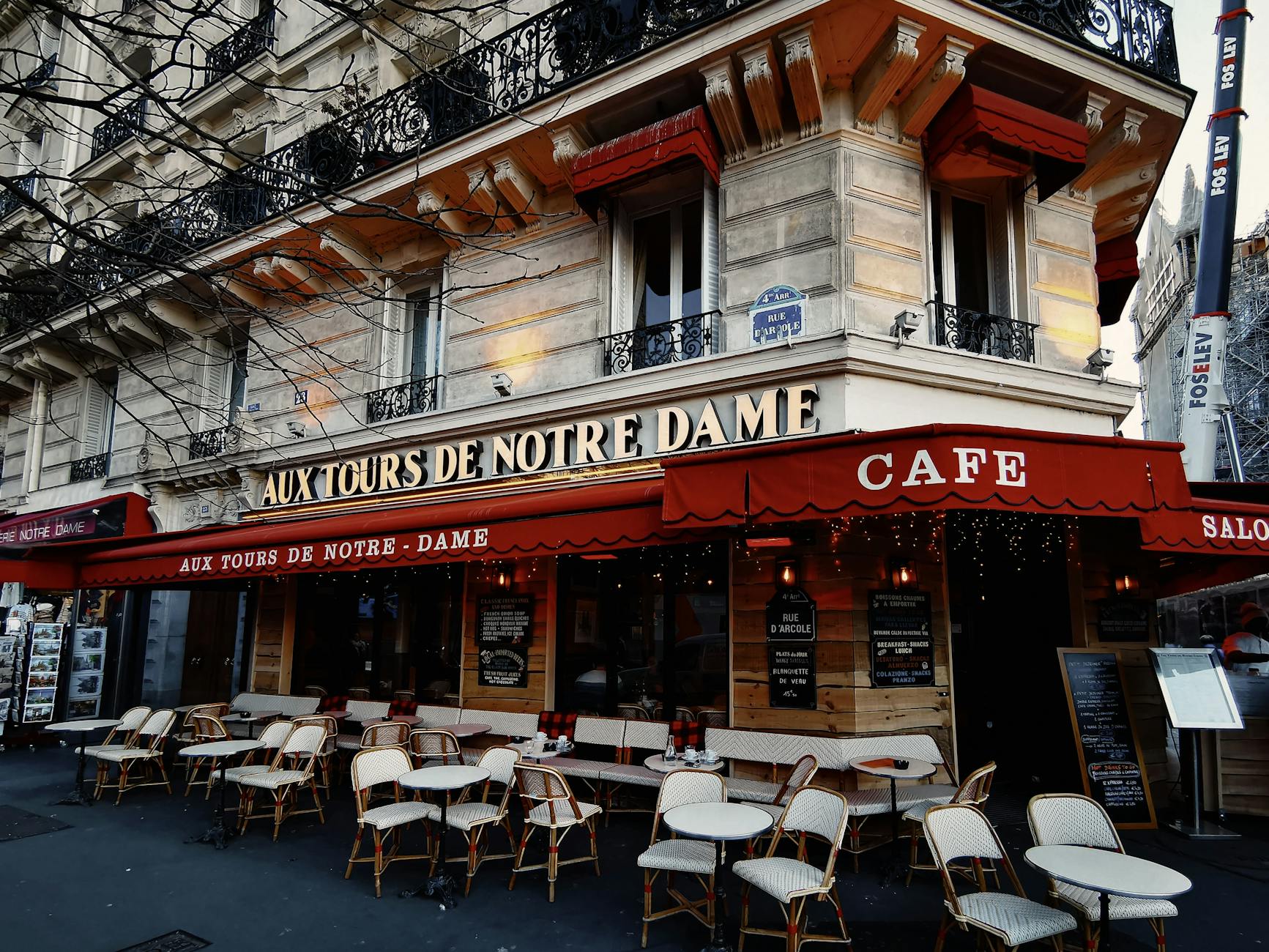
A short list of cafes where the seat is the whole reason. The coffee at each is fine rather than great, so pay for the view and not the cup.
- Café Marly — the Louvre’s glass pyramid, ten meters from your table.
- Carette Trocadero — a Place du Trocadero terrace looking across the Seine to the Eiffel Tower.
- Le Café Lateral (Concorde) — Place de la Concorde and the obelisk, with sunset views on long summer evenings.
- Café Saint-Regis (Ile Saint-Louis) — the corner of the island, the bridge to the Marais on one side and Notre-Dame in view from the terrace.
- Café du Pont Marie — Seine views from the eastern edge of Ile Saint-Louis.
- Le Train Bleu (Gare de Lyon) — not a cafe by name, but the 1901 Belle Epoque dining room is the most spectacular interior on this list, and a coffee at the bar lets you see it without committing to a full lunch.
- Café de Flore upper floor — the second-floor window seats look down on Boulevard Saint-Germain.
- Galeries Lafayette rooftop — free rooftop access and a small cafe with views across the Opera Garnier roof to the Eiffel Tower.
- Printemps Haussmann rooftop — a similar view from a slightly different angle, with an occasional summer pop-up cafe.
For more terrace-and-view ideas, our Paris photo spots guide overlaps with several of these cafes.
What to Order: French Cafe Vocabulary
Walk into a Paris cafe with the right words and the whole thing shifts from tourist transaction to neighborhood exchange. The menu may not even reach your table; the waiter assumes you know what you want.
| Order | What it is | Approx. price |
|---|---|---|
| Un café / un express | Espresso, small and strong, served in a demitasse | €1.50 to €3.50 |
| Un café crème | Espresso with steamed milk; closest thing to a cappuccino | €3.50 to €6 |
| Un café au lait | Same as crème; called au lait at home, crème in cafes | €3.50 to €6 |
| Un noisette | Espresso with a dash of milk (like a cortado) | €2 to €4 |
| Un cappuccino | Espresso, frothed milk, sometimes a dusting of cocoa | €4 to €7 |
| Un flat white | Espresso plus microfoam milk (third-wave bars only) | €5 to €6.50 |
| Un café glacé | Iced coffee with milk, summer menu | €4 to €6 |
| Un café décaféiné | Decaf espresso; ask explicitly | €1.50 to €4 |
| Un thé | A tea; Mariage Freres or Kusmi widely served | €4 to €7 |
| Un chocolat chaud | Hot chocolate; the Deux Magots and Angelina versions are famous | €5 to €9 |
| Un croissant + un café | Breakfast standard | €5 to €7 |
Three more phrases earn their keep. Au comptoir means at the bar, where the same drink costs roughly half the terrace price. En salle means sitting inside. En terrasse means on the terrace, the priciest option and usually the one you came for. Order at the bar if all you want is the caffeine; settle on a terrace if you came for the seat.
Cafe Etiquette in Paris
- Sit anywhere unless a sign or the waiter says otherwise. The terrace is first-come, first-served at most cafes.
- Say “Bonjour” (or “Bonsoir” after 6pm) before you order or ask anything. This is not optional, and it is the difference between a warm welcome and a cold one.
- One coffee buys you 60 to 120 minutes at the table. Staying longer is usually fine, but a second order signals respect.
- Free water (un verre d’eau or une carafe d’eau) is almost always free on request. Ask once you have ordered.
- Tip by rounding up to the nearest euro, or leave 50 cents to a euro on a small bill. Service is included by French law; a tip is appreciation, not payment.
- Pay at the table, and flag the waiter with a discreet hand or a glance rather than calling across the room.
- Cards are accepted for purchases of five euros or more at most cafes, though some traditional bars are still cash-only for a single espresso.
- Bathrooms are usually free with a purchase, the door often coded, with the code printed on your receipt.
- Keep your voice down. Paris cafes are conversational, not loud.
Best Brunch Cafes in Paris
Brunch landed in Paris later than it did in London or New York, but over the last fifteen years it has hardened into a weekend ritual. The brunch cafes below run roughly 18 to 30 euros a head, almost all of them serve through Saturday and Sunday, and the move is to arrive at opening or after 1:30pm to dodge the queue.
- Holybelly 5 and 19 (Canal Saint-Martin, 10th) — the pancake stack with bacon and a fried egg is the most photographed brunch plate in Paris. Weekend queues run out the door, so weekday breakfast is the smart play.
- Hardware Society (10 Rue Lamarck, 18th) — Australian-style; eggs benedict, smashed avocado, very good flat whites. Second branch in Sentier.
- Café Pinson (Marais and 10th) — clean-eating brunch with gluten-free and vegan options.
- Café Oberkampf (3 Rue Neuve Popincourt, 11th) — a small specialty room with shakshuka and excellent eggs.
- Le Bichat (10th) — vegan-friendly brunch and lunch near Canal Saint-Martin.
- Café Mericourt (11th) — Israeli-style brunch; shakshuka, hummus, fresh-baked challah.
- Season (Marais, 3rd) — healthy-leaning brunch in a bright Marais corner.
- Carette Trocadero or Place des Vosges — classic French brunch (eggs, charcuterie, viennoiserie) rather than the Anglophone version, on lovely terraces.
The Salon de Thé Tradition
Running alongside the cafe is the salon de the, a related but separate tradition. Salons are quieter, often older, and built around tea and pastry rather than coffee and conversation.
- Mariage Freres (multiple) — founded in 1854; the flagship at 30 Rue du Bourg-Tibourg has a salon upstairs serving tea and small bites. Read the tea menu like a wine list.
- Ladéree Royale (16 Rue Royale, 8th) — the original Ladéree macaron salon, Belle Epoque interior, tea, macarons, and pastries.
- Angelina (226 Rue de Rivoli, 1st) — the Mont Blanc dessert and the thick African hot chocolate, with a 60-to-90-minute weekend queue and relaxed weekday mornings.
- Carette Trocadero and Place des Vosges — macarons, chocolat chaud, the classic salon menu.
- Pierre Herme salons (multiple) — the macaron specialist, with tasting flights of seasonal flavors.
- Kusmi Tea (multiple) — boutiques with small tasting bars and Russian-origin blends.
- Salon de Thé de la Mosquée de Paris (5th) — mint tea and Moroccan pastries in the tiled courtyard of the Paris Mosque, three to five euros, and one of the cheapest, most atmospheric tea sits in the city.
Frequently Asked Questions
What is the most famous cafe in Paris?
Café de Flore and Les Deux Magots split the title. Both opened in the 1880s, both anchored the Saint-Germain literary scene through the twentieth century, and both still trade on the same Boulevard Saint-Germain corner today. Le Procope (1686) is older but now runs as a restaurant rather than a true cafe.
How much does coffee cost in Paris?
An espresso at the bar of a traditional cafe runs 1.50 to 3.50 euros. The same espresso on the terrace runs 3 to 5 euros. A flat white at a third-wave specialty cafe runs 5 to 6 euros. A coffee at Café de Flore, Les Deux Magots, or Café de la Paix is 6 to 9 euros, and you are paying for the seat, not the cup.
Where do locals get coffee in Paris?
Most Parisians grab an espresso at the bar of their neighborhood cafe on the way to work: fast, under two euros, a daily habit. Younger and freelance Parisians have moved toward specialty coffee in the 3rd, 10th, and 11th, places like Coutume, Belleville Brûlerie, Telescope, Holybelly, and Fragments, for flat whites and pour-overs.
Is Café de Flore worth visiting?
Yes, once. The coffee is unremarkable, the prices are high, and the staff has seen every kind of tourist. But the room really is beautiful, the terrace people-watching is excellent, and the history is real. Go once on a slow afternoon, order a chocolat chaud, and treat it as a Paris ritual rather than a coffee stop.
What is third-wave coffee in Paris?
Third-wave coffee is the global movement, born in the 2000s, that treats coffee like wine: single-origin beans, lighter roasts, careful extraction, named farms and altitudes. In Paris it arrived around 2010 with Coutume Café and has grown to 100-plus specialty shops, concentrated in the 3rd, 10th, 11th, and 18th. The cup is far better than at a traditional bar, and the price is roughly double.
What time do Paris cafes open?
Traditional cafes open between 7 and 8am and run until 1 or 2am, seven days a week. Specialty shops keep tighter hours, usually 8 or 9am to 5 or 6pm, and many close on Mondays. Brunch cafes typically open at 9am and stop seating around 3pm.
Can you work at a cafe in Paris?
Sometimes, in the right cafe. The traditional Saint-Germain places (Flore, Deux Magots, Lipp, Procope, Closerie) offer no wifi and discourage laptops. The specialty scene is far more laptop-tolerant: Coutume, Caféothèque, Hexagone, Café Pinson, Holybelly between brunch services, and Anticafe (built around the working customer at five euros an hour). Buy something every hour or two and you will be welcome.
What is the best brunch cafe in Paris?
Holybelly on Rue Lucien Sampaix in the 10th is the consensus pick. The buttermilk pancake stack with bacon and a fried egg is the signature plate, and the filter coffee beside it is genuinely good. Hardware Society in the 18th is the strongest alternative for Australian-style eggs benedict. Arrive at opening, around 9am, or after 1:30pm to skip the queue.
Related Reading
Pair this cafe guide with the wider food and city context across the rest of paristourism.org.
- Parent pillar: Paris food guide
- Pillar: Paris neighborhoods guide
- Pillar: Paris walking tours
- Pillar: Paris photo spots
- Cluster 5 (Food and Dining) siblings: best restaurants in Paris, best bakeries in Paris, Paris food markets, French dishes to try, Paris food tours, cheap eats in Paris, Paris wine bars, Paris Michelin restaurants, Paris cooking classes.
The honest measure of a Paris coffee day is whether you visited both worlds. A morning espresso at a neighborhood comptoir, a mid-morning flat white at Coutume or Telescope, an afternoon chocolat chaud on a Saint-Germain terrace, and an evening glass of wine in the Marais covers the full range in one walkable day. The best cafes in Paris are not a ranked list; they are a map, and the map is the point. Pick the cafe that fits the hour, the neighborhood, and the mood, and you will have spent the day the way locals actually do.
Related reading
Use these to round out your trip: