Walking in Paris: Best Pedestrian Routes & Safety Tips
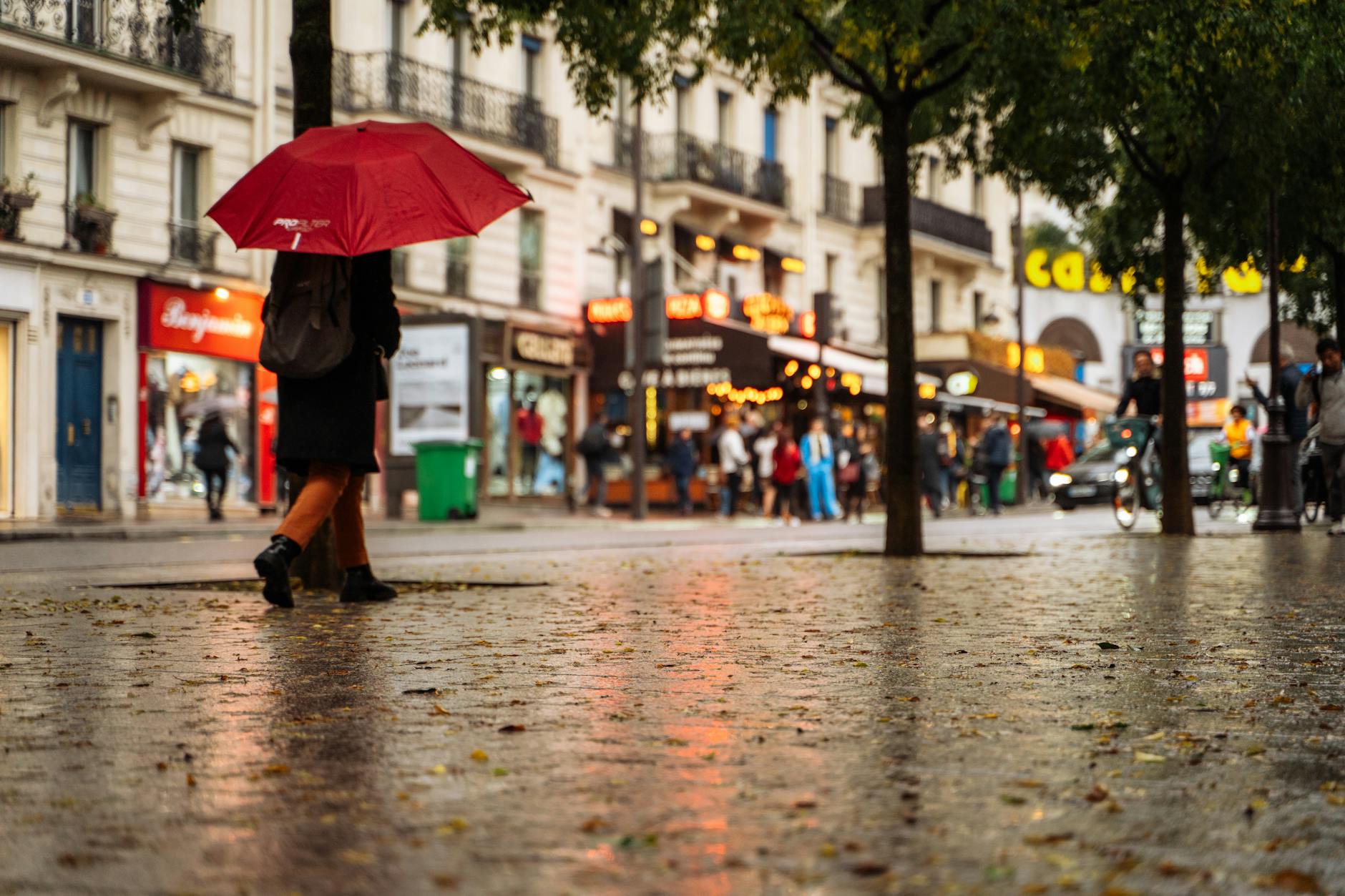
The whole of Paris fits inside 105km², and almost every site you came to see sits within 6km of the rest. That single fact reshapes how you should move. Walking in Paris beats the Metro for plenty of short hops, surfaces the cafes and shop windows you’d sail past underground, and ties a sightseeing day into one continuous thread instead of a string of separate stops. This guide covers the geography (that spiral arrondissement layout), the pedestrian-only streets (Rue Mouffetard, Rue Montorgueil, the Marais corridors), the cobblestone reality your feet will discover fast, staying safe in the tourist crush, the pedestrian Seine quay that opened in 2017, the best walking weather, and the kit that actually earns its place in your bag. For the wider transport picture, see our getting around Paris guide.
Paris is a Walking City: The Geography
Paris proper, the part inside the Périphérique ring road, covers just 105km². That’s smaller than Disney World’s Florida resort and about a fifth the size of central London. The compactness is the city’s most underrated feature, full stop. You can walk from one major monument to the next in the time the Metro takes once you count the stair climbs and transfers, and you’ll see far more on the way.
The 20 arrondissements (administrative districts) wind out in a spiral. The 1st is the historical center, anchored on the Louvre and the Right Bank of the Seine. From there the numbers spiral clockwise outward, finishing at the 20th in the far east. Once the spiral clicks, an address tells you instantly whether you’re in the tourist core (1-8), the inner ring of lived-in neighbourhoods (9-14), or the outer residential rim (15-20).
Most sites sit within 6km of one another, an hour’s easy walk. A few distances worth filing away: Eiffel Tower to Louvre is 3.5km along the Right Bank; Notre-Dame to the Eiffel Tower is 5km following the Seine; Sacré-Coeur in Montmartre to the Louvre is 4km straight down through the 9th. If you do one thing on foot, walk one of these axes during your trip. The monuments line up like beads on a string.
The payoff compounds. Every street you walk is a small find: a 17th-century courtyard caught through an open carriage gate, a bakery queue at 8am, a busker on a bridge. The Metro is brilliant for distance, but the surface is where Paris actually lives.
One mental trick helps more than any other: think of Paris by the river, not the Metro map. Almost every major monument sits within 600 metres of the Seine. Anchor your bearings to the water (it runs roughly east to west through the city, Right Bank on the north side, Left Bank on the south) and you’ll rarely be more than ten minutes from a landmark you recognise. Tourists who get lost in Paris nearly always did it by over-trusting the Metro map and losing the river. The river is the real map. One more handy fact: the highest point in Paris is Montmartre at 130 metres above sea level, and the city slopes gently down to the river from both north and south, so “towards the Seine” usually also means “downhill”.
Pedestrian-Only Zones to Walk
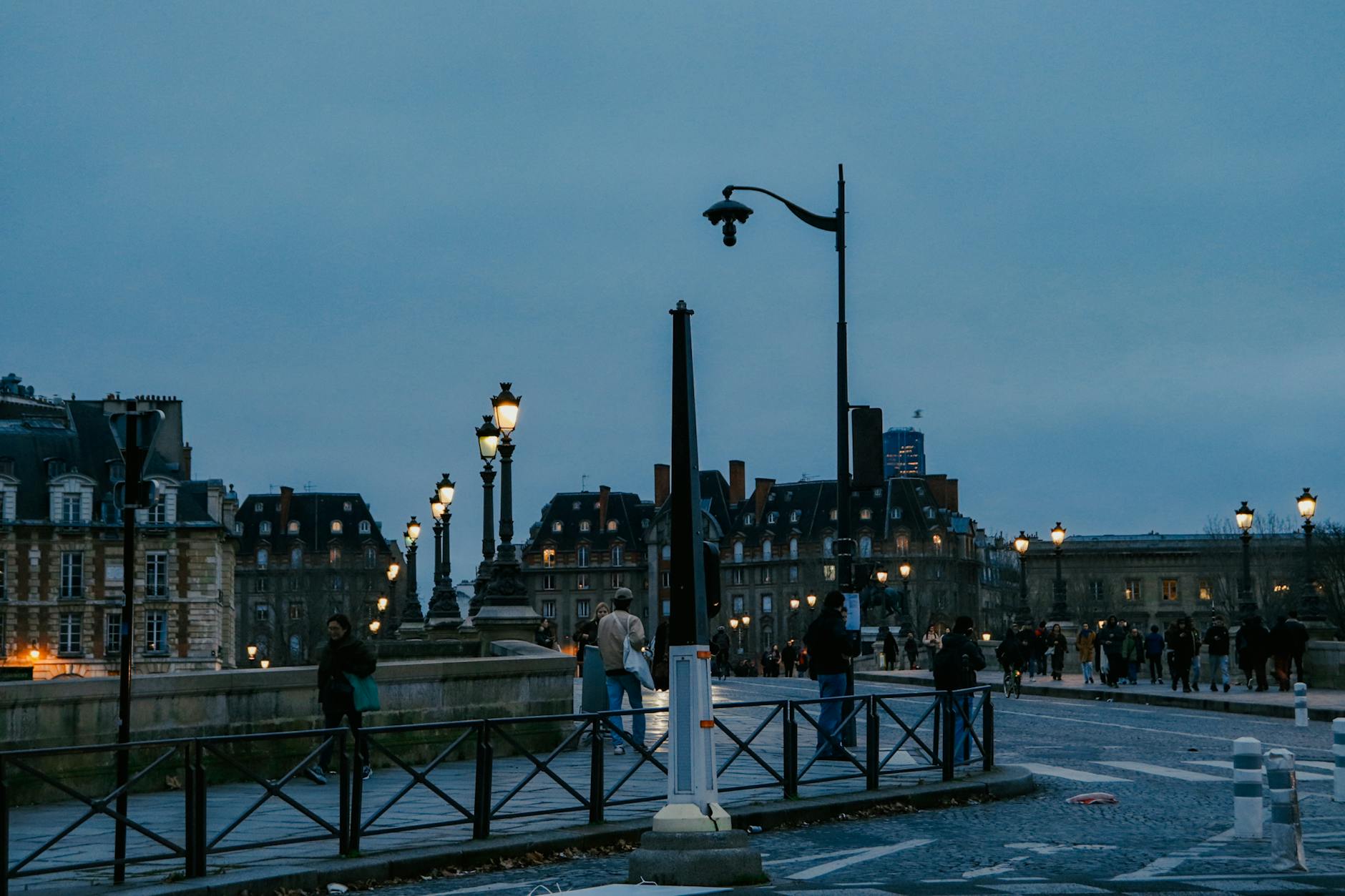
These are the streets where cars are either banned or restricted so heavily you can walk down the middle without glancing over your shoulder. They’re the easiest, most relaxed walking in the city.
Rue Mouffetard (5th)
A medieval market street tumbling south from Place de la Contrescarpe in the Latin Quarter. Cheese, charcuterie, fish, oysters, cheap wine bars, crepe stands. Mornings are for shopping; evenings fill up with students.
Rue Cler (7th)
A short, cobbled market street between the Eiffel Tower and Les Invalides. More polished than Mouffetard, with the bourgeois 7th-arrondissement clientele to match: proper fromageries, a wine shop, two boulangeries, a primeur, and a couple of cafe terraces with Eiffel views from the corner.
Rue Montorgueil (1st-2nd)
The old market street that fed Les Halles, now pedestrian along most of its length. Oyster bars, patisseries, the legendary Stohrer (Paris’s oldest patisserie, 1730), and busy cafe terraces. Best in late morning or early evening.
Rue des Rosiers + Pletzl (Marais)
The historic Jewish quarter, narrow and almost entirely pedestrianized on weekends. Falafel queues, kosher bakeries, vintage boutiques. Closed Saturdays for Shabbat, so come Sunday or on a weekday.
Rue Saint-Antoine east of Bastille
The eastern continuation of Rue de Rivoli goes largely car-free on Sundays under the “Paris Respire” (Paris Breathes) programme. Check the day before.
Rue de Buci (6th)
A small Saint-Germain market street with terraces spilling onto the cobbles. Compact, pricey, and a solid lunch stop on any Left Bank walk.
Place du Tertre (Montmartre, kind of)
The painters’ square at the top of Montmartre is officially pedestrian. It’s also thoroughly touristic, all caricaturists and overpriced cafes, but the streets around it (Rue Norvins, Rue des Saules) are the real reward.
Pont des Arts pedestrian bridge
The wooden-decked footbridge between the Louvre and the Institut de France. Crossing it at sunset is a classic. The padlocks are mostly gone now (the railings came off for structural reasons), but the view of the Ile de la Cité hasn’t changed.
Quai d’Anjou (Ile Saint-Louis perimeter)
The entire edge of the smaller of the two Seine islands works as a riverside promenade. Quai d’Anjou, on the north side, faces the Right Bank and catches the best evening light.
The pedestrianized Seine quays
The big one. Both banks of the Seine through the city centre are now closed to through traffic at river level. The Right Bank pedestrian quay opened in 2017 between the Tuileries and Bastille; the Left Bank between Pont de Sully and Pont Royal went car-free earlier. Together they make the single best walking corridor in Paris.
The Seine Quay Walk (Paris’s Best Free Walk)
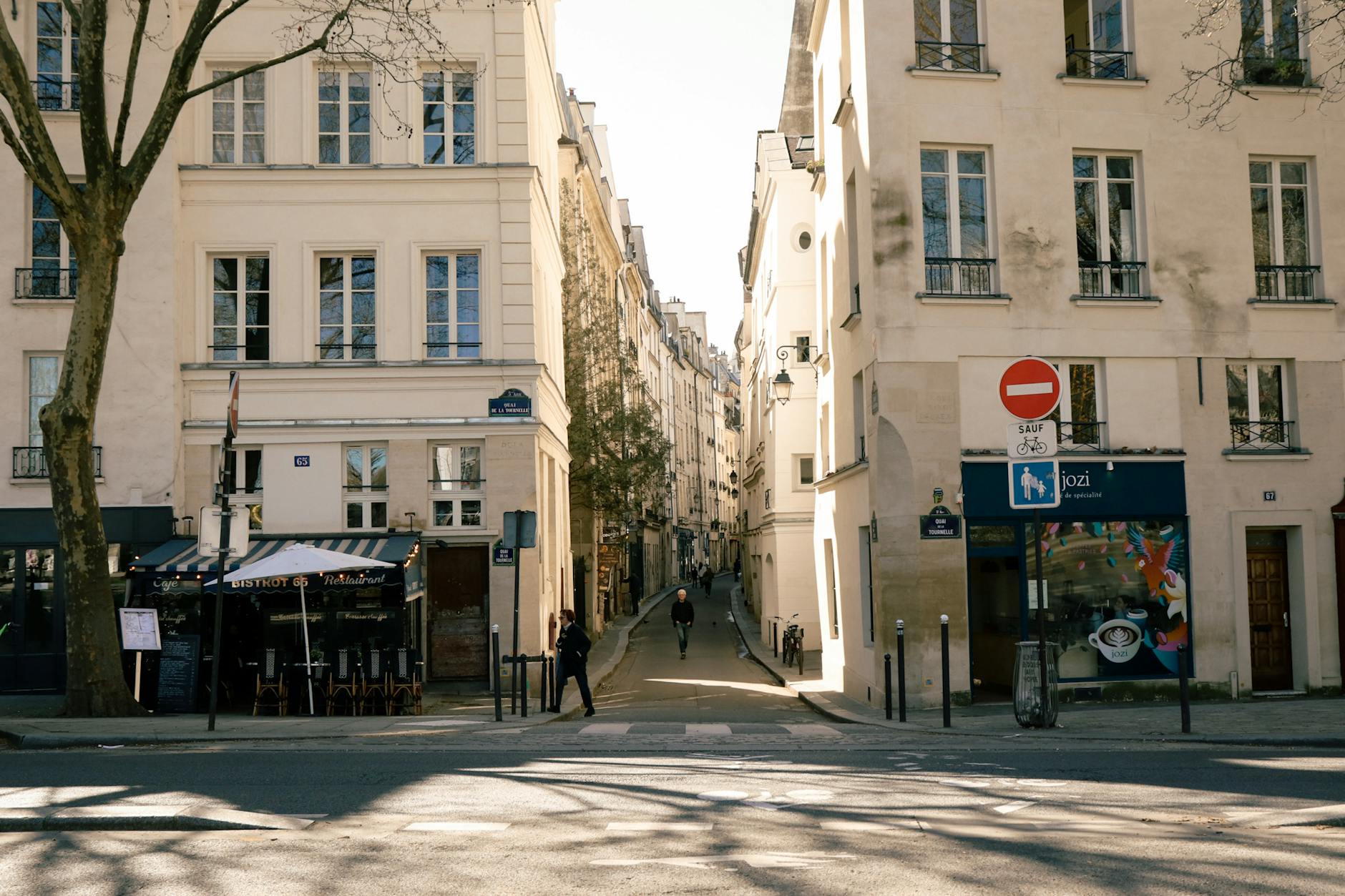
If you’ve only got time for one long walk in Paris, make it this one. The Seine quays through the historical centre run almost entirely car-free at river level now, which means you walk on a wide stone embankment 4-5 metres below the street, cut off from traffic, the Seine on one side and a stone wall on the other.
The Right Bank pedestrian quay (open since 2017) covers roughly 4km from the Bastille area west to the Tuileries Garden. The Left Bank quay runs about 2.5km from Pont de Sully, by Ile Saint-Louis, to Pont Royal. Stitch them together by crossing one bridge in the middle — Pont Neuf is the most atmospheric — and you’ve got a 5km route through the heart of historic Paris that passes Notre-Dame, the Conciergerie, the Louvre, the Musée d’Orsay across the water, and finishes at the Tuileries.
In July and August the city buries the Right Bank quay under sand, palm trees, deckchairs, pétanque courts, and pop-up cafes for the “Paris Plages” summer programme, so the walk turns into a city beach. The rest of the year the quays stay quieter than the streets above, claimed by joggers in the mornings and couples in the evenings, and nearly empty in the rain.
One practical caveat: the lower quay floods in winter when the Seine rises. If a major flood is forecast (the Paris flood warning service publishes daily levels), the quays close. In dry months they’re open from dawn to late evening.
5 Best Walking Routes for Tourists
Five 2-hour itineraries that work as half-day walks. Each one links several sites and leans on the pedestrian zones above where it can. For guided versions see our paris walking tours guide.
Notre-Dame to Eiffel (the classic axis)
5km along the Seine. Start on the parvis of Notre-Dame on the Ile de la Cité, cross to the Left Bank, drop down to the river quay, and head west past the bouquinistes, with the Musee d’Orsay above you, then the Assemblée Nationale, the Esplanade des Invalides, and the Eiffel Tower by way of the Quai Branly. About 90 minutes of pure walking, 2-3 hours with stops. Save it for late afternoon so you reach the tower for golden hour.
Marais loop (Bastille — Place des Vosges — Hotel de Ville)
3.5km circular. Begin at Place de la Bastille, walk west through Place des Vosges (the oldest planned square in Paris, 1612), carry on through the Marais via Rue des Francs-Bourgeois and Rue des Rosiers, come out at the Hotel de Ville, and either loop back along Rue Saint-Antoine or call it there. Best on a Sunday afternoon, when most boutiques are open and traffic is thin.
Saint-Germain literary walk
3km. Start at Mabïllon Metro, pass Café de Flore and Les Deux Magots (the old Sartre-Beauvoir-Hemingway haunts), drift south down Rue de Buci, cross Boulevard Saint-Germain to Rue de l’Odéon, and reach the Luxembourg Garden via Rue de Tournon. Bookshops, publishing houses, antique dealers. A perfect rainy-day walk, with arcades and cafes every fifty metres.
Montmartre approach from Abbesses
2km, but most of it climbs. Come out at Abbesses Metro (the deepest station in Paris, 36m down), walk up Rue des Abbesses, then Rue Lepic past the Café des Deux Moulins (Amélie), loop through Place du Tertre, and finish at Sacré-Coeur. Take the long staircase down for the postcard view. Allow 90 minutes, longer if you wander.
Canal Saint-Martin north walk
4km. Start at République and follow the canal north through the locks, past the iron footbridges, the cafes of the 10th, and the warehouse-converted boutiques. Push on to Bassin de la Villette and Parc de la Villette if you’ve still got the legs. Younger, less touristy, deeply Parisian on a summer evening.
The Cobblestone Reality
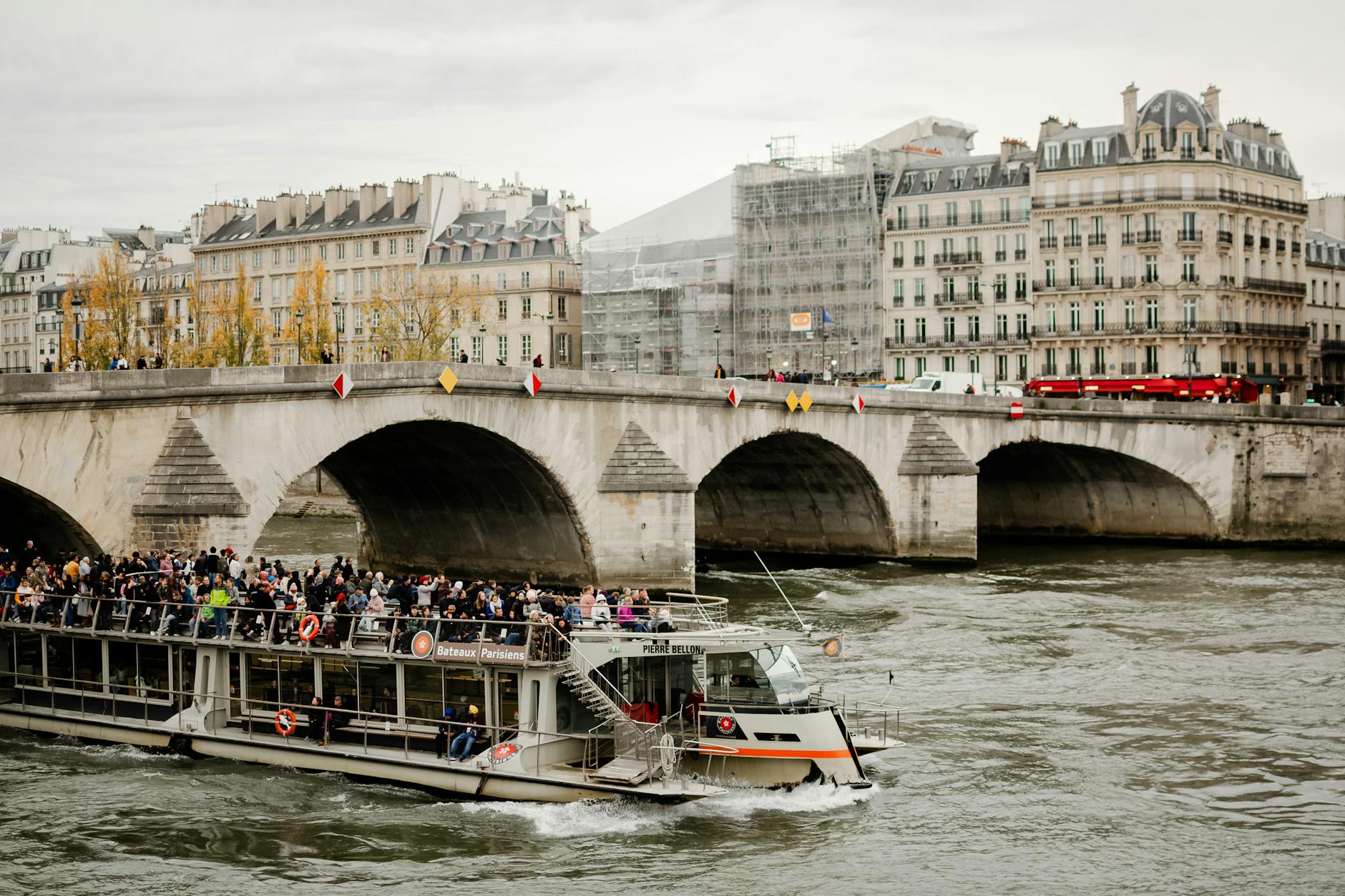
Paris is paved with cobblestones (the proper word is pavés), and they’re the number-one cause of foot pain on a Paris trip. The stones are roughly fist-sized granite blocks bedded in sand: uneven, slick when wet, and merciless on the wrong footwear.
Wear closed-toe shoes you’ve already broken in. New shoes, even comfortable ones, will blister you by day two. No heels on cobbles, ever; the stones catch them and your ankle pays the bill. No leather-soled dress shoes on wet days, because they slide. Lightweight running shoes, walking sneakers, or closed-toe walking sandals all do the job. Plenty of Parisian women wear white trainers with skirts, so you won’t stand out.
The worst cobblestone zones: the Marais (Rue Vieille-du-Temple and Rue des Rosiers especially), Saint-Germain (Rue de Buci, Rue Jacob), the Latin Quarter (everything around Rue de la Huchette), Montmartre (the whole summit), and the streets right around Notre-Dame. The big boulevards and the Champs-Élysées are smooth asphalt. If your feet give you trouble, stick to the boulevards and use the Metro to skip the old quarters, or accept that you’ll need a rest every 45 minutes.
Worth knowing: most of the cobbles in central Paris aren’t medieval. The current pattern was largely laid in the late 19th century after Baron Haussmann’s renovations, with more relaying after WWII and during the 1968 protests, when many were briefly pried up as projectiles. The city still relays sections now and then with replica granite blocks set in modern concrete, smoother and a touch less photogenic. Either way, your feet will know within the hour which kind of street you’re on. If you can manage it, pack two pairs of shoes and alternate them by day; the rest day for each pair cuts the blister risk noticeably.
Walking Safety: Crosswalks, Traffic, Scooters
Paris traffic moves faster and more decisively than American or British drivers do. Cars don’t slow for pedestrians outside marked crossings, and they won’t yield if you step out aggressively. Wait for the green walking signal. Jaywalking is technically illegal, the fine is tiny (about €4), but the real danger is that drivers expect you to wait, so they aren’t looking.
Rental e-scooters were banned from Paris streets in 2023 after a public referendum. Privately owned scooters are still legal and still everywhere, particularly in the 10th, 11th, and 18th. They share the bike lanes and they’re silent, so you won’t hear one coming. Always look both ways before crossing a bike lane, even on a one-way street, because bicycles legally run against traffic in many places thanks to dedicated contra-flow lanes.
The rule that keeps you safe: treat every painted bike lane as a separate road that runs both ways. Look left, look right, then cross. In the high-tourist zones (the Eiffel Tower base, the Trocadéro forecourt, around the Louvre, the steps of Sacré-Coeur, the Champs-Élysées) keep your wallet in an inside zipped pocket and your bag in front of you. The main street risk is pickpocketing, not violence. For the wider picture see our safest areas in Paris guide.
Walking Distances vs Metro
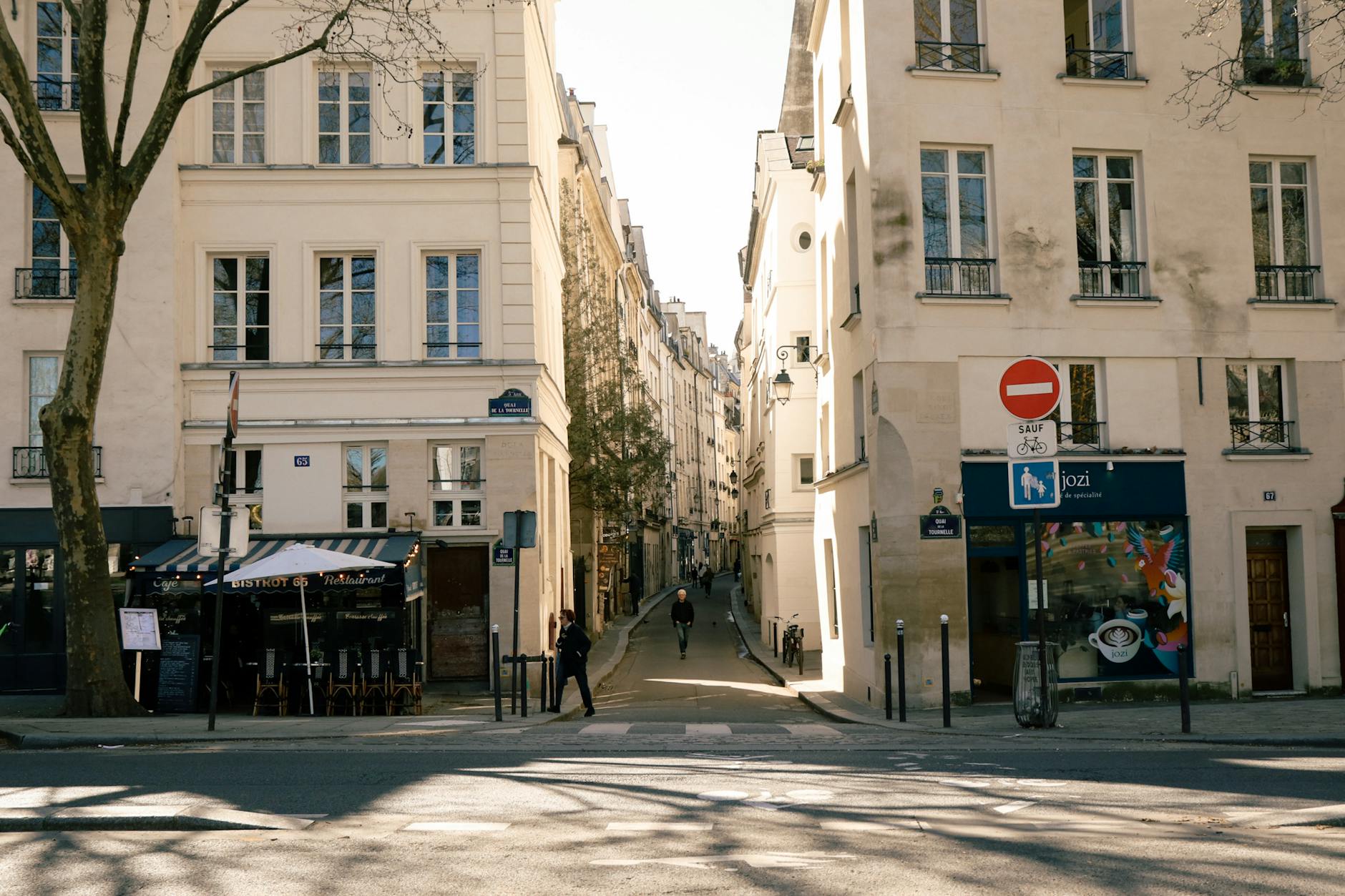
Here’s the most useful Paris secret going: for anything between 500 metres and 1.5 kilometres, walking beats the Metro. By the time you’ve walked to the station, gone down the stairs, waited two or three minutes for a train, ridden one stop, climbed back out, and got your bearings, you’d have arrived on foot. For more on Metro use see our Paris Metro guide.
Five common tourist trips where walking wins:
- Louvre to Tuileries — 10 minutes on foot through the courtyards; the Metro takes 15.
- Eiffel Tower to Trocadéro — 10 minutes over the Pont d’Iéna; the Metro needs a transfer.
- Notre-Dame to Sainte-Chapelle — 5 minutes across the Ile de la Cité; same Metro stop anyway.
- Sacré-Coeur to Abbesses — 8 minutes downhill, faster than waiting for the funicular.
- Opéra Garnier to Galeries Lafayette — 3 minutes; the buildings are practically neighbours.
The flip side: above 3km, take the Metro. Tourists routinely lowball Paris distances because the map looks small. Opéra to Eiffel reads like “a few blocks” on the Metro map; it’s actually 3.5km on foot.
Walking Etiquette
Parisians keep a set of unspoken pavement rules, and they get visibly irritated when tourists break them. None of these are hard.
- Stand right on escalators. In Metro stations and department stores above all. The left side is for people in a hurry.
- Pass on the right on sidewalks. Same as the driving direction. If you’re slow, hug the building side.
- Say “Bonjour” when you enter small shops — bakeries, butchers, cafes, boutiques. Silence reads as rude.
- Don’t eat while walking on most streets. Find a bench, a square, or a seat. A crepe from a stand is the one widely accepted exception.
- Don’t stop dead in the middle of the sidewalk for photos. Step aside. Locals are commuting around you.
- Don’t block doorways while you check a map. Duck into a recessed entrance or against a wall.
- Keep your voice down. Parisian street volume runs lower than most American cities. Loud groups draw irritation, and the attention of pickpockets.
Best Walking Times of Day and Year
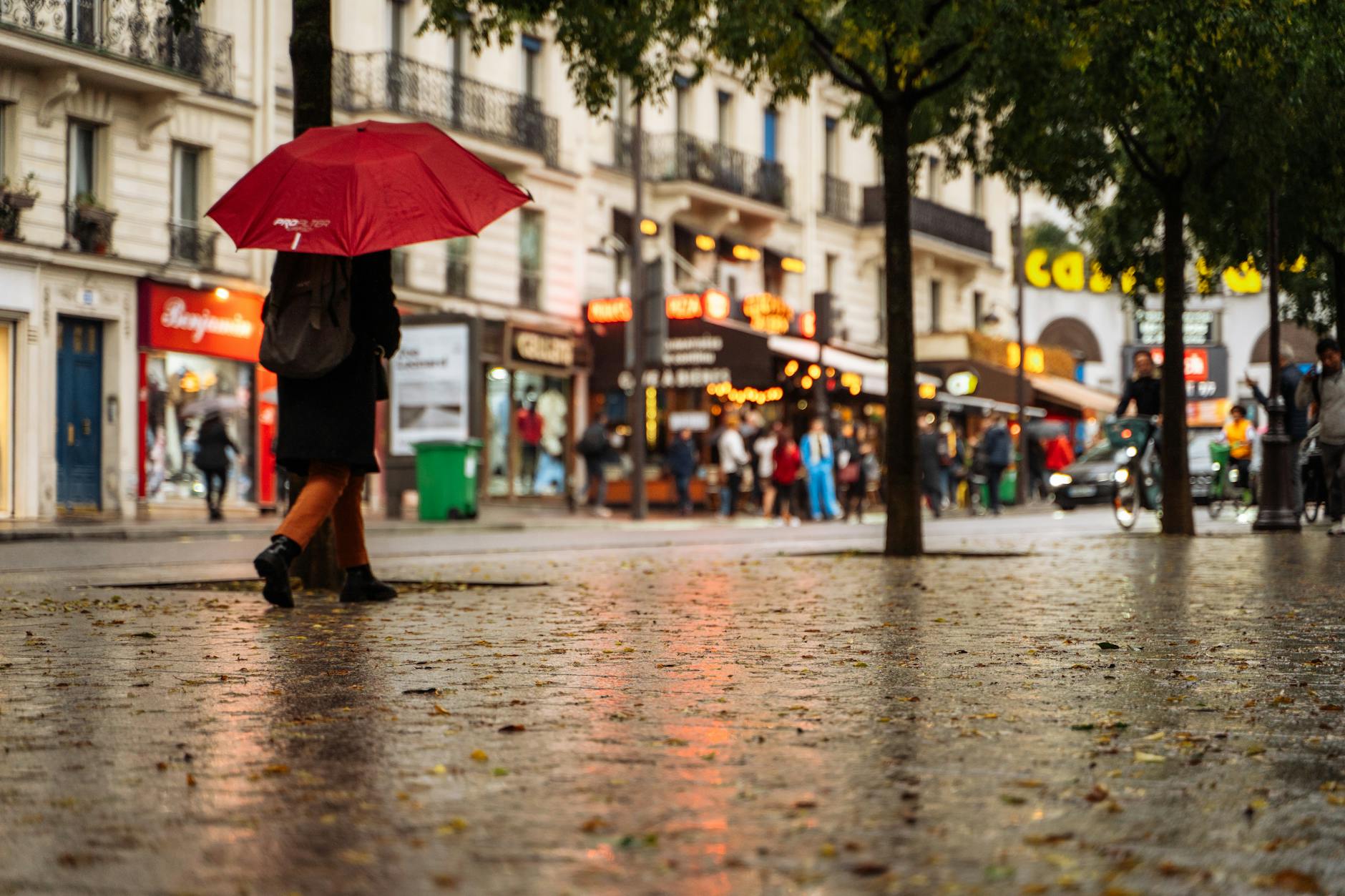
By global standards Paris weather is mild and damp, which makes it a remarkably good walking city all year. There’s no truly impossible season. For deeper seasonal guidance see our best time to visit Paris guide.
Spring (April-June) and Autumn (mid-September to October) are ideal: 16-22°C, less rain, gardens at their peak. These are the months when a 10-12km walking day feels like nothing.
Summer (July-August) carries heat-wave risk. Skip serious walking between 12pm and 4pm, when surface temperatures on the cobbles can top 35°C. The reward is the early morning: 6am to 9am in summer is magic, the light cool and the streets empty of crowds and delivery vans.
Winter (November-March) is mostly fine: 5-12°C, rainy but rarely freezing. Comfortable in layers and waterproofs. Snow is rare, disruptive, and brief. Christmas markets and lit boulevards make December walking memorable in spite of the 5pm sunset.
Time of day matters as much as the season. A dawn walk at 6:30am hands you golden light and empty streets; the Seine, Place des Vosges, and the Notre-Dame parvis all photograph magnificently before the city wakes. Evening walks between 5pm and 8pm catch the “blue hour,” when the monuments are lit but the sky still holds colour. For photographer-friendly spots see our Paris photo spots guide.
Wallace Fountains
Paris has 108 free public drinking fountains, installed in the 1870s by the philanthropist Sir Richard Wallace. They’re the dark-green cast-iron monuments with four caryatids (female figures) holding up a small dome; you’ve seen the photos. The water is potable, cold, and tested constantly.
The Wallace fountains run from late spring (mid-March in a mild year) through to the first frost in mid-November, then get drained in winter to stop the pipes freezing. Most cluster in the central arrondissements and tourist zones, so you’ll pass one every 10-15 minutes on the main routes. Bring a refillable bottle; the saving over bottled water on a hot sightseeing day is real, and the environmental case makes itself. There’s also a handful of still-and-sparkling fountains (Pétillante) in parks, where the water comes out carbonated.
Public Restrooms
The free public toilets are called sanisettes: the grey, self-cleaning, single-occupancy cabins on sidewalks all over the city, more than 400 of them. The door slides open when one’s free, then closes and self-disinfects for two minutes after each use before reopening. Free, generally clean, open 24/7, and marked on Google Maps.
Backups when there’s no sanisette nearby: any cafe, with the purchase of a coffee or water (€2-3 minimum); the department stores (Galeries Lafayette, Printemps, and BHV all have free customer toilets); museums while you’re inside on a ticket; and Metro stations with paid toilets (usually €1, contactless accepted at the larger interchanges). McDonald’s and the big brasseries are reliable too. For more practical money-saving tips see our Paris on a budget guide.
Walking with Strollers, Wheelchairs, Mobility Limited
Paris is, honestly, uneven. Sidewalks are narrow, kerbs are high, the cobbles are dense in the old quarters, and Metro accessibility is poor (only 9 of the 16 lines are step-free, mostly the newer automated lines 1 and 14). If you’re travelling with a stroller or have mobility limitations, plan around all this rather than fight it.
Stroller-friendly neighbourhoods: the 7th around the Eiffel Tower (wide sidewalks, smooth pavement); the 8th along the Champs-Élysées; the 16th around Trocadéro; the Tuileries and Luxembourg Gardens (gravel but flat); Parc Monceau; and the outer paths of Parc des Buttes-Chaumont.
Stroller-tough neighbourhoods: the Marais (cobbles, narrow sidewalks); Montmartre (hills and stairs); the Latin Quarter (cobbles, dense crowds); and the little Ile Saint-Louis streets (no real sidewalk in places).
Wheelchairs: the bus network is fully step-free and beats the Metro for access. RER A and B offer step-free access at major stations. The big museums (Louvre, Orsay, Pompidou, Quai Branly) are all fully accessible. Most street walking in the Marais and Montmartre is genuinely hard, so pre-plan and accept that some routes are off the table.
Walking with Kids
Children walk slower than you remember. Plan on 1.5 to 2 kilometres an hour with kids aged 5 to 10, roughly half adult pace once you factor in the distractions, snack stops, and the inevitable shoelace. Older kids (10+) hold close to adult pace but still need regular sit-downs.
Realistic daily targets: under-5s, 1-2km total broken into short bursts; ages 5-8, 3-4km tops; ages 8-10, up to 6km; 10-and-up can handle an adult 8-10km day if they’re into it. Bring snacks (a bag of madeleines from any bakery defuses most crises), a refillable water bottle, an extra layer since Paris weather turns by the hour, and a small umbrella.
Other parent essentials: a small pocket map or printed route, because phone batteries vanish fast with GPS running nonstop; a portable USB battery; antiseptic wipes; and a few Metro tickets stashed for when the walk goes sideways. Plan one major attraction a day, not three. The Paris family days that work are the ones with a park or playground built in.
Good kid-friendly pairings: morning at the Louvre, afternoon in the Tuileries (sandpit, trampolines, and pony rides in summer); morning at the Eiffel Tower, afternoon at the Champ-de-Mars playground; morning at the Natural History Museum, then wandering the Jardin des Plantes; morning in Montmartre, then the carousel below Sacré-Coeur. Always end on play, not a museum. Carry a few small euro coins for carousels (around €2-3 a ride) and ice cream stops, which are the single best currency for getting a tired child to walk one more block.
The Walking Kit
The packing list for a Paris walking day. None of it is exotic, but a missing item will cost you a morning.
- Comfortable closed-toe shoes, already broken in — never new for a trip.
- Waterproof outer layer — a packable rain shell beats an umbrella in wind.
- Refillable water bottle, 500-750ml, for the Wallace fountains.
- Compact travel umbrella as backup — Paris drizzle is unpredictable.
- Sunscreen and a hat in summer — the surfaces throw heat straight back at you.
- Cross-body anti-theft day pack with a zippered main compartment, worn front-on in crowds.
- Charged phone with Google Maps and Citymapper downloaded for offline use.
- Portable battery pack, 5,000-10,000mAh — GPS drains a phone in 4-5 hours.
- Photocopy of your passport, kept separate from the original. Leave the original locked at the hotel.
- Small first-aid kit: blister plasters (the most-used item on any Paris trip), pain reliever, antihistamine.
- Reusable shopping bag folded flat — bakery and market buys happen constantly.
Walking + Other Transit Combinations
The smart strategy is rarely “walk everywhere” or “Metro everywhere.” It’s almost always a hybrid. Three rules of thumb:
- Long axis trips: Metro out, walk back. Trocadéro to Bastille is 5.5km. Take the Metro to the far point at 9am on fresh legs, then walk back through the Marais and the Right Bank quays to your hotel.
- Arrival days with luggage: Metro to the hotel, then walk. Don’t drag wheeled bags over cobblestones. Get to the hotel, drop the suitcase, then explore on foot.
- Rainy days: more Metro, less walking. Cobbles turn slick and umbrella visibility in a crowd is dreadful. Use the Metro to hop between covered destinations: museums, department stores, the covered passages.
A useful daily formula for a 7-day Paris trip: walk 6-8km a day across two main blocks (morning and afternoon), with the Metro covering the longer reposition jumps in between. That works out to roughly 45km of walking over the trip, enough to feel you’ve genuinely seen the city without leaving you wrecked.
Frequently Asked Questions
Is Paris safe to walk at night?
Yes. The central tourist arrondissements (1-8, plus the Marais in the 3rd-4th and Saint-Germain in the 6th) are safe to walk well past midnight, especially on Friday and Saturday when the streets are busy. Stick to lit main streets, steer clear of empty Metro entrances after 11pm, and use normal big-city awareness. The outer arrondissements (the 18th north of Sacré-Coeur, the 19th, the 20th, parts of the 10th around Gare du Nord) are less advisable for late-night solo walking.
How many kilometres should I expect to walk per day in Paris?
Active sightseers rack up 8-12km a day in Paris without noticing; the city pulls you along. Casual sightseers land at 5-8km. Plan for the lower end on arrival day and the higher end by mid-trip, once your legs have adjusted.
Are Paris sidewalks clean enough to walk in lightweight shoes?
The major boulevards and tourist quarters get cleaned daily and are fine for any shoe. Side streets in some quarters (the 10th, 18th, 19th) carry more dog mess and litter, which isn’t a problem in sneakers, but you wouldn’t want open sandals.
Do I need a paper map or is my phone enough?
Your phone handles navigation fine. Bring a portable battery, though — GPS plus screen drains a smartphone in 4-5 hours. A pocket-sized free tourist map from your hotel makes good backup.
Can I drink water from the Wallace fountains?
Yes. It’s the same Paris tap supply piped to every home in the city, tested constantly and rated highly potable. The fountains run roughly mid-March to mid-November.
What is the most beautiful walk in Paris?
The Seine quay walk between Pont de Sully and Pont Royal, on either bank, beats everything else for atmosphere. At sunset in spring with no clock to watch, it’s hard to top.
Is jaywalking really illegal in Paris?
Technically yes, with a small fine (around €4), and enforcement is rare. The real reason to wait for the green signal is that Parisian drivers don’t expect anyone to step out, so jaywalkers get hit. Wait the 20 seconds.
Are there free walking tours in Paris?
Yes. Several companies run tip-based free walking tours daily from Place Saint-Michel, the Louvre pyramid, and Montmartre, usually 2-3 hours long. Tip €10-20 a person if the tour’s good. See our paris walking tours guide for organised options.
The Bottom Line
In Paris, walking is the transport that defines the city. The Metro moves you efficiently, the buses scenically, the boats romantically, but the walk is where Paris shows itself: the bakery you smell before you spot it, the courtyard you’d have missed, the small bridge with the perfect view. Get the shoes right, learn the pedestrian zones, mind the etiquette, and everything else falls into place.
Related reading
Use these to round out your trip:
- how to navigate Paris
- cycling and Velib
- taxis and ride-sharing
- the Eurostar to London
- How Many Days in Paris? The Perfect Trip Length for Every Traveler
- Fontainebleau Day Trip from Paris
Every route on this page is better walked alone, for the unromantic reason that the whole point of a Paris walk is being diverted — down a passage, into a church, along a street you had not planned on — and with company that becomes a negotiation. Our guide to solo things to do in Paris takes the same idea through the museums, the meals and the evenings.