Palace of Versailles Guide: Everything You Need to Plan Your Visit
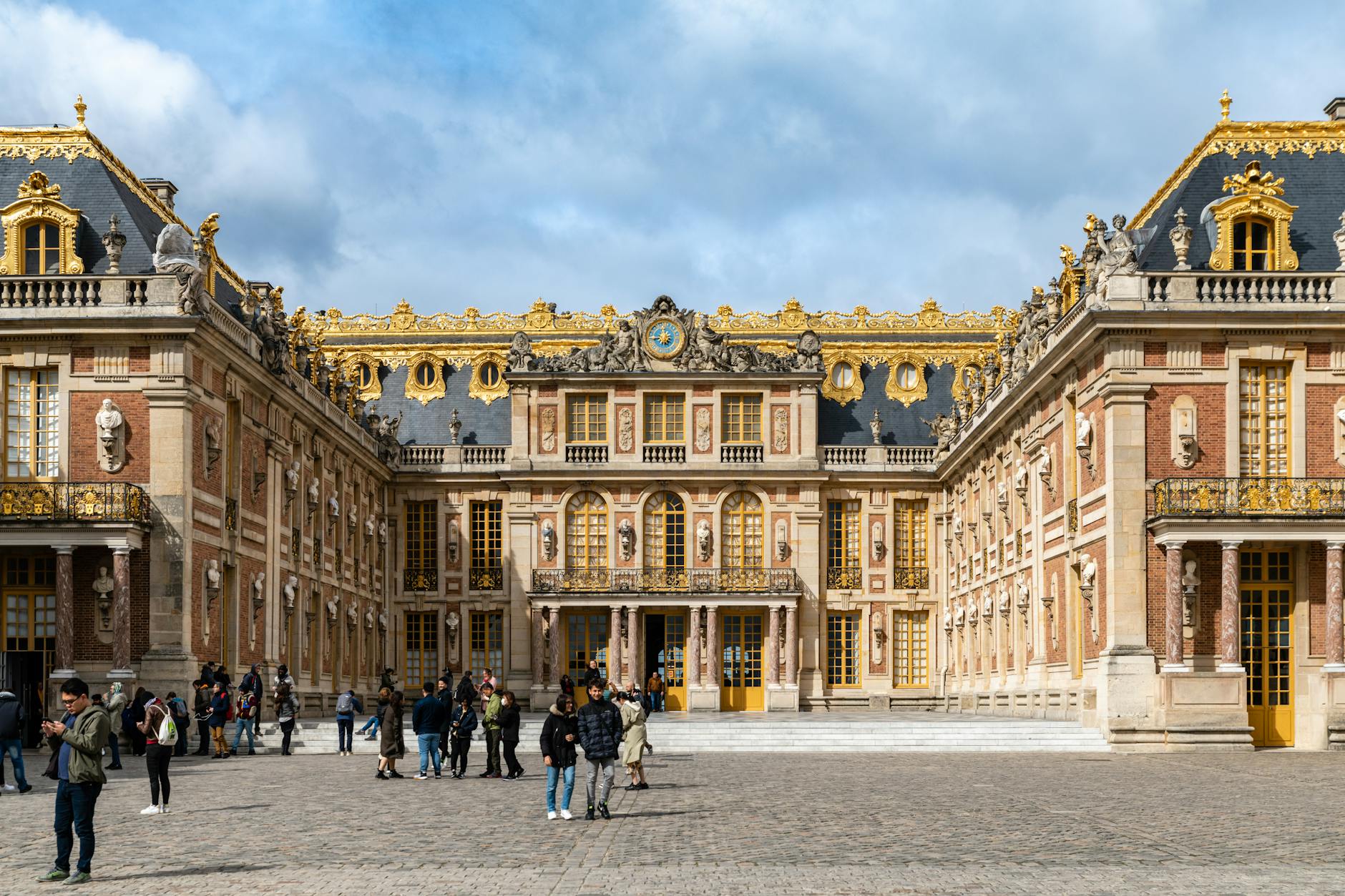
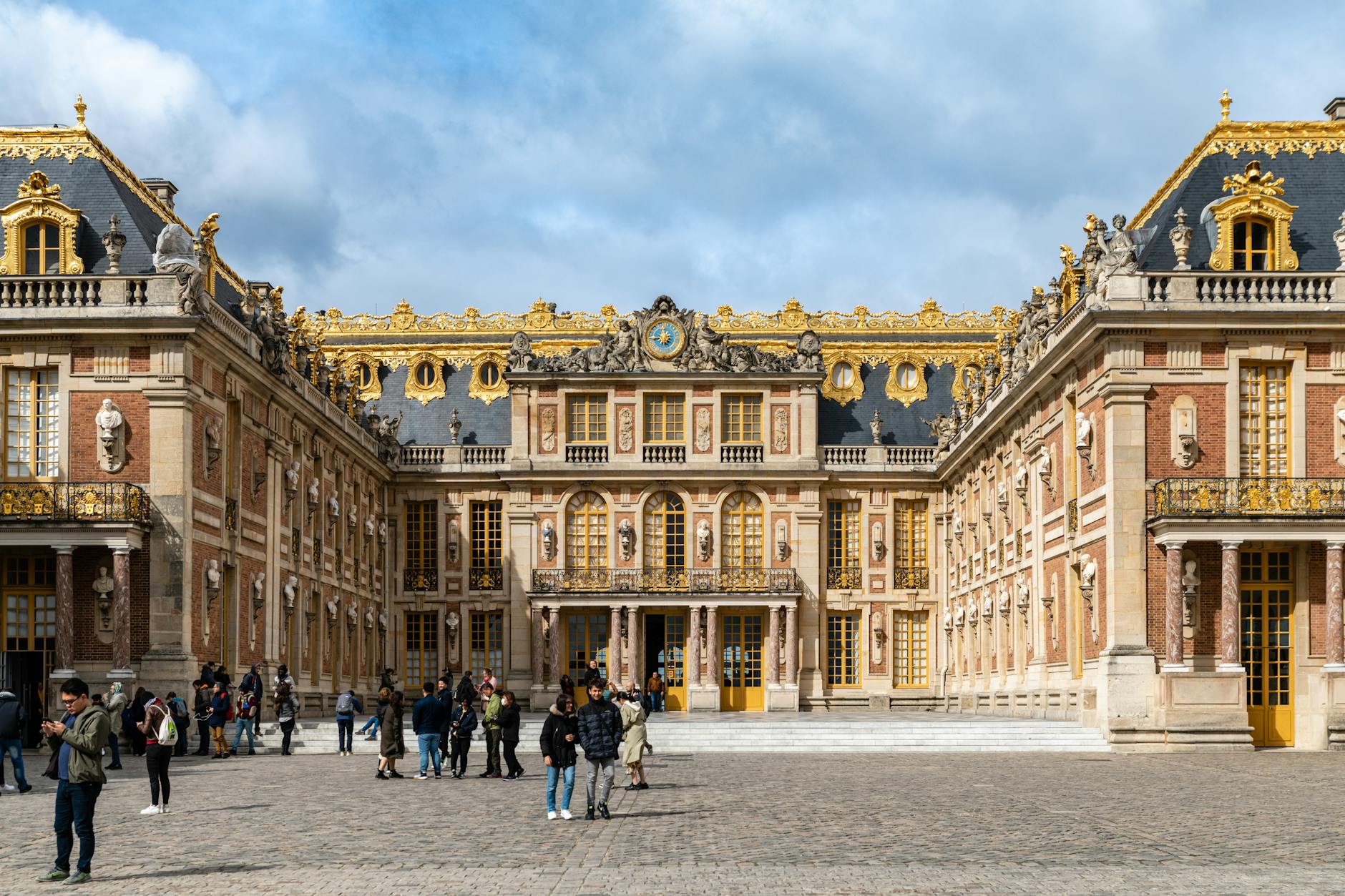
The palace of versailles pulls 8 million visitors a year, which makes it the most popular day trip from Paris by a long way, and also the most ambitious single day you’ll attempt on your trip. You’re looking at 2,300 rooms across 67,000m² of palace floor and 800 hectares of formal gardens, and doing all of that well takes the kind of planning most tourists never bother with. This guide lays out the four-ticket strategy (Palace, Trianon, Gardens, Passport), how to dodge the 60-90 minute summer queue, the days to absolutely avoid (Tuesday, closed), the Musical Fountains schedule for 2026, and a sensible eat-and-rest plan that turns a brutal eight-hour slog into the best day of a Paris trip.
Here’s the thing about Versailles: it was never just a building. It’s the political and aesthetic argument of an entire absolute monarchy, made in stone and gold, and you feel that the moment the gilded gate swings into view across the cobbled Place d’Armes. Doing the day justice means having a plan. What follows covers the transit options, the deliberately confusing ticket maze, the rooms worth slowing down for, the gardens, the Trianon estate, season-by-season advice, the 2026 fountains calendar, eating logistics, kid considerations, and the small practical stuff (water, batteries, bathrooms) that decides whether you go home glowing or wrecked. Run through it before you leave. Versailles rewards preparation more than just about any other Paris attraction.
The Palace of Versailles at a Glance
Before the logistics, here’s the snapshot every first-timer should have in their head. These are the numbers and rules that shape every decision you make about the visit.
- 8M visitors per year, the busiest single historic monument in France.
- 2,300 rooms across the main palace, only a fraction of them open to the public.
- 67,000m² of palace floor space, one of the largest royal residences ever built.
- 800 hectares of formal gardens, parkland, woodland, and the Trianon estate.
- Built 1623-1715 across 92 years, beginning as Louis XIII’s modest hunting lodge.
- UNESCO World Heritage Site since 1979.
- Louis XIV moved the royal court here in 1682, centralising French political life.
- The French Revolution ended royal occupation in October 1789.
- Tuesday closed all year, the single most important date in your planning.
- € varies by ticket type: €21 palace-only up to €32-€34 Passport in 2026.
- 1 hour from central Paris by RER C, the most-used route.
- Musical Fountains Show runs weekends + select Tuesdays, April to October.
How to Get to Versailles from Paris
Versailles sits 17 km south-west of central Paris, in the suburb that shares its name. Getting there is genuinely easy. You’ve got four reliable options, each with a different price-and-comfort trade-off, but your choice of station and line changes how far you walk at the other end. Sort this out before you leave the hotel.
RER C from Paris
The default, and the cheapest. The RER C runs every 15 minutes from central stations including Saint-Michel-Notre-Dame, Musée d’Orsay, Champ de Mars-Tour Eiffel, and Pont de l’Alma. The line splits at the western edge of Paris, so check that your train terminates at Versailles Château Rive Gauche. That’s the closest station, a 10-minute walk straight up Avenue de Paris to the palace gate. The journey runs 35-45 minutes, the fare is €4 each way, and it’s covered if you’ve loaded a Navigo Easy for Zone 4 or bought a dedicated “RER C to Versailles” single. Hang on to the ticket, because you scan it again to get out at Versailles.
SNCF Transilien Lines N and U
Two mainline alternatives leave Paris from Gare Montparnasse (Line N to Versailles Chantiers) and Gare Saint-Lazare (Line U to Versailles Rive Droite). Both take 30-40 minutes and cost €4 each way. The catch is that both stations are a bit further from the palace on foot than Rive Gauche, around 15-20 minutes, which is why most casual visitors stick with the RER. Take the Transilien if you’re coming from the southern Left Bank or the Saint-Lazare area and prefer fewer stops.
Driving from Paris
It’s 17 km via the A13 motorway, roughly 30-40 minutes off-peak and easily 60-90 in rush hour. On-site parking costs €4.50 per hour or €19.50 for the day. Honestly, don’t drive: the car parks fill early on weekends, the A13 frays the nerves of even seasoned Paris drivers, and the train drops you closer to the gate anyway. Save the car for a multi-day family trip where you’re carrying on to Normandy or the Loire afterwards.
Guided day tour with bus transport
If you want zero logistics, a guided day tour with bus transfer from a central Paris meeting point runs €100-180 per person through Get Your Guide, Take Walks, or similar operators. The price covers skip-the-line entry, a two-hour guided palace tour, audio guides for the State Apartments, and free time in the gardens afterwards. It earns its keep when your Paris days are tight or you simply don’t want to wrestle the ticket maze yourself. Compare the options in our best Paris tours roundup.
Best station: Versailles Château Rive Gauche
Of the three Versailles stations, Château Rive Gauche wins on distance: a flat 10-minute walk along Avenue de Rockefeller into the Place d’Armes. Versailles Chantiers and Versailles Rive Droite each tack on an extra 10-15 minutes through town. Rive Gauche also has the most ticket machines and the clearest English signage, which you’ll appreciate when you’re hustling back at 7pm with tired children in tow.
The Four Ticket Types Explained (2026 Prices)
The Versailles ticket system is confusing on purpose, because the estate is technically three separate sites: the main palace, the Trianon estate, and the gardens. You can do each one alone or fold them all into a single Passport. Here are the 2026 prices and what each ticket actually buys you, in plain English. If this is your first visit, read it twice.
| Ticket | 2026 price | Includes |
|---|---|---|
| Passport | €32 | Palace + Trianon + Hamlet + free gardens |
| Passport with Musical Fountains | €34 | Above + Grandes Eaux days |
| Palace only | €21 | Palace + Hall of Mirrors + State Apartments |
| Trianon only | €13 | Grand Trianon + Petit Trianon + Hamlet |
| Gardens (free days) | Free | Gardens when Musical Fountains is off |
| Gardens (Musical Fountains) | €10.50 | Fountains run with music |
Passport Ticket (€32)
The best value for first-timers, full stop. The Passport bundles palace entry, the Trianon estate, Marie-Antoinette’s Hamlet, and the gardens (on free days). Add €10 on Musical Fountains days for the Grandes Eaux Musicales, or just buy the “Passport with Garden Show” combo at €34. One ticket, one timed entry slot, everything included. We recommend it in roughly 90% of cases.
Palace Only (€21)
Just the main palace: Hall of Mirrors, State Apartments, Royal Chapel, Battle Gallery. The right call if you’re back for a second visit, short on time and skipping the Trianon, or arriving late afternoon (after 3pm) and only want the headline interior. You can still walk the gardens free afterwards on non-Musical Fountain days.
Trianon Only (€13)
Grand Trianon, Petit Trianon, and Marie-Antoinette’s Hamlet. A great choice for a second visit, or for anyone who’s already done the main palace and wants the quieter, more intimate side of the estate. Plenty of long-term Paris residents will tell you the Trianon, not the palace, is their favourite part of the whole place.
Gardens and Musical Fountains
The gardens are free to walk except on Musical Fountains and Musical Gardens days, which carry a €10.50 supplement. They’re open year-round, 8am to 6:30pm in winter and 8am to 8:30pm in summer. On free days, you walk in through the gate beside the palace entrance.
Free admission and discounts
Free entry applies to under-18s worldwide, EU residents aged 18-25, disabled visitors plus one companion, teachers showing ID, and everyone on the first Sunday from November through March. The Paris Museum Pass also covers Palace + Trianon (though not the Musical Fountains) and currently runs €70 for 2-day, €85 for 4-day, and €105 for 6-day, which is excellent value once you’re hitting three or more major Paris museums.
Where to buy your ticket
Book direct on chateauversailles.fr, the official site, every time. Tickets there typically run €5 cheaper than third-party resellers, and the official platform is the only place to reserve the mandatory timed entry slot, introduced in 2017 to keep the crowds moving. Print the ticket or screenshot it, because phone signal at the gate gets patchy on busy weekends.
Skip-the-Line Strategies
On a peak summer weekend, the walk-up queue at the palace can run 60-90 minutes. You don’t have to stand in any of it if you plan ahead. Here’s the queue-busting playbook, in priority order.
- Pre-buy a timed entry online. This is the single most important step. The 9am, 9:30am, and 10am slots go first, so book at least seven days ahead in summer.
- Arrive 15 minutes before your slot, not later. Security takes 5-10 minutes, and latecomers get bumped to the next slot, if they get in at all.
- Paris Museum Pass holders still need a separate timed entry reservation via chateauversailles.fr. The pass is the ticket; the reservation is the slot. People miss this and queue for nothing.
- Guided tour with skip-the-line entry. Tour groups get dedicated entrance lanes. €100-180 per person buys the round-trip bus from Paris, audio guide, a two-hour palace tour, and free garden time.
- Avoid Tuesday. The palace is closed completely.
- Avoid weekends, school holidays, and bank holidays. The site can hit 30,000 visitors, and the Hall of Mirrors turns into a scrum.
- Best day to go: Wednesday, right after the Tuesday closure, when crowds are thinnest.
- Best time: the 9:30am opening, or after 3pm, once the coach-tour groups have cleared out.
- Worst time: 11am to 2pm, when every tour bus from Paris has unloaded at once.
What to See Inside the Palace: Top 12 Highlights
The palace holds over 2,300 rooms, but the visitor route runs through roughly 60 of the best. Here are the twelve set pieces worth slowing down for, in roughly the order you’ll meet them on the standard route from the Hercules Salon onwards.
Hall of Mirrors (Galerie des Glaces)
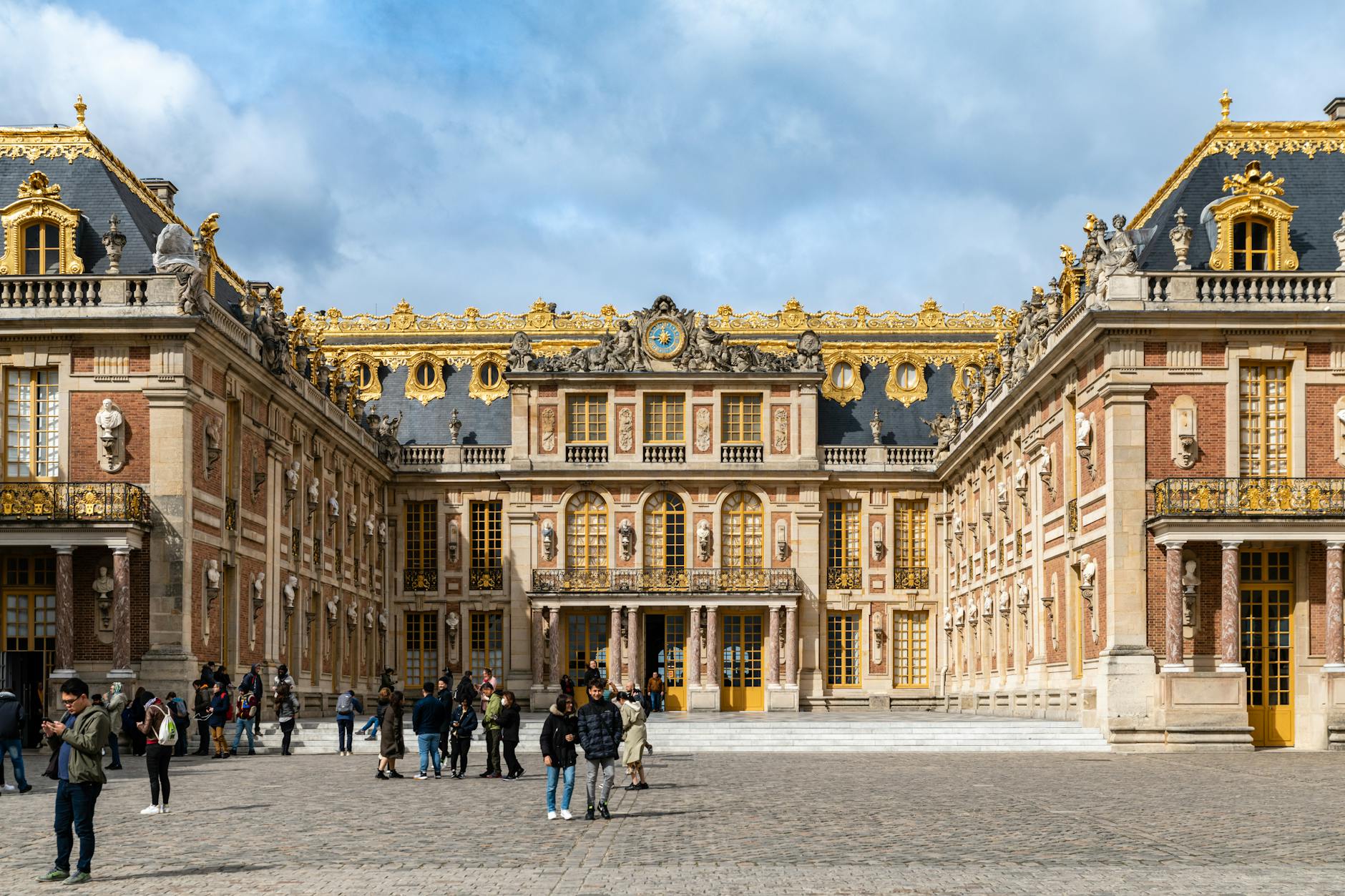
The most famous room in the palace, and arguably the most famous room in any palace anywhere. It runs 73 metres, lined with 357 mirrors set to face 17 enormous arched windows over the gardens. Jules Hardouin-Mansart designed it in 1684, and Charles Le Brun painted the ceiling with scenes celebrating the first eighteen years of Louis XIV’s reign. This is where the Treaty of Versailles was signed on 28 June 1919, with Germany formally accepting defeat in the First World War. Stand in the middle, look out toward the gardens, and you’re seeing the view that ended a war.
King’s State Apartments
A suite of seven ceremonial rooms, each tied to a Roman god and its planet: Hercules, Abundance, Venus, Diana, Mars, Mercury, Apollo. These were the formal reception rooms where the king received ambassadors and ran the public business of court. The Apollo Salon (more below) doubled as the throne room. Look up in every one; each ceiling is a baroque opera staged in plaster and paint.
Queen’s State Apartments
The mirror suite on the south wing belonged to the queen. Marie-Antoinette redecorated heavily through the 1770s and 1780s, and the rooms still carry her gilded acanthus, her pale silks, and the bed where she slept and where 19 royal children were born in public, in front of the assembled court, a tradition she famously loathed.
Royal Chapel
Finished in 1710, the Royal Chapel is a baroque-rococo masterpiece on two storeys: the king sat in the upper royal gallery, the courtiers below. The acoustics are still superb, and classical concerts run here several times a year. Even if you can’t make a concert, give it five minutes. It’s the quietest, most contemplative space in the whole palace.
Royal Opera (Opéra Royal)
Opened in 1770 for the wedding of the future Louis XVI and Marie-Antoinette, the Royal Opera ranks among the most beautiful 18th-century theatres in Europe: all wood, gilt, and faux marble, with seats for 700. Performances run in season, and tickets sell out months ahead.
King’s Bedchamber
The literal centre of the palace. Louis XIV placed his bed on the east-west axis, aligned with the rising sun. The morning levée ritual played out here, with dozens of courtiers jostling for the honour of handing him a shirt or a slipper. The bed is a reproduction, but the choreography of absolute power is real enough.
Apollo Salon
The throne room. Louis XIV took Apollo, the sun god, as his personal emblem, which is where Le Roi Soleil, the Sun King, comes from. The original silver throne was melted down to fund war in 1689, but the room survives, sun-god ceiling and all, along with the exact spot where the monarch stood to receive ambassadors.
Battles Gallery
A 19th-century addition under Louis-Philippe, the Galerie des Batailles stretches 120 metres of enormous military paintings, from Clovis at Tolbiac in 496 to Wagram in 1809. A touch bombastic, but a welcome breather from the rococo overload.
Diana’s Salon
Originally Louis XIV’s billiard room. He was apparently very good, and he liked an audience.
Coronation Room
Dominated by Jacques-Louis David’s monumental Coronation of Napoleon (a copy by the artist himself; the original hangs in the Louvre, see our Louvre Museum guide). A reminder that Versailles outlived the monarchy, reborn as a national museum from 1837.
Crusades Galleries
A series of 19th-century historical rooms staging an idealised version of the medieval crusades. Skippable if you’re pressed; worth a slow wander if you’ve got the time and a soft spot for neo-Gothic.
Hercules Salon
The transition room you pass into after the Royal Chapel. Look up: François Lemoyne’s 480m² ceiling fresco, The Apotheosis of Hercules, finished in 1736, was the largest in France at the time. Lemoyne killed himself shortly after completing it.
The Gardens of Versailles
The gardens aren’t a polite afterthought to the palace. Make the case and they’re the greater achievement: 800 hectares of geometry and stagecraft, designed between 1661 and 1690 by André Le Nôtre under the direct eye of Louis XIV. They invented the French formal garden, a style Europe copied for the next two centuries.
The whole layout obeys strict symmetry along the east-west axis. The parterres, geometric flower beds, fan out from the palace terrace and step down toward the Grand Canal. The bosquets, themed groves, line the secondary axes, each one a distinct outdoor room with its own programme of sculpture. The fountains were hydraulically impossible at first, so Louis built the Machine de Marly on the Seine to pump water uphill, still one of the most audacious water-engineering feats of the 17th century.
Grand Canal
1.6 km long, 62 metres wide, cross-shaped in plan. Louis XIV staged naval reenactments here with miniature frigates crewed by sailors on loan from the French navy. From April to October you can rent a four-person rowing boat for around €18 an hour, and it’s one of the most purely enjoyable things to do on the estate, especially in the late-afternoon light.
Apollo Fountain and Latona Fountain
The Apollo Fountain at the head of the Grand Canal shows the sun god rising in his chariot from the water, yet another Louis-XIV-as-Apollo monument. Higher up, the dramatically terraced Latona Fountain depicts the myth of Latona turning peasants into frogs. Both are stops on the Musical Fountains route.
Bosquets (groves)
More than 30 themed garden rooms hidden in the woodland on either side of the central axis. The Salle de Bal (Ballroom Grove) is a sunken amphitheatre with cascading water steps. The Bosquet des Trois Fontaines is a three-tier basin restored in 2004. Only about half are open on any given day, so check the daily map at the entrance.
Orangerie
Cut into the south-facing slope below the palace, the 18th-century Orangerie shelters more than 1,000 citrus and palm trees through winter. From May to October they’re wheeled out in tubs onto the lower parterre. The building itself is one of the most elegant pieces of architecture on the estate: long, low, and serene.
Musical Fountains and Musical Gardens
On Grandes Eaux Musicales days, all 30-plus fountains run to a choreographed schedule with baroque music piped through speakers across the gardens, on Saturdays, Sundays, and select Tuesdays from April to October. The fountains fire 11am to noon and 3:30 to 5pm, building to a finale at the Neptune Basin. Jardins Musicaux days play music throughout the grounds while the fountains stay off. It’s a €10.50 supplement, or included with the Passport with Garden Show.
Garden hours and getting around
Open 8am to 6:30pm in winter, 8am to 8:30pm in summer. The estate is far too big to walk in a single day, so think about bike rental (around €8 an hour, kids’ sizes available) for the run out to the Trianon, or the Petit Train shuttle (€8 round trip, every 20 minutes). Either way, comfortable shoes are non-negotiable.
The Trianon Estate: Grand Trianon, Petit Trianon, Hameau
The Trianon estate sits 2 km north-west of the main palace, screened off by woodland and the Grand Canal. This was where the royal family escaped the suffocating court of the main palace, and it’s the part of Versailles most casual visitors skip outright. They’re making a mistake. Walking the Trianon at 4pm, the crowds long gone, is what turns Versailles from a sight you ticked off into a day you actually remember. Get there on foot (30 minutes), by rented bike (15 minutes), or on the Petit Train (€8 round-trip, every 20 minutes from the palace terrace).
Grand Trianon
Built in 1687 as Louis XIV’s private retreat from his own court, the Grand Trianon is a single-storey palace clad in pink Languedoc marble, with a peristyle of paired columns. It’s smaller than the main palace and far more intimate, and its apartments were later used by Napoleon and Charles de Gaulle. The gardens here run looser and more romantic than the rigid main parterres.
Petit Trianon
A 1768 neoclassical pavilion built by Louis XV for his mistress Madame de Pompadour, then handed to Marie-Antoinette by Louis XVI as a personal retreat. She rebuilt the interior and gardens entirely to her own taste, so stepping inside today means walking through the most private spaces of the doomed queen.
Marie-Antoinette’s Hamlet (Hameau de la Reine)
Built in 1783, the Hameau is a mock peasant village: thatched cottages, a working farm, a mill, a dairy, an ornamental lake. Marie-Antoinette and her ladies-in-waiting played at rustic life here, milking cows that servants had washed clean first. It may be the most quintessentially French aristocratic conceit ever built, and it’s also genuinely lovely, particularly in spring when the farm is up and running.
Belvédère Pavilion and English Garden
Around the Hameau winds one of France’s earliest English-style gardens, all curving paths, irregular lakes, and faux-romantic ruins. At its heart stands the octagonal Belvédère Pavilion (1770s), a small neoclassical folly looking out over the water.
Marie-Antoinette’s Theatre and Temple of Love
The Theatre (1779) is a tiny private playhouse where the queen and her circle staged amateur productions. Recently restored, it opens occasionally for special tours. The Temple of Love (1778) sits on a small island in the Petit Trianon gardens, a circular rococo folly with a marble Cupid at its centre. Both are the sort of detail you only find if you make the trek out to the Trianon.
Best Time of Year to Visit Versailles
Versailles is open year-round (apart from Tuesdays and a couple of national holidays), and each season genuinely changes the experience. Here’s the month-by-month verdict.
April-May (best months overall)
The gardens hit peak flower, tulips first, then early roses, with the parterres at their most photogenic. Crowds stay moderate, and the Musical Fountains season opens in early April. May is probably the single best month, landing before school holidays inflate the numbers. Pair it with our Paris summer activities for an early-season weekend.
June (warm and busy)
Long daylight, gardens at their peak, Musical Fountains in full swing. It’s also the start of high season, so expect 15,000-plus on a fountains weekend. Book your timed entry at least two weeks out.
July-August (avoid if possible)
Peak crowds: daily counts routinely top 15,000 and can hit 30,000 on a bank-holiday weekend. There’s no air conditioning in the main galleries, and the Hall of Mirrors in July is genuinely unpleasant. If you have to come in summer, take the 9am slot and be out by noon.
September (the sleeper pick)
Post-summer crowds fall away fast, the gardens still look great, and the Musical Fountains keep running through late October. A September weekday morning rivals May for the best experience of the year.
October (foliage and last fountains)
Autumn colour spreads through the parkland, and the final Musical Fountains weekends wrap up around 25 October. Cooler air, smaller crowds, lower hotel prices in town. A badly underrated month.
November-March (off-season serenity)
The quietest stretch of the year. The gardens are free, the fountains are off, and bare trees stand against the parterres, austere but beautiful, especially under snow. The palace itself feels cosy and hushed. These are the best months for repeat visitors and photographers. See our Paris winter activities guide for what else to fold into the day.
The single worst day to visit is a summer Wednesday following a closed Tuesday with a bank holiday and weekend overlap. The best is an October Wednesday, ideally mid-morning.
Musical Fountains and Musical Gardens Calendar 2026
The Musical Fountains are the showpiece of the Versailles calendar. The gardens come alive in a way they simply can’t when the basins sit still. Here’s the 2026 schedule, boiled down.
| Event | Dates 2026 | Time | Price |
|---|---|---|---|
| Grandes Eaux Musicales | 4 April – 25 October | 11am-noon, 3:30-5pm | €10.50 supplement |
| Jardins Musicaux | Same days, music only | 10am-7pm | Included with Passport |
| Grandes Eaux Nocturnes | Select Saturdays Jul-Sep | 8:30-11pm + fireworks | €30+ separate |
Grandes Eaux Musicales (Musical Fountains)
Runs 4 April to 25 October 2026, on Saturdays, Sundays, and select Tuesdays. All 30-plus fountains play to a choreographed schedule with baroque music piped through the gardens, 11am to noon and again 3:30 to 5pm. The afternoon session tends to be less crowded, and the light is better for photos. It’s a €10.50 supplement on top of garden entry, or buy the Passport with Garden Show (€34) for the whole estate.
Grandes Eaux Nocturnes (Night Fountains Show)
On select Saturday evenings from July through September, the estate stages a night fountains spectacle: illuminated basins, music, and a fireworks display at 11pm over the Grand Canal. Tickets start at €30, sold separately, and they go months ahead. Worth the planning, and genuinely unforgettable.
Jardins Musicaux and free garden days
Jardins Musicaux days pipe music throughout the grounds even with the fountains off, for a calmer experience. On non-Musical Fountains days (Monday to Friday outside the fountain calendar), the gardens are free to enter and noticeably quieter. Note that the gardens close to general access on Sundays unless the Musical Fountains are running.
Eating at Versailles and Bringing a Picnic
On-site food at Versailles is functional and mostly overpriced. The best move is to bring a picnic; the second-best is to walk into Versailles town. Here’s how to handle it.
Bring a picnic (recommended)
Picnics are free, allowed across the gardens, and far cheaper than anything on site. Pack water (at least 1.5L per person in summer), sandwiches, fruit, and a light blanket if you’ve got one. There’s plenty of bench and shaded-lawn space, especially around the Grand Canal. A good Parisian boulangerie sandwich plus a pastry costs about €8 and beats every restaurant on the estate.
Café Orées and La Petite Venise
At the Apollo Fountain end of the Grand Canal, two restaurants share an 18th-century pavilion: Café Orées (Alain Ducasse) and La Petite Venise. Mains run €25-40, and the setting alone justifies the splurge if you’re doing the full Passport day. Reserve ahead, especially on Musical Fountains weekends.
Angelina Versailles
A branch of the famous Rue de Rivoli salon, tucked into the palace courtyard. The legendary hot chocolate (L’Africain) is reason enough to stop; lunch is salads, sandwiches, and Mont-Blanc pastries at €15-20. There’s always a queue, but it moves quickly.
Pavillon Dufour café and town options
The Pavillon Dufour café at the palace entrance does quick espressos and pastries for €5-8, fine for a morning fuel-up. For lunch, walk five minutes to Rue du Maréchal Foch in Versailles town for cheaper bistros, brasseries, falafel, and proper sit-down meals at half the on-site price. Skip La Veranda and the other overpriced courtyard restaurants.
Versailles with Kids
Versailles can be magic for children or a tantrum factory, and which one you get depends on the plan. The palace interior is hard work for young kids: long galleries, fragile objects, a slow shuffling crowd. The gardens and Trianon, on the other hand, are made for them. Here’s how to play the day for families.
- The Petit Train tour (around €8 round trip) is reliable kid-magic, an open-sided shuttle between the palace, Grand Trianon, and Hamlet.
- Bike rental in the gardens (around €8 an hour) with kids’ sizes available; the long flat avenues are perfect for first-bike adventures.
- Rowing boats on the Grand Canal April to October (around €18 an hour, four people); a slam-dunk for a sunny afternoon.
- The farm animals at Marie-Antoinette’s Hamlet, chickens, goats, donkeys, sheep, are almost always a hit with under-10s.
- The palace itself is tough for under-6s; 6+ generally copes with a two-hour visit if you keep moving and skip the Crusades galleries.
- Always bring a picnic; the gardens are ideal for letting kids run off steam after the palace.
- WCs cluster at the palace courtyard and near the Grand Canal, so plan a midpoint stop.
For a fuller breakdown of family logistics across the city, see our family guide to Paris guide, which fits Versailles into a wider weekend plan.
Practical Tips and Logistics
Versailles is the longest, most physically demanding day trip in any Paris itinerary. Clocking 10,000-plus steps is normal, and 15,000 isn’t unusual. Pack with that in mind.
- Bring water (1.5L per person in summer), snacks, and comfortable walking shoes, flat-soled and broken in.
- No air conditioning in the main palace; July and August get genuinely sweaty inside the Hall of Mirrors.
- Bags larger than 55x35x20cm aren’t allowed in the palace; there’s a free coat check at the entrance.
- Strollers are permitted in the palace but awkward in crowded galleries; a baby carrier works better.
- The main palace is wheelchair accessible via lifts, with audio descriptive tours for visually impaired visitors.
- The audio guide is €5 at the door, but the free official Palace of Versailles app does the same job offline and includes maps. Download it before you leave Paris.
- Bring a portable phone charger; a full Versailles day chews through batteries between maps, photos, and offline tickets.
- WCs are limited and the queues build at peak hours. The main facilities sit at the palace courtyard entrance, the Pavillon Dufour, and the Grand Canal end of the gardens.
- Time needed: 6-8 hours for a full Passport day, 3-4 hours for palace-only.
- Photography is allowed without flash inside the palace, and freely everywhere outside.
- Pickpockets work the palace queues and the crowded Hall of Mirrors. Front pockets, day-pack zips closed, no bag hanging behind you.
Versailles works best as the headline of a longer day trips from Paris itinerary. With a week in the city, slot it in mid-week alongside Giverny, Chartres, or Champagne. For context within Paris itself, see our parent Paris attractions guide and the cluster of other must-see landmarks: the Eiffel Tower, the Louvre, Notre-Dame, Sacré-Cœur, the Arc de Triomphe, Sainte-Chapelle & Conciergerie, the Catacombs, the Panthéon, and Disneyland Paris.
FAQ
How much do Palace of Versailles tickets cost in 2026?
Palace only is €21, Trianon only is €13, and the full Passport is €32 (or €34 with the Musical Fountains supplement). The gardens are free except on Musical Fountains days, when entry is €10.50. Always book direct on chateauversailles.fr to dodge third-party markups, and reserve your timed entry slot at the same time.
Is Versailles worth a day trip from Paris?
Yes, comfortably, for almost any first-timer with at least three full days in the city. Versailles is the political and aesthetic high point of the Bourbon monarchy, and nothing else around Paris matches the scale of its gardens or the spectacle of the Hall of Mirrors. The only real reason to skip it is a very short trip (under three nights) where you’d rather pour your time into central Paris.
How long does it take to visit Versailles?
A proper visit runs 6 to 8 hours door-to-door: two hours in the palace, two in the gardens, one to two at the Trianon, plus eating and travel. A palace-only flying visit can be done in 3 to 4 hours including the round-trip RER. Most people who rush it end up regretting it.
When are the Versailles fountains running?
The Grandes Eaux Musicales run 4 April to 25 October 2026, on Saturdays, Sundays, and select Tuesdays, in two daily sessions: 11am-noon and 3:30-5pm. The Grandes Eaux Nocturnes (night fountains with fireworks) run on select Saturday evenings from July through September.
Is Versailles free for anyone?
Yes: under-18s worldwide, EU residents aged 18-25, disabled visitors and one companion, teachers showing ID, and everyone on the first Sunday from November through March. The gardens are free year-round on non-Musical-Fountains days. Bring identification to claim any age-based or status-based free entry.
What day is Versailles closed?
Tuesday, every week of the year. The palace also closes on 1 May. The gardens stay open on Tuesdays outside Musical Fountains season, but the palace itself is shut completely. This is the single most important rule of planning a Versailles visit. Ignore it and you’ll arrive to locked gates.
Can you visit Versailles with a Paris Museum Pass?
Yes. The Paris Museum Pass covers the Palace and the Trianon estate (but not the Musical Fountains supplement). You still need to reserve a separate timed entry slot via chateauversailles.fr: the pass is the ticket, the timed slot is separate. A lot of pass holders miss this and queue for no reason.
Is the Versailles Hall of Mirrors crowded?
Almost always, yes. Between 11am and 2pm in summer it can get uncomfortably packed and near-impossible to photograph. The fix is timing: take the 9am or 9:30am opening slot, head straight up the staircase to the State Apartments, and you’ll reach the Hall of Mirrors while it’s still half-empty. The next-best window is after 3pm, once the morning tour groups have moved on.
Round out your trip
Use these to round out your trip:
- Paris’s must-see sights
- Sainte-Chapelle & Conciergerie
- Paris Catacombs
- Disneyland Paris Complete Guide
- Seine River Cruises in Paris
- 15 Small Museums in Paris You’ve Never Heard Of
Versailles needs a whole day, which is why it only really fits from four days upwards. Our four-day Paris itinerary shows where it slots in, and is honest about who should skip it in favour of a quieter day in the city.