Loire Valley Castles Day Trip from Paris: Which Chateaux to Visit
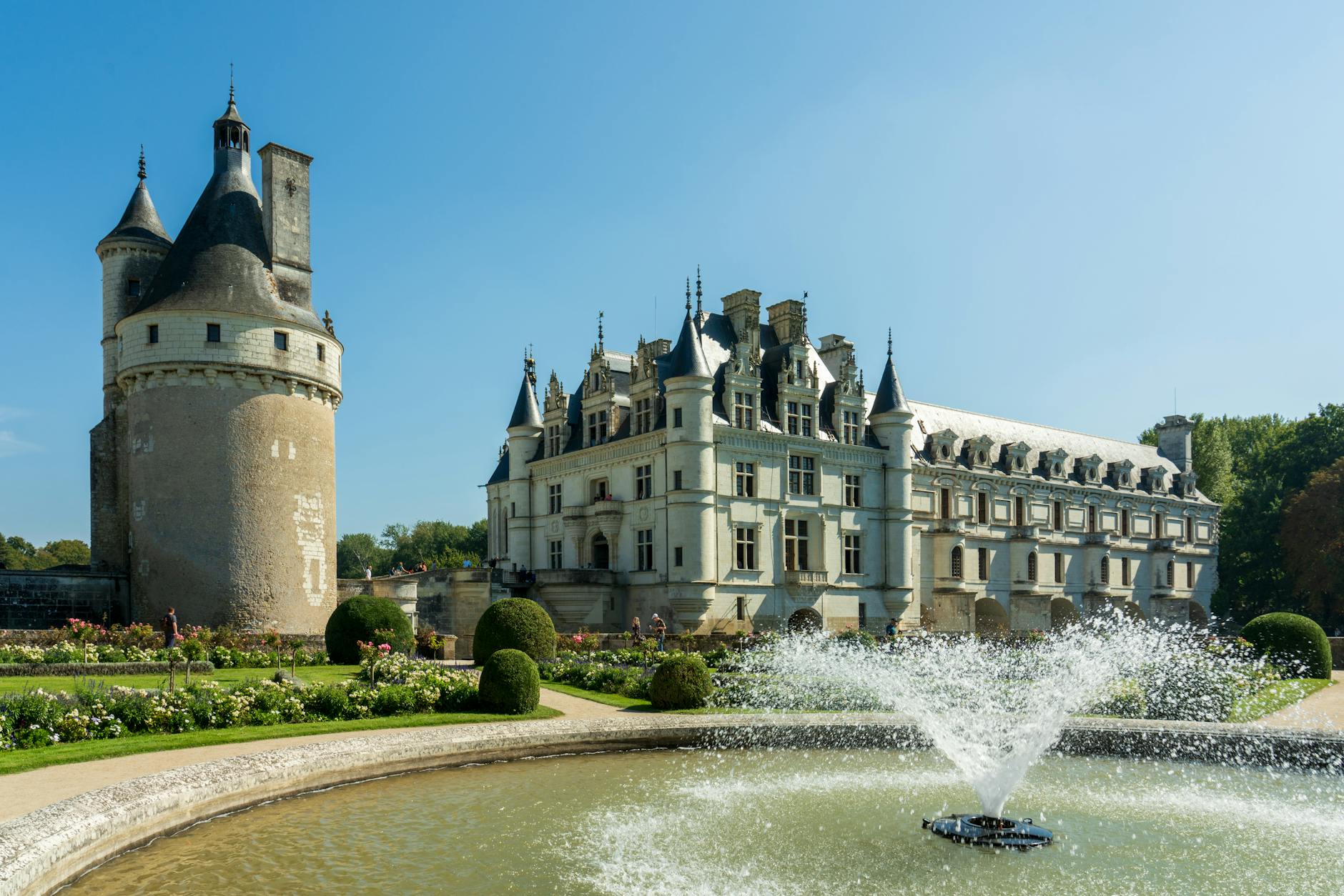
More than 300 châteaux line 280km of the Loire River, and you will see, at most, two of them in a day. That is the trade you are weighing. The central UNESCO-listed stretch, running between Sully-sur-Loire and Chalonnes-sur-Loire, holds the headline Renaissance names: Chambord, the largest, with the double-helix staircase that art historians trace to Leonardo da Vinci; Chenonceau, the “floating” château that spans the Cher on stone arches; Cheverny, which Hergé redrew as Captain Haddock’s ancestral hall; and Amboise, where Leonardo died. Seeing loire valley castles from paris in a single day is possible, but it is genuinely tight: a roughly 2-hour train to Tours or Blois, then one castle (maybe two), lunch, and the long ride back. This guide lays out the day-trip versus overnight trade-off honestly, walks through the three or four châteaux actually worth your time, covers the Vouvray wine-tasting add-on, and sizes up the organized coach tours. For the wider menu of escapes from the capital, see our day trips from Paris pillar.
Loire Valley at a Glance
The Loire Valley lies roughly 200 to 250 kilometres south-west of Paris, tracing the longest river in France: the Loire runs 1,012 kilometres from the Massif Central to the Atlantic. The central stretch most travellers come for covers 280 kilometres of vineyards, sandbank river-islands, and softly rolling farmland, and the UNESCO-listed cultural landscape inscribed in 2000 runs 250 kilometres, from Sully-sur-Loire in the east to Chalonnes-sur-Loire in the west. The region pulls in around six million tourists a year, most of them packed into July and August.
Those 300-plus châteaux run the gamut from medieval defensive fortresses to Renaissance pleasure palaces to classical country houses. Most went up between 1450 and 1650, when the French kings kept their court here instead of in Paris, lured by the mild climate and the hunting forests. The TGV from Paris-Montparnasse reaches Tours in 60 to 90 minutes for €30 to €80; Blois sits 90 minutes from Paris-Austerlitz on the Intercités for similar money.
Day Trip Reality Check
Before you book the train, ask yourself one question: are you sure you want to do this in a day? The Loire is the rare major Paris day-trip destination where the honest answer is “probably not.” The travel times are long, the ground content is dense, and cramming it into 12 hours out of Paris tends to produce a worn-out traveller and a short tally of castles. Most people who have done the trip both ways will tell you to give it at least one overnight.
Day Trip Pros
That said, the day trip does work. Leave Paris around 7am, get back by 8pm, sleep in your Paris hotel both nights, carry no luggage, and see one or two châteaux plus lunch. If you have only three full days in the city and the Loire is non-negotiable, the day-trip compromise can hand you Chambord, Cheverny, and Blois without spending a hotel night out of town.
Day Trip Cons
It is also tiring. Round-trip transit eats 4 to 5 hours, which leaves you 6 to 7 on the ground. Realistically that means one château seen properly, or two seen quickly; Chenonceau plus Chambord plus Cheverny in one day is not happening. The shuttle bus runs on a fixed timetable, so one missed connection becomes a 90-minute wait on a bench. And lunch gets rushed.
Overnight in Tours, Amboise or Blois Pros
One night flips the whole thing. Three or four châteaux across two days suddenly works. Chenonceau goes back on the must-see list. A Vouvray tasting fits into the second afternoon. You sit down to dinner in Amboise or Blois instead of choking down a sandwich on the TGV. And hotels run €100 to €180 for a mid-range double, comfortably under Paris rates.
Honest Recommendation
One or two nights beats the day trip, and it is not close. If you have any flexibility, take the overnight. The day trip earns its place only as a compromise, so build it around Blois as your anchor and accept that Chenonceau is off the table this time around.
The Top 5 Loire Valley Castles to Choose From
Five castles sit above the rest as the Renaissance-and-royal showcase of the valley. You will not get to all five on a day trip, so the rundown below is meant to help you pick the two or three that fit a focused visit.
Château de Chambord
Chambord is the biggest and the most architecturally jaw-dropping: 440 rooms, 365 fireplaces, 84 staircases. Construction began in 1519 under Francis I, and Leonardo da Vinci died at Amboise five months later, his drawings almost certainly shaping the double-helix central staircase. The surrounding 5,440-hectare forest is the largest enclosed park in Europe. Admission is €14.50; it sits 17km north of Blois, reached by shuttle (€6 each way).
Château de Chenonceau
Chenonceau is the most photographed castle in France, spanning the Cher River on a 60-metre arched gallery built in the 1570s. The “Ladies’ Castle” was shaped by three women: Catherine Briconnet (the original 1521 building), Diane de Poitiers (the bridge across the Cher, a gift from Henri II), and Catherine de Medici (the two-storey gallery on top of that bridge). Admission €15.50; allow 2.5 hours; it lies 15km east of Tours.
Château de Cheverny
Cheverny is the classical 17th-century country house Hergé used as the model for Marlinspike Hall (Moulinsart), Captain Haddock’s ancestral home in the Tintin books. The Hurault family has owned it without a break since 1500. The visit takes in the furnished interior plus the working kennels for 100 English-French hounds, fed daily at 11:30am or 5pm. The “Secrets of Moulinsart” Tintin exhibition opened in 2001. Admission €15.50; allow 2 hours; 15km south-east of Blois.
Château d’Amboise + Clos Lucé
Amboise gives you two châteaux 500 metres apart. The Royal Château d’Amboise was Francis I’s favourite residence and Leonardo da Vinci’s burial place; his presumed remains lie in the chapel of Saint-Hubert. Clos Lucé is the manor where Francis put Leonardo up for the last three years of his life, and where Leonardo died on 2 May 1519. Inside, you will find his bedroom preserved and a basement full of working models. Admission €14 + €17 = €31 combined; allow 4 hours; both walkable from Amboise station.
Château de Blois
Blois is the town-centre castle day-trippers tend to underrate, and they shouldn’t: four wings across four centuries in four styles, from 13th-century Gothic to 15th-century late-Gothic (the Louis XII wing), 16th-century Renaissance (the Francis I wing with its famous external spiral staircase), and 17th-century classical (the Gaston d’Orléans wing). The 1588 murder of the Duke of Guise happened in the king’s bedchamber here. Admission €14; allow 90 minutes; a five-minute walk from Blois station.
Best 3 Castles for a Day Trip
For a day trip from Paris, the trio that actually works is Blois, Chambord, and Cheverny. All three connect to Blois station, all three stay open year-round, and the shuttle-bus loop runs often enough to hold the day together. The 90-minute Paris-Blois train beats Paris-Tours plus an onward bus on time budget. Leave Chenonceau out of a day trip; it sits 60km east of Blois, and bolting it onto a Blois-based day is wishful thinking. Save it for an overnight return.
How to Get to the Loire Valley from Paris
The Loire is one of the better-connected French regions for Paris travellers. You can reach Blois or Tours faster than you can reach plenty of Paris suburbs, and the in-region shuttle-bus network was built specifically with car-free tourists in mind.
TGV Paris-Montparnasse to Blois
Blois is the closer anchor and the day-trip base I’d recommend. Direct Intercités and TGV services leave Paris-Austerlitz and Paris-Montparnasse roughly hourly between 6:30am and 9:30pm; travel time is 90 minutes, fares €30 to €80 each way. Blois Château station sits five minutes’ walk from the town-centre castle, with the shuttle-bus stop right outside.
TGV Paris-Montparnasse to Tours
Tours is the regional capital and the natural base for Chenonceau and Amboise. The TGV covers the 230km in 60 to 75 minutes for €30 to €80, with trains roughly every 30 minutes at peak. Tours station is a 10-minute walk from the centre. Pick Tours over Blois only if Chenonceau or Amboise is your priority.
TER Train Paris-Austerlitz to Blois
If budget matters more than speed, the slower regional TER from Paris-Austerlitz reaches Blois in two hours at a fixed fare of around €30 each way. No reserved seats, basic seating, but immune to the TGV booking-curve pricing that punishes last-minute buyers. Handy for spur-of-the-moment trips.
Driving
Driving Paris to Blois takes two hours on the A10 (toll €20 each way plus €30 to €40 in petrol). It makes sense if you are hitting three or more châteaux in a day and want to set your own schedule. Car rental runs €60 to €120 a day plus fuel.
Organized Day Tour with Bus from Paris
Paris operators run full-day coach trips that bundle château entries, an English-speaking guide, and lunch for €110 to €220 per person. PARISCityVision, Get Your Guide, and Viator typically pair Chambord, Chenonceau, and Cheverny with a wine tasting. Pickup is around 7am, return 9 to 10pm. See our best Paris tours guide for the comparison.
Castle-Hopping Shuttle from Blois
The Azalys shuttle links Blois station directly to Chambord and Cheverny on a fixed seasonal timetable (April to early November). Fares: €6 to Chambord, €3 to Cheverny, day passes around €12. Departures run roughly every 90 minutes between 9:15am and 6:15pm. Print the timetable before you leave Paris and build your whole day around it. Outside summer, the schedule thins to two or three round trips a day, which is the single thing most likely to wreck an unplanned visit.
Château de Chambord Deep Dive
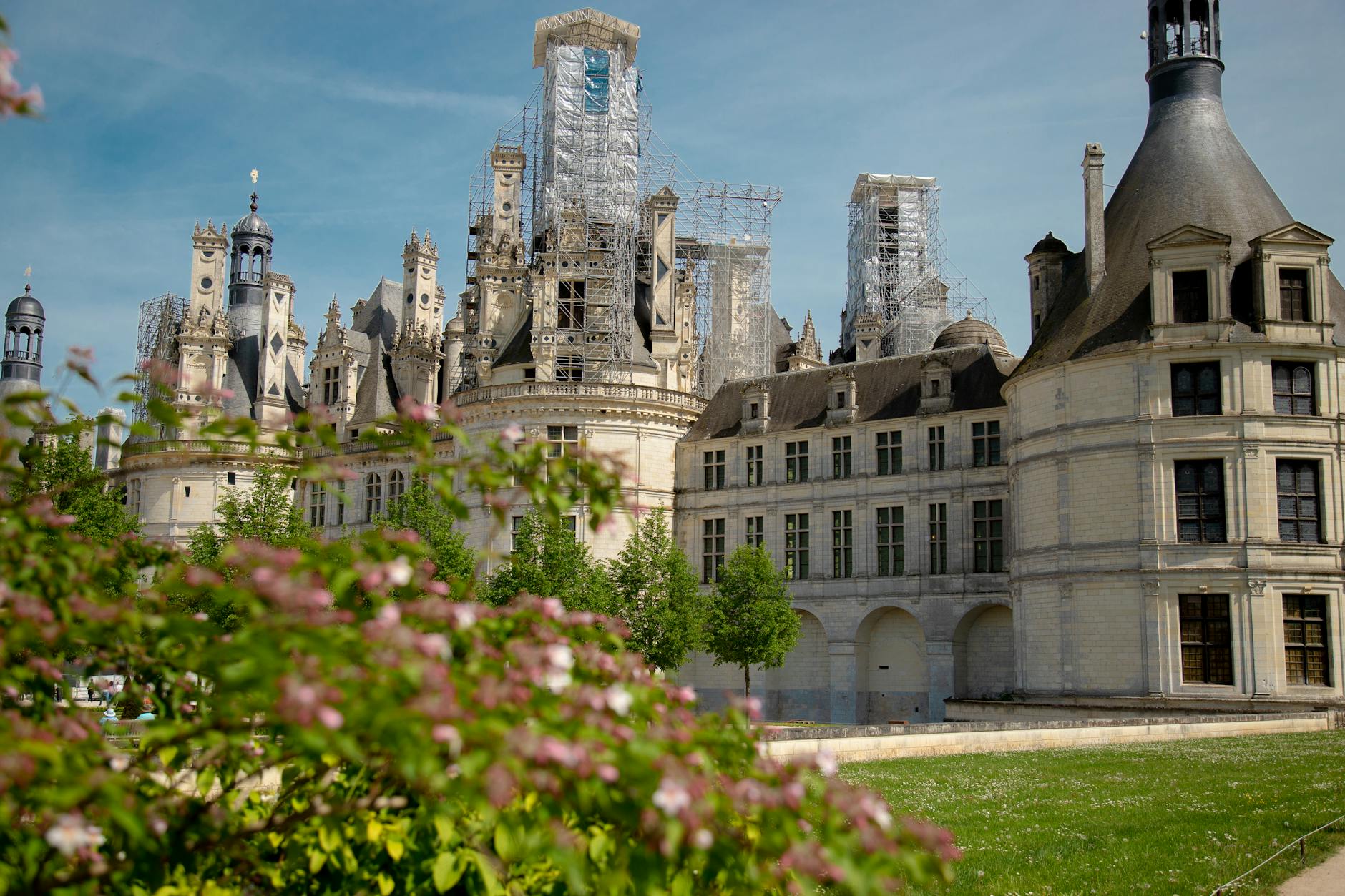
Chambord is the one château nearly every Loire visitor sees, and the one that justifies the trip from Paris all by itself. Construction began in 1519, the year Leonardo da Vinci died, when Francis I, then 25, ordered a hunting lodge that would dwarf any royal building in Europe. It rose on swampy ground at the heart of a forest Francis ringed with 32 kilometres of stone wall, still standing today and still the longest enclosure wall on the continent.
The architect of record is the Italian Domenico da Cortona, but the building’s most famous feature, the central double-helix staircase, is almost certainly Leonardo’s. He had served as Francis I’s court engineer at Amboise from 1516 until his death, and his notebooks are full of double-helix sketches. The Chambord staircase is two intertwined helices spiralling around a hollow core: two people climbing at once can glimpse each other through the central well but never actually meet. Art historians broadly agree the design came out of his workshop and was built after he was gone.
The roof terraces are the other showpiece, and the visit’s photographic peak. A forest of 365 chimneys, lantern turrets, gabled dormers, and sculpted spires rises off the roofline; Francis I’s court called the silhouette “a city in itself.” The terraces sit 32 metres up and look out over the surrounding forest. The court used them to watch hunts unfold below. You will use them for the panorama and the chimney sculpture up close.
The 5,440-hectare forest is one of the visit’s real surprises. Walled since 1542 and never carved up by inheritance, it holds a near-medieval landscape of oak, wild boar, and red deer descended from herds Francis I imported for the hunt. Most of it is closed to the public, but a 19-kilometre loop of walking and cycling paths near the château stays open year-round. Bikes hire at the visitor centre for €7 an hour.
For planning, get to the gates by 10am to beat the bus-tour crowds, book online (€14.50 plus a €1.50 fee) to skip the queue, and allow three hours inside plus another hour for the gardens. The on-site cafeteria is fine, but the village of Chambord, 500 metres beyond the gates, has proper sit-down options. Closed January 1 and December 25.
Château de Chenonceau Deep Dive
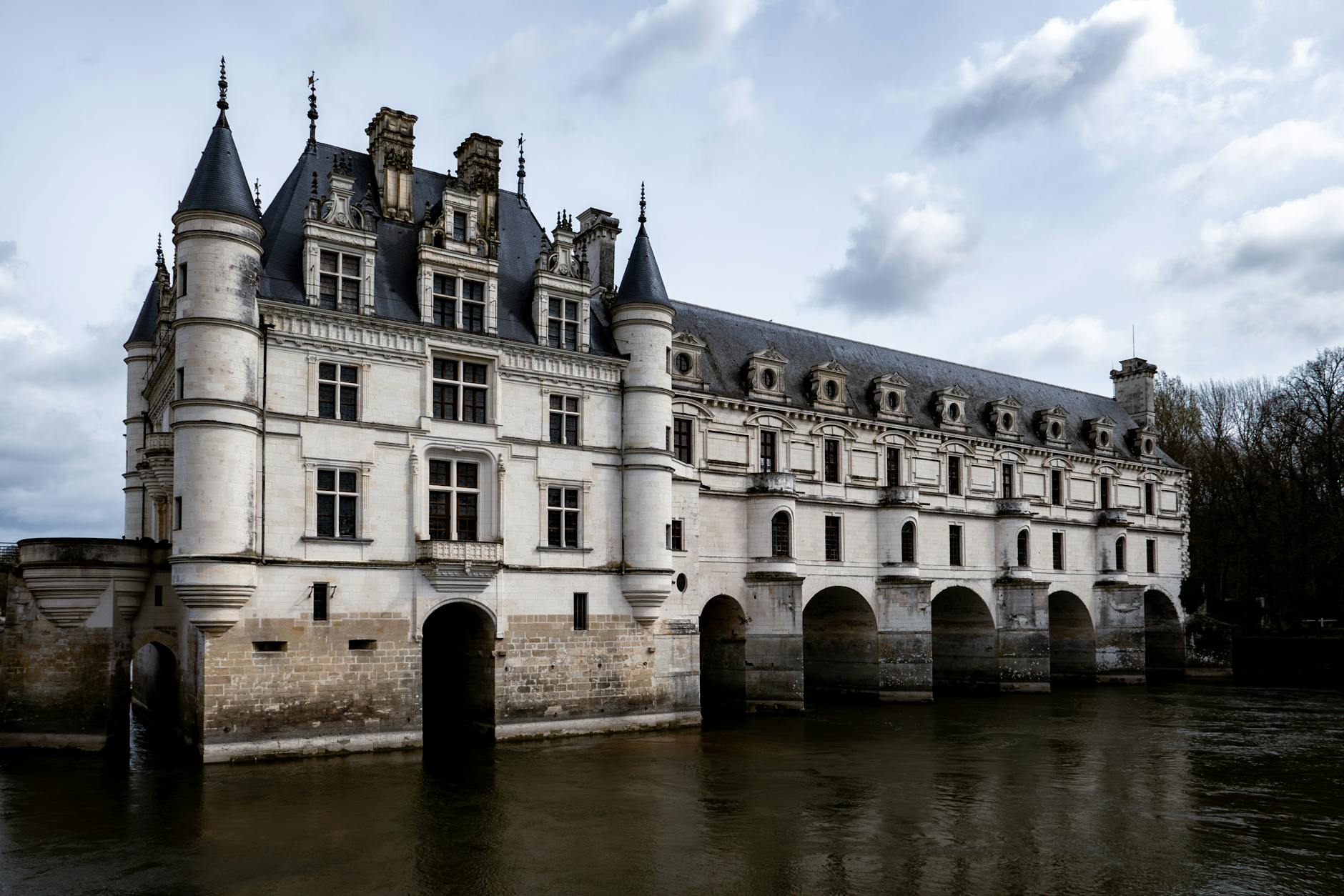
Chenonceau is the second-most-photographed monument in France after the Eiffel Tower, and the château most Loire visitors name afterward as their favourite. The building rises straight out of the Cher River on a run of stone arches, and from upstream it really does appear to float. That signature look is the work of three women, the “Ladies of Chenonceau,” whose successive ownerships reshaped the place across the 16th century.
Catherine Briconnet, wife of royal tax collector Thomas Bohier, oversaw the original build from 1513 to 1521 on the site of a 14th-century mill. In 1547, Henri II handed the château to his mistress Diane de Poitiers, who added the bridge across the Cher (Philibert Delorme, 1556 to 1559) that turned a riverside mansion into the river-spanning château you see now. When Henri II died in a jousting accident in 1559, his widow Catherine de Medici muscled in, seized it, and built the two-storey gallery on top of Diane’s bridge between 1576 and 1577, the element every postcard puts front and centre.
Inside is the best-preserved Renaissance furniture collection of any Loire château. The Diane de Poitiers bedroom holds a 16th-century four-poster and original tapestries; Catherine de Medici’s “Green Study” keeps its carved oak panelling and inlaid-wood floor. The 60-metre Galerie spanning the Cher is empty but for a chequerboard tile floor and Italian Renaissance art, and its proportions (60m long, 6m wide, 6m high) carry the whole room on their own.
The gardens split into two great parterres flanking the river. The Diane de Poitiers garden on the east bank is geometric, Italianate, framed by yew hedges. The Catherine de Medici garden on the west bank is smaller, lower, and built around a circular basin. Both peak from late May through early July. A 70-hectare park beyond holds a 19th-century maze and a working farmyard.
For planning, Chenonceau opens every day of the year, 9am to 6 or 7pm depending on season. Admission is €15.50 online, audio guide included. Allow 2.5 to 3 hours. It sits 35 minutes east of Tours by direct TER to Chenonceaux station (an 8-minute walk from the gate), which makes it the easiest car-free access in the whole region.
Other Notable Castles
Past the top five, the Loire keeps going: another two dozen châteaux, each worth a half-day if you have it. Five of them stand out enough to flag on a first visit.
Château de Villandry
Villandry is the gardens castle. The six-level Renaissance gardens behind the 1532 building make up the most ambitious formal-garden complex in France outside Versailles, and the Jardin Potager vegetable garden is the shot everyone takes home. Admission €15; 18km west of Tours. Best May to October.
Château d’Azay-le-Rideau
Azay-le-Rideau is the jewel-box Renaissance château, built 1518 to 1527 by royal financier Gilles Berthelot on an island in the Indre River and mirrored in the moat around it. Admission €11.50; 25km south-west of Tours.
Château de Saumur
Saumur is the white-cliff fairytale castle on the skyline of its namesake town. The 14th-century façade turns up in the famous “Très Riches Heures du Duc de Berry” manuscript of 1410. Admission €10; 70km west of Tours.
Château de Chinon
Chinon is the one you visit for the history: the medieval royal fortress on the Vienne River where Joan of Arc met the Dauphin Charles VII in March 1429 and talked him into backing her against the English. Admission €10.50; 50km south-west of Tours.
Château d’Ussé
Ussé is the Sleeping Beauty castle. Charles Perrault is said to have based his 1697 fairy tale on its white-stone, many-turreted silhouette, and Walt Disney later borrowed the same outline for Disneyland’s Sleeping Beauty castle. Admission €14; 40km south-west of Tours.
Loire Valley Wines
The Loire is one of France’s four major wine regions, and its appellations stretch the full 1,000km of the river. The eastern Loire turns out world-class Sauvignon Blancs (Sancerre and Pouilly-Fumé). The Touraine around Tours and Amboise gives you the Chenin Blanc of Vouvray plus the red Cabernet Franc of Chinon and Bourgueil. The western Loire near Nantes makes the dry, mineral Muscadet built for Atlantic seafood.
The easiest wine add-on for a Paris trip is Vouvray, 10km north-east of Tours, where Chenin Blanc gets bottled in four styles: sec, demi-sec, moelleux, and méthode traditionnelle sparkling. Marc Brédif is the cellar to start with, a 16th-century cave cut into the chalk hillside, half-hour tour with a five-wine tasting for €20 a head. It is 15 minutes by taxi from Tours station and slots naturally into an afternoon at Chenonceau.
Lunch in the Loire Valley
Loire restaurants range from village bistros to Michelin-starred dining, and the region punches above its weight on serious cooking, because both the local produce (river fish, asparagus, goat cheese, prunes, mushrooms grown in the cave-quarried tuffeau hillsides) and the local wine list are first-rate.
Auberge du Bon Laboureur (Chenonceaux)
A Michelin one-star and 25-room hotel 400 metres from Chenonceau’s gates. Chef Antoine Jeudi cooks modern French built around Loire river fish. Two-course lunch €65, tasting menu €110. Book a week ahead; closed mid-November to mid-March.
Le Choiseul (Amboise)
A classic 17th-century townhouse on the Loire embankment in Amboise, 500m from the Royal Château and Clos Lucé. Foie gras, duck breast, sea bass with beurre blanc. Lunch €42, dinner from €75. The river terrace is the seat to ask for.
Pinault (Blois)
Modern French in central Blois, three minutes from the château. Chef Christophe Hay cooks tight seasonal menus around Loire vegetables and freshwater fish. Lunch menu €35. Book two to three days ahead. Closed Sunday and Monday.
Bring a Picnic
Every major château lets you picnic outside the formal parterres, and Chambord and Cheverny both have signed picnic areas. The Saturday morning market in Blois (Place Louis XII) is the regional standout for supplies: goat cheese from Selles-sur-Cher, rillettes, baguettes, fresh strawberries. Budget €15 to €20 per person, and you will eat better than most of the cafeterias manage.
Best Time of Year
May and June are the high points: gardens at full bloom, long evenings, and crowds still ahead of the school-summer rush. September runs a close second, with the vineyard harvest, weather that holds clear into mid-October, and visitor numbers dropping once French schools go back. Late October sets the Chambord forest ablaze with autumn colour.
November to March is the off-season. The major châteaux stay open (Chambord and Chenonceau year-round; Cheverny shuts only on Christmas Day), but the gardens are bare, the days short, and many secondary châteaux and restaurants close from mid-November to mid-March. Visitor numbers fall to about 20 percent of summer levels. Pack layers, because the stone interiors hold 10 to 13°C whatever the season.
What to Bring
Loire châteaux are working historic buildings, not purpose-built museums, and the visit means a lot of walking on uneven ground. Pack with that in mind.
- Comfortable closed walking shoes: gravel garden paths, worn flagstones inside, and 100 to 300 steps per château. Trainers or low hiking boots do the job; heels and dress shoes do not.
- A light rain jacket. Loire weather is changeable, and afternoon showers in spring and autumn are common. A folding umbrella makes a fine backup.
- A refillable water bottle. Most châteaux have refill taps at the visitor centre, and cafeteria water runs €3 to €4 a bottle.
- Sun hat and sunscreen from June through August. The gardens are exposed and afternoon temperatures regularly clear 30°C.
- Pre-booked online tickets. The ticket queue at Chambord and Chenonceau can hit 40 minutes in peak season; online booking skips it for a €1.50 fee.
- A camera. Phone cameras are fine, but these buildings reward a proper lens. Tripods are banned inside but allowed in the gardens.
- A printed shuttle-bus schedule. The Azalys shuttle between Blois, Chambord, and Cheverny runs on a fixed timetable, and your phone may have no signal at the Chambord gate.
Common Mistakes
Trying to do too many châteaux. A proper visit, interior plus gardens, runs two to three hours. Three châteaux is the hard ceiling for a single day from Paris, and two is the more honest target. Pick the ones you most want to see and cut the rest without guilt.
Skipping the gardens. First-timers treat the interiors as the main event and blow through the gardens at the end. Don’t. The gardens at Villandry, Chambord, Cheverny, and Chenonceau are full partners to the buildings, not an afterthought. Give them at least 45 minutes per château, and visit them first if rain is threatening.
Not pre-booking the shuttle bus in peak season. The Azalys shuttle fills up in July and August. Miss the 11am departure and you are waiting 90 minutes for the next one. Buy day passes online before you leave Paris.
Day Trip Itinerary: Blois + Chambord + Cheverny
Here is the honest, workable, repeatable day trip linking the three châteaux closest to Paris. It is aggressive on timing but realistic if you commit to an early start and pre-booked tickets.
- 7:30am — TGV or Intercités from Paris-Austerlitz to Blois Château (departures roughly hourly; aim for the 7:24 Intercités, which reaches Blois around 9:00am).
- 9:00am — arrive Blois Château station. Grab a coffee and pastry at the station bar, then walk five minutes to the Office de Tourisme to confirm shuttle timings.
- 9:15am-10:45am — Château de Blois, town centre. Four wings, four styles, the spiral staircase of the Francis I wing, and the bedchamber where the Duke of Guise was murdered in 1588.
- 11:00am — Azalys shuttle from Blois station to Chambord (€6 each way, 35 minutes via the Cour-Cheverny stop).
- 11:45am-1:30pm — Château de Chambord. Double-helix staircase, royal apartments, the roof terraces with their 365 chimneys, and the formal gardens.
- 1:30pm-2:15pm — lunch in the village outside the gates; the Saint-Michel hotel restaurant does a reasonable two-course menu for €28.
- 2:30pm — Azalys shuttle from Chambord to Cheverny (€5, 25 minutes).
- 3:00pm-5:00pm — Château de Cheverny. Furnished interior, working kennels with the 11:30 or 5pm hound feeding (timing dependent), and the “Secrets of Moulinsart” Tintin exhibit.
- 5:30pm — Azalys shuttle back to Blois station (€3, 30 minutes).
- 6:00pm-6:30pm — quick drink or sandwich at the station before the return train.
- 6:30pm — Intercités or TGV from Blois back to Paris-Austerlitz, arriving around 8pm.
- 8:00pm — Paris. Dinner at a neighbourhood bistro near your hotel, then collapse.
Frequently Asked Questions
Can I really see Loire Valley castles from Paris in a single day?
Yes, but only one or two, not the full postcard set of five. The honest day-trip itinerary covers Blois, Chambord, and Cheverny, all reachable from Blois station, on a 7am Paris departure and an 8pm return. Chenonceau is effectively impossible to add to a Blois-based day.
Which is the best château to visit if I only see one?
Chambord. It is the largest, the most architecturally astonishing, and the closest to Paris from Blois. The double-helix staircase, the 365-chimney rooftop, and the 5,440-hectare walled forest justify the trip on their own. If you have a second slot, add Cheverny rather than the 50km drive east to Chenonceau.
Should I do a guided coach tour or organize the trip myself?
Coach tours (€110 to €220 per person) roll the transport, château entries, guide, and lunch into one ticket, with pickup from central Paris hotels around 7am. For first-time visitors who want stress-free English commentary, the coach is the easier call. For experienced travellers who want flexibility, DIY train-plus-shuttle saves €30 to €60.
Is it cheaper to drive than to take the train?
Not for one or two people. A day-return car rental from Paris runs €60 to €120 plus €40 petrol plus €20 toll, so €120 to €180 before a single entry ticket. The Paris-Blois return train is €60 to €160. Driving only pays off with three or more people sharing, or four-plus châteaux in one day.
When do the castles close?
Most Loire châteaux open year-round on reduced winter hours. Chambord closes 1 January and 25 December. Chenonceau is open every day of the year. Cheverny closes only on 25 December. The secondary châteaux (Villandry, Ussé, Saumur) usually shut from November through March.
Can I combine the Loire with a wine tasting?
Yes, easily, if you base in Tours or Amboise. Vouvray is 10km north-east of Tours, where Marc Brédif and Domaine Huet run 45-minute tours with five-wine tastings for €15 to €25; pair one with an afternoon at Chenonceau. See our Paris summer activities guide.
How does the Loire compare to other day trips from Paris?
The Loire is the most ambitious of the major day trips, and the one most travellers regret attempting in a single day. Transit is shorter than Mont Saint-Michel‘s four hours each way, but the on-ground content is denser, which makes Champagne and Giverny the easier compromises. The Loire is really worth a dedicated two- or three-day visit. See our champagne day trip guide for a gentler alternative.
Do I need to speak French?
No. Every major château includes an English audio guide with the ticket, signage at Chambord, Chenonceau, and Cheverny is bilingual, and ticket-office staff speak basic English. Tours, Amboise, and Blois all have substantial tourist infrastructure.
The Loire is the wider France that makes a day or two away from Paris worth it: Renaissance châteaux scattered across an hour of countryside, river fish on the lunch plate, Vouvray in the glass, and a forest no one has carved up since Francis I walled it in 1542. A day trip works as a compromise; two days work far better. Either way, book the tickets ahead, build the schedule around the shuttle bus, and keep one thing in mind: Chambord alone justifies the journey from Paris. For the broader range of out-of-Paris options, see our day trips from Paris pillar.
More to explore
Use these to round out your trip: