Day Trip to Mont Saint-Michel from Paris: How to Make It Work
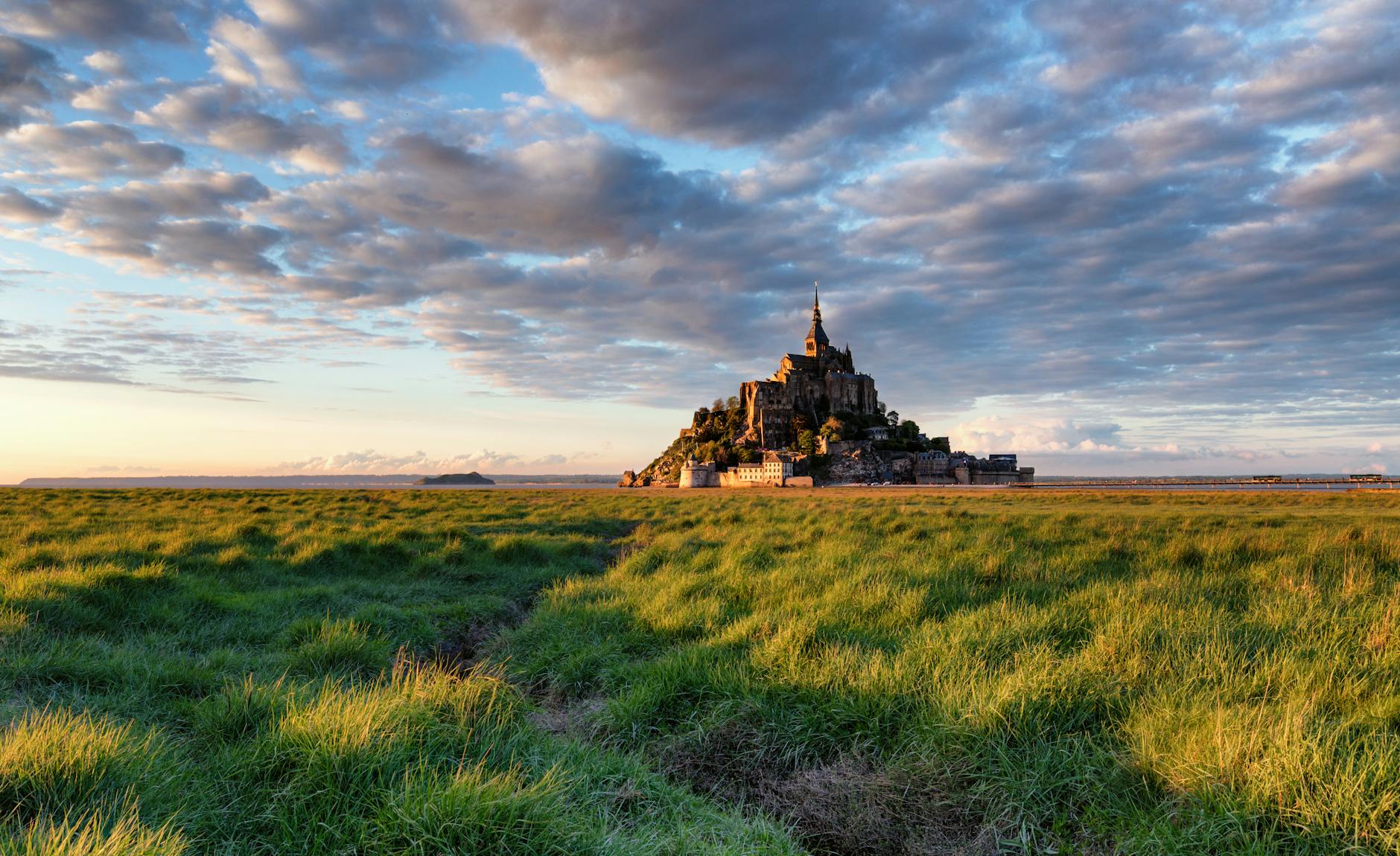
Here is the thing nobody tells you upfront: Mont Saint-Michel sits 360 kilometres west of Paris, and there is no train that takes you to its door. You get a Benedictine abbey balanced on a granite tidal rock, the most-visited monument in France outside the capital with more than 3 million visitors a year, and a journey that punishes the slightest miscalculation. Reaching mont saint michel from paris in a single day is absolutely possible. It is also tight: roughly four hours each way by TGV-plus-shuttle or guided coach, four to six hours on the rock, and almost no slack at either end. So this guide does the thing most guides dodge. It tells you honestly whether the day trip beats an overnight, walks through both the DIY train route and the coach option, explains the stilted pedestrian causeway that replaced the old road in 2014, sorts out the abbey logistics, decodes those famous Atlantic tides and the days the rock turns back into a real island, and names the tour operators actually worth paying. For the bigger picture on escaping the city, see our day trips from Paris pillar.
Mont Saint-Michel at a Glance
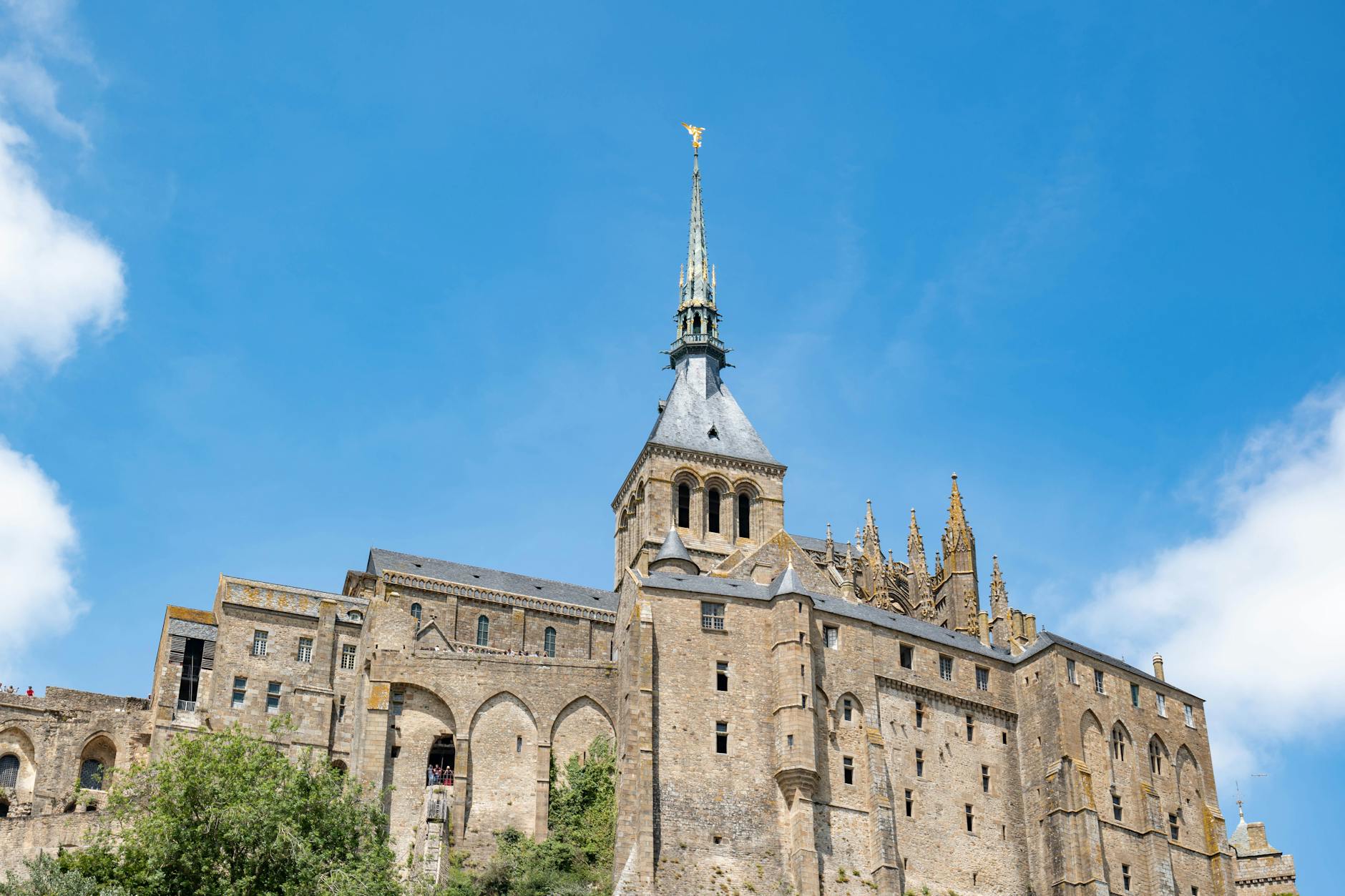
Start with the scale, because it surprises people. The rock is tiny, barely seven hectares above the water line, a granite outcrop at the mouth of the Coueësnon river where Normandy hands off to Brittany. It rises 92 metres, and the abbey caps it like a stone helmet you can pick out from twenty kilometres away in any direction. Pilgrims have been coming since 708 AD, the year the Archangel Michael supposedly appeared to Bishop Aubert of Avranches and told him to build a sanctuary here. The Benedictines moved in by 966 and essentially never left; the three-storey Gothic complex called La Merveille rose between the eleventh and thirteenth centuries. UNESCO added the site to its World Heritage list in 1979. The bay around it has the highest tidal range in continental Europe, a swing of up to 14 metres between high and low water, and twice a month near the new and full moons the grandes marées flood the causeway and turn the rock into a genuine island for a few hours. The old 1879 road is gone; since 2014 a 760-metre pedestrian causeway on stilts has taken its place. Add those 3 million annual visitors and you can see why timing matters so much.
The Honest Question: Day Trip or Overnight?
Every traveller asks this, and most guides give a coward’s answer. Here is the straight one. Yes, the day trip works, and thousands of people pull it off every season without drama. But it is a long day with razor-thin margins, and the rock genuinely repays a slower visit. Both things are true at once, which is exactly why the choice is hard.
Day Trip: Pros and Cons
The day trip earns its keep when your Paris stay is fixed and you would rather not unpick a hotel booking. You travel light with a day-pack, you skip the hunt for a room in a small Norman village where on-rock beds are scarce and pricey, and if all you want is to stand on the rock once and call it done, that is a perfectly reasonable goal. The downsides are real, though. You are looking at ten to twelve hours of transit and sightseeing combined, only four to six of them actually on the rock, and no chance to catch both tide phases unless the schedule happens to cooperate. Land on the wrong tide and the famous island effect simply will not be there. And by the time you fall back into Paris around 10pm, you are wrecked.
Overnight: Pros and Honest Recommendation
One night changes everything. You catch the rock at sunrise and again at sunset, both tide phases if the timing lines up, and the abbey at the quiet hinges of the day when the coach crowds have thinned. You can push on to Saint-Malo, the Cancale oyster beds, or the D-Day beaches. So here is my actual recommendation. If your Paris trip is short and Mont Saint-Michel is a once-in-a-lifetime tick, do the day trip and make peace with the constraints. If you have any give in your schedule, give it the night, whether in the village on the rock or down at the mainland visitor centre, and the whole place cracks open. For most travellers, the overnight is simply the better trip.
TGV Plus Shuttle Bus: The DIY Day Trip
The independent route hangs on two legs: the high-speed train to Rennes, then a dedicated coach across the regional border to the rock. It is the cheapest realistic way to do this from Paris, and it hands you control over your own clock once you are on the ground. Book ahead, avoid the absolute peak weeks, and it runs smoothly. Total round-trip transit lands at six to eight hours.
Paris Gare Montparnasse to Rennes by TGV
The quickest leg by far is the TGV Atlantique out of Gare Montparnasse to Rennes: one hour thirty-five minutes on the non-stop, two hours if it makes a single stop. Fares swing from €30 to €75 each way depending on how early you book. Prém’s tickets, released three months out, slip into the low €30s; leave it to a same-week peak Saturday and you are staring at the €75 end. Departures run hourly between 6am and 9pm. For the day trip, target the 6:30 or 7:00 outbound and a 7pm-to-8pm return.
Rennes to Mont Saint-Michel by Keolis Armor Shuttle
Step out of Rennes station and the bus station is right there. The Keolis Armor shuttle covers the gap in one hour fifteen, door to door, for roughly €15 each way (€28 round-trip). It is timed to meet the main TGV arrivals, and you board at platform 9 of the Rennes gare routière. One catch worth fixing in your head now: it sets you down at the mainland visitor centre, not the rock itself, so you finish the journey on the free Passeur shuttle or on foot across the causeway.
Alternative: Pontorson via TGV and TER
There is a second way in, through Pontorson, the railway town closest to the rock. You take the TGV from Gare Montparnasse to Dol-de-Bretagne, switch to a regional TER, and arrive in about three hours total, with fares of €40 to €80 each way. A connecting shuttle handles the last 9 kilometres in 15 minutes. It is slower than Rennes-plus-shuttle but runs a touch cheaper off-peak, which is the only real reason to choose it.
Total Round-Trip Transit and Best Schedule
Here is the timetable that works for most day-trippers, leg by leg. Catch the 6:30am train from Montparnasse, reach Rennes at 8:05, roll out on the shuttle by 8:45, arrive at Mont Saint-Michel around 10am, and you are in the village by 10:30. Sightsee until 4pm. Shuttle back to Rennes at 4:30, board the 7pm train, and you are walking into Montparnasse at 8:35. That buys you five and a half hours on the rock and lands you back at your Paris hotel by 9:30pm. One rule, no exceptions: pad every connection with 30 minutes of slack.
Organized Day Tour from Paris
Travelling solo, dragging kids along, or just allergic to logistics? A coach day tour out of Paris is the no-stress option. You pay one fee and the operator absorbs the round-trip transport, the abbey entry, the guided tour, and sometimes lunch. The cost is two-fold: more hours sealed inside a coach, and a fixed arrival window that tends to deposit you on the rock at the exact moment everyone else’s coach does too.
Get Your Guide, PARISCityVision, Big Bus
Budget €145 to €220 per person for a full-day coach tour from central Paris, the upper end usually folding in a sit-down regional lunch (often that famous Mère Poulard omelette). Get Your Guide pools several operators and tends to win on price. PARISCityVision is the long-running French specialist with daily departures through the season. Big Bus bolts the Mont Saint-Michel coach onto its hop-on-hop-off Paris ticket. All three throw in skip-the-line abbey entry, which at the height of summer can claw back an hour or more of your day. Our best Paris tours guide sets these against the wider field.
Pickup, Pace, and Inclusions
Pickup usually falls between 6:45 and 7:15am at a central meeting point, often near Place du Carrousel or rue de Rivoli, and the coach drops you back around 9pm. Reckon on roughly five hours out with a highway break or two, five to six hours on the rock, and another five hours home. The standard ticket bundles round-trip coach transport, the €13 abbey entry, and a guided introduction on site, typically a 60-to-90-minute walk through the abbey with a local guide. Read the fine print before you pay, because the spread is wide: a €145 budget tour strips out lunch and the audio guide, while a €220 premium tour puts both back and runs in a smaller group.
Skip-the-Line Value
In July and August, the ticket window at the top of the rock backs up into a 60-to-90-minute queue. Skip-the-line entry comes built into every coach tour, and DIY travellers can buy it separately through the abbey’s own website. Spend the small upcharge. If you are doing this independently in peak summer, the few extra euros for a timed-entry online ticket are the easiest good decision you will make all day.
The Mont Saint-Michel Abbey Visit
The abbey is the whole point. The village below is medieval and atmospheric, sure, but it is also small and drowning in souvenir stalls. The abbey, by contrast, is one of the great Gothic-Romanesque buildings in Europe and the reason UNESCO listed the rock at all. Give the self-guided circuit 90 minutes at the very least, two hours if you want to linger or pick up a free guided tour along the way.
Tickets, Concessions, and Hours
Admission is €13 for adults. It is free for everyone under 18, anywhere in the world, and free for EU residents aged 18 to 25 with proof of age. That one ticket covers the abbey church, La Merveille, the cloister, the refectory, the knights’ hall, the Romanesque crypts, and the medieval garden. Buy it online at the Centre des Monuments Nationaux site to dodge the rock-top queue; the price is the same €13 either way, so there is no penalty for planning ahead. The abbey opens daily and closes only three days a year: January 1, May 1, and December 25. Summer hours, May 2 to August 31, run 9:30am to 7pm with last entry at 6pm. Winter hours, September 1 to April 30, run 9:30am to 6pm with last entry at 5pm. And in July and August it stays lit and open Monday through Saturday until midnight.
Self-Guided Versus Guided Tour
The self-guided circuit takes 90 minutes minimum and runs one-way: from the West Terrace down through La Merveille, the cloister and refectory, the knights’ hall, the Romanesque chapels, and out by the medieval garden. A free English-language guided tour leaves the entry hall four or five times a day from 10am, lasts 45 to 60 minutes, and costs nothing on top of your ticket. Take one if your French has gone rusty. The guides fill in the history the plaques leave out, and that history is most of what makes the place stick.
Highlights Inside the Abbey
La Merveille, “the marvel,” is the three-storey Gothic complex bolted to the north flank, built between 1211 and 1228. Picture three vaulted floors stacked straight up against the granite, each one built for a different part of monastic life. The cloister at the top is a delicate double-colonnade of pink Caen limestone wrapped around a hanging garden, suspended above the bay, with the open sea filling the gaps between the pillars. The refectory just below is the monks’ vaulted dining hall, and its trick is the hidden lateral windows that pour light in from sources you cannot see. Go deep beneath the church and you reach the Romanesque crypt of the Gros Piliers, where ten pillars two metres thick carry the entire chancel overhead. Stand under that and the engineering stops being abstract.
The Village (Pre-Abbey)
You can’t skip the village; it’s the only way up. Before the abbey, you climb through the medieval streets clinging to the lower slopes. The Grande Rue, the main drag, is a steep cobbled lane packed with timber-framed shops, restaurants, and creperies, nearly all of them flogging souvenirs and fast meals. The prices match the captive audience: a coffee runs €5, a basic crepe €10, a sit-down omelette €30 to €40. Even so, the street is the real thing. The buildings go back to the fifteenth and sixteenth centuries, and being squeezed shoulder to shoulder up that narrow lane gives you a surprisingly honest sense of what arriving here as a medieval pilgrim must have felt like.
La Mère Poulard is the village institution. Annette Poulard founded it in 1888 and built its name on one dish, a soufflé omelette whisked over an open fire, which somehow grew into a small empire of branded biscuits and restaurants. The omelette costs €30 to €40 and genuinely splits people down the middle. Some swear it is a once-in-a-lifetime experience; others see an overpriced egg in a tourist trap. Your call hinges entirely on your appetite for theatre, because that is what you are really paying for: the omelettes are whisked tableside in copper bowls over a wood fire.
The Tides
The tides here are not a backdrop; they are the show. Mont Saint-Michel’s bay has the highest tidal range in continental Europe, up to 14 metres between low and high water on the spring tides. At low tide the flats run unbroken to the horizon, twenty-five kilometres of wet sand you can cross on foot with a trained guide. At the peak high tides, twice a month around the new and full moons, the water comes in at the speed of “a galloping horse,” to borrow Victor Hugo’s line, about one metre a minute. For two to three hours either side of high water, the rock becomes a true island again.
The good news is that these peak tides, the grandes marées, are entirely predictable. They come roughly twice a month, and the biggest of all, with coefficients of 110 or more, cluster around the equinoxes in March and September. The tidal calendar goes up a full year ahead at ot-montsaintmichel.com, and the free Tide app gives you the daily times. Timing your visit to the high-tide window is the photographic jackpot: the rock truly ringed by water. Arrive on a low-tide day and you can still wander the village and climb the abbey, but the great visual effect just is not there. So check the tide before you book anything.
The Pedestrian Causeway (Since 2014)
For more than a century, an 1879 raised road tied the mainland to the rock and let visitors drive right up to the foot of the village. It also strangled the tidal flow, and over the decades that silting turned the bay into a salt marsh that was slowly erasing the rock’s whole island identity. The fix, finished in 2014, was drastic: tear out the road, rechannel the river Coueësnon, and build a 760-metre pedestrian-only causeway on stilts so the tides could run freely underneath. It worked. The silting has reversed, the highest tides now reach further around the rock, and the bay is creeping back toward how it looked in the Middle Ages.
For you, that translates into three practical changes. First, cars and coaches now stop at a big mainland visitor centre 2.5 kilometres back from the rock, which is where the parking, the ticket booth, and most of the hotels live. Second, a free shuttle bus called the Passeur runs every few minutes from the visitor centre across the causeway to a stop 350 metres short of the village gate. Third, you can ignore the shuttle entirely and walk the whole causeway if you like: 30 to 35 minutes from visitor centre to gate, flat and paved, and genuinely worth doing in at least one direction for the way the rock unfolds in front of you as you approach. Just leave extra time, because at peak the shuttle queue can stretch to 20 minutes.
Eating at the Rock
Food is the weak link of the whole visit, so manage your expectations. The on-rock restaurants range from acceptable to genuinely bad, prices run 50 to 100 percent above what the same plate costs on the mainland, and the kitchens are simply overwhelmed by three to four thousand covers a day in summer. La Mère Poulard is the famous name for the soufflé omelette, worth doing once if you never have. Le Saint-Michel turns out competent regional pub food, galettes, salads, daily plats, at €18 to €28 a main, which is about as safe a bet as the rock offers.
For most day-trippers, the smarter move is to eat at the mainland visitor centre, where the food court has a self-service brasserie with regional plates at €14 to €18 and a Paul bakery for sandwiches. Better still, bring a picnic from a Rennes supermarket or a Paris bakery and eat it on the grass by the visitor centre. And if you can carry it up, a picnic on the village ramparts looking out over the bay is, hands down, the best lunch you will have here.
Where to Stay (If Doing Overnight)
Decide to stay the night and your options fall into three concentric rings, ranked by how close they sit to the rock and how much they cost. For the broader planning picture, our plan trip to Paris guide covers the rest.
On the Rock Itself
About half a dozen small hotels sit inside the village walls, with Hotel La Croix Blanche, Hotel Saint-Pierre, and Hotel La Vieille Auberge the pick of them. The rooms are cramped, the staircases steep, and the rates steep too, €180 to €320 a night in shoulder season and more at peak. But nothing else compares. You wake up inside the medieval village, you walk to the abbey before the first day-trippers land, and you watch the sun drop over the bay from your own window. Inventory is tiny, so book six to nine months out for summer.
At the Mainland Visitor Centre
The mainland complex, 2.5 kilometres from the rock, has a cluster of mid-range hotels built for exactly this purpose. The Hotel Mercure Mont Saint-Michel and Hotel Saint Aubert both run €100 to €180 a night for solid three-star rooms with parking and bay views from the upper floors. The free Passeur shuttle leaves from right outside the lobby, so you can be at the abbey gate in 15 minutes. Cheaper than the on-rock hotels and a perfectly comfortable fallback when those sell out.
Nearby Towns: Saint-Malo, Avranches, Pontorson
If you have a car, the wider region delivers far better value. Saint-Malo, the walled corsair city on the Brittany coast, sits an hour west and is a destination in its own right; rooms inside the ramparts run €90 to €150. Avranches, 45 minutes east on the Normandy side, is a quiet market town with a famous illuminated-manuscript collection, and it is cheaper at €65 to €100. Pontorson, the nearest railway town, is plain and purely functional but cheap at €55 to €85, and it exists more or less entirely to mop up Mont Saint-Michel’s overflow.
Combining with Normandy and Brittany
Stay the night and you unlock some of the most rewarding day-trippable country in France. Saint-Malo is an hour west by car, a fortified city inside granite ramparts, compact and crammed with seafood restaurants, and the walk around the walls circles the old town in 30 minutes. Cancale, 30 minutes from the rock, is the oyster capital of Brittany, where the port market sells dozen-oyster plates for €6 to €12 that you eat on the seawall with a glass of Muscadet. Do that once and the on-rock omelette debate stops mattering.
The D-Day beaches lie two hours northeast on the Normandy coast, Omaha, Utah, Gold, Juno, and Sword, along with the American cemetery at Colleville-sur-Mer and the Caen Memorial museum. A serious D-Day day needs a full eight hours and really wants its own overnight in Bayeux or Caen rather than being tacked on here. Le Mont Dol, ten minutes inland from Dol-de-Bretagne, is the smaller granite outcrop where local legend has Saint Michael actually slaying the dragon before flying on to Mont Saint-Michel. A 30-minute walk to the top gives you a panorama over the bay back to the famous rock, which is a fine way to bookend the trip.
What to Bring
- Sturdy walking shoes. The abbey stairs are steep and uneven, the cobbled Grande Rue is rough, and the causeway is long. Trainers or hiking shoes, never heels or fashion boots.
- Rain jacket, any month. Atlantic weather flips by the hour, and an August squall is every bit as likely as a February one. A packable shell covers both.
- Refillable water bottle. There is one drinking fountain near the abbey entry, and bottled water in the village runs €4. Carry a litre and skip the markup.
- Sun hat in summer. The abbey terraces are fully exposed and the causeway offers no shade. June days catch unprepared visitors out.
- Camera with two lenses. A wide-angle (24-28mm equivalent) for abbey interiors and the causeway approach, plus a short telephoto (70-200mm) for the mudflats, the gulls, and village details.
- Cash for parking and small buys. Mainland parking is €15 a day, and while most shops take cards, the toilets and some stalls are coin-only.
Best Time of Year
If I had to pick one window, it would be late May to June: long days, weather that mostly behaves, and crowds still short of the July-August crush. Book hotels and the TGV around six weeks out. September matches May for weather and throws in the autumn equinox grandes marées, the highest tides of the year. July and August bring the peak of both heat and crowds; three to four thousand visitors a day fill the Grande Rue between 11am and 4pm, and the abbey queue runs 60 to 90 minutes if you walk up. The night openings, Monday through Saturday, are what redeem those months, so visit between 8pm and midnight once the coach crowds have cleared out. April and October are shoulder months, variable weather and lighter crowds. November through March is the off-season: cold, grey, and the rock essentially to yourself. The abbey stays fully open on shorter winter hours, and hotels drop 30 to 40 percent below summer rates. For the warm-weather angle specifically, see our Paris summer activities guide.
Common Mistakes
Choosing the wrong day for high tide. Plenty of travellers carry that postcard in their head, the rock ringed by water, a true island, and then turn up on a low-tide day to find it welded to the mainland by twenty kilometres of damp sand. Check the tidal calendar at ot-montsaintmichel.com before you lock in a date. Aim for a coefficient of 80 or above and time your visit to within two hours of high water.
Booking a morning trip and missing the late return. Fixated on getting there early, some travellers forget the squeeze at the other end. On most weekdays the last viable return TGV from Rennes to Paris leaves around 8pm to 8:45pm, which means the shuttle off the rock needs you gone by 5:30pm at the latest. Miss that last shuttle or that last train and you have just bought yourself an unplanned night in Rennes. Build the return schedule first and work backwards from it.
Skipping the abbey to walk the village only. The Grande Rue is photogenic for half an hour, but it is not the reason Mont Saint-Michel exists. Travellers who decide the €13 ticket costs too much or the line runs too long, and settle for the village, have missed the entire point of the rock. Pay the ticket, climb the stairs, walk the cloister. The abbey is the visit, full stop.
Frequently Asked Questions
How long does the day trip from Paris to Mont Saint-Michel take?
Door to door, plan on 14 to 16 hours: about seven hours of round-trip travel including connections, four to six hours on site, and a buffer for delays. Leave at 7am and you are home around 9:30 to 10pm.
Is the day trip worth it or should I stay overnight?
Straight answer: the overnight is better, and most people who have done both prefer it. The day trip is the right call for a tight Paris schedule or a single tick-the-box visit. The overnight wins if you have flexibility, want sunrise or sunset photography, or plan to push on into Saint-Malo or Normandy.
Do I need to book the abbey ticket in advance?
In July and August, yes; the walk-up queue hits 60 to 90 minutes on a peak Saturday. Pre-book online at the same €13 price. From April to June and September to October, walk-up is fine on weekdays. November through March, walk-up is fine on almost any day.
What is the tidal range and when is the best time to see the island effect?
The bay swings up to 14 metres, the highest tidal range in continental Europe. The rock turns into a true island for two to three hours either side of high tide during the twice-monthly grandes marées. The biggest tides of the year hit at the spring and autumn equinoxes; check ot-montsaintmichel.com and aim for a coefficient of 80 or more.
Can I visit Mont Saint-Michel and Saint-Malo on the same day from Paris?
From Paris, no; the round-trip transit alone eats nine to ten hours. Saint-Malo plus Mont Saint-Michel works beautifully as a two-day trip with a night in Saint-Malo or at the mainland, and it is the most common itinerary for anyone extending past a single day.
Is Mont Saint-Michel accessible for visitors with mobility limitations?
Partially. The mainland visitor centre is fully accessible, the causeway is paved and flat, and the free shuttle is wheelchair-equipped. The Grande Rue, though, is steep cobblestone broken up by long staircases, and the abbey has roughly 350 steps between the entry and the cloister, so it is not wheelchair-accessible. The Centre des Monuments Nationaux site has a detailed accessibility page worth reading first.
How does Mont Saint-Michel compare to other Paris day trips?
It is the most logistically demanding standard day trip from Paris, full stop: four hours each way against the 35 to 60 minutes you need for Versailles, Giverny, or Fontainebleau. But it is also one of the highest-impact monuments in France, and the only one where you walk out onto an island. For the easier alternatives, see our day trips from Paris pillar.
How do I get from Paris to Mont Saint-Michel without changing trains?
You can’t; there is no direct service. The nearest thing is the single-transfer TGV from Paris to Rennes plus the Keolis shuttle bus, which feels seamless only because the shuttle is timed to meet the trains. For the Montparnasse end of things, see our getting around Paris guide.
Mont Saint-Michel pays back every hour it costs to reach. The rock is small, the abbey is vast, the tides are genuinely extraordinary, and the medieval atmosphere holds up even under the souvenir-shop varnish of the Grande Rue. So go on a high-tide day if you possibly can, pack the sturdy shoes and the rain jacket, climb all the way to the cloister, and stand on the West Terrace with the bay stretching off toward Brittany. Then take the slow way home and sleep on the train. You will have earned it.
Keep reading
Use these to round out your trip: