Best Free Walking Tours in Paris: No-Cost Guided Experiences
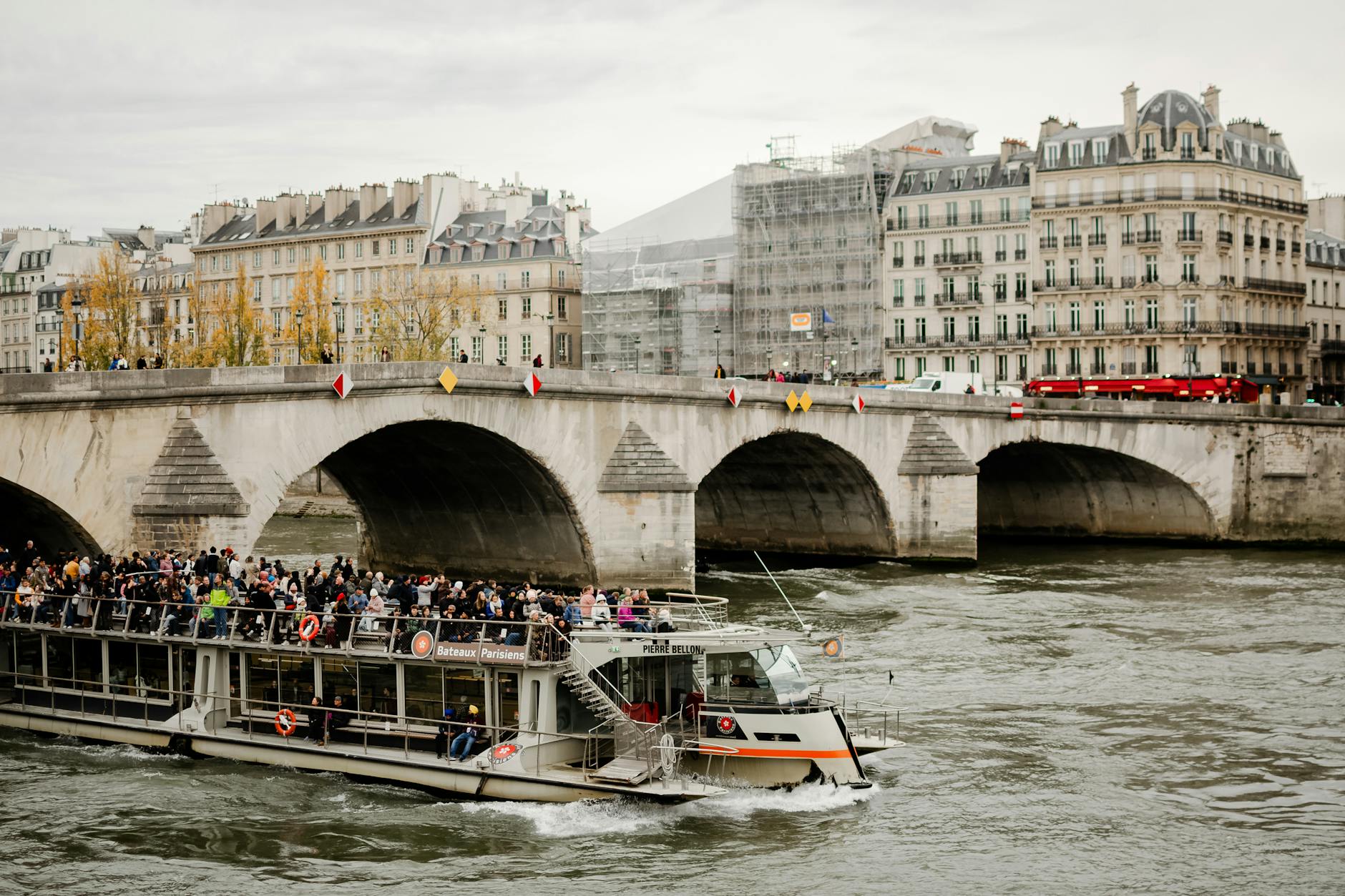
Here’s the thing nobody says out loud: the “free” in free walking tours in Paris is a polite fiction. Four to six main operators run tip-based walks where you book a free ticket online (or simply turn up), spend 2-3 hours with a guide who knows the ground, and pay whatever feels right at the end, usually €10-15 a head. With that understood, it’s still the single best way to orient yourself to a Paris neighborhood on day one. This guide weighs up Sandeman New Europe, Discover Walks, Strawberry Tours, Paris Greeters (the one that’s actually free), Free Walking Tours Paris, and the paid alternatives like Take Walks for travelers who want guaranteed quality. It covers the five best themes too: Classic Paris, Marais, Montmartre, Latin Quarter, and the night tours. All part of our wider Paris on a budget guide.
How Free Walking Tours Work
The free walking tour landed in Paris around 2010 and has been a fixture of the budget circuit ever since. The mechanics are simple, and the pricing is honest once you grasp it. Here’s how the model runs, so there’s no awkward surprise when the guide passes the hat.
Book online or arrive at the meeting point
Most operators, Sandeman, Discover Walks, Strawberry Tours, let you reserve a free ticket online. The reservation isn’t binding, but it helps the guide gauge how big the group will be. Walk-ups are accepted on nearly every tour, though busy summer weekends can cap at 25-30 and turn away the overflow. If your schedule is tight, reserve; otherwise just turn up fifteen minutes early at Place Saint-Michel for the central tours, or Place du Tertre for Montmartre.
2-3 hour tour on foot
Tours run 2 to 3 hours. Classic Paris is the 3-hour version; the Marais, Montmartre, and Latin Quarter walks come in at 2 to 2.5. You’ll cover 3-5 kilometres on foot, mostly flat apart from a few climbs on Montmartre. No transport is included, so plan to stay with the group from start to finish.
Tip-based: €10-15 per person is standard
The one thing to keep front of mind: the tour isn’t really free. Guides earn almost all of their money from tips. The going rate is €10-15 per person for a competent 2-3 hour walk, €20 and up for an exceptional guide. A €5 tip signals you weren’t impressed, and giving nothing is reasonable only when the tour was genuinely poor. It’s the same model that runs in Berlin, Prague, and Amsterdam.
Guides vary widely; check recent reviews for the specific guide
Quality swings more than it does on paid tours, because operator screening is lighter and turnover runs high. Your best signal is recent reviews that name the actual guide. Search Tripadvisor by route and look for guide names praised in the last six months, and steer clear of any tour where recent reviews flag rushed pacing or hard up-selling.
Bring cash for the tip
Bring small euro bills; a mix of €5 and €10 notes covers most situations. Some operators now take card or QR tips, but cash is universal and reads as more respectful. ATMs are everywhere in central Paris, so withdraw €40-60 before the tour if you arrived cards-only.
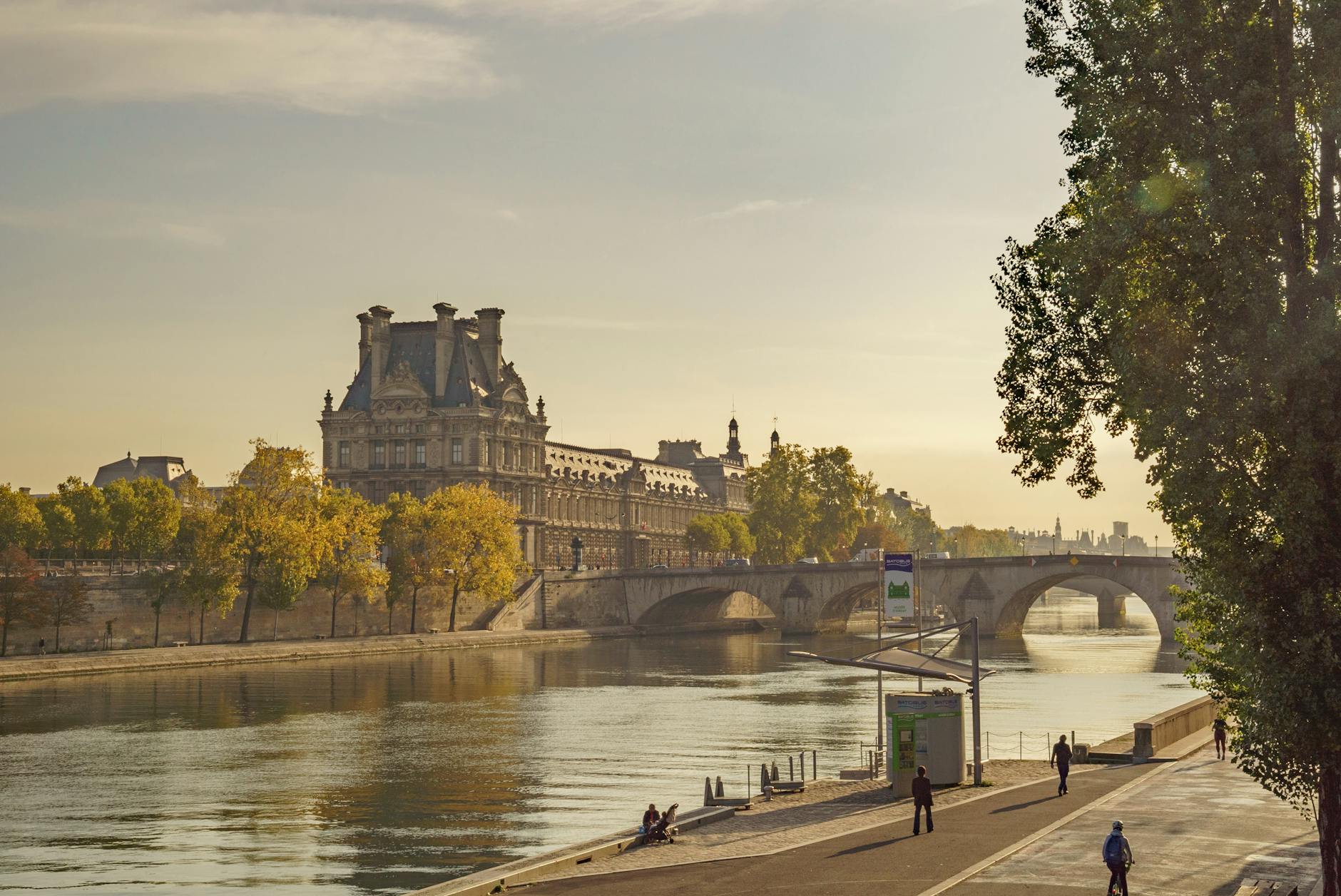
The 5 Main Free Walking Tour Operators
Free walking tour operators in Paris come down to five names. Three are international franchises, one is a local independent, and one is a genuinely free volunteer programme. Knowing which is which lets you pick the right product for the day in front of you.
Sandeman New Europe
Sandeman is the largest free walking tour brand in Europe, and it’s been in Paris since 2010. Several themed tours run daily, Classic Paris, Marais, Montmartre, Saint-Germain, WWII, from Place Saint-Michel or Place du Tertre. Summer groups hit 25-30; off-season they settle to 8-15. Free booking through sandeman.com or the Sandeman app.
Discover Walks
Discover Walks is the second-largest operator, Paris-based with a strong local guide roster. Its lineup overlaps Sandeman’s and adds a Hidden Paris route through the covered passages. Tipping is identical (€10-15). The guides often feel a shade more local than Sandeman’s. Book through discoverwalks.com.
Strawberry Tours
Strawberry Tours is newer to Paris and still building out its roster. The tip pricing is the same and the themes are standard. Smaller groups are common here, which can work in your favour. Quality is more variable simply because there are fewer guides, so read recent reviews carefully before you hand them your only walking-tour slot.
Free Walking Tours Paris (independent)
Independent outfits trade under names like Free Walking Tours Paris: smaller operations, sometimes a single guide, on a limited schedule but often with seriously experienced people. Excellent or unreliable, depending entirely on the specific company. Cross-check the name on Tripadvisor before you book.
Greeters Paris (Parisien d’un Jour)
Parisien d’un Jour is the outlier, and the most interesting option of the lot. It’s genuinely free, no tip, no commercial operator, staffed by Paris residents who volunteer to show off their neighborhood. Greeters pick their own theme, and the result is more conversation than lecture. Advance booking is mandatory through parisiendunjour.fr, at least two weeks ahead, with the group capped at six.
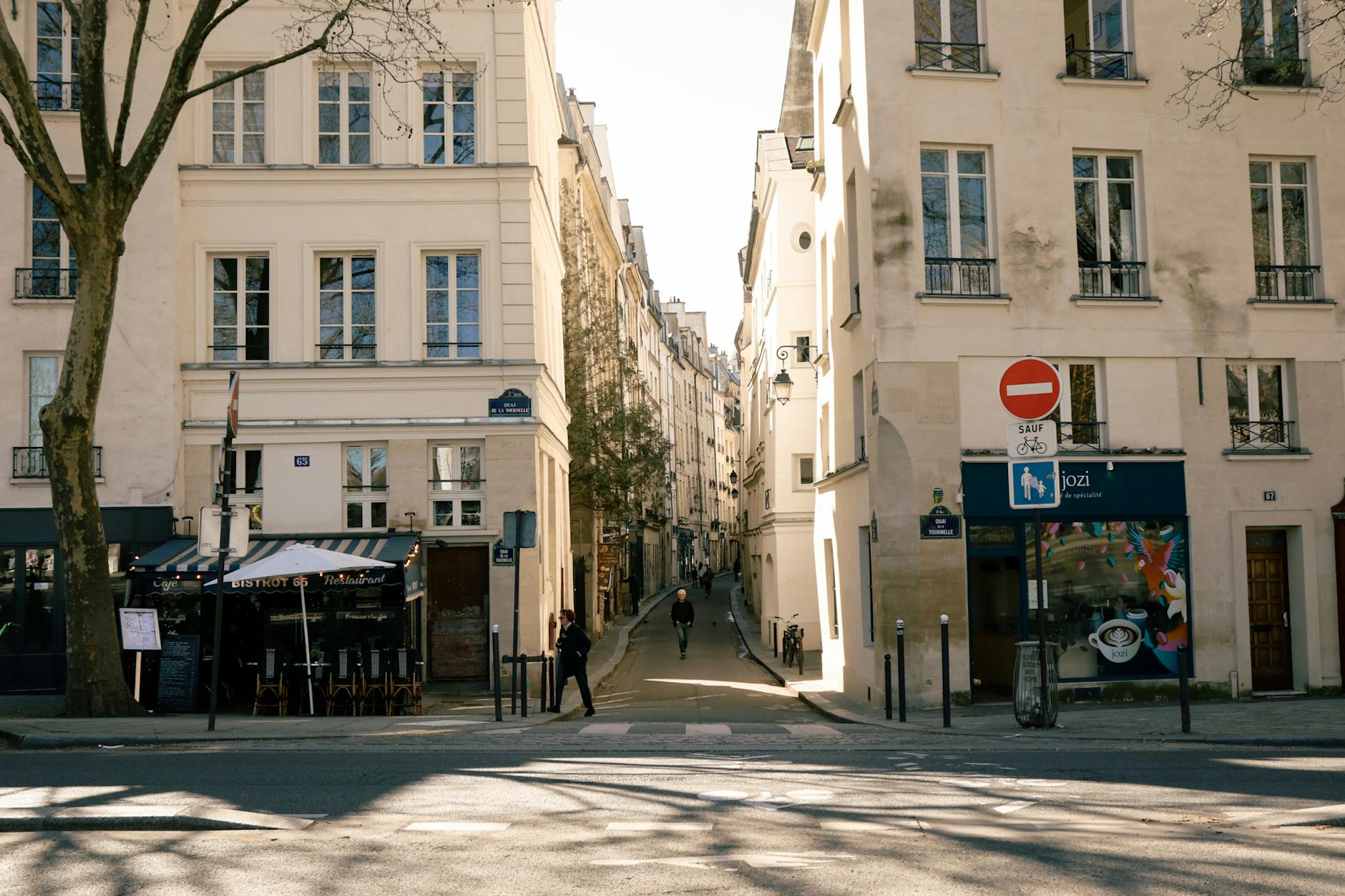
Sandeman New Europe Deep Dive
Since Sandeman runs the most departures and the widest theme lineup, it pays to know exactly what’s on the menu. The five tours below run most days in season and several days a week off-season. Times shift a little between summer and winter, so always confirm the day’s schedule on sandeman.com the night before.
Classic Paris tour: 3 hours, daily at 11am and 2pm
The flagship route: three hours taking in the Île de la Cité, the exterior of Notre-Dame, the Latin Quarter, Saint-Germain, and a stretch along the Seine quays. This is the right pick for day one if you’ve never been to Paris, because it hands you the geographic backbone of the city, the history of the medieval core, and a feel for the Left Bank in a single walk. Departures run daily at 11am and 2pm from Place Saint-Michel.
Saint-Germain tour: 2 hours
A focused 2-hour walk through the 6th arrondissement: Place Saint-Sulpice, the Abbey of Saint-Germain-des-Prés, the literary cafes (Café de Flore, Les Deux Magots, Brasserie Lipp), and the smaller streets behind the boulevard. It leans hard into literary and intellectual history, Sartre, Beauvoir, Hemingway, the post-war philosophers, covering less ground than Classic Paris but going deeper at each stop.
Marais tour: 2.5 hours
The Marais tour threads through the 3rd and 4th arrondissements, taking in Place des Vosges, the medieval and Renaissance mansions (hôtels particuliers) that survived Haussmann, the historic Jewish quarter around Rue des Rosiers, and the design and gallery scene that has reshaped the neighborhood since the 1980s. Two and a half hours, usually a mid-morning departure.
Montmartre tour: 2 hours
This one meets at Place du Tertre rather than Place Saint-Michel. It’s a 2-hour climb and descent around the Butte: Sacré-Coeur, the artist village, the surviving vineyard, the windmill remnants, and the streets where Picasso, Modigliani, and Toulouse-Lautrec worked. Comfortable shoes are non-negotiable here; the route involves real hills and patches of uneven cobblestone.
World War 2 tour: 2 hours
A specialist route through Paris under German occupation (1940-1944): the Resistance, the deportations from the Marais and the Vél d’Hiv area, and the August 1944 liberation. It runs heavier in tone than the other tours, and it’s best taken on day two or three, once you already have the city’s geographic basics down. Not one for very young children.
Tipping: €15 per person is the working guideline
For Sandeman, €15 per person is the unofficial standard for a competent tour, €20 and up for an excellent one. Guides don’t press, but €15 is the number to work from. Cash is preferred, though some guides now carry card readers.
Meeting points and booking via sandeman.com
Central tours meet at Place Saint-Michel beside the fountain; look for the red Sandeman flag or umbrella. Montmartre tours gather at Place du Tertre near the artists. Booking is free through sandeman.com or the Sandeman app and takes under a minute. Bring the QR code or a printed confirmation, though in practice guides rarely scan them and the head count stays informal.
Discover Walks Paris
Discover Walks is the strongest local alternative to Sandeman, and it stands up well on its own merits. The company is Paris-based, the guide roster skews local, and the route lineup overlaps closely with Sandeman’s, with a couple of additions worth flagging.
Classic Paris tour: 3 hours
The Discover Walks Classic Paris route covers much the same ground as Sandeman’s: the Cité, the Notre-Dame area, the Latin Quarter, Saint-Germain. Three hours, daily departures, meeting near the Notre-Dame parvis on the Cité. The pacing tends to run a little slower than Sandeman’s, with longer stops at fewer sites, a matter of preference rather than quality.
Marais tour: 2 hours
Two hours over essentially the same Marais ground as Sandeman’s 2.5-hour version: Place des Vosges, the hôtels particuliers, the Jewish quarter. It’s a touch more compressed, which suits travelers who want a quick orientation and plan to wander on their own afterward.
Montmartre tour: 2.5 hours
Half an hour longer than Sandeman’s Montmartre, and noticeably deeper for it. The extra time buys the quieter back streets above Sacré-Coeur, Rue Saint-Vincent, the vineyard, the Lapin Agile cabaret, that get skipped on faster routes. Recommended if you want Montmartre done properly rather than ticked off.
Hidden Paris tour: 2.5 hours
This is Discover Walks’ most distinctive route: a 2.5-hour walk through the covered passages of the Right Bank (Passage des Panoramas, Galerie Vivienne, Passage Choiseul, Passage Jouffroy), the secret courtyards, and the lesser-known squares. A good day-two or day-three choice once the obvious tourist geography is already in your head.
Tipping: similar €15 per person
Discover Walks runs on the same tip economics as Sandeman: €10-15 per person for a good tour, €20 and up for excellent. Bookings through discoverwalks.com are free and worth making in high season.
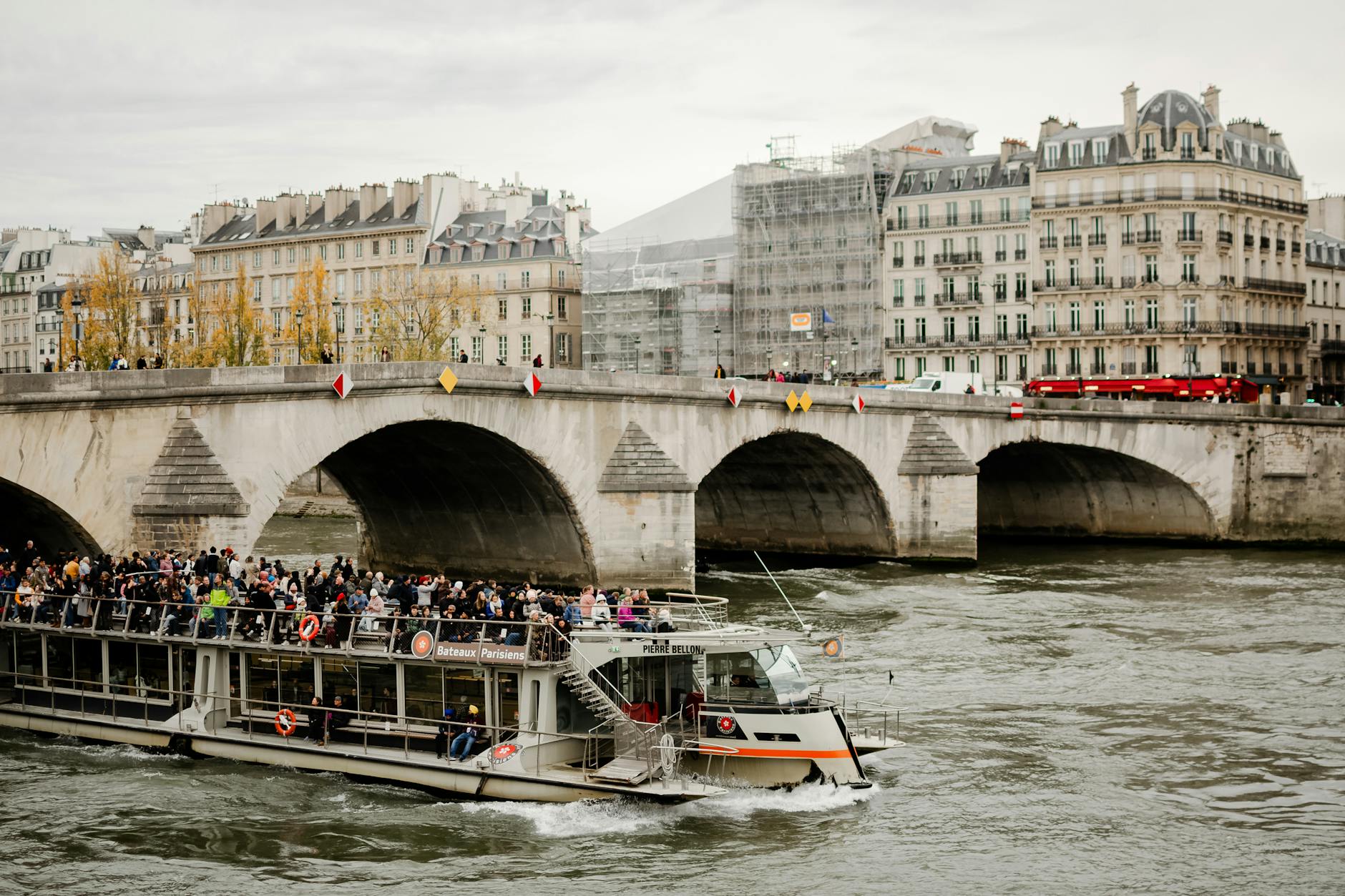
Paris Greeters: Truly Free with Locals
Of every option in this guide, Greeters Paris is the only one that’s free in the dictionary sense: no tip expected, no operator taking a cut, no commercial layer anywhere. The trade-off is that you have to plan ahead and accept that the experience will look nothing like a Sandeman tour.
Parisien d’un Jour is a unique programme
Parisien d’un Jour (“Parisian for a Day”) is the French chapter of the international Greeters network, which began in New York in 1992. The programme matches visitors with Paris residents who give two to three hours to share their neighborhood. It’s not a tour in the commercial sense; it’s a walk and a conversation with a local who has chosen to do this for nothing.
100% free; no tip expected
This is a hard rule. The programme explicitly forbids accepting tips, so that the encounter stays free of commercial pressure on both sides. If you want to thank your Greeter with something tangible, a small souvenir from your home country is fine; cash is not. A coffee or a glass of wine at the end of the walk is a normal and welcome gesture if the Greeter has the time.
Greeters are Paris volunteers who pick a theme they love
Every Greeter chooses their own theme. One might be devoted to the covered passages of the 2nd; another knows every art-nouveau facade in the 11th; a third grew up in Belleville and walks you through immigrant Paris through the eyes of someone who lived it. You note your preferences when you sign up (neighborhood, theme, language), and the programme pairs you with a compatible Greeter. The result is far more personal than any commercial tour, sometimes uneven in structure but always honest.
Advance booking required at parisiendunjour.fr
You book on parisiendunjour.fr by filling out a short form with your dates, language, neighborhood preference, and party size. The programme then matches you with a Greeter by hand, so this is not an instant booking system. Expect 2-7 days for a reply, and build in at least two weeks of lead time before your trip; same-week requests often go unmatched simply because volunteer availability runs out.
Two-week lead time minimum
Want a Greeter? Request one as soon as you book your flights. Late-spring and summer demand is heavy, and the matching team prioritises requests with longer lead times because they’re easier to fill. A request lodged three or four weeks out almost always finds a Greeter; one lodged three days out frequently doesn’t.
Smaller groups (max 6); more personal
Greeters take a maximum of six guests, and most outings run 2-4 people. That’s the structural difference from commercial tours. With a group of three, you walk and talk with a local at conversational pace, ask whatever you like, and end up in cafes the Greeter genuinely rates rather than ones paying commission.
Best Tour Themes
The most useful way to choose among free walking tours isn’t by operator but by theme. Most operators run the same handful of routes, so let your day-by-day interests drive the call. Below are the eight themes you’ll see across the lineup, with notes on what each one delivers.
Classic Paris: Notre-Dame area, Latin Quarter, Saint-Germain
The default first-day choice: a 3-hour walk through the medieval and 17th-19th-century core, the Île de la Cité, the Notre-Dame parvis, the exterior of Sainte-Chapelle, the Latin Quarter, the Sorbonne facade, Place Saint-Michel, and across to Saint-Germain. Strong on big-picture history and geography. If you only have time for one walking tour on a short trip, make it this.
Marais: hidden mansions, Jewish quarter, Place des Vosges
The Marais walk is where a free tour adds the most value over wandering on your own, because the hôtels particuliers (Renaissance mansions) hide behind closed gates and look like nothing from the street until a guide tells you what’s inside. Place des Vosges, the Jewish quarter on Rue des Rosiers, the exterior of the Picasso Museum, and the small streets between them form the spine of the route.
Montmartre: Sacre-Coeur, artist village, Place du Tertre
Montmartre is famously confusing on a map and easy to drift around aimlessly. A 2-hour guided walk pulls it into shape: the basilica, Place du Tertre with its tourist painters, the real artist haunts (the Bateau-Lavoir, Le Lapin Agile), Place Dalida, the vineyard, and the descent toward Pigalle. Do it in the morning before the afternoon crowds peak.
Latin Quarter: Sorbonne, Panthéon, Mouffetard
A 5th-arrondissement deep dive: the medieval origins of the Sorbonne, the Panthéon and the writers buried there, the Roman remains under the streets, and the market on Rue Mouffetard. A good day-two choice once Classic Paris has given you the wider Left Bank context.
Saint-Germain: literary cafes and the abbey
The 6th-arrondissement tour, trained tight on Saint-Germain-des-Prés: the abbey (the oldest church in Paris), Place Saint-Sulpice, the literary cafes, and the narrow streets behind the boulevard where galleries and antique shops cluster. Strong on 20th-century literary and intellectual history.
Night tour: illuminated monuments and the Seine quays
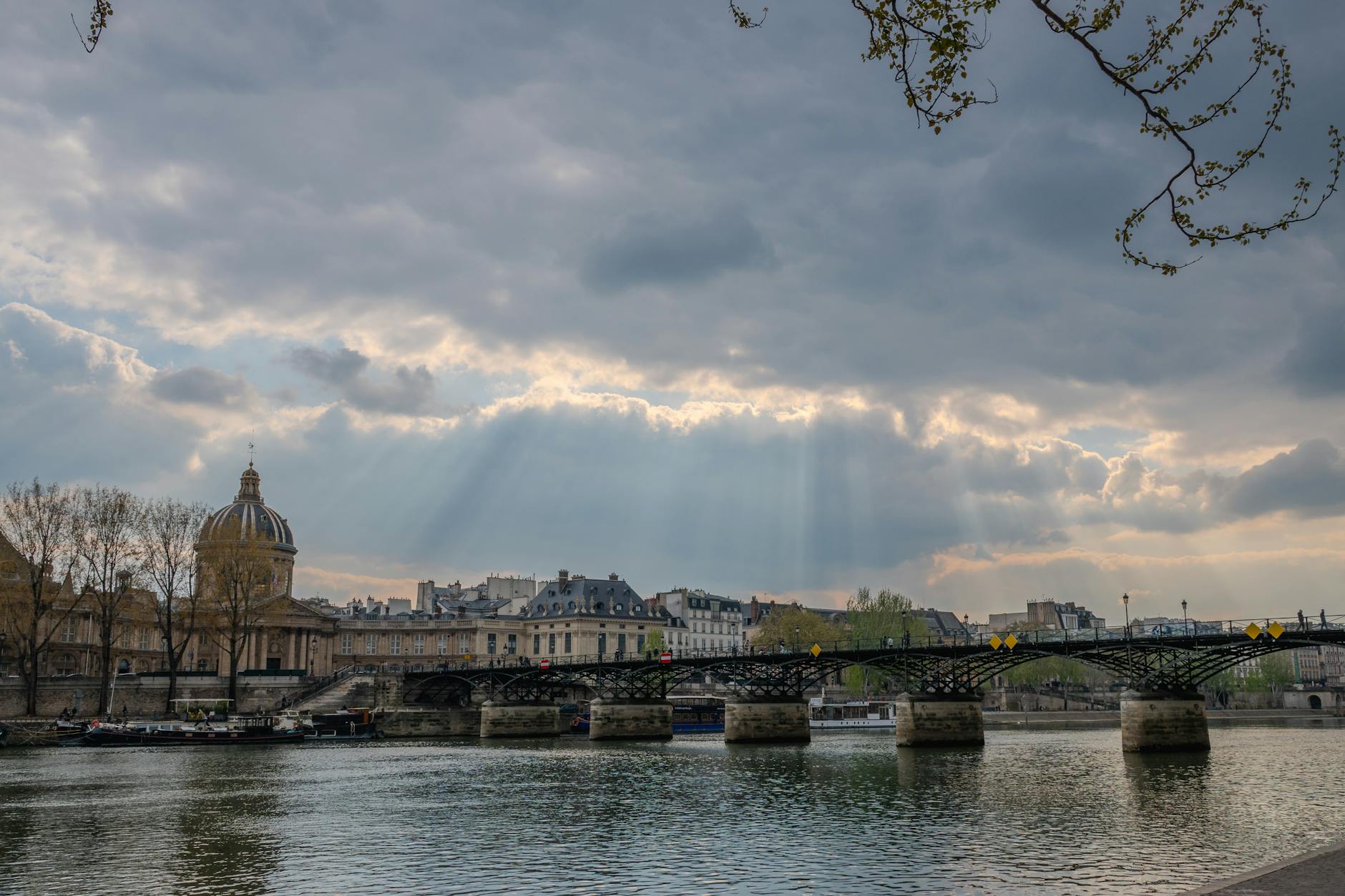
Several operators run evening tours, usually 7-9pm in summer or 6-8pm in winter, built around the illuminated monuments: Notre-Dame from across the river, the Pont des Arts, the exterior of the Louvre, the Pont Neuf at dusk. Lower information density than the daytime tours, higher atmosphere. An excellent first-night option after a long flight.
Hidden Paris: covered passages and secret courtyards
The covered passages of the Right Bank, Passage des Panoramas, Galerie Vivienne, Passage Jouffroy, Passage Verdeau, are 19th-century glass-roofed arcades that predate the department store and survive in pockets between the Bourse and the grands boulevards. A guided walk strings ten or twelve of them together with the secret courtyards in between, an itinerary that would be very hard to assemble yourself.
WWII tour: occupation, Resistance, liberation
A heavier, slower 2-hour walk through Paris under German occupation: the deportation sites in the Marais, the Vél d’Hiv plaque, the Resistance hideouts, and the monuments to the August 1944 liberation. Far better with a guide than alone, because the physical traces are subtle and easy to walk straight past.
What to Look For in a Good Tour
Quality on free tours varies enough that a little screening before you book pays off. Four signals matter more than the operator’s name.
- Small group (under 15). A group of twelve can hear the guide clearly and stop together at narrow viewpoints. A group of thirty can’t, and the back half misses half the commentary. Walk away from a tour that starts with thirty-plus people, and rebook for the next departure or a different operator.
- Licensed guide-conférencier credential. Some free-tour guides hold the French national guide-conférencier licence, the same credential the paid premium guides carry. It isn’t strictly required for a free tour, but it points to serious training. Ask, or check the operator’s bio page.
- Specific itinerary listed. Good operators publish the actual route: landmarks, neighborhoods, rough timing. Vague descriptions (“explore the heart of Paris”) usually mean a generic walk led by a less experienced guide.
- Recent positive reviews that name the guide. Reviews from the last six months naming the guide by first name are the strongest signal there is. A tour with five recent reviews praising “Marie” or “Pierre” specifically is a safer bet than one with vague generic praise.
What to Tip
Tipping etiquette on free tours is more codified than first-timers expect, and getting it right matters, because the guides genuinely live on it. Here’s the working scale.
- €10-15 per person is the standard for a competent 2-3 hour tour. It’s what most travelers give and what guides quietly expect.
- Cash is preferred. A small euro note in hand at the end is universally welcome. Some operators now offer QR-code or card tipping; it works, but it feels less personal.
- Round down for shorter tours. A 90-minute walk at €8-10 per person is fair; a 75-minute one at €7 is fair too.
- More for an excellent guide. If the guide was genuinely outstanding, deep knowledge, great storytelling, real attention to the group, €20-25 per person is the right number.
- Nothing if the tour was poor. A truly bad tour, no preparation, rushed, an openly bored guide, deserves no tip. That’s acceptable under the free-tour model; the guide’s incentive to do better is the whole point of the structure.
Pros vs Cons of Free Tours
Free walking tours aren’t the right answer every time, even on a budget trip. Here’s the honest accounting.
Pros
- Low risk. If the tour disappoints, you tip lightly and lose nothing. Try a different operator the next day.
- Motivated guides. Tip-based pay lines up the guide’s interest perfectly with the experience. A good guide on a free tour is working hard for it.
- Ideal first-day orientation. Three hours across the central core gives you the geography and the broad history in one sweep, the perfect day-one structure.
Cons
- Variable quality. Guides range from excellent to mediocre, and you can’t always tell which you’ll draw. Recent guide-name reviews help but don’t guarantee.
- Large groups. Summer Saturday tours can balloon to 25-30 people, which thins the experience for everyone stuck at the back.
- Commission pressure. Some operators pitch paid add-ons (catacombs tours, food tastings, river cruises) at the end of the free walk. A polite “maybe later” ends it, but it’s baked into the model.
When to Use Paid Tours Instead
A free tour isn’t always the right tool. Four scenarios where a paid tour delivers better value despite the price tag.
Specific deep-dive themes (Versailles, Catacombs, food)
A Versailles half-day, a guided Catacombs entry, a Latin Quarter food tour with five tastings, these are tightly scoped products where the value comes from the logistics, the access, and the expertise that a free model simply can’t fund. A €75-120 Versailles tour with skip-the-line and round-trip transport is genuinely a better deal than doing it yourself for most travelers.
Premium guide quality (Context Travel, Localers)
Companies like Context Travel hire academic-level guides, PhD historians, practising architects, working artists, for groups capped at six. Three-hour tours cost €90-110 per person, six to eight times a free tour’s effective cost. You can’t replicate that depth and small-group format on the free model.
Skip-the-line bundled
For the Louvre, Versailles, the Catacombs, and Sainte-Chapelle, a paid tour that includes skip-the-line entry is often the smart call, simply because the time you save outweighs the price premium. A €65 Louvre tour with priority entry beats a free tour outside the museum followed by a 90-minute queue to get in.
Family or private group
For families with young children, or groups of four who want flexibility, a private guide at €250-400 for a half-day often works out to roughly the same per-person cost as two free tours plus tips, with a route built around your interests, the kids’ stamina, and lunch breaks. Compare options in our best Paris tours roundup.
Best Times for Free Walking Tours
Timing shapes the experience more than first-timers expect. Group size, weather, and how fresh the guide is all swing on which slot you pick.
- Tuesday-Friday mornings are the sweet spot: smaller groups, fresher guides, cooler weather in summer. An 11am Wednesday tour in May is about as good as a free walking tour in Paris gets.
- Avoid Saturday 11am-2pm. This is the single biggest-group window of the week, with summer crowds pushing 25-30 per tour. The same route at 9am Tuesday will run with eight.
- Rainy days run anyway. Tours go ahead in rain except in a genuine downpour, and a light-rain day actually trims the group size by a lot. With a waterproof and a mild temperature, a rainy Tuesday morning tour is the smallest group you’ll ever get.
What to Wear and Bring
Two to three hours on foot over varied terrain calls for the same packing approach as any long urban walk. Six items cover it.
- Comfortable, broken-in shoes. Cobblestones, the hills of Montmartre, and 3-5 kilometres on your feet. New shoes are a guarantee of blisters.
- Layers for the weather. Paris weather turns fast. A light layer plus a packable rain shell handles most conditions year-round.
- Water. Bring a refillable bottle; tours pass Wallace Fountains regularly, where you can top up for free.
- Charged phone. For photos, screenshotting the route, and the operator’s booking QR if anyone asks for it.
- Small bills and coins for the tip. €5 and €10 notes mix cleanly. Withdraw before the tour if you arrived cards-only.
- A light cross-body or anti-pickpocket bag. Tour groups are mild pickpocket targets in summer, and a bag worn cross-body across the front of you is the practical fix.
Booking Tips
The booking logistics are simple but differ by operator. The practical patterns are quick to learn once you’ve done it once.
- Sandeman and Discover Walks via apps or websites. Both run free apps and clean web booking. Reserve the night before for popular routes in high season; walk-ups work fine off-season.
- Greeters Paris via parisiendunjour.fr, two-plus weeks ahead. The volunteer matching takes time, and same-week requests rarely land. Lodge yours when you book flights.
- Cross-check on Tripadvisor. Whichever operator you pick, read the last 10 reviews for that specific route; recent guide-name praise is the strongest quality signal you’ll find.
- Have a backup operator. If your first-choice tour gets cancelled or oversold, knowing the next departure on another operator’s schedule lets you pivot the same morning.
Self-Guided Alternative
Prefer to walk at your own pace, dodge the group dynamics, and sidestep the tip question altogether? Self-guided routes deliver almost everything a free tour does. You give up the live storytelling, but you gain the freedom to linger, detour, and stop for coffee whenever you feel like it, which counts for a lot. We map out classic and neighborhood routes in our Paris walking tours guide, with turn-by-turn directions for the same itineraries the free operators use.
A hybrid approach suits a lot of travelers: one Sandeman or Discover Walks tour on day one for the city-wide orientation, then self-guided neighborhood walks for the rest of the trip, once the geographic backbone is already in your head. For more no-cost ideas across the city, see our free things to do in Paris roundup, and our Paris attractions overview ties the whole lineup together.
FAQ: Free Walking Tours in Paris
Are free walking tours in Paris actually free?
They’re tip-based, not actually free. The ticket costs nothing, but the social expectation is a tip of €10-15 per person for a 2-3 hour tour. The only genuinely free option is Parisien d’un Jour (Paris Greeters), which is volunteer-run and forbids tipping.
How much should I tip on a free walking tour?
€10-15 per person for a competent 2-3 hour tour, €20-25 per person for an excellent guide. Less for shorter tours, nothing for a genuinely poor one. Cash is preferred over card or QR-code tipping.
Do I need to book in advance?
For Sandeman and Discover Walks, booking is recommended in high season (June-August) but not strictly required, since walk-ups are almost always accepted. For Paris Greeters, advance booking is mandatory, with at least two weeks of lead time.
What language are the tours in?
English on every major operator. French, Spanish, German, and Italian on selected departures with Sandeman and Discover Walks. Paris Greeters matches by language, so you specify your preferred one when you request.
Are children welcome?
Yes, on all standard tours, free of charge. The WWII tour is heavy in content and not recommended for under-twelves, and the Montmartre tour involves real hills that can be tough on small children. Classic Paris and the Marais are the most family-friendly.
What if it rains?
Tours run in rain except in genuine downpours. A waterproof jacket and the right footwear make a wet tour perfectly enjoyable, and the group shrinks significantly, which is actually a plus for the experience.
Can I leave the tour partway through?
Yes, with no penalty, though you’ll miss the second half. If you do duck out early, hand the guide a tip (€5-8 for an hour, €8-12 for 90 minutes) before you slip off rather than walking away cold. It’s the courteous thing to do.
Are free walking tours worth it?
On day one in Paris, almost always. A 3-hour Classic Paris tour with a competent guide hands you a geographic and historical backbone for the whole trip in a single morning, for the price of a tip. For specific deep-dives (Versailles, Louvre, Catacombs, food) a paid tour is the better tool, but for first-day orientation, the free model is hard to beat.
Related reading
Use these to round out your trip:
- how to do Paris cheaply
- Paris Happy Hour
- How to Eat Cheaply in Paris Like a Local
- month-by-month airfare
- How Many Days in Paris? The Perfect Trip Length for Every Traveler
- where to get good coffee
Worth being clear about how these are funded, because it is the one place in Paris where a tip is genuinely expected rather than optional: the guide is not paid by anyone, and what people hand over at the end is their entire income from the tour. Ten to fifteen euros a head for a good two hours is the going rate. Our guide to tipping in Paris explains why this case is the exception.