35 Money-Saving Tips for Paris That Actually Work
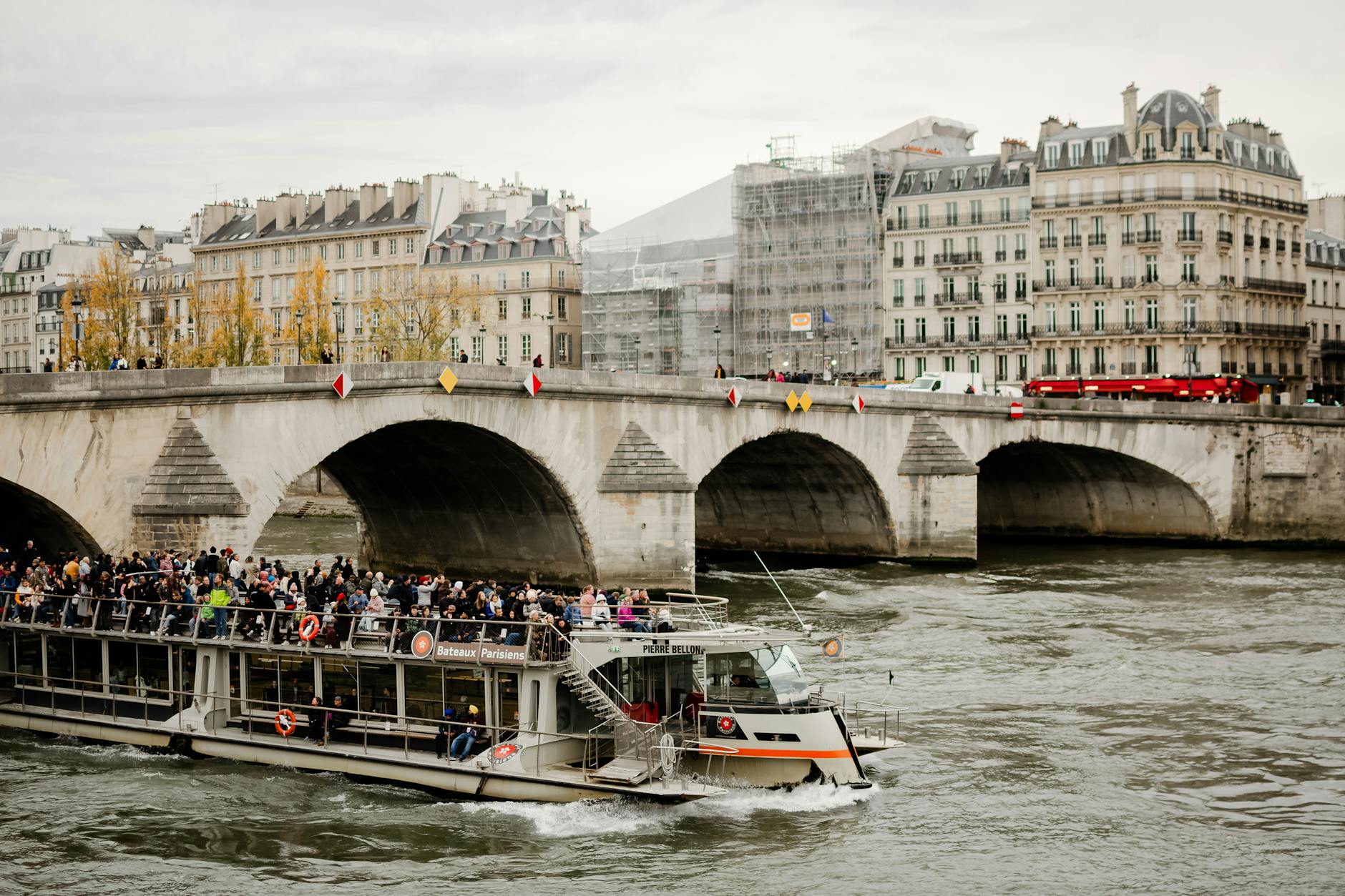
Book a week in Paris carelessly and you’ll spend €3,500 or more per person. Book it well and the same week runs €1,200-1,600. The 35 money saving tips paris below are the ones that actually move money, not the tired “walk a lot” line: the days the museums go free, the bouillon dinner pattern, the Wallace Fountain trick, the Sunday market hack, the Navigo Découverte calendar math, the under-26 EU rules. Stack them and they shave 40-60% off a typical trip without costing you a single experience. It’s all part of our wider Paris on a budget guide.
The Big Picture: Where Paris Costs Add Up
For a typical mid-range trip, the in-city budget splits roughly like this: hotel 40-50%, food 25-30%, sightseeing 10-15%, transit 5%, and the rest miscellaneous. Flights sit on top, separately. The biggest savings live where the biggest spending lives, which is why switching arrondissements saves you far more than skipping a coffee.
That said, the small stuff compounds. A €5 espresso four times a day for a week is €140 gone. Saving money in Paris is partly structural (where you sleep, when you fly, which pass you buy) and partly behavioural (where you order coffee, which day you hit the Louvre, whether you fill a bottle at a Wallace Fountain or buy plastic). The 35 tips below cover both, and not one of them asks you to enjoy Paris any less.
Flight + Booking Tips (Tips 1-5)
Flights are often the single biggest line item, and they’re also the most elastic. Five habits cut transatlantic and intra-European airfare in a way you’ll actually feel.
1. Fly January-March or November (cheapest months)
Paris fares bottom out from mid-January through mid-March, then again in early November. Set aside the Christmas-New Year peak and late January and early February are the cheapest weeks of the year, frequently 30-45% below July-August on transatlantic routes. The sky is grey, sure, but the museums are empty and the hotels are discounting hard.
2. Tuesday-Wednesday departures save 20-30%
Mid-week flights run consistently cheaper than weekend ones, because business travelers clog Monday and Thursday-Friday. A Tuesday-to-Tuesday week typically costs 20-30% less than the Friday-Sunday version on the same route, and the saving compounds once you layer it onto off-season dates.
3. Book 60-90 days ahead transatlantic; 30-60 days European
For US-Paris and Canada-Paris flights, the sweet spot lands 60-90 days out, where fares usually dip before climbing again in the final month. For intra-European hops (London, Amsterdam, Madrid into Paris), 30-60 days ahead is generally the better window.
4. Use Google Flights price alerts
Set a Google Flights alert for your dates and route the moment you have a rough plan. The historical price graph at the top of every search tells you whether the fare in front of you is high, normal, or a genuine deal against the last six months. The explore map view earns its keep for flexible travelers too: leave the destination open and let the map show you where flights into Europe are currently cheapest.
5. Multi-city fares often cheaper than round-trip
It sounds backwards, but it’s reliable: a multi-city fare (into Paris, out of London) often beats a Paris round-trip, because European carriers price each leg independently. If your trip can absorb a one-way Eurostar at the end, run the search both ways. The gap is regularly €100-300 per ticket.

Accommodation Tips (Tips 6-12)
Hotels eat 40-50% of the in-city budget, so where you sleep has the single biggest impact on trip cost. Seven habits move the needle.
6. Stay in the 10th, 11th, 18th, or 20th
The 10th (Canal Saint-Martin), 11th (Bastille/Oberkampf), 18th (outer Montmartre), and 20th (Belleville) are all well-connected on the Metro yet price 30-50% below the central 1st-7th. A comfortable 3-star in the 11th runs €120-160 a night; the same standard in the 6th is €220-300. Over five nights that’s €500-700 saved for nothing you’ll miss, fifteen minutes by Metro from anywhere central, in livelier neighbourhoods with far better evening dining.
7. MIJE Marais hostels for under-30 budget travelers
MIJE runs three former hôtels particuliers in the Marais, all converted into hostels: gorgeous 17th-century buildings on quiet streets, dorm beds from around €42 and private rooms from around €75. The age limit is technically 30 but enforced loosely. Pound for pound, one of the best deals in central Paris.
8. Aparthotels with kitchens save on dinners
An aparthotel (Adagio, Citadines, plus the independents) costs a touch more per night but throws in a kitchen. Two breakfasts at home and two simple dinners across a five-night stay typically saves €120-180, comfortably more than the nightly premium you paid for the privilege.
9. Book directly with hotel often gets discounts
Booking platforms skim a 15-20% commission, and plenty of independents will quietly match or beat the platform price when you email them directly. Find the room on a platform, then ask the hotel whether they can match it for a direct booking. The answer is yes more often than not, sometimes with a small upgrade thrown in.
10. Avoid the immediate Eiffel/Louvre periphery
The blocks ringing the Eiffel Tower, the Louvre, and the Champs-Élysées carry a 20-30% tourist markup on both hotels and food. Stay a 10-minute Metro ride out in the 11th or the 9th instead. Sleeping next to a landmark mostly buys you noise and a hotel that knows you’ve run out of other options.
11. Negotiate at small hotels if booking 4+ nights
Small independent hotels usually have the discretion to discount a longer stay. Booking four nights or more? Email and ask politely whether there’s any flexibility on the rate. You’ll get a yes maybe a third of the time, typically 5-10% off, and it costs you nothing to ask.
12. Tourist tax (€3-10/night) added at checkout
Paris charges a taxe de séjour, from €3 per person per night at budget hotels to €10 and up at the palaces. It isn’t always baked into the advertised rate, and it lands at checkout. Across five nights for two it adds €50-80, so build it into the plan.

Food Tips (Tips 13-20)
Food is where small habits compound fastest. Eat every dinner at a table-service restaurant in central Paris and you’ll spend €50-80 a head per evening. Alternate bouillons, picnics, and lunch-as-main, and you’ll eat just as well for half that. Eight habits worth internalising, and our deeper cheap eats in Paris guide carries the full restaurant list.
13. Eat lunch as your main meal
The biggest single food-cost lever in Paris is moving your main meal from dinner to lunch. Most bistros run a formule at midday, two or three courses for a fixed price, at €15-22, drawing on the same menu that costs €40-70 in the evening. Same food, same room, same wine list. Over a week, this one switch saves €150-250 per person.
14. Bouillons (Pigalle, République, Chartier)
Bouillons started as 19th-century working-class canteens, and the revived versions are deliberately cheap spots for a classic dinner. Bouillon Pigalle, Bouillon République, Bouillon Chartier, and Bouillon Julien all serve three-course dinners for €15-20, often with quarter-pichets of wine under €5. Traditional French cooking (steak frites, blanquette, œufs mayonnaise), gorgeous rooms, and no reservations, so queue 30-45 minutes before opening.
15. Monoprix picnic (€25-35 for two)
A Monoprix or Franprix run plus a park bench is about as Parisian as it gets. €25-35 buys two people a baguette, cheese, saucisson, fruit, chocolate, and a drinkable bottle of wine. Eat it at Place des Vosges, on the Pont des Arts, in the Luxembourg, or along the Canal Saint-Martin. Do one of these every other day and it’s a strategy, not a sacrifice.
16. Carafe d’eau is free at every restaurant
Restaurants are legally required to bring you a carafe d’eau (tap water) free on request. Paris tap water is excellent and constantly monitored. Ask for “une carafe d’eau, s’il vous plaît” instead of ordering bottled, and pocket €6-9 per meal.
17. Espresso at the bar (€1.50-3 vs €5-8 terrace)
Cafés price drinks by where you put yourself. Standing at the zinc bar (au comptoir) is cheapest, sitting inside is mid, the terrace is dearest. A single espresso costs €1.50-3 at the bar and €5-8 on the terrace of the very same café. For a quick coffee, drink it standing at the bar like a Parisian and keep the difference.
18. Boulangerie sandwich + quiche (€5-9 lunch)
A neighbourhood boulangerie turns out a perfect cheap lunch: a jambon-beurre sandwich (€4-5), a slice of quiche lorraine (€4-5), an éclair (€3-5). Skip the boulangeries on tourist routes, though; step one or two blocks off the main drag and prices drop 20%.
19. Marché des Enfants Rouges + Aligre
The covered markets, Enfants Rouges in the 3rd, Aligre in the 12th, Saint-Quentin in the 10th, run lunch counters serving Moroccan tagines, Lebanese mezze, Italian pasta, or traditional French plates for €10-14. Fresh, made to order, and eaten elbow to elbow with locals. They close Mondays and get busiest between 12:30 and 14:00.
20. Aperitif at home, dinner out
Got an aparthotel? Do your aperitif at home with a supermarket bottle and a bowl of olives, then head out for dinner. Restaurant aperitifs run €8-15 a drink, and a pre-dinner round for two easily tacks on €30. Front-loading at home leaves that money for the meal itself, where it belongs.
Sightseeing Tips (Tips 21-26)
Most travelers overspend on sightseeing for one reason: they buy individual full-price tickets without first checking whether a free day, a discount they qualify for, or a multi-site pass would have covered the same itinerary. Our companion guides on free museums in Paris and the Paris Museum Pass math cover the full picture. Here are six core tips.
21. Free first Sunday of November-March at national museums
On the first Sunday of every month from November through March, the major national museums open free to everyone: Louvre, Orsay, Centre Pompidou, Rodin, Orangerie, and more. The Louvre and Orsay require a free timed-entry reservation booked online. If your trip overlaps this date, build the schedule around it, because it can save €50-80 in admissions per person.
22. Under-18 free at all national museums worldwide
Every French national museum admits under-18s free year-round, whatever their nationality. Bring ID showing date of birth. It applies to the Louvre, Orsay, Versailles, Sainte-Chapelle, and the rest, so a family trip with teenagers should never be paying at national sites.
23. EU residents under 26 free at all national museums
EU citizens and long-term residents aged 18-25 enter every French national museum free on production of a passport plus a residency document. It’s one of the most generous and least-known traveler discounts in Europe. Note the catch: non-EU travelers don’t qualify on age alone.
24. 14 Paris Musées city museums always free
The City of Paris runs 14 municipal museums whose permanent collections are free for everyone, every day: the Petit Palais, Musée Carnavalet (Paris history), Musée d’Art Moderne, Maison de Victor Hugo, Maison de Balzac, Cernuschi. Only the temporary exhibitions cost extra. You can build a 3-day itinerary that’s half free city museums and lose nothing in depth.
25. Bastille Day July 14 = free national museums
On July 14, the national museums offer free admission. The trade-off is crowds, so if you’re in town for the parade and fireworks anyway, slot in a free morning museum visit and go right at opening.
26. Paris Museum Pass €85 4-day
If you don’t qualify for free entry, the Paris Museum Pass (€70 for 2 days, €85 for 4, €100 for 6) is the most efficient money you’ll spend on sightseeing. A typical run of Louvre, Orsay, Orangerie, Versailles, Sainte-Chapelle, and the Conciergerie totals €120-150 at the door; the 4-day pass covers the lot for €85 and skips the ticket queues on top. Our pass analysis breaks down the math by profile.
Transport Tips (Tips 27-30)
Transport is only 5% of the average Paris budget, but it’s one of the easiest 5% to optimise. Four habits, plus the deeper write-up at Navigo pass and Paris Metro tickets.
27. Navigo Découverte Weekly €31.60 Mon-Sun
The Navigo Découverte is a weekly transit subscription at €31.60 (plus a €5 card fee and a passport photo) that gives unlimited travel on the Metro, RER, buses, and trams across all five zones, RER B to CDG and RER C to Versailles included. The catch: the weekly version runs Monday to Sunday, not seven days from purchase. If your stay covers a calendar week, this is far and away the best transit deal in the city.
28. Carnet of 10 tickets €17.35
If your stay doesn’t line up with a calendar week, a carnet of 10 Metro tickets costs €17.35, a €4.15 saving over ten singles at €2.15. The tickets pass freely between travelers and never expire.
29. Walk distances under 1.5km
Paris is compact, with the historic centre fitting inside a 4km diameter, and trips of 1.5km or less are often faster on foot than on the Metro once you factor in the descent, the wait, and the climb back up. Louvre to Orsay is 1.2km along the Seine; Notre-Dame to the Marais is 800m.
30. Apple/Google Pay tap-to-pay at Metro turnstiles
Paris turnstiles now take Apple Pay and Google Pay tap-to-pay at €2.15 a trip. Handy for the occasional one-off; for anything past four or five rides, a carnet or Navigo comes out cheaper.
Free Experiences (Tips 31-35)
Some of the most memorable things you can do in Paris cost nothing at all. Our wider free things to do in Paris guide holds the full inventory; here are five we wouldn’t want any visitor to miss.
31. Notre-Dame nave entry (free; timed reservation)
Notre-Dame reopened in December 2024, and the nave is free to visit with a timed reservation through the cathedral’s website. The restoration is staggering: bright Lutetian limestone, restored 19th-century paintings, new liturgical furniture by Guillaume Bardet. Book at least 48 hours ahead in the busy weeks.
32. Galeries Lafayette + Printemps rooftops
Galeries Lafayette Haussmann and Printemps Haussmann both keep free public rooftop terraces with panoramic views over the Opéra Garnier, the Eiffel in the distance, and Montmartre. Lafayette’s is on the 7th floor, Printemps’ on the 8th. While you’re inside Lafayette, don’t miss the stained-glass dome over the main hall.
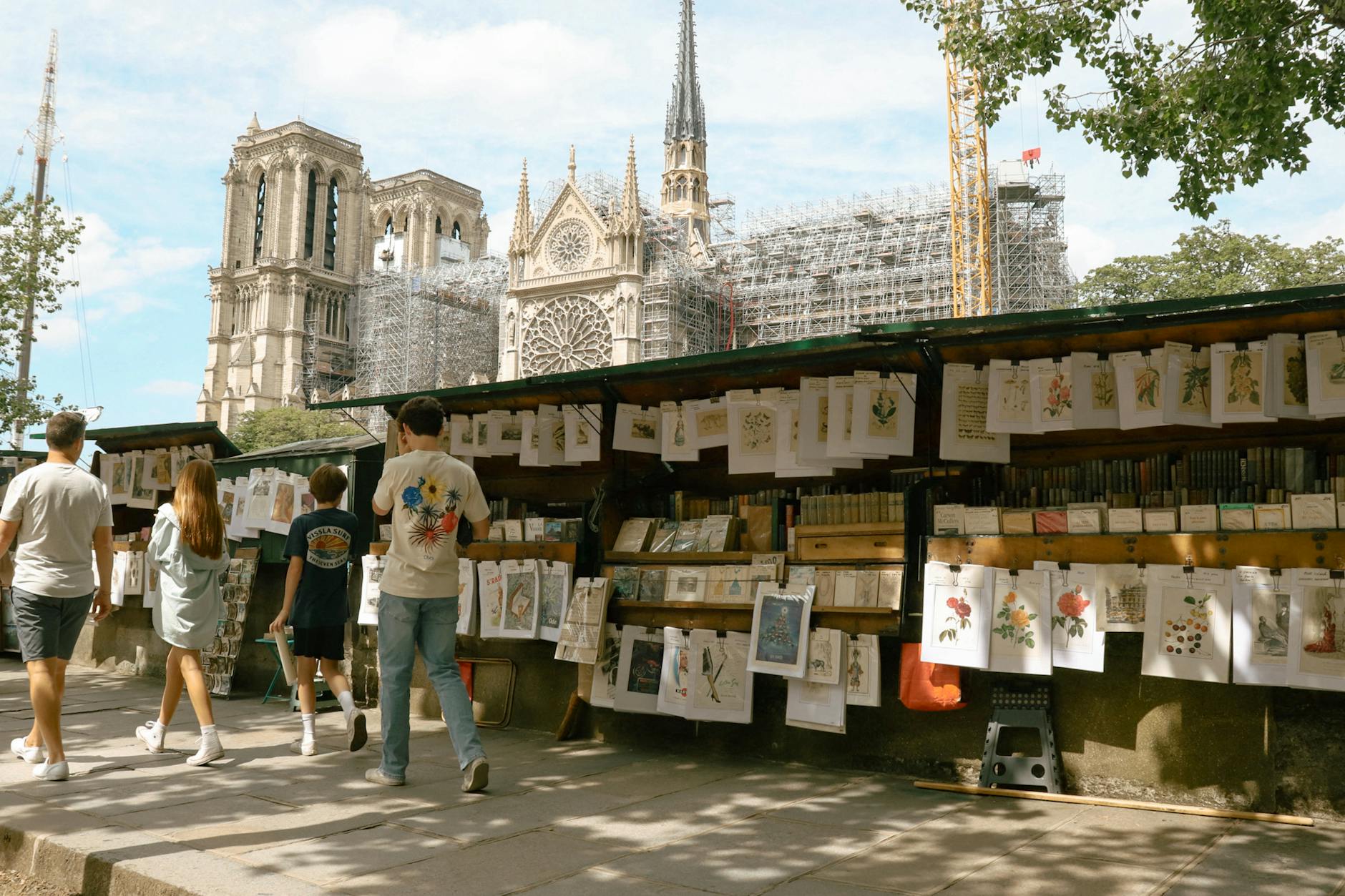
33. Bouquinistes book stalls along the Seine
The dark green riverside boxes between Pont Marie and Pont du Carrousel belong to the bouquinistes, the licensed book and print sellers of Paris, UNESCO-recognised since 1991. Browsing costs nothing: vintage postcards from €1, old metro maps from €5, original 1960s magazine covers €10-15, which is one of the better souvenir buys in the city.
34. Sunday organ recitals at Saint-Sulpice + Saint-Eustache
On Sunday mornings, Saint-Sulpice (6th) and Saint-Eustache (1st) hold free organ recitals after the main Mass. Saint-Sulpice’s Cavaillé-Coll organ was played for decades by Widor and Dupré; Saint-Eustache houses one of the largest pipe organs in France. The Saint-Sulpice recital usually starts around 11:30am.
35. Wallace Fountains free drinking water (108 of them)
The dark green cast-iron Wallace Fountains, donated by Sir Richard Wallace in the 1870s, are scattered across Paris, 108 of them, dispensing free drinking water from late March through mid-November. Bring a reusable bottle instead of paying €2-3 for plastic from the tourist-strip cafes.
The €30-a-Day Eating Plan
To make the food tips concrete, here’s what a real day of eating brilliantly in Paris on €30 actually looks like. Be clear-eyed about it: €30 is the floor for someone who wants three proper meals plus coffee, and €40-50 is the comfortable everyday number. The point of the €30 version is simply to prove it’s doable without skipping anything.
- Breakfast (€4-5): a pain au chocolat or croissant (€1.50-2) plus an espresso at the bar of a neighbourhood café (€1.80-2.50). Total under €5.
- Mid-morning (€0): refill the water bottle at a Wallace Fountain, and eat a piece of fruit from yesterday’s supermarket bag.
- Lunch (€12-15): a bistro lunch formule, two courses with a carafe d’eau, in the 11th or the 10th. Or a covered-market lunch counter at Marché des Enfants Rouges or Aligre.
- Afternoon snack (€3-4): an éclair or tarte au citron from a good boulangerie, with another bar espresso if you need one.
- Dinner (€8-10): a Monoprix picnic for two, split (baguette, cheese, charcuterie, fruit, wine), eaten in a park or by the Canal Saint-Martin. Per person, well under €10.
- Total: €27-34. Slot in one bouillon dinner (€18-22) once or twice a week as a sit-down treat and the seven-day average still stays comfortably under €35 a day.
The Smart Souvenir Strategy
Tourist-zone souvenir shops are a money sink: mass-produced miniature Eiffel Towers, “Paris” magnets, overpriced berets. The cheaper and more authentic move is to buy real, consumable goods from real Parisian stores. Four reliable choices:
- Monoprix house Champagne: the supermarket’s own-label Champagne (Monoprix Gourmet) is genuine A.O.C. Champagne from contract growers, retails €19-22, and beats anything stamped “Paris” as a gift.
- Mariage Frères tea: a tin of Marco Polo or Thé sur le Nil from the Marais flagship runs around €15, one of the most iconic luxury teas in France. The black-and-gold tin alone makes it a gift.
- Ladürée box of macarons: a small assortment box runs about €20 and travels fine for 24 hours in hand luggage. That green-and-gold box is instantly recognisable.
- Carrefour or BHV wine glassware: a set of four classic French bistro glasses (Duralex Picardie tumblers, €12-15) is more useful and more characterful than any fridge magnet.
For a non-consumable souvenir, the bouquinistes (Tip 33) sell genuine vintage paper, postcards, magazine covers, metro maps, prints, for €1-15. A 1962 Paris Match cover framed at home beats anything sold within 500 metres of the Eiffel Tower.
What to Skip (Money-Wasters)
Knowing what to skip matters as much as knowing what to do. Five common Paris purchases that consistently underdeliver for the price.
- Hop-on-hop-off bus tours: €40-50 for a slow, traffic-bound loop that hits sites you can reach faster and cheaper on the Metro, with generic recorded commentary on top. Skip it in favour of walking, the Metro, and an actual guided walking tour if you want narration.
- Restaurants at the Eiffel Tower base: the cafes directly under and around the tower charge 30-50% above neighbourhood rates for mediocre food. Walk five minutes into the 7th or 15th and prices fall back to earth.
- Champs-Élysées lower-end eateries: the avenue’s mid-price restaurants are tourist traps. The flagship brands (Ladürée, Pierre Hermé) are fine; the no-name brasseries with English-only menus are not.
- Photo menus and English-only menus: the single strongest signal of a tourist trap is a menu posted outside with food photos. Real Paris restaurants don’t need pictures to sell their food. Walk past.
- Taxis instead of the Metro for short trips: a 2km taxi across central Paris in traffic costs €12-18 and takes 15-25 minutes; the same trip on the Metro costs €2.15 and takes 10. Taxis earn their place at night, with luggage, or to and from airports, and rarely otherwise.
Common Tourist Money Traps
A handful of scams and pressure-sale tactics target tourists in Paris specifically. None are dangerous; all are annoying and cost money if you bite.
- Petition signature scams: a young person approaches with a clipboard, asking you to sign a petition for the deaf-mute or some other cause, and once you sign, a donation gets demanded. Say “non” and keep walking. Most common around Sacré-Cœur, Notre-Dame, and the Trocadéro.
- Restaurant tip-padding: service is included in French restaurant bills by law (service compris). A small extra cash tip of €1-3 for good service is welcome but optional. Some places now present a card terminal prompting 10/15/20%; this is a US-style import and genuinely optional, so press “no tip” without a flicker of guilt.
- The bracelet/string trick at Sacré-Cœur: men try to tie a friendship bracelet onto your wrist, then demand payment. Keep your hands in your pockets on the way up the steps.
- “Helping” with ATMs and ticket machines: if a stranger offers to help at an ATM or a Metro ticket machine, walk away and find another one. Card skimming and PIN-watching are real.
- Bottled water from tourist-strip cafes: a small bottle of Evian on the Champs-Élysées or near the Eiffel costs €5-7; the same bottle from a Carrefour City costs €1.20. Carry a refillable bottle and lean on the Wallace Fountains.
Budget by Daily Spend
Different travelers carry different comfort levels and different definitions of value. Here’s how four daily-spend bands map onto a real Paris experience.
| Daily spend (per person) | Style | Lodging | Food | Sightseeing |
|---|---|---|---|---|
| €100/day | Very tight | Hostel dorm or shared apartment in 10th/11th/18th | Boulangerie + picnic + 1 bouillon per week | Free museums + 1-2 paid sites total |
| €150/day | Comfortable budget | Budget 2-star hotel in 11th or 10th | Bistro lunches, picnic dinners, 2 bouillons/week | Museum Pass 4-day |
| €200/day | Relaxed | Mid-range 3-star in 9th/10th/11th, or aparthotel | Lunch formules, dinner out 3x/week | Museum Pass + 1 paid extra (Versailles full) |
| €300/day | Mid-range comfortable | Solid 3-4 star in central arrondissement | Restaurants for most meals, 1-2 splurges | Pass + private tours + guided experiences |
All four bands deliver a genuinely great Paris trip. The difference is comfort, not access. The €100-a-day traveler sees the city as fully as the €300-a-day one; they just sleep further out and cook more of their own meals.

Free Days + Schedule Tracking
Three specific calendar moments unlock free museum access. If your dates are flexible, lining up with one of them slashes your sightseeing budget on its own.
First Sunday of the month (November-March)
From November through March, the first Sunday of each month is free at most national museums. The Louvre, Musée d’Orsay, Centre Pompidou, Musée Rodin, Musée de l’Orangerie, Musée Picasso, and Versailles all take part. The Louvre and Orsay require a free timed-entry reservation booked online about 30 days ahead, and those go fast. If your trip overlaps the date and you can plan ahead, build the itinerary around it.
Bastille Day, July 14
France’s national holiday doubles as a free-admission day at most national museums. The trade-off is crowds, heaviest at the Louvre and Orsay. Arrive at opening, head for the less-headline sites first (Rodin, Cluny, Sainte-Chapelle), and save the Louvre for late afternoon once the morning rush has thinned.
European Heritage Days (third weekend September)
On the third weekend of September, the Journées Européennes du Patrimoine throw open hundreds of buildings to the public free, including many that are normally sealed off: the Palais de l’Élysée (the presidential palace), the Senate, the National Assembly, ministries, foreign embassies, private mansions. National museums are usually free too. The Palais de l’Élysée demands queueing from before dawn; the other government buildings have shorter waits.
Sample Budget Trip Breakdown
To pull all of this together, here’s a real, costed 7-day Paris trip for one person who actually applies the strategies above. Flights are excluded (they swing wildly by origin city); the in-city total is the all-in number from arrival to departure.
| Category | Cost | Notes |
|---|---|---|
| Lodging, 6 nights | €540-720 | 2-star or budget 3-star in 10th/11th, €90-120/night |
| Tourist tax | €18-30 | Approx €3-5/night included at checkout |
| Navigo Découverte Weekly | €36.60 | €31.60 + €5 card fee, Mon-Sun |
| Airport transfers (RER B both ways) | €23 | €11.45 each way from CDG |
| Paris Museum Pass 4-day | €85 | Covers Louvre, Orsay, Versailles, Sainte-Chapelle, Conciergerie |
| Extra paid sights | €30-50 | Eiffel summit lift, 1 special exhibition, 1 cruise |
| Food: breakfasts (7 x €5) | €35 | Boulangerie + bar espresso |
| Food: lunches (7 x €15) | €105 | Bistro formules and market counters |
| Food: dinners (7 x €18) | €126 | Mix of bouillons, picnics, one splurge |
| Coffee, snacks, wine | €40-60 | Espresso, pâtisseries, occasional aperitif |
| Souvenirs | €40-60 | Tea, macarons, wine, postcards |
| Buffer / unexpected | €50-80 | Taxi if needed, random treats |
| Total (in-city, 7 days) | €1,130-1,415 | Add flights for grand total |
Add a round-trip transatlantic flight at €500-700 off-season and the all-in trip lands around €1,600-2,100 per person, comfortably under the €3,500-plus the same itinerary costs at random-booking, central-hotel, dinner-only-out prices. Same experience, half the spending.

FAQ
Is Paris really that expensive?
It can be, and it doesn’t have to be. Central-area hotels, terrace coffees, Champs-Élysées dinners, and taxis everywhere add up fast. Stay in the 10th or 11th, take your main meal at lunch, drink coffee at the bar, ride the Metro, and the cost drops by half with no loss of experience.
What is the single biggest money-saver?
Where you sleep. Hotels are 40-50% of your in-city budget, and moving from the 6th to the 11th saves €500-700 over a five-night stay with no real downside. After that, shift your main meal to lunch.
Is the Paris Museum Pass worth it?
For a typical 3-4 day, museum-leaning traveler with no free-entry eligibility, yes: it saves €30-70 against per-site admissions and skips the ticket queues. For anyone who qualifies for free entry (under 18, EU resident under 26), or who plans only one or two paid sites, no. Our full pass math piece walks through every profile.
Can I do Paris on €100 a day?
Yes, in a hostel or shared apartment in the 10th, 11th, or 18th, with breakfasts from boulangeries, lunches from markets, picnic dinners, and one paid sight every couple of days. €100 a day is tight but real, especially off-season.
Are bouillons actually good?
Yes. They serve traditional French food in beautiful historic rooms for €15-20 a head. It isn’t haute cuisine, but it’s honest and properly executed: steak frites, blanquette de veau, œufs mayonnaise. Bouillon Pigalle and Bouillon République pull the biggest crowds; Chartier Grands Boulevards is the oldest. Expect to queue.
Do I need to tip in Paris?
No. Service is included in the bill by law (service compris). A small cash tip of €1-3 for good service in a sit-down restaurant is appreciated but never expected. Those card-terminal prompts at 10/15/20% are a recent US-style import and are optional, so selecting “no tip” is normal and not rude.
Is Paris tap water safe to drink?
Completely. Paris tap water comes from natural springs and rivers, is continuously monitored, and matches most bottled brands for quality. Ask for une carafe d’eau at restaurants and refill at the Wallace Fountains around the city; you’ll save €5-10 a day.
When are the cheapest months to visit?
Mid-January through mid-March, plus early November, are the cheapest stretches: off-peak flights, discounted hotels, light museum crowds. Avoid the Christmas-New Year holiday week and February’s Paris Fashion Week. The weather is grey, but the city is gorgeous and you’ll save 30-45% against summer.
More to explore
Use these to round out your trip:
- our Paris-on-a-budget guide
- free walking tours
- happy hour in Paris
- eating well on a small budget
- Best Time to Visit Paris Month by Month
- 25 French Dishes You Must Try in Paris
Before any of the tips on this page, there is a cheaper win available at the card machine itself. Always pay in euros rather than your home currency, and use an ATM set into the wall of a French bank rather than a standalone one in a station or arcade — between them those two habits save more than most of the discounts people hunt for. Our guide to money in Paris: cards, ATMs and fees has the detail.