Paris Contemporary Art Scene: Best Galleries & Exhibitions
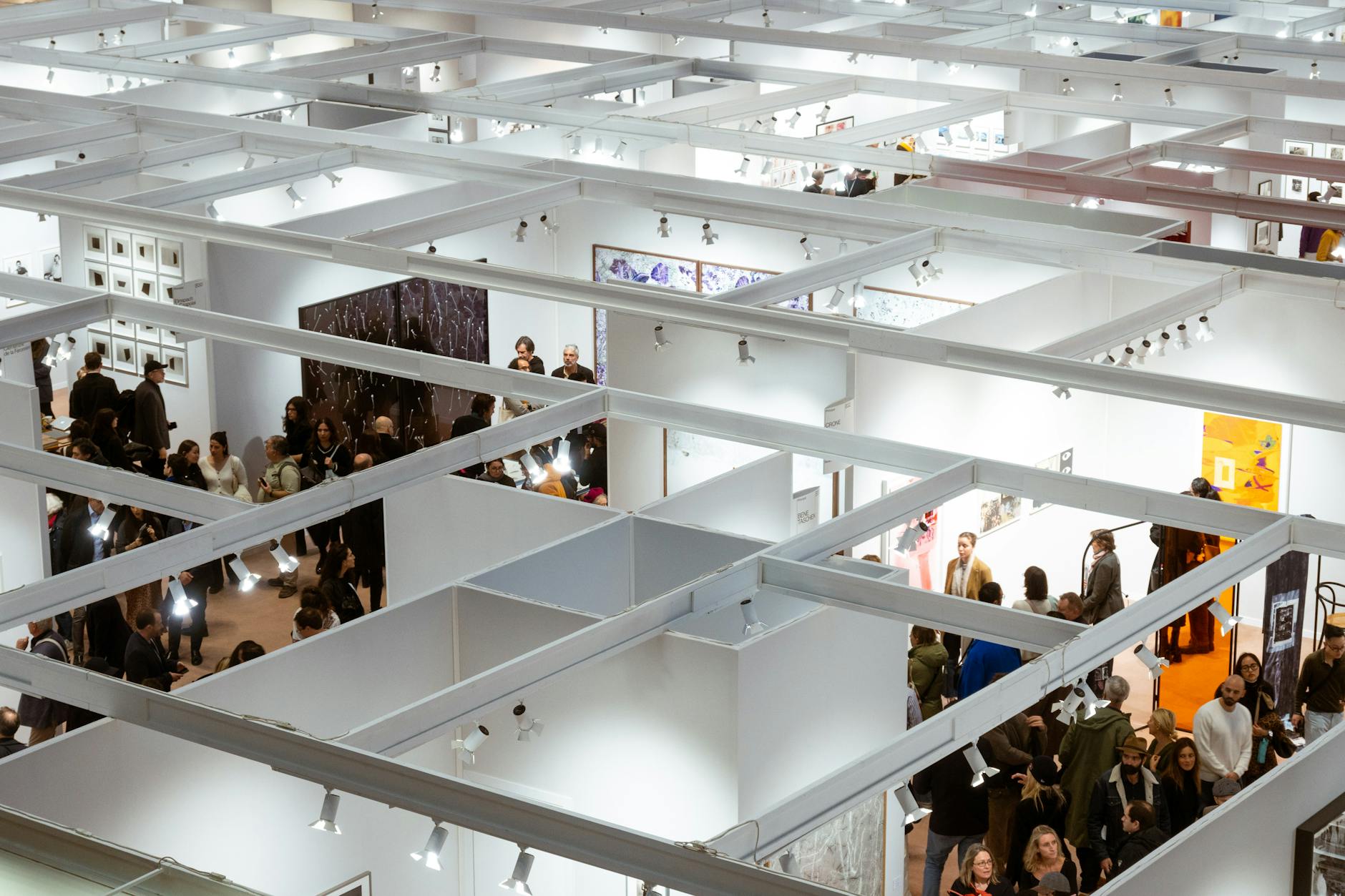
You can stand in front of forty million euros of contemporary art on a Saturday afternoon, pay nothing, and not book a thing. That sentence is the whole pitch for the paris art galleries circuit, and it’s true: drop into Gagosian, Perrotin, and David Zwirner inside a single hour, free, walk-ins welcome. Outside the big museums, the city’s art world plays out across 400-plus commercial galleries, four heavyweight private foundations (Pinault’s Bourse de Commerce, the Fondation Louis Vuitton, the Fondation Cartier, Lafayette Anticipations), and a scatter of residencies and project spaces in Belleville, the Marais, and the 8th-arrondissement Triangle d’Or. Two weeks a year — Art Basel in late October, Paris Photo in November — the whole place lights up. This guide covers the foundations, the Marais and Saint-Germain gallery walks, the gallery nights, and how to wander the scene without feeling like an intruder. For the wider museum picture, start with our guide to Paris museums.
Read this one next to a few others: our Centre Pompidou guide, our small museums of Paris guide, and our free museums in Paris guide. Between them you can build an art-heavy Paris trip that barely touches your wallet.
Why Paris is the New Capital of Contemporary Art
For most of the late 20th century, London held the title of contemporary-art capital of Europe. It lost it faster than most people noticed. Two moves did the heavy lifting: the 2014 opening of the Fondation Louis Vuitton in the Bois de Boulogne, and the 2021 unveiling of the Bourse de Commerce, the rotunda where François Pinault finally landed his contemporary collection. Slide Tadao Ando’s raw concrete cylinder inside a 19th-century grain exchange and you get one of the most photographed art spaces on earth, more or less overnight.
Brexit did the rest. Once moving artwork in and out of the UK turned into a paperwork nightmare, London dealers scrambled to open Paris satellites. David Zwirner took a Marais flagship in 2019. Hauser & Wirth arrived in 2023 on Rue du Quatre-Septembre. White Cube planted itself on Avenue Matignon in 2024. By 2025 Paris had more international blue-chip dealers than any city in Europe.
The fair calendar sealed it. FIAC, which ran for decades at the Grand Palais, lost its slot in 2022 to Paris+ par Art Basel, now just Art Basel Paris. Stack that against Paris Photo in November, Drawing Now in March, and the citywide installations of Nuit Blanche, and the city out-events both London and New York on the annual contemporary calendar.
The Big 4 Private Foundations
Four private foundations now hold up the whole structure. Each is one collector’s or family’s personal obsession, each sits inside a landmark building, and each runs programming that goes toe to toe with the public museums. If you want a deep contemporary-art day without learning to read a commercial gallery, this is the easiest single circuit in the city.
Bourse de Commerce — Pinault Collection
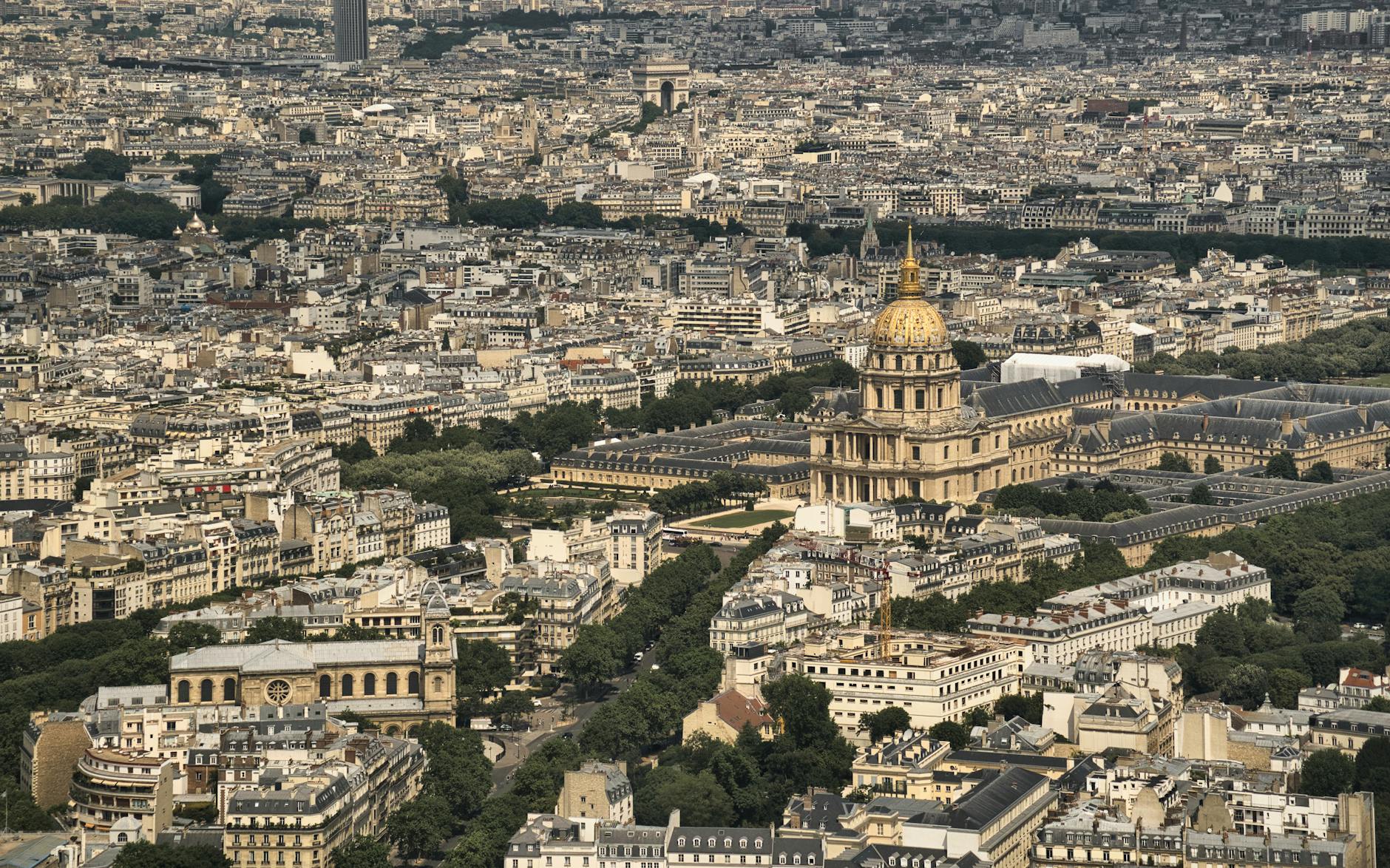
François Pinault, the man behind the Kering luxury group, spent two decades trying to plant his contemporary collection in Paris. He got there in May 2021, in the Bourse de Commerce, a circular 18th-century grain exchange sitting between the Louvre and the Pompidou. Ando’s headline move was a 9-metre raw concrete cylinder dropped inside the historic glass dome. The collection rotates — Cattelan, Cindy Sherman, Urs Fischer, Tatiana Trouvé, Pierre Huyghe — so what you see depends on when you go.
Address: 2 Rue de Viarmes, 1st arrondissement. Admission: €15; reduced €10. FREE first Saturday of the month, 5-9pm. Closed: Tuesday. The on-site restaurant, La Halle aux Grains, run by the Bras family, is one of the best high-end lunches in central Paris, so book ahead.
Fondation Louis Vuitton
Bernard Arnault’s LVMH foundation lives inside a Frank Gehry building on the western edge of the Bois de Boulogne: twelve glass sails over a water cascade, opened in October 2014. The collection rotates and gets topped up with ambitious loans — Basquiat, Rothko, Cy Twombly, Charlotte Perriand, the Morozov Collection. Even on a Tuesday, expect to queue.
Address: 8 Avenue du Mahatma Gandhi, Bois de Boulogne, 16th arrondissement. Admission: €16; reduced €10. Closed: Tuesday. Access: shuttle from Place Charles de Gaulle — Étoile (€2 each way), or Métro 1 to Les Sablons plus a 10-minute walk. Set aside a full half-day once you count the travel.
Fondation Cartier pour l’Art Contemporain
The oldest of the four, founded in 1984 and housed since 1994 in a Jean Nouvel glass pavilion on Boulevard Raspail, the Fondation Cartier runs the most consistently serious contemporary programme in the city. Recent solos: David Lynch, Damien Hirst, Ron Mueck, Wim Wenders, Sarah Sze. In 2025 it is moving to a larger Place du Palais-Royal space, so check the current address before you set out.
Address: 261 Boulevard Raspail, 14th arrondissement (until late 2025). Admission: €11; reduced €7. Closed: Monday. Open late Tuesday (until 10pm), which pairs neatly with dinner on Boulevard Montparnasse.
Lafayette Anticipations
The foundation of the Galeries Lafayette department-store family occupies a 19th-century warehouse in the Marais that Rem Koolhaas’s OMA gutted in 2018, fitting it with a four-storey movable platform that reshapes the gallery for each show. This is the most experimental of the four, more interested in producing work and hosting residencies than in hanging finished pieces. The programme skews younger and more interdisciplinary, and live performance and music turn up often.
Address: 9 Rue du Plâtre, 4th arrondissement (Marais). Admission: FREE. Closed: Monday and Tuesday. The ground-floor café makes a handy Marais pit stop, and you’re five minutes from the Centre Pompidou, so do the two together.
The Major Commercial Galleries
A commercial gallery is, on paper, a shop. In practice the top tier runs like a museum: six-figure exhibition budgets, museum-grade lighting, scholarly catalogues, and curators who could just as easily be staging institutional shows. Paris now fields more flagship international dealers than London. Every space below is free to walk into, usually open Tuesday to Saturday from 11am to 7pm, no appointment. Dress as you would for a museum; nothing more is required.
Gagosian Paris
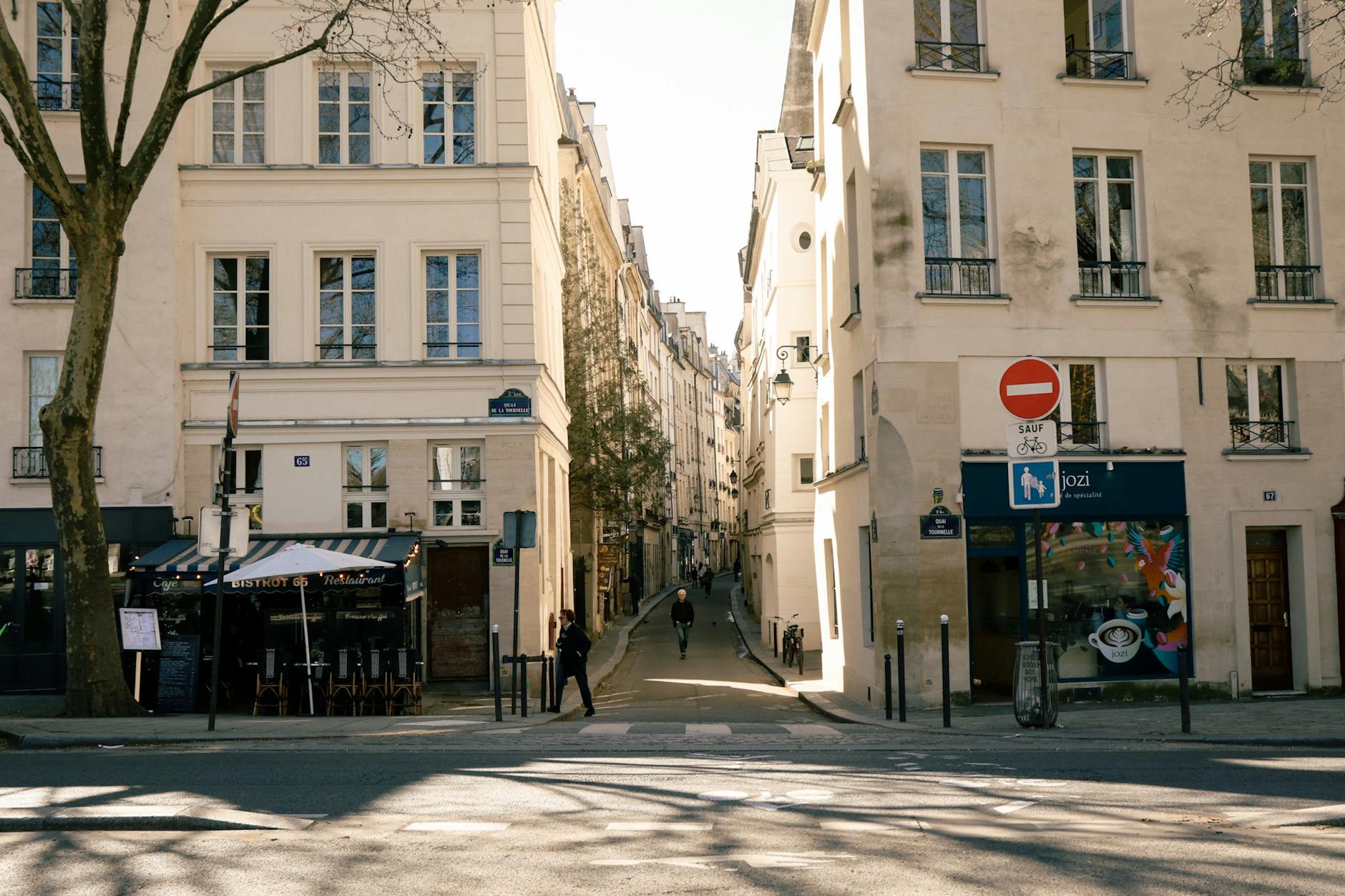
Larry Gagosian’s Paris flagship sits a block off the Champs-Élysées at 4 Rue de Ponthieu, and it represents some of the most expensive living artists on the planet: Jeff Koons, Damien Hirst, Anselm Kiefer, the Cy Twombly estate. The Paris programme usually cycles through three or four major shows a year. A second Gagosian space at 9 Rue de Castiglione (1st) handles the smaller and historic exhibitions. Both sit within ten minutes’ walk of the Champs-Élysées.
Hauser & Wirth Paris
Hauser & Wirth finally landed its Paris flagship in 2023, at 26 Rue du Quatre-Septembre, in a Haussmannian building between the Opéra and the Bourse. The gallery carries heavyweight estates — Philip Guston, Eva Hesse, Mike Kelley, Louise Bourgeois — alongside living artists Mark Bradford, Pipilotti Rist, and Rashid Johnson. Three exhibition floors, with a small bookstore on the ground level.
Perrotin
Emmanuel Perrotin is the most prolific French dealer of his generation, the man who built Takashi Murakami’s career and now represents JR, Kaws, Sophie Calle, Daniel Arsham, and Maurizio Cattelan. The flagship at 76 Rue de Turenne in the Marais is huge, with multiple floors and a courtyard, and it’s the obvious place to start any Marais gallery walk. Extra Perrotin spaces run at 8 Rue de Turenne and 8 Avenue Matignon. The openings here are some of the busiest in Paris: Tuesday evenings, free champagne, and nobody checks for an invitation.
Templon
Daniel Templon has been dealing in Paris since 1966, longer than most of his international rivals have existed. Two Templon galleries stand side by side at 28 and 30 Rue Beaubourg, directly opposite the Pompidou, with a third in New York. The roster leans European and historical: Anselm Kiefer, Jean-Michel Othoniel, Kehinde Wiley, Iván Navarro. Sitting where it does, Templon is the easiest commercial add-on to any Pompidou visit.
Kamel Mennour
Kamel Mennour’s flagship at 47 Rue Saint-André-des-Arts (6th, Saint-Germain) is the most aesthetically refined commercial gallery in Paris: a discreet courtyard, polished concrete floors, oversize white walls. Other Mennour spaces operate at 5 Rue du Pont de Lodi (Saint-Germain), on Rue Saint-Germain l’Auxerrois (1st), and in London. The roster runs to Anish Kapoor, Daniel Buren, Lee Ufan, Camille Henrot, and Tadao Ando. Mennour is unusually welcoming to walk-ins, and the staff hand out printed exhibition guides.
Galerie Thaddaeus Ropac
The Austrian dealer Thaddaeus Ropac has been in Paris since 1990. The Marais flagship at 7 Rue Debelleyme (3rd) is mid-sized; the Pantin satellite, covered below, is a 21,000-square-metre warehouse built for museum-scale projects. The roster includes Georg Baselitz, the Robert Rauschenberg estate, Alex Katz, Anselm Kiefer (overlapping with Templon), and Tom Sachs.
David Zwirner Paris
David Zwirner opened his Marais flagship at 108 Rue Vieille du Temple in October 2019, just before the pandemic hit. The Paris space concentrates on European and historical shows; major exhibitions of Felix Gonzalez-Torres, Diane Arbus, Bridget Riley, Wolfgang Tillmans, and Lucas Arruda have all gone up here. Two exhibition floors, a courtyard, and one of the most discreet entrances in the quarter.
White Cube Paris
Jay Jopling’s White Cube opened a Paris flagship at 10 Avenue Matignon in October 2024, a clear signal that the gallery was shifting its European weight from London to Paris. The Matignon building is a five-floor townhouse, the largest single-gallery footprint on the avenue. White Cube represents Tracey Emin, Antony Gormley, Anselm Kiefer (the third gallery to share him), Christine Ay Tjoe, and the Jenny Saville estate.
Pace Gallery
Marc Glimcher’s Pace Gallery sits at 68 Avenue Matignon, two doors from White Cube. Pace holds the estates of Mark Rothko, Agnes Martin, Robert Irwin, and Alexander Calder, plus living artists Maya Lin, James Turrell, and teamLab. The Matignon space is a single elegant floor, smaller than the New York and Hong Kong flagships but tightly curated.
Galerie Marian Goodman
Marian Goodman is the senior American dealer in Paris, and her gallery at 79 Rue du Temple has been a Marais fixture since 1999. Goodman represents Gerhard Richter, William Kentridge, Maurizio Cattelan (shared with Perrotin), Jeff Wall, Tacita Dean, and Steve McQueen. The space is large, austere, and almost always hangs museum-quality work. Come here if you want to see serious European contemporary art without the showroom gloss of Matignon.
The Marais Gallery Circuit (the best Saturday)
The 3rd and 4th arrondissements, together the Marais, hold the densest cluster of commercial galleries in continental Europe. Saturday from 2 to 7pm is prime time: every major space is open, the shows are freshly hung, and the streets are busy enough that walking in feels like the natural thing to do. The self-guided loop below hits six big spaces in roughly 90 minutes and ends at a wine bar.
Start: Perrotin (76 Rue de Turenne). The biggest commercial gallery in the quarter, with multiple floors, a sculpture courtyard, and nearly always at least one major solo on the walls. Give it 20 minutes, then walk five minutes north to Rue Debelleyme.
Stop 2: Thaddaeus Ropac (7 Rue Debelleyme). Mid-sized, usually one solo exhibition. Grab the printed guide at the front desk. Fifteen minutes here, then cut southwest down Rue Vieille du Temple.
Stop 3: David Zwirner (108 Rue Vieille du Temple). A two-floor flagship behind an unmarked courtyard door, so ring the bell if the gate’s shut. Twenty minutes, then keep going south on Vieille du Temple toward Rue du Temple.
Stop 4: Marian Goodman (79 Rue du Temple). A large flagship usually showing a serious solo by someone you’ve heard of. Twenty minutes, then three minutes south to Rue du Plâtre.
Stop 5: Lafayette Anticipations (9 Rue du Plâtre). The OMA-renovated foundation runs to a different beat than the commercial galleries: more architectural, more experimental, and free. Give it 30 minutes with the café folded in, then walk five minutes east to Rue Saint-Paul or Rue de Sévigné.
Finish: a Marais wine bar. La Belle Hortense (31 Rue Vieille du Temple) is the literary wine bar of the quarter — tiny, walled in books, a glass of Burgundy for €7. For something livelier, Le Mary Celeste (1 Rue Commines) pours natural wines and serves small plates a block from where you started. Either way, you’ve just looked at €40 million of art for the price of one glass.
Saint-Germain Galleries
The 6th arrondissement — Saint-Germain-des-Prés and the streets behind the École des Beaux-Arts — has been a gallery district for a century, predating the Marais by decades. The mood is older and more genteel: smaller rooms, more secondary-market work, dealers who’ve held the same address for years, and a heavy concentration of works on paper and modern rather than strictly contemporary art. Saturday hours run a touch shorter than in the Marais, with most spaces closing by 6:30pm.
Kamel Mennour (47 Rue Saint-André-des-Arts) is the district’s flagship contemporary gallery and the natural anchor for a Saint-Germain walk. From there, Rue de Seine and Rue des Beaux-Arts form a tight grid of smaller dealers: Galerie Lelong & Co., Galerie Maeght (42 Rue du Bac, 7th), Galerie Karsten Greve, and a half-dozen specialists in postwar abstraction, Surrealism, and modern editions.
String a Saint-Germain gallery afternoon together with the nearby Musée d’Orsay, or with the Musée National Eugène-Delacroix on Place de Furstenberg, five minutes from Mennour. Our small museums of Paris guide covers the Delacroix and the other intimate collections within reach.
Triangle d’Or Galleries (8th)
The Triangle d’Or — the wedge between Avenue Montaigne, the Champs-Élysées, and Avenue George V — is where Paris keeps its luxury commerce, and it’s also where the international blue-chip galleries have planted their flags. Avenue Matignon, the short street dropping south from the Rond-Point des Champs-Élysées, is the densest corridor of all: Gagosian, Pace, White Cube, Almine Rech, and Mennour all sit within five minutes’ walk of one another.
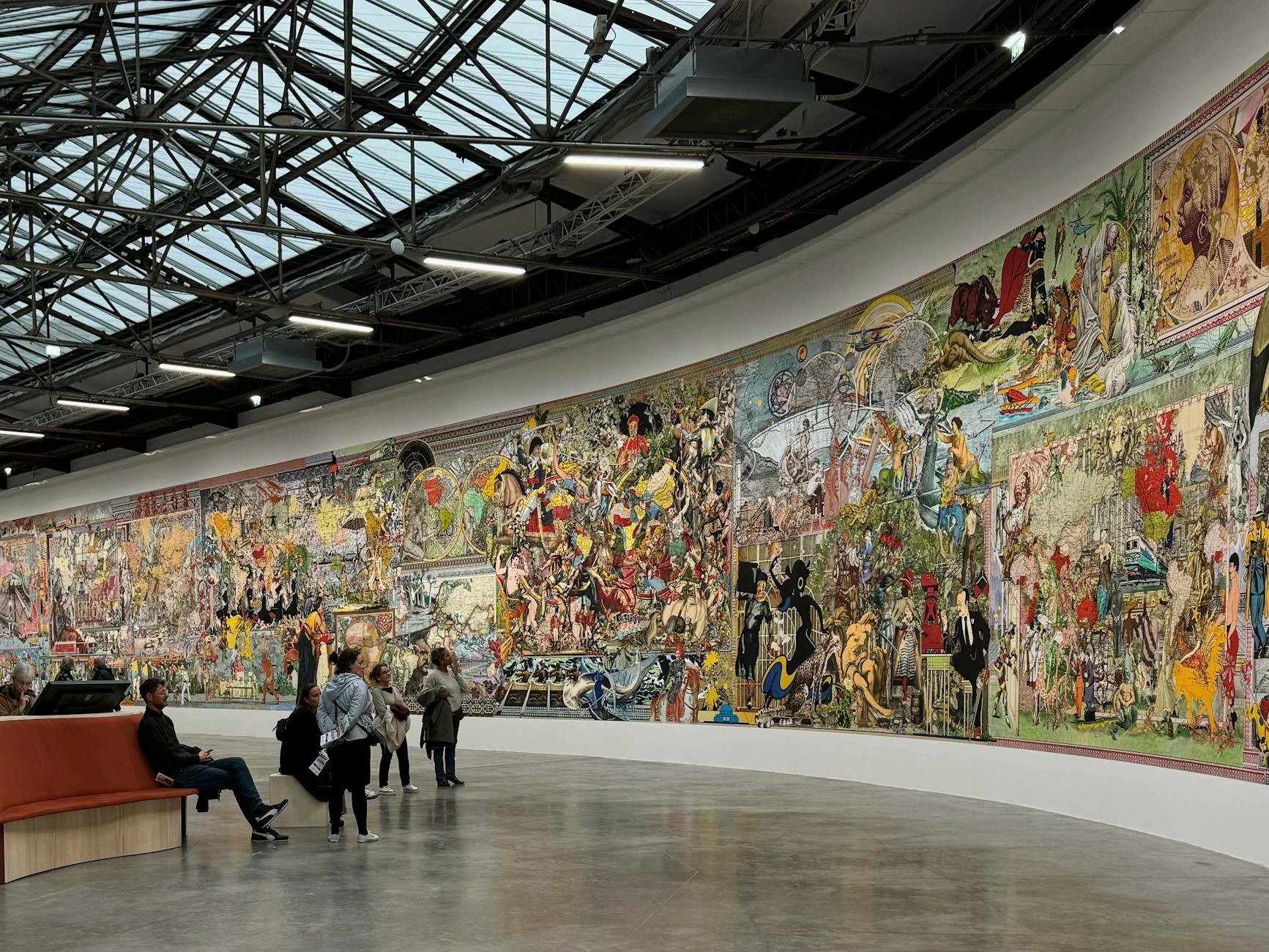
The feel here is the opposite of the Marais: bigger budgets, glossier presentation, thinner crowds. A Triangle d’Or afternoon fits naturally with our Champs-Élysées guide — do the avenue in the morning, lunch on Rue de Marignan, then galleries from 3pm. The tight Matignon walk: open at Gagosian (4 Rue de Ponthieu), south to White Cube (10 Avenue Matignon), two doors along to Pace (68 Avenue Matignon), and finish at Almine Rech (18 Avenue Matignon).
Saint-Denis & Pantin Satellites
When central Paris ran out of warehouses big enough for museum-scale shows, the major dealers headed for the inner suburbs. Pantin, three stops east of Gare du Nord on Métro 5, is the centre of gravity. Thaddaeus Ropac Pantin (69 Avenue du Général Leclerc) fills a 21,000-square-metre converted boiler factory, the largest commercial gallery in Europe, with the room for things the Marais flagship never could: a 2022 Rauschenberg retrospective, a 2024 Kiefer single-painting installation 18 metres across.
Galleria Continua Les Moulins sits further out still, in the village of Boissy-le-Châtel southeast of the city, inside a converted paper mill on the River Grand-Morin. It’s 80 minutes’ drive from central Paris and worth it for ambitious large-scale group shows, so check the schedule before you commit the day. Both spaces are free, and both reward anyone who cares about sheer scale.
More warehouse-scale galleries run in Romainville (FRAC Île-de-France plus Galerie Air de Paris), Aubervilliers (Poush Manifesto), and Ivry-sur-Seine (Le Critère, Galerie Allen). None is a tourist stop in its own right, but if you’re an artist or collector in town for more than three days, a half-day Pantin run is the most concentrated dose of large-scale contemporary art the region offers.
Major Annual Art Events
The Paris art calendar has tightened around two peak weeks: late October (Art Basel Paris plus Nuit Blanche) and mid-November (Paris Photo). Cluster five or six smaller fairs and openings around those anchors and October and November end up the most art-saturated months of the year. Plenty of the events below fill the city’s hotel rooms a month out, so plan early.
Art Basel Paris
FIAC’s successor, run by the Swiss Art Basel franchise since 2022, takes over the Grand Palais for five days in late October. Around 200 international galleries exhibit, tickets run about €75 a day, and serious museum-quality work changes hands. Tuesday is the collectors-only VIP preview; Wednesday through Sunday is open to everyone. The fair spins off a week-long ecosystem of satellite events, parties, and gallery openings across the city.
Paris Photo
The most important photography fair in the world runs four days in early November, also at the Grand Palais. Around 180 international galleries, a balance of vintage and contemporary photography, and a parallel run of book signings, panel talks, and exhibitions of the Paris Photo award winners. Tickets are about €35 a day. For anyone who collects or loves photographs, it’s the single best week of the year to be in town.
Paris Internationale
The emerging-gallery counter-fair to Art Basel Paris runs the same late-October week in a rotating temporary venue — recent editions have taken over disused hotels and empty office buildings. Around 60 young international galleries show work by artists in their twenties and thirties. Tickets are about €15, and the atmosphere is far looser than Basel. This is the one to hit if you care about what’s coming rather than what’s arrived.
Asia Now
The dedicated Asian art fair, also October during Art Basel week, focuses on contemporary work from China, Korea, Japan, India, and Southeast Asia. It runs at the Monnaie de Paris on the Seine, with around 90 galleries and tickets near €25, and it’s an essential counterweight for collectors looking past the Western canon.
Drawing Now Paris
The contemporary works-on-paper fair runs four days in late March at the Carreau du Temple in the Marais. Around 80 galleries, tickets near €15, and a quieter, more contemplative mood than the autumn fairs. Drawing Now is the right size for a first fair if Basel sounds overwhelming: you can take in the whole thing in a focused two hours.
Nuit Blanche
On one Saturday evening in early October, Paris throws an all-night contemporary-art festival across the city — installations, performances, light projections, and pop-up shows at dozens of public sites from 7pm to 7am. Everything is free, Métro lines 1, 2, 4, 6, 9, and 14 run all night, and bus shuttles link the main venue clusters. Our things to do in Paris at night guide helps you plan an evening around it. It’s the most democratic art event on the Paris calendar.
Best Time to Visit Galleries
Saturday afternoon, 2 to 7pm, is gallery prime time. Every major commercial space across the Marais, Saint-Germain, and Triangle d’Or is open, the staff are used to walk-ins, and the streets carry enough foot traffic that ducking inside never feels intrusive. The rest of the week, Tuesday through Friday from 11am to 7pm, follows standard art-world hours; mornings are quietest, though staff may still be hanging the next show, so late afternoon is the sweet spot.
Sunday and Monday: almost everything is closed. The single most common trap for first-timers is turning up on a Sunday afternoon to find every door locked. A few foundations stay open on Sunday (Bourse de Commerce, Fondation Cartier, Fondation Louis Vuitton), but the commercial galleries don’t. Plan around it.
Vernissage nights run Tuesday through Thursday evenings. Most galleries launch a new show with a vernissage, usually 6 to 9pm: free entry, free champagne, the artist often in the room, no invitation needed. The Vernissage Paris app and the Slash Paris website both list openings by date.
Best Time of Year for Art in Paris
Peak: late October. Art Basel Paris, Paris Internationale, Asia Now, and Nuit Blanche all land in one week. Every gallery in town puts up its most ambitious show of the year, and vernissages run almost nightly. Hotel rates jump, but the density of art is unmatched. Second peak: November. Paris Photo, plus a calmer continuation of the autumn programme. Third peak: late March. Drawing Now and the spring gallery openings.
Quieter shoulder seasons: May and June. The big fairs are done, the gallery shows are still up, and the city is at its best for walking. A great window for a focused gallery weekend without fair-week intensity.
Closed season: late July and most of August. The French institution of congés d’été shuts most commercial galleries from late July to the first week of September. Foundations and museums stay open. If August is your only window, build the trip around the foundations and skip the commercial circuit.
Apps and Resources
Five resources cover just about all the current gallery and exhibition information you’ll need. No single one is essential on its own, but together they make up the working toolkit of every Paris-based art professional.
Slash Paris
A free website and app, and the most comprehensive Paris exhibition listing going, in both French and English. Daily updates, filterable by neighbourhood and date, with links straight to gallery pages. This is the default for figuring out what’s on this weekend.
Artnet News
An international art-market news outlet with strong Paris coverage. Good for fair previews, market analysis, and reviews of the major gallery shows. The free tier handles most needs.
Frieze Paris Listings
During Art Basel week, Frieze publishes a thorough daily listings guide to every fair, satellite event, opening, and party. Free online, with printed copies handed out at the major venues. Indispensable in October.
Vernissage Paris
A free app listing gallery openings by date. Tap a date and you get every vernissage that evening, with addresses and start times. The right tool if you fancy gatecrashing three openings in one night.
Paris Galleries
A curated quarterly print pamphlet (also online) listing every commercial gallery in central Paris with hours, addresses, and current shows. Free at most galleries, and a handy pocket map.
Etiquette in Commercial Galleries
First-timers often freeze at the door of a commercial gallery, assuming it’s a shop and that browsing without buying is rude. It isn’t. These spaces work as semi-public exhibition rooms, and the staff fully expect the vast majority of visitors to look and leave. Galleries fund themselves by selling to a small handful of serious collectors. Casual visitors aren’t a nuisance; they’re part of the cultural ecosystem the gallery is choosing to be in. Walk in like you belong.
A few specific norms. Keep your voice down — museum volume, not café volume. Don’t touch the work, including any unprotected sculpture. Photography varies: most galleries allow personal photos without flash, so check the posted notices or ask. Ask for the price list if a piece intrigues you; the front desk keeps one and handing it over commits you to nothing.
You’re under no obligation to talk to anyone. Walking in, looking for ten minutes, and leaving without a word is completely normal. English is universal at the international galleries, and French-only is rare even among the French dealers. Children are welcome, strollers fit through most doorways, and dogs depend on the gallery, so ask before you bring one in.
Frequently Asked Questions
Are Paris art galleries free to visit?
Commercial galleries are almost universally free to enter, no booking needed. That covers every major space above: Gagosian, Hauser & Wirth, Perrotin, David Zwirner, Marian Goodman, Templon, Mennour, Pace, White Cube, and Thaddaeus Ropac. The private foundations charge admission (Bourse de Commerce €15, Fondation Louis Vuitton €16, Fondation Cartier €11), with the exception of Lafayette Anticipations, which is free. Our free museums in Paris guide rounds up more free art-viewing options.
How many days do I need for the Paris gallery scene?
A serious first-timer can hit the highlights in two days. Saturday: the Marais walk (Perrotin, Ropac, Zwirner, Goodman, Lafayette Anticipations) across the afternoon. Sunday: the foundations — Bourse de Commerce in the morning, Fondation Louis Vuitton in the afternoon, both open Sunday. Add a third day for the Triangle d’Or and Pantin, and a fourth if Art Basel Paris or Paris Photo is running.
Do I need to book gallery visits in advance?
No — commercial galleries are walk-in only and don’t take bookings. The foundations (Bourse, Louis Vuitton, Cartier) sell timed-entry tickets online, and you should book at least 48 hours ahead, especially for weekend slots. Lafayette Anticipations is free walk-in. The fairs (Art Basel Paris, Paris Photo) sell daily tickets online, so book a week out during fair week.
What is a vernissage and can I attend without an invitation?
A vernissage is a gallery opening reception, usually Tuesday through Thursday evening, 6 to 9pm, free entry, free drinks. The name sounds formal, but Paris vernissages are open to anyone who walks in. No invitation, no dress code beyond what you’d wear to a decent restaurant, no pressure to buy or even to chat. The Vernissage Paris app lists every opening in the city. Walk in.
Can I take photos in Paris art galleries?
Usually yes for personal use, but it depends on the gallery and the show. Most commercial galleries allow personal photography without flash; a handful of exhibitions ban it, typically because of loan restrictions. Look for a small notice near the entrance, or just ask the front desk. The foundations set their own rules: the Bourse de Commerce allows photography without flash, the Fondation Louis Vuitton permits it in some galleries and not others, and the Fondation Cartier varies by exhibition.
Is Art Basel Paris worth attending as a non-collector?
Yes. For its four public days, Art Basel Paris functions as a temporary museum of contemporary art — roughly 200 of the world’s most important galleries under one roof. The €75 day pass is steep but earns its keep for enthusiasts. If that’s too much, Paris Internationale (€15) and Asia Now (€25) the same week deliver a comparable experience for less.
Which Paris foundation should I visit if I can only see one?
For most first-timers, the Bourse de Commerce — Pinault Collection. The Tadao Ando rotunda is a destination in itself, the collection rotates through major contemporary names, the location between Louvre and Pompidou is the most central of the four, and the Halle aux Grains restaurant gives you a serious lunch on site. The Fondation Louis Vuitton is the more spectacular building, but it costs you a half-day round trip.
Are Paris art galleries family-friendly?
Yes — children are welcome at every major commercial gallery and foundation. The Bourse de Commerce, Fondation Louis Vuitton, and Lafayette Anticipations all run dedicated family programming on weekends. Older kids (10 and up) tend to take to contemporary art easily, since the work is visual and often genuinely spectacular. For Nuit Blanche, the most child-friendly art event of the year, see our Paris at night guide.
Related Paris guides
Use these to round out your trip: