Champs-Elysees Paris: Beyond the Boulevard
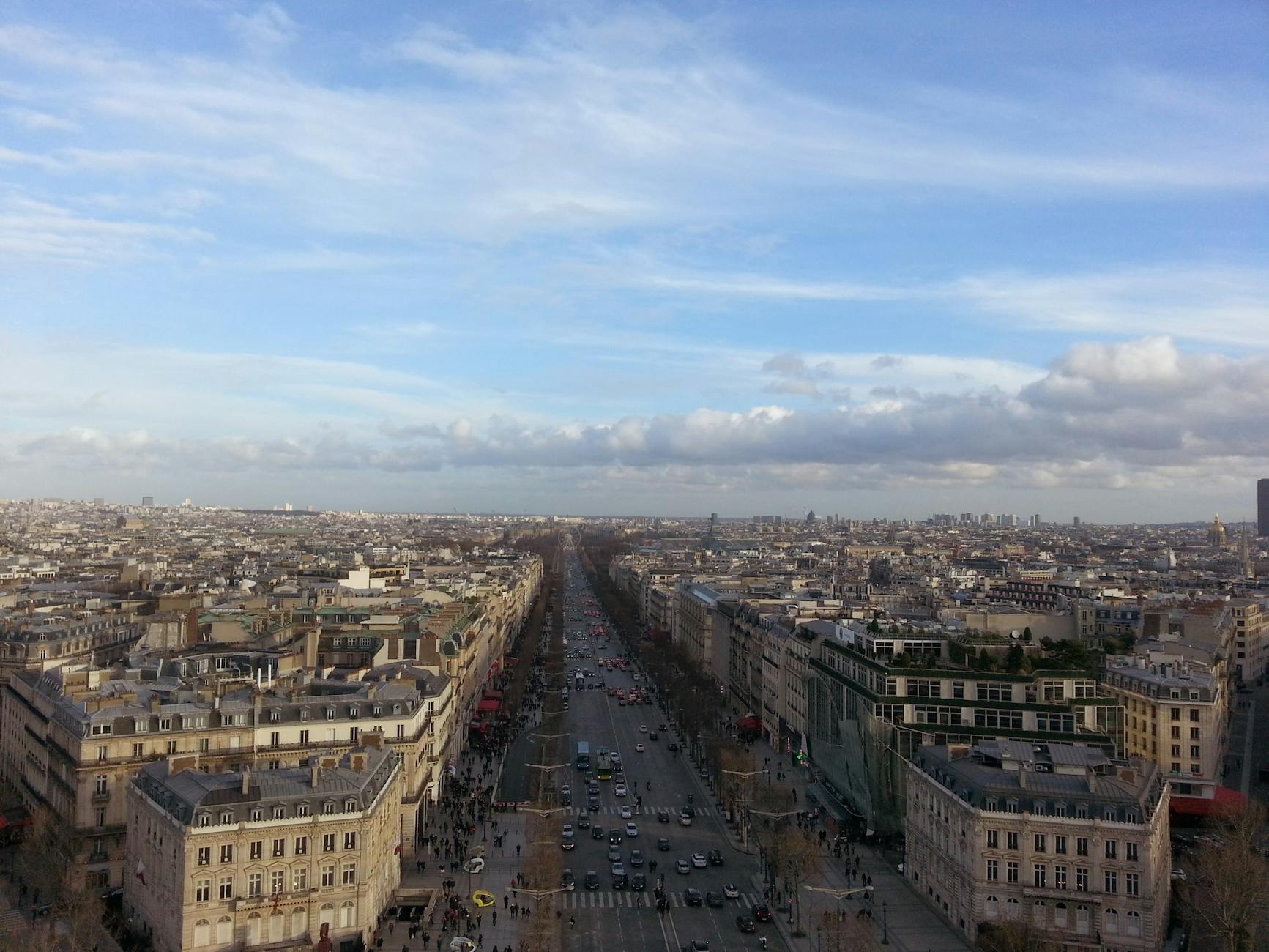
The Avenue des champs elysees paris runs 1.9km from Place de la Concorde to the Arc de Triomphe, and no street on earth is more famous: luxury boutiques, cinemas, cafes, monuments, and embassies, all on one slope. The boulevard, though, is only part of the story. The wider 8th arrondissement is where the district really lives. Avenue Montaigne is the fashion corridor, Place Vendôme belongs to the jewellers, Faubourg Saint-Honoré runs the high-end shopping, Madeleine holds the food temples, and Parc Monceau is the most beautiful private park in the city. All of it deserves a full neighborhood treatment, not just the postcard. This guide covers what to actually see, where to eat (and which tourist-trap restaurants to dodge), the best boutique streets, the bike lanes that reshaped the avenue in 2024, the Bastille Day military parade, and the Champs-Elysees Christmas illuminations. For broader context, start with our Paris neighborhood guide.
What sets the 8th apart is how it balances spectacle with quiet. The avenue is wide, theatrical, built for parades. Step one block off it and you’re in hushed streets of nineteenth-century stone, embassy gardens, and jewellery windows that stop you without your quite noticing. The trick is to stop treating the Champs-Elysees as a destination and start treating it as the spine of a much richer district. Walk it once for the view from the Arc, then spend your real time on Avenue Montaigne, around Place Vendôme, at the Grand Palais, in Parc Monceau, and on the small side streets where Parisians actually live, shop, and eat.
Where is Champs-Elysees?
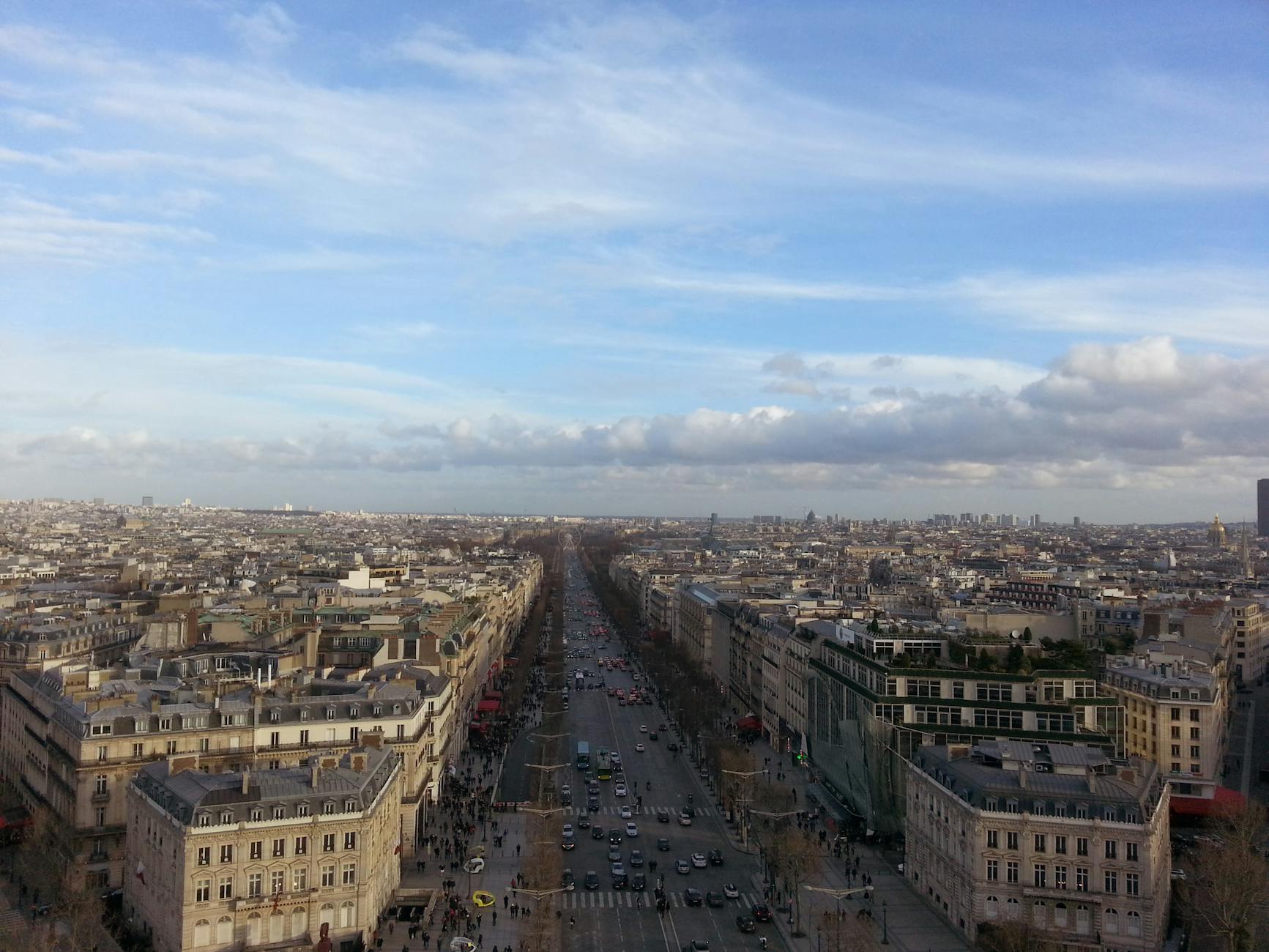
The Avenue des Champs-Elysees is the central axis of the 8th arrondissement on the Right Bank, running southeast to northwest from Place de la Concorde up to Place Charles de Gaulle (Place de l’Etoile), where the Arc de Triomphe sits at the centre of twelve radiating avenues. The full length is roughly 1.9 kilometres, and the slope rises gently as you head west, which is exactly why the Arc seems to swell larger the closer you get. Place de la Concorde, the southeastern anchor, is the largest public square in Paris and holds the 3,300-year-old Luxor Obelisk, installed in 1836 on the precise spot where Louis XVI and Marie-Antoinette were guillotined.
The 8th reaches north toward Gare Saint-Lazare and Parc Monceau, east to Place de la Madeleine (with its huge Neoclassical church and the food temples Fauchon and Hediard), and west to Avenue de la Grande Armee where the 16th begins (Trocadero, technically 16th, is a ten-minute walk off). Métro Line 1 runs straight under the avenue with five stops between Concorde and Etoile; Lines 8, 12, and 14 meet at Madeleine; RER A passes under Etoile. Since late 2024 the avenue has had fully separated, protected bike lanes its entire length, part of the city’s plan to hand half the boulevard back to pedestrians and cyclists by 2030.
Brief History of the Champs-Elysees
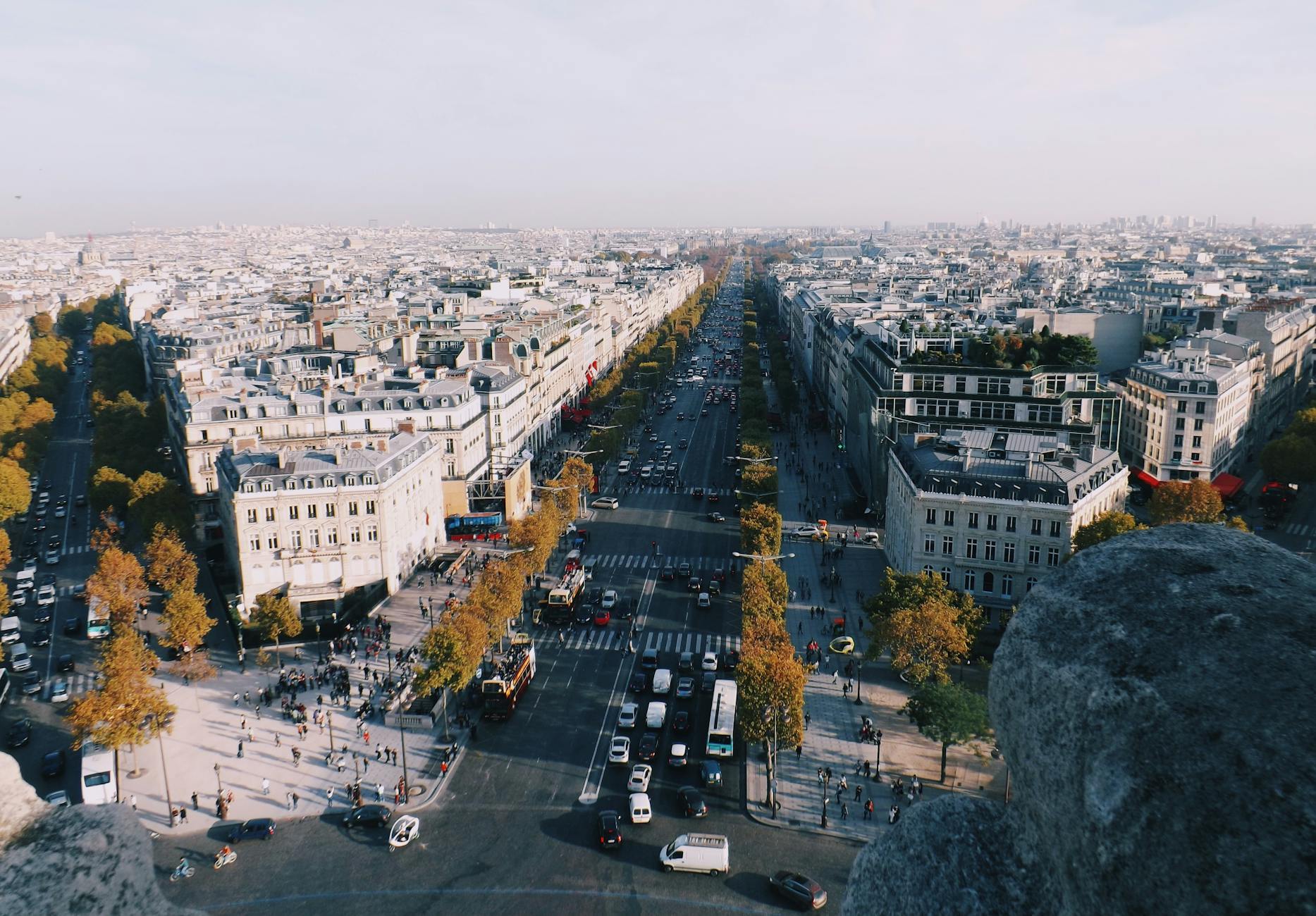
The Champs-Elysees was laid out in the 1670s by André Le Notre, the architect of Versailles, as an extension of the Tuileries axis. It started as a tree-lined alley through open fields, named the “Elysian Fields” after the paradise of the blessed in Greek mythology, a flattering label for what was then an undeveloped boulevard on the western edge of town.
Two great pushes turned it into a symbol of Parisian luxury. Napoleon I commissioned the Arc de Triomphe in 1806, which gave the avenue a monumental terminus. Then the Second Empire under Napoleon III (1852–1870) brought Baron Haussmann, who widened the carriageway, planted new lines of horse-chestnut trees, lit the avenue with gas lamps, and pushed the construction of the broad hotels and cafes that made the Champs the most fashionable promenade in Europe. The palace hotels Plaza Athenée, George V, and Le Bristol arrived between 1898 and 1925.
The twentieth century made it a cinema-and-shopping boulevard, but by the 1980s chain stores and fast-food outlets had pushed out the older establishments. Between 2018 and 2024 the city has steadily been pedestrianising it: car-free Sundays, fully separated bike lanes, wider pavement cafes, more trees. A 2021 master plan imagines turning roughly half the asphalt into a linear ‘extraordinary garden’ by 2030. The Grand Palais, just south of the avenue, reopened in June 2024 after a four-year restoration timed to the Paris Olympics.
Just about every layer of Parisian history left a mark here. Charles de Gaulle led the 1944 Liberation parade down it in front of two million people. The 1968 student demonstrations tested its riot-police gauntlet. The 1998 World Cup victory procession drew a crowd estimated at over a million. And the Tour de France has finished here every July since 1975. Few streets anywhere double as a national stage to this degree.
Walking the Champs-Elysees Avenue
The classic walk covers 1.9km from Concorde to the Arc de Triomphe in 30 to 45 minutes at a stroll, longer with stops. Most people walk uphill, Concorde to Etoile, for the slow crescendo of the Arc growing ahead. Going southeast to northwest, the highlights:
- Place de la Concorde — the Egyptian Luxor obelisk, the two ornate Fontaines de la Concorde, and the colonnaded Hotel de Crillon and Hotel de la Marine flanking Rue Royale.
- Lower Champs-Elysees gardens — formal nineteenth-century gardens line the southeast kilometre. Theatre Marigny on the north side; the Grand and Petit Palais on the south.
- Grand Palais and Petit Palais — reached via Avenue Winston Churchill, with Pont Alexandre III at its southern end. Worth the detour for the architecture alone.
- Rond-Point des Champs-Elysees — the central roundabout, where gardens give way to shops. Six Daniel Buren fountains.
- Avenue Montaigne intersection — the south-side turn onto the most concentrated luxury fashion street in Paris.
- Drugstore Publicis — 133 Avenue des Champs-Elysees, the most striking modern building on the avenue, with a rooftop terrace. Lido 2 cabaret reopened nearby in 2022.
- Galeries Lafayette Champs-Elysees — opened 2019 in the old Virgin Megastore building; a curated selection rather than a full department store.
- Arc de Triomphe — the climax of the walk, reached by underground passage (don’t try to cross the surface roundabout). Climb to the rooftop.
Arc de Triomphe
Napoleon commissioned the Arc de Triomphe in 1806; it was finished in 1836 under Louis-Philippe and stands fifty metres high at the centre of Place Charles de Gaulle. The Tomb of the Unknown Soldier from the First World War lies beneath the central arch, and its eternal flame is rekindled every evening at 6:30pm. The stone carries the names of 558 generals and 128 battles, and François Rude’s La Marseillaise on the Champs-Elysees facade ranks among the most ambitious public sculpture in nineteenth-century France.
The climb is 284 steps up a tight spiral staircase to the rooftop platform, one of the two best panoramas in Paris (the Eiffel Tower being the other). The advantage here is that the Eiffel Tower itself is in the photograph. Admission is €16, free for under-26 EU residents with ID. For opening hours, climbing tips, and pairings with other Right Bank sights, see our Arc de Triomphe guide.
From the rooftop you can read the geometry of Haussmann’s Paris more clearly than from anywhere else. Twelve avenues fan out from Etoile in a perfect star, named for marshals and battles (Foch, Wagram, Hoche, Iena, Kleber, MacMahon, Carnot, Friedland, Marceau, Victor Hugo, and Grande Armee, plus the Champs itself). The Tour Eiffel rises to the south, the Sacre-Coeur dome to the northeast, the modernist tower cluster of La Defense to the west, and the long line of the Champs-Elysees runs dead straight back to the Louvre. On a clear day it’s the most legible city view in Paris.
Avenue Montaigne: The Fashion Corridor
Avenue Montaigne runs 600 metres from the Champs-Elysees at Rond-Point southwest to Place de l’Alma on the Seine, and it packs in more luxury fashion flagships than any street in Paris. The mood is a world away from the avenue it leaves: quieter, less touristy, lined with doorman-staffed boutiques. It’s the best window-shopping street in the city, especially after dark when the facades are lit. For a broader survey, see our Paris retail guide.
Dior (30 Avenue Montaigne)
Christian Dior founded his couture house here in 1946. After a three-year renovation, number 30 now holds the flagship boutique, a Dior pastry restaurant by Jean Imbert, a spa, and the Galerie Dior, a full historical museum covering every collection from 1947 to the present, opened in 2022. Gallery entry is €12, timed.
Chanel (42 Avenue Montaigne)
Chanel keeps a major boutique on Avenue Montaigne, but the spiritual home is 31 Rue Cambon near Place Vendôme, where Coco Chanel lived above the original shop and the mirrored staircase still stands. Serious shoppers hit both addresses the same day.
Louis Vuitton (22 Avenue Montaigne)
The Montaigne address is Louis Vuitton’s ‘maison’ concept: bespoke leather and ready-to-wear in a quieter setting. The much larger Champs-Elysees flagship at number 101 is easier to walk into but more touristed.
Hermès (24 Faubourg Saint-Honoré)
The historic flagship, a few minutes north of Montaigne, dates to 1880 and is still the principal Hermès store in the world. The waiting list for a Birkin runs through this address. The silk-scarf room is essentially a small textile museum.
Bulgari, Prada, Valentino, Givenchy
Bulgari, Prada, Valentino, Givenchy, Loewe, Celine, Fendi, Bottega Veneta, and Saint Laurent all hold Avenue Montaigne addresses, threaded between Italian and French jewellery houses (Pomellato, Repossi, de Grisogono). The Plaza Athénée at number 25 and Le Bristol around the corner are the two palace hotels best placed for Montaigne shopping.
Place Vendôme: Jewellery Capital
Place Vendôme, a perfect octagonal square at the eastern edge of the 1st (just over the line from the 8th), is the global capital of high jewellery. Jules Hardouin-Mansart laid it out in 1699 for Louis XIV. The Vendôme Column at the centre, raised by Napoleon in 1810 to mark Austerlitz, wears a bronze frieze cast from 1,250 captured Austrian cannon. The Commune famously toppled it in 1871, and it went back up three years later.
Every facade now belongs to a major jeweller or a luxury hotel. The Ritz Paris at number 15 (where Hemingway, Proust, Coco Chanel, and Princess Diana all stayed) anchors the south side, while the jewellers include Cartier, Boucheron (the oldest on the square, 1893), Chaumet (founded by Napoleon’s personal jeweller), Van Cleef & Arpels, Tiffany & Co., Chanel Joaillerie, Dior Joaillerie, and Bulgari. The neighbouring Rue de la Paix carries the tradition on with Mauboussin and Mellerio. For the surrounding palace hotels, see our Paris luxury hotels guide. The December window displays rival anything on Fifth Avenue.
Even with nothing to buy, the square is one of the most satisfying short walks in Paris. Photographers should come at it from Rue de Castiglione (off Rue de Rivoli) for the column-framed-by-arcades shot, or from Rue de la Paix for the column with the Opéra Garnier dome rising behind it. The square is closed to through traffic and quiet enough that you can hear footsteps on the cobblestones, one of the few central Paris spots where that’s still true.
Best Restaurants in the 8th
The 8th holds one of the densest concentrations of Michelin-starred restaurants in Paris. The rule of thumb: almost every restaurant on the Champs-Elysees itself is a tourist trap, and the serious cooking sits one or two blocks off the avenue.
Le Cinq (Four Seasons George V)
Three Michelin stars under Christian Le Squer, in a vast eighteenth-century-style dining room. Classical haute French refined to an extraordinarily precise contemporary point, with one of the deepest wine lists in Paris. Tasting menus from €320 at lunch, €490 at dinner. See our Paris Michelin restaurants guide.
Epicure (Le Bristol)
Three Michelin stars under Eric Frechon, served in a dining room overlooking Le Bristol’s French formal garden, a rare luxury in central Paris. Signature dishes include macaroni stuffed with black truffle and foie gras. Tasting menus from €390 at lunch.
Jean Imbert au Plaza Athénée
Jean Imbert took over the Plaza Athénée’s flagship restaurant in 2021, replacing Alain Ducasse. Two Michelin stars, refined French classics in a gilded dining room. Tasting menus from €395.
L’Avenue (41 Avenue Montaigne)
No Michelin star, but the see-and-be-seen lunch spot for the Montaigne fashion crowd. Reasonable French brasserie cooking at unreasonable prices; the draw is the room and the people-watching. Reservations essential during fashion weeks.
Café Pouchkine (Madeleine)
An elegant Franco-Russian patisserie and tea salon on Place de la Madeleine, with pastries by Emmanuel Ryon. The medovik (honey cake) and chestnut Mont-Blanc are among the best in Paris. Sit upstairs for the view onto the Madeleine church.
Ladéure Royale (16 Rue Royale)
The historic Ladéure tea salon, founded in 1862, on Rue Royale between Madeleine and Concorde. Boxed macarons in pistachio-green, and the sit-down tea is excellent too, especially the Saint-Honoré and the Religieuse rose.
Le Drugstore Publicis (Champs-Elysees)
Possibly the only restaurant directly on the Champs-Elysees that Parisians will admit to going to. A ground-floor brasserie plus a rooftop terrace with one of the best Arc de Triomphe views in the city. Come for the setting and the architecture.
Le Récamier (soufflé specialist)
Technically 7th rather than 8th, near Saint-Sulpice, but worth the short hop. Sweet and savoury soufflés and nothing else; the menu is just a list of flavours. The cheese soufflés are extraordinary.
What to skip on the Champs-Elysees itself
Skip any restaurant on the avenue with a sandwich board, a multi-language menu, and a tout out front. A coffee on the terrace of Fouquet’s or Le Deauville is fine for the view, but don’t eat a meal there. Walk one block onto Rue Marbeuf, Rue de Ponthieu, or Rue Washington for considerably better options.
Best Cafes in the 8th
The 8th has some of the city’s most refined tea salons and patisseries, and the cafes attached to its great hotels are destinations in their own right. The short list:
- Café Pouchkine — Place de la Madeleine; the most beautiful tea salon in the district.
- Ladéure Royale — 16 Rue Royale; the 1862 flagship, full tea menu upstairs.
- Angelina Rivoli — 226 Rue de Rivoli (1st, a short walk from Concorde). Famous for its hot chocolate and the Mont-Blanc.
- Café Marly — under the Louvre’s Richelieu arcades, terrace facing the Pyramid.
- Le Drugstore terrace — 133 Champs-Elysees; the best Arc de Triomphe view from any public terrace.
- Le Bar at Plaza Athénée — the futuristic Patrick Jouin bar; the most atmospheric evening drink in the neighborhood.
Christmas Illuminations on the Champs-Elysees
From late November to early January, the Champs-Elysees gets what many people rate as the most spectacular Christmas lighting display of any street in Europe. Roughly 400 horse-chestnut trees are wrapped in millions of LEDs, forming a continuous illuminated tunnel that runs the full 1.9 kilometres from Concorde to the Arc de Triomphe. The scheme changes each year, and the trees fire in waves, so the lights seem to roll up and down the avenue.
The official switching-on ceremony falls on the third Wednesday of November, and the crowds there are intense. For a calmer visit, go back any evening between the second week of December and New Year, when the lights run from about 5pm to midnight. The best photograph is from the centre of the avenue at Rond-Point, looking northwest toward the Arc, just after sunset while the sky still holds some blue. See our Paris winter activities guide for Christmas markets and ice rinks.
Bastille Day on the Champs-Elysees
On 14 July the Champs-Elysees becomes the central stage of the French national day. The military parade, one of the oldest and largest in the world, runs the full length of the avenue from the Arc down to Concorde, where the President takes the salute. Roughly 4,000 troops on foot, several hundred mounted cavalry of the Garde Républicaine, around 200 vehicles, and a fly-past of more than fifty aircraft, the tri-coloured Patrouille de France among them, pass between about 10am and noon.
Viewing is free along the entire route, but the avenue closes from the previous evening and security opens at 7am. Arrive by 8am at the latest if you want a spot on the front railing, and bring water and sunscreen. No large bags, no glass. The best free vantage points are on the north side between Franklin D. Roosevelt and George V. In the evening, the same crowd regroups on the Champ-de-Mars for the 11pm fireworks at the Eiffel Tower.
Parc Monceau
Parc Monceau, in the northern half of the 8th, is the most elegant and least touristed park in central Paris. The Scottish landscape architect Thomas Blaikie designed it in 1778 for the Duke of Chartres as an English-style picturesque garden, a sharp break from the formal French parterre, with curving paths, irregular plantings, and architectural ‘folies’: a Roman colonnade circling an oval pond, an Egyptian pyramid, a Chinese pagoda, and a Renaissance arcade salvaged from the Hôtel de Ville. Several still survive.
The park is ringed by some of the most expensive nineteenth-century private mansions in Paris, several of them now small museums: the Musée Nissim de Camondo, the Musée Cernuschi (Asian art), and the Musée Jacquemart-André just east on Boulevard Haussmann. Métro: Monceau on Line 2 exits straight into the main gate on Boulevard de Courcelles. Open 7am to 8pm in winter, 7am to 10pm in summer.
Grand Palais and Petit Palais
Built for the 1900 Universal Exhibition as temporary structures and never taken down, the twin palaces face each other across Avenue Winston Churchill just south of the Champs-Elysees. The Grand Palais is enormous, an iron-and-glass nave 240 metres long under one of Europe’s largest single glass roofs. Closed for restoration since 2020, it reopened in June 2024 in time for the Paris Olympics (which staged fencing and taekwondo under the glass roof) and now serves as the city’s primary venue for blockbuster temporary exhibitions and major art fairs (Paris Photo, Art Basel Paris).
The Petit Palais houses the free permanent collection of the Musée des Beaux-Arts de la Ville de Paris: late-medieval to early-twentieth-century European painting and sculpture, with an excellent Impressionist group (Monet, Pissarro, Sisley, Cassatt). Free admission to the permanent collection makes it one of the most under-visited major museums in Paris. The inner garden courtyard, with a mosaic-bottomed pool, is one of the prettiest cafe settings in the city.
Madeleine and Faubourg Saint-Honoré
Place de la Madeleine, eight minutes north of Place de la Concorde, is the gourmet heart of the 8th. La Madeleine church, begun in 1763 and finished in 1842 after Napoleon recast it as a Greek-temple-style ‘Temple de la Gloire’, carries fifty-two colossal Corinthian columns on a raised podium. The square around it belongs to the gourmet food temples: Fauchon (1886), Hediard (1854), Maille mustard, Caviar Kaspia, the Marquise de Sevigne chocolatier, and a flower market that has run on the eastern flank since 1834.
Faubourg Saint-Honoré, running west from Madeleine to the Elysée Palace (the official presidential residence at number 55), is the spine of high-end Right Bank shopping. Hermès at number 24 is unmissable, and the street also holds Lancome, Goyard, Comme des Garçons, Yves Saint Laurent, John Lobb, Christofle, and a run of art galleries. The avenue is closed to pedestrian access directly in front of the Elysée, but you can pass on the opposite pavement.
Where to Stay in the Champs-Elysees Area
The 8th holds the densest concentration of ‘palace’ hotels in Paris, the official top-tier classification above five stars. The city has twelve palace hotels; six are in or right beside the 8th:
- Four Seasons George V — 31 Avenue George V; three Michelin-starred restaurants under one roof; the most reliable choice for first-time palace-hotel guests.
- Le Bristol — 112 Faubourg Saint-Honoré; quieter, more old-fashioned, with the largest private garden of any central Paris palace hotel.
- Plaza Athénée — 25 Avenue Montaigne; the red-geranium facade; the best fashion-week choice.
- Le Royal Monceau Raffles — 37 Avenue Hoche, just off Etoile; the most contemporary palace hotel, with Philippe Starck interiors.
- Hôtel de Crillon — 10 Place de la Concorde; an eighteenth-century townhouse, now run by Rosewood.
- The Peninsula Paris — 19 Avenue Kléber (16th, but five minutes from Etoile); rooftop restaurant overlooking the Eiffel Tower.
For a wider survey, see our where to stay in Paris guide, and for the full breakdown of palace hotels and their dining, the Paris luxury hotels guide.
Photo Spots in the 8th Arrondissement
The 8th is one of the most photogenic districts in Paris, with the Arc and the long Champs perspective doing most of the work for you. The short list:
- Arc de Triomphe rooftop — the only place to photograph the twelve-pointed star of avenues, with the Eiffel Tower in shot.
- Avenue Montaigne windows at Christmas — the night-time facade lighting is unrivalled; Dior at number 30 is the perennial star.
- Pont Alexandre III — just south of the Grand Palais; the gilded Beaux-Arts statues frame the Esplanade des Invalides.
- Place de la Concorde at twilight — the lit obelisk, the fountains, and the Champs-Elysees lamp-posts all line up.
- Trocadero (16th, ten minutes west) — the classic Eiffel Tower postcard view; pair it with the Champs walk.
- Place Vendôme column — approach from Rue de Castiglione for the arcade-framed view.
For more framing across the city, our Paris photo spots guide covers the Eiffel vantage points, the bridges, Sacre-Coeur, and the Marais.
Frequently Asked Questions
How long do I need on the Champs-Elysees?
Half a day for the avenue itself (Concorde to Arc, the climb, a drink). A full day once you add the Grand Palais, Avenue Montaigne, and Place Vendôme. The wider 8th, with Parc Monceau and Madeleine, comfortably fills two days.
Is the Champs-Elysees worth visiting?
Yes, for the perspective, the Arc, and the surrounding district. The magic is in the architecture, the scale, the view from the Arc, and the streets around it, Avenue Montaigne, Place Vendôme, Faubourg Saint-Honoré, rather than the avenue’s own retail, which is largely the same chains you’d find in any major capital.
Can I walk the Champs-Elysees at night?
Yes, and the avenue is at its best after dark, especially during the Christmas illuminations. Crowds thin out after 11pm, and the area is well lit and well policed. The Arc de Triomphe rooftop stays open until 11pm in summer.
Where should I avoid eating on the Champs-Elysees?
Skip any restaurant on the avenue between Etoile and Rond-Point with a tout outside, a multi-language menu, and dish photographs on the board. The actual cooking is on the side streets, Rue Marbeuf, Rue de Ponthieu, Rue Washington, or in the palace hotels.
What is the closest Métro to the Arc de Triomphe?
Charles de Gaulle – Etoile, served by Lines 1, 2, 6 and RER A. It gives you direct underground access to the Arc ticket office and the climb. Don’t try to cross the surface roundabout, which has no pedestrian crossings.
Are the new bike lanes on the Champs-Elysees safe?
Yes. The lanes were upgraded to fully protected, physically separated lanes during the 2024 Olympic redesign, with their own traffic-light cycle at intersections. They run continuously from Concorde to Etoile and get heavy use from Vélib rentals.
When are the Champs-Elysees Christmas lights on?
Switch-on is the third Wednesday of November, and the lights stay lit through the first week of January. They run roughly 5pm to midnight nightly. The best vantage is from the Rond-Point, looking northwest toward the Arc.
Is the 8th arrondissement safe?
Yes. The 8th is one of the safest neighborhoods in Paris, with heavy police and embassy-security presence around the Elysée and Concorde. Standard pickpocket precautions apply on the avenue and in Métro stations.
Beyond the Boulevard
Most visitors walk the Champs-Elysees once, climb the Arc, photograph the obelisk, and call the 8th done. That misses the point. The arrondissement’s real character lives on Avenue Montaigne after dark, in the windows of Place Vendôme, in the quiet streets around Parc Monceau, under the glass roof of the Grand Palais, at a corner table in Le Bristol, and on the side streets where you can actually eat well. Give the 8th two full days instead of two hours, and you start to see why Parisians of a certain class never bother leaving it. For the broader view, head back to our guide to Paris’s quarters.
Related reading
Use these to round out your trip: