Musee Rodin: Sculptures, Gardens & The Thinker
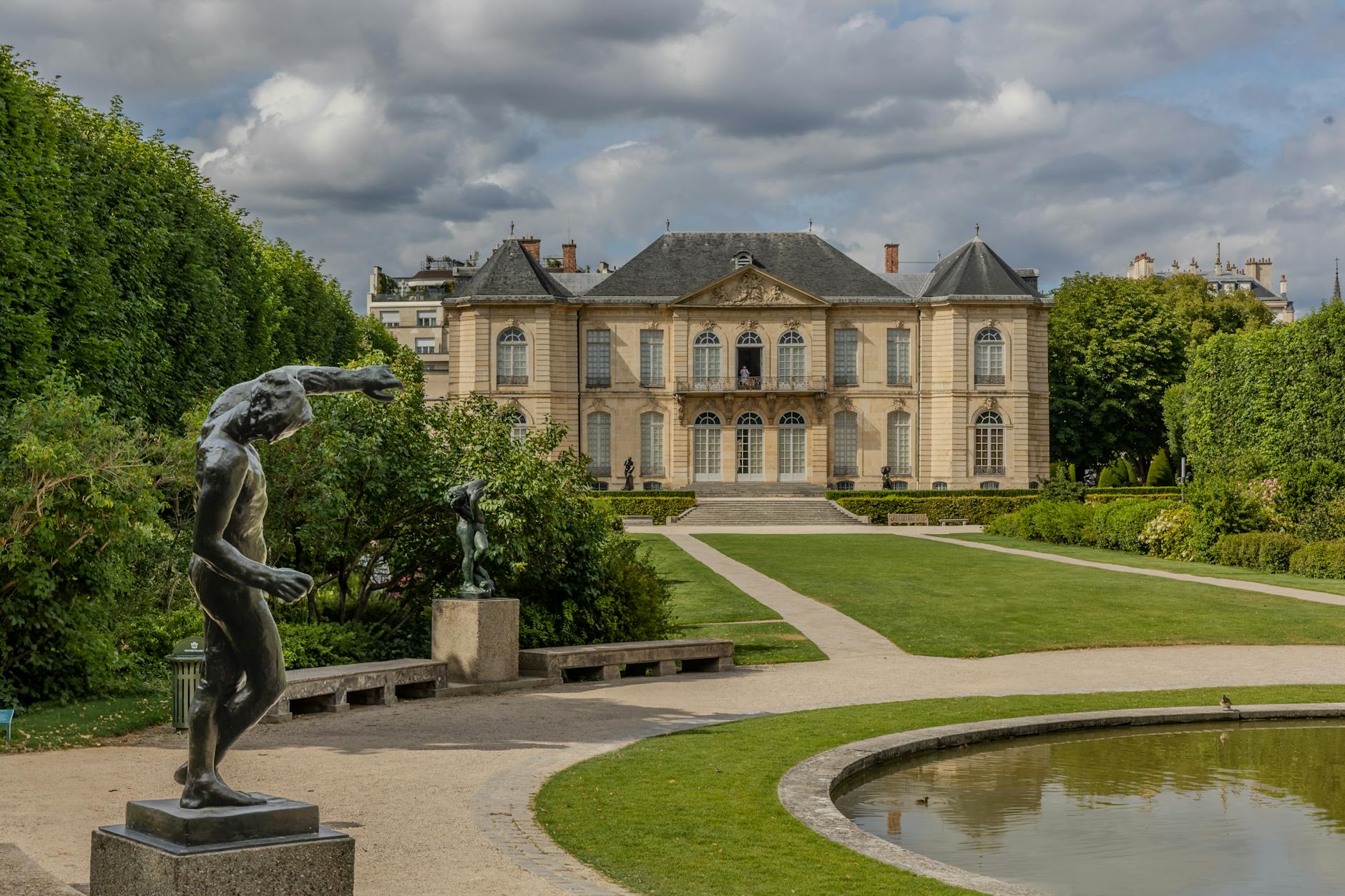
For the price of a sandwich, you can spend an afternoon in a rose garden with The Thinker. The musee rodin paris is the most underrated major museum in the city: an 18th-century mansion and a 3-hectare sculpture garden given over entirely to Auguste Rodin (1840-1917), who has a strong claim to being the greatest sculptor of the modern era. The Thinker, The Kiss, The Gates of Hell, the Burghers of Calais, they’re all here, in the studio and home Rodin actually used. The gardens are open year-round, the mansion (the Hôtel Biron) is fully restored, and the whole thing makes a clean two hours. Couples will tell you the garden is the most romantic museum visit in Paris; art lovers will tell you the run of work from Rodin’s early career to the final Balzac is one of the best single-artist retrospectives anywhere. €14 to get in, and the Musée d’Orsay is a 15-minute walk away.
For the wider picture, see our guide to Paris museums, the Musée d’Orsay guide, and the Orangerie guide. Working out whether a pass pays off? Try our museum pass guide.
Musée Rodin at a Glance
- Address: 77 Rue de Varenne, 75007 Paris.
- Métro: Varenne (Line 13), Invalides (Lines 8, 13, RER C).
- Hours: 10am-6:30pm Tuesday-Sunday; closed Monday.
- 2026 ticket: €14 adult; FREE under 18 worldwide; FREE EU 18-25; FREE first Sunday of November-March.
- Garden-only ticket: €5 (yes, if the gardens are all you want).
- Combined with Musée d’Orsay: €25.
- Paris Museum Pass: included.
- Annual visitors: ~750,000.
- Setting: Hôtel Biron (1730 mansion) + 3-hectare formal garden.
- Collection: 6,600+ Rodin sculptures, 8,000+ drawings, 8,000+ photographs, plus Camille Claudel works.
Brief History
In 1908 Rodin rented two ground-floor rooms at the Hôtel Biron for a studio. The mansion was half-derelict and mostly empty at the time, but Rodin fell for the garden and the light, and kept taking over more rooms. In 1916, a year before he died, he handed his entire collection to the French state, his own work, the antiques he’d gathered, and the Camille Claudel pieces he’d kept, on one condition: that the Hôtel Biron become a museum dedicated to his work. It opened on August 4, 1919. The mansion was restored between 2012 and 2015, closed for three years and reopened on November 12, 2015, and now shows roughly 600 sculptures out of the 6,600 in the full collection, plus rotating drawings, photographs, and Claudel works.
Top 10 Sculptures You Must See
- The Thinker (Le Penseur, 1880-1882) — in the garden, near the entrance. Bronze; casts of it exist around the world, and the Paris version is one of the originals. It started life as part of The Gates of Hell.
- The Kiss (Le Baiser, 1882) — indoors. White marble; Paolo and Francesca from Dante’s Inferno, and the most reproduced sculptural image of the 19th century.
- The Gates of Hell (La Porte de l’Enfer, 1880-1917) — in the garden, the large bronze portal facing the mansion. Rodin worked on this commission for 37 years; it gave rise to both The Thinker and The Three Shades, which you can see up on the portal.
- The Burghers of Calais (1884-1889) — in the garden, a large bronze group. Six citizens of Calais offering themselves as hostages to King Edward III of England in 1347.
- Balzac monument (1898) — in the garden. Rodin’s last great work, rejected by the society that commissioned it, now read as a landmark of modernist sculpture.
- The Three Shades (Les Trois Ombres, 1881-1886) — atop the Gates of Hell. Three identical figures sharing a single outstretched arm.
- The Walking Man (L’Homme qui marche, 1899-1900) — indoors. A headless, armless torso mid-stride; pure Rodin.
- The Age of Bronze (L’Age d’Airain, 1875-1877) — indoors. Rodin’s first big success, which the salons rejected until they accepted it hadn’t been cast from a live body.
- The Hand of God (La Main de Dieu, 1898) — indoors. Marble, emerging out of rough, unworked stone.
- Camille Claudel works — in a dedicated room: The Waltz, Maturity. Rodin’s student, lover, and eventually estranged collaborator, later institutionalized by her family. The Claudel room is one of the most moving spaces in the museum.
The Sculpture Garden (3 Hectares)
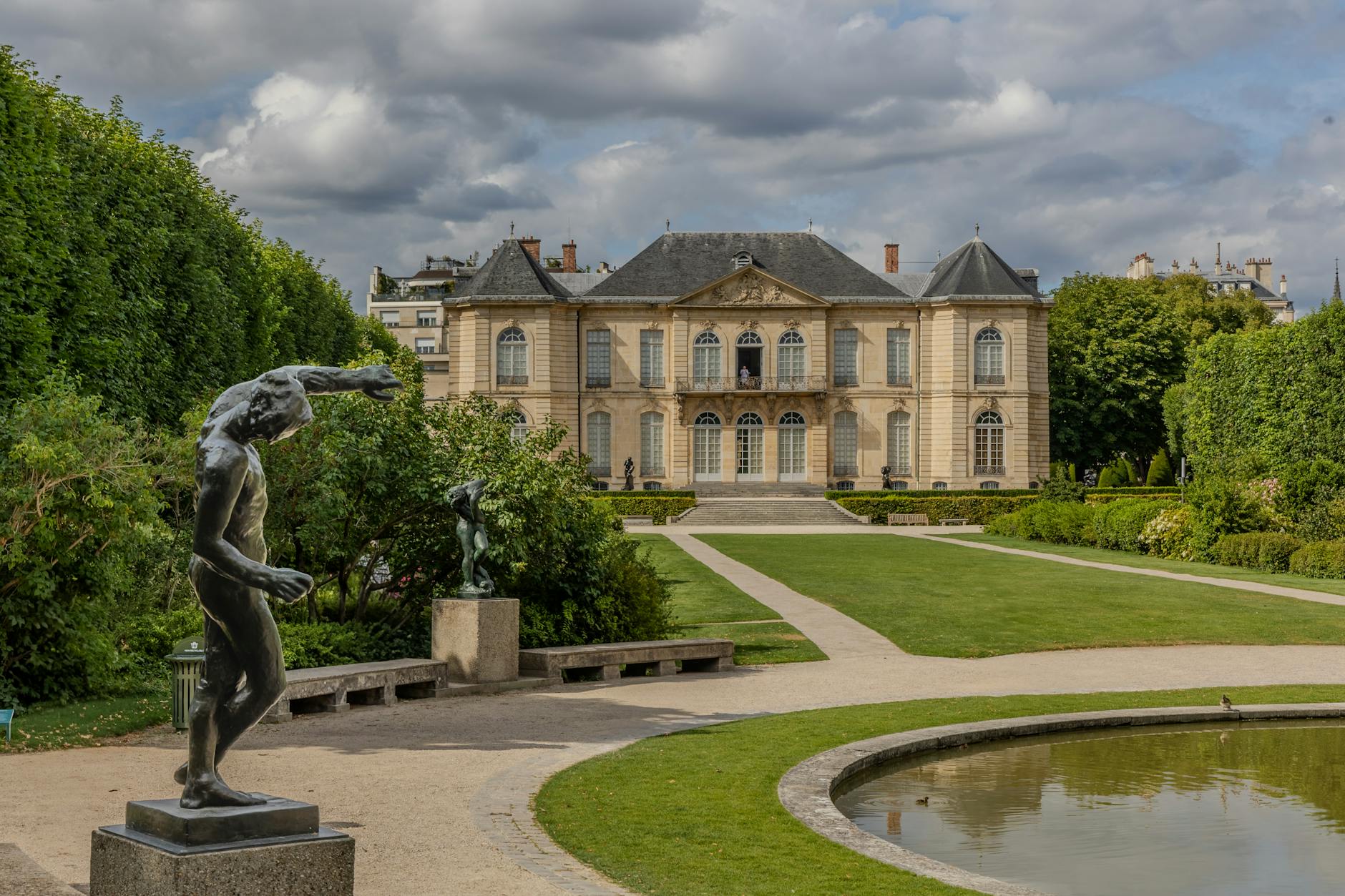
This garden is the case for visiting, and it’s among the most romantic spaces in any Paris museum. Formal French parterres, rose beds, lily ponds, and gravel paths that line the sculptures up into clear sightlines. It’s big, a full 3 hectares, and you can lose 90 minutes here without going indoors at all. The set pieces: The Thinker presides over the entrance lawn, The Gates of Hell faces the mansion across a long water basin, the Burghers of Calais hold down a corner, and the Balzac stands at the northern end. The roses run April through October, laying down a Monet-ish carpet of color between the bronzes. The eastern half is quieter, given over to smaller pieces. And the €5 garden-only ticket is one of the genuine steals in central Paris.
The Hôtel Biron (Indoor Galleries)
A 1730 baroque mansion by Jean Aubert, restored between 2012 and 2015. Sixteen rooms hold the sculptures, drawings, and personal effects:
- Ground floor: portrait busts (Rodin made a specialty of friends and patrons), early works, and the ancient antiquities he collected.
- First floor: marbles (The Kiss among them), terracottas, and plaster studies.
- Camille Claudel room: a gallery of her own, with The Waltz, Maturity, and sketches.
- Rodin’s sketchbooks and photo collection (rotating displays).
- Personal papers, contracts, and the founding deed of the museum.
The Camille Claudel Story
Camille Claudel (1864-1943) was Rodin’s student, model, and lover from 1882 to 1898, and a sculptor of formidable talent in her own right; The Waltz (1893) and Maturity (1899) are masterworks by any measure. When the affair ended, Rodin stayed with Rose Beuret, his lifelong companion. Claudel’s mental health unraveled, her family had her committed in 1913, and she died in an asylum thirty years later. Rodin held onto her work after they parted and made sure it went into the museum he gave to France. The dedicated Claudel room is one of the most powerful spaces in the building. The Musée Camille Claudel opened in 2017 in Nogent-sur-Seine, 90 minutes from Paris by train, finally giving her a museum of her own, but the Rodin remains the central place to see her in Paris.
Best Time to Visit
- 10am opening (Tuesday-Saturday): an empty garden and lovely early light.
- 4-6pm: golden hour, when the bronzes start to glow.
- April-October: the roses are out and the garden is at its peak.
- November-February: bare branches frame the sculptures starkly, it’s quieter, and the first Sunday Nov-March is free.
- Closed Monday.
- Avoid: summer midday, when the garden bakes and the tour groups peak.
Combining Rodin with Other Sights
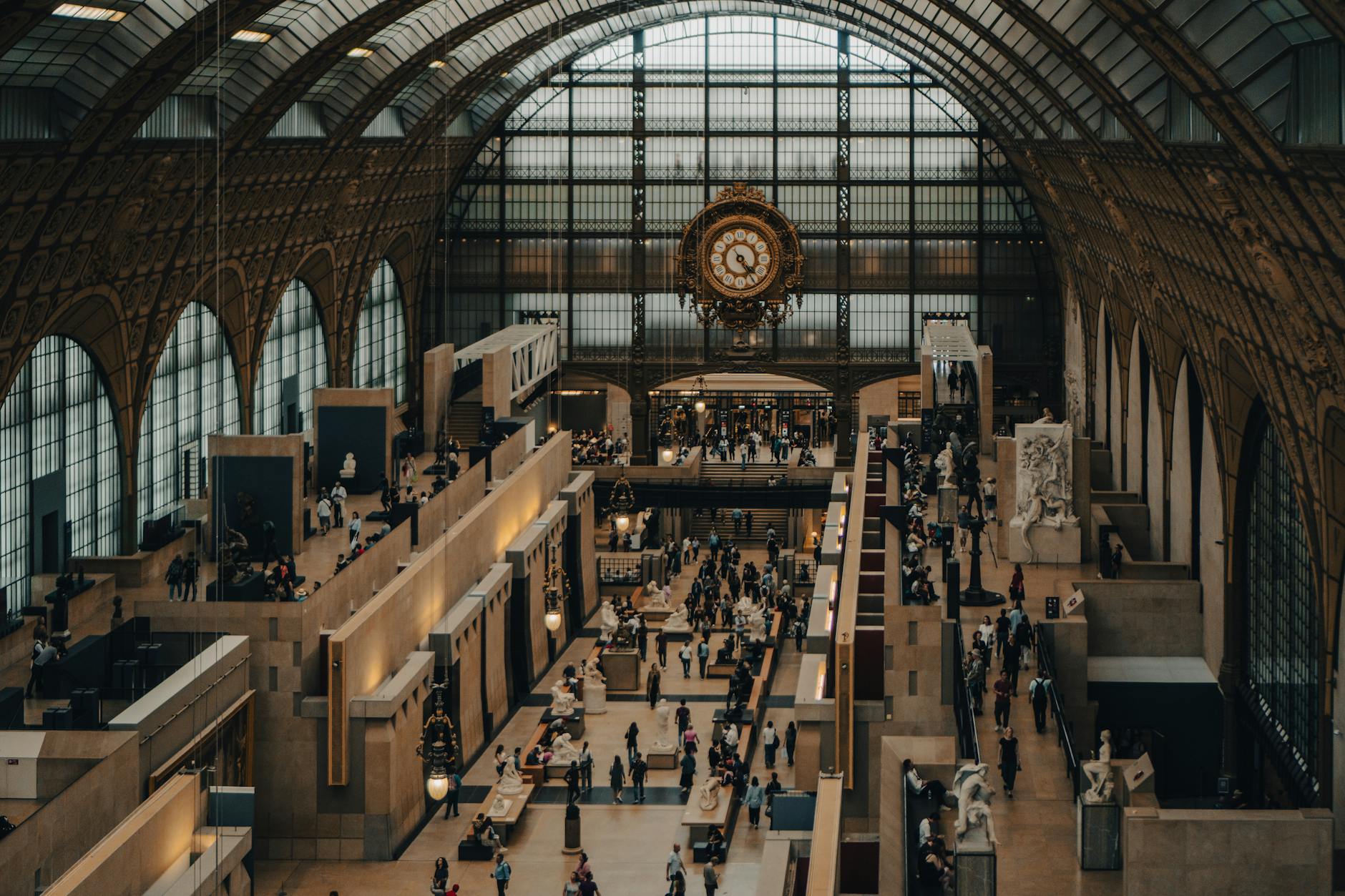
- Musée d’Orsay — 15-minute walk east; combined ticket €25.
- Les Invalides + Napoleon’s Tomb — 10-minute walk; the Dome des Invalides is across the street.
- Eiffel Tower — 20-minute walk.
- Musée du Quai Branly — 15-minute walk.
- Place de la Concorde — 15-minute walk.
- Cluster: a Left Bank museums day = Rodin (90 min) + Orsay (3 hours) + Orangerie (90 min), then a walk through the Tuileries to the Louvre.
Eating at and Near the Rodin
- Café du Musée Rodin — in the garden, open seasonally; sandwiches, salads, coffee, €6-15. Outdoor tables set among the sculptures, which is the whole appeal.
- Le Petit Cler (29 Rue Cler) — 10-minute walk; a classic French bistro on the pedestrian market street.
- Café Constant (139 Rue Saint-Dominique) — Christian Constant’s bistro.
- L’Arpège (84 Rue de Varenne, 7th) — Alain Passard’s 3-Michelin, vegetable-forward, if you’re going big.
- La Cave des Climats (44 Rue de Bourgogne) — a serious wine bar; 10-minute walk.
Practical Tips
- Pre-book at musee-rodin.fr; same-day walk-up is usually possible off-peak.
- The €5 garden-only ticket is excellent value for a budget day or a quick stop.
- The €25 combined ticket with the Orsay is the smartest 7th-arrondissement Sunday plan.
- Photography is fine without flash; tripods are discouraged.
- Wheelchair accessible; ramps in the garden, elevator in the mansion.
- Bags larger than 56x45x25cm aren’t allowed; coat check is free.
- Audio guide €6.
- Restrooms in the mansion and at the garden café.
- Plan on 90 minutes for the garden, 60 for the mansion, 30 for the café.
Why the Rodin is Underrated
Most first-timers build the standard itinerary, Louvre, Orsay, Notre-Dame, Eiffel, Versailles, and never make it to the Rodin. Their loss. The Rodin gives you what the big museums can’t: one artist, one garden, two hours instead of six, time spent walking outdoors rather than grinding through galleries until your feet give out. You come here to look slowly, not to tick a list. The mix of a formal French garden, an 18th-century mansion, and bronze sitting in dappled light doesn’t exist anywhere else quite like this. The Paris Museum Pass gets you in for nothing, and the €5 garden-only ticket is the best museum value in the center of the city.
Frequently Asked Questions
How much does the Musée Rodin cost?
€14 for a full adult ticket, or €5 for the garden only. Free for under-18s worldwide and EU residents aged 18-25, and free on the first Sunday from November to March. The combined ticket with the Orsay is €25.
Can I visit just the Musée Rodin garden?
Yes, and at €5 it’s a steal. The Thinker, the Gates of Hell, the Burghers of Calais, and the Balzac are all out in the garden. Ninety minutes is a comfortable garden visit.
Is the Musée Rodin wheelchair accessible?
Yes. There are ramps in the garden and an elevator in the mansion, and entry is free for visitors with disabilities plus one companion.
How long does it take to visit the Musée Rodin?
Two hours is ideal: 60 minutes in the mansion, 60 in the garden. You can do it in 90 minutes if pushed, and add 30 minutes if you stop at the garden café.
Where is The Thinker located at the Rodin?
In the garden, near the entrance. It’s bronze, one of the original casts, with others scattered around the world.
Is the Musée Rodin included in the Paris Museum Pass?
Yes, it’s covered by the 2/4/6-day pass. Our museum pass guide runs the numbers.
When are the roses in bloom at Musée Rodin?
April through October, peaking in May and June, with a smaller second flush in late September. The bronzes set against the roses are the museum’s most photographed sight.
Is the Musée Rodin or Musée d’Orsay better?
They’re different things. The Orsay is Impressionist painting; the Rodin is sculpture and garden. For most people the Orsay comes first, and the Rodin makes the perfect afternoon companion the same day or the next. The combined ticket is €25.
Plan the Rest of Your Paris Trip
Pair the Rodin with the Paris galleries guide (the pillar), the Musée d’Orsay, Orangerie, Louvre, and the museum pass breakdown. For the area around it, see Saint-Germain and the Eiffel Tower. And for the trip itself: plan a trip, where to stay, getting around, romantic Paris, and the best time to visit.
Related reading
Use these to round out your trip: