Paris Museums Guide: Every Museum Worth Visiting
Paris has more than 130 museums, which works out to roughly one for every few blocks of the center. That number sounds like a brag until you actually try to see them, and then it becomes a logistics problem: a single building, the Louvre, would take you months to walk through properly, and there are 129 more behind it. So the real value of a Paris museums guide is not a longer list. It is knowing which collections deserve your limited hours, which ones you can skip without guilt, and how to get in without losing half a day to a queue.
The range here is genuinely absurd. Egyptian mummies and Mesopotamian carvings in one wing of the Louvre; cutting-edge installations open until midnight at the Palais de Tokyo; Napoleon’s sarcophagus under a gilded dome; Monet’s water lilies wrapped around two oval rooms a five-minute walk away. Five thousand years of human output, most of it reachable on foot or one Metro line. The city that the Impressionists painted and the Surrealists argued in still keeps the receipts.
What follows covers the big institutions you’ve heard of, the mid-sized collections that reward a second day, the small museums most visitors never find, and the practical mechanics that separate a good museum day from an exhausting one. That includes when the Paris Museum Pass actually pays off, which museums charge nothing for free entry, and the simple timing tricks that keep you out of the worst crowds.
The Essential Trio: Paris’s Unmissable Museums
The Louvre: World’s Greatest Art Collection
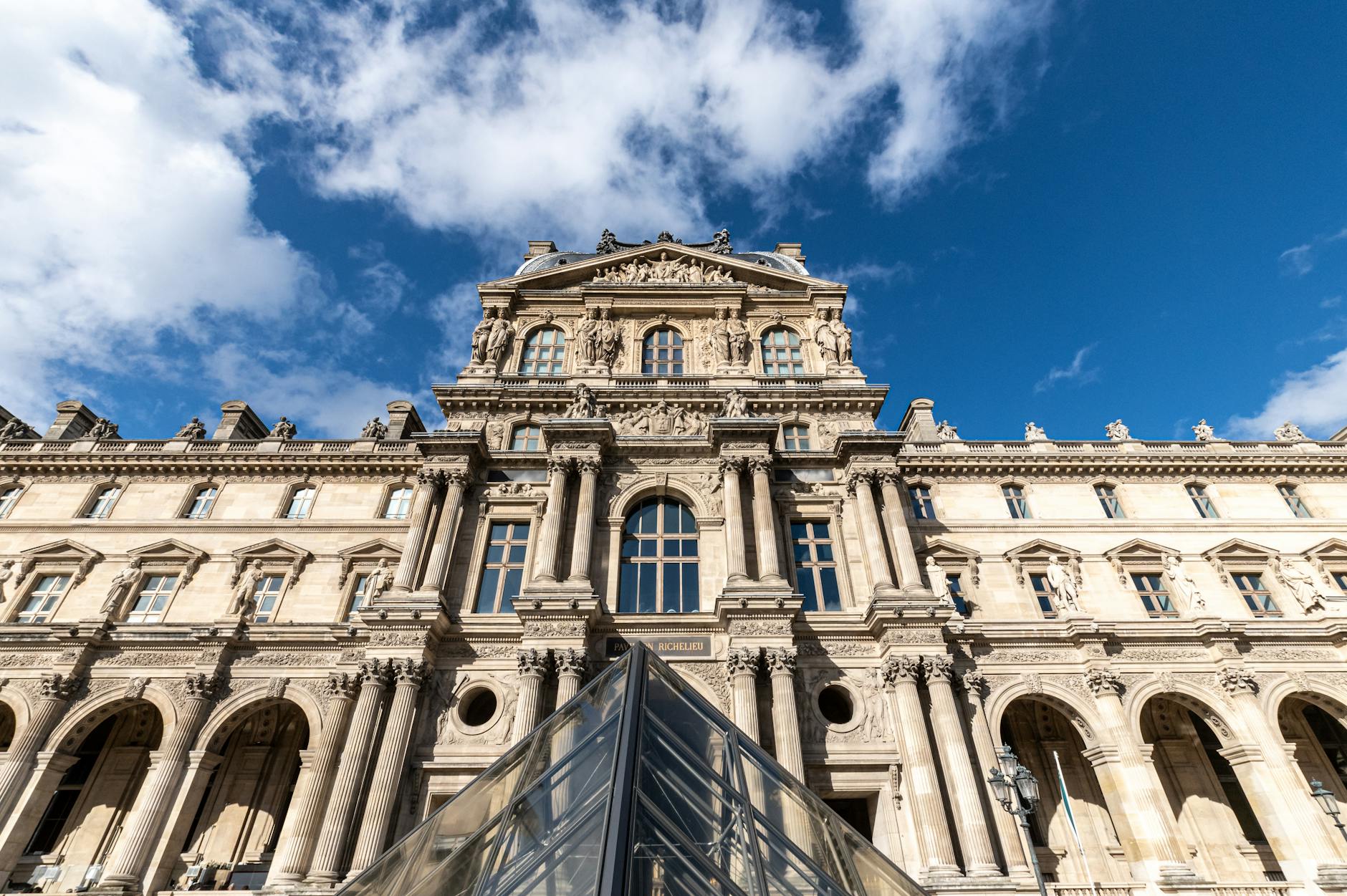
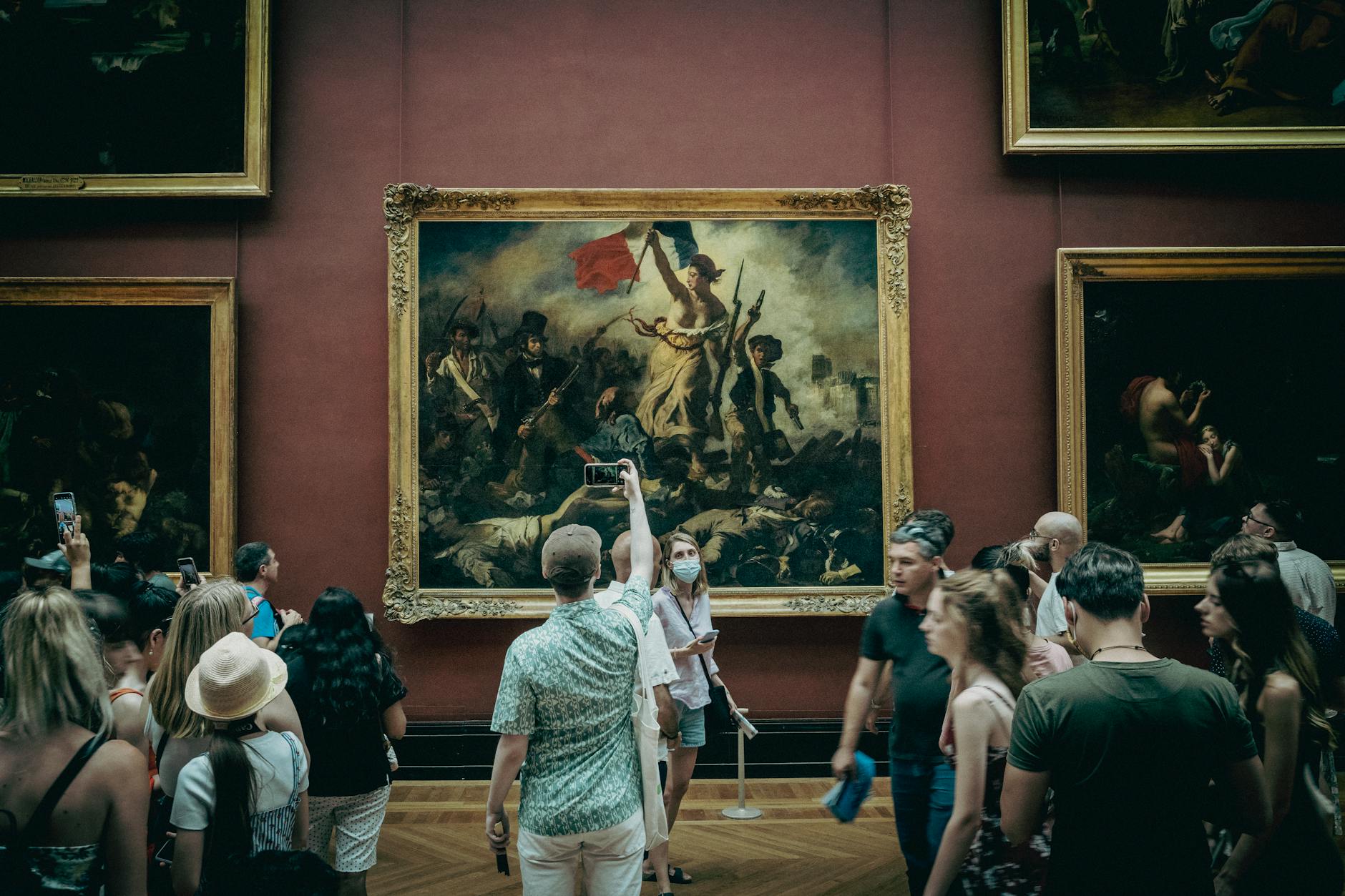
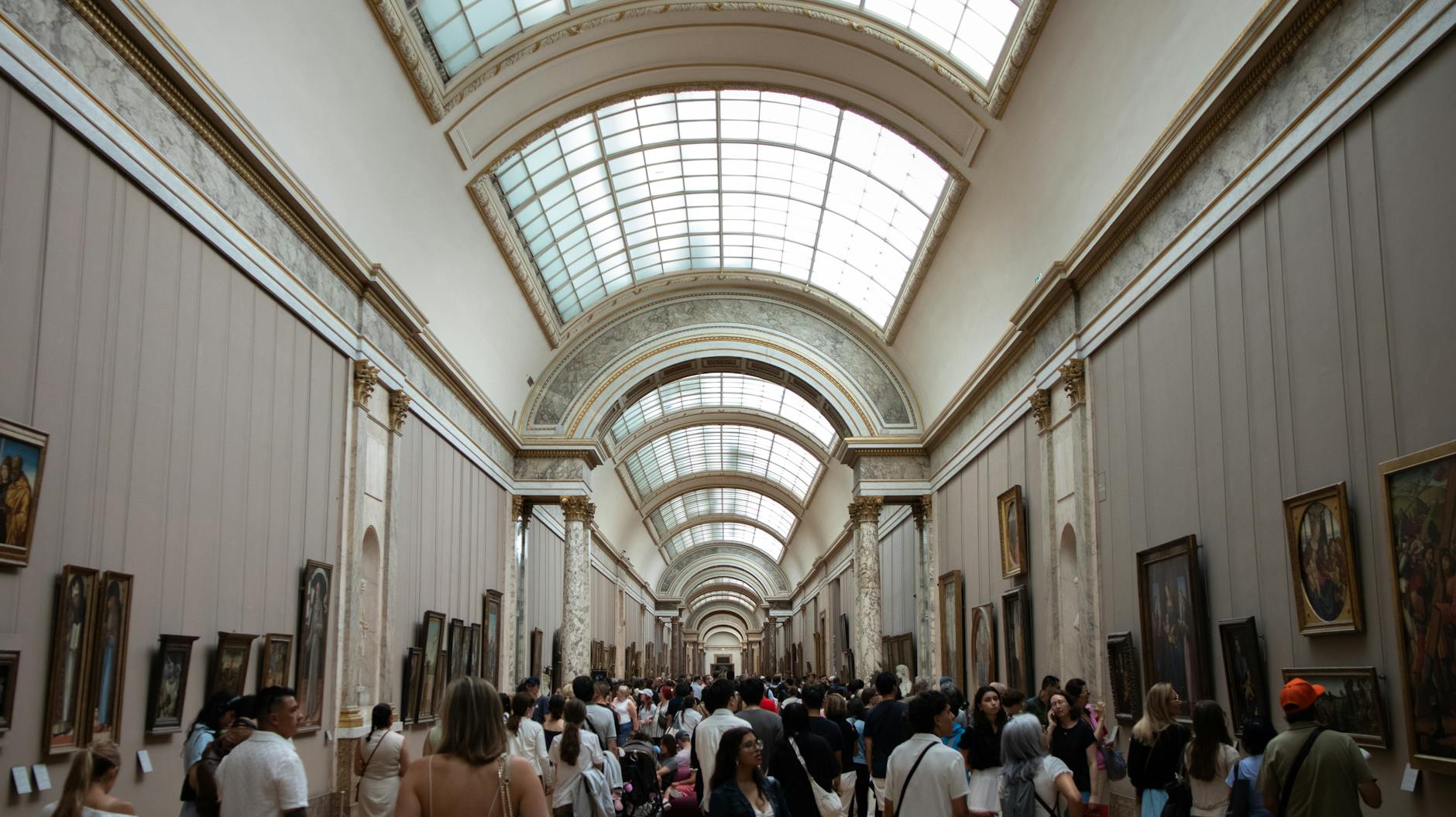
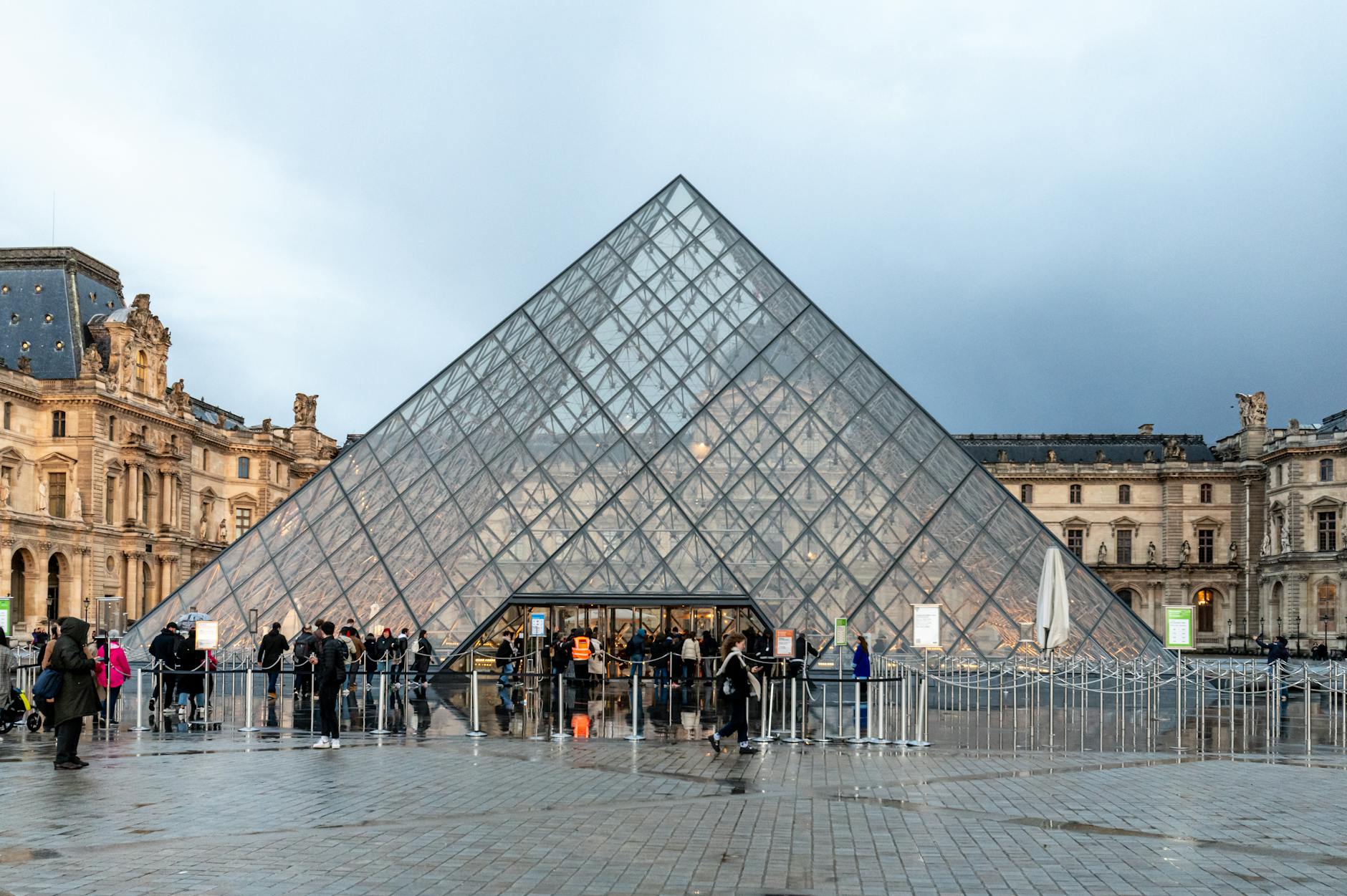
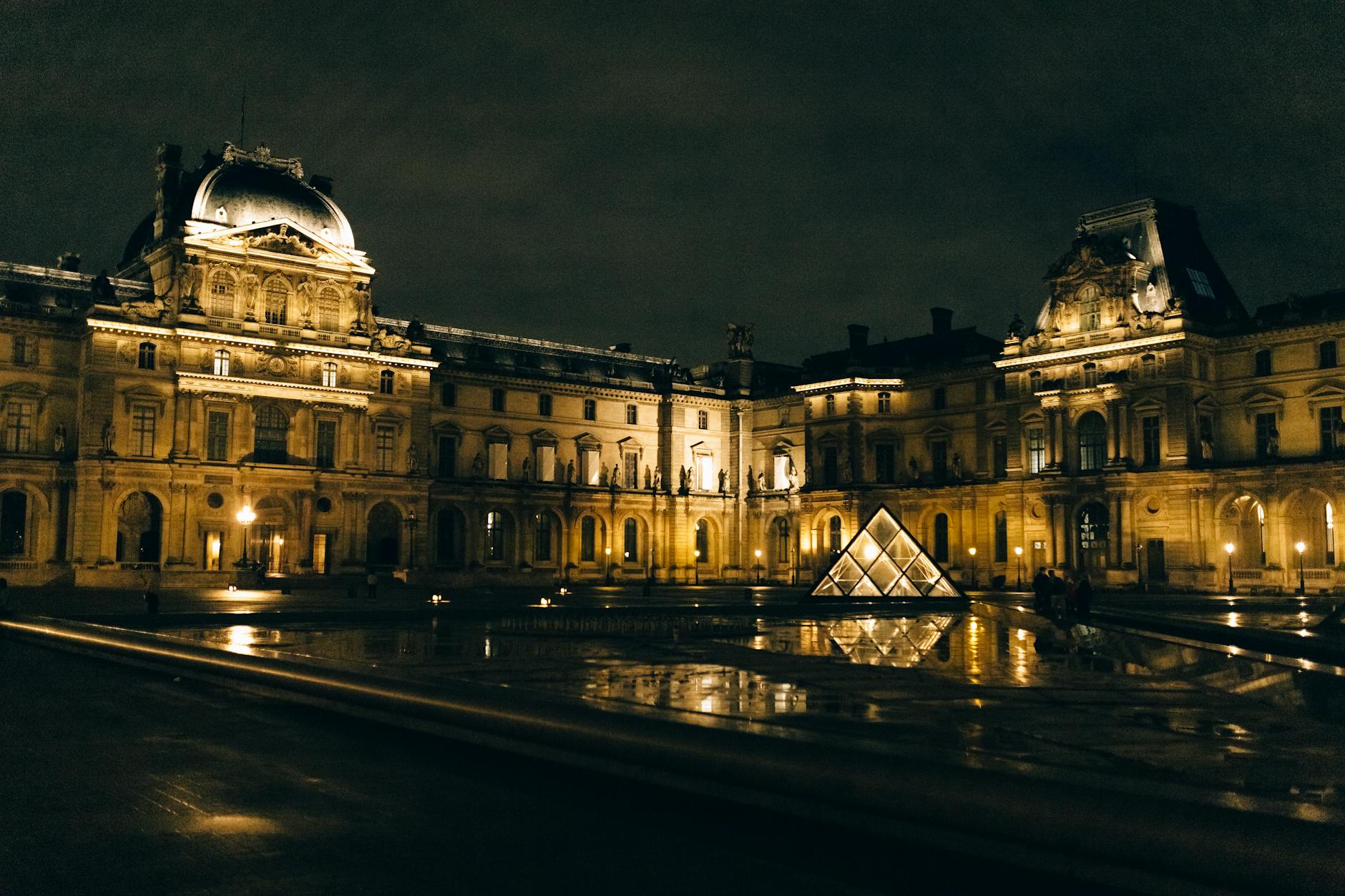
The Louvre is the most visited museum on the planet: more than 8.7 million people come through every year. It started as a medieval fortress, became a royal palace over the next 800 years, and now wears I.M. Pei’s glass pyramid out front like a piece of jewelry the building wasn’t sure it wanted. Inside are over 35,000 works, running from ancient Mesopotamia to the middle of the 19th century. You will not see all of it. Almost nobody does.
The famous three are the famous three for a reason. The Mona Lisa is smaller than the postcards suggest and you’ll view her over a sea of phones, but the painting earns the fuss once you’re close enough to see it. The Winged Victory of Samothrace lands at the top of a staircase with real theatrical force. The Venus de Milo holds her corner with quiet, armless confidence. The mistake is stopping there. The Egyptian Antiquities wing is one of the best in the world, the Islamic Art galleries sit under a rippling glass canopy that looks like a desert dune, and the Napoleon III Apartments deliver a hit of imperial gold that out-Versailles Versailles. Go where the crowd thins and the museum opens up.
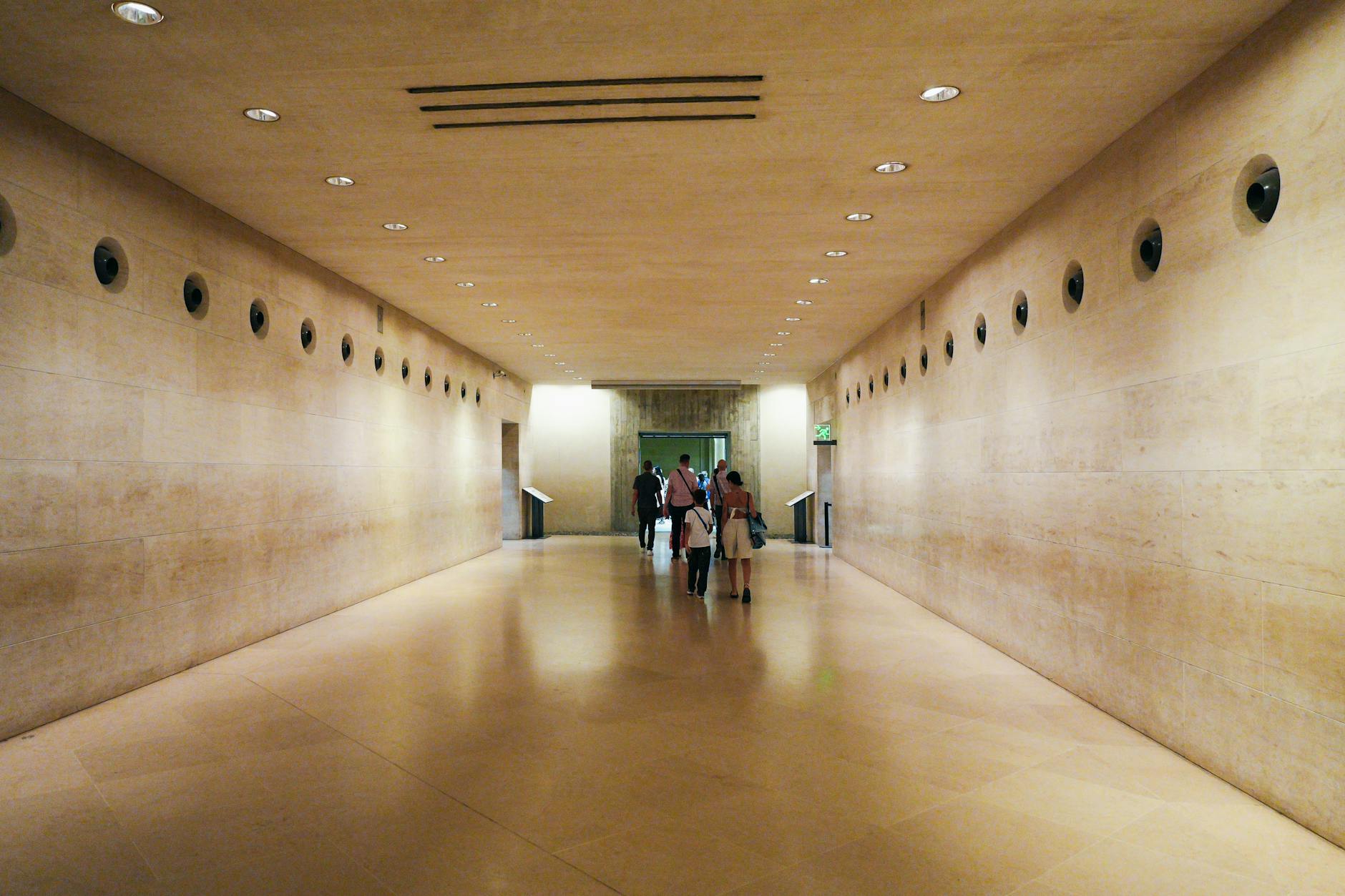
Practical tips: Book a timed-entry ticket online, ideally two weeks out, because the walk-up line can run past two hours. Wednesday and Friday evenings, when the museum stays open until 9:45 PM, are the calmest windows. Give it three hours minimum for a focused visit, a full day if you want to do it justice, and remember it’s shut on Tuesdays. Adult admission is €22 in 2026, and the Louvre is included in the Paris Museum Pass. Under-18s and EU residents under 26 get in free. To dodge the pyramid queue, enter through the underground Carrousel du Louvre or the Passage Richelieu. The free smartphone app runs self-guided routes by theme; the ‘Masterpieces’ route covers the headliners in about two hours, and the ‘French Crown Jewels’ route takes you somewhere quieter. And if you can swing a Wednesday or Friday night, take it. The pyramid glows, the galleries empty out, and the place finally feels like the palace it used to be.
Musée d’Orsay: The World’s Greatest Impressionist Collection
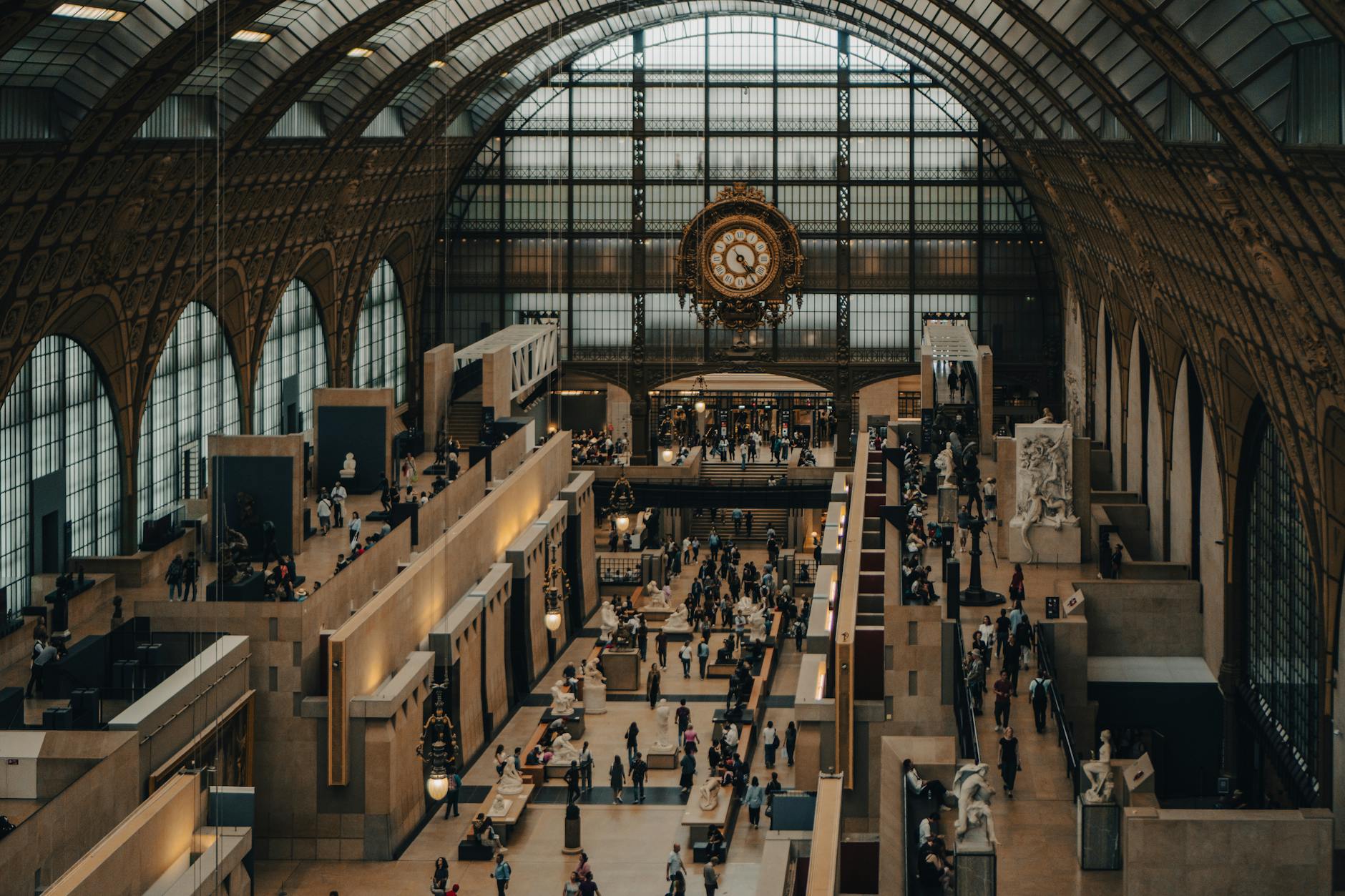
Where the Louvre gives you the whole sweep of Western art, the Musée d’Orsay zooms in on its most popular chapter and goes deep. The setting helps: it’s a grand Beaux-Arts railway station built for the 1900 World’s Fair, all glass and iron and a giant clock, repurposed to hold the planet’s most important collection of Impressionist and Post-Impressionist art. This is the room where painting stopped describing the world and started describing how light hits it.
The names on the walls read like a greatest-hits compilation. Monet’s cathedrals and water lilies, Renoir’s sun-flecked Bal du moulin de la Galette, Degas’s dancers caught mid-motion, Van Gogh’s Starry Night Over the Rhône and the self-portraits that still stop people cold, Cézanne’s still lifes that were already halfway to Cubism, and Manet’s Olympia and Déjeuner sur l’herbe, both of which scandalized Paris when they appeared. The collection runs from 1848 to 1914, so there’s also superb Art Nouveau furniture, early photography, and decorative arts once you’ve had your fill of paint.
Practical tips: According to Paris tourism authorities, the 5th-floor Impressionist galleries draw the heaviest crowds, so hit them first thing or during the Thursday evening opening (until 9:45 PM). Don’t rush past the building itself: look straight up at the glass-and-iron vault, and walk out behind the giant clock face for a view across the Seine to Montmartre that few people bother to find. Tickets are €16 and need to be booked ahead. Entry is free the first Sunday of each month, booking still required. One strong move: the Musée de l’Orangerie, home to Monet’s monumental Water Lilies in their purpose-built oval rooms, sits a 15-minute walk away in the Tuileries. Doing both in one day is the classic Impressionist double-header, and it works.
Centre Pompidou: Modern and Contemporary Art
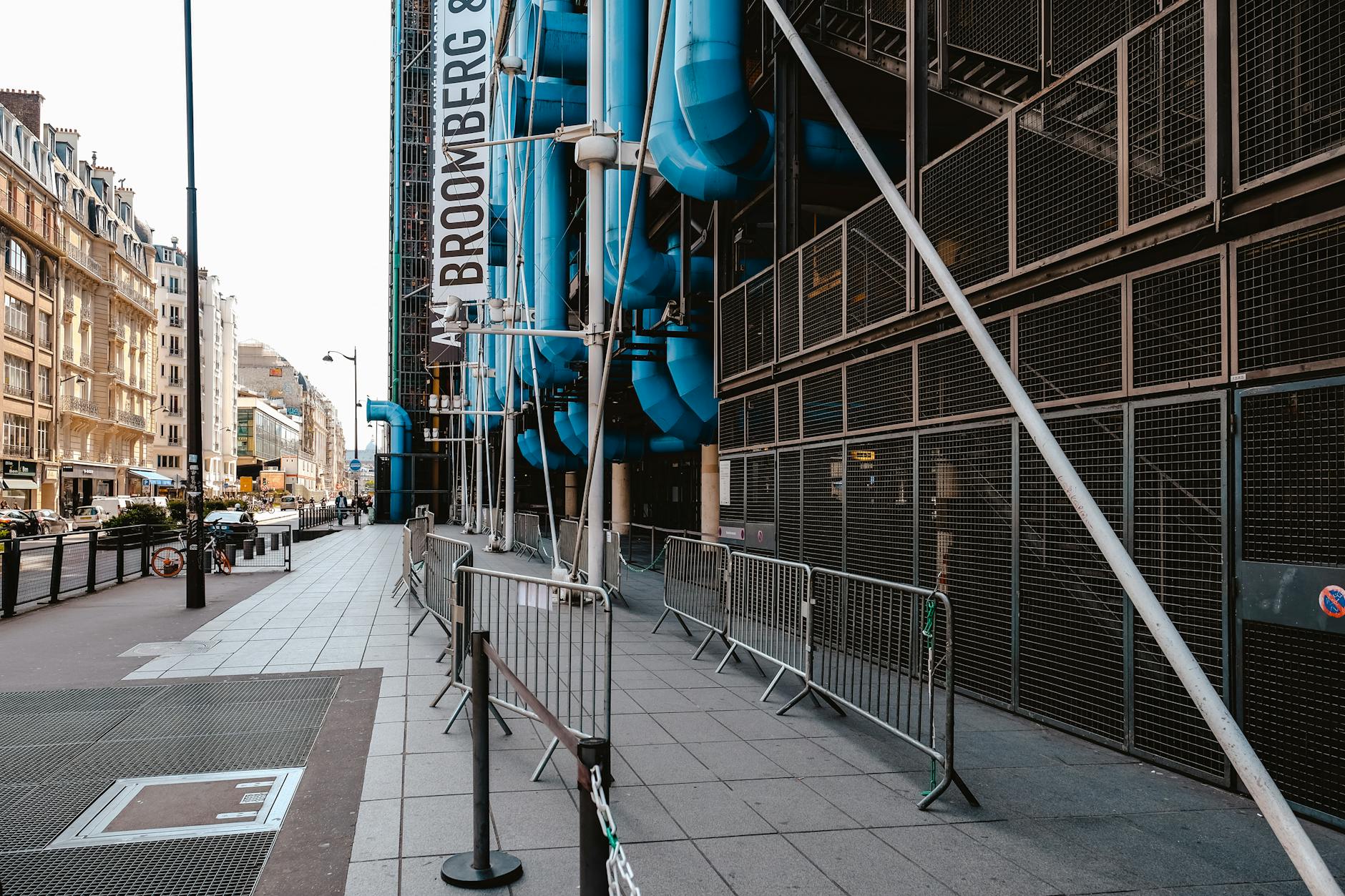
The Centre Pompidou is a building that argues with you. When Renzo Piano and Richard Rogers won the 1971 design competition, they turned the structure inside out: pipes, ducts and escalators bolted to the exterior and color-coded by job, with blue for air, green for water, yellow for electricity, and red for the bits that move people. Paris was appalled. Fifty years on it’s one of the city’s favorite landmarks and holds Europe’s largest collection of modern and contemporary art, more than 120,000 works.
The permanent collection covers the whole 20th century and well into the 21st: Picasso, Kandinsky, Matisse, Duchamp, Dalí, Warhol, Pollock, and several hundred more. Because the displays rotate often, you rarely see the same hang twice, and the big temporary shows upstairs are reliably among the best in the city. The top-floor terrace hands you one of the finest free views in Paris. One important caveat: the Centre Pompidou is in the middle of a major renovation and access may be limited through 2026, so check the official site before you head over. The reopening, with expanded galleries, is currently planned for 2030.
Art and History Museums
Musée de l’Orangerie: Monet’s Water Lilies
In the southwest corner of the Tuileries, the Musée de l’Orangerie exists for one experience that no reproduction prepares you for. You stand in the middle of two oval rooms Monet designed himself, ringed by eight enormous Nymphéas (Water Lilies) panels that curve around you in an unbroken 360-degree wash of water, light and reflection. The paintings run roughly two meters tall and about 91 meters end to end. Monet gave them to France as a “monument to peace,” signing the deal the day after the World War I armistice. Downstairs, the Jean Walter and Paul Guillaume collection packs in early modern work by Cézanne, Renoir, Matisse, Picasso, Modigliani and Soutine. Admission is €12.50, and the whole thing takes only 60 to 90 minutes, which is exactly why you pair it with the Orsay.
Musée Rodin: Sculptures in a Garden Paradise
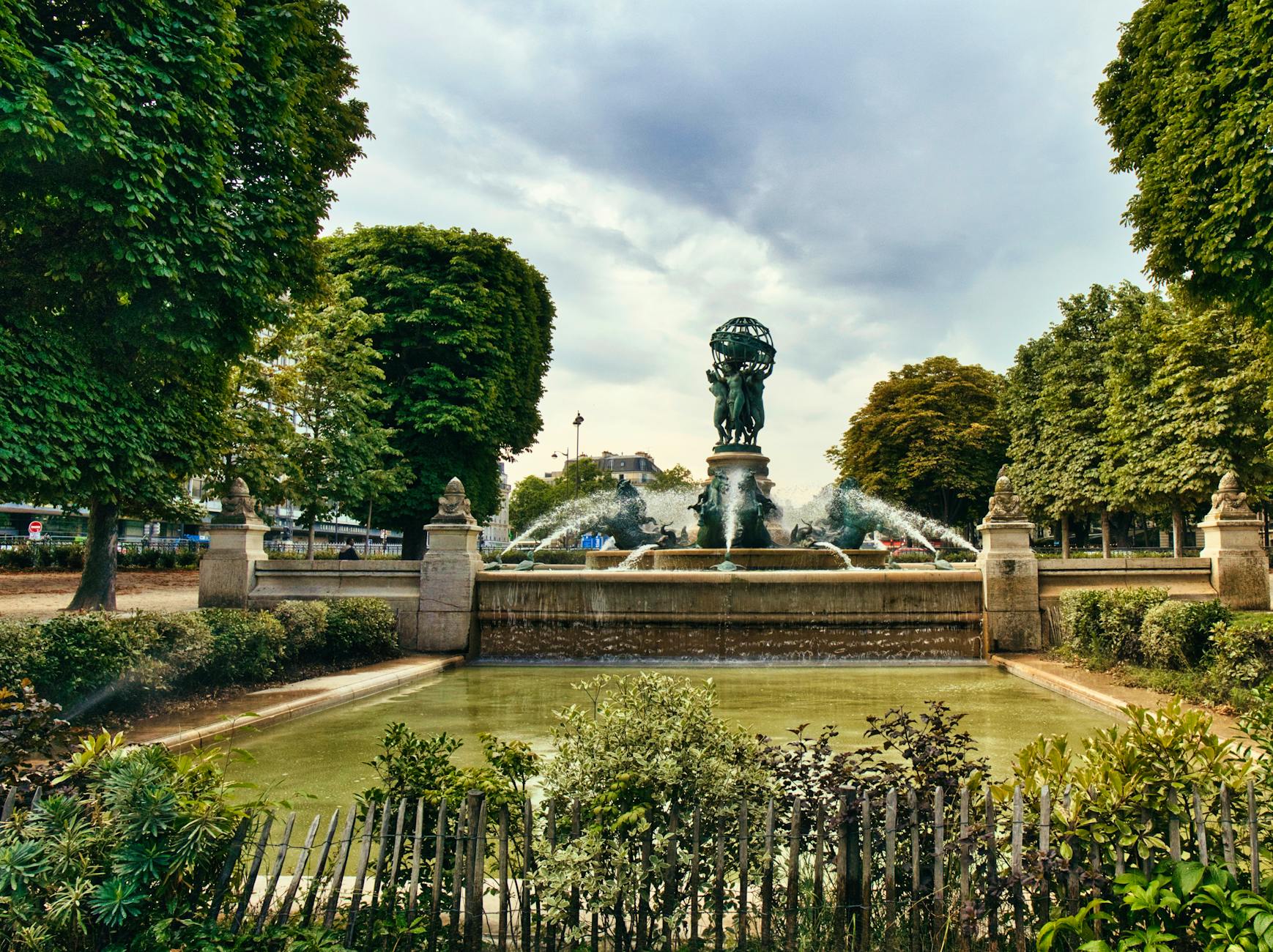
The Musée Rodin sits in the 18th-century Hôtel Biron near Les Invalides, and yes, the indoor galleries hold the bronzes, marbles, drawings and personal collections you’d expect. But the reason to come is outside. The three-hectare garden is where Rodin’s best-known works live, set among rose beds, clipped hedges and reflecting pools. The Thinker sits there mid-thought; The Burghers of Calais trudge across the lawn; and The Gates of Hell, the monumental doorway Rodin worked on for decades and never finished, looms over the grounds with figures spilling out of it. Full admission is €13, or just €4 for the garden alone. For an afternoon outdoors with world-class sculpture and almost no crowds, that €4 ticket is one of the great Paris bargains.
Musée Picasso: One Artist, 5,000 Works
Inside the Hôtel Salé, a 17th-century Marais mansion, the Musée Picasso holds the largest collection of Pablo Picasso’s work anywhere: more than 5,000 pieces across paintings, sculptures, ceramics, prints and personal photographs, covering every phase of a career that simply did not sit still. You can trace the whole arc here, from the grief of the Blue Period through the splintered planes of Cubism to the loose, joyful late canvases. The museum also shows Picasso’s own collection, with pieces by Cézanne, Degas, Matisse and Rousseau, which tells you who the master was learning from. Admission is €11.
Musée Carnavalet: Paris Through the Ages
The Musée Carnavalet is the city’s own history museum, and it costs nothing to walk in. Spread across two linked Marais mansions, the 16th-century Hôtel Carnavalet and the 17th-century Hôtel Le Peletier de Saint-Fargeau, it traces Paris from prehistoric canoes hauled out of the Seine right up to now. The highlights are oddly intimate: a complete Art Nouveau jeweler’s shopfront, Marcel Proust’s cork-lined bedroom, Revolutionary relics, painted medieval shop signs, and rooms full of paintings showing how the city looked centuries ago. A 2021 renovation sharpened the whole thing with smart design and multilingual labels. It’s free, it’s excellent, and far too few visitors make it here.
History, Science, and Specialized Museums
Musée de l’Armée and Les Invalides: Military History and Napoleon’s Tomb
You can spot the gilded dome of the Hôtel des Invalides from across the city. Louis XIV built the complex to house wounded soldiers, and today it holds the Musée de l’Armée, one of the largest military history collections in the world, running from medieval armor to World War II. For most visitors the centerpiece is Napoleon’s tomb: the emperor lies in a hulking red quartzite sarcophagus directly under the dome, ringed by allegorical statues and battle reliefs, the whole staging dialed up to maximum imperial scale. The World War II galleries hit a very different note. Charles de Gaulle’s personal effects and the multimedia accounts of the Occupation and Liberation are genuinely affecting, and the Order of the Liberation museum inside the complex tells the Resistance story through deeply personal artifacts. Budget two hours for everything, or narrow it to the tomb and the WWII rooms if you’re short on time. One more thing: the esplanade out front, with its sightline across the Seine to the Grand Palais, is among the most photogenic spots in Paris. Admission is €15, and the complex is covered by the Paris Museum Pass.
Musée du Quai Branly – Jacques Chirac: World Cultures
Jean Nouvel wrapped the Musée du Quai Branly in a living wall of plants, and the drama continues inside, where 450,000 objects represent the art and cultures of Africa, Asia, Oceania and the Americas. The interior is deliberately dim and winding, more forest path than gallery, and the effect is immersive in a way no other Paris museum manages. West African sculpture, Aboriginal Australian painting, pre-Columbian ceramics: it’s a lot, and it’s arranged to be wandered. The garden by landscape architect Gilles Clément is free to enter and surprisingly wild, with meadow plantings, looping paths and a pond that conjure the countryside a few steps from the Eiffel Tower. The temporary exhibitions are consistently strong and often pull in rarely-seen pieces from private collections abroad. And if you want to splurge, the rooftop restaurant Les Ombres serves dinner with the Eiffel Tower hanging directly overhead. Museum admission is €14, covered by the Paris Museum Pass.
Musée des Arts et Métiers: Science and Innovation
Set in a former medieval priory, the Musée des Arts et Métiers is the city’s oldest technology museum and a quiet thrill for anyone who likes knowing how things work. Foucault’s original pendulum swings in the old chapel. Blériot’s plane, the first to cross the English Channel, hangs overhead. Lavoisier’s chemistry lab is here, along with early calculating machines and a glorious clutter of clocks, automata and industrial models. It’s atmospheric, rarely busy, and the rare kind of museum you leave feeling slightly smarter than when you walked in. The surrounding Marais streets are made for a post-visit coffee, and even the Metro station next door, sheathed in copper like the inside of a submarine, is worth a look. Admission is €8, which for a collection of this depth is something close to a steal.
Cité des Sciences et de l’Industrie: Europe’s Largest Science Museum
Out in the Parc de la Villette in the 19th arrondissement, the Cité des Sciences is the biggest science museum in Europe and a reliable hit with families and curious adults alike. The hands-on exhibits cover space, mathematics, genetics, ocean science and the human body, and the Géode IMAX theater, a giant mirrored sphere, plus the planetarium round out the day. Next door, the Cité de la Musique — Philharmonie de Paris runs a fine musical-instruments museum with regular concerts. Plan a full day for the Villette complex. Permanent exhibitions cost €13, with reduced rates for children.
Hidden Gem Museums: Paris’s Best-Kept Secrets
A Paris museums guide that stops at the famous names is doing you a disservice. The smaller museums are where the city gets personal: less crowded, more atmospheric, and often more memorable than the big institutions, with a good number of them free to enter.
Musée Jacquemart-André: A Gilded Age Mansion
This 19th-century mansion on Boulevard Haussmann belonged to the banker Édouard André and the painter Nélie Jacquemart, a couple who spent their lives buying art at a level most museums would envy. Their Italian Renaissance paintings (Botticelli, Mantegna, Uccello) and French 18th-century decorative arts are first-rate, but the house competes with the collection: a sweeping double staircase, frescoed ceilings, a glassed-in winter garden. Have tea in the former dining room under a ceiling painted by Tiepolo and you’ll struggle to name a lovelier spot to sit down in the whole city. Admission is €16.
Musée de la Vie Romantique: A Hidden Garden Retreat
Down a cobbled lane in the 9th arrondissement, the Musée de la Vie Romantique was the home and studio of the Dutch-born painter Ary Scheffer, who hosted the cultural heavyweights of 1830s Paris. Chopin played here. George Sand was a regular. Delacroix lived nearby. The museum shows Sand’s jewelry, manuscripts and paintings in rooms that still feel lived-in. The permanent collection is free, and the rose-filled courtyard garden, with its summer tea room, is one of the most genuinely hidden corners left in central Paris.
Musée Gustave Moreau: A Painter’s Studio-Cathedral
The Musée Gustave Moreau in the 9th is one of the strangest and best single-artist museums you’ll ever set foot in. Moreau designed the conversion of his own house, turning it into a soaring double-height studio hung floor to ceiling with his fantastical, jewel-toned mythological scenes. A famous spiral staircase links the two studio levels, which together hold more than 1,200 paintings and watercolors. Downstairs, the small apartment is kept exactly as he left it, full of personal objects and a quiet, almost mournful sense of the man who worked there. Admission is €7.
Musée Marmottan Monet: The Largest Monet Collection
On a quiet street near the Bois de Boulogne in the 16th, the Musée Marmottan Monet holds the largest collection of Claude Monet paintings in the world, over 300 of them, including the canvas that accidentally named a whole movement: Impression, Sunrise (1872). The basement gallery, dense with late water lilies and Giverny garden scenes, is about as intimate as Impressionism gets. Because it sits well off the main tourist track, the Marmottan stays calm even in high season, which is half its appeal. Admission is €14, and for anyone who loves this period, it’s one of the most rewarding visits in the city.
Free Museums in Paris
Here’s the part of this Paris museums guide that should change how you budget: the permanent collections of all 14 City of Paris museums (musées de la Ville de Paris) are free, every day, all year. This isn’t a courtesy gesture toward second-tier collections. These are serious institutions, and you pay nothing to walk in:
The Petit Palais (Musée des Beaux-Arts de la Ville de Paris) is a gorgeous Beaux-Arts building whose collection spans antiquity to 1900, with works by Rembrandt, Rubens, Monet and Cézanne. Its interior garden courtyard, ringed by a mosaic colonnade and centered on a quiet café, is one of the loveliest hidden spaces in the city, and it’s a block off the chaos of the Champs-Élysées. The Musée d’Art Moderne de Paris, separate from the Centre Pompidou, holds major Matisse, Picasso and Dufy plus a standout contemporary photography collection. The Musée Carnavalet covers Paris history from prehistory to today, as described above. And the Maison de Victor Hugo, the writer’s apartment on the Place des Vosges, shows his drawings, manuscripts and personal effects.
Beyond the city museums, the national museums offer free entry on the first Sunday of each month (October through March for most, year-round for a few). That covers the Louvre, the Musée d’Orsay, the Musée de l’Orangerie and the Musée Picasso, though you’ll almost always need to book a slot online in advance. On top of that, every national museum is free for visitors under 18 and for EU residents under 26. If you’re traveling young, Paris is about as cheap as world-class culture gets.
Paris Museum Pass: Saving Money and Time
The Paris Museum Pass gets you into more than 50 museums and monuments across Paris and the Île-de-France, the Louvre and Orsay among them, plus Versailles, Sainte-Chapelle and the Arc de Triomphe rooftop. It comes in 2-day (€55) and 4-day (€70) versions, and it does two useful things at once: it saves money, and at most venues it lets you skip the general line. That second benefit is the one that quietly saves you hours.
The math on the 2-day pass is simple. You need to clock about €28 of museums a day to break even, which two major sites will cover with room to spare. A well-planned two days can pull €100 or more in value out of a €55 card. There’s a less obvious benefit too. Once entry is already paid for, you stop treating each museum as a commitment. You’ll duck into a small collection for half an hour, or double back to a gallery you loved, and that looseness genuinely improves the trip. Buy it online, at major museums, at tourist offices, or at select Metro stations. One trap to avoid: the pass runs on consecutive calendar days, not rolling 48-hour windows, so start early on day one to get your money’s worth. For the full cost breakdown, see our Paris Museum Pass guide.
Beyond Central Paris: Museums Worth the Journey
Palace of Versailles
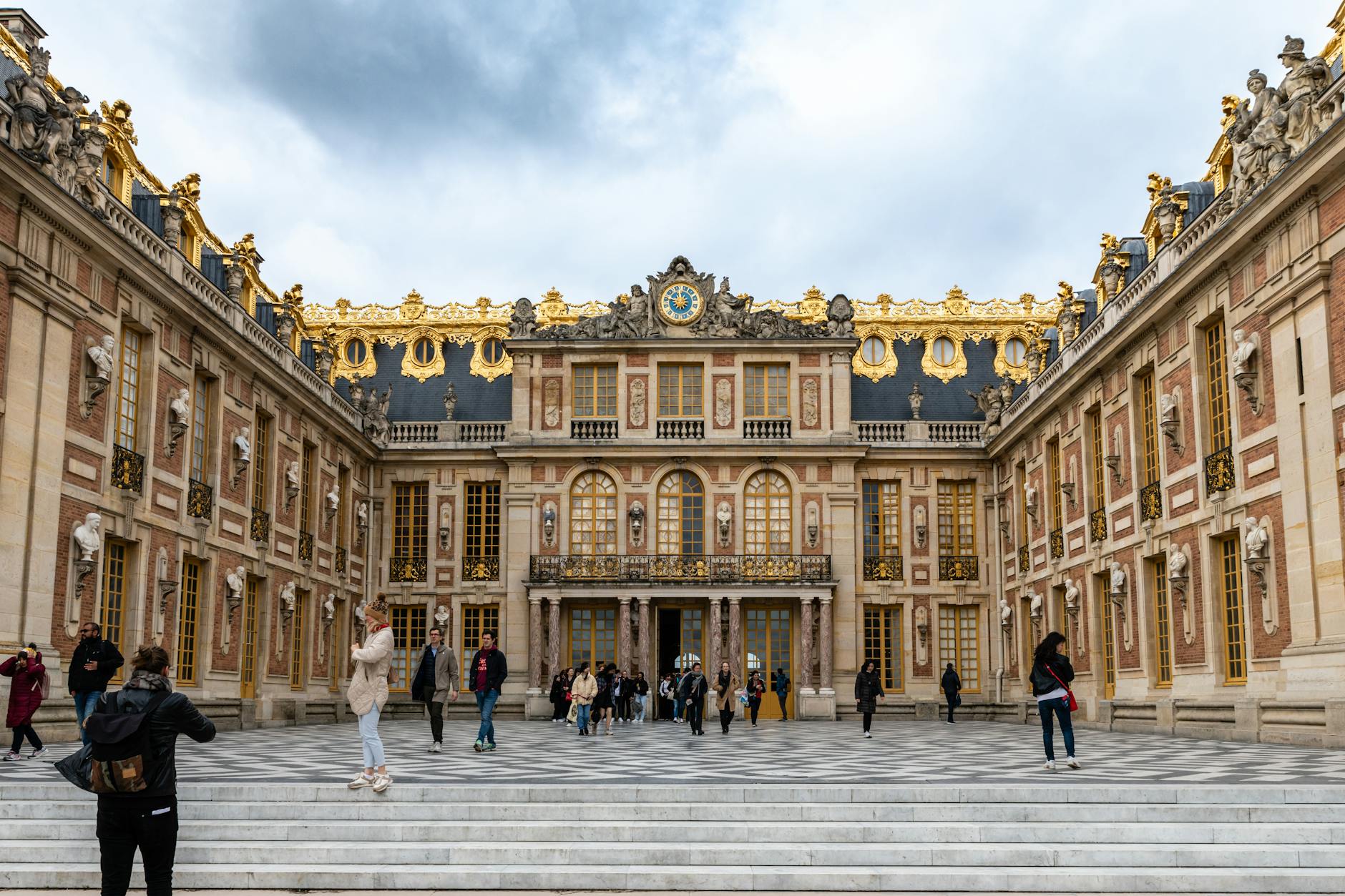
A 40-minute train ride from the center, the Palace of Versailles is the most visited museum in France outside Paris itself, and it earns the trek. The Hall of Mirrors, the King’s Grand Apartments, and Le Nôtre’s gardens that seem to run to the horizon are royal excess at full volume. For something calmer, the Grand Trianon and the Petit Trianon, Marie Antoinette’s private hideaway, draw far thinner crowds and reward the walk. Versailles is covered by the Paris Museum Pass, but book a timed-entry ticket regardless, because it routinely hits capacity by midday. It’s closed Tuesdays, and Monday and Wednesday tend to be the quietest days.
Fondation Louis Vuitton
Frank Gehry’s glass-sailed building in the Bois de Boulogne houses the Fondation Louis Vuitton, one of the most ambitious contemporary art venues in the city. The architecture alone justifies the journey: twelve glass “sails” that catch and bend the light as you move around them. Inside, the permanent collection includes serious work by Gerhard Richter, Jeff Koons and Christian Boltanski, while the temporary shows pull international crowds, and the rooftop terraces look out over the western suburbs. It’s not on the Museum Pass; admission is €16.
Château de Fontainebleau
Versailles overshadows it, which is unfair, because Fontainebleau (an hour by train) was the actual home of French kings for over 700 years, from François I to Napoleon III. The interiors are arguably more beautiful and far more intimate than Versailles, the crowds are lighter, and the Renaissance gallery here predates the Louvre’s. Napoleon’s private apartments survive in remarkable condition. When you’re done, the surrounding forest makes for an easy half-day of walking. Covered by the Paris Museum Pass.
Sainte-Chapelle: The Most Beautiful Interior in Paris
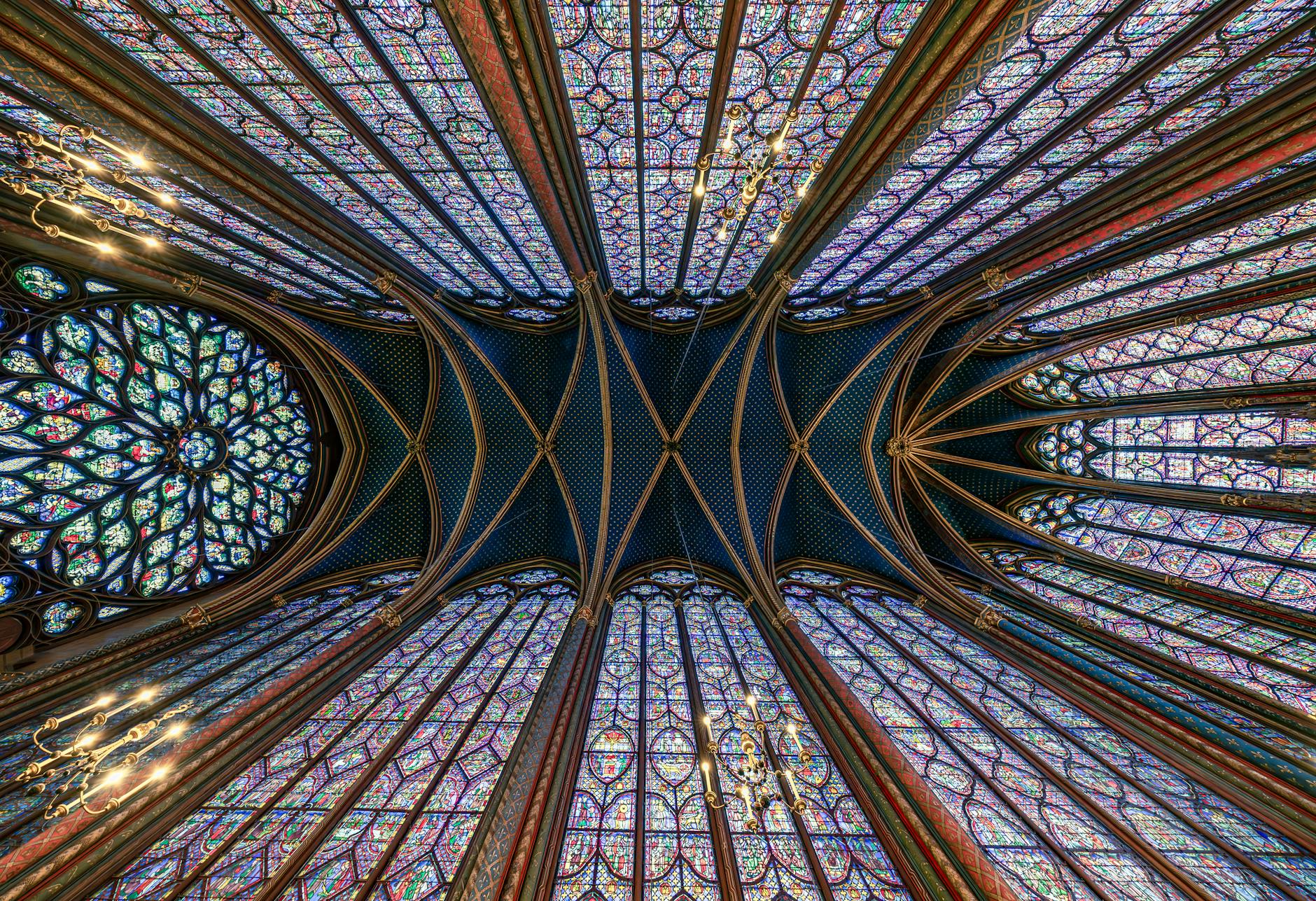
Sainte-Chapelle on the Île de la Cité is technically a monument, not a museum, but no honest Paris museums guide would leave it out, because the upper chapel may be the single most beautiful interior in the city. King Louis IX built it in the 1240s to house his collection of Christian relics, including what was believed to be Christ’s Crown of Thorns. The result is Gothic architecture at its most audacious: 15 stained glass windows, each 15 meters tall, carrying 1,113 biblical scenes that turn the narrow room into a box of colored light. Catch it on a sunny afternoon and the effect is overwhelming in the literal sense. Go early to beat the crowds, pick a clear day if you possibly can, because the light is the whole point. Admission is €11.50, it’s covered by the Paris Museum Pass, and combined tickets with the nearby Conciergerie are available.
Palais de Tokyo: Contemporary Art Without Boundaries
The Palais de Tokyo in the 16th is the most adventurous contemporary art space in Paris, and it looks the part: raw, half-finished, defiantly unpolished, and the largest venue in Europe given over to contemporary creation. It runs rotating exhibitions, installations and performances, and unlike almost every other museum in the city, it stays open until midnight, which makes it a genuine evening option. The programming is unpredictable and occasionally out to provoke, tracking the actual edge of international art rather than the safe middle. Even if contemporary work isn’t your thing, the brutalist atmosphere, the excellent bookshop, and the restaurant Monsieur Bleu (whose terrace faces the Eiffel Tower) make it worth a look. Admission is €14.
How to Plan Your Paris Museum Visits
With this many options on the table, planning is the difference between a great museum day and a forced march. A few principles will carry you a long way:
Book everything in advance. In 2026, nearly every major Paris museum either requires or strongly pushes timed-entry tickets bought online. That goes double for the Louvre, the Orsay, Sainte-Chapelle and Versailles. Lock in your slots the moment your dates are set, because the good time windows disappear weeks out.
Start early or go late. The crush hits between 11 AM and 3 PM at most museums. Show up 15 minutes before the doors open, or aim for the evening sessions (the Louvre on Wednesday and Friday, the Orsay on Thursday), and you’ll have a dramatically better time with far fewer bodies in the room.
Mix major and minor. Pair one blockbuster with one small museum each day. After three hours in the Louvre, the quiet of the Musée de la Vie Romantique or the Musée Gustave Moreau resets your eyes and your feet. This is the single best defense against the sensory overload that turns culture into a chore.
Don’t skip the architecture. Plenty of these buildings are as good as the art they hold: the Orsay’s railway station, the Picasso’s Marais mansion, the Jacquemart-André’s Gilded Age townhouse, the Rodin’s garden pavilion. Look at the rooms, not only the walls.
Use the Paris Museum Pass strategically. Activate it on a day when you’re hitting several paid museums in a row. Save the free days, the first Sundays and the city museums, for collections the pass doesn’t cover. Our detailed Museum Pass cost analysis lays out itineraries built to wring the most out of it.
Museums by Neighborhood: Planning Your Route
Clustering your museum visits by neighborhood cuts down on transit and lets you explore the streets in between. The 1st arrondissement alone holds the Louvre, the Musée de l’Orangerie, the Musée des Arts Décoratifs and the Jeu de Paume, easily a full day or two. Cross into the 3rd and 4th (Le Marais) and you’ve got the Musée Picasso, the Musée Carnavalet, the Centre Pompidou, the Musée des Archives Nationales and the Maison de Victor Hugo inside a 15-minute walking radius, with plenty of good cafés to break up the day.
The 7th arrondissement is dense with heavy hitters: the Musée d’Orsay, the Musée Rodin, the Musée du Quai Branly and the Musée de l’Armée at Les Invalides all sit within a 20-minute walk of one another. The 8th arrondissement lines up the Grand Palais, the Petit Palais and the Musée Jacquemart-André along the Champs-Élysées axis. The 9th arrondissement pairs the Palais Garnier opera house (which runs guided tours), the Musée Gustave Moreau and the Musée de la Vie Romantique in the South Pigalle quarter. For a slower day, the 16th arrondissement gathers the Musée Marmottan Monet, the Palais de Tokyo, the Musée Guimet (Asian art) and the Fondation Louis Vuitton. Our neighborhood guide helps you read the areas, and the transport guide sorts out the best routes between them.
The best museum days string together places you can actually walk between. A superb Left Bank day: Musée d’Orsay in the morning, lunch on Rue du Bac, Musée Rodin in the afternoon. A great Marais day: Musée Picasso first, falafel on Rue des Rosiers, then the Centre Pompidou, finishing with the free Musée Carnavalet in the late afternoon. A hidden-gems day: Musée Gustave Moreau in the morning, food shopping along Rue des Martyrs, the free Musée de la Vie Romantique after lunch, and the Musée Jacquemart-André at the end with tea in that Tiepolo dining room.
Seasonal Museum Tips
Spring (March–May): The big exhibition season is running at full tilt, with major shows at the Grand Palais, the Fondation Louis Vuitton and the Musée du Luxembourg. Art Paris, one of the country’s main art fairs, fills the Grand Palais in early April. The sculpture gardens at the Rodin and Maillol museums also look their best now.
Summer (June–August): Peak season means longer lines and bigger crowds at the major institutions, so lean hard on opening-time and evening visits. The Nuit des Musées (the European Night of Museums, usually mid-May) throws open hundreds of venues for free after dark with special programming. Summer is also when outdoor museum experiences shine: the Rodin garden, the Versailles grounds, and open-air shows along the Seine.
Autumn (September–November): The best stretch of the year for museums, full stop. The summer crowds drain away, the new exhibition season kicks off, and the cooler weather nudges you indoors. September and October bring a wave of major retrospectives, and the FIAC contemporary art fair (now Paris+) takes over the Grand Palais in October, drawing galleries and collectors from everywhere.
Winter (December–February): The quietest stretch in most museums, when you can find yourself nearly alone in galleries that are shoulder-to-shoulder in July. Plenty of temporary shows wrap up in January, so check what’s still running. Christmas closures usually hit only December 25 and January 1. And the winter light pouring through the glass roofs of the Orsay and the Grand Palais is worth a visit on its own.
Museum Etiquette and Practical Advice
A few local conventions make museum-going here smoother for everyone. Photography without flash is fine in most museums, the Louvre, Orsay and Picasso included, but some temporary exhibitions ban it outright, so watch for the signs. Large bags and backpacks usually have to go in the cloakroom, so carry a small bag for your valuables. Audio guides (typically €5 to €6) are available at the big museums and genuinely deepen what you take away. The Louvre’s Nintendo 3DS guide and the Orsay’s multimedia guide are both unusually well made.
There’s no dress code at any Paris museum, though you might feel a touch more at ease in smart-casual clothes at the grander venues. Comfortable shoes are non-negotiable, especially at the Louvre and Versailles, where you’ll cover several kilometers on hard stone floors. Most museums have cafés or restaurants running from a basic coffee counter to proper dining, and a few are destinations in their own right: the Musée d’Orsay’s restaurant in the old hotel dining room under a painted ceiling, the Musée Jacquemart-André’s tea room, the Palais de Tokyo’s Monsieur Bleu. Many venues also offer reduced rates for students (with valid ID), seniors and visitors with disabilities, so keep your identification handy.
Frequently Asked Questions About Paris Museums
How many museums are there in Paris?
Paris has over 130 museums, from world-famous institutions like the Louvre and Musée d’Orsay down to intimate single-artist studios and niche collections. No other city packs in this density and variety of museum experiences.
What is the best museum in Paris besides the Louvre?
The Musée d’Orsay usually takes the second spot, on the strength of its unrivaled Impressionist collection and that railway-station setting. For contemporary art, the Centre Pompidou leads. For something more intimate, the Musée Rodin, the Musée Jacquemart-André and the Musée Marmottan Monet are hard to beat.
Is the Paris Museum Pass worth buying?
Yes, if you plan to visit three or more museums across two to four days. The 2-day pass (€55) usually delivers €80 to €120 in value, and the skip-the-line access saves real time at the Louvre, Versailles and Sainte-Chapelle. See our detailed cost analysis.
Which Paris museums are free?
All 14 City of Paris museums (the Petit Palais, Musée Carnavalet and Musée d’Art Moderne among them) are free for their permanent collections. National museums like the Louvre and Orsay are free on the first Sunday of each month (October to March), and every national museum is free for visitors under 18 and EU residents under 26. See our complete free museums guide.
How can I avoid crowds at Paris museums?
Go at opening time or during evening hours (Louvre: Wednesday and Friday until 9:45 PM; Orsay: Thursday until 9:45 PM), and steer clear of weekends at the major sites. Better yet, swap in the alternatives: the Musée Marmottan Monet and the Musée de l’Orangerie serve up Impressionist masterpieces with a fraction of the Orsay’s crowds. And always book timed-entry tickets to skip the general queue.
What museums are near the Eiffel Tower?
The 7th arrondissement around the Eiffel Tower is loaded: the Musée du Quai Branly – Jacques Chirac (world cultures), the Musée Rodin (sculptures and gardens), and the Musée de l’Armée at Les Invalides (military history and Napoleon’s tomb), with the Musée d’Orsay a short walk along the Seine. Our neighborhoods guide has more area-specific picks.
Discover Paris, One Museum at a Time
One last piece of advice, and it’s the one most people ignore: do less. The visitors who try to cram in five museums a day leave Paris remembering corridors and queues. The ones who pick two, take their time, and leave room to sit in a courtyard café between them come home actually changed by what they saw. An hour alone with Monet’s water lilies at the Orangerie beats a sprint through the Louvre every time.
Keep building your trip with the rest of our guides: plan your Paris trip, sort out where to stay, work through our 101 things to do, scan the top attractions, eat your way through the Paris food guide, get the hang of getting around Paris, and dig into every neighborhood. Bon voyage culturel.
Explore every museum guide
The in-depth guides in this section: