Musee d’Orsay Guide: Impressionism’s Greatest Masterpieces
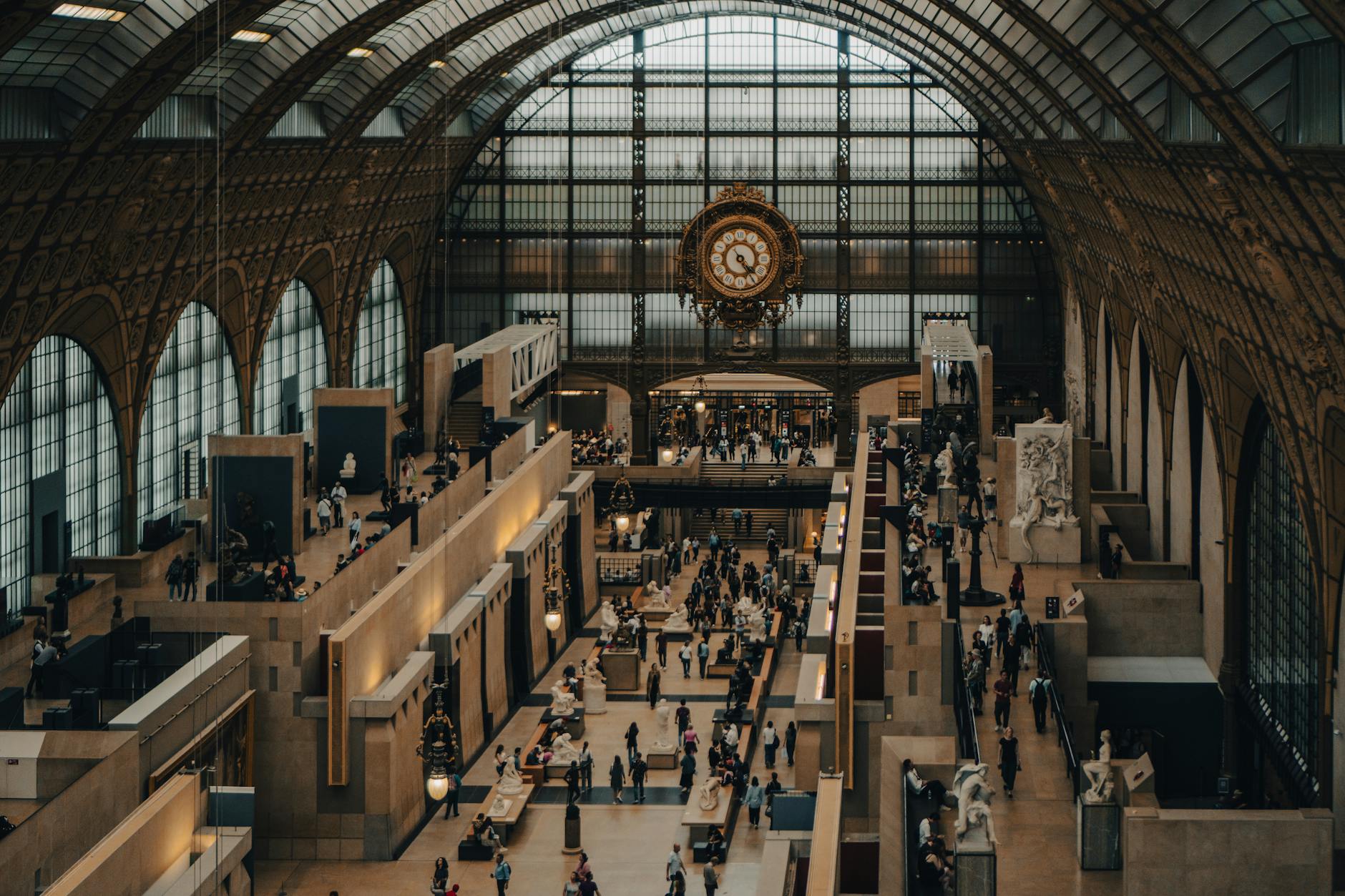
If you only have time for one museum in Paris, plenty of people who know the city will tell you to make it the musee dorsay over the Louvre. The world’s deepest Impressionist collection lives here, you can do it justice in a half-day, and the building does half the work for you. Monet’s Poppy Field, Renoir’s Bal du Moulin de la Galette, Manet’s Olympia and Lunch on the Grass, Van Gogh’s Starry Night Over the Rhône and Bedroom in Arles, Cezanne, Gauguin, Degas, Toulouse-Lautrec, all under one vaulted glass roof. That roof belongs to a Belle Époque train station, the Gare d’Orsay of 1900, reborn as a museum in 1986. It pulls 3.8 million visitors a year, second only to the Louvre, yet it never feels like a marathon the way the Louvre does. Below: tickets, hours, the floor plan, the 15 paintings worth crossing town for, the clock window that gives you the best free photo in the city, and a 3-hour route that actually holds together.
If you want the wider lay of the land first, our Paris museums guide maps the whole scene, the Louvre guide covers the big one, and the Orangerie guide handles Monet’s Water Lilies. Trying to work out whether a pass pays off? Run the numbers in our museum pass guide.
Musée d’Orsay at a Glance
- Address: 1 Rue de la Légion d’Honneur, 75007 Paris.
- Métro: Solférino (Line 12); RER C: Musée d’Orsay.
- Hours: 9:30am-6pm; Thursday until 9:45pm; closed Monday.
- 2026 ticket: €16 adult; FREE under 18 worldwide; FREE EU 18-25; FREE first Sunday of month.
- Paris Museum Pass: included.
- Annual visitors: 3.8M (2024).
- Collection focus: French art 1848-1914 (Impressionism, Post-Impressionism, Realism, Symbolism, Art Nouveau).
- Building: 1900 Gare d’Orsay (architect Victor Laloux) converted to museum 1986.
Brief History of the Building
The Gare d’Orsay opened on July 14, 1900, timed for the World’s Fair. Victor Laloux had a problem: a working railway terminus next door to the Louvre and the Tuileries couldn’t look like an honest iron-and-glass train shed, so he wrapped the industrial skeleton in limestone dressed up like a palace, and the trick still works. The trains, less so. By 1939 the platforms were too short for modern long-distance carriages, and the station was retired. It sat empty for decades, dodged a 1970s plan to demolish it for a hotel, and was rescued when President Valéry Giscard d’Estaing designated it a museum in 1977. The Italian architect Gae Aulenti ran the conversion, and the doors opened on December 9, 1986. Two things she got exactly right became the museum’s signatures: the Impressionist galleries on the 5th floor, and the clock-window view over the Seine.
Tickets and How to Skip the Line
- Standard ticket: €16 (online or at door).
- Reduced ticket: €13 for 18-25 non-EU; FREE for EU 18-25.
- FREE: under 18 worldwide, first Sunday of month, July 14, disabled + companion, journalists, teachers, art-history students.
- Combined ticket with Musée Rodin: €25 (saves €5).
- Combined ticket with Musée de l’Orangerie: €22 (saves €6.50).
- Paris Museum Pass: included.
- Booking: musee-orsay.fr (official); release 60 days ahead; popular Thursday evening slots fill first.
- Avoid: walk-up queue 30-90 min in summer; pre-book always.
- Best entry time: 9:30am opening (lightest crowds); Thursday 6-9:45pm (the late night is the Orsay’s worst-kept secret, with the museum half-empty after 6pm).
The short version: book ahead on the official site, musee-orsay.fr, and book the day your slot opens if you want a Thursday evening, since those go first. The walk-up queue runs 30 to 90 minutes in summer for no good reason. The Rodin and Orangerie combo tickets only pay off if you’re genuinely doing all three.
Floor Plan: How the Museum is Organized
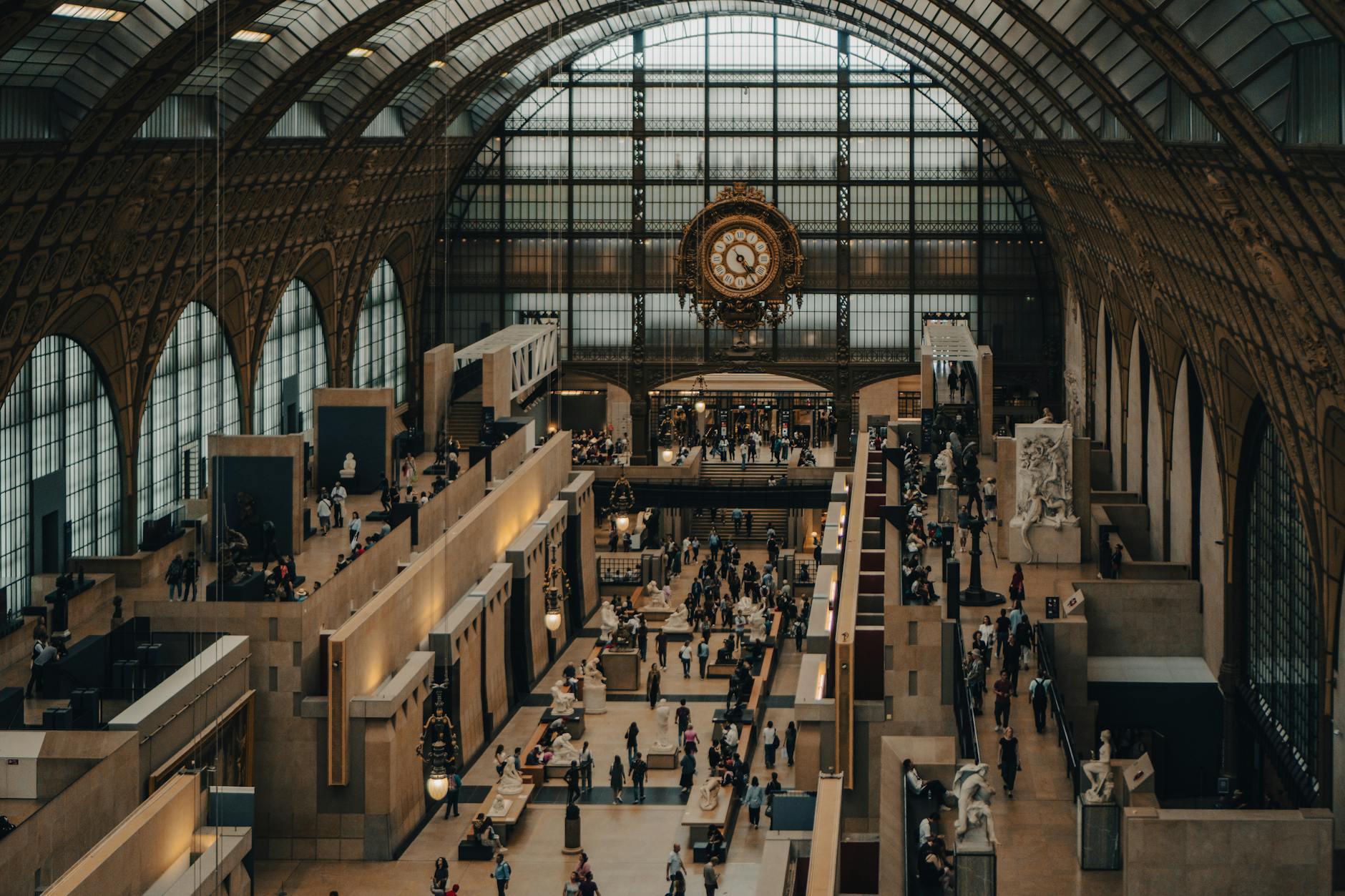
Five floors, and a route that saves you from doubling back.
- Ground floor (Niveau 0): 19th-century French sculpture, Realism (Courbet, Millet), early Manet.
- Middle level (Mezzanine, M): late 19th-century French painting, Naturalism, academic.
- Floor 2 (Niveau 2): Art Nouveau, Symbolism, decorative arts; the “Salle des Fetes” ballroom.
- Floor 5 (Niveau 5): Impressionism + Post-Impressionism — the famous galleries. Monet, Renoir, Van Gogh, Cezanne, Gauguin, Degas, Pissarro, Sisley, Seurat. The reason most visitors come.
- Floor 6 (occasionally accessible): study rooms, temporary exhibitions.
What to do first: don’t work floor by floor from the bottom. Take the escalator straight to Floor 5 and the Impressionists while your eyes are fresh and the morning groups haven’t caught up. Give it 60 to 90 minutes, then drift down through Floor 2 for the Art Nouveau, the Mezzanine, and finally the ground floor for the sculpture and Courbet.
The 15 Must-See Paintings (and Where They Are)
Working clockwise around Floor 5 (Impressionism) unless noted:
- Monet — Poppy Field (Coquelicots), 1873.
- Monet — Saint-Lazare Train Station, 1877.
- Monet — Rouen Cathedral series, 1892-1894.
- Renoir — Bal du Moulin de la Galette, 1876.
- Renoir — Dance in the City + Dance in the Country, 1882-83.
- Manet — Olympia, 1863.
- Manet — Le Déjeuner sur l’Herbe (Lunch on the Grass), 1863.
- Van Gogh — Starry Night Over the Rhône, 1888.
- Van Gogh — Bedroom in Arles, 1889 (one of three versions).
- Van Gogh — Self-Portrait, 1889.
- Van Gogh — Church at Auvers-sur-Oise, 1890.
- Cezanne — The Card Players, 1890-95.
- Gauguin — Tahitian Women on the Beach, 1891.
- Degas — The Dance Class, 1873-76.
- Seurat — The Circus, 1891 (final work).
Don’t stop on Floor 5, though. On Floor 2, among the Art Nouveau and Symbolism, look for Moreau’s Orpheus and Klimt’s Rose Bushes (subject to loan rotations). On the ground floor sit two of Courbet’s heaviest hitters: The Origin of the World (1866), which still stops people cold, and The Painter’s Studio.
The Iconic Clock Window: Best Photo Spot
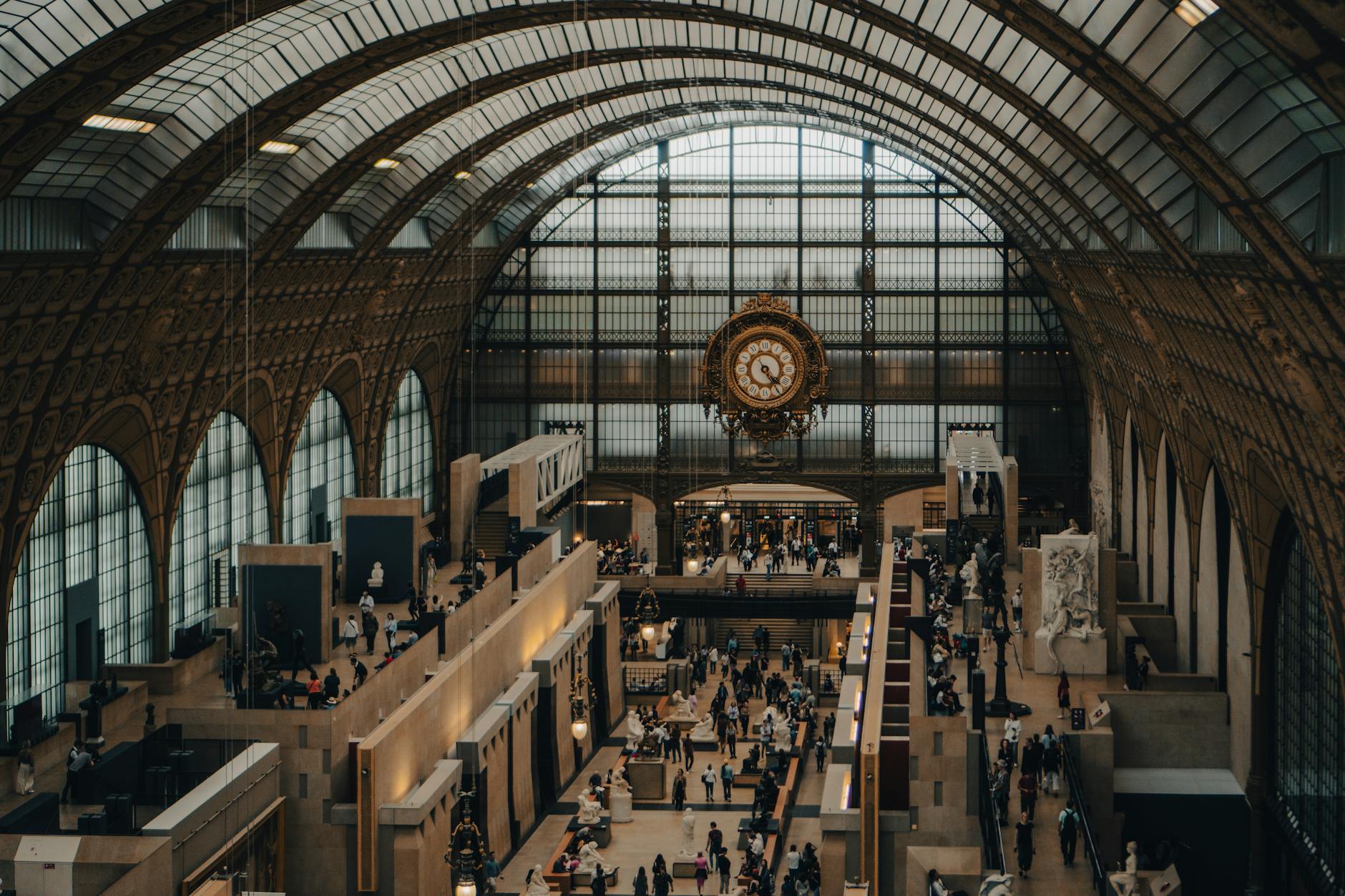
Everyone leaves with the same photo, and for once that’s fine, because it’s a great one. On Floor 5 a giant glass clock face looks out over the Seine toward the Louvre, and when the city shows through its open numerals with the light behind it, you have one of the best free shots in Paris. It pays off most at golden hour, 60 to 90 minutes before sunset, and on Thursday late nights when the floor is half-empty. You’ll find it on the south side of the Impressionist floor; follow signs for Café Campana, or just walk toward the light on the south wall.
How Long Should You Spend at the Orsay?
- 90 minutes: highlights only — Floor 5 Impressionists, five minutes at the clock window. Doable, but you’ll feel rushed.
- 3 hours: the sweet spot for a first visit. Floor 5 (90 min) + Floor 2 Art Nouveau (45 min) + Mezzanine and Ground (45 min).
- 4-5 hours: thorough, and what I’d block out if you actually love this period. Add the temporary exhibitions and the sculpture galleries.
- Pair with: the Orangerie (15-minute walk west across the Tuileries) for Monet’s Water Lilies, or Rodin (15-minute walk west on the Rive Gauche) for sculpture. Either one makes a tidy Left Bank museum loop.
Eating at Musée d’Orsay
- Restaurant du Musée d’Orsay (Niveau 2) — the old 1900 station restaurant, painted Belle Époque ceilings and gilded chandeliers; lunch €30-45. Worth a meal for the room alone, one of the most beautiful museum dining halls in Europe. Reserve.
- Café Campana (Floor 5, behind the clock) — sleek Campana brothers design; light lunch €15-25.
- Café de l’Ours (Niveau 0) — a quick coffee and pastry stop.
- Nearby outside: Le Voltaire (1 Quai Voltaire), a proper old-school bistro; Café de l’Esplanade (12 Esplanade Invalides); and Café de Flore, a 15-minute walk west into Saint-Germain.
Thursday Late Nights: The Insider Time
Here’s the move most visitors miss. On Thursdays the Orsay stays open until 9:45pm. The tour groups clear out around 6, and by 7 the Impressionist galleries thin to something close to empty. If you can manage a Thursday between 7 and 9, take it; it’s probably the best two hours you’ll get in this building all year, with the Monets and Van Goghs finally giving you room to look. There’s no evening discount, so the ticket is still €16, and you should still book online.
Practical Tips
- Bags larger than 56x45x25cm aren’t allowed; coat check is free.
- Photography is fine without flash; tripods are discouraged.
- Audio guide €5, in English, French, Spanish, Italian, German, and Japanese.
- Wheelchair accessible, with elevators throughout.
- Restrooms on every floor.
- Bring a water bottle.
- Skip the audio guide your first time around; the wall labels do the job.
- Tack on the Musée de l’Orangerie for Monet’s Water Lilies, a 15-minute walk through the Tuileries Gardens.
Best Time of Year to Visit
Winter is the quiet season, and it’s underrated. From November through February the queues run 30 to 90 percent shorter than the summer peak, and booking ahead becomes optional, though still smart. Spring (April to June) brings the crowds back, so pre-book. July and August are full-on; pre-book and aim for the 9:30am opening. Tuesday through Thursday are the calmer weekdays, and weekends are reliably busier. The free first Sunday is genuinely free, but you’ll pay for it in queue time.
Combining the Orsay with Other Sights
- Musée de l’Orangerie — 15 minutes on foot through the Tuileries, where the Water Lilies wait. The Orsay opens the Impressionist story; the Orangerie carries it on.
- Musée Rodin — 15 minutes on foot, with that sculpture garden; combo ticket €25.
- Tuileries Gardens — straight across the river.
- Louvre — 10 minutes across the river; do the two as a single big art day if you have the stamina.
- Place de la Concorde — 10 minutes on foot.
- Eiffel Tower — 20-25 minutes along the Seine.
- Sainte-Chapelle — 15 minutes east along Quai Voltaire.
Frequently Asked Questions
How much does Musée d’Orsay cost in 2026?
€16 for a standard adult. Free for under-18s worldwide and EU residents aged 18-25, and free for everyone on the first Sunday of the month and on July 14. Combined tickets run €25 with Rodin and €22 with the Orangerie.
How long does it take to visit the Musée d’Orsay?
Budget 90 minutes if you’re only doing the Floor 5 Impressionists, 3 hours for a proper first-timer visit, and 4-5 hours if you’re an art lover who wants the temporary shows and sculpture too.
What is the best time to visit the Orsay?
The 9:30am opening gets you the lightest crowds, and Thursday from 6 to 9:45pm gets you half-empty galleries, which is the insider pick. It’s closed Monday. Dodge weekends and the free first Sundays if crowds bother you.
Is the Musée d’Orsay better than the Louvre?
They’re doing different jobs. The Louvre is the encyclopedic giant, from Ancient Egypt up to 1848; the Orsay picks up at 1848 and runs to 1914 with the best Impressionist collection anywhere. For Impressionism, Post-Impressionism, and Art Nouveau, nothing touches it. Most people do both, but if you can only do one, do the Orsay.
Where is the clock window at the Orsay?
Floor 5, on the south side of the Impressionist galleries, near Café Campana. It’s the big illuminated open-face clock, backlit by the Seine view toward the Louvre. Come at golden hour, 60 to 90 minutes before sunset.
Can you see Monet’s Water Lilies at Orsay?
No. The Water Lilies installation lives at the Musée de l’Orangerie, a 15-minute walk through the Tuileries. The Orsay has plenty of other Monets to make up for it, including the Poppy Field, the Saint-Lazare Train Station, and the Rouen Cathedral series.
Is the Orsay included in the Paris Museum Pass?
Yes, it’s covered by the 2/4/6-day Paris Museum Pass. Our museum pass guide walks through whether the pass actually pays for itself on your trip.
Is the Orsay wheelchair accessible?
Yes. Elevators reach every floor, all galleries are accessible, the restrooms are accessible, and entry is free for visitors with disabilities plus one companion.
Plan the Rest of Your Paris Trip
Build out the rest of your art days with our Paris museums guide (the pillar), the Louvre, Orangerie, Rodin, Pompidou, and the museum pass breakdown. For the trip itself: plan a trip to Paris, where to stay, getting around, the best Paris attractions and things to do, the Saint-Germain neighborhood next door, the wider Paris neighborhoods, traveling with kids, and the best time of year for Paris.
Keep reading
Use these to round out your trip: