Tipping in Paris: Who to Tip, How Much, and When Not To
The short answer is round up. The long answer explains why, and where the one real exception is.
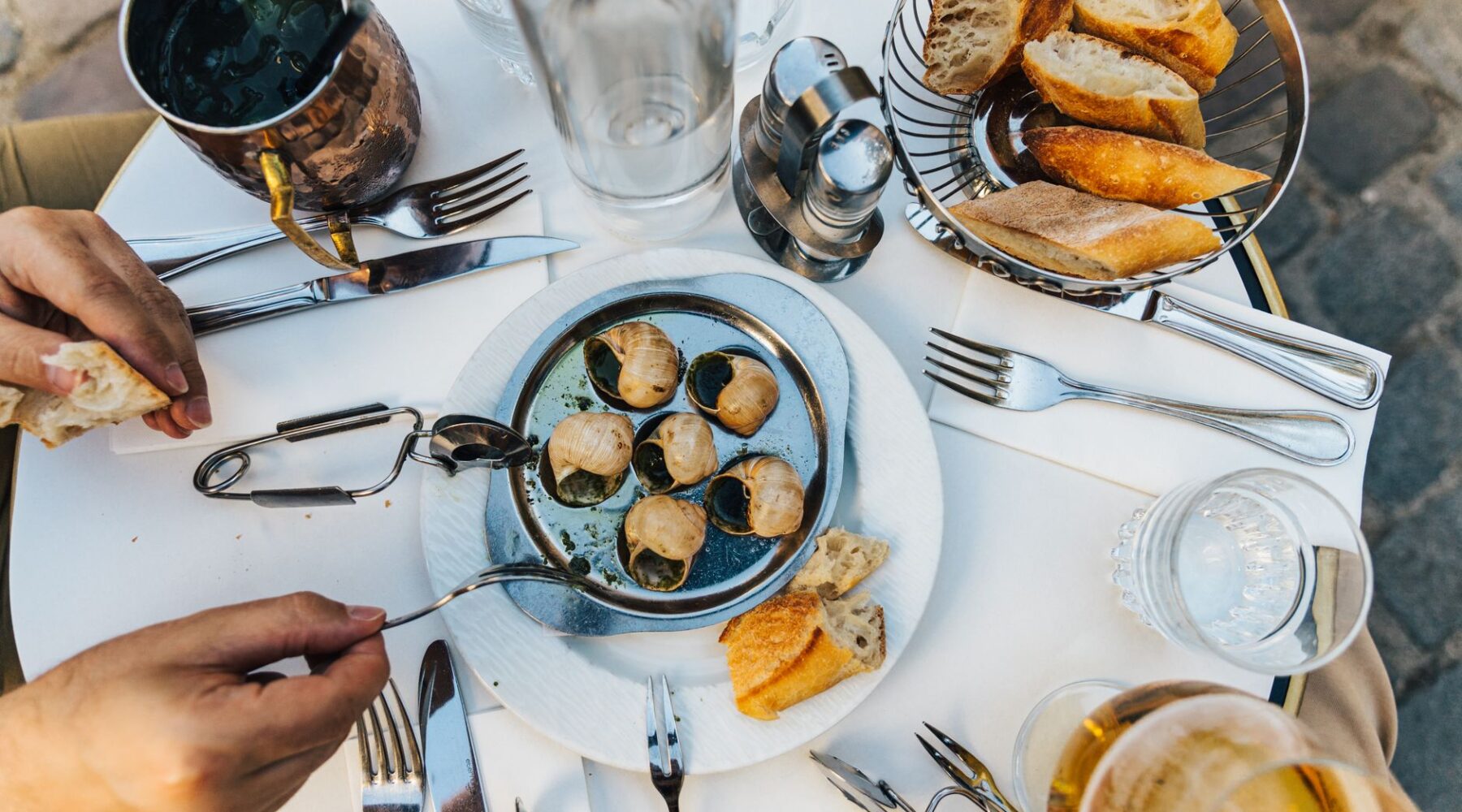
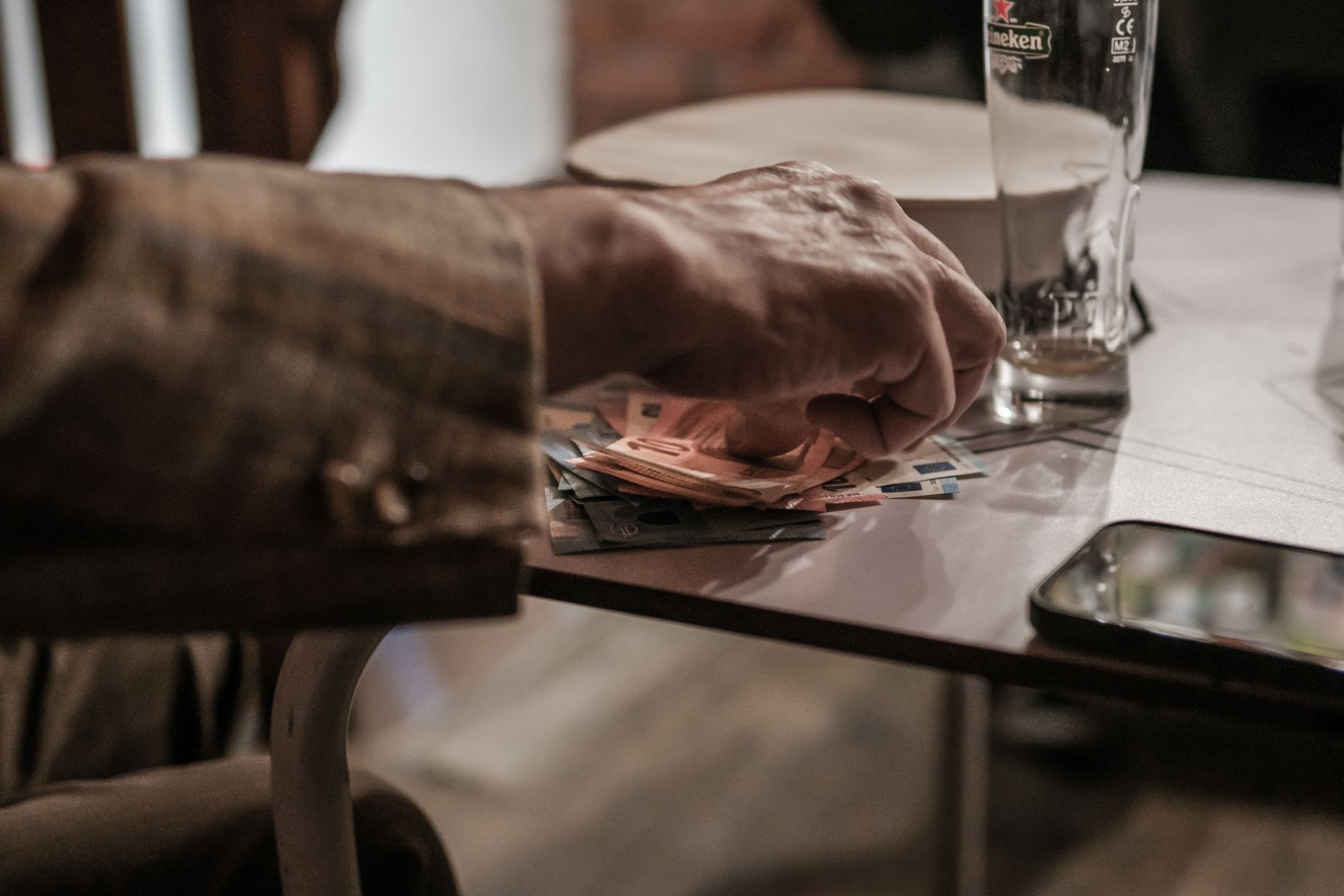
A couple at the next table in a bistro in the 6th once left twenty-two euros on a ninety-euro bill, in cash, fanned out on the saucer, and looked pleased with themselves on the way out. The waiter picked it up, glanced at it, and gave the faintly puzzled half-shrug of a man who has been handed something he did not expect and cannot quite object to. He was not offended and he was not thrilled. He was working out, as anyone would, why a stranger had just given him twenty-two euros. That gap — between what visitors think they are supposed to do and what actually happens — is the whole subject of tipping in Paris.
The short version is that service is already included by law, tipping is genuinely optional, and the amounts involved are far smaller than in the United States. The longer version, below, goes situation by situation: cafés, bistros, expensive restaurants, bars, taxis, hotels, guides, hairdressers and the handful of places where a tip really does matter. There is also the practical problem nobody mentions, which is that French card terminals mostly have no tip function at all. Figures checked September 2026.
The one-line answer
You do not have to tip in Paris, and if you want to, round up or leave five to ten per cent at most. Service is included in the price of everything by law. Leaving nothing is normal and is not an insult; leaving twenty per cent is not generous so much as baffling.
What to leave, by situation
| Situation | Expected? | Typical amount |
|---|---|---|
| Coffee at the counter | No | Leave the small change if you like. Nothing is fine |
| Drinks on a terrace | No | €0.50–1 per round, or round up |
| Casual lunch, set formule | No | €1–2, or round the bill up |
| Dinner in a bistro | Optional | €2–5, or 5% for genuinely good service |
| Expensive or starred restaurant | Optional | 5–10% if the evening was exceptional |
| Bar, per drink | No | Small change, or nothing |
| Taxi | No | Round up to the nearest euro or two |
| Hotel housekeeping | No, but appreciated | €1–2 a night, left in the room |
| Porter with bags | Yes, loosely | €1–2 a bag |
| Concierge who solved something | Yes, if they did real work | €5–20 depending |
| Paid tour guide | Optional | €5–10 per person for a good half-day |
| Free walking tour guide | Yes — this is the exception | €10–15 per person |
| Hairdresser | No | €2–5 if you liked it |
| Food delivery | No | €1–2 in cash or in the app |
| Cloakroom (vestiaire) | Sometimes | €1–2 if there is a saucer |
Why service is already included
French law requires that the price shown on a menu, a bar list or a hotel tariff is the price you pay, with service already inside it. You will see service compris printed at the bottom of menus and receipts, and occasionally the older formulation prix nets. It has worked this way since the late 1980s and it is not negotiable or variable between establishments.
The structural reason matters more than the legal one. Waiting staff in France are salaried employees on a monthly wage, with paid holiday, sick pay and health cover, in what is generally treated as a profession rather than a stopgap. Their income does not depend on your generosity in the way an American server’s does. This is why the moral weight that tipping carries in the United States simply is not present here: you are not topping up someone’s wage, you are giving a small gift.
The French word for a tip is pourboire — literally “for drinking” — and the etymology is exactly right. It is a small extra, given at your discretion, for someone who has done something well.
Cafés and bars
At the counter
Standing at the zinc comptoir with an espresso, no tip is expected at all. If your coffee is €1.80 and you hand over two euros, leaving the twenty cents is a perfectly normal thing to do and so is taking it. Nobody is counting.
On the terrace
You are already paying a higher price for the seat — the same espresso might be €3.50 outside — and that premium is the rent on the chair, not a service charge you can opt out of. Rounding up, or leaving fifty cents to a euro per round, is a friendly gesture. It is not required. Our guide to the cafés of Paris covers the two-price system in more detail.
In a bar
No tipping per drink, in the American sense of a euro a round to keep the bartender friendly. In a cocktail bar where someone has genuinely made you something, leaving a couple of euros at the end of the evening is a nice thing to do. Our bars guide and wine bars guide cover where to drink; neither will cost you a tip.
Restaurants
Lunch
The set formule at €18–26 is the everyday lunch of working Paris, and almost nobody tips on it. Leaving a euro or two, or rounding a €23 bill to €25, is at the generous end of normal.
Dinner in an ordinary bistro
Two to five euros on a bill for two, or rounding up to the nearest convenient figure. If the service was genuinely good — a waiter who steered you away from a dish, opened the wine well, dealt gracefully with an allergy — five per cent is a real compliment and will be received as one.
Somewhere expensive
At the top end, where dinner runs to hundreds of euros and a brigade has looked after you all evening, five to ten per cent is the range, and it is still optional. At a starred restaurant the bill often already reflects an enormous amount of labour; our guide to Michelin dining in Paris goes into what you are actually paying for. If you want to acknowledge one person specifically — the sommelier, say — hand it to them directly.
The thing to say
Paying in cash and leaving change on the table needs nothing said at all. If you want the waiter to keep the change from a note, say “gardez la monnaie” — gar-DAY la mo-NAY. Our guide to French phrases for travellers has the rest of the restaurant vocabulary.
The card terminal problem
This is the practical detail that trips up more visitors than any question of etiquette, and almost no guide mentions it.
Most French card terminals do not offer a tip. There is no prompt asking whether you would like to add 15, 18 or 20 per cent, because the software is not configured for it — the assumption is that service is included and no addition is needed. The waiter will simply enter the bill total and hand you the machine.
So if you intend to leave something, plan for it:
- Carry a few coins and small notes. Cash is the only reliable mechanism.
- Leave it on the table or the saucer as you go, rather than trying to hand it over during the payment.
- If you ask them to add it to the card, some places can and many cannot, and the request itself takes a minute of explaining. Not worth the trouble for two euros.
- Do not write a tip on the receipt. The American convention of a blank tip line on a printed slip does not exist here; writing on it achieves nothing.
A related point covered in our practical Paris guide: when the terminal offers to charge you in your home currency rather than euros, always refuse. The exchange rate is set by the terminal’s operator and is reliably worse than your bank’s, and it will cost you far more than any tip.
Taxis, hotels and everyone else
Taxis and ride-hailing
No percentage expected. Round up — a €18.40 fare becomes €19 or €20, and that is the whole convention. The airport flat fares are fixed by law (€56 to the Right Bank and €65 to the Left from Charles de Gaulle; €41 and €36 from Orly) and already include luggage and any time of day, so there is nothing to add unless the driver has done something helpful. For ride-hailing apps, tipping in the app is possible and uncommon. Our taxis and ride-hailing guide has the fare structures.
Hotels
- Housekeeping: €1–2 a night, left visibly in the room, ideally daily rather than as a lump at the end, because staff rotate. Not expected, genuinely appreciated.
- Porter: €1–2 a bag if someone carries them.
- Concierge: nothing for directions or a restaurant booking; €5–20 if they have done something real, like getting you into somewhere that was full or sorting out a problem with a flight.
- Room service: service is included on the bill. Round up if you like.
Guides and tours
Here is the one genuine exception in Paris, and it is worth stating plainly. Free walking tour guides are not paid by anyone. The model is that the tour costs nothing to join and the guide’s entire income is what participants hand over at the end. Ten to fifteen euros per person for a good two-hour tour is the going rate, and paying nothing is, in that specific case, a genuine problem. Our guide to the free walking tours of Paris explains how the model works.
For paid tours, the guide is being paid. Five to ten euros a head for a good half-day is a compliment rather than an obligation — see our tours guide for what the paid ones cost.
Everything else
- Hairdressers and barbers: a few euros if you are pleased. Not expected.
- Spas and treatments: the same, €5 or so on a longer treatment. See our spa guide.
- Food delivery: a euro or two, in cash at the door or in the app.
- Cloakroom attendants: if there is a saucer at a museum, theatre or club vestiaire, €1–2 is the convention.
- Toilet attendants: €0.50 where there is a dish, which is now rare — most Paris public toilets are free.
- Museum guides and audio-guide desks: nothing. These are salaried staff.
- Street performers and buskers: whatever you think it was worth, and the Metro musicians are auditioned and licensed, which is why they are good.
Where the confusion comes from
Three separate things have muddled this subject, and knowing what they are makes the rest obvious.
The old fifteen per cent. Until the late 1980s, French bills often carried an explicit “service 15%” line added at the bottom, and older guidebooks still describe it. That was abolished in favour of the price simply including it, which is why you now see service compris rather than a separate charge. Anyone telling you Paris restaurants add fifteen per cent is working from a forty-year-old memory.
Tourist-district drift. In the most heavily visited streets — the strips facing the major monuments, the boat terminals, the Champs-Élysées — some staff have learned that visitors will tip American percentages and a few will encourage it, occasionally by leaving the total line on a card slip conspicuously open or by mentioning that service is “not included”. It is included; it is always included. Our Paris scams guide covers the more aggressive versions of this.
The word “service”. Some upmarket restaurants print service compris and some print nothing at all, and the absence of the phrase makes visitors nervous. It should not — the legal requirement applies whether it is printed or not, and the price you see is the price you pay.
How this compares with the rest of Europe
Useful context if Paris is one stop on a longer trip, because the conventions genuinely differ across a short distance.
| Country | Service included? | Typical tip |
|---|---|---|
| France | Yes, by law | Round up, or 5% for good service |
| Italy | Coperto cover charge, not a tip | Round up; 5–10% at the top end |
| Spain | Included | Round up; often nothing |
| Germany | Included | 5–10%, stated aloud when paying |
| Netherlands and Belgium | Included | Round up; 5% for good service |
| United Kingdom | Often a 12.5% optional charge on the bill | 10–12.5%, removable on request |
| United States | No | 18–22%, effectively obligatory |
The pattern across continental Europe is consistent: staff are paid a wage, service is in the price, and tips are a small discretionary extra. France sits at the lighter end of that range, and Paris is not an exception within France.
What not to do
- Do not tip twenty per cent. It is not generous in context; it is conspicuous, and it quietly contributes to the expectation that visitors will overpay.
- Do not ask “is service included?” It always is. The question reads as a suspicion that you are being overcharged.
- Do not tip at a bakery, a market stall or a shop. There is no convention for it and it will confuse.
- Do not leave a tip to compensate for bad service. If the meal was poor, say so politely at the time — the bill is where a French customer expresses displeasure, and leaving nothing is a legitimate message.
- Do not hunt for a tip line on the receipt. It is not there.
- Do not feel bad about leaving nothing. This is the most important item on the list. Nobody is being underpaid because of you.
What tipping actually adds to a trip
Worth doing the arithmetic, because visitors from tipping cultures often budget for something that does not exist. Four days in Paris for two people, tipping at the local norm.
| Item | Over four days |
|---|---|
| Coffees and drinks, rounding up | €4–8 |
| Two lunches, €1–2 each | €2–4 |
| Three dinners, €3–5 each | €9–15 |
| Housekeeping, €1–2 a night | €4–8 |
| One free walking tour, two people | €20–30 |
| A taxi or two, rounded up | €2–4 |
| Total | roughly €40–70, and most of that is the tour |
For comparison, tipping American-style on the same trip would run to €150 or more. That difference is worth knowing when you build a budget; our guide to what a trip to Paris actually costs works through the rest of it.
A note on the people you will not think to tip
Two groups sit slightly outside the framework above and are worth a moment.
Musicians in the Metro. The performers you hear on platforms and in the corridors at Châtelet and Saint-Michel are not simply busking. Paris runs an auditioned licensing scheme, with a limited number of permits awarded each year to musicians who play for a panel, which is why the standard is so much higher than in most underground systems. Dropping a euro in the case is the whole transaction, and it is a genuinely good use of a euro.
The person who has clearly done something extra. The waiter who found you a table when the room was full, the hotel receptionist who spent twenty minutes on the phone to an airline, the guide who stayed on after the tour to answer questions. None of this is covered by a percentage and none of it is expected — but a few euros handed over directly, with thanks and eye contact, is understood everywhere and means more than the amount suggests.
Conversely, there is a long list of people it would be odd to tip in France and who are all salaried: museum attendants, ticket sellers, shop assistants, bus drivers, pharmacists, and anyone behind a counter in a bakery or a market. Offering money in those settings produces confusion rather than pleasure.
Frequently asked questions
Is tipping in Paris rude?
No. It is simply optional and small. The only version that lands awkwardly is a very large percentage, which reads as a misunderstanding rather than an insult. A euro or two, or rounded-up change, is always well received.
What does “service compris” mean on my bill?
That service is included in the prices you were charged, as French law requires. It is not an added service charge you are being billed for; it is a statement that no further payment is needed.
Do waiters in Paris rely on tips?
No. They are salaried employees with a monthly wage, paid holiday and health cover. This is the single most important structural difference from the United States and it is why the etiquette is so different.
Should I tip in cash or on the card?
Cash, because most French card terminals have no tip function. Keep a few coins and small notes for the purpose.
How much should I tip a tour guide in Paris?
Five to ten euros a head for a paid half-day tour, and ten to fifteen for a “free” walking tour, where the guide has no other income. The free tours are the one place in Paris where a tip is genuinely expected.
Do I tip taxi drivers in Paris?
Round up to the nearest euro or two. No percentage. The airport flat rates already cover everything including luggage.
Is it rude to leave nothing at all?
No, and this genuinely is the local norm in cafés and at everyday lunches. If you take one thing from this page, take that.
Does tipping get you better service in Paris?
Not really, and certainly not at the moment you do it, since it happens as you leave. What does get you better service is greeting properly, being unhurried, and treating the waiter as a professional — all of which is covered in our guide to Paris etiquette and the unwritten rules.
Do I tip on a hotel breakfast or a set menu?
No. Both are priced with service included like everything else.