Paris Taxis vs Uber: Ride-Sharing Guide for Tourists

Around 19,000 licensed taxis work the streets of Paris, and they no longer have the city to themselves. The paris taxi uber question now includes Bolt, Heetch, and FreeNow, all competing for the same fare. For a visitor, the real decision isn’t which brand you prefer but which one suits the trip in front of you. Licensed taxis run fixed flat-rate airport fares (€36-65) and give you the strongest protection against being fleeced; Uber and Bolt hand you a fare estimate up front, sidestep the language barrier, and often turn up faster when demand spikes. This guide walks through the price comparisons, the situations where each option wins, how to spot the touts working the arrivals halls, the flat-rate system, the truth about surge pricing, accessibility, and the small matter of how you actually pay and tip.
So “taxi or Uber in Paris” is the wrong question. The right one is “which one for this specific trip?” An airport run almost always tips toward a licensed taxi, because the flat-rate system caps your fare no matter how bad the traffic gets. A midnight hop from a restaurant in the 11th to a hotel in the 7th usually tips toward Bolt or Uber, because the app puts a car at the door in three minutes instead of sending you on a ten-minute walk to find a rank. The trick is learning the rules of each system before you need them, not while you’re standing on a curb at 1 a.m. Below: the players, the prices, the scams worth ignoring, and a decision tree that tells you, every time, which app to open or which queue to join. Read it alongside our broader getting around Paris guide for the full picture.
Taxis and Ride-Share in Paris at a Glance
Paris runs one of the most app-mature taxi markets in Europe, and a big reason is that the licensed network had to sharpen up to survive the competition. Roughly 19,000 licensed taxis circulate across the metropolitan area, overseen by the Préfecture de Police and bound by city-wide tariffs and equipment rules. Sharing the road with them are four major ride-share platforms: Uber, with its UberX, UberXL, and Uber Black tiers; Bolt, the leading European challenger; Heetch, the French startup with a loyal night-life crowd; and FreeNow, which is the curious one because it straddles both camps, booking you a licensed Paris taxi through an app that looks and feels exactly like Uber.
The shape of the market has held steady since 2016, when an uneasy truce settled years of street protests and court fights between the taxi unions and Uber. Both systems now operate in the open, both are legal, and both serve overlapping but distinct sets of customers. Tourists tend to reach for Uber out of habit. Locals are far more pragmatic: a licensed taxi at the rank outside the office, Bolt for late evenings, FreeNow when they want a licensed cab without hunting for a rank. The smartest move for a visitor is to copy that flexibility rather than marry one brand.
One quick note on the apps themselves. G7, the largest licensed-taxi operator, runs its own consumer app, and it books a car much the way Uber does. Taxi Bleu, the second-largest, leans harder on phone dispatch but is also reachable through FreeNow. So even inside the “licensed taxi” category you have several ways to summon a car, not one of which requires standing on a kerb waving your arm.

Licensed Paris Taxis (G7, Taxi Bleu)
Once you know the markings, a licensed Paris taxi is easy to pick out. It wears a two-tone black-and-white livery (older cars are sometimes solid black or solid white, but always carry the same markings); it shows a prominent rooftop “TAXI PARISIEN” sign that glows green when free and red when occupied; and its plate ends in a specific Paris taxi-license format the Préfecture verifies. Miss any one of those three and the car isn’t a licensed taxi. Don’t get in. No exceptions.
Two operators dominate: G7 and Taxi Bleu. G7 is the giant, holding somewhere around 9,000 of the 19,000 licenses, and its consumer app is genuinely good. You can book ahead, see the driver’s photo and plate, pay in-app, and split the fare between passengers. Taxi Bleu is the historic challenger, a bit smaller and more reliant on phone dispatch (call 36 09 from a French SIM, and they’ll switch to English when you ask). Both run identical vehicles, identical tariffs, and identical service standards, because the same regulatory framework binds them both.
Paying in a licensed Paris taxi is thoroughly modern these days. Every car is legally required to carry a working card terminal, and most also take Apple Pay and Google Pay through it. Cash still works everywhere. And if a driver tells you the card machine is broken, you’ve just met the most common minor scam in the city. The law says they must take card, so you’re entirely within your rights to insist, or to refuse to overpay. There’s more on this in the disputes section below.
The Paris Flat-Rate Taxi System
If you learn one thing about Paris taxis before you arrive, make it the flat-rate airport-transfer system. Approved by the Paris taxi commission and binding on every licensed driver, it fixes the price of a taxi between either main airport and central Paris regardless of traffic, time of day, day of week, or the route the driver picks. A one-hour crawl through Friday-evening traffic on the A1 costs exactly what a free-flowing 35-minute Sunday morning run does.
The rates, current as of January 2024, are clean and easy to remember. From Charles de Gaulle (CDG) to anywhere on the Right Bank of the Seine, it’s €56. From CDG to the Left Bank, €65. Orly sits closer to the city, so its rates run lower: €36 to the Left Bank and €41 to the Right Bank. The dividing line is the Seine itself, which means a hotel in the Marais (Right Bank) pays the lower CDG rate, while one in Saint-Germain-des-Prés (Left Bank) pays the higher.
The flat rate is the law, but it doesn’t kick in by itself; you have to invoke it. Before the driver pulls away from the airport rank or your hotel curb, ask outright: “tarif forfaitaire?” (flat-rate fare?). Once they acknowledge it, the meter goes off and the agreed flat price is what you settle at the end. Should a driver try to run the meter on an airport trip into central Paris, hold the line politely but firmly on the flat rate. Point to the placard if you need backup; every licensed taxi displays the official flat-rate table on the rear door window.
For any trip that is not a flat-rate airport transfer, meaning any movement around town, the meter applies. The base fare is €4, and the per-kilometre rate runs roughly €1.20 in Tariff A (Monday to Saturday daytime in central Paris) and €1.50 in Tariff B (evenings, Sundays, public holidays, and the inner suburbs). A minimum total fare of about €8 per trip also applies, which mainly bites on very short hops. A typical 4 km crosstown ride on a quiet afternoon lands somewhere around €14-18 by meter, and the better you know those rough figures, the harder you are to overcharge.
For airport transfers in particular, our dedicated Paris airport transfer guide sets the taxi flat rates against RER B, Roissybus, the new Line 14 Orly extension, and pre-booked private transfers in a single side-by-side table.

Uber in Paris: Tiers and Pricing
Uber runs three main consumer tiers in Paris, plus a few seasonal extras. UberX is the standard, usually a four-door sedan seating three or four passengers; it’s comfortably the cheapest tier and the default for most short city trips. UberXL takes six or seven, typically a Renault Trafic, Volkswagen Touran, or similar minivan, and it’s the right call for a group of four with luggage or a family hauling car seats. Uber Black is the premium tier, usually a Mercedes E-Class, BMW 5-Series, or comparable executive saloon with a driver in a suit. It costs markedly more, but it earns its keep late at night when you care more about reliability than the price.
Uber prices on a transparent demand-based algorithm, and the headline figure to carry around is this: during ordinary off-peak hours, an UberX trip runs roughly 30-50% more than the equivalent meter fare on a licensed taxi for the same journey. That gap narrows a little on long fares and widens on short ones. When demand genuinely peaks, at rush hour, in the rain, after a big event at Stade de France or La Défense Arena, or on New Year’s Eve, surge multipliers can shove prices to 2x or beyond. The app shows you the multiplier before you book, which is the system’s real edge over a licensed taxi: you know the fare before you confirm it.
One caveat on airport trips: Uber offers no flat rate from CDG or Orly. The app quotes you a fare based on current demand, and that number can sit anywhere from competitive with the €56 taxi flat rate to noticeably steeper during a peak window. For an airport pickup specifically, the licensed-taxi flat rate almost always wins on both predictability and price.
Bolt vs Uber vs Heetch
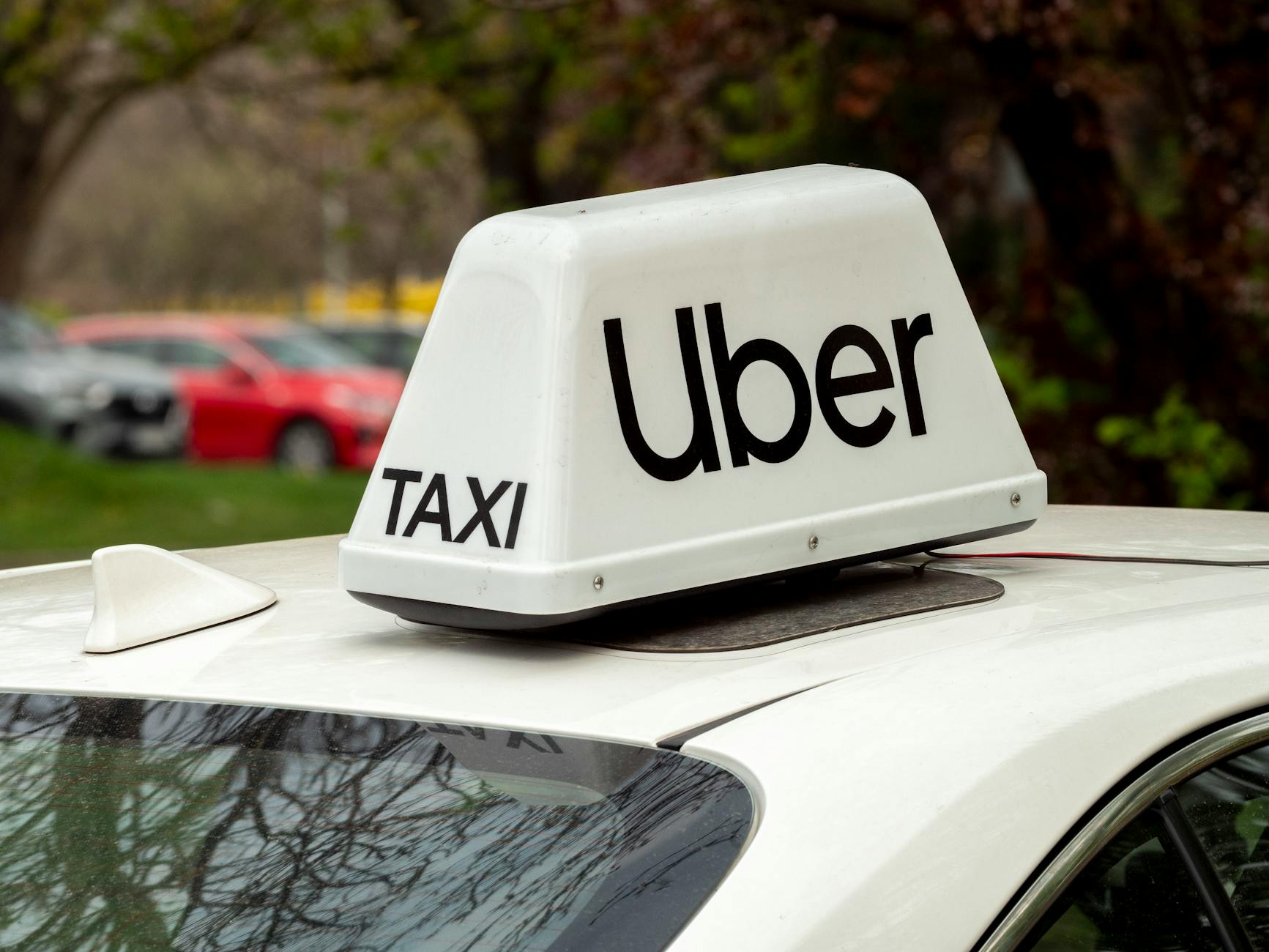
Uber soaks up most of the tourist attention because the brand is everywhere, but in Paris it is genuinely no longer the cheapest option. Bolt, the Estonian-founded European challenger, is the price leader here by a comfortable margin. On the same A-to-B trip, Bolt typically comes in 20-30% under Uber in central Paris during normal hours, and its surge multipliers tend to be gentler. The cars are much the same and the driver pool overlaps heavily; plenty of Paris drivers run Bolt and Uber side by side. The app works in English, payment is card-on-file, and reliability inside the Périphérique matches Uber.
Heetch is the home-grown French startup, founded in 2013 specifically for the late-night club-and-bar crowd that struggled to find a Paris taxi after midnight. It has since grown into a full daytime competitor, but its sweet spot is still weekend nights between 22:00 and 04:00, when central-Paris demand outstrips supply on the other apps. Prices land between Bolt and Uber, the app speaks English, and the driver pool overlaps again. If your night is going to wind down at 02:30 in Pigalle or the Marais, having Heetch on your phone is a genuinely useful backup for when Uber is surging.
FreeNow is the odd one out, and the interesting one. Owned by Daimler and BMW (now Free2Move), it doesn’t run its own ride-share fleet in Paris; it mostly dispatches licensed Paris taxis through an Uber-style app. So you get the regulated flat-rate system, the meter, the right to pay cash, and licensed-driver standards, all wrapped in app-based summoning, an ETA, and cashless payment. For travelers who want the rip-off protection of a licensed taxi without standing at a rank, FreeNow is the most convenient option going.
| App | Type | Typical price vs taxi meter | Best use |
|---|---|---|---|
| G7 / Taxi Bleu | Licensed taxi | Same as meter (regulated) | Airports, late night, disputes |
| FreeNow | Licensed taxi via app | Same as meter (regulated) | App-summoned licensed taxi |
| Bolt | Ride-share | +0% to +20% | Cheapest in-city trips |
| Heetch | Ride-share | +15% to +35% | Weekend nights 22:00-04:00 |
| Uber (UberX) | Ride-share | +30% to +50% | Familiar global app |
| Uber Black | Premium ride-share | +100% or more | Reliability over price |

When to Choose Each Option
Here’s the question every traveler actually wants settled. No single app wins every trip, and the gap between a smooth Paris visit and a maddening one often comes down to matching the right option to the moment. The H3 sections below run through the seven scenarios that cover nearly every taxi or ride-share trip you’ll take in a one-week stay.
Airport Transfer
Almost always a licensed taxi. The flat rate caps your fare whatever the traffic does, the rank is well-organized, the drivers expect international luggage, and there’s no app delay. The exception is a group of six with bags, where an UberXL or a pre-booked van transfer can match the cost of two taxis with less faff. For everyone else: walk past the touts, find the marked rank, and ask for “tarif forfaitaire.”
Late-Night Safety
Either a licensed taxi or Uber Black. Both beat walking through unfamiliar arrondissements or relying on the last stragglers of Métro Line 4 or RER B alone after midnight. A licensed taxi at a rank near a major restaurant or hotel is, in practice, always there. If no rank is within an easy walk, Uber Black gives you a tracked, named driver in a clean executive car. Our notes on neighborhood considerations in safest areas in Paris apply here too; the same logic that shapes where you stay should shape which ride you take home.
Group of Four to Six
UberXL or a licensed taxi van. G7 runs a fleet of seven-seat vans (Mercedes Vito and the like) bookable through its app, and they’re the cleanest way to move a family of five with suitcases across town. UberXL is the ride-share equivalent and usually shows up within five minutes in the central arrondissements. Splitting into two UberX cars or two taxis almost always costs more and takes longer, because the pair rarely arrives together.
Rush Hour Short Trips
Uber or Bolt. At 18:30 in the 8th arrondissement, the taxi ranks are picked clean and a free cab cruising the street is close to mythical. Ride-share apps, by contrast, field their largest driver pool at exactly those hours, because that’s when surge pricing pulls more drivers onto the road. Reckon on a three-to-seven-minute wait, a modest surge multiplier, and a fare a touch above what you’d pay at noon. Bolt usually takes the price crown in this window.
Mobility-Limited Travellers
G7, specifically. The licensed-taxi operator runs a dedicated wheelchair-accessible service (its “Horizon” vehicles), bookable either through the G7 app by selecting the accessibility filter or by phoning ahead. Uber and Bolt sometimes offer accessible cars in central Paris, but coverage is patchy and I wouldn’t lean on it. Where you can, plan a G7 accessible booking with at least an hour’s notice.
From a Restaurant or Hotel
Uber, Bolt, or FreeNow. App summoning beats walking to a rank in nearly every case, except late-night central areas where a rank sits right outside the door. The reasons are practical: the app tells you the driver’s exact arrival time, the route, the price, and the plate, and you wait in the warm lobby rather than on a cold curb. If the meal ran late, FreeNow is often the smartest pick, since it brings a licensed taxi with the same app convenience.
Standby at a Hotel
Licensed taxi from the hotel rank. Most four- and five-star Paris hotels keep a dedicated rank or a doorman who can flag a cab in under a minute. The driver is already at the curb, the pricing is metered and regulated, and the hotel staff effectively vet the driver pool for you. For a business traveler heading to an appointment, this is faster than waiting on any app.
Where to Find Taxis (Taxi Ranks)
Paris has more than 600 marked taxi ranks, and at the major ones you’ll rarely wait more than a few minutes. Knowing where they are beats knowing the apps, because flagging a moving taxi on a Paris street is meaningfully less reliable than standing at a rank. Many drivers would rather not stop mid-traffic, and the rooftop light can be hard to read from the kerb.
The biggest and most dependable ranks ring the obvious landmarks. Place de l’Étoile around the Arc de Triomphe keeps a near-constant queue of free cars day and night. Place de la Concorde, Opéra Garnier, and the Madeleine all run busy ranks through every hour of central activity. Every major train station has at least one main rank: Gare du Nord, Gare de l’Est, Gare de Lyon, Gare Saint-Lazare, Gare Montparnasse, and Gare d’Austerlitz. Wherever one Metro line crosses another, there’s usually a rank within 50 metres of the entrance.
Hailing on the street works, just inconsistently. The rule: a taxi has to stop for you only if you’re at least 50 metres from a marked rank. Any closer and drivers will wave you toward the rank itself. Drivers can also legitimately turn down trips that would push them off-duty (the rooftop sign reads “off”) or into Tariff C zones they can’t finish within their shift. Don’t take a refusal personally; just walk to the nearest rank.

Airport Arrival Scams to Avoid
The most common rip-off tourists hit in Paris plays out in the arrivals halls of CDG and Orly. Unlicensed touts, often well-dressed, sometimes brandishing a clipboard or a fake badge, intercept travelers leaving baggage claim with “taxi, monsieur?” or “need a ride to Paris?” in English. These are not licensed taxi drivers. They’re private operators running unmetered cars at inflated prices, and the going quote for a CDG-to-central run is often €100 to €150, close to triple the legal flat rate.
The rule here is simple and absolute: ignore anyone who approaches you inside the terminal. A licensed Paris taxi driver will never solicit a fare from the arrivals hall. They wait at the official rank outside, in the queue, and take whoever reaches the front next. If someone is talking to you, they aren’t licensed. Walk past, follow the signs for “Taxis” or “Pickup,” and join the visible outdoor queue. At CDG those queues are organized by terminal and usually staffed by a marshal in a high-vis vest; at Orly the rank sits right outside Terminal 1 and the south arrivals area.
A second version of the scam targets people waiting for a pre-booked car. A tout shows up with a convincing clipboard and a confident “Mr Smith?” If you booked a transfer, check against your confirmation: the driver’s name, the company name, and, above all, the vehicle’s plate. A legitimate transfer driver will produce all three on request and won’t bat an eye at the check.
Tipping Etiquette
Tipping in Paris taxis and ride-shares is genuinely optional. By law the service charge is baked into the meter or the app price, and drivers don’t lean on tips the way they do in many US cities. Rounding up is appreciated for good service all the same. The unwritten convention is to round to the nearest euro on small fares, or add five percent on larger ones. On an €18 metered trip, €20 is generous and entirely correct; on a €56 airport flat rate, €60 sits about right.
If the driver wrestles heavy luggage in and out of the boot, helps with a child seat, or makes an unscheduled stop, €2 to €5 in cash is the local courtesy. On the ride-share apps you can add a tip from the rating screen after the trip, which is a tidy way to handle it when you’ve paid card-on-file. For a routine metered trip with no extras, nobody expects anything.
Payment Methods
Every licensed Paris taxi must accept both cash and card by law, and the rule is enforced. The terminal sits between the front seats and reads contactless cards, chip-and-PIN cards, and increasingly Apple Pay and Google Pay through the same NFC reader. American Express gets refused on some smaller fleets, but Visa and Mastercard are universal. Cash, in euros only, works everywhere too, and most drivers carry enough change to break a €50 note on a typical fare.
On Uber, Bolt, Heetch, and FreeNow, payment runs through the app. You add a card or digital wallet on first use, the fare charges automatically at the end of the trip, and a receipt lands in your inbox. That’s genuinely handy for expense reporting, because the receipt itemizes the route, the time, and any tolls or surcharges on separate lines. For business travelers, the app-based paper trail is one of the main arguments for defaulting to Uber or Bolt over a licensed taxi.
A practical tip: if your card is on a US bank, set up a backup payment method on each app before you reach Paris. Foreign-card declines do happen now and then at the end of a trip, and troubleshooting a payment on a curb at midnight is the last thing you want. A second card stored in the app sorts this out quietly.
Pre-Booking vs Hailing
Choosing between a pre-booked ride and an on-demand one comes down to three things: how time-sensitive the trip is, how many of you there are, and how late it is. Pre-book when at least one of those is non-trivial; hail or app-summon when none of them is.
Pre-booking is the right move for airport pickups (missing a flight is expensive), groups of four or more (on-demand waits stretch), specific timed commitments like theatre or restaurant bookings, and any after-midnight trip in a non-central arrondissement. Both G7 and FreeNow let you book a licensed taxi for a set future time; Uber and Bolt offer scheduled rides too, though the price locks in at booking and may not match the actual surge at pickup.
For routine in-city trips, app-summoning beats scheduling almost every time, because the algorithm pairs you with the nearest free driver and the typical wait is three to seven minutes in central Paris. Leaving a restaurant in the 4th for a hotel in the 9th? Open the app as you settle the bill, and the car will be at the door by the time you’ve got your coat on.
Late-Night Service
Licensed Paris taxis run 24 hours a day, seven days a week, and at the major central ranks (Opéra, Étoile, Gare du Nord, Gare de Lyon) there’s essentially always a cab at the head of the queue. This is the most reliable late-night transport in Paris and my default recommendation for anyone leaving a bar, a club, or a late dinner after 00:30.
Uber, Bolt, and Heetch stay active until roughly 02:00 to 04:00 in central Paris on weekend nights, with Heetch holding the strongest late coverage thanks to its club-night roots. After 04:00 the ride-share apps thin out noticeably. You can still land a car, but the wait lengthens and the surge multiplier climbs. At that hour, walking to a major rank is usually faster than waiting for an app.
The budget alternative is the Noctilien night-bus network, running from roughly 00:30 to 05:30 across the city. Tickets cost the same as a regular Metro ticket (€2.15 in 2026), and the main central hub is Châtelet, where most lines converge. The trade-off is fewer routes and longer journeys. If you’re watching every euro, our Paris on a budget guide lays out the full late-night money-saving playbook, Noctilien routes included.
If your evening revolves around live music, late dinners, or just wandering the city after dark, read this section alongside our things to do in Paris at night guide. It maps which neighborhoods keep the strongest taxi-rank coverage past midnight and which become app-only zones.

Common Disputes and How to Handle Them
The vast majority of Paris taxi trips pass without a hitch, but the small minority that go sideways tend to follow three predictable patterns. Knowing the legal rules ahead of time gives you a calm, confident way to handle each one.
First, the meter that never starts. Board a licensed taxi for an in-city trip and find the driver hasn’t engaged the meter at the start? That’s a legal violation. The fare is capped at the legal maximum for that route, and you can refuse to pay anything above the meter estimate. Say “le compteur, s’il vous plaît” politely but firmly before the trip begins. If the driver won’t, step out at the next safe spot and find another cab.
Second, the airport trip run on the meter instead of the flat rate. If you asked for “tarif forfaitaire” and the driver ran the meter anyway, you’re within your rights to pay only the flat rate at the end. The flat-rate placard is visible in every cab, and the Préfecture enforces the rule. Should the driver refuse the flat rate, ask for a printed receipt showing the driver’s licence number and file a complaint at www.taxis-paris.fr with that number plus the date and time of the trip.
Third, the “cash only” refusal at the end of the ride. Since the law makes a working card terminal mandatory in every licensed taxi, “the card machine is broken” is almost never legitimate. If you only have a card and the driver insists on cash, ask them to drive to a nearby ATM; that request produces a working terminal within thirty seconds nearly every time. Failing that, take a receipt, note the plate, and file the complaint as above. The Préfecture takes these seriously and acts on them.
For broader transport context, including when to swap between taxis, the Metro, and walking, see our Paris Metro guide, which lays out the price tiers and service hours for the rest of the public network.
FAQ
Is Uber cheaper than a taxi in Paris?
Usually not for trips within central Paris during normal hours. UberX typically runs 30 to 50 percent more than the equivalent metered taxi fare for the same trip off-peak. The price advantage swings back to Uber only in the very late-night windows when surge is low but taxi availability is also low, or on short trips in heavy traffic where the app summons a car faster than you can walk to a rank. For airport trips specifically, the licensed-taxi flat rate almost always beats Uber on price.
Can I pay a Paris taxi with a credit card?
Yes, and the driver is legally required to take card in any licensed Paris taxi. Every cab carries a working terminal between the front seats, handling Visa, Mastercard, and usually Apple Pay and Google Pay. American Express is sometimes refused. If a driver claims the machine is broken, that’s almost always a small scam; insist, or get out and find another cab.
What is the flat-rate fare from CDG to central Paris?
As of January 2024, the flat-rate fare from Charles de Gaulle to anywhere on the Right Bank is €56 and to the Left Bank €65. Orly flat rates are €36 to the Left Bank and €41 to the Right Bank. These are fixed regardless of traffic, time of day, or route, but you must ask for “tarif forfaitaire” before the trip begins.
Should I tip Paris taxi drivers and Uber drivers?
Tipping is optional in Paris, since service is included in the meter or the app fare. Rounding up to the nearest euro on small trips, or adding around five percent on longer ones, is the local courtesy rather than an obligation. If the driver handles heavy luggage or helps with a child seat, €2 to €5 in cash is a kind gesture. There’s no shame in paying the exact fare on a routine trip with no extras.
Is it safe to take a Paris taxi alone at night?
Yes, in any licensed taxi or app-booked ride-share. Both systems are regulated, the driver is identified, and the trip is logged. The risks are entirely upstream: ignore unlicensed touts at airports and train stations, never get into an unmarked car someone has flagged for you, and favor a marked rank or an app summon over hailing on a quiet street after 01:00. For broader nighttime detail, our safest areas in Paris guide goes neighborhood by neighborhood.
How do I get a wheelchair-accessible taxi in Paris?
Book through G7’s app and select the accessibility filter, which dispatches a Horizon wheelchair-accessible vehicle. Allow at least an hour’s notice where you can, especially at peak hours or in the outer arrondissements. Uber and Bolt offer occasional accessible options, but coverage is inconsistent and I wouldn’t depend on them for a time-critical trip. FreeNow bookings will route through G7 vehicles in many cases.
Do Paris taxis take dollars or pounds?
No. Every Paris taxi prices in euros, and cash payment has to be in euros too. Paying by card in a foreign currency happens automatically through the terminal; your bank converts at its prevailing rate. If you’re paying cash, change money into euros before you travel or hit the airport ATM before joining the taxi rank.
What is the difference between Uber and FreeNow?
Uber dispatches private ride-share drivers in their own cars at app-based dynamic pricing; Uber sets the fare and adds surge multipliers during peak demand. FreeNow dispatches licensed Paris taxis through an app but uses the regulated tariff: the meter inside the city, the flat rate to and from airports. So FreeNow pairs the convenience of app booking with the price protection of the licensed-taxi system. For airport trips and risk-averse travelers, FreeNow is often the smarter pick.

So here’s the takeaway: no single app or service wins every Paris trip. Licensed taxis own the airport runs and the late-night reliability slot. Uber and Bolt own the in-city convenience slot. FreeNow bridges both for travelers who want regulated pricing with app-based summoning. Install three of these before you fly (G7, Bolt, and FreeNow are the smartest trio), keep a little cash in euros for the rare emergency, and use the rules above to pick the right one each time. Add our getting around Paris guide and a Navigo Easy for the Metro, and you’re set for the week.
Three habits worth adopting if you are travelling alone: book through the app rather than hailing on the street, check the registration against the one on your screen before opening the door, and never take up an offer from someone who approaches you inside a station or terminal — licensed drivers in Paris do not tout for work. More of the same in our guide to solo female travel in Paris.
At Charles de Gaulle, the official taxi ranks are outside each arrivals hall, and the flat fare only applies to licensed taxis taken from them. Our Charles de Gaulle airport guide explains the terminals, where to find the ranks and ride-hailing pick-up zones, and when a taxi is better value than the RER.
Related Paris guides
Use these to round out your trip: