Paris to Amsterdam by Train: The Complete Guide
Three hours twenty from Gare du Nord to the canals, with no airport transfer at either end.
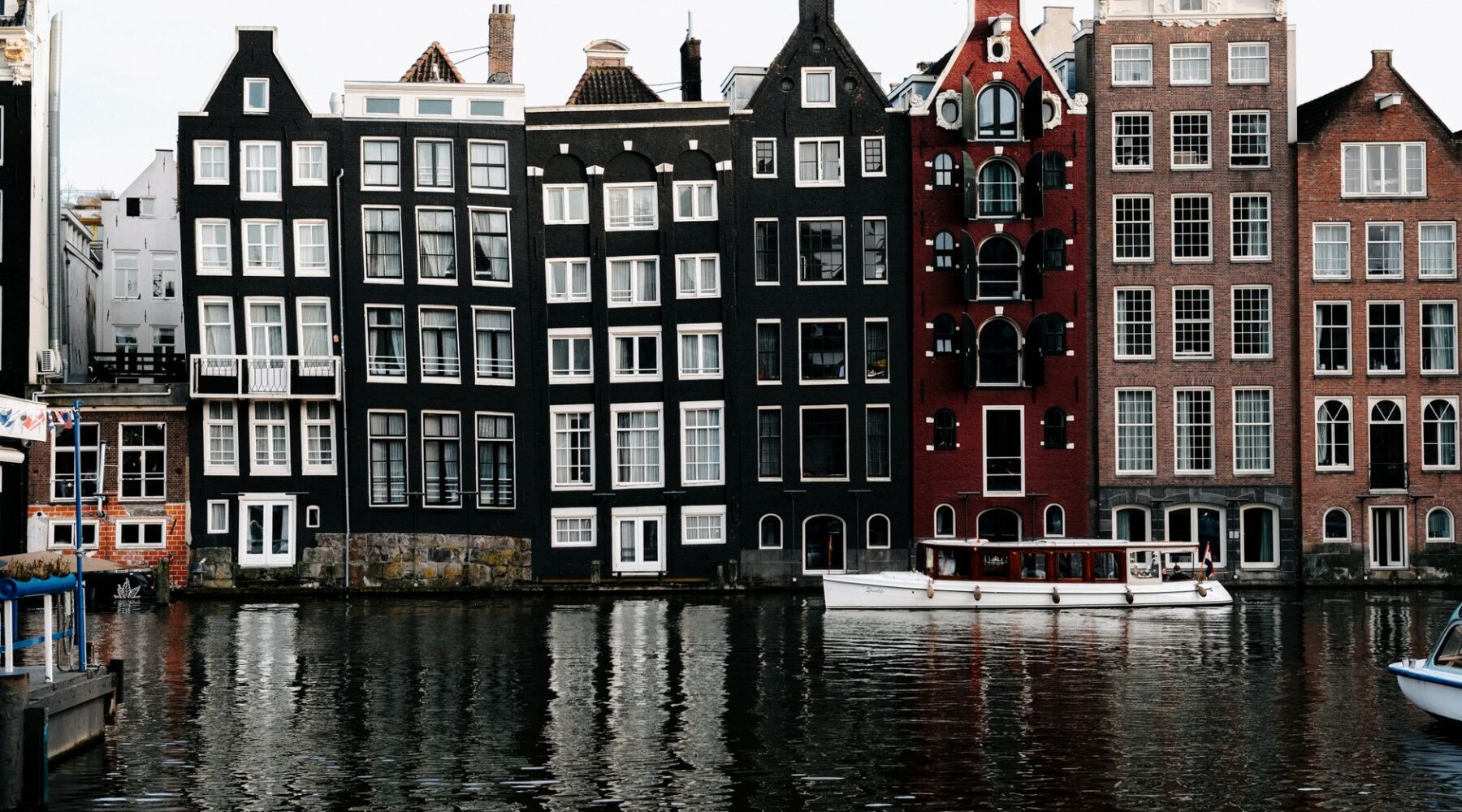
There’s a moment about two and a half hours out of Gare du Nord when the train rolls onto a long bridge over a wide grey estuary, the fields on the far side turn perfectly flat and criss-crossed with ditches, and the church spires give way to wind turbines and greenhouses. That’s the Netherlands, and forty minutes later you’re stepping out of a red train under the arched roof of Amsterdam Centraal, a short walk from the canals. Taking the paris to amsterdam train is almost always the best way to travel between the two cities: about three hours twenty, centre to centre, with no airport transfer at either end. This guide covers how the service works now that Thalys has become Eurostar, which class to book, what tickets cost, the luggage rules, the cheaper alternatives, and what to expect at each end.
Times, fares and rules were checked in October 2026. Fares change with demand, and timetables shift with engineering works, so treat prices as the right order of magnitude and check your specific train when you book.
Paris to Amsterdam by train at a glance
| What | Details |
|---|---|
| Operator | Eurostar (formerly Thalys) |
| From | Paris Gare du Nord |
| To | Amsterdam Centraal |
| Journey time | About 3h20 |
| Main stops | Brussels-Midi, Rotterdam Centraal and Schiphol Airport |
| Frequency | Several direct trains a day, from early morning to early evening |
| Fares | From €35 booked months ahead, rising as the train fills |
| Classes | Eurostar Standard, Eurostar Plus, Eurostar Premier |
| Passport check | Carry your passport or ID (France, Belgium and the Netherlands are all in the Schengen Area) |
| Luggage | 2 bags plus 1 piece of hand luggage (3 plus 1 in Premier), each bag up to 75 cm |
Checked September 2026.
Thalys is now Eurostar: what changed
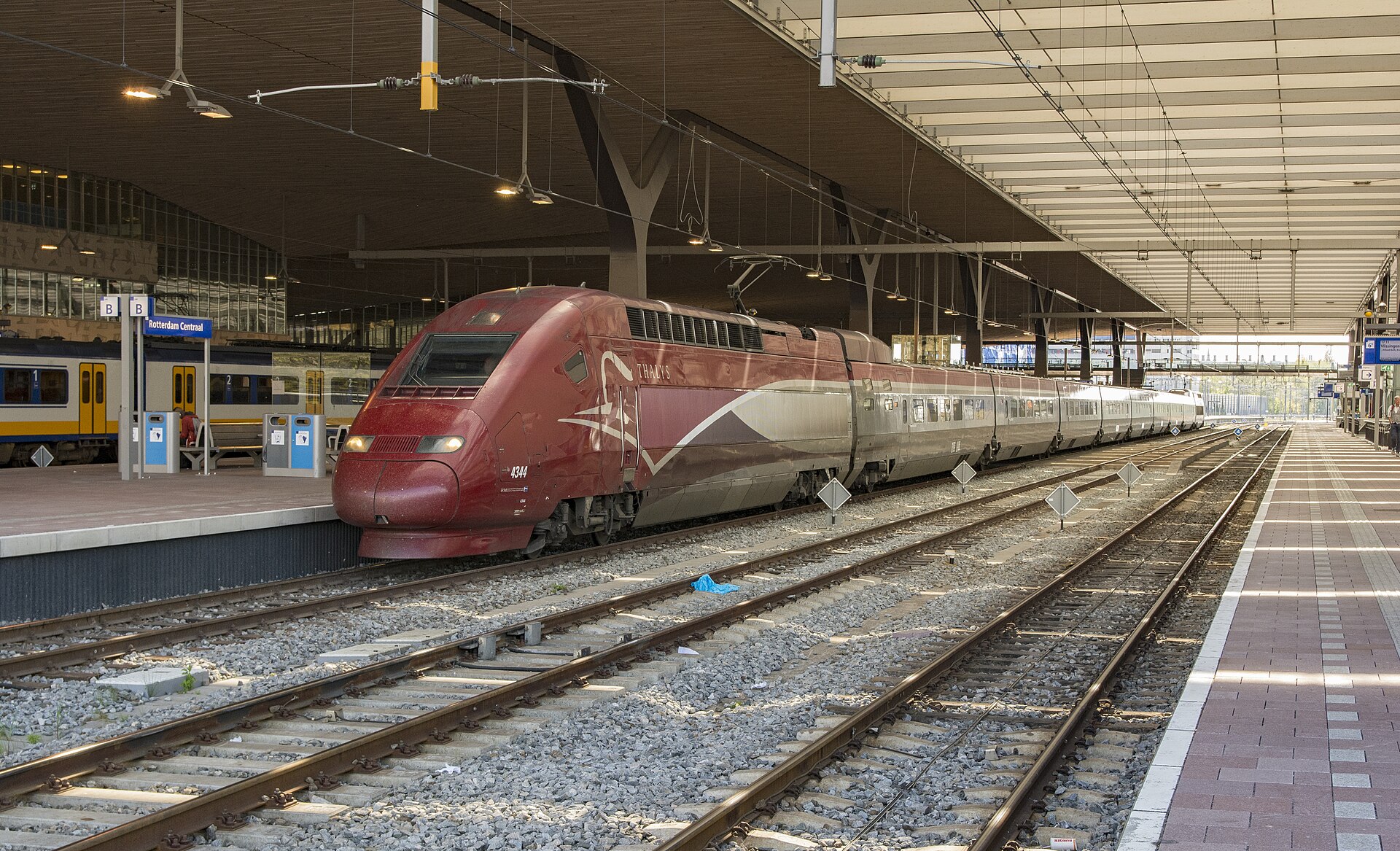
For almost thirty years the high-speed trains between Paris, Brussels, Amsterdam and Cologne ran under the Thalys brand, with its burgundy trains and cheerful onboard announcements. In 2022, Thalys and Eurostar, the company that runs trains through the Channel Tunnel to London, became part of the same Eurostar Group, and in October 2023 their services moved to the single Eurostar brand. For travellers, the practical changes are small but worth knowing:
- Tickets are Eurostar tickets, sold on Eurostar’s website and app and through rail resellers.
- The classes were renamed in November 2024 to Eurostar Standard, Plus and Premier, replacing the old Standard, Comfort and Premium.
- The trains are the same: some still wear the deep red livery, and they run on the same route.
- The passport and security checks belong to the London route. Trains to Brussels and Amsterdam leave from the main-station platforms, not the first-floor London terminal.
The one confusion the merger created is at Gare du Nord itself, where travellers sometimes head for the Eurostar terminal upstairs because their ticket says “Eurostar”. Trains to Amsterdam don’t leave from there; more on that below.
The route, stop by stop
Paris to Brussels (about 1h20)
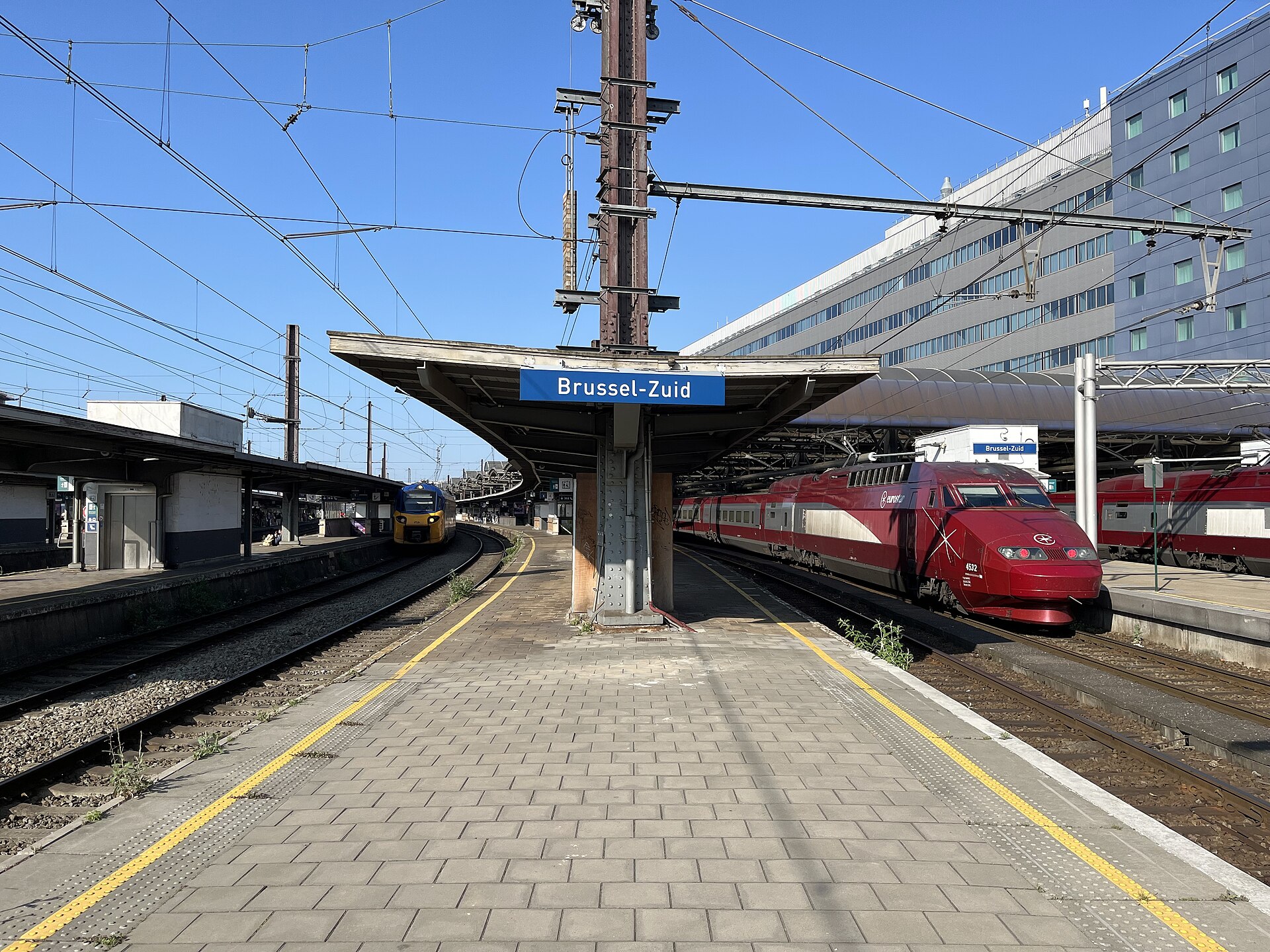
Leaving Gare du Nord, the train runs out through the northern suburbs and joins the high-speed line towards Lille, crossing the flat farmland of Picardy. It skirts Lille before crossing into Belgium without any fuss; you’ll only notice when the station signs change language. The first stop is Brussels-Midi (Brussel-Zuid), about an hour and twenty minutes after leaving Paris.
Brussels to Rotterdam (about an hour)
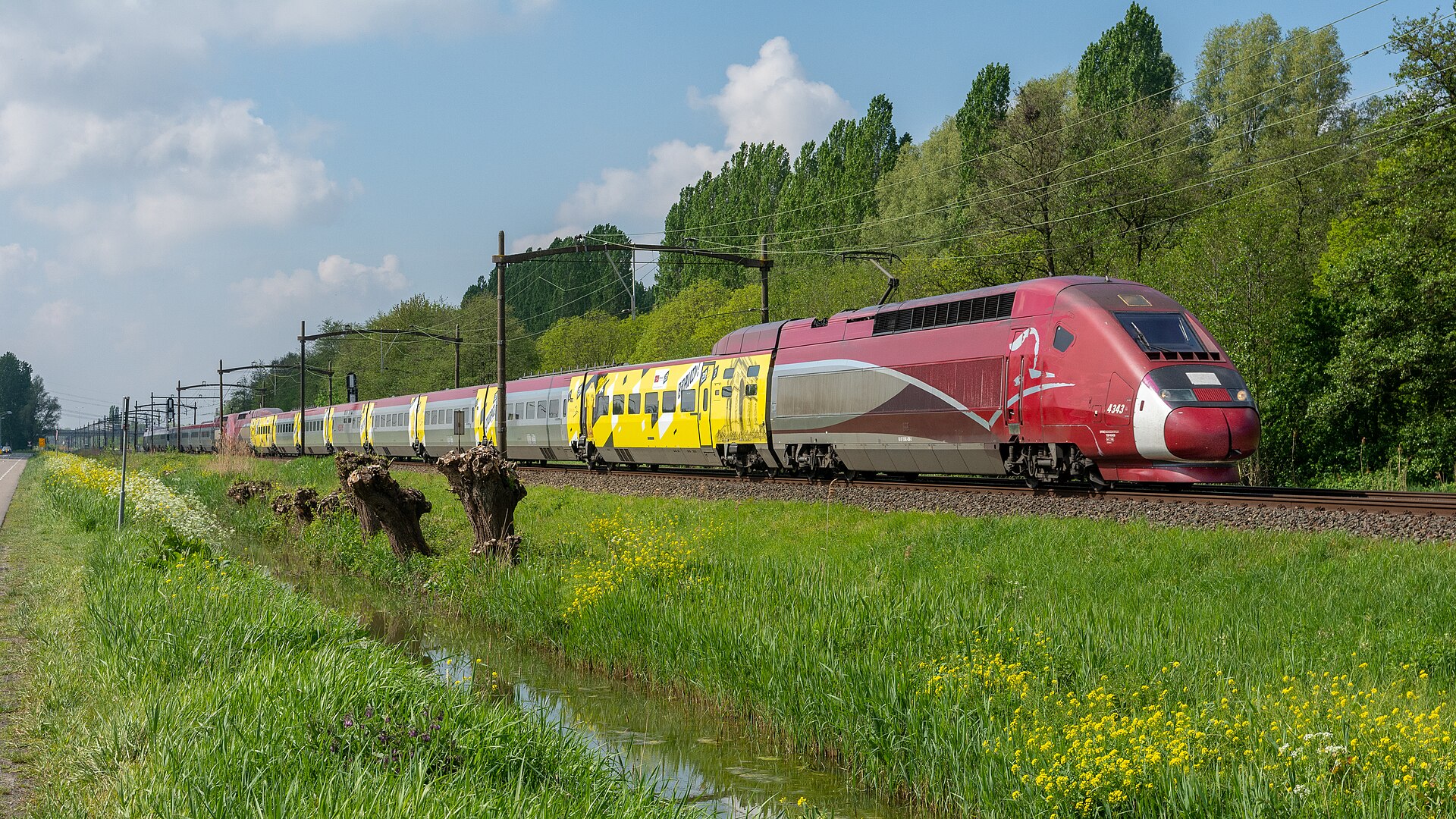
From Brussels, the train runs north through Flanders. If yours calls at Antwerp Centraal, it is worth a glance even from the window: its vast domed hall, built at the turn of the 20th century, is celebrated as one of the most beautiful railway stations in the world. Then comes the Dutch border, the long bridge over the Hollandsch Diep estuary near Moerdijk, and the high-speed line across the polders to Rotterdam Centraal, a striking modern station with a sharply angled steel roof.
Rotterdam to Amsterdam
The last stretch runs through the flat, green, densely populated Randstad, with canals, cows, glasshouses and cyclists on long straight paths. The train dives underground to stop at Schiphol Airport, handy if you’re flying out, and then emerges for the final run into Amsterdam Centraal.
Which class to book
| Class | Seats | Food | Lounges | Luggage |
|---|---|---|---|---|
| Eurostar Standard | Standard seating | Buy your own | None | See the luggage rules below |
| Eurostar Plus | More room than Standard | Buy your own | NS lounges at Amsterdam and Rotterdam | See the luggage rules below |
| Eurostar Premier | More room than Standard | Meal served at your seat | Eurostar and NS lounges | See the luggage rules below |
All classes include free Wi-Fi and a reserved seat.
Our verdict
- Standard is perfectly comfortable for three hours and twenty minutes, and it’s what most people should book.
- Plus is worth it when the price difference is small, which it sometimes is if you book early, or if you want a single seat by the window for work or reading. The 2+1 layout feels much more spacious.
- Premier makes sense for business travellers, flexible tickets and special occasions. The included meal and the lounge access at Paris and Amsterdam are pleasant, but at full price, the premium over Standard is hard to justify for a leisure trip.
Choosing a seat
Seats are assigned automatically, but you can usually choose one when booking. Pick a window seat facing the direction of travel if that matters to you. There’s no clear “scenic side” on this route since the landscape is flat and much the same on both sides. If you’re travelling as a group or family, choose a set of four seats around a table.
Fares and booking
What it costs
Like airline tickets, Eurostar fares rise as the train fills. The lowest Standard fares, from €35 one way, appear when booking opens, on average about seven months before travel, though release dates vary. Standard tickets can be changed up to an hour before departure if you pay any fare difference, and refunded up to seven days before for a €25 fee; for travel on the day, check the live fares. In between, most travellers who book a few weeks ahead pay somewhere in the middle. Friday and Sunday afternoons, public holidays and summer weekends are the most expensive times.
Where to book
- Eurostar’s website and app: the operator’s own booking channel, with seat selection.
- SNCF Connect: sells Paris–Amsterdam tickets alongside French domestic trains, useful for combined itineraries.
- NS International: the Dutch railways’ international booking site, sometimes with different offers.
- Trainline and other resellers: convenient for comparing operators, sometimes with a booking fee.
Our guide to the best Paris travel apps covers the booking apps.
Rail passes
If you’re travelling on a Eurail or Interrail pass, check the reservation rules and fee on Eurail’s site before you go. Pass-holder seats are limited and can sell out on busy trains, so reserve as early as you can.
Luggage
Eurostar’s luggage rules on the Amsterdam route are generous and simple:
- Standard and Plus: two bags plus one piece of hand luggage per person.
- Premier: three bags plus one piece of hand luggage.
- Size: each bag can be up to 75 cm long on non-London routes (the London route allows 85 cm).
- Bikes: only folding bikes or bikes dismantled and packed in a bag.
- Labels: put your name on your luggage.
Luggage racks are at the ends of the carriages and above the seats. They fill up quickly on busy trains, so board promptly. If you have time to kill in Paris before an afternoon train, our guide to luggage storage in Paris covers the options at and around Gare du Nord.
At Gare du Nord
Gare du Nord is one of the busiest stations in Europe, and it’s easy to get confused if you haven’t used it before.
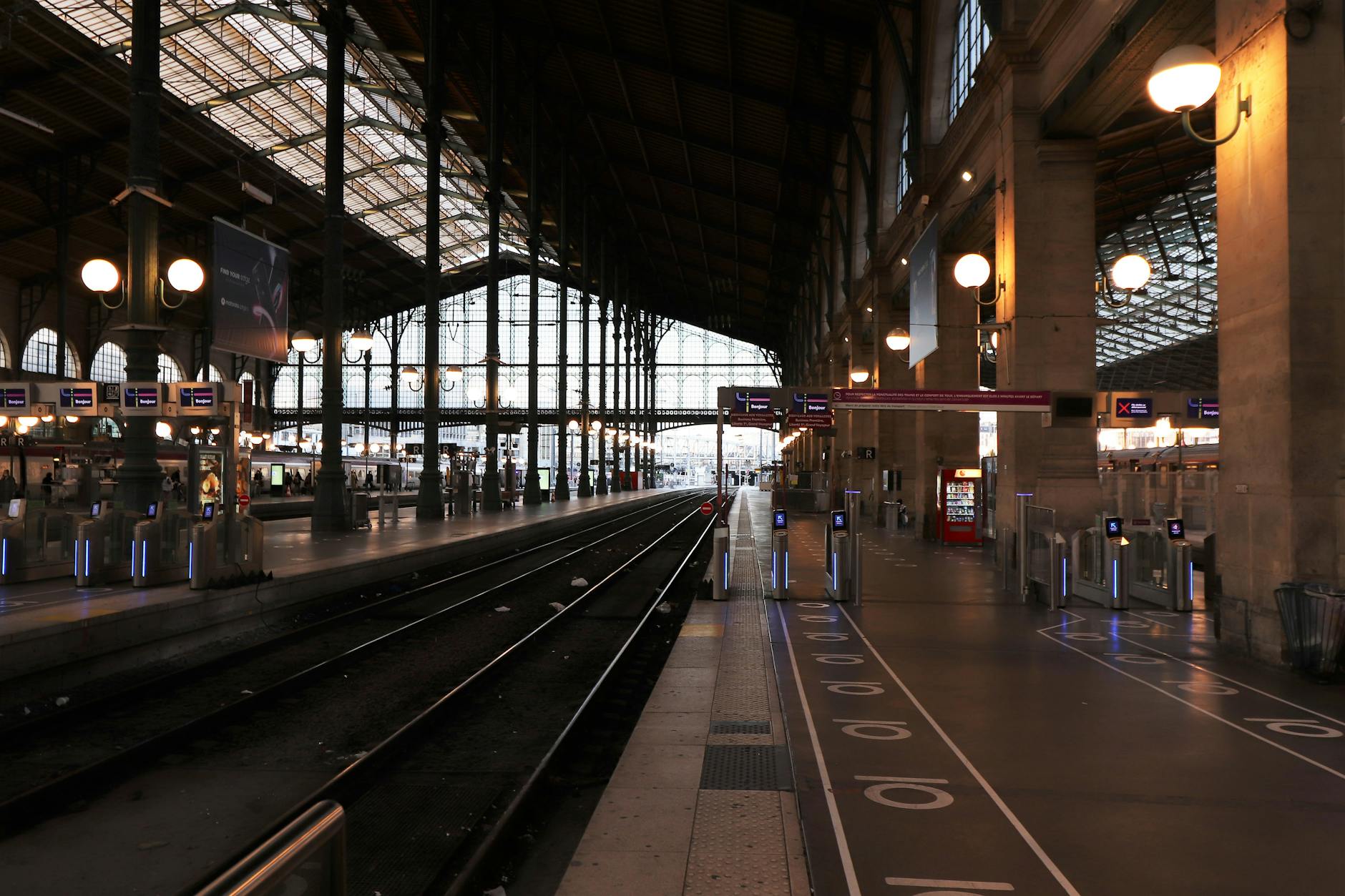
- Go to the main concourse, not upstairs. Trains to Brussels and Amsterdam leave from the main platforms at street level. The Eurostar terminal on the upper level, with its security and passport checks, is for London only.
- Arrive 20–30 minutes before departure. There’s no check-in, but the platform is only announced shortly before departure, and the trains are long.
- Check your coach number on your ticket and look for the coach position markers on the platform.
- Getting there: Metro Lines 4 and 5 and RER B and D serve the station, and RER E stops at the adjoining Magenta station.
- Watch your belongings. Gare du Nord is notorious for pickpockets and touts. Ignore anyone offering help with tickets or taxis. See our guide to pickpockets in Paris.
- Buy food before boarding. The trains don’t have a full bar car, only vending machines or a trolley, so bring something to eat.
Our full guide to the Paris train stations explains Gare du Nord’s layout in more detail.
Cheaper alternatives
Via Brussels on two cheaper trains
If the direct fares are high, splitting the trip in Brussels can save money. SNCF’s low-cost OUIGO Train Classique runs a few slower trains a day from Paris to Brussels, and from Brussels, the Eurocity Direct runs to Amsterdam in a little over two hours, with fares from around €25. Some Eurocity Direct trains terminate at Amsterdam Zuid rather than Centraal, so check which station your train uses. Leave at least an hour between trains in Brussels as a buffer, and read both tickets’ conditions to see what help you’d get if a late first train made you miss the second.
Our verdict: worth it if you’re on a tight budget, travelling with time to spare, or want a stop in Brussels anyway. For most people, the direct train booked a few weeks ahead is the better deal once you value the time.
Bus
Long-distance coaches run between Paris and Amsterdam, typically taking seven to eight hours or more, including overnight services. They can be very cheap, but they’re slow, and arriving in Amsterdam at dawn after a night on a coach isn’t much of a saving if it costs you a day.
Flying
Flights between Paris and Amsterdam take about an hour and a quarter. Once you add getting to Charles de Gaulle or Orly, security, boarding and the trip into Amsterdam from Schiphol, the door-to-door journey is usually longer than the train, often more expensive once luggage is included, and far higher in carbon. Flying only makes sense if you’re connecting to another flight at Schiphol, or if you find a genuinely cheap fare and are staying near the airport. See our guides to cheap flights from Paris and getting to the Paris airports.
| Direct train | Via Brussels | Bus | Plane | |
|---|---|---|---|---|
| Time | About 3h20 | Longer, with a change in Brussels | Longest | Short flight, plus airport transfers at both ends |
| Cost | From €35 booked early | Can be lower when direct fares are high | Often cheapest | Varies; add bags and transfers |
| City centre to city centre | Yes | Mostly | Mostly | No |
| Comfort | High | Good | Low | Moderate |
Arriving at Amsterdam Centraal
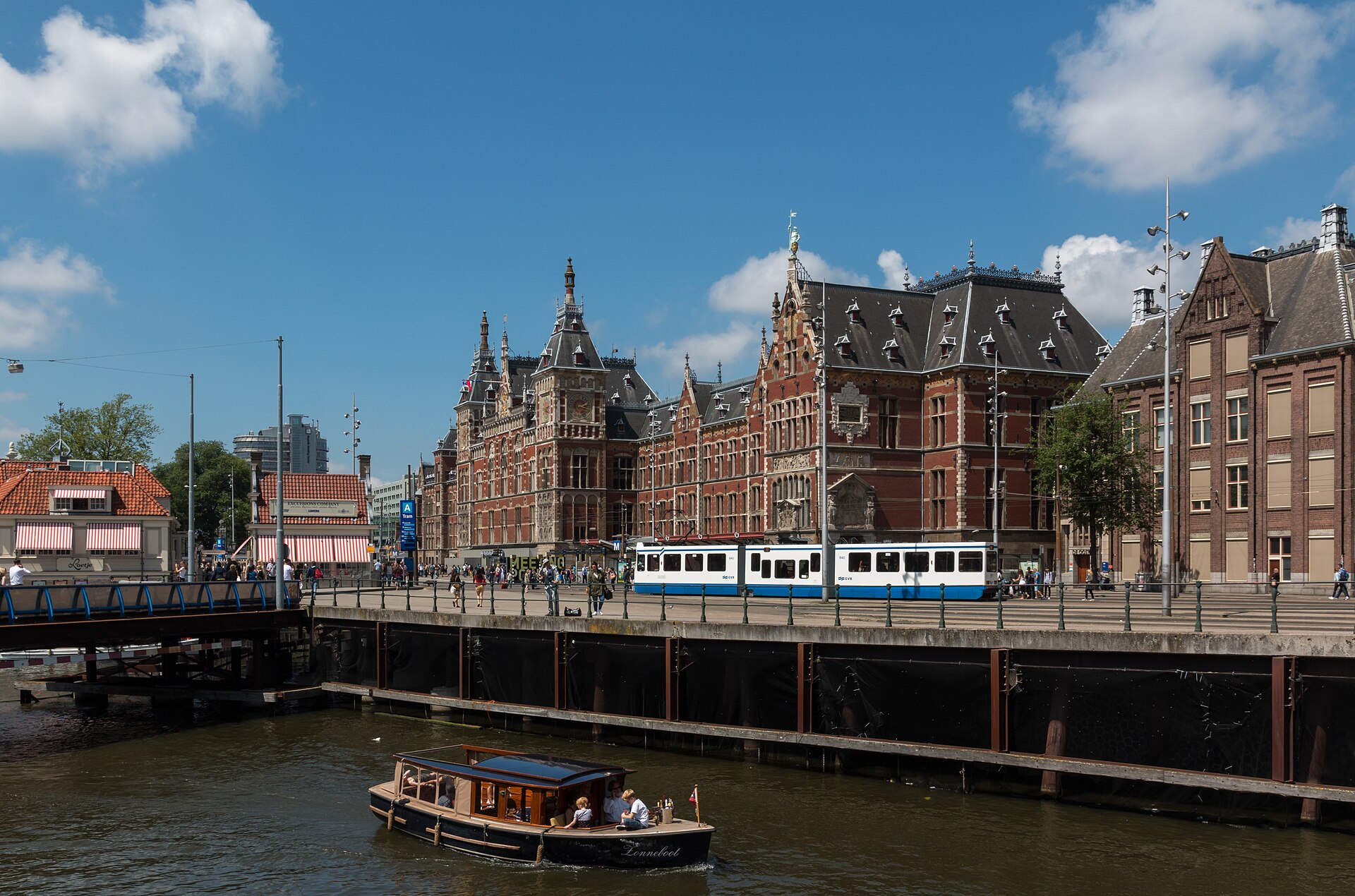
Amsterdam Centraal is right in the city centre, on the waterfront of the IJ, and its grand red-brick façade was designed by Pierre Cuypers, who also designed the Rijksmuseum. From here:
- On foot: Dam Square is about ten minutes’ walk straight down the Damrak, and the canal ring starts almost immediately.
- By tram: most of the city’s tram lines start from the square in front of the station. Contactless bank cards are widely accepted for fares on trams and the metro; check the current payment options when you arrive.
- By metro: the North–South line runs from beneath the station to De Pijp and beyond.
- By ferry: the free ferries behind the station cross the IJ to Amsterdam Noord, with its cultural venues and the EYE Film Museum.
- Bikes: a huge bike park and rental shops are next to the station, but watch out for cyclists when you step outside. They won’t stop for you.
Making a trip of it
The Paris–Amsterdam line links some of the most interesting cities in Europe, and it’s easy to add a stop:
- Brussels: the Grand-Place, chocolate, beer and Art Nouveau architecture, just 1h20 from Paris.
- Bruges: a short regional train from Brussels, with medieval canals and belfries. See our Bruges day trip guide.
- Antwerp: fashion, diamonds, Rubens and that remarkable station.
- Rotterdam: bold modern architecture, the Markthal and a lively harbour.
- The Hague and Delft: Vermeer, the Mauritshuis and the North Sea coast, a short local train from Rotterdam.
A classic loop is Paris to Brussels, a day in Bruges, on to Amsterdam, and back to Paris direct. Each leg is short, and with advance fares the whole trip can cost less than a single short-haul flight. Our guide to trains from Paris covers more international routes, and if you’re heading south instead, see our Paris to Nice train guide.
Practical tips
- Book early, ideally as soon as sales open, on average about seven months ahead.
- Avoid Friday and Sunday afternoons if your dates are flexible; they’re the most expensive and crowded.
- Carry your ticket offline. Download it to the app or save a screenshot, as data can drop in tunnels and stations.
- Bring ID. There’s no passport control, but Schengen countries can carry out spot checks, and you may need ID to match your ticket.
- Bring food and water. Onboard catering is limited.
- Get off at Schiphol if you’re flying home from Amsterdam, rather than going into the city and back.
- Check for strikes and engineering works in France, Belgium and the Netherlands in the days before travel.
When to travel
The train runs all year, but demand, and therefore fares, swing with the Dutch calendar as much as the French one. A few dates to know:
- Tulip season is one of the busiest periods for Amsterdam. The Keukenhof gardens open from 18 March to 9 May in 2027, and the bulb fields around them flower in spring, when the weather decides.
- King’s Day on 27 April (26 April when the 27th falls on a Sunday) turns Amsterdam into a giant orange street party. Trains and hotels sell out weeks ahead.
- Summer brings full trains on Fridays and Sundays, and the highest fares.
- October is busy with the Amsterdam Dance Event, when accommodation prices peak.
- December has Christmas markets in Brussels along the route and the Amsterdam Light Festival on the canals.
- January to early March, outside school holidays, usually has the cheapest fares and the emptiest trains.
Coming back from Amsterdam to Paris
The return journey works exactly the same way in reverse, with trains from Amsterdam Centraal calling at Schiphol, Rotterdam and Brussels before arriving at Gare du Nord about three hours twenty later. A few things are different at the Dutch end. Amsterdam Centraal is large and busy, with platforms reached from long passages under the tracks; the departure boards show the platform well in advance, but allow 15–20 minutes to get there with luggage. If you’re coming from Schiphol after a flight, you can board the Paris train directly at the airport station without going into the city.
Arriving back at Gare du Nord, you’ll come in on the main platforms. The RER B and D and Metro Lines 4 and 5 are downstairs, and the official taxi rank is signposted outside. Ignore anyone who approaches you on the concourse offering a taxi. Our guide to Paris taxis and Uber explains how to spot a licensed cab and what the fare to your hotel should be.
Travelling with children or reduced mobility
The Paris–Amsterdam train is an easy trip with children: three hours and twenty minutes is short enough not to need much entertainment, there are toilets on board, and you can move around. Children under a certain age travel free on a parent’s lap, and older children pay reduced fares; enter everyone’s age when you book to see the right price. Pushchairs can be folded and stored with the luggage. Bring snacks, since the onboard offer is limited.
Eurostar offers assistance for passengers with reduced mobility at the main stations, including help boarding and leaving the train, and it should be booked in advance through Eurostar. Wheelchair spaces are available on the trains. Gare du Nord is large and busy, and Amsterdam Centraal involves long walks to the platforms, so allow extra time at both ends.
Frequently asked questions
How long is the train from Paris to Amsterdam?
About 3 hours 20 minutes on the direct Eurostar from Paris Gare du Nord to Amsterdam Centraal, stopping at Brussels, Rotterdam and Schiphol.
How much is the train from Paris to Amsterdam?
From €35 one way in Eurostar Standard when booked months in advance, rising as the train fills, so check the live fares if you’re buying on the day. Prices checked September 2026.
Is Thalys still running?
The trains are, but not the name: Thalys joined Eurostar in Eurostar Group in 2022, and its trains have run as Eurostar since October 2023. Paris–Amsterdam tickets are now sold as Eurostar tickets, and some of the trains still carry the old Thalys red.
Do I need my passport on the Paris to Amsterdam train?
France, Belgium and the Netherlands are all in the Schengen Area, and the trains leave from the main-station platforms rather than the London terminal where passport checks happen. You should still carry your passport or ID card, as spot checks can happen and you may need ID to match your ticket.
Which Paris station does the train to Amsterdam leave from?
Gare du Nord. Trains to Amsterdam leave from the main platforms, not from the London Eurostar terminal upstairs.
How much luggage can I take on the Eurostar to Amsterdam?
Two bags plus one piece of hand luggage in Standard and Plus, or three bags plus hand luggage in Premier, with each bag up to 75 cm long. Check Eurostar’s baggage page before you travel for the full rules.
Is it quicker to fly or take the train from Paris to Amsterdam?
It depends on where you start and finish. The train takes about 3h20 from city centre to city centre; the flight itself is shorter, but add the trips to and from both airports and the time spent inside them before you compare.
Does the Paris to Amsterdam train stop at Schiphol Airport?
Yes. Direct Eurostar trains stop at Schiphol Airport before Amsterdam Centraal, which is convenient if you’re flying out of Amsterdam.
Related Paris Guides
- Trains From Paris: The Complete Guide
- Paris Train Stations Explained
- Paris to London by Eurostar
- Bruges Day Trip From Paris
- Paris to Nice by Train
- Luggage Storage in Paris
- How to Find Cheap Flights to Paris
- The Best Paris Travel Apps
Photo Credits
A red Eurostar at Rotterdam Centraal: Rotterdam Thalys PBKA 4344 vertrekt als THA 9370 Paris-Nord (27051787102) by Rob Dammers, CC BY 2.0, via Wikimedia Commons.
A Eurostar at Brussels-Midi: BRU-Midi-Zuid – Nederlandse Spoorwegen ICNG x Eurostar Red PBA – 2025-06-19 by Sjenghai, CC BY-SA 4.0, via Wikimedia Commons.
A high-speed train in the Dutch countryside: Dordrecht Zuid Thalys 4343 (Tour de France)-4307 THA 9315 Amsterdam (46818612685) by Rob Dammers, CC BY 2.0, via Wikimedia Commons.
Amsterdam Centraal: Amsterdam (NL), Centraal Station — 2015 — 7265 by Dietmar Rabich, CC BY-SA 4.0, via Wikimedia Commons.