Pickpockets in Paris: Where They Work and How Not to Be a Target
It is organised, it is concentrated in about eight places, and it is defeated by carrying less and looking up.
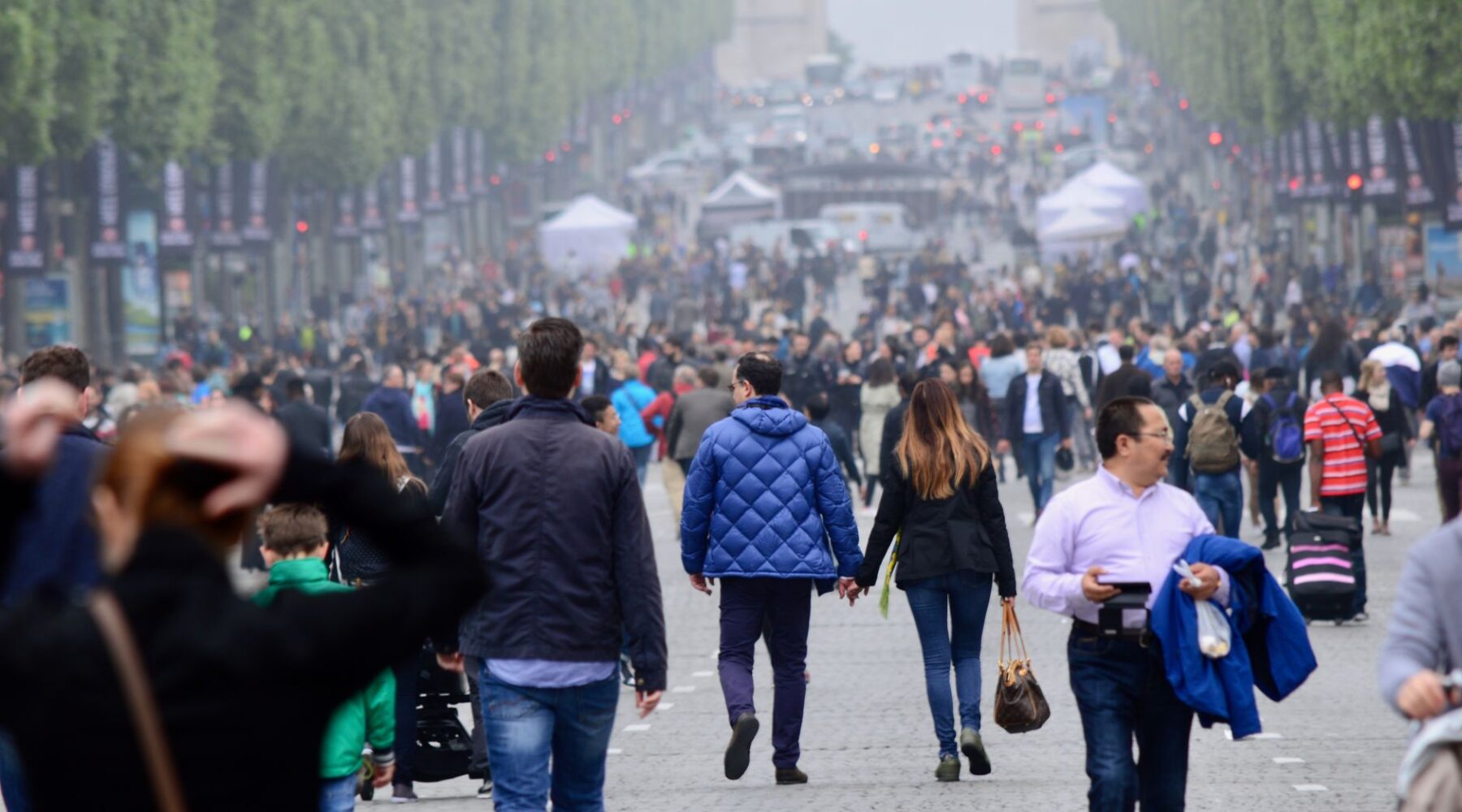
Stand on the platform at Châtelet for ten minutes and you can watch it happen without knowing what you are watching. A train pulls in. Three young people who arrived separately drift towards the same door. One steps on and stops dead in the doorway, blocking it, apparently confused about which way the carriage runs. The passengers behind bunch up against him. The doors chime. In the four seconds of pressure and irritation that follow, a second pair of hands is working, and a third person is already walking away down the platform with a phone that is not theirs. Nobody shouts. Nobody notices. That choreography — and it is choreography, rehearsed and repeated forty times a day — is what people mean when they warn you about pickpockets in Paris.
This guide is about the theft itself: who does it, the specific stations and monuments where it clusters, the eight or nine methods you will actually encounter, what genuinely reduces your risk, what is security theatre, and the exact sequence to follow in the hour after it happens to you. It is a companion to our guide to the confidence tricks that target visitors — those are cons that need you to agree to something, while this is theft that needs you not to notice. Any prices below were checked in September 2026; treat them as the right order of magnitude rather than a quotation.
The short version
If you read nothing else, read the table. It is the whole article compressed into the five situations that account for most of what gets stolen from visitors, and it is deliberately specific — “be careful in crowds” is advice that has never once stopped a theft.
| Where | The method | The tell | What to do instead |
|---|---|---|---|
| Metro doorway, lines 1, 4 and 9 | A stall in the doorway creates a crush; hands work in the press | Someone stops in the door and does not move in | Let them board first. Board through a different door, or wait for the next train |
| RER B from the airport | Bag lifted from beside the luggage rack, or taken at a station stop as the doors close | Someone standing near the racks who never sits down | Keep the case between your knees, not in the rack, and stand away from the doors |
| Louvre courtyard, Trocadéro, Champ de Mars | Petition clipboard, ring find, forced “gift” — all crowding devices | An approach that starts with a question in English | Do not slow down, do not take anything into your hands, keep walking |
| Sacré-Cœur steps and the funicular queue | The bracelet: your wrist is taken and threaded while a partner works your pockets | A hand reaching for yours before a word is spoken | Hands in pockets, walk up the outer stairs, do not stop to negotiate |
| Café terrace | Bag taken from a chair back or from between your feet; phone lifted off the table | A map, a leaflet or a newspaper laid over your phone | Strap through your leg, phone in your pocket, not face-up on the table |
Who is actually doing this
The single most useful thing to understand is that street theft in Paris is overwhelmingly organised rather than opportunistic. This is not someone down on their luck seeing an open handbag and taking a chance. It is small crews — usually three to five people, often very young, frequently the same faces working the same stretch of platform week after week — running a technique that has been taught to them and that they perform hundreds of times.
That has three consequences for you, and they are more useful than any amount of general vigilance.
- They pick the target, not the moment. You are chosen thirty seconds before anything happens, usually while you are looking at a phone, a map or a ticket machine. Breaking that selection — looking up, meeting an eye, changing direction — is more effective than anything you do afterwards.
- They work as a unit. One person blocks or distracts, one takes, one receives. The person you notice is almost never the person holding your wallet. This is why grabbing the obvious culprit rarely recovers anything.
- They are not violent. Paris street theft is a stealth crime, not a confrontational one. Muggings do happen, but they are rare and they are not what the crews on line 1 are doing. If you feel a hand and say something loudly, the overwhelmingly likely outcome is that the hand goes away and the group gets off at the next stop.
The three roles
Watch for long enough and the parts become obvious. The blocker creates the physical situation: the doorway stall, the sudden stop at the top of an escalator, the group that closes around you on a stair. The dipper does the work and holds it for perhaps two seconds. The runner takes the item immediately and walks in the opposite direction, so that even if you catch the dipper on the spot, they are clean, and they know it. Some crews add a fourth person whose only job is to watch for police and for the plain-clothes RATP teams who do patrol the busier lines.
Where it happens, station by station
Theft in Paris is not evenly spread. It is concentrated on a surprisingly short list of places, and if you know the list you have done most of the work. Nothing here should keep you away — every one of these is worth visiting, and our guide to how safe the individual neighbourhoods are covers the wider picture. This is about which fifty metres to pay attention in.
Metro lines 1, 4 and 9
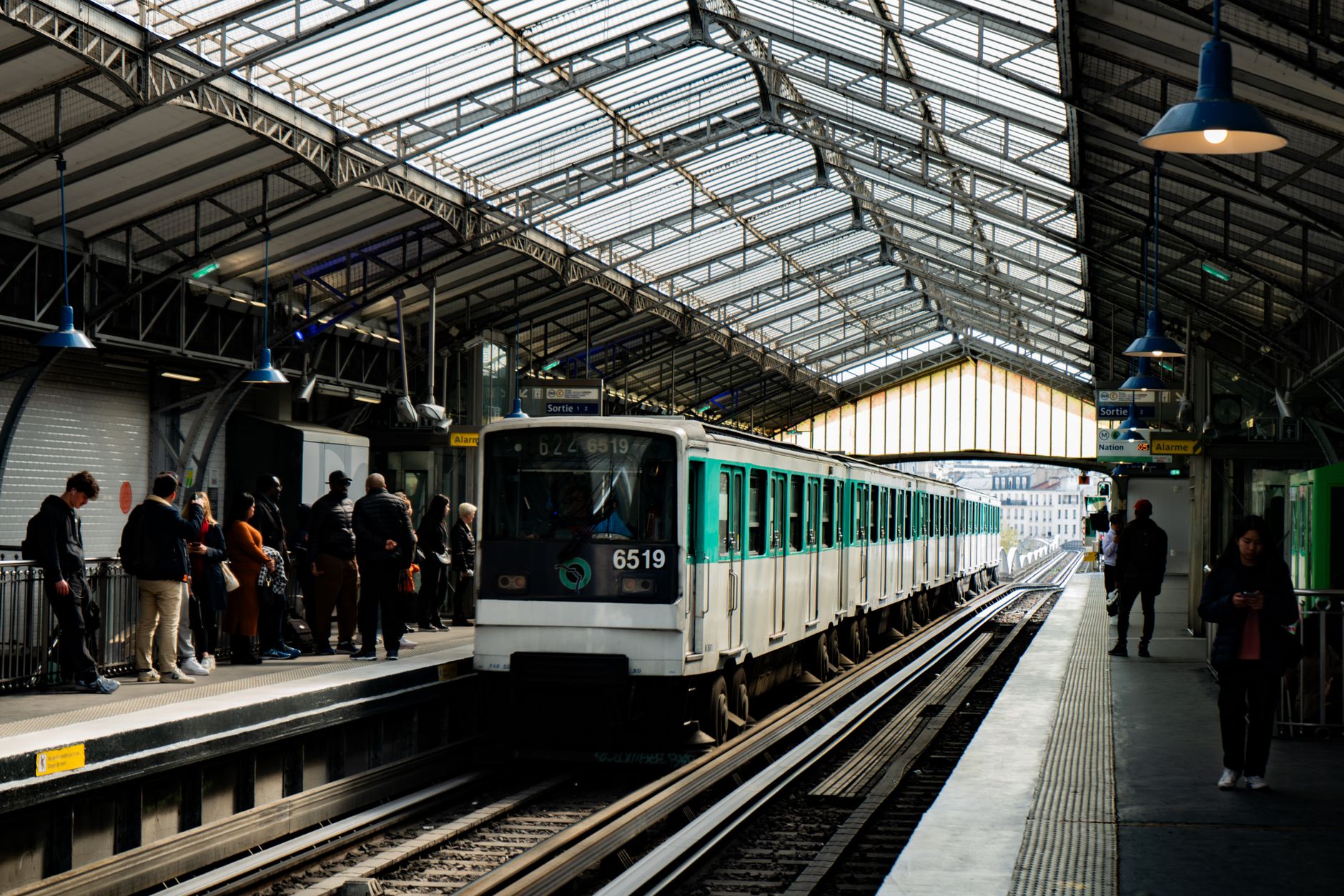
Line 1 is the problem line, and for an obvious reason: it runs the entire tourist spine, from La Défense through Champs-Élysées–Clemenceau, Concorde, Palais Royal–Musée du Louvre, Hôtel de Ville and Saint-Paul to Bastille. Every carriage on it is full of people carrying a day’s worth of valuables who do not know the system. Line 4 links Gare du Nord and Gare Montparnasse via Châtelet and Saint-Germain-des-Prés, which is to say it connects arriving travellers carrying everything they own to the middle of the city. Line 9 covers Trocadéro, Grands Boulevards and the eastern Marais.
You will hear the RATP’s recorded warning about pickpockets played in several languages on these lines. It is not boilerplate; it is played where the problem is. Take it as a location marker rather than background noise. Our full Metro guide covers tickets, transfers and the practical business of getting around, and the honest summary is that the Metro is safe, frequent and by far the best way to move — it is your pockets, not your person, that need attention.
The RER B in from Charles de Gaulle
If there is one journey where visitors lose things, it is this one. You are jet-lagged, you have a large case you cannot keep close, you do not yet know the stops, and the train fills and empties repeatedly between the airport and Châtelet. The classic version is simple: your case is in the rack by the door, someone stands near it, and at a station stop they lift it and step off as the doors close. There is no crowd and no contact. You look up as the train pulls away.
Keep the case where you can touch it, sit or stand facing the doors rather than with your back to them, and be particularly awake at Gare du Nord, where a very large number of people move at once. Our guide to getting in from the airports compares the RER with the Roissybus, taxis and the €14 airport flat fare; if you are arriving late, badly jet-lagged or with more luggage than hands, paying for the door-to-door option is worth it for reasons that have nothing to do with comfort.
Châtelet–Les Halles and the big interchanges
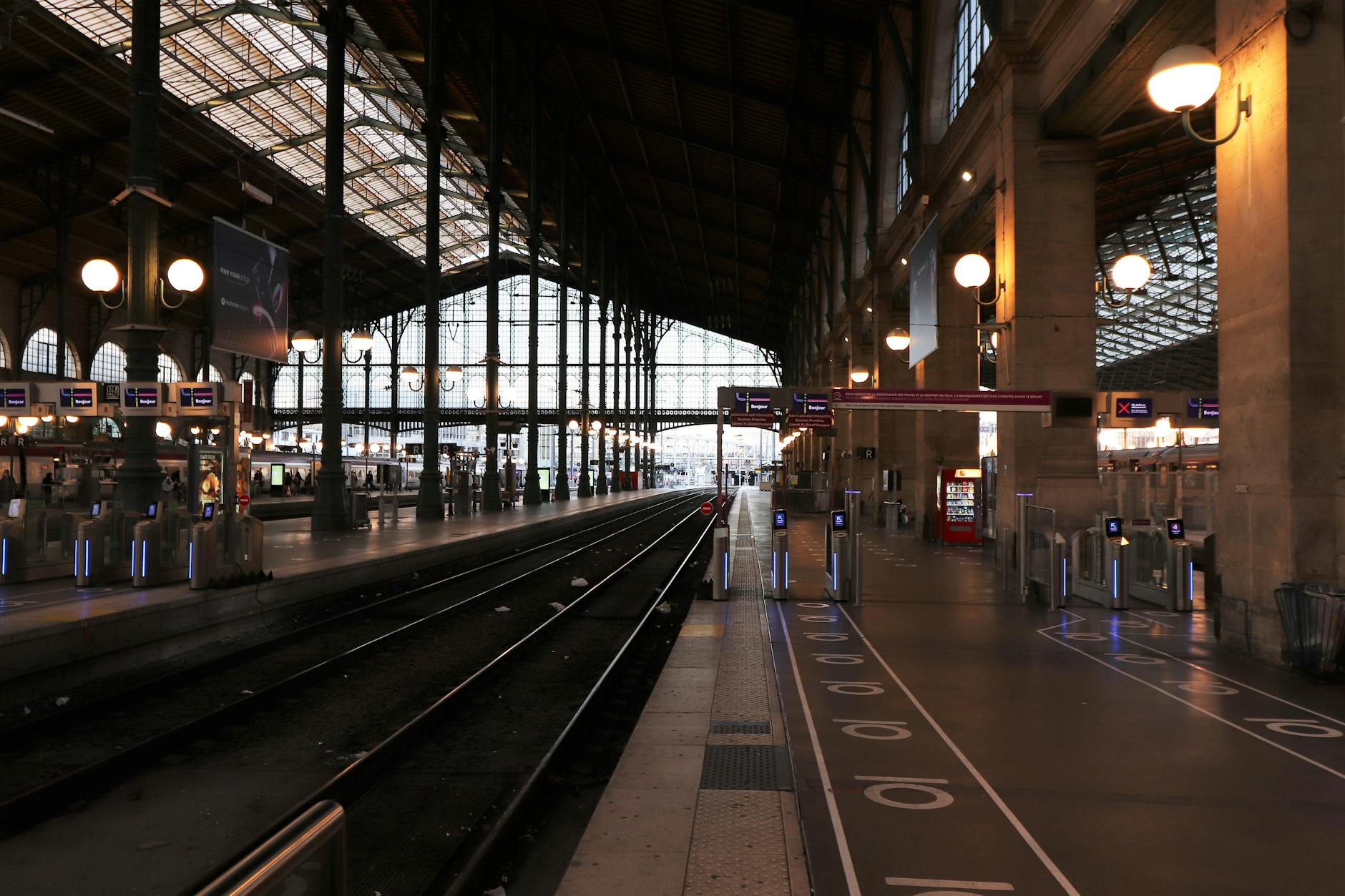
Châtelet–Les Halles is the largest underground station in Europe and it behaves like a small city, with long tunnels, blind corners and a permanent flow of people who are half-lost. The corridors between the RER platforms and the Metro lines are the specific problem — long, busy and full of people watching signs rather than each other. Gare du Nord, Montparnasse, Saint-Lazare and Gare de Lyon share the pattern on a smaller scale.
The practical fix is unglamorous: know which exit you want before you go underground, so that you are walking with purpose rather than stopping at every sign. A downloaded offline map does more for you here than any anti-theft product; our roundup of the apps worth having on your phone before you land covers which ones actually work below ground.
The Louvre and the Tuileries
The pyramid courtyard, the passage through from Rue de Rivoli and the queue itself are all worked, and the standard approach is the clipboard: someone asks whether you speak English, then presents a petition for a deaf-and-mute charity that does not exist. The petition is not the point. The clipboard is a screen, held at chest height so you cannot see your own front, and while you are reading it somebody is standing closer to you than you would normally allow.
The correct response is to keep walking without breaking stride. It feels rude. It is not rude — you are declining a scripted approach, and everyone involved knows exactly what is happening. If you are visiting anyway, our Louvre guide covers the entrances that avoid the courtyard crush altogether, which solves the problem geographically. Note that non-EEA visitors now pay €32 for the Louvre against €22 for EEA ones, so the ticket in your pocket is worth guarding too.
Sacré-Cœur, the steps and the funicular
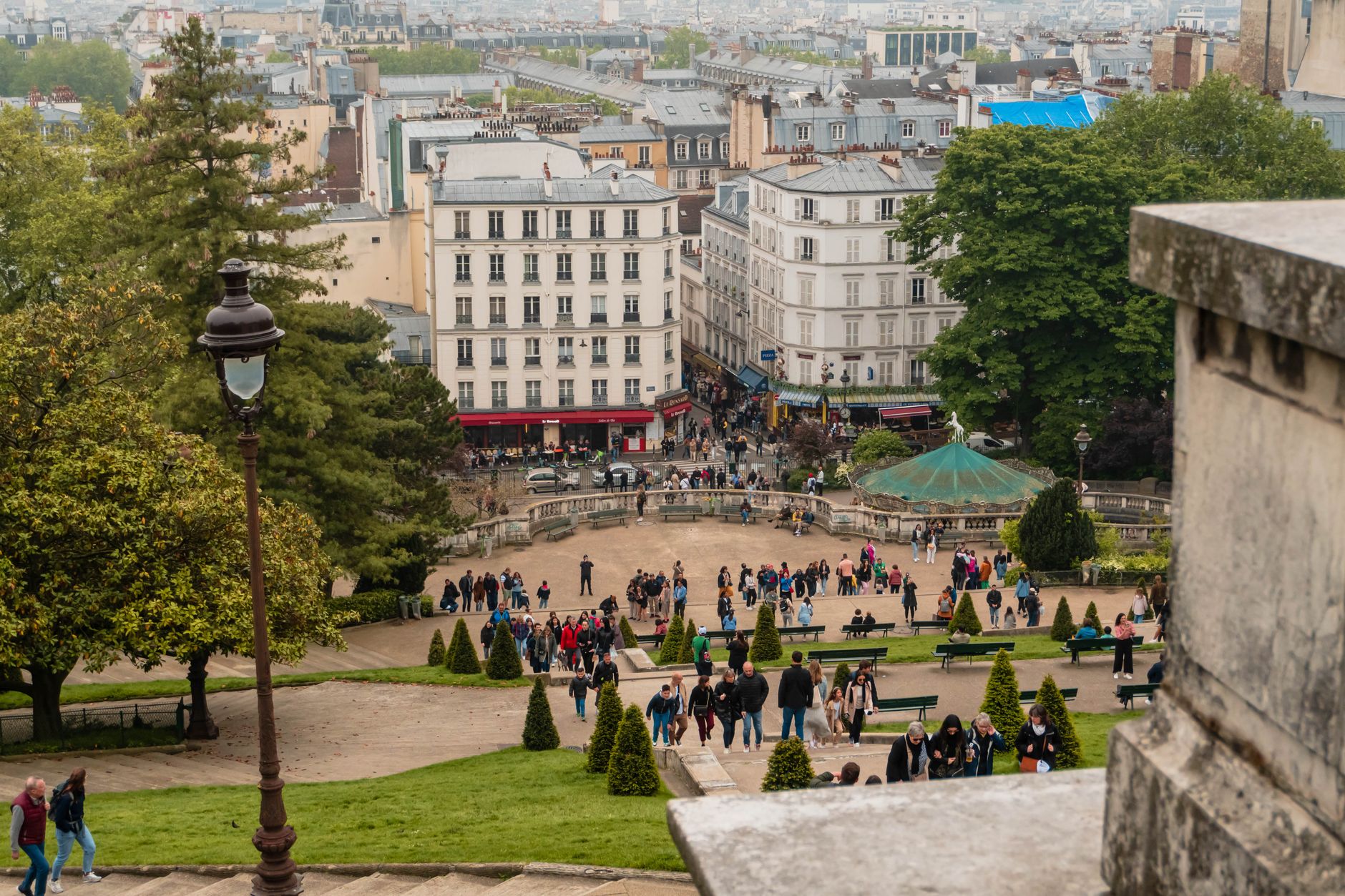
The staircases up to Sacré-Cœur and the square below them are the home of the friendship bracelet, and it is worth describing properly because it is unusually physical. A man takes your wrist — actually takes it, before you have agreed to anything — and starts knotting coloured thread around it. Once it is on, it cannot be removed without cutting, and you are told it costs twenty or thirty euros. Meanwhile a second man is standing close on your other side.
Walk with your hands in your pockets or holding your bag, do not stop, do not answer, and take the stairs on the outside rather than through the middle of the square. The funicular queue is the other spot, because a queue is a stationary crowd. None of this should put you off — Montmartre is genuinely one of the best evenings in Paris, and our Montmartre guide is enthusiastic about it. It is a fifty-metre problem on one staircase.
Trocadéro, the Champ de Mars and the tower
The Trocadéro terrace at sunset is a crowd of people all facing the same direction with their arms up holding phones, which is close to an ideal working environment. The Champ de Mars has the same problem plus grass, picnics and bags set down beside people. Phone snatching — a hand taking the handset out of yours mid-photograph, sometimes from a scooter — is more common here than pocket work.
Take the photograph, put the phone away, then look at the view. It sounds trivial and it removes most of the exposure. Our Eiffel Tower guide has the ticket detail; the relevant point here is that the paid areas inside the tower and the fenced Champ de Mars security zone are markedly calmer than the open terrace across the river.
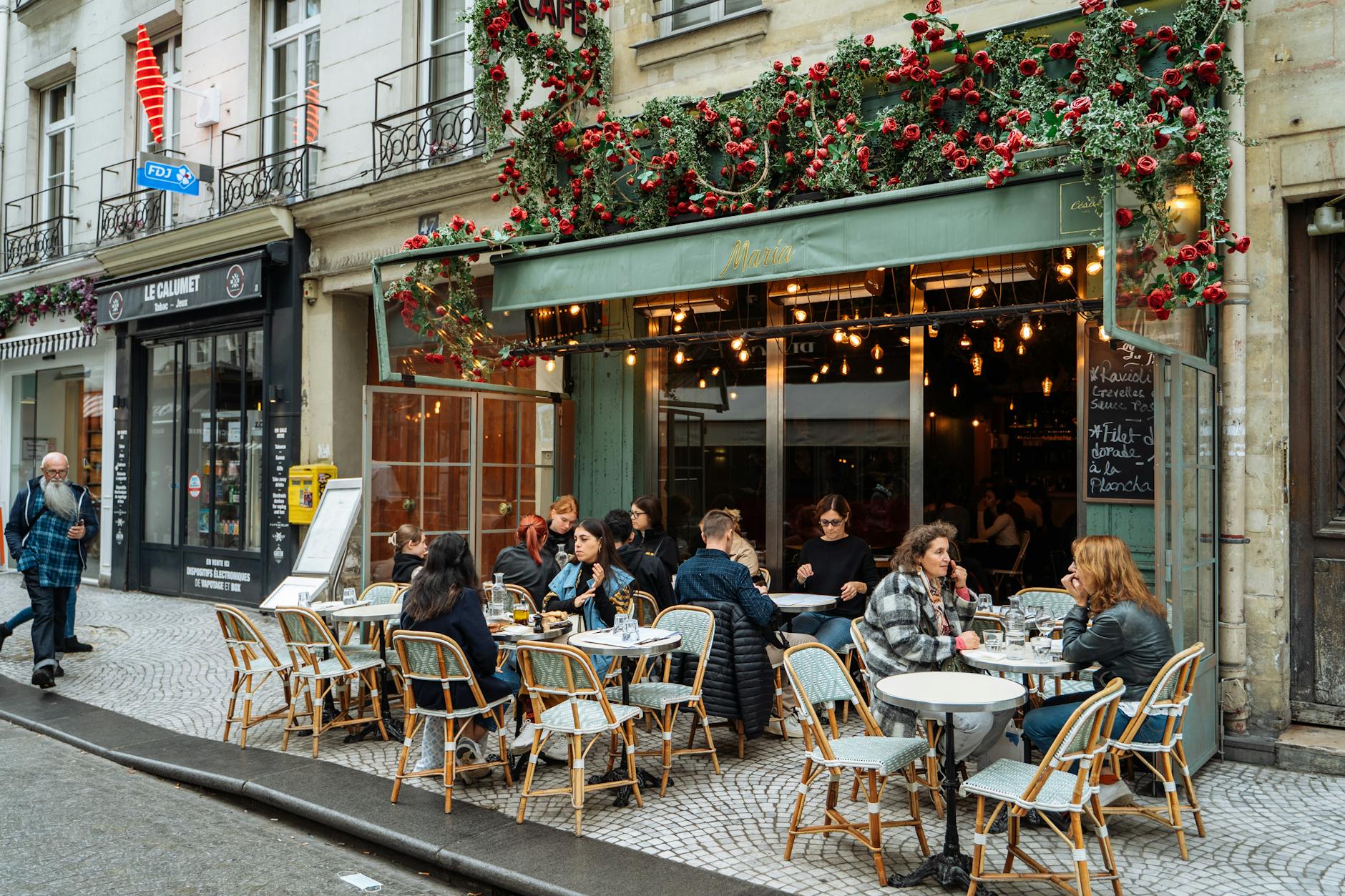
Café terraces and restaurant tables
This is the one visitors least expect, because a terrace feels like your own territory. It is not — it is a pavement, and a bag hung on the back of a chair sits at the height of an adult’s hand as they walk past behind you. The second version is the paper trick: someone asks a question while laying a map, a menu or a folded newspaper across your table, and your phone leaves with the paper.
Run the bag strap through your leg or over your knee. Do not use the hook under the table, which is exactly as reachable. Keep the phone in your pocket rather than face-up next to the coffee. That is the entire defence, and it costs nothing.
The methods, in the order you are likely to meet them
Nearly everything is a variation on one idea: create a reason for you to be crowded, distracted, or holding something in both hands. Once you can see the shape, the individual scripts stop working.
- The doorway stall. Described above. The most common method on the Metro, and the easiest to defeat — never board in a compressed group if you can wait ninety seconds for the next train.
- The escalator stop. Someone halts abruptly at the top or bottom of a moving escalator. Everyone behind concertinas into them. Same physics, different location.
- The petition. A clipboard, a charity that does not exist, a signature requested and then a donation demanded. The clipboard blocks your view of your own bag.
- The dropped ring. Someone picks a gold-coloured ring off the pavement in front of you and offers it to you as your lucky find. It is a conversation-starter that ends in money changing hands, and it puts a stranger inside your personal space on a quiet street. Covered in more depth in our Paris scams guide.
- The bracelet. Montmartre’s speciality. Physical contact first, negotiation second.
- The spill. Something is spilled or smeared on your coat or bag; a helpful stranger appears with a tissue and cleans you up. Their hands are on you with a reason. Less common in Paris than in Rome or Barcelona, but it does happen around the stations.
- The cash machine helper. Someone offers to help at an ATM, or points out a banknote apparently lying at your feet while you are mid-transaction. Cancel, take your card, walk away, use a machine inside a bank lobby instead.
- The scooter snatch. A phone taken from your hand by a passing rider. Rare, but it is the one that produces injuries, because people instinctively hold on. Do not hold on.
- The fake police check. Two men in plain clothes ask to inspect your wallet for counterfeit notes. Real French police do not do this. Ask for uniformed officers and start walking towards a shop or a station.
What actually protects you
Here is the honest ranking, because most published advice on this subject is a list of products rather than a list of behaviours, and the behaviours do almost all of the work.
- Carry less. One card, the cash you need for the day, the phone, and nothing else. Leave the second card, the passport and the spare cash in the hotel safe. If the worst happens you have lost an inconvenience rather than a holiday. This one change outranks everything below it combined.
- Front, closed and against your body. A crossbody bag worn across the front with a zip, or a jacket’s inside pocket. A back trouser pocket is not a pocket, it is a shelf. A backpack worn on your back in a crowded carriage is an unattended bag.
- Look up. Not paranoid, just present. The selection happens while you are absorbed in a screen. Step to the side of the platform, out of the flow, before you check the map.
- Handle the crowd geometry. Do not board in a crush. Do not stand in the doorway. Do not stop at the top of an escalator. Sit down on the train if you can.
- Photograph your documents. Passport photo page, card numbers, insurance policy number, stored somewhere you can reach without the phone that might be gone. This takes four minutes at home and saves a full day in Paris.
Bags, ranked honestly
| What you carry | How exposed | Verdict |
|---|---|---|
| Crossbody bag, worn front, zipped | Very low | The right answer for most people. Nothing else is needed |
| Inside jacket pocket, zipped | Very low | Excellent in winter, useless in July when the jacket is off |
| Front trouser pocket | Low | Fine for a phone; tight jeans make it genuinely hard to work |
| Backpack on your back | High | Wear it on your front in the Metro. Everyone does; nobody looks odd |
| Tote or open shoulder bag | High | No closure means no delay, and delay is the whole defence |
| Back trouser pocket | Very high | Do not. The single most reliably emptied place in Paris |
What is not worth buying
The counter-theft industry is large and mostly sells reassurance. A few honest verdicts:
- Money belts under your clothes. They work, in the narrow sense that nobody will get into one. But you cannot access one in public without lifting your shirt and displaying exactly where your money lives, so in practice people either never use them or use them in the open. A zipped inside pocket does the same job without the theatre. Fine for the emergency card you hope not to touch; poor for daily use.
- RFID-blocking wallets. Contactless card cloning by proximity is a marketing problem more than a Paris problem. Nobody in a Metro carriage is skimming your card wirelessly; they are taking the whole wallet. Buy the wallet because you like it, not because of this.
- Slash-proof everything. Bag-slashing is not a common Paris method. Cut straps and razored bags belong to other cities and other decades. The Paris crews use fingers and crowding.
- A decoy wallet. Widely recommended, rarely useful, because the theft is silent and there is no moment at which you hand anything over. It is advice imported from mugging scenarios, which is not what happens here.
- Leaving your phone in the hotel. Tempting, and wrong. You need it for tickets, maps and calling your bank. Carry it and use it in the right places.
The one thing worth actually spending money on
Travel insurance with a personal-possessions section that covers phones, and a bank whose app lets you freeze a card in one tap. Between them they turn a theft from a ruined trip into an irritating afternoon. Our travel insurance guide goes through what the policies actually cover — the important detail is that most insurers will not pay out at all without a police report filed in France, which is why the next section matters more than it looks.
If it happens: the first hour, in order
Do these in this sequence. The order is not arbitrary — the first two limit the damage and the third is what your insurer will demand.
- Freeze the cards in the app, immediately. Before anything else, before finding a police station, before deciding whether it is really gone. Most banking apps freeze in one tap and unfreeze just as easily if the wallet turns up in another pocket. If your phone is what was taken, borrow one — any café will let you make a call.
- Mark the phone as lost. Find My iPhone or Find My Device, from a borrowed handset or a laptop. Lost mode locks it, displays a message and preserves the location trail. Do not go to the location yourself. Give it to the police if it is useful.
- File a police report — a plainte, not just a note. Go to any commissariat de police; you do not have to use the one nearest the theft, and any station must take a complaint from a foreign visitor. Ask specifically for a dépôt de plainte and take away the paperwork with its reference number. France also runs an online pre-complaint service for thefts with no known perpetrator, which lets you fill in the details in advance and then attend in person to sign; check the current arrangements before you rely on it, as the online routes have changed more than once. Do not settle for a simple main courante log entry if you intend to claim, because insurers routinely reject it.
- Replace the passport through your embassy. Every embassy in Paris handles emergency travel documents; you will need the police reference, photographs and a fee that varies by nationality. Start the same day if you are flying soon — this is the step with the longest lead time.
- Claim, with the paperwork. Report to your insurer within the window written into the policy, which for theft is often as short as 24 or 48 hours.
What it costs to put right
Rough replacement costs, checked September 2026, offered to make the case for carrying less rather than to be quoted exactly. Consular fees in particular vary a great deal by nationality.
| What is gone | Rough cost to replace | Time it takes |
|---|---|---|
| Emergency travel document or replacement passport | Typically the equivalent of €100–200, set by your own government | Same day to several days |
| Phone, unrecovered | Full retail unless insured | An immediate problem, since tickets and maps live there |
| Bank cards | Free to replace, but posted to your home address | Days — you travel on the other card, which is why you brought one |
| Navigo Easy card | €2 for the card plus whatever fare you had loaded | Same day at a manned station window |
| Cash | Gone, permanently, and rarely covered | — |
Emergency numbers, for the record: 17 for police, 112 for any emergency across the EU with English-speaking operators, and 114 for emergencies by SMS. A theft after the fact is not an emergency call — go to a commissariat.
Keeping this in proportion
It would be easy to read all of the above and conclude that Paris is a city of thieves. It is not. Millions of people visit every year, walk everywhere, ride the Metro at midnight and go home having lost nothing at all. Violent crime against visitors is genuinely rare; the entire problem described here is a property crime committed by a small number of organised crews in a small number of known places, and it is defeated by carrying less and looking up. Our wider guide to how safe Paris really is puts the crime types and the numbers in context.
The visitors who lose things are, almost without exception, the ones who did not know the list. You now do.
Frequently asked questions
Are pickpockets in Paris worse than in other European cities?
Paris is comparable to Rome, Barcelona and Prague and is not an outlier. What makes it feel worse is scale: more visitors concentrated into a smaller number of very famous places, and a Metro system that funnels all of them through the same handful of interchanges. The per-visitor risk is ordinary; the absolute number of incidents is large because the absolute number of visitors is enormous.
Is the Paris Metro safe at night?
Yes, in the ordinary sense. Trains run until roughly 01:15 on weeknights and later at weekends, stations are staffed and monitored, and the late-evening carriages are mostly full of Parisians going home. A late-night carriage is actually a poorer environment for pickpockets than a packed rush-hour train, because there is no crowd to hide the contact. If you are uneasy, choose a carriage with other people in it and use the platform emergency call points rather than walking a long empty corridor.
Should I carry my passport around Paris?
No. French law requires you to be able to prove your identity, but a photograph of the passport page on your phone plus a driving licence covers the checks a visitor might realistically face, and the risk of losing the physical document outweighs the risk of being asked for it. Leave it in the hotel safe and carry a copy.
What do I do if I feel a hand in my pocket?
Say something loudly, in any language, and move. Volume is the defence, because the entire business model depends on not being noticed. You will not be attacked for it. What you should not do is grab the person or chase them down a platform — the item is already with someone else, and you will be the one explaining yourself.
Do the police care about tourist pickpocketing?
They know who is doing it and where; plain-clothes teams work the main lines. Recovery of a specific stolen item, though, is unlikely, and the officer taking your statement will not pretend otherwise. File the complaint anyway — it is what your insurance needs, and it is what makes the pattern visible in the statistics that decide where those teams get deployed.
Are certain times of day worse?
Rush hours, because the crowd is the tool: roughly 08:00–09:30 and 17:00–19:00 on the Metro. Around the monuments it is the late afternoon and the sunset crowds. Sunday afternoons on the Champs-Élysées and in the Marais are surprisingly productive for the crews, because the pavements fill up and everyone is browsing rather than paying attention.
Does wearing a money belt make me a target?
Not directly, but reaching into one in public does. If you use one, treat it as a safe rather than a wallet — open it once, in your room, at the start of the day.
Related Paris Guides
- Paris Scams: The Cons That Target Visitors and How to Spot Them
- Is Paris Safe? An Honest Look at the Risks
- The Safest Areas of Paris to Stay In
- The Paris Metro: A Complete Guide for Visitors
- Travel Insurance for Paris: What You Actually Need
- First Time in Paris: What Nobody Tells You
- Montmartre: The Complete Neighbourhood Guide
- The Paris Travel Apps Worth Downloading Before You Land