Paris to Lyon by Train: Fares, Timings and Making It a Day Trip
Two hours, four ways to go, three Lyon stations, and a bouchon lunch at the end of it.
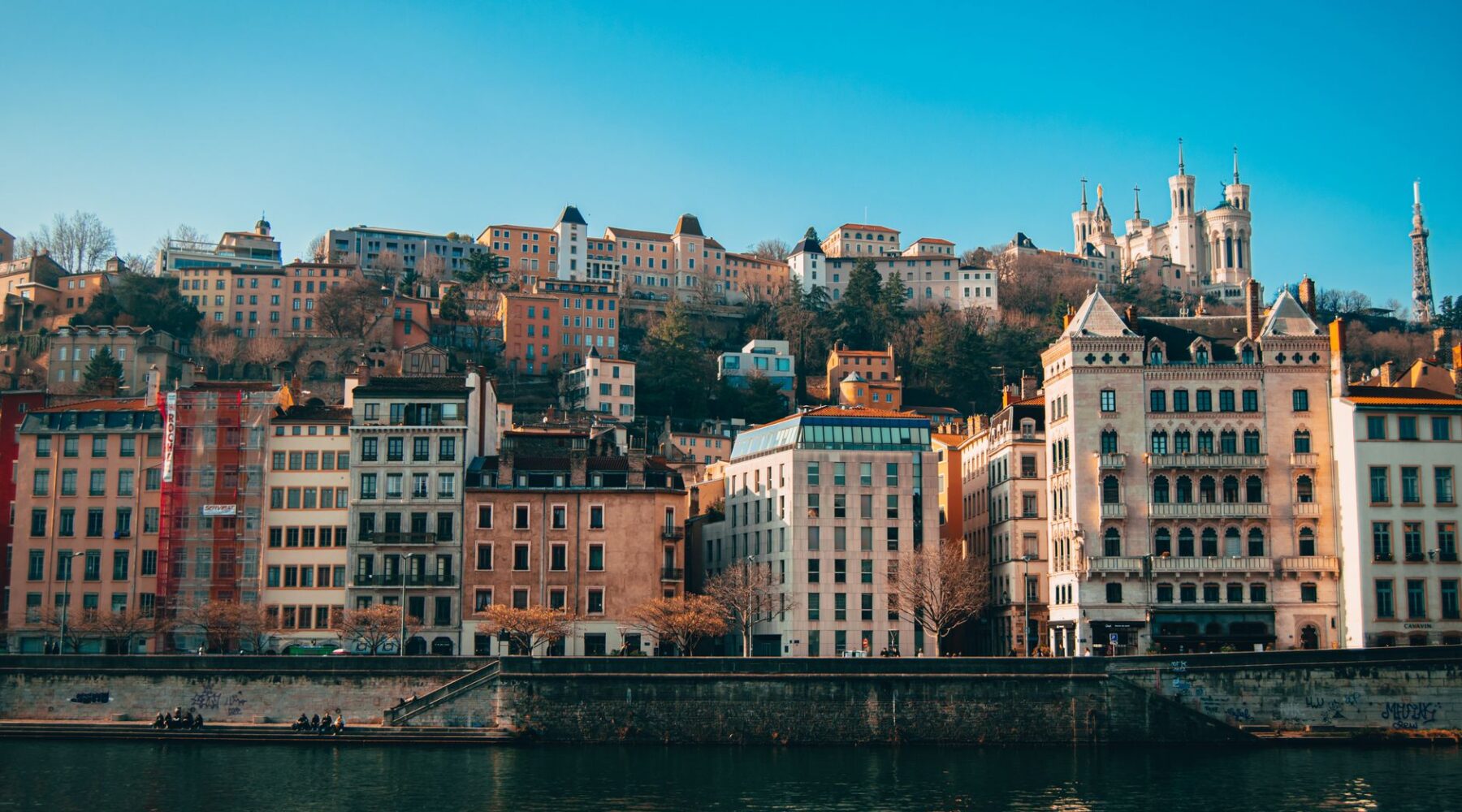
The first TGV to carry paying passengers left Paris for Lyon in September 1981, and more than four decades later the route still feels like the one the whole system was built for. Direct high-speed trains leave Gare de Lyon throughout the day, cover the 400-odd kilometres in about two hours, and set you down in Lyon with the whole morning still ahead of you. Taking the paris to lyon train is quick enough to make Lyon a genuine day trip and, booked early, cheap enough to cost less than a Louvre ticket. The complication is choice: SNCF and Trenitalia both run trains on the route, they arrive at three different Lyon stations, and the fare can be €16 or well over €100 depending on which one you pick and when.
This guide compares TGV INOUI, OUIGO, Trenitalia’s Frecciarossa and the slow OUIGO Train Classique, explains which Lyon station you actually want, and sets out how to spend a day in Lyon without spending it watching the clock. Times and fares were checked in October 2026. French rail prices move with demand, so treat them as the right order of magnitude and check your own train before you travel.
Paris to Lyon by train at a glance
| TGV INOUI | OUIGO | Frecciarossa | OUIGO Train Classique | |
|---|---|---|---|---|
| Paris station | Gare de Lyon | Gare de Lyon (some from CDG 2 and Marne-la-Vallée) | Gare de Lyon | Paris Bercy |
| Lyon station | Part-Dieu, some continuing to Perrache | Part-Dieu, Perrache or Saint-Exupéry | Part-Dieu | Perrache |
| Journey time | About 2 hours | Around 1h45 on the quickest trains | About 2 hours | Check OUIGO’s site |
| Fares | Cheap booked early; can pass €100 last minute; 30% off eligible journeys with a Carte Avantage | From €16; children €8 | Often competitive with SNCF if booked ahead | €10–49; children €5 maximum |
| Best for | Flexibility, luggage, a bar car | Planning ahead and travelling light | Undercutting SNCF on a busy day | Travellers with more time than money |
Prices checked October 2026; they are starting fares and indicative ranges, not guarantees. The number of departures and the time of the first train change from day to day, so check the timetable for your date on SNCF Connect.
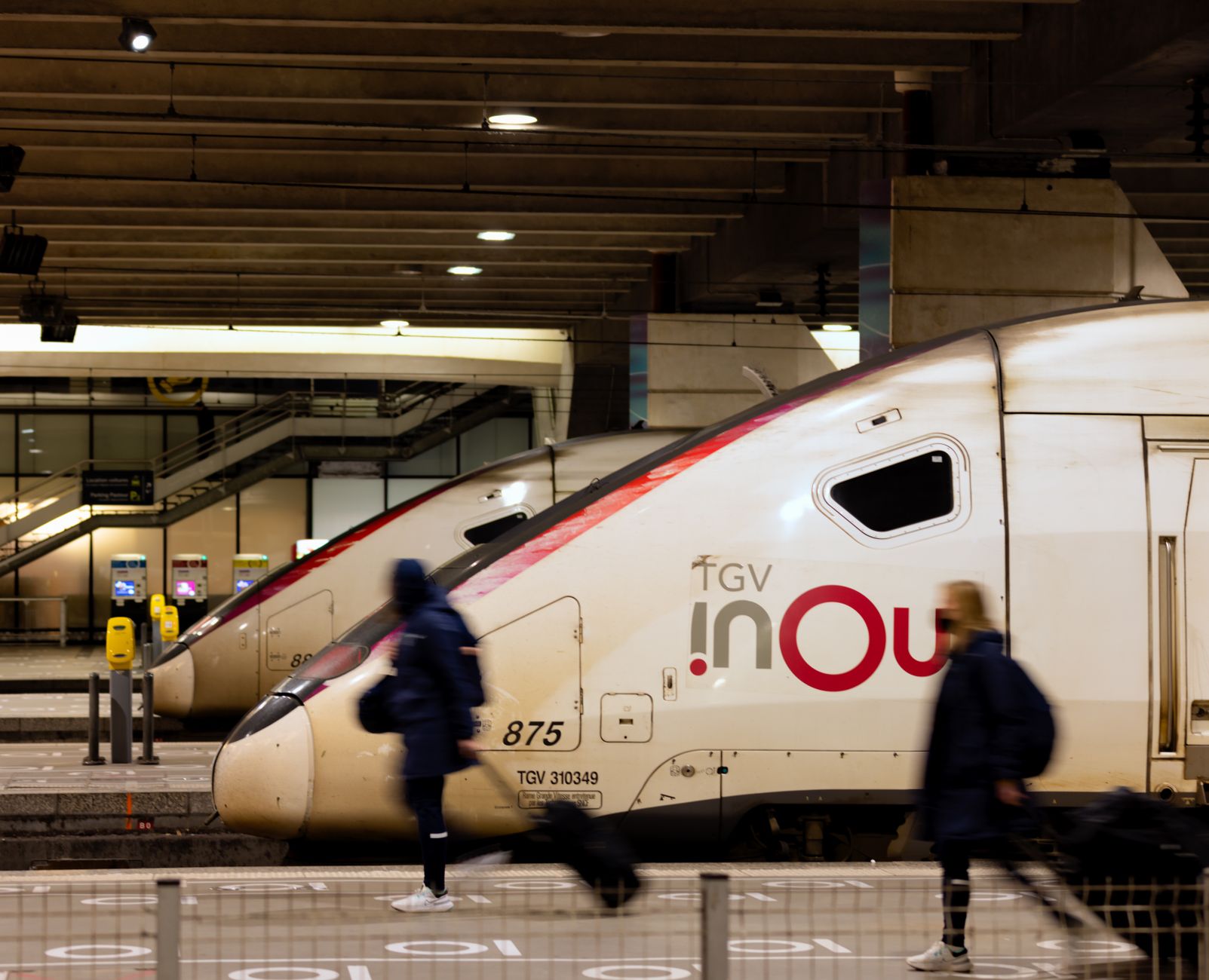
Why Lyon is the easy one
Paris to Lyon was France’s first high-speed line, the LGV Sud-Est, and it remains the busiest. There’s no change of train, no slow coastal stretch of the kind that adds hours to the trip to Nice, and once clear of the suburbs the track is built for 300 km/h almost all the way. A second line to take the pressure off it has been on the drawing board for years, which tells you how full the trains can get at peak times.
The honest truth is that it’s not the prettiest journey in France. High-speed lines avoid towns and river valleys, so for most of two hours you’re looking at the open farmland of the Brie, the low hills of Burgundy and, around Le Creusot, fields of white Charolais cattle, named after the countryside they graze. It’s pleasant and it passes quickly. Bring a book, or use the time to plan the day ahead, and save your window-gazing for the train to the Riviera.
The four ways to do it
TGV INOUI
TGV INOUI is SNCF’s standard high-speed service and the default choice. Trains leave Gare de Lyon throughout the day and arrive at Lyon Part-Dieu in about two hours; some continue a few minutes further to Lyon Perrache, which is handier for sightseeing. You get double-decker trains in first and second class, a bar car selling coffee, sandwiches and hot dishes, power sockets, and a generous luggage allowance: there’s no fixed limit, but you must be able to carry everything yourself and each bag must carry a label with your name.
Fares are dynamic. Booked weeks ahead for a mid-week morning, second class can be a bargain. Left to the last minute, a one-way seat can climb past €100. One way round that is the SNCF Carte Avantage: it costs €49 a year and takes 30% off eligible TGV INOUI and Intercités fares. The catch is the conditions. The Adulte card covers a one-way trip at the weekend, a return that includes a Friday, Saturday or Sunday night, or travel with a child under 12, so check the fare cap and the rules for your journey before you buy. The Jeune and Senior versions have conditions of their own, and our guide to trains from Paris explains how they work.
OUIGO
OUIGO is SNCF’s low-cost high-speed brand, and on this route it’s very good value. Advance fares start at €16, children pay a fixed €8, and the trains are TGV Duplex double-deckers fitted with extra seats. They leave from Gare de Lyon, Aéroport Charles de Gaulle 2 or Marne-la-Vallée–Chessy, the station for Disneyland Paris, and arrive at Lyon Part-Dieu, Lyon Perrache or Lyon Saint-Exupéry depending on the train. Read the station names carefully before you book.
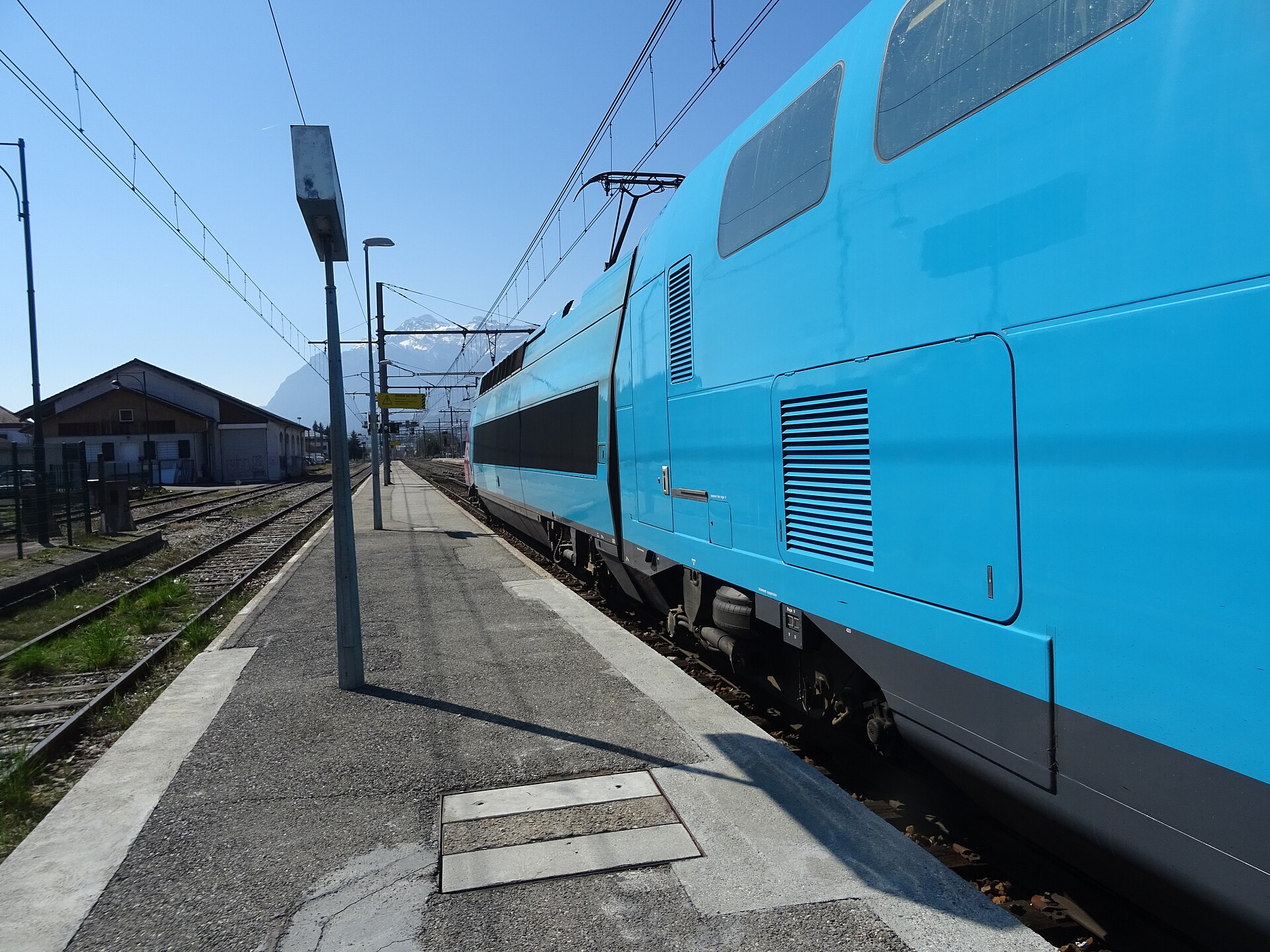
The low fares come with rules:
- Luggage is limited. The basic fare includes a hand bag up to 40 × 30 × 15 cm and a cabin-sized case or backpack up to 55 × 35 × 25 cm. Anything bigger, and extra bags, cost more, and it’s much cheaper to add them when you book than to pay at the platform.
- Boarding closes early. OUIGO asks you to be at the station 30 minutes before departure, and the doors are not held for latecomers.
- There’s no bar car. On a two-hour trip that hardly matters, but bring water.
- There’s no first class, and choosing a specific seat costs extra.
Our verdict: for a day trip with nothing but a daypack, OUIGO is the obvious choice and often costs a fraction of TGV INOUI. With a family and suitcases, add up the extras before you assume it’s cheaper.
Frecciarossa
Trenitalia, the Italian state railway, runs its sleek red Frecciarossa trains between Gare de Lyon and Lyon Part-Dieu in direct competition with SNCF. The journey takes about the same two hours, the trains are newer than most TGVs, there’s a proper bar car, and advance fares are often competitive, particularly on busy days when SNCF’s prices are high. Some services carry on across the Alps to Turin and Milan, so check the current timetable if you’re planning to continue to Italy.
One practical point: SNCF Connect doesn’t sell Trenitalia tickets, so you won’t find Frecciarossa there. Book on Trenitalia’s own website or app, or use Trainline, which shows SNCF, OUIGO and Trenitalia side by side.
OUIGO Train Classique
The fourth option takes the old way south. OUIGO’s Train Classique service leaves from Paris Bercy, a small station a few minutes’ walk from Gare de Lyon, and follows the classic line through Burgundy to Lyon Perrache, calling at Villeneuve-Saint-Georges, Melun, Dijon-Ville, Chalon-sur-Saône and Mâcon-Ville. It is far slower than the TGV, and fares run from €10 to €49, with children paying €5 at most. Check OUIGO’s site for its timetable, and make sure it runs on your date before you plan around it.
Would we take it? Only in particular circumstances. If every high-speed fare on your date is expensive, you have the whole day to spare, or you want to break the journey in Dijon, it makes sense. It’s also, quietly, the more scenic ride: between Dijon and Chalon the classic line runs along the foot of the Côte d’Or, past the vineyards around Nuits-Saint-Georges and Beaune that the high-speed line never sees. As a way to get to Lyon for a day trip, though, it’s a false economy. Five hours each way leaves almost no time for Lyon.
Which Lyon station should you choose?
This matters more than most people realise. Lyon has three stations served by trains from Paris, and they are very different places to arrive.
| Station | Where it is | Served by | Best for |
|---|---|---|---|
| Lyon Part-Dieu | The business district on the east side of the Rhône | Most TGV INOUI, OUIGO and all Frecciarossa trains | Les Halles Paul Bocuse, onward trains, the airport tram |
| Lyon Perrache | The southern end of the Presqu’île, the peninsula between the two rivers | Some TGV INOUI and OUIGO trains; OUIGO Train Classique | Sightseeing: Place Bellecour and Vieux Lyon are within walking distance |
| Lyon Saint-Exupéry | At the airport, about 20 km east of the centre | Some OUIGO trains and through TGVs heading south | Flights and car hire, and not much else |
Part-Dieu is the main station and the one most trains use. It’s big, busy and modern, and the metro station on the west side, Gare Part-Dieu – Vivier Merle, is on Metro B; for Vieux Lyon, change to Metro D at Saxe-Gambetta. The great covered food market, Les Halles de Lyon Paul Bocuse, is about a 5-minute walk away.
Perrache is the better arrival for sightseers. A short walk north through the pedestrian streets brings you to Place Bellecour, with Vieux Lyon just across the Saône. If your train stops at Part-Dieu and then continues to Perrache, stay on.
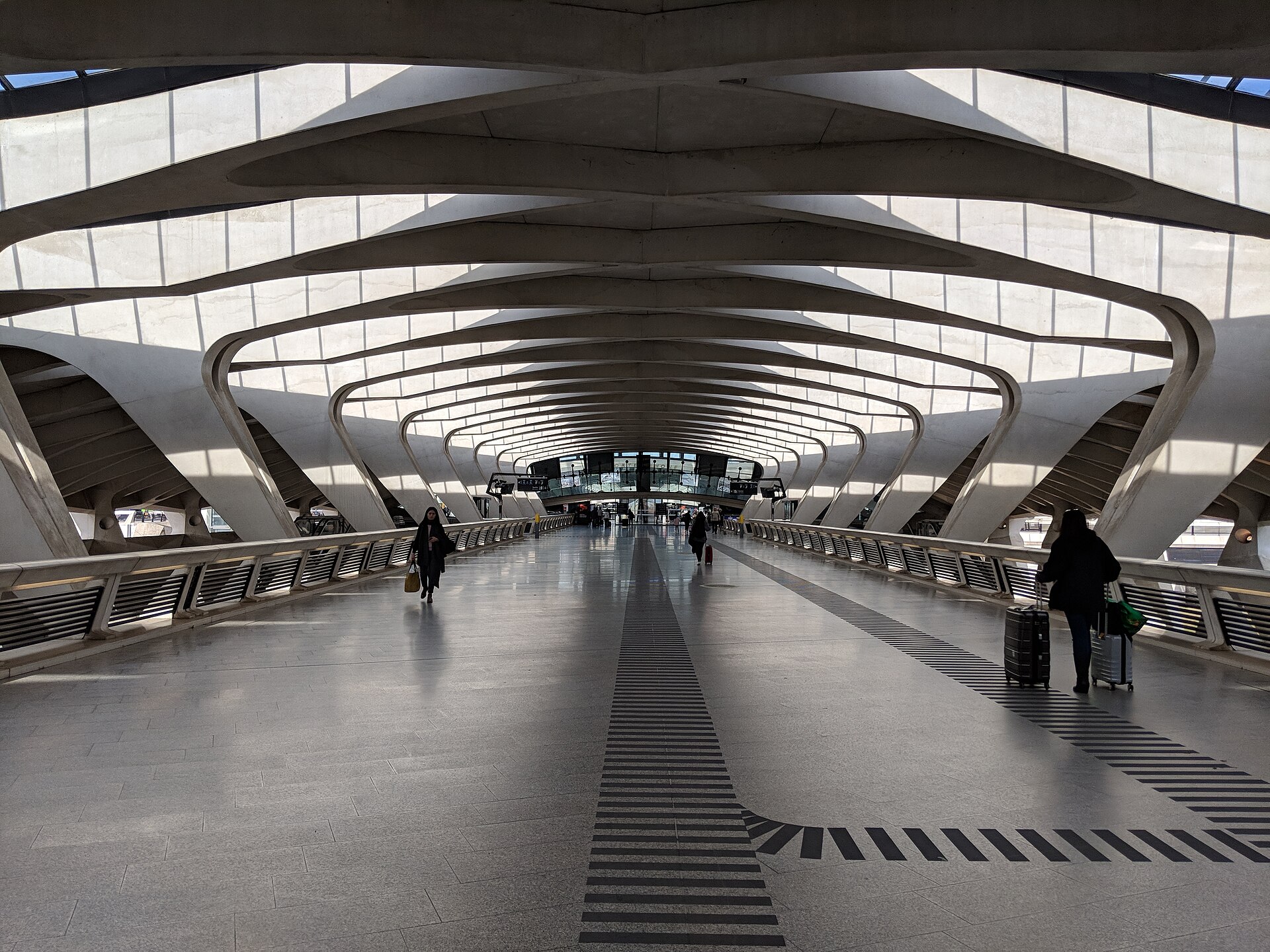
Saint-Exupéry is a spectacular building, designed by Santiago Calatrava and crowned by a great fan-shaped canopy, and a poor place to begin a city break. The Rhônexpress tram into Part-Dieu takes about half an hour and needs its own ticket, which is not cheap. Watch out for it when booking a train to Marseille or Montpellier that “stops in Lyon”: many of those skirt the city on the high-speed bypass and only call at the airport.
What it costs, and how to pay less
There’s no single price for the train from Paris to Lyon. Fares depend on the operator, the time of day, the day of the week and how far ahead you book, and the same seat can cost three or four times as much from one week to the next. A few rules of thumb keep the bill down.
- Book as soon as sales open. SNCF typically releases tickets around four months ahead, and the cheapest fares on OUIGO and TGV INOUI go first.
- Avoid the commuter peaks. Fares and crowds vary from one train to the next, so compare a few departures and days before you book. A Tuesday or Wednesday is usually cheapest.
- Compare all three operators. On a busy day OUIGO may be sold out and SNCF’s TGV INOUI expensive, while Trenitalia still has cheap seats, or the other way round.
- Do the Carte Avantage maths. At €49 a year for 30% off eligible fares, it can pay for itself if you’re making more than one long trip in France, as long as your journeys meet its conditions.
- Check first class. When you book early, the difference is sometimes only a few euros, and a single seat by the window in a two-plus-one layout is a pleasant way to spend two hours.
- Book flexible on the way home if you’re doing a day trip. Being able to switch to an earlier or later train is worth a few euros when you’re not sure how long lunch will last.
Children under four travel free on SNCF trains if they sit on your lap. On OUIGO, children pay a fixed €8, which keeps a family trip to Lyon affordable.
Can you do Lyon as a day trip from Paris?
Yes, and it’s one of the most rewarding day trips from Paris, because Lyon is a real city with its own life rather than a single sight. Four hours of train for nine or ten hours on the ground is a fair trade. Here’s how a well-paced day works.
| Time | Plan |
|---|---|
| About 7:00–8:00 | TGV INOUI, OUIGO or Frecciarossa from Gare de Lyon |
| About 9:00–10:00 | Arrive at Part-Dieu or, better, Perrache |
| Morning | Vieux Lyon, the traboules and the Cathédrale Saint-Jean, then the funicular up to Fourvière |
| 12:30 | Lunch in a bouchon, booked in advance |
| Afternoon | The Presqu’île, Place des Terreaux and the slopes of the Croix-Rousse |
| Late afternoon | Les Halles Paul Bocuse, or a drink on the banks of the Saône |
| About 19:00–20:00 | Train back, arriving in Paris around 21:00–22:00 |
The last direct trains back to Paris leave in the evening, but times change with the day of the week and the season, so check the last departure for your date before you build a dinner around it. Booking the second-to-last train rather than the last one gives you a safety net if anything goes wrong.
Our verdict: a day trip works, and it’s far better than not going. But the best of Lyon happens after dark. Dinner in a bouchon, the basilica lit up on its hill, the lights doubled in the Saône: that’s the city at its most persuasive, and on a day trip you’ll be on the train home by then. If you can spare one night, spend it here. Lyon is also the natural place to break the long journey south, and our guide to the Paris to Nice train covers the onward trip to the Riviera.
A day in Lyon, step by step
Vieux Lyon and the traboules
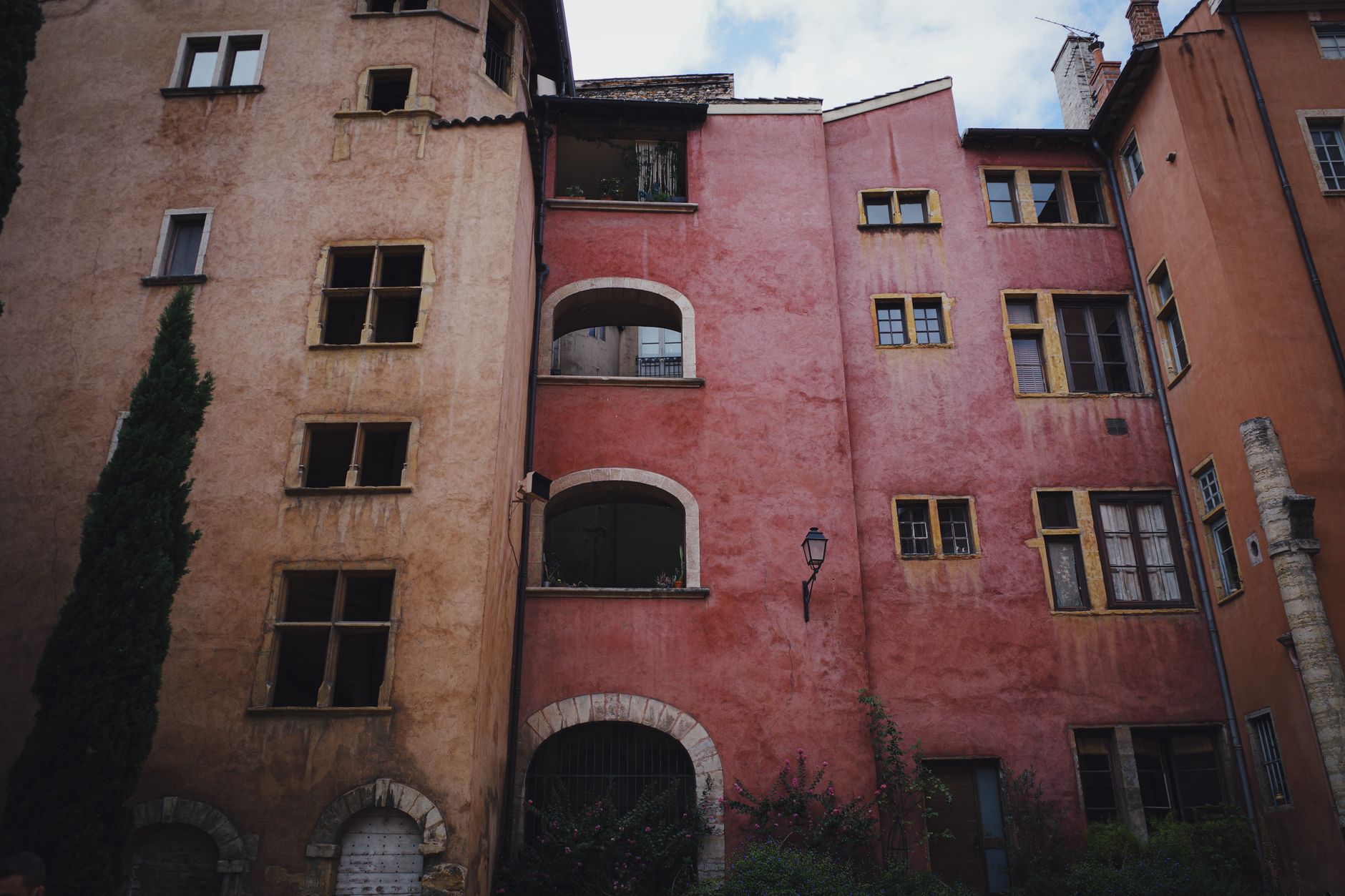
Start where Lyon started looking like itself. Vieux Lyon, on the west bank of the Saône, is one of the largest Renaissance quarters in Europe, and part of a historic site listed by UNESCO in 1998: a tight grid of cobbled streets lined with tall houses in shades of ochre, salmon and rose. In the 15th and 16th centuries its Saint-Paul end was home to Italian banker-merchants. The main streets, rue Saint-Jean and rue du Bœuf, are best before 10am, before the tour groups arrive.
The quarter’s secret is its traboules, covered passageways that cut through the buildings from one street to the next, past inner courtyards, spiral staircases and galleries. Many are open to the public during the day: push the door, walk through, and keep your voice down, because people live here. The long traboule at 54 rue Saint-Jean is the classic. At the southern end of rue Saint-Jean, the Cathédrale Saint-Jean has a centuries-old astronomical clock worth a few minutes inside.
Up to Fourvière
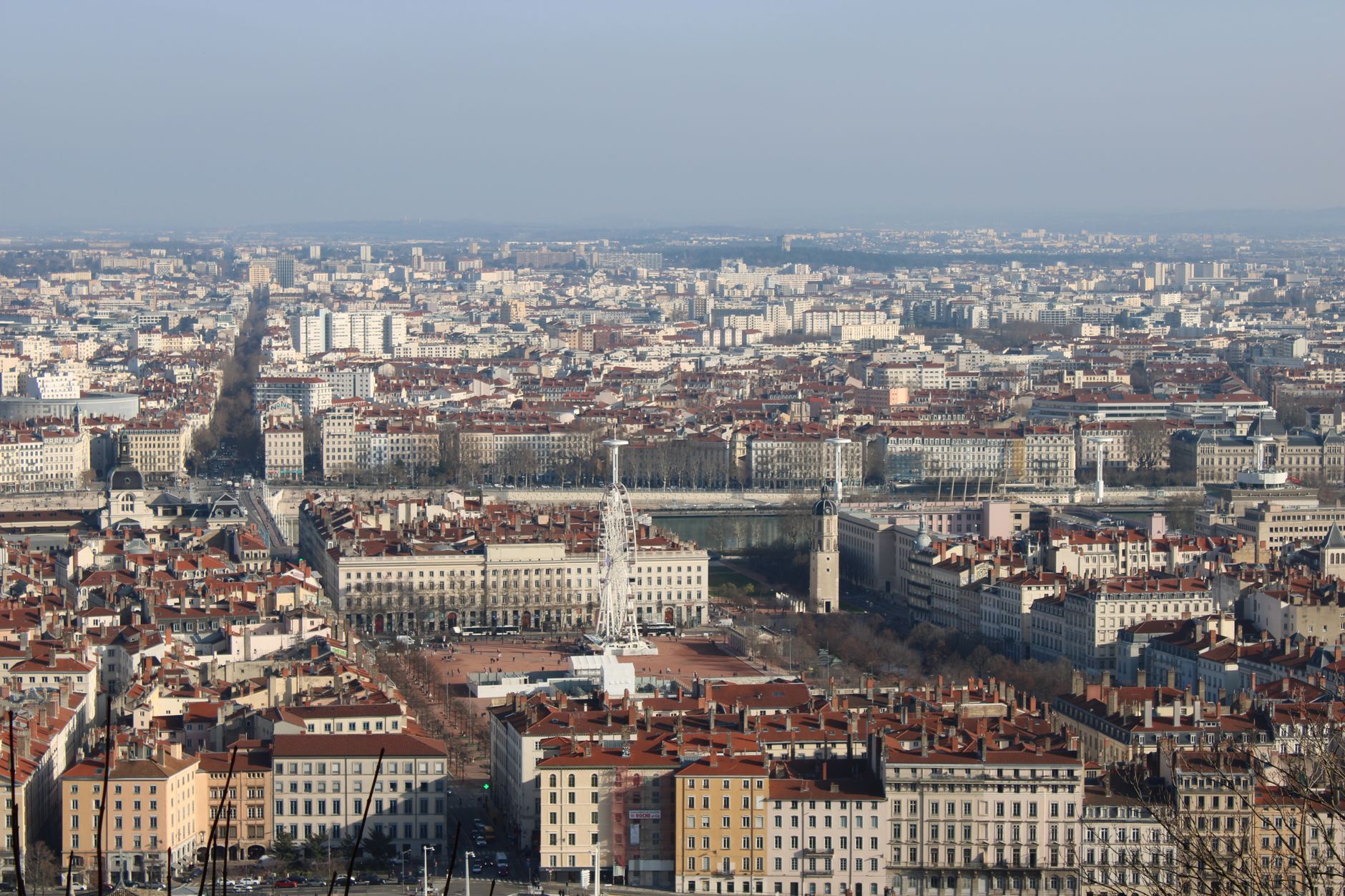
From Vieux Lyon – Cathédrale Saint-Jean metro station, the funicular climbs the hill in a couple of minutes, and a standard Lyon public transport ticket covers it. Take the line marked for Fourvière. At the top, the Basilique Notre-Dame de Fourvière, built at the end of the 19th century and free to enter, is extravagant inside, all gold mosaics and marble, and the esplanade beside it has the best view in the city: the rooftops of the Presqu’île, the two rivers and, on a clear day, the Alps.
A short walk downhill brings you to the Roman theatres of Lugdunum, the city’s Roman ancestor. The larger of the two was begun under Augustus around 15 BC and enlarged to its present size in the early 2nd century, and from late May to July it becomes an open-air venue for the Nuits de Fourvière festival. Walk back down to Vieux Lyon through the Jardin du Rosaire, a path of steps and terraces that winds down from the basilica to the cathedral.
Lunch in a bouchon
Lunch is the point of the day. The bouchon is Lyon’s own kind of restaurant: small, noisy, with checked tablecloths and a menu of rich, unfussy food that grew out of the cooking of the mères lyonnaises, the women cooks who made the city’s reputation in the early 20th century. Book a table, especially on Saturdays, and go at lunchtime, when set menus are noticeably cheaper than in the evening.
Where to go is the hard part, because Lyon has plenty of tourist versions. Some of the bouchons along rue Saint-Jean in Vieux Lyon, with laminated menus in five languages and staff calling to passers-by, are mediocre and expensive. Better ones tend to be on the Presqu’île, around the Terreaux and the Cordeliers, or on the slopes of the Croix-Rousse. The sticker of the Les Bouchons Lyonnais association in the window is a more reliable guide than a busy terrace.
The Presqu’île and the Croix-Rousse
After lunch, cross one of the footbridges over the Saône to the Presqu’île, the narrow peninsula between the two rivers that forms the heart of modern Lyon. Place Bellecour, with its equestrian statue of Louis XIV, is one of the largest open squares in Europe and a good place to get your bearings. From here the long, elegant rue de la République runs north towards Place des Terreaux, where the Hôtel de Ville and a fountain by Bartholdi, the sculptor of the Statue of Liberty, share the square with the Musée des Beaux-Arts. Housed in a former abbey, it has one of the finest collections in France outside Paris, and its cloister garden is a calm, shady place to sit.
Just north of the Terreaux the ground rises steeply towards the Croix-Rousse, the hill where Lyon’s silk weavers, the canuts, once worked on tall Jacquard looms in apartments built with high ceilings to fit them. Climb the steep Montée de la Grande Côte for a view back over the city, look for the Mur des Canuts, a large painted wall, and wander the village-like streets at the top. On the way back towards the Saône, the Fresque des Lyonnais, on the corner of rue de la Martinière and quai Saint-Vincent, is a vast trompe-l’œil mural of famous locals, from the Lumière brothers to Paul Bocuse.
Les Halles Paul Bocuse before the train
If you’re leaving from Part-Dieu, finish at Les Halles de Lyon Paul Bocuse, the covered market on cours Lafayette named after the city’s most famous chef. It’s a temple to Lyonnais produce: Saint-Marcellin cheeses, sausages, pink praline tarts, oysters eaten standing at the counter. It opens on Mondays too, with most traders there from 7:30am to 7:30pm Monday to Saturday, and the best time to see it in full swing is the morning, so if your timings allow it, consider doing the day in reverse. It’s also the best place to buy food for the train home, where a few slices of rosette sausage and a wedge of Saint-Marcellin beat anything sold at the station.
What to order in a bouchon
Lyon’s food is rich and proudly old-fashioned. Many of these dishes appear on our list of French dishes to try in Paris, but they taste better here.
- Quenelle de brochet: a light, soufflé-like dumpling of pike, baked in a crayfish sauce called Nantua. The signature dish.
- Salade lyonnaise: frisée lettuce, crisp lardons, croutons and a poached egg. Lighter than anything else on the menu, though not by much.
- Saucisson brioché: a fat pork sausage baked in brioche.
- Cervelle de canut: “silk weaver’s brains”, which is in fact fresh cheese whipped with herbs, shallots and a little vinegar. A good starter.
- Andouillette and tablier de sapeur: tripe sausage and breaded tripe. Authentic, and an acquired taste.
- Tarte aux pralines: a tart filled with crushed, bright-pink sugared almonds. Very sweet, very Lyon.
- A pot of wine: local Beaujolais or Côtes du Rhône, served in the pot lyonnais, a small bottle with a thick glass base.
Vegetarians will struggle in a traditional bouchon, where even the salads come with lardons. If that’s you, Lyon’s newer bistros and the food stalls at Les Halles are a better bet.
Getting around Lyon
Central Lyon is compact enough to walk. Vieux Lyon, the Presqu’île and the lower slopes of the Croix-Rousse are all within half an hour of each other on foot, and walking is the best way to see them. For longer hops, the TCL network has four metro lines, trams, buses and the two funiculars up Fourvière, all on the same tickets.
- Metro A runs from Perrache through Bellecour to the Hôtel de Ville.
- Metro B serves Part-Dieu station and connects with Metro D at Saxe-Gambetta.
- Metro C climbs from the Hôtel de Ville up to the Croix-Rousse, partly as a rack railway.
- Metro D links Vieux Lyon with Bellecour and the east of the city.
Buy tickets from the machines in metro stations or in the TCL app. If you’ll ride more than three or four times, a day ticket works out cheaper; check current fares when you arrive.
Train, plane, car or bus?
The train wins this one so comfortably that the alternatives barely compete.
| Train | Plane | Car | Bus | |
|---|---|---|---|---|
| Journey time | About 1h45 to 2 hours | A short flight, plus the time at both airports | Several hours on the A6, longer in traffic | The slowest of the four |
| Centre to centre | Yes | No; airports at both ends | Yes, but parking in central Lyon is expensive | From the coach station at Paris Bercy |
| Cost | From €16 on OUIGO | Only realistic as part of an international connection | Fuel plus motorway tolls | Often the cheapest option |
| Verdict | The obvious choice | Not worth it | Only if you’re touring by car anyway | For tight budgets with time to spare |
You can’t really fly from Paris to Lyon any more. Air France had already dropped its Orly–Lyon flights in 2020, and a 2023 decree, which bans certain short domestic routes where a train makes the journey in under two and a half hours, has since formally ruled that route out. The flights that remain between Charles de Gaulle and Lyon exist mainly for passengers connecting to international flights.
If you’ve just landed at Charles de Gaulle, you don’t need to go into Paris at all. TGV INOUI and OUIGO trains run to Lyon from the TGV station at Terminal 2, so you can go straight from the plane to the train. Our guide to Paris airport transfers covers the airport if you’re heading into the city instead.
At Gare de Lyon
Gare de Lyon is one of the easier big Paris stations to use, but it has two main halls and a numbering system that confuses almost everyone the first time. Trains leave from Hall 1, whose platforms are lettered A to N, or from Hall 2, whose platforms are numbered; the halls are a few minutes’ walk apart. The platform is only shown on the departure boards about 20 minutes before departure, so find a seat near the boards and wait.
- Getting there: Metro Lines 1 and 14, and RER A and D. Our Paris Metro guide explains tickets and lines.
- Arrive in time: at least 30 minutes before a OUIGO, and 20 minutes before TGV INOUI or Frecciarossa.
- For OUIGO Train Classique: go to Paris Bercy, not Gare de Lyon. Allow about 15 minutes to walk there, heading east, or take Metro 14 one stop and walk about three minutes to the mainline station.
- Breakfast: the station’s bakeries are cheaper and better than the bar car. For something grander, Le Train Bleu, the Belle Époque restaurant at Gare de Lyon, serves coffee under painted ceilings.
- Bags: if you’ve checked out of your hotel and are coming back to Paris that evening, see our guide to luggage storage in Paris.
Our guide to the Paris train stations has a full plan of Gare de Lyon and Bercy, and our pick of the best Paris travel apps includes the ones that show platforms and delays.
When to go
Lyon works in any season, but a few dates change the plan.
- The Fête des Lumières, held over four nights around 8 December (5 to 8 December in 2026), fills the city with light installations and is one of the high points of Lyon’s year. Hotels sell out months ahead and trains fill up, so book early. It’s an evening event, so it doesn’t suit a day trip unless you take a late train back. If you’re in France for the festive season, our guide to Christmas in Paris covers the rest of December.
- Summer in Lyon is hotter than in Paris, and July and August afternoons can be stifling on the Presqu’île. Start early and save the Croix-Rousse climb for the evening. The Nuits de Fourvière festival takes over the Roman theatre from late May into July.
- Mondays and Sundays need care. Les Halles Paul Bocuse closes on Mondays, and many traditional bouchons close on Sundays, some for the whole weekend. Tuesday to Saturday is the safest window for a food-focused day.
Going further
Lyon is the hinge of south-eastern France, and a lot of journeys from Paris pass through it. From Part-Dieu, regional trains run to Annecy, Chambéry and Grenoble for the Alps, to Geneva, and north into the Beaujolais vineyards; TGVs continue south to Avignon, Marseille and Montpellier. If you’re planning a longer trip by rail, a night in Lyon breaks the journey neatly. Our guide to trains from Paris covers the main routes and how to book them, and if you’d rather see Lyon as one of several excursions, our list of the best day trips from Paris sets it against shorter options such as the Champagne day trip.
Practical tips
- Check strikes and engineering works in the days before you travel. SNCF Connect and Trainline both show disruption.
- Label your luggage. It’s a requirement on SNCF trains.
- Keep your ticket on your phone and the battery charged; inspectors check on board, and OUIGO checks tickets before you board.
- Book your bouchon before you book your train if lunch is the reason you’re going.
- Wear comfortable shoes. Vieux Lyon is cobbled and the Croix-Rousse is steep.
- Watch your bags at Part-Dieu and Gare de Lyon at busy times, as you would at any big station.
Frequently asked questions
How long is the train from Paris to Lyon?
About two hours on the direct TGV INOUI, OUIGO and Frecciarossa trains from Gare de Lyon, with the quickest OUIGO trains taking around 1h45; check the timetable for your date. The OUIGO Train Classique from Paris Bercy to Lyon Perrache takes far longer, so look up its times on OUIGO’s site.
How much is the train from Paris to Lyon?
OUIGO fares start at €16 for adults and €8 for children. TGV INOUI fares are cheapest booked early and can pass €100 at the last minute, but a Carte Avantage (€49 a year) takes 30% off eligible journeys, depending on the card’s conditions. OUIGO Train Classique costs €10 to €49. Prices checked October 2026.
Which Paris station do trains to Lyon leave from?
Gare de Lyon, for TGV INOUI, OUIGO and Frecciarossa. The slow OUIGO Train Classique leaves from Paris Bercy, a short walk away. Some OUIGO and TGV INOUI trains also run from Charles de Gaulle airport and Marne-la-Vallée–Chessy.
Should I arrive at Lyon Part-Dieu or Perrache?
Perrache is better for sightseeing, as it’s within walking distance of Place Bellecour and Vieux Lyon. Part-Dieu is the main station, with more trains, and is close to Les Halles Paul Bocuse. Avoid Lyon Saint-Exupéry unless you’re flying: it’s at the airport, half an hour from the centre.
Can you do a day trip from Paris to Lyon by train?
Yes. Take a train at around 7–8am, arrive by 9–10am, and catch a train back in the early evening to be in Paris by about 10pm. Check the time of the last train back for your date, and book a bouchon for lunch.
Is OUIGO or TGV INOUI better for Paris to Lyon?
OUIGO is usually cheaper, but limits luggage and has no bar car, and boarding starts about 30 minutes before departure, with access closing 5 minutes before the train leaves. TGV INOUI is more flexible and better with suitcases. For a day trip with a small bag, OUIGO is usually the better deal.
Can I fly from Paris to Lyon?
Not easily. Air France stopped flying Orly–Lyon in 2020, and the route is now one of the short domestic flights that a 2023 decree bans where the train takes under two and a half hours. Remaining flights from Charles de Gaulle mainly serve connecting passengers. The train is faster door to door anyway.
Can I take a train to Lyon directly from Charles de Gaulle airport?
Yes. TGV INOUI and OUIGO trains run from the TGV station at Terminal 2 to Lyon without going through central Paris.
Related Paris Guides
- Trains From Paris: The Complete Guide
- Paris Train Stations Explained
- Paris to Nice by Train
- Paris to Amsterdam by Train
- The Best Day Trips From Paris
- Luggage Storage in Paris
- Paris Airport Transfers
- Disneyland Paris Guide
Photo Credits
Inside Lyon Saint-Exupéry station: Gare de Lyon-Saint Exupéry (44679431820) by Jun Seita from Palo Alto, CA, U.S., CC BY 2.0, via Wikimedia Commons.