Paris Metro Guide for Tourists: How to Use It Like a Local
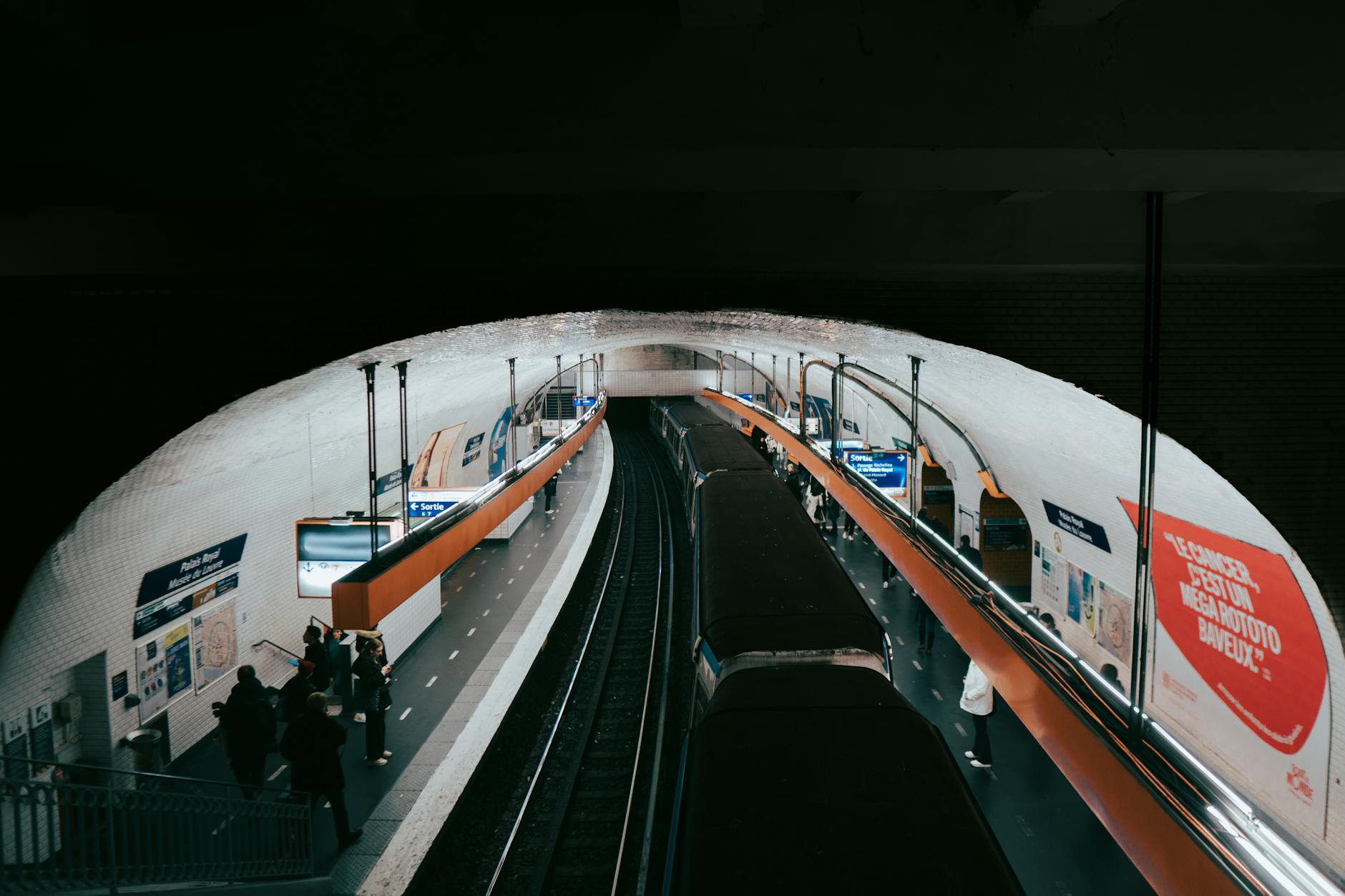
No spot in central Paris sits more than 500 metres from a Métro station. That one fact does most of the work in this paris metro guide for tourists: with 16 lines, 308 stations, and 1.5 billion rides a year, the Métro is the fastest, cheapest, and most-used way to move through the city. Learning it is the single most useful skill you can pick up on a Paris trip. It beats walking for anything over 800 metres, undercuts taxis, and shrugs off the rush-hour gridlock that strands ride-shares. This guide covers ticket types and the post-2025 shift to Navigo Easy, the lines that actually matter to visitors, the big interchanges, the honest state of accessibility, pickpockets and safety, how the Métro differs from the RER, the night-bus fallback, and the small points of etiquette that separate a confident rider from a flustered one.
For wider context, see our guide to Paris transit; for related transit details, our airport-transfer notes live in planning your trip to Paris. Neighborhood-by-neighborhood arrival guidance is in where to stay in Paris.
The Paris Métro at a Glance
- 16 lines: 14 numbered (1-14), plus the short 3bis and 7bis branches.
- 308 stations across central Paris and the inner suburbs.
- 225 km of track, most of it underground.
- Operating hours: roughly 5:30am to 12:40am Sun-Thu, and 5:30am to 1:40am Fri-Sat, with trains every 2-4 minutes at peak.
- Ticket price: €2.15 per ride (2026), good for 90 minutes including transfers within Métro/RER zones 1-2.
- Operator: RATP (Régie Autonome des Transports Parisiens).
- Founded: July 19, 1900, the opening day of Line 1; Hector Guimard’s Art Nouveau entrances are Paris icons now.
- Cleanest, newest: Lines 1 and 14, both fully automated since 2012, driverless, with constant CCTV.
- Oldest: Line 4 (1908); Line 1 was automated in 2012.
- Connections beyond Paris: the RER (regional express) Lines A-E run faster trains out to the suburbs, the airports, Disneyland Paris, and Versailles.
2026 Ticket Types (Navigo Easy — The Single Most Important Change)
Here is the change that trips up the most visitors. Between 2023 and 2025, paper tickets were steadily retired in favor of the Navigo Easy card, and as of 2026 paper is sold at only a handful of stations and fading fast. The Navigo Easy is a reusable plastic card: buy it once at any Métro ticket window or vending machine for €2, then load tickets or passes onto it as you go.
- Single ticket (Ticket t+): €2.15, good for 90 minutes including transfers within zones 1-2 (central Paris). Load them onto a Navigo Easy as needed, or buy a Carnet of 10.
- Carnet of 10 tickets: €17.35, which saves €4.15 against 10 singles. The best value for a short visit of 5-15 trips.
- Navigo Easy Day Pass (Mobilis): €8.65 for zones 1-2, €14.20 for zones 1-3, €19.85 for zones 1-4. Unlimited rides for the day.
- Paris Visite Pass: 1, 2, 3, or 5 days, from €14.40 (1 day, z1-3) to €67.95 (5 day, z1-5). Covers Métro, RER, bus, and tram, plus modest attraction discounts. Honestly, it only pencils out in the airport-included zone 1-5 version.
- Navigo Decouverte Weekly: €31.60 for zones 1-5, covering all of Paris plus the airports, Versailles, and Disneyland. Valid Monday-Sunday only, so buy it Monday morning, Wednesday at the latest, to get full value. You need a passport photo. This is the best deal for stays of 4 days or more that include airport transfers.
- Navigo Monthly: €88.80 for zones 1-5, aimed at stays of 30 days and up.
- Free for under 4, with reduced child fares for ages 4-9.
The 2025 switch from paper to electronic has thrown a lot of people. So here is the simple play: at your first Métro station, head to a ticket window or vending machine and ask for “une carte Navigo Easy plus un carnet de 10 tickets.” That gets you the reusable card and 10 tickets for €19.35, and you refill from there. Staying 4 days or more and landing on a Monday? Buy a Navigo Découverte Weekly instead.

The 16 Métro Lines: What Tourists Actually Use
You will not touch most of the network. Here are the lines that matter to visitors, ranked by how often you will actually use them:
- Line 1 (yellow): the one to know. La Défense to Château de Vincennes via the Arc de Triomphe, Champs-Élysées, Concorde, Louvre, Hôtel de Ville, and Bastille. Fully automated since 2012, and it runs every 90 seconds at peak.
- Line 14 (purple): the second workhorse, fully automated and modern. Saint-Denis-Pleyel to Aéroport d’Orly, every 95 seconds, hitting Gare de Lyon, Châtelet, Pyramides (near the Louvre), and Saint-Lazare. The Orly extension opened in June 2024.
- Line 4 (purple-blue): north-south through the middle of town. Porte de Clignancourt to Bagneux via Gare du Nord, Châtelet, Saint-Michel, and Montparnasse.
- Line 6 (light green): the elevated line for that Eiffel postcard, running above ground for stretches. Charles de Gaulle-Étoile to Nation via Bir-Hakeim (Eiffel), Pasteur, and Place d’Italie.
- Line 9 (gold): call it the tourist’s arc. Pont de Sèvres to Mairie de Montreuil via Trocadéro, Champs-Élysées, Opéra, Grands Boulevards, and République.
- Line 12 (dark green): the Montmartre gateway, via Abbesses (the approach to the hill), Madeleine, Concorde, Solférino, and Montparnasse-Bienvenüe.
- Line 7 (pink): Gare de l’Est, Opéra, Palais Royal-Musée du Louvre, Pont Neuf, and Place Monge.
- Line 8 (lavender): central east-west, via Opéra, Madeleine, Concorde, and Bastille.
- Line 11 (brown): eastern Paris, via Hôtel de Ville, Belleville, and Ménilmontant.
You will lean on these less: Lines 2 (the north-side arc with Pigalle and Anvers), 3, 5, 10, and 13.
Major Interchange Stations You Will Pass Through
- Châtelet-Les Halles: the biggest Métro/RER interchange in Paris, joining Lines 1, 4, 7, 11, and 14 with RER A, B, and D. It is crowded, the underground walks between platforms are long, so budget 8-12 minutes to transfer.
- Saint-Lazare: Lines 3, 9, 12, 13, and 14, plus RER E and the Transilien suburban trains.
- Gare du Nord: Lines 4 and 5, plus RER B, D, E and the TGV/Eurostar. Skip it late at night; it is a pickpocket magnet.
- Gare de Lyon: Lines 1 and 14, plus RER A and D, connecting to TGV services south and east.
- Montparnasse-Bienvenüe: Lines 4, 6, 12, and 13, connecting to TGV services south and west.
- Opéra: Lines 3, 7, and 8, the gateway near Galeries Lafayette.
- République: Lines 3, 5, 8, 9, and 11. Big, but well laid out.
- Bastille: Lines 1, 5, and 8, with that landmark above-ground signage.
- Concorde: Lines 1, 8, and 12.
- Charles de Gaulle-Étoile: Lines 1, 2, and 6, plus RER A, for the Arc de Triomphe.
How to Actually Use the Métro: Step-by-Step
- Step 1: Find a Métro entrance. Look for the yellow “Métro” sign or the Hector Guimard Art Nouveau railings.
- Step 2: Check your line and direction. Lines are color-coded and numbered (Line 1 is yellow, for instance). Each line has two end-stations, and the platform you want is named for the end-station you are heading toward.
- Step 3: Buy or refill your ticket. Vending machines switch to English, take cards, and want cash only for purchases of €5 or more.
- Step 4: Tap your card at the turnstile. The Navigo Easy works on a tap; old paper tickets have to be inserted.
- Step 5: Follow the signs to your direction. Signage throughout the station lists each line and its terminal station, so walk toward the right one.
- Step 6: Board the next train. They come every 2-4 minutes at peak, every 5-7 off-peak.
- Step 7: Get off at your stop. Listen for the announcement; Lines 1 and 14 also show the next station on screens.
- Step 8: Tap to exit where required. Most Métro stations no longer need an exit tap, but Métro-to-RER stations do.
- Step 9: Follow the “Sortie” (exit) signs. Big stations have several exits, numbered Sortie 1, 2, 3, and so on by direction.

RER vs Métro: The Critical Distinction
The RER (Réseau Express Régional) is a separate, faster regional rail network linking Paris to its suburbs and airports, running on lines A, B, C, D, and E. Inside Paris it shares the city with the Métro but stops at far fewer stations and moves a lot quicker.
Reach for the RER when you are heading to:
- The airports: RER B for Charles de Gaulle, and the newer Métro Line 14 for Orly (opened June 2024).
- Versailles: RER C from Champ de Mars, Saint-Michel, or Musée d’Orsay.
- Disneyland Paris: RER A from Châtelet-Les Halles to Marne-la-Vallée Chessy.
- La Défense: RER A or Métro Line 1.
- Saint-Germain-en-Laye and other inner suburbs: RER A.
- Pricing: a single ticket is the same €2.15 within central Paris (zones 1-2). For the airports, Versailles, or Disneyland (zones 4-5), buy a single ticket priced by zone, or use a Navigo Easy Day Pass covering all zones, or the Navigo Découverte Weekly.
Métro Safety & Pickpockets
Violent crime on the Métro is rare, and statistically the system is safe. The real risk is pickpocketing, which is rampant on a few heavily touristed lines. The hotspots:
- Line 1: above all the Louvre-Rivoli to Bastille stretch, where teams work tourists with backpacks.
- Line 4: Châtelet to Saint-Michel, thick with visitors.
- Line 6: the Trocadéro and Eiffel area.
- RER B: especially Gare du Nord to Châtelet; the airport route pulls in professional crews.
- Line 9: the Trocadéro to Opéra arc.
What actually helps: keep your phone in a closed pocket and out of sight, swing a backpack around to your front in a crowd, carry a cross-body bag that zips, and do not flash a wallet or big bills at the ticket machine. Watch for distraction plays too, the request for the time, the dropped object, the fake police asking to inspect your documents. For deeper neighborhood-safety context, see our safest areas to stay in Paris guide.
As for late nights, the trains stay safe right up to closing. If you are on your own, steer clear of the Gare du Nord and Châtelet platforms after midnight. Once the Métro shuts, take a taxi (G7, Bolt, Uber) rather than walking any real distance home, or catch a Noctilien night bus (N01-N153), which run through the night.
Accessibility: The Honest Truth
Be warned: the Paris Métro is poor for anyone with mobility limitations. Only 7 of the 16 lines are step-free at most stations, chiefly Lines 1 and 14 plus parts of 4, 8, 9, 11, and 13. Most Belle Époque stations offer nothing but stairs.
- Fully accessible: Line 14, and Line 1 for the most part.
- Partially accessible: Line 4 (the newer stations) and parts of 13.
- Better options for mobility-limited travelers: buses (most are low-floor with a stroller bay), trams (T2 and T3 are fully accessible), and taxis through the G7 ACCESS wheelchair service.
- RER stations: more elevators than the Métro, but inconsistent.
- Live status: check the “Bonjour RATP” app for elevator and escalator outages.
Useful Apps for the Paris Métro
- Bonjour RATP (official): live disruption alerts, accessibility info, and ticket purchase. Free.
- Citymapper: the best multi-modal navigation for Paris, covering Métro, RER, bus, walking, and bike-share. Free.
- Google Maps: reliable Métro routing, and it works offline once you download the Paris map.
- Bilibo: live train arrivals at each station.
- NavigoPay: loads a Navigo Easy from your phone (Android NFC).
Etiquette: How Parisians Use the Métro
- Stand on the right on escalators and leave the left for people walking.
- Let people off before you board.
- Move into the middle of the carriage instead of clogging the door.
- Headphones: keep the volume down; plenty of Parisians are reading.
- Phone calls: talk quietly. Loud callers are not appreciated.
- Eating: a small snack is fine, a full meal is not.
- Begging: organized beggars work most lines; a simple “Non, merci” is the polite decline.
- Buskers: tipping is optional, and many are licensed RATP performers.
- Priority seating: clearly marked, so give it up for elderly, pregnant, or disabled passengers.
Bus Network: When the Métro Isn’t the Right Answer
The bus network spans more than 350 routes and fills in at street level where the Métro falls short. The bus wins when you want:
- Short hops: 500-1500m, where the stairs and platform walk eat up more time than the ride.
- Step-free travel: most Paris buses are low-floor with stroller and wheelchair bays.
- Scenery: Bus 24 (along the Seine), Bus 72 (left bank), Bus 96 (Marais), Bus 38 (south Paris).
- The Eiffel run: Bus 82 from the Eiffel Tower to the Luxembourg Gardens beats Métro Line 6 for comfort.
- The same ticket: €2.15 covers the bus plus 90 minutes of connections to Métro, RER, and tram.
- The overnight option: Noctilien night buses (N01-N153) run 12:30am-5:30am while the Métro sleeps.
Common Métro Mistakes (And How to Avoid Them)
- Buying a paper ticket every trip: switch to a Navigo Easy on day one and save both money and time.
- Picking the wrong RER station inside Paris: not every station has direct service to Charles de Gaulle on RER B, so check Citymapper first.
- Missing the “Direction” sign: lines run both ways, and the terminal-station name on the sign tells you which platform is yours.
- Cutting transfers too fine: a Châtelet-Les Halles change can run 10-15 minutes underground, so leave a buffer.
- Forgetting the bus: for short trips and accessible travel, it is often the better call.
- Cutting the last train too close: know when yours leaves, and fall back on the Noctilien or a taxi.
- Keeping tickets against your phone: the chip can scramble a paper ticket, so store them separately.
- Not validating: you must tap the Navigo Easy or insert a paper ticket at the turnstile. Controllers run random checks, and fare-dodging fines run €50-180.
Frequently Asked Questions
How much does the Paris Métro cost in 2026?
A single ticket is €2.15, good for 90 minutes including transfers within central Paris zones 1-2. A carnet of 10 runs €17.35, saving €4.15. The Navigo Easy Day Pass is €8.65 for unlimited central rides, and a weekly Navigo Découverte covering all zones (airports included) is €31.60, valid Monday-Sunday.
Is the Paris Métro safe?
Statistically, yes; violent crime on the Métro is rare. Pickpocketing is the real concern, concentrated on Lines 1, 4, 6, 9, and RER B (Gare du Nord especially). Keep your phone hidden and your bag in front and you will be fine. Lines 1 and 14 are fully automated with continuous CCTV and the safest at any hour.
What time does the Paris Métro stop running?
It runs 5:30am to 12:40am Sunday-Thursday and 5:30am to 1:40am Friday-Saturday. After that, Noctilien night buses (N01-N153) cover 12:30am-5:30am. The RER runs a little later.
Is the Navigo Easy worth getting?
Yes. The €2 reusable card pays off on any visit of two days or more, and with paper tickets being phased out, plenty of stations no longer sell them. Buy the card at your first Métro stop and load tickets or passes as you need them.
Do I need to validate my Paris Métro ticket?
Yes. Tap your Navigo Easy or insert your paper ticket at the turnstile as you enter. Controllers run random checks across the system, and fare-dodging fines start at €50 and climb from there.
What is the difference between Métro and RER?
The Métro is the central-Paris network, 16 lines stopping every 500m or so. The RER is the regional express, 5 lines (A-E) reaching the airports, Versailles, Disneyland Paris, and the inner suburbs. Within Paris the RER is faster but stops less often. The ticket is the same in zones 1-2; longer trips need zone-priced tickets.
Is the Paris Métro wheelchair accessible?
Most lines are not step-free. Only Line 14 is fully accessible at every station, and Line 1 is mostly accessible. For wheelchair travel, use the bus (low-floor, with a bay), the tram (T2 and T3 are fully accessible), or accessible taxi service (G7 ACCESS).
Can you use Apple Pay on the Paris Métro?
Yes. Since 2023, Apple Pay and Google Pay tap through at most turnstiles via contactless, for the same fare as a single ticket. The Navigo Easy still works out cheaper once you are past 5 trips.
Plan the Rest of Your Paris Trip
The Métro is the connective tissue of any Paris trip, so pair it with: getting around Paris (the pillar covering airport transfers, walking, biking, and ride-shares), plan a trip to Paris for arrival logistics, where to stay in Paris for the neighborhood-by-line breakdown, and safest areas to stay in Paris for pickpocket-aware lodging. For sightseeing: things to do in Paris, Paris attractions, Paris museums guide, and day trips from Paris. For eating: Paris food guide and best restaurants in Paris. For the lay of the land: Paris neighborhoods guide. And a few specialty angles: Paris with kids, Paris on a budget, romantic Paris, best time to visit Paris, Paris shopping guide, and Paris nightlife guide.



The Metro is safe to use and the highest-theft environment in the city, and both of those are true at once. Our Paris safety guide sets out the specific lines and stations where visitors are most often targeted, and the simple habits that make you a bad mark.
The Metro is safe, and it is also where most theft from visitors happens — those two statements sit together more comfortably than they look. The risk is to your pockets rather than to you, it is concentrated on lines 1, 4 and 9 and in the big interchange corridors, and it is largely defeated by not boarding in a crush. We go through the specifics in our guide to pickpockets in Paris and how not to be a target.
Mobile coverage now reaches most of the Metro network, tunnels included on the busier lines, but there are still dead sections and a moving train is less reliable than a platform. Download an offline map before you go under rather than trusting the signal. Our guide to staying connected in Paris covers data, eSIMs and where the free Wi-Fi is.
Line 14 is now also an airport line. Since June 2024 it has run all the way to Orly, reaching Châtelet in about 25 minutes on the special €14 airport ticket. Our Orly airport guide covers the fare, the hours and which stops suit which part of Paris.
Related Paris guides
Use these to round out your trip: