Best Bakeries and Patisseries in Paris: A Croissant Lover’s Guide
France runs roughly 30,000 boulangeries, about one for every 2,200 people, and Paris alone holds more than 1,200 of them, all crammed inside the ring of the Périphérique. Out of that thicket, one shop each March gets crowned by the city as winner of the Grand Prix de la Baguette de Paris, and the prize comes with a year of supplying the Élysée Palace. So the best bakeries in paris are not some local secret you have to crack. They are competition-decorated boulangeries, third-generation patisseries with Belle Époque tiling, and a wave of young chefs rebuilding the croissant in real time. What follows is the part that actually helps: the 2025-2026 baguette winners, the patisseries that count (Cyril Lignac, Pierre Hermé, Yann Couvreur, Stohrer, Sébastien Gaudard, Jacques Genin, La Mère de Famille), the croissant map, the Sunday-closure trap, and how to spot a real artisan bakery from an industrial fake the second you walk in.
Treat this as a working map. Every section pairs names with addresses, what to order, and when to show up. Read it alongside our Paris dining guide for the full picture, and our Paris neighborhoods guide if you want to plan a bakery crawl by geography.
The Paris Bakery Landscape: Boulangerie vs Patisserie vs Industrial
Three words on three storefronts decide what you eat for breakfast in Paris. A boulangerie is, by French law, a bread bakery. Bread is the heart of it, along with the buttery pastries called viennoiserie: croissants, pains au chocolat, brioches, chaussons aux pommes. A patisserie is a pastry shop, and its world is tartes, mille-feuilles, choux pastries, mousse cakes, religieuses, Saint-Honorés. Plenty of Paris shops carry both signs and do both well, but the legal categories matter because they tell you what a place is actually built around.
The phrase to hunt for is “Boulangerie Artisanale.” A 1998 French decree reserves that label for shops that mix, shape and bake their bread on site, never from frozen dough trucked in. The opposite, the boulangerie industrielle, hardly ever advertises what it is. Chains and corner shops selling frozen-dough baguettes just drop the word “artisanale” and let you fill in the blank. One more seal worth knowing is “Fait Maison” (made in-house), which turns up on some patisseries to certify the pastries were made on the premises rather than bought wholesale.
Every March, the City of Paris runs the Grand Prix de la Baguette de Paris. Bakers submit anonymous baguettes, judged on cooking, taste, crumb, smell and looks. The winner takes a cash prize, instant citywide fame, and the contract to deliver baguettes daily to the President’s table at the Élysée Palace for the next year. That contract is why the winner’s queue spills down the pavement for months: by official decree, it is the best baguette in the capital, and people line up accordingly.
Here is the quick field test. Small storefront, a queue forming before 9am, baguettes that vary a little in length and color, and a competition diploma by the till? You’re in a real artisan bakery. Uniformly pale bread, identical shapes, stacked in a plastic-lined basket beside the register of a convenience store? That’s frozen-dough industrial baguette. Edible enough, but not the reason you flew to Paris.
The Best Baguette Winners: 2024-2026
The Grand Prix de la Baguette de Paris goes back to 1994, and its winners reliably turn into pilgrimage stops. The recent champions are worth every minute of the queue.
2024 winner: Xavier Netry at Utopie (11th arrondissement)
Xavier Netry, head baker at Boulangerie Utopie (20 Rue Jean-Pierre Timbaud, 11th), took the 2024 prize. Utopie was already one of the most respected modern bakeries in the city, famous for charcoal-bread croissants and matcha viennoiserie, so the win played more like a coronation than a shock. The shop is tiny, the queue is permanent, and you should be there before 10am for any shot at the morning’s tradition.
2025 winner: Mickael Reydellet at La Parisienne (5th)
Mickael Reydellet, the artisan behind the La Parisienne mini-chain (several locations, principal shop at 28 Rue Monge, 5th arrondissement), claimed the 2025 title. What sets him apart is that he has won the contest twice, the first time back in 2016, and the repeat cemented La Parisienne as the most consistent baguette of the decade. The Monge shop is a short walk from the Pantheon and open daily, which puts it squarely on most walking routes.
2026 winner: announced in March
The City of Paris names the 2026 winner in March 2026. If you’re reading this in spring or summer 2026, check the City of Paris official news site or the @paris account on social media; the new champion’s address always lands straight onto the must-visit list.
Historic winners still worth visiting
- Du Pain et des Idées — Christophe Vasseur won in 2008. His shop on Rue Yves Toudic is still the most beloved bakery in Paris, locals and visitors alike.
- Lou Cure (Mauricio Rosell) — 2021 winner. A quiet shop in the 12th that pulls devotees for its long-fermentation tradition.
- Brun — 2022 winner; an Argentine-owned bakery that turns out one of the most underrated baguettes in the city.
- Le Grenier à Pain Abbesses — 2010 winner; the Montmartre standby if you’re staying near the Sacré-Coeur.
What to order at any of them: ask for a baguette tradition (around €1.50), never the cheaper baguette ordinaire. The “tradition” is the legally defined hand-shaped, long-fermented loaf; the “ordinaire” might be the frozen-dough one. Best time to buy: 7-9am for the breakfast batch, or 4-6pm for the afternoon bake that locals carry home for dinner.
The Croissant Hall of Fame
The croissant is younger than the baguette but more recognizable the world over. The best Paris versions share three things: a deeply caramelized exterior, a honeycomb crumb you can see the moment you tear it, and the hit of real butter rather than vegetable shortening. The shops below are the ones Parisians genuinely queue for, not the Instagram tourist routes but the addresses serious bakers name when you ask them.
Du Pain et des Idées (10th)
At 34 Rue Yves Toudic, 10th arrondissement, Christophe Vasseur’s Du Pain et des Idées is the most internationally famous bakery in Paris. Closed Saturday and Sunday. The croissant is excellent, flaky and butter-forward and deeply golden, but the cult item is the escargot, a spiral pastry that rotates through flavors. The pistachio-chocolate escargot (€5.50) is the one regulars buy six at a time. The chausson aux pommes earns its fame too. Get there before 11am to dodge the worst of the line; weekday mornings around 9am are the sweet spot.
La Pâtisserie Cyril Lignac (multiple)
Cyril Lignac, the television chef who built a Michelin career before turning to bread, runs several La Pâtisserie shops across the city, with bakery counterparts at 2 Rue de Chaillot (16th) and elsewhere. The Lignac croissant (around €2.10) lands on most short lists for the best in Paris: thin layers, mahogany exterior, intensely buttery and never greasy. The same shops carry his pastries (more on those below) and open seven days a week.
Boulangerie Utopie (11th)
The 2024 Best Baguette winner (20 Rue Jean-Pierre Timbaud) doubles as a modernist viennoiserie lab. Utopie’s signatures run to charcoal-bread croissants (jet-black, gently salted) and matcha croissants with a green-tea ganache. The plain butter croissant is superb in its own right, but the experiments are the reason to make the trip.
Sain Boulangerie (10th)
At 15 Rue Marie et Louise, 10th, Sain Boulangerie is a sourdough specialist whose pain au chocolat gets named the best in Paris on a regular basis by chocolatiers and bakers. It’s filled with single-origin chocolate batons that melt into the dough; the croissant runs a close second.
Boulangerie BO (12th)
Boulangerie BO at 85 bis Rue de Charenton (12th) is run by Anthony Bosson, who won the 2022 Best Croissant contest. Newer than the others here, it has shot up the rankings for travelers based near Bastille or the Gare de Lyon. The classic croissant is the order.
Maison Mulot (6th)
Maison Mulot at 76 Rue de Seine, in Saint-Germain, is a long-running institution that straddles bakery and patisserie. Its croissant is a classical reading, not experimental, just executed extremely well. A dependable stop if you’re walking from the Luxembourg Gardens down to the Seine.
Cedric Grolet, Pierre Hermé and others
Cedric Grolet’s Boulangerie Opéra (35 Avenue de l’Opéra, 2nd) sells fewer croissants than pastries, and the ones it makes are usually gone by 11am. Pre-order through the Tock app to skip the queue. Pierre Hermé (several locations) is best known for macarons, but its Ispahan croissant (rose, raspberry, lychee) is a signature in its own right. Other strong croissant picks: Mamiche (9th and 10th), Liberte (10th and 11th), Le Grenier à Pain (multiple), and the Maison Kayser / Eric Kayser chain, which is the most reliable croissant you’ll find on a Sunday in central Paris.
The Patisserie Royalty: Cyril Lignac, Pierre Hermé, Cedric Grolet
Three names run the modern Paris patisserie scene. Each has spread into multiple boutiques, each anchors a different style, and each earns a dedicated visit if your trip is long enough.
Cyril Lignac
Cyril Lignac is the most prolific celebrity-chef-patissier in the city, with La Pâtisserie Cyril Lignac boutiques scattered across the 1st, 6th, 7th, 11th and 16th. His signature is the Equinoxe, a caramel-and-vanilla cake on a shortbread base that has become one of the most-photographed desserts in France. Other essentials: the chocolatines (chocolate-filled flaky pastries), the Tarte au Citron (a sleek modern lemon tart), and his galette des rois in January, the Epiphany cake Parisians queue for through the first week of the year. Order ahead at cyrillignac.com for any of the multi-portion cakes; individual pastries are out all day in-store.
Pierre Hermé
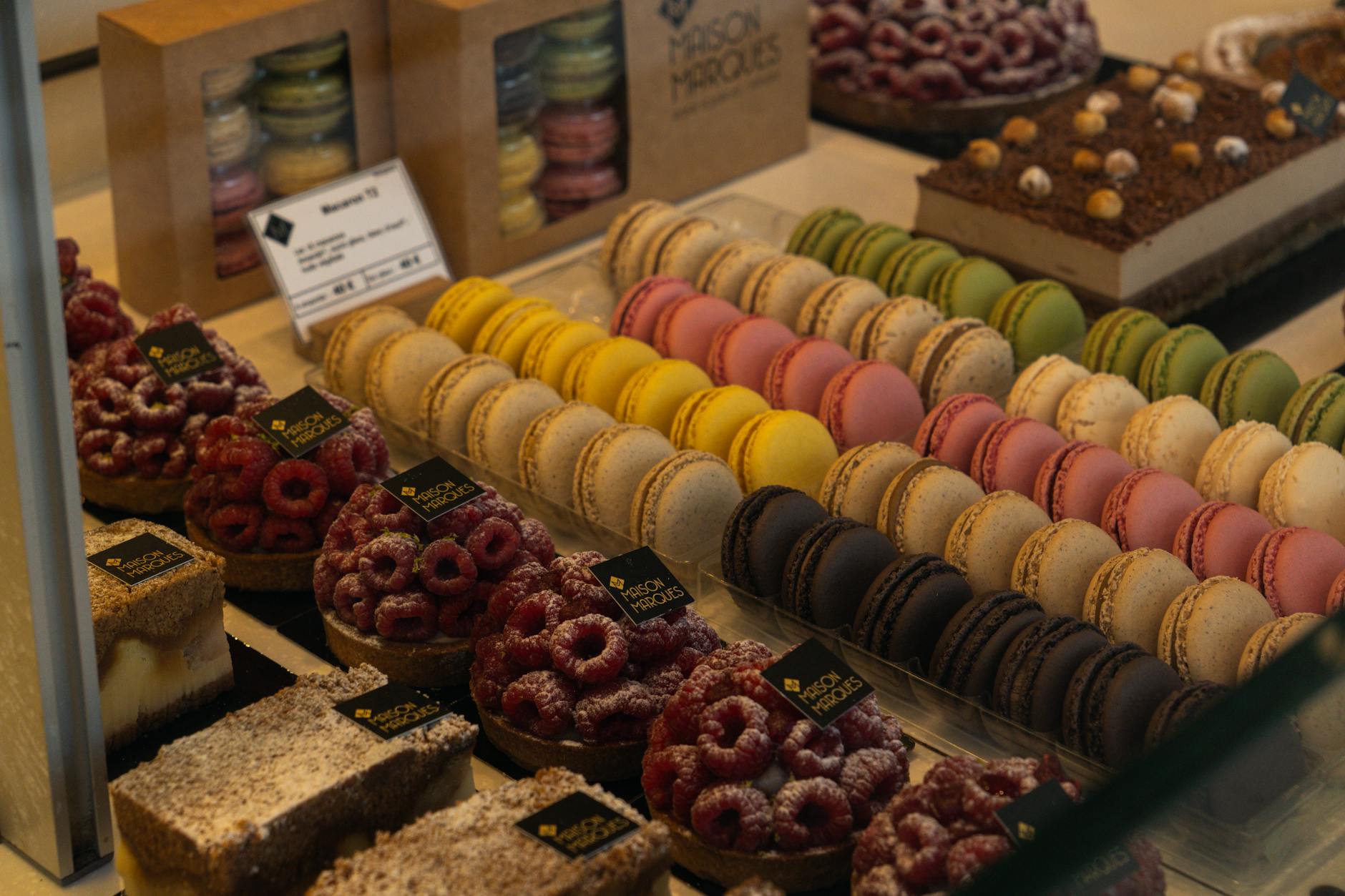
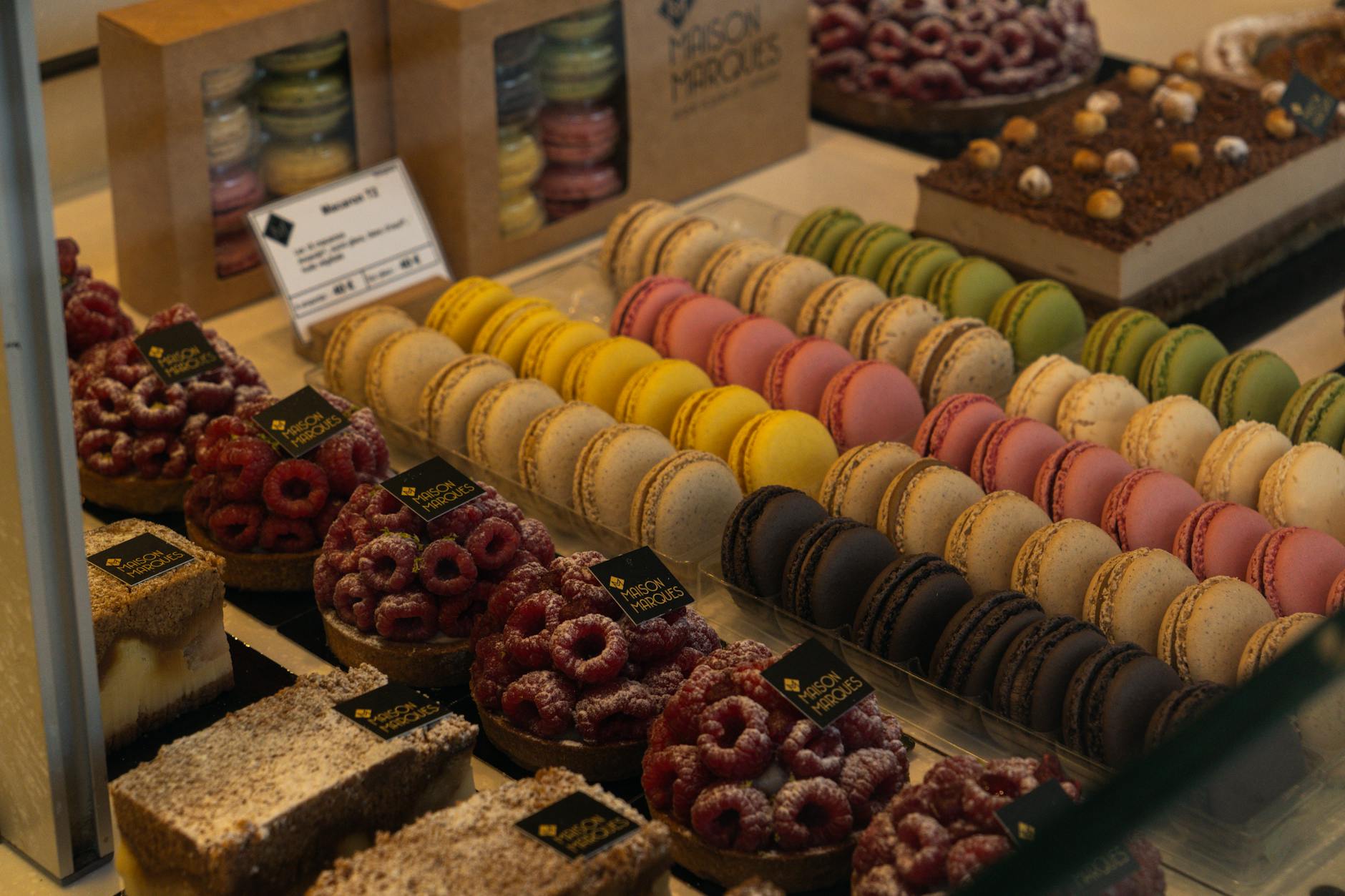
Pierre Hermé is the macaron king. Across 11+ Paris locations, the signatures are the Mogador (passion fruit and milk chocolate), the Ispahan (rose, raspberry and lychee, arguably the most famous patisserie creation of the 21st century), and the Mosaïc (pistachio and dark cherry). A box of six runs around €19; the flagship at 72 Rue Bonaparte in the 6th is the original shop. Hermé also turns out extraordinary chocolates, the Ispahan cake (a layered take on the macaron), and seasonal collections that rotate roughly every two months.
Cedric Grolet
Cedric Grolet was the pastry chef at Le Meurice when he made his name with the trompe-l’oeil fruit sculpté: pastries that look exactly like real fruit, a lemon, a strawberry, a fig, but hide mousse, compote and biscuit inside a thin chocolate shell. He has since opened his own Boulangerie + Pâtisserie Cedric Grolet at the Opéra (35 Avenue de l’Opéra) and on the Champs-Élysées. The sculpted-fruit pastries cost €19-24 each, and the queues routinely run past 60 minutes. Two ways around it: show up at 8am for the day’s first batch, or pre-order via the Tock app at least 48 hours out.
Other patisserie names to know
- Jacques Genin (133 Rue de Turenne, 3rd, Marais) — multi-time chocolatier of the year; caramels in flavors like mango-passion and basil; a tasting room above the boutique.
- Yann Couvreur (multiple) — named for his fox mascot; Calame caramel pastries and an exceptional Saint-Honoré.
- Pierre Marcolini — Belgian chocolatier with two Paris boutiques.
- Pain de Sucre (14 Rue Rambuteau, 3rd) — adventurous pairings like fig-rosemary and pear-cardamom.
- Hugo & Victor (4 Rue de Bourgogne, 7th) — sleek geometric desserts; seasonal fruit cakes.
- Sébastien Gaudard (22 Rue des Martyrs, 9th) — reverent restorer of classical French patisserie; a museum-quality mille-feuille.
Patisseries by Specialty
Different shops own different pastries. If you have one specific dessert in mind, go to the address that does it best, not the nearest patisserie to your hotel.
Best macarons
Pierre Hermé (Mogador, Ispahan, Mosaïc) leads on invention. Ladürée, founded in 1862, leads on the classical pastel-shell version. Most travelers just buy a box of each and call it settled.
Best éclairs
L’Éclair de Génie by Christophe Adam (multiple locations) runs a rotating weekly list, salted caramel, vanilla pecan, raspberry, at around €7.50 each. The boutique-style boxes travel well too.
Best mille-feuille
Carl Marletti at 51 Rue Censier (5th) gets named the best mille-feuille in Paris more than anyone: a featherlight Napoleon, three crisp layers of puff with vanilla pastry cream. Sébastien Gaudard on Rue des Martyrs is a close second, and the more historic-feeling room of the two.
Best tarte au citron
Pâtisserie Foucher is the classicist’s pick. Pierre Hermé’s lemon tart (he calls it the Tarte Infiniment Citron) is the modernist three-citrus version.
Best chouquettes, religieuse, Saint-Honoré, Mont Blanc
- Chouquettes (small choux puffs studded with pearl sugar): most bakeries do them; Brun’s are exceptional and sold by weight.
- Religieuse (two stacked choux with cream, the “nun” pastry): the classic versions at Ladürée and Stohrer are unbeatable.
- Saint-Honoré (caramelized choux puffs on puff pastry with cream): Yann Couvreur and Sébastien Gaudard share the city’s reputation.
- Mont Blanc (chestnut cream over meringue and chantilly): Angelina at 226 Rue de Rivoli invented it in 1903 and still serves the canonical version.
Best galette des rois (January only)
The Epiphany cake, frangipane in puff pastry, sells through the first three weeks of January. Cyril Lignac, Stohrer, and Du Pain et des Idées (with their famous pistachio-chocolate version) are the top three. Pre-orders open in early December and sell out fast.
Best chocolate cake
Cyril Lignac’s Equinoxe earns its second mention here. It’s both his bestselling cake and a working definition of how Paris does modern chocolate-caramel patisserie.
Historic Patisseries Still Worth a Visit
A handful of shops are worth visiting as historical sites that happen to serve pastry.
- Stohrer (51 Rue Montorgueil, 2nd) — the oldest patisserie in Paris, founded in 1730 by Nicolas Stohrer, pastry chef to the deposed Polish king Stanislas Leszczyński. The Baba au Rhum is reputedly his original 1735 invention. The Belle Époque interior alone earns the stop; order the Puits d’Amour and the religieuse.
- Ladürée (flagship at 16 Rue Royale, 8th; also 21 Rue Bonaparte, 6th and Champs-Élysées) — since 1862. The shop that turned the macaron into a global Parisian symbol. The Royale flagship doubles as a tea salon.
- Angelina (226 Rue de Rivoli, 1st) — since 1903. The African hot chocolate (€10) is thick enough to stand a spoon in; the Mont Blanc pastry was born here.
- À la Mère de Famille (35 Rue du Faubourg Montmartre, 9th) — chocolatier since 1761, the oldest sweets shop in Paris. The 19th-century woodwork survives intact and is a listed heritage interior in its own right.
- Gâteaux Thoumieux (4 Rue Saint-Dominique, 7th) — Jean-François Piège’s patisserie near the Eiffel Tower; a modern bistronomic style.
- Pierre Hermé’s Bonaparte flagship (72 Rue Bonaparte, 6th) — opened in 2001, now aged into an institution.
Bakeries by Neighborhood
Bakeries blanket Paris, but the strong ones cluster by arrondissement. Use the breakdown below to plan a morning walk, or to bolt a worthy pastry stop onto a museum visit.
1st & 2nd: Louvre and Opéra
Stohrer on Rue Montorgueil anchors the 2nd; Cedric Grolet Opéra sits opposite the Opéra Garnier; Maison Pradier has several shops near the Tuileries; Ladürée Royale (technically the 8th, but minutes from the 1st) and Le Grenier à Pain Saint-Roch feed the museum walkers.
3rd & 4th: Marais
Boulangerie Murciano on Rue des Rosiers serves the historic Jewish quarter’s Mediterranean-inflected sweets. Jacques Genin on Rue de Turenne is the chocolate destination; Yann Couvreur has a 3rd-arrondissement flagship; Pain de Sucre on Rue Rambuteau is the experimental one.
5th: Latin Quarter
Carl Marletti (51 Rue Censier) for the mille-feuille; La Maison d’Isabelle, which won the Best Croissant contest in 2018; Eric Kayser’s flagship at 8 Rue Monge, around the corner from La Parisienne at 28 Rue Monge, the 2025 baguette champion. A 200-meter stretch of Rue Monge is one of the strongest single-block bakery walks in the city.
6th: Saint-Germain
Pierre Hermé’s Bonaparte flagship and Ladürée Bonaparte sit a block apart. Poîlâne at 8 Rue du Cherche-Midi sells the legendary sourdough boule (the “miche Poîlâne”), which it will ship by air. Maison Mulot on Rue de Seine rounds out the Saint-Germain circuit.
7th: Eiffel Tower & Invalides
Boulangerie BO at the Bourdonnais shop, Sébastien Gaudard’s 7th outpost, and Gâteaux Thoumieux on Rue Saint-Dominique. That Saint-Dominique stretch makes a worthwhile pre-Eiffel walk.
8th: Champs-Élysées and Madeleine
Cyril Lignac at 2 Rue de Chaillot (it borders the 16th), Cedric Grolet Champs-Élysées, Ladürée Royale, and Pierre Hermé Madeleine. This is the wealthiest patisserie cluster in Paris, so expect premium prices and shorter queues than you’d hit in the 10th.
9th: SoPi and Pigalle
À la Mère de Famille on Faubourg Montmartre, Sébastien Gaudard on Rue des Martyrs, Maison Aleph (a Middle Eastern-French hybrid), and Mamiche on Rue Condorcet. Rue des Martyrs is one of the great food streets in Paris, full stop.
10th: Canal Saint-Martin
The most exciting bakery neighborhood in Paris right now. Du Pain et des Idées (Rue Yves Toudic), Boulangerie Liberte, Sain Boulangerie, and Mamiche’s Rue Condorcet shop. Plan a Saturday morning here, but remember Du Pain et des Idées is closed Saturday and Sunday, so push that one to a weekday.
11th: Bastille and Oberkampf
Boulangerie Utopie, the 2024 baguette champion, on Jean-Pierre Timbaud, plus Mamiche and the food hall at Maison Plisson.
12th, 16th, 18th: outer arrondissements
- 12th: Boulangerie BO at 85 bis Rue de Charenton, plus Maison Pradier Bastille.
- 16th: Cyril Lignac Chaillot, Maison Pradier Passy, Pâtisserie Clément, Carette at Trocadéro for tea and macarons.
- 18th (Montmartre): Le Grenier à Pain Abbesses, the 2010 baguette winner and the easiest competition stop if you’re near Sacré-Coeur.
What to Order at a Paris Bakery (Essential Vocabulary)
The Paris bakery menu is short, but a few terms carry weight. Learn these and you can order with confidence at any boulangerie in the city.
| Item | What it is | Typical price |
|---|---|---|
| Baguette tradition | Handmade traditional baguette, hand-shaped, long-fermented | €1.50 |
| Croissant au beurre | Butter croissant (always specify au beurre) | €1.50–2.50 |
| Pain au chocolat | Chocolate-filled flaky pastry (called chocolatine in southwest France) | €1.80–2.80 |
| Pain aux raisins | Spiral pastry with raisins and custard | €2.00–3.00 |
| Brioche | Buttery enriched bread | €3.00–6.00 |
| Chausson aux pommes | Apple turnover | €2.50–4.00 |
| Far breton | Breton prune-and-custard cake | €3.50 |
| Kouign-amann | Breton butter-sugar pastry; intense | €3.50–5.00 |
| Mille-feuille | Napoleon: three crisp layers with vanilla cream | €6.00–9.00 |
| Religieuse | Two stacked choux puffs; coffee or chocolate | €5.50–7.00 |
| Éclair | Long choux pastry with flavored cream | €5.00–7.50 |
| Tarte aux fruits | Seasonal fruit tart | €5.00–8.00 |
| Baba au rhum | Rum-soaked sponge with whipped cream | €6.00–8.00 |
The Sunday Problem (and Workarounds)
Paris bakery hours can trip up a traveler badly. By tradition, most family-run boulangeries close from Saturday afternoon through Sunday afternoon, or take Sunday and Monday off together. Some elite patisseries go further: Du Pain et des Idées is the famous case, shut both Saturday and Sunday, on the logic that the staff deserve weekends too. Plan around it rather than getting caught out.
Reliably open Sundays
- Eric Kayser / Maison Kayser — multiple locations, the most reliable Sunday option.
- Maison Pradier — a chain with many central shops.
- Pierre Hermé flagships — most open Sundays.
- Ladürée — all locations open Sundays.
- Stohrer — open Sundays.
- Le Grenier à Pain — most locations open Sundays.
For Sunday pastry beyond the bakeries themselves, the department-store food halls deliver: La Grande Épicerie at Le Bon Marché opens Sundays, and Galeries Lafayette’s food hall keeps a strong patisserie counter. For brunch-plus-bakery hybrids, Hardware Société Montmartre, Coffee Parisien, and the cafe at Café de Flore are open. Monday is the trickier day, since the traditional chef’s day off shuts a lot of fine-dining bistros and patisseries. Save Mondays for museums and supermarket croissants, or fall back on the Kayser network. Our best cafes in Paris guide lists more Sunday-open options.
How to Identify a Real Bakery
In a city with 1,200+ bakeries, more than half lean on frozen-dough industrial bread. The artisan places are still the majority you want, and the visual tells are dependable. Run through this checklist before you walk in:
- A “Boulangerie Artisanale” sign, or the Tradition Française red-white-blue logo, on the facade.
- Visible bread ovens behind the counter, not just shelves of pre-made loaves.
- Variation in baguette shape and color. Hand-shaped baguettes never look identical; industrial ones do.
- A daily-shifting selection of viennoiserie, with specials that change by the day, the season, the baker’s mood.
- Limited Sunday hours. A bakery open seven days, 12 hours a day, is almost certainly not artisan.
- Bread sold in paper bags, not plastic.
- A tradition baguette priced at €1.50 or more. Industrial baguettes run €0.80–1.00.
- The bakery’s history posted on the wall, often a family photo, the founding year, the baker’s name.
- Tradition Baguette competition diplomas by the till. Those are almost never faked.
Best Tea Salons (Salons de Thé)
The Parisian salon de thé is its own creature: bigger and quieter than a cafe, smaller and slower than a restaurant, with afternoon tea service and a pastry menu that holds its own against the best patisseries.
- Ladürée Royale (16 Rue Royale, 8th) — Belle Époque interior, full tea-and-pastries service, the original macaron salon.
- Angelina (226 Rue de Rivoli, 1st) — the Mont Blanc plus the famous “African” hot chocolate; an institution since 1903.
- Mariage Frères (multiple, flagship at 30 Rue du Bourg-Tibourg, 4th) — the tea house, founded 1854; both shop and salon; over 1,000 teas.
- Carette (4 Place du Trocadéro, 16th) — a terrace facing the Eiffel Tower, with macarons, hot chocolate and full tea service.
- Le Café Lapérouse (51 Quai des Grands Augustins, 6th) — a historic restaurant with Seine views and a refined tea service.
- Saint James Paris — the 16th-arrondissement hotel’s afternoon tea ritual in the library bar.
- Pierre Hermé high tea (Champs-Élysées) and Ladürée high tea (Royale) — pre-bookable afternoon tea sets pairing macarons, viennoiserie and rare teas.
Bringing Bakery Items Home (Customs and Storage)
Travelers fly home with patisserie boxes all the time. A few practical rules will protect both the pastries and your border crossing.
- Bread and viennoiserie: stale within 24 hours unless frozen. Carry on for next-day eating only.
- Macarons: travel exceptionally well, surviving 3-5 days at room temperature in their sealed box.
- Chocolates: up to a week at room temperature, though check your airline’s cargo temperature for connecting flights.
- Pastry boxes: carry on freely. Only worry at security if the box holds liquid fillings; mousse cakes and cream-filled tarts can trip the 100ml liquid rule in unpredictable ways.
- US customs: bread, macarons and dairy-free chocolates are routinely allowed. Cheese-filled pastries (anything with quark, brie or fresh cheese) need to be declared.
- EU customs: minimal restrictions on intra-EU travel.
- Best souvenir patisserie: a Stohrer baba au rhum, a Ladürée or Pierre Hermé macaron box, and a tablet of Pierre Marcolini or Jacques Genin chocolate.
Frequently Asked Questions
What is the best bakery in Paris in 2026?
As of writing, the 2025 Best Baguette winner is Mickael Reydellet at La Parisienne (28 Rue Monge, 5th), the most recent City of Paris champion. Du Pain et des Idées stays the most universally beloved bakery in Paris among locals and visitors. The Mairie de Paris will name the 2026 winner in March 2026.
How much does a croissant cost in Paris?
A standard butter croissant at an artisan boulangerie runs €1.50–2.50. Premium versions at Cyril Lignac, Cedric Grolet and other top patisseries reach €2.10–3.50. Supermarket industrial croissants go for €0.80–1.00, but they’re not what you want.
Who won the best baguette in Paris 2025?
Mickael Reydellet, the baker behind the La Parisienne chain. His main shop is 28 Rue Monge in the 5th arrondissement, though several La Parisienne locations across the city sell the winning loaf daily.
Are Paris bakeries open on Sunday?
Many are, many aren’t. The dependable Sunday-open names are Eric Kayser, Maison Pradier, Ladürée, Stohrer, Pierre Hermé, and Le Grenier à Pain locations. Family-run boulangeries often close Saturday afternoon through Sunday afternoon, or Sunday plus Monday. The most famous bakery in Paris, Du Pain et des Idées, is closed both Saturday and Sunday, so plan a weekday visit.
What’s the difference between a boulangerie and a patisserie?
A boulangerie is a bread bakery; bread, baguettes and viennoiserie (croissants, pains au chocolat) sit at its core. A patisserie is a pastry shop built around cakes, tarts, choux pastries and mousse desserts. Plenty of shops do both, but the storefront sign tells you which discipline they organize around.
What patisseries are most famous in Paris?
The contemporary top tier is Cyril Lignac, Pierre Hermé and Cedric Grolet. The historic top tier is Stohrer (1730), Ladürée (1862), Angelina (1903) and À la Mère de Famille (1761). For specialists, add Jacques Genin (chocolatier), Yann Couvreur, Sébastien Gaudard and L’Éclair de Génie.
When is the best time to buy croissants in Paris?
Two windows. The first, 7–9am, catches the morning batch straight out of the oven. The second, 4–6pm at some bakeries, catches the afternoon bake that locals grab for dinner. Steer clear of 11am–1pm at the famous shops, when the queues are longest and the morning batch is often gone.
Can I bring French pastries back home?
Yes for most things. Macarons last 3–5 days at room temperature and travel best. Chocolates keep about a week. Bread and croissants stale within 24 hours, so they’re only worth it if you fly home the next morning. US customs allows most baked goods without dairy filling; EU customs has minimal intra-EU restrictions. Both Pierre Hermé and Ladürée sell airline-friendly travel boxes built for cabin luggage.
Continue Planning Your Paris Food Trip
This guide sits inside our Paris food scene. For dining across the categories, see best restaurants in Paris, Paris food markets, French dishes to try in Paris, best cafes in Paris, Paris food tours, cheap eats in Paris, wine bars in Paris, Paris Michelin restaurants, and Paris cooking classes.
Build out the rest of the trip with Paris on a budget, Paris walking tours, and the Paris neighborhoods guide. Pair a morning bakery crawl in the 10th with a Canal Saint-Martin walk, or follow Rue Monge in the 5th from La Parisienne up to the Pantheon for a solid baguette-and-history half-day.
Keep reading
Use these to round out your trip: