Cycling in Paris: Velib, Bike Rentals & Best Cycling Routes
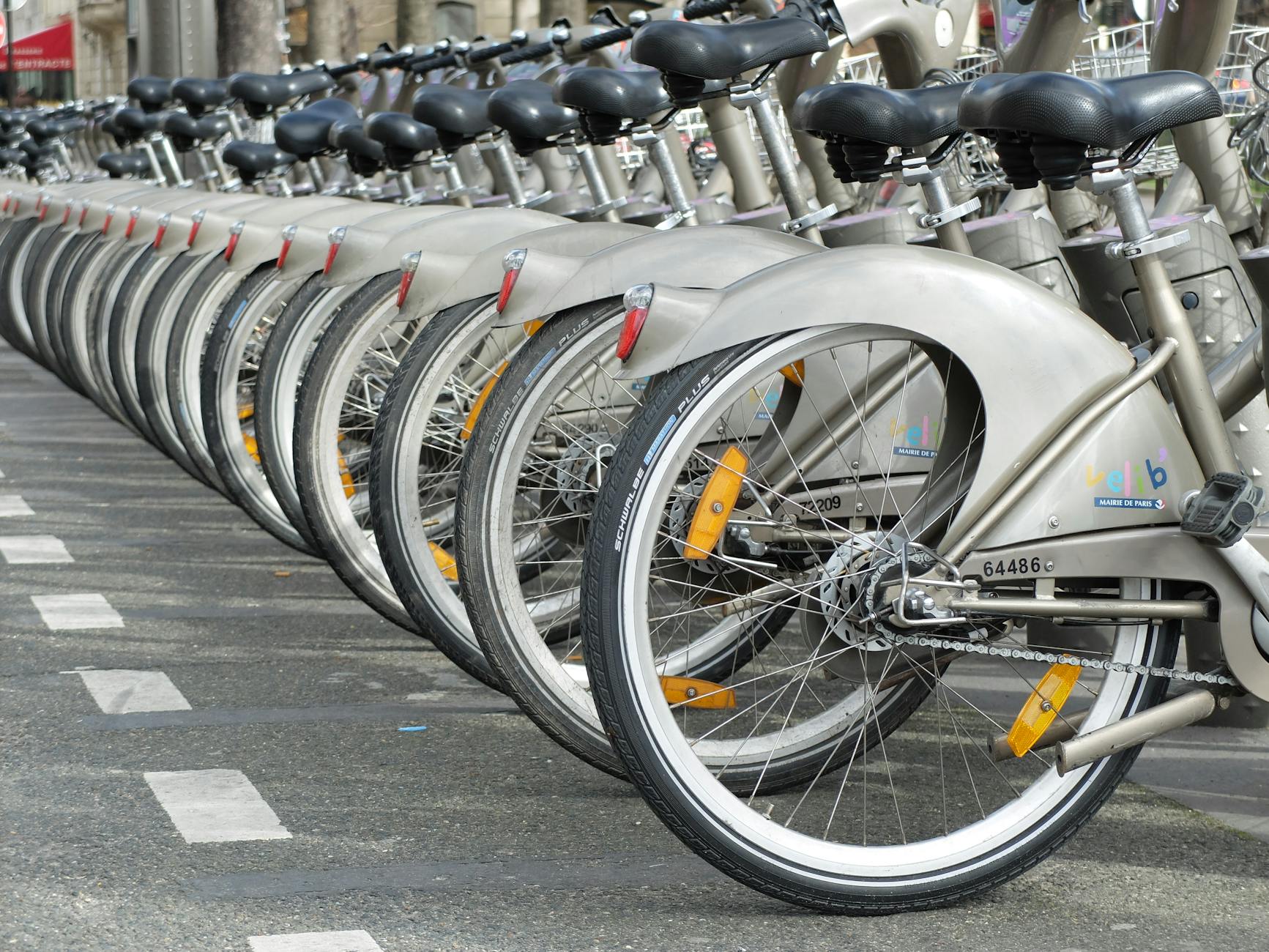
A decade ago, anyone who suggested you rent a bike in Paris was either a local daredevil or hadn’t actually tried it. That advice is now obsolete. Since 2014 the Anne Hidalgo administration has laid down more than 1,000 km of cycling lanes; the “Plan Vélo” set out to make 100% of Paris streets cyclable by 2026, and while the city didn’t quite hit that, it got close enough that cycling in paris is now a perfectly sensible way for a visitor to get around. The Vélib’ bike-share runs 14,500-plus public bikes from 1,400 stations across the city and inner suburbs, and there are dozens of guided and self-guided operators competing for your business. Below: how Vélib’ pricing and registration actually work, which private rental shops are worth it, when an electric bike earns its keep, the five routes I send people on most (Coulée Verte, Canal Saint-Martin, Bois de Boulogne, Bois de Vincennes, and the pedestrianized Seine quays), the traffic rules that catch foreigners out, and the handful of intersections where you should simply get off and walk.
Think of this as part of our guide to getting around Paris. One warning before we go further: the network has shifted so fast that even a guidebook printed in 2023 will steer you wrong. Lanes have appeared, the Rue de Rivoli has been handed over to bikes, the Seine quays have gone car-free, and Vélib’’s pricing has been redrawn. Everything here reflects the 2026 city, with current operator names, current euro prices, and routes built around the infrastructure that exists now rather than the Paris of 2019.
How Cycling in Paris Was Transformed by 2026
Picture the city around 2014. The bike-lane network was patchy at best. The big boulevards ran four lanes of impatient traffic in each direction, and the Seine embankments were, in effect, riverside motorways. Then the “Plan Vélo” arrived under Mayor Anne Hidalgo, launched in 2015 and expanded twice since. It funneled roughly €250 million into separated lanes, traded thousands of on-street parking spaces for cycling infrastructure, pedestrianized major arteries including the Right Bank Seine quay (the old Voie Georges Pompidou), and rebuilt the worst intersections to put cyclists and pedestrians ahead of cars.
The numbers back it up. Paris had around 700 km of cycling infrastructure in 2014. By 2025 the figure topped 1,700 km once you count protected lanes, painted lanes, contraflow streets, and shared low-speed zones. The city’s automated counters recorded daily ridership growing roughly five-fold between 2018 and 2024, which is a startlingly fast shift for any European capital. The Rue de Rivoli, the spine of the Right Bank, is now almost entirely off-limits to private cars and given over to a wide two-way bike lane that runs from Bastille to the Place de la Concorde. The same treatment has reshaped the Boulevard de Magenta, the Boulevard Saint-Germain, and parts of the Champs-Élysées since the 2024 redesign.
For a visitor, the difference is night and day. Ten years ago we would have told a casual rider to forget it: too fast, too aggressive, too stressful. Now most central routes carry a separated or protected lane, drivers pay closer attention to cyclists than in any earlier decade, and you can stitch together a 20 km loop from the Tuileries to Bastille to the canal and back without ever dropping out of a bike-friendly corridor. A few intersections are still genuinely dangerous, and I’ll name them below. But the trend line points one direction, and it isn’t backward.
Vélib’ Explained
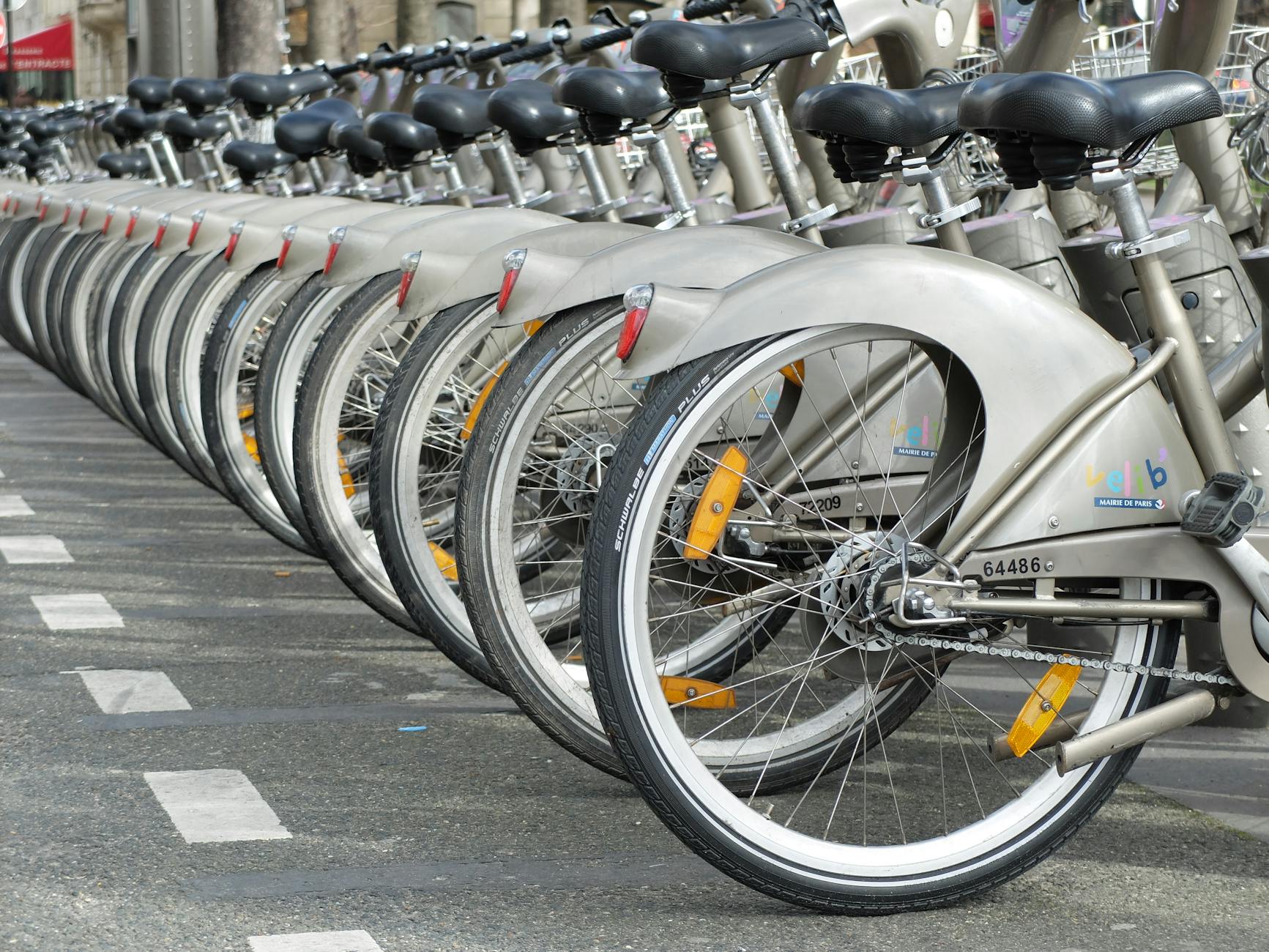
Vélib’ Métropole is the public bike-share, operated under a city concession by Smovengo. It launched in its current form in 2018, replacing the original 2007 system, and has settled down considerably since a bumpy first year. The 2026 network fields about 14,500 bikes at 1,400 stations across Paris and the inner suburbs, which means you’re rarely more than 300 metres from a dock inside the Périphérique. The fleet splits into mechanical bikes (green, pedal-only) and electric-assist bikes (blue, pedal-assist up to 25 km/h). Roughly 40% of the fleet is now electric, and that matters more than you’d think the first time you point a bike uphill toward Montmartre, Belleville, or the 19th and 20th arrondissements.
Pricing is built around short trips, and it’s kind to tourists. The V-Liberté 24-hour pass is €5 for unlimited mechanical rides, or €10 if you want mechanical plus electric. Under that pass, the first 30 minutes of every ride is free; go over and you pay €1 per extra 30 minutes on mechanical or €2 per extra 30 minutes on electric. A weekly pass is €15 mechanical or €25 mixed. You can also take single rides without a pass at roughly €3 for 45 minutes mechanical and €5 for 45 minutes electric, though that’s usually poorer value than the day pass if you intend to ride more than once.
The pricing rewards one specific style: short hops between stations, not long unbroken rides. Ride 25 minutes, dock the bike, spend ten minutes on a coffee or a shop or a sight, then grab a fresh bike for the next leg, and you can crisscross Paris all day on the €5 pass. Grab a bike at 10 a.m. and pedal it nonstop until 2 p.m., and you’ll watch the overage charges stack up. The system is a transport tool first and a leisure tool a distant second. For a continuous loop, you want a private rental, which is where we’re headed in a moment.
How to Use Vélib’
Registration is simple, though the first time tests your patience a little. The cleanest route is the Vélib’ app (English, iOS and Android): set up an account with your email, add a credit card, buy a 24-hour or weekly pass on the spot, then walk to any station and unlock a bike by scanning its QR code with your phone. You can also register at a station kiosk, where the touchscreens offer English and hand you a four-digit PIN that unlocks any bike in the system. The kiosk works, but it’s slower than the app and awkward when several people in your group want bikes at once.
Once you’re moving, ride where you like and return the bike to any station, not just the one you started from. Push it into a dock and wait for the green light or the beep that confirms the return, then check the app to make sure the ride has actually ended and to see your trip time. Always dock fully and wait for that confirmation. A bike that isn’t properly returned keeps billing you, and the surprise on your statement is not a pleasant one. To start your next free 30 minutes, simply unlock any available bike at any station. There’s no minimum wait.
The usual headaches are predictable: a station that’s full when you want to return a bike, an empty one when you want to take a bike, and the occasional dud. The app shows live availability and free docks at every station, so glance at it before you set off and again as you near your destination. If you land a broken bike (flat tyre, busted seat, dead electric assist), don’t just walk away from it; hit the wrench button on the dock or flag it in the app, which keeps you off the hook for the damage and helps the crew find it. Stations near the obvious hubs (Eiffel Tower, Notre-Dame, Bastille) clog up at peak hours, so be ready to dock one station over.
Private Bike Rentals (Often the Smarter Choice for Tourists)
Vélib’ can’t be beaten for short utility trips. But if you’re planning a full leisure day, particularly a long run along the canals or out into the Bois de Boulogne, a private rental wins almost every time. The bikes are lighter, the saddles are kinder, the gearing copes better with hills, and the shop sends you off with a proper lock, a helmet, a route map, and often panniers or a basket. You also sidestep the whole docking dance: the bike is yours for the day, you ride where you please, and you bring it back to the same shop at closing.
The operators worth your money: Paris Bike Tour, with a flagship shop around the Cité and Marais, renting mechanical city bikes and e-bikes; Fat Tire Tours, parked near the Eiffel Tower in the 7th and ideally placed for the Champ de Mars or a Seine run; Holland Bikes Paris, also in the 7th, specializing in upright Dutch-style bikes that are about as comfortable as city cycling gets; Paris Velo Sympa near République and the Canal Saint-Martin, perfectly positioned for the canal circuit; and Bike About Tours in the 4th, which pairs rentals with guided options. Reckon on €15-30 a day for mechanical bikes and €25-50 for e-bikes, with multi-day discounts of roughly 10-20% kicking in from day two.
Any reputable shop hands you a solid U-lock, a helmet (usually optional but free), a basic route map, and a quick orientation. Many also rent child seats (€5 a day), child bikes (€15 a day), tandems, and cargo bikes. Book at least a day ahead in peak season, April through October, and especially for e-bikes; the popular shops clear out their entire e-bike fleet on a sunny weekend. Bring a passport or driver’s licence for ID, and expect a credit-card pre-authorization somewhere in the €200-500 range as a deposit, refunded in full when you return the bike.
Five Self-Guided Cycling Routes Worth Your Day
These are the five routes I point visitors to more than any others. They have three things in common: a casual cyclist can ride each one without white-knuckle traffic stress, each delivers scenery that is unmistakably Parisian rather than a tarted-up suburban bike path, and each links to the others if you want to build a longer day. If you’re weighing a walking version instead, our guide to Paris walking tours covers the overlap; a few of these double as fine walks, but the bike lets you cover far more ground.
Coulée Verte (Promenade Plantée)
The Coulée Verte is an elevated rail-trail that runs 4.5 km east from the Opéra Bastille area through the 12th arrondissement to the Bois de Vincennes. It opened in 1993, sixteen years before New York’s High Line, and was that project’s acknowledged inspiration. The path traces a former viaduct that once carried the Paris-Vincennes railway, lifted 10 metres above the street and planted with roses, lavender, bamboo, and arbors of climbing greenery. The surface is paved, flat, entirely traffic-free, and shared with walkers (cyclists yield). Ride it early or off-peak; on a summer weekend it fills up enough that you’ll be wheeling the bike. Around 25 minutes end to end at an easy pace.
Canal Saint-Martin and Canal de l’Ourcq
The canal route is one of the most satisfying rides in the city. Start at the southern lock of the Canal Saint-Martin near Place de la République, follow the water north under the iron footbridges and along the tree-lined quays of the 10th, push on past the Bassin de la Villette in the 19th, and pick up the Canal de l’Ourcq heading northeast toward the suburb of Pantin. Call it 8 km one way, dead flat, with a partly separated bike path and partly mixed traffic on the quieter quays. The mood changes as you go, from the young, hip Paris around the lower Saint-Martin (cafes, bookshops, people sprawled along the banks) to the industrial-loft Paris of the Ourcq (graffiti, dance halls, weekend markets). Sunday morning is the time to do it.
The Seine Pedestrian Quays
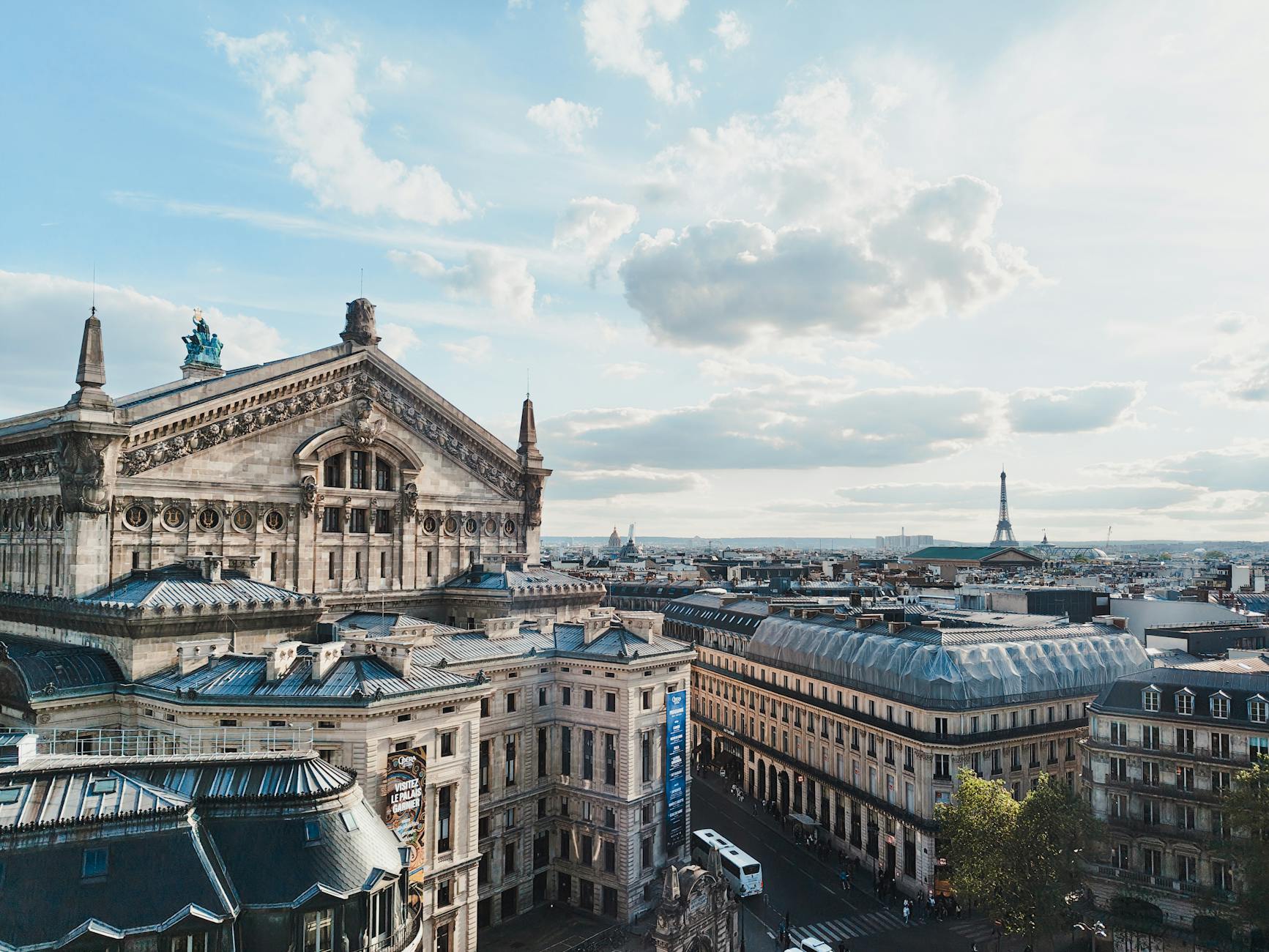
The Right Bank Seine quay between Pont de Sully (near Bastille) and the Tuileries has been fully pedestrianized since 2017, with a dedicated cycling lane built into the conversion. The 4 km route sits below street level, completely cut off from traffic, ducking under bridges and running right alongside the river with open views of Notre-Dame, the Île Saint-Louis, the Île de la Cité, and the Louvre embankment. It is, frankly, the most photogenic ride in central Paris, and it’s safe enough for a first-time city cyclist. Carry on west along the Left Bank quays for another 3 km toward the Eiffel Tower and you’ve got a 14 km round-trip that takes in most of the city’s landmarks from the waterline.
Bois de Boulogne Loop
The Bois de Boulogne is the great western forest of Paris, once a royal hunting ground and now an 850-hectare park laced with cycling paths, lakes, gardens, and roads closed to private cars on weekends. A full loop comes to about 30 km and takes in the Lac Inférieur (rowboats for hire), the Pré Catelan, the Bagatelle gardens (worth the trip in June for the roses alone), and the Longchamp racecourse. Get there by riding out from the center along the Avenue Foch, which has a separated lane and sits 3 km from the Arc de Triomphe, then explore as much of the network as your legs allow. Ride defensively on the handful of mixed-traffic stretches inside the park, but the great bulk of the loop is car-free.
Bois de Vincennes Loop
Its eastern twin, the Bois de Vincennes, covers 995 hectares but feels smaller because more of it is thick forest. You reach it by riding east from the Bastille or along the Coulée Verte. A perimeter loop runs roughly 25 km and includes the Château de Vincennes (a medieval royal fortress, well worth a stop), the Lac Daumesnil with its temple-topped island, the Parc Floral (spectacular in spring), and the Hippodrome de Vincennes. The whole place is quieter and more residential than the Bois de Boulogne, with fewer Sunday cyclists and more local families spreading out picnics. A fine pick for a half-day ride with kids.
Best Guided Bike Tours
Prefer to follow a guide rather than read a map? Several operators run dependable group tours of central Paris. Fat Tire Tours is the longest-running English-language outfit, with a four-hour daytime tour covering the major Right Bank monuments and a standout evening tour that pairs cycling with a one-hour Seine cruise. The evening version finishes with the Eiffel Tower’s hourly sparkle lighting up the water, which is about as reliable an hour of delight as Paris offers. Tours run year-round; budget €42-68 per person depending on the day, the length, and whether you upgrade to an electric bike.
Other strong choices: Blue Bikes Paris, which keeps groups small (usually 8 maximum) and favors routes through lesser-known neighborhoods over the standard monument lap; Bike About Tours, started by long-time Paris residents and known for a chatty, expat-friendly style; and Paris à Vélo, c’est Sympa, the original French-language operator (with English options) that loves showing off the city’s overlooked corners. All of them now offer e-bike upgrades for an extra €10-20 per person, and I’d take it if you’re not a regular cyclist or you’re traveling with mixed fitness levels. The assist erases the one real stress point on a tour, which is keeping up on the climbs.
Cycling Traffic Rules and Etiquette
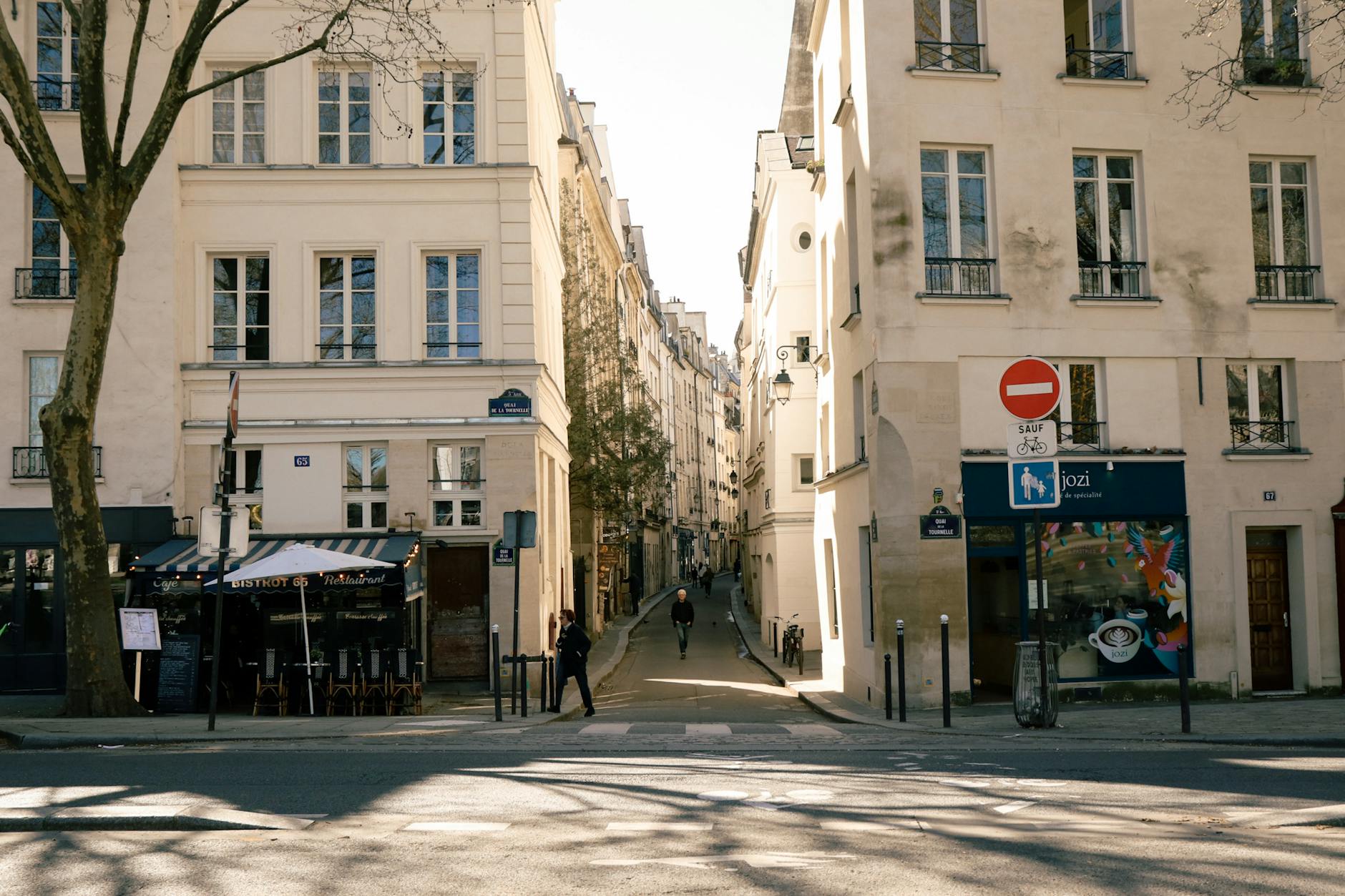
French traffic law sits closer to Dutch and Danish thinking than British or American, and a few of its rules catch visiting cyclists off guard. Most one-way streets in Paris are now legally two-way for bikes; look for the small “vélo” signs under the one-way arrows that confirm bidirectional cycling. Locals and pedestrians expect this, but tourists in rental cars often don’t, so stay sharp at intersections. At marked pedestrian crossings, cyclists yield exactly as cars do. When you pass another cyclist, or a car passes you, the law requires 1 metre of lateral clearance in town and 1.5 metres on roads above 50 km/h. Drivers generally honor it, and many lanes are wide enough that it happens by default.
A handful of rules every visiting cyclist should keep straight. Take left turns at major intersections in two stages: cross with the green to the far corner, then re-cross with the cross-street green, rather than cutting across several lanes at once. Cycling on most pavements is banned and fined; the exceptions are clearly marked shared paths, signed with a blue circle showing a bicycle and a pedestrian. A working light is mandatory after dark and increasingly enforced. A working bell is technically required too, and genuinely handy on the crowded canal paths. Helmets are legally required only for riders under 12. For adults it’s your call, but wear one anyway, whatever the locals are doing.
Safety: Where to Cycle Confidently

An honest map of cycling safety in Paris has three layers. The first is protected lanes, physically walled off from car traffic by curbs or planters. They run along the Rue de Rivoli (Bastille to Concorde), the new Champs-Élysées lanes from the 2024 redesign, the Boulevard de Magenta from République up to Gare du Nord, the Quai de la Mégisserie and most of the Right Bank Seine corridor, the Boulevard Saint-Michel through the Latin Quarter, and long stretches of the Boulevard Saint-Germain. These suit any rider, including supervised children, and they cover most of what a tourist actually needs to reach.
The second layer is mixed lanes, where bikes share the road with cars in a painted lane or low-speed zone. These cover most secondary streets. They’re comfortable for confident urban cyclists, manageable for casual riders during the quiet hours (mid-morning, mid-afternoon, weekends), and occasionally fraught at rush hour. Drivers in 2026 generally watch for cyclists; the real hazards are scooter riders and delivery couriers slicing through traffic, and parked drivers flinging open doors without a glance. Keep at least an arm’s length from the parked cars on your right and you’ll dodge the most common spill.
The third layer is the no-go list, three spots I tell casual cyclists to avoid outright. Place de la Concorde, new infrastructure or not, is still a chaotic multi-lane intersection at the foot of the Champs-Élysées; if you have to cross it, get off and walk. The Étoile circle around the Arc de Triomphe is twelve avenues feeding a roundabout with no lanes and no priority rules. Do not cycle it, ever; dismount, take the underpass, and remount on the far side. The Bastille circle has improved but still throws fast traffic at you from five directions, so route one block south along the Boulevard Bourdon instead.
Best Times to Cycle
Light, traffic, and how packed the bike paths get all swing wildly through the day. The single best window is early morning, roughly 7 to 9 a.m. The streets are nearly empty (Paris wakes up later than London or New York), the light falls soft and gold across the limestone facades, and the canal towpaths and Seine quays belong to a handful of commuters and joggers. It’s also the best window for photographs from the saddle. Mid-morning, 9 to 11 a.m., keeps the traffic light and opens up cafe stops along the way. Lunchtime, noon to 2 p.m., turns moderately busy with delivery scooters, but it’s fine for confident riders.
Two windows to skip: 8 to 9 a.m. on weekdays for the commuter rush, and 5 to 7 p.m. on weekdays for the evening one, when the lanes fill with Parisian commuters and everyone’s patience thins. Evening rides from 6 to 8 p.m. are otherwise lovely, especially in summer when the light hangs on until 10 p.m. and the riverbanks fill with picnickers, but expect heavier traffic and ride defensively. Weekends are easily the calmest time on the roads. Sunday mornings feel like a different city altogether; the Right Bank Seine quay, the canals, and the bois belong to recreational cyclists instead of commuters.
Cycling with Kids
Cycling with children works in Paris, provided you pick your routes with care. Vélib’ doesn’t rent child bikes or child seats, so families will need a private shop. Paris Bike Tour, Bike About Tours, and Holland Bikes all rent child bikes (usually 20-inch or 24-inch frames for roughly ages 6-11) at around €15 a day, plus child seats that bolt onto an adult bike (ages 1-4) at around €5 a day. A few shops also stock trailers and trailer-bikes that hitch behind an adult, handy for kids who can pedal a bit but aren’t ready for traffic. Reserve kid equipment well ahead; the shops carry limited stock and it goes fast.
For families, four routes stand out: the Coulée Verte (elevated, traffic-free, a gentle distance), the Bois de Boulogne and Bois de Vincennes (largely car-free, with picnic spots, lakes, and playgrounds built in), and the Right Bank Seine pedestrian quay (cut off from cars and a genuine thrill for a kid riding straight under the bridges). Steer clear of any major boulevard with children, even one with a protected lane; the speed of the nearby traffic and the swarm of scooters is too much. For the wider picture, our Paris with kids guide covers stroller-friendly alternatives and the logistics of getting a family around town.
E-Bikes vs Mechanical
The e-bike-or-mechanical question comes up at every rental counter. The honest answer: an e-bike is the right call in a few specific cases and overkill in others. They genuinely earn their price on the Paris hills, which blindside people who picture the city as flat. Montmartre in the 18th, Belleville and Ménilmontant in the 20th, and the long grind up the rue des Pyrénées are no joke on a heavy mechanical city bike. E-bikes are also the move for groups with mixed fitness, for longer day rides (Versailles by e-bike is a 20 km each-way trip that’s actually enjoyable; on a mechanical it’s a slog), and for riders over 50 who want to range further without wearing themselves out.
Mechanical bikes do the job on flat central routes (the Seine quays, the canals, the Coulée Verte), on short Vélib’ utility hops, for regular cyclists used to a city bike, and for anyone who likes the slightly livelier feel of a lighter frame. They’re also cheaper. Doing one specific route, say the Marais and the Seine quays? The mechanical is plenty. Tackling a full day across several neighbourhoods, or anything that climbs Montmartre? Pay the extra €10-20 for the e-bike and thank yourself later. For trips beyond the city, our day-trip guide lays out which destinations work by combined train and bike.
Locking and Security
Bike theft in Paris is real, but it’s manageable. Around 30,000 bikes are reported stolen each year, the great majority of them mechanical bikes left with a flimsy cable lock. Staying off that list isn’t complicated. Use a proper U-lock (sometimes called a D-lock), which every reputable shop provides. Run it through the frame and at least one wheel, and fix it to something immovable: a bike rack, a sturdy signpost, a lamppost. Never lock the bike to itself, to a movable barrier, or to a branch someone could saw through. Don’t leave it outdoors overnight; if you’re staying several days, ask your hotel about indoor bike storage, which is increasingly common and often free.
Vélib’ bikes are safe at the docks, where the dock itself does the locking, so you don’t need a lock for them. The exposed moment is the quick stop between stations, using the little built-in cable lock to grab a coffee. That cable is fine for a five-minute pause in a busy spot. It is not fine for a 30-minute museum visit. If you’re stopping for a while, dock the bike and pull a fresh one when you leave. Rental bikes need a proper lock even for short stops, and the U-lock is the standard for good reason: used correctly, it works. Snap a photo of the serial number when you collect a rental, just in case.
What to Bring on a Cycling Day
A short kit turns a long ride from a chore into a pleasure. Carry a refillable water bottle; Paris has 1,200-plus public drinking fountains, including dozens of Wallace fountains in the central arrondissements, so a refill is never far. Bring sunscreen if you’ll be out more than an hour, even in spring, because the pale limestone bounces the sun back at you. Sunglasses earn their place against both glare and the bugs you’ll meet at speed. Pack a light layer too; Paris weather is more fickle than its reputation lets on, and a wind-shell is welcome out at the bois or along the Seine on a gusty afternoon. A small day pack with a cross-body strap keeps it from flopping as you ride, though a basket or panniers from the shop is better still.
A charged phone with offline Paris maps downloaded ahead of time is non-negotiable. The Vélib’ app and Google Maps both work well, but you don’t want to discover your data is down while you’re turned around in the 19th. A small printed card with your hotel address in French is genuinely useful for asking directions or flagging a taxi home. Keep your wallet, passport, and phone on your body, not in the basket. And if you’re watching the budget, a cycling day pass is one of the best transport bargains in the city; our guide to Paris on the cheap shows how cycling slots into a lean itinerary.
Connecting Cycling to Other Transit
One underrated thing about cycling here is how neatly a bike pairs with the regional rail network for day trips. Bikes ride free on RER trains during off-peak hours, which broadly means before 6.30 a.m., between 9.30 a.m. and 4.30 p.m., and after 7.30 p.m. on weekdays, plus all day on weekends and holidays. They’re welcome all day on the Transilien suburban network too. They are not allowed on the Métro at any time, and most TGV high-speed trains won’t take them unless they’re boxed or bagged. Our Paris Métro guide has more on the underground network and where you can hop off and switch to a bike.
The combinations that pay off most: the Versailles run (take the RER C to Versailles-Rive Gauche with your bike, ride the palace gardens and the Trianon estate, then come back; our Versailles guide has the full logistics), the Disneyland approach (RER A to Marne-la-Vallée with the bike, though most visitors won’t bother), and the Fontainebleau forest trip (Transilien R to Fontainebleau-Avon, then ride the forest trails and the château perimeter). Each one turns a packaged day out into something looser and self-directed, and the bike-friendly trains run often enough that you can come and go on a relaxed schedule.
Frequently Asked Questions
Is cycling in Paris safe for tourists?
In 2026, yes, and by a wide margin compared with even five years ago. Most central routes carry a protected or separated lane, drivers generally watch for cyclists, and a casual visitor can stitch together full-day rides without leaving cycling infrastructure. Steer clear of Place de la Concorde, the Étoile circle around the Arc de Triomphe, and the Bastille circle on a bike; wear a helmet even though adults aren’t legally required to; and stick to the protected routes if you’re not a confident urban cyclist. By risk per hour ridden, Paris now sits closer to Amsterdam than to Rome.
How much does a Vélib’ day pass cost?
A 24-hour V-Liberté pass is €5 for unlimited mechanical rides or €10 for the mixed pass that adds electric bikes. The first 30 minutes of every ride is free under either pass; go longer and you pay €1 per extra 30 minutes on mechanical and €2 per extra 30 minutes on electric. A weekly pass is €15 mechanical or €25 mixed. The whole system is built to reward short hops between stations rather than one continuous long ride.
Do I need a helmet to cycle in Paris?
Legally, only riders under 12 must wear one. Practically, everyone should, and I’d urge a helmet for cyclists of any age. Most rental shops include one free with the bike. Vélib’ supplies none, so if you’re riding Vélib’ and want a helmet, bring your own from home (folding helmets pack neatly into carry-on) or pick up a cheap one at a Decathlon store in Paris.
Can I take a Vélib’ or rental bike on the Métro?
No. Bikes aren’t allowed on the Métro at any time, folding or not (a folding bike in a bag is sometimes tolerated, but it’s officially against the rules). They are allowed on RER trains during off-peak hours and on Transilien suburban trains all day. For getting around town, keep the bike on the surface streets and lean on the Métro separately for longer or rain-soaked trips.
What is the best one-day cycling itinerary for a first-time visitor?
Collect a city bike from a private shop in the 1st or 4th arrondissement around 9 a.m. Ride the Right Bank Seine pedestrian quay west to the Tuileries, carry on along the river to the Eiffel Tower (about 45 minutes), cross at Pont d’Iéna and come back along the Left Bank quays, then head to Place des Vosges and the Marais for lunch. Afterward, ride north along the Canal Saint-Martin for an hour and loop back via Place de la République and the Rue de Rivoli protected lane. That’s roughly 25 km, with the bike back by 5 p.m., and it keeps you on protected infrastructure the whole way while hitting most of the major monuments.
Are e-bikes worth the extra cost?
For most visitors, yes, especially if your route takes in Montmartre or Belleville, your group runs a range of fitness levels, you’re over 50, or you’re planning a day trip beyond the city. The €10-20 daily surcharge is small set against the payoff, and the assist takes out the one real source of stress on a leisure ride: grinding uphill in summer heat. For flat, short routes, a mechanical bike does the job and saves you money.
Can I cycle to Versailles?
Yes, by mixing bike and train. Take the RER C with your bike (off-peak hours only) to Versailles-Rive Gauche, about 10 minutes’ walk from the palace. An experienced cyclist can also ride the full 20 km from central Paris on the route through the Meudon and Viroflay forests, roughly 90 minutes on an e-bike and 2 hours on a mechanical, mostly on separated paths. Inside the estate, the gardens and the Grand Canal area are a joy to ride, and rental bikes are available on site. Our Versailles guide has the full timing and ticket logistics.
Where can I find bike repair shops if I have a problem mid-ride?
On Vélib’, just dock the broken bike (hit the wrench button to flag it) and take another at no charge. On a private rental, call the shop you rented from; most run a roadside-assistance line and will either swap the bike or send a mechanic. The big chains Decathlon, Cyclable, and B’Twin have central branches and will fix a puncture or tighten a brake for around €15-25 if you’re on your own bike. Most independent neighborhood shops will sort out a walk-in same day for small jobs.
The short version: Paris is a far better cycling city than it was five years ago, and the change came so fast that plenty of visitors still arrive expecting the old one. The infrastructure exists, the bike-share is dense, the rental shops are well run, and you can now ride full-day itineraries end to end on protected lanes without ever sharing a fast road with a car. Pick a route from the list above, rent from an operator you trust, ride off-peak your first time out, and you’ll see more of the city in one day on two wheels than you would in three on foot. To zoom back out to the wider transport picture, our guide to Paris transit shows how cycling fits alongside the Métro, the buses, and your own two feet.
Round out your trip
Use these to round out your trip: