Most Instagrammable Places in Paris: 30 Best Photo Spots
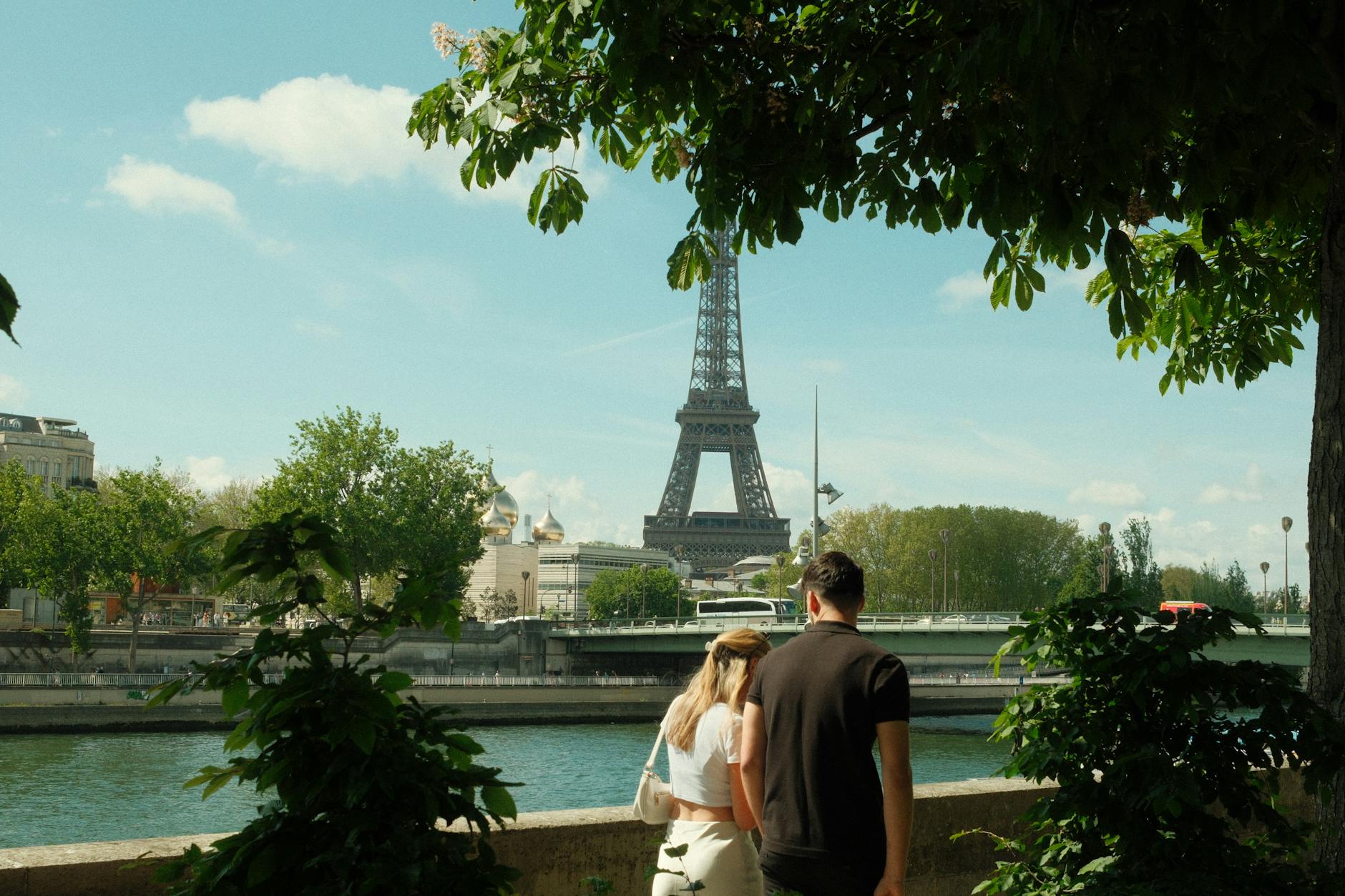
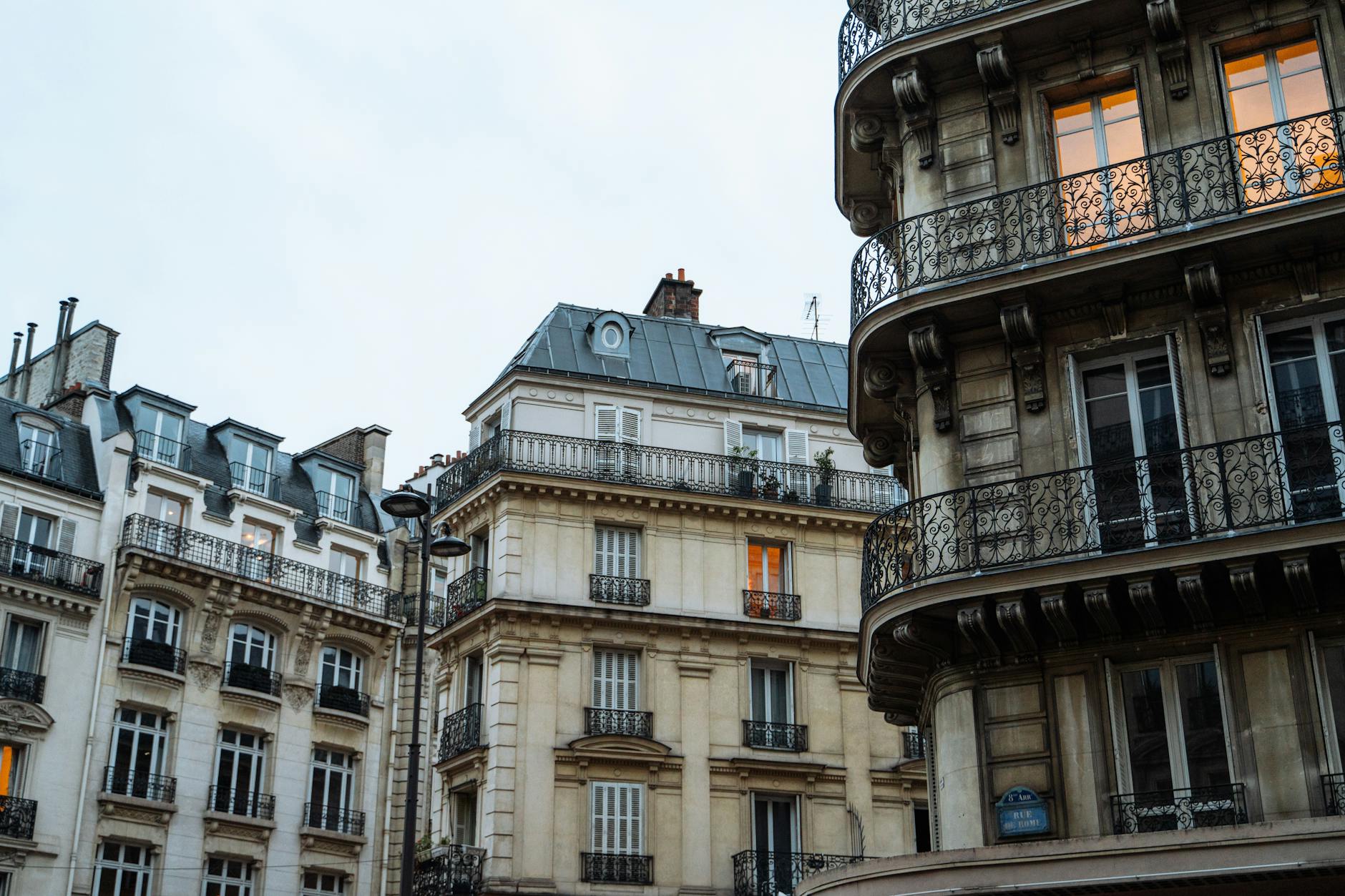
Haussmann designed Paris to look good from the middle of the street. The boulevards line up, the stonework repeats like a wedding cake, the balconies all wear the same wrought iron, and the river bends right through the centre. None of which helps you when you’re standing there at noon wondering why your photo looks nothing like the one that sent you here. The most instagrammable places in Paris reward planning over luck: the right hour, the right side of the street, the right metre of pavement. This guide hands you thirty specific spots, each with its metro stop, the angle that actually works, the time of day the light cooperates, and the etiquette slip that turns a beautiful location into an uncomfortable scene.
Almost all of these places are free. A handful are residential streets where being a decent guest counts for more than being a good photographer. And a few have changed: Notre-Dame is open again, the Pont des Arts lost its love locks years ago, and Rue Crémieux has seen real pushback from the people who live there. Take the list as current, but recheck monument hours before you leave the hotel.
How to Use This Guide
Each entry gives you five things. First, location: arrondissement plus a landmark you already know. Second, the nearest métro stop or cross-street, so you can drop a pin. Third, the time of day the light works, whether that’s sunrise, golden hour, blue hour, midday, or after dark. Fourth, the angle itself, meaning the side of the street, the bridge, or the few metres of pavement where the composition snaps together. And fifth, the crowd reality: whether you’ll be alone, sharing with twenty other photographers, or elbowed by a tour group.
Two things to keep in mind. Paris weather changes its mind constantly, so build flexible windows into your plan. And spread your shots across several days. Trying to hit Trocadéro at sunrise, Notre-Dame at noon, and Sacré-Cœur at sunset in a single day buys you sore feet and a run of mediocre frames. The walking routes near the end group spots that sit close together and share the same light direction.
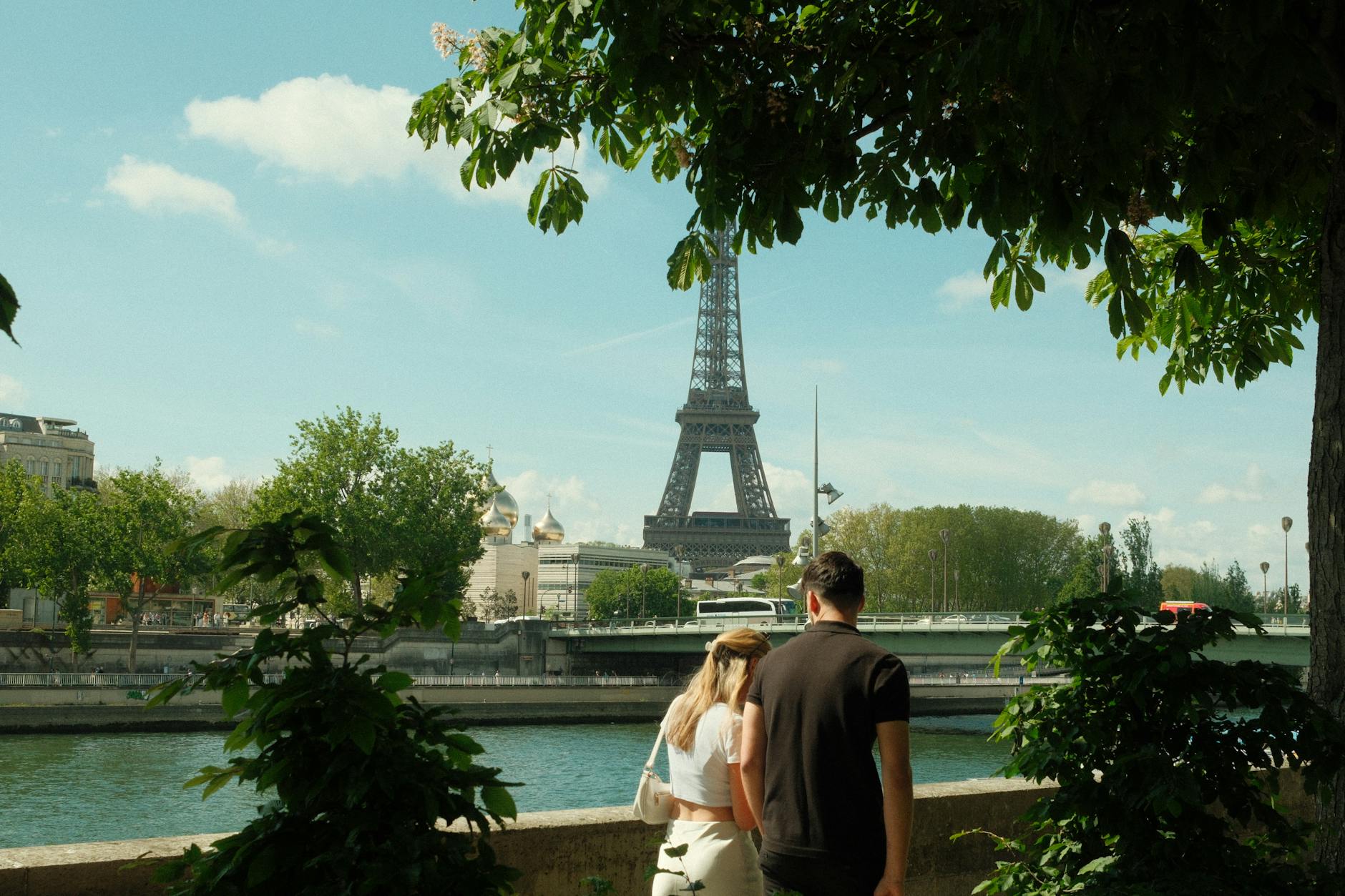
The Eiffel Tower from 7 Iconic Angles
Nothing in Paris gets photographed more, which means nearly every angle has already been shot a million times. Your job is simpler than finding something new: pick the angle that matches the light you have, and arrive before the crowd does. Here are seven viewpoints worth setting an early alarm for.
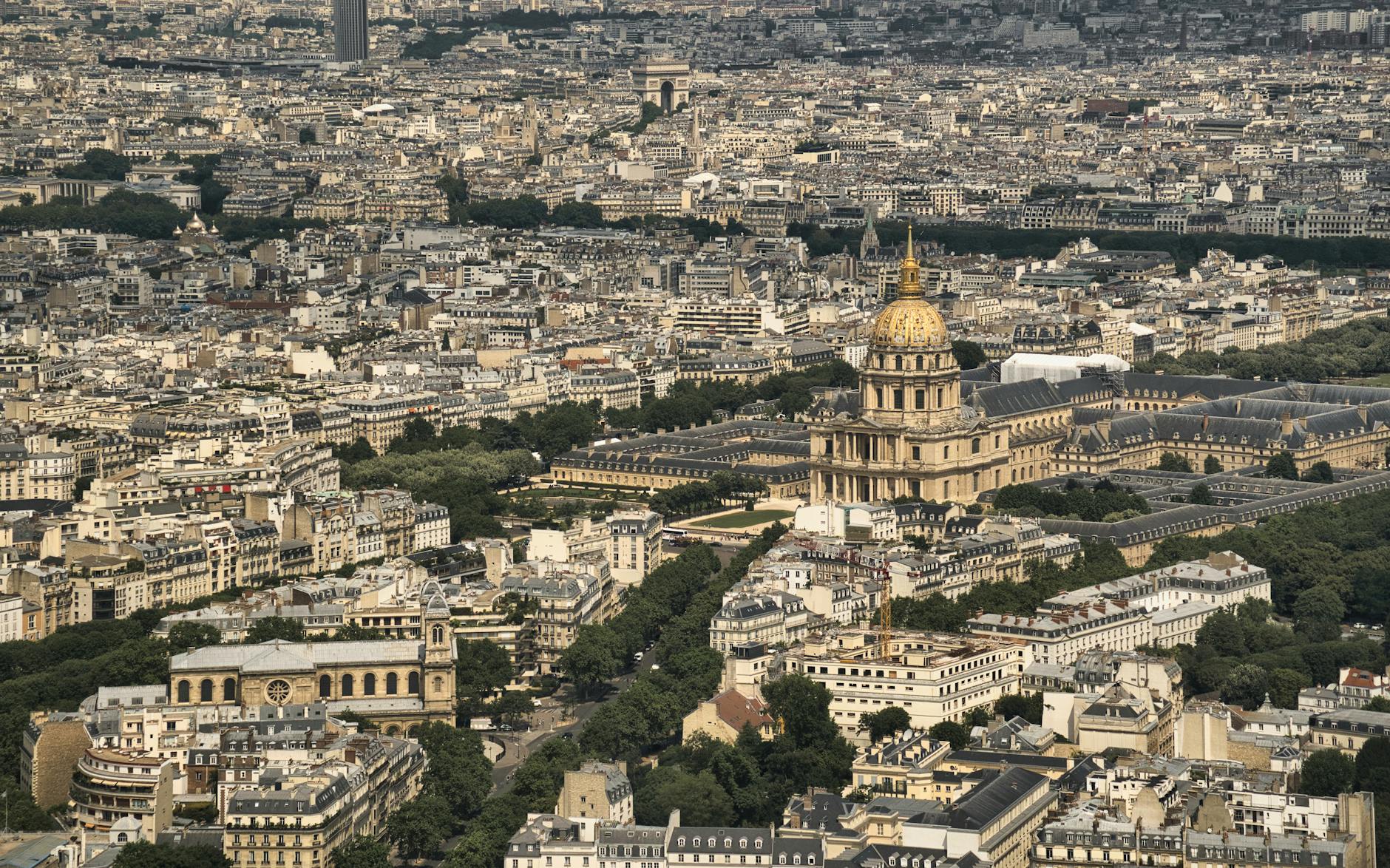
Trocadéro Plaza
16th, at the top of the plaza directly opposite the tower. Métro: Trocadéro, lines 6 and 9. This is the postcard, the wide symmetrical shot with the tower framed by the two wings of the Palais de Chaillot. Be there by 6:30am, when the sky still glows peach and the rail is yours. By 7am the first photographers show up; by 9am you’re shoulder-to-shoulder. Midday light is flat and harsh, so skip it. Come back at 9pm for the hourly five-minute sparkle, and stand about 90 metres back from the railing on the upper terrace so the strobing reads as a clean column rather than chaos. One warning: this plaza, especially during the sparkle, is among the worst pickpocket spots in the city. Keep your phone in a front pocket, your bag across your body, and your eyes open for the petition-signing distraction.
Pont de Bir-Hakeim
15th, at the southwest end of the river. Métro: Bir-Hakeim on line 6. Film fans know this as the “Inception bridge,” a double-decker viaduct with the métro running on top and pedestrians underneath. The signature shot frames the Eiffel through the iron of the upper structure: stand on the lower walkway, look northeast through the arches, and put the tower dead-centre. It peaks at golden hour, and the crowds thicken after 5pm. The usual mistake is shooting here at midday, when the bridge drops a hard shadow right across your foreground.
Avenue de Camoëns
16th, a short Haussmannian street that ends in a balcony pointed straight at the tower. Métro: Passy on line 6. This is one of the great under-the-radar angles. Cream buildings line both sides, a small staircase drops away, and the Eiffel rises at the far end like a backdrop someone hung for you. Aim for about 30 minutes after sunrise, when soft side-light skims the facades. Crowds stay light here. You might find another photographer or two, but the tour buses never come.
Rue de l’Université at #29
7th, near the corner with rue Jean Nicot. Métro: Invalides, lines 8 and 13. A narrow street vista with the Eiffel slotted between pale stone facades. Morning side-light is the whole game here, so arrive between 8 and 9:30am while the sun sits low enough to stripe the buildings on the right. You can step into the road when traffic allows, but move for cars without grumbling. People actually live and work on this street.
Place de Varsovie
16th, on the lower fountains side of Trocadéro. Métro: Iéna on line 9. The fountains-plus-Eiffel composition comes alive at blue hour, roughly 25 minutes after sunset, when the fountain lights turn turquoise, the tower goes gold, and the sky holds a deep blue. In summer, get there before 8pm to claim the central walkway. Long exposures work beautifully if you rest the camera on the stone balustrade.
Pont d’Iéna
Directly between Trocadéro and the base of the tower. Métro: Bir-Hakeim or Trocadéro. This is the base-up shot, taken from the riverside or the bridge itself, where the tower fills the frame and you can read every rivet in the lattice. Golden hour is ideal, though gold-against-black at full night is just as good. Shoot wide, around 16 to 24mm equivalent, and edge toward the Trocadéro side to keep your verticals from leaning.
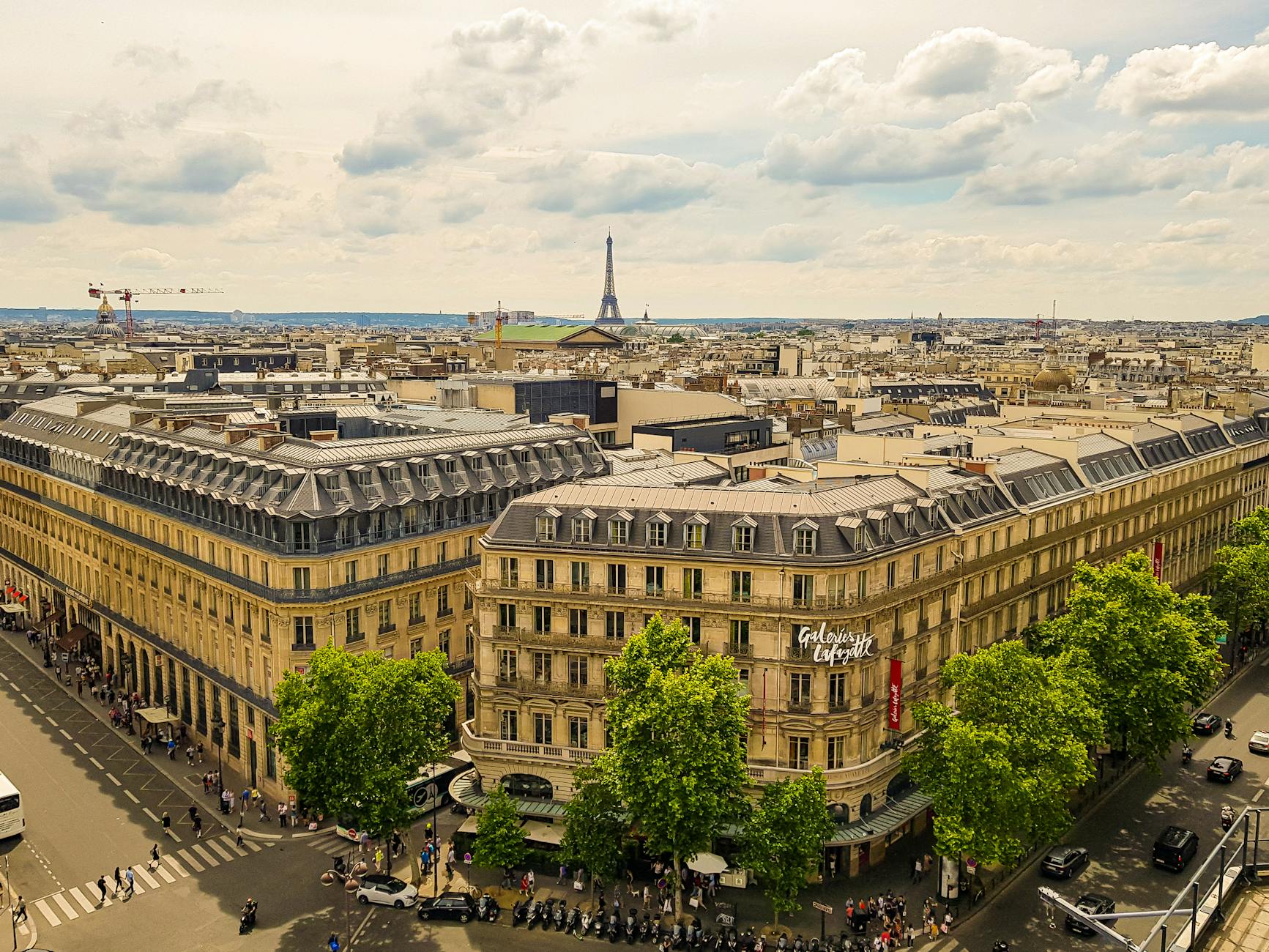
Galeries Lafayette Haussmann Rooftop
9th, 40 boulevard Haussmann, 7th-floor terrace, and free. Métro: Chaussée d’Antin La Fayette, lines 7 and 9. From up here the Eiffel sits in the middle distance with the green-copper dome of the Opéra Garnier on the left and a forest of rooftop chimneys in the foreground. Time it for about 30 minutes before sunset. The terrace closes around 9pm in winter and 11pm in summer, so check the posted hours. It’s free and popular, but the deck is big enough that you’ll always find your metre of railing.
Notre-Dame & Île de la Cité
Notre-Dame reopened in December 2024, five years after the 2019 fire. The three angles below catch it from different sides, and any two of them will comfortably fill an afternoon.
Pont de la Tournelle
On the 5th-4th border, linking the Left Bank to Île Saint-Louis. Métro: Pont Marie on line 7, or Maubert-Mutualité on line 10. Since the 2024 reopening, this has become the most photogenic angle of all: the south facade, the spire, the apse, and a reflection in the Seine whenever the water sits still. Shoot it in the hour before sunset, standing toward the Île Saint-Louis end for the cleanest composition.
Square Jean XXIII
4th, the small park tucked behind the cathedral apse. Métro: Cité on line 4. This shows you the apse and the flying buttresses, the structural bones of the building. It’s far less photographed than the front and, honestly, more interesting. Morning light from the east hits the buttresses cleanly between 8 and 10am. Leave the tripod behind; the park is too small for it.
Square du Vert-Galant Sunset
1st, at the western tip of Île de la Cité below Pont Neuf. Métro: Pont Neuf on line 7. Plenty of Parisians will tell you this is the best sunset spot in the city, and they have a case. You stand at water level, the river splits around you, the arches of Pont Neuf frame the foreground, and on a clear evening the sun drops straight down the river axis. Turn around and Notre-Dame glows gold behind you. Get there 45 minutes before sunset and bring a layer; it gets cold at the water.
Montmartre Photo Stops
Montmartre is a working village that happens to sit inside Paris, and the best photos come from arriving before the village is properly awake. The four stops below run as a tight loop. You can hit all of them in 90 minutes if you go between 7 and 9am.
Place du Tertre Corners
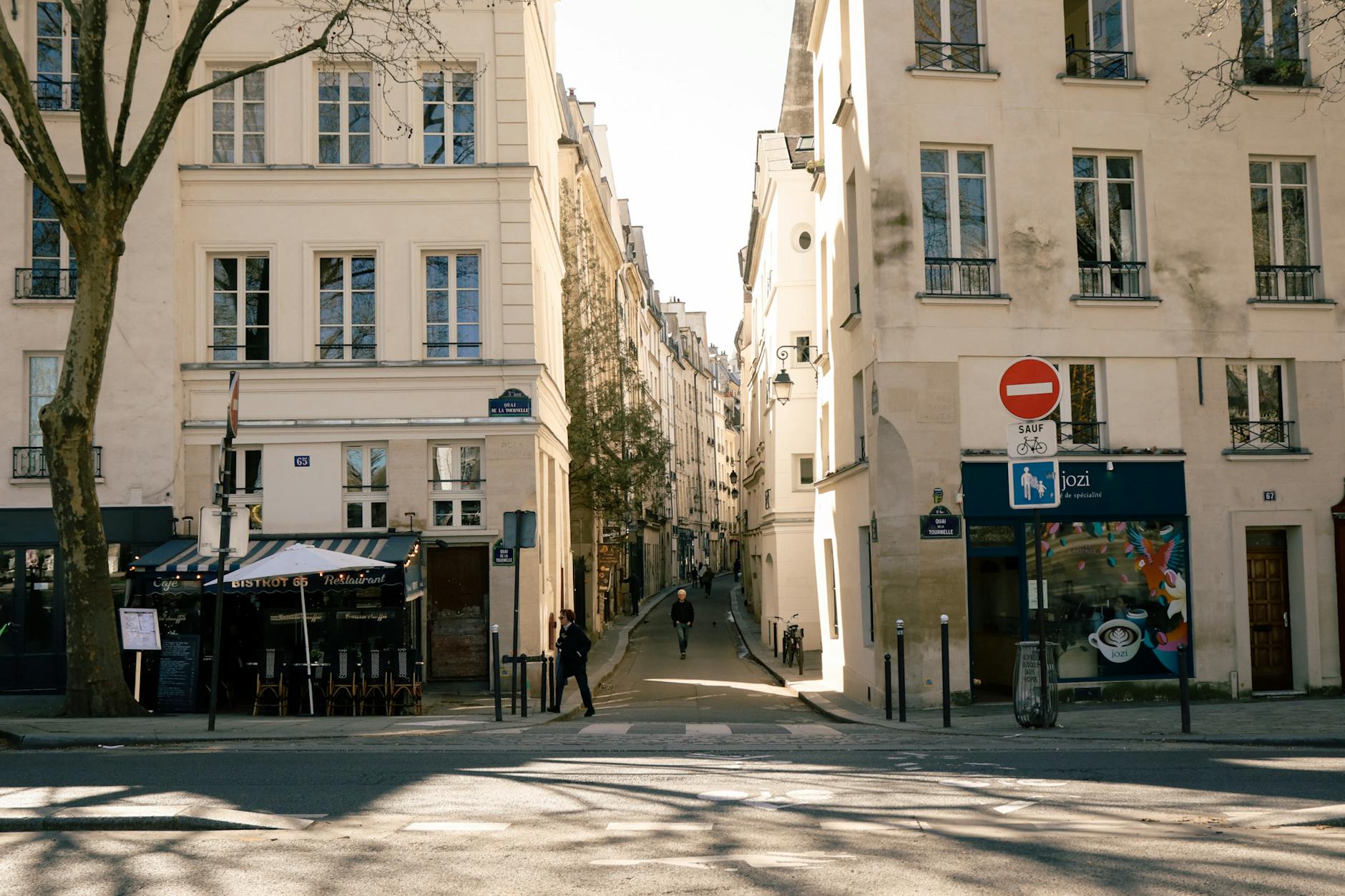
18th, the artists’ square one block from Sacré-Cœur. Métro: Abbesses on line 12. By midday the centre belongs to tourists, caricaturists, and pickpockets, so don’t bother with it. Work the corners instead. The southwest corner, where the square meets rue du Mont-Cenis, frames the easels against the cream restaurant fronts. Come at 7am to catch the artists setting up in soft light, before the crowd arrives to stand between you and them.
Sacré-Cœur Basilica + Steps
18th, the white-domed basilica crowning the hill. Métro: Anvers on line 2 plus the funicular, or Abbesses on line 12 and a walk up. The face-on shot from the foot of the staircase is the classic, and also exactly where the friendship-bracelet scammers work hardest. Approach from the east side instead, along rue du Cardinal Dubois, for a three-quarter angle that sidesteps the worst of the staircase. The travertine glows pink at sunrise and softens again at blue hour. Midday does it no favours.
Rue de l’Abreuvoir at La Maison Rose
18th, the cobbled lane behind the basilica with the famous pink café on the corner. You already know the shot: curving cobblestones, the cream-and-pink facade, a single street lamp. Mid-morning, somewhere between 9:30 and 10:30, gives the softest light on the pink wall. Earlier is too dim, later goes contrasty. Don’t plant yourself in the middle of the lane, because cars and bikes still come through. Crouch low instead, and let the cobblestones lead the eye toward the café.
Le Mur des Je T’aime
18th, in Square Jehan-Rictus off Place des Abbesses. Métro: Abbesses on line 12. Forty square metres of dark blue enamel tiles spell out “I love you” in 250 languages, 612 inscriptions in all. It shoots best in flat overcast light, which kills the glare on the enamel; bright sun just bounces hot spots back at you. At off-peak times you’ll share the wall with three or four other people, no more.
Iconic Streets & Squares
Paris built its public squares to be admired, and the four below hand you four completely different moods: classical 17th century, Napoleonic empire, fashion-house modern, and pastel domestic.
Place des Vosges
4th, in the Marais. Métro: Saint-Paul on line 1, or Bastille on lines 1, 5, and 8. This is the oldest planned square in Paris, finished in 1612, with thirty-six identical pavilions wrapped around a central garden. Set up in a corner arcade and look diagonally across; the brick-and-stone symmetry is the entire point. Morning light makes the southern arcades glow, and the afternoon flips it to the other side. By Paris standards, it stays remarkably calm.
Place Vendôme Column at Night
1st, between the Opéra and the Tuileries. Métro: Tuileries on line 1, or Opéra on lines 3, 7, and 8. The bronze column, modelled on Trajan’s in Rome, comes into its own after full dark, when the boutiques around it (Cartier, Chanel, Boucheron) throw light from their windows and the column itself reads as a tall silhouette. Shoot head-on from the rue de la Paix end for the symmetrical frame.
Avenue Montaigne
8th, running between the Champs-Élysées and the river. Métro: Franklin D. Roosevelt on lines 1 and 9. This is the fashion artery, lined with the Dior, Chanel, and Louis Vuitton flagships, and on a clear day the Eiffel appears at the far end of the vista. Stand at the rond-point corner and shoot down the avenue in late afternoon, when the tower catches the warm light.
Rue Crémieux
12th, near Gare de Lyon. Métro: Gare de Lyon on lines 1 and 14. A single block of pastel houses, mint and peach and lavender and pale yellow, that blew up on Instagram around 2017. Read this before you go: it’s residential, the people who live here have protested tourist behaviour more than once, and the city has floated the idea of gating it off. So keep your voice down. No tripods, no music, no posed sequences blocking front doors. Five minutes, a few frames, and move on. The houses look their best under flat overcast light anyway.
Bridges & Seine Views
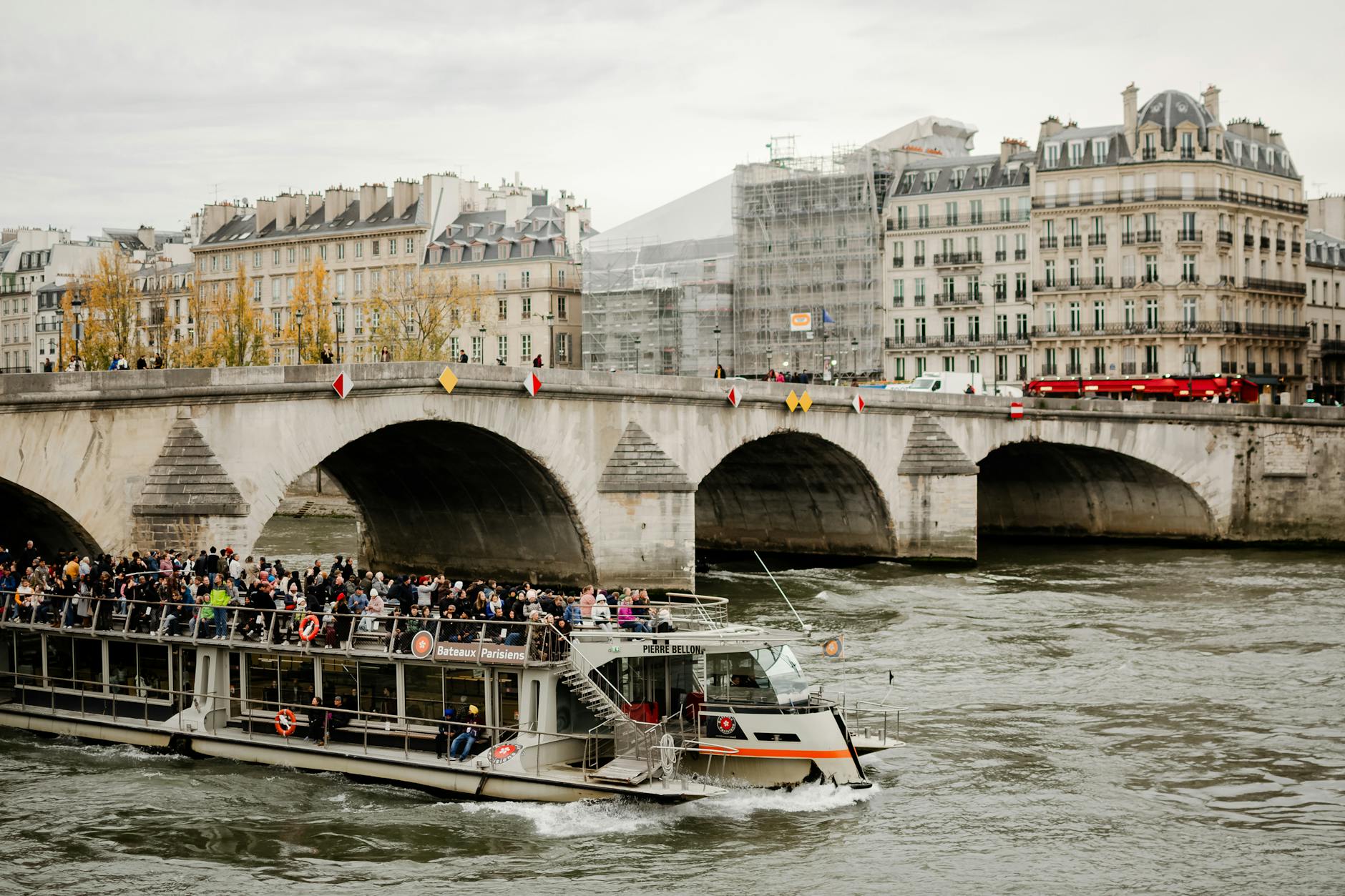
The Seine crosses Paris under 37 bridges. Four of them give you the whole package: ornament, history, scale, and a good excuse to be standing over moving water as the sun goes down.
Pont Alexandre III
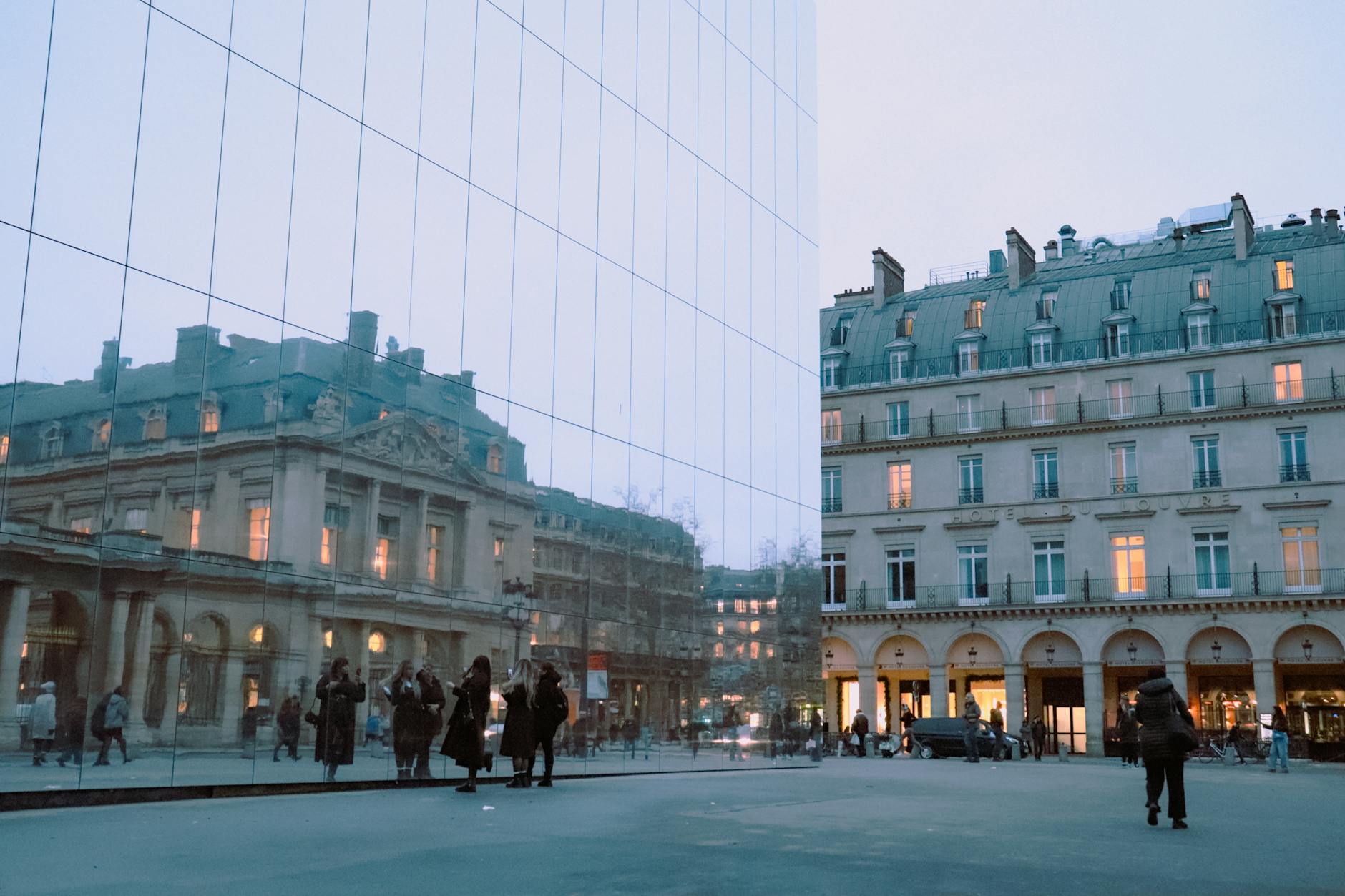
On the 8th-7th line, between Les Invalides and the Champs-Élysées. Métro: Invalides on lines 8 and 13. This is the most ornate bridge in the city, with a gilded Pegasus on each of its four corners, art nouveau lamps, and a single sweeping arch. Blue hour is the moment, when the gilding catches the lamplight and the river still holds a trace of blue. The southwest corner lines up the gold dome of Les Invalides behind the bridge. Tripods get tolerated at the ends but not out in the middle.
Pont des Arts
On the 1st-6th line, the footbridge between the Louvre and the Institut de France. Métro: Pont Neuf on line 7. Set your expectations first: the love locks came off in 2015, after the railings collapsed under their own weight, and the new panels are clear glass. It’s still a lovely bridge, with a wooden deck, Seine views end to end, and a near-perfect alignment with the western sky at sunset. The shot is a long-lens compression looking down the deck toward the green dome of the Institut.
Pont Neuf
On the 1st-6th line, crossing the western tip of Île de la Cité. Métro: Pont Neuf on line 7. The name means “new bridge,” which is one of the better jokes in Paris, since it’s actually the oldest standing bridge in the city, completed in 1607. A bronze equestrian statue of Henri IV holds the mid-span. Shoot up at the arches from Square du Vert-Galant, or take in the full span from the Quai du Louvre across the water. Golden hour from the river-level walkways is the sweet spot.
Quai Saint-Bernard Sculpture Garden
5th, the riverside walk between Pont de Sully and Gare d’Austerlitz. Métro: Jussieu on lines 7 and 10. This is an open-air sculpture garden with about thirty pieces by 20th-century sculptors. Frame a sculpture with the Seine and a bridge behind it, and shoot in late afternoon when the low sun rakes across the metal. It also happens to be one of central Paris’s genuinely quiet riverside walks.
Department Store & Belle Époque Interiors
When the rain sets in and the outdoor light goes flat, the great department stores are your move. Belle Époque cupolas, gilded balconies, food halls laid out like museum galleries. All three below are free to walk into.
Galeries Lafayette Stained-Glass Cupola
9th, 40 boulevard Haussmann, in the central atrium. The neo-Byzantine stained-glass dome dates to 1912 and floats 43 metres above the marble floor, with three tiers of gilded balconies stacked beneath it. Hold the phone vertical and shoot straight up from the centre of the ground floor, or look down on the dome from the third- or fourth-floor balcony rail. Weekday mornings before 11am are quietest.
Au Printemps Haussmann Belle Époque Cupola
9th, 64 boulevard Haussmann, a short walk along the street from Galeries Lafayette. Métro: Havre-Caumartin on lines 3 and 9. A second magnificent stained-glass cupola, and arguably the more elegant of the two, precisely because the architecture around it is so restrained. It sits in the upper-floor brasserie, where you’re expected to be a paying customer if you settle in for a while, though a quick photo from the entrance won’t raise eyebrows.
Le Bon Marché La Grande Épicerie Food Hall
7th, 38 rue de Sèvres. Métro: Sèvres-Babylone on lines 10 and 12. This is the Left Bank’s temple to gourmet food, with pyramids of macarons, walls of patisserie, and fish counters arranged like jewellery cases. Shoot from directly overhead, or go low and tight on a single display. Photography is allowed; just ask the staff first if you’re carrying anything bigger than a phone.
Covered Passages
Paris had 150 covered shopping passages in the 19th century. Roughly a dozen survive, and the two below are the most photogenic of the lot.
Galerie Vivienne Mosaic Floors
2nd, between rue des Petits Champs and rue Vivienne. Métro: Bourse on line 3. This 1823 passage pairs neoclassical plasterwork and a glass roof with a mosaic floor laid by Italian artists, and that floor is the reason to come. Shoot it from low down with the glass roof going soft above. Cloudy days suit it best, when diffuse light fills the whole passage evenly.
Passage des Panoramas
2nd, between boulevard Montmartre and rue Saint-Marc. Métro: Grands Boulevards on lines 8 and 9. The oldest covered passage in Paris opened in 1800 and was one of the first places anywhere to be lit by gas. These days it’s a run of stamp dealers, bistros, and second-hand bookshops. Shoot the long perspective from either end, ideally in late afternoon when the bistros start to fill and the light turns warm.
Hidden Photo Gems Most Tourists Miss
These are the spots locals fire back when a visitor asks for “something less obvious.” All free, all walk-in, and all reliably better than they sound.
Cour Carrée du Louvre at Night
1st, the eastern courtyard of the Louvre, open round the clock even when the museum itself is shut. Métro: Louvre-Rivoli on line 1. Four Renaissance wings enclose you, and at night the facade lighting plus the spotlit pyramid in the next courtyard add up to a full stage set. Best around 10pm, once the courtyard empties out. Go low and wide from the east end, looking west toward the central archway, with the pyramid glowing through the arch.
Square Jehan-Rictus / Mur des Je T’aime
It’s already in the Montmartre section above, but it earns a second mention here as one of the easiest hidden gems to pair with Sacré-Cœur. Five minutes from Abbesses, almost never crowded, and photogenic in any light. Slot it between your basilica shots and your stop at La Maison Rose.
Promenade Plantée
12th, an elevated former rail line that runs 4.7 km east from Bastille. Métro: Bastille on lines 1, 5, and 8. This is the original elevated park, the one that inspired New York’s High Line rather than the other way around. The arches of the Viaduc des Arts below hold craft workshops, while the trail up top gives you tree-lined views straight into apartment windows and out over the rooftops. Come in spring for the wisteria or in autumn when the leaves turn.
Rooftop of Institut du Monde Arabe
5th, 1 rue des Fossés Saint-Bernard, on the riverside. Métro: Jussieu on lines 7 and 10. Jean Nouvel’s 1980s building has a free rooftop terrace with one of the best panoramas in central Paris: Notre-Dame, the dome of the Panthéon, Île Saint-Louis, and the Seine curving away. It’s open during museum hours; ask security to point you to the lift. Golden hour is when it pays off.
Parc des Buttes-Chaumont Temple de la Sibylle
19th. Métro: Buttes Chaumont on line 7bis. A 19th-century landscaped park with real cliffs, a lake, a suspension bridge, and a Roman-style temple perched on a rocky island in the middle of it. From the hilltop on the east side, look back toward the temple with Sacré-Cœur showing through the trees. Weekends bring out the picnickers; weekday mornings are nearly empty.
Best Time of Day for Each Type of Shot
Rather than memorise thirty separate times, learn the five categories. Almost every Paris location falls into one of these lighting windows.
| Spot type | Best window | Why |
|---|---|---|
| Sunrise spots (Trocadéro, Sacré-Cœur, Place du Tertre) | 30 min before to 30 min after sunrise | Empty plazas, soft side-light, no harsh contrast on white stone |
| Golden hour spots (Bir-Hakeim, Pont Alexandre III, Avenue Montaigne) | 60 min before sunset | Warm side-light raks iron and gilding, river takes copper tone |
| Blue hour spots (Place de Varsovie, Pont Alexandre III, Eiffel base) | 20-35 min after sunset | Lit monuments balance against deep blue sky; long exposures look painterly |
| Night spots (Eiffel sparkle, Place Vendôme, Cour Carrée du Louvre) | 9pm onward | Crowds thin, monument lighting is the subject, sky reads as black |
| Midday spots that work (covered passages, department-store interiors) | 11am-3pm | Indoor or covered locations unaffected by harsh outdoor sun |
Avoiding Crowds: When Iconic Spots Are Empty
Crowds are the single biggest variable in Paris photography, bigger than weather, bigger than season. The same Trocadéro frame at 6:30am and at 1pm might as well be two different cities. Two strategies handle almost all of it.
First, choose your day. Tuesday and Wednesday in the off-season, November through March but not Christmas week, deliver the lowest crowds. The Louvre closes on Tuesdays, which conveniently pushes the cruise-ship day-trippers out of the central core. Steer clear of weekends, French school holidays, and the week before Christmas, when the crowds pour into the Marais market.
Second, choose your hour. Show up before 7am at Trocadéro, Sacré-Cœur, or the Eiffel base and you’ll either be alone or sharing with a handful of photographers. After 9pm the day-tour crowds have cleared out of most monuments. There’s one useful exception: during the hourly five-minute Eiffel sparkle, everyone funnels toward Trocadéro, and the other angles (Bir-Hakeim, Avenue de Camoëns) suddenly empty out.
Photo Etiquette in Paris
Paris is a city, not a film set. Those photogenic streets are working neighbourhoods where people live. Four rules cover nearly every situation.
- A lot of the prettiest streets are residential. Rue Crémieux, Rue Saint-Rustique behind Sacré-Cœur, the lanes around Place du Tertre: these are people’s front doors. Keep quiet, don’t block doorways, leave the tripod at home, and don’t play music for posed reels.
- Cafés expect an order if you sit down and shoot. The unwritten rate: a four-euro espresso buys you about thirty minutes of legitimate seating, and a glass of wine roughly an hour. Sitting down and leaving without ordering takes a table from a paying customer.
- Museum policy varies. Most allow handheld photography as long as there’s no flash. The Louvre is the outlier, permitting flash in the permanent collection but banning it in temporary exhibitions, and tripods there always need a written permit. The Musée d’Orsay bans photography outright in the upstairs impressionist gallery.
- Some places run on tips or scams. The Sacré-Cœur staircase has self-appointed “models” who demand payment if you photograph them, and friendship-bracelet scammers who tie a string on your wrist before you can pull away. Keep your distance and your hands in your pockets. The petition-signing routine at Trocadéro is a pickpocket distraction; just walk past it.
Camera & Lens Recommendations
Pack light. You’ll walk fifteen to twenty kilometres a day over cobblestones, and a heavy bag will cost you more shots than the bigger sensor ever wins back.
- A modern phone with a 0.5x ultrawide lens handles roughly 80% of the shots in this guide. The ultrawide covers plaza compositions, the standard 1x covers street vistas, and portrait mode covers café details. If your phone is the only camera you own, you are not at a disadvantage at a single spot on this list.
- A 24-70mm zoom or a 35mm prime on a small mirrorless body is the ideal streetwork kit. It’s light enough to carry all day, wide enough for vistas, and long enough for portraits and details.
- A 70-200mm telephoto earns its weight for compressed Eiffel shots from the far angles (the Galeries Lafayette rooftop, the upper Tuileries, Place du Tertre), where you want the tower to loom impossibly large.
- Tripods are banned at most Paris monuments without a paid commercial permit, and the police will absolutely ask you to put yours away, with the heaviest enforcement at Trocadéro, the Eiffel base, and the Tuileries. Mini-tripods and Gorillapods get a pass almost everywhere.
- Drones are flat-out banned over central Paris airspace. The historic core is a permanent no-fly zone, fines start at €10,000, and the police actively enforce it. Don’t bring one expecting to find a loophole, because there isn’t one.
Walking Photo Routes That Hit 5+ Spots in 2 Hours
Three loops chain together a run of iconic spots inside a single window of light. Each one starts at a métro stop, ends near another, and budgets ten to fifteen minutes per location.
Right Bank Loop (90 min, 6 spots)
Begin at Pont Alexandre III at sunset. Cross to Place de la Concorde for the obelisk and the gold-tipped fountains, then walk east through the Tuileries, where the reflecting pools, statues, and the view back to the Louvre keep you busy. Pass through Cour Carrée du Louvre just as the lights come up. Cross Pont Neuf, drop down to Square du Vert-Galant for the river-level reflection, and finish on Pont des Arts looking back at the Institut de France in blue hour. End at métro Pont Neuf.
Left Bank Loop (2 hr, 5 spots)
Start at the Eiffel base in early evening. Walk west to Pont de Bir-Hakeim for the framed-tower angle from the lower deck, then up to Avenue de Camoëns for the Haussmann vista. Cross to Trocadéro for the postcard angle as the tower lights kick in (8:30 to 9:30pm depending on the season), then head west through the 16th to the Maison de Balzac in Passy. End at métro Passy on line 6.
Marais Loop (90 min, 5 spots)
Begin at Place des Vosges in late morning for the arcades and the central garden. Walk to the Maison de Victor Hugo on the north corner, free to enter and photogenic inside. Head south to the Hôtel de Sens, a 15th-century mansion that still wears a rare medieval Paris facade, then west to Saint-Gervais behind the Hôtel de Ville for its Flamboyant Gothic interior. Finish at the facade of the Hôtel de Ville itself. End at métro Hôtel de Ville on lines 1 and 11.
Frequently Asked Questions
Where is the most Instagrammable spot in Paris?
Trocadéro plaza at 6:30am gives you the highest-yield iconic frame there is: the symmetrical Eiffel postcard, peach light, almost no people. Already ticked that off? Try Square du Vert-Galant at sunset, the Galeries Lafayette rooftop at 8pm, or Pont de Bir-Hakeim at golden hour.
When is the best time to photograph the Eiffel Tower?
There are three windows. Sunrise from Trocadéro for the empty postcard, golden hour from any bridge angle (Bir-Hakeim or Iéna) for warm iron, and blue hour about 25 minutes after sunset from Place de Varsovie. The five-minute sparkle runs at the top of every hour from sunset until 1am (11pm in winter), and it looks best at 9 or 10pm.
Are tripods allowed in Paris?
Not at most monuments, not without a paid permit. The police enforce it at Trocadéro, the Eiffel base, the Tuileries, and around Notre-Dame. Mini-tripods and Gorillapods slip by almost everywhere. Inside museums, a full tripod always needs a written permit arranged in advance.
Can I use a drone in Paris?
No. The historic core is a permanent no-fly zone for drones, recreational and commercial alike. Fines start at €10,000 and the police actively enforce them. There is no application process for tourist drone flights inside the central arrondissements. Leave it at home.
What’s the best photo spot in Montmartre?
For the basilica, take the east-side approach along rue du Cardinal Dubois at sunrise. For village atmosphere, it’s Rue de l’Abreuvoir at La Maison Rose around 9:30 to 10:30am. For the panorama of Paris spread out below, the steps in front of Sacré-Cœur at blue hour. If you can only do one, make it La Maison Rose.
Where can I photograph the Eiffel Tower without crowds?
Avenue de Camoëns is reliably the least-crowded iconic angle, since it’s residential and off the tour-bus circuit. Rue de l’Université #29 is much the same. The Galeries Lafayette rooftop stays quiet for its first 30 minutes after opening at 10am. And counter-intuitively, Trocadéro plaza empties out during the sparkle as everyone rushes the railing.
Are Paris cafés OK with photo sessions?
They’re fine with photos of the facade and terrace, and with shots of your meal and the room once you’re a paying customer. They are not fine with sitting down without ordering, posing models with reflectors, or blocking the entrance with a tripod. Order something. An espresso buys you 30 minutes of seating.
What’s the best lens for Paris photography?
A 24-70mm zoom on a mirrorless body covers 90% of everything you’ll want. If you have to pick a single prime, 35mm is the most useful focal length in Paris: wide enough for streetwork, tight enough for portraits and details. Add a 70-200mm only for those compressed Eiffel shots. A modern phone with an ultrawide takes care of the rest.
Final Thoughts
In Paris, patience beats gear every time. The same plaza at 6:30am and at 1pm is the gap between a portfolio frame and a stock photo. Treat these thirty spots as a working list rather than a checklist: pick three or four per visit, learn how the light moves there, and the place will start handing you frames that no amount of scrolling ever could.
Continue Exploring Paris
For more things to do in Paris, browse the parent guide, or dig into the related cluster articles below.
- Free things to do in Paris
- Unique things to do in Paris
- Paris at night
- Paris rainy-day activities
- Paris walking tours
- Seine river cruises
- Best Paris tours
- Paris winter activities
- Paris summer activities
For deeper dives into the Paris pillar topics, see our guides to the best time to visit Paris, where to stay in Paris, Paris itinerary planning, Paris food, Paris museums, Paris shopping, getting around Paris, and Paris day trips.
Keep reading
Use these to round out your trip: