Louvre Museum Guide: What to See, Skip-the-Line Tips & Floor Plans
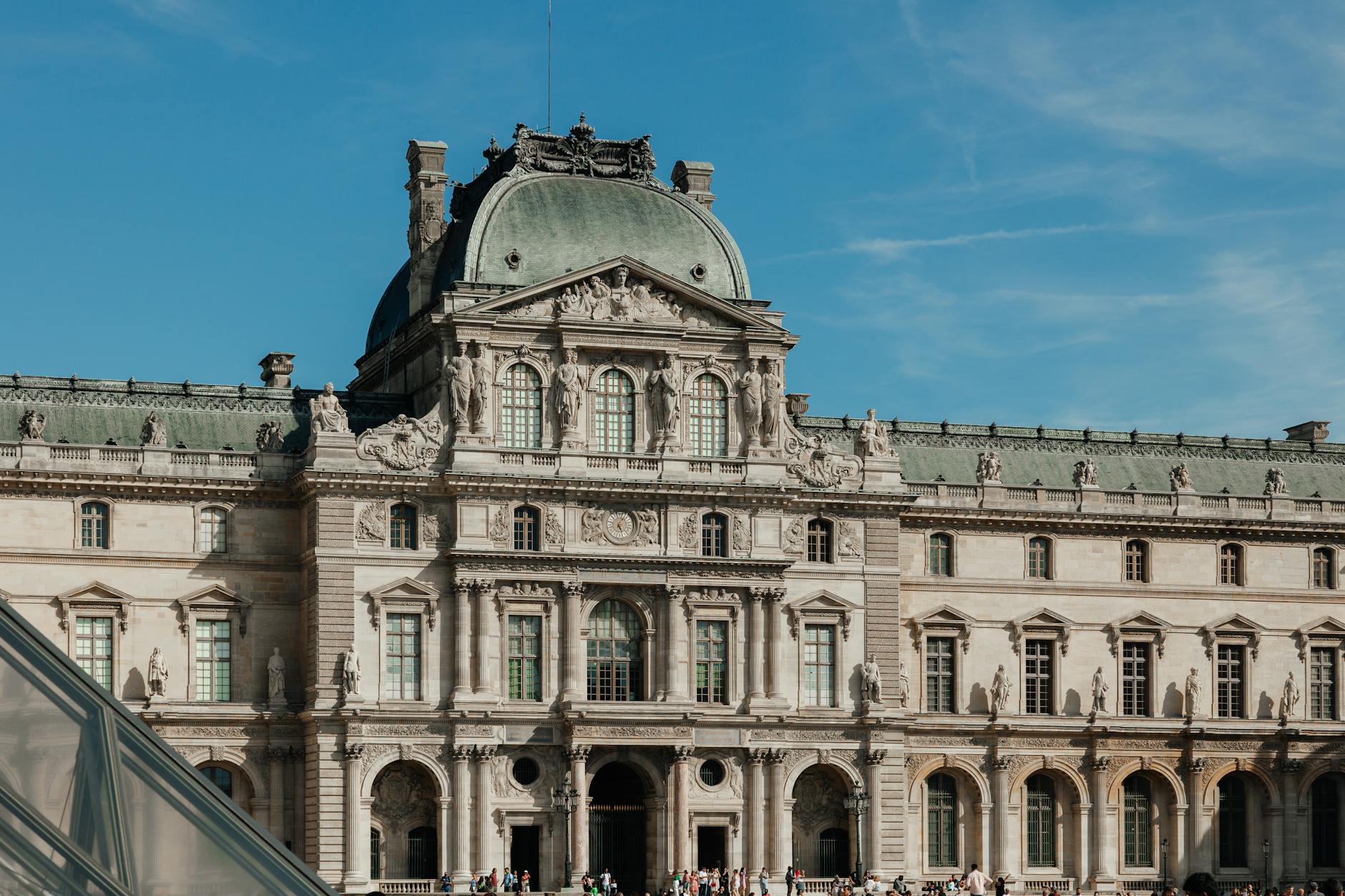
Here is the number that should shape your entire plan: 35,000 works on permanent display across 73,000m² of galleries. That is the problem this louvre museum guide solves. The Louvre is the most-visited museum on the planet, 8.7 million people in 2024, and you will not see all of it, so stop trying. A tight 3-4 hour visit lands the unmissable masterpieces, builds enough context that the rest makes sense, and sends you home already planning a second trip. What follows is the floor-plan strategy, the ticket logistics, the route through the three wings, and an honest list of what to skip.
Preparation is everything here. Read the wing breakdown below before you book your timed slot, decide whether you want the 90-minute hit-and-run or the 6-hour deep dive, and only then pick your entrance.
The Louvre at a Glance: Key 2026 Stats
Strategy can wait one minute. First, the numbers, because they explain everything that follows. The Louvre is enormous, ancient, and stranger than most visitors expect. It was a fortress, then a palace, then a public museum, and all three layers are still visible if you know where to look. Here is what defines the place in 2026.
- Annual visitors: 8.7 million in 2024, capped at 30,000 per day by timed entry.
- Works on display: approximately 35,000 at any given time.
- Total collection: more than 380,000 objects, the majority in storage and on rotation.
- Exhibition space: 73,000m² across three wings on three floors plus basement.
- Departments: 8 curatorial departments (Egyptian, Greek/Roman, Near Eastern, Islamic, Paintings, Sculptures, Decorative Arts, Prints & Drawings).
- Wings: Denon (south), Sully (east), Richelieu (north) — arranged in a giant horseshoe around the Cour Napoléon.
- Closed day: Tuesday, every week, year-round.
- Longest hours: Friday until 9:45pm (the “Friday Late”).
- Standard adult ticket: €30 timed-entry via the official louvre.fr website.
The oldest exhibit is the building. Philippe Auguste raised it as a defensive fortress in 1190. François I tore down the medieval keep and began the Renaissance palace in 1546. Louis XIV moved the court to Versailles in 1682 and left the Louvre to gather dust for the better part of a century. The revolutionary government threw the doors open to the public on 10 August 1793, making it one of the world’s first national museums. Then Napoleon looted half of Europe to fill it. A great deal went back after Waterloo, but that imperial appetite is the reason the collection looks the way it does today.
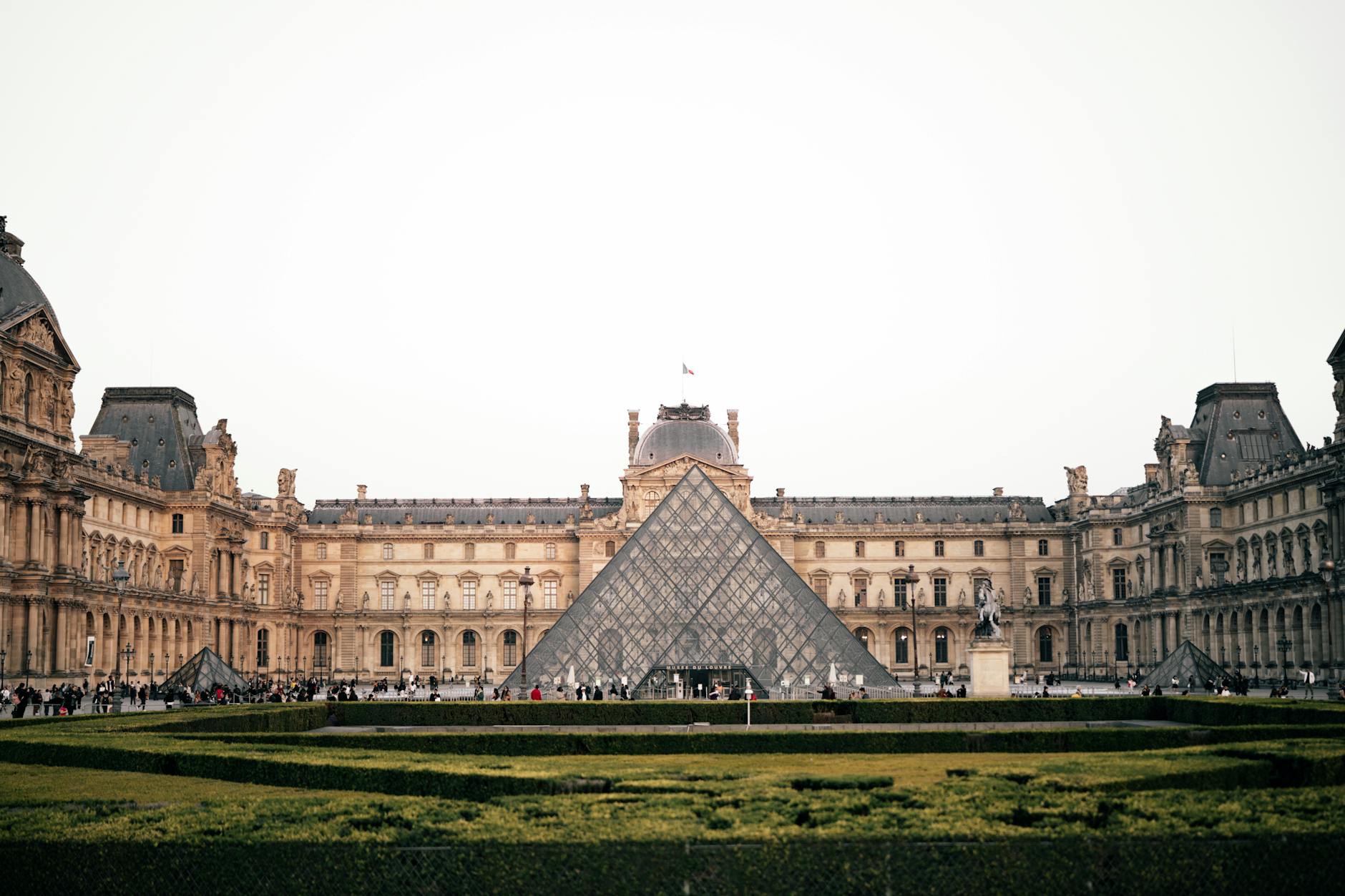
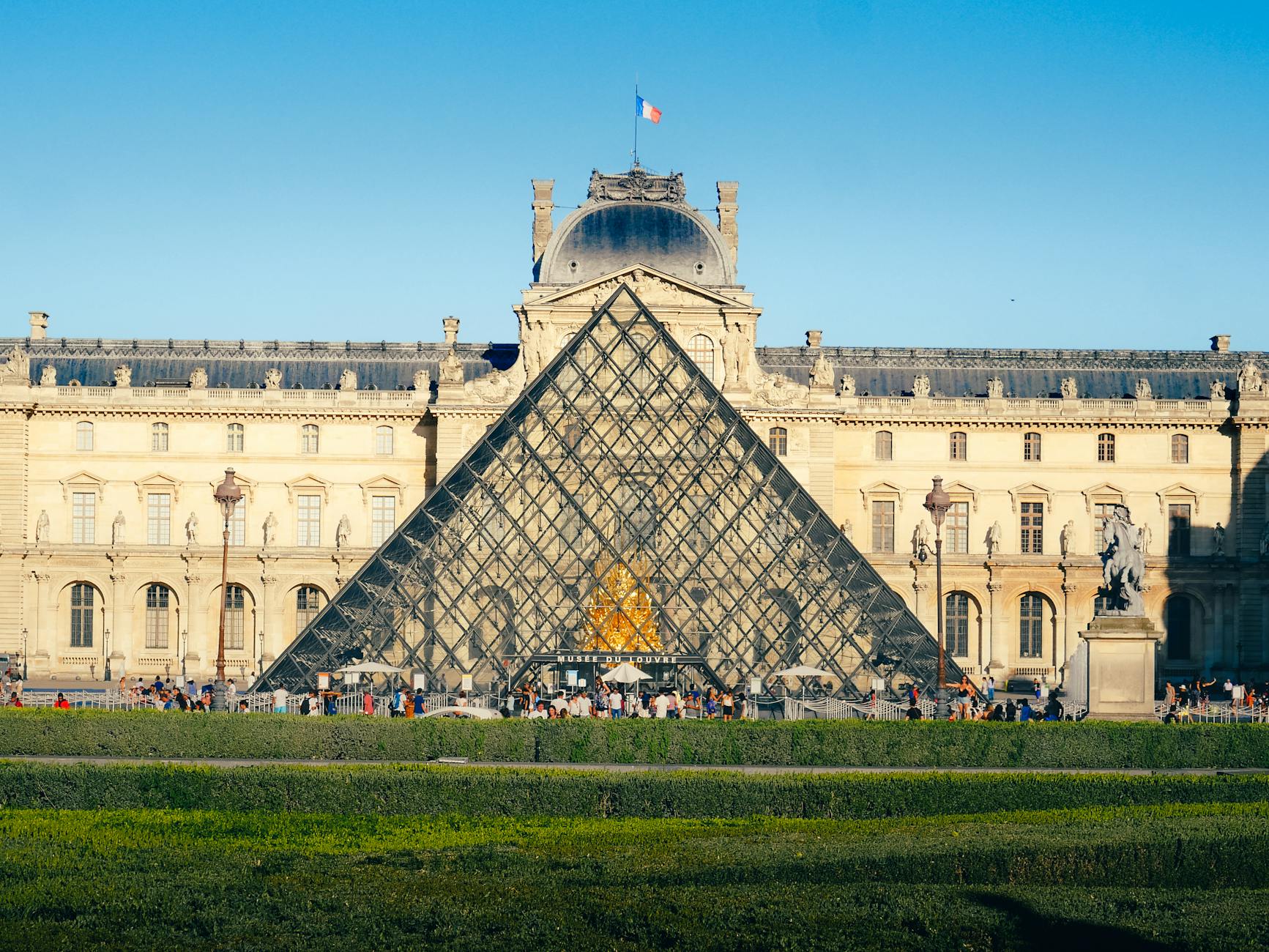
The medieval fortress walls survive. Head down to the Sully basement and you can stand beside the original 12th-century moat and donjon foundations, uncovered during the 1980s Grand Louvre renovation, the same project that produced I.M. Pei’s glass Pyramid. That overhaul pulled three previously separate entrances under one underground hub and doubled the floor space by digging out the courtyard.
Tickets in 2026: Every Option and How to Skip the Line
Ticketing changed for good in 2019, when timed entry became mandatory, and the system has tightened every year since. The 2026 headline price is €30 for an adult, €22 for non-EU visitors aged 18 to 25, and free for under-18s worldwide and EU residents under 26. But the price is the easy bit. The hard part is landing the slot you want and choosing where to walk in.
Buying direct from louvre.fr
The official website is the only place to buy at face value. Tickets release 60 days ahead at 8:30am Paris time, and the popular slots are gone within hours. Set a reminder and start refreshing at 8:29. You pick a 30-minute entry window; once you’re in, you can stay until closing. The QR code on your phone is your ticket.
The Friday Night ticket
Friday nights from 6pm to 9:45pm are the museum’s quietly kept secret. 18-25s pay a flat €15; everyone else pays the standard €30, but the crowds thin out dramatically. One catch worth planning around: some galleries start shutting at 6pm and 8pm, so hit the closing ones first (Egyptian basement, Richelieu) and finish in the Denon paintings floor, which stays open.
Guided skip-the-line tours
Get Your Guide, Take Walks and Context Travel run 2-3 hour highlights tours for €90 to €150 per person, timed entry included. You pay roughly double the ticket price for a guide, but you skip the solo-booking anxiety and, more to the point, you learn where everything is. On a first visit, it is the most defensible single expense in Paris.
Free entry days
Entry is free on the first Saturday evening of each month from 6pm to 9:45pm, and on 14 July (Bastille Day). You still need a timed reservation, and yes, the queues are real, but for travellers building a /paris-on-a-budget/ itinerary it is the single best deal in central Paris.
Paris Museum Pass
The Paris Museum Pass runs €70 for 2 days, €85 for 4 days, and €105 for 6 days, and it covers the Louvre plus 50+ monuments. It pays for itself the moment you hit three sites, so pair it with /versailles-guide/ and /pantheon-paris-guide/. Pass holders still need a timed Louvre slot, which is free to book through louvre.fr.
What not to buy
Walk-up tickets no longer exist; even the Carrousel du Louvre underground entrance now demands the same timed reservation. Resellers like Tiqets and Viator are reliable but tack on a 10-20% markup. And don’t fall for “skip-the-line” tickets sold without a tour attached, because everyone holding a timed ticket already skips the line. You’d be paying for nothing.
| Ticket type | Price (2026) | Best for |
|---|---|---|
| Standard adult (louvre.fr) | €30 | Solo and family visits, book 60 days ahead |
| Youth 18-25 non-EU | €22 | Backpackers and students |
| Under 18 / EU under 26 | Free | Children, EU students — still needs timed slot |
| Friday Late 18-25 | €15 | Young adults on Friday evenings |
| Paris Museum Pass 2-day | €70 | Visitors hitting 3+ monuments |
| Guided skip-the-line tour | €90-150 | First-time visitors, time-poor |
| Free entry (1st Sat eve, 14 July) | Free | Budget travellers willing to queue |
The Three Wings: Denon, Sully, Richelieu Explained
Every visit starts under the Pyramid, and from that one hub three corridors fan out to the wings. Of everything in this guide, knowing which wing holds what will save you the most time. Memorise it and the museum stops feeling like a labyrinth.
Denon (south wing, along the Seine)
Where 80% of tourists go, because 80% of the famous works live here. Denon holds the Italian Renaissance (the Mona Lisa, Veronese’s Wedding at Cana, Leonardo’s Virgin of the Rocks), French 19th-century history painting (David’s Coronation, Géricault’s Raft of the Medusa, Delacroix’s Liberty), Spanish painting, Greek antiquities including the Venus de Milo, and the Apollon Gallery with the French crown jewels. If you’ve got 90 minutes, you spend all of them in this wing.
Sully (east wing, the original 16th-century palace)
Sully wraps around the Cour Carré and holds the oldest parts of the building. The basement reveals the medieval Louvre’s fortress walls and donjon. The ground and first floors carry Egyptian Antiquities (Seated Scribe, Great Sphinx of Tanis, Dendera Zodiac), Greek antiquities, and French paintings from the 14th to 17th centuries. The Winged Victory of Samothrace stands where Sully meets Denon, at the top of the Daru Staircase.
Richelieu (north wing, Rue de Rivoli side)
Richelieu was a government ministry until 1989. Today it holds Near Eastern Antiquities (Code of Hammurabi, Lamassu winged bulls), French sculpture under two glass-roofed courtyards, Northern European paintings (Vermeer’s Lacemaker and Astronomer, Rembrandt, Dürer), Islamic Art (the 2012 wing in the Cour Visconti), and the Napoleon III apartments. This is the connoisseur’s wing, and the one most day-trippers never reach.
From the Pyramid hall, escalators climb into each wing. The signage is colour-coded: red for Denon, yellow for Sully, blue for Richelieu. Grab the free paper map at the information desk and photograph it, because the cell signal inside is patchy at best.
The 15 Must-See Masterpieces (Ranked by Crowd vs Payoff)
These are the works worth seeking out by name. They run roughly in order of fame, but pay attention to the crowd-to-payoff ratio as much as the fame itself, because some of the most rewarding pieces sit three rooms over from the icons and stand almost empty.
1. Mona Lisa — Leonardo da Vinci, 1503-1519
Denon, 1st floor, Room 711. Behind two inches of bulletproof glass since 2019, with reinforced housing added after the 2022 cake-smearing incident. She is smaller than you expect (77cm x 53cm), and the queue runs about 50 people deep all day long. Arrive at 9am sharp, or come after 7pm on a Friday Late, and you’ll get within 10 metres for a clean photo.
2. Venus de Milo — Greek, c. 130-100 BC
Sully ground floor, Galerie des Antiques Grecques. Discovered in 1820 on the Aegean island of Milos, already missing her arms. The original limbs have never turned up, and every reconstruction over the centuries has been guesswork. Usually only 5-10 people gather around her in a long, beautifully lit gallery. Walk all the way around; the back is worked as carefully as the front.
3. Winged Victory of Samothrace — Greek, c. 190 BC
Top of the Daru Staircase, where Denon meets Sully. This is the single most photogenic moment in the building: a headless winged figure landing on the prow of a ship, caught mid-stride, drapery streaming behind her. Always crowded, but the wide staircase landing lets you get close from several angles. Restored in 2014, the marble now glows pale and clean.
4. Liberty Leading the People — Delacroix, 1830
Denon, Room 700. Restored in 2024, with two centuries of soot lifted off. The bare-breasted Marianne carrying the tricolore over the July Revolution barricades is visibly brighter now, and the bodies in the lower left far easier to read. Iconic, political, and structurally enormous.
5. The Raft of the Medusa — Géricault, 1818-1819
Denon, Room 700. A real shipwreck, a 13-day ordeal, 147 people on a raft and 15 survivors. Géricault interviewed those survivors and built a scale model in his studio to get it right. The result is 5m x 7m of brown horror, and one of the founding works of Romanticism.
6. The Coronation of Napoleon — David, 1807
Denon, Room 702. Six metres tall, nine wide, with every figure a recognisable portrait. Napoleon crowns Josephine inside Notre-Dame; the whole thing plays like theatre on canvas. Back up to the opposite wall to take it in whole.
7. The Lacemaker — Vermeer, c. 1670
Richelieu, 2nd floor. Tiny, just 24cm x 21cm, and easy to stroll straight past. One of only 34 Vermeers known to exist. The bobbins are picked out with single grains of light.
8. The Astronomer — Vermeer, 1668
Richelieu, near The Lacemaker. The companion piece to the Frick’s Geographer; here the figure consults a celestial globe by Hondius. Restful, scholarly, just about perfect.
9. Code of Hammurabi — Babylonian, c. 1754 BC
Richelieu ground floor, Mesopotamian gallery. A 2.25m basalt stele covered top to bottom in cuneiform, the oldest known surviving legal code, 282 laws, “an eye for an eye” in its earliest written form. Hammurabi receiving the laws from the sun god Shamash is carved at the top.
10. Great Sphinx of Tanis — Egyptian, c. 2600 BC
Sully basement, Egyptian Antiquities. The largest sphinx outside Egypt, pink granite, 4.8 metres long, in a dramatic vaulted hall that once served as the medieval Louvre’s wine cellar.
11. The Seated Scribe — Egyptian, c. 2620 BC
Sully, 1st floor Egyptian. Painted limestone, with inlaid eyes of rock crystal and copper that track you across the room. He is 4,600 years old and unnervingly alert.
12. Lamassu — Assyrian, c. 720 BC
Richelieu ground floor, Khorsabad court. Two colossal winged bulls with human heads, palace guardians of Sargon II, each carved with five legs so they read correctly from both front and side. Photos undersell them badly. In person, they are gods.
13. The Wedding at Cana — Veronese, 1563
Denon, Room 711, directly opposite the Mona Lisa and almost entirely ignored because everyone has their back to it. This is 70m² of Venetian colour, 130 figures, the largest painting in the Louvre. Napoleon stole it from a Venetian convent in 1797. Turn around.
14. The Virgin of the Rocks — Leonardo da Vinci
Denon, Grande Galerie. Leonardo’s first version (the National Gallery in London has the second). Atmospheric, faintly eerie, and you can stand within a metre of it, usually behind just two or three other people.
15. Psyche Revived by Cupid’s Kiss — Canova, 1793
Denon ground floor, Italian Sculpture. Circle it fully; the carving on the back of the wings and the underside of Cupid’s arm is extraordinary up close. One floor up sits the Apollon Gallery, the gilded long room holding the French crown jewels, fully restored in 2020. Put both on your route.
Suggested Routes by Time Available
Choose a route by how long you have, commit to it, and make peace with skipping things. The people who know this museum best agree on one rule: linger in fewer rooms rather than glancing at every gallery. Four templates follow, all starting from the Pyramid hub.
90-Minute Hit-and-Run
Brutal, but it bags the icons. Pyramid hub, escalator to Denon, Daru Staircase (Winged Victory), Grande Galerie (Virgin of the Rocks, Italian Renaissance), Mona Lisa room (Wedding at Cana opposite), back into the Salon Carré, then the French 19th-century galleries (Coronation, Raft of the Medusa, Liberty Leading the People), and out through Sully past the Venus de Milo. Keep a steady walking pace, give the Mona Lisa five minutes, and you’ll hit ten of the fifteen masterpieces.
3-Hour Highlights
This is the visit we recommend for most first-timers. Run the 90-minute route, then add the Apollon Gallery (crown jewels), the Egyptian basement in Sully (Sphinx of Tanis, medieval Louvre foundations), the Egyptian 1st floor (Seated Scribe), and Mesopotamian Richelieu (Code of Hammurabi, Lamassu). It’s the sweet spot: enough for real context, short enough that your legs survive.
6-Hour Deep Dive
Add Richelieu in full: Vermeer, the Northern Renaissance (Dürer, Bosch, Memling), Rembrandt, French sculpture in the Cour Marly and Cour Puget, the Napoleon III apartments, and whatever temporary exhibition is running. Schedule a real lunch break at Café Marly so you don’t fade. Pair this with /paris-museums-guide/ planning.
Multi-Visit Strategy with the Museum Pass
The civilised approach, and the one I’d actually choose. Split the museum across two days with a Paris Museum Pass. Day 1, three hours in Denon (Italian and French painting, Greek antiquities). Day 2, three hours in Sully and Richelieu (Egyptian, Near Eastern, Northern painting, sculpture). You leave each session sharp instead of wrecked, and the second day lands better because you already know the building. Slot /things-to-do-in-paris/ around the Tuileries and Palais Royal between visits.
Best Times to Visit: When to Go and When to Avoid
The Louvre is crowded by design. Funnel 30,000 daily visitors through one Pyramid entrance into three wings and the gap between a tolerable visit and a miserable one comes down almost entirely to timing. Here is what years of crowd data and visitor reports add up to.
Worst times
Wednesday and Sunday, 11am to 3pm, in any season: that’s the day-trip coach crush. School holidays (the French zones rotate, but Easter, Christmas, and the July-August window are global peaks) double the queues. The first Sunday morning of each winter month, free entry, is a zoo. So is any rainy day, when the outdoor attractions empty straight into the museum. Skip these windows, or be at the door 30 minutes before opening.
Best times
Wednesday and Friday at the 9am opening, before the tour groups assemble, when you can have the Grande Galerie nearly to yourself. Wednesday or Friday evening after 7pm works too; the Friday Late runs until 9:45pm, and that final 90 minutes is the quietest the museum ever gets. The last hour before any closing is reliably the lightest (security starts nudging people toward the exits at 6pm on standard days, 9:30pm on Fridays). Lunch hours, 12:30 to 1:30pm, usually beat mid-morning, since the tour groups break to eat.
Seasonal variation
November through February average 60% lower queues than July. If your dates are flexible, aim for late November or January. Late August also dips in the week before French schools go back. See /best-time-to-visit-paris/ for the city’s wider tourist rhythm.
One practical note: wear comfortable, broken-in shoes. The parquet and marble floors are unforgiving, you’ll cover 4-7 kilometres, and benches are scarce.
Entrance Options: Which Door to Use
Four entrances feed the same security check and ticket scan. All of them require the same timed ticket, but the queue times vary wildly. Choose on purpose, not by default.
- Pyramid (main entrance, Cour Napoléon): the iconic glass pyramid, and the longest queue, often 20-40 minutes even with a timed ticket, thanks to security screening. Use it if it’s your first visit and you want the photograph.
- Porte des Lions (Denon south face, river side): shut intermittently for staffing reasons, but when it’s open it’s the fastest way in, dropping you next to the Venus de Milo. Check the status on louvre.fr the morning of your visit.
- Carrousel du Louvre (underground from Rue de Rivoli or Palais-Royal-Musée du Louvre metro): the shopping-mall route, now requiring the same timed ticket as the Pyramid. Moderate queue, sheltered from the weather, and you skip the outdoor crowd. Best on a winter rain day.
- Passage Richelieu (off Rue de Rivoli, between the two pavilions): reserved for Paris Museum Pass holders, Friends of the Louvre members, and pre-booked guided tours. Almost no queue at all. This is the single best reason to buy the museum pass.
What’s Inside: The Eight Departments Explained
Behind the wing geography sits the curatorial structure: eight departments, each with its own keepers, conservation labs, and acquisition budget. Knowing them helps you choose well when you can’t see everything, which is always.
Egyptian Antiquities (Sully)
The largest Egyptian collection outside Cairo: Sphinx of Tanis, Seated Scribe, Dendera Zodiac, the great sarcophagus halls. What sets it apart is the everyday stuff, combs, sandals, beer jars, displayed right alongside the royal monumentality.
Greek, Etruscan and Roman Antiquities (Denon, Sully)
Venus de Milo, Winged Victory of Samothrace, the Borghese Gladiator, the Sleeping Hermaphroditus. You can trace Greek sculpture from archaic stiffness all the way to Hellenistic motion. Etruscan bronzes and Roman portrait busts sit on the Denon ground floor.
Near Eastern Antiquities (Richelieu)
Mesopotamian, Persian, and Levantine works: Code of Hammurabi, Lamassu winged bulls, Persepolis friezes, Phoenician sarcophagi. Often half-empty, which borders on criminal given what’s in here.
Islamic Art (Denon, 2012 wing)
The newest department, set under a gold-and-glass wave roof in the Cour Visconti. Ottoman ceramics, Mamluk metalwork, the Saint-Louis Baptistery, 18,000 objects spanning North Africa to India. It’s the most striking modern intervention anywhere in the building.
Paintings (Denon, Sully, Richelieu)
The busiest department by far. Italian Renaissance and 19th-century French in Denon, French 14th-17th in Sully, Northern European in Richelieu. There are 7,500 paintings here, and the Grande Galerie alone runs 460 metres long.
Sculptures (Denon, Richelieu)
Italian and Northern European in Denon (Michelangelo’s Slaves, Canova). French in Richelieu, under two glass-roofed courtyards (Cour Marly, Cour Puget). Those courtyards are among the calmest spaces in the whole museum, a useful thing to remember when the crowds wear you down.
Decorative Arts (Richelieu)
Furniture, tapestries, ceramics, the crown jewels in the Apollon Gallery, and the Napoleon III apartments, a working royal interior left untouched since Second Empire dignitaries dined there in the 1860s.
Prints and Drawings (rotating displays)
Leonardo notebooks, Dürer prints, Rembrandt etchings, all light-sensitive, so they appear only in rotating exhibitions, typically two a year. This is where you can stand 30cm from a Leonardo drawing with no glass between you and it.
Where to Eat at the Louvre
Eating inside the museum is functional rather than gastronomic, with one exception. Build in a meal break for any visit over three hours, because a blood-sugar crash is the second-biggest source of Louvre regret after sore feet. Pair these with /paris-food-guide/ for proper meals before and after.
- Café Marly (Pyramid arcades, €25-40 mains): the one Louvre restaurant worth a dedicated stop. The terrace looks straight onto the Pyramid; the food is brasserie standard, but the view alone earns the bill. Book ahead for lunch.
- Café Mollien (Denon, by the Mollien Staircase): sandwiches, salads, coffee, €10-15. A handy mid-visit refuel without leaving the wing.
- Café Richelieu — Angelina (Richelieu, 1st floor): run by Paris’s legendary hot-chocolate house. The signature thick chocolate l’Africain is €9 and worth every cent on a winter visit. Pastries available.
- Café Mamie (Pyramid hall, near ticketing): casual, kid-friendly, with hot food and salads. The default lunch for families.
- Comptoir du Louvre (Sully entrance): basic counter service, sandwiches and coffee. The cheapest in-museum option.
- Outside within 10 minutes’ walk: Le Fumoir (1st arr., classic bistro), Verjus (a 5-minute walk north, modern small plates), Café Pinson (Marais-style salads), and the Palais Royal arcade cafes for a proper Parisian sit-down between sights.
Photography, Bags, and Practical Rules
A quick run through the rules so nothing trips you up at security or in front of the Mona Lisa.
- Photography: allowed throughout, no flash, no tripods or monopods (selfie sticks are technically banned but inconsistently enforced). Video is fine for personal use.
- Bags: nothing larger than 55cm x 35cm x 20cm. There’s free coat and bag check in the Pyramid hall, so use it. You do not want to lug a backpack for four hours.
- Strollers and wheelchairs: permitted everywhere, with lift access throughout; ask at the information desk for a free wheelchair loan.
- Connectivity: cell signal is poor in the basement and inner galleries. The free museum WiFi (Louvre-Visite) works in the main spaces but crawls.
- Restrooms: scarcer than you’d think, with the biggest by the Mona Lisa room and in the Pyramid hall. Use them whenever you spot one.
- Audio guide: €5 rental, multilingual (French, English, Spanish, Italian, German, Japanese, Korean, Mandarin). The official Louvre app is now the better bet; download it free before you arrive, over hotel WiFi.
- Cloakroom: umbrellas, helmets, and oversized coats must be checked. Liquids over 1.5L aren’t allowed.
- Food and drink: sealed water bottles are fine in the galleries; eating happens only in cafes and the dedicated rest areas.
Special Programs & After-Hours
Beyond the standard daytime visit, the Louvre runs a slate of after-hours and satellite experiences that most casual visitors never hear about.
Louvre Lens
The northern France satellite, 90 minutes by TGV from Gare du Nord. A rotating 250 masterpieces in a single chronological gallery, with free entry. A genuinely worthwhile /day-trips-from-paris/ alternative.
Petite Galerie
Off the Sully entrance, a small space aimed at younger visitors, with thematic exhibitions and hands-on workshops. Excellent for /paris-with-kids/ trips.
Private night tours
Localers and Context Travel run small private tours after public hours for €200-450 per person. They book out a month ahead.
Friday Late programming
Concerts, talks, and pop-up curator tours on Friday evenings, all included in standard entry. Check louvre.fr the week before to see what’s on.
Auditorium du Louvre
A basement concert and lecture series, chamber music, films, art history talks, ticketed separately and cheap. See /where-to-stay-in-paris/ for nearby 1st arrondissement hotels.
Free children’s workshops
During French school holidays, free workshops for kids aged 4-12, mostly in French with the occasional English session. Book through louvre.fr.
Combining the Louvre with Other Attractions
The Louvre sits at the dead centre of Paris and pairs naturally with several neighbours. Build a half-day or full-day combination around it rather than treating it as a standalone.
- Tuileries Garden (immediately west of the Pyramid): the great Le Nôtre garden running between the Louvre and Place de la Concorde. Free, with statues by Maillol and Rodin, and a chair-and-fountain pause that revives any pair of post-museum legs.
- Place Vendôme (5 minutes north): the great octagonal square of jewellers and luxury hotels, with Napoleon’s column at its centre.
- Palais Royal courtyards (5 minutes north): the colonnaded gardens behind the Comédie-Française, with the famous Buren columns in the front court. Free, photogenic, and lined with arcade shops worth a 30-minute browse.
- Musée d’Orsay (10 minutes’ walk south across the Pont du Carrousel): impressionist masterworks. Plenty of people do the Louvre in the morning and Orsay in the afternoon, which is doable but tiring. The Paris Museum Pass covers both.
- Sainte-Chapelle (15 minutes east on the Île de la Cité): the 13th-century stained-glass chapel built by Saint Louis. See /sainte-chapelle-conciergerie/ for the full guide. It pairs beautifully with a morning Louvre and a sunlit afternoon in the chapel.
- Pont des Arts and Institut de France: cross the footbridge directly behind Denon for a sweeping view back at the Louvre façade, one of the best free photographs in Paris.
See our pillar guide to Paris attractions for context, and combine with /paris-walking-tours/ or /things-to-do-in-paris/. The Louvre district is eminently walkable; see /getting-around-paris/ and /paris-neighborhoods-guide/. Cluster siblings: /eiffel-tower-guide/, /notre-dame-paris-guide/, /sacre-coeur-montmartre-guide/, /arc-de-triomphe-guide/, /paris-catacombs-guide/, /disneyland-paris-guide/.
FAQ
How much are Louvre tickets in 2026?
The standard adult ticket is €30 via louvre.fr for a timed 30-minute entry slot. Non-EU youth aged 18-25 pay €22, the Friday Late ticket is €15 for 18-25 year olds, and under-18s plus EU residents under 26 enter free (still with a reservation). Guided skip-the-line tours run €90-150 including entry.
Is the Louvre free for anyone?
Yes. Under-18s worldwide and EU residents under 26 enter free year-round. Everyone gets in free on the first Saturday evening of each month (6-9:45pm) and on 14 July (Bastille Day). Disabled visitors plus one companion enter free with documentation, as do teachers, journalists, art professionals, and Louvre members.
How long does it take to see the Louvre?
Realistically, plan 3 hours for a good highlights visit, 6 hours for a thorough single day, or two 3-hour sessions across two days for a comfortable deep dive. A 90-minute hit-and-run works if you stick rigorously to Denon. Seeing “everything” would take roughly three months of full days.
What time is best to visit the Louvre?
Wednesday or Friday at the 9am opening, or Wednesday/Friday evening from 7pm onwards (Friday runs until 9:45pm). Avoid 11am-3pm on weekends, and any day during school holidays. November to February average 60% smaller queues than July and August.
Can you see the Mona Lisa for free?
Only if you qualify for free entry overall. The Mona Lisa is part of standard admission, with no separate ticket. The free Saturday evening each month is the cheapest route to her, though the queue in the Mona Lisa room can be heavy on that night.
Is the Louvre worth the queue?
Yes, but only with a timed ticket and a plan. Turn up cold and you’ll wait in line, miss the best works, and leave wrecked. With a 9am Wednesday slot and a route from this guide, the Louvre is one of the great cultural experiences of any trip to Paris.
Can you take photos in the Louvre?
Yes, photography is allowed throughout for personal use. No flash, no tripods, no selfie sticks. Video for personal use is fine too. A handful of temporary exhibitions ban photography, and those are signposted at the gallery entrance.
What should I skip at the Louvre?
On a first short visit, skip Decorative Arts (the Richelieu first-floor furniture), Prints and Drawings (often closed anyway), and the long stretches of Italian Renaissance beyond the Mona Lisa room. Skip the 19th-century European painting outside the Delacroix/Géricault corridor, too. Save all of it for a second visit. On day one, see the icons and the antiquities, in that order.
No museum on Earth rewards a return visit like this one. Treat your first trip as reconnaissance and your second as the real thing. Cross-reference /plan-trip-to-paris/, /romantic-paris/, or /paris-shopping-guide/ for the rest of the day, and /paris-nightlife-guide/ for the evening.
Keep reading
Use these to round out your trip:
- the top Paris landmarks guide
- Notre-Dame Cathedral Paris
- Sacre-Coeur & Montmartre
- Arc de Triomphe
- 25 Unique Things to Do in Paris Most Tourists Miss
- Musee d’Orsay Guide
When you come out of the pyramid with museum legs, walk west rather than straight to the Metro. Through the Arc du Carrousel, the Tuileries opens up with free chairs around a round pond and a view along the axis all the way to the Arc de Triomphe. Our Tuileries garden guide covers what to see, where to sit and why you should buy lunch elsewhere.