Eiffel Tower Complete Guide: Tickets, Tips & How to Skip the Line
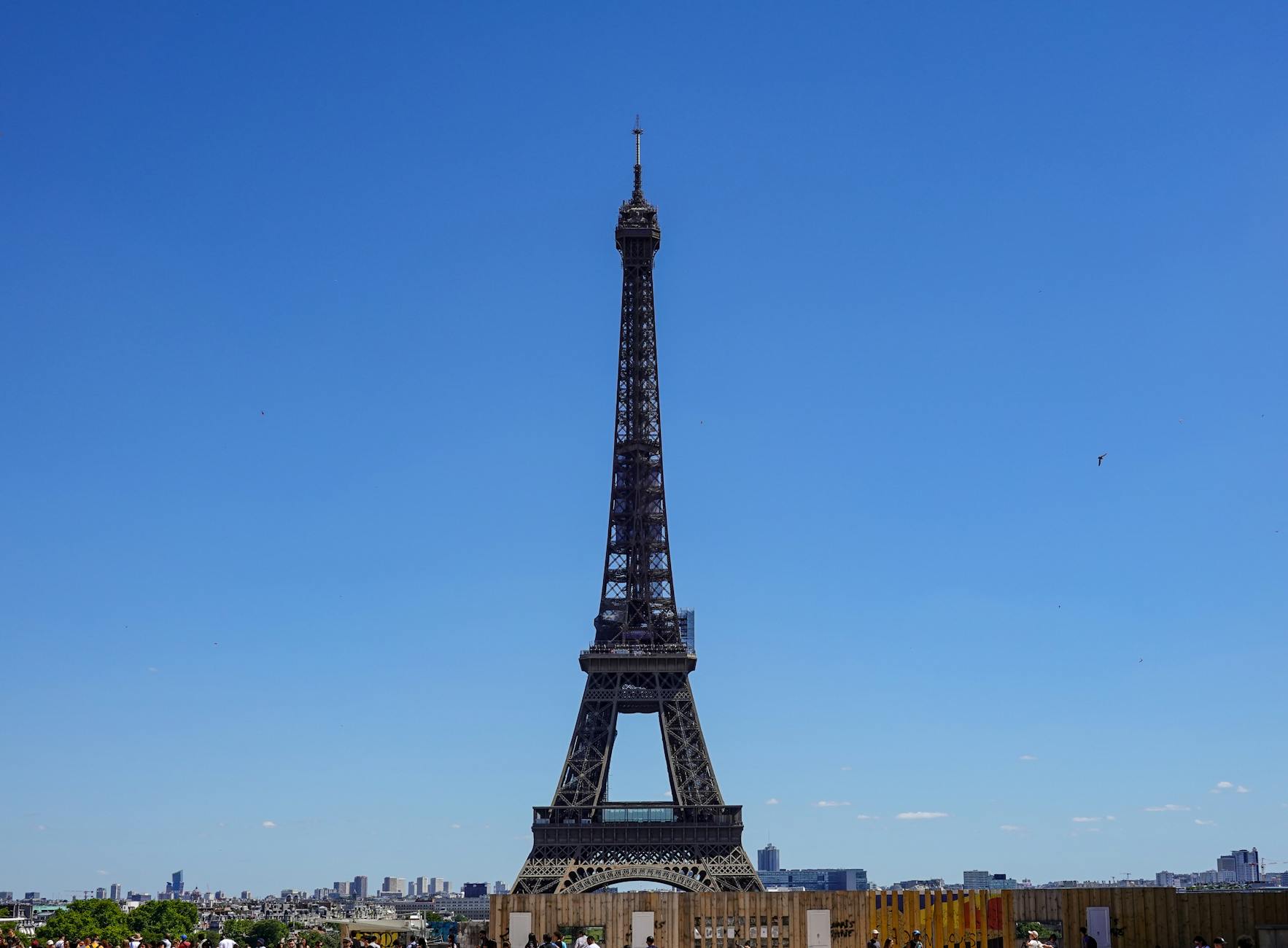
The Eiffel Tower is the easiest attraction in Paris to visit, and the easiest one to visit badly. Seven million people climb it every year. Roughly a third of them queue an extra hour because they did not pre-book. Another third pay 50 percent over face price by going through reseller platforms. And almost everyone underestimates how much the experience changes between the second floor and the summit, between the elevator and the stairs, between 10am morning light and a 9pm sparkle. This eiffel tower visit guide covers ticket types and skip-the-line strategy, the elevator-versus-stairs decision, the two on-site Michelin restaurants, the summit Champagne bar, the exact photo angles from inside and out, the post-2024 Olympic upgrades, and the timing tricks that turn a 90-minute slog into a 2-3 hour highlight.
Gustave Eiffel’s engineering firm built it for the 1889 Exposition Universelle, the World’s Fair marking the centennial of the French Revolution, and it was only ever meant to stand for 20 years. Parisians loathed it. Guy de Maupassant supposedly ate lunch in its restaurant every day “because it’s the only place in Paris where I cannot see it.” What saved it was its usefulness as a radio antenna, and 130-odd years later it’s the most-recognized structure on Earth. For broader trip planning around a visit, start with our top Paris sights guide; for the photographic angles, our most Instagrammable places in Paris guide breaks down seven Eiffel-specific viewpoints.
Eiffel Tower at a Glance: Quick Facts and 2026 Stats
- Height: 330 metres (1,083 feet) including antennas. Held the title of world’s tallest structure for 41 years (1889-1930), until New York’s Chrysler Building.
- Construction: 1887-1889. Two years, two months, five days. 18,038 wrought-iron parts, 2.5 million rivets.
- Annual visitors: approximately 7 million in a normal year; about 6 million in 2024 (post-Olympic year).
- Total visitors since opening: more than 330 million.
- Levels accessible: 1st floor (57m), 2nd floor (115m), summit (276m).
- Stair count: 674 steps to the 2nd floor; summit only by elevator.
- 2026 ticket prices (official): €31 elevator to summit / €19 elevator to 2nd floor / €14 stairs to 2nd floor / €24 stairs to 2nd floor + elevator to summit.
- Hours: typically 9:30am to 11:45pm (last summit lift 10:30pm summer / 9:30pm winter); reduced during weather events.
- Annual painting: the tower receives a fresh coat of paint roughly every 7 years; the most recent €60M repainting was completed for the 2024 Olympics.
- Sparkle: 5 minutes at the top of every hour from sunset until 1am (until 11pm/midnight in winter), plus continuous golden glow until close.
Eiffel Tower Tickets: Every Option Explained
There are four official ticket types and at least a dozen reseller variants. Get the official ones first. Only switch to resellers if the official site is sold out for your date.
The Four Official Tickets
- Elevator to summit (276m): €31 adult, €15.70 youth (12-24), €7.90 child (4-11), free under 4. Includes 1st and 2nd floors. The full experience.
- Elevator to 2nd floor only (115m): €19 adult / €9.50 youth / €4.80 child. Misses the summit but covers most of what people come for — the views are excellent, and the elevator-to-summit queue on the second floor can add 30-60 minutes.
- Stairs to 2nd floor (115m): €14 adult / €7 youth / €3.50 child. Climbs 674 steps. Stair-only ticket; no summit access from this option.
- Stairs to 2nd floor + elevator to summit (276m): €24 adult / €12 youth / €6 child. The hybrid: climb up, take the elevator to the summit. Best value for active travellers.
Free admission: under 4 for everyone, under 18 for EU residents, and students aged 18-25 from the European Economic Area with a valid student ID. Disabled visitors and one accompanying person go free with ID.
How to Pre-Book Officially (And Why You Must)
The official website is toureiffel.paris. Tickets release 60 days ahead of your date at exactly 8:30am Paris time, and the popular slots (10am, 11am, sunset, the sparkle window) sell out within 30 minutes for high-season dates. So treat it like a concert drop. Sixty days out, set an alarm for 8:25am Paris time, log in by 8:29, refresh at 8:30 sharp, and grab your slot. Miss the 60-day window and smaller batches still trickle out through the week and on the day itself, just at less convenient times.
Don’t buy tickets at the tower unless you truly have no other option. Walk-up queues run 60-120 minutes in summer and 30-60 minutes in shoulder season, and summit tickets can be gone for the day by 10am.
Reseller Platforms (Get Your Guide, Viator, Tiqets)
Once the official site sells out, third-party platforms (Get Your Guide, Viator, Tiqets, Paris City Vision) sell guided skip-the-line tickets — usually €55-90 to the second floor with a guide, €90-130 to the summit. The premium pays for the guide, the platform’s allocation of held tickets, and fast-track entry. It’s worth it when you can’t get official tickets and your dates won’t move; it’s a waste when official tickets are still on sale.
One thing on combo passes: the Paris Pass and the Paris Museum Pass do NOT include Eiffel Tower entry. The tower runs its own ticketing system, entirely separate from the city’s museum-pass programme.
Best Time of Day to Visit the Eiffel Tower
The same ticket buys very different experiences depending on the hour. Here are the five main windows.
First Lift of the Day (9:30am)
Shortest queues, clearest air, softest morning light. Shots of Trocadéro from the 2nd floor are at their cleanest between 9 and 10am. The catch: summer morning haze can blanket the city, and plenty of tourists pick this slot too, so the “empty tower” theory is overblown in peak season.
Mid-morning to early afternoon (11am-3pm)
The high-volume window. The elevators run nonstop and the second-floor crowd is at its thickest. Take this slot only if your schedule forces it; it’s not one you’d choose.
Late afternoon (4-6pm)
The light starts to soften and the crowds start to thin. A 5pm summer summit ticket technically puts you up top at sunset (9:45pm) if you linger for hours, but most visits last 90-120 minutes, so you’ll be back down well before the sun drops.
Sunset (90 minutes before)
The most popular window of the day, full stop. Tickets for the 7-9pm summer slot release first and sell out first. The trade-off is real: golden hour from the summit is unforgettable, but you’re sharing the tower with everyone who had the same idea. If you can land a sunset ticket on the 60-day release, take it.
Sparkle Window (9pm summer / 8pm winter)
On the hour, every hour from sunset until 1am, the tower runs a 5-minute sparkle: 20,000 strobing white lights laid over the standard yellow glow. Inside the tower at the right hour, you watch it happen around you, with different angles from the 2nd floor and the esplanade. From outside, Trocadéro plaza is the canonical viewpoint, though Pont de Bir-Hakeim, the Champ de Mars south lawn, and the Esplanade des Invalides all deliver.
Stairs vs Elevator: Which Is Right for You?
This is a genuine strategic choice. The 674 steps to the 2nd floor take 25-40 minutes depending on your fitness and the crowd. They’re open-air, they put the engineering right in front of you, and they’re uncrowded compared with the lifts. The elevators are faster, but on busy days they back up to 30-plus-minute queues at the bottom and another 30-60 minutes for the summit transfer on the 2nd floor.
Take the stairs if:
- You are reasonably fit (no injuries, no recent surgery, comfortable with two flights of regular stairs).
- You want to see the tower’s engineering up close — the rivets, beams, and trusses are gorgeous from the staircase.
- You hate queues more than you hate exertion.
- You are visiting on a busy day and the elevator queue exceeds 30 minutes.
- You want to save €5 (stairs ticket is €14 vs elevator €19 for the same 2nd-floor access).
Take the elevator if:
- You have any mobility limitation (knee, hip, heart, recent injury).
- You are travelling with very young children (under 6) or elderly parents.
- You want to reach the summit (only accessible by elevator from the 2nd floor).
- You have heat or weather concerns — the staircase is exposed to sun, wind, and rain.
- Your time is tight and you cannot afford a 25-40-minute climb.
For an able-bodied first-timer, the hybrid €24 stairs-up-elevator-summit ticket is the smart buy. You climb the stairs and skip the bottom elevator queue entirely, which is usually the longest wait of the day, you take in the open-air engineering on the way up, and then you ride the summit elevator from the 2nd floor.
What to Do at Each Level
Esplanade and Ground Level
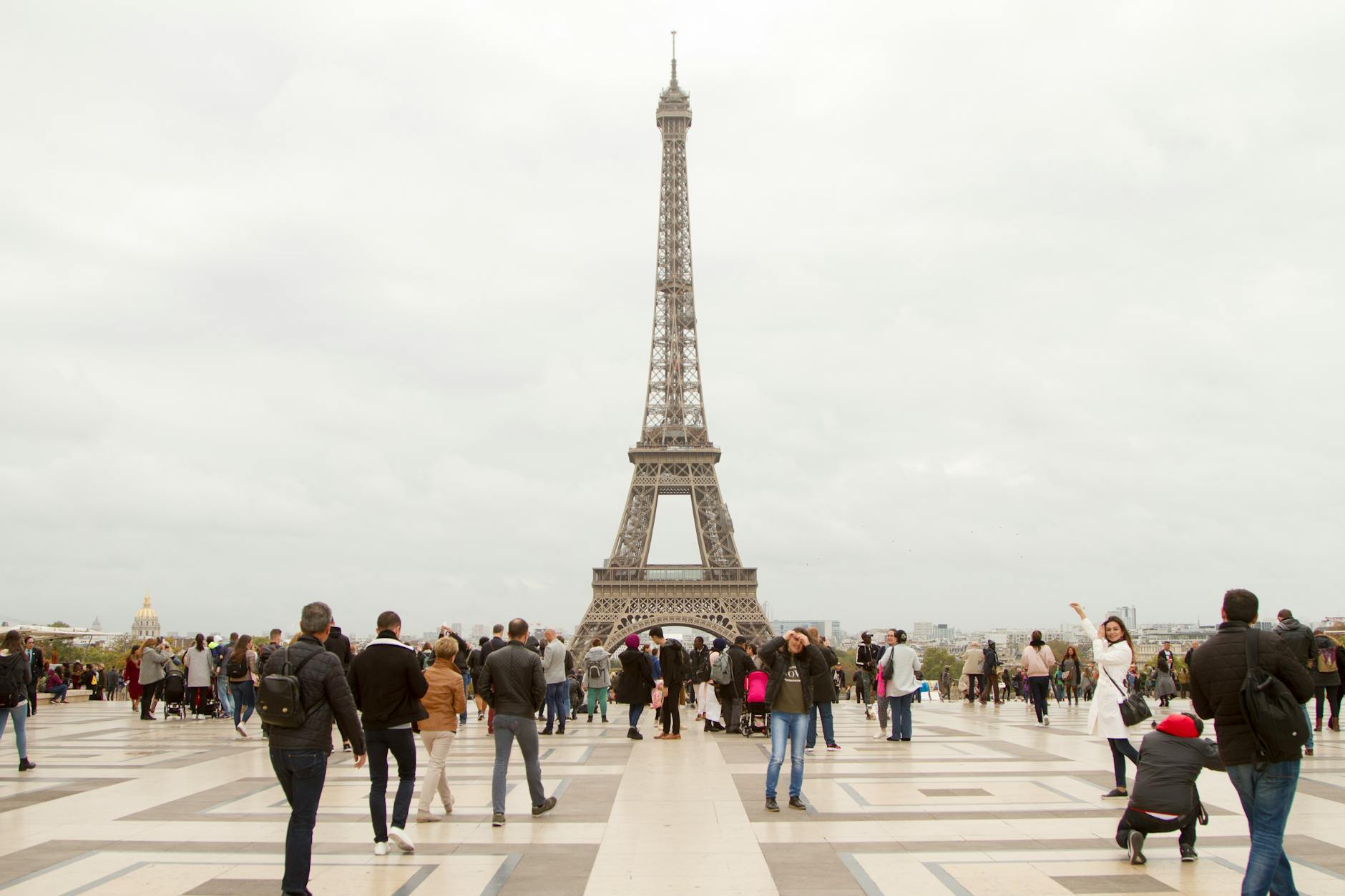
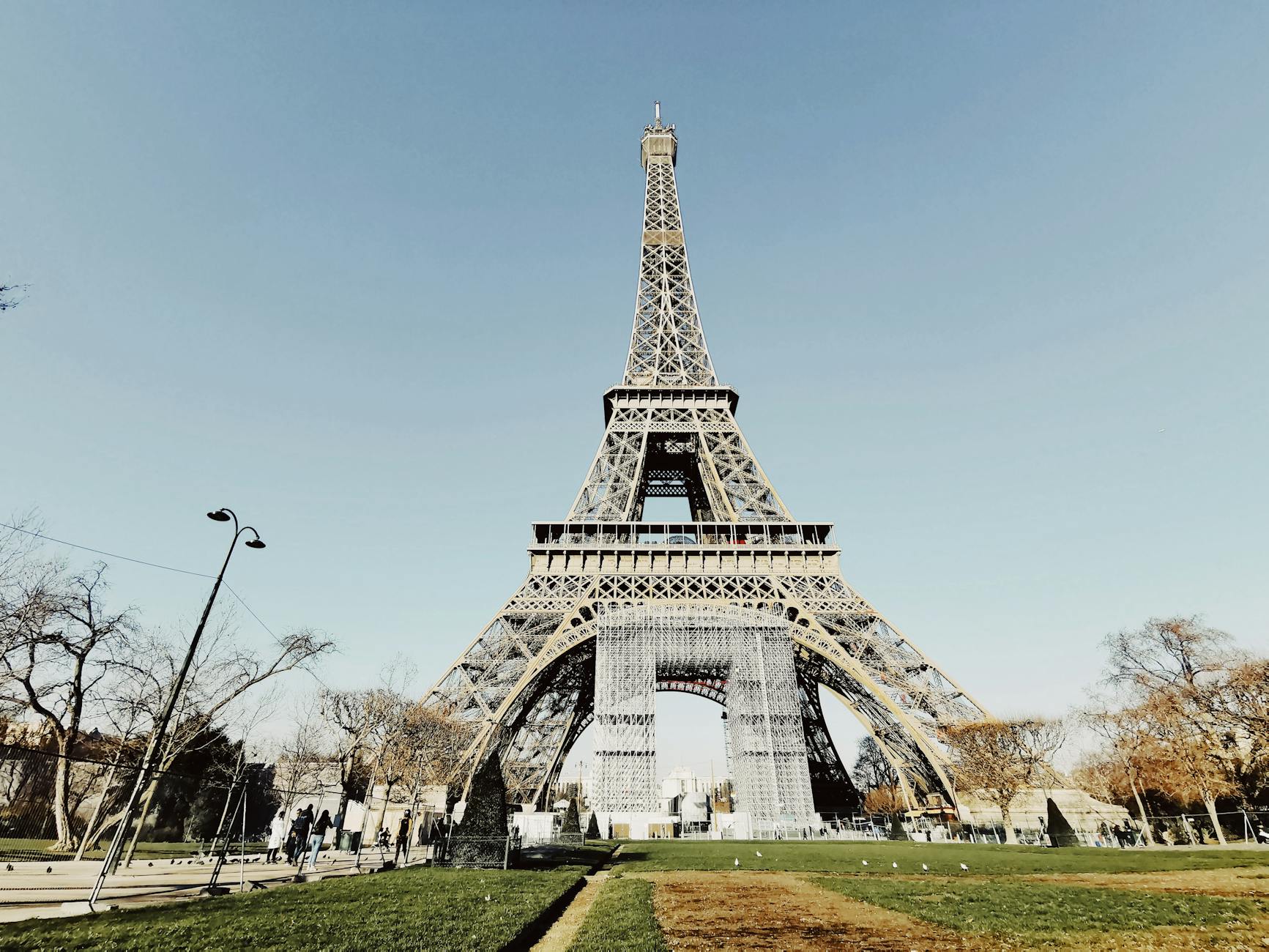
Walking under and around the tower is free, and the four pillars (north, south, east, west) frame the looking-up shots everyone takes. The esplanade has been a pedestrian-only zone since 2018, with airport-style security at four entry gates, so allow 15-20 minutes to clear it. Bag rules: no large bags, no glass bottles, no sharp objects. Shoot from directly under the centre point looking straight up, one of the most-photographed angles in the city. The pillars also house the elevators (Pillar Est for stairs and elevator, Pillar Ouest stairs only for descent, and so on) and the official ticket counters.
First Floor (57m / 187 ft)
A 4,415m² level renovated in 2014 for €30M, with glass-floored sections that let you look straight down 57 metres — skip those if heights bother you. Up here you’ll find Madame Brasserie (formerly “58 Tour Eiffel,” now run by Frédéric Anton, 1 Michelin star, €90-130 lunch / €130-180 dinner), the 1889 history exhibition, souvenir shops, and public restrooms. Budget 30-45 minutes if you’re stopping; plenty of visitors blow through in 10 on their way to the 2nd floor.
Second Floor (115m / 377 ft)
The most-visited level, and where the classic Eiffel views happen. You’ll find Le Jules Verne (Frédéric Anton, 1 Michelin star, €135 lunch / €255-310 dinner), a Macaron Bar with Champagne, and a souvenir shop. The summit elevator queue forms on the south side here; on busy days, factor in 30-60 minutes for the transfer. The views from the 2nd floor are arguably the best in the whole tower, because you’re still close enough to read street-level detail.
The Summit (276m / 906 ft)
Two viewing decks up top: an indoor one (heated, glassed-in) and an outdoor one (open-air, exposed). On a clear day you can see 70-80 km in every direction — Versailles, La Défense, the Bois de Boulogne, the Bois de Vincennes, the river curling away to the east. Gustave Eiffel’s reconstructed private apartment is up here too, with mannequins of Eiffel and Edison. The Champagne Bar pours a glass for €20-25 (rose or brut), and it’s worth ordering for the moment alone. Allow 30-45 minutes at the summit. One caveat: in winds above 70 km/h (about 43 mph) the summit closes for safety, which happens 10-15 days a year, mostly in winter.
Eating at the Eiffel Tower: Madame Brasserie and Le Jules Verne
Both on-site restaurants are run by Frédéric Anton, the chef behind the three-Michelin-starred Le Pré Catelan in the Bois de Boulogne. Both hold one Michelin star. Both need advance reservations, and both include guaranteed lift access for diners.
Madame Brasserie (1st Floor)
The more accessible of the two: a brasserie format with French classics reworked by Anton, from vol-au-vent to cassoulet to Île flottante. Lunch runs around €90, dinner around €130-180. The 1st-floor windows give you good but not spectacular views — you’re still only 57 metres up. Lunch is the move here: faster and cheaper than dinner, and it gets you into the tower without standing in a queue.
Le Jules Verne (2nd Floor)
This is the destination meal: 125 metres up, panoramic windows on three sides, lunch menus from €135, dinner tasting menus €255-310. Book 6-8 weeks out for dinner; lunch sometimes opens up 2-3 weeks ahead. It comes with private express lift access via Pillar Sud (the south pillar). The food is excellent rather than transcendent — what you’re really paying for is the windows, the engineering, and the Anton service.
The summit Champagne Bar needs no reservation: €20-25 a glass, open during all summit hours. It is, hands down, the most photogenic Champagne in Paris.
Photographing the Eiffel Tower: From Inside and Out
From Inside the Tower
The classic interior shots are the radial views looking out from the second floor: the Trocadéro fountains from the north side, the Champ de Mars and Tour Montparnasse from the south. For the geometric beam-and-rivet engineering shots, work the staircase corners and the looking-up perspective on the 1st floor. The summit interior is mostly glass and highly reflective, so bring a polariser or shoot through any clean, scratch-free section.
From Outside the Tower (the seven canonical viewpoints)
- Trocadéro plaza — classic postcard, best 6:30am sunrise; pickpocket warning.
- Pont de Bir-Hakeim — the Inception bridge; lower deck for two-tier framing.
- Avenue de Camoëns — short Haussmann-flanked street ending in Eiffel; morning side-light.
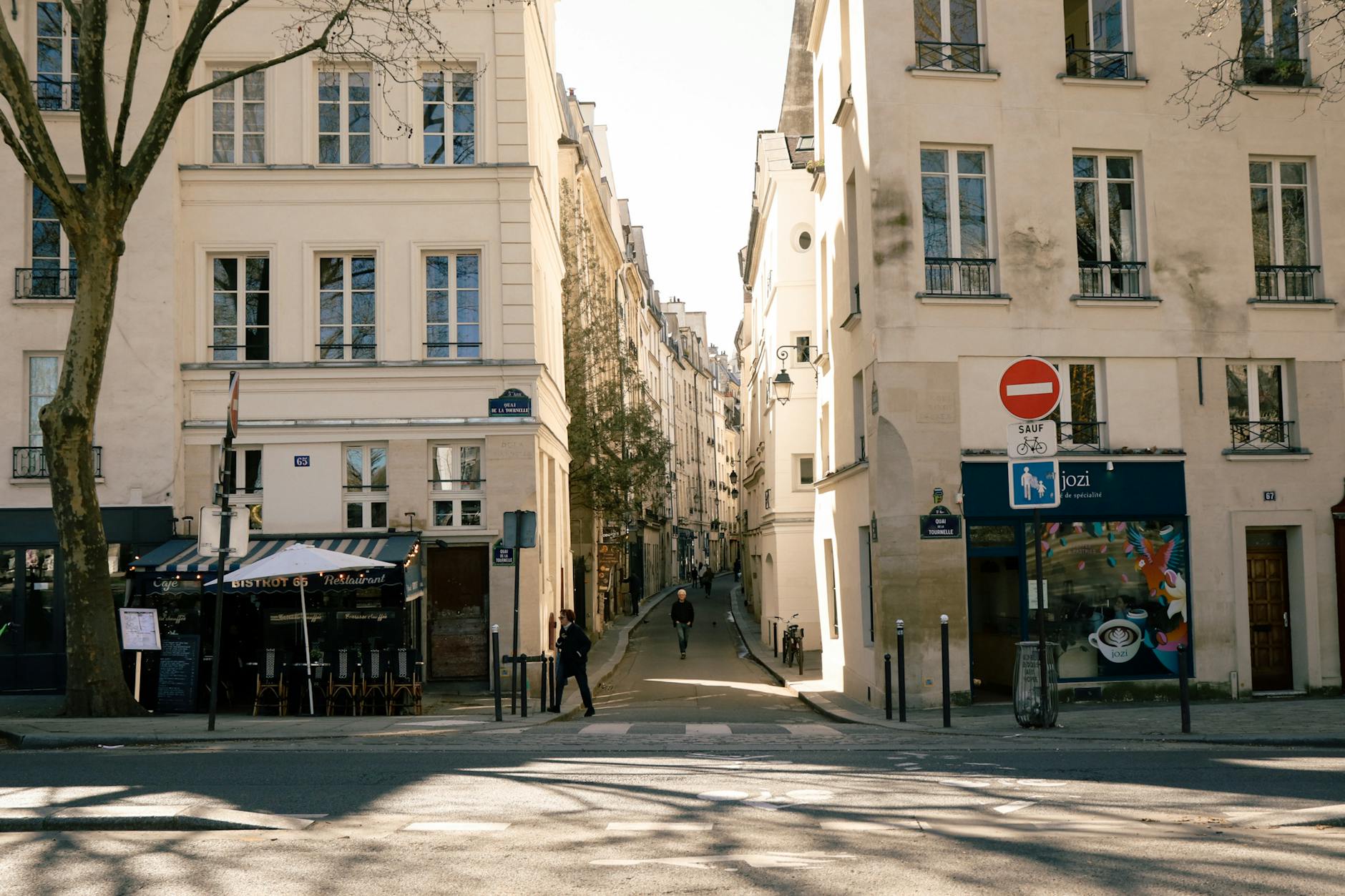
- Rue de l’Université at #29 — narrow-street vista with Eiffel framed by Haussmann buildings.
- Place de Varsovie — Trocadéro fountains plus Eiffel.
- Pont d’Iéna — base-up shot during golden hour.
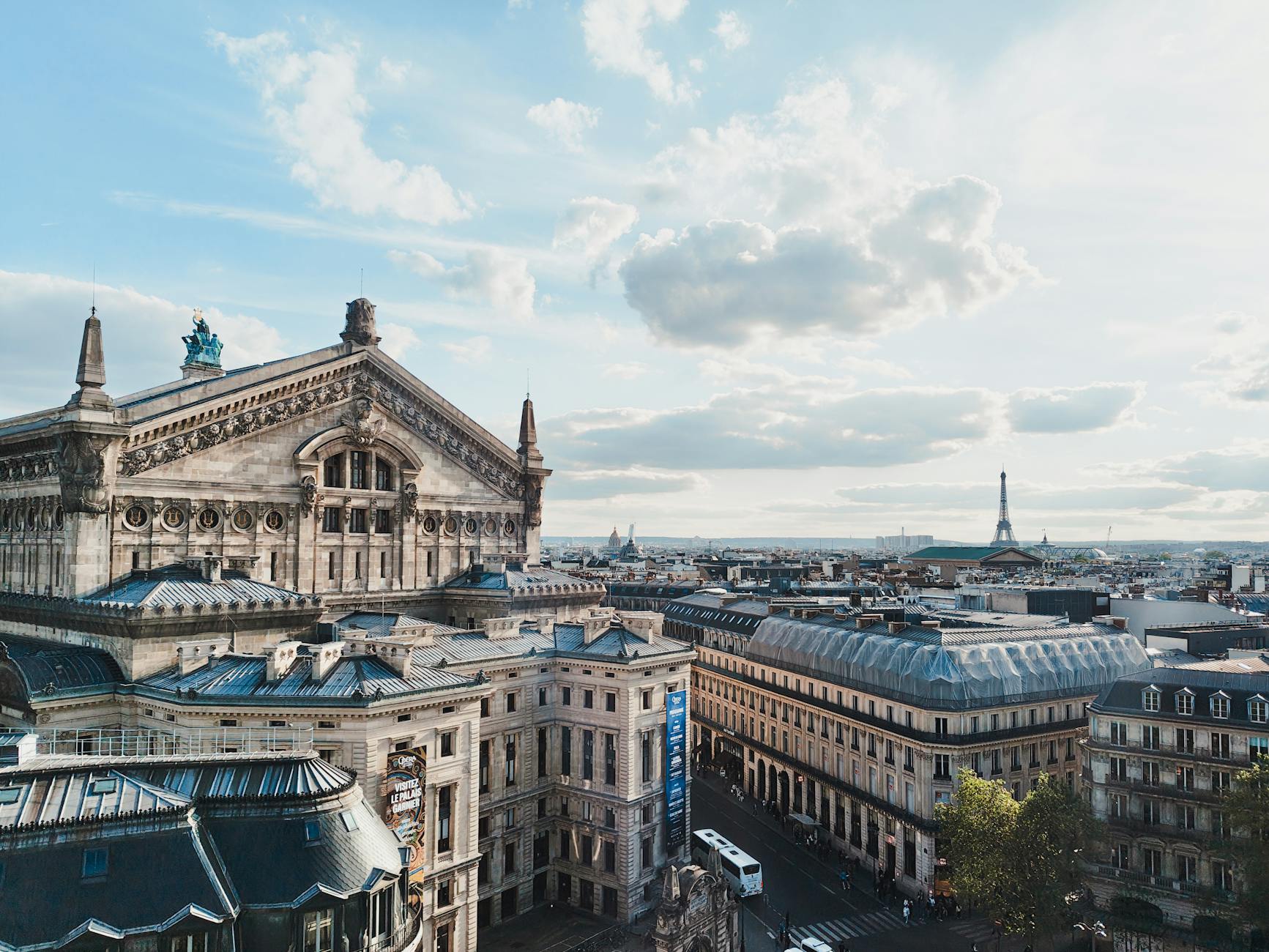
- Galeries Lafayette Haussmann rooftop — free, Eiffel framed between Opéra Garnier and chimneys; 7th-floor terrace.
For sparkle shots: the Champ de Mars south lawn directly under the tower catches it from below with the structure in motion-blur; Trocadéro catches it head-on; Tour Montparnasse 56 catches it from clear across the city. Set a shutter speed of 1/15 to 1/30 for the blur; anything faster freezes the lights. The full breakdown of every Paris photo location lives in our most Instagrammable places in Paris guide.
Free Eiffel Tower Views: How to See It Without Buying a Ticket
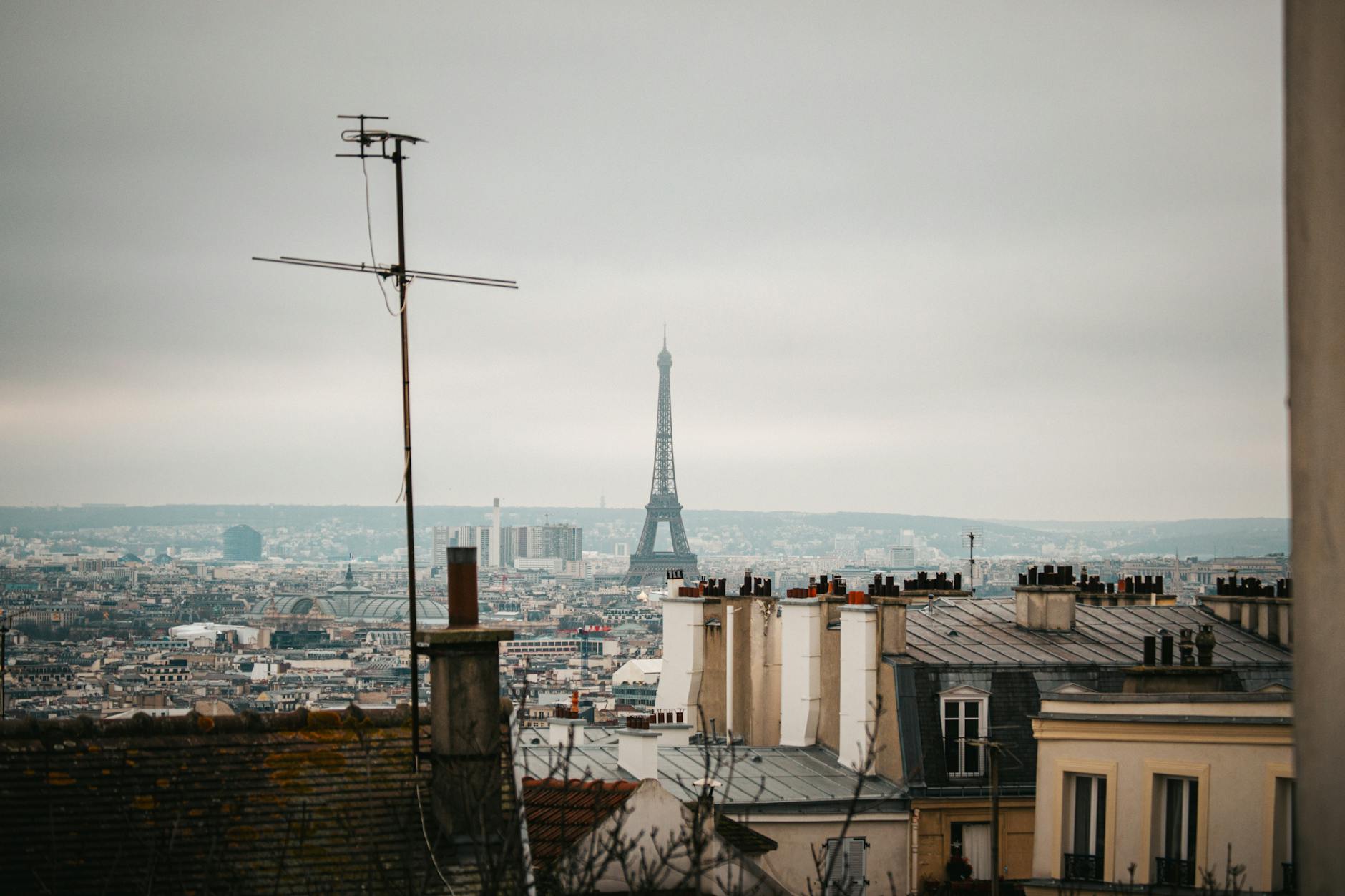
Half the people who come to Paris never actually go up the tower, and plenty of them walk away with better photographs than those who do. Your free or low-cost alternatives:
- Trocadéro plaza — the postcard view. Métro Trocadéro line 9. Free, 24/7, best 6-7am for empty frames.
- Champ de Mars lawn — lay on the grass directly under the tower. Free, especially atmospheric for the 9pm summer sparkle.
- Pont de Bir-Hakeim — Métro Bir-Hakeim line 6. The Inception bridge, free.
- Rue de l’Université at #29 — the “narrow-street” viewpoint that has gone viral on Instagram. Free.
- Galeries Lafayette Haussmann rooftop — 9th, free 7th-floor terrace open during store hours, Eiffel between Opéra Garnier and chimneys.
- Tour Montparnasse 56 — not free (€23) but offers the only Paris skyline that includes the Eiffel Tower itself.
- Sacré-Coeur steps — northern view; Eiffel visible across the city.
- Arc de Triomphe rooftop — €16 (free under 26 EU) for a different angle that includes both the Champs-Élysées axis and the Eiffel Tower.
Eiffel Tower Sparkle: When and Where to See It
The tower has been lit at night since 1985, but the famous “sparkle” (scintillement) came later: it debuted for the millennium on December 31, 1999, and went permanent in 2003. The mechanism is 20,000 6.5-watt bulbs strobing across the face of the tower, laid over the standard golden floodlighting.
It runs for 5 minutes at the start of every hour from sunset until 1am (until 11pm on summer nights when the sparkle starts later, and until midnight on summer Sundays). In winter it starts at 6pm and ends at 11pm. Where to stand:
- Champ de Mars south lawn — from underneath, the sparkle feels immersive; bring a blanket and stay for two cycles.
- Trocadéro plaza — classic frontal view, but the most crowded.
- Pont de Bir-Hakeim middle deck — framing the sparkle through the bridge structure is the Inception look.
- Esplanade des Invalides — lateral angle, less crowded.
- Tour Montparnasse 56 observation deck — the only view that includes the entire Paris skyline with the sparkle as a single jewelled feature.
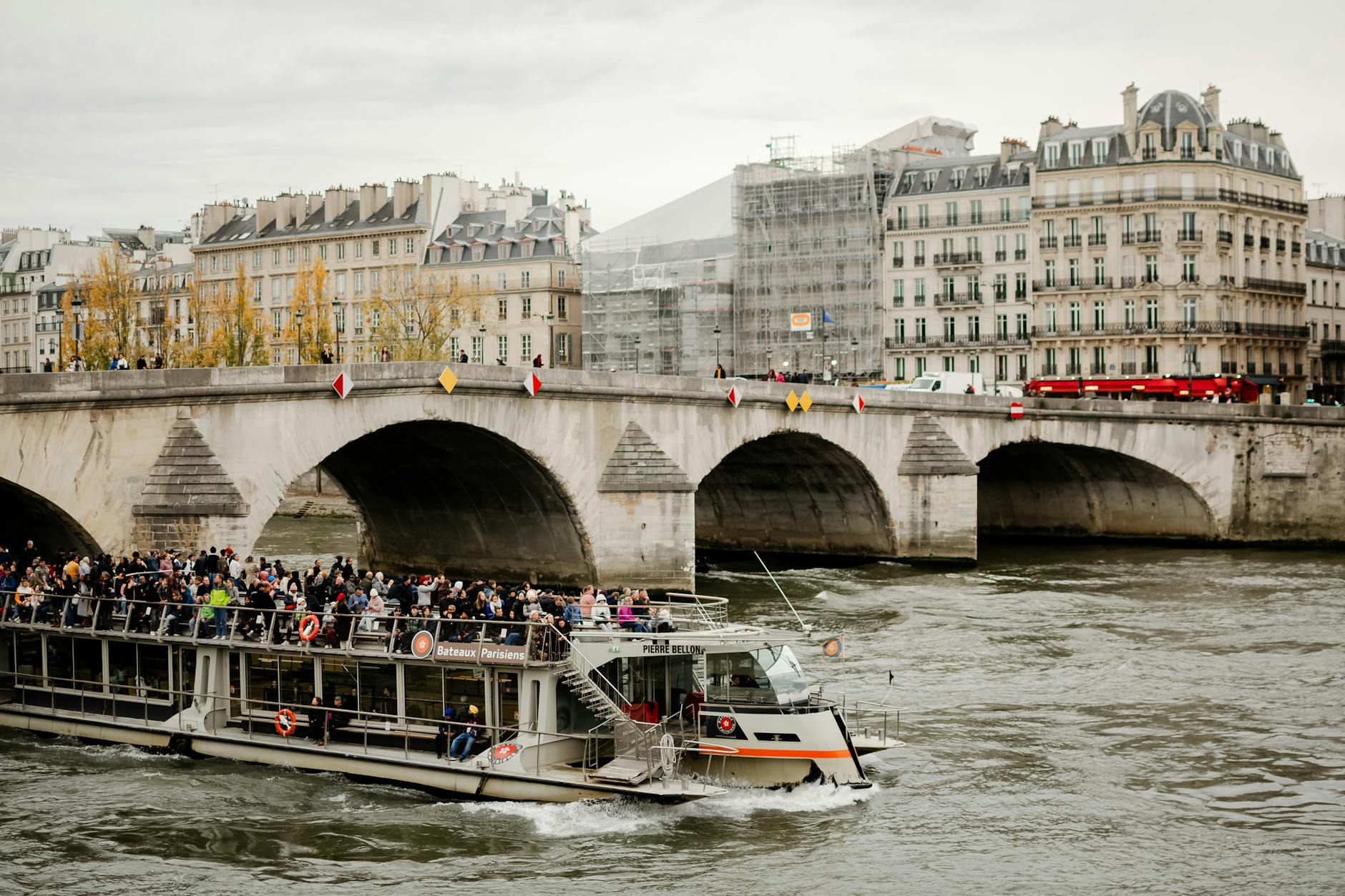
- From a Seine cruise — Bateaux Mouches, Bateaux Parisiens, Vedettes du Pont-Neuf all schedule routes that pass the Eiffel Tower around 9pm. (See our Seine river cruise Paris guide.)
- From inside the tower itself — if you have a 9pm or 10pm summit ticket, you experience the sparkle from within. Surreal.
Practical Tips: What to Bring, Security, and Logistics
Security and Bag Rules
Since 2018 the tower has had a permanent security perimeter with airport-style screening at four gates, so allow 15-20 minutes to clear it. Banned: large backpacks, glass bottles, sharp objects, weapons, fireworks. Allowed: small day bags, refillable water bottles (plastic only), cameras, and small tripods, though commercial tripods may get questioned.
Drone Policy
Strictly forbidden. All of Paris is a permanent no-fly zone for drones, and the 5 km around the Eiffel Tower is doubly enforced. Police will confiscate and fine. Don’t bring a drone to Paris planning to fly it.
Mobility and Accessibility
The 1st and 2nd floors are wheelchair-accessible by elevator. The summit is not: the summit elevator from the 2nd floor has step access only. Wheelchair tickets are discounted, and one accompanying person enters free. There are restrooms on both the 1st and 2nd floors. Elevators have priority queues for visitors with mobility issues — flag a staff member at the base.
Weather and Closures
Winds above 70 km/h close the summit while the 2nd floor stays open. Winter ice occasionally closes the staircases, and lightning storms can shut the whole tower for a stretch. The tower runs full schedules on Christmas Day, New Year’s Day, and Bastille Day. The official @LaTourEiffel social channels post closures in real time.
How Long to Allow
For the 2nd floor only: 1.5-2 hours including security, ascent, viewing, and descent. For the summit: 2.5-3.5 hours with the extra summit elevator queue. For lunch at Madame Brasserie: 3 hours. For dinner at Le Jules Verne: 4 hours including the walk back to the Métro.
Eiffel Tower with Kids
The Eiffel Tower is a near-universal hit with kids, with a few caveats. Under 4s are free; 4-11s pay the child rate. Strollers are allowed but cumbersome, so bring a baby carrier instead. The glass floors on the 1st floor draw kids like nothing else, and the summit is sometimes too windy for very young visitors. A summit closure for high wind also lands harder when you’ve got children in tow. (For broader family logistics, see Paris with kids.)
With under-10s, here’s the play: take the elevator up (the climb is too much for short legs), book a sunset slot if your kids can handle the late hour, and plan a Champ de Mars picnic before or after. The 9pm sparkle watched from the lawn directly under the tower is, reliably, the highlight of any Paris trip for a child — turn up 30 minutes early with a blanket and snacks.
What Else to Do Around the Eiffel Tower
A morning at the tower slots neatly into a full day across the 7th and 16th arrondissements. Within walking distance:
- Trocadéro and Palais de Chaillot — immediately across the river. The Musée de l’Homme (anthropology), Musée National de la Marine, and Cité de l’Architecture et du Patrimoine all sit in the Palais de Chaillot.
- Musée du quai Branly — Jacques Chirac — non-Western art (Africa, Asia, Oceania, Americas), 5-minute walk along the south bank.
- Champ de Mars — the long lawn south of the tower; picnics, summer events, Bastille Day Concert de Paris.
- Les Invalides and Napoleon’s Tomb — 15-minute walk east along the Seine.
- Musée Rodin — 20-minute walk; the Hôtel Biron mansion and sculpture garden.
- Rue Cler market street — 10 minutes south of the tower; pedestrianised cheese shops, bakeries, and brasseries (Café du Marché, Le Petit Céladon).
- Musée d’Orsay — 25 minutes east on foot, or 5 minutes via RER C from Champ de Mars-Tour Eiffel station.
- Pont Alexandre III — the most ornate Paris bridge, walking distance.
- Avenue Montaigne shopping — 15 minutes north toward the 8th, the luxury fashion corridor.
Brief History of the Eiffel Tower
The design started in 1884 with two engineers in Eiffel’s firm, Maurice Koechlin and Émile Nouguier, who were sketching an iron-tower idea for a possible exhibition centrepiece. Architect Stephen Sauvestre reshaped their plans into the curved-base, two-arch silhouette we know now. Eiffel championed it, won the contract for the 1889 World’s Fair (held for the centennial of the French Revolution), and oversaw a 26-month build with 250 workers. The tower opened on March 31, 1889, with Eiffel himself climbing 1,665 steps to plant a French flag at the summit.
It was meant to stand for 20 years, then come down. The opposition was ferocious: Maupassant, Dumas, Garnier (architect of the Opéra), and dozens of other Paris luminaries signed a public petition denouncing the “tragic streetlight” and “skeleton of a belfry.” They lost. What rescued the tower was its value as a meteorological and, above all, radio antenna: the French military used it for telegraphy during WWI, and it has worked as a broadcast tower ever since.
Somewhere in the early 20th century it stopped being a structure and became Paris itself. By the 1920s it was the city’s unmistakable symbol, and today it’s among the most-photographed structures anywhere. It gets repainted roughly every 7 years (most recently in 2024, ahead of the Olympics, in the bronze-toned “Eiffel Brown”). And the Olympic ceremonies in July 2024, which used the tower as a jumping platform and a stage for Celine Dion, reintroduced it to a whole new global audience.
Frequently Asked Questions About Visiting the Eiffel Tower
How much do Eiffel Tower tickets cost in 2026?
Official 2026 prices: €31 elevator to summit (276m), €19 elevator to 2nd floor (115m), €14 stairs to 2nd floor, €24 stairs to 2nd floor + elevator to summit. Youth (12-24) and child (4-11) prices are roughly half. Under 4 is free; under 18 EU resident is free.
Do I need to book Eiffel Tower tickets in advance?
Yes, especially in summer. Tickets release 60 days ahead at 8:30am Paris time on the official site (toureiffel.paris), and popular slots sell out within 30 minutes. Walk-up tickets exist, but queues run 60-120 minutes in summer and the summit can be gone by mid-morning. Reseller skip-the-line tours (Get Your Guide, Viator) are your backup at €55-130 if official tickets are unavailable.
Is the Eiffel Tower worth going up?
For a first-time visitor, yes. The summit views, the engineering, and the Champagne bar are first-tier experiences. If you’ve been before, you might skip the climb and enjoy the tower from outside instead — from Trocadéro, Pont de Bir-Hakeim, or the Champ de Mars during the 9pm sparkle. Both are legitimate Paris experiences.
Can you climb the Eiffel Tower stairs?
Yes: 674 steps to the 2nd floor for €14. The summit is elevator-only, with no stairs option. The hybrid €24 ticket lets you climb to the 2nd floor and ride the elevator to the summit, which is the best option for active visitors.
How long does the Eiffel Tower sparkle last?
5 minutes at the top of every hour from sunset until 1am (the winter sparkle ends at 11pm). The tower also stays lit in golden floodlight from sunset to close. The summer sparkle window starts around 9pm; winter starts around 6pm.
Is Le Jules Verne worth the price?
The food is excellent rather than transcendent; what you’re paying for is the experience — the private express lift, the panoramic windows, the engineering visible through the floors. Lunch (€135) is the better value over dinner (€255-310). Worth it for special occasions, anniversaries, and anyone who wants guaranteed tower access without the queues.
Can children go up the Eiffel Tower?
Yes: under 4 free, 4-11 child rate, 12-24 youth rate. Strollers are allowed but cumbersome, so a baby carrier is the better bet. The glass floors on the 1st floor and the summit Champagne bar are kid favourites, and high winds occasionally close the summit, so keep a rain plan handy. The 9pm sparkle from the Champ de Mars lawn is the bit of magic that sticks with kids long after the trip.
What is the best time of year to visit the Eiffel Tower?
October-November and February-March are the sweet spots: shorter queues, cheaper hotels, no heatwave risk. Summer is busiest but gives you the longest evening sparkle window. Winter brings shorter days but its own kind of magic — see our things to do in Paris in winter guide for context, and our best time to visit Paris guide for a direct seasonal comparison.
Plan Your Full Paris Trip Around the Eiffel Tower
A great Eiffel visit is part of a great Paris trip, not the whole of one. Build outward from it. Start with planning a trip to Paris for dates and flights, then where to stay in Paris for picking a neighbourhood (the 7th and 16th put you within walking distance), and getting around Paris for the Métro and the Navigo Easy explainer. From the tower itself, branch out to Paris attractions for the headline sights, the Paris museums guide for the cultural heavyweights, the guide to Parisian food for restaurants nearby, and the Paris neighborhoods guide for the 7th-arrondissement context. For Eiffel-adjacent specifics, our most Instagrammable places in Paris guide details seven viewpoints, our Seine river cruises pass the tower at sparkle hour, our things to do in Paris at night piece maps out the post-tower evening, and best Paris tours rounds up the skip-the-line guided options. Travelling with kids? Paris with kids. Watching the budget? Paris on a budget. Planning something romantic? Romantic Paris. Heading out late? Paris nightlife guide. After the shops? Paris shopping guide. And for the full spread of things to do in Paris across every kind of itinerary, the pillar guide is your master index.
Related Paris guides
Use these to round out your trip: