Paris Catacombs: Complete Visiting Guide, Tickets & What to Expect
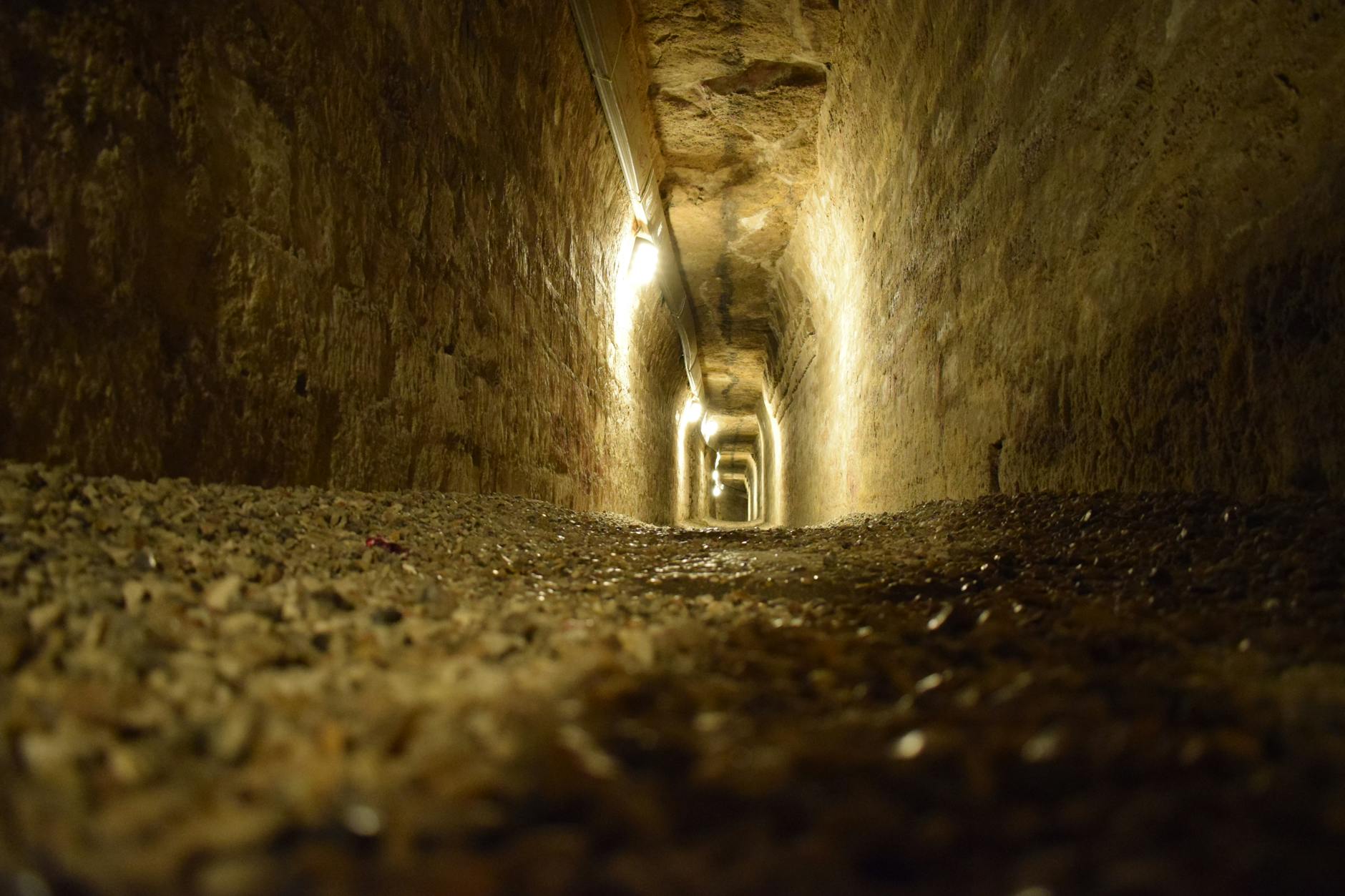
Twenty metres under the 14th arrondissement, the bones of roughly 6 million Parisians line 1.5 kilometres of tunnel. The Paris Catacombs are an underground ossuary, and they wear several hats at once: a major Paris attraction, a working memorial, and a genuine geological oddity, since the whole Parisian underground is riddled with 320 km of medieval limestone quarries. Few sightseeing experiences in any European capital feel anything like it. This guide covers tickets and reservations (book ahead, because walk-ups sell out constantly), the 131-step descent, the 1.5 km route, the interior that manages to be disturbing and beautiful in the same breath, the cataphile subculture in the off-limits tunnels, and what you need to know if you have claustrophobia or trouble with stairs.
The Paris Catacombs at a Glance
Before the detail, here’s the snapshot: the numbers, the hours, and the physical realities that shape a Catacombs visit.
- 6 million skeletal remains — bones transferred from over 200 Parisian cemeteries between 1786 and 1814.
- 1.5 km accessible tunnels — the official public route, out of 320 km of total underground network beneath Paris.
- 20 metres below street level — the depth at which the ossuary sits within the medieval limestone quarries.
- Opened to the public 1809 — from the start the Catacombs were treated as a curiosity and a tourist site.
- 550,000+ annual visitors — making this one of the busiest paid attractions in the 14th arrondissement.
- €29 standard / €14 youth 18-26 / FREE under 18 — under-18s must be accompanied by a paying adult.
- 131 stairs down, 112 up — narrow spiral stone steps; no elevator anywhere on the route.
- 1-hour visit — from entry stamp to street-level exit, allowing for the audio guide.
- 14°C constant year-round — bring a light layer even in August; this is not a comfortable summer escape.
- Tuesday closed — the single most common mistake first-time visitors make.
How to Get Tickets in 2026 (Walk-up is a Mistake)
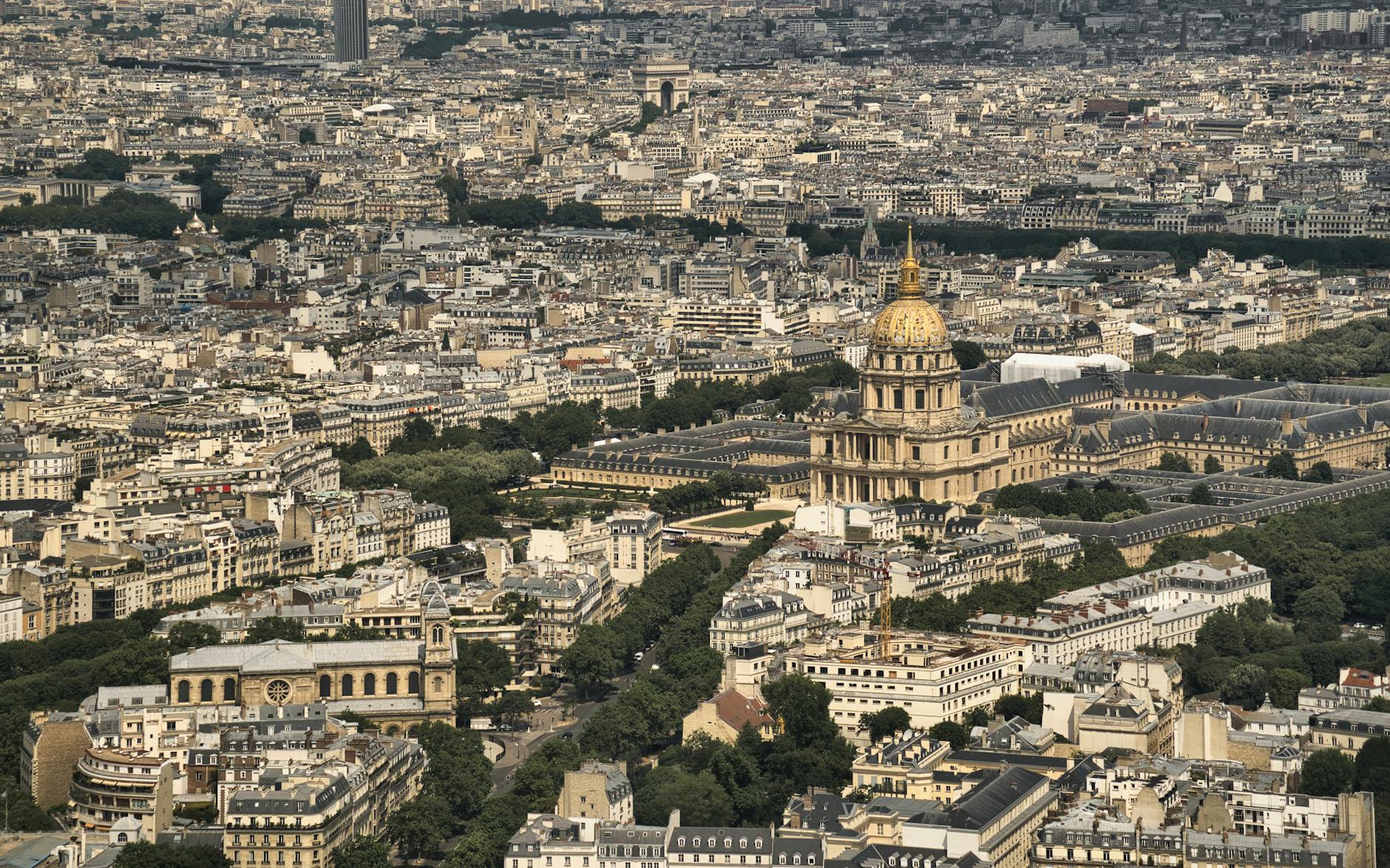
Book your Paris Catacombs ticket online before you fly. The site runs a strict timed-entry system, admitting a fixed number of visitors every 15 minutes, and in high season most slots are gone 3 to 7 days ahead. Here’s the full 2026 ticket picture.
Official tickets: the only authoritative source is catacombes.paris.fr, the City of Paris municipal site. Fresh slots drop at 7am Paris time exactly seven days before the visit date, on a rolling daily basis. Weekend and school-holiday slots vanish within the hour; weekday mornings usually hang on until the day before. If you want a Saturday slot in summer, set an alarm for the 7am release.
Standard ticket €29 (fast-track + audio guide) is the only sensible choice. It gets you priority entry through the timed-entry door, skipping the walk-up queue entirely, plus an audio guide in your language. You save 60 to 90 minutes and get the commentary that makes sense of what you’re looking at.
Youth ticket 18-26: €14, same fast-track entry, audio guide included. You don’t need EU residency; just bring photo ID to prove your age at the door. Free for under-18s with a paying adult, though the child still needs a (free) ticket booked in their name. Walk-up tickets: €15 plus 60 to 90 minutes of queue, and no audio guide. Often sold out by 11am in summer.
Get Your Guide / Tiqets: €30-45 for the same fast-track product with a platform markup, handy if the official site is fully booked, since these resellers hold their own allocation. Guided English-language tour: €60-90 with a knowledgeable guide who unpacks the inscriptions, the Hericart de Thury arrangements, and the wider quarry network; worth it if the history is what draws you. Off-limits Cataphile-led tour (unauthorised but tolerated): €60-85, run by only a handful of operators, so book 1 to 2 months ahead.
Audio guide: included with the €29 ticket and picked up at the desk just past the turnstile, in English, French, German, Spanish, or Italian. What you can’t do: book a standard ticket within 4 days of your visit. The City releases inventory on a rolling 7-day window, so check the site daily until a slot appears. And steer clear of the scalpers hanging around the entrance with “the last tickets”; these are illegal resales, and the City voids the bar-code once it’s been transferred.
The Entrance & Descent
The entrance is at 1 Avenue du Colonel Henri Rol-Tanguy in the 14th, on the south side of Place Denfert-Rochereau. The nearest Métro is Denfert-Rochereau, on Lines 4 and 6 and RER B (direct from Charles de Gaulle Airport and Gare du Nord). The building is the Pavillon de l’Octroi, a small neoclassical 1814 toll-house that once taxed goods entering the city walls of Louis XVIII. It’s easy to walk past, so look for the queue rather than the architecture.
Once you’ve scanned your ticket and grabbed the audio guide, you reach the staircase: 131 spiral stone steps down, narrow, worn, clockwise, with a single iron handrail. No elevator, no alternative route. The descent runs about 90 seconds at a steady pace and ends 20 metres below the street. Plenty of people stop halfway to find their footing on the spiral, which is fine; the staircase is wide enough for someone to pause while others keep going.
Down here the temperature holds at a constant 14°C (57°F) all year, whatever the weather above. In August that feels refreshing for the first five minutes and chilly for the next 55, so bring a layer. The route is lit, but dimly, with period lanterns and discreet LED floods rather than gallery glare. Camera flash is banned in the ossuary, and guides strongly discourage phone flashlights out of respect for other visitors. The whole route runs 1.5 km, marked by directional arrows, and comes up at street level on Rue Remy Dumoncel through a separate exit, a 5-minute walk back to the Denfert-Rochereau Metro.
The Visit Route: What You’ll See
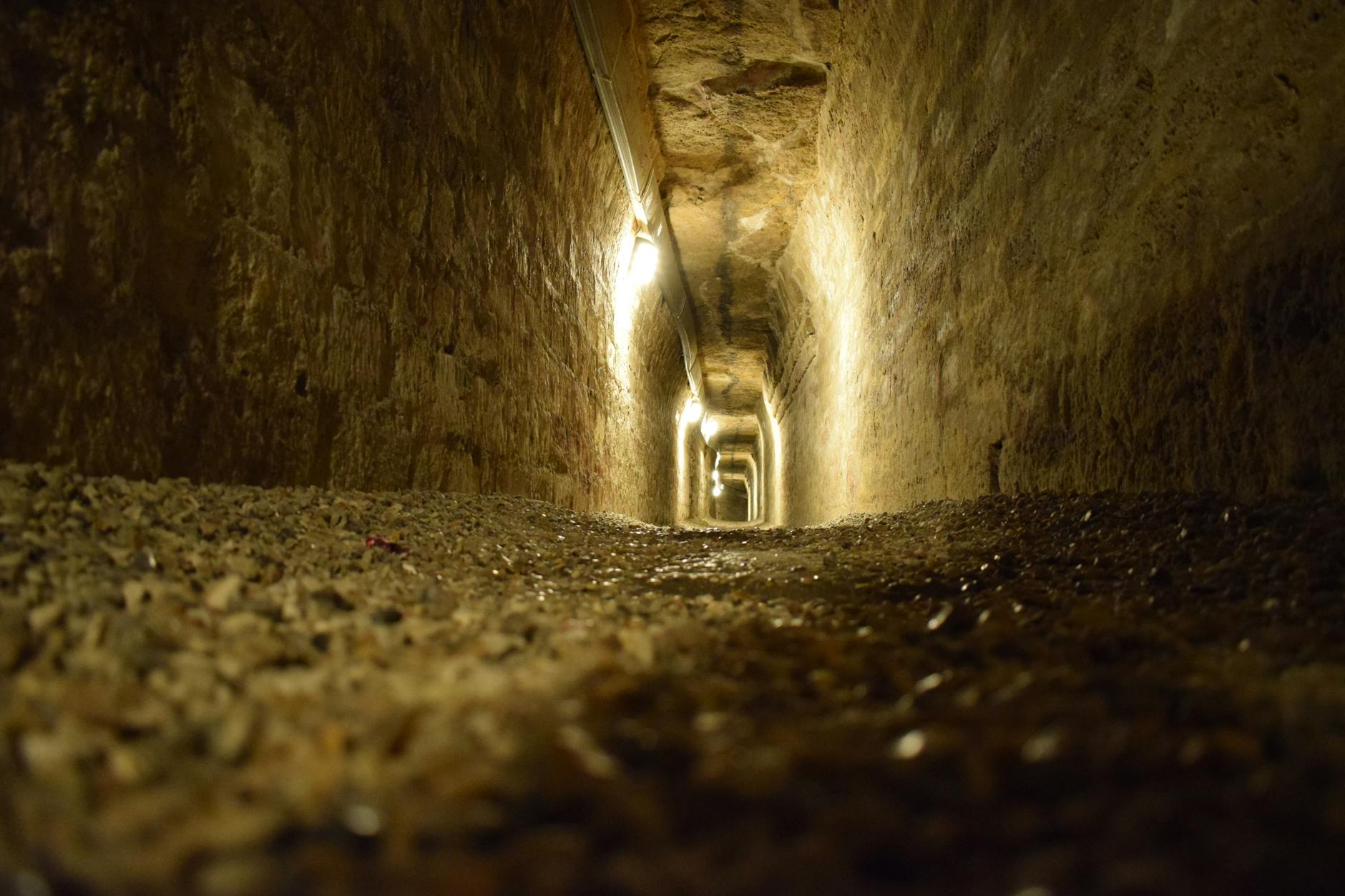
Most people walk in expecting bones from the first metre of corridor. They aren’t there. The Catacombs are built as a slow reveal, quarries first, then the inscription, then the ossuary, and once you understand that rhythm the visit pays off much more.
First 800 metres: corridors of empty stone. You move through medieval limestone quarry tunnels, the same ones Parisian quarrymen worked from the 12th century on. This is where most first-timers decide they’ve missed the bones and start checking their watches. Keep walking. The quarries are worth the attention in their own right: chisel-marks scored into the walls by hand-worked picks, masonic symbols left by quarrymen’s confraternities, and section markers and street-name plaques placed by 19th-century inspectors mapping the network from below.
Underground sculptures: the Port-Mahon model. Around 600 metres in, the route passes a quietly lit recess holding a 3D limestone relief of Port Mahon fortress on the island of Menorca. A quarryman named Décure carved it into the wall in the 1780s; a former soldier, he’d been imprisoned at Port Mahon during the Seven Years War. He chipped away at it on his lunch breaks for years, and in 1782 he died in the tunnels in a partial collapse while building an access stair to view his own work.
The Atelier room comes shortly after, a wider quarryman’s workshop chamber with stone benches and original lantern hooks set into the rock. The audio guide pauses here for a longer stretch on the quarry trade.
The threshold inscription. Roughly 800 metres in, the route narrows to a doorway topped by a famous black-painted couplet: “Arrête! C’est ici l’empire de la mort”, Stop! Here is the empire of death. This is the literal door into the ossuary proper. Hericart de Thury painted the line in 1810 as he organised the bone-piles into the formal arrangements you see today.
The Ossuary proper. Past the inscription, the tunnels are walled to a depth of seven metres with human bones: femurs and tibias laid horizontally as load-bearing courses, skulls set in patterns at eye level, the smaller bones packed in behind. About 6 million Parisians rest here. The arrangements run from plain utilitarian stacks to deliberate compositions, heart-shaped femur patterns, a cross-of-skulls altar, the so-called Crypte de la Passion with its central pillar of bones.
Inscriptions sit throughout the ossuary. Each section names the cemetery the bones came from and the date of transfer: Cimetière des Innocents 1786, Saint-Séverin 1804, Cimetière de la Trinité 1813, and so on. They’re simple stone tablets in classical Roman lettering, and they give the place the feel of a quiet civic monument rather than a horror attraction.
Famous people allegedly here include Maximilien Robespierre, Jean-Paul Marat, Charles Perrault, Antoine Lavoisier, and Madame de Pompadour, though pinning down any individual is impossible, since the skeletons were anonymised during transfer. Final stretch: after the last ossuary chamber the route widens back into plain quarry tunnels for another 200 metres, then the 112-step ascent climbs to street level on Rue Remy Dumoncel.
The History: How 6 Million Bones Got Down There
To understand why six million people are buried in a quarry under a Parisian street, you have to go back to medieval Paris and its 200-plus cemeteries. The Catacombs aren’t a Roman site or a religious foundation. They’re a public-health fix that grew into a memorial.
Medieval Paris had over 200 cemeteries inside the walls, most attached to parish churches and most overflowing by the 1700s. Bodies went into shallow trenches, were exhumed after a few years, and the bones were moved to charnel houses along the cemetery walls to free up space for the next lot. By the late 18th century the whole system had collapsed.
The Cimetière des Innocents, on the site of today’s Place Joachim-du-Bellay near Les Halles in the 1st, was the worst of them. Thirty generations of Parisian dead had been buried there since the 12th century, mass plague graves layered one over another, and the sheer volume of remains had raised the ground more than two metres above the surrounding streets. In 1780 the cemetery wall gave way into the cellars of houses on Rue de la Lingerie, dumping decomposing bodies into people’s wine cellars.
A public-health crisis broke out in the 1780s. The stench from the Innocents carried for blocks. Well-water in the neighbourhood tested contaminated. Basements kept caving in. The 1786 royal decree by Louis XVI ordered every city-centre cemetery emptied and a new municipal ossuary created in the abandoned limestone quarries beneath the Plaine de Montrouge, the open scrubland south of the walls that’s now the 14th arrondissement.
The transfers ran from 1786 to 1814. Bones were exhumed at night to spare residents the sight, loaded onto carts draped in black with priests walking ahead chanting, and tipped down a shaft into the quarries near the modern entrance. For the first 24 years they simply piled up in heaps. Then, between 1810 and 1814, the inspector Louis-Étienne Héricart de Thury methodically rearranged them into the orderly walls of femurs and skulls you see now, added the cemetery-source inscriptions, and wrote that famous threshold couplet.
Opened to the public in 1809, the Catacombs were treated from day one as a tourist attraction as much as a memorial. Charles X came in 1814 with the returning Bourbon court; Napoleon III in 1860; tsar Alexander I after Napoleon’s fall. The quarries themselves are the deeper story. The 320 km of medieval limestone galleries under Paris were worked from 1100 to roughly 1860, and they supplied the cream-coloured stone for Notre-Dame, the Louvre, the Hôtel de Ville, and most pre-Haussmann buildings. That’s why the city’s limestone looks identical across eight centuries: it all came from directly beneath the same streets.
The stability crisis of 1774, a massive collapse along Rue d’Enfer that swallowed houses on what’s now Avenue Denfert-Rochereau, triggered the first systematic mapping of the quarries by Charles-Axel Guillaumot. Today the Inspection Générale des Carrières monitors every collapse risk under the southern arrondissements, and new construction in the 14th, 13th, 6th, and 5th has to be cleared by the Inspection before any foundation work begins.
The cataphile subculture, covered in detail in the next section, took shape in the 1960s and 70s among Parisian students who explored the closed tunnels through manholes and forgotten access shafts. They built hidden parties, ad-hoc bars, and, most famously, a fully sound-equipped underground “cinema” deep in the network. Cataphile activity is still illegal but rarely prosecuted hard; a specialised City of Paris police unit patrols from time to time.
Off-Limits Tunnels: The Cataphile Subculture
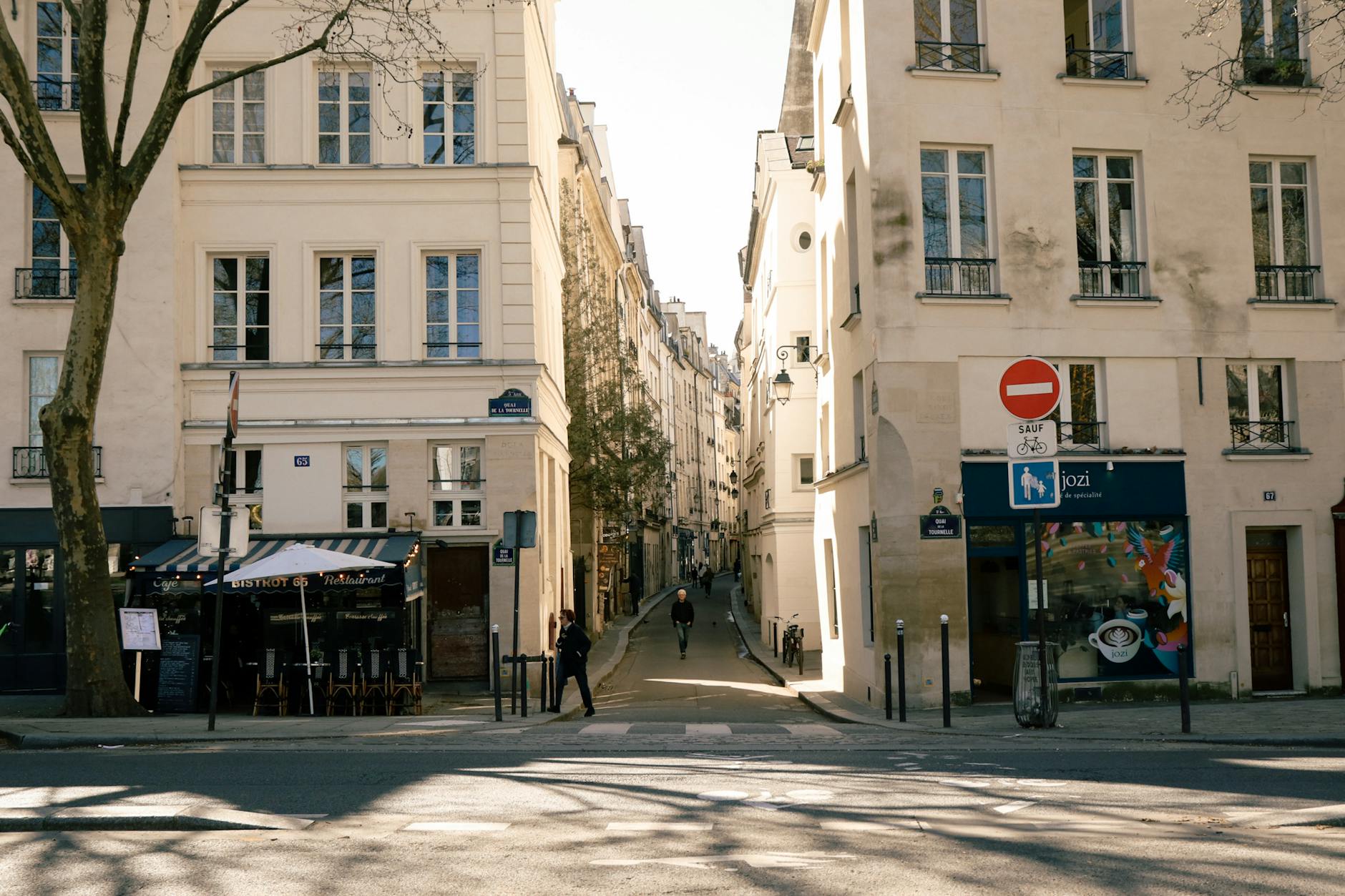
The Catacombs you walk on the €29 ticket are 1.5 km out of 320 km. The other 318.5 km is officially closed, banned at the decree level since 1955, and known intimately by a small Parisian subculture called the cataphiles, from catacombes, the suffix marking affinity rather than profession.
Cataphiles are French underground explorers who slip into the closed network illegally, through unsealed manholes, Metro tunnel breaches, sewer crossovers, and the basements of complicit cellar-owners. The active community is reckoned at somewhere between 2,000 and 5,000 people, from one-time curious students to lifelong explorers who can navigate kilometres of unmapped tunnel from memory.
The 2004 underground cinema is the most famous cataphile installation ever found. In August 2004, police following a cut power line walked into a fully equipped 50-seat cinema: raked stone seating, professional speakers, a 35mm projector, a screen, a connected bar with stocked refrigeration, and three days of recent food waste. When officers came back a week later with a film crew, every piece of equipment was gone and a note on the floor read “Do not try to find us.” Nobody has ever identified the operators.
Hidden bars and party galleries shift locations to stay ahead of the police. Galleries with traditional cataphile names, Salle Z being the largest known, host weekend parties for invited cataphiles only, with entry by word of mouth through the community.
English-speaking cataphile tours are run by a handful of guides who lead paying visitors through accessible closed sections. They’re not endorsed by the City of Paris, they sit in a tolerated grey zone, and they cost €60-85 a head. Book well ahead. The tours demand moderate fitness and a willingness to crawl through low passages, and severe claustrophobia rules you out. Bring waterproof shoes, a head-torch, and clothes you don’t mind wrecking, because you will get muddy. DIY cataphile entry is illegal: the fine is €60 if you’re caught, arrest is possible for repeat offenders, and the real danger is flooding, collapse, and getting lost in unmapped tunnels.
Pop-culture references include the 2014 found-footage horror film As Above, So Below, shot with City of Paris permission in real but officially closed sections of the network, the only feature film ever granted that access.
Claustrophobia, Fitness, and Disability Notes
This is not a museum stroll. It’s a 1.5-kilometre underground passage in confined conditions with no exit points along the way, and an honest self-assessment before you book saves you both money and distress.
Claustrophobia. The tunnels run 1.5 to 1.8 metres wide, single-file in spots where groups have to let oncoming wheelchairs (very rare) or staff pass, and about 2.5 metres tall. The lighting is dim and deliberately atmospheric. The one-hour visit keeps you moving forward, with no exits or rest stops between the staircase down and the staircase up. Mildly claustrophobic visitors usually cope; if you suffer badly, don’t attempt it, and know that you won’t be refunded for turning back.
Fitness required: 131 stone steps down at the start, 112 stone steps up at the end. The floor is uneven dressed limestone with the odd puddle after rain, plus a few low passages where taller visitors have to duck. The walking distance is 1.5 km on a fairly flat surface, but you’re on your feet for roughly 75 minutes from entry to exit. Not wheelchair accessible: no elevators or ramps anywhere on the route, and the City has said repeatedly that the historic structure can’t be retrofitted. Strollers are prohibited, and you can’t check them at the entrance.
Children aged ten and up tend to handle the visit well; under-eights can be frightened by the anonymised but unmistakable human remains and the low light. Pregnant visitors are advised against the route by the City because of the uneven footing and limestone dust. Heart conditions and serious mobility issues: skip it, since the 112-step climb out is unavoidable. What to bring: sturdy closed shoes you’ve already broken in; a light layer for the constant 14°C; a water bottle (Paris tap water is drinkable, and there’s a fountain near the exit); and a phone with offline maps cached, because there’s no signal underground. Photography is allowed without flash; tripods are discouraged because they block other people.
Best Time to Visit
The first slot of the day at 9:45am is by a wide margin the quietest. Visitors come in at 15-minute intervals, and the first three slots usually have empty audio-guide queues and light foot-traffic in the ossuary, so you can stop and read the inscriptions without holding anyone up. Tuesday is closed, every Tuesday, all year, no exceptions, and it’s the scheduling mistake people make most.
Worst times: Saturday and Sunday between 11am and 2pm, every school holiday (especially the two-week Toussaint break in late October to early November and the February break), and the first ten days of August, when continental European tourists pour in. Best months: November to February. Visitor numbers run about 60% below July and August, slots are easy to come by, and the underground temperature is exactly the same as in summer anyway.
Avoid Halloween week in late October. The Catacombs sell out months out for the obvious reason that an ossuary at Halloween is an easy sell; the City runs no special programming, but the demand spike is enormous. And don’t treat the Catacombs as a summer escape. Yes, 14°C feels cool in August, but the route is packed, audio-guide queues build up at the entrance, and that steady temperature stops meaning much once 400 visitors an hour are sharing the same tunnels.
History Section 2: Famous Burials, Famous Visitors
Famous (alleged) burials include Maximilien Robespierre (executed 1794), Jean-Paul Marat (assassinated 1793), Antoine Lavoisier (the founder of modern chemistry, guillotined 1794), Charles Perrault (author of the Mother Goose tales, died 1703), Madame de Pompadour, and François Rabelais. Identifying any individual is impossible: the bones were anonymised at the moment of transfer, and only the originating cemetery is labelled on each section. No skull on display can be tied to a name.
Famous visitors make a more verifiable list. Napoleon III toured the ossuary in 1860 with Baron Haussmann, shortly before commissioning the modern street network overhead. Tsar Alexander I visited in 1814 with the Russian army during the post-Napoleonic occupation. Otto von Bismarck came in 1867. Salvador Dalí toured the Catacombs in 1955 and credited the experience as a direct influence on the bone imagery of his Surrealist period.
Modern use: Allied resistance fighters used sections of the tunnels as bunkers and command posts during the Second World War, from 1940 to 1944. The FFI (Forces françaises de l’intérieur) ran an underground command at the Rol-Tanguy bunker, named for the same Henri Rol-Tanguy as the Catacombs avenue. Pop-culture references include Victor Hugo’s Les Misérables, where Jean Valjean escapes through underground Paris (the sewers more than the catacombs, but the imagery is the same), Jules Verne’s Les Catacombes, Anne Rice’s vampire novels, which return to the ossuary again and again, and the 2014 horror film As Above, So Below.
Combining with Other Attractions
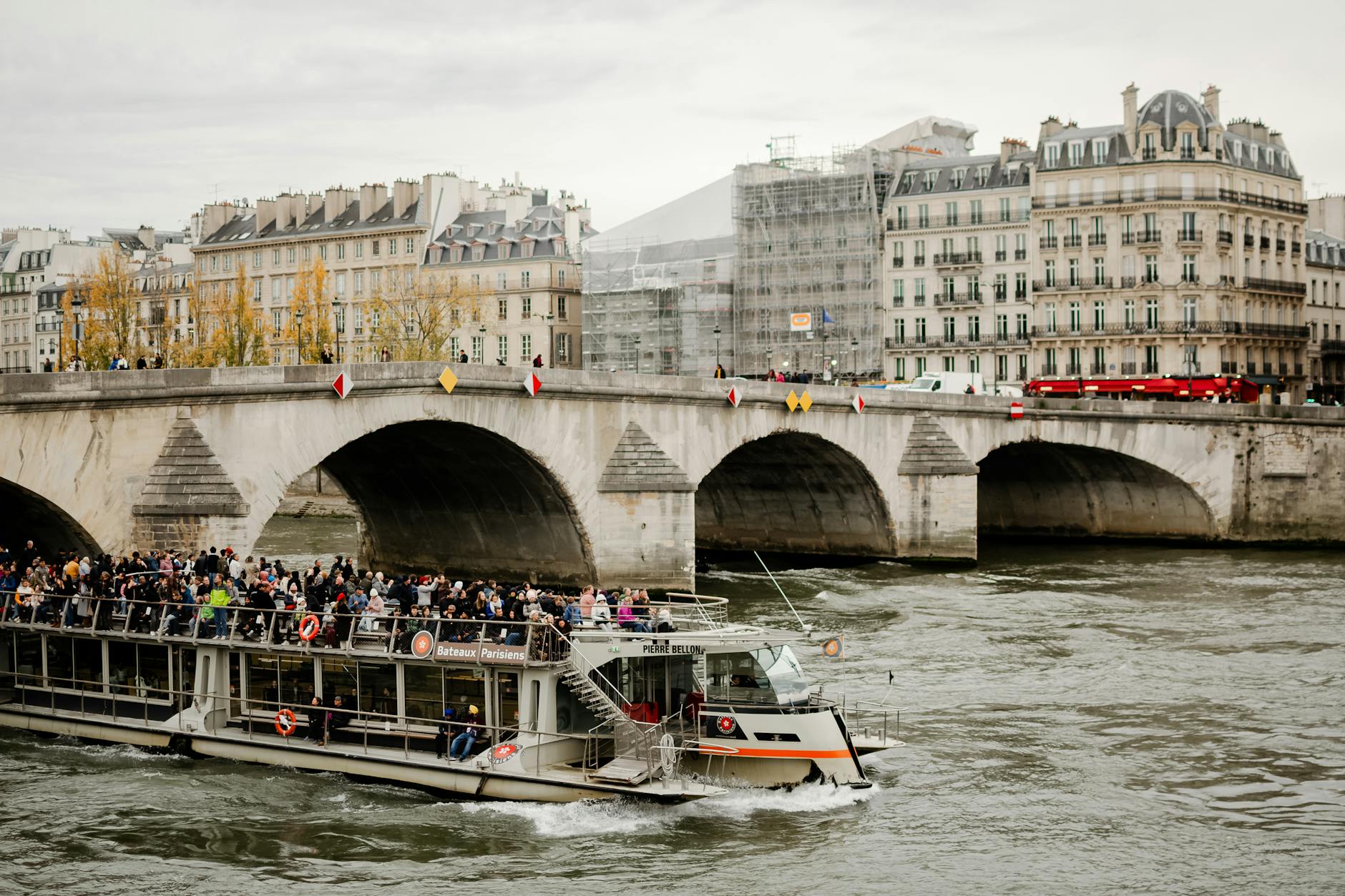
The exit on Rue Remy Dumoncel drops you into the quietly characterful southern fringe of the 14th, an underrated neighbourhood with several worthwhile half-day pairings.
- Cimetière du Montparnasse (10 min walk south) — an open-air cemetery holding Jean-Paul Sartre, Simone de Beauvoir, Charles Baudelaire, and Serge Gainsbourg. The literary contrast with the anonymous ossuary is striking.
- Fondation Cartier pour l’Art Contemporain (5 min walk) — a contemporary-art space in a Jean Nouvel glass building; the permanent collection is free and the rotating shows are usually excellent.
- Tour Montparnasse 56 (15 min walk) — observation deck on the 56th floor with the best skyline view in Paris, for the simple reason that it’s the one platform where the Eiffel Tower ends up in your photo.
- Musée de la Libération de Paris (10 min, free) — the museum of the 1944 Liberation of Paris, sited above the Rol-Tanguy underground bunker.
- Rue Daguerre (10 min) — a pedestrian market street with bakeries, fromageries, cafes, and a relaxed neighbourhood pace.
For wider planning, the Catacombs sit inside our Paris attractions guide and pair well with our guides to unique things to do in Paris, the city’s walking tours, and the broader roundup of things to do in Paris.
Practical Tips & Etiquette
A few small operational details decide whether the visit goes smoothly.
- Time slots are 15 minutes apart; arrive 10 minutes early at the entrance pavilion. There’s no late entry, and missed slots are not rebooked or refunded.
- Closed Tuesday, always. Double-check it before booking anything else in Paris that day.
- 14°C constant temperature year-round — bring a layer even in August.
- 131 steps down + 112 steps up; 1.5 km of walking; no rest stops on route.
- No flash photography in the ossuary; respect the dead. Phone flashlights are discouraged too.
- Do not touch the bones, and absolutely do not take anything. People have been prosecuted for pocketing femurs as souvenirs, and bags are spot-checked at the exit.
- Take your photos quickly and don’t hold others up — with timed entry, a group is roughly 30 seconds behind you the whole way.
- No food or drink on the route; finish your water bottle before you descend.
- No restrooms in the tunnels; use the one at the entrance before going down. There are WCs at the entrance and the exit, but nothing on the route itself.
- The route is a one-way loop; you can’t turn back. Once you’ve started down, you walk the full 1.5 km to the Rue Remy Dumoncel exit.
FAQ
How much do Paris Catacombs tickets cost in 2026?
The standard adult ticket with fast-track entry and audio guide is €29 from the official catacombes.paris.fr site. The 18-26 youth ticket is €14, under-18s are free with a paying adult, and walk-up tickets at the door are €15 without an audio guide but require 60-90 minutes of queuing and are often gone before 11am. Third-party fast-track resellers like Get Your Guide and Tiqets charge €30-45 for the same product with a platform markup.
Are the Paris Catacombs scary?
More atmospheric and unsettling than frightening. The route is dimly lit, narrow, and holds six million unmistakable human bones, with femurs and skulls stacked in walls seven metres deep. There are no jump-scares, no theming, no horror-attraction effects; the City of Paris runs it as a serious memorial. Mildly claustrophobic adults manage fine; under-eight children are sometimes upset.
Do you need to book Catacombs tickets in advance?
Yes. Booking ahead is the only reliable way in. Slots release at 7am Paris time on a rolling 7-day window, and weekend slots in high season are gone within an hour. The walk-up queue exists, but it’s a lottery, especially from May through September, and you can stand for 90 minutes only to be told the day is sold out.
How long does the Catacombs visit take?
Plan on one hour from entry stamp to street-level exit. That covers the 90-second descent, roughly 50 minutes walking and listening to the audio guide along the 1.5 km route, and the 112-step climb out. A guided tour runs about 90 minutes. Add 5 minutes to walk from the Rue Remy Dumoncel exit back to the Denfert-Rochereau Metro.
Are the Paris Catacombs wheelchair accessible?
No. There’s no elevator, no ramp, and no alternative route to the galleries. The way down is 131 stone steps and the way out is 112, both narrow spiral staircases. The City has said repeatedly that the historic quarry structure can’t be retrofitted for accessibility. Visitors with serious mobility limitations can’t complete the route.
Can kids visit the Paris Catacombs?
Children aged 10 and up usually do well, especially if they’ve been prepped for what they’ll see. Under-eights may find the anonymised human remains and the dim light distressing. Strollers are banned, and there’s no pram-friendly alternative route. Under-18s enter free with a paying adult but need their own (free) booking made in their name.
What should I wear to the Catacombs?
Sturdy closed shoes you’ve already walked in, not fresh-out-of-the-box trainers and definitely not heels. Add a light jacket or long-sleeved layer for the constant 14°C, even in August. The floor is uneven dressed limestone with the odd puddle after rain, so skip open footwear. A small bag is fine, but large backpacks may be inspected and there’s no cloakroom for them.
Are there real human bones in the Catacombs?
Yes, every bone in the ossuary is real. The site holds the skeletal remains of roughly six million Parisians, moved between 1786 and 1814 from over 200 city-centre cemeteries that had turned into public-health hazards. The arrangements you see, the femur walls, the skull patterns, the cross-of-skulls altar, were organised between 1810 and 1814 by inspector Louis-Etienne Hericart de Thury and have barely changed since.
Related Reading
This guide is part of our Paris landmarks guide within the broader Cluster 4 (Attractions & Landmarks) collection.
- Eiffel Tower: Complete Visiting Guide
- Louvre Museum: Tickets, Highlights and How to Skip the Queue
- Notre-Dame de Paris: Reopening, Tickets and What to See
- Sacre-Coeur and Montmartre Guide
- Arc de Triomphe: Tickets and the Rooftop View
- Sainte-Chapelle: The Stained-Glass Masterpiece
- The Pantheon: France’s Hall of Heroes
- Palace of Versailles: Day Trip Guide
- The Conciergerie: Marie Antoinette’s Prison
- Unique Things to Do in Paris
- Paris Walking Tours
- Things to Do in Paris
- Paris Museums Guide
- Paris Neighborhoods Guide
- Paris Food & Restaurants Guide
- Getting Around Paris
- Paris Itineraries
Keep reading
Use these to round out your trip: