Jardin des Tuileries: What to See, Eat and Skip
The finest view in central Paris, a Monet masterpiece and a sandwich you should buy somewhere else.
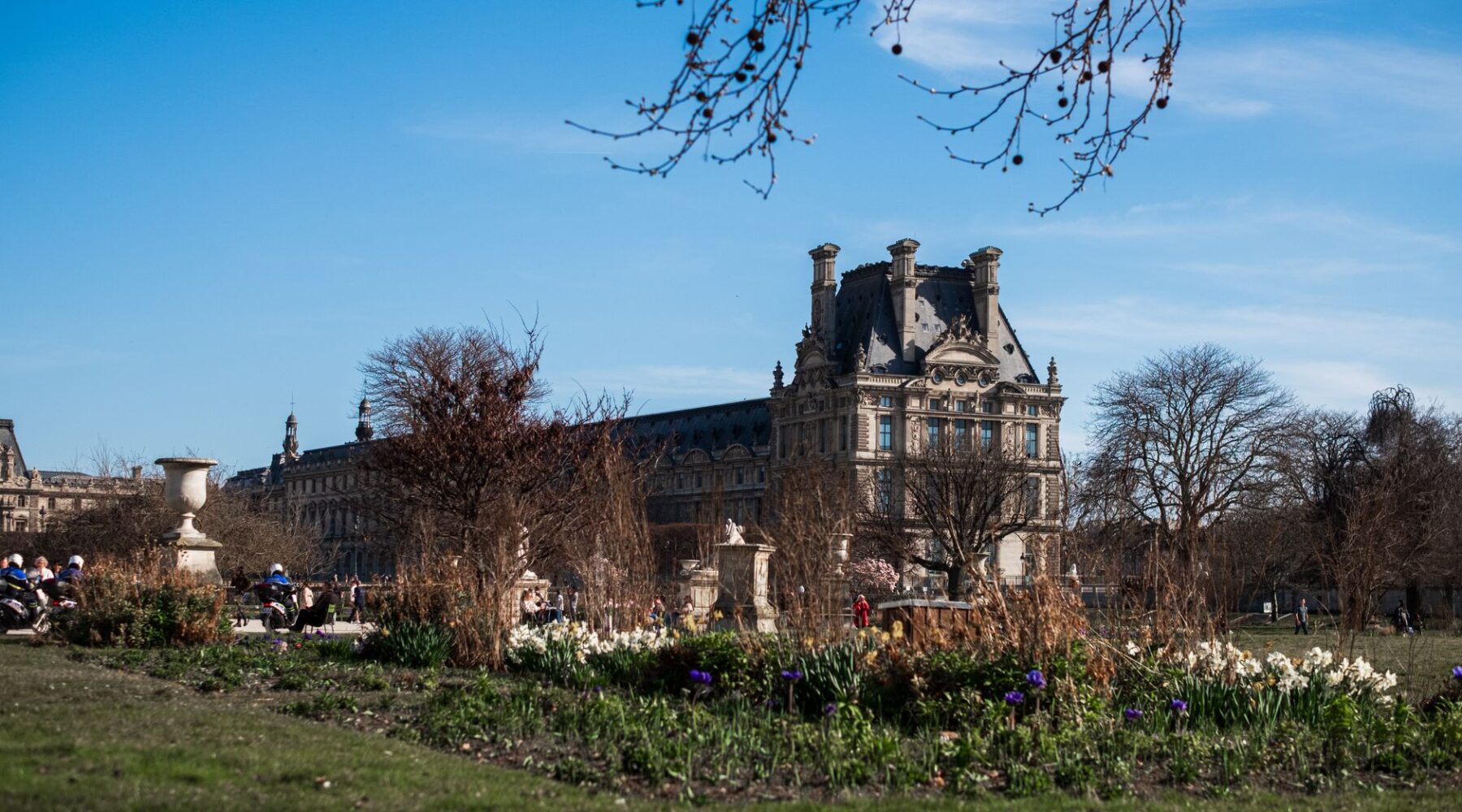
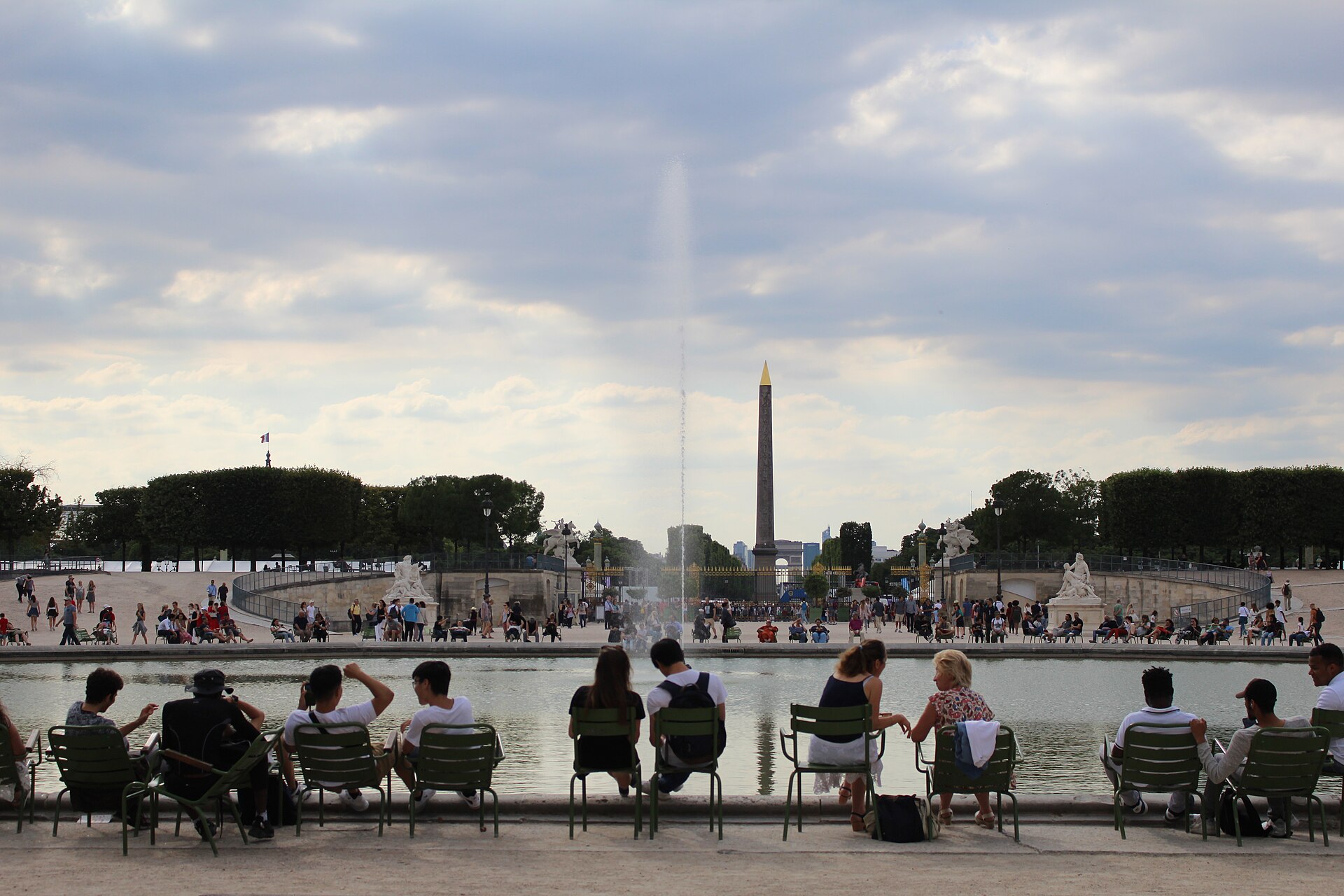
Stand under the Arc de Triomphe du Carrousel, facing away from the Louvre, and Paris lines itself up for you. The gravel avenue of the Tuileries runs straight ahead, past two round ponds and between clipped chestnut groves, to the obelisk on the Place de la Concorde, then on up the Champs-Élysées to the Arc de Triomphe on the horizon. It’s one of the great urban views in Europe, and most visitors see it for about ninety seconds on their way out of the Louvre. This tuileries garden paris guide is for slowing down: what’s worth finding in the garden, where to eat without being fleeced, what to skip, and how to fit it around the museums at either end.
We’ll cover the layout, the sculpture, the two museums inside the garden, the summer funfair, the food options (honestly assessed), hours, getting there and a couple of routes. Prices and hours were checked in September 2026. They shift through the year, so treat them as the right order of magnitude.
The Tuileries at a glance
| What | Details |
|---|---|
| Entry | Free |
| Hours | Roughly 7am–11pm in June, July and August; 7am–9pm in April, May and September; 7.30am–7.30pm in winter. Wardens start clearing the garden about 30 minutes before closing |
| Size | About 25 hectares, from the Louvre to the Place de la Concorde |
| Arrondissement | 1st |
| Metro | Tuileries (1), Concorde (1, 8, 12), Palais Royal–Musée du Louvre (1, 7) |
| Museums inside | Musée de l’Orangerie (about €12.50) and the Jeu de Paume (€12) |
| Summer funfair | 20 June to 23 August 2026; free to enter, rides paid |
| Time needed | 30 minutes to walk through; 1–2 hours to see it properly |
A garden that lost its palace
The name comes from the tile works (tuileries) that occupied the site before 1564, when Catherine de’ Medici began building a palace here, just west of the Louvre, and an Italian-style garden to go with it. A century later, Louis XIV handed the garden to André Le Nôtre, who went on to design Versailles. Le Nôtre gave it the shape it still has: the long central axis, the raised terraces on either side, the round and octagonal ponds and the ramps curving down to the Concorde end.
The palace itself is gone. The Tuileries Palace was the main royal and imperial residence in Paris through the 19th century, until it was set on fire during the Paris Commune in 1871. The shell was demolished in the 1880s, which is why the Louvre’s two long wings now reach out towards the garden and simply stop, framing an empty space where the palace stood. It’s an odd thing to notice once you know, and it explains why the view from the Carrousel is so open.
The garden became a public park after the Revolution and has been one ever since, and it’s part of the banks of the Seine UNESCO World Heritage Site. Since the 1990s it has been managed by the Louvre.
How the garden is laid out
Walk from the Louvre towards the Concorde and the Tuileries unfolds in four sections.
1. The Jardin du Carrousel
Right next to the Louvre, between the pyramid and the garden proper, the Carrousel garden is the newest section, with low clipped yew hedges radiating out in a fan and long lawns. The pink marble Arc de Triomphe du Carrousel stands at its eastern edge, built for Napoleon in 1806–08 and modelled on the Roman arches of Septimius Severus and Constantine. Scattered across the lawns are around twenty bronze women by Aristide Maillol, installed here in the 1960s.
2. The Grand Carré
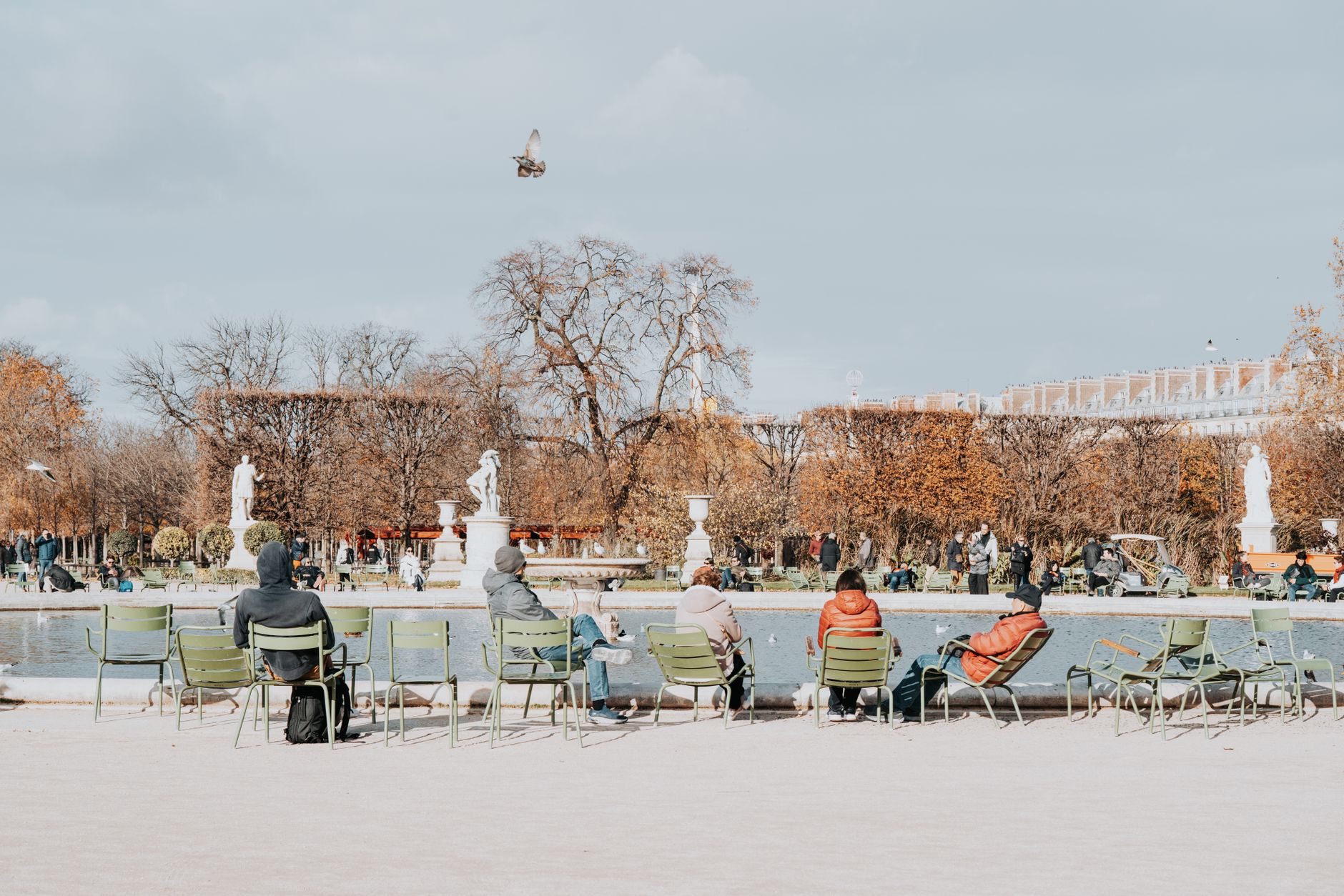
Crossing the road that cuts through the garden, you enter the formal Grand Carré, the most “French” section: flowerbeds, statuary and the Grand Bassin Rond, a large round pond ringed with green chairs. This is the busiest part of the garden and the best place to sit in the sun.
3. The Grand Couvert
The middle of the garden is the Grand Couvert, a large block of chestnut and lime groves (the bosquets) on either side of the main avenue. Here the garden is shadier and quieter, with sculpture tucked among the trees, snack kiosks and a playground. In summer, it’s the most comfortable part of the garden to be in.
4. The Octagon and the terraces
At the western end, the octagonal basin sits in a broad open space enclosed by two horseshoe ramps climbing up to terraces. On the north side, the Terrasse des Feuillants runs along the Rue de Rivoli and holds the Jeu de Paume; on the south, the Terrasse du Bord de l’Eau runs along the Seine and holds the Orangerie. Climb up either ramp for a view back along the whole garden to the Louvre, or down onto the Place de la Concorde.
What to see in the Tuileries
The Grand Axis view
Stand at the Arc du Carrousel, or better, on the western terraces above the octagonal basin, and look along the line that runs from the Louvre through the obelisk, up the Champs-Élysées to the Arc de Triomphe and beyond, on a clear day, to the Grande Arche at La Défense. This historical axis, the Axe historique, is the spine of monumental Paris. Our Champs-Élysées guide follows it further west.
The sculpture
The Tuileries is effectively an open-air sculpture museum, with more than a hundred works. Three groups are worth looking out for:
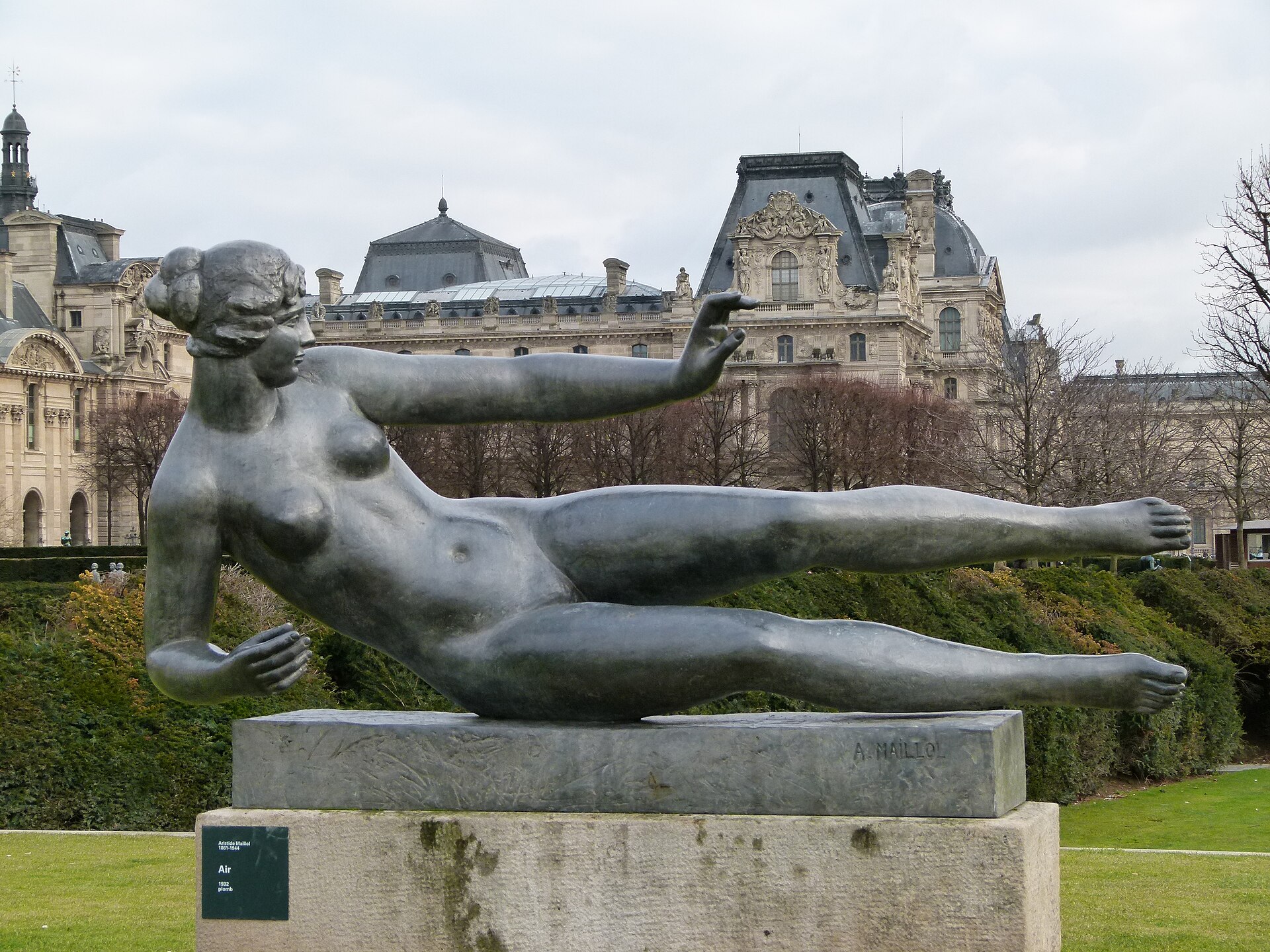
- The Maillol bronzes in the Carrousel garden: rounded, calm female nudes, including L’Air, a reclining figure that seems to float above its plinth. The contrast with the Louvre’s façades behind them is striking.
- The classical statues in the Grand Carré and around the octagonal basin, many of them copies of royal statues from Versailles and Marly, with the originals now inside the Louvre.
- The modern and contemporary works scattered through the groves, including bronzes by Rodin, a Henry Moore, a Jean Dubuffet, and Giuseppe Penone’s Tree of Vowels, a bronze tree lying on the ground as though it had just fallen.
In October, during the autumn art fair season, contemporary works are often added to the garden for a few weeks. It’s a good time to visit if you like modern art.
The Musée de l’Orangerie
Built in the 1850s to shelter the palace’s orange trees in winter, the Orangerie now houses the finest single experience in the garden: Claude Monet’s Water Lilies, eight enormous panels installed in two oval rooms lit from above, exactly as Monet intended. The lower floor holds the Walter-Guillaume collection, with Renoir, Cézanne, Matisse, Picasso, Modigliani and Soutine.
A standard ticket costs around €12.50; the Orangerie is closed on Tuesdays, and entry is free on the first Sunday of the month if you book. It’s small enough to see in an hour, which makes it a perfect companion to a walk in the garden. Book a timed slot in advance, as the queue for walk-ups can be long. Our Musée de l’Orangerie guide has the details, and it’s included in the Paris Museum Pass; see whether the pass is worth it.
The Jeu de Paume
On the opposite terrace, the matching Jeu de Paume was built as a real tennis court for Napoleon III. After the Second World War it housed the Impressionists before they moved to the Musée d’Orsay, and it’s now a gallery dedicated to photography, film and video, with temporary exhibitions. Tickets cost €12 full price and €9 reduced. It’s not a must-see for everyone, but it’s usually a quiet, high-quality show and a good fit for a rainy afternoon.
The chairs by the round pond
Like the Luxembourg, the Tuileries has hundreds of free green metal chairs, including reclining ones, and the best thing to do in the garden is to take two of them to the edge of the Grand Bassin Rond and sit for a while. The ducks are cheeky, the sun is warm, and the view of the Louvre is hard to beat. For the Left Bank equivalent, see our Luxembourg Gardens guide.
Things to do in the Tuileries
The summer funfair
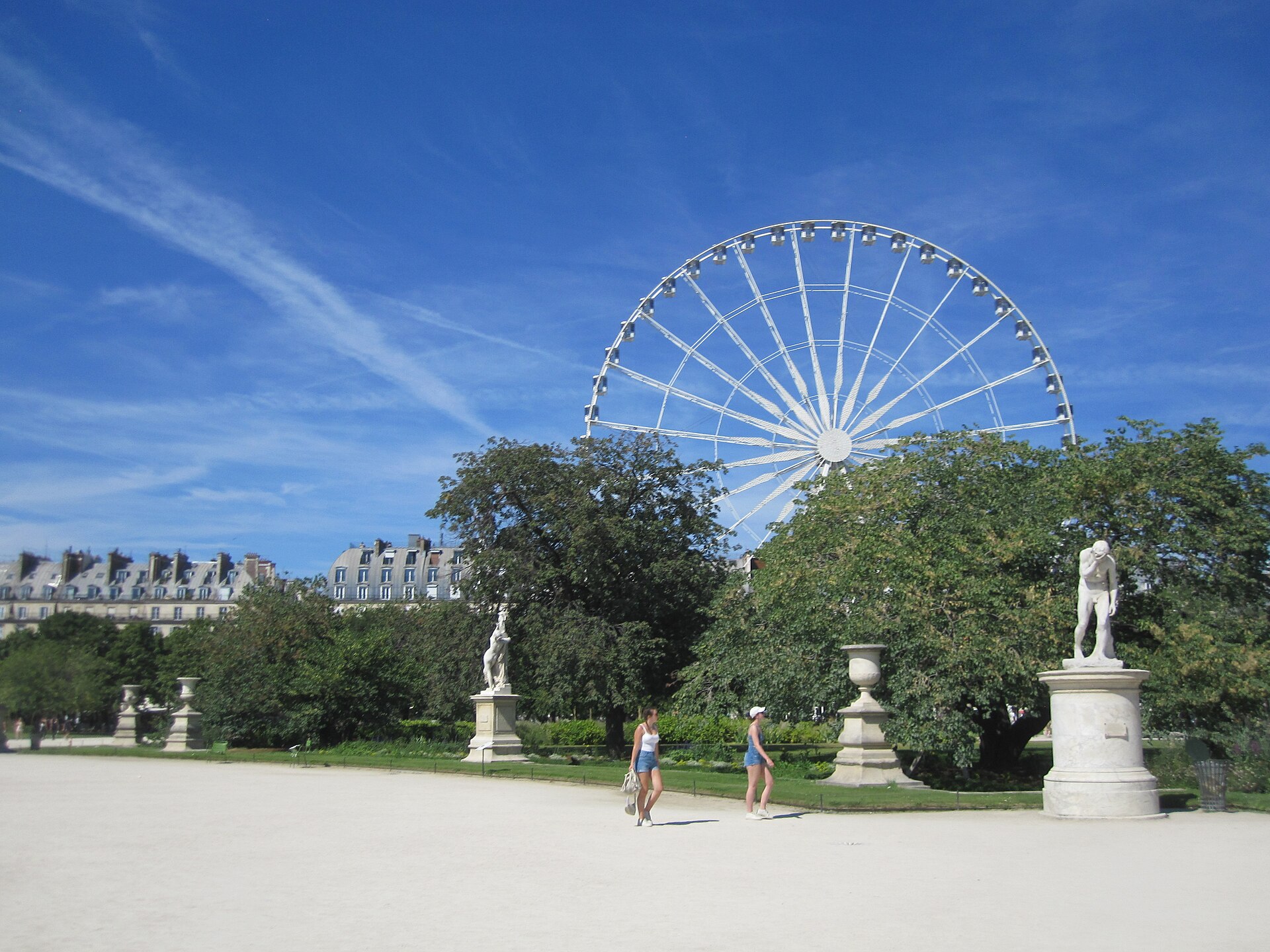
Every summer, the Fête des Tuileries fills the northern side of the garden along the Rue de Rivoli with a traditional French funfair: a big wheel, carousels, swing rides, a haunted house, candyfloss, churros and games. In 2026 it runs from 20 June to 23 August. Entry is free and rides are paid individually.
The big wheel is the real reason to go. From the top you get a bird’s-eye view across the garden to the Louvre, the Orsay, the Eiffel Tower and the Concorde, and at dusk it’s spectacular. Everything else is a normal fair at slightly Paris prices. Good for families, fun for an evening, but not a reason to plan a trip.
The Olympic cauldron
During the 2024 Olympics, the balloon-shaped cauldron designed for the Games rose above the Tuileries each evening, and it proved so popular that it returned for summer 2025. Whether it flies in any given summer depends on the arrangements for that year, so check the Louvre’s announcements before you plan an evening around it.
Children’s activities
- Trampolines near the Rue de Rivoli side, a long-standing Tuileries tradition. Paid by the session.
- A playground in the groves of the Grand Couvert.
- Pony rides and an old-fashioned carousel at busy times.
- Toy sailboats on the round pond at some times of year.
For more family ideas, see Paris with kids and our guide to parks and playgrounds for children.
Rendez-vous aux Jardins and events
The Tuileries hosts workshops and events for the national garden weekend, Rendez-vous aux Jardins, in early June, and the Louvre programmes occasional concerts and garden tours through the summer. They’re worth checking on the Louvre’s website if you’re in town.
Where to eat in and around the Tuileries
This is where honesty matters, because the Tuileries is a place people often eat badly.
The kiosks and garden restaurants
There are several café-restaurants with terraces under the trees of the Grand Couvert and near the ponds, plus snack kiosks selling sandwiches, crêpes, ice cream and drinks. The setting is lovely and the prices reflect it: expect to pay significantly more for a sandwich and a drink than you would two streets away, for food that’s generally average. A coffee or a glass of wine in the shade is a perfectly reasonable treat. A full lunch usually isn’t good value.
Our verdict: drink here, eat elsewhere.
A better picnic
The Tuileries lawns are mostly closed to sitting, but the chairs work fine for a picnic. Pick up supplies on the way in: bakeries and delis on the Rue Saint-Honoré and around the Marché Saint-Honoré, a few minutes north of the garden, are a better bet than anything inside it. Our guide to the best bakeries in Paris has options nearby.
Nearby cafés and restaurants
- Angelina, across the Rue de Rivoli: famous for thick hot chocolate and the Mont-Blanc pastry. Expect a queue and tourist prices; the takeaway counter is quicker.
- Café Marly, under the Louvre’s arcades facing the pyramid: expensive, but the terrace view is one of the best in Paris for a drink.
- The Rue Saint-Honoré and the streets around the Palais-Royal: more choice and better value, from bistros to Japanese noodle bars on the Rue Sainte-Anne.
Our guides to the best cafés in Paris and cheap eats have more.
What to skip
The Tuileries is a pleasant garden, but it’s not faultless, and knowing its weak spots will make your visit better.
- The main avenue in the midday summer sun. It’s wide, pale gravel with no shade, and it’s hot and dusty in July. Use the shaded paths through the groves instead.
- Lunch at the garden restaurants, as above.
- Anyone approaching you with a petition, a string bracelet or a “found” gold ring. The area between the Louvre and the Tuileries is a hot spot for common street scams. Say no, keep walking and keep your bag closed. Our guides to Paris scams and pickpockets explain the tricks.
- Treating the garden as a destination on a short trip. It’s a lovely link between sights, not a half-day on its own. If you want a garden to linger in, the Luxembourg or the Buttes-Chaumont are better choices; see our guide to Paris parks and gardens.
- The funfair’s lesser rides. The big wheel is worth it; most of the rest is a standard fair at inflated prices.
Opening hours
| Period | Hours |
|---|---|
| June, July, August | About 7am–11pm |
| April, May, September | About 7am–9pm |
| Winter (roughly October to March) | About 7.30am–7.30pm |
Wardens clear the garden about half an hour before closing, and the gates can close early in storms or for security events. The Orangerie and the Jeu de Paume keep their own hours; both are closed on Mondays or Tuesdays, so check before you go.
When to visit
- Early morning is the best time for photographs, with low light along the axis and very few people.
- A summer evening, with the garden open until 11pm, is the most atmospheric: the sun sets behind the Arc de Triomphe and the funfair wheel lights up.
- Spring brings tulips and flowering trees to the Grand Carré.
- Autumn turns the chestnut groves gold, and October brings contemporary art to the garden.
- Winter is bare and a bit bleak, but crisp sunny mornings can be beautiful and the garden is empty.
Getting there
- Metro Tuileries (Line 1): exits onto the Rue de Rivoli in the middle of the garden.
- Metro Concorde (Lines 1, 8, 12): for the western end, the octagonal basin and the Orangerie.
- Metro Palais Royal–Musée du Louvre (Lines 1, 7): for the Louvre end and the Carrousel.
- RER C Musée d’Orsay: cross the Seine on the Passerelle Léopold-Sédar-Senghor footbridge, which lands right by the garden’s southern terrace.
- On foot: the garden links the Louvre, the Orsay (across the river), the Concorde, the Place Vendôme and the Opéra district, all within 15 minutes.
Our Metro guide covers tickets and lines.
Two routes through the garden
After the Louvre: a gentle hour
- Leave the Louvre by the pyramid and walk through the Arc du Carrousel.
- Look back at the Louvre, then ahead along the axis.
- Find Maillol’s L’Air and the other bronzes in the Carrousel garden.
- Take two chairs to the edge of the Grand Bassin Rond for fifteen minutes.
- Walk west through the shaded groves rather than on the main avenue.
- Climb the ramp up to the Seine terrace and finish at the Orangerie for the Water Lilies.
A classic Right Bank walk
- Start at the Palais-Royal gardens.
- Cross to the Louvre’s Cour Napoléon and the pyramid. See our Louvre guide.
- Walk the full length of the Tuileries to the Place de la Concorde.
- Cross the Pont de la Concorde, or double back over the Senghor footbridge to the Musée d’Orsay.
- Or continue up the Champs-Élysées to the Arc de Triomphe.
For more routes, see our guide to walking in Paris.
Fitting the Tuileries around the Louvre, the Orangerie and the Orsay
Three of the most visited museums in the world sit within ten minutes’ walk of this garden, and the Tuileries is what makes it possible to see two of them in one day without losing your mind. A few practical points:
- Mind the closing days. The Louvre and the Orangerie are both closed on Tuesdays; the Musée d’Orsay is closed on Mondays. A Tuesday is a good day for the Orsay and the garden, a Monday for the Louvre and the Orangerie.
- Don’t do the Louvre and the Orsay back to back. Most people’s attention runs out after three or four hours of paintings. The Louvre in the morning, a long sit in the Tuileries at lunch, and the compact Orangerie in the afternoon is a far more enjoyable day.
- Use the garden as your break, not the museum café. A walk in the fresh air resets tired legs better than a queue for an overpriced coffee indoors.
- Book timed tickets for both museums before you arrive, and leave a buffer of at least an hour between slots.
- Carry less. The Louvre only accepts bags up to 55 × 35 × 20 cm and refuses suitcases; if you are between hotels, see our guide to luggage storage in Paris.
In summer, the garden’s late closing makes a lovely end to a museum day: one of the Louvre’s late openings (check the current evenings), or the Orangerie’s Friday late session in spring and early summer, followed by a walk through the Tuileries as the light goes gold.
Is the Tuileries worth visiting?
Yes, but with the right expectations. The Tuileries is at its best as the connective tissue of central Paris: a place to catch your breath between the Louvre and the Orangerie, to sit by a pond with a coffee, to look along the grandest view in the city. It’s historically fascinating and the sculpture is better than most people notice.
It’s less rewarding as a destination in its own right than the Luxembourg, because it’s more formal, more exposed and more touristy, and its food is overpriced. So walk through it, sit in it, and see the Orangerie in it. Just don’t spend your lunch budget there.
Frequently asked questions
Is the Tuileries Garden free?
Yes. Entry to the Jardin des Tuileries is free. The Musée de l’Orangerie and the Jeu de Paume inside the garden charge admission, as do the funfair rides and the trampolines.
What time does the Tuileries Garden open and close?
Hours vary by season: roughly 7am to 11pm in June, July and August; 7am to 9pm in April, May and September; and 7.30am to 7.30pm in winter. Visitors are asked to leave about 30 minutes before closing. Checked September 2026.
When is the Tuileries funfair?
The Fête des Tuileries runs every summer. In 2026 it’s on from 20 June to 23 August, with free entry and paid rides.
How long does it take to walk through the Tuileries?
About 15 to 20 minutes from the Louvre to the Place de la Concorde at a steady pace. Allow an hour or two to see the sculpture, sit by the ponds and explore the groves.
Can you sit on the grass in the Tuileries?
Mostly not. The lawns in the formal parts of the garden are generally off limits, though some are opened in summer. The free green chairs around the ponds are the usual way to sit.
What’s the difference between the Tuileries and the Luxembourg Gardens?
Both are formal French gardens with ponds and free green chairs. The Tuileries, on the Right Bank next to the Louvre, is more monumental and touristy, with two museums and a summer funfair. The Luxembourg, on the Left Bank, is larger in feel, greener, more local, and better for lingering and for children.
Is the Orangerie in the Tuileries Garden?
Yes. The Musée de l’Orangerie sits on the Seine-side terrace at the western end of the garden, near the Place de la Concorde. It’s home to Monet’s Water Lilies.
Are there toilets in the Tuileries?
Yes, there are public toilets in the garden, though queues can be long in summer. The museums at each end also have facilities for ticket holders.
Related Paris Guides
- Paris Parks and Gardens: The Complete Guide
- Luxembourg Gardens: A Complete Visitor Guide
- The Louvre Museum Guide
- The Musée de l’Orangerie Guide
- The Musée d’Orsay Guide
- The Champs-Élysées Guide
- The Opéra District Guide
- Paris Scams and How to Avoid Them
Photo Credits
The octagonal basin in the Tuileries: Grand Bassin Octogonal Jardin Tuileries Paris 1 by Chabe01, CC BY-SA 4.0, via Wikimedia Commons.
Maillol’s L’Air in the Carrousel garden: L’Air by Aristide Maillol, Jardin des Tuileries, Paris 2011 by Dinkum, CC0, via Wikimedia Commons.
The big wheel at the Fête des Tuileries: Ferris Wheel in the Fête foraine des Tuileries 5 by DiscoA340, CC BY-SA 4.0, via Wikimedia Commons.