Most Romantic Walks in Paris: 8 Routes for Couples
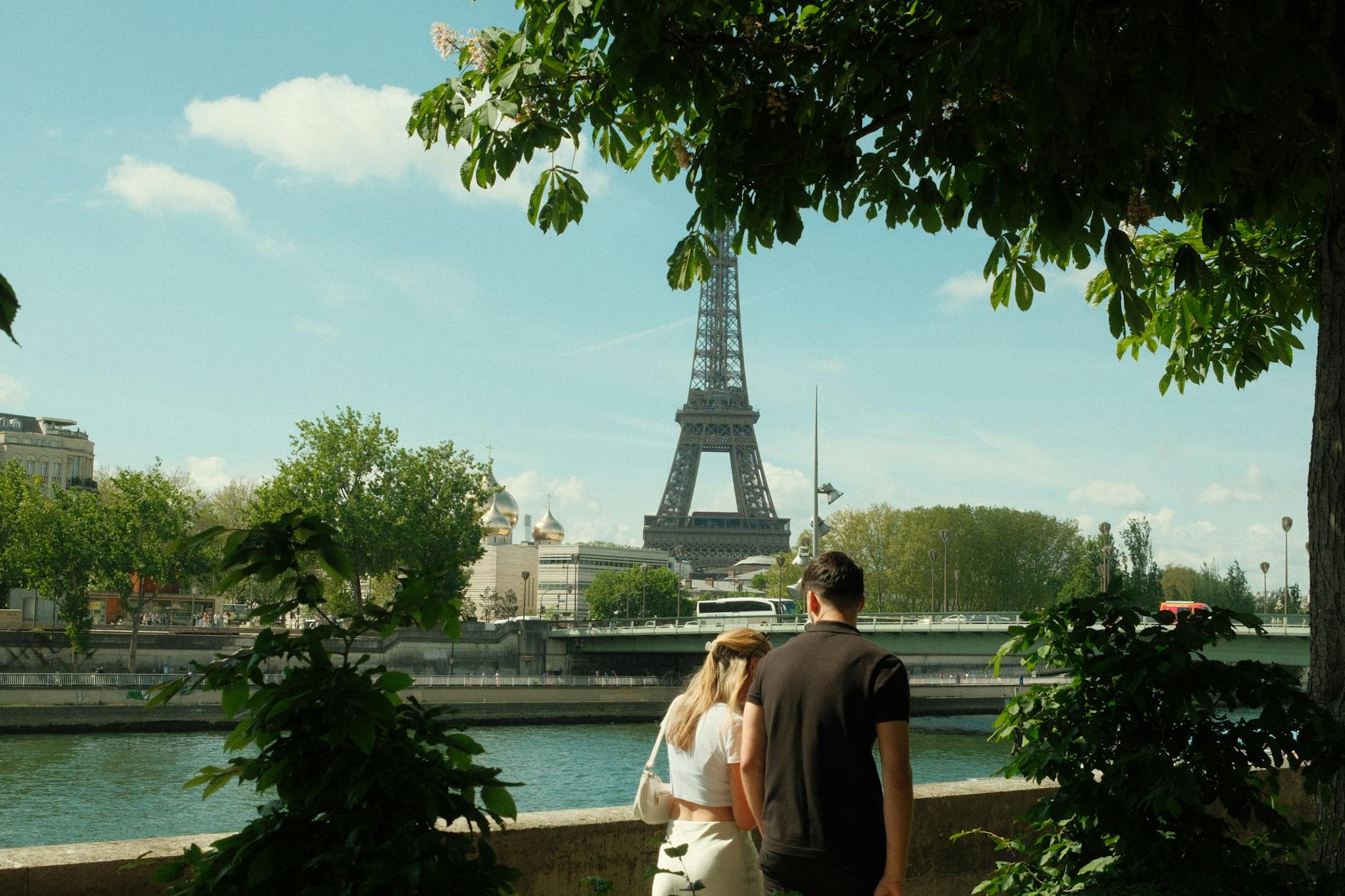
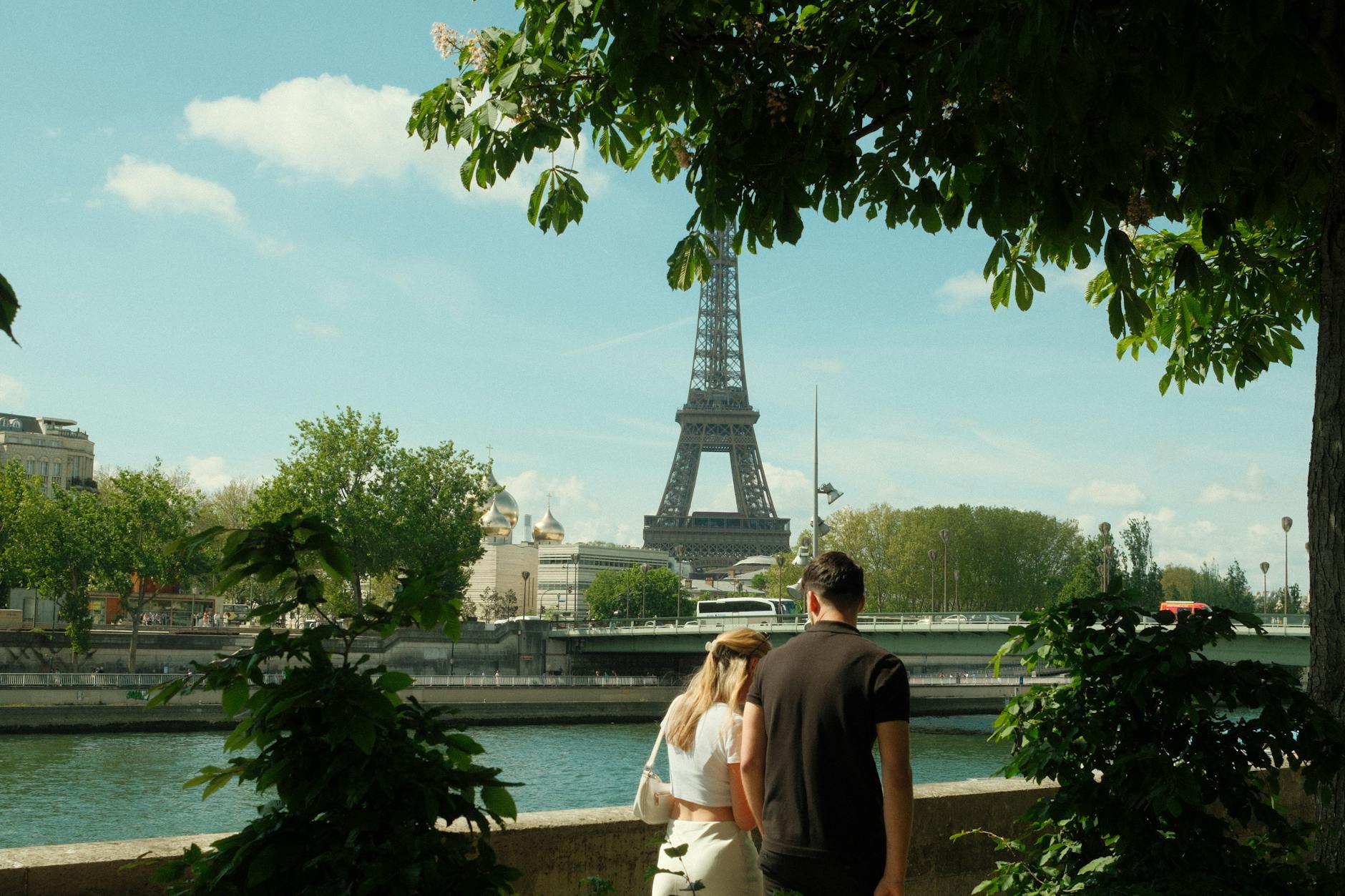
The city is only five kilometers wide. You can cross it on foot in an afternoon, and the ground stays flat the whole way except for one hill in Montmartre. Add a bridge every two hundred meters, six-story buildings that leave the sky wide open, and a culture that treats lingering as a virtue, and you have the rare big city built for walking slowly with someone. The eight romantic walks in paris below cover the full range: golden-hour quays along the Seine, hidden mansion gardens, a sunset bridge or two, Belle Epoque detours, the canal picnic ritual, and the illuminated late-night strolls. Each one is a specific 60-to-90-minute route with the photo stops, the cafe pause, and the right hour to start it marked out.
The difference between a walk you remember and a forgettable slog is sequencing: the order you hit the bridges, gardens, and light. These routes are tuned to a local pace, and every one of them ends within a few minutes of a metro, so a carefully built evening doesn’t strand you in the dark at the far end of nowhere. Read this next to our romantic Paris overview and our Paris honeymoon guide.
Why Paris Walks Beat Every Other City for Couples
Romance on foot comes down to three things in this order: geography, architecture, atmosphere. Paris happens to win all three. The terrain is flat enough to cover three kilometers without working up a sweat, and Montmartre supplies the one real climb if you want it. Haussmann laid the streets wide enough that you can hold hands without bumping oncoming pedestrians, and he capped most buildings at six stories, which keeps the light generous and the sky overhead. Then there are the bridges, and they are the real trick. Thirty-seven of them cross the Seine inside the city, so you’re never more than two hundred meters from a crossing where Paris suddenly rearranges itself into a postcard.
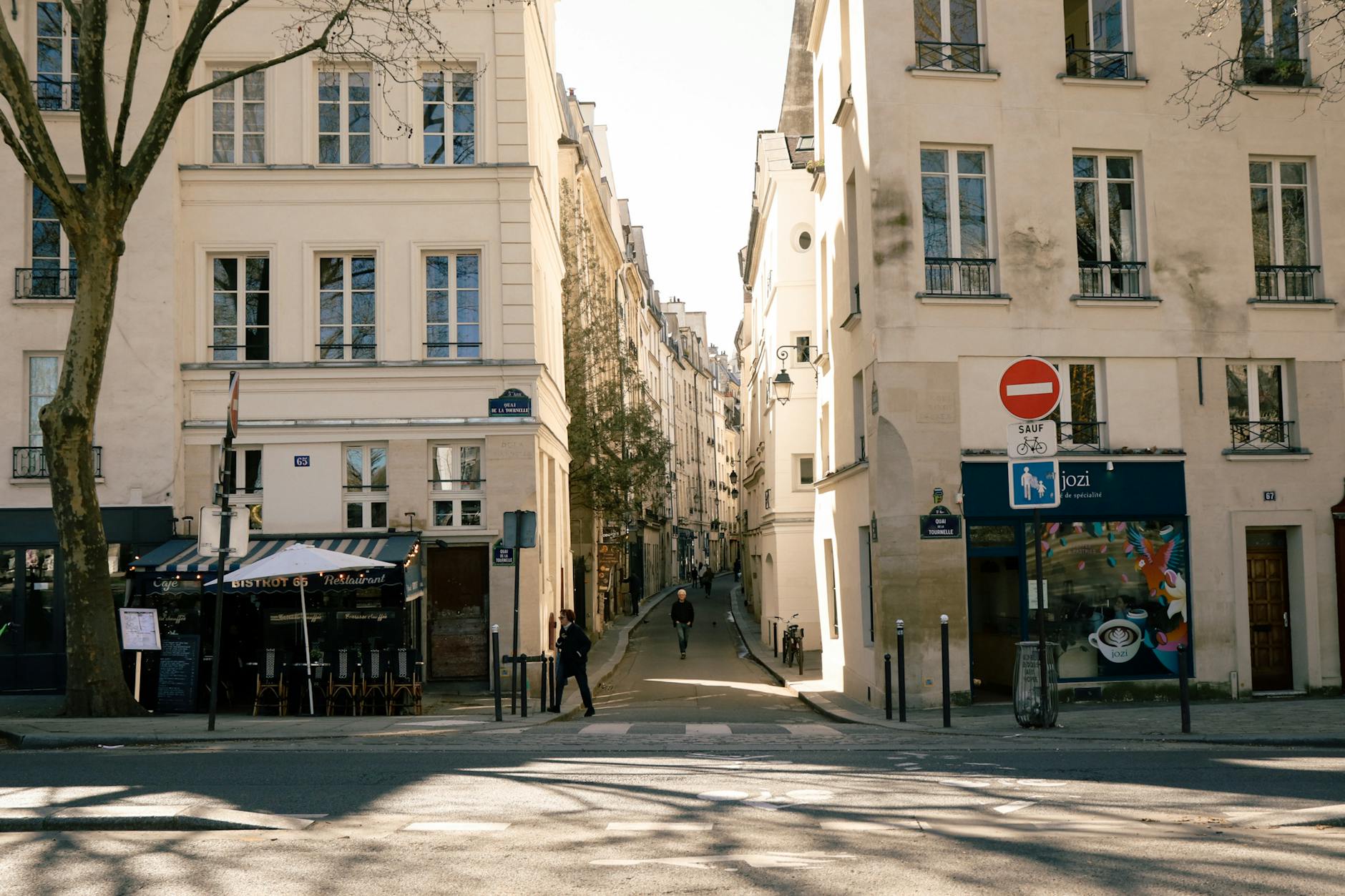
The third factor is density of small pleasures. Roughly 12,000 cafes, 400 bakeries, and 200 wine bars sit inside the ring road, which means a romantic walk is never more than a five-minute detour from a chair and a shared glass. Any corner can become a stop. The walk turns into a conversation with the city, broken up by small indulgences and never hurried.
Route 1: Trocadero to Eiffel + Champ de Mars Picnic
Start, path, and pacing
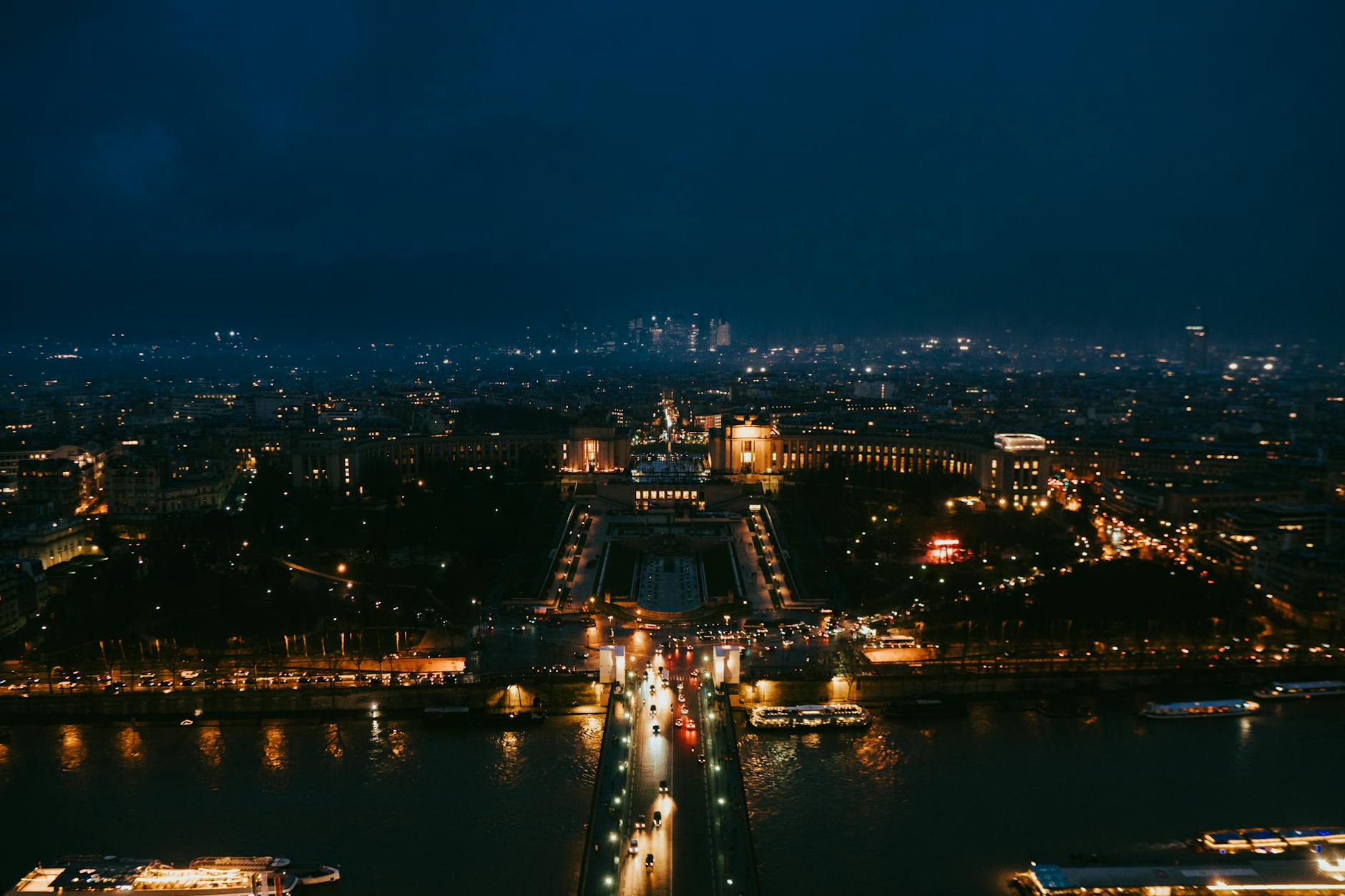
Start on the Right Bank at the Trocadero plaza. The wide esplanade between the two curving wings of the Palais de Chaillot gives you the single most photographed view in the city: the Eiffel Tower filling the horizon across the river, framed dead-center by gilded statues. Take that shot first, while you have the energy and the angle, then head down the shallow staircase past the Trocadero Gardens toward the Pont d’Iena.
Cross the Pont d’Iena slowly. Halfway over, stop at the railing on the upstream side. The tower is now directly above you and the Bateaux Mouches slide past at eye level. On the Left Bank, walk straight under the tower and look up through the lattice at the iron ribs converging 324 meters overhead. From the base, keep going south down the Allee Adrienne Lecouvreur into the Champ de Mars, the long lawn that runs to the École Militaire.
Highlights, distance, and the picnic finish
Figure roughly 1.5 kilometers and sixty minutes at romantic pace. The prime picnic spot is the south lawn of the Champ de Mars, about three hundred meters down from the tower base. Lay a blanket on the grass facing the tower, open a bottle of wine from one of the nearby caves, and watch the sky run from gold to violet to indigo behind the iron.
Best time and the sparkle moment
Leave Trocadero ninety minutes before sunset. You’ll reach the picnic spot as the golden hour peaks and the tower’s honey-colored stone starts to glow. Stay through full sunset and into blue hour, then hold out for the top of the hour after dark, when the sparkle lights fire for five minutes: twenty thousand bulbs flashing at random across the iron, the whole monument shimmering like a glass of champagne. The lawn applauds every single time, and you will too. The first sparkle runs at sunset, the last at 1am in summer and 11pm in winter. More angles in our Paris photo spots guide.
Route 2: Pont des Arts to Notre-Dame (Classic Romance)
The full path step by step
The Pont des Arts is the most famous romantic bridge anywhere. The city stripped off the love locks in 2015 to keep the railings from collapsing, but the spot is still the heart of the central Seine. Start on the Right Bank near the Louvre, step onto the wooden deck, and walk to the middle. The Institut de France anchors the Left Bank ahead, the Louvre stretches behind you, and the Île de la Cité splits the river in front.
Keep going east along the Quai du Louvre, then cross onto the Île de la Cité over the Pont Neuf, which despite the name is the oldest standing bridge in the city. Duck straight down to the Square du Vert-Galant at the island’s western tip, a small triangular park three steps below street level. From there, walk east along the island, cross the Pont au Change to the Right Bank, pass the floodlit Conciergerie, then double back over the Pont d’Arcole to land at Notre-Dame.
Distance, duration, and the blue hour finish
Two kilometers, seventy-five minutes at romantic pace. Walk this one at blue hour, roughly thirty minutes after sunset, when the sky goes deep cobalt and sets off the sodium-yellow streetlights lining the quays. Notre-Dame, reopened in December 2024 after the post-fire reconstruction, gets a soft white wash from the embankment opposite, and the flying buttresses on its eastern apse look their best at this exact hour. Finish on the south side of the cathedral at Square Jean XXIII, spire overhead, for the closing kiss.
Route 3: Pont Alexandre III + Invalides Esplanade
Start at the most ornate bridge in Paris
The Pont Alexandre III is the most ornate bridge in the city, built for the 1900 Universal Exposition and named for a Russian czar. Four gilded Pegasus statues sit atop the corner pylons, candelabra lamps line the railings, and the central arch is the lowest of any Seine bridge here. Start at the north end on the Right Bank and walk to the dead center. From that one spot you can look east toward the Île de la Cité and west toward the Eiffel Tower. Both, at once.
Cross to the Esplanade and continue
Cross to the Left Bank and you land at the foot of the Esplanade des Invalides, a five-hundred-meter lawn that runs in a dead-straight perspective line to the gilded dome of Napoleon’s tomb. The dome glows after sunset; it’s one of three monuments in the city lit with gold-toned LEDs tuned to mimic the original gilding under candlelight. Walk the full length of the esplanade, then loop back to the Seine and head west along the Quai d’Orsay to the Pont des Invalides. Cross to the Right Bank and finish in the lower gardens of the Champs-Élysées near the Grand Palais. The whole thing is 1.5 kilometers and sixty minutes.
Best time: dusk for the bridge lighting
Start at dusk so the bridge lamps come on mid-crossing. The candelabra heads light first, then the gilded statues catch warm uplights from the embankment. By the time you finish the esplanade, the dome of Les Invalides is fully lit. This is one of the most photographed routes in our Paris photo spots roundup, and it pairs naturally with our proposal spots in Paris guide, because the midpoint of this bridge is a top-three proposal location citywide.
Route 4: Saint-Germain Literary Walk
Saint-Sulpice to the cafes
Start at the Place Saint-Sulpice in front of the church, the second largest in the city after Notre-Dame, with its mismatched towers and that enormous baroque fountain. Walk north up Rue Bonaparte, the spine of literary Saint-Germain, past the antique galleries and rare-book shops. Your first real stop is the Place Saint-Germain-des-Prés, where the two most famous cafes in Paris stare each other down across the boulevard: the Café de Flore and Les Deux Magots.
Take the cafe pause at one or the other. The Flore wins on terrace people-watching; Les Deux Magots has the more theatrical interior and, frankly, the better hot chocolate. From there, continue north on Rue Bonaparte to the Seine, turn right along the Quai Malaquais, and come at the Pont des Arts from the south side.
Distance, duration, and afternoon light
Two kilometers, ninety minutes with the cafe stop. Go late afternoon, around 4pm in winter or 5pm in summer, which keeps the terrace in still-warm light and drops the river crossing into golden hour. This is the most literate of the eight, and it leads straight into our best cafes in Paris guide if you want to stretch the cafe portion into dinner. Saint-Germain after dark is one of the liveliest dinner districts in town, so book ahead at the better-known addresses.
Route 5: Marais Hidden Mansions Loop
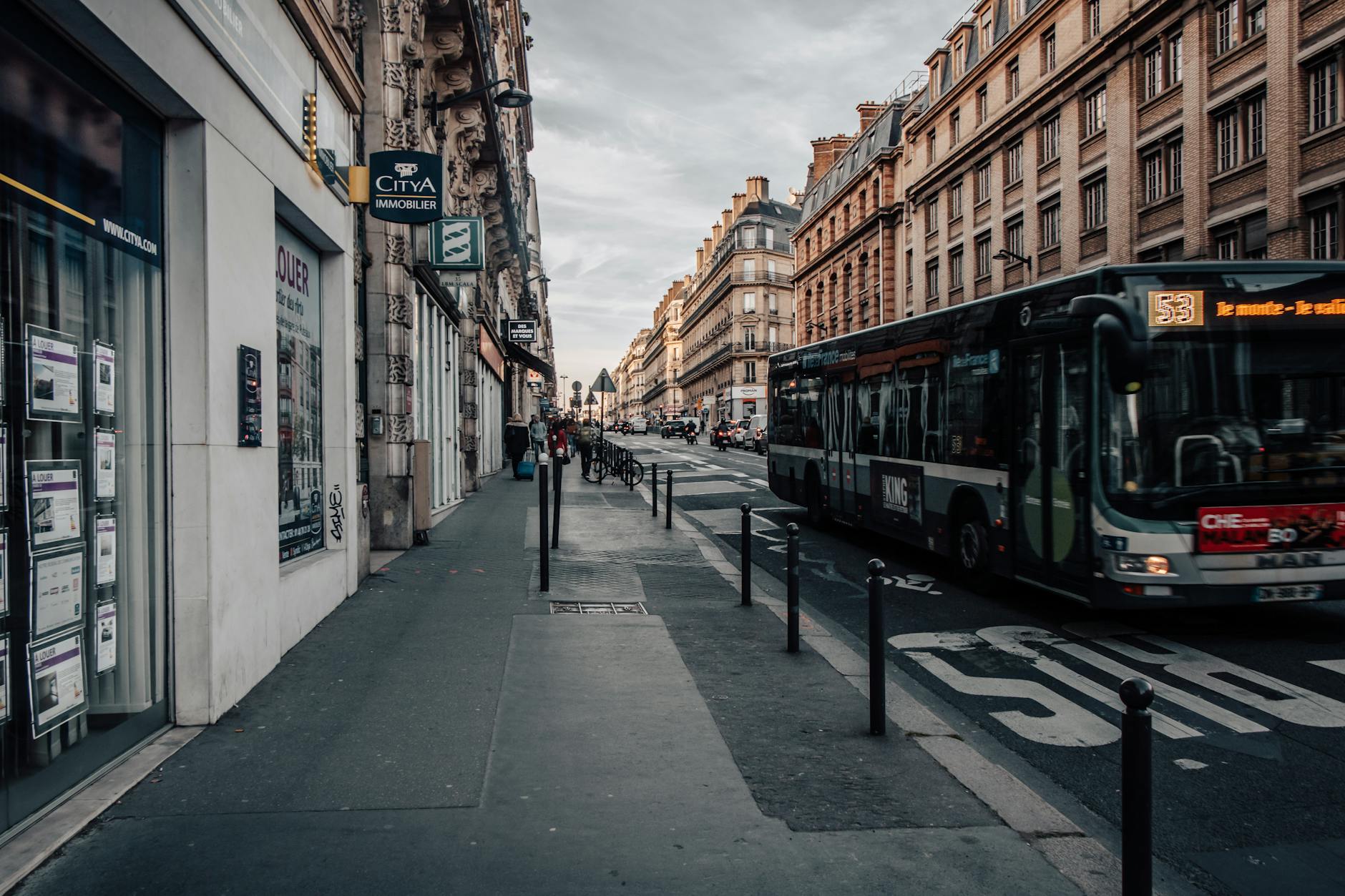
Place des Vosges starting point
The Place des Vosges is the oldest planned square in the city, finished in 1612 under Henri IV. Start under the arcades, walk the full perimeter once, then cut into the central garden and cross it diagonally to the southwest corner. From there, slip into the Maison de Victor Hugo, the writer’s former apartment, now a small free museum kept in its nineteenth-century furnishing.
Through the mansions to Hotel de Sully
Leave on the western side through the small passage beneath the Pavillon du Roi and you come out into the Hotel de Sully, a seventeenth-century mansion with a deep courtyard and an Italian-style orangery garden. It’s one of the best-kept secrets in central Paris, completely unmarked from the square. Exit onto Rue Saint-Antoine, loop north onto Rue des Francs-Bourgeois (the Marais’s main shopping street), carry on to Rue Vieille du Temple, and cut back south to close the loop.
Distance, duration, and the cobblestone night
Two kilometers, ninety minutes. Unlike the Seine-side routes, the Marais loop works at any hour of any day. The narrow cobbled streets hold their atmosphere in morning fog, afternoon sun, and especially after dark, when the boutiques shutter and the only light comes from the wine bars and the antique street lamps. In winter this is your warmest option, since the tight streets shelter you from the wind that tears down the Seine. Shoes still need to be flat, though. The cobblestones eat heels for breakfast.
Route 6: Canal Saint-Martin Stroll
Republique to the canal locks
Start at the Place de la Republique, the largest square in central Paris, and head northeast along Rue du Faubourg-du-Temple for about three minutes until the canal opens up on your left. The Canal Saint-Martin runs underground for the first 1.5 kilometers of its route through the city and surfaces right here, where the boulevards meet the Tenth Arrondissement. From the surfacing point, walk north along the towpath on either bank. The western bank, the Quai de Valmy, takes the better light in late afternoon; the eastern bank, the Quai de Jemmapes, has the better cafes.
The canal’s signature feature is its nine locks, which lift barges twenty-five meters over its 4.5-kilometer run. Watching a boat work through a lock takes about ten minutes, and locals picnic on the quays precisely because the locks are slow-moving theater. The Pont tournant at Rue Dieu, a swing bridge that rotates ninety degrees to let boats through, is the engineering set piece of the walk.
Distance, duration, and late afternoon light
Three kilometers, ninety minutes, longer if you stop for the locks. Best in late afternoon sliding into sunset, when the Tenth comes out for the evening picnic ritual. By 7pm in summer, the cobbled quays are lined three-deep with couples and small groups passing wine, charcuterie, and baguettes from the Du Pain et des Idées bakery a block away. Buy your supplies before you set off and join the ritual instead of fighting it. This is the least touristy of the eight romantic walks in Paris and the one most likely to send you home with a story about strangers you met by the water.
Route 7: Île Saint-Louis Sunset Lap
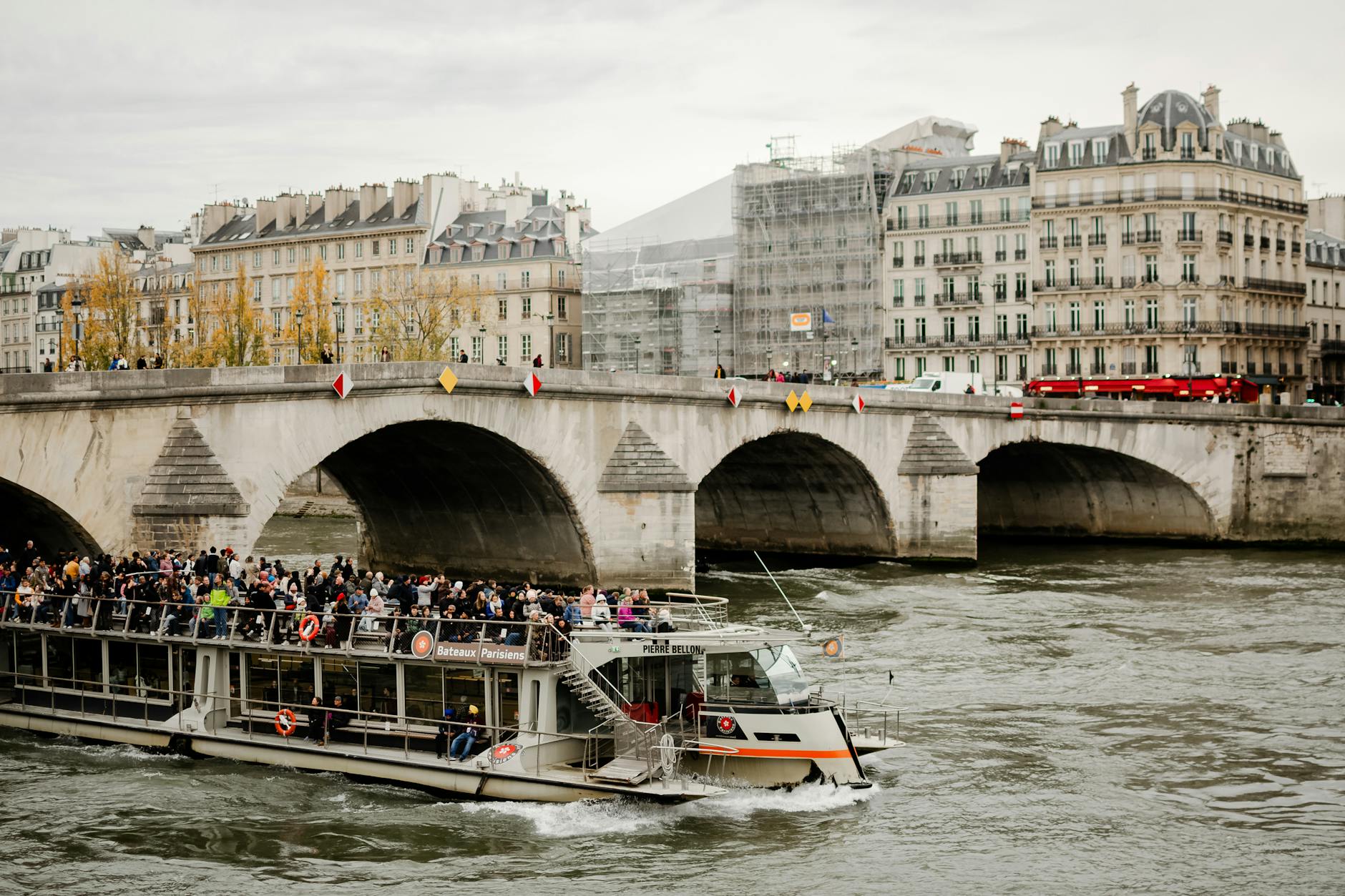
Pont Saint-Louis and the perimeter
The Île Saint-Louis links to the Île de la Cité by the Pont Saint-Louis, a short pedestrian bridge that fills with street musicians at sunset. Start there. Once you’ve taken in the view of Notre-Dame’s eastern apse, step onto the island and walk the perimeter clockwise: south along the Quai d’Orleans, east along the Quai de Bethune, north along the Quai d’Anjou, west back along the Quai de Bourbon. Two kilometers, sixty minutes.
Notre-Dame and the ice cream pause
The southern quay is the photographic payoff. From the Quai d’Orleans, the eastern face of Notre-Dame stands fully visible across the narrow channel, lit after dark and at its most dramatic in blue hour. The eastern tip of the island, reached by a small staircase down to river level, is one of the quieter make-out spots in central Paris and stays uncrowded even in summer. The pause comes mid-loop at the Berthillon ice cream shop on Rue Saint-Louis-en-l’Île, which has been turning out the most famous ice cream in Paris since 1954. Default to the salted caramel or the dark chocolate.
Best time: golden hour to blue hour transition
Start the lap an hour before sunset. It runs sixty minutes, which lands you back at the bridge right in blue hour, when Notre-Dame’s illumination turns the cathedral into a glowing anchor at the head of the island. The Berthillon stop falls in the middle and buys you a sweet break between the golden-hour photographs and the blue-hour finale. This is the shortest of the eight and the easiest to fold into dinner at one of the island’s small bistros.
Route 8: Montmartre Romantic Loop (Avoiding the Tourist Trap)
Start at Abbesses, not Anvers
Here’s the one sentence in this guide that matters most: do not start your Montmartre walk at the Anvers metro station. Anvers spits you out into the tourist trap, with souvenir shops down Rue de Steinkerque, bracelet scammers working the Sacre-Coeur stairs, and the pickpocket-dense funicular line. Get off at Abbesses instead, two stations west on Line 12, in the residential heart of upper Montmartre. It’s where any local would tell you to begin.
Place Emile Goudeau through to the rear of Sacre-Coeur
From Abbesses, walk west along Rue des Abbesses to the small Place Emile Goudeau, where Picasso lived above the Bateau-Lavoir and painted Les Demoiselles d’Avignon. The square is tiny, leafy, and almost entirely free of tourists. From there, climb north up Rue Tholoze, one of the steeper streets in the city but framed at the top by the Moulin de la Galette, the last surviving windmill in Montmartre. From the windmill, continue east on Rue Lepic, then turn right to reach the Mur des Je T’aime, the “I love you” wall at Square Jehan Rictus, where the phrase is spelled out in 311 languages across a tiled mural.
From the wall, head north on Rue Ravignan and Rue de l’Abreuvoir, the most photographed street in upper Montmartre, lined with ivied houses including the pink La Maison Rose. Pass the Clos Montmartre vineyards and approach Sacre-Coeur from the rear via Rue du Cardinal Guibert. End at Square Louise-Michel for the panorama.
Distance, duration, and the slow climb
Two and a half kilometers, two hours, including about 130 meters of elevation gain from Abbesses up to the Sacre-Coeur dome. Go late afternoon, around 4pm in winter or 5:30pm in summer, which lands the panorama from Square Louise-Michel squarely in sunset. Bring water, wear flat shoes, and plan on a slow pace. The climb pays off, but it’s not a race. For more on dodging the worst of the Montmartre tourist zone, see our Paris walking tours guide.
Bonus Route: Champ de Mars to Trocadero (Reverse Sparkle)
Run Route 1 backward at a different hour and it becomes a different walk. Start at the Champ de Mars after dinner, pass under the Eiffel Tower at the base, cross the Pont d’Iena toward the Right Bank, and climb the shallow staircase to the Trocadero plaza. Walking it in reverse puts the tower behind you on the climb, so you turn at the top and catch the whole monument framed by the curving wings of the Palais de Chaillot. It’s the postcard view, except you earned it on foot. Time the climb to crest at the top of an hour after dark and you’ll reach the plaza just as the sparkle lights fire for their five-minute run. The crowd applauds; you stand off to the side at the railing with the better view, having walked there from the far bank. Our Paris photo spots guide has the exact railing position.
Best Romantic Walks by Season
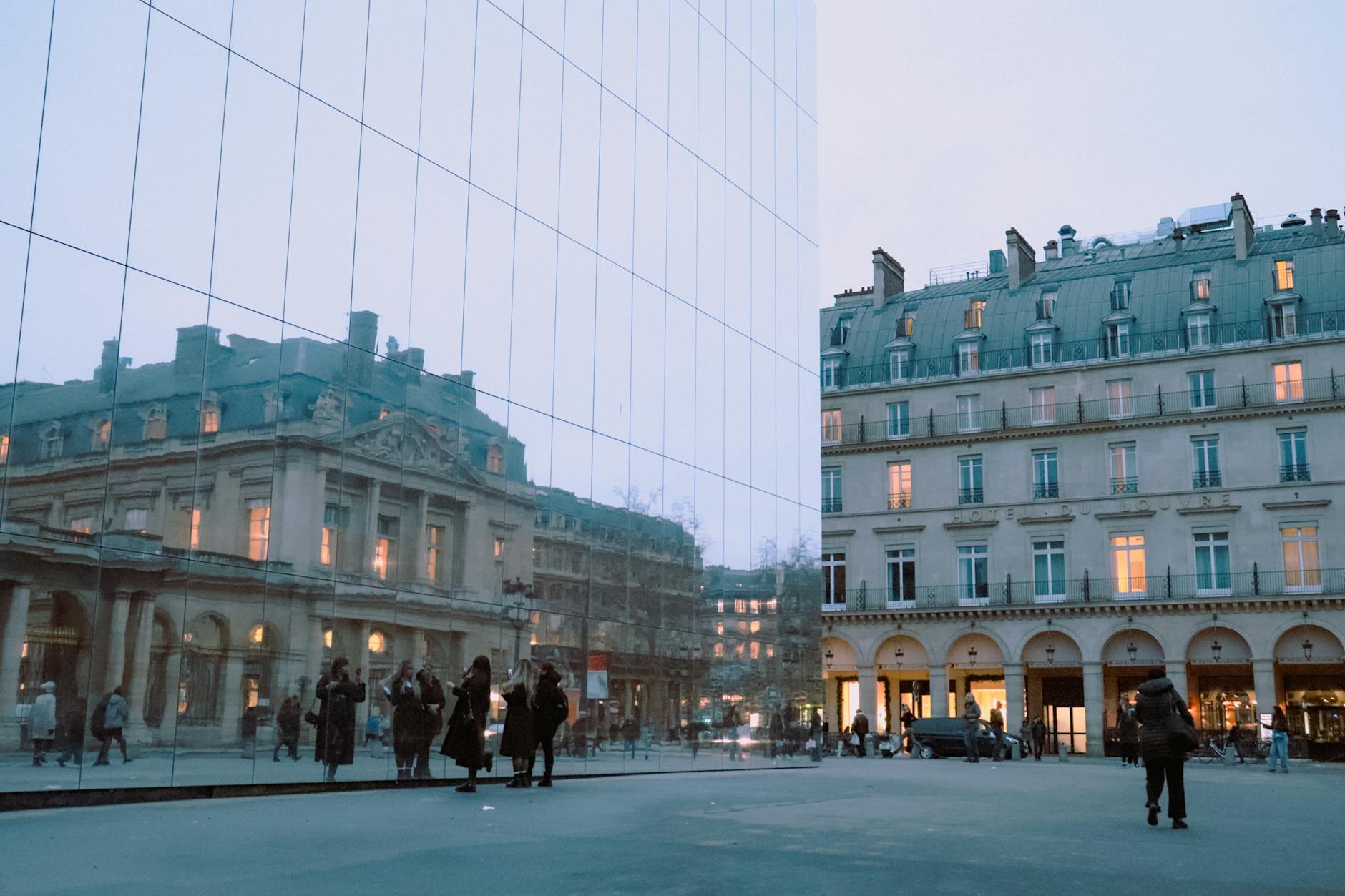
Spring (March through May)
Spring is magnolia and cherry-blossom season. The Luxembourg Gardens magnolias open in late March; the Jardin des Plantes cherry-blossom alley peaks in the first two weeks of April. Time these for mid-morning. Those green metal chairs around the Luxembourg central basin are a free romantic seat for any couple willing to spend twenty minutes reading.
Summer (June through August)
Summer belongs to the Canal Saint-Martin picnic ritual from Route 6, and to Paris Plages, the artificial beaches the city sets up along the Seine quays from mid-July to late August. The stretch between the Pont de Sully and the Pont Notre-Dame turns into sand-and-palm-tree lounges with free deck chairs, misting stations, and evening concerts. Walk it at dusk. The sun stays up until almost 10pm in late June, so you can eat dinner at 8 and still catch the sunset on the river.
Fall (September through November)
Fall sends you to the eastern hills. The Parc des Buttes-Chaumont, with its artificial cliffs, cave bridge, and the Temple de la Sibylle perched on a central island, is the most romantic park in the city come October. Pere Lachaise turns into a leaf-strewn walk through nineteenth-century funerary sculpture under a canopy of yellow and red maples, with the Chopin and Piaf graves as the standard pilgrimage stops.
Winter (December through February)
Winter is the illumination season. The Champs-Élysées Christmas lights run from mid-November through early January, turning the whole avenue into a tunnel of warm-white LEDs that drape the plane trees from base to canopy. The Marais cobblestones, lit by antique lamps that haven’t been swapped out since the nineteenth century, glow in the kind of light that turns ordinary streets into film sets. Bundle up, slow down, and lean into the cold. Winter in Paris rewards the couple that refuses to rush.
Romantic Walk Etiquette
A romantic walk is not a sightseeing tour, and the manners that serve you in a museum will sink you on the quays. Keep your conversation quiet enough that the people three meters back can’t follow the argument. The Seine acts as a sound conductor and voices carry farther than you’d guess. If you want music, share earbuds rather than blasting a speaker; the couple at the next bench didn’t pick your playlist. Step aside for photographers instead of plowing through their shots, and they’ll return the favor when you stop for your own.
Carry cash for the cafe pauses. The smaller terraces and the Berthillon ice cream shop sometimes have card-machine outages, especially on Sunday evenings, and a few twenty-euro notes in your pocket smooth over a thousand small frictions. Tip ten percent at sit-down cafes if the service has been kind, less or nothing at counter-only spots. And keep your phone pocketed between photo stops. The whole point of the walk is to look at the person next to you and the city around you, not at a screen you can scroll at home.
Cafe Pauses Along Each Route
Route 1: Carette at Trocadero
Carette sits on the eastern corner of the Place du Trocadero, directly across from the Palais de Chaillot. It’s known for its macarons and its hot chocolate, with a terrace that catches the late-afternoon sun and looks toward the Eiffel Tower across the river. Yes, you’ll pay tourist-area prices. But it’s the closest legitimate cafe seat to the Trocadero panorama, and on this route that’s worth the markup.
Route 2: Cafe Saint-Regis on Île Saint-Louis
On the Quai de Bourbon at the western tip of the Île Saint-Louis, Cafe Saint-Regis is the corner brasserie locals have been ordering from for decades. The terrace view takes in both the Pont Saint-Louis and the southern face of Notre-Dame. Stop for a glass of wine or the classic croque-monsieur during the blue-hour leg between Pont des Arts and the cathedral.
Route 3: Cafe Drouant near Madeleine
A short walk north of where Route 3 ends, Cafe Drouant on Place Gaillon hosts the Prix Goncourt literary lunch every November and serves old-Paris bistro food that feels almost ceremonial after the esplanade walk. A glass of champagne at the bar is a fitting close to the most ornate of the eight routes.
Route 4: Cafe de Flore or Les Deux Magots
The two great literary cafes have faced each other across the Boulevard Saint-Germain for a century. Sartre and de Beauvoir held court at the Flore through the 1940s; Hemingway preferred Les Deux Magots; Picasso bounced between them. Either is the right stop on Route 4. Expect a fifteen-euro coffee, and pay it without resentment. You’re buying the chair and the hundred years behind it.
Route 5: Cafe Charlot or Place des Vosges arcade
Cafe Charlot on Rue de Bretagne is the Marais brunch spot if your walk leans social. For a quieter pause, go back to the Place des Vosges arcade. The espresso runs five euros and the silence under those four-hundred-year-old arches is worth ten times that.
Route 6: Du Pain et des Idées bakery break
Du Pain et des Idées on Rue Yves Toudic is the bakery to raid for the Canal Saint-Martin picnic. The escargot pistache-chocolat is the flagship and the pain des amis is the signature loaf. Stock up here on the way to the canal, because the bakery closes early.
Route 7: Berthillon ice cream
Berthillon, on Rue Saint-Louis-en-l’Île, is the only mandated stop on Route 7. The salted caramel, the dark chocolate, and the wild strawberry are the three flavors that made the family famous after 1954. Order a double in a cone and walk the eastern half of the perimeter lap with it. The ice cream runs out right as you reach the eastern tip of the island.
Route 8: La Maison Rose or Hardware Society
La Maison Rose, the pink-painted bistro on Rue de l’Abreuvoir, has been a Montmartre fixture since the 1900s. For better coffee, the Hardware Society on Rue des Martyrs is the Aussie-style cafe locals actually use, worth a small detour for the flat white.
What to Wear and Bring
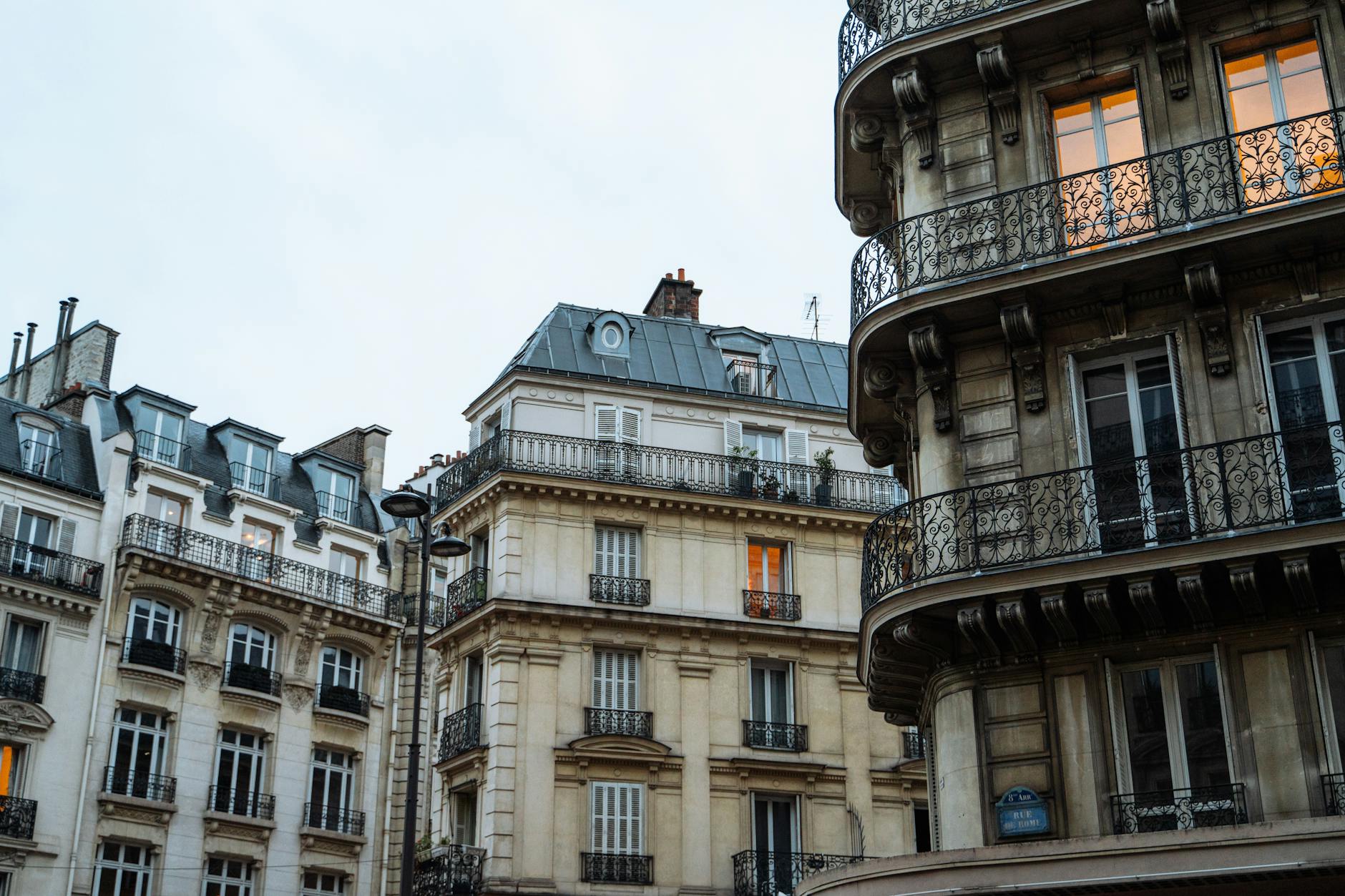
The single most important decision is the shoe. Paris cobblestones, the Marais and Montmartre especially, are uneven, often slick from the evening damp, and merciless toward heels. Flat leather sneakers, low loafers, or rubber-soled ankle boots are the right call for any of the eight routes. Pack layers no matter the season. The temperature drops sharply after sunset along the Seine quays, and a couple who set off in short sleeves can be shivering by the time they hit Notre-Dame. A scarf and a light jacket folded into a small bag are the bare minimum.
The bag should be small. Cross-body with a zipper, worn in front in any crowded spot, which includes Trocadero and the Sacre-Coeur stairs. Inside: a charged phone, a battery pack, a small umbrella, cash in small bills, and a light scarf. That’s the whole kit. For wider trip prep, pair this with our things to do in Paris at night guide.
Frequently Asked Questions
How long does each romantic walk in Paris take?
Routes run from sixty to one hundred twenty minutes at romantic pace, meaning with photo stops, conversation breaks, and at least one cafe or ice cream pause built in. The shortest is Route 7, the Île Saint-Louis sunset lap at sixty minutes; the longest is Route 8, the Montmartre loop at two hours including the climb.
Which route is best for a first night in Paris?
Route 1, Trocadero to the Champ de Mars. It’s the canonical first night: the Eiffel Tower, the Seine, and the picnic moment in a single sixty-minute loop that ends on a lawn where you can sit, rest, and let it sink in that you’re actually here. Save Routes 5 and 8 for nights two and three, once your feet have made peace with the cobblestones.
Are these walks safe at night?
All eight stay inside the central, well-lit, heavily-walked tourist core and are safe for couples after dark with normal urban awareness. Avoid empty stretches of the Seine quays below the embankment after midnight, and stay up on the street level once the cafes close. Montmartre after midnight draws a different crowd than at sunset, so wrap up Route 8 before 11pm.
Can I do these walks in the rain?
Light rain actually improves Routes 2, 5, and 7. The Seine quays and Marais cobblestones photograph beautifully when wet, and the crowds thin out fast. Heavy rain is another story; reschedule Routes 1 and 6, since both depend on sitting outside. Carry a small umbrella whatever the forecast says.
Which walk is best for proposing?
Route 3, the Pont Alexandre III. It’s the most consistently chosen proposal spot on this list, with the bridge midpoint at blue hour as the precise location. Route 1, at the base of the Eiffel Tower during the sparkle, comes in second. Our proposal spots in Paris guide has the full ranking.
Are these walks accessible with mobility issues?
Routes 1, 3, and 6 are the most accessible: flat, paved, with benches at regular intervals. Routes 5 and 8 are the least, thanks to cobblestones and elevation. On Route 7, the upper level is wheelchair-friendly, but quay-level needs staircases.
Should I use Velib bikes instead of walking?
No. The whole appeal of a romantic walk is the pace and the closeness, and bikes force you single file, which kills both. Save Velib for daytime transit and do these eight on foot.
How do I get back to my hotel after each walk?
Every route ends within four hundred meters of a metro station, and the metro runs until 1:15am on weekdays, 2:15am Friday and Saturday. After it closes, Uber and Paris taxis (G7) are reliable. And if your walk ends in central Paris, the stroll back to a hotel in the First through Sixth is its own small pleasure.
More to explore
Use these to round out your trip: