Paris in Autumn: Fall Foliage, Harvest Festivals & Cozy Vibes

Two things happen to Paris in autumn that don’t happen at any other time of year. The chestnut and plane trees along the Seine go copper and amber, peaking in the Luxembourg Gardens and Tuileries around mid-October, and the kitchens change overnight. Out go the summer salads; in come venison, partridge, wild boar, the first wild mushrooms, the season’s earliest truffles, and, on the third Thursday of November, the Beaujolais Nouveau. The galleries reopen with their big shows at the same time. If you care about photography or food, this is the season. This paris in autumn fall foliage guide walks through the peak colour dates, where to shoot, which restaurants and wine bars to book, the harvest festivals worth your time, and the practical stuff for a trip between September and November.
For the bigger picture, read it next to our pillar guide to the best time to visit Paris and our spring counterpart. The events calendar has the firm autumn festival dates as they’re confirmed.
Fall foliage — when and where
Colour peaks mid-to-late October. If you have to pick dates blind, aim for 15 to 28 October. The exact peak slides by about a week year to year, depending on how warm September runs and when the first frost lands. By early November the colour fades fast and the leaves come down; by the 10th to the 15th most trees are bare except the late oaks and the evergreen pines.
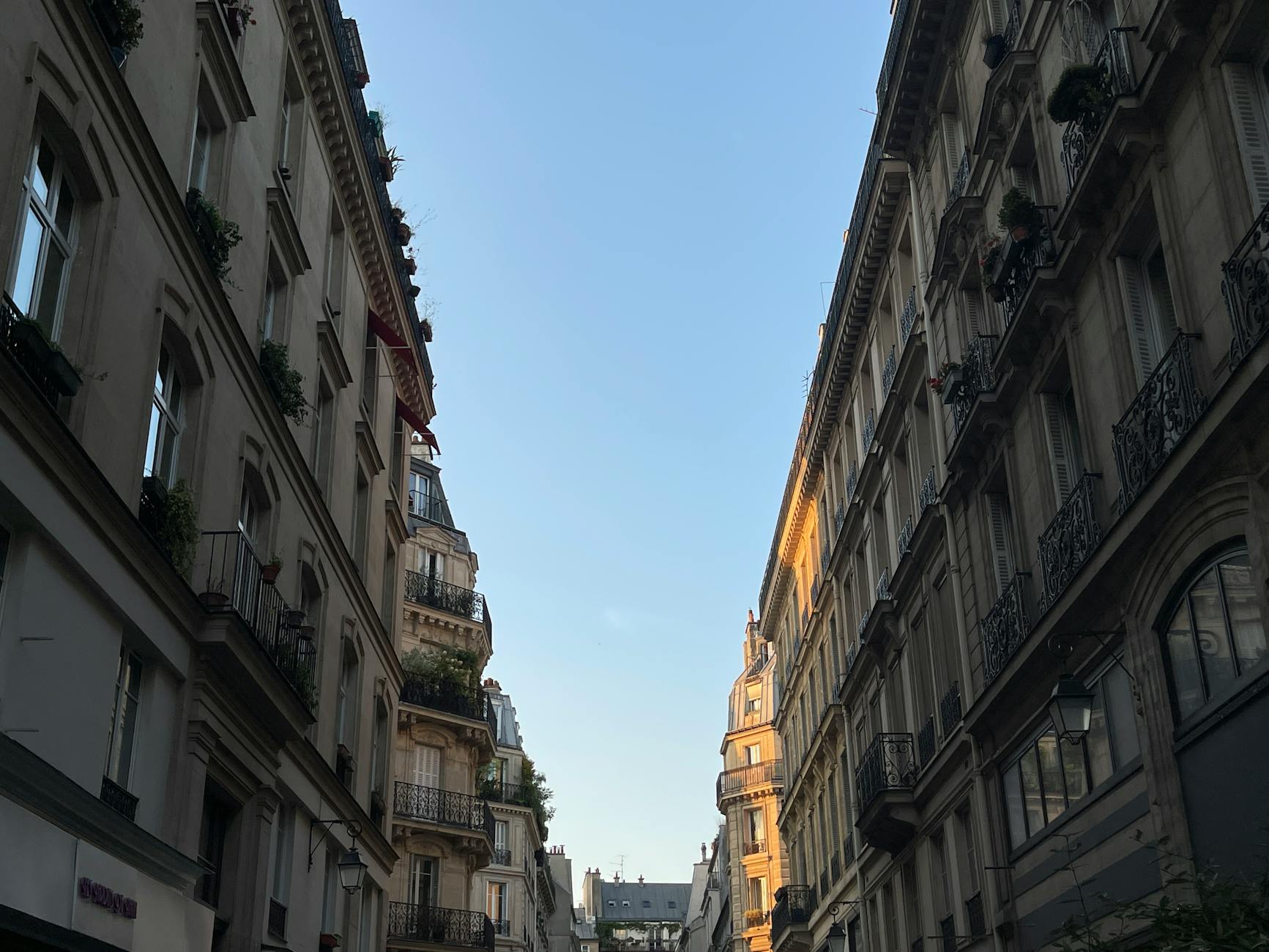
Set your expectations right: this is not New England. Paris is a city of plane trees (the platanus that lines every boulevard), chestnut, lime, and oak, and they turn gold and yellow rather than the fire-red and orange of an American sugar maple. The effect is quieter, more muted. What makes up for it is the frame. Haussmann’s limestone, the Seine, the dark zinc rooftops, all of it does work that a forest can’t. The buildings are the point as much as the leaves.
- Luxembourg Gardens — the most-photographed autumn spot in the city, and deservedly so. The main allee running from the Palais du Luxembourg to the southern gate forms a tunnel of plane trees in copper and gold; the southern statue alley is chestnut. Peak 15-25 October. Free, open daily 8 am to dusk.
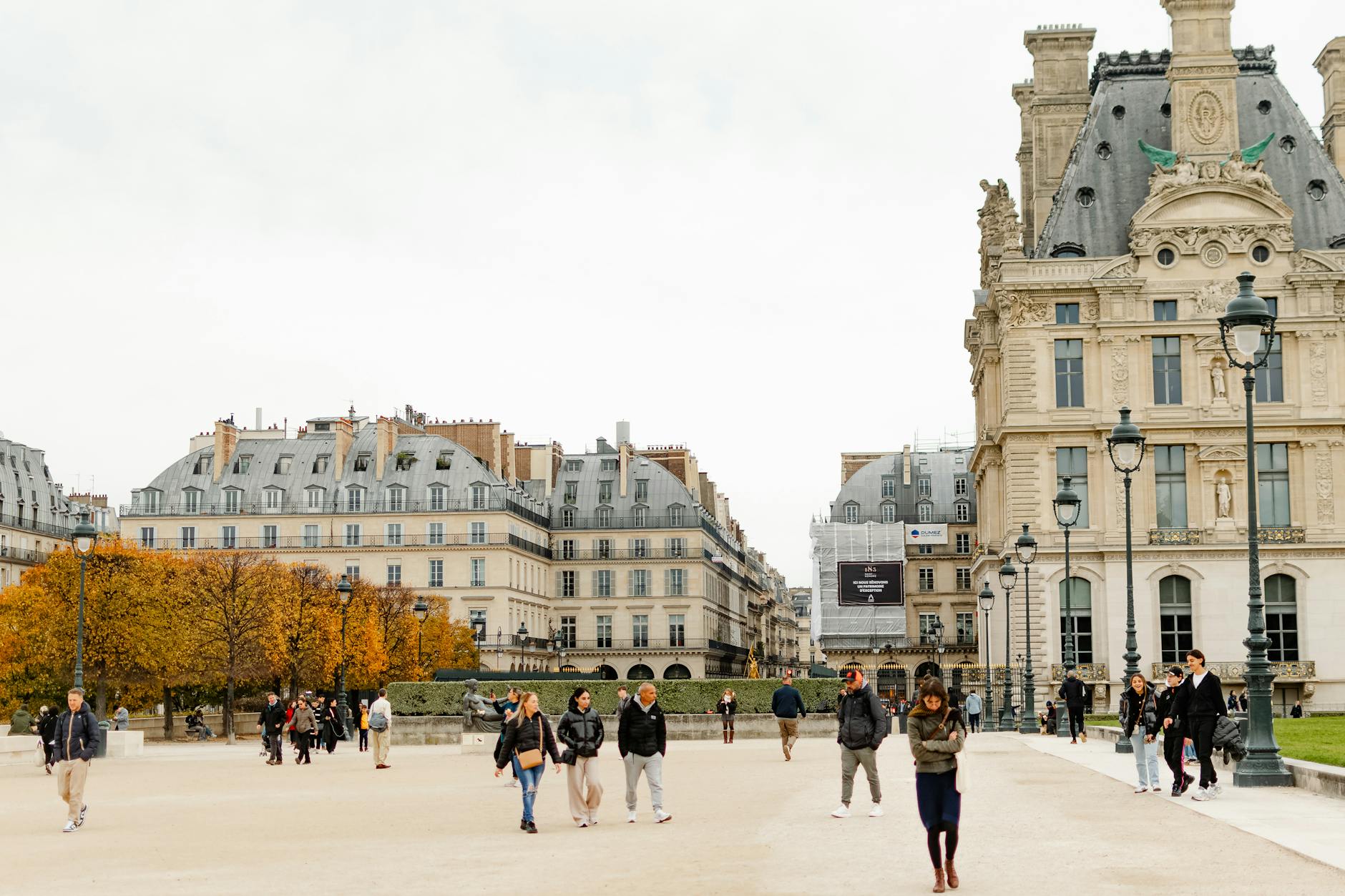
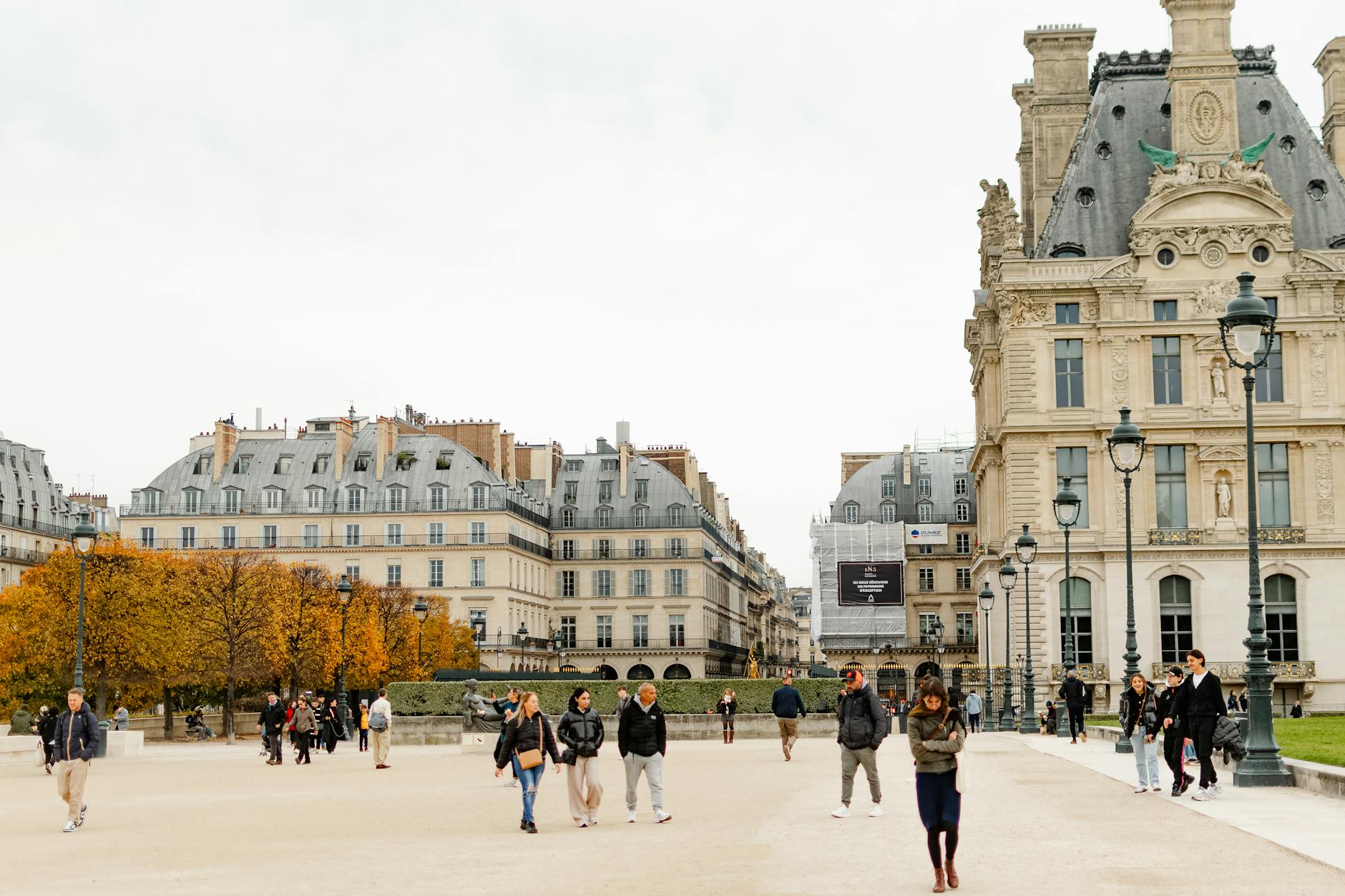
- Jardin des Tuileries — the great central alley, with Concorde at one end and the Louvre at the other, becomes a thirty-meter-wide aisle of gold by mid-October. The side allees are chestnut and lime. Peak 15-25 October.
- Parc des Buttes-Chaumont — this 19th-arrondissement park, built by Haussmann’s engineer Adolphe Alphand, has hills, a lake, and the Temple de la Sybille perched on a rock outcrop. In autumn the foliage frames the temple and doubles in the water below. Peak 18-28 October.
- Promenade Plantee (Coulee Verte) — the old railway viaduct turned linear park in the 12th. Up at that elevation the trees turn earlier than the ones at street level. Peak 10-20 October.
- Jardin des Plantes — the rose garden, the alpine garden, and the surrounding allees give you one of the most varied displays in the city. The alpine garden colours up early; the rose garden holds late blooms against the turning leaves. Peak 18-28 October.
- Bois de Boulogne (Pre Catelan and Bagatelle) — the closest thing to a country walk inside the western edge of Paris. The chateau allees at Bagatelle and the grounds around the Pre Catelan restaurant give you the deep-forest feeling. Peak 20-30 October.
- Bois de Vincennes — the eastern equivalent, much the same character. Lac Daumesnil and the Parc Floral deliver the forest atmosphere with the Chateau de Vincennes behind. Peak 20-30 October.
- Versailles gardens — the formal allees of the king’s gardens turn yellow and gold against the clipped green hedges, which is a sight the chateau interiors can’t match. Peak 20 October to 5 November. Take RER C to Versailles Chateau-Rive Gauche.
- Fontainebleau forest — if you can spare a day, this is the closest real deciduous forest to Paris and the high point of French autumn-forest photography. Train from Gare de Lyon to Fontainebleau-Avon (40 minutes), then bus or a rental bike to the trails. Peak 15-25 October.
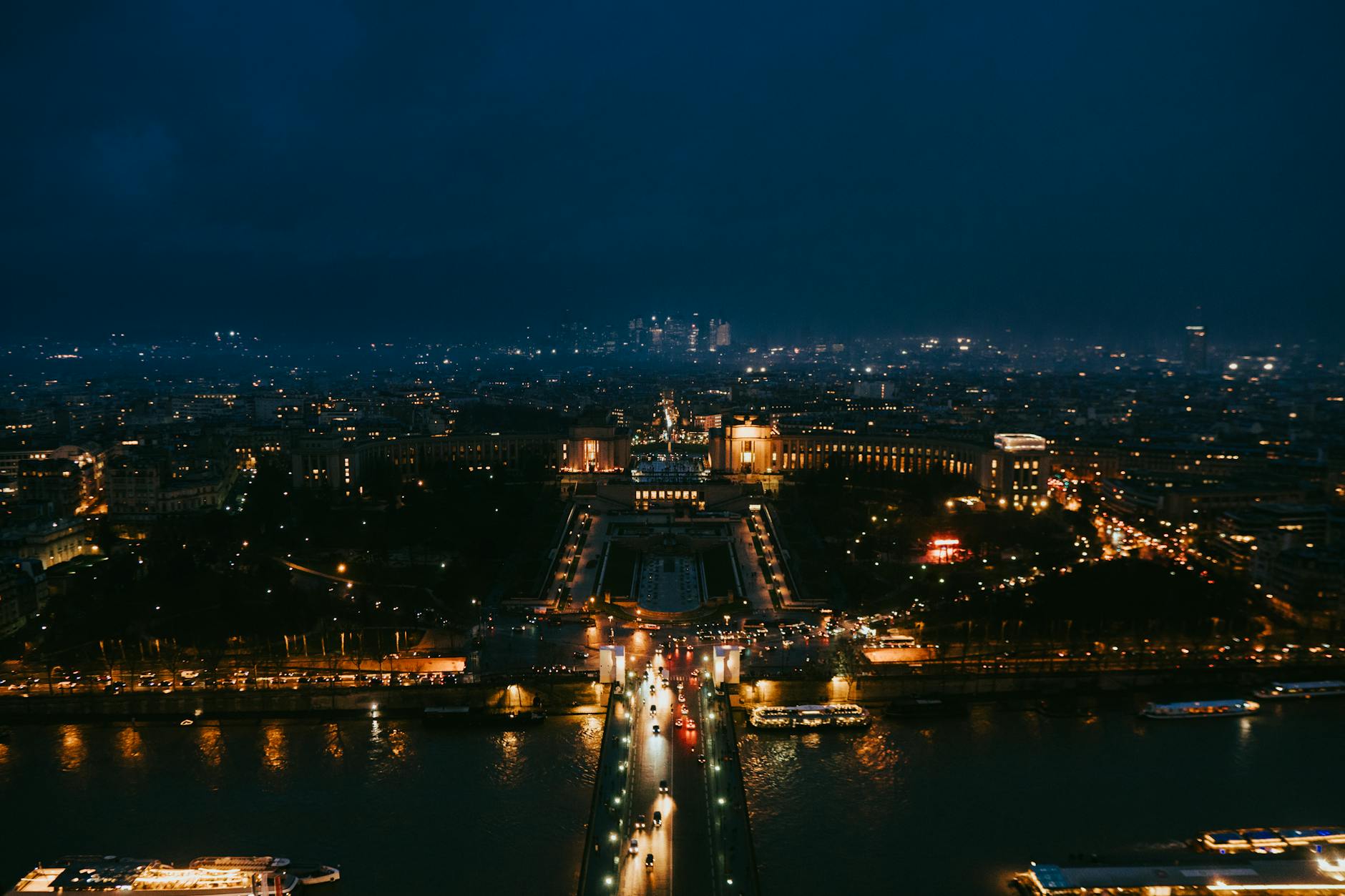
Photography tips for autumn
Start with the light. The autumn sun rides low, so golden hour stretches out far longer than it does in summer. By late October you get warm, raking light for most of the afternoon, not just the half hour before sunset. Mid-October sunrise is around 8 am, sunset around 6:50 pm until the clocks go back on the last weekend of the month, then 5:55 pm after. Plan accordingly.
On composition: leaves alone fall flat. Give them a strong architectural anchor and they sing. Shoot the Luxembourg main allee with the Palais du Luxembourg as your focal point, the Tuileries alley with the Louvre pavilions behind, the Buttes-Chaumont temple framed in branches. Resist the urge to fill the frame with foliage and nothing else; the Paris context is what separates these shots from a thousand others.
Then there’s water. The Seine, the octagonal basin in the Luxembourg, the Tuileries pools, the Buttes-Chaumont lake all hand you a mirror image of the foliage when the wind drops. Go early for still water; come back midday and afternoon for the warmth.
One counterintuitive tip: don’t write off a grey day. Overcast and drizzle are gifts for foliage. The flat light saturates the warm tones, wet leaves read richer, and on a calm October morning the fog that settles over the Seine adds depth you can’t fake. Clouds are not a reason to cancel.
Day-trip autumn destinations
If your schedule has give in it, the day trips within 60 to 90 minutes of Paris are at their best right now.
Fontainebleau — the chateau and the forest together give you the deepest autumn-forest day near Paris. Marked trails, the bouldering rocks of Bas Breau and Trois Pignons, and Barbizon, the village where the Barbizon school of painters set up. Gare de Lyon to Fontainebleau-Avon, 40 minutes.
Versailles — the chateau stays crowded in autumn, but the gardens thin out and look far better than in high summer. The Grandes Eaux Musicales fountain shows run on weekends into late October. RER C from central Paris, 40 minutes.
Chantilly — chateau, forest, and grand parkland gardens, with a fraction of the Versailles crowd and, in autumn, arguably the better-looking park. Gare du Nord to Chantilly-Gouvieux, 25 minutes.
Vaux-le-Vicomte — the 17th-century chateau that gave Louis XIV the idea for Versailles. Le Notre’s formal gardens are at their richest now. Take the train from Gare de l’Est to Verneuil-l’Etang (35 minutes), then the shuttle bus. If you can catch the candlelit Saturday-evening openings in September, do; they’re unforgettable in the literal sense.
Giverny — Monet’s garden, which peaks in late spring and summer. Autumn (it stays open until 1 November) gives you dahlias and chrysanthemums but misses the iris and water lily season. Still worth the trip if you’ve never been. Saint-Lazare to Vernon, 50 minutes, then shuttle or bike.
Autumn food — the season’s richest table
Ask a Paris cook which season they live for and most of them will say this one. The whole pantry shifts from summer’s light salads and stone fruit to something deeper.
- Game — venison (chevreuil), wild boar (sanglier), partridge (perdreau), pheasant (faisan), woodcock (becasse), and hare (lievre) all come in from early October. Late September onward, menus run chevreuil with poivrade sauce, sanglier with chestnuts, faisan with green cabbage. This is the cooking to chase.
- Wild mushrooms — chanterelles (girolles), porcini (cepes), and black trumpets (trompettes-de-la-mort) hit their peak September through November. Bistros put them in risottos, fold them into omelettes, toss them through cream pastas.
- Truffles — the white truffle of Alba shows up in late October; the black Perigord truffle (Tuber melanosporum) follows in early December. Both run strong through mid-March. Expect truffle dishes at 80-150 euros each when the season peaks.
- Oysters — the old rule says eat them in the months ending in -r, September through April, and it holds up. The autumn oysters from Cancale, Marennes-Oleron, and Belon are at their best, and the brasseries (Le Stresa, Bofinger, La Coupole) start building seafood platters from October.
- Chestnuts — roasted chestnuts (marrons grilles) turn up on street corners and at markets from late October, and the desserts they become (Mont Blanc, marron glace) are an autumn-winter Paris signature.
- Pumpkin and winter squash — potimarron (Hokkaido pumpkin), butternut, courge muscade, worked into soups, gratins, and risottos.
- Apples and pears — Reine de Reinette and Belle de Boskoop apples for cooking, Conference and Williams pears for everything else. Tarte Tatin and the pear-and-blue-cheese pairing are the seasonal classics to order.
Beaujolais Nouveau — the third Thursday of November
Beaujolais Nouveau lands on the third Thursday of November (19 November in 2026), and it unofficially kicks off the wine-and-restaurant winter. The wine, Gamay from the Beaujolais region, made and bottled within two months of harvest, is light, fruity, and deliberately young. Quality swings hard from producer to producer.
Release night and the weekend after are a genuine city ritual. Bars and bistros tape “Le Beaujolais Nouveau est arrive” in their windows, restaurants build Beaujolais menus, and the wine bars (Le Verre Vole, Pas de Loup, La Cave de Belleville, Le Mary Celeste) pour the leading producers by the glass.
Be warned, the serious drinkers treat it as a marketing stunt more than a wine. They’ll point you instead to the Beaujolais Crus (Morgon, Fleurie, Brouilly, Saint-Amour) and the natural wines from the region’s small growers, and they have a point. But ritual or not, the third Thursday of November is one of the warmest evenings of the Paris autumn, and worth turning up for.
Autumn events and festivals
The cultural calendar is packed from September on. The big gallery and museum shows open, fashion week takes over the end of September, the book fairs and literary salons fill October and November, and a run of food-and-wine festivals claims most weekends.
Heritage Days (Journees du Patrimoine) — the third weekend of September. Doors that stay shut all year swing open for free: the Elysee Palace (the president’s office), the Senate, the National Assembly, the Hotel de Matignon (the prime minister’s residence), the full backstage at the Palais Garnier, plus dozens of embassies, ministries, and historic buildings. Get there early. The famous ones run multi-hour queues.
Paris Fashion Week — the last week of September into the first days of October (the Spring/Summer collections). For the public there are free runway screenings at the Hotel de Ville, open exhibitions, pop-up shops, and special shows at the Palais Galliera fashion museum.
Nuit Blanche — the first Saturday of October, an all-night contemporary-art crawl across the city. Museums, churches, public buildings, and outdoor installations stay open from 7 pm to 7 am, all free. Check the Paris.fr Nuit Blanche page for the lineup; the headline installations draw queues.
Salon du Vin et de la Gastronomie — a string of wine and food fairs through October and November at the Carrousel du Louvre, the Porte de Versailles, and elsewhere. Tasting tickets usually run 25-45 euros for a half-day, with producers from across France pouring and sampling.
Fete des Vendanges de Montmartre — the second weekend of October, the harvest festival of the Clos Montmartre, the little surviving vineyard on the back of the hill. Concerts, a parade, tastings, food stalls. Touristy, yes, but a likeable neighborhood party all the same.
Salon du Chocolat — the last weekend of October at the Porte de Versailles, the big chocolate trade show, with chocolate sculptures, tasting booths, and chef demos. Entry 14-16 euros.
FIAC and Paris Photo — the autumn international fairs. FIAC (Foire Internationale d’Art Contemporain) runs in October at the Grand Palais Ephemere; Paris Photo takes over the Grand Palais in early November. Tickets 28-45 euros. Between them, they’re the contemporary-art centerpiece of the European autumn.
Cozy autumn activities — what to do indoors
When the weather goes cold, grey, and wet in late October and through November, Paris turns inward, and honestly the indoor city beats the summer version.
Museum mornings — the crowds drop off sharply. Reservations still apply at the Louvre, Orsay, Pompidou, and Versailles, but the lines at the door shrink to almost nothing. Save grey afternoons for the smaller places: the Cluny, the Marmottan Monet, the Picasso, the Carnavalet.
Covered passages — the glass-roofed 19th-century arcades of the 2nd and 9th (Passage des Panoramas, Galerie Vivienne, Passage Jouffroy, Passage Verdeau) are made for this weather. Warm light filters through the roofs, and the little bookshops, antique dealers, and cafes are at their best when it’s grim outside.
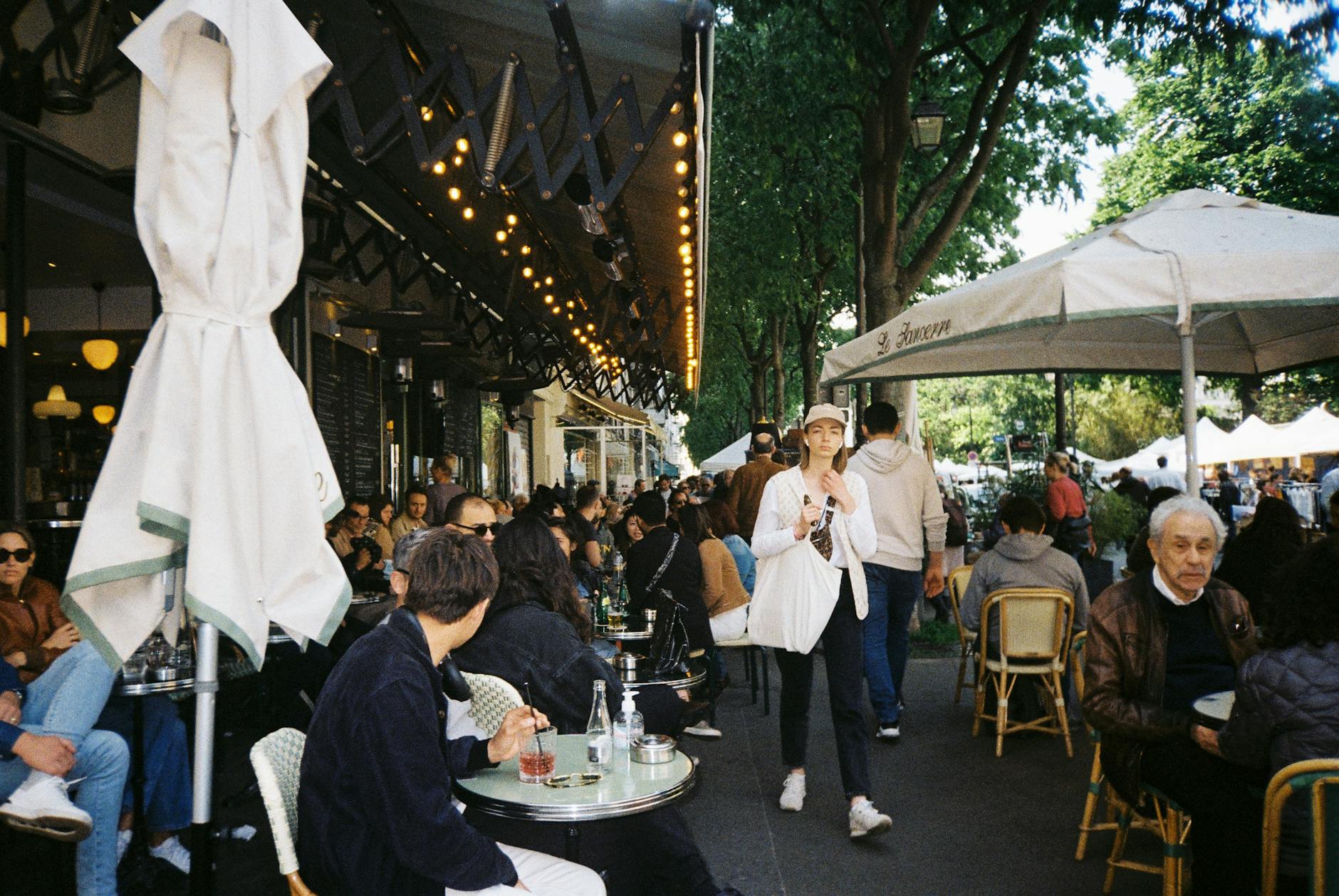
Cafe afternoons — the grand cafes (Cafe de Flore, Les Deux Magots, Cafe de la Paix, Le Procope, La Closerie des Lilas) become a destination in themselves. Take a corner, order a coffee, and stay for two hours with a book or a laptop. They’re calmer than in summer, and nothing looks more Parisian than rain running down the window beside you.
Bistro lunches — the set-price lunch (entree, plat, dessert, 25-35 euros) is the everyday French meal, and right now the bistros are pushing their best game and mushroom dishes. The classics (Le Comptoir du Relais, Chez Janou, Le Petit Marche, Allard) and the modern crowd (Septime, Frenchie, Clamato) all swap in autumn menus.
Wine bars — this is their season. The natural-wine and small-producer rooms (Le Verre Vole, Pas de Loup, La Buvette, Le Bistrot du Sommelier) rotate by-the-glass lists with the calendar. Order charcuterie, cheese, and a few small plates and settle in.
What to wear in autumn
Layers, always. A Paris autumn day routinely swings 10 degrees Celsius from morning to afternoon, and flips fast when the wind turns or rain blows in.
- September — mild, 14-22 Celsius. Bring a light jacket or blazer for mornings and evenings, t-shirts and long sleeves, a light scarf, walking shoes. Pack sunglasses; the autumn sun still has bite.
- October — cool, 10-17 Celsius, and turning grey. Bring a trench or wool jacket, a sweater or fine-knit cardigan, a scarf, waterproof shoes, and an umbrella.
- November — cold and damp, 6-11 Celsius. Bring a proper winter coat (the trench works), a warm sweater, a scarf, gloves for the colder days, waterproof leather shoes or boots, and an umbrella every single day.
A word on looking the part. The trench is the autumn uniform here, the scarf is non-negotiable, and the boots come out around mid-October. Locals lean earth tones (camel, brown, dark green, navy) with one hit of colour, classically a red or burgundy scarf. Leave the bright white tourist sneaker at the hotel. The city dresses up in autumn.
Weather realities
Here are the numbers. September averages 14-22 Celsius with 8 rainy days; October, 9-17 Celsius with 9 rainy days; November, 5-11 Celsius with 11 rainy days. Paris rain tends to come as light-to-moderate showers, not all-day deluges, so it rarely kills an outdoor plan outright. It does, however, reward planning.
Then there’s the cloud. October and November bring long grey stretches and runs of overcast days. Photographers love it for the soft light; sun-chasers find it harder going. Build flexible itineraries that can pivot between indoors and out depending on what the morning hands you.
And the wind, which is really the season’s signature. The Seine valley funnels gusts in from the west and northwest, and the boulevards channel them straight through the center. A wind-cutting outer layer (a trench, a wool overcoat) handles it far better than one thick, soft layer ever will.
Autumn romantic itinerary — a couples weekend
Friday evening: dinner at a Marais bistro running an autumn menu (Chez Janou, Robert et Louise, or Le Petit Marche), then a walk to Le Perchoir Marais for rooftop cocktails (open through October).
Saturday morning: pastries at Du Pain et des Idees or Tout Autour du Pain, then straight into the Luxembourg Gardens for the foliage while the light is good.
Saturday afternoon: lunch at a 6th-arrondissement bistro (Le Comptoir du Relais, Allard), then the Musee d’Orsay or the Musee Rodin. The Rodin garden in autumn is something else.
Saturday evening: an aperitif under glass in a covered passage (Galerie Vivienne, Passage des Panoramas), then dinner at Septime, Le Servan, or Clamato. Book three weeks out.
Sunday morning: the Marche des Enfants Rouges for the autumn produce and a coffee from one of the market stalls.
Sunday afternoon: the Promenade Plantee for the view from up high, then down to the Marche d’Aligre for a last wander before you head home.
Frequently asked questions
When does autumn foliage peak in Paris?
Mid-to-late October, with the sweet spot usually 15-28 October. It shifts by a few days from one year to the next. By early November the colour fades and the leaves drop.
Is autumn or spring better in Paris?
Both are excellent, and it comes down to what you’re after. Spring brings cherry blossoms and longer days; autumn brings golden foliage, the gallery season, and the food calendar at full tilt. Photographers tend to take autumn, garden-lovers tend to take spring. And autumn, especially November, is the cheaper trip.
Does Paris get cold in November?
It does. Daytime runs 6-11 Celsius, nights 3-7 Celsius. Pack a warm coat, scarf, and gloves for the colder weeks. It’s perfectly fine for sightseeing, just not for sitting outdoors for long without a heated terrace.
Are the museums quieter in autumn?
Yes, noticeably so from mid-October on. The Louvre, Orsay, and Pompidou still fill up at peak hours, but the queues are shorter and the galleries far less packed than in summer.
What is the cheapest autumn month?
November, one of the cheapest months of the whole year for hotels and flights. October sits in the middle; September is actually a peak, on a par with May.
Final thoughts
Autumn is the season for people who already know Paris and want it at its best: the photography richest, the food at full strength, the museums calmest, the cultural calendar fullest. Come late September through October for the best mix of weather, colour, and events; come in November for the low prices and the cozy, lamp-lit version of the city. The Luxembourg Gardens gone gold at sunset in mid-October. A long bistro lunch and a glass of Beaujolais Cru on a grey November Sunday. The Buttes-Chaumont temple ringed in copper trees. Book the November dates if the budget is tight, the October dates if it isn’t, and bring the trench either way.
Keep reading
Use these to round out your trip: