Jardin des Plantes: Gardens, Menagerie and Natural History Museum
A royal herb garden, a revolutionary zoo and a hall of marching elephants, most of it free.
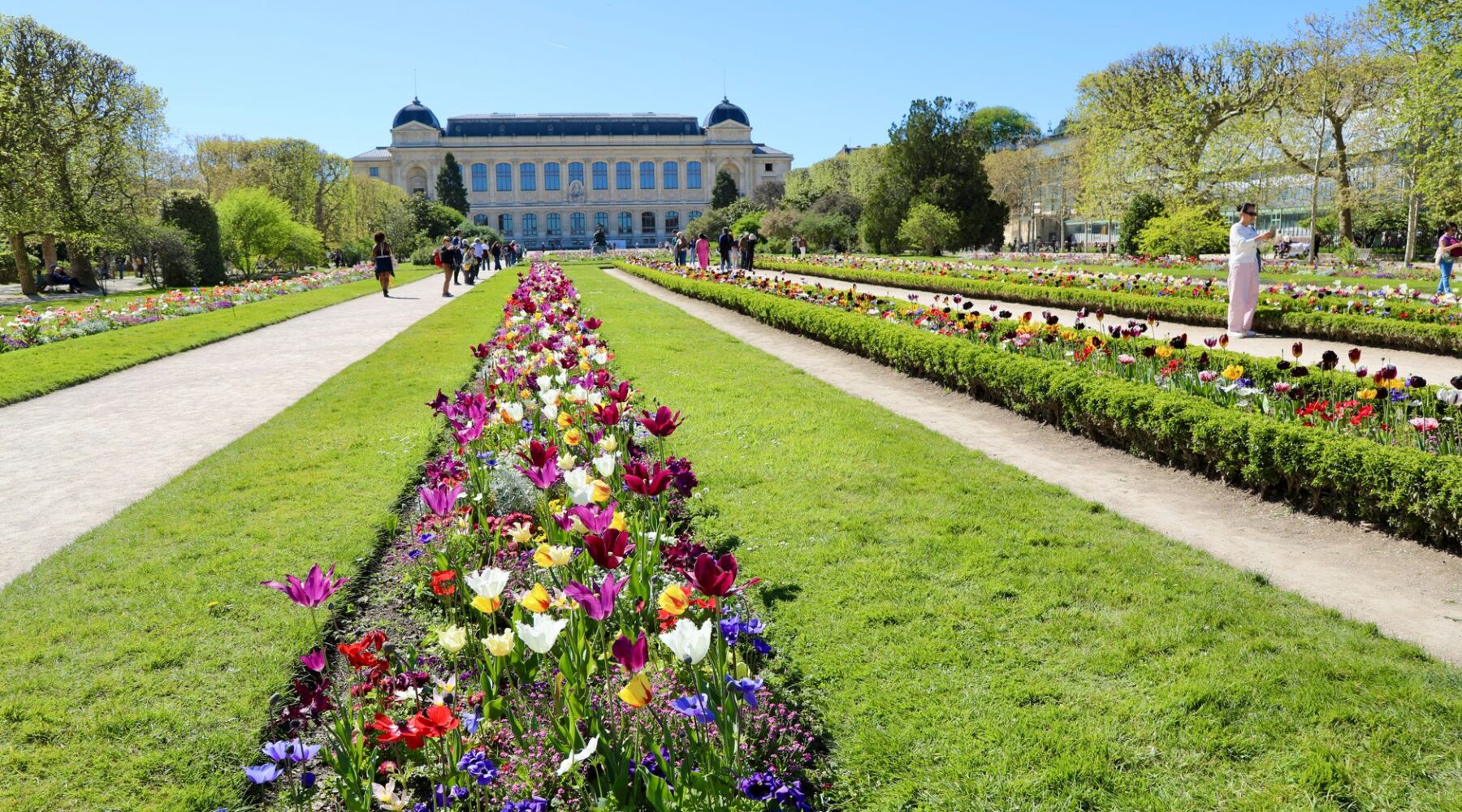
Walk in from the Seine end on a spring morning and the Jardin des Plantes looks like a formal French garden: long avenues of plane trees, beds of tulips laid out in stripes, a grand building at the far end. It takes a while to realise how much else is going on. Behind the hedges there are glasshouses full of rainforest, a zoo founded during the Revolution, a hall of stuffed elephants and giraffes marching in procession, a cedar planted in 1734, and a botanical school garden where thousands of plants grow in labelled rows. The jardin des plantes paris is part park, part science museum and part living history, and it’s one of the best half-days in the city for anyone travelling with children.
This guide covers what to see in the free gardens, which paid attractions are worth the money (and which aren’t), current prices and hours, how to combine it with the Latin Quarter, and what to do nearby. Prices were checked with the museum in September 2026. They change from year to year, so treat them as the right order of magnitude.
The Jardin des Plantes at a glance
| What | Price | Hours |
|---|---|---|
| The gardens | Free | From about 7.30–8am to dusk; closing ranges from about 5.30pm in winter to 8pm in summer |
| Grande Galerie de l’Évolution | €13; €10 reduced; €16 with the temporary exhibition | 10am–6pm, closed Tuesdays |
| Ménagerie (zoo) | About €13; under-3s free | 10am–6pm to 25 October 2026 (6.30pm Sundays); 10am–5pm from 26 October |
| Grandes Serres (glasshouses) | About €9; €7 reduced | 10am–6pm, closed Tuesdays |
| Galerie de Paléontologie | — | Closed for renovation until 2027 |
Under-3s go free to the galleries, and so do EU residents under 25 and students, which makes the Grande Galerie unusually cheap for many young visitors. Prices checked September 2026.
Getting there: Metro Jussieu (Lines 7 and 10), Place Monge (7), Censier-Daubenton (7) or Gare d’Austerlitz (5, 10 and RER C). The garden sits in the 5th arrondissement, between the Latin Quarter and the Seine.
A royal herb garden that became a museum
The Jardin des Plantes began in the 1630s as the Jardin royal des plantes médicinales, a garden of medicinal herbs founded under Louis XIII by his physician Guy de La Brosse. It opened to the public in 1640, making it one of the oldest public gardens in Paris, and it quickly became a centre for teaching botany, chemistry and anatomy outside the control of the university.
Its golden age came in the 18th century under the naturalist Georges-Louis Leclerc, Comte de Buffon, who ran the garden for nearly fifty years and doubled its size. In 1793, during the Revolution, it became the Muséum national d’Histoire naturelle, which still runs it today. A year later the Ménagerie was founded, stocked in part with animals from the royal menagerie at Versailles. Through the 19th century, scientists here, including Lamarck and Cuvier, laid the foundations of modern biology and palaeontology.
That history is visible everywhere you walk, which is part of the pleasure. It is a working scientific institution as much as a park.
The free gardens
You can spend a very enjoyable couple of hours in the Jardin des Plantes without buying a ticket for anything.
The formal parterres
The central part of the garden, running from the Place Valhubert by the Seine up to the Grande Galerie, is a long formal space of lawns and flowerbeds between two avenues of plane trees. The beds are replanted each season, with bulbs in spring and extravagant displays of dahlias, zinnias and cosmos in late summer. This is the view that appears on postcards, and it’s especially lovely in April and May.
The botany school garden
On one side of the parterres, the École de Botanique is a teaching garden where thousands of plant species grow in neat rows, grouped by family and labelled with their Latin names. It’s a quiet, oddly absorbing place even for people with no interest in botany, and for gardeners it’s a treasure trove.
The alpine garden
Sunk below ground level to create a sheltered microclimate, the Jardin alpin holds plants from mountain ranges around the world, from the Alps and the Pyrenees to the Himalayas, arranged among rocks and paths. It’s small, green and cool in summer, and opening days can be limited, so treat it as a bonus if you find it open.
The rose garden
Near the Rue Cuvier side, the rose garden holds several hundred varieties of roses, from old species roses to modern hybrids. It’s at its best in late May and June.
The labyrinth and Buffon’s gloriette
In the north-western corner, a wooded mound known as the Labyrinthe is crossed by spiralling paths that lead up to the Gloriette de Buffon, a small iron pavilion built in the 1780s and one of the oldest metal structures in Paris. Children love the spiral climb. On the way up you’ll pass a great cedar of Lebanon, planted in 1734 by the botanist Bernard de Jussieu. Legend says he carried the seedling from England in his hat after the pot broke. It’s almost certainly untrue, and everyone tells it anyway.
The ecological garden
A small enclosure left to develop as a natural habitat for the plants and wildlife of the Paris region, the Jardin écologique is open only on certain days and for guided visits. Look through the fence if it’s closed.
The Grande Galerie de l’Évolution
If you only pay for one thing in the Jardin des Plantes, make it this. The Grande Galerie de l’Évolution occupies a huge 19th-century iron-and-glass hall at the southern end of the garden, first opened in 1889 as a gallery of zoology, closed for decades, and reopened in 1994 after a spectacular renovation.
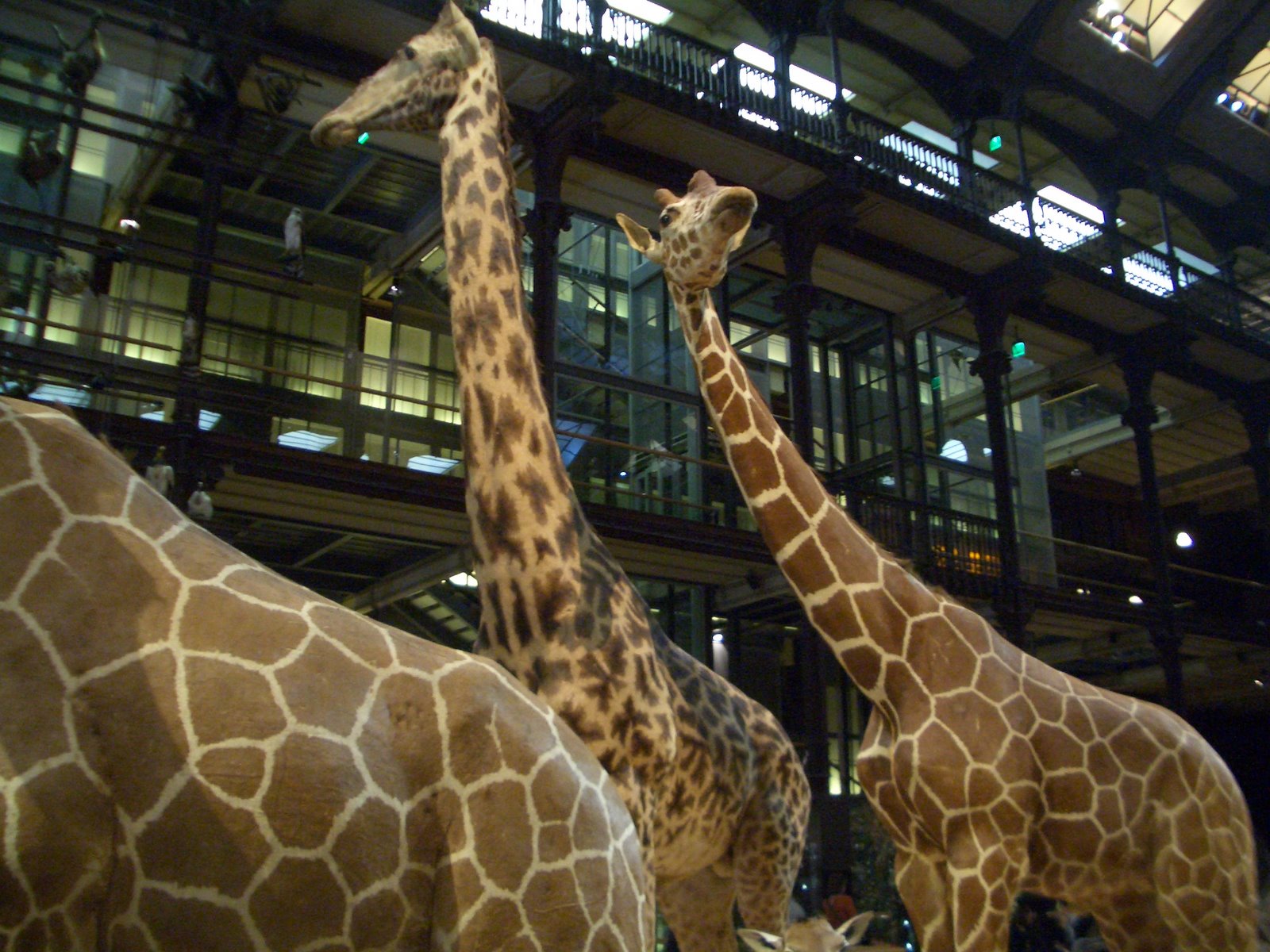
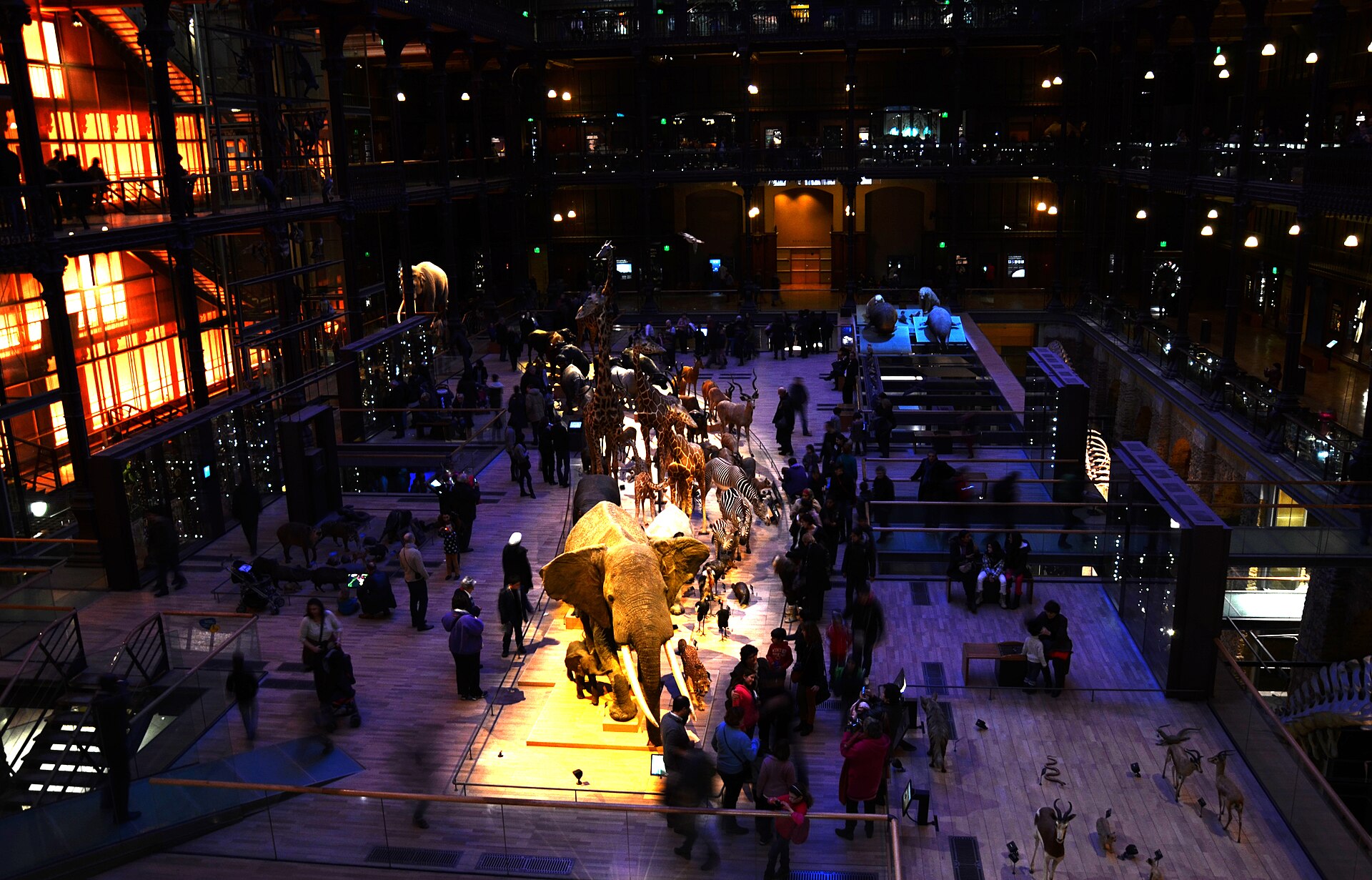
The centrepiece is a procession of stuffed African animals, including elephants, giraffes, rhinos, zebras, antelopes and big cats, marching in a column across the ground floor as though crossing a savannah. Above them, the upper balconies are filled with thousands of specimens telling the story of evolution and biodiversity: marine life, a whale skeleton, insects, birds, and the impact of humans on the natural world. The lighting shifts slowly through the day, and sometimes a recorded thunderstorm rolls through the hall.
Don’t miss the room of endangered and extinct species, a dark, wood-panelled gallery holding specimens of animals that are now critically rare or have vanished altogether. It is one of the most haunting rooms in any Paris museum.
| Ticket | Full | Reduced |
|---|---|---|
| Permanent collections | €13 | €10 |
| Permanent + temporary exhibition | €16 | €13 |
| Permanent + Revivre or the virtual reality cabinet | €16 | €13 |
| Family pass (with exhibition) | €52 | |
Reduced prices apply to visitors aged 3 to 25, among others; under-3s, EU residents under 25 and students go free. The gallery is open 10am to 6pm, last entry at 5pm, closed on Tuesdays. Buy a timed ticket online on weekends and during school holidays, when queues can be long.
Our verdict: excellent for all ages and one of the best museums in Paris for children. Allow 1.5 to 2 hours. It’s also a strong option on a wet day; see our guide to rainy-day activities in Paris.
Revivre and the virtual reality cabinet
Two add-ons use technology to bring extinct animals back to life: Revivre, an augmented-reality experience in which extinct species appear around you, and a virtual reality cabinet with immersive films about evolution. Both are well made, but they add to the cost of a family visit. The permanent galleries alone are plenty for most people.
The Ménagerie
The Ménagerie is one of the oldest zoos in the world still operating, founded in 1794, and it feels like it. The enclosures are spread through a leafy corner of the garden among historic buildings, including an 18th-century rotunda built for large animals, an old monkey house and a vivarium for reptiles. The animals are mostly small and medium-sized species, many of them rare or endangered and part of European breeding programmes: orangutans, red pandas, a few small wild cats, birds, reptiles and amphibians, among others.

The Ménagerie has some famous stories. Its most celebrated resident was Zarafa, a giraffe sent to King Charles X by the ruler of Egypt in 1827. She walked from Marseille to Paris, drawing enormous crowds all the way, lived here for nearly two decades and set off a craze for giraffe-patterned fashion and hairstyles taller than the wearer. The Ménagerie also played a part in the history of conservation: many of its animals today belong to breeding programmes for species that are rare or extinct in the wild, which is part of why the collection looks so different from a conventional zoo’s.
Tickets cost about €13 for adults, with reductions for children and free entry for under-3s. Until 25 October 2026 it opens from 10am to 6pm (6.30pm on Sundays and public holidays); from 26 October it closes at 5pm.
Our honest verdict: with children under about eight, it’s a lovely, manageable outing, small enough to see in an hour and a half with no long walks between animals. For adults on their own, it’s harder to recommend. Some of the historic enclosures feel cramped compared with modern zoos, and there are no large African animals. If you want a big, modern zoo, the Parc Zoologique de Paris in the Bois de Vincennes is the better choice; see our guide to Paris parks and gardens.
The Grandes Serres
On the southern side of the garden, the Grandes Serres are a set of large glasshouses, including a striking Art Deco rainforest house from the 1930s and an elegant 19th-century iron pavilion. They were restored and reopened in 2010, and each recreates a different environment:
- The tropical rainforest glasshouse: a hot, humid jungle with a waterfall, giant leaves and a raised walkway for looking down into the foliage.
- The desert and arid lands glasshouse: cacti, succulents and plants from dry regions of Africa and the Americas.
- The New Caledonia glasshouse: the extraordinary plant life of this French Pacific archipelago, much of it found nowhere else.
- The history of plants glasshouse: how plants evolved over hundreds of millions of years, with fossils and living “survivors” like cycads and tree ferns.
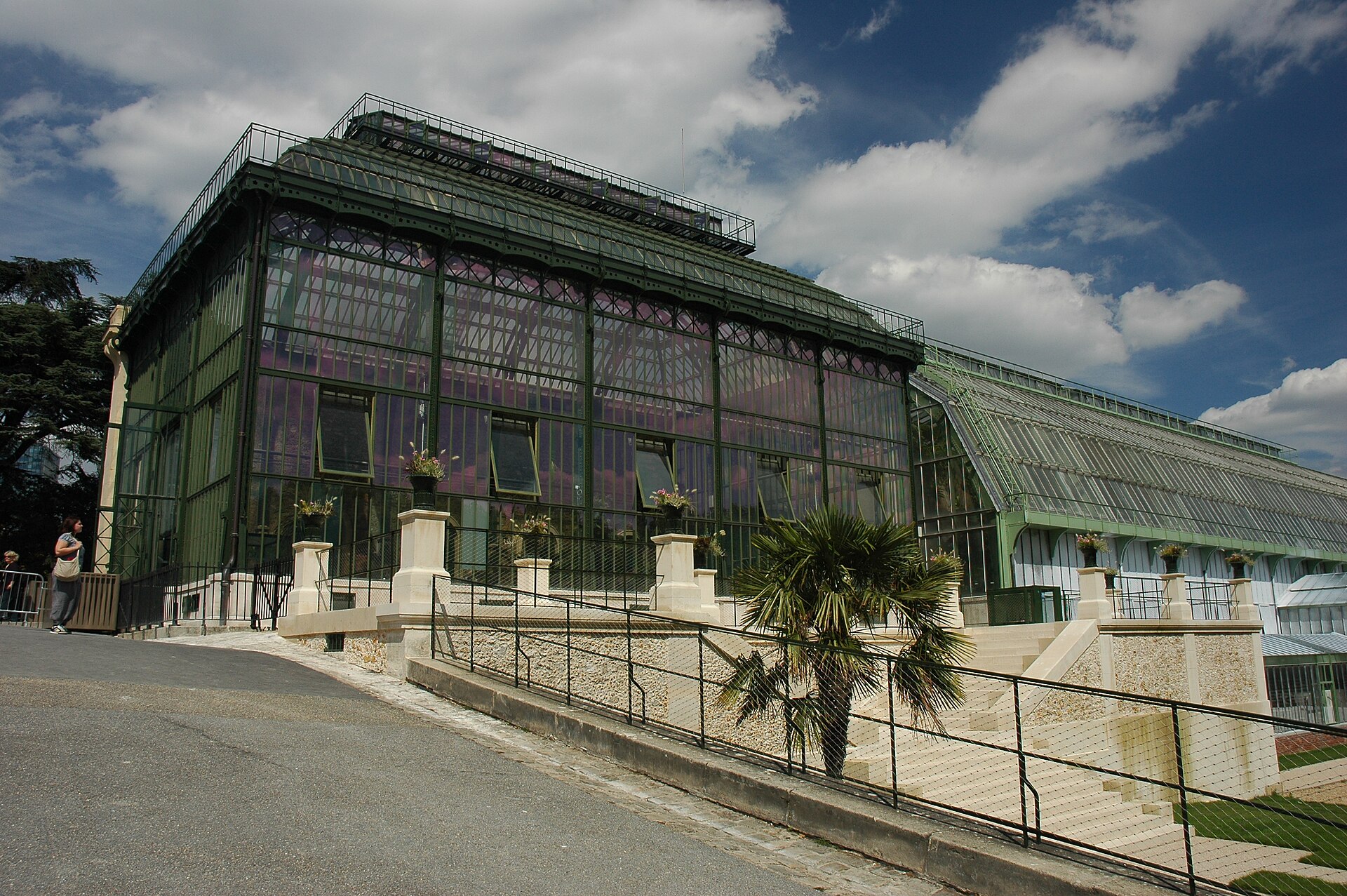
A ticket costs about €9 (€7 reduced), and the glasshouses are open 10am to 6pm, closed on Tuesdays.
Our verdict: worthwhile, especially on a cold or rainy day, when stepping into the tropical heat feels wonderful. Allow 45 minutes to an hour. In summer, the rainforest house can be very hot indeed.
The other galleries
Galerie de Paléontologie et d’Anatomie comparée
This is the gallery many people come for, and in 2026 it’s closed. The Gallery of Palaeontology and Comparative Anatomy, a wonderful late-19th-century hall filled with hundreds of skeletons arranged like a herd running towards the entrance, with dinosaur fossils upstairs, is closed for renovation until 2027. If your children are counting on dinosaurs, prepare them in advance; the Grande Galerie’s animals make a good consolation.
Galerie de Minéralogie et de Géologie
Along the side of the parterres, the Mineralogy and Geology Gallery displays giant crystals, meteorites and precious stones from the museum’s vast collection, including pieces from the French royal gem collection. It’s a specialist interest, but the giant crystals are spectacular. Check the museum’s website for current opening and ticket details.
Beyond the big three: how it fits with other Paris museums
The Jardin des Plantes galleries sit slightly outside the usual Paris museum circuit. They are run by the national natural history museum rather than the art museums, so they are not part of the standard Louvre-Orsay-Orangerie day, and the crowds are mainly French families rather than tour groups. That’s a large part of their charm. If you have already done the big art museums and want something completely different, this is the obvious choice; our overview of Paris museums puts it in context, and our guide to small museums in Paris has more places with the same unhurried feel.
With children, the garden also works well as a reward after something more demanding. A morning at a big museum followed by an afternoon of red pandas, giraffes and a spiral path to climb is a trade most children will accept. For more green space with play equipment, see our guide to Paris parks and playgrounds for children.
Which tickets are worth it?
| If you are… | Buy | Skip |
|---|---|---|
| Adults with an hour or two | The Grande Galerie | The Ménagerie |
| Families with young children | The Ménagerie and the Grande Galerie (on separate days if the children tire easily) | The add-on VR experiences |
| Gardeners and plant lovers | The Grandes Serres | Nothing; the free gardens are the highlight |
| Visiting on a wet winter day | The Grande Galerie, then the Grandes Serres | The garden walk |
| On a tight budget | Nothing: the free gardens, the labyrinth and the cedar are plenty | — |
For more museum ideas for families, see our guide to kid-friendly museums in Paris and Paris with kids.
When to visit
- Spring (April–May): the parterres are full of tulips and the cherry trees are in blossom. The best season for the gardens.
- June: the rose garden peaks.
- Late summer (August–September): the flowerbeds are at their most exuberant.
- Autumn and winter: the gardens are quieter and barer, but the Grande Galerie and the Grandes Serres come into their own.
- Tuesdays: the Grande Galerie and the Grandes Serres are closed, though the gardens and the Ménagerie are open.
- Weekends and school holidays: the Grande Galerie and the Ménagerie get busy with Parisian families. Go on a weekday morning if you can.
For what else is happening in the city in the warmer months, see Paris in spring.
Where to eat
There are café kiosks and a small restaurant inside the garden, fine for a coffee, an ice cream or a snack. For something better:
- The tea room of the Grande Mosquée de Paris, just across the Rue Geoffroy-Saint-Hilaire, serves sweet mint tea and North African pastries in a tiled courtyard shaded by fig trees. It’s one of the nicest places for a break in this part of Paris, and it’s usually busy.
- The Rue Mouffetard, ten minutes’ walk west, is one of the oldest market streets in Paris, with bakeries, cheese shops and cheap restaurants for a picnic or lunch. See our guide to Paris food markets.
- A picnic in the garden: some lawns are open for sitting in the warmer months, and the benches along the avenues are good for lunch.
Nearby: what to combine with a visit
- The Grande Mosquée de Paris, built in the 1920s, with its minaret, gardens, tea room and hammam.
- The Arènes de Lutèce, a five-minute walk away: the remains of a Roman amphitheatre from the first century, now a free public square where locals play pétanque and football.
- The Rue Mouffetard and Place de la Contrescarpe, for cafés, a lively market and old Latin Quarter atmosphere.
- The Institut du Monde Arabe, a short walk along the Seine, with its famous light-sensitive façade and views from the roof terrace.
- The Jardin Tino-Rossi, a riverside garden along the Quai Saint-Bernard with open-air sculptures, where people dance in the evenings in summer.
- The Panthéon, about 15 minutes’ walk west. See our Panthéon guide.
Our Latin Quarter guide puts all of this in context, and the Luxembourg Gardens are only 25 minutes’ walk away if you want to see both great Left Bank gardens in one day.
A half-day route
- Arrive by Metro at Gare d’Austerlitz and enter by the Place Valhubert gate near the Seine.
- Walk up through the formal parterres, stopping at the botany school garden.
- Visit the Grande Galerie de l’Évolution (1.5 hours).
- Climb the labyrinth to Buffon’s gloriette and find the old cedar.
- If you have children, spend an hour in the Ménagerie; otherwise, the Grandes Serres.
- Leave by the Rue Geoffroy-Saint-Hilaire gate for mint tea at the Grande Mosquée.
- Walk up to the Arènes de Lutèce and on to the Rue Mouffetard for dinner.
Practical tips
- Book the Grande Galerie online at weekends and during French school holidays.
- Entrances: the main gates are on the Place Valhubert (Seine side), the Rue Cuvier, the Rue Buffon and the Rue Geoffroy-Saint-Hilaire (next to the Grande Galerie).
- Accessibility: the gardens are flat and mostly accessible, and the Grande Galerie is accessible, with wheelchairs available on request. The labyrinth path is steep and not suitable for wheelchairs.
- Pushchairs are easy in the gardens and manageable in the galleries. See our guide to a stroller-friendly Paris.
- Toilets are available inside the paid attractions and at a few points in the garden.
- Dogs are not allowed in the garden.
Is the Jardin des Plantes worth visiting?
Yes, especially if you’re travelling with children, love plants or natural history, or are staying in the Latin Quarter. It’s one of the best-value days out in Paris: the gardens are free, the Grande Galerie is excellent and moderately priced, and the neighbourhood around it is full of good things to eat and see.
It’s less of a must-see than the Luxembourg if you just want a beautiful garden to sit in, and the Ménagerie is a small, old-fashioned zoo that adults without children can skip. The closure of the Palaeontology Gallery until 2027 is a real loss. But for a half-day that mixes fresh air, science and history, there’s nothing else quite like it in Paris.
Frequently asked questions
Is the Jardin des Plantes free?
Yes, the gardens are free to enter. The Grande Galerie de l’Évolution (€13), the Ménagerie (about €13), the Grandes Serres (about €9) and the other galleries charge admission. Prices checked September 2026.
What are the Jardin des Plantes opening hours?
The gardens open at about 7.30 or 8am and close at dusk, from around 5.30pm in winter to 8pm in summer. The Grande Galerie and the Grandes Serres open 10am to 6pm and are closed on Tuesdays.
Is the Paleontology Gallery open?
No. The Galerie de Paléontologie et d’Anatomie comparée is closed for renovation until 2027.
Is the Ménagerie worth it?
With young children, yes: it’s small, easy to get around and has animals like orangutans and red pandas. Adults without children may find it old-fashioned and prefer the larger Parc Zoologique de Paris in Vincennes.
How long do you need at the Jardin des Plantes?
An hour to walk around the gardens, plus about 1.5–2 hours for the Grande Galerie, an hour for the Ménagerie and 45 minutes to an hour for the Grandes Serres. A half-day covers the gardens and one or two attractions comfortably.
Which Metro station is closest to the Jardin des Plantes?
Jussieu (Lines 7 and 10) and Place Monge (Line 7) for the western gates, and Gare d’Austerlitz (Lines 5 and 10, RER C) for the Seine entrance.
Is the Jardin des Plantes good for children?
It’s one of the best places in Paris for children: the zoo, the animal parade in the Grande Galerie, the spiral climb to the gloriette and plenty of space to run around. Under-3s go free to the galleries and the zoo.
Related Paris Guides
- Paris Parks and Gardens: The Complete Guide
- Luxembourg Gardens: A Complete Visitor Guide
- The Latin Quarter Guide
- Kid-Friendly Museums in Paris
- Paris With Kids
- Rainy-Day Activities in Paris
- The Best Food Markets in Paris
- The Panthéon Guide
Photo Credits
Giraffes in the Grande Galerie de l’Évolution: Girafes de la Grande galerie de l’Évolution – Jardin des Plantes – Paris by Dinkum, CC0, via Wikimedia Commons.
The animal parade in the Grande Galerie: Grande Galerie de l’Evolution 25022013 01 by Vassil, CC0, via Wikimedia Commons.
The Grandes Serres: France IDF 75 Jardin des plantes Grandes Serres 02 by Calips, CC BY-SA 3.0, via Wikimedia Commons.
Red pandas at the Ménagerie: Ailurus fulgens – Ménagerie du Jardin des Plantes 01 by FreCha, CC BY-SA 4.0, via Wikimedia Commons.