Ile de la Cite & Ile Saint-Louis: Paris’s Island Heart
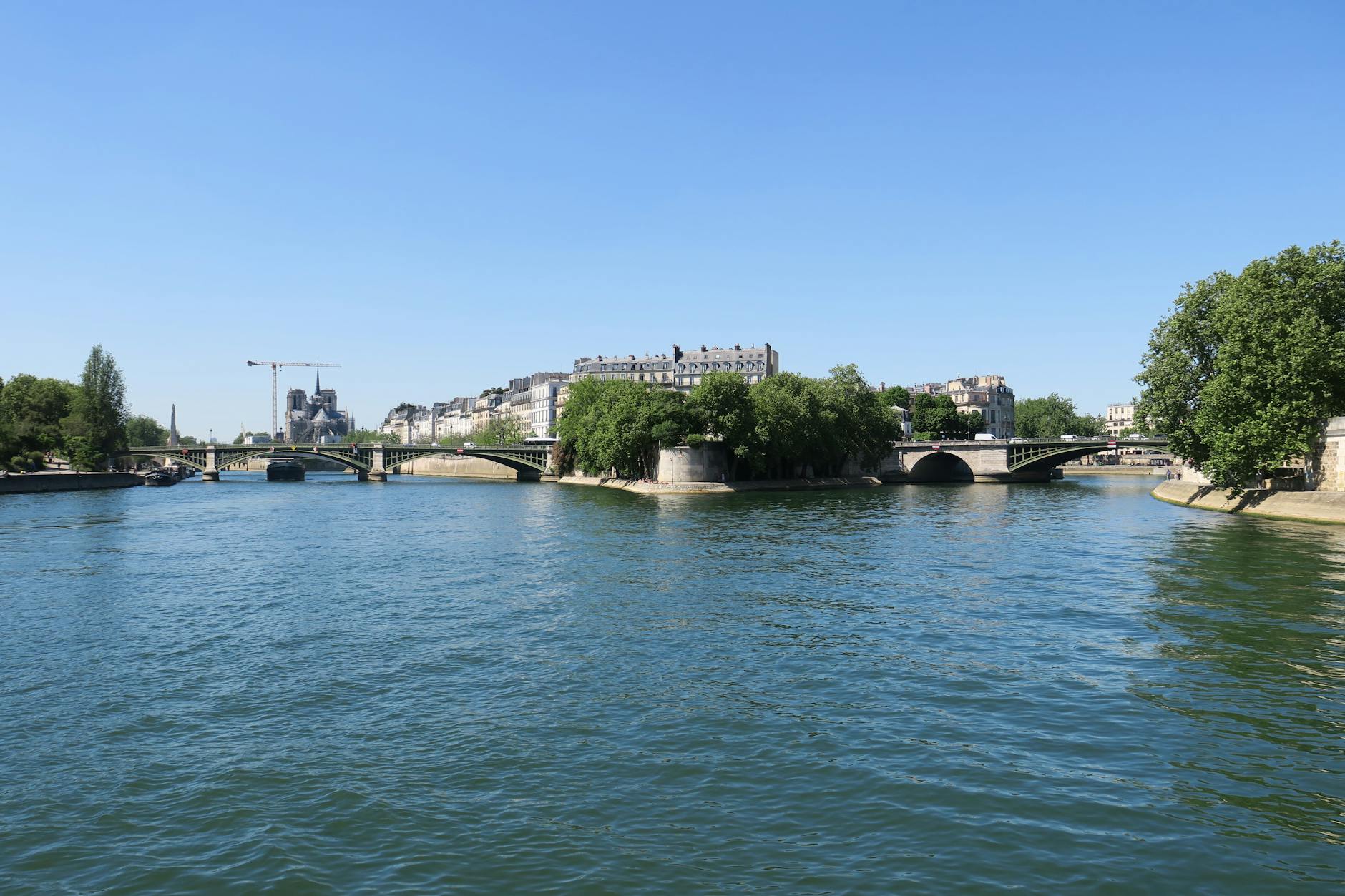
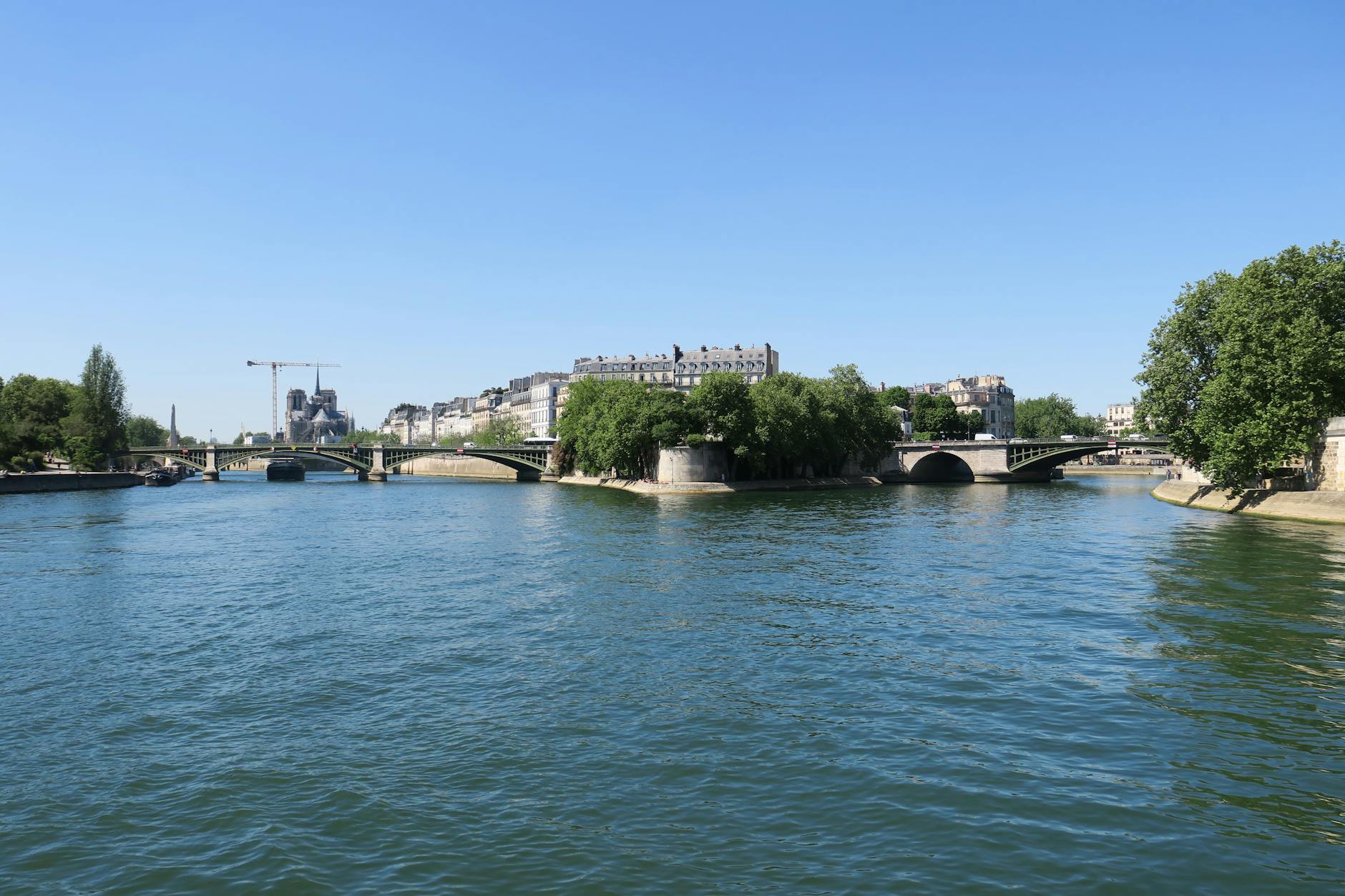
Twenty-two hectares of land in the middle of the Seine carry more of Paris than any equivalent patch of the mainland. Two islands do the work: Île de la Cité, the historic core that was Roman Lutetia, and Île Saint-Louis, its tidy 17th-century neighbour to the east. Between them they hold Notre-Dame, Sainte-Chapelle, the Conciergerie, the Crypte Archeologique, Place Dauphine, the Berthillon ice-cream counter that food critics fight over, a row of Sun King mansions, and Square du Vert-Galant, the best free sunset in central Paris. This guide to ile de la cite paris walks both islands end to end: every sight, the restaurants actually worth a booking, and the photo angles you already know from postcards. For the wider lay of the land, start with our guide to Paris’s quarters.
Stand on the Pont Saint-Louis at dusk with a Berthillon cone going soft in your hand and the spire of Notre-Dame rising behind you, and the appeal stops needing explanation. Roman foundations, a Gothic cathedral, mansions built for the court of Louis XIV, a post-fire restoration finished in 2024: nearly two thousand years of city, compressed into a five-minute walk from one bridge to the next. Checklists miss the point here. The islands are made for slow loops.
The Two Islands at a Glance
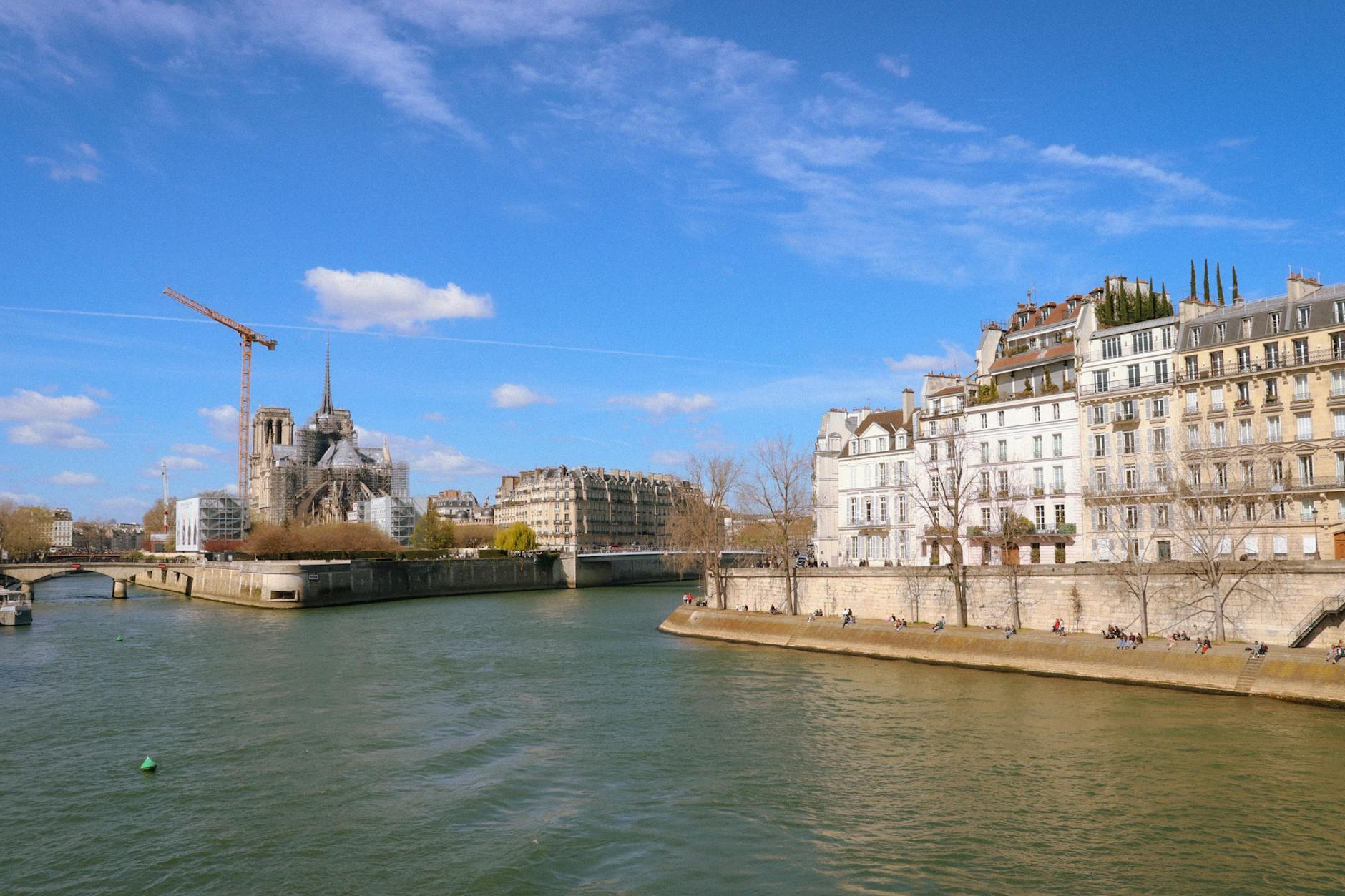
Île de la Cité is the bigger of the pair: roughly 17 hectares, shaped like a boat, sitting on the line between the 1st and 4th arrondissements, and the oldest inhabited ground in Paris. It carries the heavy monuments. Notre-Dame anchors the east end, Sainte-Chapelle and the Conciergerie hold the centre, Place Dauphine and Square du Vert-Galant taper off the western point. The Parisii settled here in the 3rd century BC. Rome took the island in 52 BC and laid out its forum on what is now the parvis in front of the cathedral.
Île Saint-Louis is the smaller island to the east: 5 hectares, entirely inside the 4th, and far younger. Through the Middle Ages it was two empty cow pastures. The island you cross today is one continuous piece of 17th-century town planning. The two islets were joined and built out between 1614 and 1664 as a residential quarter for the nobility, on a tight grid of four streets lined with stone hôtels particuliers. Almost everything went up in that single push, which is why it hangs together so cleanly. The little pedestrian Pont Saint-Louis links the two, and there is nearly always a busker working it.
Brief History
Lutetia was the Roman name for the Gaulish town on what is now Île de la Cité, capital of the Parisii until Caesar’s legions arrived in 52 BC. The Romans built up both banks, but the island stayed the strategic prize: river on every side, bridges under its control. You can still see the foundations of the governor’s palace and the wider Roman town in the Crypte Archeologique, directly under the Notre-Dame parvis.
The Middle Ages gave the island its two greatest buildings. Work on Notre-Dame started in 1163 under Bishop Maurice de Sully and ran for almost two centuries. Between 1242 and 1248, Louis IX, the king later canonised as Saint Louis who lent his name to the second island, raised the Sainte-Chapelle in the grounds of his royal palace to hold the Crown of Thorns. That palace, the Palais de la Cité, served as the main residence of the kings of France until the late 14th century. Its surviving wings became the Conciergerie, a Revolutionary prison and, most famously, the last cell of Marie-Antoinette before her execution in 1793.
The 17th century reworked the western point and built the second island from scratch. Henri IV finished the Pont Neuf in 1607, the first bridge in the city with no houses crowding its deck, and created Place Dauphine at the same time on the fresh triangle of reclaimed land. Marie de Medici and Louis XIII got Île Saint-Louis going around 1614; Louis XIV saw the residential grid through to completion, including Hotel Lambert (1640), Hotel de Lauzun (1657) and the parish church of Saint-Louis-en-l’Ile (1664–1726). In the 19th century Haussmann flattened most of the medieval housing on Île de la Cité. Île Saint-Louis came through untouched, which is how it ended up the best-preserved 17th-century quarter in the city.
Top 10 Must-See Sights
Per hectare, the two islands pack in more first-rank monuments than anywhere else in Paris. Here are the ten to build a day around.
Notre-Dame de Paris
The cathedral reopened to the public on December 8, 2024, five years and eight months after the fire of April 2019. The inside is brighter now than anyone alive remembers: cleaned limestone glowing honey-coloured, Viollet-le-Duc’s central spire rebuilt to its exact 1859 drawings. Entry is free, and in high season the free timed reservations through the official site are worth grabbing rather than risking the queue. Our Notre-Dame Paris guide covers the visit logistics in full.
Sainte-Chapelle
Make the case to anyone that this is the most beautiful single room in Paris and you will not get much argument. The upper chapel is a 13th-century glass cage: 1,113 stained-glass panels climbing fifteen metres on stone ribs so thin they barely seem to be there. Louis IX had it built in just six years (1242–1248) to house his relics, and two-thirds of the original medieval glass is still in place, the highest survival rate of any major Gothic chapel. Admission €13. See our Sainte-Chapelle and Conciergerie guide.
Conciergerie
This is the surviving medieval wing of the old Palais de la Cité. It holds the largest medieval secular hall in Europe, the Salle des Gens d’Armes, plus the reconstructed cells of the Revolutionary Tribunal, Marie-Antoinette’s among them, marked today by a small expiatory chapel. Admission €13.
Crypte Archeologique
Under the parvis of Notre-Dame, a 118-metre space lays out the foundations of the Roman city wall, the Merovingian baptistery, and the medieval Hôtel-Dieu. Nowhere else in Paris lets you walk through 2,000 years of in-situ archaeology in one room. Admission €9, and it is almost always quiet.
Memorial de la Deportation
Behind the apse of Notre-Dame, at the eastern tip of Île de la Cité, stairs drop into a deliberately disorienting underground space by Georges-Henri Pingusson. It commemorates the 200,000 French citizens deported to Nazi camps during the Occupation, with a crypt of 200,000 lit crystals. Free; closes at 5pm. Go quietly.
Pont Neuf
The name lies: the Pont Neuf is the oldest bridge in Paris, finished in 1607 under Henri IV. It broke the mould in three ways. No houses cluttered it, it carried raised pedestrian pavements (a first for the city), and its semicircular balcony bays turned into the first place Parisians went simply to loiter and watch the river. The equestrian Henri IV at the centre is a 19th-century replacement for the 1614 original.
Place Dauphine
A near-perfect triangular royal square, finished in 1607 alongside the Pont Neuf and named for the Dauphin, the future Louis XIII. It is one of the quietest enclosed spaces in central Paris: a tree-shaded gravel garden, a handful of wine bars, and the back of the Conciergerie closing off the third side. Worth a bench and ten unhurried minutes.
Square du Vert-Galant
Right at the western point of Île de la Cité, a small triangular park steps down to river level. This is the best sunset spot in central Paris that does not involve a tower or a ticket: free, usually emptier than the Trocadero, with a head-on view of the Pont des Arts, the Louvre, and the western sky pinned between the riverbanks.
Île Saint-Louis perimeter walk
The best twenty-five minutes on either island. A continuous quay (Quai d’Anjou, Quai de Béthune, Quai d’Orléans, Quai de Bourbon) runs the full circumference at street level, with stone river walls, plane trees, and the Marais on one side and the Latin Quarter on the other.
Berthillon ice cream
At 31 Rue Saint-Louis-en-l’Ile since 1954, and the ice cream most French food critics will tell you is the best in the country. Family-run, shut Monday and Tuesday and for most of August. Full treatment further down.
Notre-Dame Deep Dive
Notre-Dame has stood on the eastern tip of Île de la Cité for more than 850 years. The present cathedral was begun in 1163 under Bishop Maurice de Sully, on the site of an older Romanesque church, and work carried on for over 180 years. Out of it came the western facade and its twin towers (finished 1245), the first true flying buttresses on any cathedral (around 1180), three rose windows, and the great Galerie des Chimères.
It nearly didn’t survive the Revolution. The cathedral was looted, the twenty-eight statues of the biblical kings were beheaded, and demolition was on the table. Victor Hugo’s 1831 novel turned public feeling toward saving it, and a sweeping restoration under Eugène Viollet-le-Duc between 1844 and 1864 rebuilt the spire and shored up the structure.
On 15 April 2019 fire broke out beneath the lead roof. Within ninety minutes the entire timber roof frame, the 13th-century “forest” of 1,300 oak beams, was gone, and Viollet-le-Duc’s spire had crashed down through the stone vault. The stone fabric held: the western towers, the three rose windows and the organ all came through. The cathedral reopened to the public on 8 December 2024, almost exactly on the five-year schedule Macron had promised.
The biggest change inside is the light and the colour. Eight hundred and fifty years of soot are gone, and the stone now reads in the cream-honey tone of fresh Lutetian limestone. A contemporary altar by the sculptor Guillaume Bardet stands in for the liturgical furniture destroyed in the fire. Entry is free, with timed reservations through the official portal strongly advised in summer, and Mass is said daily. Again, the logistics live in our Notre-Dame Paris guide.
Sainte-Chapelle + Conciergerie
These two royal monuments sit inside the same medieval enclosure on the western half of Île de la Cité and share a combined ticket: €19 for both, good for one day, against €13 each on their own. Buy the combined one. It is the best monument-ticket value on the island, near enough mandatory, and ninety minutes covers the pair.
Go in through the Sainte-Chapelle security queue at 10 Boulevard du Palais and do the upper chapel first, while the light is still climbing the glass. Then it is a five-minute walk around the block to the Conciergerie entrance at 2 Boulevard du Palais. The Conciergerie draws far fewer people, and the Salle des Gens d’Armes is often close to empty even at peak season. The full breakdown is in our Sainte-Chapelle and Conciergerie guide.
Île Saint-Louis Specifically
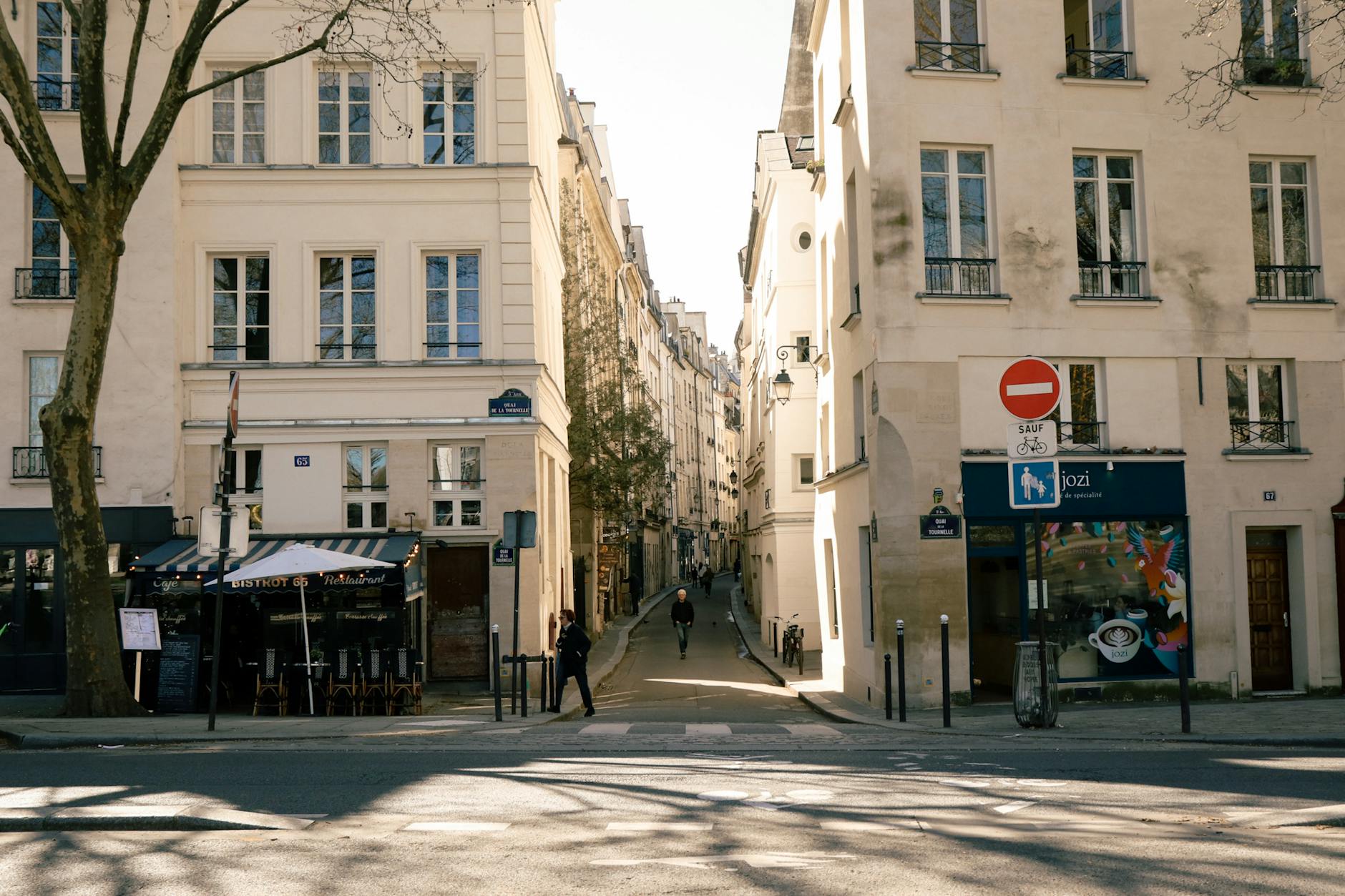
Île Saint-Louis reads more as a residential village than a sight to tick off. The pleasure of it is the perimeter walk, the run of 17th-century facades, the odd small shop wedged into a former noble doorway, and Berthillon.
Berthillon (31 Rue Saint-Louis-en-l’Ile)
The legendary ice-cream maker, going since 1954 and still run by the founder’s descendants out of the same green storefront halfway along the island’s main spine. Closed Monday and Tuesday, and for most of August. Its own deep dive is below.
Notre-Dame de l’Aurore
A small chapel on Rue Saint-Louis-en-l’Ile, right next to Berthillon, named for an icon of the Virgin of the Dawn. Most people walk straight past it. Give it a glance for the sheer modesty of its neighbourhood scale.
Hotel Lambert
At the eastern tip of the island (1–3 Quai d’Anjou) stands one of the grandest 17th-century hôtels particuliers in Paris, built between 1640 and 1644 by Louis Le Vau, the architect of Vaux-le-Vicomte and the early Versailles. Voltaire lived here in the 1730s. It is privately owned and closed to the public, but you can take it in from the quay outside.
Saint-Louis-en-l’Ile church
The island’s parish church, begun in 1664 by Le Vau and finished in 1726. The interior is stripped white-and-gold Baroque; outside, it is best known for the wrought-iron clock of 1741 that juts out over the street. Entry is free, and Baroque chamber concerts are frequent.
Quai d’Anjou perimeter
The north quay, between Pont Marie and Pont de Sully, holds the most uniform run of 17th-century hôtels particuliers in the city. The showcase is Hotel de Lauzun at number 17, where Baudelaire and his Club des Hashischins met in the 1840s.
Marché Saint-Louis
A very small Saturday-morning market on the eastern edge near Pont de Sully, five or six stalls selling cheese, produce, bread and flowers. Not a destination on its own, but a good reason to be on the island on a Saturday.
Berthillon Deep Dive
Berthillon is the most famous ice cream in Paris and one of the very few food destinations in the city worth standing in a line for. The shop has been at 31 Rue Saint-Louis-en-l’Ile since 1954, when Raymond Berthillon started selling artisan ice cream out of the corner café he ran with his wife. Three generations on, it is still family-owned and still made daily in the basement of that same address.
Order at the counter, take your cone or cup, and keep moving; there is nowhere to sit inside. The done thing is to perch on the Pont Saint-Louis with your feet over the edge or eat it on the walk. Summer lines run 30 to 45 minutes on Saturday afternoons. The quiet window is Wednesday or Thursday morning around 11am. Closed Monday and Tuesday, most of August, and roughly two weeks in February.
The flavours to chase: caramel beurre salé (salted-butter caramel) is the consensus pick. Fraise du bois (wild strawberry) shows up for a short summer window only and tastes of strawberry the way no supermarket berry ever has. Chocolat noir is dense and nearly bitter, more frozen ganache than ice cream. Marron glacé (candied chestnut) is the great winter flavour, studded with whole chestnut pieces. Among the sorbets, framboise sets the bar for sheer intensity. If the main queue looks impossible, dozens of cafes across both islands sell Berthillon under licence, which is a perfectly good fallback.
Best Restaurants on the Islands
The islands are small enough that the food scene comes down to perhaps two dozen restaurants. These are the ones worth a deliberate reservation. Book a week out in high season.
Café Saint-Régis (6 Rue Jean-du-Bellay)
On the corner where Île Saint-Louis meets the Pont Saint-Louis, this is the closest thing the islands have to a locals’ corner café. Open from breakfast through late dinner, with terrace tables and a tiled vintage room inside. The cooking is competent classic French brasserie at fair prices. It is the obvious stop for a coffee after Berthillon.
Mon Vieil Ami (69 Rue Saint-Louis-en-l’Ile)
Antoine Westermann’s Alsatian bistro, halfway along the island. Expect hearty, vegetable-forward Alsatian cooking in a beam-ceilinged stone room, with a three-course set menu around €55. Closed Monday and Tuesday. Reservations essential.
Auberge de la Reine Blanche
A traditional little bistro at 30 Rue Saint-Louis-en-l’Ile, named for the medieval Queen Blanche of Castile. Stone walls and a classic French carte: escargots, magret de canard, tarte tatin. Mains land in the €30s, which is reasonable for this address.
Brasserie de l’Île Saint-Louis
At 55 Quai de Bourbon, staring straight across at Notre-Dame. An Alsatian-leaning brasserie open since 1870 and proudly showing its age. Choucroute garnie, beer on tap. The terrace view of the Notre-Dame apse is, genuinely, one of the best in central Paris.
Tour d’Argent (15 Quai de la Tournelle)
Technically on the Left Bank, but directly opposite Île Saint-Louis, with a panoramic dining room over Notre-Dame. The restaurant dates itself to 1582, making it the oldest continuously operating fine-dining room in Paris. The signature is canard au sang, pressed duck, each one issued a numbered certificate (the count is past 1.2 million). One Michelin star at the moment, tasting menus from €360, and you will want to reserve a month ahead for a window table.
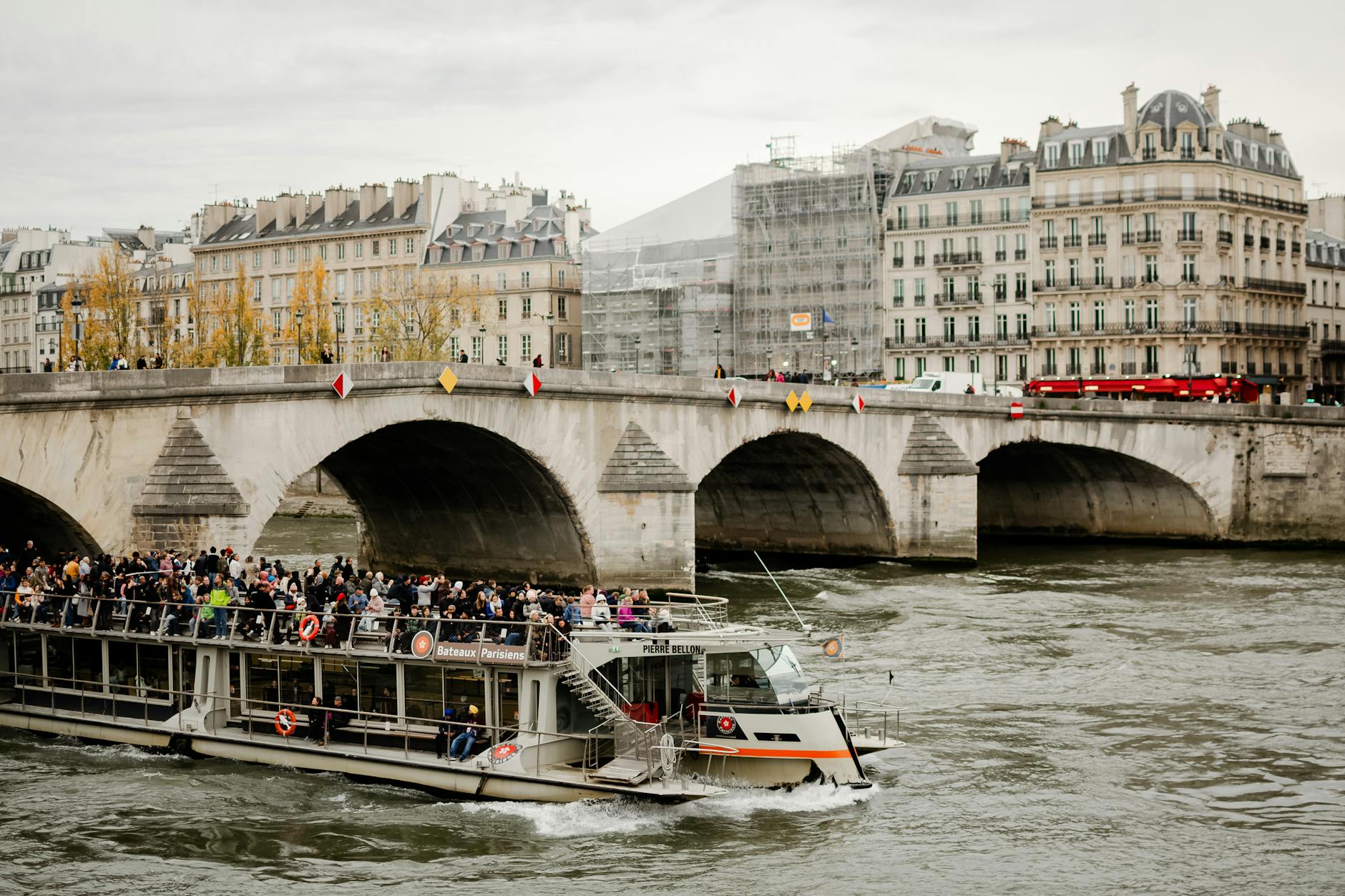
Photo Spots
This is, by most counts, the most photographed square kilometre in Paris. The eight spots below cover every angle worth carrying a camera for.
Square du Vert-Galant at sunset
The tip of Île de la Cité at river level, looking west to the Pont des Arts and the Louvre with the sun dropping behind them. Get there about ninety minutes before sunset.
Pont de la Tournelle
Between Île Saint-Louis and the Left Bank, looking northwest, for the classic three-quarter view of the Notre-Dame apse and spire. The statue of Sainte Geneviève makes a useful foreground.
Pont au Double
The short pedestrian bridge straight south of Notre-Dame’s west facade, and the spot for a head-on shot of the twin towers and central rose window. Bring a tripod at dawn, when the bridge is yours alone.
Pont Saint-Louis
The pedestrian bridge between the two islands, busker almost always included. Face east for the Pantheon dome rising behind Pont de Sully; face west for the Notre-Dame apse and flying buttresses dead ahead.
Pont Neuf
The oldest bridge in the city, and a subject in its own right. Drop down to Square du Vert-Galant for the upward view of the stone arches, or stand at its centre with the Louvre to the north and the Conciergerie to the south.
Quai d’Anjou at golden hour
The north quay of Île Saint-Louis, where late sun rakes across the lines of 17th-century facades. Walk east from Pont Marie around 6pm in summer.
Quai de Béthune
The south quay, facing the Left Bank with the Pantheon dome behind it. The view across to the Tour d’Argent building and the Latin Quarter rooftops is one of the prettiest in Paris, and almost nobody photographs it.
Pont Marie
The classic stone bridge between Île Saint-Louis and the Marais. Shoot it from the lower quay on the Marais side. For more angles across the city, see our Paris photo spots guide.
Walking the Two Islands
Here is a 90-minute loop that takes in every major sight on both islands, roughly in the order the light wants. Start mid-morning, around 10am, for Sainte-Chapelle, and finish on the Pont Neuf as the lamps come on.
- Start at Pont Saint-Michel on the Left Bank, walk north across the bridge.
- Right onto Boulevard du Palais to Sainte-Chapelle. Allow 30 minutes.
- One block north to the Conciergerie at 2 Boulevard du Palais. Allow 30 minutes (combined ticket).
- Exit east on Quai de l’Horloge to the Notre-Dame parvis. Allow 45 minutes.
- Around the south side of Notre-Dame to Square Jean-XXIII behind the apse for the flying-buttress shots.
- Cross the Pont de l’Archévêché to the Left Bank for the postcard rear view, then come back.
- North to the Mémorial de la Déportation at the eastern tip. Allow 15 minutes.
- Cross the Pont Saint-Louis onto Île Saint-Louis.
- Walk the perimeter quays of Île Saint-Louis anti-clockwise. Allow 25 minutes.
- Cut up Rue Saint-Louis-en-l’Ile to Berthillon at number 31.
- Cross Pont Marie for the bridge view, then return.
- Cross back on Pont au Double for a head-on shot of Notre-Dame.
- Continue west to Place Dauphine.
- Out west onto the Pont Neuf, then down the steps to Square du Vert-Galant for sunset.
For other themed routes, see our Paris walking tours guide.
Where to Stay on the Islands
Hotels on either island are scarce by any Parisian measure, since most of the building stock is private homes or government offices. Supply is tight and prices run high, but the payoff is one of the most atmospheric places to wake up in central Paris.
- Hôtel Le Notre Dame Saint Michel — on the Left Bank, straight across from Île de la Cité, with rooms facing the cathedral. A boutique four-star with contemporary interiors by Christian Lacroix.
- Hôtel des Deux-Îles — 59 Rue Saint-Louis-en-l’Ile, a converted 17th-century townhouse with just seventeen rooms and a small stone-vaulted cellar lounge. Book months out for summer.
- Hôtel Saint-Louis en l’Ile — number 75 on the same street, a sister property, just as small and just as atmospheric.
Sunset at Square du Vert-Galant
Square du Vert-Galant, at the western point of Île de la Cité, is the best free sunset in central Paris, and it earns the title. The square sits at river level, three metres below the deck of the Pont Neuf, a triangular gravel terrace with benches, two weeping willows, and a clear view west along the Seine. The Louvre’s Pavillon de Flore and the Pont des Arts frame the sun’s path down.
Turn up ninety minutes before the listed sunset (around 7:30pm in midsummer, 4:30pm in December) if you want a bench; the square holds maybe 100 people in comfort. There is no café and no toilet down here, so bring water. Set it against the Trocadero or the Champ-de-Mars at the same hour and the Vert-Galant barely registers as crowded, and never feels touristy. It is one of those small Parisian things long-term residents pass along quietly, so do the same.
What’s Around the Islands
Short bridges connect both islands to every major central neighbourhood, which is exactly why they make such a good spine for any Paris itinerary.
- Latin Quarter — straight south across Pont au Double; Cluny, the Pantheon, the Sorbonne and Luxembourg all within 20 minutes.
- Marais — straight north of Île Saint-Louis across Pont Marie; Place des Vosges, Musee Carnavalet and the Picasso Museum within 15 minutes.
- Saint-Germain-des-Prés — west via the Pont Neuf and Pont des Arts; Café de Flore and Les Deux Magots in 20 minutes.
- Louvre — straight north of the Pont Neuf; the world’s largest museum is a 10-minute walk from Place Dauphine.
For the bigger picture, see our Paris attractions guide.
Practical Tips
A few island-specific things that trip up first-timers:
- Restrooms are scarce. There are only a handful of public toilets, one Sanisette on the Notre-Dame parvis and one near the Memorial de la Deportation. Go at Pompidou or Sainte-Chapelle before you set off.
- Manage the Berthillon line. If the Saturday queue runs past 30 minutes, cross to a Berthillon-licensed café: same ice cream, and you sit down at once.
- Keep it down on the quays. Île Saint-Louis is residential, especially the eastern quays. Lower your voice after 10pm.
- Mind the cobbles. Both islands keep their original stone paving. Stilettos are a mistake, and a rolling suitcase will rattle every tooth in your head.
- No Metro on Île Saint-Louis. The nearest stations are Pont Marie (Line 7) and Sully-Morland (Line 7). Île de la Cité has Cité station (Line 4) at its centre.
- Pickpockets work the Notre-Dame parvis. The usual drill: bag zipped and in front, no phone left on the cafe table, and walk past the fake-petition routine.
Frequently Asked Questions
How long do I need on the two islands?
Half a day covers the highlights walk: Sainte-Chapelle, the Conciergerie, Notre-Dame, the Île Saint-Louis perimeter, Berthillon, and sunset at Vert-Galant. The 90-minute loop above stretches to about four hours once you add stops. Make it a full day if you want the Crypte Archeologique and a proper sit-down lunch.
Is Notre-Dame really open again?
It is. The cathedral reopened on 8 December 2024 after five years and eight months of post-fire reconstruction. The easiest way to lock in a visit is a free timed-entry reservation through the official site, though walk-up queues are accepted too. The tower climb is reopening in phases through 2025.
Which is better, Île de la Cité or Île Saint-Louis?
They do different jobs. Île de la Cité is the monument island. Île Saint-Louis is the atmosphere island: 17th-century facades, quiet streets, Berthillon. With a single afternoon, give roughly 60% to the Cité and 40% to Saint-Louis.
Do I need to book Sainte-Chapelle in advance?
From April to October, strongly. Walk-up security queues regularly top an hour in summer, and online tickets get you a priority lane. The combined Sainte-Chapelle + Conciergerie ticket at €19 is the value play.
When is Berthillon open?
The main shop at 31 Rue Saint-Louis-en-l’Ile opens Wednesday to Sunday, 10am to 8pm. It is closed Monday and Tuesday all year, the whole of August, and around two weeks in February. Licensed cafes on the island sell the same flavours every day.
Is there a Métro station on the islands?
Île de la Cité has Cité station (Line 4) at its geographic centre, a striking 1908 stop with an art-nouveau Guimard entrance. Île Saint-Louis has none of its own; use Pont Marie or Sully-Morland on Line 7 across the bridges.
Can I see Marie-Antoinette’s cell?
Yes, in the Conciergerie. The original was pulled down in the 1810s, but a small expiatory chapel was raised on the spot, and the modern visit reconstructs how the cell was arranged. The HistoPad audioguide adds a fuller augmented-reality version. It is all included in the standard ticket.
Where is the best photo of Notre-Dame?
Three answers, depending on the angle. The western facade is best from Pont au Double in the morning. The southern flank with the spire is best from Pont de la Tournelle in late afternoon. The eastern apse with its flying buttresses is best from Pont de l’Archévêché or Square Jean-XXIII.
Is it safe at night?
Yes. Both islands are very safe, with a heavy police presence around the Palais de Justice and the Prefecture on Île de la Cité. The usual pickpocket precautions apply on the Notre-Dame parvis.
The Island Heart of Paris
Nearly every Paris itinerary brushes the islands at least once, usually for the obligatory Notre-Dame photo and the obligatory Berthillon scoop. Both are worth it. But treating the islands as a two-hour stop is the single biggest mistake first-timers make. Stay for a sunset. Walk the Île Saint-Louis perimeter at half speed. Find a bench on Place Dauphine and do nothing for a while. No other Paris neighbourhood pays back patience like this one, and two thousand years of compressed history read best on foot. To keep exploring, head back to our Paris arrondissements guide.
Round out your trip
Use these to round out your trip: