Belleville & Oberkampf: Paris’s Coolest Emerging Neighborhoods
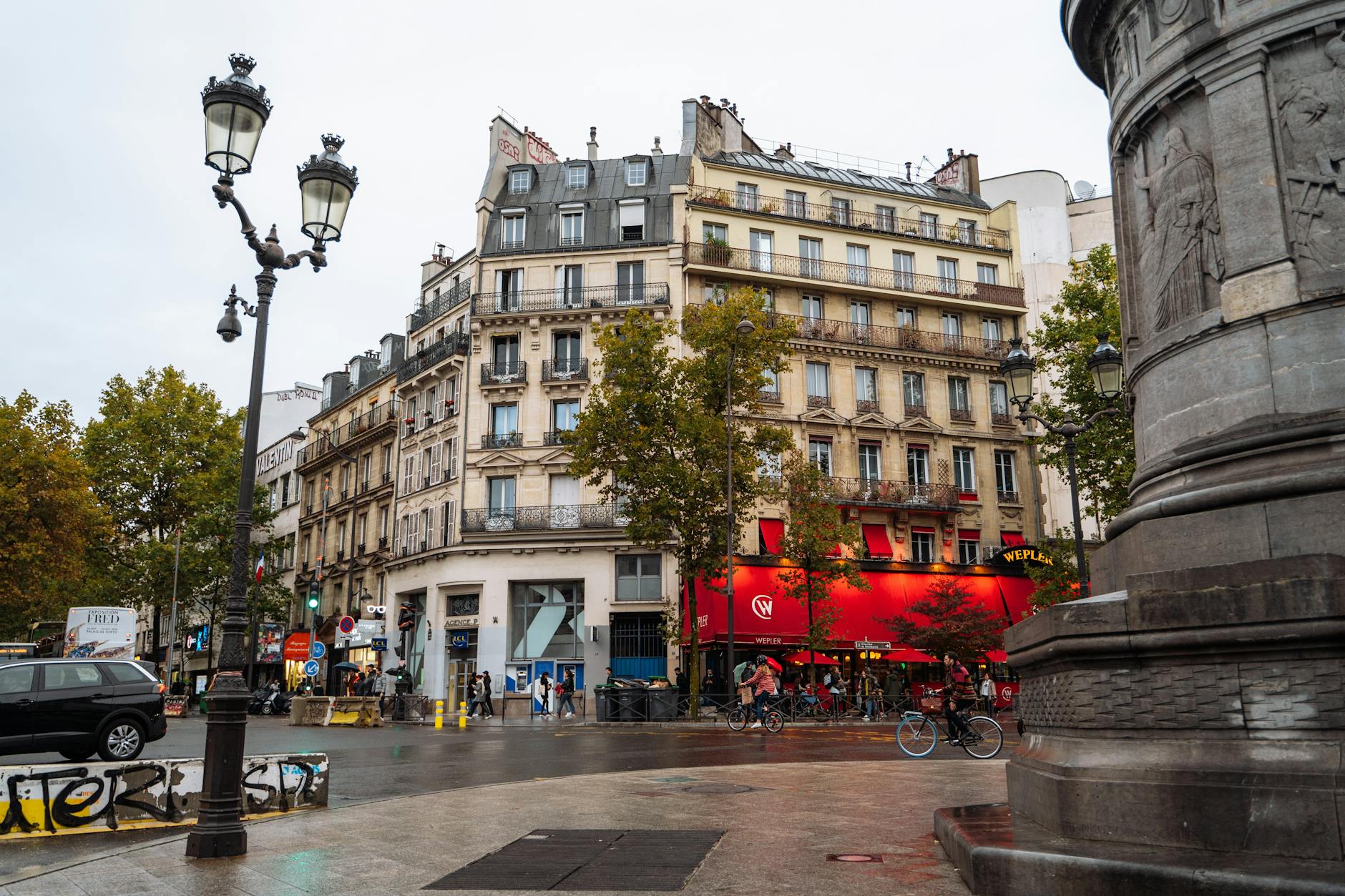
On one block of Boulevard de Belleville you can buy Tunisian brik pastry, a bolt of Senegalese fabric, a roasted Peking duck and a kosher couscous, and that single block tells you most of what you need to know about belleville oberkampf paris. These two neighbourhoods in the northeast, spread across the seams of the 19th, 20th and 11th arrondissements, are the city’s most diverse and its fastest-changing. Belleville is Paris’s second Chinatown, the birthplace of Edith Piaf (1915, 72 Rue de Belleville), the spot where the Communard barricades made their last stand in 1871, and home to the one free viewpoint that frames the Eiffel Tower and Sacré-Coeur in a single shot, up at Parc de Belleville. Oberkampf is the natural-wine bar capital of the city, with the densest run of cheap-and-good bistros anywhere in Paris. This guide takes both: the street art (Belleville is the contemporary street-art capital of the city), the restaurants, the natural-wine circuit, the morning market, and the real story on safety after dark. For the wider map, start with our Paris arrondissements guide.
Skip these if you want postcards. There are basically no Haussmann boulevards, no marquee monuments, no graceful hôtels particuliers. What you get instead is contemporary Parisian life with the lid off: graffiti walls repainted by the week, Tunisian patisseries beside Senegalese tailors beside Wenzhou phone shops, wine bars that chalk the producer’s name above the counter, and a hilltop park whose view is so good that locals keep quiet about it on purpose. If you have already done the Louvre and the Marais on an earlier trip and want to see how the city actually lives, this is where to spend a day.
Belleville and Oberkampf: Geography and Transit
Belleville sits on a hill northeast of the centre, where the 19th, 20th, 11th and 10th arrondissements all run into each other. Its symbolic heart is the crossroads of Rue de Belleville and Boulevard de Belleville, the latter forming the spine of the market and the eastern boundary between the 11th and 20th. Oberkampf is straight south, strung along Rue Oberkampf and its parallel Rue Saint-Maur in the 11th, all the way down to the edge of the Marais. Together the two corridors pack about two kilometres of the most concentrated nightlife, food and street-art activity in Paris.
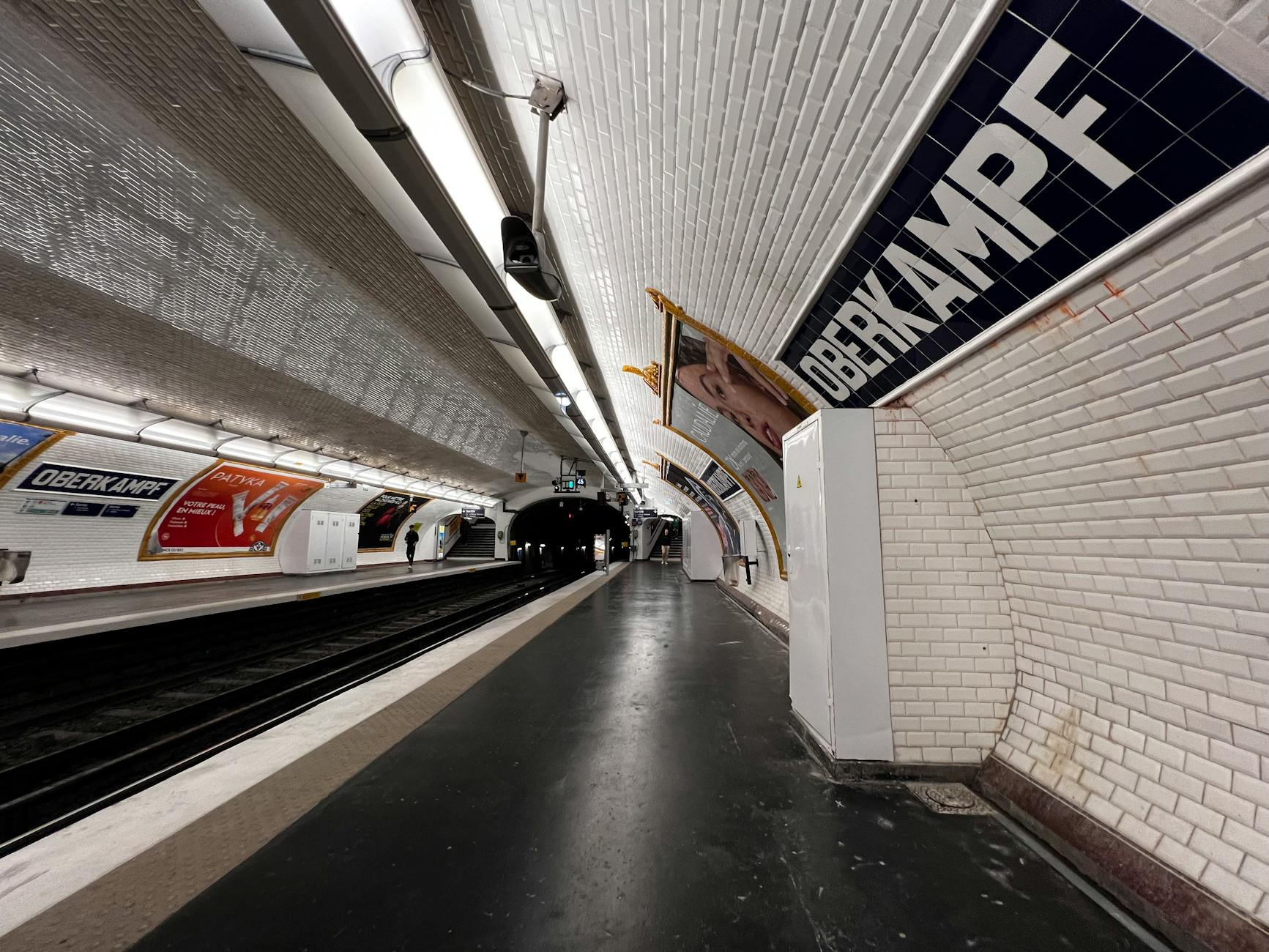
Métro coverage is generous. For Belleville, the key stations are Belleville (Lines 2 and 11), Pyrénées (Line 11, the stop for Parc de Belleville from the north), Couronnes (Line 2, for the southern park entrance and the Rue Denoyez street art), and Ménilmontant (Line 2, for the east end of Rue Oberkampf and the bars around the cemetery). For Oberkampf itself, Oberkampf (Lines 5 and 9) drops you on top of Café Charbon, and Parmentier (Line 3) is closest to the restaurant cluster on Avenue Parmentier, Le Chateaubriand included. Walking between any two of these takes under fifteen minutes.
Pay attention to the terrain. Belleville is one of the few real hills in Paris, the second-highest point in the city after Montmartre, and Rue de Belleville climbs from Boulevard de la Villette (around 38 metres) up to Métro Jourdain (about 100 metres) in less than a kilometre. Route yourself accordingly: downhill from Pyrénées to Belleville station is a stroll, the other way is a workout. Oberkampf, by contrast, is flat.
A Very Brief History: Village, Commune, Immigrant City
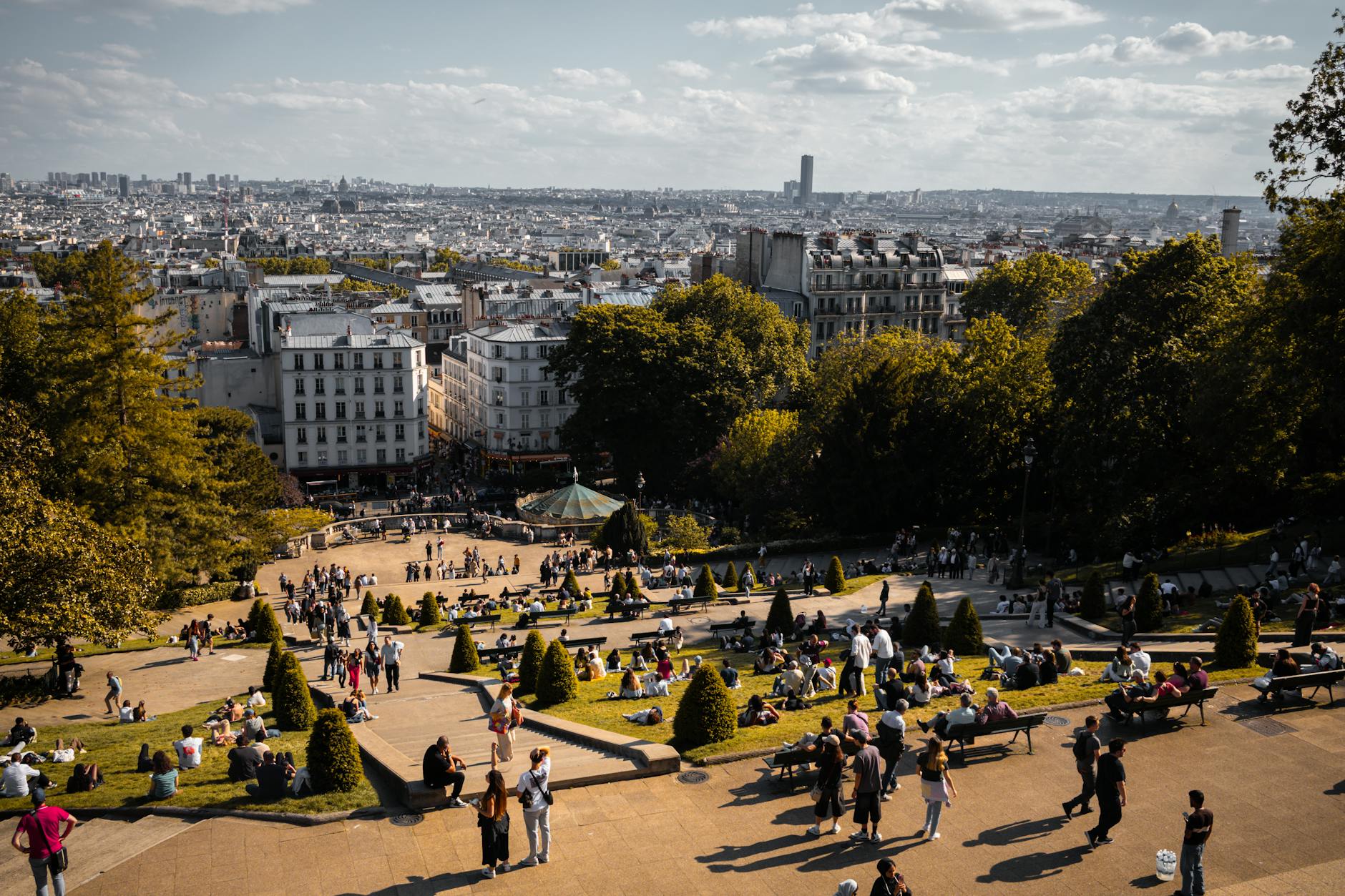
Belleville was its own village until 1860. Before Baron Haussmann folded it into the expanded city (along with Montmartre, Auteuil and seventeen other communes), it was a hillside of vineyards, guinguettes and stone quarries outside the walls. Working-class Parisians moved up here in the early 19th century for the simple reason that wine went untaxed beyond the customs barrier and rents were low. By the time of annexation it was already a workers’ town, and that identity has held through every wave of change since.
1871 fixed its politics for good. That May, during the Bloody Week that crushed the Paris Commune, Belleville was the last stronghold of the Communard fighters: the final barricades went up on Rue Ramponeau and the streets around it, and the very last shot of the Commune was fired here on 28 May 1871. The neighbourhood has carried that red flag ever since, openly in the names of streets and schools, more quietly in a durable left-wing politics and an anti-establishment streak you can still feel walking around.
The 20th century rewrote it demographically. Polish and Russian Jews arrived in the late 19th century. A second Sephardic Jewish wave came from Tunisia and Morocco in the 1950s. Tunisian Muslim migrants followed in the 1960s, then Sub-Saharan Africans, then Chinese-Vietnamese refugees from the 1980s on (mostly Teochew and Wenzhou speakers), with a continuing North African presence today. The result is the most multi-ethnic neighbourhood in Paris by a clear margin, the kind of place where a single block of Boulevard de Belleville offers Tunisian brik, Senegalese cloth, roast Peking duck and kosher couscous in a row.
Oberkampf has a quieter biography. It was working-class faubourg Paris from the 19th century onward: small workshops, ironworkers, printers. The character it has now, bar street and then natural-wine street, arrived in two pulses. Café Charbon reopened in 1995 and set off the first, when Rue Oberkampf became the most fashionable bar strip in the city in the late 1990s. The natural-wine revolution, anchored by Le Chateaubriand in 2006, set off the second.
Parc de Belleville: The Best Free View in Paris
Parc de Belleville opened in 1988 on the western slope of the hill, over former quarries and old guinguette gardens. By Paris standards it is small, 4.5 hectares, but it is laid out on the steepest publicly accessible slope in central Paris, rising from Rue Julien Lacroix at the bottom to Rue Piat at the top, where the ground reaches 108 metres above sea level. That top terrace is the second-highest publicly accessible viewpoint in the city, after the Sacré-Coeur parvis on Montmartre.
And it faces exactly the right way. From the upper terrace you look south-southwest straight across the whole Paris basin: the Eiffel Tower in the middle distance, the dome of the Panthéon rising out of the Latin Quarter, Notre-Dame’s rebuilt spire just visible behind the roof of the Centre Pompidou, and off to the right, on its own hill, the white shape of Sacré-Coeur. On a clear evening this is the only public viewpoint in Paris that puts the Eiffel and Sacré-Coeur in one frame, for nothing, with no queue, and no crowd of a thousand people elbowing for the same shot. Locals know. Visitors almost never do.
The practical side: the park is free and open daily from early morning to dusk, with closing drifting seasonally between roughly 8pm in winter and 10pm at midsummer. The two best camera positions are the main concrete terrace just below Rue Piat and a smaller wooden platform fifty metres downhill. Métro Couronnes (Line 2) is the easy uphill way in; Métro Pyrénées (Line 11) is the easy downhill way in from above. Bring a sandwich and a bottle of wine, and turn up an hour before sunset.
Edith Piaf in Belleville
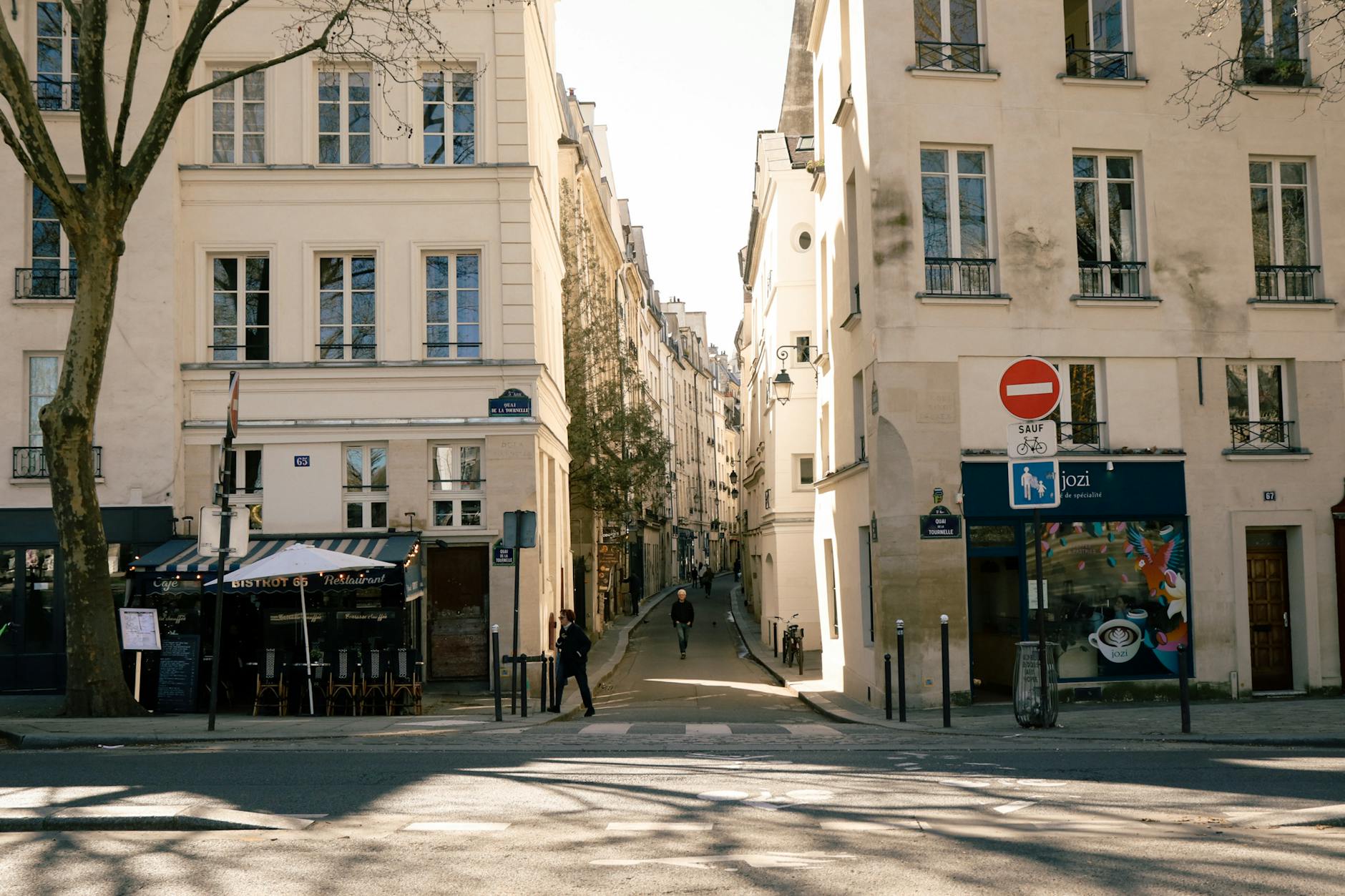
Edith Piaf, born Edith Giovanna Gassion, arrived on 19 December 1915. The story she liked to tell had her born on the pavement of Rue de Belleville, in the open air, under a streetlamp; the duller civil record puts the birth inside the building at number 72. Either way, the bronze plaque at 72 Rue de Belleville is the canonical pilgrimage stop, fixed to a plain working-class apartment block and easy to walk past if you are not looking for it. It is a small thing, but the climb up from Belleville station to find it gives you a real feel for the neighbourhood she came out of.
The Musée Edith Piaf is a different animal: a private museum tucked into a small flat at 5 Rue Crespin du Gast, just off Rue Oberkampf in the 11th. Calling it a museum oversells it; it is more a curated apartment crammed with dresses, posters, gold records, a teddy bear, a wax cast of her hands, and the personal effects friends donated after her death in 1963. Admission is free, but entry is strictly by appointment, usually Tuesday and Wednesday afternoons, and you have to telephone ahead to book. The host has guarded the collection for decades and tells the story in French. It is one of the most touching small museums in Paris, and almost no one outside the neighbourhood knows it is there.
Belleville Street Art: The Contemporary Capital
Belleville has been the most active street-art neighbourhood in Paris since the early 2000s, when artists priced out of the Marais and Bastille started drifting north. Three things made it the natural heir to the 1990s Stalingrad scene: long blank firewalls (a legacy of post-1871 rebuilding and 20th-century slum clearance), a tolerant local council, and a cluster of independent galleries on Rue Sainte-Marthe.
Rue Denoyez is the mecca. It is a single short pedestrian block a minute from Métro Belleville, and every wall, every garage door and every electrical box is painted, then repainted within weeks. Photos taken six months apart will have nothing in common. The city officially made the street a free-expression zone in 2008, and it has worked as one ever since. Come in the morning for fresh layers; the active painters tend to work weekday afternoons when the weather holds.
Rue Sainte-Marthe, ten minutes’ walk west, is the more civilised cousin: pastel-painted little houses, a placette lined with African and Mauritian restaurants, and a forever-changing set of murals on the surrounding walls. Rue Ramponeau and the upper reaches of Rue de Belleville add their own collections, especially the long facades on the climb between Métro Belleville and Pyrénées. For more itineraries in this vein, our unique things to do in Paris guide has additional street-art walks.
Oberkampf: Natural Wine Bar Capital of Paris
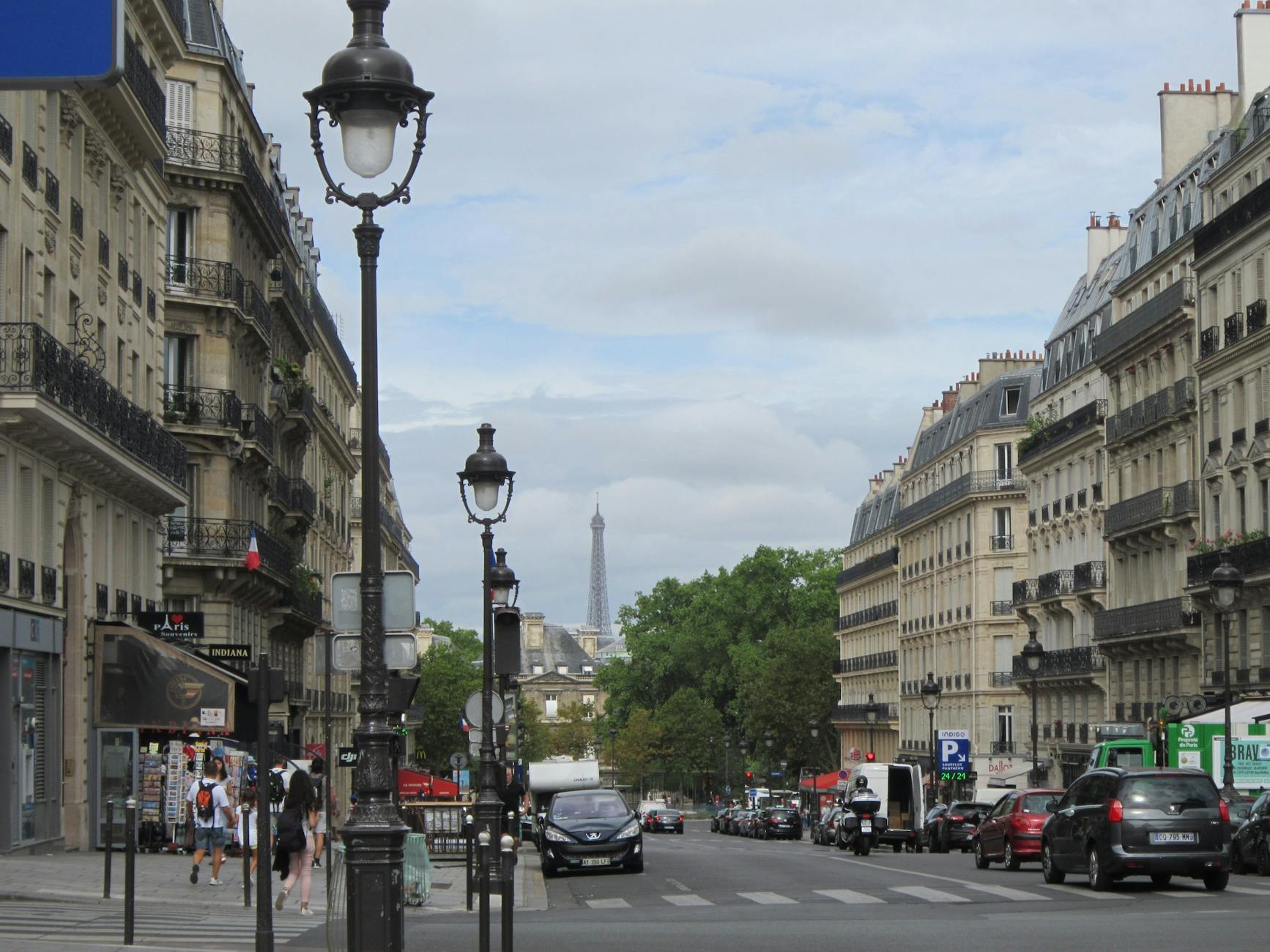
The natural-wine bar, the cave à manger, is a Parisian invention of the last fifteen years, and Oberkampf and the surrounding 11th-10th corridor is where it sits thickest on the ground. The format barely varies: a wine merchant’s shop with a few tables, a chalkboard of producers, a short plate menu of charcuterie, cheese and a hot dish or two, and a firm house bias toward low-intervention, biodynamic bottles. The essentials are below; for the wider Paris picture see our guide to Paris wine bars.
Aux Deux Amis
45 Rue Oberkampf. The Oberkampf classic, open since 2010, built on chef David Loyola and a relentlessly good wine list. Long zinc bar, a dozen-and-a-half cellar wines by the glass, daily-changing plates of grilled sardines or beef tartare. The crowd splits roughly evenly between locals and visitors who have done their homework. No reservations, so arrive at 7pm or be patient. Closed Sunday.
La Buvette
67 Rue Saint-Maur. A former dairy from 1906, now a tiny wine bar of maybe fourteen seats run by Camille Fourmont. The list is one of the most thoughtful in Paris, and the small plates (white beans in olive oil, salt cod brandade, anchovy butter) are minimal-ingredient perfection. Reservations are essential, and the room is small enough that you should be there within five minutes of your time.
Le Verre Volé
67 Rue de Lancry, 10th. A few blocks west into the 10th, technically, but the reference cave à manger of Paris, open since 2000 under Cyril Bordarier. Wine shop in front, restaurant behind, the kitchen sending out terrines, blood sausage, plates of country ham, and a cellar that never stops rotating. If you only get your head around one place in this category, make it this one.
Septime Cave
3 Rue Basfroi, 11th. The wine annex of Bertrand Grébaut’s Septime: no reservations, standing room, walk-in only. Drop by before or after your Septime booking, or treat it as a stand-alone for a glass and a small plate. The list is ambitious and the staff stay generous with suggestions even when you ask for the cheapest pour.
La Cave de l’Insolite
125 Rue de la Roquette. A quieter neighbourhood favourite further south in the 11th, run by enthusiastic owners with a deep cellar of southwest French and Loire wines. Small plates, local potters’ ceramics on the shelves, and a warm welcome for first-timers who want to be told what to drink.
Le Mary Celeste
1 Rue Commines, 3rd. Just over the line into the Marais, but a natural extension of the Oberkampf circuit. An American-Parisian cocktail-and-natural-wine bar with a small-plates menu and a lively crowd around the bar. Good for couples who want a more polished room without giving up the natural-wine sensibility.
Café Charbon
109 Rue Oberkampf. Not a natural-wine bar at all, but the Oberkampf institution that made the street fashionable in the 1990s. A preserved Belle-Epoque brasserie with patinated mirrors, an original zinc bar, and no-reservations hours from 1pm to 2am. Come for a demi-pression before dinner and a cocktail after.
Belleville Chinatown and Paris Asian Food
Paris has two Chinatowns. The bigger, better-known one is in the 13th arrondissement, centred on Avenue de Choisy and Avenue d’Ivry, a 1970s creation of mostly Teochew, Vietnamese-Chinese and Cambodian-Chinese refugees, complete with tower-block setting. The smaller Belleville Chinatown is older in character and arguably more interesting: a Wenzhou-Chinese cluster along Rue de Belleville and Boulevard de la Villette on the 19th-20th border, with grocers, pho counters, dim sum rooms and bubble-tea shops occupying the ground floors of Belle-Epoque buildings. Both are worth a meal. For more budget eating ideas, see our guide to cheap eats in Paris.
Avenue de Choisy and Avenue d’Ivry (13th)
The southern Chinatown runs roughly from Métro Place d’Italie down to Porte de Choisy along the two parallel avenues. The signature buildings are 1970s social-housing towers, some painted in bright colours, some crowned with pagoda-style temples on their upper floors. Restaurants bunch at the Place d’Italie end and around the Tang Frères supermarket complex. Métro Tolbiac (Line 7) is the handiest stop.
Belleville Chinese Cluster (19th-20th)
The Belleville cluster climbs from Métro Belleville north up Rue de Belleville for about half a kilometre, and runs east-west along Boulevard de la Villette. This is where Wenzhou immigrants settled from the 1980s on, and the language on the street is Wu, not Cantonese. The eating leans toward noodle soups, dumplings and Sichuan stir-fries rather than Cantonese roast meats.
Le Cambodge
10 Avenue Richerand, 10th. A little outside strict Chinatown, but a staple of Belleville eaters for years. Cambodian noodle bowls (bobun, lok lak rice, fragrant pho variants) at very fair prices, and a queue out the door at peak times because they take no reservations. Lunch is the easier seating.
Pho 14
129 Avenue de Choisy, 13th. The default Paris pho pick. Big bowls of beef pho, fast service, formica tables, and a queue system the regulars work fluently. Bring cash. No frills and no atmosphere, but the broth is consistently excellent and the price, around twelve euros, is unbeatable for the volume.
Lao Lane Xang
102 Avenue d’Ivry, 13th. The reference Laotian restaurant in Paris, family-run, turning out green papaya salad, larb pork, sticky rice and laap dishes far sharper and more herb-forward than the neighbouring Vietnamese kitchens. Vegetarians are well looked after.
Dim Sum Around Both Chinatowns
Dim sum turns up in both clusters: Le President in Belleville (also a karaoke-banquet hall), Imperial Choisy in the 13th, and smaller carts inside the Tang Frères complex. Quality is workmanlike rather than transcendent, but the prices are genuinely cheap and weekend Sunday lunches are loud, packed and a good time.
Best Restaurants in Belleville and Oberkampf
In 2026 this corridor is, by a distance, the most exciting place to eat in Paris. Three Michelin stars are active inside its boundaries, the bistronomy movement was largely born here, and a dozen of the city’s most influential modern kitchens line a four-block run of Rue de Charonne and Avenue Parmentier. For the city-wide list, see our best Paris restaurants guide; the local essentials are below.
Le Baratin
3 Rue Jouy-Rouve, 20th. Raquel Carena’s Belleville classic, open since 1988 and a touchstone for the whole natural-wine and bistronomy world. South American-inflected bistro cooking (Carena is Argentine), a deep natural-wine list curated by her partner Philippe Pinoteau, and a dining room of perhaps thirty seats. Book several days ahead, and note that the kitchen shuts earlier than you would guess.
Septime
80 Rue de Charonne, 11th. Bertrand Grébaut’s one-Michelin-star tasting-menu restaurant, open since 2011 and a fixture on the World’s 50 Best list. It is a single fixed menu (with a vegetarian version), the room is industrial-warm in bare wood and concrete, and the cooking is the cleanest modern French seasonal you will find at the price. Reservations open exactly sixty days ahead at midnight Paris time, and the tables vanish in seconds.
Bistrot Paul Bert
18 Rue Paul Bert, 11th. The reference classic-Parisian bistro of the corridor, a textbook of the form: paper tablecloths, wooden chairs, blackboard menu, steak and frites done right, a proper Paris-Brest to finish. Book a week out. The sister restaurant Le 6 Paul Bert next door is the modern annex when the original is full.
Le Servan
32 Rue Saint-Maur, 11th. Sisters Tatiana and Katia Levha’s Filipino-French restaurant, with one of the most distinctive flavour palettes in the city: nuoc cham vinaigrettes, sour-sweet pork, fish caramels, and more chilli than Paris usually dares. The high-ceilinged room with its original tiled floor is one of the prettiest small dining rooms in the neighbourhood.
Le Chateaubriand
129 Avenue Parmentier, 11th. Iñaki Aizpitarte’s restaurant, open since 2006, the single most influential modern bistro in Paris over the last twenty years and arguably the launchpad for the whole bistronomy movement. Single tasting menu, a boisterous low-lit room, natural wine, and an after-hours wine bar (Le Dauphin) next door for digestifs. Book weeks ahead.
Holybelly
10 and 19 Rue Lucien Sampaix, 10th. Just over the line from the Oberkampf circuit into Canal Saint-Martin, but the obligatory brunch reference of the area. An Australian-style cafe with first-rate coffee, savoury egg-and-bacon breakfasts, pancakes, and a queue from 9am at weekends. No reservations. Holybelly 5 is the savoury original; Holybelly 19, a few doors up, is the all-day annex.
Where to Go After Dark
Northeast Paris is where the city goes out after midnight. The run of bars, clubs and concert venues between Ménilmontant and Stalingrad is denser than anywhere outside Pigalle, and the music skews younger and more electronic than the centre. For the broader picture, see our Paris nightlife guide.
Café Charbon
109 Rue Oberkampf. The Belle-Epoque brasserie from earlier, which turns into a packed bar after dark at weekends, DJs in the back room from midnight Thursday to Saturday. Open until 2am, sometimes later. This is the pre-club drinking address of the corridor.
Le Nouveau Casino
109 Rue Oberkampf (behind Café Charbon). One of the city’s best-loved mid-size concert venues and DJ clubs, bolted onto the back of Charbon. Live shows from 8pm, DJ sets from midnight, capacity around 400, programming from indie rock to electronic to hip-hop. Check the calendar before you turn up.
La Java
105 Rue du Faubourg du Temple, 10th. A 1920s cellar dance hall hidden inside the Passage Belleville arcade. Live salsa and Latin nights, with free lessons before the dancing on certain weeknights; weekend programming swings between cumbia, afro-Caribbean and electronic. One of the most atmospheric venues in Paris, and far less touristy than the central salsa addresses.
Glazart
7 Avenue de la Porte de la Villette, 19th. The far-northeast techno address, a former bus station turned concert venue and electronic club, with a big outdoor courtyard (the Plage de Glazart) in summer. The programming runs harder and later than central Paris; expect to be there until 5am or 6am if you commit. Métro Porte de la Villette (Line 7).
La Bellevilloise
19-21 Rue Boyer, 20th. A former 1877 workers’ cooperative, the first French cooperative founded after the Commune, reborn as a multi-room cultural venue. Jazz club downstairs, brunch hall upstairs, club nights at weekends, and a Sunday-morning jazz brunch that is one of the best mid-priced Sunday plans in Paris. Book ahead for the brunch.
The Belleville Market: The Most Diverse in Paris
Boulevard de Belleville runs a street market every Tuesday and Friday morning, roughly 7am to 2.30pm, that is by common consent the most diverse food market in Paris. It is also the cheapest big central market, with produce typically 30 to 50 per cent below the Marais markets, and lower even than the canal-side Marche Saint-Quentin. For the full list, see our guide to Paris food markets.
The market runs about 500 metres south from Métro Belleville, down the central reservation of the boulevard to Métro Couronnes. North African herbs, Tunisian olives, Senegalese fish, Wenzhou greens, Sephardic baked goods, fresh dates by the kilo from the Maghreb, and live carp from the Loire all share one alley. Friday is the bigger of the two days. One thing to know: the much-quoted “Sunday morning Belleville market” is really a casual sprawl of informal stalls spilling onto the boulevard, not an officially scheduled market, so you will find food and atmosphere on a Sunday, but the proper regulated market is Tuesday and Friday.
Practical tips: come hungry, bring cash, bring a tote, and shop the southern end (Couronnes) first, since prices tend to drop the further you get from the Belleville entrance. Plenty of vendors knock prices down after 1pm to clear stock.
Safety in Belleville and Oberkampf
The honest version: central Belleville and central Oberkampf are safe by Paris standards, at night included, and tens of thousands of locals and visitors walk these streets without trouble every weekend. The neighbourhood has a working-class edge that some first-timers read as menacing. That reading is usually wrong, and the visible policing is on par with anywhere central. For wider context, see our guide to the safest areas of Paris.
Where real caution is warranted: the stretch of Boulevard de la Villette and the Stalingrad area immediately north of Belleville, especially after midnight and especially in the small streets between Stalingrad and the Canal Saint-Martin, has a long-running drug-market problem. Walking through there alone at 2am is unwise. The simple rule: stay on the main streets after dark (Rue de Belleville, Boulevard de Belleville, Rue Oberkampf, Rue Saint-Maur), walk between Métro stations rather than down the quiet side alleys, and take a taxi or Uber back if you are heading to a hotel after the Métro closes at 1.15am on weeknights or 2.15am at weekends.
Pickpocketing in the market and at the Métro Belleville interchange is a more common annoyance than violent street crime; keep wallets and phones secure as you would anywhere on the Métro.
Photo Spots in Belleville and Oberkampf
Five spots that reliably produce strong photographs and thread into a single afternoon loop. For more compositions across the city, our best Paris photo spots guide has the full map.
- The Parc de Belleville upper terrace, an hour before sunset, with the Eiffel Tower and Sacré-Coeur in the same frame: the neighbourhood’s signature shot and unique in Paris.
- Rue Denoyez at any hour, with its constantly repainted free-expression walls; mid-morning light suits the north-facing side best.
- Rue Sainte-Marthe at the placette, with its pastel terraced houses and small terrace cafes, especially in late afternoon.
- The Edith Piaf birth plaque at 72 Rue de Belleville, a small detail shot, often paired with a wider street-life frame looking down the hill.
- The Café Charbon facade at 109 Rue Oberkampf at dusk, the original 1900-era Belle-Epoque signage lit from within and the terrace full of drinkers.
Where to Stay in Belleville and Oberkampf
Hotel options are limited next to central Paris, which is half the appeal: this is a residential area first and a tourist one second. It is not where you stay for a 24-hour concierge and a marble lobby. It is where you stay to feel like you live in Paris for a week, at a third of what the Marais costs.
The two most reliable chains in the corridor are Mama Shelter (the original at 109 Rue de Bagnolet in the 20th, designed by Philippe Starck, is genuinely worth a stay) and the budget-design HotelO brand, with outposts on the eastern side of the 11th. Independent boutique options cluster along Rue Oberkampf itself and on Boulevard Voltaire. Airbnb regulation in Paris is strict (registered numbers required, a 120-day annual cap), and this corridor has fewer compliant listings than the central arrondissements, so book early or fall back on a hotel.
A comfortable mid-range double runs roughly €100 to €180 a night in 2026, with peak summer and fashion-week dates about 30 per cent higher. The same room category in the Marais or the 7th runs €220 to €380.
Cluster Crossroads: Wine, Cheap Eats, Restaurants, Markets
Nearly everything that makes the Paris eating-and-drinking scene distinctive in 2026 is concentrated in this corridor. The natural-wine bar movement started here. So did bistronomy. The city’s deepest immigrant-cuisine eating happens here, and the most diverse market sits at its centre. Use this guide as a hub and follow the threads outward: the city-wide Paris wine bars guide widens the natural-wine map across the 10th and the Marais, cheap eats in Paris carries the Chinatown and immigrant-food picks into the 13th and 18th, best Paris restaurants covers Michelin and modern bistros in every arrondissement, and Paris food markets places Belleville inside the city’s broader market geography.
A day plan that uses all four threads: hit the Belleville market on a Friday morning, eat dim sum on Rue de Belleville for lunch, climb to Parc de Belleville and on to the Edith Piaf plaque, double back south to Rue Sainte-Marthe and the Rue Denoyez street art in late afternoon, take an aperitif at Café Charbon, dinner at Le Servan or Septime if you booked, and finish at Le Chateaubriand’s sister wine bar Le Dauphin until the Métro shuts.
Frequently Asked Questions
Is Belleville safe for tourists?
Central Belleville is safe, in the evening included, on the main streets (Rue de Belleville, Boulevard de Belleville, the park entrances). The area north of the park toward Stalingrad gets dicier after midnight; stay on the main axes and take a taxi if you are heading home once the Métro has closed.
What is the difference between Belleville and Oberkampf?
Belleville is the hill north of Boulevard de la Villette: older, more residential, more immigrant, with the park, the street art and the Chinatown cluster. Oberkampf is the corridor straight south: flatter, denser with bars and modern restaurants, and home to the natural-wine scene. They are a fifteen-minute walk apart and are usually done together.
How do I get to Parc de Belleville?
Métro Couronnes (Line 2) is closest to the lower entrance. Métro Pyrénées (Line 11) is closest to the upper terrace and the panorama. From central Paris, take Line 2 (République to Couronnes is about ten minutes) and walk uphill, or take Line 11 and walk downhill through the park.
Is the Musée Edith Piaf really by appointment only?
Yes. The museum is a private collection inside a flat, with no drop-in admission. You telephone the host (Bernard Marchois) in advance to arrange a visit, normally Tuesday or Wednesday afternoons. Admission is free and a small donation is customary. Visits are in French; basic English is sometimes available.
What is the best night for the natural-wine bar circuit?
Thursday. Most bars are open, the weekend crowd has not yet landed in force, and several of the smaller addresses (notably La Buvette and Septime Cave) are easier to get into than on Friday or Saturday. On Sunday and Monday a lot of places are closed, so always check before walking over.
Is Rue Denoyez worth visiting?
Yes, with the caveat that it is a one-minute walk, not a destination on its own. Combine it with Parc de Belleville to the east and the Rue Sainte-Marthe walls to the west and you have a self-contained 90-minute street-art loop. Morning light is best, and the active painters tend to be at work on weekday afternoons in fair weather.
Can I get a reservation at Septime as a walk-in?
Almost never. Septime opens reservations exactly 60 days ahead at midnight Paris time, and tables go within minutes. The realistic walk-in is Septime Cave (3 Rue Basfroi), the standing-room wine annex, which takes no bookings and where you can usually find a spot if you arrive before 7pm.
Is Belleville the same as Paris’s main Chinatown?
No. Paris’s main Chinatown is in the 13th arrondissement along Avenue de Choisy and Avenue d’Ivry. Belleville has a smaller, older-character Wenzhou-Chinese cluster on the 19th-20th border. Both are interesting: the 13th is denser for restaurants and supermarkets, the Belleville cluster is denser for street-level neighbourhood feel and easier to fold in with the park and the street art.
Final Word
Belleville and Oberkampf pay off on a slower second or third visit. They have no obligatory monuments, no five-star concierges, no curated photo-set views, just a working hilltop park with the best free panorama in the city, the most concentrated natural-wine and bistronomy corridor in the country, a thousand-stall market that feels like every continent crammed into one alley, and walls of street art repainted every week. If you want the postcard, go elsewhere. If you want the Paris that Parisians actually live in, this is the place. To keep exploring, head back to our Paris neighborhood guide.
Just south of Ménilmontant, Père Lachaise is the obvious companion to an afternoon in the neighbourhood. Enter at the Gambetta gate, walk downhill past Oscar Wilde, Édith Piaf, who was born a few streets from here, and Chopin, and come out on the Boulevard de Ménilmontant ready for a drink on the Rue Oberkampf. Our Père Lachaise cemetery guide has the route and the division numbers.
Related Paris guides
Use these to round out your trip: