Les Invalides: Napoleon Tomb and the Army Museum
A golden dome, an emperor in six coffins and one of the world's great military museums.
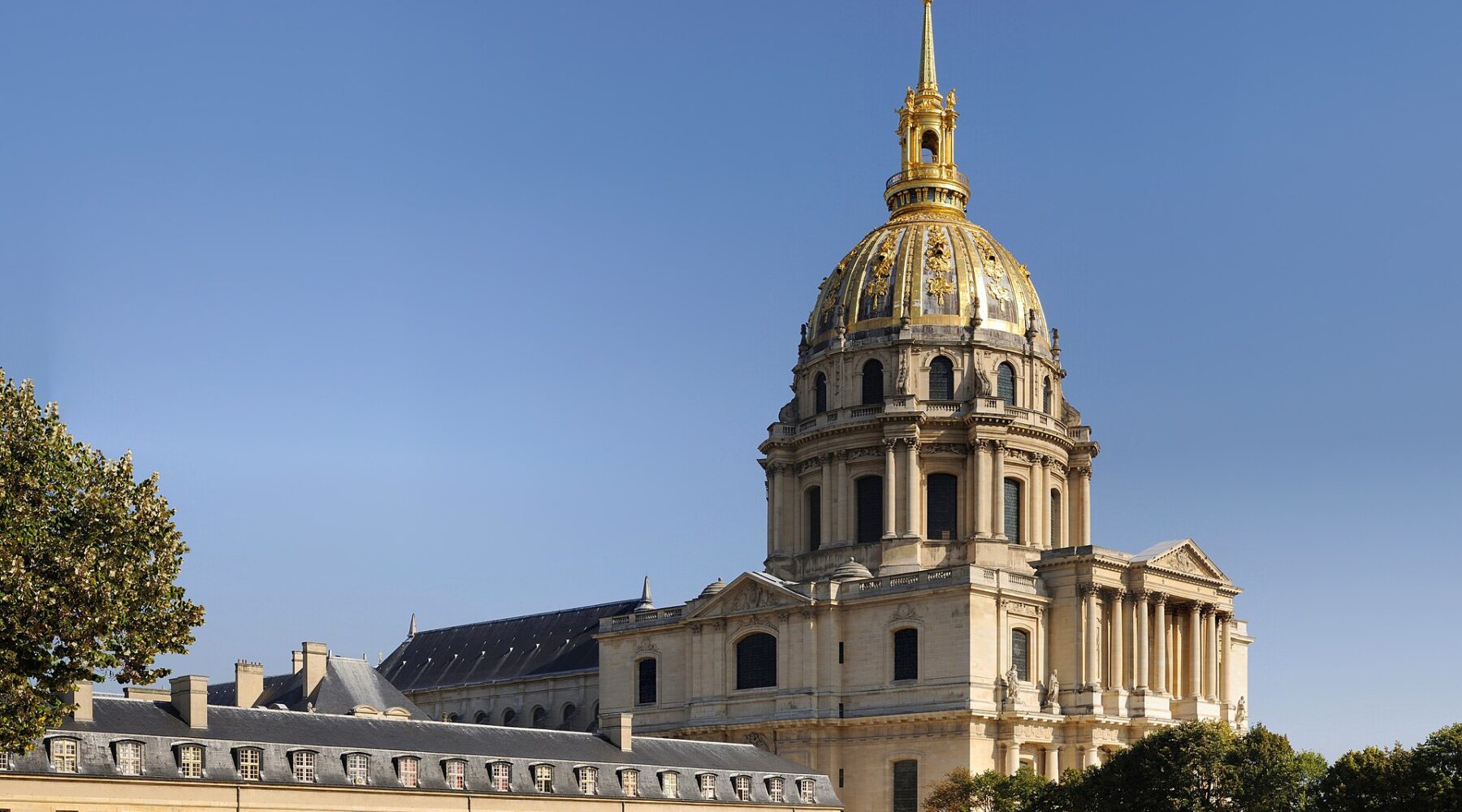
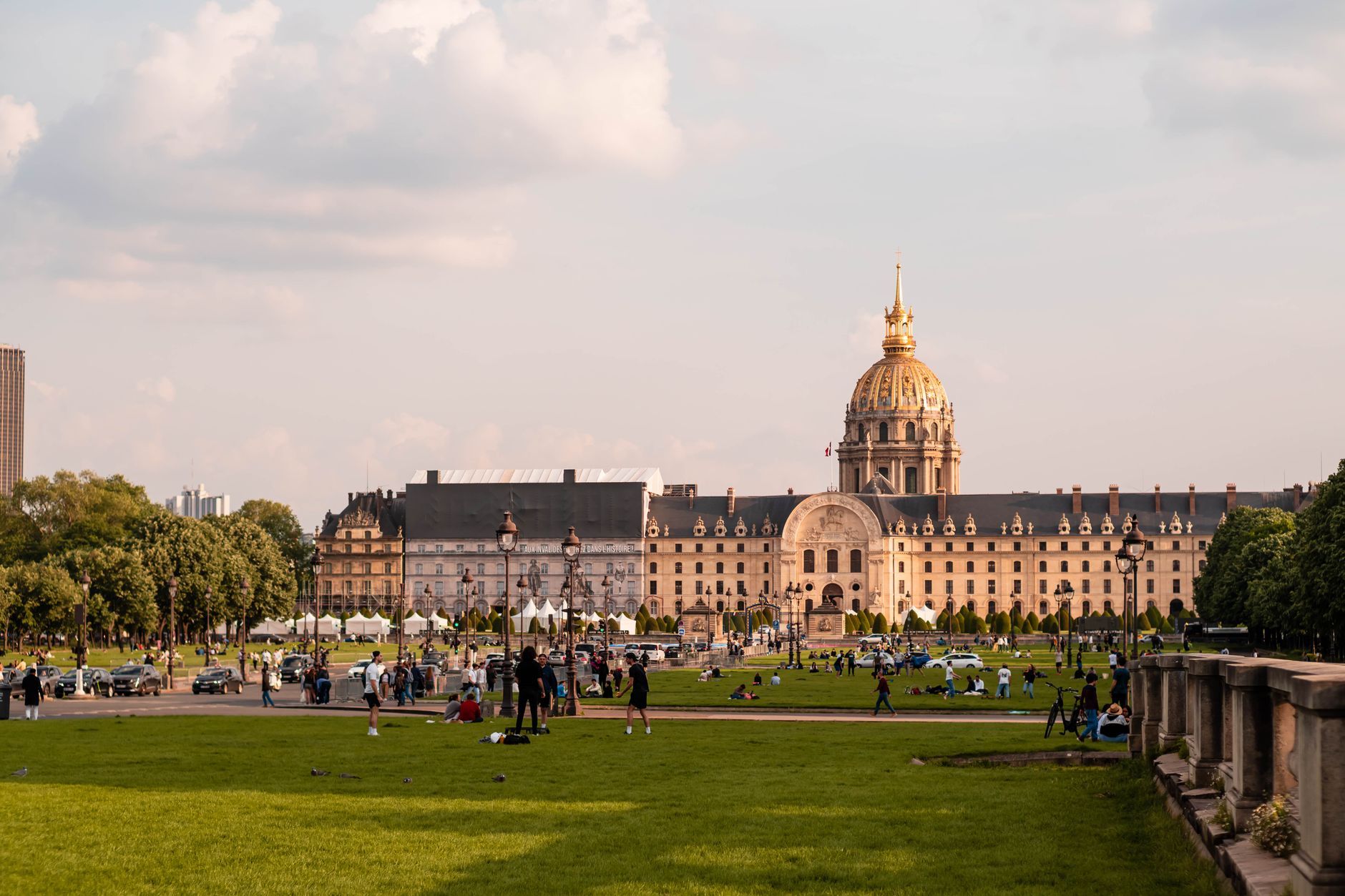
From the Pont Alexandre III, the Esplanade des Invalides runs south in a long sweep of lawn towards a building that looks like a barracks crowned by a gold helmet. In a way that is exactly what it is. Louis XIV built the Hôtel des Invalides as a home for his wounded and worn-out soldiers, and wounded soldiers are still cared for here today. Most visitors arrive with one aim, to see the Les Invalides Napoleon tomb under that gilded dome, and leave without realising they have walked past one of the great military museums. This guide covers both, and is honest about which parts are worth your time.
It covers tickets, hours and free entry, the Dôme and the tomb, the Musée de l’Armée’s collections, the two smaller museums included in the ticket, the history of the site, how long to allow and what else to combine it with. Prices and hours were checked in November 2026 against the Musée de l’Armée’s own pages; check the museum’s site before you go, especially for exhibitions and evening openings.
Les Invalides at a glance
| What | The short version |
|---|---|
| Ticket (2026) | €17 full price, €12 reduced; includes the Dôme and Napoleon’s tomb, the museum’s collections, the current temporary exhibition and two smaller museums |
| Free | Under 18s; EU and EEA nationals and residents aged 18–25 get free or very cheap access to the permanent collections and the Dôme |
| Paris Museum Pass | Accepted, with direct entry |
| Opening hours | Daily 10:00–18:00; until 22:00 on the first Friday of the month |
| Closed | 1 January, 1 May and 25 December |
| Entrances | 129 rue de Grenelle or place Vauban |
| How long | An hour for the Dôme and the courtyard; half a day for the museum as well |
| Free without a ticket | The Cour d’honneur and the soldiers’ church, Saint-Louis-des-Invalides |
Tickets, prices and free entry
One ticket covers almost everything on the site. In 2026 the full price is €17 and the reduced price €12. That ticket gets you into the Dôme church and Napoleon’s tomb, the permanent collections of the Musée de l’Armée, whatever temporary exhibition is on, the Musée de l’Ordre de la Libération and the Musée des Plans-Reliefs. There is no separate, cheaper ticket just for the tomb.
Who gets in free
- Under 18s go free, with proof of age.
- EU and EEA nationals and residents aged 18 to 25 get free or nearly free access to the permanent collections and the Dôme. The museum’s pages describe both a free ticket and a €5 ticket for this group, so check the current terms when you book.
- Free-entry visitors still need to collect a ticket, either online or at the desk.
Unlike the Louvre and Versailles, the Musée de l’Armée did not show a separate, higher price for visitors from outside the EEA in its 2026 price list.
Booking and the Paris Museum Pass
You can book a timed ticket on the Musée de l’Armée’s own site, which lets you go straight in without queueing at the desk. The ticket desks close 30 minutes before the museum does, and take cards and cash. The Paris Museum Pass is accepted, with direct entry and no booking needed, and it covers the temporary exhibitions too. Les Invalides is a site where the Pass is useful, because the full-price ticket is €17. Our Paris Museum Pass guide works out whether it pays back for your plans, and our comparison of Paris city passes looks at the alternatives.
Evening visits and combined tickets
- First Friday late openings: on the first Friday of each month the museum and the Dôme stay open until 22:00, with a reduced late ticket of €10. The desks close at 21:00, and in the evening the way in is 129 rue de Grenelle. The Dôme after dark is usually quieter and more atmospheric than at midday.
- The Musée Rodin combined ticket: the museum sells a joint ticket with the Musée Rodin, a few minutes’ walk away, for €26, valid for three months. If you plan to visit both, it saves money; remember the Rodin is closed on Mondays. Our Musée Rodin guide covers that side.
Audio guide
The museum offers a free digital guide through the museum’s Wi-Fi and QR codes, and lends devices at the entrance against an ID. The museum’s digital guide is being renovated, so check what is available when you arrive.
Getting there and getting in
Les Invalides sits in the 7th arrondissement, between the Esplanade on the north side, facing the river, and place Vauban on the south side, behind the Dôme. The Métro and RER station Invalides (lines 8 and 13 and the RER C) is at the river end of the Esplanade, and Varenne (line 13) is just east of the site, near the Musée Rodin. Use the RATP journey planner for the station closest to your starting point.
The museum gives two entrances: 129 rue de Grenelle, through the main north front and into the Cour d’honneur, and place Vauban, on the Dôme side. Coming from the river, the walk up the Esplanade to the main front is the grand approach, and the one to take the first time. The Musée de l’Ordre de la Libération asks visitors to use the rue de Grenelle entrance while its own place Vauban door is closed.
The Dôme and Napoleon’s tomb
The Dôme church was built for Louis XIV by Jules Hardouin-Mansart and completed in 1706, as a royal chapel attached to the soldiers’ home. It is one of the masterpieces of French Baroque architecture, and its golden dome is one of the landmarks of the Paris skyline. Inside, the space is bright, tall and almost bare, built around a single open circular crypt cut into the floor.
The tomb
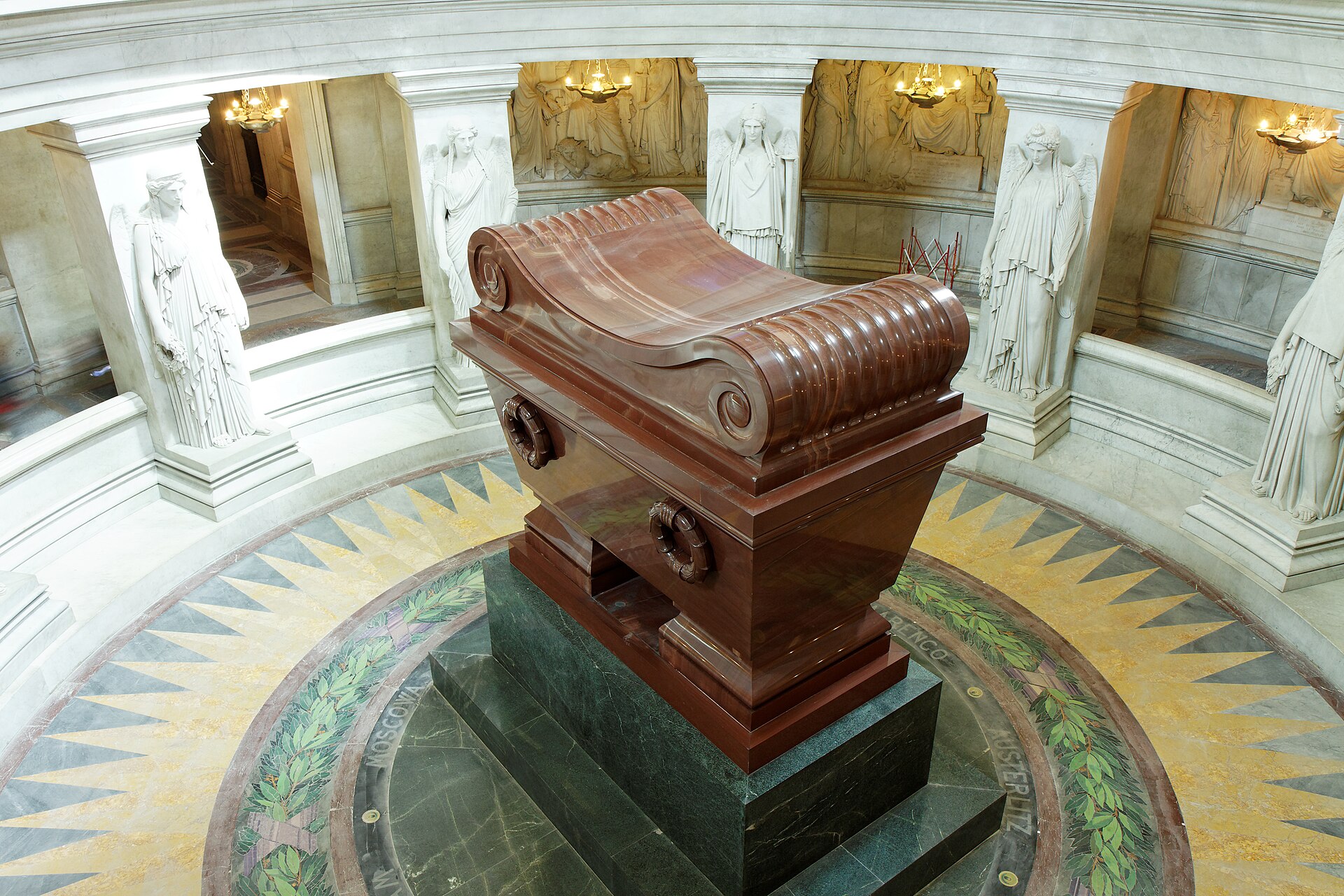
In the crypt lies Napoleon. He died in exile on Saint Helena in 1821, and in 1840 his remains were brought back to France in the event the French call the Retour des cendres, the return of the ashes. The tomb designed for them by the architect Louis Visconti took two decades to complete, and the emperor was laid here in 1861.
You look down on the sarcophagus from a balustrade at floor level, then descend to the gallery that circles it. It is enormous: a block of red quartzite (often described, wrongly, as porphyry) on a base of green granite, ringed by tall white figures representing his victories, with the names of his battles set into the mosaic floor. The effect is deliberate: you have to look down to see him, and you have to bow your head to read the inscriptions around the gallery. Love him or loathe him, it is one of the most theatrical tombs in Europe.
Who else is buried in the Dôme
Napoleon is not alone. The side chapels of the Dôme hold the tombs of his brothers Joseph and Jérôme Bonaparte, and of great French soldiers: Marshal Turenne, brought here in 1800; the heart of Vauban, Louis XIV’s military engineer; Marshal Foch, the Allied commander of 1918; and Marshal Lyautey. Napoleon’s son, Napoleon II, known as l’Aiglon, the eaglet, was brought here from Vienna in 1940. Walk the circuit of the chapels after the crypt; most people miss them.
Why the tomb looks the way it does
The return of Napoleon’s remains in 1840 was politics as much as piety. The government of King Louis-Philippe hoped that honouring the emperor would borrow some of his glory for a monarchy that had little of its own, and the ceremony in Paris that December drew enormous crowds despite the freezing weather. The tomb that followed was designed to make a statement: the emperor placed at the centre of the old royal chapel, beneath the dome built for Louis XIV, surrounded by the names of his victories. You do not have to admire Napoleon to see what the designers were doing, and the tomb is as interesting as a piece of nineteenth-century image-making as it is as a grave.
It helps to arrive with a little context, because the tomb itself explains very little. The museum’s galleries on the Revolution and the Empire, the free digital guide and the panels around the crypt gallery fill in the story. If you have time for only one extra part of the museum after the tomb, the Napoleonic rooms complete it.
The Musée de l’Armée: what is worth your time
The Musée de l’Armée is a vast collection of military art and history, and it is easy to see why once you are inside. It was founded in 1905 and fills the wings around the Cour d’honneur. You cannot see it all in one visit, and you should not try. Here is how to choose.
The armour galleries
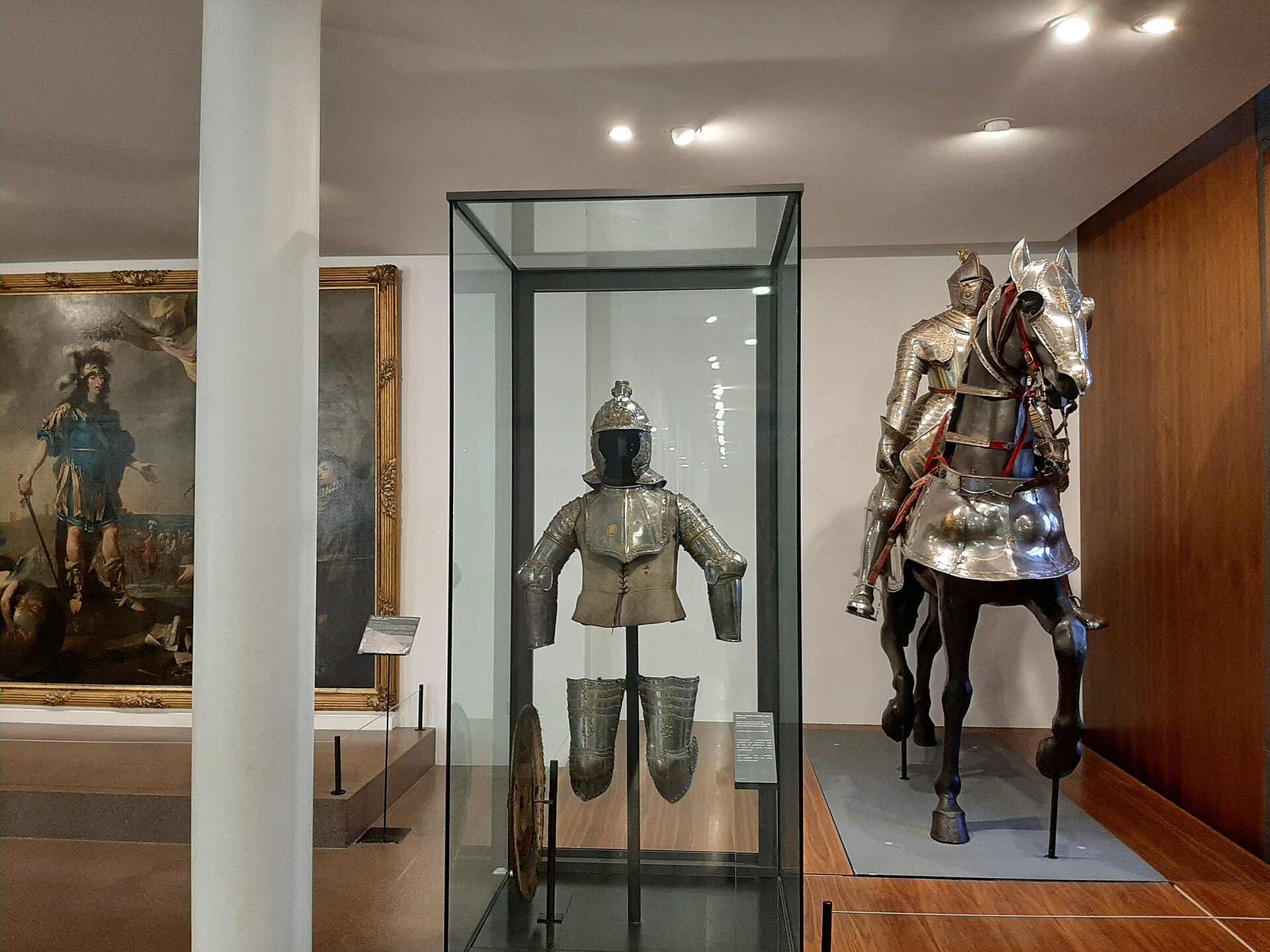
The museum’s ancient department, with its medieval and Renaissance armour, is the part that surprises people. Halls of plate armour, armoured horses and weapons, some of it made for kings, are displayed with real flair. Even visitors with no interest in military history usually find these rooms beautiful. If you see only one part of the museum, make it this one.
From Louis XIV to Napoleon III
These galleries follow the French army from the age of Louis XIV through the Revolution and the Empire. For anyone who has just come from the tomb, the Napoleonic rooms are the natural next stop: uniforms, weapons, paintings and personal objects connected with the emperor. It is a lot of glass cases, and a lot of uniforms; dip in for the Napoleon material rather than reading every label.
The two World Wars
The galleries on the two World Wars are the most moving part of the museum and the best organised for visitors who want the story rather than the objects. They follow France through 1914–1918, the defeat of 1940, the Occupation, the Resistance, the Free French and the Liberation, with film, documents and objects. Give these rooms more time than you think you will need.
The Historial Charles de Gaulle
On the site, the Historial Charles de Gaulle is devoted to the life of the general and president. From 21 November 2026 to 20 June 2027 it hosts the exhibition De Gaulle avant de Gaulle, on the man before he became the figure history remembers, included in the museum ticket.
The Cour d’honneur and the cannons
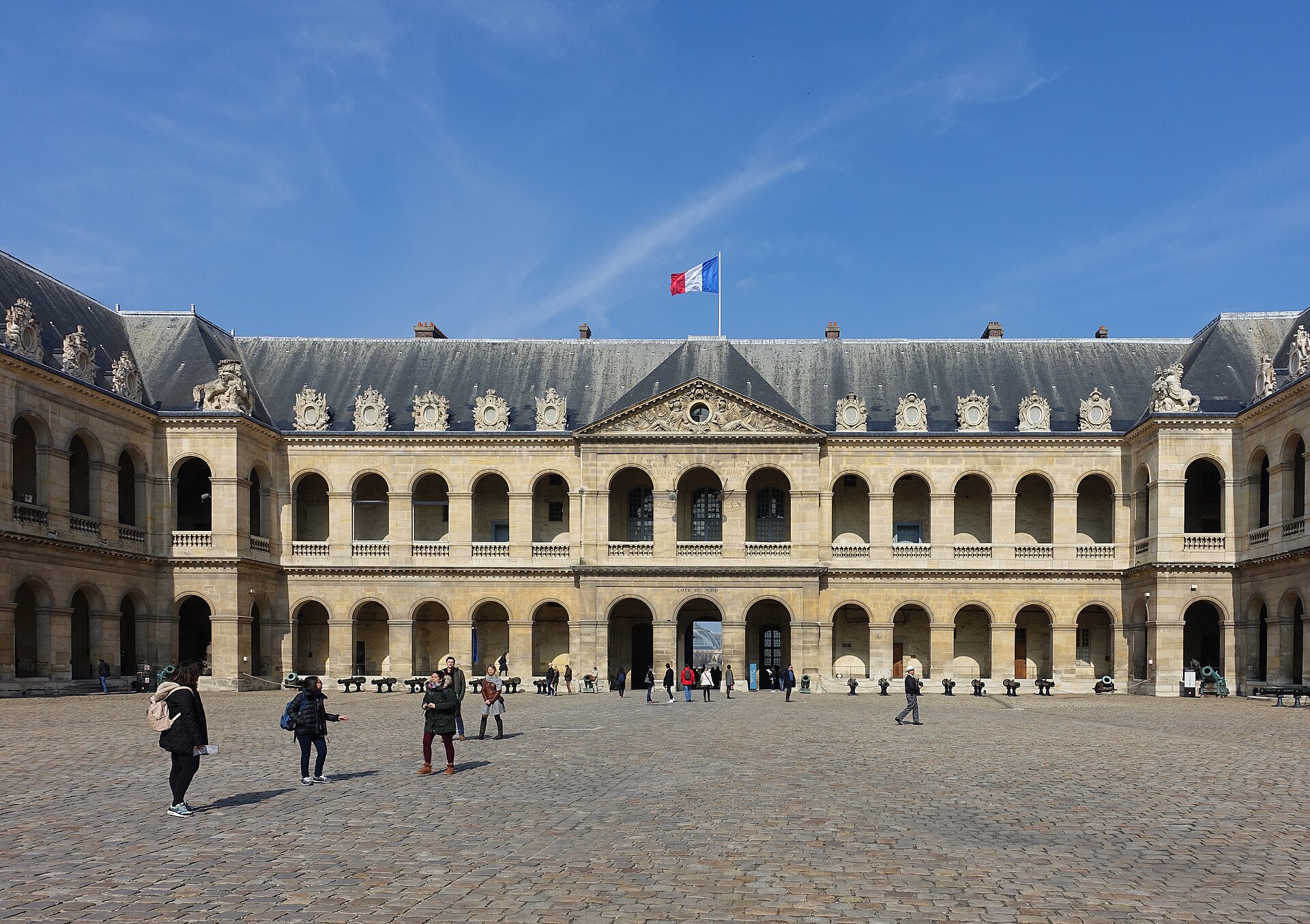
The great arcaded courtyard at the heart of the Hôtel des Invalides is free to enter, without a ticket. It is lined with cannons and was designed for parades, which still happen on official occasions. Its paving has just been restored after a year of works, finished in September 2026. Stand in the middle and look at the uniform two-storey arcades: this is the barracks side of the building, as plain as the Dôme is grand.
The soldiers’ church: Saint-Louis-des-Invalides
Back to back with the Dôme, but separate from it, is the soldiers’ church, Saint-Louis-des-Invalides, completed after the architect Libéral Bruant’s original design. It is free to enter. Where the Dôme was the king’s chapel, this was the church for the residents, and it is still used for services. Look up at the flags taken from enemy armies that hang along the nave, and at the organ in the gallery. A glass window at the far end looks through into the Dôme, so the soldiers and the king could share a single altar without sharing a church.
The two museums you did not know you had paid for
The Musée de l’Ordre de la Libération
This small museum honours the Order of the Liberation, created by de Gaulle to recognise those who did most for the liberation of France in the Second World War, and tells the story of the Free French and the Resistance through their lives and possessions. It is quiet and personal, and a good counterpoint to the scale of the main museum. Its temporary exhibition, Combattre sur tous les fronts, les aviateurs de la France Libre (1940–1945), on the airmen of the Free French, runs until 14 February 2027. It is open from 10:00 to 18:00, with the entrance closing at 17:30.
The Musée des Plans-Reliefs
On the fourth floor, the Musée des Plans-Reliefs displays scale models of fortified towns, a collection begun in 1668 for the king’s military planners. The models are astonishingly detailed, and the largest on display covers 56 square metres. It is dimly lit and a bit of a climb, and it is one of the strangest and most memorable rooms in Paris. It opens at 11:00, an hour later than the main museum.
The history of Les Invalides in brief
Louis XIV ordered the building of the Hôtel des Invalides in 1670, to house soldiers too old or too badly wounded to serve. Before that, old soldiers often ended up begging on the streets. The architect was Libéral Bruant, and the scale of the place, with its courtyards, dormitories, workshops and church, made it a small town for thousands of men. Jules Hardouin-Mansart then added the Dôme as a royal chapel, completed in 1706.
The site has been at the heart of French military history ever since. On 14 July 1789, the crowd that went on to storm the Bastille first came to the Invalides to seize muskets. Napoleon was brought back to lie here in 1840 and laid in his tomb in 1861, and the army museum was founded in 1905. More than 350 years after Louis XIV’s decision, the Invalides still houses veterans and the wounded, alongside the museums and the military governor of Paris.
How long to allow, and a suggested route
An hour is enough for the Dôme and the tomb, the Cour d’honneur and the soldiers’ church. Add two to three hours if you want to do the museum properly. Many visitors make the mistake of doing the museum first and arriving at the Dôme tired; do it the other way round.
- Arrive along the Esplanade from the river for the full view of the north front.
- Cross the Cour d’honneur and step into Saint-Louis-des-Invalides.
- Visit the Dôme and the tomb, including the side chapels.
- Choose two parts of the museum: the armour and the World Wars galleries are the strongest pair. Add the Napoleonic rooms if the tomb has caught your imagination.
- Finish with the Plans-Reliefs if you still have energy, or walk to the Musée Rodin garden for a rest.
The quietest times are usually first thing in the morning and the late opening on the first Friday of the month.
When to go
Les Invalides is busy but rarely overwhelming, because the site is so big and most visitors head straight for the Dôme. The tomb is at its most crowded in the middle of the day and during the French school holidays, when families fill the museum. Mornings, especially on weekdays, are calmer, and the first-Friday late opening is usually quieter still. Winter is a good season for a visit, since the museum is a warm, dry half-day out when the weather is poor, and the Dôme glows on a grey day. On a summer evening, finish on the lawns of the Esplanade, where Parisians picnic until dark.
Practical tips
- Book online if you do not have the Paris Museum Pass. A timed ticket lets you skip the queue at the desk, which can be long at weekends and in the holidays.
- Collect your free ticket if you are under 18 or an eligible EU or EEA resident aged 18 to 25; free entry still needs a ticket.
- Bring ID for any reduced or free ticket, and to borrow a guide device.
- Start with the Dôme, then choose two or three parts of the museum. Trying to see everything is the most common mistake.
- Wear comfortable shoes. The site is vast, the galleries are spread across several floors and the Plans-Reliefs are on the fourth floor.
- Check the programme on the museum’s site before you go: temporary exhibitions, concerts in the Saison musicale and family events change through the year.
- Do not skip the free parts. Even without a ticket, the Cour d’honneur and Saint-Louis-des-Invalides are worth twenty minutes.
AURA Invalides: the show in the Dôme
After dark, the Dôme hosts AURA Invalides, a sound-and-light show projected onto the architecture of the church. It is a separate ticket, booked in advance, and in 2026 cost €28 for adults, €18 for under-26s and €12 for under-18s. The minimum age varies between listings, so check it on the booking page. If you enjoy immersive light shows, the setting is spectacular; if you only have one evening in Paris, a walk along the river may be a better use of it. See the museum’s events page for dates and times.
Is Les Invalides worth visiting?
Yes, but go in with a plan. The Dôme and Napoleon’s tomb are a must for anyone with an interest in French history, and they are genuinely impressive even for those without. The armour galleries and the World Wars rooms are among the best museum spaces in Paris. The free parts, the courtyard and the soldiers’ church, are worth a detour even if you do not buy a ticket.
The weaker point is the sheer size of the museum: rooms full of uniforms and cases of weapons blur together after an hour or two, and many visitors try to see everything and end up seeing nothing well. Be selective. And while €17 is not cheap for a tomb alone, it is fair for everything the ticket includes, and it is free for under-18s, which makes it good value for families. If you have the Paris Museum Pass, it is an easy win.
Combining Les Invalides with the rest of the Left Bank
- The Musée Rodin is a few minutes’ walk east, with a sculpture garden that has a view of the Dôme. The combined ticket makes the pair cheaper. See our Musée Rodin guide.
- The Eiffel Tower is a walk west across the Champ de Mars. See our Eiffel Tower guide.
- The Pont Alexandre III, one of the most ornate bridges in Paris, links the Esplanade to the Grand Palais and the Petit Palais on the Right Bank.
- Rue Cler, the market street just west of the Invalides, is the place for lunch or a picnic. Our guide to Paris food markets has more.
- The Musée d’Orsay is a walk east along the river. See our Musée d’Orsay guide.
For more ideas, our list of the top Paris attractions and our Paris museums guide will help you plan the rest of your visit.
Les Invalides with children
Les Invalides works better for children than you might think. Under-18s go free, the armour galleries feel like a castle, the cannons in the courtyard are a hit, and the Plans-Reliefs models fascinate children who like miniature worlds. The museum also runs family events in the school holidays, including a Playmobil event from 21 December 2026 to 10 January 2027. Keep the World Wars galleries for older children, as some of the material is hard-hitting. See our kid-friendly museums guide and our Paris with kids guide.
Frequently asked questions
How much does it cost to see Napoleon’s tomb?
In 2026, the Musée de l’Armée ticket costs €17 (€12 reduced) and includes the Dôme and Napoleon’s tomb, the museum’s collections and two smaller museums. Under 18s go free.
Is Napoleon’s tomb included in the Paris Museum Pass?
Yes. The Paris Museum Pass is accepted for the Musée de l’Armée and Napoleon’s tomb, with direct entry and no booking needed.
Is Napoleon really buried at Les Invalides?
Yes. His remains were brought back from Saint Helena in 1840 and placed in the tomb beneath the Dôme in 1861.
How long do you need at Les Invalides?
About an hour for the Dôme, the tomb and the courtyard, and two to three hours more for the museum.
What are the opening hours?
Daily from 10:00 to 18:00, and until 22:00 on the first Friday of the month. The museum is closed on 1 January, 1 May and 25 December.
Can you visit any of Les Invalides for free?
Yes. The Cour d’honneur and the soldiers’ church, Saint-Louis-des-Invalides, are free to enter without a ticket. The Dôme and the museums need a ticket.
Is Les Invalides worth visiting?
Yes, especially for Napoleon’s tomb, the armour galleries and the World Wars rooms. Be selective in the museum rather than trying to see everything.
Related Paris Guides
- Musée Rodin guide
- Is the Paris Museum Pass worth it?
- The top Paris attractions
- Eiffel Tower guide
- Paris museums guide
Photo Credits
The Dôme des Invalides: Dôme des Invalides, Paris 10 October 2010 by Taxiarchos228, CC BY-SA 3.0, via Wikimedia Commons.
Napoleon’s tomb: Paris – Dôme des Invalides – Tombeau de Napoléon – 001 by Thesupermat, CC BY-SA 3.0, via Wikimedia Commons.
The Cour d’honneur: Cour d’honneur des Invalides, Les Invalides, Paris 12 March 2016 by Guilhem Vellut from Paris, France, CC BY 2.0, via Wikimedia Commons.
The armour galleries: Département ancien du musée de l’Armée by EleMuseeArmee, CC BY-SA 4.0, via Wikimedia Commons.