15 Small Museums in Paris You’ve Never Heard Of
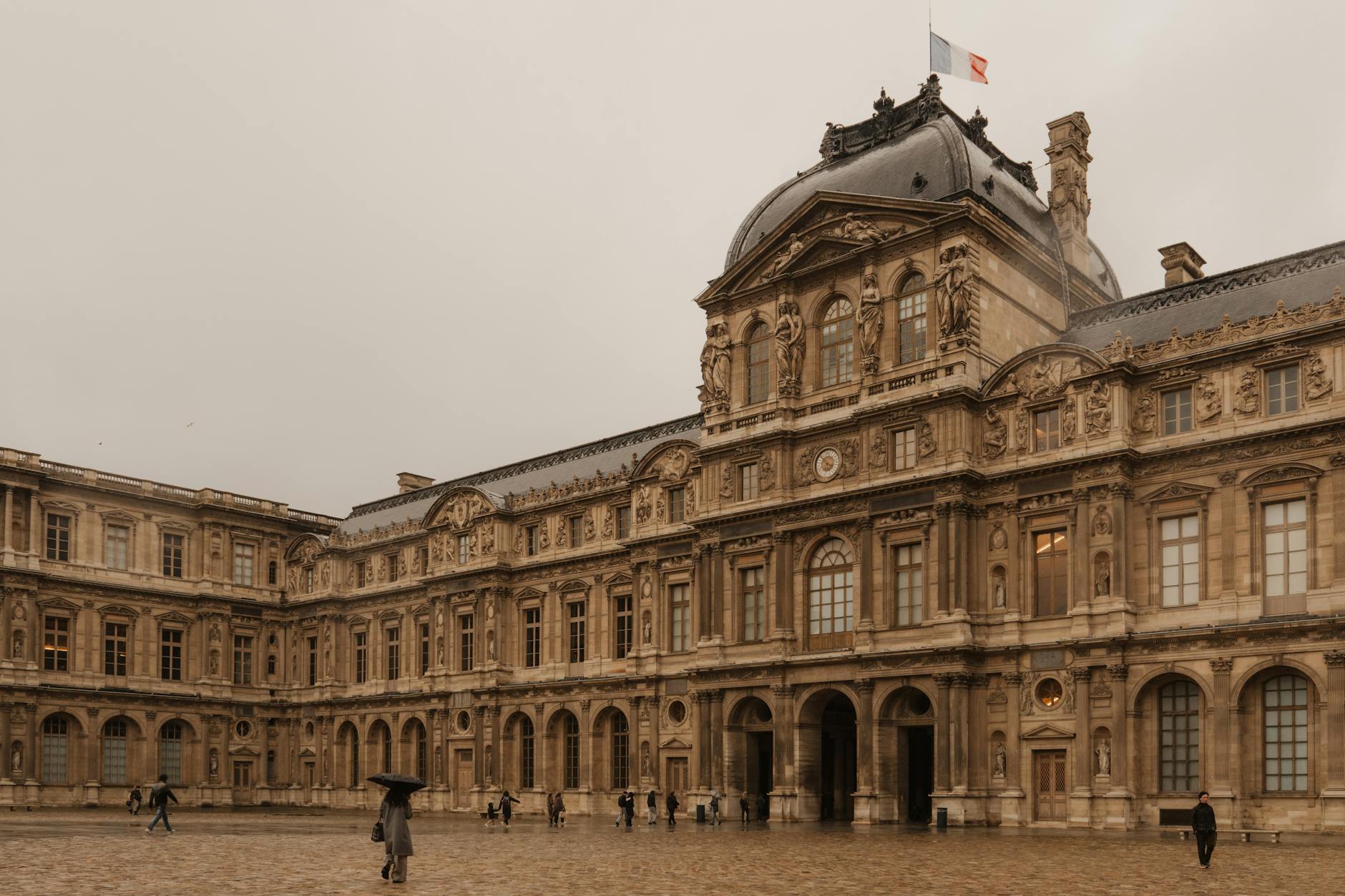
Around the third hour at the Louvre, something gives way. You stop looking and start shuffling, reading wall labels you won’t remember, queuing behind a phone held aloft in front of a painting you can no longer see. Paris has more than 130 museums, and the city keeps selling you the three that produce exactly this feeling. The fix is the other 127. The 15 small museums in paris in this guide are mostly under 2,000m², mostly doable in 60 to 90 minutes, and many of them free. Together they tell you more about how Paris actually lived and made art than any four-hour blockbuster march. They fall into clear families: the writers’ houses (Hugo, Balzac, Sand, Delacroix), the collectors’ private mansions (Jacquemart-André, Camondo, Cernuschi), the artists’ studios (Bourdelle, Zadkine, Moreau, Maillol), a couple of genuine oddities (Chasse et Nature, Arts Forains), and the specialists nobody tells you about. Keep our Paris galleries guide open in another tab for the big-picture context.
The point isn’t that the Louvre and the Musée d’Orsay aren’t worth it. Go once. But after that first dose, the museums below give you something the giants can’t: a scale you can finish, prices that rarely top €13 and are often zero, and settings that are half the reason to come. Hôtels particuliers, painters’ ateliers, Belle Époque mansions left more or less as their owners died in them. You leave remembering specific objects in specific rooms instead of one long impressionist blur.
Why Small Museums Beat the Big Ones
The big three — Louvre, Orsay, Pompidou — charge you a sensory tax before you see a single painting. You queue. You funnel through crowds. By the time you reach the gallery you actually came for, 90 minutes of your attention is already spent. Small museums run the opposite way. The Maison de Victor Hugo or the Musée Cognacq-Jay takes 60 to 90 minutes start to finish, and you see all of it. Nothing is left for “next time.”
Then there’s the money. Most museums on this list belong to the Paris Musées city network, which means their permanent collections are free, all year: Carnavalet, Hugo, Balzac, Cognacq-Jay, Cernuschi, Bourdelle, Vie Romantique, Petit Palais. Our free museums in Paris guide has the complete roster if budget is the deciding factor for your trip.
And the buildings do real work here. The Jacquemart-André mansion, the Camondo hôtel, Hugo’s apartment over the Place des Vosges, Delacroix’s studio tucked behind Saint-Germain: these are domestic interiors frozen at a precise moment in 18th- and 19th-century Paris, and the Louvre has nothing comparable to offer. The smallness also buys you choice. Pick a Symbolist painter, a Belle Époque banker, or a Cubist sculptor, give that one obsession a focused afternoon, and skip the impossible project of cramming five centuries into a single ticket.
The Writers’ Houses (5 Museums)
Nineteenth-century Paris was the literary capital of Europe, and in several cases the apartments where its novelists wrote have survived as house-museums. The five below cover four monumental writers and one singer, spread across four arrondissements, and most cost nothing.
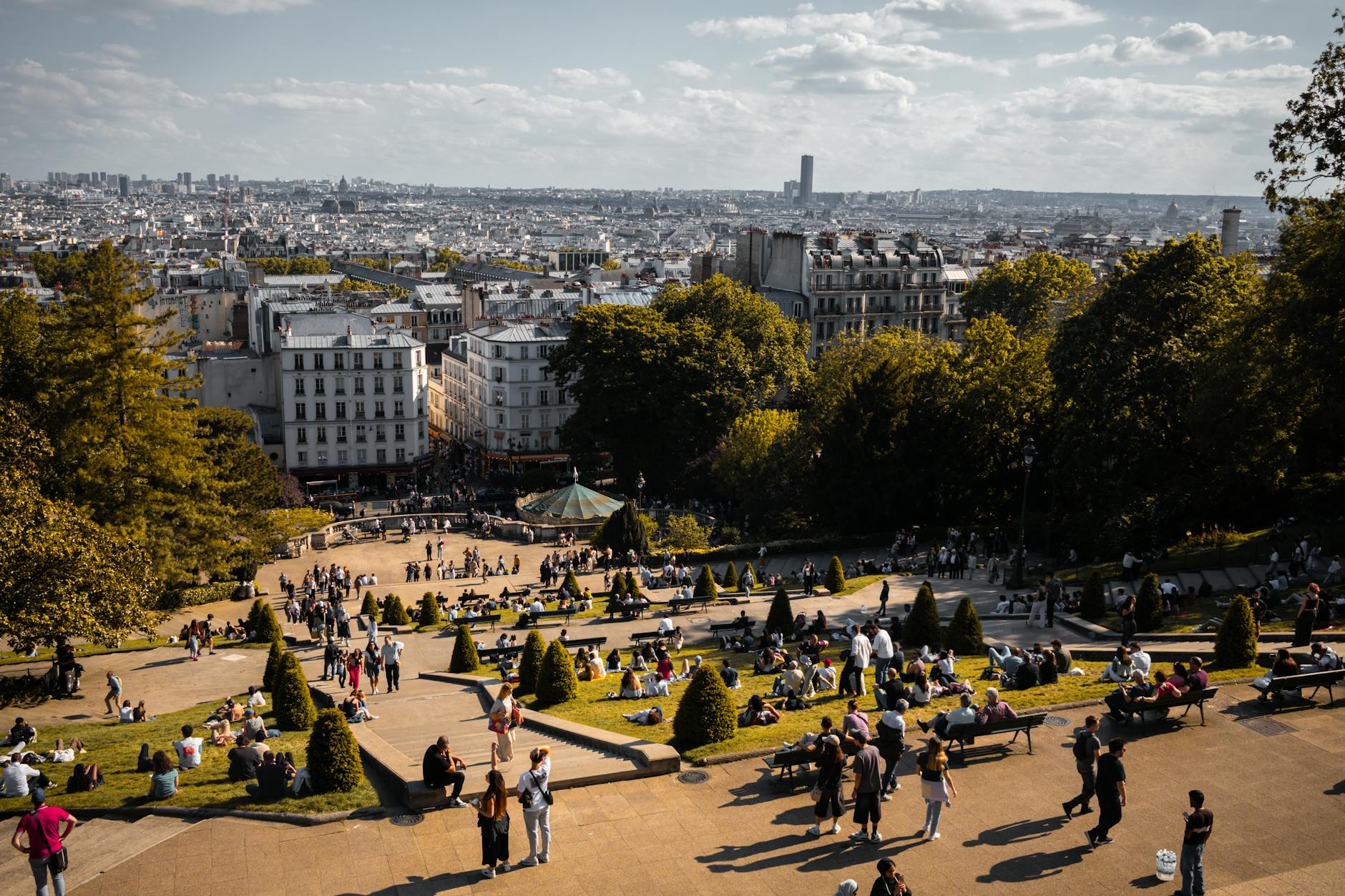
Maison de Victor Hugo
Hugo lived at 6 Place des Vosges from 1832 to 1848, the stretch that produced much of his best work. His second-floor apartment is now arranged room by room around his life: an antechamber of family memorabilia, the Chinese salon he designed himself for his lover Juliette Drouet, and a reconstruction of the bedroom where he died in 1885. Portraits, manuscripts, and the man’s own decidedly odd furniture fill it out.
Address: 6 Place des Vosges, 4th arrondissement. Admission: permanent collection FREE; temporary exhibitions around €9. Closed: Monday. Sitting on the handsomest square in the city, it slots into a Marais walking itinerary with almost no effort.
Maison de Balzac
Set in a sloping garden in Passy, this is the only one of Balzac’s Paris addresses still standing. He hid here from 1840 to 1847 under a false name to dodge his creditors, and wrote big chunks of La Comédie humaine while he did it. The museum keeps his writing desk, the famous monogrammed coffee pot that fuelled the all-night sessions, annotated manuscripts, and a genealogical chart tracking the recurring characters across his novels.
Address: 47 Rue Raynouard, 16th arrondissement (Passy). Admission: permanent collection FREE. Closed: Monday. The garden looks toward the Eiffel Tower and ranks among the loveliest small-museum gardens in the city. Bring a book and you may not leave.
Musée de la Vie Romantique
At the foot of Montmartre, down a cobbled lane you’d walk past without noticing, sits the former house of the painter Ary Scheffer, whose Friday-night salons pulled in Chopin, Liszt, Delacroix, and George Sand. The ground floor belongs to Sand — her jewellery, the plaster cast of Chopin’s hand — and Scheffer’s paintings hang upstairs. The garden tea room is about as calm as central Paris gets.
Address: 16 Rue Chaptal, 9th arrondissement. Admission: permanent collection FREE. Closed: Monday. Pair it with the Musée Gustave Moreau, ten minutes’ walk away.
Musée National Eugène-Delacroix
Delacroix took an apartment on the Place de Furstenberg in 1857 to be near Saint-Sulpice, where the murals that ate his final years were waiting. He built a studio in the garden, and it survives intact, north-light windows and all. The apartment shows paintings, letters, and his palette. The square itself, Place de Furstenberg, is the smallest and prettiest in the 6th and worth the trip on its own.
Address: 6 Place de Furstenberg, 6th arrondissement. Admission: €7; FREE the first Sunday of each month. Closed: Tuesday. A combined ticket with the Louvre shaves off a few euros if you’re doing both.
Musée Edith Piaf
The most improbable museum in Paris is a third-floor private flat in the 11th, where Bernard Marchois has spent decades hoarding Piaf relics: stage dresses, her stuffed teddy bear, fan letters, gold records, a life-sized cardboard cut-out of the woman herself. Entirely unofficial, viewable by appointment, and completely charming because of it.
Address: 5 Rue Crespin du Gast, 11th arrondissement. Admission: FREE (a donation is appreciated). Access: by phone appointment only, so ring ahead. Closed: variable. Sort this one out well before you fly.
Collectors’ Private Museums (4 Museums)
Late-19th-century Paris bred a particular type: the obsessive private collector. Bankers, industrialists, financiers who packed their hôtels particuliers with art and then, on dying, handed house and contents to the city or the state. Four survive in remarkable shape, and three of them stand within a short walk of each other near Parc Monceau in the 8th.
Musée Jacquemart-André
Édouard André and his wife Nélie Jacquemart spent the back half of the 19th century building one of the finest private holdings of Italian Renaissance art in Paris. Their 1869 mansion on Boulevard Haussmann opens onto a double helical marble staircase, with formal salons hung with Boucher, Fragonard, and Rembrandt, and an upstairs Italian gallery holding Botticelli, Mantegna, and Uccello. The Belle Époque tea room has earned its reputation.
Address: 158 Boulevard Haussmann, 8th arrondissement, near the Champs-Élysées. Admission: €16. Open daily. Book online ahead; the place is small and weekend slots vanish fast.
Musée Nissim de Camondo
On the edge of Parc Monceau, the Camondo is a fanatically exact recreation of an 18th-century hôtel particulier, built in 1911 by the banker Moïse de Camondo to house his pre-Revolutionary French decorative arts. Sèvres porcelain, Savonnerie carpets, Riesener desks, gilded panelling. The history underneath the beauty is brutal: Camondo’s son Nissim died flying for France in 1917, and the rest of the family was murdered at Auschwitz. The museum carries his name.
Address: 63 Rue de Monceau, 8th arrondissement. Admission: €12. Closed: Monday and Tuesday. Read Edmund de Waal’s 2021 Letters to Camondo on the flight over and the rooms will land harder.
Musée Cognacq-Jay
Ernest Cognacq and Marie-Louise Jay built the Samaritaine department store, then poured the proceeds into 18th-century French art and furniture. Their collection now fills the Hôtel Donon, a 16th-century Marais mansion: Watteau, Fragonard, Boucher, Chardin, Tiepolo, pastels by La Tour, snuffboxes, and a small room of porcelain that’s worth the visit by itself. One of the most enjoyable hours in the Marais, and it costs nothing.
Address: 8 Rue Elzevir, 3rd arrondissement (Marais). Admission: permanent collection FREE. Closed: Monday. Roll it into the Musée Carnavalet (also free) two blocks over.
Musée Cernuschi
Henri Cernuschi, a Milan-born banker, came home from a round-the-world trip in 1873 with five thousand pieces of East Asian art and built a small hôtel particulier beside Parc Monceau to keep them in. The result is one of the great collections of Chinese bronzes, ceramics, and funerary art outside Asia, with Japanese and Korean galleries on top. A giant Buddha shipped over from Tokyo presides over the central hall.
Address: 7 Avenue Velasquez, 8th arrondissement (next to Parc Monceau). Admission: permanent collection FREE. Closed: Monday. The three Parc Monceau museums — Jacquemart-André, Camondo, Cernuschi — make one long day with a park lunch wedged in the middle.
Artists’ Studios (4 Museums)
The studios are the most evocative small museums in Paris, full stop. These are the actual workspaces, where you can still read the process off the walls and, in one or two of them, more or less smell it. The four below run from monumental sculpture to Symbolist painting to modern figuration, and from the grand (Bourdelle, with its towering plasters) to the pocket-sized (Zadkine, hiding in its garden).
Musée Bourdelle
Antoine Bourdelle, Rodin’s ablest assistant, worked from this warren of studios behind Montparnasse from 1885 until he died in 1929. The museum has kept the layout almost untouched: the great Hall of Plasters with its monumental Heracles, the intimate sculpture studio, a quiet garden lined with bronze casts. He never matched Rodin’s fame, but the work often hits more directly.
Address: 18 Rue Antoine Bourdelle, 15th arrondissement. Admission: permanent collection FREE. Closed: Monday. Fifteen minutes’ walk takes you to the Musée Rodin (paid) for the obvious comparison.
Musée Zadkine
Ossip Zadkine, the Belarusian-French Cubist, lived and worked behind a wooden door on Rue d’Assas from 1928 until his death in 1967, in a tiny atelier with a garden. Bronze figures stand among the plants, drawings and plaster studies fill the studio, and the whole thing feels like a secret the 6th has been keeping on purpose.
Address: 100bis Rue d’Assas, 6th arrondissement. Admission: permanent collection FREE. Closed: Monday. From here to the Musée Delacroix through the Luxembourg Gardens is one of the best short museum-to-museum walks in Paris.
Musée National Gustave-Moreau
Gustave Moreau, the Symbolist, turned his family townhouse into a museum of his own work, laying out the displays himself before he died in 1898. The lower floors are the family apartments, furniture intact. The upper floors are vast studios with cathedral-height walls solid with finished paintings, linked by a famous spiral staircase. Pull out the sliding panels yourself and thousands of drawings swing into view.
Address: 14 Rue de la Rochefoucauld, 9th arrondissement. Admission: €7. Closed: Tuesday. FREE the first Sunday of each month.
Musée Maillol
The Musée Maillol sits in an 18th-century hôtel particulier on Rue de Grenelle that once belonged to Dina Vierny, Maillol’s last muse, who founded the museum in 1995. Alongside Maillol’s monumental bronzes you get works from Vierny’s circle — Matisse, Bonnard, Picasso — and the temporary shows are reliably among the strongest in the city.
Address: 59-61 Rue de Grenelle, 7th arrondissement. Admission: €13. Open daily. Our Paris art galleries guide maps the Left Bank galleries you can string onto the same afternoon.
Cabinet of Curiosities (2 Museums)
Two of these museums refuse every standard label. They sit somewhere between museum and theatre, collection and installation, and both work best on visitors who don’t mind being knocked a little off balance.
Musée de la Chasse et de la Nature
Spread across a pair of restored 17th-century Marais mansions, the Museum of Hunting and Nature is the strangest small museum in Paris and stages an argument, room by room, between old hunting weaponry and commissioned contemporary art. A boar room. A stag room. A unicorn room. Period trophies share space with pieces by Sophie Calle and Jeff Koons. Even people who flinch at the premise tend to walk out hooked.
Address: 62 Rue des Archives, 3rd arrondissement (Marais). Admission: €12. Closed: Monday. Pair it with the nearby Cognacq-Jay and Carnavalet for a Marais day that mixes free and paid.
Musée des Arts Forains
In converted 19th-century wine warehouses in the 12th, the collector Jean-Paul Favand has gathered a private hoard of antique fairground rides, carousels, and Belle Époque amusement-park machinery. A lot of it still runs. Guided visits put you on a working 1900 carousel and walk you through mechanical illusions that have no business looking that convincing. Theatrical, slightly uncanny, and a sure thing with kids.
Address: 53 Avenue des Terroirs de France, 12th arrondissement. Admission: €18.80 adults; €12.40 children. Access: reservation only, guided visits only, so book online well ahead, especially over school holidays.
The Free Museums Bonus List
Past the small museums above, the city’s Musées de la Ville network runs several larger free-admission museums that pay off just as well if you’re stretching a budget. Permanent collections are free year-round; only the special temporary shows charge.
- Musée Carnavalet — the official museum of the history of Paris, 23 Rue de Sévigné in the Marais. Recently renovated, two floors running from Gallo-Roman Paris to the present. Free permanent collection.
- Petit Palais — opposite the Grand Palais on Avenue Winston Churchill, a Beaux-Arts museum with a strong 19th-century French painting collection plus antiquities and decorative arts. Free permanent collection.
- Musée d’Art Moderne de la Ville de Paris — on Avenue du Président Wilson in the 16th, the city’s answer to the Pompidou, with major Matisse, Bonnard, Modigliani, and Dufy. Free permanent collection.
- Musée Bourdelle — covered above; free permanent collection.
- Musée des Arts Forains — covered above; paid, but worth flagging again here for completeness.
- Musée Cognacq-Jay, Maison Victor Hugo, Maison Balzac, Vie Romantique, Cernuschi, Bourdelle, Zadkine — all free, all listed above.
For the full free list, including a few we haven’t covered, head to our dedicated free museums in Paris guide.
Practical Tips: Closures, First Sundays, How to Plan
One fact will spare you more wasted trips than anything else here. Paris Musées city-network museums (Hugo, Balzac, Vie Romantique, Cognacq-Jay, Cernuschi, Bourdelle, Zadkine, Carnavalet, Petit Palais, MAM) close on Monday. National museums — Delacroix, Gustave-Moreau, Louvre, Orsay — close on Tuesday. Jacquemart-André, a private foundation, ignores both and opens daily.
From November through March, nearly all national museums go free on the first Sunday of the month. Use it. In low season, Delacroix, Gustave-Moreau, the Louvre, Orsay, the Musée Rodin and plenty of others cost nothing that day, though they’re busier for it. The Centre Pompidou runs its own first-Sunday-free deal year-round, on more limited terms. Before you commit to anything, read our verdict on whether the Paris Museum Pass earns its price given how much is already free.
The one rule that matters for planning: group museums by neighbourhood, not by theme. A day that bounces from the 16th to the 11th and back burns two hours underground. A day spent walking between three Marais museums, or three around Parc Monceau, burns almost none. Budget 60 to 90 minutes per museum, 15 to 30 for transit between two in the same district, and a lunch you don’t rush. Three small museums plus lunch is a good day. Four is ambitious. Five is a forced march.
By Neighborhood: Which to Combine
Six efficient pairings, each built around a single arrondissement where the small museums cluster within walking distance.
8th Arrondissement: Parc Monceau Loop
The three best collectors’ museums — Jacquemart-André, Camondo, and Cernuschi — sit inside a ten-minute radius of Parc Monceau. A full day: open at Jacquemart-André, walk north to Camondo, lunch in the park, finish at Cernuschi. All three run €28; drop Jacquemart-André and it’s €12.
Marais (3rd-4th Arrondissements)
No district packs in small museums like the Marais. Inside a ten-minute walk: Maison de Victor Hugo (free), Musée Cognacq-Jay (free), Musée de la Chasse et de la Nature (€12), and the bigger Musée Picasso (paid). Add Carnavalet (free) and you’ve hit five museums inside one square kilometre. Our Marais neighbourhood guide lays out the routes.
9th Arrondissement: South of Montmartre
The 9th is the museum arrondissement the guidebooks forget. Combine Musée National Gustave-Moreau (Rue de la Rochefoucauld, €7), Musée de la Vie Romantique (Rue Chaptal, free), and, by appointment, Musée Edith Piaf (Rue Crespin du Gast, free). Lunch in South Pigalle between the first two. The Moreau is one of the most visually intense small museums in Europe, so give it the lead slot while your eyes are fresh.
15th-7th: Sculpture Belt
An afternoon of sculptors: Musée Bourdelle (Rue Antoine Bourdelle in the 15th, free), then the larger Musée Maillol (Rue de Grenelle in the 7th, €13), finishing at the grander, bigger Musée Rodin (Rue de Varenne, paid). All three sit within twenty minutes’ walk of one another.
6th Arrondissement: Two Studios Around Saint-Germain
Musée Zadkine (Rue d’Assas, free) and Musée National Eugène-Delacroix (Place de Furstenberg, €7) sit either side of the Luxembourg Gardens and Saint-Germain-des-Prés. A half-day: Zadkine at opening, then north through the Luxembourg Gardens to Place de Furstenberg, lunch in the 6th. Add the Musée du Luxembourg (paid, home to big temporary shows) if the current exhibition is calling.
16th Arrondissement: Passy and Trocadéro
Start at the Maison de Balzac (free). Walk west to the Musée d’Art Moderne de la Ville de Paris (free), then close at the Musée Marmottan Monet (paid) and the largest Monet collection on earth. A full day with the Eiffel Tower in your sightline most of the way.
Musée Jacquemart-André Deep Dive
If you only have room for one paid small museum, make it Jacquemart-André. Édouard André commissioned the mansion at 158 Boulevard Haussmann in 1869 in full-throated Second Empire style: double-height grand salon, sculpted ceilings, that curving marble staircase. He married the painter Nélie Jacquemart in 1881, and over the next two decades the two of them collected their way through Italy and built one of the finest small Renaissance galleries in France.
The route runs through a chain of formal rooms: the music salon (Boucher, Fragonard), the picture gallery (Rembrandt, Van Dyck), the library, the Tiepolo room. Upstairs sits the Italian collection — Botticelli’s Madonna and Child, Mantegna’s Ecce Homo, an Uccello Saint George. Small enough to absorb in ninety minutes, rich enough that you’ll wish you’d blocked out two hours.
The most photographed corner is the tea room, set in the original dining room under a Tiepolo fresco ceiling. Coffee, pastries, and full lunches are on offer, and reservations are essential at peak hours. Plenty of people come for the tea room first and the art second, which tells you something.
Practical: open daily; €16 with audioguide included; allow 90 minutes; book online to skip the summer queue. Nearest Métro is Miromesnil (lines 9, 13). Wheelchair access on the ground floor.
Musée de la Chasse et de la Nature Deep Dive
This is the most divisive museum on the list. Some visitors find the taxidermy hard going. Everyone else calls it one of the strangest and most memorable museums they’ve set foot in. Founded in 1964, renovated in 2021, it stages a running conversation between traditional hunting culture — antique weaponry, mounted trophies — and commissioned contemporary art.
It fills two joined 17th-century Marais mansions, and the visit moves through themed rooms: the boar, the stag, the wolf, the unicorn, the dog. Each sets historic objects beside new work by the likes of Sophie Calle, Jan Fabre, and Jeff Koons. The owl room, with its ceiling of glowing eyes, is the one everybody photographs.
The curators don’t romanticise hunting so much as put it under examination, treating it as a cultural practice worth interrogating. Some visitors find that clarifying; others find it provocative. Either way, the on-site library holds one of the world’s great collections of hunting literature.
Practical: €12; open Tuesday through Sunday; allow 90 minutes; nearest Métro Rambuteau or Saint-Paul. Combine it with Cognacq-Jay (five minutes away) and Carnavalet for a full Marais day.
Practical Tips for Visiting Small Museums
A handful of notes that hold across all of these. Timing: arrive at opening (usually 10am) or after 3pm for the quietest stretch. Steer clear of Wednesday afternoons during school terms, when French children are off and the family-friendly ones fill up. Reservations: rarely needed for free permanent collections, mandatory for Arts Forains and Edith Piaf, and a good idea for Jacquemart-André on weekends.
Duration: 60 to 90 minutes covers most of them. The Moreau and the Chasse et Nature want a full 90 to 120; the Hugo, Balzac, Zadkine, and Delacroix can be done well in 45 to 60 if you’re short on time. Photography: allowed in nearly every collection, but no flash, no tripod, no selfie sticks. The Camondo is the most photogenic interior; the Jacquemart-André tea room is the single most photographed feature. What to bring: a small bag or coat (most of these make you check anything larger in a free cloakroom), a refillable water bottle, comfortable shoes for parquet floors, and a notebook if you’re the underlining type.
Accessibility: many of these live in 17th- and 18th-century buildings with no lift. Camondo, Jacquemart-André, Carnavalet, Petit Palais, and MAM are largely accessible. Hugo, Delacroix, Gustave-Moreau, and Zadkine have stair-only access to their upper floors.
Visiting Hours and Closure Days Quick Reference
One consolidated table for the 15 museums in this guide plus four major free comparators. Hours are typical and can shift with the season, so confirm on each museum’s website before you go.
| Museum | Closed Day | Typical Hours | Admission |
|---|---|---|---|
| Maison de Victor Hugo | Monday | 10:00-18:00 | FREE permanent |
| Maison de Balzac | Monday | 10:00-18:00 | FREE permanent |
| Musée de la Vie Romantique | Monday | 10:00-18:00 | FREE permanent |
| Musée Eugène-Delacroix | Tuesday | 09:30-17:30 | €7 |
| Musée Edith Piaf | Variable | By appointment | FREE |
| Musée Jacquemart-André | Open daily | 10:00-18:00 (Mon to 20:30) | €16 |
| Musée Nissim de Camondo | Mon & Tue | 10:00-17:30 | €12 |
| Musée Cognacq-Jay | Monday | 10:00-18:00 | FREE permanent |
| Musée Cernuschi | Monday | 10:00-18:00 | FREE permanent |
| Musée Bourdelle | Monday | 10:00-18:00 | FREE permanent |
| Musée Zadkine | Monday | 10:00-18:00 | FREE permanent |
| Musée Gustave-Moreau | Tuesday | 10:00-18:00 | €7 |
| Musée Maillol | Open daily | 10:30-18:30 | €13 |
| Musée de la Chasse et de la Nature | Monday | 11:00-18:00 (Wed to 21:30) | €12 |
| Musée des Arts Forains | Reservation only | Variable | €18.80 |
| Musée Carnavalet | Monday | 10:00-18:00 | FREE permanent |
| Petit Palais | Monday | 10:00-18:00 | FREE permanent |
| Musée d’Art Moderne (MAM) | Monday | 10:00-18:00 | FREE permanent |
| Musée Marmottan Monet | Monday | 10:00-18:00 | €14 |
Frequently Asked Questions
Are the small museums in Paris really worth it compared to the Louvre or Orsay?
For most visitors, yes. The Louvre and Orsay are essential exactly once. After that, the small museums give you depth and a scale your brain can hold. A first-timer with a week should spend half a day at each of the big two, then four or five half-days across the small ones. That mix leaves you with the truer picture of how Paris made and lived with its art.
Which Paris small museums are completely free?
The Paris Musées city network runs free permanent collections at the Maison de Victor Hugo, Maison de Balzac, Musée de la Vie Romantique, Musée Cognacq-Jay, Musée Cernuschi, Musée Bourdelle, Musée Zadkine, Musée Carnavalet, Petit Palais, and Musée d’Art Moderne de la Ville de Paris. Their temporary exhibitions cost money, but you can skip those and still see the bulk of the collection for nothing. The Musée Edith Piaf is free too, by appointment.
What day are most Paris museums closed?
The Paris Musées city network closes on Monday. National museums — Louvre, Orsay, Pompidou, Delacroix, Gustave-Moreau, Rodin, Picasso — close on Tuesday. Jacquemart-André, Maillol, and a few other private foundations open daily. The Camondo is the odd one out, shut on both Monday and Tuesday.
Are Paris museums free on the first Sunday of the month?
Most national museums (Delacroix, Gustave-Moreau, Louvre, Orsay among them) are free on the first Sunday from November through March. The Centre Pompidou runs its own first-Sunday-free policy year-round. The Paris Musées permanent collections are already free every day, so first-Sunday only changes the math on the paid national museums. Expect distinctly heavier crowds when you go.
Is the Paris Museum Pass worth it given how many small museums are free?
It comes down to your itinerary. Plan to hit four or more major paid museums in a short trip (Louvre, Orsay, Pompidou, Rodin, Versailles) and the pass pays for itself. Build your trip around the free small museums in this guide and the pass is dead weight. We work through the numbers at Is the Paris Museum Pass Worth It?
How long should I plan for each small museum?
For most on this list, 60 to 90 minutes is right. The Moreau, Chasse et Nature, Jacquemart-André, and Maillol want closer to 90 to 120. The smaller studios, Zadkine and Delacroix, reward a good 45 minutes if you’re pressed. Three small museums plus a long lunch makes a comfortable day; four is ambitious.
Which small museums are best for families with children?
The Musée des Arts Forains wins easily: kids love the working fairground rides, the magic cabinets, the mechanical illusions. The Musée de la Chasse et de la Nature is a surprise hit with children for its taxidermy theatre. The Bourdelle and Maillol gardens give younger ones somewhere to run when they need an outdoor break. The Hugo and Balzac houses land better with older children who already care about the books.
Can I visit several small museums in one day?
Three small museums plus an unhurried lunch is the sustainable ceiling for most people; four works if they sit close together and you keep moving. Group by neighbourhood: three in the Marais, three around Parc Monceau, two in the 9th, two in the 6th. Don’t try to span the river in a single day unless you genuinely enjoy the Métro.
So here’s the plan that actually works: one, maybe two of the big-three institutions from our Paris museums overview, and then the small ones, by the half-day, grouped by neighbourhood. Do it that way and you’ll come home remembering rooms and objects instead of a sore back and a crowd. Bonne visite.
Round out your trip
Use these to round out your trip:
- Paris’s galleries and museums
- Paris Contemporary Art Scene
- Free Museums in Paris
- Paris Museum Pass
- Palace of Versailles Guide
- Seine River Cruises in Paris
These are the museums a longer trip finally has room for. They anchor one of the four options for the last day in our five-day Paris itinerary, and for a lot of visitors they beat a second morning at the Louvre.
There is a particular kind of visitor these places were made for: the one who arrived on their own, has no schedule to keep and can stand in front of a single Bonnard for as long as they like. If that is you, our guide to the best things to do in Paris on your own builds whole afternoons out of this list, along with the walks, the counter lunches and the evenings that work without company.