Orly Airport Guide: Terminals, Transport and What to Expect
Closer than Charles de Gaulle, smaller, and since June 2024 on the Metro.
For decades, reaching Orly by public transport was a small puzzle. You could take a driverless shuttle to a suburban RER station and change trains, or sit on a coach that crawled through the southern suburbs to Denfert-Rochereau. Then, in June 2024, Metro Line 14 arrived at the terminal, and the airport Parisians had always preferred suddenly had a rail link to match: about 25 minutes to Châtelet, with no changes and no traffic. Paris Orly airport is closer to the city than Charles de Gaulle, smaller, and since June 2024 linked directly to the Metro. It has also changed more in the past two years than in the previous twenty, which means a lot of what you’ll read about it online is out of date.
This guide covers how the terminal is laid out, who flies from Orly now that Air France has moved its Paris flights to Charles de Gaulle, every way into Paris with times and prices, what to expect on arrival and departure, the night-time curfew, and where to sleep if you have an early flight. Prices and timetables were checked in September and early October 2026; treat them as the right order of magnitude and check before you travel.
Orly at a glance
| Details | |
|---|---|
| Location | About 14 km south of central Paris |
| Terminal | One connected building in four parts: Orly 1, 2, 3 and 4 |
| Main airlines | Transavia, easyJet, Vueling, Air Caraïbes, Corsair, French bee, North African airlines; Air France only for Corsica |
| Fastest into Paris | Metro 14, about 25 minutes to Châtelet |
| Public transport fare | €14 airport ticket (children aged 4–9 €7) |
| Taxi flat fare | €36 to the Left Bank, €45 to the Right Bank |
| Night curfew | No landings 23:30–6:00; no departures leaving the stand 23:15–6:00 (narrow exemptions) |
| Wi-Fi | Free |
Fares checked September–October 2026. For how Orly compares with Charles de Gaulle and Beauvais, see our guide to the Paris airports.
What changed at Orly
If you last flew from Orly a few years ago, or you’re reading an older guide, three things are different.
- Metro 14 reached the airport in June 2024. It’s now the fastest, simplest way into the city, and it has made the old routes largely obsolete.
- The Orlybus no longer exists. The coach to Denfert-Rochereau stopped running in March 2025, replaced by the Metro. Plenty of websites still recommend it; ignore them.
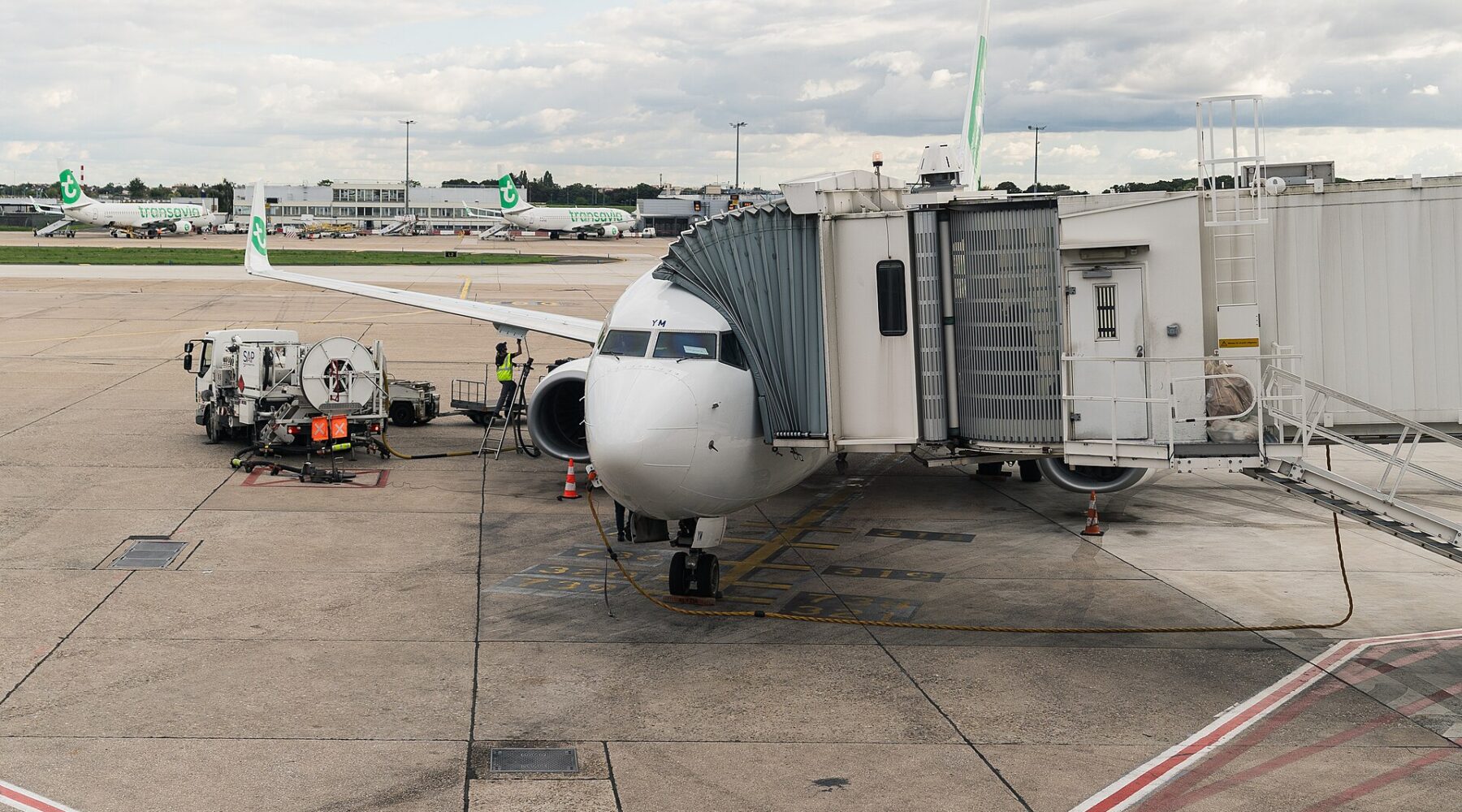
- Air France has largely gone. At the start of the summer 2026 schedule, on 29 March, Air France moved its Paris flights to Charles de Gaulle, keeping only some of its Corsica routes at Orly. Its low-cost sister Transavia took over most of the domestic routes, with fewer flights than before, and is now Orly’s dominant airline.
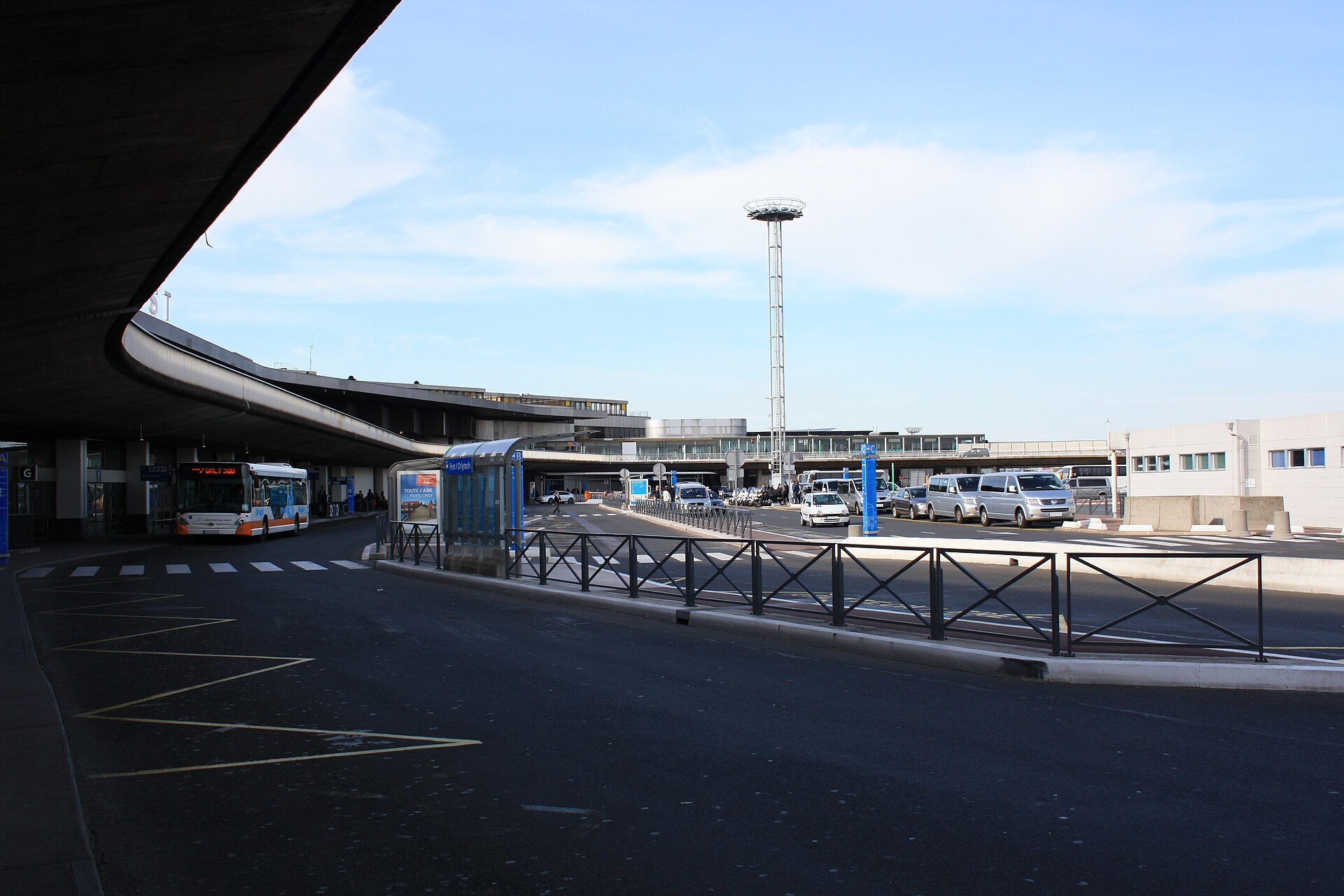
Older terminal names have gone too. Since 2019, when a new junction building joined the old Orly Ouest and Orly Sud, the terminal has been one building with four numbered parts. You’ll still hear locals say Orly Sud or Orly Ouest, and some taxi drivers use the old names.
The terminal: Orly 1 to 4
Orly is a single terminal in four connected parts. Orly 1 and Orly 2 occupy the former Orly Ouest building; Orly 3 is the modern junction building opened in 2019; and Orly 4 is the former Orly Sud, the 1960s building whose terraces once drew crowds to watch the planes. You can walk from one end to the other, but it’s a long walk with luggage, so check which number is on your booking or boarding pass before you set off.
As a rough rule, flights within the Schengen area and flights beyond it use separate areas of the terminal, with passport control for the latter. Airlines move between halls from season to season, so we’d rather not give you a table that’s wrong by next spring: your boarding pass and the screens in the terminal are the authority. Because the halls are all connected, a wrong guess costs you a walk rather than a bus ride, which is more than you can say for Charles de Gaulle.
Who flies from Orly
With Air France’s Paris flights moved to Charles de Gaulle, Orly is now essentially a short-haul, leisure and low-cost airport, with a distinctive long-haul niche.
- Transavia, Air France–KLM’s low-cost airline, is the biggest airline at Orly, flying to French cities including Nice, Toulouse and Marseille as well as across Europe, North Africa and the Mediterranean.
- easyJet and Vueling fly to cities across Europe.
- Air Caraïbes, Corsair and French bee fly long-haul to the French Caribbean, French Guiana and the Indian Ocean, and to a handful of other long-haul destinations.
- Royal Air Maroc, Tunisair and Air Algérie, among others, fly to North Africa.
- Air France and Air Corsica fly to Corsica.
If you’re flying long-haul from North America, Asia or the Middle East on a major airline, you’re very unlikely to use Orly; that’s Charles de Gaulle’s territory, and our Charles de Gaulle airport guide covers it.
Getting into Paris from Orly
| Option | Time | Cost | Best for |
|---|---|---|---|
| Metro 14 | About 25 minutes to Châtelet | €14 (children €7) | Almost everyone |
| Orlyval + RER B | About 37 minutes to Châtelet | €14 (children €7) | The Latin Quarter, Luxembourg, Denfert-Rochereau |
| Tram T7 + Metro 7 | An hour or more | Standard tickets, much less than €14 | Tight budgets with time to spare |
| Taxi | Depends on traffic | €36 Left Bank, €45 Right Bank | Families, groups, luggage, late arrivals |
| Ride-hailing | As taxi | Varies with demand | App users, when prices are low |
Metro 14
Line 14 is fully automatic, and its airport station sits beside Orly 3: follow the signs for Métro 14. Every train goes into Paris, so you can’t take a wrong one. The key stops for visitors are Bibliothèque François Mitterrand (for the RER C), Gare de Lyon, Châtelet, Pyramides (for the Louvre and the Opéra area), Madeleine and Saint-Lazare, all reached without a change. Châtelet is about 25 minutes away.
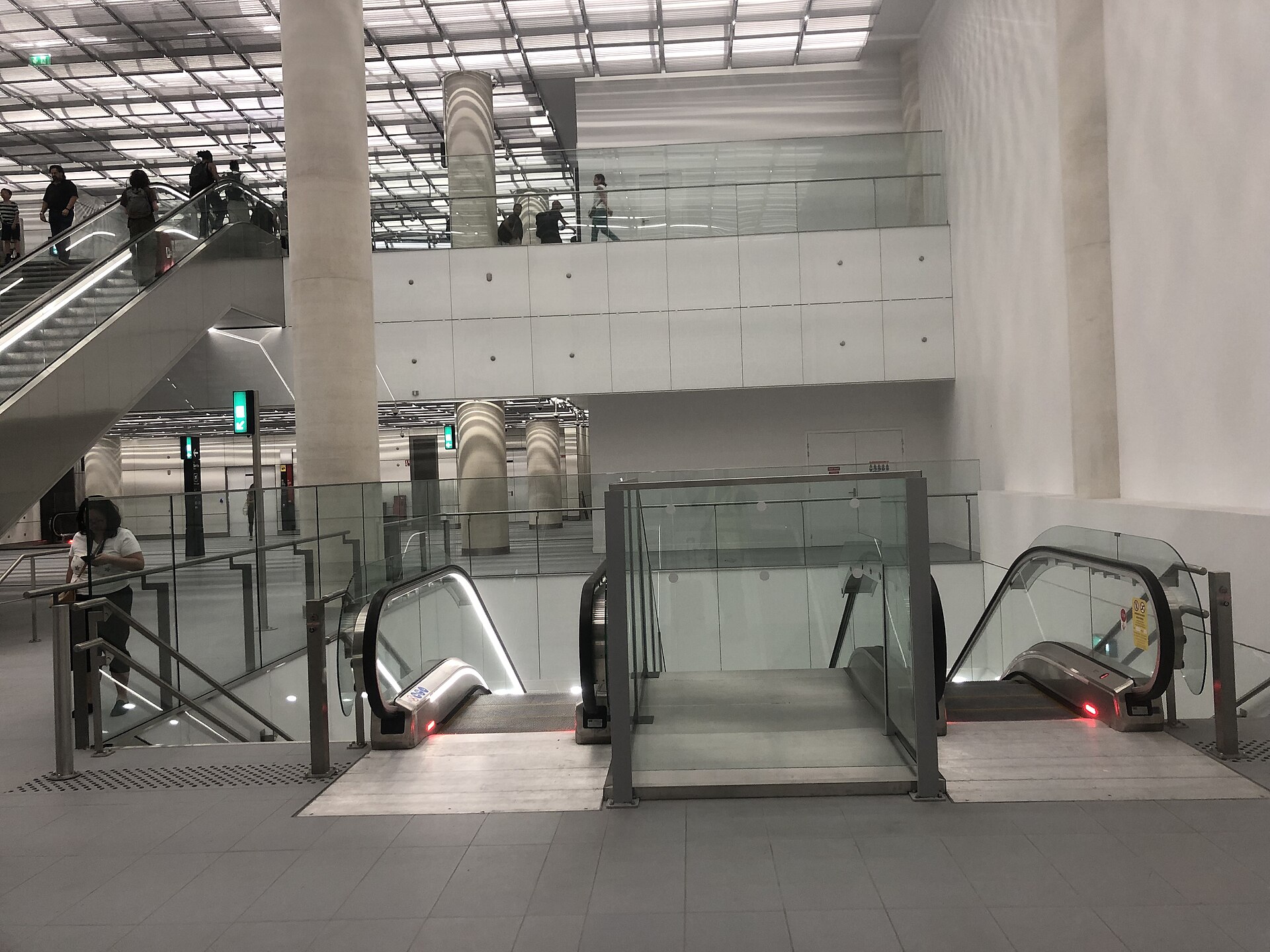
The fare is the special €14 airport ticket, or €7 for children aged 4 to 9, loaded onto a Navigo Easy card (€2 if you don’t already have one) or a compatible phone. Line 14 keeps normal Metro hours, from early morning into the late evening; look up the first and last trains for your date on Île-de-France Mobilités’ site or app before you fly. The stations are step-free throughout, there’s room for luggage, and the trains are frequent. At busy central stations such as Châtelet and Gare de Lyon, keep an eye on your bags; our guide to avoiding pickpockets in Paris explains what to watch for.
Orlyval and the RER B
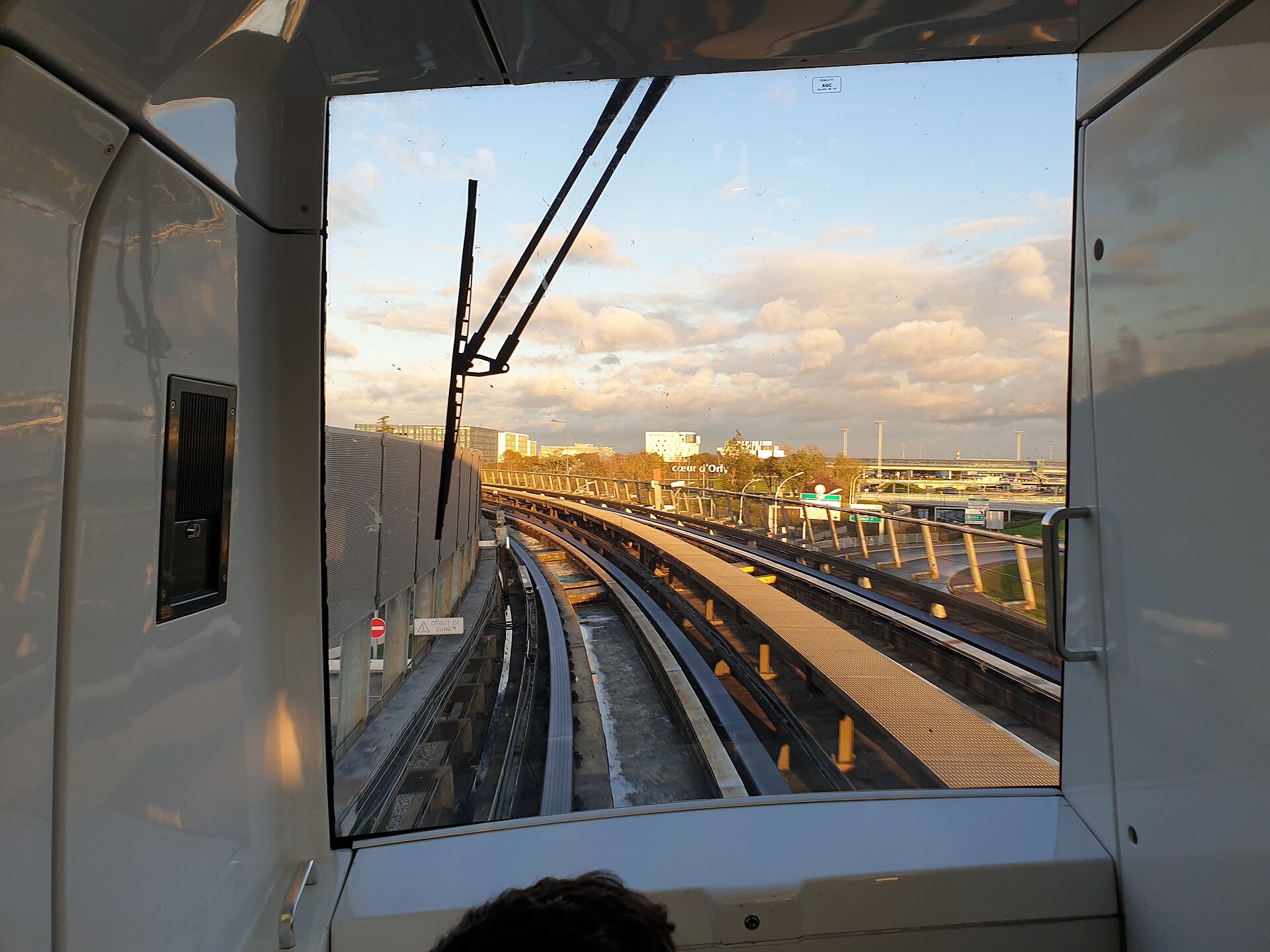
The Orlyval is a small automated shuttle to Antony, where it connects with the RER B into Paris. It normally runs from 6am to 11:35pm every day, on the same €14 ticket (€7 reduced), and the whole trip into Paris takes about 35–40 minutes, change included. It’s slower than Metro 14 for most of the city, but it still makes sense if you’re staying near the RER B’s Left Bank stations, Luxembourg, Port-Royal, Saint-Michel or Denfert-Rochereau, where it saves you a change.
Tram T7 and Metro 7
The other rail option is Tram T7 from the airport through the southern suburbs to Villejuif–Louis Aragon, the end of Metro Line 7, and on into Paris. It uses ordinary tickets, so it costs a fraction of the airport fare, but it takes an hour or more and involves a change with your bags. It’s worth it only if you’re on a very tight budget, travelling light and in no hurry, or staying near Line 7 in the south-east of the city.
Taxis and ride-hailing
Licensed Paris taxis from the official ranks outside arrivals charge a fixed €36 to the Left Bank or €45 to the Right Bank, for up to four passengers with luggage, and must accept cards. Both undercut the flat fares from Charles de Gaulle (€56 and €65). For four adults either one beats the Metro, since four airport tickets cost €56; three tickets come to €42, which only the Left Bank fare undercuts. Ignore anyone in the terminal offering you a ride; they’re unlicensed. Uber and Bolt both pick up at Orly and give directions to the pick-up point in their apps, but there’s no flat fare and prices vary with demand. Our guide to taxis and Uber in Paris compares the options, and our airport transfer guide covers private transfers.
Which route for where you’re staying
| Staying in or near… | Best route from Orly |
|---|---|
| Gare de Lyon, Bastille, Bercy | Metro 14 direct to Gare de Lyon |
| Châtelet, Les Halles, Le Marais | Metro 14 to Châtelet, then walk or one Metro stop |
| Louvre, Opéra, Madeleine, Saint-Lazare | Metro 14 direct to Pyramides, Madeleine or Saint-Lazare |
| Latin Quarter, Saint-Germain, Luxembourg | Orlyval and RER B to Luxembourg or Saint-Michel, or Metro 14 and a change |
| Montparnasse, the 14th and 15th | Orlyval and RER B to Denfert-Rochereau, or a taxi at €36 |
| Eiffel Tower and the 7th | Taxi at €36 is easiest; by public transport, Metro 14 and a change |
| Montmartre and the north | Metro 14 to Saint-Lazare or Châtelet and a change; it’s the far side of the city |
| Versailles | Taxi, or Metro 14 to Bibliothèque François Mitterrand and the RER C |
| Disneyland Paris | Metro 14 to Gare de Lyon and the RER A to Marne-la-Vallée–Chessy |
If you haven’t booked your accommodation yet, our guide to where to stay in Paris runs through the areas, and Orly makes the Left Bank and the stations along Metro 14 especially easy.
Arriving at Orly
Arriving at Orly is usually quicker than at Charles de Gaulle, simply because there are fewer long-haul flights landing at once. If your flight comes from outside the Schengen area, you’ll go through passport control, where most non-EU short-stay visitors register fingerprints and a photo under the EU’s Entry/Exit System on their first visit. The system began rolling out in October 2025 and has been fully operational since 10 April 2026; some travellers are exempt, including holders of a long-stay visa or residence permit. Automated PARAFE gates help eligible passport holders. For what you need before you travel, including the ETIAS authorisation, which isn’t running yet and whose start date the EU will announce several months ahead, see our guide to Paris visa requirements.
From the plane to the Metro, step by step
- Passport control, if your flight came from outside the Schengen area. Have your passport and, if you’re asked, proof of accommodation and a return ticket ready.
- Baggage reclaim and customs. If a bag is missing, report it at the baggage desk in the reclaim hall before you go through customs, because you can’t come back.
- Follow the signs for Métro 14, or for Taxis if you’re taking one. If someone is meeting you, agree on the Orly number and the exit beforehand.
- Buy or load your ticket at the machines by the station entrance, or have it ready in your phone’s transport app. The machines take cards.
- Board any train. Orly is the end of the line, so every train goes into Paris. Get off at your stop and keep your ticket handy until you’ve left the station.
Once you’re through customs, Orly’s free Wi-Fi is enough to download a transport app, book a ride or set up an eSIM; our guide to SIM cards, eSIMs and Wi-Fi in Paris explains the choices. If you need euros, use a bank cash machine rather than the exchange desks, which offer poor rates.
Departing from Orly
Allow two hours before a European flight and three before a long-haul one, plus your journey to the airport. Bag-drop and boarding deadlines vary from airline to airline, so check yours before you leave.
- Getting there: Metro 14 in the direction of Aéroport d’Orly is foolproof, and the taxi flat fares apply in both directions. For a very early flight, book a taxi the evening before.
- Tax refunds: if you’re entitled to one, validate your forms at a PABLO kiosk before you check in your bags. Our guide to tax-free shopping in Paris explains how.
- Food and shops: Orly 3 has duty-free shops and several restaurants. Prices are airport prices, so eat before you leave the city if you can, and bring an empty water bottle to fill after security.
- Check your hall: walking from Orly 1 to Orly 4 takes a while with a trolley.
Getting to Orly on departure day
Work backwards from your flight. From Châtelet, Metro 14 takes about 25 minutes; add time for the walk from the platform to your check-in desk, which depends on where you’re flying from, and a margin for the occasional delay, so leave central Paris about three hours before a European flight if you’re checking a bag. By road, journey times swing with the traffic, although the taxi’s flat fare stays the same. If your hotel is near Metro 14, you’re in luck: one train takes you from the city to the terminal with no change.
The curfew, and what it means for you
Orly has a night curfew: no landings between 23:30 and 6:00, and no departures leaving the stand between 23:15 and 6:00, with narrow exemptions for safety, security and public order. The curfew protects the densely populated suburbs around the airport, and it matters most if you’re booking the last flight of the day. A late-running flight that misses the cut-off can’t simply land at Orly, so read your airline’s instructions for disruption and have a plan B for the journey into Paris.
The good news is that Metro 14 runs into the late evening, so a late landing doesn’t automatically mean a taxi, as long as you’re through passport control and baggage reclaim before the last train leaves.
Sleeping near Orly
Because Orly is so close to the city, staying at the airport is less necessary than at Charles de Gaulle. For a flight at 8am or later, a hotel in Paris and the first Metros are usually fine. For a 6am or 7am departure, the first Metro 14 from your station may not get you there in time, so check its departure for your date, and if it’s cutting it fine, either book a taxi or stay nearby. A group of chain hotels sits in the Cœur d’Orly business district beside the terminal, and more are dotted around Rungis and the surrounding towns, most with free shuttles. Check the shuttle’s first departure before you book; some don’t start early enough for the dawn flights they’re supposed to serve.
Orly with children or reduced mobility
Orly is the easier Paris airport for families: it’s compact, the walks are shorter, and Metro 14 is step-free from the terminal to the platform with lifts at every station, so a pushchair is no problem. With small children and suitcases, though, the €36 (Left Bank) or €45 (Right Bank) taxi is the stress-free option. Weigh it against the Metro: €14 per adult and €7 per child aged 4 to 9, with under-fours travelling free. Taxis aren’t obliged to carry child seats, so book a transfer that provides one if you need it. Our guides to Paris with kids and stroller-friendly Paris cover the rest of your trip.
Passengers with reduced mobility are entitled to free assistance at Orly under EU rules. Request it through your airline at least 48 hours before you fly.
Car hire and parking
The main car-hire firms all have desks at Orly, which is a convenient place to pick up a car if you’re heading south or west out of Paris: to the Loire Valley, Fontainebleau or the Burgundy vineyards, for instance. It’s not a good idea if you’re spending the next few days in the city, where you won’t need a car and will struggle to park one, so collect it when you leave Paris rather than when you arrive. If you’re driving to the airport, the official car parks range from short-stay spaces beside the terminal to cheaper long-stay parking further out; booking online in advance is usually much cheaper than paying at the barrier. Our guide to the best day trips from Paris covers the destinations that are easier by car.
When things go wrong
Orly’s heavy reliance on low-cost airlines means that when there’s disruption, it’s often felt here first. French air traffic control strikes are the classic culprit: the aviation authorities ask airlines to cut a share of their flights, and low-cost carriers tend to cancel early and in large numbers. Check your airline’s app in the days before you fly if there’s talk of a strike, and keep its customer service number handy.
Under EU rules, if your flight is cancelled at short notice or arrives three or more hours late for reasons within the airline’s control, you may be entitled to compensation of €250 to €600 depending on the distance, plus meals and, if necessary, a hotel. Strikes by air traffic controllers and bad weather usually count as extraordinary circumstances, which rule out compensation but not the airline’s duty to look after you. A good policy covers the gaps; see our Paris travel insurance guide.
A little history: Sunday at Orly
It’s hard to imagine now, but Orly was once one of the sights of Paris. When the gleaming Orly Sud terminal opened in 1961, crowds came out just to stand on its terraces and watch the jets: in 1962 alone the terraces welcomed 3.4 million visitors. Gilbert Bécaud sang about it in “Dimanche à Orly”, and the airport’s observation terrace is at the heart of Chris Marker’s celebrated short film La Jetée (1962). Today’s Orly 4 is a much more ordinary place, but if you look up at the long, clean lines of the old building as you walk through, you can still catch a glimpse of the jet age’s optimism.
Orly or Charles de Gaulle?
If you have the choice for a European flight, we’d pick Orly almost every time. It’s closer, the taxi is €11–29 cheaper, and to our mind Metro 14 is a better ride than the RER B. Charles de Gaulle wins on destinations, long-haul flights, Air France’s network and its TGV station, which takes you straight to Disneyland Paris and the rest of France. For the full comparison, including Beauvais, see our Paris airports guide.
On the way: the Rungis market
Metro 14’s stops between the airport and the city include Chevilly-Larue (Marché International), for the Marché international de Rungis, the vast wholesale food market that supplies Paris restaurants and is often described as the biggest fresh-food market in the world. It’s a trade market, not a tourist attraction, and you can’t simply wander in; the way to see it is on an organised early-morning tour, booked in advance. If you’re a food lover with an early start, it’s a memorable way to spend your first morning, and our guide to Paris food markets covers the public markets in the city itself.
Practical tips
- Ignore any advice that mentions the Orlybus. It stopped running in March 2025.
- Take Metro 14 unless you have a reason not to; it’s the fastest and simplest way in.
- Buy your €14 ticket before you reach the gates, loaded onto a Navigo Easy card or your phone.
- Do the taxi maths for three or four people: four adults pay €56 on the Metro, more than either flat fare (€36 or €45), while three pay €42, which beats the Right Bank taxi.
- Check your hall on your boarding pass; Orly 1 and Orly 4 are a long walk apart.
- Allow for the curfew if you’re on the last flight of the evening.
- Watch your bags at the busy central Metro stations.
- Download your airline’s app; low-cost airlines communicate delays and gate changes there first.
Frequently asked questions
How far is Orly airport from central Paris?
About 14 km south of the city centre, making it the closest of the three Paris airports. Metro 14 takes about 25 minutes to Châtelet.
What is the best way to get from Orly to Paris?
For most people, Metro Line 14, which runs from the airport to Gare de Lyon, Châtelet, Madeleine and Saint-Lazare without a change, for €14. For four people with luggage, a taxi at the flat fare of €36 (Left Bank) or €45 (Right Bank) is better value; for three, only the Left Bank fare beats the Metro.
Does the Orlybus still run?
No. The Orlybus to Denfert-Rochereau stopped running in March 2025, replaced by Metro 14. For Denfert-Rochereau, take the Orlyval and the RER B.
Does Air France still fly from Orly?
Only to Corsica. Since 29 March 2026, Air France has operated all its other Paris flights from Charles de Gaulle, and its low-cost subsidiary Transavia has taken over most of its domestic routes from Orly.
How many terminals does Orly have?
One connected terminal in four parts, numbered Orly 1, 2, 3 and 4. They replaced the old Orly Ouest and Orly Sud names in 2019.
Is Orly airport open at night?
Not entirely. The airport closes to the public from 00:30 to 3:30, unless you have a plane ticket or a summons to the airport, and a night curfew bars landings from 23:30 to 6:00 and departures from the stand from 23:15, with narrow exemptions. If a late flight misses the cut-off, follow your airline’s instructions.
How much is a taxi from Orly to Paris?
A flat €36 to the Left Bank or €45 to the Right Bank in a licensed Paris taxi from the official rank, for up to four passengers including luggage.
How early should I arrive at Orly?
Two hours before a European flight and three hours before a long-haul flight, with extra time at the start of school holidays and for early-morning departures.
Related Paris Guides
- Paris Airports Compared: CDG, Orly and Beauvais
- Charles de Gaulle Airport Guide
- Paris Airport Transfers
- The Paris Metro Guide
- Paris Metro Tickets and the Navigo Pass
- Taxis and Uber in Paris
- Where to Stay in Paris
- Paris Visa Requirements
Photo Credits
The former Orly Ouest building: Aéroport Orly Ouest 2011 11 by Lionel Allorge, CC BY-SA 3.0, via Wikimedia Commons.
Metro Line 14 station at Orly: Aéroport d’Orly ligne 14 2024 05 by Idris2000, CC BY 4.0, via Wikimedia Commons.
The view from the Orlyval: Orlyval.20221104 165507 by Rc1959, CC BY-SA 4.0, via Wikimedia Commons.
Transavia at an Orly jet bridge: B737-800 – F-HUYM from Transavia during refueling by Hugo LUC, CC BY-SA 4.0, via Wikimedia Commons.