Centre Pompidou: Paris’s Bold Modern Art Museum
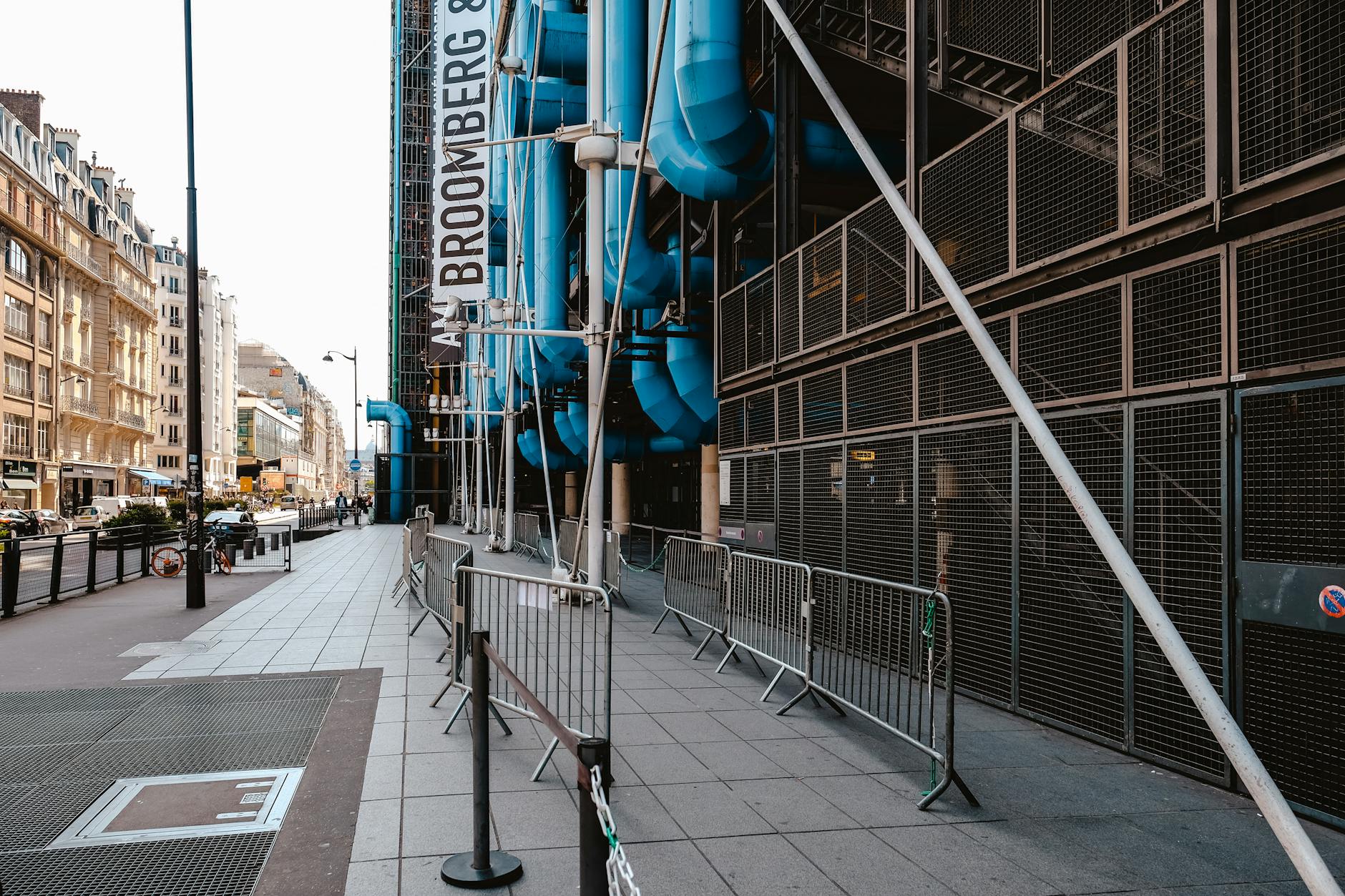
Plumbing on the outside, color-coded like a children’s toy, with the escalators bolted to the front of the building in glass tubes. That’s the centre pompidou, the most architecturally radical museum in Paris, finished in 1977 by Renzo Piano and Richard Rogers and packed with the Musée National d’Art Moderne, Europe’s largest modern art collection. Here’s the catch, and it’s a big one. 2026 update: the Pompidou is CLOSED for a major renovation from September 2025 through roughly 2030. So this guide does double duty. If you’re in Paris during the closure, scroll to where to see modern art instead. If you’re planning ahead to the 2030 reopening, it’s all here too: the collection, the building, and that rooftop view from the top of the escalator.
For the wider museum scene, start with our Paris museums overview, plus the Musée d’Orsay and Orangerie guides. For what else is nearby, see Paris attractions and the Le Marais neighborhood guide.
Centre Pompidou Status in 2026 (Closure Update)
Closed for renovation from September 2025 to roughly 2030, the biggest overhaul the building has seen since it opened in 1977. The French government and the Pompidou administration signed off on a closure of about five years to fix aging mechanical systems, restore that exposed exterior, and bring accessibility, fire safety, and the galleries up to date. Renzo Piano, the original architect and now 88, was brought in to consult on the restoration. The target reopening is 2030, though anyone who has watched a major Paris monument restoration knows to pencil that in lightly.
What you can still do during the closure: the exterior stays in full view from Place Georges Pompidou, the sloped square out front that remains a free place to hang around, with the Stravinsky Fountain just to the south. Traveling shows drawn from the collection will tour to Centre Pompidou-Metz (the satellite branch 200 km east of Paris), the Galeries Nationales du Grand Palais, the Lafayette Anticipations foundation at Galeries Lafayette, and venues abroad. The Pompidou’s public library, the Bibliotheque Publique d’Information, is shut too, though a stand-in reading-room program may pop up at temporary sites.
Centre Pompidou at a Glance (Pre-Closure Facts for 2030 Reopening)
- Address: Place Georges Pompidou, 75004 Paris (Marais, 4th arrondissement).
- Métro: Rambuteau (Line 11), Hôtel de Ville (Lines 1, 11), Châtelet-Les Halles (multiple).
- Architect: Renzo Piano + Richard Rogers, completed 1977.
- Annual visitors pre-closure: 3.5M (2024).
- Collection: Musée National d’Art Moderne — 120,000+ works; Europe’s largest modern art collection.
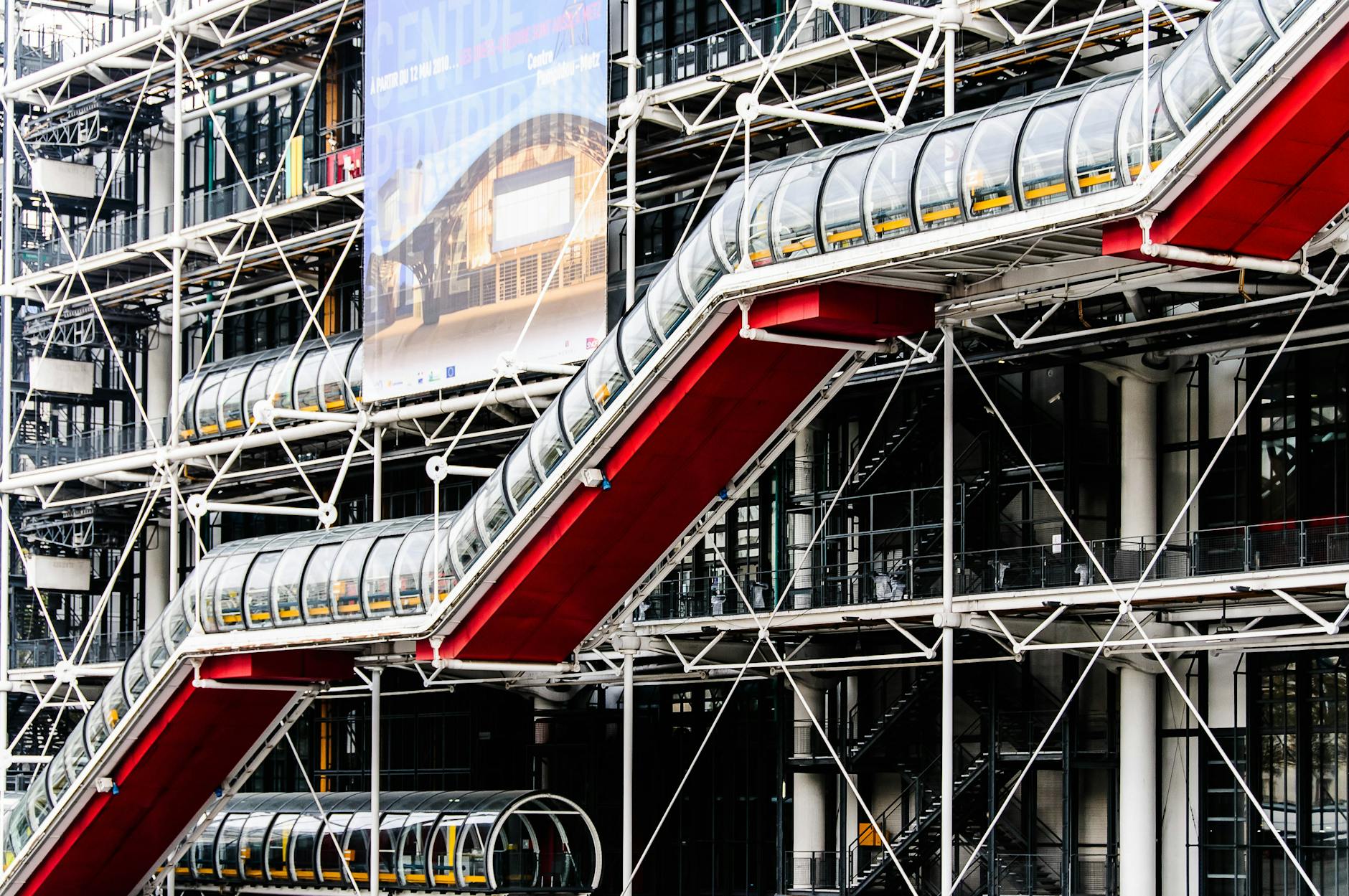
- Building features: 7 stories; exposed ducts (yellow electrical, blue HVAC, green plumbing, red elevators); glass escalator on the facade; rooftop terrace with a panoramic Paris view.
- Pre-closure ticket: €15 adult; FREE under 18 worldwide and EU 18-25.
- Paris Museum Pass: was included before closure; will be again on reopening.
- Expected 2030 reopening: same building footprint; updated interior; the relaunch exhibition is expected to be a big one, on the scale of the original 1977 opening.
Why the Building is Architecturally Important
The Pompidou was meant to provoke, and it did. When it opened on January 31, 1977, Renzo Piano (Italian, then 39) and Richard Rogers (British, then 43) had won the international competition with a stunt that turned out to be a serious idea: hang the building’s guts on the outside and free up every inch of interior for flexible galleries. The color coding was structural and a statement at once, yellow for electrical, blue for HVAC, green for plumbing, red for elevators, an argument that a building could be honest about how it works instead of hiding it behind a stone face. The glass escalator climbing the west facade became one of the most recognizable sights in the city, and the rooftop terrace at the top of it gives you one of the best free views in Paris when the doors are open.
Even shut for 2025-2030, the building still earns its keep as a photo subject. The exterior is visible from Place Georges Pompidou and the Marais streets around it, and it gets photographed as much as ever.
The Musée National d’Art Moderne Collection
120,000+ works running from 1905 to the present, the largest modern art collection in Europe. The key holdings, all due back on the walls in 2030:
- Matisse — including The Sorrow of the King (1952) and the late paper cut-outs.
- Picasso — Cubist and later works (most of the Picasso holdings live at the dedicated Musée Picasso in the Marais).
- Kandinsky — one of the largest Kandinsky collections in the world, after his widow Nina donated the estate.
- Miró, Magritte, Dalí, Duchamp, Brancusi.
- Pollock, Rothko, De Kooning, Warhol — the American post-war collection.
- Soulages, Tinguely, Niki de Saint Phalle, Hartung — postwar French.
- Yves Klein — major IKB monochromes.
- Brancusi’s studio: the whole of Constantin Brancusi’s Paris studio, preserved and rebuilt as an outdoor pavilion next to the museum (free entry; status during the renovation TBD).
- Industrial design, architecture, and photography collections.
- Cinematheque for film and video art.
Where to See Modern Art in Paris During the Pompidou Closure
The good news: Paris has no shortage of places to get your modern-art fix while the Pompidou is dark from 2025 to 2030. Start here.
- Musée d’Art Moderne de la Ville de Paris (MAM) — 11 Avenue du Président-Wilson, 16th. The permanent collection is free, with Matisse, Modigliani, Dufy, the Fauves, and early-20th-century French work. The obvious first stop, and it costs nothing. Open Tue-Sun 10am-6pm.
- Musée Picasso — 5 Rue de Thorigny, 3rd (Marais). 5,000+ Picasso works in the Hôtel Salé mansion. €14.
- Bourse de Commerce — Pinault Collection — 2 Rue de Viarmes, 1st. François Pinault’s contemporary collection, opened in 2021 inside the old commodities exchange under a Tadao Ando concrete rotunda. €15, and free the first Saturday 5-9pm.
- Fondation Louis Vuitton — 8 Avenue du Mahatma Gandhi, Bois de Boulogne (16th). Frank Gehry’s 2014 building, a contemporary collection plus the big loaned blockbusters. €16.
- Lafayette Anticipations — Marais. A free contemporary art foundation; smaller than the Pompidou but punching above its size.
- Palais de Tokyo — 13 Avenue du Président-Wilson, 16th, right next to MAM. Contemporary art that often pushes the envelope. €12.
- Musée Maillol — 59-61 Rue de Grenelle, 7th. A modern and contemporary mix.
- Musée Yves Saint Laurent — 5 Avenue Marceau, 16th. Fashion and design.
- Atelier des Lumières — 38 Rue Saint-Maur, 11th. Immersive digital art (Klimt and Van Gogh themes).
- Centre Pompidou-Metz — the satellite branch, 200km east, 1.5 hours by TGV from Gare de l’Est. Many of the major touring shows land here during the Paris closure.
What to Do at Place Georges Pompidou Now
The sloped square out front hasn’t closed with the museum, and it’s still one of the livelier free spots in the center. Expect street performers, mimes, jugglers, breakdancers. Right beside it is the Stravinsky Fountain, a kinetic sculpture by Niki de Saint Phalle and Jean Tinguely, all bright mechanical figures spitting water in choreographed loops, free and running. From there, wander the Marais on Rue Rambuteau and Rue du Temple for boutiques and cafes. The Atelier Brancusi pavilion (the rebuilt studio next to the museum) is a question mark during the closure, so check the official Pompidou site, though some exterior viewing may carry on.
The Top-Floor View (When the Pompidou Reopens)
When the museum is open, the rooftop terrace at the top of the glass escalator delivers one of the best free views in the city, a near 360-degree sweep from the middle of the Right Bank. From a single spot you can pick out Notre-Dame, the Eiffel Tower, Sacré-Coeur, and the Opéra Garnier. Restaurant Georges, on the 6th floor before the closure, paired fine dining with the same view and should be back when the museum is. Half the fun was the escalator ride itself, riding the outside of the building on the way up.
Eating at and Near the Pompidou
- Bouillon République (39 Boulevard du Temple) — 10-minute walk; a €15-20 three-course brasserie.
- L’As du Falafel (34 Rue des Rosiers) — 5-minute walk into the Marais, and worth the line.
- Café Charlot (Rue de Bretagne) — 10-minute walk; the see-and-be-seen Marais corner.
- Marche des Enfants Rouges — 10-minute walk; the oldest covered market in Paris.
- Boot Cafe (19 Rue du Pont aux Choux) — specialty coffee.
- Yam’Tcha (4 Rue Sauval, 1st) — Michelin-starred French-Chinese; 10-minute walk.
Practical Tips (When Open)
- Pre-book tickets at centrepompidou.fr (when open).
- Closed Tuesday (when open).
- Photography is fine without flash.
- Wheelchair accessible.
- Audio guide €5.
- Bags larger than 56x45x25cm aren’t allowed; coat check is free.
- Pair it with a Marais walking loop (Place des Vosges, Maison de Victor Hugo, Musée Picasso).
History of the Centre Pompidou
President Georges Pompidou (1969-1974) wanted a modern art museum to anchor the center of the city, so in 1971 he launched an international architecture competition. It drew 681 submissions from 49 countries. Renzo Piano (then 33) and Richard Rogers (then 37), working with Gianfranco Franchini, took it, with a design so radical the jury argued over it for weeks. Construction started in 1972, and the doors opened on January 31, 1977, three years after Pompidou’s death in 1974. The reviews were brutal at first; critics called it the “refinery in the Marais.” Within a decade it was a Paris icon. There was a major renovation in 1996-2000 that shut it for two years, steady repairs since, and now the 2025-2030 job, the most ambitious of the lot.
Frequently Asked Questions
Is the Centre Pompidou open in 2026?
No. It’s closed for renovation from September 2025 to roughly 2030. You can still see the exterior from Place Georges Pompidou and the surrounding Marais streets.
When will the Centre Pompidou reopen?
The target is 2030. Big Paris monument projects routinely slip 6 to 18 months, so 2030-2031 is the realistic window. Watch centrepompidou.fr for the official word.
Where can I see modern art in Paris during the Pompidou closure?
Your best bets: the Musée d’Art Moderne de la Ville (free), Musée Picasso, the Bourse de Commerce Pinault Collection, Fondation Louis Vuitton, Palais de Tokyo, Lafayette Anticipations, Atelier des Lumières, and Centre Pompidou-Metz (200km east, a TGV ride from Paris).
Can I still see the Stravinsky Fountain?
Yes. The kinetic-sculpture fountain by Niki de Saint Phalle and Jean Tinguely sits in Place Igor Stravinsky next to the Pompidou. It’s free, public, and running year-round.
Is the Centre Pompidou worth visiting?
When it’s open, absolutely. The building matters architecturally and the modern-art collection is the largest in Europe. While it’s closed for 2025-2030, point yourself at the alternatives above.
What is the Atelier Brancusi?
It’s a faithful reconstruction of Constantin Brancusi’s Paris studio, housed in a pavilion next to the Pompidou. The Romanian sculptor left France his entire studio and 1,100 works on one condition: that it be recreated exactly as he’d kept it. Its status during the closure is uncertain, so check the official site; some exterior viewing may continue.
How much is the Centre Pompidou ticket (pre-closure)?
€15 for an adult; free for under-18s worldwide and EU residents aged 18-25; free on the first Sunday of the month in some years. The Paris Museum Pass covered it. Expect the 2030 prices to be similar or a touch higher.
Is the Pompidou rooftop free?
No. The rooftop terrace needed a museum ticket, since the exterior escalator climbed past the gallery floors before it reached the top. Pre-closure that meant €15. Restaurant Georges on the 6th floor was open during museum hours.
Plan the Rest of Your Paris Trip
For modern art while the Pompidou is closed, lean on the guide to Paris museums (the pillar), the Louvre, Musée d’Orsay, Orangerie, Rodin, and the museum pass breakdown. For the neighborhood at its doorstep, see Le Marais. And for the trip overall: plan a trip, where to stay, getting around, the best attractions and things to do, the best time to visit, plus free things to do and unique things to do.

More to explore
Use these to round out your trip: