2 Days in Paris: A Complete 48-Hour Itinerary
Two clean halves — one day each side of the river, and almost no Metro.
Two days in Paris is the length most people actually get, and it is a much better trip than its reputation suggests — provided you stop trying to make it a short version of a five-day trip. The 2 days in paris itinerary that works is not a compressed greatest-hits list. It is two clean halves: one day on the Right Bank, one on the Left, each of them a single continuous walk with two anchors in it and nothing that requires crossing the city twice.
Do that and you will see the Louvre or the Orsay properly, walk through four of the best neighbourhoods, eat two good meals, and end the second evening under the Eiffel Tower without having spent a single hour feeling harried. Prices below were checked in September 2026 — treat them as the right order of magnitude, since French state-museum tariffs shifted sharply in January 2026 and will shift again.
The two days at a glance
| Morning | Midday | Afternoon | Evening | |
|---|---|---|---|---|
| Day 1 Right Bank |
Louvre, 9am slot | Tuileries, lunch | Concorde → Champs-Élysées → Arc de Triomphe | The Marais |
| Day 2 Left Bank |
Île de la Cité, Sainte-Chapelle | Latin Quarter, lunch | Musée d’Orsay | Eiffel Tower at dusk, Seine cruise |
That is the shape. Everything below is the detail, the timings, the costs and the places where the standard advice is wrong.
What two days costs
| Item | Price | Notes |
|---|---|---|
| Louvre | €22 EEA / €32 non-EEA | Timed slot required; under 18 free |
| Musée d’Orsay | ≈€16 | Closed Mondays |
| Sainte-Chapelle | ≈€13 | Book a morning slot |
| Eiffel Tower, stairs to 2nd floor | €14.80 | The best-value ticket at the tower |
| Eiffel Tower, lift to 2nd floor | €23.50 | The better of the two viewing levels |
| Arc de Triomphe terrace | Paid, book or queue | Free for under 18s and EU under-26s |
| Seine sightseeing cruise | ≈€16–20 | Roughly an hour; the boat trip that earns its ticket |
| Navigo Jour day pass | €12.30 per day | Pays back from about five journeys |
| Single Metro ticket | €2.55 | The carnet discount was abolished in January 2026 |
| Two-course lunch formule | €19–28 | The same food costs half again at dinner |
| Dinner, mid-range | €30–50 per head | Book, even a day ahead |
Budget roughly €160 to €230 per person for the two days excluding accommodation, or around €90 if you take the stairs at the tower, picnic at lunch and do one museum instead of two. Our full cost breakdown works through the variables properly.
Before you go: four things to sort
Check which days you have
This is the single most consequential detail in a two-day trip and almost every generic itinerary ignores it. The Louvre closes on Tuesdays. The Musée d’Orsay and the Musée de Cluny close on Mondays. The Musée de l’Orangerie closes on Tuesdays. If your two days are Monday and Tuesday, you cannot do the Louvre on the second day or the Orsay on the first, and the plan below has to be inverted. Sainte-Chapelle, Notre-Dame, the Arc de Triomphe and the Eiffel Tower all open every day, which is why they anchor the plan.
Book two things and only two
The Louvre — a timed slot, ideally 9am, two to three weeks ahead. The Eiffel Tower — around sixty days ahead if you want the summit, a week or two if the second floor will do. Sainte-Chapelle is worth booking too if your first day is sunny and central. Everything else you can turn up for, and third-party sellers charging a fat premium for “skip the line” access to things with no line are selling you nothing.
Stay central, and mean it
On a two-day trip you are buying minutes, not atmosphere. Twenty minutes each way from a cheaper hotel is eighty minutes over two days, which is most of a museum. The 1st, 4th, 5th and 6th arrondissements put you inside the itinerary; the Marais and Saint-Germain are the classic answers and deserve to be. Our where to stay guide and the arrondissement comparison go through it properly, and if you are travelling as a couple the Marais boutique hotels piece is the shortlist.
Skip the museum pass
The two-day Paris Museum Pass costs around €90. On this itinerary you will pay roughly €50 in museum entries, and the pass does not include the Eiffel Tower — the most common and most expensive misunderstanding about it. It makes sense from about four days and three sights a day. Our pass analysis shows the arithmetic, and the city pass comparison covers the alternatives.
Day 1 — the Right Bank
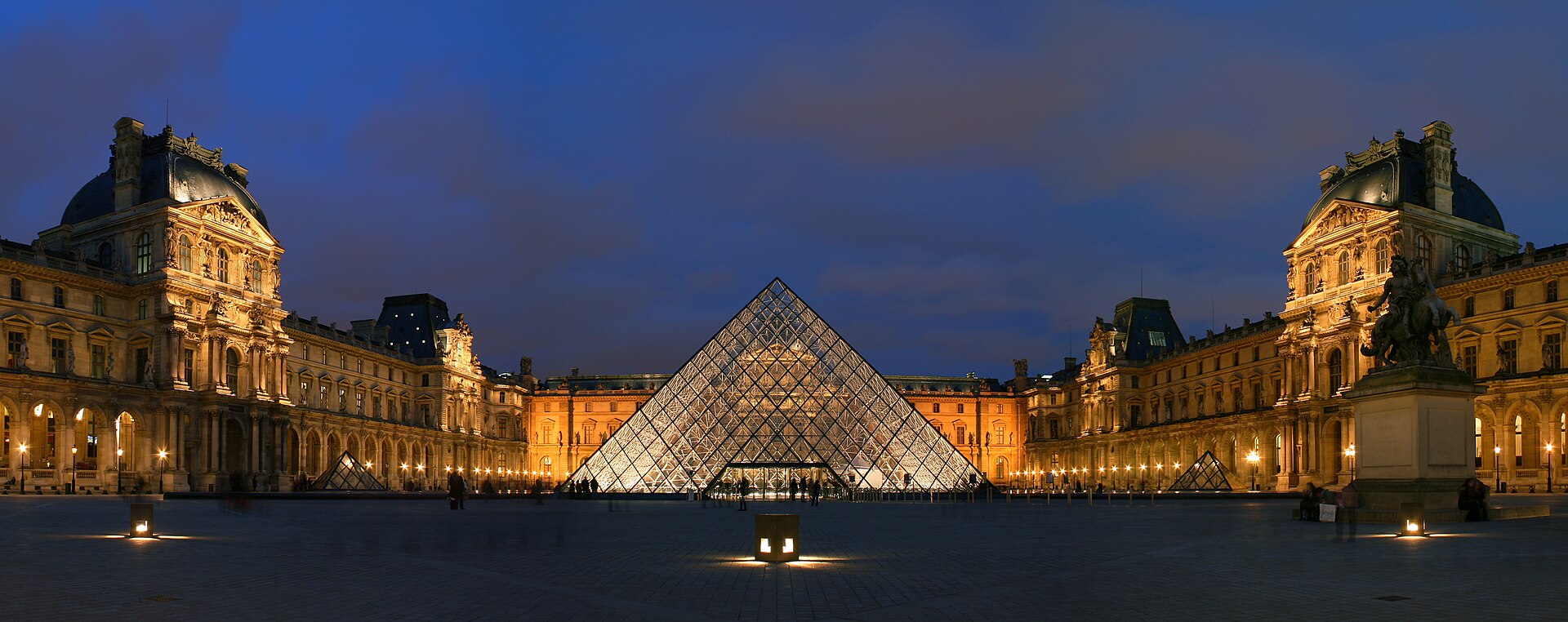
09.00 — The Louvre, with a plan
Book the earliest slot. The Louvre is the largest art museum in the world and by eleven o’clock the Denon wing is a slow-moving crowd. Three hours is the sensible maximum for a two-day trip, and three hours means choosing.
- Denon — Italian Renaissance painting, the Mona Lisa, the Winged Victory of Samothrace, the big French history paintings. The most crowded wing by a distance.
- Sully — the Egyptian collection, the medieval Louvre foundations in the basement, the Venus de Milo. Quieter and, for many people, more interesting.
- Richelieu — Northern European painting, the French sculpture courts under glass roofs, the Napoleon III apartments. The emptiest wing in the building and the one we would send a first-timer to on a short trip.
Pick two, not three. And a word on the Mona Lisa: it is small, behind glass, at the end of a long shuffling queue, in a room where the other paintings are better and nobody is looking at them. Go if you want to be able to say you did; do not build the morning around it.
12.30 — Tuileries and lunch
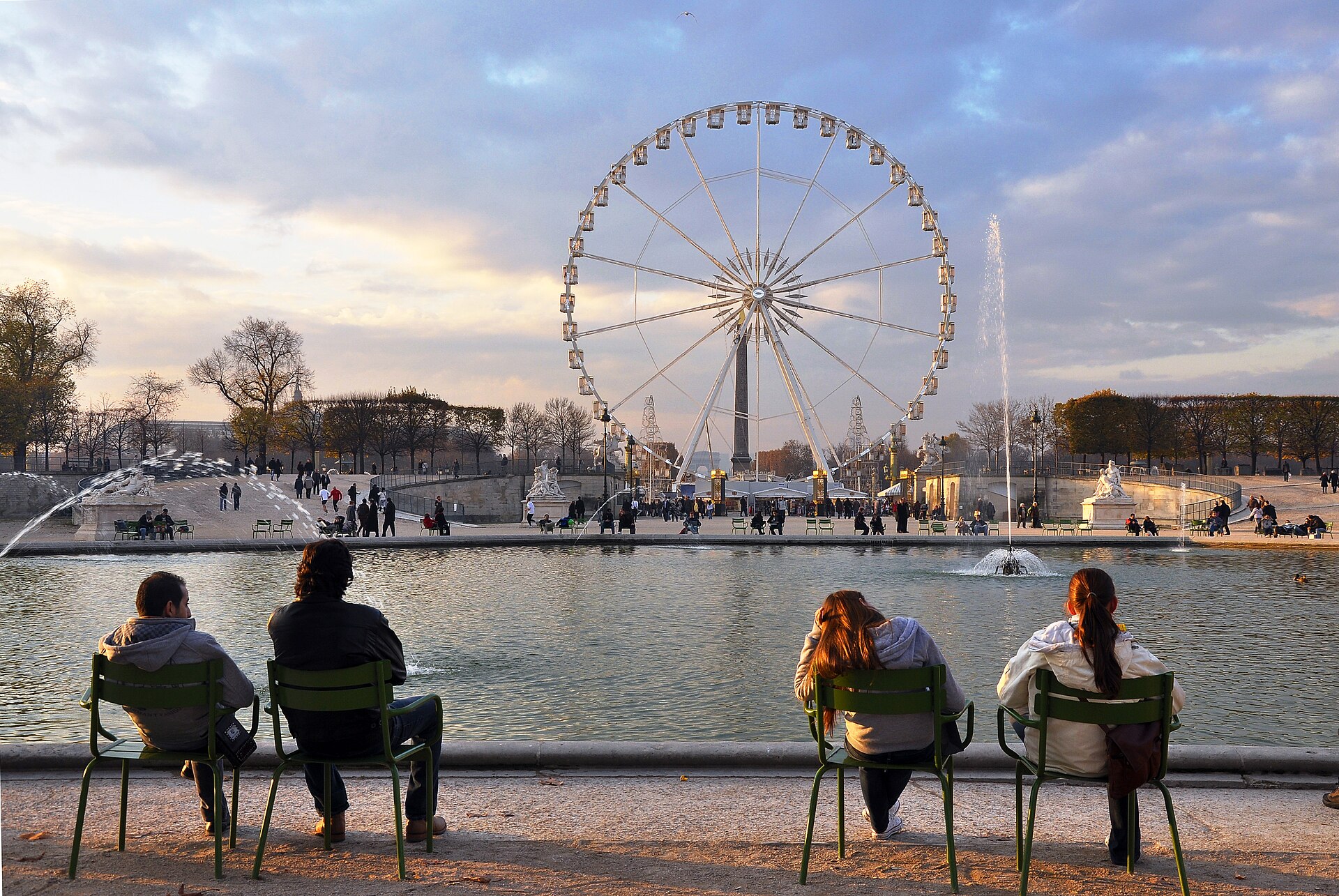
Come out of the pyramid into the Jardin des Tuileries. Take one of the green metal chairs by the octagonal basin, which are free and unlimited and which a surprising number of visitors walk straight past. Lunch is either a bakery picnic on those chairs or a proper two-course formule in the streets north of Rue de Rivoli, where €22 buys you the same kitchen that charges €45 in the evening.
14.30 — Concorde to the Arc de Triomphe
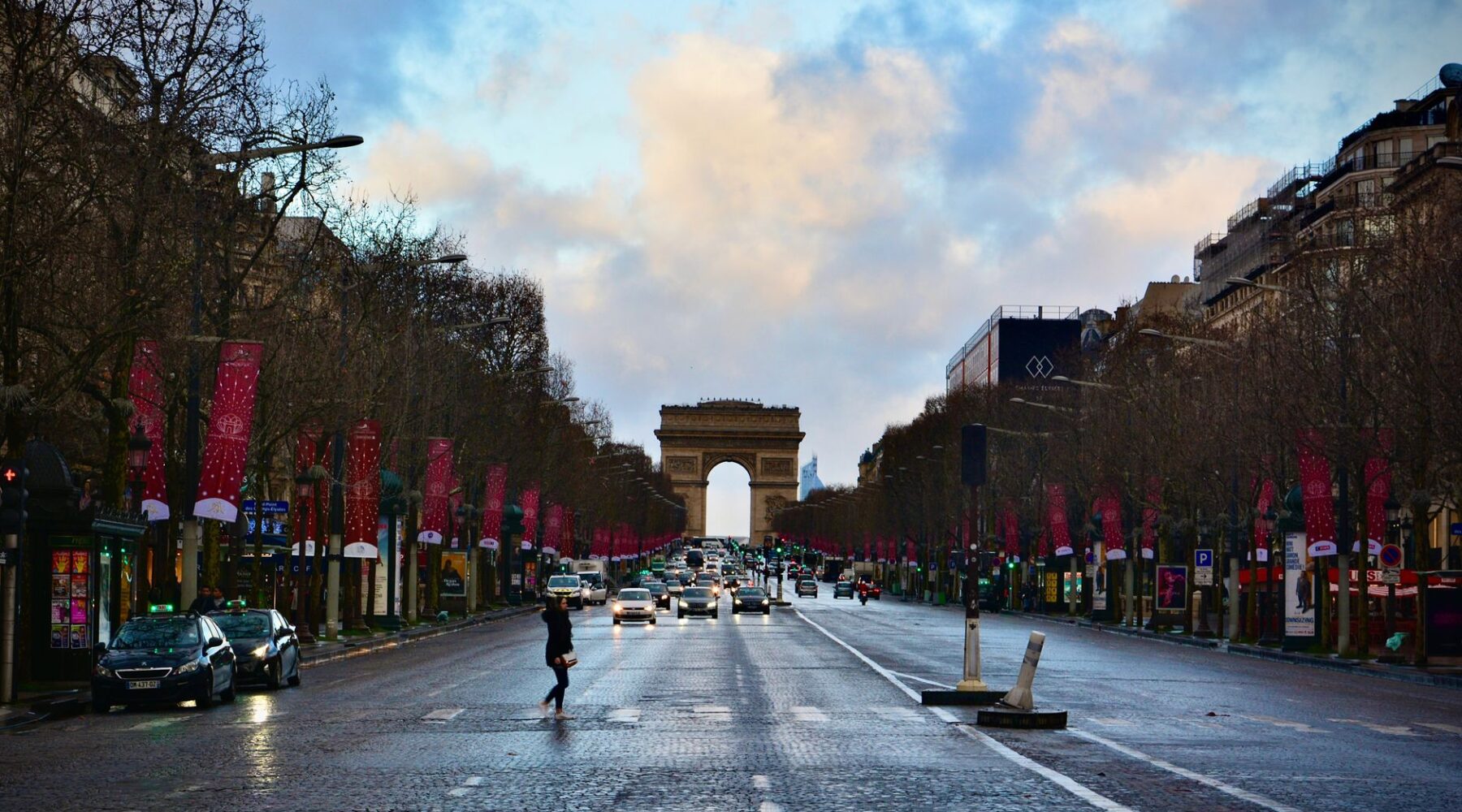
Walk west. The Place de la Concorde with its Egyptian obelisk is the largest square in Paris and was where the guillotine stood; the axis continues in a dead straight line up the Champs-Élysées to the Arc de Triomphe and on to La Défense beyond it.
The honest verdict on the Champs-Élysées: as a street it is an avenue of chain stores and car showrooms with excellent architecture above the shopfronts, and the upper half is duller than the lower. It is worth walking once for the scale of it. It is not worth eating on — the €19 onion soup at the pavement cafés is the most reliably disappointing meal in Paris.
The Arc itself is the better of the city’s two great viewpoints, because from the top you can see the Eiffel Tower, which you cannot do from the Eiffel Tower. Twelve avenues radiate from it in a pattern you only understand from above. Reach it by the underpass; people are still, somehow, trying to cross that roundabout on foot.
18.00 — The Marais
Take Line 1 back east to Saint-Paul and give the evening to the Marais. It has the densest concentration of good, small, fairly priced restaurants in central Paris, and — unusually for the city — plenty of them open on Sundays and Mondays, which matters enormously on a two-day trip that happens to fall on a weekend.
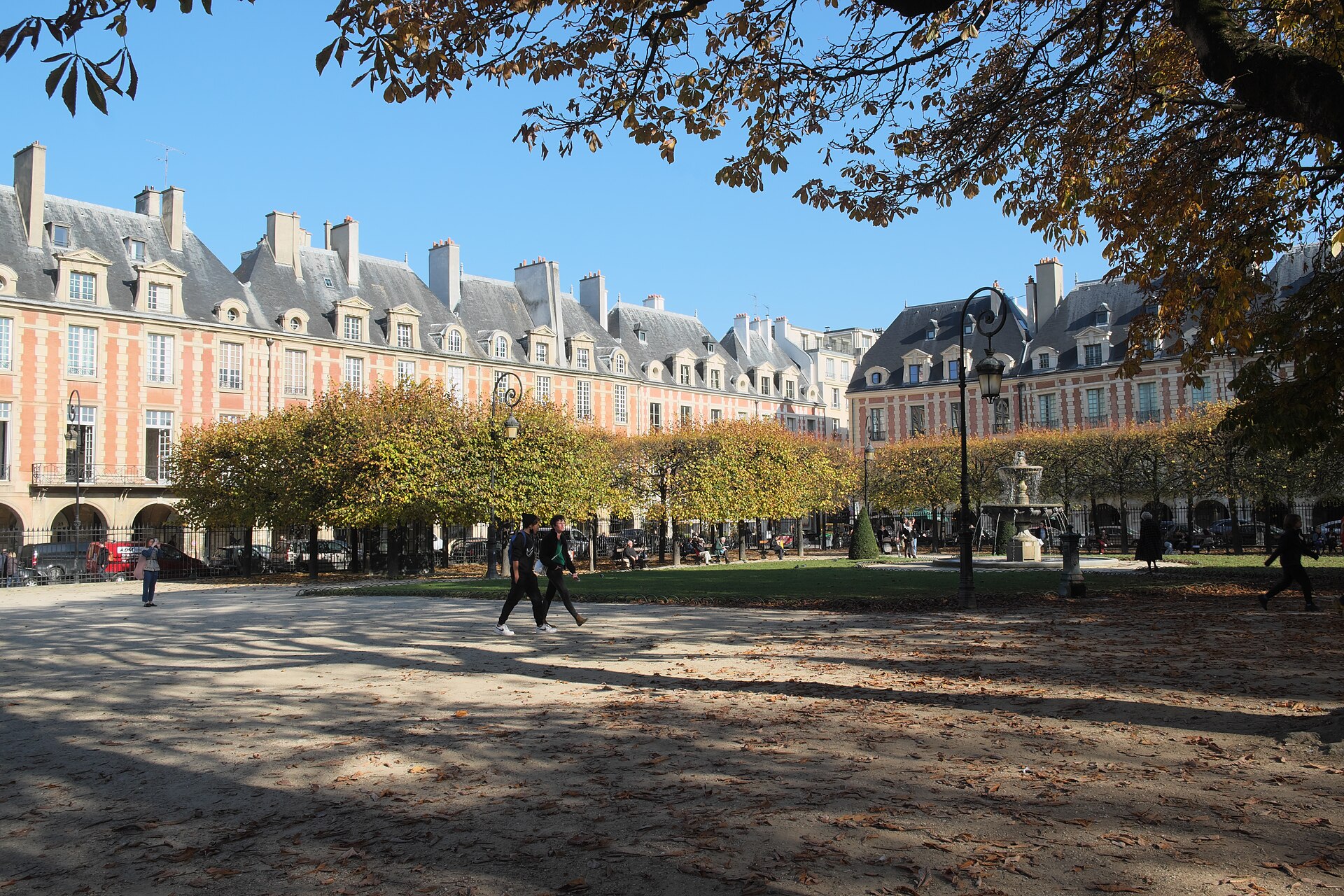
Walk the Place des Vosges first: matching red-brick and stone façades on all four sides, an arcade running the whole way round, and a garden in the middle where you are allowed on the grass. Then the narrow streets north of it — Rue des Rosiers for falafel, Rue Vieille-du-Temple and Rue de Bretagne for dinner, the Marché des Enfants Rouges if you want food-hall variety rather than a sit-down meal.
Day 2 — the Left Bank and the tower
08.30 — Île de la Cité before the crowds
Start on the island. Notre-Dame reopened in December 2024 and entry to the cathedral is free; at half past eight the queue is short and by eleven it is not. The towers are a separate paid ticket and, on a two-day trip, not worth the second queue.
Then walk west along the island to Place Dauphine and the Square du Vert-Galant at the tip, and back east to Sainte-Chapelle, which takes fifteen minutes and is fifteen metres of stained glass on all four sides with almost no wall between. If the queue outside is long — it can be, even with a slot — the Conciergerie next door is a good, largely empty alternative with an extraordinary Gothic hall.
10.30 — The Latin Quarter
Cross to the Left Bank and go inland. The Latin Quarter is the oldest student district in Europe and the streets behind the Panthéon are where it still feels like one. Rue Mouffetard has the market; the Jardin des Plantes has the botanical gardens and a very good natural history museum if you are travelling with children; the Panthéon itself has Foucault’s pendulum and the crypt.
Do not eat on Boulevard Saint-Michel or in the tourist streets around Rue de la Huchette, where the €14 three-course menus are exactly as good as they sound. One street back in any direction the prices are the same and the food is a different category. Our cheap eats guide is specific about where.
14.00 — Musée d’Orsay
The Musée d’Orsay is a converted Beaux-Arts railway station and holds the best single collection of Impressionist painting anywhere. Ninety minutes is a proper visit if you go up to the fifth floor first — Monet, Renoir, Degas, Van Gogh, Cézanne — and work down through the sculpture on the way out.
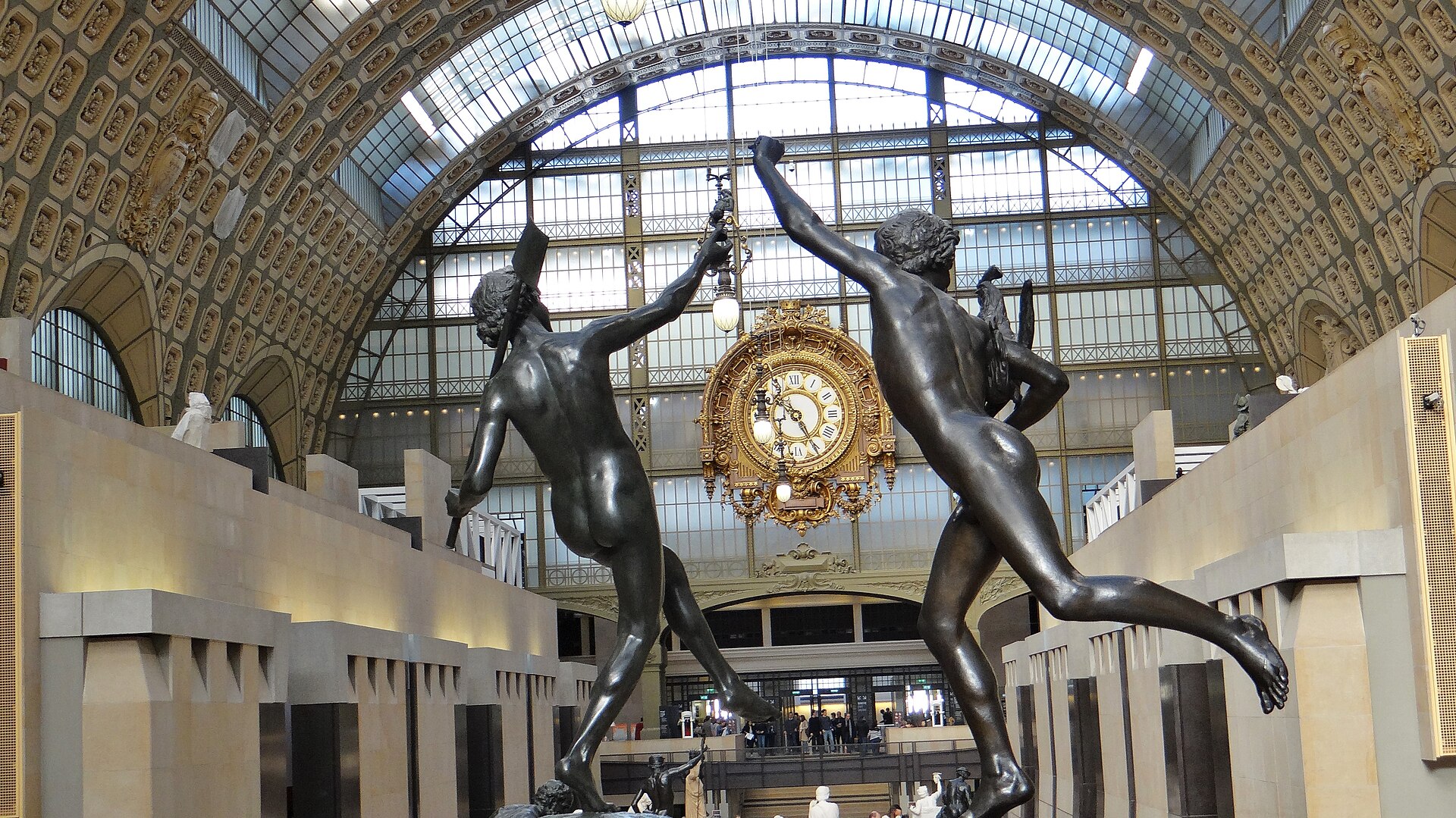
If your second day is a Monday, the Orsay is closed. Substitute the Musée de l’Orangerie in the Tuileries — two oval rooms of Monet water lilies, forty minutes, and close to perfect — or the Musée Rodin, whose garden alone justifies the ticket.
16.30 — West along the river
From the Orsay it is about forty minutes on foot west along the Seine to the Eiffel Tower, past the gold dome of Les Invalides and over the Pont Alexandre III, which is the most ornate bridge in the city and the best place on the walk to stop. If you would rather not walk it, RER C runs from Musée d’Orsay to Champ de Mars–Tour Eiffel in six minutes.
17.30 — The Eiffel Tower
Book a slot roughly an hour before sunset and you get daylight, golden hour and the lights coming on from one ticket. Three levels, and the middle one is right for most people: the stairs to the second floor at €14.80 have a much shorter queue and the same view as the €23.50 lift; the €36.70 summit lift adds a second queue at altitude for a view in which everything has become too small to identify. Our Eiffel Tower guide goes through each level and the timings.
20.00 — Dinner, then the river
Eat around Rue Cler in the 7th, or head back across to Saint-Germain. Then, if you have the energy, take a late Seine cruise. It is the one boat trip in Paris that genuinely earns its ticket — the city was built to be seen from the water, the bridges are the argument, and after dark the whole thing is lit. An hour, roughly €16 to €20, and a good way to end a trip because you are sitting down.
Avoid the dinner cruises. A mediocre set menu at a high price, eaten under glass with the windows fogged. A sightseeing cruise plus a proper dinner on land costs less and does both jobs better.
Eating well across 48 hours
Four meals is not many, and on a two-day trip each one carries more weight than it would on a week-long visit. A few rules do most of the work.
Make lunch the big meal, both days
This is the most valuable single piece of food advice in Paris. Neighbourhood bistros run a two-course lunch formule at €19 to €28 with the same chef, the same suppliers and often the same dishes they charge €40 to €50 for at dinner. You also get a table without booking, which at eight in the evening you frequently will not. Two good lunches and two light dinners is a better two days of eating than the reverse, and roughly €40 a head cheaper.
Learn the three warning signs
Photographs of the food on a board outside. A menu translated into six languages. Someone standing on the pavement inviting you in. Any one of these is a yellow flag; all three together is close to a guarantee. They cluster in exactly the places a two-day visitor ends up — around Notre-Dame, on Rue de la Huchette, along the Champs-Élysées and directly beneath the Eiffel Tower. Walking two streets inland solves it almost every time. The restaurant guide and the guide to what to order cover the rest.
Use the bakeries properly
A boulangerie will sell you a filled baguette, a pastry and a bottle of water for €8 to €12, which turns lunch into a picnic in the Tuileries or on the quais and buys you back an hour. Buy the pastry at a bakery and the coffee at a café — very few places do both well. Our bakery guide lists the ones worth a detour, and the food markets guide covers where to assemble a proper picnic.
Book one dinner
Exactly one, for the second evening, a week or two ahead. Good restaurants in Paris fill; the spontaneous 8pm table at the place you read about does not exist. Having one meal you are genuinely looking forward to changes the shape of a short trip more than another museum would.
Arriving and leaving without losing half a day
On a 48-hour trip, transfers are a meaningful fraction of the holiday. From Charles de Gaulle, the RER B reaches Gare du Nord, Châtelet and Saint-Michel in around 35 minutes on the €14 airport flat fare — quick, but with stairs, crowds and the occasional strike. From Orly, Orlyval plus the RER B, or the Orlybus, run on the same flat fare. A taxi from either airport into the relevant half of the city is a fixed, published fare rather than a meter, which means you cannot be overcharged and which makes it competitive for two or more people with luggage.
The airport transfer guide compares the options with current prices, and the taxi and Uber guide explains how the fixed fares work. If you are coming by Eurostar, Gare du Nord drops you fifteen minutes from the Île de la Cité on Line 4, which is the single most convenient arrival in the city — see the Eurostar guide.
Whichever way you arrive, do not schedule anything for the first two hours. And leave more slack at the end than feels sensible: the RER B to CDG is reliable right up until the afternoon it is not, and missing a flight costs more than the hour you saved.
Two variations worth considering
The version with Montmartre
If you have seen the Louvre before, or museums are not why you came, swap the entire first morning for Montmartre. Metro to Abbesses, walk up rather than taking the funicular, ten minutes inside Sacré-Cœur (free) and twenty on the terrace outside it (also free, and the better view), then get lost in the streets north and west of the basilica. Walk straight through Place du Tertre and its portrait painters; the Montmartre worth seeing is two streets away from it in any direction.
Come down the hill by mid-afternoon and rejoin the plan at the Tuileries. You lose the Louvre and gain the best village in the city. For a lot of people that is the right trade.
The version for a couple
Slow it down. One museum across the two days rather than two, a long lunch on each, and the evenings given over to walking. The Seine cruise moves to the first night; the second evening becomes dinner somewhere booked in advance and a walk along the quais afterwards. Our romantic Paris guide and the romantic walks piece have the routes, and the restaurant list has places worth booking a fortnight ahead.
What does not fit into two days
- Versailles. A minimum of five hours with travel, which is half of one of your two days for a single palace. It is a wonderful day out on a longer trip and a bad decision on this one.
- Both the Louvre and the Orsay properly. You can technically do both, but two big museums in two days leaves no room for the city between them, and Paris outdoors is at least as good as Paris indoors.
- The Catacombs. Genuinely worth seeing, requires booking, and sits far enough south to cost you an hour of transit each way.
- A day trip of any kind. Giverny, Fontainebleau, Reims — all excellent, all wrong for a 48-hour trip. See the day trips guide for when they do fit.
- The hop-on hop-off bus. Slower than walking on the central loop, slower than the Metro everywhere else.
- The Eiffel Tower summit. The second floor is the better view and the shorter queue. Spend the difference on dinner.
If you only have a weekend
Friday evening to Sunday afternoon is really two and a half days, and the half matters. Land, drop the bags, walk to the nearest brasserie, eat, sleep — do not try to do anything ambitious with a Friday night. Saturday becomes Day 1 above. Sunday morning is the best morning of the week in Paris: the markets are at full volume and the streets are quiet, so front-load the Left Bank walk and move the Orsay to the early afternoon. Give yourself more time than feels necessary to get to the station or the airport, because Sunday afternoon is when the RER B chooses to be difficult.
Frequently asked questions
Is 2 days enough for Paris?
Two days is enough for a genuinely good first visit if you accept that you are seeing one museum properly rather than three, and no day trips. What you get is the shape of the city, four excellent neighbourhoods and two proper meals. What you do not get is Versailles, the smaller museums, or an unhurried afternoon. Most people who spend two days here come back, which is not a failure of the trip.
What should I do first in Paris with two days?
Whatever needs a timed slot on your first morning, because that is the hour with the shortest queues and the freshest legs. In practice that means the Louvre at 9am on Day 1 and the Île de la Cité at 8.30am on Day 2.
Can I do the Louvre and the Eiffel Tower in two days?
Comfortably, and they belong on different days. The Louvre is a morning; the Eiffel Tower is a late afternoon. Putting them on the same day means crossing the river twice and arriving at the tower too tired to enjoy it.
How much walking is a two-day Paris itinerary?
Around 10 to 14 kilometres a day if you follow the route as written — 15,000 to 20,000 steps. The pavements are cobbled and uneven and the Metro is mostly stairs. Broken-in shoes, not new ones; our packing list is blunt about this.
Should I buy a Navigo day pass for two days?
Only if you are making five or more journeys a day, which on this itinerary you probably are not — the whole point of splitting the days by riverbank is that you walk most of it. Two or three single tickets a day at €2.55 works out cheaper than a €12.30 day pass. The tickets guide covers the exceptions.
Is two days enough to see Montmartre?
Only by giving up something else, usually the Louvre. Montmartre is a 45-minute round trip from the centre plus a hill, and it deserves a half-day rather than a squeezed hour. The three-day version of this trip is where it fits naturally — see our full itinerary guide for how the days build.
What is the best month for a two-day trip?
Late September or early October: the light is at its best, the crowds have thinned since August, and the days are still long enough for an evening at the tower. February is the cheapest and the daylight is short. Our guide to the best time to visit breaks the year down month by month.
One more day changes this trip more than any other single addition, because it buys you Montmartre and a second museum without touching anything above. Our 3 days in Paris itinerary shows how the days rearrange when you have 72 hours rather than 48.
If those two days are a Saturday and a Sunday, the shape shifts: queues lengthen, shops close and the markets come into their own. Our weekend in Paris itinerary is the Friday-to-Sunday version, with the differences spelled out.
Related Paris Guides
- The complete Paris itinerary guide — plans for one to ten days
- One day in Paris — the 24-hour version, hour by hour
- How many days do you need in Paris? — what each extra day buys
- The Louvre guide — which wing to pick when time is short
- The Marais guide — the best evening neighbourhood in the city
- Where to stay in Paris — neighbourhood by neighbourhood
- The Paris food guide — how to avoid the tourist menu
- Paris on a budget — the same two days for far less
Photo Credits
Louvre courtyard: Cour Napoléon at night — Louvre by Benh LIEU SONG, CC BY 2.5, via Wikimedia Commons.
Place des Vosges: Paris Place des Vosges 230 by GFreihalter, CC BY-SA 4.0, via Wikimedia Commons.
Jardin des Tuileries: Grand bassin octogonal Jardin des Tuileries 003 by Moonik, CC BY-SA 3.0, via Wikimedia Commons.
Musée d’Orsay: Grande galerie du Musée d’Orsay (1) by Ibex73, CC BY-SA 4.0, via Wikimedia Commons.